


EXPLORE ISSUES



‘And though this First Book shortlist was every bit as wide-ranging, innovative and challenging as you might wish, that is the one thing that all these talented writers have in common.’
David Robinson discovers Scotland’s literary scene is in good hands with the shortlisted authors in the 2024 Saltire Literary Awards First Book Prize.
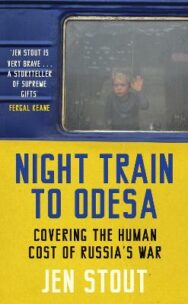
Night Train to Odesa
By Jen Stout
Published by Polygon
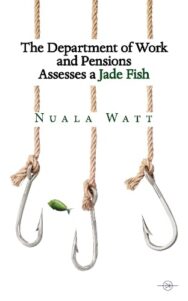
The Department of Work and Pensions Assesses a Jade Fish
By Nuala Watt
Published by Blue Diode Press
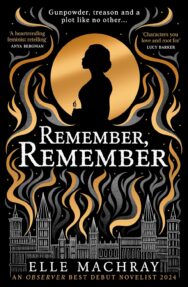
Remember, Remember
By Elle Machray
Published by Harper North
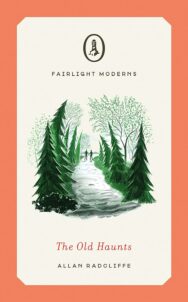
The Old Haunts
By Allan Radcliffe
Published by Fairlight Books
Fragile Animals
By Genevieve Jagger
Published by 404 Ink
I saw Jen Stout talk about Night Train to Odesa, her book of reportage from Ukraine, two days after it won the Saltire First Book of the Year Award. She was being interviewed by Gavin Esler at the first-ever St Andrew’s Book Festival in London – appropriately enough, given that he is the patron saint of Ukraine as well as Scotland – on St Andrew’s Day.
The judges praised her book – the only non-fiction one on the list – as an ‘accomplished and beautiful work, blending journalism, memoir, history, art’, and indeed it is, but it deserves a harder-edged appreciation. I’ll start off with Stout’s journalism. In these days of denuded media budgets, setting out on a career as a freelance foreign correspondent – never mind going to Ukraine – is an act of bravery in itself, especially for someone unable to rely on the Bank of Mum and Dad.
Growing up on Fair Isle and Shetland, Stout didn’t have that particular advantage, though in her fifth year at Lerwick’s Anderson High School, an inspirational Russian teacher sparked her love of the language and a school trip to St Petersburg sealed her ambition to work as a journalist in Russia. As she told Esler, she was inspired by the journalism of Anna Politkovskaya, who was assassinated on Putin’s birthday in 2006, and dreamed of working on Politkovskaya’s old paper, Novoya Gazeta. In November 2021, when she took up a fully-funded scholarship in Moscow, this finally looked feasible. Three months later, when Putin invaded Ukraine, she set off to cover the conflict without a) institutional backup b) security or c) money.
Night Train to Odesa is vivid, passionate and unfailingly empathetic, but doesn’t shy away from historical and present complexities. For years, she points out, Ukrainians had looked to Moscow as a supplier of cultural excellence; now it was a supplier of shells being aimed at their homes. On the other hand, while there was delight in Odesa at the sinking of the cruiser Moskva (whose guns could have levelled the city), there were still those (often elderly, their lives full of memories of the USSR) who still quietly mourned the deaths of their fellow Russian-speakers.
Revealing such complexities – like the linguistic ones implicit in the nationwide drift away from Russian and towards Ukrainian – doesn’t mean Stout has any doubts about the rights and wrongs of the conflict. Even while still in Russia, she had been appalled by casual imperialistic attitudes towards the Ukrainians, and she has similar contempt for those on the British Left who say that the war is all NATO’s fault and Putin can be easily appeased. ‘We know what the Russians will do,’ she says. ‘We’ve seen the mass graves.’
Nuala Watt’s debut collection, The Department of Work and Pensions Assesses a Jade Fish, is no less impressive. In it, blindness and partial blindness aren’t metaphors but lived experience. Watt, who is partially blind (although able to read print) and has cerebral palsy, studied for a PhD at Glasgow University on how poetry deals with visual impairment – and concluded that it doesn’t. And because she could hardly find any realistic depiction of partial blindness, she wrote her own. ‘I basically gatecrashed poetry,’ she says.
Dealing with a box-ticking, blinkered bureaucracy is, it seems, a sadly inevitable part of disability. In her collection’s titular poem we see how Watt is assessed by officialdom:
How often do you lose consciousness?
Exactly how much of your life is a mess?
Can you make a cup of tea?
We cannot pay you
Other poems in the collection try to make visual sense of a blurred world, describing the point at which it disappears, and even uses comedy to explain the intersection of partial sight, epilepsy and dyspraxia. Again, these are never less than intelligent and engaging, with a clear delight in trying out a whole variety of poetic forms. But more impressive still are those poems in which Watt writes about pregnancy and motherhood.
Intimate and personal, they compel empathy. Take ‘Pregnant and Squint’, in which she sardonically points out that, for someone with disability, pregnancy might be ‘a holiday from awkwardness’, or ‘You and I Go Shopping’, in which a 10-minute trip to the local shop with her daughter to buy an Easter egg is revealed to be so fraught with risk that she put it off for years. Both poems wrongfoot the reader with breathtaking aplomb, while showing the epic in the everyday, breaking down cliched images of (partial) blindness, and rebelling against notions of victimhood. This insistence on creativity despite all the obstacles bureaucracy and unthinking strangers place in her way runs throughout her poetry and is – presumably – among the reasons the Saltire judges called Watt’s poetry ‘groundbreaking’.
‘If one man can rule an empire why can’t one woman bring it down?’ If I’d been publishing Elle Machray’s Remember, Remember, that line half-way through the novel is the one I’d have lifted to put on its cover. It’s pithy, tantalising, and truly reflects the treasonous gunpowder plot at its heart.
We’re not talking Guy Fawkes’s failed effort of 1605 here but a counterfactual one in 1770 which originates in the mind of Delphine, a young black woman born on a Caribbean slave plantation who has escaped from her master. The novel opens with her watching her brother Vincent fight in a boxing match at London’s Theatre Royal. If he wins, he is told, he will be a free man.
It’s not too much of a spoiler (page 13 out of 377) to reveal this doesn’t happen, but by the end plenty of other things have: murders, riots, and corruption for starters, with no shortage of high politics, illicit love affairs, smuggling and assorted double dealing. The main thrust of the plot, however, is whether or not Delphine will bring down the British empire by blowing up the Palace of Westminster. And if you think you know the answer to that already, remember that Machray is working in a genre in which fiction isn’t hammered down with historical facts and the past is every bit as fluid as the present.
That said, the best alternate historical novels (Fatherland, The Man in the High Castle, SS-GB) spin out from a factual core. Here that is provided by the landmark 1772 Somerset v Stewart court case, which effectively ended slavery within England. Machray adapts this to a plot that flamboyantly explores how much Delphine is prepared to risk in the abolitionist cause.
Allan Radcliffe’s The Old Haunts, a wonderfully understated and evocative novel about grief and love, could hardly be more of a contrast to such epic imaginings. Jamie, a gay art teacher in his thirties, is on a week’s holiday with his partner in the Highlands trying to find a place he stayed years ago with his loving parents.
Plotwise, not much more happens. It doesn’t need to. Not only can Radcliffe paint ultra-realistic portraits of his characters, but he possesses that far harder skill – rare in debut writers – of making his readers care about them.
Growing up in the flat above their Edinburgh newsagent’s shop, Jamie realised he was gay at a relatively early age. He kept quiet about it, the way everyone he knew as a teenager did, and the way the government at the time encouraged through Section 28. Yet only now, after his parents’ death, does he count the cost of that silence. Did his parents, for all the love they showed, ever really know him? Was he in turn, everything he could have been for them, not merely embarrassed as he showed them round the London flat he shared as an art student?
So yes, there’s a whole atlas of roads not taken here, but a lot more too. Whether through his skill at slipping his story back and forwards across the decades, from Jamie’s teenage yearnings to his joking, confident, sexually fulfilling relationship with his partner, Radcliffe turns regret into compassion. There’s empathy for every one of his characters at a level that is the mark of a true writer.
In Fragile Animals by Genevieve Jagger a tall, tattooed taxidermist called Moses from Aberfeldy meets Noelle, a self-harming poet and hotel cleaner on a week’s holiday in November on the Isle of Bute. On Page 28, Moses casually tells her that he’s a vampire. Don’t worry, he adds later, I’ve never killed a human.
I’m new to vampire fiction, never having read any of the 30,000 books Amazon has in its ‘vampire novels for adults’ category. Whether it’s their predictability (watch out for mirrors, sunlight garlic etc), dodgy sexual politics, or my own failure of imagination, I’ve never felt the need.
Moses is, however, isn’t a traditionally handsome vampire so much as a dirty, withered and grotesque one, and I was relieved to find that not only does he fail to get up to much serious vampiric business but Noelle is hardly cast in the traditional female-victim role either. Instead, because he doesn’t make any demands on her, she comes to terms with the mistakes she has made in her fraught adolescence and begins to face up to her future.
Put like that, though, Fragile Animals sounds rather bland. It’s not – and though it hardly lives up to some of the advance praise (‘Shirley Jackson meets The Wasp Factory’) there’s enough dark intensity about Jagger’s prose to make one want to read whatever she writes next. And though this First Book shortlist was every bit as wide-ranging, innovative and challenging as you might wish, that is the one thing that all these talented writers have in common.
Night Train to Odesa by Jen Stout is published by Polygon, priced £17.99
The Department of Work and Pensions Assesses a Jade Fish by Nuala Watt is published by Blue Diode Press, priced £10
Remember, Remember by Elle Machray is published by Harper North, priced £16.99
The Old Haunts by Allan Radcliffe is published by Fairlight Books, priced £7.99
Fragile Animals by Genevieve Jagger is published by 404 Ink, priced £10.99


ALSO ON BOOKS FROM SCOTLAND
-

David Robinson Reviews: The Loch of the Bees
‘The past’s current flows through the characters in his fiction so strongly that it almost becomes t …
-

The Nightkeeper’s Apprentice by Jude Reid
‘She’d never seen anything like it. The whole sky was lit up in ribbons of colour – blue, green, yel …
-

David Robinson Interviews: Gavin Francis
‘He’s not my GP so I can’t say this for sure, but based on this book – wise, informed, well-written, …
-
The Cromarty Library Circle by Shona MacLean
‘No one in the room could have been unaware of what it was that Dr Fraser alluded to. The horrors pe …
-

In Search of Gems by Kenneth Steven
‘It still amazes me that these magnificent shells grow in a river. Never mind whether they have pear …
-

Winterbourne by Elisabeth Wolf
‘The Coopers stared at each other for a second, two seconds. ‘It’s a sign—’ said Cooper.’
FEATURED AUTHOR:
David Alston

David Alston is a Historian and Independent Researcher. He is the author of Ross & Cromarty: A Historical Guide (1997) and My Little Town of Cromarty: The History of a Northern Scottish Town (2006). He was a Highland Councillor and from 1991–2003 w …
FEATURED PUBLISHER:
Luath Press

Luath Press takes its name from Robert Burns, whose little collie Luath (Gael., swift or nimble) tripped up Jean Armour at a wedding and gave him the chance to speak to the woman who was to be his wife and the abiding love of his life. Burns called one …