


ABOUT THIS BOOK
PUBLISHER: Birlinn General
FORMAT: Paperback
ISBN: 9781841582290
RRP: £6.99
PAGES: 112
PUBLICATION DATE:
July 1, 2002
BUY THIS BOOK
As an Amazon Associate and Bookshop.org affiliate we earn from qualifying purchases.
The Soay of Our Forefathers
Laurance Reed
The island of Soay nestles between the Sleat peninsula and the grandeur of the Cuillins. There can be few more magnificent settings. Despite its proximity to Skye it has been little visited. Evacuated in 1953 – the first evacuation since St Kilda – it has since been re-occupied. The history of the island is ultimately linked with that of Skye – including the great clearances. Laurance Reed’s book, privately published in the 1980’s, is the definitive account of this beautiful and little known island, incorporating a great deal of original research. This new edition incorporates a plate section of the island and its evacuation and a new epilogue. ‘The SS Hebrides was used in the evacuation. “All day,” wrote one reporter, “the Soay islanders have been packing and a quarter of a mile off this stony beach lies the steamer, her red funnel fuming as if impatient to be gone.” She sailed after midnight with Soay still visible against the sky of a midsummer night and a piper playing a lament on the deck. The date was June 20th 1953.’
Reviews of The Soay of Our Forefathers
"Soay lies within a quarter of a mile to the south of the mountain Cuillin. It is five miles in circumference and full of bogs, and fitter for pasturage than for cultivation. A mile to the west side it is covered with wood and the rest contains of heath, grass having a mixture of the myrtle all over. There has been no venomous creature ever seen in this little Isle until these two years last, then a black and white big serpent was seen by one of the inhabitants who killed it. They believed it came from the opposite coast of Skye where there are many big serpents. Martin Martin (1697)
Laurance Reed
Originally from Soay, Laurance Reed was educated at Oxford University and is the author of several other books. He now lives in Beaconsfield where at one time he was the MP.
ALSO ON BOOKS FROM SCOTLAND
-


Flight Patterns by Lorna J. Waite: An Appreciation by Janette Ayachi
‘I’ve recently heard poetry archives described as ‘fugitive, ephemeral’, but here the wish of collec …
-
The Scottish Colourists: Art & Life by Alice Strang
‘Together the quartet embodied a new spirit in Scottish art and they are celebrated as Scotland’s le …
-
David Robinson Reviews: Our Noble Selves by Kate Atkinson
‘As I suggested at the start, there’s a whole heap of plot in Our Noble Selves – spies, murders, and …
-
‘They had spoken perhaps ten sentences each and it had already begun. Moira’s resentments, her preju …
-

Ayont the Thistle by Jim Mackintosh, Alan Riach and James Robertson
‘Nane ae this then but – ma hert daen its hing/ an yon wee smile ae yours in the saft smir ae the ga …
-

David Robinson Reviews: This Door of the Seas
‘He sees what he wants to. And it makes a kind of sense too – especially to colonists from Scotland, …
FEATURED AUTHOR:
Julian Evans
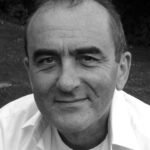
Julian Evans grew up on Australia’s east coast and in the south London suburbs in the 1960s. In 1990 he left his job in London to island-hop across the Pacific Ocean by ship, small plane and boat, a journey that ended five months later at a US nuclear- …
FEATURED PUBLISHER:
Birlinn

Birlinn Ltd is an independent publishing house based in Edinburgh, Scotland. The company is built on traditions of the written and spoken word and is constantly looking to the future. Established by Hugh Andrew (2022 recipient of the Royal Scottish Geo …