


ABOUT THIS BOOK
PUBLISHER: University of Minnesota Press
FORMAT: Paperback
ISBN: 9781517906092
RRP: £38.00
PAGES: 300
PUBLICATION DATE:
September 4, 2018
BUY THIS BOOK
As an Amazon Associate and Bookshop.org affiliate we earn from qualifying purchases.
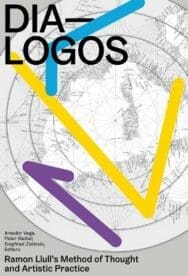
DIA-LOGOS: Ramon Llull’s Method of Thought and Artistic Practice
Amador Vega
Peter Weibel
Siegfried Zielinski
The life and work of the outstanding Catalan-Majorcan philosopher, logician, and mystic Ramon Llull continues to fascinate thinkers, artists, and scholars worldwideIn this book, international experts from Europe and the United States address Lullism as a remarkable and distinctive method of thinking and experimenting. The origins and impact of Ramon Llullu2019s oeuvre as a modern thinker are presented, and their interdisciplinary and intercultural implications, which continue to this day, are explored. Ars combinatoria, generative and permutative generation of texts, the epistemic and poetic power of algorithmic systems, plus the principle of unconditional dialogue between cultural groups and their individual members, are the most important coordinates of this combinatorial-dialogical media and communication theory, which appeared very early in the history of science, technology, and art. It was developed in the work of Ramon Llull during the transition from the thirteenth to the fourteenth century when Arab-Islamic, Jewish, and Christian cultures intersected. The legacy of Lullism lives on in poetry and in the visual and electronic-based arts, as well as in research on the history of informatics, formal logic, and media archaeology. The primary idea of Llullu2019s teachings-to enable rational and therefore trustworthy dialogue between cultures and religions through a universally valid system of symbols-is today still topical and of great relevance, especially in the tensions prevailing in globalized spaces of possibility.Contributors: Miquel Bassols, Florian Cramer, Salvador Dalu00ed, Fernando Domu00ednguez Reboiras, Diane Doucet-Rosenstein, Jordi Gayu00e0, Jonathan Gray, Daniel Irrgang, David Link, Sebastiu00e1n Moro Tornese, Josep E. Rubio, Henning Schmidgen, Wilhelm Schmidt-Biggemann, Gianni Vattimo, Janet Zweig.
Amador Vega
Amador Vega is professor of aesthetics at Pompeu Fabra University in Barcelona and author of Maestro Eckhart, El Fruto de la nada, and Libro de horas de Beirut.Peter Weibel is professor of media theory at the University of Applied Arts Vienna and chairman and CEO of ZKM | Center for Art and Media Karlsruhe. He has been published widely in the intersecting fields of art and science.Siegfried Zielinski is head of the Karlsruhe University of Arts and Design and is Michel Foucault Chair at the European Graduate School in Saas-Fee.
ALSO ON BOOKS FROM SCOTLAND
-

David Robinson Reviews: Our Noble Selves by Kate Atkinson
‘As I suggested at the start, there’s a whole heap of plot in Our Noble Selves – spies, murders, and …
-
‘They had spoken perhaps ten sentences each and it had already begun. Moira’s resentments, her preju …
-

Ayont the Thistle by Jim Mackintosh, Alan Riach and James Robertson
‘Nane ae this then but – ma hert daen its hing/ an yon wee smile ae yours in the saft smir ae the ga …
-

David Robinson Reviews: This Door of the Seas
‘He sees what he wants to. And it makes a kind of sense too – especially to colonists from Scotland, …
-

The Broons and Oor Wullie Celebrate their 90th Birthdays!
‘Whatever the future may hold, we can be sure that The Broons and Oor Wullie will always be a part o …
-

Pretty Valuable Things by A. J. Leslie
Harper considered Charles for a few moments, lit a cigarette, then said ‘we are treating it as murde …
FEATURED AUTHOR:
Lindsay Littleson

Lindsay Littleson is a primary school teacher in Renfrewshire, Scotland. Since taking up writing for children in early 2014 she has published a short story with Walker Books, in addition to winning the Kelpies Prize with her first children’s novel, The …
FEATURED PUBLISHER:
Edinburgh University Press

Connecting people and ideas to inspire creative thinking, open new perspectives and shape the world we live in. Our ambition is to create a community of authors, editors, advisors and practitioners committed to publishing world-class academic research …