


Scotland Street Press have just published a beautiful history of Edinburgh told through the lives of those who have lived and worked in 66 Queen Street. It’s an excellent social history, full of brilliant insights to the little known stories that influenced the city’s great moments. In this extract, we find Robert Louis Stevenson attending the trial of an acquaintance, charged with multiple brutalities despite his respectable appearance. . .
66: The House That Viewed the World
By John D. O. Fulton
Published by Scotland Street Press
Enter Hyde
Chantrelle was an acquaintance of Stevenson. His continuous presence for the trial’s duration suggests that Stevenson was keen to gain an insight into the complex alter ego of an educated and talented man who had murdered his wife. Another figure of notoriety, who had fascinated Stevenson as a boy was Deacon Brodie, a locksmith and respected town councillor, who had committed his crimes ninety years earlier. Brodie had confined his activities to armed robbery and more particularly burglary. These were committed at night by him gaining entry to houses through using copy keys he had cut for the new locks he had fitted for his trusting clients. Like Chantrelle, the scaffold awaited Brodie but the nature of their crimes was quite different. A far greater darkness lay within the soul of Chantrelle. He had abused his wife and other women whilst expressing no empathy or pity for those whose lives he had ruined or, in the case of his wife, taken.
To try to understand what may have been the fascination which drew in Stevenson, one needs to look at his early life. He was brought up as an only child in the New Town of Edinburgh by parents who were devout and serious Presbyterians: a situation fortified by his faithful nurse who held strong Calvinistic and folklore beliefs. For her the theatre was the ‘mouth of hell’ and she filled the head of young Louis with, amongst other terrifying images, the blood-drenched religious fundamentalism of the two previous centuries. Her remedy for her charge’s frequent bouts of insomnia was a cup of strong coffee in the middle of the night which, with the ill-health he suffered through a weak chest, induced powerful dreams and nightmares in which reality was bent between the conscious and the unconscious. Even as a student his dreams were so real he felt that he was leading a double life making him fear for his sanity.
. . .
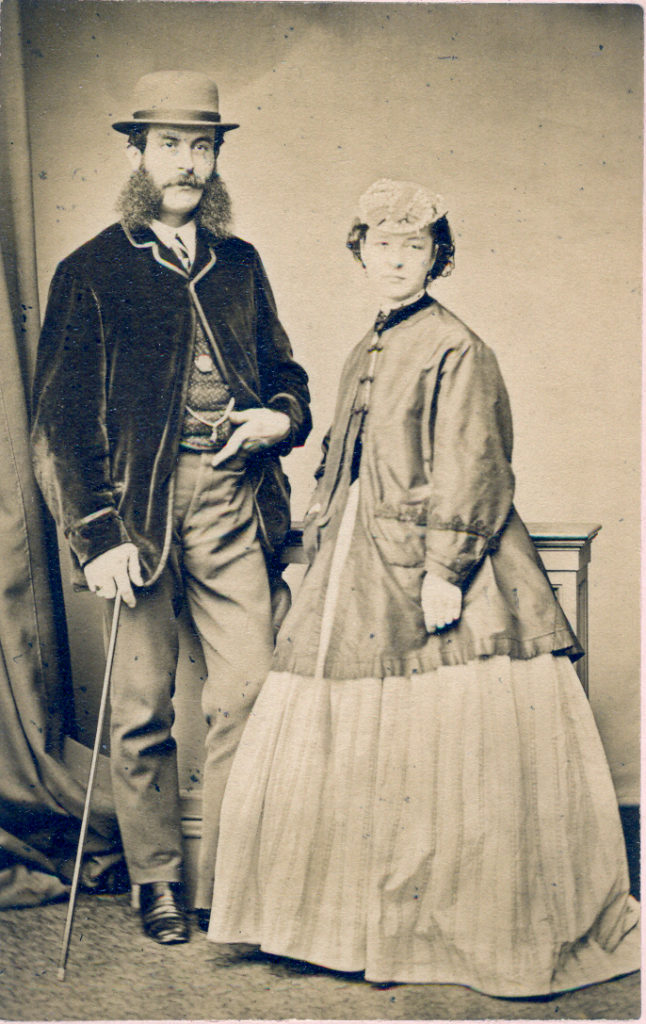
The Chantrelles, Henry Littlejohn Collection
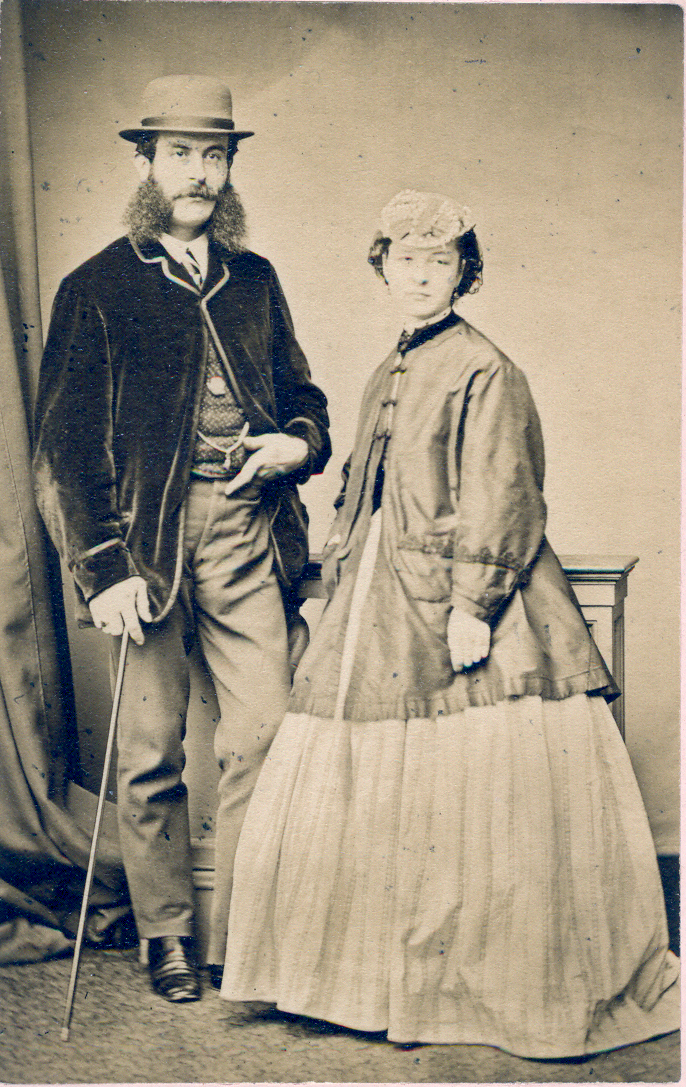
Chantrelle had been born into privilege in Nantes in 1834. His father, who was a shipowner of some repute, provided his son with an excellent education which led to his son’s attendance at Nantes Medical School where his ability earned him a commendation. For reasons that are not clear but may be associated with his father suffering commercial hardship due to the French Revolution of 1848 Chantrelle was no longer able to continue his studies at Nantes but managed to continue them by attending classes in both Paris and Strasburg. These events unsettled him and his aspirations for a career in medicine faded. Instead, by seventeen, he had become a Republican. In 1851 he manned the barricades in Paris where he was wounded in the arm by a sabre. The success of Louis-Napoleon no longer made France a country he could identify with. America beckoned and he spent several years there although what he did there remains unknown. In 1862 he arrived in England where in different regional cities he worked as a French language teacher. By 1866 he was teaching in Edinburgh and was proving himself an excellent linguist in French and German with a proficient knowledge of Latin and Greek. He had further enhanced his reputation by compiling several textbooks which had been adopted by many of the local schools. It was in one of these schools, Newington Academy, that the thirty-four-year-old Chantrelle, replete with a cultured and polished manner, met the fifteen-year-old Elizabeth Dyer.
Seduced by him Elizabeth fell pregnant and her parents forced Chantrelle into marriage on 11 August 1868. The first of their four children was born two months later. The marriage was not a happy one with Elizabeth regularly being subjected to abuse, both mental and physical, in the knowledge that her husband was systematically unfaithful to her. She fled to her parents repeatedly and, on at least two occasions, the police were called in for her protection. Chantrelle threatened to shoot Elizabeth with a loaded pistol and frequently said he would poison her whilst taunting her that he had the knowledge to do so without medical detection. Poor Elizabeth was caught in a bind. Her parents were not prepared to intercede; and having taken legal advice, although she knew she could sue for divorce on the grounds of adultery, the public shame of doing so and the risk of forfeiting the care of her much-loved children prevented her from taking action.
Chantrelle’s unacceptable behaviour, amplified by drunkenness, took its toll at work. His classes dwindled and financial difficulties and debt set in. It was perhaps an increasing sense of desperation in a man who had lost his self-control that led him to make enquiry of two insurance companies about taking out life insurance policies on the life of his wife and himself for the sum of £1,000 each, and on the life of the maid for £100, all payable in the event of an accident. With the first policy he asked if the company, Accidental Assurance Association of Scotland, were in the habit of insuring women (which they were not) and mentioned that his son had accidentally shot him with a loaded gun which had been sitting on the table injuring his hand. It was this event he said that persuaded him to insure himself and his wife against the risk. With the second company, Star Accidental Insurance Assurance Company, he wanted to know what constituted an accident. Amongst scenarios he mentioned the case of a friend who had eaten Welsh rarebit in a hotel and was found dead in his bed the next day. Would that be covered by the policy? In the circumstances of the case the insurer’s answer was firmly ‘No, certainly not’. The policies were taken out with Accidental Assurance on 22 October 1877. This was done very much against the wishes of Elizabeth who informed her mother that she feared for her life pointing out that her husband had more than once threatened to take it.
At the trial witnesses testified to Chantrelle’s abusive behaviour towards his wife and of her opinion that he visited brothels. It was then that the witness Barbara Kay was called: a person whose presence in the witness box Stevenson would observe with acute interest. For Barbara Kay was the keeper of the brothel in Clyde Street frequented by Chantrelle and only a short distance from the Stevensons’ house. The brothel would have been a destination shared by other respectable gentlemen in town. A heave of collective relief may have been heard from within their number when the Lord Justice Clerk announced that what had already been proved of Chantrelle’s behaviour was quite sufficient for the Crown’s purposes. The gossamer layer between the public perception of good and evil remained unbreached.
Evidence was given that up to New Year’s Day of 1878 Elizabeth had been in good health but that evening, because she was feeling slightly unwell, she retired to bed early in their home at 81a George Street, Edinburgh, where the family lived on the two upper floors. Her servant had been given the day off leaving Elizabeth at home with her children and her husband. On the servant’s return at 10pm she found her mistress in the back bedroom with her baby beside her ‘looking very heavy’ and not well. There was a tumbler of lemonade three-quarters full beside her bed and Elizabeth asked her servant to peel an orange for her. The servant gave her mistress a quarter and left the remaining three segments on the plate. Retiring to bed Chantrelle slept in the front bedroom with his two older children. The next morning, on rising, the servant heard moaning from Elizabeth’s bedroom. The door usually closed was partly open. She found her mistress lying unconscious on the bed with stains of vomiting upon the pillow. She called her master who was in his own bedroom with the three children. He returned with her and tried to rouse his wife; the servant suggested he call for a doctor.
Chantrelle claimed he heard the baby crying and told the servant to attend to it. The servant found the baby still asleep and returned at once to the bedroom where she found Chantrelle moving away from the window. He said, ‘Don’t you smell gas?’ She did not immediately smell it but after a slight delay did whereupon she turned off the gas at the meter. Dr Carmichael was called and when he arrived the room had a pervading odour of gas. Chantrelle explained there had been an escape. The doctor called for Dr Littlejohn, the city medical officer, ‘to see a case of coal gas poisoning’. Upon Littlejohn’s arrival both doctors because of Chantrelle’s assertions and the smell believed Elizabeth to be suffering from gas inhalation. Remaining comatose Elizabeth was admitted to the Royal Infirmary where the ward doctor diagnosed the case as not one of gas but of narcotics poisoning, probably opium, and he treated the patient accordingly. At 4pm, Elizabeth died without regaining consciousness. The post-mortem examinations ruled out gas as the cause of death but failed to detect the narcotic poisoning indicated by the symptoms. Analysis of the stains of vomit on the bedclothes and the pillow, however, proved the presence of opium together with the orange pulp.
On 5 January immediately following Elizabeth’s funeral at which those present had been deeply moved by her husband’s very public outpouring of grief Chantrelle was arrested for murder and dispatched to Calton Prison. The defence argued that the symptoms of death were consistent with gas poisoning and that the stains were not proved to be the result of vomiting. On the basis of medical evidence alone the Crown might not have had enough to secure a conviction. But it was proved that positioned behind the window shutter, from which the servant had observed Chantrelle retracing his steps as she had re-entered the bedroom, was a disused gas pipe. It was the source of the gas having been freshly broken by being twisted back and forth. Had it been in that condition for any length of time the room would have filled with gas. Whilst Chantrelle denied knowledge of the pipe it was proved that he had been present in 1876 when it was repaired and its location discussed with the workman.
It was further proved that on 25 November 1877 Chantrelle had bought from a local chemist a measure of opium extract for a use which was never established; but he had informed various witnesses that before retiring to bed he had given his wife a bit of orange and some lemonade prior to taking the baby away as Elizabeth was feeling unwell. The jury was not convinced by Chantrelle’s explanations and a unanimous verdict of guilty followed. Before descending into the cells, with the permission of the court, Chantrelle had given a rambling speech in which he ‘demolished the whole fabric of his case by arguing that his wife had taken the opium voluntarily and someone had rubbed the poison on her linen in order to incriminate him’.
The verdict was cheered by a very large crowd pressed into Parliament Square who were hopeful of glimpsing the prisoner on his way to jail. His appearance evoked hisses, groans, hooting and yelling which continued until the prison van had disappeared into the High Street. This execution, unlike the last in the capital thirteen years before as a result of legislative change, would take place in private within the walls of the prison and away from prying eyes seeking entertainment.
. . .
More than twelve years later when living in Vailima in Western Samoa, Stevenson had no doubt as to Chantrelle’s guilt. He recalls in his diaries of being told by the Procurator Fiscal that Chantrelle had left France because of murder; he had left England because of murder; and already since he was in Edinburgh more than four or five had fallen victim to his supper parties and his favourite dish of toasted cheese and opium. Stevenson concludes that ‘Chantrelle had all the talents to succeed in any trade, honest or dishonest; and though it may be said that he did for a while succeed in that grisly one he selected, it never brought him even a decent livelihood, and to judge from his face, can have contributed little to his peace of mind’.
Eight years after the trial, Stevenson published The Strange Case of Dr Jekyll and Mr Hyde. He claimed it was the product of years of worrying at the same theme: ‘I had long been trying to write a story on this subject, to find a body, a vehicle, for that strong sense of man’s double being which must at times come in upon and overwhelm the mind of every thinking thing.’
66: The House That Viewed the World by John D. O. Fulton is published by Scotland Street Press, priced £19.99
Quality fiction is always a great gift for Christmas, and this new novel from Stewart Ennis fits that bill. A touching coming-of-age tale, Blessed Assurance introduces us to the god-fearing Joseph Kirkland, his devout family and the community around him, as he tries to make sense of life in a small Scottish town as the Cold War steps up a gear. In this extract, he has an encounter with a travelling preacher. . .
Extract taken from Blessed Assurance
By Stewart Ennis
Published by Vagabond Voices
Benjamin Mutch walked straight out of the Old Testament. From the moment he appeared and began his slow ascent onto the platform, Joseph Kirkland was bewitched. He was all that Joseph had imagined. All he’d hoped for. More. Much more. He was Abraham, Jeremiah, Isaiah, all of them, all the prophets. He was even carrying a shepherd’s crook for goodness sake, the kind they’d have used in the ‘Parable of the Lost Sheep’, the kind Moses himself might have used to part the Red Sea. If anyone was to be the Saving of Joseph Kirkland it must surely be this man. Joseph felt the cold lead dread subside, a little, enough, and sighed the sigh of a drowning man who’d just seen a ship on the horizon. SOS indeed.
Oh, this hollow-cheeked old man was just perfect. He was as tall, thin and craggy as a sea stack, with a long beard and wild mane of hair as white as foam on a breaking wave. He was magnificent, magnetic.
He wore the uniform of the North East evangelist; tweed suit, Fair Isle v-neck jumper, grey flannel shirt, green knitted tie, brown brogues. All of it, all of him, had seen better days, but it was in his milky opal eyes, filmed with cataract clouds, that his splendid decrepitude was most apparent. His long life of long walks and Saving Souls had clearly taken its toll.
He stopped directly on top of the trapdoor and raised himself up to his full considerable height: ‘Ah’ve been stravaigin up an doon the kintra frae Muckle Roe tae Melrose an back again, an noo here ah am in Kilhaugh aince mair.’
Joseph had cousins in the North East but Benjamin Mutch didn’t sound like any of them. Like anyone Joseph had ever met. And neither was this the boom or bellow of those itinerant fire and brimstone preachers Joseph had witnessed at the Templeton Hall. This was a high hoarse whisper that everyone heard because everyone wanted to hear. Benjamin Mutch looked around and quietly chuckled. Chuckling. In the Hall.
‘Ah’ve no been here fur lang an weary. Mmm. Ah wunner why the Guid Lord in His wisdom has led me here…’
For me. You’ve come for me.
‘Weil noo. Ah’ve some muckle guid news an ah’ve some muckle bad news, as they say. Ah’ll gie yese a’ the bad news feerst eh? It has been written that the fearfu’ an unbelieving an the abominable an the murderers, an the whoormongers, an warlocks, an idolaters an a’ the liars shall hae their pairt in the loch which burneth wi fire an brunstane: which is the saicant deith.’ Benjamin Mutch considered this, let it sink in, for his own benefit as much as anyone else’s. The heat in the Hall played its part. ‘This is the wey it is. This is the wey it will be. But! There is guid news.’ He chuckled again and shook his big, bearded, lion-maned head as though not quite believing it himself, ‘An it’s gey guid. Gey guid. The guid news is that God sae luved the warld that he gie’d His ainly begotten son – His ain son – think aboot that noo, eh – that whosoe’r believeth in Him shouldna perish, but hae e’er-lastin’ life.’
Joseph was shocked. Not at the descriptions of Damnation and Salvation, which he’d heard often enough, but at Benjamin Mutch quoting scripture in Scottish words. Nobody used Scottish words in the Hall, not like this, and certainly not when quoting Scripture. Gran had little time for Scottish words, which she considered uncivilised and common: It makes good words and profanities sound the same.
‘Gentle Jesus, meek an mild, leuk upon this little child. Hou mony o ye chant that in yer bed at nicht afore ye gang aff tae sleep eh?’ Nobody answered. ‘Noo listen, yase’ll need tae say somethin or ah’ll no ken yer there. Wi ma eyesicht it’s foggier in here than it is oot there.’ Was Benjamin Mutch making a joke? Nobody laughed, and he chuckled again, then a few hands went up. ‘An there’s nae point pittin yer hauns up neither. Ah canna see them. Bawl it oot! Wha chants their Gentle Jesus?’
There was a muted chorus of Me. I do. I say it. Benjamin Mutch nodded sagely. Everything he did he did sagely.
‘Weil mind add Benjamin Mutch tae yer list o them ye askit the Lord tae Bless.’
He scratched his beard, licked his lips, closed his eyes and muttered to himself. Some folk looked at each other like he’d gone doolally. But when he opened his eyes they were clearer, his voice stronger, ‘Ah wis in the jyle at the time, at the tap end o a vera lang preeson sentence. Oh whit a dork an drearisome place it wis tae. Ah wis that lost in there. Och dinna misunnerstaun me, ah wis lost lang afore ah went tae the jyle. Ah wis as far awa’ frae the Lord as it’s possible fur a maun tae be. Ah kent the Deil but. Oh aye we were weil acquaintit, masel an the Deil. Ah didna ken Jesus Christ oor Lord though. But ah soon fund oot that he kent me. It wis a chaplain frae ain o the Halls up North wha telt me whit ah needit tae hear. Ah usually avoidit these fowk like the plague, but this yin – oh a richt dour man so he wis, wad hae given Haly Wullie a run fur his money – he saw this tattoo o a blue fish oan the back o ma haun.’ He held out a pale liver-spotted left hand. ‘A bit faded wi salt waater and years o wandrin hither an thither, back an forrit, but yese can still see it eh? Onywey, this chaplain, he kent ah’d been a fisherman an he says tae me, Benjamin, ye ken the vera feerst follyers o Christ had picturs o a fish drawn oan their hauns? An ah says Oh, is that richt? Because tae be perfectly honest wi ye, ah couldna be bathered wi a’ this releegious clishmaclaver. Weil he gie’d me a Bible, the feerst ah’d e’er held. The same auld tattered Bible ah’m haudin in ma haun noo in fact. Read this Benjamin, says he, an he merked it at Mathew’s Gospel chaipter fowr. The Lord’s waitin fur ye Benjamin, says he. Weil that wis me. Oh ah cursed the maun an his God, yasin words ah couldna repeat here in Kilhaugh.’
Disappointment registered in the eyes of the Sangster twins who’d loved to have heard him repeat the words he couldn’t repeat in Kilhaugh.
‘Och ah wis a thrawn crittur back then. Ragin’ at the warld so ah wis, worse wi a drink in me but wickit wi’oot it. Weil ah took his Bible because ye ken in the jyle ye tak onythin that’s gaun free. But ah wis that determint no tae read it. That nicht tho, ah wis in ma peter – ye ken a peter is whit preesoners ca’ their cell – an ah wis sharin it wi anither puir sowl. Auld Joe wis his name. Been in an oot the jyle a’ his days. Auld Joe couldna read nor write an we had nae books in oor peter, so Joe, he says tae me, Whit ye got ther Benjamin? A Bible, says I, an he says, Will ye read me a wee bit o it? An ah thocht, ach whit fur no, ah’ve naethin else tae dae. So ah opened the Guid Beuk for the vera feerst time, at the place yon dour man frae the Hall had merked, an this is whit ah read,’ Benjamin Mutch again closed his eyes. He knew the scripture off by heart and recited it as if he was remembering his own life story, ‘Then wis Jesus led up o the Spirit intae the wilderness tae be temptit o the Deil. An when he’d fastit forty day an forty nicht….’ as if he was there right now in that wilderness and was simply reporting on events. ‘Frae that time Jesus began tae preach, an tae say, Repent: fur the kingdom o heaven is at haun. An Jesus, walkin bi the sea o Galilee, saw twa brethren, Simon cried Peter, an Andra his brither, castin a net intae the sea: fur they were fishers. An he saith untae them, “Folla me, an ah will mak yese fishers o men.” An they straightawey left their nets, an follaed him.’ His eyes sprung open. ‘Weil, ah nearly slammed the Guid Book shut there an then because ah didna want tae be remindit o the fishin days. But auld Joe, he insistit ah cerrit oan. An when ah got tae the end, ah dinna ken why but ah leuked at auld Joe, an ah leuked at the fish tattoo oan ma haun an ah got up oan a chair an keeked through the wee barred windae high up oan the cell wa’ that leuked oot ower the North sea, the vera sea that fur mony years ah yased tae fish an which had been the source o a’ ma troubles. An there wis a storm blawin that nicht. My, whit a tempest it wis tae, the likes o whit Jonah himsel micht hae witnessed. Weil, the wind blew the salt waater in through the wee windae but ye ken ah couldna say whether it wis the salt waater ah wis tastin’ or ma ain teardraps. Fur ah wis greetin like ah’d ne’er gret afore. No greetin’ like a bairn mind. Mair, howlin, like a woundit beast, screichin oot that wee windae intae the nicht, Oh Lord if yer ther, please hear me. Ah couldna haurdly speak fur greetin. Ah ken ah’m a filthy rotten sinner, there’s nae gettin awa’ frae it. But Lord if ye see fit, then ah’m askin ye, please come intae ma hert. An at that moment a muckle great waw cam crashin oan tae the rocks an the waater hit against the preeson wa’ an the spray cam through yon wee windae an waashed ower me. An ah kent. Richt there an then ah kent that ah had been foon. Efter that… efter that…’ He was speaking in a whisper now, ‘…ah wis calm. Ah went tae sleep an ah slept like a babby. An when ah waukent… ah heard things different, ah saw things different, ah felt things different. Ah wis different… a different maun.
A different man? Different, how? Invasion of the Body Snatchers different?
‘Ah had been SAVED. Weil the follaein Sunday ah wis baptised, in a tin tub in the jyle, bi yon maun frae the Hall, an whit a glorious day that wis. But that wisna the end o ma journey. In fact, ah wid say it wis ainly the beginnins o it. Ah read scripture evra oor o evra day in ma peter, or daunderin roon the yaird, readin tae masel or tae onynody wha’d listen. The Guid Beuk wis ayeways in ma haun. Bible Benjamin! That’s whit they ca’d me. An whit fur no? At nicht ah cerrit oan readin auld Joe scripture an evra bit o scripture ah read tae him it wis that fittin ye micht hae thocht it had been scrieved jist fur me an him. Weil, efter mibbe twa weeks o this, auld Joe wauks me up in the middle o the nicht. Oh his een were fu o bodement, pished wi’ dreid so he wis. In the jyle ye ken the nicht is the time ye feel it maist, the desolation an despair. An he says tae me, quiet as a moose, Benjamin, ther’s somethin ah need tae say an ah waant you tae hear it, an ah says, Joe ahm a’ ears an he gets doon oan his knees an he closes his een an he says, Lord, it’s Joseph here. Ah’ve ne’er spak wi ye afore but here ah am noo, a sinner, an aboot as coorse as they come. But ahm askin ye tae come into ma hert like ye did wi ma guid pal Benjamin here. Weil, see when he opened his een, maun there wis a licht in them ah hidna seen afore an his sowl wis mair lichtsome tae an ah kent that this wisna the same maun, that the auld sinner Joe had died a deith.’
‘Weil boys an girls ah served ma time an eventually ah wis liberatit. An ah thocht tae masel whit’ll ah dae noo? Weil, as an auld lag, ma options were gey limited eh? There wis aye the fishin boats. But ah wis that feart. Feart that goin back oan the boats wad mean goin back oan the drink. Feart ah wid turn back intae the maun ah had aince been. Weil ah thocht aboot it richt enough. An then ah remembert auld Joe an the scripture yon chaplain had merked oot fur me a’ those years afore an ah realised in a flash that aye ah wid tak up the fishin again. But no fishin fur the cod or the herrin. Na, ah had mair muckle fish tae catch. Ah’d be a fisher o men. An the mair ah thocht aboot it the mair ah realised that ah already wis a fisher o men, fur had auld Joe no been ma vera feerst catch?’
Leaning heavily on his stick, Benjamin sat down. ‘Onybody ony questions?’ Silence. ‘Naebody? Weil, ah’ll tell yese the feerst question ah’d be askin if ah wis a bairn sittin doon there listenin tae some bletherin auld lag up here. Ah’d be askin, whit were ye in the jyle fur Mister Mutch? Eh? Dinna tell me that’s no whit yer thinkin! Weil ah’ll tell yese. Ah wis in the jyle because ah murdert a fella fisherman in a drunken rage. An no wi a knife or a gun or a rope but like a beast, wi ma bare hauns, these same hauns that haud the Guid Beuk.’
He held up those murdering hands and Joseph’s mouth fell open. All the children’s mouths fell open. It had of course been spoken of, but to hear this confession out loud, to see those killer hands!
‘Oh ah wis drunk a lot in them days.’ His eyes were wet. ‘Aye, tak a leuk evrabody, tak a guid leuk. Whit ye hiv afore ye is a convicted murderer. Oh ah’ve repentit. Ah’m still repentin. Ah’ve served ma time but ah’ll be repentin till the end o ma days. The panel that pit me awa is naethin compared tae the panel ah’ll staun afore oan judgement day. But here’s whit ah hiv tae say tae yese a’. The Guid Lord wis crucified tae deith oan yon cross so that sinners sic as me, aye even sic as me, wad no perish but wad hae e’er lastin life! Weil, whate’er sins ye micht think ye’ve committed ah’m shair they’re naethin compared tae mine. An like me ye can be Saved, but ainly – an ah’m talkin tae the aulder bairns amang yese – if ye repent an gie up yer life tae Him. There, ah’ve said whit ah cam tae say. Noo, pick up yer chorus beuks…’
They’d sung this chorus many times, but never in the presence of a real fisherman turned murderer turned missionary:
I will make you fishers of men, / Fishers of men, fishers of men,
I will make you fishers of men, / If you follow Me.
Benjamin Mutch answered questions about life as a missionary, about his eternal wanderings from village to village, town to town, labouring for the Lord. Most of them had read Heroes of the Cross and Benjamin Mutch sensed their disappointment when it became clear that his missionary work had not taken him far beyond the Scottish borders.
‘Ah suppose yese are askin yerselves whit fur did he no gang ower tae dorkest Africa or dorkest India or dorkest Papua New Guinea or dorkest some ither place ower the sea? Eh? Places whaur they’ll eat yese as soon as leuk at yese! Places whaur the real heathens live eh? Weil ah’ll tell yese!’ He rose to his feet again. His evangelical armoury was extensive. He could do avuncular warmth and wit, child-friendly H.A.P.P.Y., but he had the Old Testament big guns too:
‘Because in the een o the Lord yin unsaved sowl is like ony ither! Because dorkest Africa is nae dorker than darkest Glesga or dorkest Aiberdeen! Nae dorker than darkest Barra or dorkest South Uist. Nae dorker even than darkest Kilhaugh. Evrawhaur has a dork interior.’ He swept the Hall with his shepherds crook, ‘An dae yese ken whaur’s the dorkest interior o a’?’ He punched his heart, ‘In here,’ and tapped his skull, ‘an in here. This is whaur ye’ll fund the Deil an a’ his works. This is whaur ye’ll fund murderin drunkards like me!’ He was stabbing at the air now, ‘This is whaur ye’ll fund puir lost sowls… like Joseph.’
His shepherd’s crook was pointing directly at Joseph Kirkland.
Blessed Assurance by Stewart Ennis is published by Vagabond Voices, priced £9.95
It’s been a brilliant year for Scottish books, and you truly are spoilt for choice for books to give as presents. If you’re still undecided, the best people to speak to about gift ideas are our wonderful booksellers. We spoke to a few to ask them what they’ll be recommending to their customers in the run up to Christmas day.
Sally, Far From the Madding Crowd in Linlithgow
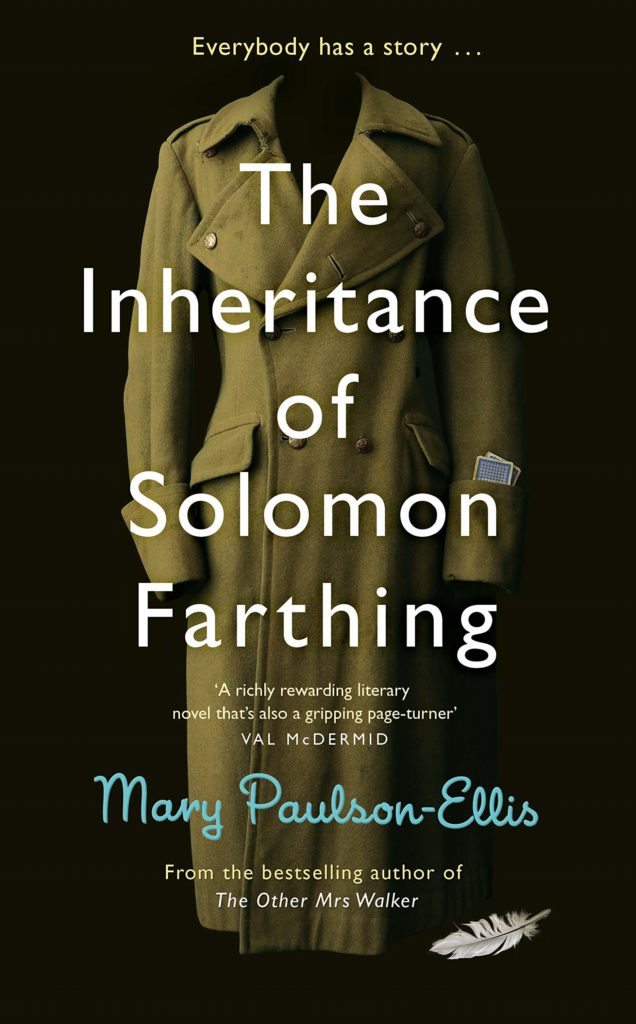 2019 has been another bumper year for Scottish books, but leaping ahead of the rest is Mary Paulson-Ellis’s second novel, The Inheritance of Solomon Farthing. Set between contemporary Edinburgh and the final, brutal days of the First World War it is once again a study of what happens to those who slip through the cracks of our society. Family secrets are revealed and unravelled like a spool of cotton and there are some simply stunning scenes and fine prose throughout. Paulson-Ellis obviously cares deeply for her subjects and characters; I cannot wait to read her next book. Notable mentions must go to The Sound of the Hours, Karen Campbell’s sumptuous World War Two novel set in Italy and David Keenan’s second novel, For The Good Times which covers the Troubles in his own inimitable style: once read never forgotten with Mr Keenan, long may he continue!
The Scottish book we are recommending most highly is the brand new and utterly gorgeous The Secret Life of the Cairngorms. This is the second year in a row we’re 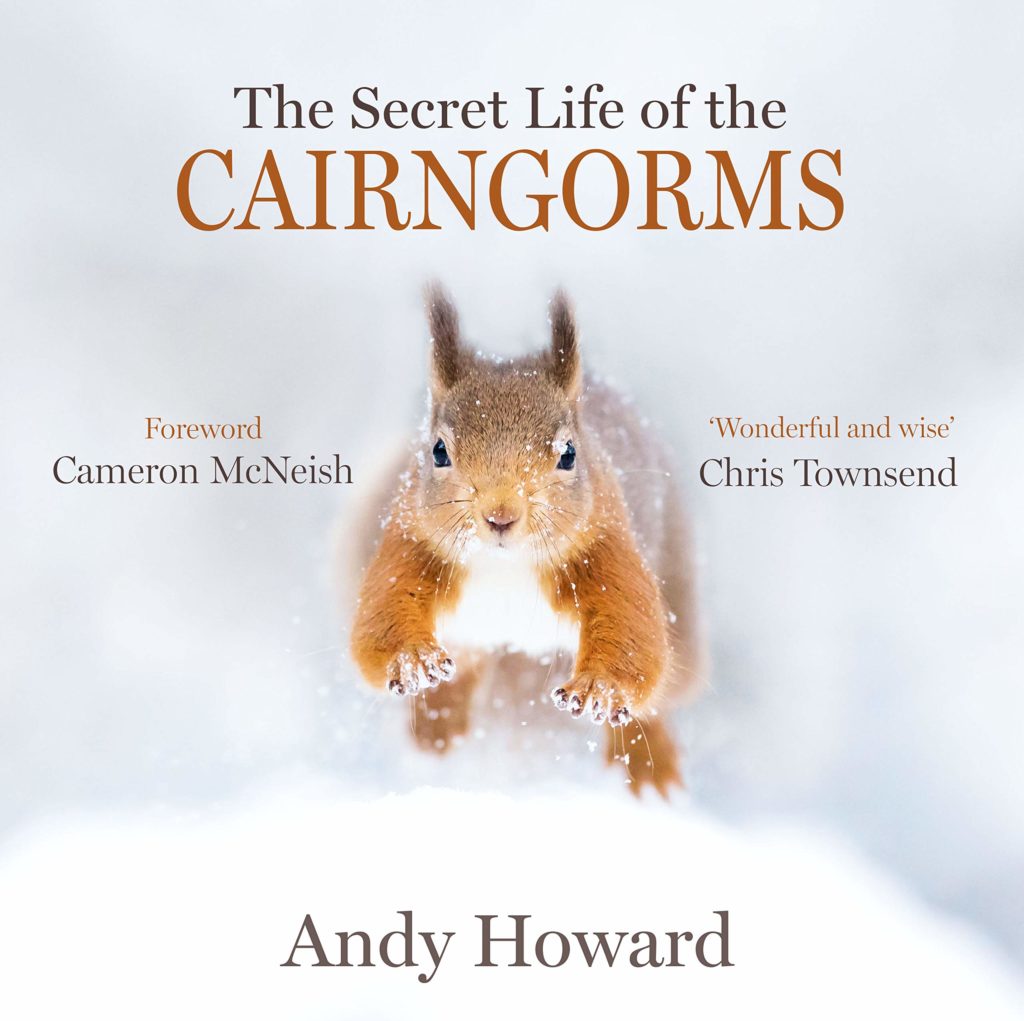 nominating an Andy Howard book with Sandstone Press as our Scottish Christmas title of the year – it is a partnership that’s really working and they are offering a book that pretty much everyone will enjoy. Packed full of stunning photos and thoughtful essays and a front cover that has a red squirrel bounding through snow, I’m very much hoping someone remembers to get it for me to unwrap on Christmas Morning! As always, there are a couple of honourable mentions – this year to the brand new Harveys Complete Collection Maps of the Munros. This is an absolutely stunning collection and pair it with the Munro Pocket Log & Tick List from those clever people at Top Munro for the ideal present for any confirmed hill-bagger!
Mairi, Lighthouse Books in Edinburgh
 There have been some fantastic books out this year – Scottish publishers like Monstrous Regiment, Knight Errant both had bestselling books for us, Sara Sheridan’s Where are the women? is such a brilliant work of feminist historiography…that said, absolute favourite has to be Wain by Rachel Plummer. Her LGBT reimaginings of Scottish folktales are gorgeously illustrated and totally magical for readers of all ages – as a bookseller it’s been a book that has led to some of the most rewarding, heartwarming conversations I’ve ever had with readers.
Can I make an honorary mention of Ceremony, a Tapsalteerie pamphlet collection of poetry from the Scottish BAME writers network – it’s a thing of beauty, showing the immense richness and creativity in Scotand’s contemporary writing scene. It’s also a timely reminder that to sideline/ignore/overlook our BAME writers is to do a disservice to our literary landscape as a whole – it is shocking that given the talent & craft evident in this teenie wee book so few have found publishers.
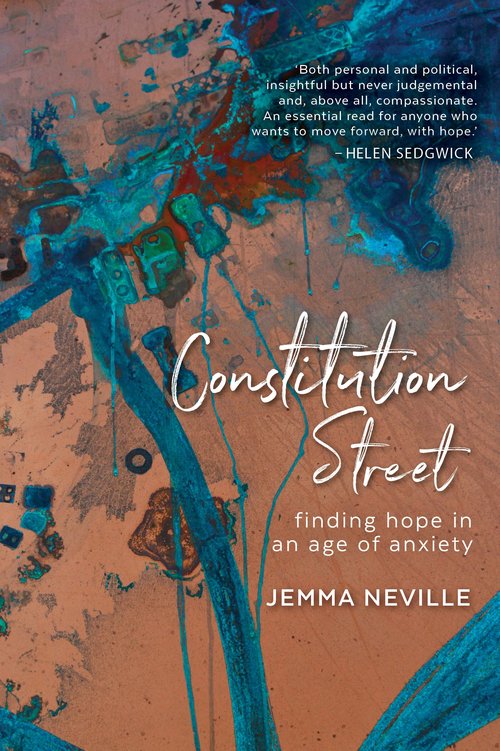 Jemma Neville’s Constitution Street should be read by everyone. At a time of constitutional crisis this book is so full of rational hope for a politics from the ground up that it will inspire even the most disheartened. Jemma’s human interest stories are woven into a shrewd legal and political analysis, showing us that we as citizens can act to strengthen and support our communities. It’s got a snazzy cover and is hugely readable so you can literally give it to everyone this holiday.
If we get fiction requests then Haunt Publishing’s debut anthology Haunted Voices is the perfect book for the dark Scottish nights – a great intro to some really exciting voices in gothic writing, which is such a glorious but undervalued Scottish storytelling tradition!
Sarah-Lou, The Highland Bookshop in Fort William
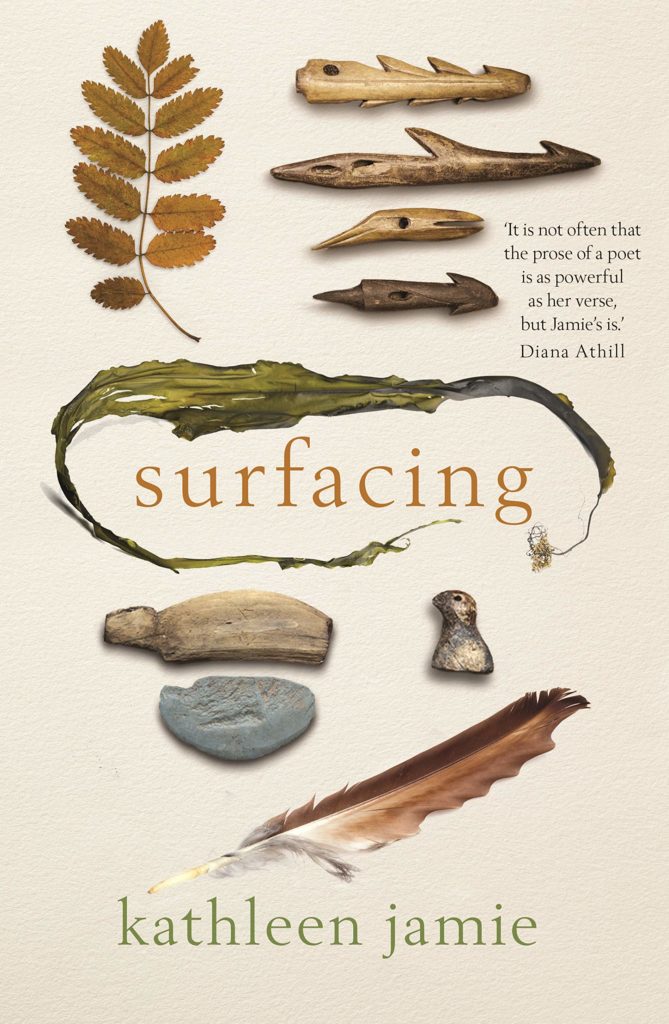 Hands down Scottish book of the year is Surfacing by Kathleen Jamie. It is an unforgettably stunning collection of essays told in Jamie’s powerful prose. She takes us on a textural journey through both her memory and archaeological history where she moulds each chapter into something utterly precious.
The book I’ll be recommending this Christmas is Warriors, Witches and Damn Rebel Bitches by Mairi Kidd. We love, love, love this book. A real celebration of strong Scottish women from history perfectly wrapped up in a fun and modern format that deserves a place under every Scottish Christmas tree this year!
Dorothy, The Watermill in Aberfeldy
 My favourite Scottish book of the year has been A Breath of Dying Embers by Denzil Meyrick. The latest out for DCI Daley and his side-kick Brian Scott. Very topical with terrorists and drone attacks on the Mull of Kintyre!
Our Christmas recommendations include:
The Munros: The Complete Collection of Maps from Harveys – not one to put in your rucksack for walking but very nice.
The Secret Life of the Cairngorms – only because it has a cute red squirrel on the cover! – seriously there stunning illustrations in the book.
The Way of All Flesh and The Art of Dying – have started reading this series and they’re good blend of history, medical drama and thriller.
And for children, An Illustrated Treasury of Scottish Castle Legends and Three Craws from Floris books, and The Tale o the Wee Mowdie from Tippermuir Books Ltd
Greig, Blackwells in Aberdeen
 Hand down my favourite Scottish book this year would be Karen Barrett-Ayres eye-catching Doric For Beginners. It has been a delight this year to introduce our regulars, tourists and our world wide student base to this humorous visual guide to the dialect of the North East. Ken fit I mean.
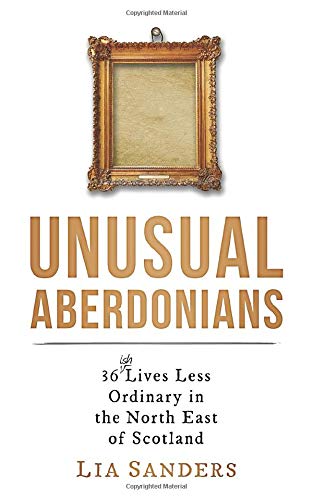
Another local recommendation with Lia Sanders fantastic Unusual Aberdonians: 36 (ish) Lives Less Ordinary in the North East of Scotland. This local history book chronicles the lives of 36 of most intriguing, bizarre and stranger-than-fiction folk from the North East. The book has been flying off our shelves since launching back in November.
Julie, Golden Hare in Edinburgh
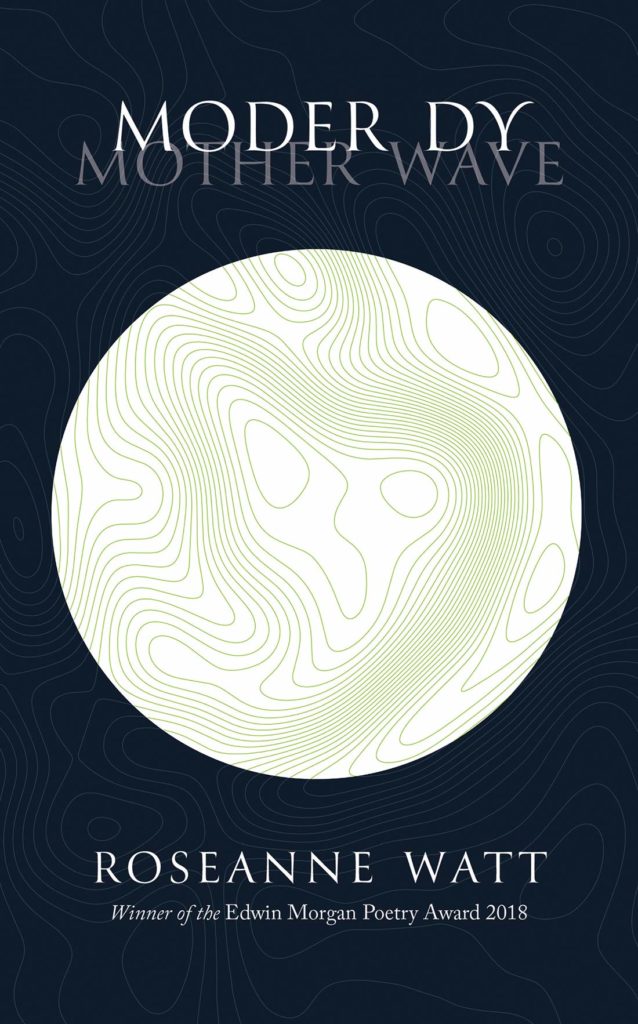 I absolutely adored Moder Dy, the debut collection by Shetlandic poet Roseanne Watt. I’ve been reading a lot of poetry this year, and this really stood out for me – there’s a real playfulness with language and a quiet melancholy that really moved me. I keep thinking about it and I love recommending it to people in the bookshop.
There are so many Scottish books that are big hits at Golden Hare – the Theresa Breslin/Kate Leiper folktale collections from Floris, the Muriel Spark novels from Birlinn and many more, but I absolutely love the newly published Illustrated Declaration of Arbroath by Andrew Barr published by the Saltire Society. It’s a gorgeous book about a key document in Scottish history that’s very pertinent to read in our current time – I’m recommending it to a lot of parents whose teens are interested in history or politics, but to be honest I want nearly everyone to read it.
Duncan, Toppings & Co in Edinburgh

My favourite of book of 2019 is Pockets of Pretty (An Instagrammer’s Edinburgh) by Shawna Law – A beautiful guide to help us discover the hidden corners of our stunning new home!
This Christmas, I’ll be recommending Tall Tales and Wee Stories by Billy Connolly – Some of his stage favourites collected for the first time in a book, as essential as old friends and a good dram over the festive period!
 Vivian, Main Street Trading Company in St Boswells
My personal favourite this year was Night Boat to Tangiers by Kevin Barry. Genuinely menacing but also hilarious!
My Christmas recommendation would have to be The World According to Doddie. We could all do to follow a few of his suggestions.
Hannah Lavery is a Scottish poet, playwright and performer. The Drift, her autobiographical spoken word show, was part of the National Theatre of Scotland’s 2019 season and Black History Month 2019. Finding Seaglass: Poems from The Drift was published by Stewed Rhubarb Press in May of 2019. We asked Hannah to talk about some of her poems.
Finding Sea Glass: Poems from The Drift
By Hannah Lavery
Published by Stewed Rhubarb
The Specials
Hannah: I wrote this poem for my son after he experienced his second racist name calling at the age eight. This poem came out of my struggle to protect and support him in this world which will at times judge him only by the colour of his skin. ‘The Specials’ is a poem about love and mothering, we want to hold our children close to us and I think we all fear what the world will do to our sensitive beautiful boys.
The Specials
It’s written on your face and whilst I can still read you let me take
it for you, take it out and leave it on the step. Here we will be home.
We will open the windows and scream it for the neighbours to keep
or -the rooks!
Aye, let them caw it out.
Its staining your boots son, and whilst I still can, let me scrub them
clean, soak it up, screw it up, rip it up, leave it out on the front step for
the foxes. We will be home here.
We will dance to The Specials in our sock feet before we open the
back door and yell it to the sky. We will grow strong here. Here, sweet
boy. Its shockwaves just- see?
We will dance to The Specials in our sock feet, in the half light,
leave our dirty boots fallen by the back door. It’s written on your face
and whilst I can still read it. Let me whisper our stories so they will
build to myths and legends
for you to emerge from- whole, strong, known. And let’s curse
through the letterbox before sticking it shut with masking tape and
let’s grow strong son, dancing to
The Specials- in sock feet. In our own half light.
My Mum Wears Pink Lipstick
Hannah: I was asked to contribute to Ceremony, Tapsalteerie’s anthology of work from members of the Writers of Colour Group at the Scottish Poetry Library and the Scottish BAME Writers Network. This poem explores my mixed race identity and relationship to my white mother. It is a celebration of our lives together.
My Mum Wears Pink Lipstick
I’d say you laid me in a sugar pink shawl but I can’t be sure.
You, with your sugar pink lipstick smile, like that sugar pink dress
that the Aunt Betty doll with her porcelain pink cheeks wore
Did we put her upon a cane chair or was it Great-Granny’s chair?
That you wrapped in sugar pink and powder blue fabric wi cushions
and curtains matching. The sugar pink of the Knickerbocker glory
we had after the dentist, matching the pink of it to our scoured gums
and the underside of his palms. We brought out sugar pink icing
for the Saturday tea, an indoor picnic, watching the A-Team.
Stuffing our faces wi sugar pink turkish delight, your sugar pink
lips marking, claiming me. Mornings, I sat at the end of your bed
watching cartoons and reaching under your duvet to tickle
your pink pink toes. Now, I think it is not pink but peach
and looking back not so sweet but fresh. It was a peach
and it was peachy skin and peach melba and it was peaches
we ate from the pedalo sellers that time in Greece, peaches
the size of tennis balls, collected from the waves, your peach
skin wet with the juice, beautiful peach skin turning shade deeper
that sugar pink lipstick dripping on my cheek. I was melon.
A melon colour. Yellow like my yellow towelling shorts with the go
faster stripes. My yellow skin, sandy like your yellow hair before
Henna red, Body Shop paste turning my hands as green
as our Kitchen walls, where we danced on Sundays to the Top 40.
Sugar pink you and me, your melon, melanated girl
and sometimes the sugar pink fell like paint, like raindrops.
Like rainbow sugar drops found in pockets. My mum
wears sugar pink lipstick and I find the stains of it
the sweet, sticky marks of it, everywhere.
Scotland, You’re no mine
Hannah: You can also find the poem in Finding Sea Glass.
Finding Sea Glass: Poems from The Drift by Hannah Lavery is published by Stewed Rhubarb, priced £5.99
Ceremony: An anthology of work from the Scottish BAME Writers Network is published by Tapselteerie, priced £5.00. It can be ordered here.
Throughout the year we have been collaborating with A Year of Conversation with features on the issue of Translation as Conversation. For Book Week Scotland, we have gathered together all these pieces in one handy spot. Enjoy!
Our first feature was from Tom Pow, the Creative Director of A Year of Conversation.
Next, we chatted to Kay Farrell from Sandstone Press about publishing the Man Booker International Winner, Celestial Bodies. (Though at the time it had only been shortlisted!)
Then, we had a feature from Jennie Erdal on her experiences of translation.
We spoke to Vagabond Voices next, who publish many translated works on their list. Publisher Allan Cameron wrote on why translating works of fiction is important for all readers.
Next, we spoke to Tom Pow again about the great Alistair Reid, a brilliant poet at the vanguard of literary translation.
Lastly, we spoke to Fionn Petch who translates for Edinburgh’s Charco Press on how travel and living abroad has helped with his translation skills.
For more information on A Year of Conversation, visit their website.
It’s not just humans that are social animals, and Whittles Publishing have just released a book that celebrates the marvellous mongoose. Here, the authors tell us about the social lives of these great creatures accompanied by some brilliant photographs.
Mongooses of the World
By Andrew Jennings & Geraldine Veron
Published by Whittles Publishing

Photograph by Julie Kern
There are 34 species of mongooses that are spread across the two continents of Africa and Eurasia, on which they live within a wide variety of habitats, from open savannah to dense rainforest. Yet very little is known about these fascinating small carnivores. Apart from a few species that live in Africa, such as the endearing and very popular meerkat, most mongooses are rarely seen in the wild, and several have never been studied by scientists.
Do mongooses live in groups, like a pack of wolves, or do they live on their own, like the solitary cats? In fact, most mongooses are solitary, but several species live in social groups, which highlights the extraordinary diversity of social organisation that exists within this group of small carnivores.
Twenty-three mongoose species live mainly solitary lives, with males and females defending separate territories and only coming together for a short time to mate, a few days at most – just a mother and her offspring will spend any significant time together, up to six months or so, and the father is not involved in their upbringing. Recent field studies, however, have revealed that some solitary mongooses may form groups when there are very abundant food resources, such as human garbage dumps. And one species, the yellow mongoose, usually forages alone during the day, but several individuals will sleep together at night in the same den and may cooperate with each other to raise their young.

Photograph by Kalyan Varma
Eleven mongoose species live in groups, ranging from 3 to 30 individuals and comprising adult males and females, and their young. These mongooses display many social interactions and individuals in a group will work as a team to raise their offspring, often babysitting, feeding and grooming pups that are not their own. They also cooperate with each other to detect predators, such as jackals, snakes and raptors, and will sometimes bunch together to drive away large dangerous animals. The meerkat and the banded mongoose are undoubtedly the most well known of the social, group-living mongooses.
Why do some mongoose species live in groups, whereas others do not? Cooperative hunting is a common explanation for why large carnivores, such as wolves and lions, form social groups: several individuals, acting together, can bring down prey larger than they could kill on their own, which can then feed the whole group, including any dependent young. But mongooses rarely work together as a team to capture prey that is larger than themselves. Instead, it seems that the availability of food is one of the prime driving forces for mongooses living in groups. Many solitary mongoose species include a large proportion of small vertebrates in their diet, such as small mammals, reptiles, amphibians and birds, and usually, there is just not enough of this type of food in their foraging area to feed several mouths at once. Also, one mongoose foraging alone is less likely to scare away a mouse or a lizard than a large group thrashing through the undergrowth. In contrast, social, group-living mongooses mainly eat invertebrates, such as insects, which can be very abundant in some habitats and are much less sensitive to disturbance by several individuals foraging together; invertebrates can also quickly replenish an area after they have been harvested. So for social mongooses there is enough food to go around for the whole group, and having another individual beside you while looking for food does not completely ruin your chances of finding a meal.

Photograph by Emmanual Linh San
Predation risk is another instrumental factor for driving sociality in mongooses, particularly in open savannah habitat. Mongooses are quite small animals that are vulnerable to large predators, such as larger carnivores, snakes and raptors, and a mongoose moving around in open habitat is particularly at high risk since it is much more visible to preying eyes. Being in a group can then be beneficial through coordinated vigilance for an approaching predator, and group members take turns to go ‘on guard’ to watch for predators by standing on an elevated structure, such as a termite mound or tree. This individual gives a specific call, the ‘watchman’s song’, to inform other group members which mongoose is on guard duty, and upon sighting a predator, it will then give a specific alarm call. This guarding helps reduce mortality within the group, since several dedicated eyes are scanning the horizon at all times. This vigilance system demonstrates the high levels of cooperation and communication that have evolved in social, group-living mongoose species.
The range of social organisations within the mongoose family is quite remarkable and is just one of the fascinating aspects of this amazing group. You can learn more about the natural history of mongooses through reading our new book on these intriguing animals.

Photograph by Emmanuel Do Linh San
Mongooses of the World by Andrew Jennings & Geraldine Veron is published by Whittles Publishing, priced £18.99
In his book The Literary Politics of Scottish Devolution, Scott Hames explores the relationship between Scotland’s cultural conversation and our political and constitutional changes. It’s a great overview of modern Scottish life and will inspire a growing list of books to read! Here Hames discusses how James Kelman uses voice.
Extracts taken from The Literary Politics of Scottish Devolution: Voice, Class, Nation
By Scott Hames
Published by Edinburgh University Press
In a set-piece irresistible to cultural critics, the state opening of the new Scottish Parliament found its ‘truly electric moment, the moment everyone remembers’ when the new intake of MSPs joined in Sheena Wellington’s recital of ‘A Man’s a Man For a’ That’. ‘Part of the frisson’, observed Douglas Mack, ‘doubtless derived from the fact that this old song gives voice to a radical egalitarianism of a kind not usually associated with royal opening ceremonies.’ With its noisy contempt for elite prerogative, Burns’ song is difficult to square with the sanctifying presence of the Queen, the Duke of Edinburgh and Prince Charles, who ‘sat in respectful silence, listening to lines about rank being merely ‘the guinea’s stamp’, about ‘yon birkie ca’d a lord’, about the ‘tinsel show’ of wealth and privilege’. This awkwardness extends to the well-scrubbed parliamentarians, solemnly crooning vindication of their ‘toils obscure’ for the television cameras, ventriloquising the disdain of the powerless.
But as nobody in the chamber (or watching a recording) could mistake, in the moment of song these rhetorical glitches are as nothing – so much ‘a’ that’ to triumphantly set aside. The contradictions of the scene are flushed away in the sensuous mutuality of collective singing. In releasing the sound and experience of latent togetherness – the force of ‘unisonance’ described by Benedict Anderson – this song-pageant manifests a condition of national co-presence emblematised by voice; and on terms far exceeding those of the Scotland Act 1998
. . .
In a 1995 article, Dorothy McMillan notes the authenticating appeal of demotic experience in the ‘new’ Scotland: ‘some engagement with the folk or the people has generally been found necessary in the construction of a notion of nation and it is, of course, in the urban discourses of James Kelman and his disciples that most critics north and south of the border have found the new centre of Scottishness’. Michael Gardiner’s 2005 primer on Modern Scottish Culture installs Kelman at the heart of cultural devolution: ‘dissatisfied with being politically silenced in the 1980s and 1990s, [Scots] had to find a creative solution [. . .] Kelman’s rise came at a time when Scots were literally finding a political “voice” in the form of the new Parliament.’ But Kelman’s best-known novel underscores the limits of conceiving voice as a channel for transmitting ‘given’ identities into pre-constituted representative space. Gardiner’s reading of How late it was, how late as a ‘direct representation of devolution’ therefore strikes me as antithetical; on the contrary, Kelman’s most celebrated novel is forearmed against intercessionary mechanisms of power, and pointedly refuses to conceive power as representation on the devolutionary model. Instead How late constitutes voice as the medium of being, and pungently insists ‘there’s a difference between repping somebody and fucking being somebody’. As in much of Kelman’s fiction, the narration seems to directly embody the subjectivity and ipseity of his characters – of The Busconductor Hines we are told ‘his language contains his brains and his brains are a singular kettle of fish’ – in language which is nonetheless saturated in class, place and Balibar’s ‘common acts’ of exchange.
With extraordinary immediacy How late seems to enact rather than describe the drama of Sammy’s inner life as he navigates the living moment, but in a relational idiom which de-centres his self narration into a form of reportage:
‘Quiet voices quiet voices, he was gony have to move man he was gony have to fucking move, now, he stepped back, pushing out the door and out onto the pavement he went left, tapping as quick as he could, keeping into the wall. He hit against somebody but battered on, just to keep going, he was fine man he was okay except this feeling like any minute the wallop from behind, the blow in the back, the quick rush of air then thud, he kept going, head down, the shoulders hunched.’
This hyper-naturalist effect cannot but flirt with the positivism of ethnographic writing; words that seem to ‘precipitate the culture they purport to describe’. Yet they also, in Kelman, enregister the particularity of the individual’s lifeworld and his freedom from what ethnographic writing (and parliamentary displays of identity) would reify as ‘given’. Sammy is an unemployed ex-convict who wakes up on a patch of Glasgow waste ground, unaccountably assaults some undercover police officers, and is blinded soon after they take their revenge. How late conveys, with overpowering intensity, his efforts to navigate this predicament, one compounded by the disappearance of his girlfriend and acute police interest in friends Sammy may or may not have met during a drinking binge he cannot remember. As he navigates various circles of bureaucratic purgatory, moving from police custody to doctors’ offices to charity clinics via the state social security apparatus, Sammy encounters lawyers, fellow prisoners and his young son. But he remains utterly alone in his struggle, and insists on a personally authenticated confrontation with state power: ‘He had nay intention of using a rep [lawyer]. [. . .] Nay cunt was gony get him out of trouble; nay cunt except himself.’
How late it was, how late is a heroic monument to the freedom and resilience of the individual subject – if any contemporary novelist ‘backs Descartes’, it is Kelman – but the fiction of psychological immersion he achieves is largely divorced from recognisable Scottish society. Traces of contemporary Glasgow are few and cursory, with the important exception of language: the medium of this character’s psychic being, mobilised as a literary device which seems to embody rather than signify social rootedness. In ‘obliterating’ the universalist third-person narrative space from which his characters might formerly have been ‘fixed’ as objects – their lives and speech rendered as mere sociological facts by an external, ‘colonising’ Standard English narrator – Kelman’s narrative experiments severely attenuate the ‘interconnected’ spatiality of the national imaginary. In this respect his narrative experiments aim to realise subjectivity rather than nationality, and his influence on the contemporary novel is not confined to Scotland.
The Literary Politics of Scottish Devolution: Voice, Class, Nation by Scott Hames is published by Edinburgh University Press, priced £19.99
Jill Weber and her husband Kirk helped found the Greater Ontario House of Prayer in Canada, and she served as its Abbess for 17 years. Jill is now the Global Convener of the Order of the Mustard Seed, a lay ecumenical religious order, and in her book she explores the many ways we can have a relationship with God.
Extract taken from Even the Sparrow: A Pilgrim’s Guide to Prayer, Trust and Following Jesus
By Jill Weber
Published by Muddy Pearl
My friend Sue is a cheeky Brit with a silvery pixie cut. Thirty years in Canada and she’s stubbornly held on to her posh London accent. She is equal parts fierce and tender. We first meet at a retreat where we are assigned as roommates. We hit it off from the get-go, never realizing how tightly our lives would be wound together over the next decade and a half. It feels like we are a string of Christmas lights, and when we each get plugged in, we light up!
My relationship with Sue really kicks into gear one day over coffee. ‘So our House of Prayer is trying to figure out how to grow in mission and justice, and it occurs to me that rather than reinventing the wheel and starting something up, maybe I should just chat with you. Can I follow you around a bit?’ We’re sitting in a local coffee shop. Sue is nursing her tea with milk. Her gaze is both sharp and warm. ‘I’m not sure that I will be particularly helpful,’ like a true Brit, she is self-deprecating. ‘But if you would like to come and be with us that would be just fine.’
That Sunday I find myself outside the local homeless shelter and rehab centre where Sue serves as chaplain. A handful of smokers loiter outside – they stare at me as I approach. I take a deep breath and run the gauntlet to the front door.
The staircase leads downstairs to the hall where the chapel service is held. It smells vaguely of sweat and something else, slightly sour and undefinable. ‘Glad you could come!’ Sue beams and shows me around. ‘Here is the kitchenette, there is the ratty little storage closet. And here is my office. Probably a good idea to leave your valuables in here.’ On her door is a painting of Lucy from the Peanuts comic strip, sitting at her booth with a sign that says, ‘The doctor is in.’ There is a line through the word ‘doctor’ and the word ‘chaplain’ has been written in instead. ‘My daughter painted that for me,’ Sue laughs.
Some of the residents arrive and briskly set up chairs and put Bibles and songbooks onto them. ‘We use songbooks and they choose the songs. It’s important that they choose – there is so much going on in their lives that they can’t fix, where there aren’t choices and options. Mostly they like songs that they heard at their parents’ funerals. Those are the ones that they remember.’
‘Number one! I want number one!’ Jackie’s hand shoots in the air. She’s quick on the draw, so we sing number one, which is ‘Amazing Grace’, Sunday after Sunday after Sunday.
I spend the first year hiding behind the coffee table. It provides a safe distance from this group of unkempt strangers but also gives me an opportunity to meet each one of them as they line up for cup after cup of coffee, which they take with spoonful after spoonful of sugar.
They arrive hungry and, before long, I am spending the week baking in preparation. The treats are well received, especially the cupcakes decorated as spiders and hedgehogs. I become an expert forager, gathering leftovers and snacks for our little flock.
…
‘Is there a full moon tonight? Everybody’s restless.’ It’s just one of those days when everything feels out of joint. One of the congregants is particularly agitated and while Sue attempts to speak, he lurches out of his seat. Swaying on his feet, he mumbles an invocation, sweeping his arms towards the four directions of the room. The crowd loses patience and begin to heckle.
Sue breaks into the rumble.
‘No one gets kicked out of my chapel!’
Cowed, the crowd quietens.
Sue then waits until he finishes, gently encourages him back to his seat, and proceeds with the service. I’m in awe. She may look like a tiny Englishwoman, but I see through her disguise. She’s really a Jedi.
I become Sue’s Padawan, her apprentice and shadow. Making coffee. Setting out and stacking chairs. Following her around. Watching everything she does and chatting with her about why she does it that way. Over the course of the next few years I get an indispensable education. How to cultivate safe, welcoming and inclusive space. How to honour the dignity of each individual and how to coax them to share their gifts with each other. I am wrecked for ‘regular’ churchy church.
…
I am dropped off in a neighbourhood that seems to be very much on the wrong side of the tracks. The front door opens to a hall where a bunch of scruffy men are sitting at tables, clutching coffee cups. ‘Here is where we have the soup kitchen and food bank,’ my host is showing me around. ‘Over there we have laundry machines so people can do their wash for free. And we’ve got a clothing bank as well, mainly for the men. Socks are always in demand.’
At the entrance of the prayer room there is an ancient and wispy woman swaying back and forth to the music. She has the gentle and vacant look of someone with dementia. Inside, a few African American children are playing tag amongst the seats and someone is passed out on a pew in the back. On the platform one of the singers is nursing her baby as she sings into the microphone. The singing is interspersed with rap and spoken word.
With a sigh of relief, I settle into a chair. Best pick a wooden chair, don’t know what crawly creatures might be living in the padded ones. My heart feels at home.
Even the Sparrow: A Pilgrim’s Guide to Prayer, Trust and Following Jesus by Jill Weber is published by Muddy Pearl, priced £12.99
In 2016, there was much debate over Ellie Harrison’s art project The Glasgow Effect. Now, with the project completed, Ellie has written a book about her experience of that year, her thoughts on why she started the project, and how she feels now about what she learned throughout the process.
Extracts taken from The Glasgow Effect: A Tale of Class, Capitalism and Carbon Footprint
By Ellie Harrison
Published by Luath Press
Anger and frustration were two of the overriding emotions provoked by The Glasgow Effect. People have every right to be angry in a world where the richest 1 per cent own two-thirds of global wealth and the richest 10 per cent cause half of global carbon emissions (which actually includes nearly all of us here in Scotland where we’re using three times our fair share of the world’s resources every year in order to fuel our carbon-intensive lifestyles), when all the while the ‘people who are poor and powerless bear the brunt’. People have every right to be angry at those in power who are doing nothing to remedy this situation – putting their own selfish interests above all else.
It was alienation, anger and frustration that pushed me into creating The Glasgow Effect in the first place. It was a scream, which was then amplified by the city. Enough is enough, we cannot go on like this! At the very start of 2016, the vitriolic response to The Glasgow Effect became a signal of the direction our world was heading towards.
. . .
This is where we come back to the arts. If art and cultural participation are also seen as ‘middle class things’, then that really is ‘robbery’ from the working classes, as these things can and should offer the antidote to consumer culture – a forum for free ideas and discussion away from the marketplace. It’s using your brain for something challenging like writing or reading, or making or viewing art, which enables you to start to see it as your most important asset, which makes it easier to turn away from drugs and alcohol and to protect it at all costs. ‘Your Health Is Your Wealth’ as Cathy McCormack so wisely said, mentally and physically. And as I discovered in 2015 after breaking both my arms, your health is also your ‘mobility’.
. . .
In the dark days of The Glasgow Effect, when I was cycling through the pissing rain and cursing out loud, or getting stuck in (self-)destructive Facebook wormholes, or waking up in the night with extreme anxiety and ‘home sickness’, I found it hard to remember any good things about this city. I forced myself to think hard. Back to the Scottish Government’s protection of the NHS in comparison to the Tories in England (which had come to my rescue on several occasions and no doubt will do again), to the fact that (unlike England) we still have publicly-owned water, to the free higher education, to the relatively cheap living costs (compared to London), but it was also the huge amount of free culture that I kept coming back to as the one reason why I had stayed here so long.
I kept meticulous records of every meeting, cultural, political or social event that I attended in 2016. There were 571 in total, most of which were free (funded with public money), meaning my annual bill for ‘entertainment’ came to only £129.50, about £2.50 a week. We must create a culture where all these brilliant events are seen as being there for everyone, they must be accessible and inclusive and inviting so anyone can go along. As well as that ingrained class prejudice, there’s a real structural barrier in the form of a shambolic and overpriced privatised public transport system, which means that for many people it’s simply impossible to get into the town, let alone home again, in the evenings. Not only have we created ‘food deserts’ through our failure to address our public transport crisis, we have wilfully created ‘cultural deserts’ as well. It’s no wonder our educational attainment is so poor. Both Carol Craig and Cathy McCormack argue that most poverty in Glasgow is ‘more psychological and spiritual than material’. And because ‘Inequality in arts participation is most closely associated with education’, another vicious circle has emerged.
All of these behaviours – eating unhealthy, expensive processed foods, smoking, drinking, other ‘mindless consumption’, not being able to cycle and rejecting art and cultural participation because ‘it’s no for the likes of us and it’s crap anyway’ – serve to entrench inequalities and reduce well-being amongst the most deprived people in the city. And this ‘aggressive philistinism’ is also potentially shutting people out of a fast-changing ‘labour market’ too, as the skills acquired through a creative education become those least at risk of ‘automation’ and are therefore the ones most in demand in our new ‘knowledge economy’. Likewise, Darren McGarvey and his followers’ resistance to applying for public arts funding for their work is also exacerbating inequalities. One of Loki’s many pieces about middle class people includes the line ‘they can’t be that creative, they’re all subsidised with public funding’. As well as his stated political reasons for not applying for public funding, it is clear his resistance is also about pride and the stigma of accepting any money from the state. It shows the extent to which the poisonous rhetoric of the right-wing media from the ’80s onwards (like the ‘NHS’ insult that I remember from the playground) has created deep shame in accepting welfare payments or other public funding. Neither of these things are a ‘begging bowl’ and if working class people just stand aside and let the city’s growing middle class population cream off all the public money, then they’re actually just helping to maintain the status quo.
The Glasgow Effect: A Tale of Class, Capitalism and Carbon Footprint by Ellie Harrison is published by Luath Press, priced £9.99
Good conversation needs good listeners too, but oftentimes, and for various reasons, that skill can allude us. This short story captures this problem excellently, and comes from a brilliant new collection from a new publisher. BooksfromScotland is excited to see what comes next from The Common Breath.
‘Good Listeners’ by Brian Hamill
Taken from Good Listeners
By Alan Warner & Brian Hamill
Published by The Common Breath
Sitting there and doing nothing – he was just staring out the window. It was still a fair distance home, so no point in being impatient about it, the bus would stop as many times as it had to and people would get on and they would ask the driver stupid questions, does this one go to the hospital son, and people would be getting off and asking the driver stupid questions again, as if he gives a shite what happens to you once you step off the ledge, and so the thing would crawl all the way to the right stop, the right street, and that would be that. And tired anyway, too tired to get annoyed, because it took energy to get annoyed and he had none, it was these morning starts that did it, the body held up fine but just a weariness, that feeling in the head, his brain going slowly, as if everything was happening underwater, and affecting the eyes, his eyes that were starting to drop and it was only the early evening.
He became aware of a new noise, in between the sounds of the engine, of people coming in and going out, and the hissing of the door and the wind outside – somebody had started to speak. There had been no talk when he got on. One of those good journeys where there aren’t any folk that know each other, so it stays quiet, tranquil, everybody sitting alone and just shutting up. But now there was this guy, talking steadily, giggling, bits of it could be heard as he droned on and on.
Turning to look down the bus and seeing the guy immediately, the mouth going a mile a minute, stopping only to grin, wink, enjoying his own joke, before going on with the stupid, shitty story. Something about a phonecall, an argument – it being easier to pick up the words now that the fucker was in view.
And who is it he’s talking to?
The girl of course.
The girl that he must have turned round in his seat to start a conversation with, as she’s in the one behind – surely if he had known her, he’d be sitting on the one next to her, if they were friends or whatever. If they’d had relations. Then surely they would have been nestled in together.
As it is the guy’s in front, she’s stuck facing him, and the pair of them are only a few rows away, so that he can see them without it being immediately obvious he’s watching. Which is fortunate. It’s a nice sight. Her wee slim shoulders, the back of her neck, and soft brown hair. Then there’s the guy, who shouldn’t even be twisted round like that, shouldn’t be pestering an innocent lassie; and just the look on his daft fucking face, as he’s leering right in at her, the wee bastard.
Grim.
Continuing to watch them, casually. No need to try and disguise it too much – the guy didn’t look like anything to worry about. He would keep an eye on them in fact, openly, to make sure there was nothing untoward. These young girls, alone, he had heard stories of what can happen. And there’s something about the way the guy was facing her, something in his expression. It doesn’t sit right. The annoying thing is, he had actually noticed her as well when he got on – not having any sort of a good look, but just the passing acknowledgement that the seat was occupied as he went past, and that the occupant appeared to be non-male. It was just the shape, the way she sat, her thin neck, you absorb these things in a split-second, without even glancing really. Yet that’s where it had ended for him; she was keeping herself to herself so he did the same. It was a bus, it was a Tuesday, he wasn’t going to slide up next to her as if they were in a fucking cocktail bar.
But this young gun had. Ok.
Rubbing his eyes briefly, then staring over at the two of them. So either the guy had only got on at the last stop, or worse, he’d spied her and moved over from somewhere else just to give her the chat. She is on the inside seat – is her head actually resting on the glass? It is tilted to the side. And the guy, on the opposite seat in front, turned right round with one leg sticking out into the aisle.
Hard to tell if she’s replying to him. Her ponytail twitches about at the back of her head, but that’s just the motion of the bus, probably. And even so, it proved nothing. She could be uncomfortable. Frightened, even. Considering getting off and walking, or waiting on the next bus, praying that one would be free of such perverts and psychotics. Maybe she’s terrified, hating it, pinned into the wall and desperate for somebody to come over and stop him.
The bloody patter the guy was coming out with, it was not real. That feeling of being embarrassed – for him – of getting a hotness about your own fucking ears and face, and then shaking the head and having to look away for a minute: this, for a person not even known to yourself. Crazy. That’s how fucking bad it was, it was just awful, what he was saying and how he was saying it. That the cunt could keep a straight face!
And there’s no way in this world she doesn’t know what he’s up to. It was impossible not to, an absolute impossibility, there was not a fucking mammal on land that couldn’t have, no no no.
No.
These are the times where it’s good to not be a girl, to never have to put up with this kind of rubbish, this transparent insulting fucking nonsense. He’s looking right at her, this young deviant, right now, for God sake, his head getting ever closer. The eyes he keeps giving her, it’s obvious to the point of being quite threatening. How could she not feel threatened? The beady eyes, moving about on her, burrowing into her – even he could see that and he was rows further back.
If only a message could be relayed to the guy somehow. Maybe to his phone, or into a fucking earpiece, something inreal-time just to say to him, to tell him, so that he would know: LISTEN, YOU’RE DOING TERRIBLE MATE, TERRIBLE, SHE’S EMBARRASSED, AND WE’RE ALL EMBARRASSED TOO, COZ YOU’RE GIVING US A BAD NAME HERE. TOO, TOO BAD. SERIOUSLY NOW, JUST FUCK OFF, OK, LEAVE IT. LEAVE IT AND COUNT YOURSELF LUCKY. OK? FUCK OFF.
But still they’re chatting, at least he is, when a group of new people come in, some going upstairs, some sitting down here. This big, heavy-looking older woman parking herself in the chair in front – he has to move out to the aisle seat just to keep a bloody view of them, on account of this old dame’s giant head with the hair all piled up and this hat perched on the top of it, looking absolutely ludicrous, really, but thankfully able to see them again . . . and having to blink and strain the eyes for a second to be sure, to see it clearly, but aye, it’s there, it was happening, the bastard had snaked his hand over the top of the seat and left it dangling down on her side. Fucking unbelievable! The fingers, so close to her, it was an invasion, but more than that – we were now nothing but a pot hole away from full fake-accidental hand-to-tit contact.
It is too much.
Too far.
He takes a long breath in.
The bus, swaying round corners, but managing to hold the handrails and get down to where they are, and seeing her wee face for the first time, she was quite young as expected, and so saying to him: Right, RIGHT!(to get him to look up, then going on: You leave the lassie alone, right? RIGHT? Don’t give me any shite – and actually having to shout a bit coz of the engine noise – Don’t even try it, you never came on with her, you’re annoying her and you’re annoying me, so go, go wait at the door, you’re getting off the next stop.
The guy’s eyes are opened wide, he tries to laugh, then his mouth moves in response, these words he’s saying, he’s trying to excuse himself, to plead maybe, but there’s too much feeling boiling up for it even to be listened to, nothing is being heard, nothing, there’s just no point to it, whatever daft shite he was saying, it’s only sound in a vacuum; but he’s talking faster and faster, he’s desperate to be listened to. Instead, moving forward quickly to grab a handful of the Bastard’s t-shirt, trying to pull him off the fucking seat since he wouldn’t stand up, but then she says something too and that seems to work, he reacts to her words and starts to rise, slowly, he’s whispering, holding his hands up like he’d a gun pointed at him. The grip of the t-shirt released accordingly. The guy squeezes out, taking care not to make any contact, and goes on down to where the door is. When he gets there he gives this look back, this nasty look with the lips moving again, and there’s a second or two when the thought passes through – the thought that maybe he shouldn’t be getting off so lightly. Maybe he is getting off way too light here. And there’s still time. The driver was not slowing.
But it’s the bloody tiredness.
It’s there again, he can feel it, there in his arms, his shoulders, his eyelids and the sides of his face, even down to his knees and his hips, like he was an old man, ready for the fucking glue factory, and is this guy even worth it anyway, really, when he had already shit himself and went to leave, he was nothing, the guy, in fact he was worse than nothing, he wasn’t anything, a non-person, a non-entity, a fucking waste of skin, you could go on and on about such a guy, but why even bother.
And anyhow: the girl.
He turns and smiles, and she starts speaking now, so the smart move is to sit down, to listen, because she can’t be heard as it is, so noisy on this bus, these fucking sounds, all of them, and all at the same fucking time, it’s just too noisy, it is.
I know, she says. I know.
And I’m sorry about that, what I had to do there, but I could tell he was over trying his luck. I saw you were sitting minding your own business when I got on.
He was ok, she says.
The hiss of the doors again, and that moment, the sweet, sweet beauty of it, when, even without looking, the guy can be seen, having almost forgot him as soon as he was out of sight, but then from the corner of the eye, down on the pavement, his stupid, sickening face, the open mouth, shouting something or other, and the bus pulling away, so slow, the old bus, it’s glorious that it’s so slow, really drawing it out, the engine roaring, stuttering, with him in beside her and the youngster stuck outside. He smiles out at the guy, who is making a gesture with his phone in his hand, waving it around, but it doesn’t deserve a glance really, he just looks so wee and pathetic out there, this young buck, the bold one, no longer important enough to stare at, not even to smile at and shout, enjoy the walk home, fucker! Bye-byeeeeee.
The guy disappears, lost from view.
And here he still is. Right in front of the lassie, smiling.
Her hair is red, it’s red! It had looked brown but now he’s that close and it’s red, the strands so light that it’s hard to believe he couldn’t tell before. She seems to be sort of grinning too. There’s this expression on her face.
Oh, he was ok, was he? Well maybe he was but still, that’s how it starts,eh?
She nods. She just nods. Blinking her eyes a couple of times as she does so, and he notices how long her eyelashes are.
What a situation to be in.
Sitting on the chair that had been his, the young guy’s, but with the hands holding firmly to the top of it, not draped over on the other side. Her side. Not to be going about it like that; that may have been the young bastard’s way of behaving, but it certainly isn’t his.
I’ve seen him on here before, you know, doing the same thing with other people, other girls, you know, trying that old carry-on.
She shrugs, glances at the mobile she has slid out of her trouser pocket. The screen is dark.
You off home then?
Aye. She doesn’t look up. And thanks.
Or it sounded like she said thanks, but her voice was that quiet, so quiet it was hardly a noise. It’s tricky to know for sure.
He lowers his head, just a bit closer in, so that the next thing she says will definitely be picked up.
Did you say thanks there? Was that it?
RIGHT.
The shout so loud it made him jolt in his seat, almost losing his balance. It was another voice, coming from further up the bus. He turns his head sharply to see the speaker.
Somebody standing in front of the back window. Right at the centre of it, the end of the aisle. A man. It had been a man’s exclamation, and it’s a man’s shape now approaching, the light from the window strong on either side of him as he begins to move down the aisle. Squinting to try and see the face but it’s not clear; too much in the shadow.
As the person gets closer he speaks again.
You can leave the lassie alone, RIGHT? Don’t even give me any shite. I saw you going over there and making her pal get off.
He feels himself start to smile as the guy continues. It was unbelievable. Yet this was his life – these moments, these interactions, he doesn’t look for them, they seem to just seek him out, every day, on the bus, wherever he goes. What to do? Evidently this confused person thought he was up to the same disgusting game as the youngster had been.
It was wrong to think that. And to say it, with the bloody lassie in earshot. Trying to catch her eye, but she’s pretending she can’t hear it, she’s keeping her head to the front. Something about that makes him feel so sad and sorry, that she should have to be frightened like this. There was nothing to fear for her, not with him here. Nothing at all.
The new fellow is close. He’s definitely bigger than the young guy was, and still talking on and on, fucking blabbering away; more words, and more eyes looking over, more things being said. None of it is really being heard. The sound is hitting his ears, but he is closed off to it. Inside. He is closed off inside and that’s why there is no need to be frightened.
That’s what these youngsters don’t understand. These fucking idiots he has to deal with, time after time, again and again and again. He sighs.
The bus shakes slightly. He feels the drift of air from one of the side-windows, then the girl’s hand tight on the cuff of his jacket briefly, before it slides back off. That she had touched him – she had actually reached out her hand and made contact with him, and yet he couldn’t say anything, couldn’t even look. Because of the situation. Because of this new guy, who was within an arm’s length. Right fucking there. Occupying the portion of space at the edge of the seat. Blocking the way. Just that alone was threatening, the guy being there, it was a threat.
The tiredness is all gone. He feels like stone. And still this guy speaks. Watching his mouth; the teeth and tongue as they move around. The saliva on his lips. So close now.
Slowly standing up, and looking straight into the guy’s eye. He stares directly in the fucking black dot in the middle of it; right there and nowhere else. The dot staring back. It moves from side to side, shuddering, not remaining still, but continuing to gaze out from the head, returning the look.
The talk keeps going too, but he can sense the guy is backing off. There is suddenly some distance between them.
Another hand is on his wrist.
And he hears nothing.
‘Good Listeners’ by Brian Hamill is taken from Good Listeners by Alan Warner & Brian Hamill is published by The Common Breath, priced £7.00.
10 years ago, Jo Clifford premiered her new theatrical production The Gospel According to Jesus, Queen of Heaven where biblical stories are reimagined by a transgender Jesus. Its staging caused a storm amongst theatregoers and beyond, some seeing it as too controversial, many others welcoming its message of love and acceptance. Stewed Rhubarb have published a 10th anniversary edition with the full script, plus reminiscences of those involved or inspired by its various productions across the world.
Extracts taken from The Gospel According to Jesus, Queen of Heaven
By Jo Clifford
Published by Stewed Rhubarb
Jo Clifford
I remember that on that occasion 26,573 people signed an online petition asking the City of Edinburgh Council to ban the show; and a lonely man with an array of placards that told us THE WAGES OF SIN ARE DEATH keeping a lone vigil outside the Traverse. I remember the bedraggled protestors outside the venue in Belfast, who had brought along a loudhailer, and a man with bagpipes to try to silence my voice.
I remember the man who filmed himself sitting in his car outside St John Chrysostom’s Church in Manchester, a bit bewildered because he was the only one trying to protest against me when ‘the show so clearly breaks the canon law of the Church of England,’ he said indignantly, holding up his well-thumbed leather-bound copy. He’d posted the video on YouTube and the next one to come up was from an evangelical group in America expressing their disgust at the show. ‘And this’ said their commentator, ‘This is the demon responsible for it.’ And up came my picture, and I understood that for many people I am evil incarnate.
Which is strange, given that the show celebrates love. I can’t begin to understand the reasons for the hatred the show provokes. I worry about the dangers my sisters have faced in Brazil in their courageous resistance to censorship. I love the fact they have taken the show in a completely different direction from ours.
We now have two productions: one for theatrical spaces, and one for everywhere else. We can now perform the show absolutely anywhere. And I hope we can continue to do so. We have filmed the production, so that people can see it in private in those many countries where it is dangerous to see it in public.
Right now, we are preparing to perform in Brussels; later this year, it will be in Glasgow again, to celebrate the show’s tenth anniversary. I don’t know what will happen next. I never have. I never thought the show would last so long, or so many people would see it, or that through it I would come to see myself as a performer.
I’m proud of it. Of all the one hundred plays I have written, perhaps it’s this one of which I’m the proudest.
And I think it may be doing some good in the world.
Rachael Rayment
Director of the original production
I was drawn to the play because it was so profoundly personal and intimate. For me, the play was about Jo, her Christian faith, her relationship to Jesus, the teachings of the Gospels and a defiant public expression of self. The very act of performing it was, as Jo herself says, a confrontation and exorcism of shame. At its core, it touched upon a deep sense of sacredness, humanity and compassion that was universal.
I didn’t have to be trans, or Christian, to understand and be deeply moved by it.
Susan Worsfold
Director, designer and founding director of Queen Jesus Productions
Queen Jesus is a work of devotion. Of devotion to ourselves and to being present with one another. To commune. It is constantly evolving, changing and deepening, dependant on where those of us who create it are in ourselves and where the audience are in their lives. To witness this is an ongoing journey and a continuous barometer of where the personal present meets the politics of its time.
. . .
We don’t bring a play, we bring a world. How we are with one another, how we consider one another, how we love one another directly impacts on how we open the doors to ourselves and to the audience.
This is always the time. This is always the place. This is always where we meet each other.
Chris Goode
Artistic director of Chris Goode & Company
The first time I saw Queen Jesus, live and in the flesh, was in 2013. Jo had come to be part of a mini-season I’d programmed at a now-closed (and much-missed) little indie theatre in Exeter. I didn’t know her too well back then, but we were proud to have her with us, and thrilled to be bringing Jesus to town.
. . .
Constantly oscillating between fragility and robustness, there is a level of presence in Jo—a fierce vibration of energy and psychic sensitivity—that feels almost supernatural, but is also profoundly human. Not a transcendence, but a kind of transpondence: a remarkable alertness to the signals alive in the room, the traces, the ghost whispers, invisible but palpable as a prickling on the skin, a shimmering in the mind. This mode of presence is the very essence of theatre as a social and political and spiritual act: but I’ve seldom seen it enacted, embodied, with such absolute fidelity.
What I remember just as clearly, though, is Jo staying with us in the tiny flat that we’d rented down the road from the theatre; the conviviality of decent wine (she insisted on that!) and good companionship, generous laughter and unguarded conversation. And behind it all, the smell of fresh-baked bread, specially made for the evening show. I think perhaps only a female Jesus—a grandmotherly Jesus—would bake her own bread.
Fiona Bennett
Minister of Augustine United Church, Edinburgh
The first time I encountered Queen Jesus was through reading the script. Our church (Augustine United Church in Edinburgh, where Jo is a member) planned to put on a performance of Queen Jesus as part of Pride. Given the horrific hatred Queen Jesus has received in Glasgow, Jo wanted me, as the minister, to read the script before we put it on. Reading the script, as someone who wrestles with and interprets scripture all the time, was delightful. Jo’s sense of the nuance, honour and tension in the Biblical stories is very good, but reading the script is only a shadow of encountering it in performance.
For the Pride performance, we sat in a huge circle and Jo enabled us to meet Jesus in a new yet very familiar way. I have seen Queen Jesus performed five or six times now and each time is for me a fresh encounter with the living God.
What is amusing about Queen Jesus is how conventional it is! Queen Jesus offers us teaching and stories very much along the lines brother Jesus did. But her identity as a transwomen (and the glorious craft in the words and performance) make the story intimate, relevant and alive. After the first time I saw Queen Jesus performed I described it as a ‘devotional’ piece, which in my mind is just exactly what it is. It is an expression of Jo’s heartfelt spirituality and sits on the cusp of theatre as liturgy, inviting the audience to taste God’s love and hope as Jesus revealed.
James T. Harding
Publisher, editor and designer for Stewed Rhubarb
I was raised by a recovering Catholic who sent me to Protestant Sunday schools and told me it was all nonsense each week when I returned home. The results of this were an aesthetic appreciation for ceremony, a tendency to question authority, and a snooty distain for the type of evangelism that waves a tambourine. In other words, little more than spiritual trappings.
I have been blessed to see Queen Jesus in several of its different incarnations. It has changed much over the time I have been a part of its congregation, both in text and in presentation, but one thing has remained constant: the queer people in the audience. Sometimes it’s literally the same people, who I recognise in the crowds at the book launch, the church, the festival, the theatre. Always, however, there is a glint of solidarity in people’s eyes, a glimpse of a spiritual queer communion which is quite different from the community feeling of a pride event or the party atmosphere of a club.
This, for me, is the power of Queen Jesus incarnate: a spirituality which does better than merely tolerate queer people, it makes the queer part of us a source of spirituality and wisdom.
The Gospel According to Jesus, Queen of Heaven by Jo Clifford is published by Stewed Rhubarb, priced £10.99
Rose Ruane’s debut novel, This is Yesterday, tackles how women define and express themselves, the consequences of both action and inaction, and the soul-fatigue caused by carrying around baggage from the past. Lee Randall reviews and finds a novel with much emotional resonance.
This is Yesterday
By Rose Ruane
Published by Corsair
Billed as a story ‘of a woman’s relationship with her art, her body and desires, her memories, herself,’ Rose Ruane’s debut novel, This is Yesterday, mines themes familiar to fans of her previous work across a range of media (performance, sculpture, drawing, video, and writing). These include emotional manipulation, self mythology, and the idea that a part of us never entirely grows up.
Here, Ruane probes questions that are certain to resonate with contemporary readers: Who has the ‘right’ to create art? Is there a statute of limitations on mistakes made in youth? Whose version of history is the version? Is anyone truly unloveable? If we lack purpose—any kind of purpose—what’s life for?
The novel kicks off with an abrupt wake-up call: ‘The phone ringing in the dead of night can only mean sex or something terrible. Or maybe both. Even in the deep sludge of sleep her body registers shock. Cold sweat and a kick in the chest.’ Peach is summoned to a hospital where her elderly father, suffering from Alzheimer’s, lies in intensive care, badly injured after being struck by a car.
We’re plunged into a family drama seen from Peach’s perspective. We discover she and her older sister, Bella, haven’t been alone together in 25 years. They are apparent opposites: Bella’s a mildly famous internet lifestyle guru, married to a man Peach disdainfully labels ‘part sperm donor, part hedge fund.’ They have twin daughters and financial security.
At 43, Peach knows what she doesn’t want, but has been less successful in identifying and achieving her heart’s desires. Her whole life ‘has felt like grieving for a better person she never became. . . . Peach never wanted to be called wife, she never wanted to be called Mum; but she always wanted to be called important.’
She has abandoned a promising career in fine art photography, ‘dumping art before it had a chance to break up with her.’ For a decade she’s worked as the gallery assistant for a man who ‘spends the first hour of his day doing yoga and meditating and the next eight throwing tantrums a two-year-old would consider needlessly dickish.’ Where Bella is beautiful and glossy, Peach is perpetually disheveled, seen swiping at the red wine stains peppering her coat as she tumbles into the ICU.
They are joined by younger brother Greg, an outdoors-loving, ‘adequate and practical’ bloke who has been most actively—and resentfully—dealing with their father’s increasing incapacity. Eventually their mother and her second husband arrive, rounding out the family unit and ratcheting up the tension.
Peach is ready for a rapprochement; she longs for one, but the siblings instantly fall into familiar patterns—all angles and sharp corners, glancing off each other without connecting, too afraid to speak honestly. This depiction of the push-pull of familial love/resentment hits the mark.
Push-pull effects characterise the novel overall, seen in the way it ping-pongs between present day and the summer of 1994, the fateful year when long-hidden secrets and sexual tensions crested, then burst like a festering boil, fracturing the family. Everyone blames Peach for what happened. She blames herself most of all, and we discover how the burden of guilt corroded her self-esteem, impeding her progress at every level—professionally, emotionally, intellectually.
The push-pull effect is also there in Ruane’s use of language, an unsettling profusion of short sentences and fragments. The narrative judders and jabs. For example: ‘After that they could not fudge and demur. Worst suspicions confirmed. Dad’s dissolution had a name. A prognosis. They gathered round the luminous blue scan as a consultant pointed out dirty thumbprints on the creamy cauliflower of their father’s brain.’
This technique mimics Peach’s inability to focus in the throes of a crisis, her skittish brain obsessively returning to its memory bank, searching for information to help her process how the past led them to this present and how they became the people they are now. Such language recreates the clicking of a camera’s shutter, capturing life in small, frozen bites. It is often distracting and distancing and may frustrate some readers.
Ruane is notably insightful about the female experience of sex, with all its confusion and ambivalence. Describing Peach’s first time, she writes: ‘No, she told herself; I’ve let him start, I’m losing my virginity: it is happening now. I might as well go through with it. She wondered if there was something wrong with her that she should be so practical in the throes of her first fuck.’
Sex and desire are complicated, and Ruane captures the how and why of that perfectly. Peach thinks: ‘All she wanted was for someone to hold her, to make her feel lovely. Not lovely even—just all right, a miracle of sufficiency.’ At various points we see her as both hunter and prey, victim and antagonist. Her vulnerabilities are never far from the surface.’Peach realised he had been checking her out to see if she would do, whereas now he was checking Bella and Magda out so see who he would do. Peach held Nick responsible for the pain of her own crass thoughts.’ And Ruane excels at conveying how women squander themselves emotionally, giving us a satisfying fist-pump of a scene when Peach ends a relationship by calling out her lover’s emotional cowardice.
Ruane’s Peach is someone you’ll want to shake and cuddle, sometimes simultaneously, for This is Yesterday conveys the messiness of real life—as well as its poignancy.
This is Yesterday by Rose Ruane is published by Corsair, priced £14.99
We all know and love Arthur Conan Doyle’s creation, Sherlock Holmes, but Robert J. Harris may love him more than most! He has been writing the brilliant Artie Conan Doyle Mysteries for a while now, putting the young author through a series of adventures perfect for young sleuths. We caught up with Robert J Harris to talk to him about his latest mystery.
The Artie Conan Doyle Mysteries: The Scarlet Phantom
By Robert J. Harris
Published by Floris Books
For those who are still unaware (for shame!) could you tell us a little bit about the Artie Conan Doyle mysteries?
The premise of the series is that Arthur Conan Doyle, while still a schoolboy in Edinburgh, has a series of adventures which will later inspire him to create the character of Sherlock Holmes and write those stories which would make him the most famous character in literature. In the course of these adventures he gradually acquires the skills of a detective and takes his first steps towards being a writer.
You’re on your third mystery now, The Scarlet Phantom, could you give us a hint of what to expect?
I pride myself that the mysteries Artie has to solve are worthy of the great Sherlock Holmes himself. In this novel he is presented with a series of seemingly impossible crimes committed by an invisible thief who walks through walls and disappears at will. It will take all his courage and ingenuity to crack the case along with his friend Ham, new friend Peril Abernethy, a girl scientist, and young actress Rowena McCleary, who returns from the second book in the series The Vanishing Dragon.
You’ve written a number of novels for adults and children, and you like to tackle characters from history. What do you like about continuing to explore characters that already exist?
My first two solo novels concerned the teenage adventures of Leonardo da Vinci and William Shakespeare, which was an exercise in imagining what they would have been like as young men and inventing adventures for them set against an accurate historical background. Working with existing literary characters is a very similar in that I have to accurately represent the world of the original stories.
I see myself in a position rather like that of a folk musician who works in a certain tradition, carrying on and maintaining interest in that tradition while enriching and adding to it. In my case I see myself as carrying on in the particular tradition of the Scottish adventure story, which can be traced from Sir Walter Scott on through Robert Louis Stephenson, Arthur Conan Doyle and John Buchan right through to Alistair Maclean.
As well as reviving John Buchan’s classic hero Richard Hannay in two new adventures, the Artie Conan Doyle Mysteries allows me to approach Sherlock Holmes from a new and entertaining angle. Having honed my skills as a mystery writer in the Artie series, I am excited to now be working on a brand new Sherlock Holmes novel which is to be published by Polygon in September of 2020. Watch out for that!
Your novels are action-packed and full of adventure. What do you think is the key to a good pageturner?
In order for a novel to be a page turner it is not enough to just have exciting action and cliffhanger chapter endings. Readers actually have to care what happens next because they have been drawn into the story and are engaged with the characters.
Have you ever solved any crimes or mysteries in real life? Or do you keep your adventuring to the page?
I did many years ago use deductions worthy of Sherlock Holmes to discover where my wife had misplaced the spare car keys (They were in a tray of children’s paints on top of the fridge.). Other than that my adventures are strictly literary.
What novels inspire you in your writing?
The novels of Arthur Conan Doyle, John Buchan and John Dickson Carr. My World Goes Loki trilogy was inspired by the comic fantasies of Diana Wynn Jones. I have also written a teen science fiction novel inspired by the stories of Eric Frank Russell which I am sure WILL BE PUBLISHED ONE DAY!
What are you reading at the moment?
I’m reading Night at the Mocking Widow by Carter Dickson, which is a pen-name of my favourite mystery writer John Dickson Carr. In non fiction I really enjoy Tom Holland’s histories and am now reading his latest Dominion: the Making of the Western Mind. In comics I’m reading Injustice 2 from DC. I am totally in love with the whole of the epic Injustice series. And no, I won’t call them graphic novels. There’s nothing wrong with reading comic books.
What other books do you always recommend to young readers?
I always recommend the hilarious Dark Lord: The Teenage Years by Jamie Thomson, Frozen in Time by Ali Sparkes, and Red Fever by Caroline Clough, a gripping post-apocalyptic adventure for younger readers.
Do you know what’s next for young Artie? Are you allowed to tell us?
We don’t have a fourth adventure scheduled as yet, but I have some ideas about what will be in it. It will be a little different as this time Artie and his friends – Ham, Rowena and Peril – will be working as a team right from the start. This opens up a wide range of possibilities for investigation and adventure and will allow me to try the characters in new combinations.
The Artie Conan Doyle Mysteries: The Scarlet Phantom by Robert J. Harris is published by Floris Books, priced £6.99
David Robinson takes a look two new historical thrillers, and appreciates their masterly world building and page turning plots.
The Crown Agent
By Stephen O’Rourke
Published by Sandstone Press
Death in the East
By Abir Mukherjee
Published by Harvill Secker
At the end of Ian Rankin’s latest Inspector Rebus novel In a House of Lies, there’s a brief mention of the notorious nineteenth century Edinburgh murderers Burke and Hare. The former was, of course hanged, and his skin forms the binding of a notebook on display at Edinburgh’s Surgeons’ Hall Museums. But Hare is the interesting one. In exchange for giving evidence against his friend, he was released. According to Rankin, Rebus and Wikipedia, he fled south, someone blinded him and he spent the rest of his days begging.
The fact is, nobody really knows what happened. The story of Hare’s blinding may only be, as historian Owen Dudley Edwards has argued, a Victorian morality tale to prove that, in Rebus’s words, ‘nobody every really gets away with it’. But novelists were never going to leave such a fascinating vacuum unfilled. Five years ago, for example, Scottish journalist Peter Ranscombe’s debut novel Hare imagined him not only living on for decades but playing a vital role in the American Civil War.
The latest novelist to work Hare into his story is Stephen O’Rourke, a Greenock-born lawyer (a QC, no less) whose first novel The Crown Agent introduces us to disillusioned doctor Mungo Lyon. It’s 1829, Burke has just been hanged, but because of the revulsion against Lyon’s mentor, Robert Knox (who bought the bodies Burke and Hare supplied him for use in anatomy lessons), he is unable to practise as a surgeon. When the Lord Advocate asks him to turn detective and find out more about schooner Julietta, which has been found adrift on the Firth of Clyde with all of her crew dead of yellow fever, he agrees immediately.
Already the reader knows that some sort of game is afoot, because the novel’s prologue had a lighthouse keeper being murdered in the middle of a storm just as he was about to light a beacon to help a stricken ship (the Julietta?) a mile off Cumbrae. Three days later, a customs officer disappeared from Campbeltown, so perhaps the Julietta had been smuggling something from the Caribbean. But what?
Second question: whatever the illicit cargo, where was it landed? Third, whom did it benefit? Lyon has to work out whether any of the four main landowners on that part of the coast were involved, and if so, why. Fourth question: who are the four men pursuing Lyon right from the start working for? Fifth: can Hare – whom Lyon meets in Greenock at the start of his mission – really be trusted?
The Crown Agent has its roots in a short story O’Rourke submitted for a Daily Telegraph competition in 2012. It won, and from the novel one can easily guess what the judges saw in it. O’Rourke writes well, the plot has an engaging complexity, and it is generally free of anachronisms (although I’m not sure whether Lyon’s family home in Edinburgh’s Morningside Place would have been built by 1829). Generally, though, he is spot-on: the Glasgow Lyon passes through is already booming, even though steel and shipbuilding haven’t yet arrived, and the onward journey to Greenock is possible by steamship but not (yet) by train. The journey across from Edinburgh is still most comfortably done on the canal that Burke and Hare came over from Ireland to dig, so Lyon does just that, ‘drifting asleep to the clop of Clydesdales hauling me west’ with his pistol in his medical bag next to his bunk.
Night Barge to Falkirk. At this early point in the story, that would have made sense as a title – indeed, I’d like to have had more quiet moments like that, where we could get to know Lyon better. Because when the plot starts again it’s as loud, insistent and colourful as a cinema advert. Lyon – who boasts early on that he ‘can amputate a limb in 48 seconds with the patient unconscious, slightly longer if not’ – will get plenty of opportunities to do just that in a storyline that, as well as everything I’ve already mentioned, also takes in kidnapping, insurrection, a masked ball, murders and deaths galore and trawlerfuls of red herrings. It’s a rich mix, but if you love unadulterated adventure stories, Mungo Lyon could be well worth following.
The year after O’Rourke won that Daily Telegraph short story competition, another Scot won. Abir Mukherjee turned his winning tale into his debut novel A Rising Man, which went on to win yet more awards. I haven’t yet read it, but now want to, because his fourth – Death in the East – is one of the most enjoyable historical thrillers I have read for a long time.
In the books, Mukherjee pairs Captain Sam Wyndham, who becomes a detective in Calcutta after surviving the First World War, with Sergeant Surendranath Banerjee (or “Surrender-Not” as he is invariably called by imperialist Brits). It’s after World War One, Calcutta has only relatively recently lost its status to New Delhi as the capital of the Raj but is still its main economic hub, and Gandhi’s campaign for independence is about to begin. A fascinating time, and an intriguing place, both barely explored by crime fiction.
In relation to crime novels set in the present, those set in the past always makes me think of that great line about Ginger Rogers having to do everything Fred Astaire did ‘except backwards and in high heels’. If it’s hard enough to get the present right, it’s even harder to bring the past to life, and populate it with characters who don’t feel as though they are our contemporaries. Racist attitudes being what they were in the early 1920s, you might briefly wonder whether Wyndham is just being a bit too ‘woke’ for his own good in his friendship with Banerjee. Or vice-versa, come to that: wouldn’t Bannerjee’s affection for Wyndham be similarly unlikely?
The trick Mukherjee pulls off is to make those questions irrelevant, so convincingly does he write about character, and so subtly about his book’s historical setting. It helps, of course, that Wyndham isn’t your traditional Raj stiff upper-lipper, but at the start of this book a paranoid opium addict undergoing detox at an ashram in the Assam hills. As for Banerjee, that nickname is just about perfect: yes, it’s racist not to call him by his proper name, but there’s a certain implicit respect in the nickname too.
Although half of the book is set in 1922 Assam, Death in the East actually gains a lot of its impact from the story of a murder in the East End of London in 1905, where Wyndham served as a constable. When the main suspect turns out to be Jewish, a great deal of what Mukherjee wants to say about racism in the Raj already applies here in anti-semitism stoked by Daily Mail-type newspapers (I caught myself thinking what a great name – Harmsworth – he had invented for one such hack before I realised that, of course, he hadn’t.) The murder victim is a former girlfriend of Wyndham’s and his attempt to solve the case reveals a great deal about his character, not all of it to his credit. On top of that, the case is a classic locked room mystery, which turns out to be mirrored in a similar one in Assam. So: not just excellent characterisation and historical credibility (and, I should add, witty narration too), but bravura plotting as well.
In interviews, Mukherjee has admitted that his Wyndham and Banerjee books owe a great deal to Martin Cruz Smith’s Arkady Renko novels or Philip Kerr’s Bernie Gunther series in which good men uphold systems they don’t believe in. He’s right: they do, and yet his pairing of detectives from such different backgrounds allows for an even greater degree of cultural and political understanding. But those are the standards by which Death in the East should be judged, and it more than matches them. I wouldn’t be remotely surprised if it goes on to win the McIlvanney Prize as best Scottish Crime Book of the Year at 2020’s Bloody Scotland. Yes, that good.
The Crown Agent by Stephen O’Rourke is published by Sandstone Press, priced £14.99
Death in the East by Abir Mukherjee is published by Harvill Secker, priced £12.99
Crìsdean MacIlleBhàin / Christopher Whyte is a poet in Gaelic, a novelist in English, and the translator from Russian of the poetry of Marina Tsvetaeva (1892–1941). After teaching at the universities of Rome, Edinburgh and Glasgow, he moved in 2006 to Budapest where he writes full-time. His sixth collection Ceum air cheum / Step by step, with facing English translations by Niall O’Gallagher, is published by Acair, and has been shortlisted for the Saltire Poetry Book for the Year 2019. This is his poem in the latest New Writing Scotland collection, Sound of an Iceberg.
‘Mo Shearmon’ / ‘The Way I Talk’
By Crìsdean MacIlleBhàin / Christopher Whyte
Taken from Sound of an Iceberg: New Writing Scotland 37
Published by the Association for Scottish Literary Studies
MO SHEARMON
Mo shearmon siùbhlach struthlach deifreach,
’na ruith gu cabhagach mar an t-uisge
an dèidh da dhoineann bualadh air bearradh àrd
fad uairean, ’s e sireadh gach beàirn is sgoir,
dèin’ air a bhith tèarnadh, a bhith
sgaoilte ann am mìltean dhe chuisleannan
beaga, drillseanach, nach cuir cnap-starra
bacadh fada orra – far an tig stac gu oir,
bidh an t-uisge gu h-obann a’ stealladh
mar gum b’ e falt fuamhair a bh’ ann,
ach leis a’ cheart ghluasad mhì-fhoighidneach
a bhios aig boireannach ’s i tilgeil
a pailteas chiabhan ri taobh
a thuiteam ’nan eas dhe bhoinnean
do-àireamh, làidir, leanmhainneach –
theireadh tu nach fhliuiche idir a bh’ ann
ach sreangan, ròpannan anabarrach tana,
cho tana ’s gum bi sèideadh beag gaoith
a’ fòghnadh gus an toirt às a chèile –
no dh’fhaodadh iad a bhith
’nan cùirtear a tha ceiltinn
chan eil dòigh air nochdadh
ciod e ’n seòrsa thaisbeanadh,
am mireagach no gruamach no co-measgt’ –
mo shearmon a shiùbhlas cho grad
nach bi gu lèor a dh’ùin’ agad
airson freagairt a chruthachadh nad inntinn,
feumaidh greas a bhith ort
ma tha thu ag iarraidh a ghlacadh!
Mo shearmon a tha mar bhòcan beag crùbte
a gheibh a-steach do chùbaid
nach bu chòir neach eile seach am ministear
a bhith ’na sheasamh innte,
le aodach sìobhalta, oifigeil a’ mhinisteir air,
tha e sealltainn dìreach coltach ris
ged a smaoinicheas an coithional
gu bheil e mar gum b’ ann air seargadh –
b’ àbhaist don mhinistear a bhith coimhead
beagan na b’ àirde – agus fhuair
am bòcan gruag bhreugach a dhinn e
sìos air a cheann, bhon a tha fhios ann
falt nam bòcan a bhith cleiteagach, pràbhach
mar nach biodh riamh falt a’ mhinisteir
’s e nochdadh anns an eaglais air Di-dòmhnaich
agus, san tiota a thòisicheas am bòcan a’ bruidhinn,
cha bhi ach treamsgal gun chèill
a’ sileadh a-mach bho bhilean sgabach
do bhrìgh ’s nach eil na bòcain
eòlach air aon chànan daonnda
ach draoidheachd shònraichte a bhith orra –
is ciamar a dh’fhaodadh draoidheachd phàganach
a bhi èifeachdach san eaglais air Dì-dòmhnaich? –
san tiota seo, nochdaidh am ministear
am measg a’ choithional
gun aon chòmhdach air a chom
rùisgte mar san latha a thàinig e dhan t-saoghal
agus bidh e a’ ruith ’s a’ ruith às an eaglais
suas air a’ chnoc a tha faisg oirre
fo mhaoim gum faic an sgìreachd uile
cho crìonach neo-theòma ’s a tha a cholann
’s a bharrachd air sin cho beag ’s a tha a ——
(aon fhacal air a dhubhadh às an seo)
ach air cho clis, grad-shiùbhlach ’s a bhios am ministear
a’ ruith dh’ionnsaigh na coille taobh eil’ a’ chnuic,
fo ionndrainn do bhrìgh ’s gu bheil e cinnteach
nach bi e tachairt ri drathais no briogais
air an crochadh gu dòigheil air geug beithe
no sgithich, mar as àbhaist dhaibh bhith crochte
ann am preas-aodaich farsaing
san dachaigh chomhfhurtail aige –
aig a’ cheart àm, bidh am bòcan a’ leantainn air gu socraichte
treamsgal an dèidh treamsgail a’ tighinn bho bheul
cha robh fhios aige idir e fhèin a bhith
cho sgileil anns an òraideireachd,
tha ’n coithional a’ fàs beagan an-fhoiseil
b’ àbhaist droch latha no dhà a bhith aig a’ mhinistear
cha bhiodh e an còmhnaidh ag ràdh
rudan reusanta no loidigeach
aig amannan bhiodh e doirbh dha-rìribh
aomadh no brìgh a shoisgeulachd a ghlacadh
no aon seagh a b’ fhiachail a tharraing a-mach aiste
ach an-diugh tha e dìreach air a chuthach –
bidh am ministear bochd a’ faighneachd dheth fhèin
am bu chòir dha, ’s dòcha, dàibheadh dhan lochan
ach tha uisgeachan an lochain uamhasach fionnar
b’ fheudar dha snàmh gu tìr is a liubhairt fhèin
mu dheireadh thall – air cho bun-os-cionn,
dian, clisgeach ’s a bhios am ministear fo oillt
a’ saigheadh air adhart ’na dheann-ruith,
cha ruig e ’m feast’ an luathas a th’ aig
Mo shearmon a bhios uaireannan mar fhiadh sgeunach
nach fhaicear ach plathadh dheth am measg nan duilleagan
leis cho meata prìobhaideach ’s a tha e
agus an uair sin, gun rabhadh idir, mothaichidh tu dha
a’ streup suas air a’ bhràighe
is smaoinichidh tu gum faodadh sin a bhith ’na aisling
bhon a tha am fiadh cho mòrail, rìoghail, coileanta ’na mhosgladh
gach ball dheth a’ co-oibreachadh le chèile
mar gun robh e ’g itealaich an àit’ a bhith siubhal,
creididh tu cuideachd gum b’ fheàrr math dh’fhaodte
nach robh sin ach ’na aisling bho nach bitheadh
modh no inneal ann an uair sin
beud no aimhleas a bhith beantainn dha,
bhiodh e do-ruighinn do-leònadh do-chiùrradh
mar gach rud a chruthaich mac-meanmna
no a thugadh dhuinn ann am bruadar,
cho iomlan, cuimir, do-chlaoidheadh –
agus their thusa riut fhèin:
“Chan eil mise creidsinn ann an Dia sam bith,
chan e Crìostaidh no Muslamach a th’ annam,
cha bhi mi toirt mo thaic do ghin dhe na seann-teagasgan
mu bhodach aosta, fòirneartach
no mu na h-àitheantan a sgrìobh e sìos
gu bhith gan leantainn leinn
no mu na peanasan sìorraidh
a tha a’ feitheamh oirnn
mur a bi sinn strìochdail gu leòr” –
ach their thu cuideachd gur dòcha sin
am faireachdainn a bhiodh aig Dia fhèin
an uair a chruthaich e creutair ùr de fheòl ’s de fhuil
gu bhith ga shuidheachadh am bad àraidh dhen t-saoghal
Mo shearmon gun fhios dè cho fada ’s a tha e dol a bhith
’s dòcha gun tèid mi air adhart
gus am faigh Alba neo-eisimeileachd
aig a’ cheann thall agus
“Abraibh rium! Sibhse aig a bheil
dlighe air inntreachdainn sa bhùth bheag is crois
a chur sìos ri taobh na beachd as fheàrr leibh
eadar ’s gu bheil sibh gealtach no dàna!!
Ciod e an àireamh bhliadhnaichean as fheudar traoghadh
mus tig an latha miannaichte sin?”
Mo shearmon a bhios ’na dhearbhadh nach eil
coltas sam bith ann gu bheil
an cànan seo fo smachd a’ bhàis
a dh’aindeoin na their a’ chuid anns an dùisg
a’ Ghàidhlig gràin no gamhlas, a bha co-èigneachadh
ar pàrantan is ar seann-phàrantan
gus a mùchadh ’s a dearmad,
a dh’aindeoin linn sàrachail fadalach
nuair nach ceadaichte a h-ùisneachadh san oilthigh no san sgoil,
sam bruidhneadh na fir-teagaisg
eadhon air cuspair Gàidhealach sa Bheurla,
ar cànan fhìn a dh’fhàs ’na adhbhar-maslaidh,
’na chomharradh air bochdainn’ is ainfhios
na feadhna chleachdadh ann an cagair e –
smaoinichidh mi air cruinneachadh sgoilearan
bliadhnaichean air ais sa Phòlainn, ann
am baile ris an can na daoine Szczecin
baile Pruiseanach a bh’ ann ron chogadh,
Stettin an t-ainm a bh’ air, bha suipeir
fhèiseil, mheadhrach a’ dùnadh na còmhdhalach,
òigear ann, ’s e Sasannach, bha ’g obair
ann an oilthigh san Eadailt, mar a rinn mi fhìn
is mi ’nam òigear, ach nuair a chaidh mi null
a bhruidhinn ris, an ciad rud a thuirt e,
b’ e Not many people speak that language
agus chuala mise mo ghuth fhìn ag ràdh
gu soilleir, stèidhichte, a’ toirt
a thruime sònraichte ri gach aon lide
I – just – haven’t – got – the – time
dh’èirich mi air ball is chaidh mi thairis
gu na boireannaich Phòlainneach nach bitheadh,
bha mi cinnteach, claon-bhreith dhen t-seòrs’ ac’
’s nach iarradh orm bruidhinn mu dheidhinn cuspair
a bhruidhinn mi mu dheidhinn cho tric san àm a dh’fhalbh
’s gu robh e faisg air sgreamh a dhùsgadh annam –
nuair a sheall mi air ais, cairteal uarach às a dhèidh,
bha an t-òigear a’ coimhead orm fhathast
iongnadh air aodann, theireadh tu
gun d’ fhuair e dìreach sgealp air a ghruaidh
agus smaoinich mise nach robh teagamh ann
nach e dreuchd a tha a’ beantainn ruinne fhìn
barrachd foghlaim a sholarachadh do luchd na Beurla
Mo shearmon aig nach bi ach fìor-chorra uair
an aon mhaille eagnaidh, mhion-chùiseach a bhios
uaireannan aig mo leannan ’na ghnìomhachadh –
cha bu chaomh leam sibh a bhith gam thuigsinn ceàrr,
faodaidh a’ chùis gu lèir a bhith air a coilionadh
ann an ùine ghoirid cuideachd, mar an turas sin
a bha sinn còmhla nar suidhe aig cuirm-bainnse
is bana-charaid ghràdhaichte air pòsadh aig a’ cheann thall –
theab sinn gach dòchas a chall oir bha
uimhir a chompanaich air a bhith aice, cuid dhiubh
geanalta gu leòr ach cuid eile nach gabhadh
creidsinn gu robh i comasach air feart thaitneach
no tharraingeach sam bith fhaicinn
ann an uilebheist dhen seòrs’ ud – chan ann
mu dheidhinn gastachd no ciatachd a tha mi bruidhinn
ach mu eileamaidean nas bunailtiche riatanaiche
mar, dè cho tric ’s a bhios cuideigin ga nighe san t-seachdain
air neo, gu leòr a mhion-airgead a bhith ’na phòcaid
gus dà chofaidh a phàigheadh, gun iomradh air notaichean –
bha feasgar àraidh ann a thàinig esan dhachaigh
cha d’ fhuair sinn bloigh de chadal gu trì uairean san oidhche
’s e bruidhinn is a’ bruidhinn mun chùram a bh’ aige
air sgàth na bana-charaid ud – ach a nis bha coltas ann
a h-uile rud a bhith air a seatlaigeadh gu dòigheil,
mo leannan riaraichte mar a bha mise,
sinn nar dithis beagan nar misg, ris an fhìrinn innse
ged nach robh na mìlseanan fhathast air am bòrd a ruighinn
ach bha am fìon a dhòirt iad nar gloinneachan
blasta gu h-ìre nach fhurast’ a chur an cèill –
thuig mi bho mar a bha e sealltainn orm
cha duirt mi facal is mhair esan cuideachd ’na thost,
lean mi e gus an taigh bheag aig na fireannich –
b’ e taigh-òsta anabarrach rumail is spaideil a bh’ ann,
suidhichte am meadhan pairce mhòir, agus na caibeineidean
san taigh bheag aibheiseach mar gach uidheam eile,
thachair a h-uile rud gu luath snog, bha sinn fortanach,
cha d’ rinn neach eile ar ruighinn fhad ’s a bha sinn ann –
an dèidh dhuinn an t-èideadh foirmeil aig a chèile
a chur gu mionaideach air gleus, mar a bha feumail,
chaidh sinn air ais gus an talla mhòr
far an robh a’ chuideachd uile ’na suidhe –
ach ’s ann mu dheidhinn maille shònraichte a thig air
am mòmaidean ainneamh a bha mi ’g iarraidh bruidhinn,
neo-ar-thaing gu bheil sinn air uimhir a bhliadhnaichean
a chur seachad le chèile, mar as trice is esan
a stèidhicheas ruithim an t-sùgraidh,
chan eil mi cinnteach carson a tha sin a’ tachairt,
’s a’ mhaille ud a’ misneachadh faireachdainn annam
cho anabarrach tlachdmhor ’s gu bheil e an impis a bhith pianail –
faodaidh an ceart ruithim a bhith uaireannan aig
Mo shearmon mar chuthachd aighearach nan gobhlan-gaoithe
ann am baile beag san Eadailt air barr cnuic
le bòtharan corrach, caola ’s na taighean cho faisg
air a chèile, bidh tu ri plosgartaich mun ruigear leat
mu dheireadh an sguèar a dh’fhosglas air a’ mhullach –
mothaichidh tu gu h-obann dha na gobhlanan-gaoithe
gan cur air bhoil le camhanaich an latha
dìreach mar a bhios a’ chlann a’ ruith
a’ glaodhach ’s a’ brùchdadh a-mach
sna deich mionaidean mus tèid iad dhan leabaidh
an nàdar fhèin a’ fàsgadh bhuap’
gach aon luirg air smioralas no guaineas,
a’ cuimhneachadh mar a bhrùthas neach spong
gu teann eadar a mheuran gus a h-uile
boinn’ a fhliuich’ a dh’fhanas innte fhuadachadh –
na gobhlanan-gaoith’ gu trang a’ figheadh sa chamhanaich
lìn aibhisich len goban, a’ glacadh
snàthainnean an dorchadais an siud ’s an seo,
chan e na cuileagan no na meanbh-bhiastagan
itealach eile a cheapas iad, ach cinn
sreanganan na duibhr’ ag udal san adhar,
iad gu dìcheallach a’ saigheadh
eadar nam bunnacha-bac, a’ teannachadh
na lìn ud anns an tèid an’ oidhch’ a ribeadh
gu mall rùnaichte dh’aona-ghnothach,
plangaid dhubh a’ teàrnadh oirnn uile
a cho-èignicheas eadhon an fheadhainn as buaireasaiche
’s an-fhoiseile dhen chloinn a ghèilleadh
ris a’ chadal a dheòin no a dh’aindeoin
ged nach do dh’fhàs iad fhathast sgith dhe
Mo shearmon . . .
THE WAY I TALK
The way I talk moves, streams and urges,
rushing along like water when a storm
has beaten for hours on a high ridge,
seeking out every gap and notch,
aching to descend, to be scattered
in thousands of small, gleaming
rivulets no obstacle can hold back
for long – where a crag reaches an edge
suddenly the water spurts
like the hair of a giant,
but with the same impatient gesture
a woman has tossing her mass of hair
to one side, so it descends
in a waterfall of countless
drops, powerful and insistent –
you would think it wasn’t wetness at all
but cords, unbelievably thin ropes,
so thin a gust of wind suffices
to dishevel them – or else
they could be a curtain hiding
who can tell what kind of a performance,
comical or tragical or both –
proceeding so fast
you won’t even get time
to form a question in your mind,
you’ll have to put your skates on
if you want to catch up with
The way I talk like a little hunched goblin
who somehow managed to get into the pulpit
where no one else but the minister
has any right to go,
wearing the minister’s fine, official garb
and looking very like him
even if the congregation have the feeling
he sort of shrank –
the minister generally looked
that little bit taller – the goblin also
got hold of a wig he pushed
down onto his head, because everyone knows
goblins have shaggy, unkempt hair
such as the minister’s would never be
when he appears in church on a Sunday
and, as soon as the goblin starts talking,
nothing but senseless drivel
comes from his scabby lips
given that goblins are incapable of speaking
any human language whatsoever
unless under a particular spell –
and how could a heathen spell
work in church on a Sunday? –
at that very moment, the minister
appears in the midst of the congregation
naked as on the day he came into the world,
he runs and runs out of the church
up onto the hill close by
terrified that the whole shire will see
how withered and uncoordinated his body is
and besides that, the smallness of his ——
(one word has been crossed out)
but however nimbly and speedily the minister
sprints towards the wood on the far side of the hill,
filled with melancholy because he knows only too well
he won’t come upon a pair of trousers or underpants
hanging tidily on the branch of a birch tree
or an ash, the way they usually hang
in the spacious cupboard
of his comfortable home –
meanwhile the goblin chunters on determinedly,
more and more rubbish coming out of his mouth,
he had no idea he was such a splendid orator,
the congregation is getting a bit restless,
from time to time the minister would have a bad day
the things he used to say weren’t always
reasonable or logical, at times
it was extremely difficult
to grasp what he might be getting at
or extract any worthwhile meaning from his preaching
but today he has really lost the place –
the poor minister is wondering
if maybe he ought to dive into the loch
though the water is tremendously cold,
he would have to swim to the shore in the end
and hand himself over – however helterskelter,
headlong the panicking minister is
as he shoots onwards like an arrow in his flight,
he’ll never match the speed of
The way I talk, at times like a shy deer
you only catch a glimpse of through the foliage
because it is so withdrawn and private
and then, without warning, you see it
climbing up the braeside
and you tell yourself it could be a vision
because its movements are so majestic, kingly, consummate
all of its limbs working together
as if it were flying rather than running,
and you wonder if it might be better
for it to be a vision, because then
there would be no way or possibility
for harm or malice to reach it,
the deer would be inaccessible, invulnerable
like whatever the imagination produces
or something we see in a dream,
perfect, shapely, invincible –
and you say to yourself:
“I don’t believe in any kind of a god,
I am neither a Christian nor a Muslim,
I don’t support any of the old doctrines
about a venerable, violent old man
or the commandments he wrote down
for us to follow,
or the eternal punishment
waiting on us
if we are insufficiently obedient” –
but you also say that maybe this
was how God himself felt
after making a creature of flesh and blood
to set down somewhere in the world –
The way I talk, without anybody knowing
how long it is going to continue
maybe until Scotland finally
achieves independence, and:
“Tell me! You who have the right
to enter the little cubicle and put
a cross next to the policies you favour
however courageous or craven you may be!!
How many years still need to pass
before that longed for day arrives?”
The way I talk which proves beyond question
death is not going to triumph over this language
whatever people who regard Gaelic
with distaste or detestation may say,
the ones who forced our parents and grandparents
to suppress it and neglect it,
all through endless, oppressive years
when it couldn’t be used at school or at university,
when teachers would use English
even for discussing Gaelic topics
and our language was a source of shame,
a symbol of poverty and ignorance
for the people who spoke it in a whisper –
it makes me think of a conference
I attended years back in Poland,
in a town they call Szczcecin,
a Prussian town before the war,
Stettin was its name then,
the whole business concluded
with a joyous, festive dinner,
there was a young Englishman who taught
at a university in Italy, as I had
when I was young, and when I went over
to speak to him, the first thing he said was
“Not many people speak that language”
and I heard my own voice saying
firmly, steadily, giving due weight
to each single syllable:
“I – just – haven’t – got – the – time”
I got up at once and went over
to the Polish women who I was sure
wouldn’t have prejudices of this sort
and wouldn’t ask me to talk about something
I’d been asked so often in the past
it simply made me feel sick –
when I looked round, a quarter of an hour later,
the young man was still gazing at me
with a surprised expression, you would think
someone had just struck him on the cheek
and I decided there was no question about it,
it’s not a job we have to take on,
educating people who promote English –
The way I talk, which very, very rarely
has the same detailed, punctilious slowness
my partner occasionally has when making love –
I wouldn’t want you to get me wrong,
sometimes the whole business is over
in a very short time, like the day
we were both sitting at a wedding lunch –
a dear woman friend had finally married –
we practically lost hope, because
she had been with so many guys, some of them
perfectly acceptable, but others
there was no way you could grasp how she could possibly
find anything pleasing or attractive
in a monster of that sort – I’m not
talking about manners or looks
but about basic, indispensable things
like, how many times in the week somebody washes,
or having enough change in their pocket
to pay for two coffees, not to mention notes –
one night my partner came home,
we didn’t get a wink of sleep till three in the morning,
he kept on and on with how worried he was
about our woman friend – and now it looked
as if everything had got settled properly,
my partner was as pleased as I was,
the two of us slightly tipsy to tell the truth,
even though they still had to serve the puddings
but the wine they poured into our glasses
was excellent in a way I can’t describe –
I realised from how he was looking at me,
and followed him without saying a word
to the gents’, he too was silent –
it was an unusually spacious and posh hotel,
in the middle of a big estate, the toilet
cubicles were as huge as everything else,
we got through it neatly and quickly, we were lucky,
nobody else entered all the time we were there –
once we had adjusted our formal clothes
with due care, we went back
to the big hall where everyone was seated –
but what I wanted to talk about was
the particular slowness that comes over him
in certain rare moments, even if the two of us
have been together for such a long time,
generally he sets the rhythm of our lovemaking,
I couldn’t actually say why this happens –
that slowness awakens a sensation in me
so acutely pleasurable it almost hurts –
sometimes there is that same rhythm in
The way I talk, like the exultant craziness
of swallows in an Italian hilltop village
with twisting, narrow lanes and the houses
so close to each other, you are spluttering
before you finally reach the square
that opens at the summit – all of a sudden
you notice the swallows going crazy in the twilight,
just the way children will run around
shouting and exulting in the ten
minutes before they get into bed,
nature itself squeezing out of them
every last trace of energy or mischief,
making you think of how you squeeze a sponge
tightly between your fingers to expel
every last remaining drop of moisture –
the swallows busy weaving in the dusk
a huge net with their beaks, catching
the strands of darkness here and there,
it’s not midgies or other flying
insects they intercept, but the ends
of threads of darkness floating in the air
as diligently they dart back and forth
between the eaves, intently weaving
that net tighter, gradually and deliberately
so the night can get trapped in it,
a dark blanket descending on us
that forces even the most tempestuous
and restless of children to yield in the end
to sleep, even if they’re still not tired of
The way I talk . . .
translated by Shuggie McCall
‘Mo Shearmon’ / ‘The Way I Talk’ by Crìsdean MacIlleBhàin / Christopher Whyte is taken from Sound of an Iceberg: New Writing Scotland 37, published by the Association for Scottish Literary Studies, priced £9.95
For over 10 years The Big Issue magazine has asked some of the best known figures in sport, politics, business and entertainment to talk about their younger selves and to offer advice to that person they once were. Here we share extracts from interviews with two of BooksfromScotland’s favourite writers, Val McDermid and Ian Rankin.
Letter to My Younger Self: 100 Inspiring People on the Moments That Shaped Their Lives
Devised and edited by Jane Graham
Published by Blink Publishing
Val McDermid
At 16 I was preparing for my Oxford entrance exam. I was very driven and pushed myself in everything. I played hockey for the first eleven in the East of Scotland. I played guitar and sang in folk clubs. I won debating prizes. Everything I did, I wanted to do really well.
I was very much of the working-class generation that thought education was the key to doing well in life. My parents were bright people who passed their exams to go to high school but they had to leave at 14 because their families couldn’t afford it. They never got to reach their potential, so they very much encouraged me not to be trapped by circumstances. But my parents had mixed feelings about my going to Oxford. It was a long way from Kirkcaldy – the only time we’d gone to England was a weekend in Blackpool. And it was a long way intellectually as well. So I think they were really a bit nervous for me, as well as very proud. But I think they saw that I was always going to go my own way.
I became aware when I was at Oxford that I was drawing a line between my past and my future. I couldn’t articulate this when I was 16, but I think I wanted to spread my wings because of my sexuality. There were no lesbians in Fife in the ‘60s. I knew I felt different, and quite lonely, listening to Leonard Cohen and Joni Mitchell on my own, feeling that sense of both alienation and unhappiness. I thought my difference must be because I wanted to be a writer. If lesbians aren’t visible in your culture – on TV or in books and films – it’s very hard to come to that understanding by yourself. I’d spend hours walking with the dog along miles of coastline – days full of nothing but me, my dog and a book.
I did go out with boys. That’s just what you did. I went to parties, did the illicit drinking, a wee bit of smoking dope. On the face of it, I was the life and soul, but I knew I was going through the motions. The music I was listening to was a far better reflection of how I really felt. And I was singing in folk clubs, where you’d meet people hanging out in the back room – people like Billy Connolly and Gerry Rafferty. It wasn’t glamorous at all, but I was playing with people who were serious about what they were doing. If I hadn’t been a writer, I’d have liked to be a musician.
. . .
If I’m honest, I’m still a bit wary of the world and I still hold back a bit. Many women struggle to let go of that imposter syndrome; waiting for the moment when they turn round and say, ‘It’s not really you we wanted!’ When I went for my Oxford exam, the woman asked me how long I’d lived in Shetland. My heart contracted in my chest and I thought, ‘They’ve got the wrong person. It should be a lassie from Shetland sitting here, not me.’ I almost shouted, ‘I’ve never been to Shetland!’ She said, ‘But it says here you went to Fair Isle Primary School.’ I said, ‘That’s just a name!’ That was a terrible, terrible moment, and it’s never quite left me.
*
Ian Rankin
At 16, my life was all about rock music and books – I didn’t go out much. I grew up in Cardenden, a very working-class mining village with no private housing. I was surrounded by family – an uncle over the back fence and an aunt two doors along – so every move was monitored and you couldn’t get away with anything. Even if you didn’t feel like you fitted in, you had to look like you did because you didn’t want to get beaten up. I was happiest staying in my bedroom with my hi-fi and my records, writing painfully bad poetry about a lovely young woman who wouldn’t look twice at me.
I was painfully shy around girls. I still remember that crippling embarrassment of the two-month run-up to Christmas at school, when you stopped having PE and started having dance lessons. All the boys lined up on one side of the room with the girls on other side, and you had to pick a partner and spend the next 40 minutes dancing the Gay Gordons with them. You had to hang back to let the roughty-toughty kids get their first choice, because if you picked their favourite you’d get a kicking at playtime. It was nightmarish for everyone involved.
. . .
I think the teenage Ian would be dumbfounded by how his career has gone. If he dreamed of writing, it was as a literary novelist, not a guy whose books you’d buy in an airport bookshop. He’d want to be studied at university or as a set text in schools. I’m not sure he’d have wanted to be a wellknown popular writer, and I’m still not sure I’m used to it now. I might look quite relaxed on TV, but it’s taken me 20 years to get there. When I first went on The Review Show, I was an absolute bag of nerves.
Letter to My Younger Self: 100 Inspiring People on the Moments That Shaped Their Lives, devised and edited by Jane Graham is published by Blink Publishing, priced £16.99
All royalties from the sales of this book go to The Big Issue.
Floris Books are well-known and loved for their beautifully-illustrated childrens’ books, and they have another stunner with Little Pearl by Martin Widmark (and illustrated by Emilia Dziubak). It’s a tale of sibling love and adventure with gorgeously-surreal artwork reminiscent of Alice in Wonderland. Let BooksfromScotland introduce you to this magical tale.
Extract and illustrations taken from Little Pearl
By Martin Widmark, illustrated by Emilia Dziubak
Published by Floris Books
Daniel loved it when his parents were out, because Grace came over and told him bedtime stories. Her tales were the most exciting ever.
‘Please…’ he begged, when she was tucking him in, ‘just one more.’
‘OK,’ she agreed, ‘but then you really have to sleep.’

On her finger was a ring with a big pearl. She held it up close, and began: ‘A long time ago, when I was younger than you, when every day was as bright as this pearl, something strange happened to my big brother Tom. At first, all I knew was that he’d disappeared…’
Tom wasn’t just my brother, he was my best friend. We did everything together. He always looked out for me. He carved two wooden flutes: one for me and one for himself. We made up tunes and played together.

And then one day in the middle of winter he was gone. There was no trace, no clue of where he might be. Every night I cried myself to sleep, and dreamed of him and his music.
On a cold, snowy morning, I wanted to escape the sad house. I took my red sledge to Tom’s favourite hill. As I started down the slope, the sledge quickly picked up speed, and soon it was plummeting so fast my tummy tingled. Then it hit a little bump on the hillside.
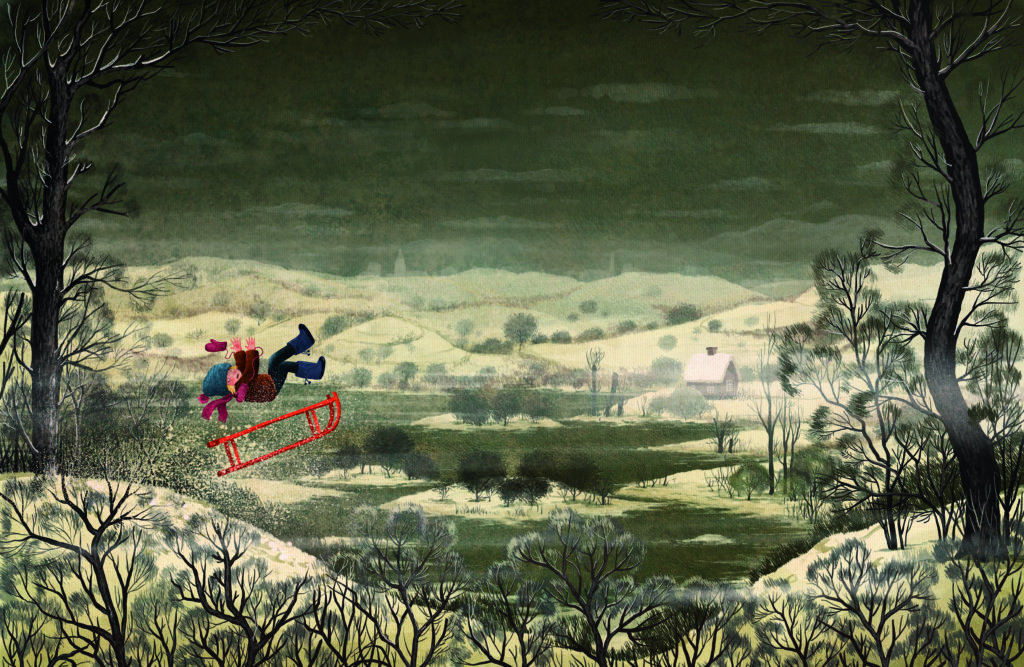
I flew into the air and the sledge shot off through the trees. I skidded into an icy tunnel, sliding faster and faster until I couldn’t tell up from down.
Little Pearl by Martin Widmark and illustrated by Emilia Dziubak is published by Floris Books, priced £12.99
Alycia Pirmohamed is a Canadian-born poet living in Scotland and is a current Ph.D. student at the University of Edinburgh. Her chapbook, Faces That Fled the Wind, was picked by Camille Rankine as the winner of the 2018 BOAAT Chapbook prize and we are delighted to share some poems from that collection with you.
Poems taken from Faces That Fled the Wind
By Alycia Pirmohamed
Published by BOAAT Press
Ways of Looking
Every prayer is a heron at first glance,
the marbled neck of someone
indistinguishable from this house.
Every figure wildreed unbelonged cursive
is a morning’s mound of sugar.
This mosque is a wood
where I sit cross-legged,
alder straight.
Where I mirror my mother’s
twenty-year-ago askings.
This mosque is a cut of apple—
I mistake each slice for a mouth
—I mistake the back of every head
for my father;
red gala, ambrosia, faces arranged into
holy sorrows.
He is here with cloves packed
into his wounds.
I am here because there are wounds
packed into my wounds.
In my language, every line is a fallen thing.
In my other language,
.
Mother’s
I am imagining again,
her story
of resin and cassava,
thin blood,
and flight.
It is mine, too,
like mirrors
inherited only
from mother, to mother,
to daughter—
eventually.
That smaller
tether
in every cell,
a helix of hushes,
sweet, tart
grapes on the vine.
All of the firsts
accruing in a body,
one voice
splitting into its Februarys
and its silences—
first dab of oil,
first whole nutmeg,
first unknotting
of adolescent hair—
first heartache,
its spectrogram passed
down,
whale song
from chest to chest,
an echo slickened
with rain and salt
and habit.
Hawwa is Creating Her Garden
Before her, the clay
of evergreen and juniper and oak.
Hawwa drinks sweet water from the well
studies the spine of each tree,
kisses each face
she finds in the river.
Hawwa is this garden. Look closely
at the rosary beads that glisten
like blackberries
on the bough.
Hawwa is olivine
and zinc,
she has planted seeds beneath the highest point
of the sun
and unfolded her body
onto the earth. She rises
like an eagle,
and laughs like a wasp.
Hawwa loves many things, and what she loves
she gives a name—the birds
that ki ki ki
are northern flickers. She cracks open a
pistachio
and delights in its snap.
Hawwa is heart and animal and breast and god.
Faces That Fled the Wind by Alycia Pirmohamed is published by BOAAT Press.
Your home is supposed to be your sanctuary, the place where you are most relaxed, most safe. But what if you have the neighbour from hell – literally? In his latest thriller Anthony O’Neill gives us a page-turning cautionary tale on getting exactly what you wish for.
Extract taken from The Devil Upstairs
By Anthony O’ Neill
Published by Black and White Publishing
Cat had been trained to deal with difficult people – to charm them, establish a rapport with them, manipulate them. She was proud of her record in doing so. And she backed herself to get results now.
The following evening she raced home from work and changed into her running gear. She felt slightly out of shape – moving in, setting herself up, then adjusting to Moyle’s routines had all taken their toll – but she knew she still looked OK in Lycra pants. She tied her hair back in a swishy ponytail. Even considered stuffing her bra.
Then she sat in her armchair, trying to read a book about Julius Caesar, and waited for Moyle to come home.
Frustratingly, it wasn’t until ten p.m. But when she heard the kah-lunk of the building’s stair door and clap clap clap of his boots on the granite steps, she was ready. She took a deep breath and started down the stairs past the malfunctioning light.
She met him for the first time outside the door to Number Three.
‘Hi,’ she said as brightly as possible, thrusting out a hand. ‘You must be Dylan.’
He had unruly shoulder-length hair, a lank beard, a bloodless complexion and ruthless dark-brown eyes. He was wearing an inflexible scowl, a dog-collar tattoo and a leather jacket over a ragged T-shirt bearing the words HOUNDS OF HADES. He couldn’t have looked more like a hard rocker if he’d stepped off the cover of a death metal magazine.
He accepted her hand with a desultory shake but was still giving her a million-mile stare.
‘I’m Cat, Cat Thomas,’ she went on, still smiling. ‘I’m living in Flat Five, right beneath you.’
He continued looking at her blankly.
‘I’m sorry I didn’t introduce myself earlier,’ she said. ‘But I think you were away for the first few weeks I was here. This is really some sort of place, huh? So atmospheric – I love it.’
He finally seemed to have realised she was talking to him. ‘Cat,’ he said. ‘Thomas Cat. Tom Cat.’
‘Yeah!’ She laughed, as though nobody had ever made that joke before. ‘Catriona actually, in the Scottish style, but where I grew up no one knew how to pronounce it, so I shortened it to Cat. Tom Cat, yeah.’ Another pointless chuckle.
Moyle continued staring at her. His eyes roamed her body, but he didn’t look impressed.
‘Oh, well,’ said Cat, ‘better be on my way. It was great to meet you.’
She turned away and started down the steps. But almost immediately turned back. Because now came the ‘afterthought’.
‘Oh – Dylan?’ And when he slowly rotated back in her direction: ‘I don’t know if you’re aware, but apparently there’s nothing insulating the space between our two apartments – just empty air. So I can hear everything. Everything. And, you know, I’d really appreciate it if you could be mindful of that. At night, I mean. The boards in your place creak. The pipes clang. The doors bang. And sometimes I find it a little hard to sleep. Which is a problem because I’m settling into a new job and . . . well, you understand.’
She’d said it all with upraised eyebrows and the sweetest of smiles – completely unthreatening and non-aggressive, just a new friend asking for a favour.
But in response Moyle’s forehead furrowed, as if he was struggling to work out why she was bothering him with such trivia. And finally:
‘American.’
He said it as though he’d belatedly recognised her accent. As though it explained everything. As if her nationality were some sort of disease.
Cat could only laugh politely, treating the reaction as a joke, then turn around, head down the stairs again, and go out for her run.
But as she scaled the hills of Ravelston – half-heartedly, and absurdly late at night – she had a terrible feeling in her gut. A sense that her charm, her wiles, all her strategic manipulations, had come to naught.
And so it turned out to be.
That night she lay awake in bed, hearing the klunks, the creaks, the kee-wahs, and the shhhhhhhhhhhh of the hissing pipes. If anything, the noises were more insistent than ever. She slept in fits and starts, drifting in and out of psychedelic dreams, her solutions becoming ever more biblical.
The Devil Upstairs by Anthony O’ Neill is published by Black and White Publishing, priced £12.99
Ailsa has had a difficult young life, and when she rescues two selkies from some bloodthirsty raiders she finds that becoming their guardian only adds to the dangers she faces. Caroline Logan’s debut fantasy, The Stone of Destiny is a rattling good read, and in this extract we find her at the beginning of her adventure with the selkies, but still haunted by her past.
Extract taken from The Stone of Destiny
By Caroline Logan
Published by Cranachan Books
In her dream, Ailsa could see a golden-haired woman with a crown of branches. The woman held out her arms.
‘Come to me, my child,’ she whispered.
When she didn’t move, the woman’s face became angry. ‘You’ll never escape.’ Behind her, four large wolves appeared with glistening fangs.
Ailsa turned and ran through the forest, the wolves hot on her heels. She could feel their breath on the backs of her calves. Suddenly, there was a thud and the sounds of pursuit ended abruptly. She stopped and waited. Then she heard it.
Crunch.
Crunch.
Crunch.
Throughout the woods, the footsteps echoed. Ailsa turned to run again but realised her feet couldn’t move. When she looked down, they were encased in mud. It shifted around her legs as if alive; creeping up her skin and clothes, gnawing and sucking. Her heart beat wildly in her chest as she struggled to wrench herself free.
I’m going to die, she thought as she sank further into the ground. She tore at the dirt in front of her face, scrambling to find purchase. Her breath came out in desperate sobs but the mud continued to crush her body in a vice grip. As it pinned her arms, she looked up for someone, anyone, to help her.
That’s when she saw them.
Two large, red eyes glowing from between the trees.
*
Ailsa woke with a gasp, and sat up to remove the blankets that had become tangled around her ankles. She’d had the same nightmare many times before; the blonde woman was a new addition, though. She had probably seen her in the inn somewhere. Ailsa leaned against the headboard and allowed herself to wake up fully.
Although the dream left her with a residual feeling of terror, she felt strangely hopeful. Today, they would be travelling to Dunrigh. She had often wondered what it looked like but had decided not to risk venturing too near in the past. Ten people and a goat in a wee village she could handle. Thousands of men and women, packed closely together, watching and gossiping? She’d have been hounded in the streets if she were lucky. At worst, a mob would have lynched her on the spot. Regardless, she was curious about Dunrigh. There must be something worthwhile about the city, if so many people decided to stay there?
The mouth-watering smell of bacon drifted up to her nose through the crack under the door. The light peeking in through the little window told her that it was just after dawn. No doubt it would be a grey, dreich day, as usual.
Ailsa heard a faint whistling sound coming from Harris and Iona’s room next door. Unsure of who or what was making the noise, she rose to investigate.
The siblings had not locked their door, either in carelessness or anticipation of her visit. Inside, she found a narrow room, a twin to her own. The fresh smell of sea salt and citrus wafted about the room. Hers probably smelled like sweat; she hadn’t bathed last night.
Iona must already be downstairs. Harris, however, was still fast asleep and seemed to be the source of the whistling.
He snores? Ailsa grinned to herself. She’d have to file that useful information away for later. Stepping fully inside Harris’s room, she closed the door quietly behind her. Leaning against the door, she studied the unconscious lump in the bed.
He’d managed to find an undershirt and trousers to sleep in. His messy hair curled around his face, which had formed an unpleasant expression: his mouth was hanging open and drool was pooling onto his pillow.
It was still hard to believe that only yesterday she’d witnessed Harris change from a cute, injured seal into the slevering man that slept before her. She wondered, not for the first time, how his transformation actually worked.
Then, thinking about how infuriating he had been the night before, she stepped around the foot of the bed, creeping quietly across the rug-covered floor. Peering down at his sleeping form, she couldn’t contain her smirk.
Beside the bed, a glass of water sat on top of a side table. With nimble fingers she lifted the tumbler from its place and held it in one hand.
Let’s test some theories.
Ailsa dumped the water on his face.
Harris thrashed and, still half asleep, let out an almost scream. He wiped the water off his face, spluttering in surprise.
‘Sorry, Harris,’ said Ailsa in a honeyed voice, mischief glinting in her eyes. ‘I just wanted to see if you would turn back into a seal.’ She backed away from the bed.
He squinted groggily around the room until his eyes fixed on her.
‘YOU!’ he growled, sitting up. He would have looked menacing, Ailsa thought, if not for the hair plastered to his forehead and the lines his pillow had left on his cheek.
‘Obviously, I was wrong.’ Ailsa’s attempts to stay out of his reach failed when Harris dived towards her with a wail of fury and they thudded to the floor.
‘Let me go,’ she protested. ‘I’m sorry I got you wet!’
She tried to escape his grasp, but he held on strong.
‘Here, you can have some,’ he grumbled, shaking his hair at her. She grunted and pushed at his chest, but he just grinned wickedly.
‘You deserved it, you wretch.’
‘Don’t dish it out, lass, if you can’t take it.’
‘What in the Hag’s name is this?’ Iona shouted, appearing at the door. She towered over them with her hands on her hips, glaring down at their entangled bodies.
It was Harris who started giggling first. With one look at the hair streaked across his face, Ailsa let out a quick bark of laughter. With a gasp, she covered her mouth with her hand. She got up, adjusted her clothes and then marched from the room.
‘See you at breakfast,’ Ailsa threw over her shoulder.
What the hell was that? Ailsa thought. She would need to be more careful. She couldn’t afford to start liking her new companions—and that was a very bad idea. Because when you like people, they have the power to hurt you.
When Ailsa was young, other than her brother, Cameron, she’d only had a few friends. He had alternated between playing the doting older brother and wanting nothing to do with her. The best days had been when he let her tag along on adventures with his friends. The neighbourhood children were talented at sneaking away from their parents and didn’t have the same prejudices. Ailsa had spent her summers wandering around the woods, playing bandits and maidens with a gang of youths, long before the forest embodied her fears. The children knew their parents disapproved of Ailsa, but this had only made her friendship more appealing. They used to hide her round the back of their cottages and feed her treats like a pet. Then, when they played their games, she was always a lovely, good, faerie princess or a wicked pirate queen with her motley crew of cutthroats and scoundrels. Cameron had loved to parade her around them.
But it all came to an end the spring her mother died. Then Ailsa became a wandering orphan: an outsider not tolerated by the villagers. Afraid she would hurt him next, her brother had been taken away and sent to live with distant relatives. She still remembered the sorrow in his panicked eyes as he was led away from the cottage, kicking and screaming her name.
Later, towards the end of that summer, Ailsa returned to her house to find the door kicked down and the walls smashed. She gathered up her belongings, including a few of her mother’s trinkets, and moved on to the next town.
Even now, she couldn’t bring herself to think of the only other time she’d had a friend. He didn’t deserve to be remembered.
If you start to care, you’ll be disappointed when they leave. You can only rely on yourself.
The Stone of Destiny by Caroline Logan is published by Cranachan Books, priced £8.99
ALSO ON BOOKS FROM SCOTLAND
-

David Robinson Reviews: The Loch of the Bees
‘The past’s current flows through the characters in his fiction so strongly that it almost becomes t …
-

The Nightkeeper’s Apprentice by Jude Reid
‘She’d never seen anything like it. The whole sky was lit up in ribbons of colour – blue, green, yel …
-

David Robinson Interviews: Gavin Francis
‘He’s not my GP so I can’t say this for sure, but based on this book – wise, informed, well-written, …
-
The Cromarty Library Circle by Shona MacLean
‘No one in the room could have been unaware of what it was that Dr Fraser alluded to. The horrors pe …
-

In Search of Gems by Kenneth Steven
‘It still amazes me that these magnificent shells grow in a river. Never mind whether they have pear …
-

Winterbourne by Elisabeth Wolf
‘The Coopers stared at each other for a second, two seconds. ‘It’s a sign—’ said Cooper.’
FEATURED AUTHOR:
Ewan Morrison

Ewan Morrison is an award-winning novelist, scriptwriter and essayist. His fiction tends to focus on the subject of the modern family, cults, idealism, technology and extremism. As a novelist he has won the The Saltire Society Literary Prize and the Gl …
FEATURED PUBLISHER:
Foggie Toddle Books

Foggie Toddle Books is a small independent publisher (and children’s bookshop) based in Wigtown, Scotland’s National Booktown. We publish children’s picture books with a Scottish theme, including Scots Language titles. In 2021 we were awarded a Scots L …