


A joint venture by Robin Howie and John McGregor, Walking Scotland’s Lost Railways covers the Borders, Fife, Clackmannan and Kinross, and the South-Central Highlands. It offers a fascinating and varied selection of walks, totalling over 375 miles, which could fill an afternoon, a day or a long weekend.
Walking Scotland’s Lost Railways: Track Beds Rediscovered
By Robin Howie and John McGregor
Published by Whittles Publishing

Scotland still has hundreds of miles of ‘dismantled railways’ (so termed by the Ordnance Survey). Some track beds have been saved as Tarmacadam walkways or cycleways while others have become well-trodden local footpaths. The remainder range in walking quality from accessible, to overgrown, to well-nigh impassable… However, their railway origins ensure that they are all gently graded making the walks easy to explore. As well as being carrying-size and walker-handy, it will appeal equally to the more sedentary railway enthusiast. The book is complemented with integral hand-crafted maps that identity the old railway lines and former stations which are, by now, mostly unrecognisable. Every walk is described in detail and accompanied by a selection of photographs, recalling the railways’ grand past and illustrating today’s conditions.

On the ground, the pattern of railway lines and branches remains, but what of the efforts which brought them into being and the challenges in construction? A general background history is provided, while each chapter begins with an outline regional history.
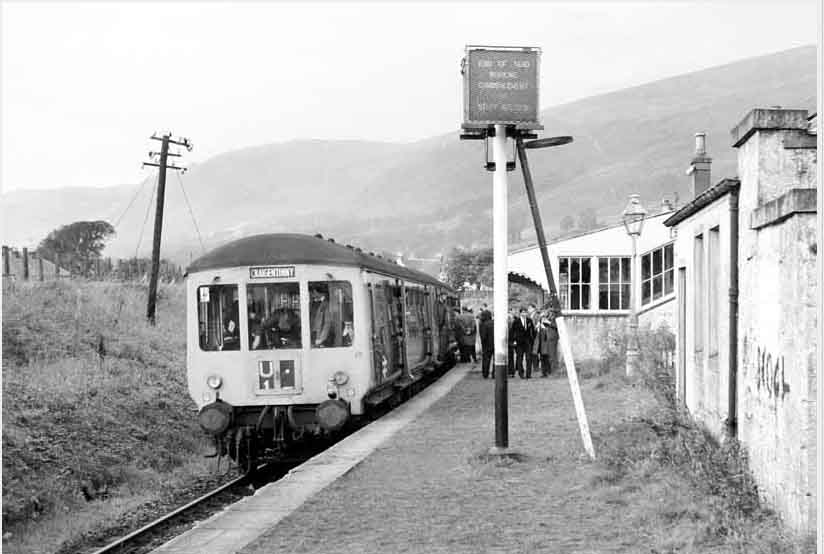
In more recent times Scotland has experienced a railway revival, not least in the partial reconstruction of the Waverley Route to create the 30-mile Borders Railway from Edinburgh to Tweedbank. An extension to Hawick is at least a possibility and meanwhile the 46 miles from Tweedbank to Kershopefoot, where once the line crossed into England, offer an expedition of many contrasts that might be tackled in its entirety over several days. So get out there and get walking with this ideal companion!
For over 15 years Robin Howie had a popular hill-walking column in The Scotsman and is the author of the acclaimed 100 Scotsman Walks. Dr John McGregor is a railway historian, a trustee of Glenfinnan Station Museum, and author of The West Highland Railway: Plans, Politics and People. He was for many years an Open University tutor.
Walking Scotland’s Lost Railways: Track Beds Rediscovered by Robin Howie and John McGregor is published by Whittles Publishing, priced £18.99
This fabulously titled book is an excellent guide to geology, particularly for a beginner. Reading through it encourages you to get outdoors and get up close to Scotland’s amazing landscapes. Here’s an extract detailing Hugh Miller’s influence in looking at fossil fish in the Caithness countryside.
Extract taken from Hutton’s Arse: 3 Billion Years of Extraordinary Geology in Scotland’s Northern Highlands
By Malcolm Rider and Peter Harrison
Published by Dunedin Academic Press
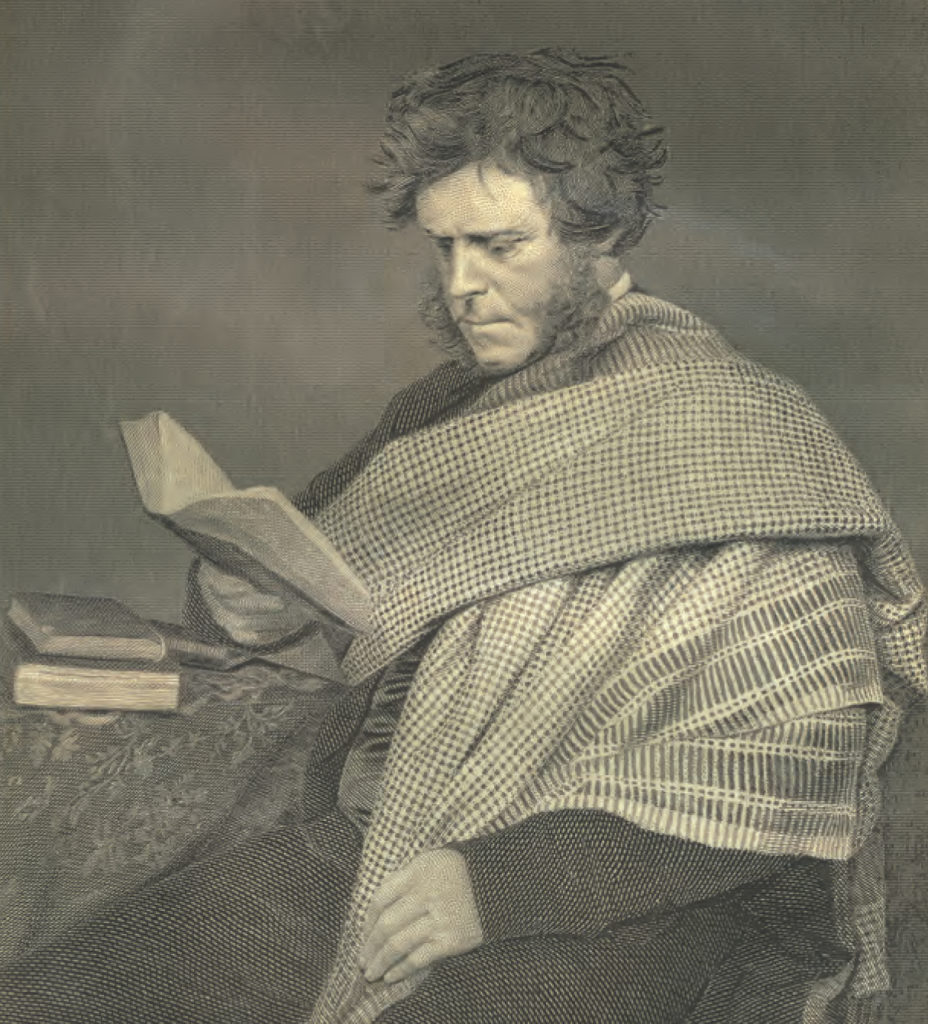
A portrait of Hugh Miller. Engraving by Bell of a photograph by Tunny, courtesy of the Hunterian Museum and Art Gallery.
Hugh Miller (1802–1856) was born in the Black Isle fishing village of Cromarty, sheltering under the Sutors at the entrance to the Cromarty Firth, 60km north of Inverness. He became a quarryman at 15 and then, by sheer intelligence and force of character, some 20 years later had become the authority on the geology of the Old Red Sandstone in Scotland, especially the Highlands. He became fully embraced by the ‘socially superior’ geological community in London, a remarkable achievement in Victorian times. He was a very religious man, an excellent writer, and became a renowned Edinburgh newspaper editor. His geological classic is The Old Red Sandstone mentioned above, but he also produced a number of other geological works such as Footprints of the Creator (1849) and The Testimony of the Rocks (1857), all being an inextricable mixture of rocks and religion, of nature living out God’s will. But this is not to underestimate his science: he was an observant, gifted and enthusiastic scientist. Miller was not only unusual in his background, he was physically so as well; tall, rugged, with a full head of shaggy sandy hair, and was usually dressed roughly in a plain shepherd’s plaid, preserving the image of his origins. ‘He never looked grander than a working man in his Sunday best,’ said a friend. He was a distinctive personality and a great speaker with a broad Ross-shire accent, keeping audiences of thousands rapt with descriptions of rocks and fossils, especially ladies, it seems. He was a thoroughly likeable character and when he died in Edinburgh, the centre of the city was closed for his funeral.
The place where we are going to start this chapter has been designated a Site of Special Scientific Interest (SSSI), and to visit needs a permit from Scottish Natural Heritage (SNH). It is an inconspicuous quarry near Spittal, 24km south of Thurso, at the end of a long farm track on top of a low hill in the searchingly flat Caithness countryside. The quarry itself is entirely unremarkable at first sight: water-logged, no remaining worked face, a ruined building and a lot of broken rock spoil clambered over by cows. Yet over the years this quarry has provided thousands of beautifully complete fossil fish, it having been excavated unintentionally into the Achanarras fish bed. This is why permission is needed from SNH to visit, hit the rock and to collect the fossils. A few years ago a Dutch team brought power drills and heavy equipment to improve their collecting efficiency! Not allowed; the rules are one hammer and a few fossils.
There is a mystery here, though. The rock is perfectly layered to resemble pages in a book and you can sit in the quarry for hours splitting layer after layer and find absolutely nothing. The excitement that each split may reveal beautiful shiny black scales and the first look at a curious ancient fish is rapidly lost. But with experience and some knowledge of collected specimens, the fossil hunter learns to look for black or rusty red weathering colours in the grey-green rock. The truth is that the magnificent fossils really are abundant, but only in a very precise layer two metres thick, hence the name ‘fish bed’; the fossils are not scattered throughout the rock. Fish beds are now a known feature of the Old Red Sandstone of Caithness, Cromarty and the southern shore of the Moray Firth, but it originally took Hugh Miller years to find some of them even though he was on the rocks every one of his working days.
Why are the fossils so distributed? Why are they concentrated only in the thin fish beds? Do the thin layers of abundance represent a time when a huge number of fish lived? Or do they represent the catastrophic death of a whole fish population? Perhaps there is something special about their fossilization?
The different degrees of entireness in which the geologist finds
his organic remains depend much less on their age than on the
nature of the rock in which they occur
was Hugh Miller’s surprising (and accurate) observation. What was special for him, evidently, was the fossilization. But we should try to find out for ourselves, because it affects our understanding not just of these fish fossils but of the entire fossil record, what we say about evolution and what we give as the age of a rock. Fossils cannot be considered in isolation, they are inextricably linked to the sediments in which they are found, ‘the nature of the rock’. The sediments represent both the environment of the living animals and the medium in which they are preserved.
*
Miller would not have known the Achanarras quarry; it was opened in 1870, twelve years after his death. This is a shame. He would certainly have revelled in the abundance of the fossil fish although, at the same time, have been surprised and fascinated by the way in which the sediments and the fossils themselves have now been analysed.
What is immediately remarkable about the rocks of the quarry and indeed all the rocks of the Caithness area, is their extreme, regular layering. These are the Caithness Flags, famous for covering floors around Europe, all the way from many Scottish kitchens, to the Royal Mile, to many streets in Edinburgh and now the infamous new Scottish Parliament building. The flags are so readily available in the north that lines of them are used to separate fields instead of dykes (stone walls) as in Sutherland or hedges in lusher counties. The amazingly flat beds were caused by the exceedingly regular accumulation of sediments in the huge freshwater Orcadian lake that stretched from Cromarty to Caithness to the Orkney Islands and to the west coast of Norway during the Middle Devonian, 374–387Ma. With a size of about 700 by 300 kilometres, it was larger than the individual North American Great Lakes and comparable with the size of the present Black Sea. But undoubtedly, during its 13 million years or so of existence, lake outlines shifted and water stands were often temporary, similar to the lakes of the present day African Rift. Over 5000m of stratified flags accumulated during this time, in the general area of the slowly sinking but usually isolated Orcadian Basin. The powerful, vertical cliffs of Caithness and Orkney are the remains of this remarkable sequence, the Old Man of Hoy their famous statue. Incredibly, throughout this whole Orcadian lake sequence the flaggy layering persists. Each flag is usually about the thickness of a paperback book and exceedingly flat, which gives it its economic worth. Although persistent, the layering shows subtle changes related loosely to the silt, sand and shale content. All the fish in the Achanarras Quarry come from a thickness, as I have said, of only two metres, and through this interval the individual layers are extremely thin. The fish beds are in fact laminites, that is, sediments with paper-thin layering. It is only in the laminites that the fish are found: or is it preserved; or is it lived; or is it died?
Although not visible without draining, researchers have found that the sedimentary layers of the Achanarras quarry form a sequence of gradually increasing particle size and lamina thickness from the bottom upwards. Ten metres are found at the quarry, but when complete, it is about 60m thick. The finest particle size and thinnest layers at the bottom of this sequence are the two metres of laminites where the fish are found. They occur nearly at the base of the quarry. The laminites were deposited in still water, deep for a lake, perhaps 80m. The thicker layers at the top of the sequence show fossilized ripples and mud cracks and clearly come from very shallow water, which even occasionally dried out. The rocks in the quarry are the remaining evidence of an episode when the lake became progressively shallower as time went by. It slowly filled with sediment and the lakeshore eventually passed over the quarry site, whereas before it had been a long way off. When the lakeshore environments were present, the water was well oxygenated and any organic remains in them would have been consumed by bacteria or predators or dispersed by water currents. On the contrary, when the deep water was present, the lake floor would have been anoxic, that is without oxygen. There would have been no bacteria or predators and no water movement, which would have been ideal for the preservation of organic matter. This, of course, is where the fish remains are. But did the fish only live when and where the water was deepest?
Hutton’s Arse: 3 Billion Years of Extraordinary Geology in Scotland’s Northern Highlands by Malcolm Rider and Peter Harrison is published by Dunedin Academic Press, priced £19.99
The good folks at Tippermuir Books specialise in books that celebrate the history, culture and places of Perthshire, and Trish Colton’s Perth & Kinross: A Pocket Miscellany is packed with the finest titbits for visitors and locals. And after all the sightseeing, you’ll want a nice to sit down with refreshing drink, so here we share the best pubs in the area as recommended in the miscellany. Bottoms up!
Extract taken from Perth & Kinross: A Pocket Miscellany
By Trish Colton
Published by Tippermuir Books
Balgedie Toll Tavern, Kinross
In the sixteenth century, travellers would have had to stop at the Balgedie Toll Tavern to pay the toll that was due. It is a much bigger building now than it was in 1534, the actual toll house having been incorporated into the present building.
Birchwood Hotel, Pitlochry
A former Victorian family home built in 1875, Birchwood is today a lovely country house hotel.
Crieff Hydro, Crieff
In 1868, Dr Thomas Meikle founded the Strathearn Hydropathic Establishment at a cost of £30,000, specifically to practise the ‘science’ of hydropathy. This is a system of treating illness using water both internally and externally. It was invented in the 1820s by Vincent Priessnitz who had treated Dr Meikle in Austria.
Meikle was contemptuous of some of the treatments Priessnitz promoted, due to his own training as a proper medical doctor (which Priessnitz certainly wasn’t). This was an era when spa towns such as Cheltenham, Bath and Harrogate were flourishing in England; maybe the temptation to cash in on the craze was also a tempting factor.
Meikle’s establishment was built with the intention of attracting a well-heeled clientele and was an immediate success.
During the Second World War, Crieff Hydro was used to house Free Polish forces. These days, it operates as a popular spa hotel.
Cromlix House, Kinbuck
This 5-star hotel is a Victorian mansion 4 miles north of Dunblane. It used to be in Perthshire before boundary changes gave it to Stirlingshire. Originally built in 1874 as a family residence, the house burnt down four years later. The building which stands there now was constructed in 1880 and later operated as an hotel. It is now owned by the tennis player Andy Murray.
The hotel itself may not be that old, but records show that in the 1500s the Bishop of Dunblane sold the lands which constitute Cromlix to his brother.
Dalmunzie Castle, Glenshee
Located in the heart of Glenshee, the original Dalmunzie Castle dated back to 1510 and stood on the south bank of the burn. By the eighteenth century, it had fallen into disrepair and in the nineteenth, Dr Charles Hills Macintosh, the 10th Laird of Dalmunzie, built a hunting lodge on the opposite bank, but retained the castle’s name. This is the building that became the present-day hotel.
Kenmore Hotel, Kenmore
Scotland’s oldest inn, the Kenmore Hotel, was built in 1572 and is located at the eastern end of Loch Tay, 6 miles west of Aberfeldy on the A827. The tiny modern village of Kenmore in which it is located is thought to stand on the site of an earlier medieval village, so it may be that the hotel is a surviving remnant of that era. The Earl of Breadalbane is responsible for building the lovely village you see today, constructed at some time after 1755. It might be surmised that his motivation was to provide homes for the villagers whose houses may well have been knocked down so that Taymouth Castle could be built. Moving whole villages to a more convenient location was not at all unusual on either side of the border at that time. In fact, it is what happened when Scone Palace was built too.
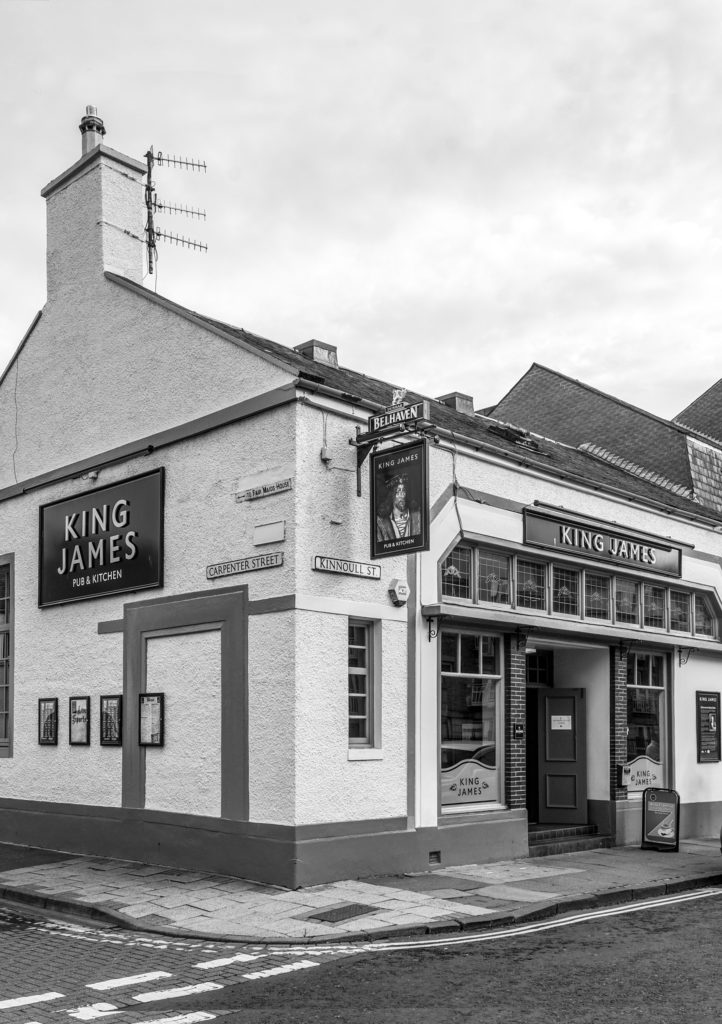
King James Pub and Kitchen, Perth
Although the King James Pub (formerly Christie’s Bar) is modern, there is a possibility that the remains of the medieval Blackfriars Monastery lie beneath it. If so, keep a weather eye open for a royal ghost, because that is where James I was assassinated in 1437.
Meikleour Arms, Meikleour
The conservation village of Meikleour is home to this small country hotel and pub built in 1820. It is owned and run by Meikleour Estate, which remains a family business many centuries after it was founded by French settlers. The estate has been held by the same family for centuries, through various turbulent times on both sides of the Channel. Even today, the estate’s management has dual nationality.
Mercure Perth Hotel, Perth
This former fifteenth-century watermill maintains its connection to its origins in a lovely old stone building. There are glass portholes in the Mercure Hotel’s lounge bar, enabling you to watch the water which still trickles along the lade that powered the original water wheel.
Moulin Inn, Pitlochry
Fifty years before the Jacobite Rising of 1745, the Moulin Inn was already up and running. There were two rooms on the ground floor, with two rooms above that and two further rooms on the floor above those. One of the upper rooms was used as a meeting place by the local elders, who dealt with neighbourhood squabbles and minor crimes.

Old Ship Inn, Perth
The Old Ship is the oldest pub in Perth; its name has remained unchanged throughout its history, according to records which date back to 1665. It is, however, thought that its existence goes back even further and that it provided a welcome haven for sailors as far back as medieval times.
The name was significant because at one time the harbour was just at the bottom of the road. So, sailors did not have far to stagger back to their ship after a drunken night in the pub.
Royal Dunkeld Hotel, Dunkeld
Located on Atholl Street, in the ‘Gateway to the Highlands’ town, the Royal Dunkeld Hotel, a former coaching inn, was built at the beginning of the nineteenth century.
Struan Inn, Calvine, Pitlochry
Built in 1863, this inn was intended to be patronised by travellers arriving at the nearby Struan Railway Station, which closed to both passengers and goods traffic on the 3rd of May 1965.
Perth & Kinross: A Pocket Miscellany by Trish Colton is published by Tippermuir Books, priced £9.99
When Ann Scott-Moncrieff submitted Auntie Robbo to her regular London publishers in 1941 they rejected it as being ‘too Scottish’. As a result, the book was sent to Viking Press in New York who published it that year. After successful sales it was taken on by Constable in 1959 and was later published in South Africa, Australia, New Zealand, Denmark and Germany.
Hector is an eleven-year-old boy living near Edinburgh with his great auntie Robbo who is in her eighties. A woman calling herself his stepmother arrives from England and Hector and Auntie Robbo realise that they have to run away. The chase leads all over the north of Scotland, narrowly escaping police and the authorities, adopting three homeless children on the way.
This is an exerpt from the part that was deemed ‘too Scottish’ in 1941. Hector is meeting Melissa Benck for the first time, and takes her on a walk up a hill.
Extract taken from Auntie Robbo
By Ann Scott-Moncrieff
Published by Scotland Street Press
Merlissa Benck’s expression had become hard and eager; she was like a hound picking up an interesting scent; she panted for breath on the steep, windy hillside…
Hector led the way up the path.
‘But what about … Hector, wait for me … What about other subjects?’
‘Oh, Auntie Robbo knows all about them. Sometimes we do sums. We keep account books, and history – lots of history; then afterwards we ride over the battlefields and go and look at the castles where the murders were done.’
Seeing Merlissa Benck’s shocked expression, Hector explained seriously. ‘Scottish history has a great many murders, you know.’
‘I dare say,’ said Merlissa Benck shortly. ‘But I should have thought British history would have been more suitable for a boy of your age, indispensable in my opinion. England’s story is a very great and noble one.’
‘Yes,’ said Hector. ‘But then we couldn’t ride to the battlefields, could we? I mean they were mostly fighting in places that didn’t belong to them, weren’t they?’
‘Certainly not – at least unless it was for a very good cause.’
‘Auntie Robbo says the causes won’t bear looking into.’
‘What other lessons have you?’ asked Merlissa Benck in exasperation.
‘Oh, Gaelic poetry. Auntie Robbo …had a Gaelic nurse when she was young who had the second sight. Her name was Morag, and Morag’s brother was a bard. Then let’s see; we’ve done an awful lot of geography. Auntie Robbo has been three times to New Zealand and twice to South America and once to Italy, passing through France, and once to Norway. So we’ve done all these places very thoroughly. Oh, and French; we read French. This summer we’re going to make a grand tour.’
‘Whatever for?’ cried Merlissa Benck.
‘To finish my education,’ replied Hector confidently.
‘Nonsense!’ but the wind flung the word back in her teeth. Merlissa Benck snapped her mouth tight on it.
Hector bounded ahead out of the gully through which the burn ran and onto a tableland of moor.
‘Come on,’ he shouted, and Merlissa Benck struggled after him.
A neat little lochan lay on the tableland and it was its brown, peaty waters that fed the burn…
Hector pulled a scone out of his pocket and began crumbling it, casting it on the water.
Merlissa Benck had regained her breath. ‘Then I suppose you’ll be going to school in the autumn when you and your aunt come back from this … this so-called grand tour.’
‘S-s-sh,’ said Hector. ‘You’re a stranger, so you’d better keep low down behind me.’ He began to whistle.
From the far side of the lochan a pair of wild ducks began to scutter across the water towards them.
‘Hold your breath,’ whispered Hector, strung up with excitement.
The wild ducks came closer, swimming carefully. Then the brown female dived right close in to gobble the bread, but the male one circled far out, cautious and aloof.
‘Isn’t he a beauty?’ breathed Hector. ‘They’re not so tame this time of the year. Let’s go now so as he can get some food as well. What would you like to see next?’
‘I’d like to get out of this bog before I sink to my knees,’ said Merlissa Benck with some asperity.
Hector stared at her.
‘Oh,’ he said in a subdued voice. ‘There’s a road over there.’
They plodded over to it in silence. It was a cart-track, a deep cutting between banks of heather. Water ran down the middle of it but there were comparatively dry patches on either side.
‘This is better,’ said Merlissa Benck, putting good humour back into her voice. ‘Now do tell me about this school you’re going to. You’ve no idea how interested I am.’
‘I’m not going to school,’ he said.
Auntie Robbo by Ann Scott-Moncrieff is published by Scotland Street Press, priced £9.99
This week saw a 30th anniversary commemoration candlelight vigil in Hong Kong, where more than 100,000 people gathered to remember the massacre at Tiananmen Square in 1989. It is an event that still carries huge resonance across China and Hong Kong’s growing pro-democracy protest movement. Saraband have just released a new novel by Christopher New that explores the reality of dissent and democracy in modern China, and BooksfromScotland shares two extracts here.
Extracts from Chinese Spring
By Christopher New
Published by Saraband
They nearly always went out together now, as though, Lai-king thought, that was somehow safer. At least she wouldn’t come home to find him gone. But now that he’d been back several weeks and the police were no longer there downstairs, she began to feel that wouldn’t happen. The more certain they were they weren’t being watched, the more they felt able to go out. Not just briefly to shop, but also to stroll about the streets in the evenings when the heat had faded, although it still lay heavy over the city, a sullen polluted haze. Usually they only walked along the Bund, where the air was cooler and a little cleaner, and they could look out over the river at the new glittering city of Pudong. But sometimes they would walk all the way down to People’s Square as far as Da Shi Jie, which Guodong’s father often used to talk about. The Great World, where in the old days you could get everything you wanted, from sex and drugs to food, acrobatics, opera and plays. Most of it had been closed for years now, a lifeless relic, and there were only a few fashionable shops left, selling tea and whatnot on the ground floor.
Sometimes they thought they were being followed, sometimes they weren’t sure.
Life was almost normal, and yet they both still felt a hand might be laid on Guodong’s shoulder at any moment. Was that why he’d lost interest in reading? He sat about all the time, gazing at nothing, or occasionally going to the window to see if that unmarked police car was there again. Sometimes he did pick up a book, but then he laid it down after a page or two. It was as if he couldn’t settle to anything because he was waiting for that sudden knock on the door. Even his nearly finished anthology of world poetry, which he’d been working on forever – even that didn’t interest him now. It lay there untouched in his rarely opened computer like a toy he’d outgrown. What had happened to him during those weeks in detention, what had they done to him? He wouldn’t tell her, he could only repeat, ‘Nothing really. It wasn’t too bad.’ Was it like that when soldiers came home from war, she wondered, bearing scars they could not show, tales they dared not tell?
But in the deep of the night, while she lay asleep beside him, he would often start awake, a trembling of anxiety in his stomach, as if he was still there in that cell, the light glaring in his eyes, a guard banging on the metal door with his baton. Yes, he heard that harsh clanging in his head. Or as if he was back in that bleak room again, being questioned once more. Sometimes he wondered what it was, why those memories disturbed him so deeply. He hadn’t been beaten after all; he wasn’t locked up with murderers or drug-runners. The worst was that he didn’t always get his heart pills.
No, it was nothing physical, it was the helplessness, the knowledge they could do what they liked with you, that abiding anxiety, those leaps of fear whenever they called your name. And in the end he had broken, something in him had snapped. He’d tamely agreed at last, agreed not to go back to the village, not to put another ‘subversive’ petition online. Yes, that was what had broken him. But he’d thought it was either agree or be sent to a labour camp, and he didn’t think he’d survive that. Not at his age. But that had crushed something in him. He was ashamed; humiliated and ashamed.
——–
‘What’s going on over there?’
‘Where?’
They were driving through the crowded streets of Sai Wan on their way to Central. Mila pointed. ‘China Liaison Office. A protest of some sort. Look at the police.’
‘On China’s national day as well.’ Dimitri slowed down. ‘Let’s take a look.’
Mila glanced at her watch.
‘Just for a moment,’ he said.
She shrugged.
He found a space on a side street between a moneychanger’s, where a pale young man with small rimless glasses surveyed him indifferently through a barred window, and a massage parlour’s narrow entrance, brightly illuminated footprints flashing on its gaudy sign. Did people really go for a massage, or whatever, in the middle of the morning?
‘It’s not a parking space,’ Mila warned him.
‘It’s a public holiday. The police’ll be looking for demonstrators, not peaceful parking offenders.’
They started walking back towards the massive building. ‘Are you all right to walk this far?’ Mila asked.
‘I’m supposed to be better, aren’t I?’
She smiled, a wince of a smile, and looked away. She thought Dimitri was breathing harder already, and slowed her steps.
A ragged group of some fifty people – old, young, smart, untidy, long-haired, short-haired – were shouting slogans outside the sternly locked and barred entrance to the Beijing Government’s headquarters in Hong Kong. Some of them, he noticed, were waving the old colonial flag with the Union Jack on it. TV cameramen, reporters, a small crowd of onlookers and a posse of police officers looked on with what seemed impassive, even bored, faces. ‘I am a Hongkonger!’ some of the demonstrators were chanting, and ‘Give me back Hong Kong!’ Dimitri saw a big-character poster held high and crooked for a moment. We have the right to vote for our future! Some demonstrators were kneeling by the gates, offering mock funeral gifts for the ‘dead’ Hong Kong government. The onlookers watched with only casual interest, as though it was a street show they’d lingered a moment for and would soon forget. And there was a self-consciousness about the demonstrators, as though they felt they might look foolish, might even be so. One young man waving the old colonial flag seemed almost embarrassed. And yet all they were asking for was what people elsewhere took for granted – an independent government they’d elected themselves. But why wasn’t everyone on the streets? Why did people walk past – he saw them now – as the wealthy walked past beggars, as if they hadn’t seen them, yet with a faint uneasy sense of guilt or shame?
Chinese Spring by Christopher New is published by Saraband, priced £8.99
Ewan Morrison is one of Scotland’s most exciting and thought-provoking writers. Alistair Braidwood finds his new novel, Nina X, is another ambitious, challenging and necessary read.
Nina X
By Ewan Morrison
Published by Fleet
With all the turmoil, storm and stress of recent times one literary voice has notably, and unexpectedly, been missing from much of the public and artistic debate – that of Ewan Morrison. While that’s not entirely fair as he has been working widely in film and TV, it is with his fiction that he has previously made the most telling and memorable contributions to the cultural conversation. His most recent novel, Close Your Eyes, was published in 2013, which, considering the seismic shifts socially and politically (globally and locally) since, makes it seem a lifetime ago. This makes his return to publication most welcome as there are few writers who deal as intelligently, courageously, and often confrontationally, with the modern world as Morrison does.
All of which applies to his latest novel, Nina X. It’s a fictionalised account of what became known as the ‘Lambeth Slavery Case’, where, in 2015, self-styled Maoist cult leader Comrade Bala (real name Aravindan Balakrishnan) was sent to prison for abuse and false imprisonment. Morrison’s collective consists of Comrade Chen, four women followers whom he has a powerful and dangerous hold over, and a child who they view as ‘The Project’ – the person into whom they pour their hopes and dreams of a better future.
We first meet that child years later, now known by others, if not yet herself, as Nina, trying to come to terms with her first days of ‘Freedom’ after years kept prisoner. The novel is constructed from entries in Nina’s journals – numbered jotters that often have addendums from her ‘Comrades’ where they offer ideas and suggestions as to how her behaviour, and each other’s, should be modified. Certain words and sections are faint on the page, difficult to read and understand. It is as if they are being whispered, or fading from Nina’s mind, and the story has to be pieced together as scraps are discarded, lost, and found, and Nina’s fractured mind and memory offer varied, and often conflicting, explanations of people and events.
In particular, there is a terrible incident which Nina witnesses and which the Comrades try to make her forget, or at least re-remember – with self-preservation trumping nurturance. Morrison has always had a keen eye for portraying human weakness, and piercing pomposity, and the Comrades descent from high-and-mighty pontificating to petty squabbling, and increasingly desperate, and violent, measures to try and regain some control over the situation, is as believable as it is dispiriting. However, things are little improved when Nina becomes caught up in the world of social services, hospitals, and the law where different rules and regulations are enforced. Morrison is interested in constructs, philosophies and faiths of all kinds, but more so with how the human element is always destined to undermine, compromise and ultimately sabotage them.
Nina X is not simply an examination of nature versus nurture, but rather how a vulnerable mind can be pulled apart by conflict and confusion, and that human frailties (a term which seems horribly inadequate) such as envy, lust, jealously, hubris, anger and pride guarantee failure. The portrayal of Nina/The Project is as complex as it is heart breaking, with a long-suppressed individual voice trying to break through, to be heard and understood. In that sense Nina reminds me of Ron Butlin’s Morris Magellan in The Sound Of My Voice trying to get to a personal truth that has been suppressed for years in an attempt to survive.
It is also a novel about the importance of language and the written word, how they are used to understand, but also to obfuscate – deliberately or otherwise. The nomenclature of people and things takes on greater significance in a world as limited and suffocating as Nina’s. The naming of pets as Gramsci and Rosa Luxemburg, or the forbidden contraband of Dairy Milk, Coca Cola, and glossy magazines, all carry multiple meanings. Nina has been told her whole life that some words are acceptable while others come at a cost. With her newfound freedom she finds that it’s not just the rules that have changed, the language has too, and even how she refers to herself becomes a battle.
With Nina X Ewan Morrison challenges readers to think about what writing is for, believing that an engaged writer has a responsibility to address difficult issues. Some may regard him as a professional contrarian, using his mastery of the written word and ability to understand all sides of an argument to push people’s buttons for his own pleasure, but that would be to underestimate him as a writer, and a thinker. Rather he challenges prevailing cultural trends and beliefs, no matter who holds them. If you have a sacred cow to hand you might want to secure it as Morrison takes great delight in running them through, which makes him one of the exhilarating and exacting writers around.
As artistic as he is antagonistic, he believes in intellectual discourse and the rigorous thinking that accompanies it. Nina X is a reminder that the best writing should challenge and confront, and that there are few who do this as well as Ewan Morrison. He asks the questions that others avoid, or would never even think of asking, and offers no easy answers in return. This doesn’t always make his novels easy reads, but it does make them important ones and I know which I prefer every time.
Nina X by Ewan Morrison is published by Fleet, priced £14.99
Barrington Stoke have a wonderful habit of publishing rattling good reads for reluctant readers, and their summer blockbuster, coming out in July 2019 is The Starlight Watchmaker by Lauren James. At an elite academy where the wealthiest students from across the galaxy come to be educated, Hugo works as a watchmaker in a dusty attic room. But he is one of the lucky ones. Many androids like him are jobless and homeless. A privileged student like Dorian could never understand their struggle – or so Hugo thinks when the pompous duke comes knocking at his door. But when Hugo and Dorian uncover a potential terrorist threat, android and student must overcome their differences and work together to track down the culprit before the whole academy is placed in danger. We hope you enjoy this pre-publication taster.
Extract from The Starlight Watchmaker
By Lauren James
Published by Barrington Stoke
Hugo picked up a tiny golden cog with his tweezers just as someone rapped hard at his door. A voice yelled, ‘Hey, watchmaker? Open up, will you?!’
Hugo jumped with surprise and dropped the cog onto the desk. It rolled away and tumbled to the floor, falling into the crack between two floorboards.
Hugo sighed. The cog was the size of a grain of sand. He would never find it again.
‘Come in,’ Hugo called out. He twisted his magnifying lens back into his eye socket, folding it out of sight so that only his smooth outer casing was on display. He did this because sometimes people were distracted when they could see Hugo’s moving parts. It was easier for them to talk to him when he looked like a biological person too. He’d been told that the metal cogs and valves inside his robotic body were disturbing.
The door of Hugo’s attic room was pushed open. It banged against the wall, and a cloud of plaster dust fell from the ceiling. A student barged in, wearing the crisp red uniform of the upper fifth year.
‘Are you the watchmaker?’ the student asked with gritted teeth.
‘That’s me,’ Hugo said, and folded his hands together on the desk. He tried to look calm. He hardly ever spoke to the students of the academy, despite working on the campus.
‘You’re an android,’ the student said, surprised. ‘I was expecting … Oh, never mind.’ The student pulled the jacket of his uniform straight. The red was very bright against his green skin.
Hugo wondered which planet he came from. The academy taught children from the richest families across the galaxy – those who could afford to send their sons and daughters to another planet for school. The students were the future leaders of their planets. At the academy, they had the chance to mix with people from other places in the galaxy and learn about their cultures. It was supposed to encourage peace and understanding between the different planets.
‘How can I help you?’ Hugo said.
‘My watch is broken, you idiot,’ the student said. ‘And my Time Travel for Beginners exam is tomorrow! You have to fix it.’
That explained why the student was so angry. But a broken watch was something that Hugo could fix. Especially a time‑travel one, which was a lot simpler than some of his other devices. Once the watch was working, this student would leave, and Hugo could be alone again. He was much happier when he was on his own.
Hugo dipped his head and said, ‘I’m so sorry about that. Do you have the watch with you now, Mr …?’
The student dropped a plain gold watch on the table. ‘I’m Duke Dorian Luther of the star system Hydrox.’
Hugo tried not to react. He hadn’t been around any nobility since his last owner, the Earl of Astea, had left him behind on this planet.
‘I’m Hugo,’ he replied, taking a closer look at the watch.
There didn’t seem to be anything wrong with it on the outside. Tiny time‑travel watches such as this one looked very plain and boring, but inside they were a complicated mix of layers of cogs and gears. They were very delicate and easy to break.
Most of the students who bought these watches probably didn’t even know what was inside. They just knew that if they twisted the dial, the watch would send them back in time for a few seconds. It was apparently handy when they embarrassed themselves at a dinner party or said the wrong thing during an important political meeting.
‘I’m going to have to open the watch up,’ Hugo told the Duke. ‘Would you like to come back in an hour?’
‘I’ll wait,’ the Duke said as his antennae trembled. He was clearly annoyed. ‘I only bought it last semester. Are all your watches this poorly made?’
Hugo sighed and replied, ‘I really am very sorry. Would you like a cup of tea?’
The Duke nodded stiffly and watched as Hugo filled a battered copper kettle with water and put it on the hob to heat up.
‘Please, sit,’ Hugo said, and gestured to an armchair. It was buried under a stack of half‑finished projects. Most of Hugo’s attic workshop was filled with boxes of gears, stacked up in tottering piles along the walls.
The Duke began to clear everything off the armchair, holding up each object and looking at it carefully. A broken cleaning spider wriggled its legs as the Duke gripped it. Hugo had been meaning to fix the spider, but he had been swamped with work lately. It would soon be the end‑of‑term exams, and every student who had been putting off buying a watch for class had rushed to place orders.
The kettle sang out as it boiled. Hugo poured hot water over dried flowers in a teacup. The flowers unfolded and bloomed in the heat, turning the water a gentle pink, then green, before settling on purple.
‘I’m sorry,’ Hugo said to the Duke. ‘I don’t have any sugar. I rarely have guests.’
‘Without is fine,’ the Duke replied. He was looking at the pull‑down mattress on the wall and the piles of spare parts. The bridge of his nose wrinkled just a bit, as if he was disgusted. Hugo felt a bit embarrassed about the state of his room.
Hugo sat back down to work. He could tell that the Duke was already getting impatient by the way he was fidgeting in his seat.
But the Duke stopped fidgeting when Hugo extended a screwdriver from the end of his thumb. Hugo guessed he had never seen an android use their tool attachments before. Hugo knew that biological people didn’t have anything like that, and he thought it must be strange to have to get up and find whatever you needed to use. It was so much more handy to have the tools stored inside your body, like androids did.
Hugo focused on opening up the back of the watch, trying very hard to ignore the Duke. He loosened the screws holding the watch together. As he worked, clockwork moths hovered around Hugo’s head, glowing with light. He’d designed them to help him see inside the dark centres of the watches.
As soon as Hugo opened up the back of the watch, he saw the problem. The glowing heart of the watch was gone. There was no yellow ball – the quantum energy that powered the time travel was missing.
Hugo darted a look at the Duke. He was drinking his tea and swatting at a clockwork moth sitting on the tassels of his uniform.
There was nothing but a black space below the watch’s golden gears and cogs. Hugo removed the largest cogs, trying to pretend that everything was normal. His mind raced with questions as he tried to understand what had happened.
Maybe the quantum energy had slipped down inside the watch? It couldn’t just have vanished into thin air. Hugo had never seen anything like this before.
The Duke shifted, crossing and re‑crossing his legs. ‘Any sign of the damage?’ he asked.
‘Not yet,’ Hugo said.
Hugo unscrewed another gear. He wasn’t sure what he was going to say to the Duke, who was already furious that his watch had broken. He wouldn’t be happy if Hugo said he couldn’t fix it.
Hugo dropped a cog onto the desk and then stopped. There was something on the back of the golden cog. He pulled out his magnifying lens from his eye and bent down to look at it. It was a small curl of green metal, stuck in the teeth of a cog.
Hugo lifted the metal free with a pair of tweezers and held it up to the light. It was the shiny green wing of a clockwork beetle.
‘Ah, this is your problem,’ Hugo told the Duke. ‘It’s not broken. Someone has damaged it on purpose.’
The Duke sat bolt upright. ‘What?!’ he shouted. ‘You mean – it’s sabotage?’
Hugo beckoned the Duke closer and held out the wing. ‘Whoever did this used a bug to take out the quantum energy that powers your watch. Perhaps it was another student with a grudge against you?’
The Duke stared at Hugo, folding his arms and creasing his perfectly ironed uniform. ‘Fix it,’ the Duke said. ‘I need it for my exam.’
Hugo had known the Duke would demand this. ‘I can’t,’ he replied. ‘I’m sorry. I don’t have the parts.’
The quantum energy that made the watches work was very dangerous. Hugo wasn’t allowed to store it in his attic. He had to order the energy in for each watch he made.
‘I say, this isn’t on,’ the Duke said. ‘You have a room full of parts. How can you not have the one I need?’
Hugo folded his magnifying glass back into his eye. ‘The energy is rather explosive,’ he explained. ‘I can’t keep it here in case it gets hot. It could blow up the building. I can’t fix your watch. I really am sorry. I can give you back the money you paid for it instead?’
‘Money?!’ yelled the Duke. ‘I don’t want my money. I want to be able to take my exam!’
Hugo rubbed his brow. He hated it when people shouted. They seemed to do it so often. He liked it much better when he was left on his own to work on his watches in peace. Sometimes whole weeks could pass by where Hugo didn’t speak to anyone else, biological or android.
‘Maybe you could find the person who broke your watch and ask for the part back?’ Hugo suggested. ‘It’s a small glowing ball of yellow energy.’
The Duke’s eyes narrowed. ‘I know exactly who did this. Lady Ada de Winters. She’s been angry with me ever since I took the credit for our joint coursework project in our Hyperspace Mathematics class. Ada would love it if I failed my exam.’
Hugo nodded politely. ‘I hope she gives you back the energy,’ he replied. ‘I’d be happy to refit it if you find it – free of charge.’
‘You’re coming with me,’ the Duke said to Hugo. ‘I’ll need you to fix the watch as soon as we find the ball of energy. I don’t have time to come back out here. Why do you work on the furthest edge of campus anyway? It’s almost the wilderness.’
The attic room was all that Hugo could afford to rent, but he didn’t say that to the Duke. ‘Very well. I can come with you, if you insist, Duke.’
‘Oh, do call me Dorian,’ the Duke said.
Hugo clicked his fingers to call his clockwork moths, and put them in his pocket along with the pieces of the Duke’s watch. He stood up. ‘Lead the way then, Dorian,’ Hugo said.
The Starlight Watchmaker by Lauren James is published by Barrington Stoke, priced £7.99
In this latest article in our A Year of Conversation – Translation as Conversation series, Jennie Erdal shares her thoughts on translation as someone who has practised its art.
In discussing translation, you find yourself looking for metaphors, as if translation can’t quite be itself and nothing else. Which is odd perhaps, since it does not need to serve any purpose but its own. In fact translation and metaphor mean exactly the same thing. One derived from Latin, the other from Greek, they both signify a carrying over. And this carrying over is what we do when we talk to one another, when we try to understand one another; we carry over into words our take on the world so that others may know it too.
Translation is therefore a basic human need: conveying in words our experience of life. Whether it’s the birth of a baby, the death of a parent, the silence of a snowfield, the getting or losing of love – we search for ways of expressing these happenings in a language that can be understood by others. In that sense we are all translators.
Those who translate literature for a living, however, are involved in an act of creation that can seem like a miracle. If the miracle happens we are gifted a new-born life in another language, as natural and as pleasing as the life that has gone before, and all recreated out of that most common currency: words. Yet literary translation is so much more than mere words. To be able to translate, it isn’t enough to have learned another language, however well it has been learned. Words are just the starting blocks. Such a lot is bound up in any language – the way sentences are arranged, the cultural nuances, the grammar, the rhythms, cadences and textures. And each language has its own appearance, its own countenance, its own skin. To say nothing of the bits beneath the skin: the veins, the blood vessels, the heartbeat, the animating spirit. Those engaged in the complex act of translation have to understand a great deal about many things, not least their own language, whose possibilities and limitations they must know inside out. In the end, of course, it does come down to words, and the best translators have an abiding love affair with them.
In a previous life I used to be a not-good-enough translator, mainly of Russian novels. During this time I became aware of some of the challenges and limitations involved. I came to know that some things will necessarily be lost in translation – in any translation. Quite often there is no exact equivalence between languages, and sometimes English simply cannot tolerate certain aspects of the original, at least not without irony or some other modifying factor. Words have different magnetic fields. For example, humour is a notoriously difficult area – sometimes what is funny in one language can look simply inept or embarrassing in another. Puns, double-entendres, malapropisms, indeed any kind of wordplay – these are all hard to transport safely, to carry over.
In the Russian language, there are other difficulties. It is such a dense, inflected, elliptical language that sometimes what is only implied in a tightly packed phrase has to be made more explicit in a longer English sentence. A single verb in Russian can actually be a complete sentence, telling us not only who is doing it, and whether the doer is male or female, but also whether the activity has been completed or is still going on. The architecture of a language goes much deeper than its inflections or other distinctive features. In some mysterious sense a grammar expresses the culture of its people, their way of thinking, their soul – whatever we mean by that. (And the Russian soul – dusha – has no direct equivalent in English.) All of this is at stake in the translation process. I also came to understand there is no such thing as ‘the perfect translation’. It is always work in progress, never quite completed.
Reading a novel in a foreign language is like travelling abroad: everything is different, the landscape interesting, even the smallest details. You don’t feel completely at home but you sit back and give yourself to the experience. When you are the translator, however, you have to engage in a very intense form of reading, which involves much more than simply understanding the words on the page. It is painstaking, concentrated work, the closest attention that can possibly be given any book. Once the text is absorbed, you need to let it hum in the head for a while. Only then can you work the clay of the language, turning it into something new – a palimpsest of the first creation.
One of my university teachers, in order to discover who had read War and Peace in the original (and, more importantly, who had not), used to ask us what was striking about the language at the beginning of the novel. It was a question designed to trip us up. The answer he was looking for was that the opening words are not in fact written in Russian. The book begins: ‘Eh bien, mon prince’ followed by long passages in French spoken by Russians as if it were their normal everyday language. The characters in question are aristocrats who converse with one another in French for reasons of fashion and ostentation – something the linking text (in Russian) makes clear. Ironically the discussion is about the possible invasion of Russia by Napoleon and ‘les atrocités de cet Antichrist’. Since French was a foreign language for the Russian reader, it is arguable that every translation should keep those sentences in French; otherwise, Tolstoy’s device, which is key to setting out the characters and the relationships between them, is lost. And yet out of all the translations of War and Peace, only the most recent [Pevear & Volokhonsky, 2007] stays true to the original. The others all begin in rather stilted English with the words, ‘Well, Prince, ….’ as if this were a natural way of speaking to an aristo.
Even as a student I understood that Tolstoy in translation seemed a very different writer. The early translations of his novels were done mainly by genteel educated women who rendered his writing ‘refined’, complete with all the I says! and You beastly things! Tolstoy himself rather scorned fine writers, dismissing them as ‘hairdressers’. He is able to describe human emotions as almost no other writer can, concisely and precisely, but he is not elegant in a classical way. There is a lack of ornamentation, the style is simple and lucid, the syntax sometimes goes awry, and there are bumpy bits. These bumpy bits tend to get smoothed out in translation.
Constance Garnett, who introduced many in the English-speaking world to Tolstoy, removed several of the characteristics of his prose and missed out certain tricky passages – this in the interests of ‘good writing’, which meant fluent, elegant sentences. She thought that Tolstoy’s writing was easy to translate – ‘it goes straight into English without any trouble,’ she said. Well, yes and no. It went into Constance Garnett’s English without trouble. She produced stylish late Victorian prose, easy on the eye, reflecting the time in which she was living and appealing to the sensibilities of English readers. And because it appealed, her translations have endured. The poet Joseph Brodsky said: ‘The reason English-speaking readers can barely tell the difference between Tolstoy and Dostoevsky is that they aren’t reading the prose of either. They are reading Constance Garnett.’ The point was well made.
Happily other translations and re-translations have followed. Not just of Tolstoy, but of Homer and Dante, Goethe and Proust. New translations are new conversations. They return to the original text and uncover new meanings and new truths. They are a good and necessary thing, showing that the original endures, is still vital.
In the 80s I went to work for a London publishing house that wasn’t afraid to commission translations. While I was there I had the idea for a new imprint – a series of ‘literary encounters’: translations introduced by living writers whose own output had been influenced by the foreign writer. This was ‘translation as conversation’ made flesh. The editorial meeting to float the project took place on May 19th 1983, and my notes (I have them still) seem now to come from a lost Eden, gloriously eclectic and high-minded.
My lofty proposal began with a quotation from Melville: ‘For genius, all over the world, stands hand in hand, and one shock of recognition runs the whole circle round’. Ideas for translated works ranged from the Czech writer Skvorecky (with an introduction by Tom Stoppard) to Zbigniew Herbert (prefaced by Ted Hughes). I even suggested George Mackay Brown might introduce Strindberg’s The People of Hemsö. In fact, none of these came to pass, but the imprint went ahead and in 1985 brought out its first six titles, which included translations from Hebrew (Aharon Appelfeld), Polish (Witkiewicz), Italian (Grazia Deledda), and German (Gustav Janouch’s Conversations with Kafka). Hardly anyone will remember them now. They didn’t sell.
The following year, 1986, we published another six books, amongst them Ismail Kadaré’s The General of the Dead Army, the story of an Italian general who is sent to Albania twenty years after the end of World War II to search for the remains of those who lost their lives in the campaign. The enormity of the general’s task slowly overwhelms him and eventually despair gives way to madness. It is a solemn, sobering book, whose haunting message is the futility of war. No one in those days had heard of Kadaré, but some twenty years later he would go on to win the inaugural Man Booker International Prize. For me this completed a personal conversation that had started much earlier, when I was a post-grad student in the 70s on a visit to Paris. A young man at my table in a café was reading a book called Le Général de l’Armée Morte. I asked him what it was about. ‘De la futilité de la guerre,’ he said. The next day I bought the book and discovered that it was a translation. Kadaré was not French, but Albanian.
If literary translation is a kind of miracle, it is one we have been slow to recognise. Until the King James version, translators of the Bible were routinely strangled or burned at the stake. William Tyndale, who coined such phrases as ‘let there be light’ and ‘the salt of the earth’ suffered both fates. We have come a long way since then, but the translator’s work is still too often marginalised and taken for granted. Things are certainly improving, but until recently the name of the translator was often hidden amongst the prelim pages, a tiny intimation tucked away alongside the printer and binder.
This may have been a deliberate attempt on the part of the publishers to maintain the illusion that whatever we are reading comes to us fresh and first-hand – the word unmediated, as it were. Readers prefer authors, and may not want to be reminded that anyone else is involved. Despite the fact that much of our own culture and literary canon has been shaped by translated texts, from the Bible to Homer, from Freud to Dostoevsky, the supremacy of English as a world language has led to a certain complacency in Britain and a chariness of anything ‘foreign’. Our relative monoglotism has led to a strange suspicion of translation.
People used not to know how to think about translation, or what to say about it. It was regarded as slightly mystical, and those who practised it a little bit suspect – the linguistic equivalent of train spotters: sad, dishevelled, middle-aged men in fingerless gloves, still living with their mothers – or so legend had it. Translators, as if sensing this, learned to do a kind of disappearing act. David Bellos, Director of the translation programme at Princeton and an award-winning translator in his own right, has described his trade as ‘a second-rate kind of thing.’ Michael Hoffmann, another foremost practitioner, puts it this way: ‘Translators are very much alone with their secret pride and public humiliation.’
In reality translators are quite normal people, if typically precise and conscientious, aware of the huge responsibilities and obligations upon them. They are often naturally diffident, used to being in the background. In many cases they have colluded in their own invisibility. I certainly did at one time, sometimes not even being credited anywhere on the book. Many years later when I mentioned to a translator friend that I was writing a novel featuring a translator, he said: ‘Ah, a minor character then?’ – as if someone of his own profession couldn’t possibly be centre stage. Translation has traditionally been a low-profile, as well as a low-status career, a private affair conducted by rather private people working mostly alone, and accustomed to doing a sort of disappearing act. In other countries, however, translators are highly esteemed. In Japan, for example, they enjoy much the same status as novelists. But all translators know instinctively not to overwhelm or compete with the author, understanding that the author’s whole identity is bound up with the way he or she places words on the page. Literary translation, when it is done well, is therefore a supreme act of empathy.
Alas, when it is not done well, it can cause grievous pain to the author, the kind of pain not helped by opiates. I experienced this once – as author not translator – and to read carefully written passages that had been mangled and rendered senseless in another language (one that I was familiar with) was truly distressing. In his essay A Publisher’s Vision, Christopher MacLehose, who has perhaps done more than anyone else to advance the cause of literary translation in this country, wrote: ‘It seems to me certainly desirable that a translator open a line to the author, and keep it always open. I don’t remember a single case in which the time taken to establish communication with an author was time wasted. On the other hand I remember many cases where a failure to do so has led to grief.’
My own translations, from long ago now, were mostly of Russian dissident writers, often imprisoned or in Siberian labour camps. How I longed to be able to contact them, to check on meanings that no dictionary could provide. With the advent of email, collaboration between translator and author has become easy. Keeping a line always open, as MacLehose puts it, is to everyone’s advantage, not least the reader’s. When a book of mine went into Dutch, my translator emailed me around one hundred questions, not because she was a bad translator; rather because she was a very good one. But if a translator refuses to engage with an author, there is nothing the author can do, and the results can be a pig’s ear. Or the ear of a pig, as my terrible arms-length translator might have written.
Nowadays the business of translation is changing, and a good thing too. The Girl with the Dragon Tattoo, which opened the floodgates to Scandi Noir, did much to soften the profile of ‘foreign’ fiction. The perception of novels in translation is now different, no longer off-putting. We are gradually coming to see ‘foreign-ness’ as pleasing and attractive, to accept that we don’t always have to feel at home in foreign fiction. Dancing with strangers can be fun. Talking about it afterwards too.
In Britain we have tended to be an insular lot with literary tastes to match – this despite the fact that our whole literary canon has been shaped by translation: from Homer to the Bible, from Dostoevsky to Freud. But tastes are changing. Translated fiction plays an increasingly important part in literary festivals. Translation is a conversation piece. Prize money is being equally divided between author and translator. Relative to how it once was translation is being shouted from the rooftops.
When John Keats, aged just twenty, first looked into Chapman’s Homer, he was in effect paying tribute to the wonder of translation. He likened his experience to that of an astronomer discovering a new planet or an explorer laying eyes on an unknown land. Keats’ poem is an extended metaphor, the ‘realms of gold’ the poet has ‘travelled’ signifying both the lands of ancient Greece and books themselves embossed in gold lettering. Like most of us, Keats could not read Greek. It was Chapman who opened a new and magical world to the young poet, and it is Keats’ thrill of encountering this new world that is in turn conveyed to us – the readers of his poem.
As a reader, there is a feeling of trust and hope when you abandon yourself to translation. You are exposing yourself to other minds, other manners, other cultures, other possibilities. Literature in translation doesn’t always repay your trust and your hope, but when it does it is truly rewarding and enriching and mind-expanding. It allows you to see other ways of life – other possibilities, other matters, other manners – and can help increase the understanding between nations far better than politicians, who often do the reverse.
Jennie Erdal is the author of the memoir Ghosting: A Double Life and the novel, The Missing Shade of Blue. Both books have been widely praised, Ghosting already having reached classic status. She is completing her second novel with the same care, intelligence and imagination she brought to the first.
Find out more about A Year of Conversation at www.ayearofconversation.com (#AYOC2019)
Douglas Watt uses his knowledge and passion for 17th century Scottish history in writing his MacKenzie crime thrillers. He has now released the 4th book in the series and speaks to BooksfromScotland about his creation.
The Unnatural Death of a Jacobite
By Douglas Watt
Published by Luath Press
You’ve just released your latest novel The Unnatural Death of a Jacobite. Could you tell us a little about it?
Crime and history meet in a rollercoaster journey through 17th century Scotland. The Unnatural Death of a Jacobite is a crime novel set in Edinburgh in 1689 during the first Jacobite Rebellion, featuring investigative advocate John Mackenzie and his side-kick Davie Scougall.
A body is discovered near Craigleith Quarry on the outskirts of Edinburgh after a summer storm. It’s identified as that of Aeneas MacLeod, a young lawyer who works in Edinburgh. MacLeod’s family believe the Lord Advocate is sitting on the case and ask John MacKenzie to investigate.
This is the 4th novel is a series. How do you approach writing a single narrative within a bigger overarching time frame? Have you planned how far your series will run?
The books are all standalone crime novels but they feature the same main characters and are set in consecutive years from 1686. The characters respond to the major historical events of the period and interact with a mix of fictional and real historical figures. In my mind’s eye I can see the general course of the next few books in the series, while focusing on the book I’m writing. I originally planned to take the series all the way to 1707 (Union of the Parliaments) and beyond, with one book set every year, but I may need to increase my pace a bit if I want to get there!
My immediate target is to reach 1692 (7th in the series) and the Massacre of Glencoe. I’m beginning to think about a plot which will place MacKenzie and Scougall in Glencoe at some point in 1692 – the theme of the book is, of course, politically-inspired slaughter. There’s lots of interesting events during the rest of the 1690s for further books: famine, Jacobite plots and the Darien Disaster, which I know very well from researching and writing a non-fiction book about it (The Price of Scotland). I’d love to write a crime story about Darien as a lived experience through the eyes of MacKenzie and Scougall.
You combine two genres in the Mackenzie thrillers: crime and historical fiction. How do you balance both genre expectations? Are you interested in subverting them too?
I think the expectations are similar for both genres: character, pace, plot, denouement. Historical crime needs historical authenticity without overloading historical description. I want to let the reader experience history with the characters in a vivid setting. I’m not aiming to subvert the genres, rather I want to use crime fiction to explore themes in Scottish History during the late 17th century.
Each book, as well as a crime fiction, is about a particular historical issue: the decline of Highland chiefs (Death of a Chief), the Scottish Witch Hunt (Testament of a Witch), mob violence in Edinburgh during the Glorious Revolution (Pilgrim of Slaughter) and political division (The Unnatural Death of a Jacobite).
The underlying theme of the series is the fragmentation of religious orthodoxy and the origins of the Scottish Enlightenment.
Which writers do you turn to for inspiration?
For history I’d turn to Samuel Pepys’ Diary. There’s not much Scottish History in it, but as a window on the world of the 17th century it’s unsurpassed.
I would also dip into John Prebble’s Glencoe which brilliantly evokes late 17th century Scotland. It was the book that got me hooked on Scottish History.
In terms of crime I’d go for Georges Simenon’s Maigret books, anything by James Ellroy and Montalbán’s Pepe Carvalho novels.
Your books are set in the late 17th Why does that period of Scottish history appeal to you for a fictional setting?
I’ve always been fascinated by this period of Scottish History. The late 17th century was a paradoxical time of witch hunts, blasphemy trials and religious fanaticism, which also saw the green shoots of the Scottish Enlightenment. New ideas about science and trade sat side-by-side with older, darker notions – witch hunting, belief in magic, Satan as a real presence in people’s lives. Sometimes the old and new are found in the same individual – a joint stock investor who hunts witches, a political liberal who hates Catholics, a scientist obsessed with the occult. This clash of old and new makes the period particularly interesting from a fictional perspective.
What do you think your novels tell us about contemporary Scotland?
The novels reflect contemporary Scotland’s obsession with identity and history. They also reflect concerns about division, in terms of politics, religion and culture. Just like 1689, we live in fractured times – nationalist/unionist, Brexiteer/ Remainer. In the novels, this is highlighted by the contrast between the two major characters. John MacKenzie, who is based loosely on a real historical figure, is a Gaelic-speaking Highlander, sceptical about religion and a reluctant Jacobite. Davie Scougall is a Presbyterian Lowlander of a puritanical bent who supports the new regime of William and Mary and regards the Revolution of 1688 as a glorious one. MacKenzie and Scougall are good friends but they tend to disagree about the main issues of the day!
What are you reading just now?
Maigret and the Headless Corpse by Georges Simenon. I’m always impressed by Simenon’s economy of style, creation of atmosphere and acutely observed characters.
The Unnatural Death of a Jacobite by Douglas Watt is published by Luath Press, priced £8.99
They say the past was a simpler time, but Elizabeth Macneal’s debut novel, The Doll Factory, brings us a Victorian London that thrills in psychological twists and turns. We have an extract here with an intriguing first encounter.
Extract taken from The Doll Factory
By Elizabeth Macneal
Published by Picador
The Factory
The house is both shabbier and finer than Iris imagined; tall, narrow and brick, with the look of a rake gone to seed. Its windows stare. One is broken. Ferns and palms froth out of every orifice; over window boxes, out of terracotta pots and planters, around the sides of hanging baskets. The straw-strewn lane is barely passable when a horse and cart trots by, and Iris almost has to crouch in a plant pot, a fern tickling her face.
Once the cart has rounded the corner, she clears her throat and looks down at her dress. She wears a small silk rosette on her chest, a Christmas gift from Albie, and she smooths its ragged edges. She picks at a soup stain on the sleeve of her gown. It is her finest outfit, greyed cotton that was once blue. She used to like the way it pulled in her waist, the pert sleeves that made her arms look slender. But now, she thinks she looks like a poor maiden aunt, not the sort of person likely to indulge in perfect triangles of cucumber sandwiches or cream so rich it gave her a stomach-ache.
She hovers her hand over the doorbell, and then reads the plaque beneath it.
‘The Factory. PRB. (Please Ring Bell.)’
She smiles at it, a sly drawing of a line separating those who know the initials’ true meaning, and the uninitiated who do not. Pre-Raphaelite Brotherhood. She feels a brief pride over her inclusion in that inner circle. She knows because Clarissa told her. Her sister does not. Only those who season their speech with phrases like ‘critics’, ‘Royal Academy’ and ‘exhibition’ would know it. But then, she has no claim to any of that. The paper painting in her hand, tucked into a sleeve of fabric pinched from Mrs Salter, crumples in the wind.
‘Are you going to ring the bell, or would you prefer to have your lesson on the street?’
Iris leaps back, trips over a pot, and stubs her toe. The pain is searing. She looks about her.
‘Up here, Miss Whittle,’ he calls. Louis salutes her from the first-floor window.
‘I – I was just about to ring the bell—’
‘And have been for the last five minutes? I must admit I nearly gave myself away when that cart burst past. It looked like you were grazing on the potted plant.’
‘You’ve been watching me?’ She reddens.
‘I would say observing. It’s an important skill for an artist. I’ll attend you now.’
She has her words prepared. I am not your model yet – somebody you can stare at unannounced for five minutes! But when the door opens, Louis smiles at her and her outrage falls away. She breathes in the scent of turpentine and wax and linseed oil. The carpets are threadbare, the chandelier missing most of its shards, but the walls are thick with paintings – some finished, some barely begun. The hallway is painted a startling swampy blue, and peacock feathers are arranged in a neat row between the dado rail and the ceiling. There is gilding everywhere – the skirting boards, the door frames, the banisters and newel posts.
She wants to take her time, but Louis hurries her along.
‘Is your sister here, Mr Frost?’
‘Clarissa? Oh, no. She has her fallen women causes. The Marylebone Society. Some mite needed tending to. And please, call me by my Christian name. I can’t stand all this mannerly nonsense.’
‘But—’
‘I know, I know. I did ask her to chaperone. But I can promise that you will leave here entirely unsacrificed to Venus.’
Her chest constricts. She would like to find a way to tell him, delicately, that he should desist from such flirtation – she is here to learn to paint, and for nothing else. Other models may comport themselves like prostitutes, but she is different; she will grip tight the jewel of her respectability. And then she realizes she is already thinking as if she has agreed to model. She has not. She will not. Or may not.
‘Are your servants present?’
‘Servants?’ Louis wafts his hand. ‘I couldn’t bear to have anyone fussing like that. A weekly charwoman is all a gentleman should need in these modern times.’ He gestures at the narrow staircase. ‘Come, I’ll give you a grand tour of the studio.’
She has never met anybody like him. It is either very liberating or very intimidating, and she is not sure which. She can see that he is the kind of person used to getting his own way, who makes a virtue of shocking with his views, and it gives her a perverse sense of delight: she won’t humour him by being outraged. She will take pleasure in thwarting him, and feign complete composure at his remarks.
‘I note, at least, that you’re no longer at death’s door,’ she says.
‘I must assign the credit for my hasty recovery to the nursing skills of Guinevere.’
‘She sounds very generous,’ Iris says, and she finds herself pleased that he is married. It removes any complexity.
‘She is. But she ate all of my Christmas pudding so she is far from being a model woman. In fact, you will meet her shortly.’
‘Oh?’
Louis leads her up the stairs and through a door. ‘The studio, ma’am. I tidied especially.’
‘Tidied?’ Iris steps on a mussel shell and flinches. It is as if the room has been spun like a globe until the contents of every drawer, every bookshelf, have been hurled up. A stuffed bear cub lies in the corner, blanketed by newspapers. There are a pair of convex mirrors on the wall. The studio is brimful with clutter.
‘Of course, Mother and I could never agree on a definition for the word, either. Ti-dy. What a dull sound it makes! But there is such mediocrity, when everything is arranged as it should be. Don’t you find that? I’ve never believed in cataloguing things – of putting books here, and cutlery there, and whatnot. It shows such a want of taste and imagination.’
As he speaks, she tries to take it all in. She looks at his easel, streaked with colour.
‘Such a dismal mechanical mind which tidies. A factory mind.’
A movement in the corner, and she screams. ‘What is – the bear is alive! Good God!’
Louis starts to laugh. He laughs until he is holding on to the edge of the door, his mouth open in a silent howl, eyes pinched closed. ‘A – a – a bear—’
‘It really isn’t funny,’ Iris begins, trying not to flinch as the creature ambles towards them. She does not want to provoke his mockery further, but she worries it will attack. He looks just the sort of person who would buy a dangerous animal for a jape, and then find himself killed by it. She moves back. ‘Have you had its teeth and claws pulled?’
It is enough for Louis to straighten, wiping away the tears from his eyes. ‘No! How could I? That would be cruel. This is Guinevere, a wombat, and she is in mourning.’
‘Oh. Ah – I see,’ Iris says. ‘And she is not your –’ She almost says wife, but stops herself. She tests the unfamiliar word. ‘A wombat. In mourning.’ Iris notes the small black handkerchief fastened around the beast’s neck, and tries to hide her amusement behind her hand.
‘I see nothing humorous in it,’ Louis says. ‘She lost Lancelot over Christmas, although admittedly they were not friends. He roamed upstairs and she lived down here. I was quite bereft.’
‘Was he very old?’
‘If only.’ Louis looks down. ‘Rossetti thought it would be entertaining to have him smoke a cigar, but Lancelot gobbled the whole box, a slab of chocolate beside, and snuffed it the next day. Rossetti and I are no longer on speaking terms.’
‘I’m sorry to hear that.’ She extends a half-hearted pat in the direction of the wombat, which fails to make contact with its fur. Guinevere is built with the heft of a brown, hairy cannonball.
‘Is she friendly?’
In response, Louis bundles the creature into his arms, groans at her weight, and tickles her under the chin.
The Doll Factory by Elizabeth Macneal is published by Picador, priced £12.99
It’s hard to really comprehend what goes on day in and day out on the frontline of the NHS, but, thankfully, a collection of recent books have shone a light on the amazing work that goes on in our hospitals and doctors’ surgeries. Leah Hazard has written a memoir based on her career as a midwife, and BooksfromScotland caught up with her to hear more about her experiences.
Hard Pushed: A Midwife’s Story
By Leah Hazard
Published by Hutchinson
You have been a midwife in the NHS for a number of years. What made you decide to write a book about your experiences?
I realised from the earliest days of my training that the goings-on of a maternity hospital are stranger, more wonderful, more entertaining and more moving than fiction. I always fancied writing something midwifery-related after my retirement, but my decision to write Hard Pushed was motivated by a growing love for my profession and an equally strong sense of frustration at the constraints of an under-resourced health service.
You probably had too many amazing stories to fit in one book! How did you decide what stories you wanted to tell?
Every midwife can remember the events that really moved her, no matter how long or short her career may have been. I made a list of the women whose stories had really stayed with me, and chose the ones that I thought would move the reader and also illustrate the breadth and complexity of my role.
There’s been a few books recently about working within the NHS. Why do you think readers are so fascinated about the day to day experiences in the health service?
The human body is a site of endless mystery, and the practitioners who understand and treat the body have assumed almost mythical, magical status. At the same time, people are aware that those very same practitioners are human, and I think it’s that humanity that readers find captivating. We are so lucky in this country to have the NHS, and I feel very privileged to be part of an institution that continues to capture the public imagination in this way.
What did your fellow midwives feel when you told them you were writing this book?
I have to admit that I was a bit scared to tell my colleagues about this project; midwives are an opinionated, passionate bunch! I needn’t have worried, though. On the whole, my colleagues have been delighted that I’m trying to show the world how hard we’re all working, and under such difficult conditions. There will always be midwives who don’t feel that my experience represents their own, and that’s fine, too – our diversity is part of what makes us special.
Hard Pushed doesn’t shy away from revealing some hard truths about the NHS. Are you optimistic about the future of healthcare? What would you like to see changed?
I have to be optimistic – the alternative is too depressing. We need to recognise and respect the pivotal role that midwives can play in public health. Our profession goes beyond cuddling babies and holding women’s hands, and once the complexity and value of our role is understood, then perhaps we’ll get the funding and institutional support we need to provide a better service.
Now that your book has been published, will you carry on writing?
Absolutely. Book Two is outlined and ready to go on my laptop…watch this space!
Hard Pushed: A Midwive’s Story by Leah Hazard is published by Hutchinson, priced £16.99
Jenny Lindsay is one of Scotland’s best performance poets, and the publication of her new poetry collection This Script has been BooksfromScotland’s most highly anticipated releases of the year. We’re delighted to share some of her poetry with you, and highly recommend you go to the This Script show when it tours around the UK later on in the year.
Extracts taken from This Script
By Jenny Lindsay
Published by Stewed Rhubarb Press
This Script
a part-univocal poem in and about ‘I’
Since six, it imprints in skin –
this girl script, this birthright which kills spirit
whilst timid lips twitch Shhhhh, girls
Swirl mildly within this
is itch in this skin, in this script
Misfits spit:
KILL THIS!
Whip nit-wits stingingly with livid riffs!
This script stinks!
It is shirt lifts. It is skirt shims with impish grins
It is slits pink, bikini tits. It is
pricks infringing with victim scripts
It is in birth til infirm
this script, this girlish mimicry…
Grim risk if girls wish trim bits within knicks!
If thigh-ripping thick skins in big biffs shirts
bits binding within rigid distinct ticks ID-ing with
script-ish wish-lists is inspiring? PFT!
It binds ‘I’ within slim-picking piddling limits!
Misfits flick digits. Fists twitch. Indignity fizzing.
Sighs rising.
I
GIRL
Is it implicit? Is it ID?
This insipid script – is it simply right?
Writ in birth? Identity? Cis?
(is this msprnt??)
Kick it. Stick it in bins brimming with skin flicks!
High-five other ‘I’s!
Let a collective ‘I’ light up within winning shin-kickings!
Bitches, reclaim this script!
Be singing: one is not born, one becomes WOMAN!
oops… off script…
It’s illicit thinking, skirting kinship with siblings whilst
hissing indignity within isms splits ID from ‘I’s –
Schisms rip Twit’ring vigils
Timid girls flit, sighing:
Skirmish! Irk! Pitching in is visibility! Crisis-rid!
Shhhhh
Shhhhh
Kick it. This script?
It’s ‘I’ ridden
‘I’ is limiting
‘I’ is ‘I’ first
Tight-knit wiring gives wind chill
We are not this script
Though we act it well – and with vim
‘I’ stands still, individual,
while a collective head wricks necks tae listen.
The Imagined We
We are never permitted to be human
poets, writers, journalists, whatevers
We are female poets. Women
writers. We are murdered women
We are statistics
We are problems to be solved
We are problems to be represented
Each of the imagined we who rises up
becomes us, whether we like it or not
Do not tear them down, sisters!
Do not tear us down, women folk!
It is not womanly of us, to us
to be at each other’s throats
not when they are our throats
not when sirens are the soundtrack tae our newsfeeds
or, we are slashed at the throat
We are severed heads weighed down with rocks
in bin bags chucked far from our bodies
our humanity shucked off
by default humans’ hands
We stand in the shower
The blood trickles down our thighs on
One of those days
One of those days
One of those days
Where we’re encouraged
Me time!
Me time!
ME TIME!
Alone with chocolate!
Alone with scrummy bubble-baths in delicious flavours!
Misogyny Mud-pie and Mint?
Creamy Dreamy Cum-dumpster Froth?
Raspberry Coulis and Kool-Aid? Mmm!
Paedo Pear with Jojoba and Argan Oil
Lollipop?
We plug it in all holes, don’t we?
We lean our heads on the tiles and
watch our blood plop and pool
because the plug-hole is blocked.
We imagine that an epic car-chase
followed by fist fights led us here to
this bleeding from a hidden wound –
and that we are renegades! We are superheroes!
(or perhaps functioning drunk anti-heroes)
We have trauma in our pasts and we are
Setting Things Right!
The Imagined THEM! The bad guys
have been left in pools of writhing regret!
Some of them have stakes sticking out of where
their hearts once were – some of them
turned tae dust in front of our eyes.
And we are bruised
We are injured
But we are alive
We are just temporarily crunched over
tenderised, bleeding from the fight
This script writes itself
Plop
plop
plops
In our silence…
PICTURE THE SCENE:
Strings rise up
are soon accompanied by brass
as the camera angle switches
from our point of view
It starts at polished toe-nails that
sparkle through our bloodied feet
pans up smoothly – at the same speed
as that constant little trickle
The lens ensures a glimpse
of our shaved mound
There’s a sloooo
ooowing at un-suckled nipple
And then, our face
our face in tight-lipped defiance
close-eyed anger
and then a sudden SNAPPING OPEN!
Clearly, fierce pain inside
The scene ends with our fists
punching and then
pummelling the tiles
our strangled throats expleting
our knuckles bloodied too now
all this fucking PAIN!
At which an audience will cry:
BRAVO!
What fighting spirit!
Triumph over adversity!
All those banished demons!
and the removal of awards.
Rewards limited tae a fist
smashing another fist
and being told it’s the fights against us
that make us who we are?
And that we must love the pain of this at all costs.
We must love the pain of this at all costs.
An Invite to your baby shower or your child’s birthday party
They don’t make them like they used to.
Don’t make women like yer Gran did.
Nor daughter’s like yer Ma did.
Or girls like this absence
in the shape of a child.
I’ll send best wishes. Maybe
I might come sip
awkward prosecco at the barbie,
get accidentally pished like
my ‘aunties’ did.
But never ask me of ideal worlds,
or if this choice is choice,
or look at me knowingly when
you hear I’m in love now –
there is no path but the one that’s walked.
This Hello, welcome to the world! I wish you wonder!
Joy! Nae Larkin!
is all I have to give at present.
This cradled hope, though
no gifts were asked for,
no gifts demanded.
This Script by Jenny Lindsay is published by Stewed Rhubarb Press, priced £10.99
Vagabond Voices bring us the best in translated fiction. This month they release a modern classic from one of Latvia’s most esteemed novelists, Zigmunds Skujins. Nakedness opens with the protagonist, Sandris Draiska, nervously knocking on the door of Marika Vitina, the girl he has been exchanging letters with while in the army.
Extract taken from Nakedness
By Zigmunds Skujins
Published by Vagabond Voices
With every moment that he stood there, Marika’s value seemed to increase whilst his weight seemed to decrease. His fired-up courage soon collapsed.
‘Allow me to introduce myself: Sandris Draiska, demobilised Special Forces Yefreytor…’
Now everything was supposed to change in an instant. She might even fall into his arms with unexpected impetuosity. That really could happen.
Sandris! It’s you! This is crazy! My goodness! And what a fool I was in not recognising you. In my wildest dreams I never could have imagined that you would be in a suit. Oh, and how I look! I’ll be right there! Wait one moment! But not behind a closed door. Please come in!
Sandris, you rascal, why didn’t you warn me? That’s not fair. You caught me completely off guard. Look how my heart is racing…
‘What do you want?’
‘I’ve arrived.’
‘That’s hard to deny. And will that be all?’
This was some kind of a mistake, some kind of idiotic misunderstanding. But they were so strangely similar – perhaps he was misled by the retouched, shadowy photograph. Maybe Marika has a sister, possibly even a twin sister.
‘I’d like to see Marika Vītiņa.’
‘Then please look faster, I have to get to work.’
That couldn’t have been a joke. She was saying that with complete seriousness.
‘You’re Marika Vītiņa?’
‘Do I have to show you my papers? Are you with the police?’
‘No, I already said – I’m from the army.’
‘Extremely interesting.’
‘And the most interesting thing is that we should know each other. You’ve sent me forty-nine letters. And have received just about as many in return.’
‘Letters? What letters?’
‘Well… in my opinion, completely normal ones.’
‘Then where did I send you these ‘completely normal letters’ to, if I may ask?’
‘To the army unit.’
In the front hall, buttoning his shirt, appeared a tall young man, wide in the shoulders and thin in the waist, fairly similar in appearance to him, they even had something in common in their faces and movements.
‘What’s going on?’ the young man asked. He probably didn’t feel all that comfortable.
‘Come over here, Varis, listen to this unimaginable fantasy.’
‘Maybe you should invite this person in. It’ll take a little time to figure this one out, I think.’ The young man looked on with a sly grin and winked. She immediately stepped back from the threshold; this movement apparently was intended as an invitation. The young man, sticking his hands into the pockets of his black bell-bottoms, let them pass, underscoring with all his behaviour that he was a bystander with no intention of interfering in their conversation. The room really did have four beds. One of these had been sloppily covered with a chequered blanket. Expensive curtains fluttered at the open window, while last season’s radio-gramophone cowered shyly between suitcases piled up behind a three-doored wardrobe.
‘Please sit,’ said Marika. Everybody stayed standing.
‘So, I’ve written you forty-nine letters…’
He wasn’t angry any more, just deeply amused. Judging by how quickly her face cleared, her harsh coldness in no way reflected her underlying nature.
‘My poems were printed in the magazine Liesma. After that you began to write to me. I received your last letter two weeks ago.’
‘Could you show me these letters?’
‘Unfortunately, no. They stayed in Riga; too large a stack to carry them all around with me. But I can show you the photograph that was in the third letter.’ Opening his wallet, he felt Marika’s stare on his fingers and purposely tried to lend his movements an indifferent quality. The conversation had turned out to be incredibly silly. To a certain extent even insulting. It had turned into a kind of exercise in making excuses: he wasn’t believed, but he objected, stubbornly persisted, and tried to prove what he was saying.
‘Here it is.’
Marika looked first at one side of the photograph, then the other side, and shrugged.
‘Truly interesting. Well, Varis, what do you have to say?’
The young man’s bright, puckish cheek wasn’t shining nearly as brightly as earlier.
‘A pretty picture. My gut tells me that it’s something I’ve seen before.’
‘So, the picture is yours?’
‘I guarantee it. But I didn’t send it to you. I didn’t send you anything. It must have been some kind of a stupid joke.’
‘Very possibly. I just doubt that someone would write fortynine letters as a joke.’
‘A complete mystery. Varis, what do you think?’
‘Excuse me, but when did you receive this photograph?’ Taking a long and careful drag on his cigarette, the young man lifted his head.
‘About a year ago. No, not quite that long. The poem was published in February of last year. In winter, in any case.’
‘Ancient history,’ the young man said. ‘I got mine long after that.’
Marika shot Varis a lightning quick look, almost like a slap to the face. ‘Don’t be an idiot. You heard. He got the last letter two weeks ago.’
‘Well, then somebody’s writing them.’
‘And gets letters in my name? Ha. Why?’
The young man pulled the cigarette pack out of his shirt pocket again.
‘I guess I forgot to offer you any. Let’s poison ourselves together, if it’s alright with you. My gut feeling is that we’ve got a reason to get to know each other. Varis, Son of Tenis, Tenisons.’
‘Aleksandrs Draiska. Thank you, I don’t smoke, I’ve got other vices.’
Varis’s eyes flashed darkly. ‘Oho! I guess I didn’t hear you quite right. What did you say?’
‘I’ve got other vices.’
‘Smoking isn’t a vice… Aleksandrs Draiska… Smoking is a weakness. Sure, sure, the world is full of all kinds of strange happenings like those letters. Sometimes you have to wonder about them just like the gypsy did: dad’s white, mom’s black, where did the black twins come from?’
‘It’s a vice to brag about weaknesses,’ Marika added.
‘I think it’s an even bigger vice to hide weaknesses.’
Varis’s answer sounded cool and distant, but it was aimed only at Marika and lingered as long as the glance they exchanged. After that Tenisons resumed his decidedly friendly chattiness.
‘I also didn’t smoke in the army. And you know why? I had to quit while I was at the gasoline depot. I came for my first guard shift and the sergeant major was at my pockets right away. He threw the matches in the toilet; all I heard was the gurgle of the water. “From this moment on you’re a non-smoker,” he said. “It’s not possible to quit smoking that easily,” I tried to object. “A real soldier can do anything,” the sergeant major replied. “I, for example, have quit smoking thirty-five times already.”‘
‘That’s from Mark Twain.’
‘Could be. Our sergeant major knew his literature. Yeah, military service – what a strange thing. While you’re assessing the wreckage, it feels like the end, but when you get home and you’re living as a free man again it’s nice to reminisce, don’t you think?’
‘You know that better than me, I haven’t lived too long as a free man.’
‘The most important thing is to take off your uniform. And right away it feels like you’ve got a completely different head attached.’
‘For the moment I somehow don’t feel it…’
Tenisons had undoubtedly shifted the conversation to army matters on purpose in order to give him a chance to understand his situation. His initial surprise gave way to disappointment, which was difficult to hide. He didn’t feel so much deceived, as ashamed. He’d made a fool of himself.
Nakedness by Zigmunds Skujins is published by Vagabond Voices, priced £9.95
Lindsay Littleson is a fantastic childrens’ writer who takes us into many different worlds with her books. She tells BooksfromScotland about the inspiration behind her latest release.
Guardians of the Wild Unicorns
By Lindsay Littleson
Published by Kelpies
Some of my all-time favourite novels are set in other worlds, such as Tolkein’s Lord of the Rings trilogy and Cornelia Funke’s wonderful Inkheart series. But right from the start, Guardians of the Wild Unicorns had to be set in contemporary Scotland. Unicorns are our country’s national animal and setting the story in the Highlands made perfect sense. There are statues of unicorns all over Scotland, from the Unicorn Fountain in Linlithgow Palace to the Merkat Crosses in Fife towns like Crail and Falkland. In the past, people believed that unicorns existed. They’re on our Royal Coat of Arms, part of our history.
But disaster has struck for the unicorn’s reputation. Something has gone terribly wrong. The unicorn has been stolen by toy and clothes manufacturers. It has been stripped of its strength and its dignity. Unicorns are being marketed as fluffy, sparkly, and strictly for girls. My strength as a children’s writer lies in creating realistic child protagonists to whom young readers can relate. In Guardians of the Wild Unicorns, my main characters, Lewis and Rhona, are dealing with serious difficulties in their home lives. Rhona is a young carer and Lewis has had to deal with his father’s alcohol issues. Combining their ‘real world’ problems with a sugary tale of cute, glittery unicorns would have jarred horribly and I needed to ensure that the unicorns’ mythical world had equal depth and darkness.
The unicorns in Guardians of the Wild Unicorns are neither cute nor sparkly. Like the heraldic unicorns of Scottish history, chained to symbolise their power and ferocity, my unicorns are fierce, wild animals, whose ancient magic makes them even more intimidating. Treating the unicorns as real animals made the task of combining the real world and mythical world straightforward to write. In the novel, the unicorns are the last of their kind, sheltering in Whindfall Forest in the Highlands. They are in danger, as are so many of the world’s wild animals, from human greed. The unicorns are being hunted, as rhinos are in Africa, because people believe that their horns have magical, medicinal powers and are willing to pay a lot of money for them, whatever the cost to the survival of the species.
My unicorns might be fierce, but no animal is a match for armed poachers. Endangered animals need the help of humans who are willing to do whatever is necessary to protect them, and Lewis and Rhona, two Glaswegian kids on their P7 residential trip, become the unicorns’ guardians. Rhona takes a while to believe in the existence of unicorns but when she is confronted with irrefutable evidence, she is as determined as Lewis to save them from a terrible fate. Magic begins to seep in to the real world, but as Lewis says, “it’s weird, but good weird.” Because if you’ve accepted the existence of unicorns, why would you not believe that magic is possible? Of course, the magic has to fit the story: fairies waving wands would have been totally inappropriate in Guardians of the Wild Unicorns. This is quiet, ancient magic, shimmering over the forest and in the peace of the walled garden, revealing itself in open doors and hidden messages. Until the story’s climax, when the magic becomes something far more powerful and deadly.
Guardians of the Wild Unicorns by Lindsay Littleson is published by Kelpies, priced £6.99
Wole Talabi is an award-winning speculative fiction author from Nigeria. His debut short story collection Incomplete Solutions will be published by Luna Press Publishing next month, and BooksfromScotland is delighted to share one of its stories.
Extract taken from Incomplete Solutions
By Wole Talabi
Published by Luna Press Publishing
A Short History of Migration in Five Fragments Of You
V
Your name is Asake and you can tell that you are being taken south because the wind is in your face and the clay-like redness of the soil is slowly becoming a yellow sandiness. The soil is all you see. Everything else is a blur.
You scream for help in desperate, high-pitched shrieks but it seems there is no one willing to save you. Desperation claws at your belly like unanswered hunger.
You remember that you had only stopped walking briefly, pausing as you navigated your way back from your mother’s farm at the place where the Imu and Buse pathways met. You’d paused to make the seemingly mundane choice of which route to take when a powerful arm suddenly wrapped itself around your torso, hoisted you onto a sturdy shoulder and began to run. A moment was all it took.
Screaming even louder, you consider that you did not really need to go to the farm today, or any other day for that matter. There was no need for the daughter of the great hunter Ajiboyede, the niece of the Baale of Olubuse, to go to the farms-your family has never lacked anything. Your father’s lands begin along the banks of river Elebiesu and run all the way down to Olubuse’s limits where great big trees stand like soldiers guarding your uncle’s territory. But you went anyway because you like to work with your hands, you enjoy the feel of soil beneath your feet and you relish the sight of verdant life around you. You decided to go to the farm today because the quiet beauty of the rising sun at dawn had spread over the sky, cloudless and taut like a drum skin and called to you. You went seeking nature’s touch.
Now, you are being carried along a snaking pathway carved into the reeds that stand beside the river like a loyal spouse-a path that takes you far away from home. You writhe and wrestle and fight with all the might you can muster but it is futile. The hands that have you are iron and do not loosen their grip. You remember the stories that sad visitors from nearby villages would sometimes tell of children who had been kidnapped and sold to strange men from faraway lands, and you wonder if this is what is happening to you. Just then the wind carries the unmistakable briny tang of the ocean air to your nose.
You scream louder.
IV
Your name is Newton Brookes and it is your turn to go into the hold and take stock of the human cargo. But you do not want to go into the belly of this wretched whale where men, women and children are chained and crammed into every available space like beasts. The stench is appalling, even the walkway is mired in filth. Starved of food, kindness and humanity, many of them have little choice but to die.
You tell the chief mate that you were never meant to be aboard this abomination, that you are no slaver. You are just a man seeking his fortune whose brother-in-law offered him free passage to the new world in exchange for your services as a crewman on his ship. If you had known this was his vessel, you would have refused his kindness.
The chief mate spits a gob of something brown and viscous and tells you to stop talking and start counting before he puts a knife in you.
He looks angry, but the clearer emotion plastered across his thickly bearded face is impatience. You choose not to test him.
You clamber down the hatch reluctantly, carrying a lantern and some rope and begin to audit the ship’s misery, counting corpses and trying to ignore the sunken, accusing eyes of the living that stare back at you. You steel your heart, close your mind and try to do your duty, aware that these eyes will haunt you for years to come.
You reach a column and see a young girl lying still on the wooden floor, delicate and angelic, even as she is surrounded on all sides by her own filth. You tally her as dead and turn away but something gnaws at you, small but persistent in its urging. You turn back and walk toward her, set your lamp on the floor and take her hand in yours to feel for a pulse. Her eyes open slowly, revealing brown orbs set in a sea of jaundiced yellow. An emotion overwhelms you – something soft and warm and strange but fundamentally human – that you are frightened of. You decide suddenly in that moment, what you will do, knowing what it will cost and that it will change the course of your life forever.
III
You are twelve years old and you are running through your grandfather’s cornfield, laughing, carefree and wild as the summer breeze. You are being chased by Tom Wiggins, your best friend and the overseer’s son. He is desperate to turn the tide in the game of hide-and-seek that you are currently winning. You bank left, hard, and burst through the curtain of stalks and leaves onto a dirt road. You realize too late that you are going too fast to keep from colliding with the regal man talking with your father and Brutus Wiggins, the overseer.
You crash into him clumsily and he falls to his knees. When you manage to get up and reorient yourself, your father is glaring at you, his caramel skin glimmering in the hazy shine of the afternoon sun.
‘Amira Brookes! How many times have I got to tell you not to keep running around this here cornfield like you’re being chased by the devil, child?
‘Sorry Papa. Tom’s running real hard behind me and I didn’t wanna ruin the cucumbers but I was running too fast to stop and I was gonna run into them, so I turned. I’m sorry.’
The man rises slowly, dusting at his trousers with his callused hands. He has a thick imperial moustache and his skin is darker than yours but he reminds you of your white grandfather, whose thick beard and strange mannerisms always make you smile.
‘That’s alright,’ He says with a smile of his own, ‘I have two young boys about your age and they run around and knock me down so often, I’m used to it now. You’re the one I came to see anyway.’
He looks directly at you and you decide you like him because he has honest brown eyes.
Tom appears from behind the curtain of corn and is seized by Brutus who takes him by the shoulder and starts to walk with him toward the shed. You hope Tom isn’t in trouble because of you. The regal man with the moustache watches them briefly and then asks, ‘Tell me Amira, do you like school?’
‘Of course! I love it!’ You exclaim eagerly, because it is true. You love learning about things and ideas and numbers and how if you put them together in just the right way, they can describe the most amazing things.
The man says, ‘Well, I can’t say I’m surprised. Your teacher Miss Emily said you were the smartest girl she’s ever come across.’
You blush, and, looking more at your father than the man, you say with puffed up cheeks, ‘Miss Emily is wonderful! She taught me some real fancy math called differential calculus and it’s just the most wonderful thing!
‘I see.’
You watch the old man’s eyes dance in their sockets, animated and alive with an idea or a thought or a vision that has seized him like a fit of epilepsy. He says something to your father in deliberately hushed tones. You father says something back. Then the old man bends over and extends his hand to you.
‘My name is George. George Elijah Culver. From Michigan, up North. Pleased to meet you, Miss Amira.’
You take his hand. It is hard but it is warm.
And then he says, ‘How would you like to come with me to Michigan? We have a special boarding school there for bright young coloured kids just like yourself where you can learn about differential calculus and lots more things they won’t ever teach you in regular school. Would you like that, Amira?’
You smile.
II
You are sitting with Akin in his sprightly ’62 Opel commodore, parked beside Iowa State University’s Lake Laverne. The Temptations’ ‘My Girl’ is on the radio, it is two weeks to Valentine’s Day and the heater is on even though the car is not moving. Somewhere in some recess of your mind, you are wondering how much gas the vehicle is consuming just to keep you both warm. He is telling you something in his lilting Yoruba accent and you are staring at his face intently—wondering in another little recess of your mind what your grandmother would have said if you told her you were dating someone from West Africa, from Nigeria. The words are spilling out of Akin furiously. Then, unexpectedly, he slows down and measuring his words, asks, ‘Darla Culver-Brookes, will you marry me?’
Your breath catches and all your diffuse thoughts condense like water vapour from a breath blown against a window in winter. His proposal is unexpected but not surprising; you have both discussed the possibility for months now and you have been, in some way, waiting for it – even though you did not know when it would come.
You feel tension in your neck and dryness in your throat because you know that what you say next could close the door on choir practice with the lovely girls of First Baptist, on the weekly dinners with your parents and perhaps, and even, perhaps, on the annual thanksgiving dinner with your large, loving family.
You gaze and you wonder just how much your life will change, having only been to Nigeria once and seen it not just for all its beauty and potential but also its shortcomings. The unknown beckons and you gaze into its eyes in that moment wondering about the new friends and colleagues that you will make, the heat and the food and the potential of the country you will call home and if you will receive the same warmth and love as you have now from the family that will adopt you as their own. And then you stop wondering about things and let yourself be overwhelmed by how happy Akin’s proposal makes you feel. How much you want to hold him, make love to him, bear children with him, grow old with him. You let yourself say, ‘Yes.’
Akin leans in to kiss you, his soft brown eyes locked on yours. You let him. Then you kiss him back, urgently. Outside, on the lake, the mute swans are gliding along the surface of the water, made vitrescent by the empyrean caress of a full moon.
I
You stare through the observation panel at the planet’s moon—a pale alabaster orb with streaks of bright brown criss-crossing it like the etchings of a great cosmic artist. Up close, with nothing but the blackness of space framing it, the vision is beautiful, almost worth the year-long trip to this satellite that you hope will tell humanity something new about its place in the universe. For some reason you are not entirely sure of, the sight of Jupiter’s moon sends a pang of familial hankering through you.
In your pocket is an old picture of you with your family: brother Femi, father, Akin and your mother, Darla. In it, your father still has his afro, you and your brother are young children and your mother’s hair is dark and braided. She is holding you tight against her chest and your brother is pulling at her skirt, smiling. You have been thinking a lot about your family-there was not much else to do on this voyage. Now, you are about to land on Europa, and the constant thoughts about them have become a longing for them. You wonder if you made the right choice, volunteering for this mission.
Vitaly, the Russian navigation officer who has become your friend and lover, is floating lazily beside you.
‘Moyin?’ he calls to you.
You turn, still thinking about your family, to see him pointing at an electric orange patch splashed against the mostly blue and green background of his display screen. His broad, heavy-set shoulders partly obscure what he is looking at.
‘There are active cryo-volcanoes in our primary landing zone,’ he begins. ‘It will be too hot to land there for the next seventy-two hours or so, but…’ He smiles and points with stark, heavily veined hands to something on his screen. ‘…I already asked Agatha to check for alternate landing zones for the explorer and she found two that are perfectly safe. We can either head for the Conamara Chaos, which Agatha assures me isn’t as bad as it sounds, or we can descend onto the Rima Lenticle which was our original landing zone before Nairobi mission control redirected us anyway.’
‘Agatha,’ you call out into the small empty space around you.
‘Yes, captain,’ the AI responds.
‘Which of the landing zones is preferable, given the current and projected conditions over a seventy-two hour cycle?’
‘Both have landing safety factors between zero point eight and zero point nine.’
‘I already checked, captain,’ Vitaly says, his face and greying hair illuminated by his display screen. ‘Basically, once you factor in the uncertainty window, there’s no significant advantage going either way in terms of safety, so it’s really up to you. Where do you feel like going?’
You reach for your own display screen to check the explorer’s metrics and the picture you are carrying in your pocket slips out, drifting away from you and spinning so that in one moment you see yourself and your family, in the next, white emptiness. You freeze and find yourself struck by a kind of clarity. You see yourself for what you are—an aggregation of the choices and decisions of all that have come before you stretching back into infinity and beyond. All of these choices, uncertain and fearful and hopeful as the people who made them were, all conspired with each other to bring you to this place, to this point, to now. Choices, not unlike the one you are about to make. This clarity gives you a comfort you did not know you needed but you are grateful for.
You reach for the picture, take it and smile.
‘Right,’ you say. ‘Let’s head for the Lenticle.’
‘Aye captain,’ Vitaly is smiling too. You suspect he already knew your decision before you made it.
You both swipe away your personal display screens, float to the main control panel and strap yourselves into your chairs. The translucent input surface before you beckons. You key in the landing initialization sequence and begin to descend, rightwards, to Jupiter’s sixth moon, with the fortitude of an eternity of humanity behind you.
Incomplete Solutions by Wole Talabi is published by Luna Press Publishing, priced £9.99
World Heritage Canal gives readers a fascinating mixture of historical, personal and engineering insights into the life and work of Thomas Telford; and a modern guide to the Llangollen Canal. Author Paul A. Lynn introduces us to an engineering pioneer.
World Heritage Canal: Thomas Telford and the Pontcysyllte Aqueduct
By Paul A. Lynn
Published by Whittles Publishing
Thomas Telford (1757–1834) was Scotland’s greatest civil engineer. In recent years I have become fascinated by his humble beginnings and self-propelled rise from journeyman stonemason to famous canal engineer. What mixture of family background, training, and ambition encouraged him to venture far beyond the limits of existing knowledge and experience, accepting challenges that others pronounced foolish, or dangerous, or both?
Never married, Telford’s time was almost totally devoted to his work and therefore – as some claim – lacked the emotional peaks and troughs that accompany most lives. But to delve deeper is, as so often, to reveal a more complex tapestry – a lover of poetry and wild landscapes, a loyal and devoted friend, an engineer who rose to international fame but never lost a deep affection for his native Scotland.
He was born in a mud-walled cottage at Glendinning in Eskdale, an isolated valley in Scottish Border country about 20 miles north of Gretna Green. It is gentle country by Scottish standards, more rural idyll than highland drama, with rich green hills sweeping down to valley floors and sparkling streams feeding the River Esk. But the idyll was accompanied by tragedy: his mother Janet had lost a previous baby Tom, and before the year was out her husband, “a blameless shepherd”, also died. Left penniless, she faced a long hard struggle with enormous fortitude, overcoming problems that would have destroyed lesser spirits. It seems that her second baby Tom, destined to become an engineer of legendary determination, inherited a generous assortment of genes from his mother.
Unfortunately Tom’s entry into the world took place in a greatly diminished Scotland. It was only fifty years since the Act of Union, and only twelve since Bonnie Prince Charlie’s Jacobite army took Edinburgh and marched as far south as Derby – a profoundly unnerving crisis for the London government. Although subsequent retribution, swift and brutal, was principally aimed at the Highlanders and their clan system, a continuing air of crisis and uncertainty in Scotland reduced the chances that her citizens would feel much improvement in their lives, at least in the short term.
In any case there was a longstanding problem with Scottish infrastructure. The road network was worse than that in England, the land more sterile, the people poorer. Travel by land, always difficult, was often impossible in winter. The remarkable improvements in roads, bridges, buildings, and agriculture that took place in the following 100 years became the main drivers of economic and social progress; but at the time of Janet’s bereavement in 1757, that was all for the future – a future to which her infant son would make an outstanding contribution.
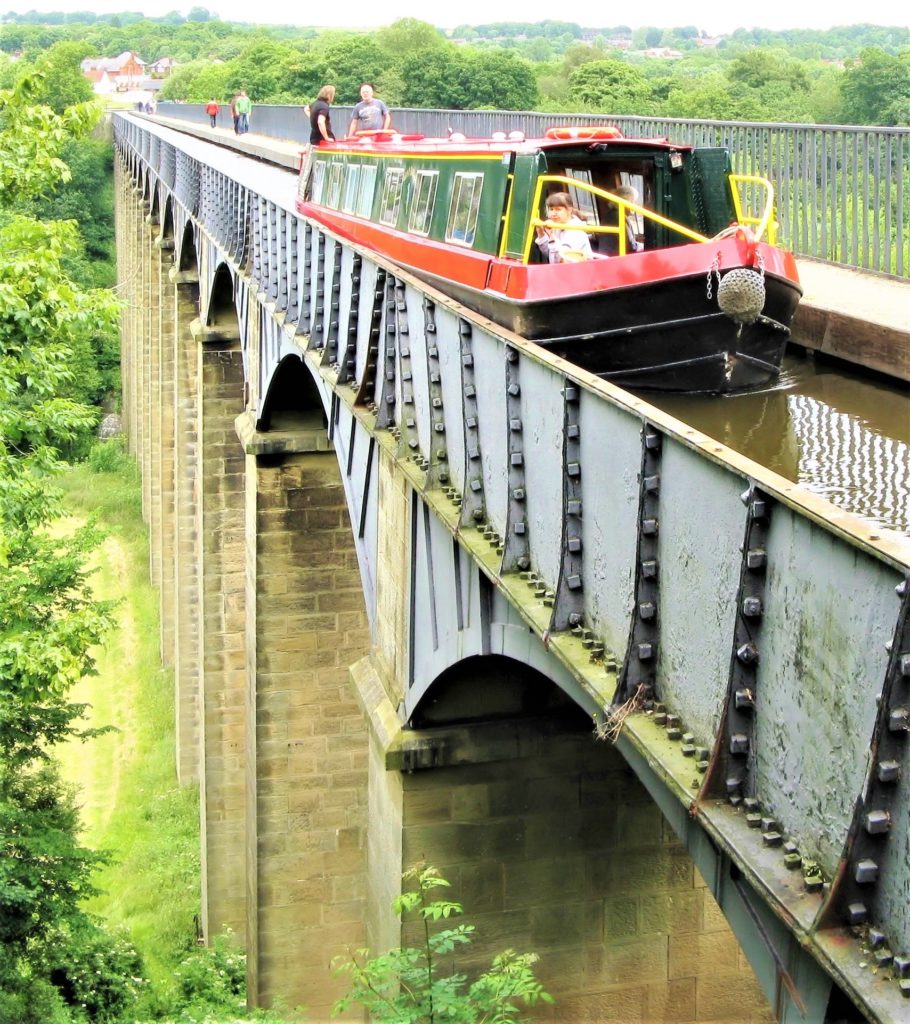 It seems extraordinary that Thomas Telford could rise from such humble beginnings to become one of the world’s greatest engineers. His formal education started and ended at the village school in Eskdale, and his subsequent advance was almost entirely his own affair: apprenticeship to a local stonemason; a spell in Edinburgh as a journeyman mason; a flight to London where he worked on Somerset House, then rising on The Strand; a year in Portsmouth building a house for the Commissioner of the Naval Dockyard; and then a move to Shrewsbury where he became County Surveyor for Shropshire. He was on the up and up.
In 1793 Telford was appointed principal engineer to the Ellesmere Canal (now the Llangollen Canal) in North Wales. He had absolutely no experience of canal engineering, yet dared to propose a revolutionary design for the Ellesmere’s greatest challenge – the magnificent Pontcysyllte Aqueduct over the River Dee near Llangollen. An 11-mile section of the canal, with the aqueduct as its centrepiece, has recently been granted UNESCO World Heritage status, putting it in the company of such international icons as the Taj Mahal, the Statue of Liberty, and the Tower of London.
I have tried to tell a personal as well as a professional story, putting Telford’s life and work up to the time when he became a famous canal engineer into its historical and social context. Today there is great interest in Britain’s transport infrastructure and the 19th-century engineers who did so much to pioneer and improve it. We owe a great deal to Telford and others for creations that have stood the test of time, built with courage and daring in an age when major construction projects relied heavily on pickaxes, wheelbarrows, and an extraordinary amount of hard physical labour.
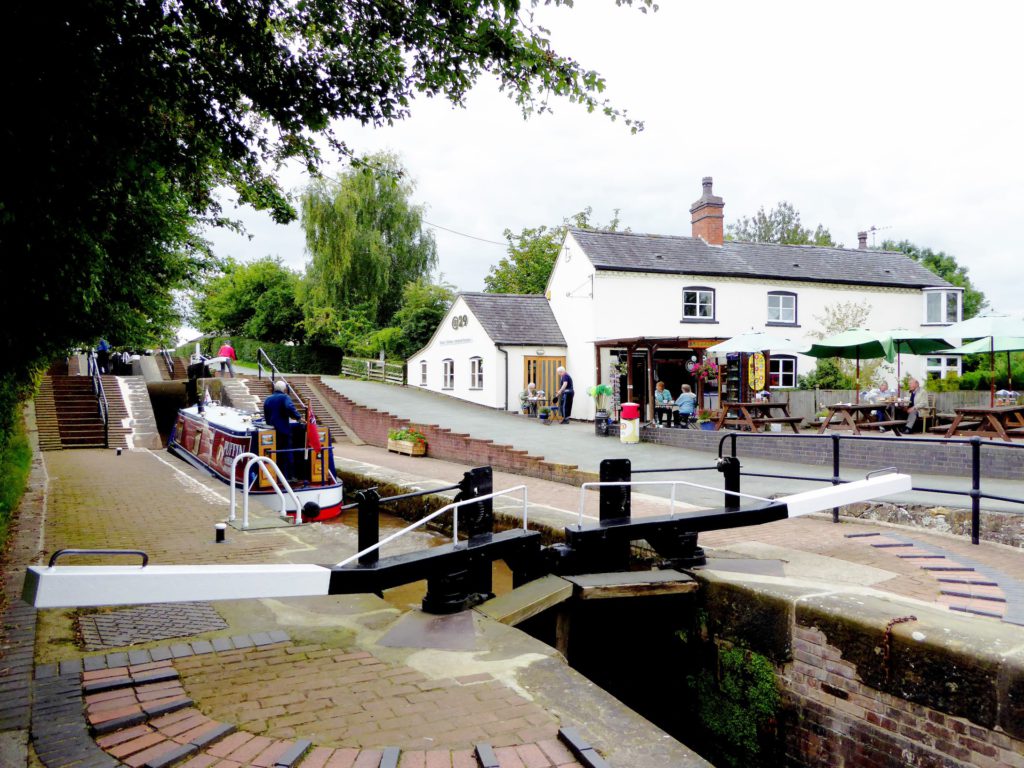
World Heritage Canal: Thomas Telford and the Pontcysyllte Aqueduct by Paul A. Lynn is published by Whittles Publishing, priced £16.99
Claire Wingfield’s debut novel explores how we get our sense of belonging. She tells BooksfromScotland why Berlin matters to both her, as a writer, and her main character, Francesca Maier.
Saving Francesca Maier
By Claire Wingfield
Published by Off The Press Books
A week after graduating from my English degree, I was browsing Cambridge University careers office when I came across a tiny advert for a publishing traineeship in Germany. A week after that, I moved into the first of three buildings I was to live in during two years in Berlin.
There was an exhilarating freedom to my time in Berlin as a young graduate, and an intensity to each day I explored the city. Soon, I dreamed in German and this splitting of self – the intoxicating possibility of a new identity in a country I had moved to knowing no-one – formed the seed of Saving Francesca Maier. The city provoked transformation and so it seemed natural to pick a central character on the cusp of transformation as a young girl and show the city through her eyes.
On holiday visiting her parents’ old friends in Berlin, Francesca soon finds the strained behaviour of the adults conceals secrets that span decades. She grapples with the German part of her identity – barely thought of until now.
‘Francesca wonders what her mother would be like if she’d stayed here for all those years, as Anja has done. That’s weird, of course, because it means she, Francesca, would have been brought up in Germany, like these children. She’d be a completely different person. The British side of her personality would be the one that would be hidden, the side that would be submerged. How strange that would be. There’s no way the two sides could ever be balanced – unless she spent half of every year in one country, and half in the other. But she’d have to rotate the seasons too – it wouldn’t seem fair to always spend Christmas or summer in the same country, so it would have to go in a strange pattern, a bit like crop rotation. It makes her head spin just to think about it.’
This other world brings Francesca into contact with a set of characters she would never ordinarily have met. It’s a crossing of social divide I’m continuing to explore in the second novel in the series, which sees one of the German characters come to Edinburgh as an au pair, becoming embroiled in the secrets of the family she works for and caught up in their outrageous demands of her.
Saving Francesca Maier is framed by two terror scares. Whilst the characters aren’t directly caught up in an attack, I wanted to explore how living in a volatile world impacts their choices. Berlin is a city to get lost in, another world that is intoxicating in its pull and yet in a moment can transform into something far less hospitable.
Francesca rejects the idea of herself as a tourist although at times she and her family are guilty of treating the people they meet there as disposable – something their status as tourists allows.
‘”I thought you’d like it. Hardly anyone knows about it,” says Antonio, scrambling to stand beside Francesca. “Just something to add to your tourist’s experience. Not many tourists get to see this, though. Not many tourists get to be shown around by me.”
“I’m not just a tourist, Antonio,” Francesca almost yells, surprised at how angry she is. “I am half German, you know. Is that what you think I am? Just a tourist?”
“You’re not planning on staying, are you? You are just visiting, aren’t you?”
It sounds so coolly logical when Antonio says it, and yet Francesca feels so bound up in the strange things she’s found here, and the people she’s met, that she wants to be as far away from Antonio’s words and the feelings they provoke in her as possible. She stalks to the other side of the mound and sits down sullenly with her back to Antonio and her face in her hands. Antonio watches her without moving, lights a cigarette and sits on the grass, looking at the view over East Berlin.
“My house – is over there,” he shouts across at Francesca, pointing towards an indefinable clump of buildings in the distance.
“Your friends’ house – is over there,” he calls, pointing in the opposite direction.
“Templehof airport. You see it? – is over there.”
“The lake at Wannsee – you can’t see it. But it would be over there,” says Antonio, pointing West.
Silence.
“My uncle’s bar – is over there,” says Antonio, gesturing in the distance.
“Ok, I give in – I want to see what you brought me to see,” says Francesca, wondering how long Antonio could cheerfully troop through the sights with no response from her.
“You sure?” he grins. “There’s more.”
“I’m sure,” says Francesca, pulling Antonio to his feet. He keeps hold of her hand as they move to inspect the entrance to the old bunker, a set of stone stairs descending deep underground.’
Saving Francesca Maier by Claire Wingfield is published by Off The Press Books, priced £7.99
Sara Sheridan’s fiction has always highlighted her fascination with uncovering forgotten women in history. Now, her latest book brings those women to every corner of Scotland. Kristian Kerr takes a trip through this alternative nation.
Where are the Women? A Guide to an Imagined Scotland
By Sara Sheridan
Published by Historic Environment Scotland
SCOTLAND – a version of the present day. Arthur has been unseated and Triduana has taken his place. Her mountain is girt by the Livesey Crags, named after Doris Livesey Reynolds, geologist and the first woman elected to be Fellow of the Royal Society of Edinburgh. The one o’clock gun has been silenced, and every day at the Scottish Parliament an MSP presides over a ceremony to commemorate the life of a woman who fostered political change. The Mother’s Monument to all women who died in childbirth has stood in Glasgow’s necropolis since the 1970s, inscribed with the words ‘our foremothers, our heroines’; in Dundee an architecturally striking new museum stands on the docks, it is the Museum of Misogyny because that is a thing of the past.
This is the country as imagined by writer Sara Sheridan, in her new book Where are the Women: A Guide to an Imagined Scotland. It propels its reader into a powerful counterfactual thought experiment, one that asks what it might be like to live in a world that honours women’s achievements in its toponymy and memorializing practices.
Sheridan herself honours the work of American feminist and environmental writer Rebecca Solnit, who relabelled the Manhattan Transit Authority map, naming all its subway stations after women, and turned the five boroughs pink. In the essay that accompanied this radical female topography, Solnit pondered life in this alternate universe, writing, ‘I can’t imagine how I might have conceived of myself and my possibilities if, in my formative years, I had moved through a city where most things were named after women.’ Sheridan asks this question on Scottish ground and invites her reader on a tour of the country, to imagine and experience it for themselves. Bestriding fact and fiction, this Scotland is a place that memorialises its great women in a public and permanent manner. She calls the book a ‘provocation’, it is certainly that. But it is also a call to action and a vision of hope for the future.
It takes the form of a guidebook, making us tourists in this uncanny land. Women’s names are inscribed on familiar cityscapes and well-known landmarks. Neptune’s Staircase has been renamed for Salacia, Roman goddess of saltwater, and individual locks take the names of Highland women writers, celebrating the local. The reader will learn much from the lives and works that are named in these pages.
In the capital, where the memorialisation of men’s national accomplishments is most intense, St Andrew Square has been replanted in green, white and purple, transforming it into Suffragette Square. It is adorned with statues of individuals who fought for the vote or worked to advance the cause: Bessie Watson the child piper, Anna Gillies Macdonald Munro, sisters Flora & Rosaline Mason and Margaret Sackville. The new Square commemorates collective action and the deeds of outstanding individuals simultaneously, reflecting the contribution of each and raising both as inspirational examples.
Both square and staircase are places of the imagination, but realising such a scheme would (and should) not be beyond the realm of possibility. Indeed, a strange effect of this book is that, though phantom monuments are marked with a ghost-shaped asterisk, it can sometimes be difficult to catch the exact moment when reality gives way to imagination, and vice versa. While this can be disorientating, it also testifies to the force of the idea driving the book: much of what Sheridan envisions is eminently plausible.
There is wry humour here too. The towering gothic spire of Walter Scott’s Monument has been replaced by the graceful curve of Susan Ferrier’s Arch. Ferrier, whose bicentenary was memorialised in 2018 by Val McDermid’s sound and light show Message from the Skies, was the author of three novels Marriage (1810), The Inheritance (1824), and Destiny (1831). Sheridan has selected the last of these for her re-christening of Waverley Station and remarks that the name has ‘prompt[ed] a thousand jokes about “getting off the train at your destiny”.’ A crucial element of the book is her imagining of the life of this re-gendered Scotland. She brings her novelist’s craft to the book: people live here, they engage with their past and take its examples forward into the future.
On reading Where are the Women? you might start to think that life in this world might be a bit crowded, that there might be so much memorialising going on that it would be impossible to move without brushing up against a plaque or cairn or stumbling across a poetry reading, commemorative concert or lightshow. There can be no doubt that project adds to the built environment and increases cultural activity while it reorientates it. To those who would say ‘there’s no space for this’ this book serves as a reminder that lots of space has been designated, and buildings, statues, monuments, and plaques have been raised to men. To read it is to have your eyes opened, not only to the one-sidedness of the environment that we have built and named, but also to the possibilities for improvement that lie within easy reach.
A distinction exists between urban and rural Scotland, though. To test the power and the bounds of the imagined Scotland I took Where are the Women? with me on a long, looping journey across Scotland, from Edinburgh to the Uists and Barra, returning via Oban and through the Trossachs. I learned a huge amount and found the landscape re-peopled and suddenly brimming with stories. However, I found that once I moved beyond the towns and cities, places which were built and named coextensively with the industrial capitalist revolution, I travelled through a landscape mostly named after its own natural features. Surroundings become more neutral, or even feminine. The need for polemic, for thoroughgoing iconoclasm, seemed less severe.
In South Uist, a landscape overlooked by Hew Lorimer’s granite Bana Thighearna nan Eilean (Our Lady of the Isles), I stopped at Flora Macdonald’s birthplace, which is signposted and memorialised by a cairn, and visited the nearby Kildonan Museum. Flora Macdonald, perhaps like Mary Queen of Scots, is a special case, but the museum tells her story in a powerful, balanced and conscientious manner. Gender is integral to story of the fugitive Charles Edward’s escape to Skye, Raasay, and thence to safety in France. One of the first things you see is a fabulous modern portrait of Bonnie Prince Charlie in costume as Flora’s female servant, and the interpretation panels deliberately recognise Neil MacEachern’s pivotal role in the scheme, one which was deliberately downplayed at the time in order to protect his activities as a Jacobite spy.
Furthermore, at Kildonan a ‘Future Curators’ programme, which sees high-school pupils working at the museum, was operating. It may have been pure coincidence that it was only women leading that day, but I observed some very accomplished young women telling the story of their island to a group of boys. One of the dangers of a provocative polemic is that its pursuit of its own radical agenda can tend to brush aside the progress already under way. Kildonan has its own thorough entry in the guide, but a display about the South Uist bards (male) is reworked into a display about women who contributed to the Gaelic tradition through teaching, recording, preserving and storytelling: Peggy McClements, Ella Carmichael and her mother Mary Carmichael, and sisters Marion Campbell and Catriona Macdonald. These women should absolutely be named and memorialised, yet I was left with the feeling that the museum had been in some way criticised, its efforts discounted, for not being completely perfect. I felt fiercely protective of the all-female staff and young curators I met there. I don’t doubt that Sheridan herself would too. This is one of the pitfalls of transformative discourse: it ruffles feathers, even feathers belonging to birds of the same species.
There have been a number of projects in recent years that have rebalanced the scales of historical representation, moving away from conceptions of history as the great actions of great men, they have attempted to insert women’s stories into the story Scotland tells about itself. Academic specialisms have emerged, much archival work is being undertaken but, as Sheridan notes, these stories need to go mainstream, they need to be permanently and publicly installed into the national story. Glasgow Women’s Library is curating an impressive and accessible archive; Rosemary Goring’s recent anthology Scotland: Her Story and the Great Tapestry of Scotland have begun to make women’s contributions to the broad sweep of Scotland’s history more visible. Where are the Women? does the same for our public spaces, work that is all the more vital because it is so visible. Sheridan’s imagined Scotland is a place that doesn’t and (most likely) will never exist, as she acknowledges in her prefatory essay. It is, however, a fascinating place to visit and from which to imagine a more equal world.
Where are the Women? A Guide to an Imagined Scotland by Sara Sheridan is published by Historic Environment Scotland, priced £16.99
Denise Mina is one of Scotland’s best writers, and with her latest novel, Conviction, she continues to bring fresh and innovative ideas to storytelling. Lee Randall catches up with her to talk about pushing boundaries.
Conviction
By Denise Mina
Published by Harvill Secker
Some people are human batteries: they fizz you up, energising, and inspiring you to approach the world with an inquiring, open mind. You want to be around them all the time. Denise Mina is one of those people.
One recent Saturday we spent a few hours setting the world to rights and talking crime fiction. A fortnight earlier, Elif Shafak had included Mina in a list of the UK’s ten most exciting female writers, saying, ‘Their words heal wounds, old and new. Their stories help us to understand not only other people’s pain and anger and resilience, but also our own. . . . They re-humanise those who have been dehumanised.’
That’s not a bad description of Mina’s new novel, Conviction.
Her protagonist, Anna McDonald, has slammed—and bolted—the door on her traumatic past, reinventing herself as the wife of a wealthy, older man, and mother to two young girls. Anna’s world feels safe and secure—until her husband announces he’s leaving Anna for her best friend and taking their daughters with him.
Anna, a podcast fan (‘A good podcast can add a glorious multi-world texture to anything.’), displaces her emotions by disappearing into a true crime story. Realising she knew one of the victims in another life, she’s convinced she can figure out what happened, and sets out to prove it.
Denise Mina also loves podcasts. She’s been enthusing about them for years, and it feels right and inevitable that she’d invent one for her novel. For those slower to embrace the form, can she describe their attraction?
‘Because it’s auditory, it feels like a very intimate connection,’ she says, ‘like someone is whispering in your ear and you’re the only audience member. It’s a really intense experience, and a unique form of storytelling. It’s like watching fiction being invented.’
Interesting, that. I recall her saying that narrative is more compelling than facts, and a better way to disseminate ideas.
‘That’s the whole reason I started writing fiction. It’s called the narrative paradigm, the idea that, for example, Jesus isn’t mentioned until 400 years after the birth of Christianity. It was just a failing sect, then someone invented a central character and it took off. It’s that powerful.’
Speaking of Conviction she expands, ‘It’s a way of using emotive narrative to have a central character who is a survivor of sexual abuse and isn’t pathetic. Of having someone who has been in a mental hospital and doesn’t need helped all the time because they’re broken—they’re just another person. I’m very conscious that we don’t have representation of a lot of the people that I think are heroic.’
A plot element of the novel, written at the height of #MeToo, is a sexual attack. Mina uses it to explore victim blaming, the disturbing belief that there are ‘right’ and ‘wrong’ sorts of victims, and the idea that an attack needn’t become the central fact of a survivor’s life.
‘It goes back to the Judeo-Christian idea that sex is for procreation, and if a woman is sexed in a certain way then she is ruined, so that must be the thing that you know about her. It may well be the central fact of her life, and it may form her identity, but we shouldn’t only ever speak about people in that way.’
Silence and secrecy are important themes of the novel, and Mina tells me this reflects her concern for women’s safety. ‘At the start of #MeToo, a very powerful woman came out. In the second wave, it was less powerful women saying, “I’ve been sexually abused by extremely powerful people.” A thirteen-year-old said Trump had sexually abused her. The whole Jeffrey Epstein thing. The [accused] are really powerful people, and we need to form a feminist army if we’re going to keep these women safe.
‘We’re all quite damaged from our experiences. These women feel very unprotected to me. It reminds me of the civil rights movement, when black children were sent into schools with no black teachers, to change the world. I heard a podcast of a woman saying her mom absolutely hated white people. She had been one of the girls sent into Little Rock. She was spat at every day through high school. You think, why didn’t we integrate schools at board level? Why didn’t we integrate teachers first? It feels like we’re not protecting people who are speaking out.
‘The question is, are you safer out, or hiding? It’s such an interesting thing in our culture—which is such an open culture—to choose not to talk about stuff. What do we make of people who don’t tell?’
Mina says a lot of this book is about Donald Trump. ‘I’m really interested in Melania. What the fuck is going on in her head? I don’t think she is a nice person. But you never hear from the trophy wife. It’s a good place to hide. [I like] the idea that he might be burbling on and she has a thought process: “You fucking dreary twat.”’
This novel, purportedly written by Anna, is her finally telling the truth, ‘writing a whole book about it for you to read.’ I mention that an early review described Anna as a ‘strong female protagonist,’ a phrase guaranteed to make me snarl. Does it annoy Mina?
‘You wouldn’t believe the atmosphere when Garnethill came out! Everyone commented on the fact that the protagonist was female. The only advice I got from my publisher was “don’t mention feminism.” It was so out of fashion. I used to say, “You know the feminists that everyone hates, the scary ones—that’s the kind I am.”
‘I’d give the same interview all the time, which mentioned central characters, narrative paradigm, Stanley Fish, point-of-viewlessness. I’d talk about all this stuff, and the interview would come out and say, “sprightly mother of two, how does she do it all, how does she get her laundry done?”’
That’s ironic, since discussions about Tartan Noir always highlight its social commentary.
‘That’s now. They talk about the social commentary but not the politics. For some of us, that’s the only reason we’re writing—and the reason we’re writing crime, because you want to talk to that audience. You want to put it in a story and say, “Isn’t it wrong that people die of cold?” That’s exactly what Dickens was doing. He never came up with solutions, he observed, so there’s a humanity and humility to what he’s talking about.
‘I think there is a churlishness about crime fiction being important. It’s important because lots of people read it, because we’re saturated with those stories, because it does talk about politics. Inevitably, it talks about politics. And the audience know long before the commentators know.’
She’s curious to see how Conviction, which plays with narrative conventions, will be received. ‘People [in the UK] feel tricked by the notion of a meta-novel talking about the nature of narrative. When I wrote Sanctum, which is a discovered diary, people felt tricked, and that it’s not the place of crime novels to do that.’
Then where is the place, and where do we draw a line—if a line exists—between crime fiction and literary fiction?
‘I don’t think there is a line,’ she says, ‘but there is a marketing distinction. It’s quite random. If your first book is a crime book you’re always a crime writer. Dostoyevsky would be a crime writer now.’
Well, surely so would Dickens, Shakespeare, and a host of others. Crime features in many an acknowledged literary masterpiece.
Mina agrees. ‘We went to see Romeo and Juliet the other night—that’s a crime story about gangs. I think the promise of crime fiction is that you can enjoy this, and the promise of literature is you may be improved by this. I suppose it’s what the coded signalling is: what does it mean? With crime fiction, if you don’t entertain people, if you bore them, they’re very angry about it.
‘But I think the trick of saying crime fiction isn’t as important, and isn’t talking about important things, is part of what makes crime fiction keep being crime fiction. Because people do read it with a sense of entitlement, and stop if they’re not enjoying it. Again, the resistance to admitting that is what makes the British—particularly reviewers—resent tricksy crime novels. Novels that talk about the fact that it’s a narrative. I think the audiences are much more amenable to that than reviewers are. Or maybe the audiences aren’t? Well, we’ll find out when this book comes out.’
Having succumbed to the story’s momentum, inhaling Conviction in one breathless sitting, I have no qualms about predicting that readers will love it.
Conviction by Denise Mina is published by Harvill Secker, priced £14.99
There has been a real upsurge of late in fiction set on Scotland’s islands. David Robinson looks at two recent novels using Shetland as their setting.
The Valley at the Centre of the World
By Malachy Tallack
Published by Canongate
macCloud Falls
By Robert Alan Jamieson
Published by Luath Press
When poet and novelist Robert Alan Jamieson was growing up in Sandness, a scattered community on the west coast of mainland Shetland, two elderly brothers and their two sisters used to live nearby in a rather unkempt croft. Its doors were often open for animals to wander in, and a single electric lightbulb was one of their rare concessions to modernity. They were kind people, always ready to donate when he came round collecting for charity. Yet when the last of them died, the people clearing the house found a stash of uncashed pension dockets.
Jamieson tells the story in Susan Kemp’s beautifully elegiac 2014 film Nort Atlantik Drift, which is based on his poetry book of the same name and which he made on a visit to the island to bury his father. His neighbours’ house is now roofless and crumbling, but that is hardly unusual. In the film, he points out two photos of the land round Grobsness, where his wife came from, that his father commissioned as a first wedding anniversary present. They show curls of smoke drifting up from crofts’ chimneys, roofs neatly thatched or tiled, the land ordered, marked, fenced, and working. Now those roofs, too, are gone, the house walls are crumbling, and the land has emptied of people.
I found myself thinking of Kemp’s film while reading Malachy Tallack’s debut novel The Valley at the Centre of the World, which has recently come out in paperback from Canongate. While its story is entirely fictional, it too is set on the west coast of mainland Shetland, in a valley of crofts that is now far less populous than it used to be.
Tallack’s novel is true enough to real life to spell out the inevitability of all this. Supermarkets are always going to kill off the village shop. Teens are always going to want to mess around on social media rather than hoeing the vegetable patch or mucking out the lambing shed. When they finish school, they’re always going to want the bright lights and the big city. As the old song (almost) says, How you gonna keep ’em down on the croft?
But what I want to look at here is the other side of that; at belonging rather than loss. Remember those Sandness siblings who didn’t cash their pensions? Mightn’t it have been in part because they already had what they wanted in their lives? And that first anniversary wedding present: what more loving one could there be than a photo of the landscape where your wife spent her childhood?
It’s a cliché of book reviewing to talk about a sense of place being so strong that it’s almost another character. Often, that’s an empty phrase and just means a description that might roughly square with Google Maps. But both Tallack – and, come to that, Jamieson himself in his excellent novel macCloud Falls, largely set in the wilds of British Columbia – need, for the purposes of their fiction, to make the land and its people far more central than that. And the challenge is real enough: how do you express that visceral love of even an unforgiving landscape so that it offers a credible counterbalance to the obvious appeal of an easier, more comfortable way of life? That’s a tough one, because unless you do, there’s no inherent tension, and yet the characters who love the land the most might well be the worst at actually expressing it.
In Tallack’s novel, the man who has to make that particular case is David, a father of two grown-up daughters who have now left home to live in Edinburgh and Lerwick. He was himself born in the valley, and he cannot bear the thought of it emptying.
Tallack does everything he can to dispel any notion that there is anything remotely idyllic about life in the valley: the work is occasionally bloody and invariably backbreaking, the wind is always “clawing” at one’s face, and the rain tends towards the horizontal. In such a cold, unforgiving land, flowers get shredded by the wind, and even when a lamb dies (eyes pecked out by birds, naturally) it is hard to find soil deep enough to bury it. For all that, though, the valley is fundamental to David’s whole life. It shapes his thoughts: “The slope of it, the tender fold of the land. Somehow it was mirrored inside him. It was part of him, and he could no more leave this place than he could become someone else.”
Now I should add that there is far more to Tallack’s book than this, but the depth of its attentiveness to the landscape is one of the things that most impressed me about it. And I could say exactly the same about Jamieson’s own latest novel, even though it also tacks on the even bigger themes of love, death and history.
In macCloud Falls, Jamieson follows an Edinburgh antiquarian bookseller recovering from cancer on what he reckons will be the last big trip of his life – following, about a century on, in the footsteps of a Shetlander called James Lyle, who settled in British Columbia, married a Nlaka’pamux woman, and became a key figure in explaining First Nations culture to western Canada.
Here, historical truth weaves in and out of fiction. Lyle is heavily based on James Teit (Teit and Lyle, geddit?), who was born in Lerwick in 1864 and who did indeed become a significant ethnographer. As he tracks down Lyle, the bookseller shows the reader exactly how the British Columbian valley in which Teit and Lyle both settled has changed too, how the colonists planted orchards and built stores and railways but also took away the land rights of its indigenous inhabitants.
But how effective can fiction ever be in showing the landscape as a palimpsest going all the way back to that time before the colonists came? Can we understand what being edged off the land meant to the First Nations “in this great wilderness where human beings held the littlest hold on the space they had cleared for themselves”?
That’s one of the challenges Jamieson has set himself, but he is well able for it, and there’s another scene in Kemp’s Nort Atlantik Drift film that shows just why. In it, Jamieson remembers how his grandmother used to complain that her own mother used words in the Shetland dialect that had fallen out of use in just a single generation. The tribal world of the remote BC valleys hasn’t quite gone, no more than Shetland dialect has, but Jamieson makes them both flourish again, the first in his novel, the second in his poetry. The fictional valley he is exploring in British Columbia, like the fictional one Tallack explores in Shetland, may be at the centre of a slowly vanishing world, but it is one that both authors make profoundly real.
The Valley at the Centre of the World by Malachy Tallack is published by Canongate, priced £8.99
macCloud Falls by Robert Alan Jamieson is published by Luath Press, priced £9.99
ALSO ON BOOKS FROM SCOTLAND
-

David Robinson Reviews: The Loch of the Bees
‘The past’s current flows through the characters in his fiction so strongly that it almost becomes t …
-

The Nightkeeper’s Apprentice by Jude Reid
‘She’d never seen anything like it. The whole sky was lit up in ribbons of colour – blue, green, yel …
-

David Robinson Interviews: Gavin Francis
‘He’s not my GP so I can’t say this for sure, but based on this book – wise, informed, well-written, …
-
The Cromarty Library Circle by Shona MacLean
‘No one in the room could have been unaware of what it was that Dr Fraser alluded to. The horrors pe …
-

In Search of Gems by Kenneth Steven
‘It still amazes me that these magnificent shells grow in a river. Never mind whether they have pear …
-

Winterbourne by Elisabeth Wolf
‘The Coopers stared at each other for a second, two seconds. ‘It’s a sign—’ said Cooper.’
FEATURED AUTHOR:
Marion Todd

Marion grew up in the City of Dundee, now home to the magnificent V&A Museum. Always a keen writer, she has had point-of-view pieces published in the Dundee Courier and short stories in My Weekly magazine. She won first prize in the Family Circle …
FEATURED PUBLISHER:
Lexus

Lexus started up in 1980, some years before the car. The company was founded by a group of bilingual lexicographers who had learned their trade in the bilingual dictionary department of Collins Publishers. At first Lexus was a packager and created a wi …