


What do think of when you think of stars? A-list celebrities or the immensity of the universe? Charlie Laidlaw’s latest novel combines family drama with different ways of being starstruck. Let BooksfromScotland introduce you to narrator, Emma Maria Rossini.
Extract taken from The Space Between Time
By Charlie Laidlaw
Published by Accent Press
Dad had looked pretty dead on the screen. The blood on his chest had looked pretty real. If it had been a different dead person, I would have been OK. Children don’t really know where make-believe ends and the real world begins and, partly because of who I am, it’s remained pretty hazy ever since. I also don’t like to remember that film because it was the moment when I realised that our lives were about to change, and I didn’t know if that would be a good thing.
Sounds strange, yes? Here’s something stranger: I am a child of the sea, I sometimes think, and have done ever since we first moved to live beside it. I feel subject to its vagaries and tempers, with its foaming margins framed against a towering sky. I am familiar with its unchanging mood swings. That’s how I like things; I find the familiar comforting. I find change threatening.
I am the daughter of someone who, not long after that ghastly cinema outing, became one of the most famous actors of his generation and, importantly for me, the granddaughter of a rather brilliant but obscure physics professor. But despite their overachievements, I have inherited no aptitude for mathematics and my father positively hated the idea of his only offspring following in his thespian footsteps. He knew how cruel and badly paid the profession could be. But I still look up to my grandfather, and think of his ludicrous moustache with affection.
Gramps once told me that there are more stars in the universe than grains of sand on Earth. Just think of all those sandpits, beaches and deserts! That’s an awful lot of stars. He then told me, his only grandchild, that I was his shining star, which was a nice thing to say and why I remember him talking about sand and stars. On clear nights, with stars twinkling, I often think about him.
I still believe in my grandfather, and admire his stoic acceptance in the face of professional disdain, because I believe in the unique power of ideas, right or wrong, and that it’s our thoughts that shape our existence. We are who we believe ourselves to be.
I gave up believing in my father long ago, because speaking other people’s words and ideas seemed like a lame excuse for a job, even if he was paid millions, and met the Queen on several occasions. She must have liked him because she awarded him an OBE for services to film, theatre and charity. Charity! Who the hell told the Queen that?
I stopped believing in him one Christmas Day, a long time ago, when he simply didn’t turn up. It wasn’t his presents that I missed, or even his presence, but the warm, fuzzy feeling of being important to him. During that day of absence and loss I concluded that his wife and daughter couldn’t much matter to him, otherwise he’d have made a bigger effort to get home. That Christmas Day, my father was simply somewhere else, probably in a bar, immaculately dressed, his hair slicked back, the object of male envy and the centre of every woman’s attention for miles around.
In that respect, Dad was more tomcat than father, except that by then his territory, his fame, stretched around the globe. I know this: by then he had a Golden Globe to prove it. He gushed pheromones from every pore, squirting attraction in every direction, and even women with a poor sense of smell could sniff him out.
I feel mostly Scottish, but am a little bit Italian. It explains my name, Emma Maria Rossini; my dark complexion, black hair, the slightly long nose, and thin and lanky body. Obese I am not, and will never be, however much pasta I eat, and I eat lots. It also explains my temper, according to some people, although I don’t agree with them, and my brown cow’s eyes, as an almost-boyfriend once described them, thinking he was paying me a compliment, before realising that he had just become an ex-almost-boyfriend.
But mostly I am a child of the sea. That’s what happens if you live for long enough by its margins: it becomes a part of you; its mood echoing your mood, until you know what it’s thinking, and it knows everything about you. That’s what it feels like when I contemplate its tensile strength and infinite capacity for change. On calm flat days in North Berwick, with small dinghies marooned on the glassy water, and loud children squealing in its shallows, it can make me anxious and cranky.
The sea, on those days, seems soulless and tired, bereft of spirit. But on wilder days, the beach deserted, or with only a hardy dog-walker venturing across the sand, with large waves thundering in, broaching and breaking, then greedily sucking back pebbles into the foam, I feel energised: this is what the sea enjoys, a roaring irresponsibility, and I share in its pleasure. We are all children of the sea, I sometimes think, or we should be – even those who have never seen an ocean or tasted its saltiness; I can stand for hours and contemplate its far horizons, lost within myself, sharing its passion. In the Firth of Forth is the ebb and flow of my past and my existence, wrapped tight against the west wind. It is what I am, placid and calm, or loud and brash.
I still hear the sea, the shush of waves and the screech of seabirds, in the Edinburgh flat where I now live. Children of the sea are like that; it’s in our blood, coursing through our veins; it reminds us where we came from, where we were born, and tells us without compassion that it will still be around long after we have gone.
The Space Between Time by Charlie Laidlaw is published by Accent Press, priced £8.99
As part of our Translation as Conversation strand of articles this year in association with A Year of Conversation, BooksfromScotland got in touch with Kay Farrell, editor at Sandstone Press. She acquired and edited Celestial Bodies by Jokha Alharthi, which has just been shortlisted for the Man Booker International Prize. We spoke to Kay about the story of its english-language publication.
Celestial Bodies
By Jokha Alharthi
Published by Sandstone Press
Firstly, can you tell us a little bit about Celestial Bodies?
Celestial Bodies initially tells the story of three sisters living in a small village in Oman. From this starting point it sprawls out to talk about their families, families connected with theirs and a transitional period in Omani history, drawing an intimate portrait of a culture undergoing rapid change. It’s ambitious and sweeping, complex and beautiful.
Why did you want to acquire this book?
When I first read Celestial Bodies, I was struck by how different it was from anything else I’d read at the time. It’s dense and perhaps best seen as a fable, where the prose is injected with poetry, philosophy and history throughout but has at its heart the relationships between people. By shifting the point of view, Alharthi enables us to understand not only why a character acts or feels as they do but also the impact it has on others. The chapters add layers to each character so that the reader’s understanding of their personalities shift and change as we encounter another facet of them. I found I was constantly adjusting my opinions of particular figures but understanding their problems and triumphs made both their actions and reactions more plausible and relatable. There is such a strong sense of a culture outside of time combined with a traditional storytelling sensibility that there’s quite a sense of displacement when signs of modern life start appearing which I think mirrors the way it must have felt to live through this time superbly. It’s all so elegantly done that I just fell in love and practically begged to acquire it!
Working with a translator adds an additional layer to the publishing process – how was working with the author and the translator?
Working with two people rather than one does add a level of complexity, but Jokha and Marilyn had worked together already and developed a good rapport, which meant they were largely in agreement and had some clear ideas of how they wanted the English language version to be. That meant that most of the discussion was on the finer details. Celestial Bodies includes quite a few Arabic terms so a lot of discussion focused on use of vocabulary, how much to explain in the text and so on. I think it helped a lot that I was very unfamiliar with the Arab world in general and Oman in particular, as it enabled me to stand in for readers in a similar position.
Working with a book from another culture is always a learning experience – what was the most interesting thing you learnt about Oman while working on Celestial Bodies?
There are lots of really lovely details in the book, from the hot stones wrapped in fabric to preserve a young mothers’ figure to the belief in curses which led to Merchant Sulayman having his head burnt as a child. What has stayed with me, however, is discovering that slavery was legal in Oman until 1970. There are some really harrowing details in the book about the situation of slaves and the stigma which followed their descendants even after abolition. I think it’s important to confront such topics: in the West we like to think slavery is in the dim and distant past but that’s simply not true.
Which character from the book would you most like to have dinner with?
Zarifa, definitely. To me she’s one of the most interesting characters. A slave in Merchant Sulayman’s house, she raised Abdallah and became almost a stand-in wife for Sulayman. She has a strong personality and is fascinating to read about, as her station means that she’s not faced with the same expectations as other female characters. She’s fierce and loving throughout and definitely knows more than she tells the other characters. I’d like to ask her a lot of questions!
How does it feel to have a book you’ve edited shortlisted for the Man Booker?
I may have screamed and danced a bit when I heard! The original Arabic edition had already won prizes, of course, so we hoped but you can never be sure. When I met Jokha back in August last year she was really sincere in thanking Sandstone for taking a chance on her work and I’m so pleased that it’s being recognised in this way. When you’re an editor all you really want is for the author to have enjoyed working with you and for others to see what you saw in the text. So this is fantastic!
Celestial Bodies by Jokha Alharthi is published by Sandstone Press, priced £8.99
Find out more about A Year of Conversation at www.ayearofconversation.com (#AYOC2019)
With the latest in the Tigeropolis series published in mid April, author R D Dikstra explains why he started writing the series and how he came to write about a family of vegetarian tigers living in the foothills of the Himalayas.
Tigeropolis – Caught in the Trap
By R D Dikstra
Published by Belle Kids
I’ve been involved in conservation for years. I was inspired to write the series during a survey of what was happening in the buffer zones that surround India’s wild tiger reserves.
Tiger reserves are vast – 400-500 sq kms or more. But the numbers of wild tigers are only a fraction (5%) of where they were 100 years ago. Tiger numbers have fallen from about 90,000 in 1900, to only about 3,600 now. Even if you are with experts, it’s often extremely difficult to see them in the wild. However, if you are lucky enough to see one, the experience is truly unforgettable. My first sighting happened after many days of fruitless searching and long after I’d resigned myself to it never happening. It was my last day. It had been a tiring, yet fascinating trip, as we journeyed from park to park, staying, for the most part, far off the beaten track, in old rest houses built to accommodate colonial era District Officers as they inspected the more remote areas of their patch.
We were in Bandhavgarh – one of the more important tiger parks in India. It was already dusk. Just as we were about to leave the park, suddenly, out of the gloom we could just make out something moving in the undergrowth, two hundred metres away. We stopped and waited quietly in our little open-topped jeep.
Slowly, the tiger slid out from its hiding place, briefly sniffed the air, then, cool as you like, walked towards our vehicle. It came within a few metres, looked at us for a moment, then ambled slowly past us on the verge of the dusty track. Twenty metres further on, it turned back, gave us a final glance as it moved towards some bushes and disappeared.
It was only a couple of minutes, but you never forget that first sighting. Black and amber stripes, 200 kgs of muscle and pent-up power. Tigers are undoubtedly magnificent, iconic animals – hard to believe they are under threat.
I knew instantly I wanted to write something about tigers. Yes, there are important issues to address, but I didn’t want something too serious, or ‘all doom and gloom’. I wanted to write something positive; something that would engage children, make them laugh, but also think a bit about the world around them. The Tigeropolis books have an important underlying message about conservation, but, above all, they are meant to be fun.
In Tigeropolis the tigers end up running the show. They outwit bumbling officials, skilfully avoid a maharaja with a score to settle and even fight off a band of notorious poachers, all with the help of burrowing pygmy hogs, a troupe of bungee jumping monkeys, a herd of elephant powered water-cannon and a team of ‘stunt deer’, fresh from filming their latest Bollywood blockbuster. There’s more than a bit of slapstick humour in places, but much of what I write is based on real knowledge of what is happening ‘on the ground’.
Tigers are not just worth saving in their own right, they are also an important ‘flag carrier’ for conservation. They are right at the top of the food chain. If we can help tiger numbers increase, then, almost by definition, a whole eco-system benefits. It’s one of the reasons organisations like WWF place so much emphasis on their Tx2 campaign to double the number of tigers in the wild by 2022, the next Chinese Year of the Tiger.
So, given that tigers have such a key role it’s wonderful to know that tigers also have a special place in the hearts of children. They are simply fascinated with them. Almost without exception, in every school I visit, the children have seen a tiger. It might have been in a zoo, or in a wildlife park, but in each case the memory of their experience is clearly precious to them, and they are always keen to tell you all about it. I’m also really touched by the drawings of tigers I’m sometimes presented with quite spontaneously by a child. In my talks it’s great to be able to draw on all that enthusiasm, explain a bit more how tigers live, and then tell the story of how I came to write my Tigeropolis series about a family of vegetarian tigers running their own tiger park in the foothills of the Himalayas.
I glad to say that the books have been well received leading figures involved in tiger conservation as they recognise that they offer a great way of getting children to think about the world around them. There’s also an audiobook narrated by Oscar-nominee Richard E Grant.
The third book in the Tigeropolis series : Tigeropolis – Caught in the Trap is published by Belle Kids, priced £7.99
www.tigeropolis.co.uk
It always makes us happy at BooksfromScotland when a much-anticipated debut novel is finally released! Damian Barr’s You Will Be Safe Here has been generating buzz for months, and Lee Randall finds that the buzz is more than justified.
You Will Be Safe Here
By Damian Barr
Published by Bloomsbury
Appalled by the death of Raymond Buys, killed in a camp designed to “make men out of boys,” Damian Barr investigated South Africa’s culture of toxic masculinity—all the way back to the Boer War.
His discoveries inspired You Will Be Safe Here. It’s a world away from the classic debut, an autobiographical first novel, rendered unnecessary by his bestselling memoir, Maggie & Me, which told that story beautifully. Thematically, however, they harmonise in obvious and also surprising ways, leading Barr to speculate, “I wonder if every single book I ever write will essentially be about mothers and sons and survival?”
Two short sections bracket the meat and potatoes of his story, which begins in 1901, with the diary of Mrs Sarah van der Watt, who’s keeping the farm ticking over while husband Samuel is away fighting. Sarah has an ear to the ground, aware that the British are coming to turf them out. Her entries are a poignant attempt to stay close to her beloved husband, and to process new experiences as they unfold.
Early entries feel more for our benefit than Samuel’s: Sarah describes things about herself and the marriage that her partner of a decade surely knows. But Barr settles into his stride once the British arrive, remaining confidently in control of the material thereafter.
When Sarah refuses to swear allegiance to Britain, soldiers cart away her furniture, kill the animals and torch the farmhouse and buildings. Barr writes, “Scorched Earth policy was supposedly intended to cut off support to men fighting on commando, but the real aim was to break Boer morale by forcing their women and children onto the open veldt or concentrating them into camps.”
Things go from awful to harrowing in the Bloemfontein Refugee Camp, whose commander says, “You are not prisoners here. You are refugees. We are concentrating you all in camps like this for your own safety and at great expense. . . . Please be assured you will be safe here.”
They are anything but. The novel doesn’t stint on gut-wrenching descriptions, but here, and in later sections, Barr chooses his details judiciously, conveying horror without descending into torture porn.
He excels at depicting psychological abuse, such as the British removing their soap, then calling the increasingly filthy Afrikaners vermin. It’s one of many reminders that when you dehumanise people, when you “other” them, you allow yourself to ignore their suffering—and your culpability.
Like all abusers, the British excel at transferring blame to their victims: “Your husbands have abandoned you and your children forcing us to feed and house you and provide you with the modern medicine and schooling you so obviously lack. All at the expense of the generous British taxpayer.”
Next the action jumps to 1976 Johannesburg, introducing sixteen-year-old Rayna, whose life is upturned by a rape that leaves her pregnant, prompting a hasty marriage before her son’s birth. She also has a daughter with a married lover, but raises the children alone.
Daughter Irma goes on to have a son called Willem, born on the day apartheid ends, who becomes the focus of the book. Softer and more sensitive than other boys, he defies machismo expectations, though whether or not he’s gay—“moffie,” in South African slang—is irrelevant. Barr’s real interest is highlighting the plight of outsiders in a culture of bullies—one of whom is Irma’s new partner, Jan, a security guard with white supremacist leanings.
South Africa changes rapidly in the novel’s second half, when Mandela goes from prison to president. Barr reveals rising anxiety among the white population through an accretion of domestic details, showing them effectively imprisoning themselves. People carry weapons; buy guard dogs; drive short distances, rather than walk; build walls, then equip them with razor wire and electrified gates; and never, ever stop on the road, “even if it’s a cop car. You go somewhere with CCTV and witnesses.”
After an escalating series of confrontations, Jan persuades Irma to send Willem away, bringing us to the third prison of You Will Be Safe Here, the New Dawn Camp, whose chilling motto is “Freedom, Power, Purity.” Here, boys must speak Afrikaans, may not drink, smoke, or use mobile phones. Above all, there must be no outside opinions or independent thinking, for “Information is ammunition.” Conditions here echo the brutality Sarah endured—then worsen.
Anyone unschooled in South African history, or Britain’s tactics during the Boer Wars, will come away from You Will Be Safe Here with the beginnings of an education. While the novel is set in South Africa, and partly in the past, its message is pertinent for every country struggling with identity, with “otherness,” and with the erosion of tolerance and compassion. In other words, all of us, right here, right now.
We have only to look at the rise and rise of the far right, with its roots in the myth of white genocide, to ongoing abuse levelled at the LGBTQ community and the rows about what is and is not fit subject matter for British school children, to the status of women, and at our appalling treatment of immigrants and refugees, to understand that the dangers described in this novel have not been eradicated.
Barr’s potent message is delivered in the smartest way possible, by enmeshing us in the lives of characters we relate to, allowing us to see the world through their eyes.
You Will Be Safe Here by Damian Barr is published by Bloomsbury, priced £16.99
Hundreds of thousands of people walk the pilgrim route of the Camino de Santiago each year seeking physical challenge and spiritual renewal. Church of Scotland minister, Richard Frazer, has made the journey and written about the experience in Travels With a Stick. Here we have an extract where he ponders on Scottish pilgrim routes and the nature of friendship.
Extract from Travels With a Stick: A Pilgrim’s Journey to Santiago de Compostela
By Richard Frazer
Published by Birlinn
Pilgrim routes lead us to places with wonderful stories to share. The Rev. Alexander John Forsyth, parish minister of Belhelvie in Aberdeenshire in the early nineteenth century, was a keen field sportsman but was unhappy with the firing mechanism of his rifle. He had to fill it with gunpowder that invariably got damp, so he invented the first percussion mechanism to be used in a firearm and had great fun trying to sell his idea to the British Army. When they dropped the idea, he is supposed to have tried to negotiate with Napoleon Bonaparte. His would be a great story to tell on a pilgrimage route through the North-east, putting Belhelvie on the map.
The parish of Fortingall in Perthshire has one of the oldest trees in Europe and is reputed to be the birthplace of Pontius Pilate. The parish of Luss on Loch Lomondside, where the Celtic evangelist St Kessog did so much to spread the Gospel and then was executed by Druids, is a beautiful spot and already has a ‘Pilgrim Palace’, constructed from surplus Royal Navy portacabins. I can’t help but think that there is a real opportunity for congregations all over Scotland to revive their sometimes flagging spirits by sharing their amazing stories about faith and the rich cultural narrative of their nation.
…
I found myself reflecting on the people I had met along the route, and my thoughts turned to a newspaper article I had read recently, written by the Edinburgh author Alexander McCall Smith, in which he had explored the nature of friendship. I have always liked him as a writer and have admired his desire to see the good in people. I have a couple of reasons to be grateful to him personally too. But on the Camino I found that our views on friendship were beginning to differ. The article had a very ‘Edinburgh’ take on the whole concept. He suggested that it might take years to establish a real friendship and that before being in a position properly to invest in a friendship one had to go through many preliminaries. I have to say that on the Camino I was meeting people that I could quite confidently call friends, even if our acquaintance only lasted a matter of hours.
I have often felt that when I meet someone, I can, very frequently, tell if this is someone whom I would like to get to know within an instant. Friendships, I think, don’t always have to be tried and tested or last a lifetime. They can spontaneously arise, and then you move on, but you are the richer for having been open enough, made yourself vulnerable enough and been frank enough to have made a connection, an exchange of humanity.
Indeed, I think that one of the things that our settled urban life often prevents us from doing is really engaging with our neighbours. We fear that if we disclose too much we might be put into an awkward situation, and, having given too much of ourselves away the other person might have something ‘on us’ to use against us in the future, so we hold back. The freedom and trust of the Camino allows real friendship to arise and develop very quickly and can be a genuine source of blessing, even if it does not last longer than a few miles or a pilgrim dinner. There is a biblical imperative to be open to the blessing of the empty-handed stranger, the unknown one who just might be Christ in disguise. Just think of the disciples on the road to Emmaus (Luke 24) and how, when they broke bread with a perfect stranger and offered hospitality in open friendship, their hearts burned within them as they felt they had met their friend Jesus whom they’d seen die on the Cross just days before. There is an old Celtic rune of hospitality I love, which concludes, ‘Often, often, often, comes Christ in the stranger’s guise.’ And, of course, the writer of the Epistle to the Hebrews invites his readers to make hospitality to strangers a special care, for ‘thereby some have entertained angels unawares’ (Hebrews 13:2).
Travels With a Stick: A Pilgrim’s Journey to Santiago de Compostela by Richard Frazer is published by Birlinn, priced £12.99
There is no denying that the longer days put a spring in the step of us here at BooksfromScotland. Nature writer, Jim Crumley, is writing a series of beautiful books observing the wonders of the seasons and speaks to BooksfromScotland about his appreciation of the world around him throughout the year.
The Nature of Spring
By Jim Crumley
Published by Saraband
What is The Nature of Spring about and what are its big themes?
It’s the third in a quartet of books about nature through the seasons. The series began with The Nature of Autumn in 2016 and The Nature of Winter in 2017, and I am about to start work on The Nature of Summer, so it will be a sustained five-year project of nature writing from beginning to end. The approach is simple – to keep nature’s company as the seasons wash over and transform familiar and unfamiliar landscapes. In the case of The Nature of Spring these include islands as diverse as Yell in Shetland, Colonsay and Lindisfarne, and Highlands and Lowlands from Loch Tulla and Rannoch to Glen Clova, the Trossachs and the Ochils. By choosing the landscapes carefully and being still in them, and by listening to the land, my aim is to invite nature to confide some of its secrets, then I try to write them down. Simple!
Climate change courses through all the books, it is unavoidable in an endeavour like this. And so does that idea of listening to the land, paying attention to what nature is trying to tell us.
What epitomizes spring in Scotland for you?
The miracle of purple saxifrage! It appears in bunched fists of startling purple flowers high in the mountains, often overcoming snow and ice and rock in the process. The Gaelic name is clach-bhriseach purpaidh , “purple stone-breaker”. Whoever came up with that had a fine sensitivity to the wonder of spring in the mountains.
Why did you decide to embark on this series of four books?
I didn’t! I had wanted to write a book about autumn which is my favourite time of the year. Once I found the space to write it, my publisher Sara Hunt at Saraband thought a quartet would be a good idea. I needed persuading, but both she and my literary agent Jenny Brown were enthusiastic and I always listen to such sage counsel, but don’t tell them I said that. Once I was locked into the series I began to appreciate the colossal scope it offered and I became a convert.
You often write about your “nature writing territory” in your work. Where is it and what do you mean by the term?
It extends from the upper Forth valley in the south to Glen Dochart in the north, embracing Flanders Moss, the Trossachs, Balquhidder Glen, and as far east as the western edge of the Ochils. It’s a rich mix of habitat, it binds Highlands and Lowlands together, and it’s on the doorstep. It is where I do much of my day-to-day fieldwork between forays further afield, and I have known it for 40 years. It is a good thing for a nature writer to know a landscape intimately. It teaches me about nature’s priorities and rhythms, and if something new happens I learn about it quickly. And the knowledge acquired is transferable when I travel all across Scotland and occasionally beyond.
You’ve been a nature writer for more than 30 years. What changes in Scotland’s wildlife and landscape have you seen in that time?
The bad news: a hardening of Victorian attitudes that still characterise too much privately owned estates, where creatures like mountain hares, foxes, wildcats and birds of prey are treated contemptuously; farming practice that thinks nature owes it a living instead of the other way round (the treatment of beavers by Tayside farmers has been appalling); the wildcat is about to become extinct if it isn’t already, because people have failed it at every level – habitat destruction, persecution, and even conservation efforts have been disastrous.
The good news: consolidation of breeding populations of osprey, red kite, sea eagle, pine marten; beaver reintroduction, native woodland restoration, land reform (especially community ownership), a surge in golden eagle numbers. Now, let’s get serious about a second spring for the wolf.
The Nature of Spring by Jim Crumley is published by Saraband, priced £12.99
Seeking harmony with the world around us and what is within us can be a challenge, especially as we can no longer ignore the realities of climate change. Katharine Preston writes of finding the joy in that challenge, using both her ecological and theological experience.
Extract taken from Field with a view: Science and Faith in a Time of Climate Change
By Katharine M Preston
Published by Wild Goose
Sometime after giving up on the idea of being a ballet dancer or a cowboy, I dreamed of being a forest ranger. My reverie was explicit: I lived alone in a cabin deep in the middle of some national forest or park. My ‘office’ was a fire tower – overlooking thousands of acres of forestland.
The point was not particularly the job itself, the responsibility for watching and protecting the area. Rather, the essence of the dream was in the intimate knowledge that I would acquire about the place due to a long and observant relationship. It is March – I look for the sow bear to emerge from her winter quarters; I suspect there will be more than one cub, as the fall berry season was so prolific. It is May – there are fewer warblers than this time last year … I wonder why. It is October – I mourn the absence of the hulking bulk of the wolf pine, destroyed by lightning last July, that used to stand in solid green contrast to the colourful fall palette.
I know this place; I feel this place; I am this place.
Eventually, I persuaded myself I could make a vocation out of this dream. I could be assigned to nurture that intimacy in the name of a job. So I attended forestry school, obtained a degree, and then, as realities and personal relationships intervened, ended up predominately behind a desk for the rest of my professional career. Not in a fire tower.
The French mystic Bernard de Clairvaux said, ‘Our yearnings shape our souls.’ I think he is right. And all our yearnings, fulfilled or not, are sacred.
Some of us yearn for intimacy with non-humans and with place. This yearning is an affliction of the modern world; in former times, people experienced that intimacy every day, eking out their existence alongside their fellow creatures. Over time, humans began to see themselves as separate, with a very specific and sacred role – appeasing and placating the gods, or God – which gradually placed them at the top of the hierarchy of the cosmology.
But ever since our very first view of planet Earth from space, we began to see ourselves differently, and finally, more realistically. This is frightening, challenging. Sometimes indescribably joyous.
* * *
I remember walking in the woods with my father or mother when I was very small, diligently looking for ‘signs of spring’. There is an intimacy fostered by taking the time to notice the first funky spears of skunk cabbage; a precious relationship is established that sets a child on a journey. The journey does not necessarily have to be informed by scientific knowledge of the heavens, earth or humankind, but it helps to be aware of place and to acknowledge the yearning for intimacy with it.
Over time, I found myself fascinated by the question: Where do people place themselves in the oikos, the home, the household of the rest of the planet, and how is that reflected in how they live and in their concept of the sacred?
In college, I studied anthropology, in particular, the indigenous Hopi people of northeastern Arizona. I wondered how their rituals reflected their relationship to their harsh environment. My thesis was that without the rituals, they could not have maintained their existence on their marginal ancestral lands, where they have lived, continuously, for nearly one thousand years. In forestry school, I studied ecology, particularly human ecology, and, as it was the early ’70s, became aware of the often-negative human influence on natural systems. Why this disconnect? What did it say about how humans saw themselves in relation to the rest of the natural world? In seminary – some thirty years later – I explored how the God/human relationship and religious teachings, particularly as reflected in progressive Christianity, liberation and process theology, might mend the human/environment relationship.
Looking back now, the forest ranger dream was my search for grounding. I think I was seeking confirmation that a human being could indeed learn to live in close harmony with a small bit of the planet.
For a long time, I resisted writing about climate change. I wanted to write lyrical descriptions about the landscapes surrounding me. I wanted to rest in the here and now, in the moment, in this place. I evaded the issue, pushing the terrifying science to the margins of my mind, along with the increasing evidence that migrations and wars reported on the news were directly or indirectly related to local disruptions due to a changing climate.
But the evidence caught up with me when I realised that some of the most precious beings and landscapes around me were already changing. Scientists were beginning to hint that we might already be beyond the ‘tipping point’ of catastrophic change. I look at my grandchildren. What kind of a world will they inherit and how will they inhabit it? And then there was the irrefutable fact that the people most innocent of contributing to the problem were the ones most affected and least able to adapt.
I simply could not ignore the injustice of this.
My scientific and theological training insistently whirled around in my mind, forcing me to consider some existential questions.
How do I, as a rational person of faith, make sense of climate change? I don’t mean trying to understand what happens, what might cause it, or how it affects humans and non-humans, although as a member of the species Homo sapiens I embrace the wisdom of trying to find out these things. But how do I, how do we, make sense of it? How do we incorporate this new reality into our lives?
Climate change forces people of faith to face some very profound and challenging questions about the God/human relationship:
How can God let natural occurrences such as hurricanes and floods and wildfires hurt so many innocent people?
Would God create a human species so flawed that we could do this to ourselves?
Would/could God actually let the human species die off?
And for all people, with or without faith in God:
What are our responsibilities to the people suffering because of climate change?
What are our responsibilities to the rest of creation?
The reflections that follow are formed by a lifetime of loving the intricacies and wonders of a planet that never ceases to awe, inspire and comfort me. Most particularly, the reflections spring from the pinewoods of my youth in Massachusetts, the fields surrounding our farm in the Champlain Valley of New York and the contiguous Adirondack Mountain wilderness. And they spring from my observations of the hopeful human/earth relationships developing in our small rural community. These reflections are also formed by my faith, which sees the earth as a sacred manifestation of God, and its human and non-human inhabitants as neighbours to be loved and defended from the injustice of climate change.
At the moment, I see people with different arms tied behind their backs, trying to save a world in crisis. There are those who have abandoned faith, because they think God is the same thing as church. A relationship is thrown away with the institutional bathwater. There are others who have abandoned science, because they feel it threatens a biblical narrative and somehow negates the workings of the Spirit. The possibility of awe and wonder at scientific discoveries is thrown out by a narrow definition of ‘truth’ and of the miraculous. I see both positions as sadly shortsighted.
So these reflections strive to be both theologically challenging and ecologically informed. I hope for readers with open minds: scientists leery of faith but open to unanswered mysteries, as well as believers who see value in every miraculous scientific discovery and are not afraid to say so. Many of my friends take the ‘spiritual but not religious’ road. I hope that they will see value in some of the unconventional views of divinity and church that I present.
I relate an ongoing journey; my personal response to what I believe is an apocalyptic moment. I have moments of anguish, moments of unbridled fear, but also moments of joy. Frankly, the hope is harder to come by these days, perhaps because I am discriminating: I do not want to embrace cheap hope (humans have always come through) any more than I want to accept cheap anguish (we are doomed). Solutions, if they exist, are far more complicated and nuanced.
Thinking about these things has sharpened my relationship with God. I do not have answers to all the questions posed; I can only relate what I feel and what I have learned, what decisions I have made in response. I invite you to ponder the questions, journeying alongside.
Field with a view: Science and Faith in a Time of Climate Change by Katharine M Preston is published by Wild Goose, priced £9.99
If imitation is the highest form of flattery then affectionate parody can’t be too far below, and Luna Press have published this tribute to the Lord of the Rings phenomenon with superfan Mark Egginton’s Lord of the Grins. So if you’re interested in finding out about Sourone’s mission to retrieve his lost nose ring from his Goth days, read on . . .
Extract taken from Lord of the Grins
By Mark Egginton
Published by Luna Press Publishing
LOSTLOTION
Amidst a huge clearing sat Lostlotion, Fairground City of the Elves. Atop massive trees sat buildings with big, flashing neon lights above them. On the biggest tree, in the centre, was a huge structure with a sign that read, Cellphone’s Casino. All around through the forest was a track-way, along which trundled a rollercoaster. Moving closer to the city, they came to the main gates and upon the gates was a sign that read thus:
WELCOME TO LOSTLOTION
LEISURE PARK AND FAIRGROUND
ALL PLEASURES CATERED FOR (EXCEPT THAT ONE).
‘Come,’ said Haldrear, ‘here is Careless Gallivant. I will take you to meet our Lord and Lady.’
Through the centre of the great tree bearing the Casino, was an elevator into which they all entered. On the wall was a bank of buttons paired with the names of the different establishments next to them. The only one that Legless saw was for The Stagger Inn and he hoped that the greetings wouldn’t go on for too long, as his tongue was starting to think it was a worn out flip-flop. Haldrear pushed a large button marked, Casino. The elevator slowly started to move. On its way to the top, it slowed to a crawl. A metallic voice complained, ‘There are too many fat ugly Dwarves in the lift.’
Grimy looked around and said, ‘There is only one Dwarf in the lift: me.’
The voice replied, ‘One fat ugly dwarf is one too many. Please leave by the back door.’
Grimy looked out of the window of the elevator and saw that they were a few hundred feet up the tree. He was beginning to think that Elves didn’t like Dwarves.
When they reached the top, the doors opened to reveal their hosts.
‘I am Gadabout,’ the Lady welcomed, ‘and this is Cellphone, which is Telephono in the language of the No-Older.’
To Grimy they looked tall and beautiful, but then, other than the Halfbits, everyone did to a Dwarf. The hair of Gadabout was as golden as the sun shining on a golden thingy, strangely similar to Colorall No5.
Cellphone, who had been partying all night, was wearing a tinsel wig. ‘Welcome to the Fairground of Lostlotion. How r u gud ppl? It is gr8 2 c u,’ said Cellphone, lapsing into the Qwerty text of The Haughty Elves. He caught himself, and continued, ‘Welcome Paragon son of Paramount. It is thirty-eight of your years since we saw your smile in Careless Gallivant — the Botox injections have worked well. Forget your burden and rest for a while; you mortals do need your beauty sleep. Welcome Son of Thatfool; seldom do my kindred make the journey from the North, especially since they closed all the inns on the way here. It will be accounted among the marvels of our people that you made it this far.’
Legless looked quite drawn, and wasn’t actually listening; his mind was on the ice-cold beer that awaited him in The Stagger Inn.
Cellphone turned to the Dwarf and said, ‘Welcome Grimy, son of Grubby. Long it is since we fired your people from the Haunted House and Ghost Train; you frightened our young ones for a long time, but you know you went too far wearing those smiley politician masks. Maybe before you go we can renew the ties of old between our people and give the Nowgrim a contract to work on the Coconut Shy, as we have difficulties getting hold of coconuts these days.’
When the greetings had finished, Gadabout spoke again, ‘The message we got from Riverdwell was that nine set out on this quest.’
Cellphone looked at the companions, ‘Using both my hands and after a couple of attempts, I can only count eight of you. Did not The Grand Alf set forth on this quest also? I was hoping to greet him with you, for I much desired to see his stage act again. Where is he?’
Paragon looked pained as he told the story of The Bridge of Khaziboom. He told them of the fate of The Grand Alf. ‘He fell in Moribund, locked in combat with an ancient evil,’ and he would say no more.
‘It was a Labdog of Mortcough,’ explained Legless.
‘Yea, verily,’ moaned Grimy. ‘It was on that accursed bridge that I saw the monster that haunts our very dreams, that which is known as Dunins Baying, the nightmare of the Nowgrim.’
Cellphone looked troubled. ‘Long have we known that something evil had been woken by the Dwarves under Carbuncle, for we have spent many sleepless nights listening to the mad, incessant howling. We complained, of course, to the Environmental Elf, but he was virtually helpless as it was outside his jurisdiction. We sent several letters of which the first few came back unopened. It wasn’t until the third one returned that we thought maybe our neighbours were pig ignorant, uneducated morons. I was at that point told that the Dwarves had been evicted by even thicker individuals. Things went quiet for a long time after the Dwarves were sacked from our employment. We had no knowledge of these others but the howling ceased. Now you tell me of this Brawlin; if we had known that the Dwarves had disturbed this evil again, then the Dwarf would be trying on his new concrete boots by now. I would also add that, at his end, The Grand Alf fell into folly.’
‘No, he fell into a big hole,’ said the small voice of Pipsqueak from the back.
‘Amazing!’ exclaimed Cellphone, staring in disbelief at the Halfbit. ‘Who taught these things to speak?’
‘Now, that would be Lingo of Longwinded,’ said Pipsqueak proudly, ‘who introduced us to Wyrdsome, the language of the big people; that would be about the 37th of Yowl, in the year 34723 of the Third Stage, in the Snore Reckoning. And then-’
‘Do they always speak such rubbish?’ cut in Cellphone. ‘What possible use have they?’
‘They are disposable Ringbreakers, cannon fodder, not much use for anything else at all really,’ whispered Paragon.
‘Yes, I can see one of these carries the nose ring,’ said Gadabout.
Her gaze fell upon Foodo and he heard a voice within his mind, saying, ‘Foodo of The Snore, you have come through many perils. Ill-Farter knows how you got here. We will meet later when the others are asleep for we have much to discuss.’ Gadabout was Muddy Earth’s top Psychic, Mind Reader, Fortune Teller and Spoon Bender. Foodo was instantly worried, as he had never been alone with a female before and thought he had better stick close to Stan.
Lord of the Grins by Mark Egginton is published by Luna Press Publishing, priced £11.99
The gin craze shows no sign of stopping, and Scotland’s gins are becoming as famous as their whiskies. Luckily, Fiona Laing has brought all of Scotland’s gin distilleries together in her new book, The Gin Clan and given us all the perfect excuse to fill our glasses. Chin chin!
Extracts taken from The Gin Clan
By Fiona Laing
Published by Great Northern Books
For many people, the thing they will associate with Scotland’s distilleries is whisky. After all, Scotland exported the equivalent of 1.23 billion bottles in 2017 according to HMRC data.
Yet, gin is intrinsically tied to whisky, sharing many of the same processes and technology.
Distillers were key players in the Scottish economy in the 18th and 19th centuries, satisfying both domestic consumption and exporting their spirits. But they were also at the mercy of the wider economic conditions and changes to the tax regime.
At the height of the Gin Craze in the early 18th century, Scots were taking advantage of the thirst for spirits.
Two families – the Steins and the Haigs – were dominant in Scottish distilling and had much of the home market sewn up, so they looked further afield.
In 1777, records show James Stein exported 2,000 gallons of spirit to England to be “rectified into gin”. By 1782, the figure was 184,000 gallons and it is said that by 1786 Scottish production accounted for a quarter of the English market.
In 1786, when extra duties were imposed on Scottish spirits, sales in England collapsed and it hit the Steins.
However, the family bounced back, and by 1826 Robert Stein had invented a still capable of a continuous method of distillation. This was the seed for revolution in the industry and meant greater quantities of better quality spirit.
Refined by the Irishman Aeneas Coffey with the introduction of a twin column still, the need for multi-distillation was removed and the quality of the spirit improved again.
Distilleries founded by the Stein-Haig dynasty – John Stein married Margaret Haig in 1751 – are today the sites of modern gin operations. In the north of Fife, Seggie was founded by William Haig in 1810 and is now the site of Eden Mill. Further south, John Haig founded Cameronbridge in 1824: it is now the largest grain distillery in Europe and home to Tanqueray and Gordon’s Gin.
Today, three of the world’s bestselling gins – Gordon’s, Tanqueray and Hendrick’s – are all made in Scotland.
Which helps explain the often-quoted statistic that 70 to 80 per cent of the gin produced in the UK comes from Scotland.
The Botanist
Bruichladdich Distillery

As Islay distilleries go, Bruichladdich has one of the most stunning settings, right on the shore, looking out over Loch Indaal.
In a community steeped in whisky tradition, its outlook however is deliberately progressive.
The birth of the Botanist is a good illustration of this intention to shatter expectations. It was Islay’s first gin – and one of the first from a Scottish whisky distillery.
The distillery itself dates back to 1881 and in 1994 was shut down.
With the new millennium, came owners with a vision to transform the semi-derelict site into a modern operation which went on to set the whisky world alight.
Creating the Botanist was a complicated process. Head distiller Jim McEwan experimented for more than five years before settling on the balance of nine core and 22 Islay botanicals, wheat-based neutral grain spirit and water from Dirty Dottie’s spring on Octomore Farm.
The technicalities of distilling this complex recipe also called for innovation.
When people talk about a bespoke still rarely do they mean something like Ugly Betty.
Brought from a grain distillery in Dumbarton, the 15,500-litre Lomond still had originally been designed as a flexible tool.
However, it still took serious modifications to create something that would satisfy Jim’s gin vision and exacting standards.
Ugly Betty’s 17-hour distillation creates a complex gin where the botanicals – including chamomile, creeping thistle, bog myrtle, downy birch, elderflower, gorse, hawthorn and heather – each have their place.
The Gin Clan by Fiona Laing is published by Great Northern Books, priced £11.99
This issue has been concentrating a lot on the the feeling of wellbeing connected with the cycles of change in our nature and landscape. We can’t help it! There are so many great books that remind us of the importance of paying thoughtful attention to the world around us. Juliet Blaxland has been paying attention to the land around her in the easternmost part of England, only 25 paces away from the cliff edge.
Extract taken from The Easternmost House
By Juliet Blaxland
Published by Sandstone Press
‘Oh, to be in England, now that April’s there, for whoever wakes in England sees, some morning, unaware, that the lowest boughs of the brushwood sheaf the elm tree bowl are in tiny leaf, while the chaffinch sings in the orchard bough, in England – now!’ One of the earliest poems I learnt as a punishment for talking after lights-out at boarding school, was Home Thoughts from Abroad, by Robert Browning. At that time, it was one of my favourite poems (another being the ‘Stop all the clocks’ one made famous in Four Weddings and a Funeral, which I also learnt as a ‘punishment’). Now, reading the April poem aloud as fluent normal English without the line breaks (as above, and in the game of ‘Crit that Poet’), it niggles me that Robert Browning has used the word ‘bough/s’ twice in the same sentence and has ended the poem with a gratuitously unnecessary screamer!
Yet the April poem and its sentiment still evokes in me a nostalgia for certain ‘old friends’ who have died, old friends who happened to be trees: a particular weeping lime felled by the 1987 storm, our lost orchards, an old chestnut. The weeping lime I planted as a teenager, mourning the many losses in the storm, is now thriving and tall. I remember feeling guilty for minding more about the weeping lime than some person who had recently died at the time. I find it comforting to think how many long-lived trees I have personally planted during my brief moment of life, like the wise man of the aphorism, who plants trees in whose shade he will never sit.
Browning’s poem also stirs a more general appreciation of our native trees, particularly the English elm, many an ‘elm tree bowl’ savaged by Dutch Elm Disease, approximately when we were toddlers. It reminds us of our symbiotic relationship with wood and timber, the ‘if we nurture trees, they will nurture us’ kind of idea, and how cut timber is so obviously useful. More of which later.
As well as brushwood sheaf in tiny leaf and the Grand National (by far the most exciting day of the year for me when aged ten), April on our clifftop also brings the ‘stringing of the beach’, which involves the stringing-off of a section of shingle for the ground-nesting birds. Avocets, oystercatchers and ringed plovers nest there undisturbed, by the calm water of Easton Broad, which is also visited by bitterns, geese, mallards and swans.
There is a movement in the birdwatching world, a world with which I am largely unfamiliar (despite watching birds most days) promoting birdwatching as beneficial to mental health. Although mental health is a currently fashionable subject, my hunch is that mental health problems have always been with us and always will be, and not everyone can stiff-upper-lip their way through it, so anything that helps people deal with their troubles can only be a good thing. And watching birds certainly can.
I hesitate to use the word ‘birdwatching’, as it leads into ‘birding’ and then ‘twitching’ and phrases like ‘showing well’, which can become mildly obsessive, even to the point of aggression. I know this because I have several times met unexpected birders in our so-called garden, looking into the hedge from the garden side not the crop side (which is also private land) for a tree sparrow or some other little brown job they have been alerted to by Rare Bird Alert on the internet. The birders were enthusiastic and chatty, but apart from trespassing, which people are perfectly free to do, it seems slightly bad manners to actually go into someone’s garden without asking. The ‘right to roam’ applies to uncultivated mountain and moorland, not the gardens of Suffolk. Serious birding also seems to miss some of the point.
Concentrating on quantifying rather than qualifying birds, ticking-off rather than just enjoying watching the birds for their own sake, seems to create extra stress rather than calming it. It strays into avian trainspotting. Will the bird ‘show well’? Can we flush the bird? Why are we not allowed on this private land? And all of this in a big crowd of people with long lenses. The now infamous ‘PG Tips twitch’ at Holkham is a fine example of the genre, immortalised on YouTube.
Birds often cited as rare or endangered, particularly hen harriers, lapwings and curlews, are living quite happily here, untagged, unwatched, unseen by anyone, except occasionally by me and three ducks. Reed buntings are regulars in our garden. Sand martins live in deep holes in the cliff. Swooping swallows and sand martins seem to lose some of their freedom when referred to as ‘hirundines’, and a swift is a swift is a swift. Birdwatching somehow seems more stressful than simply watching birds.
The Easternmost House by Juliet Blaxland is published by Sandstone Press, priced £9.99
Polly Clark’s love for tigers started when she worked in Edinburgh Zoo. David Robinson is admiring of the ambition in Clark’s second novel, Tiger, and her own fascination with the inner life of these magnificent creatures.
Tiger
By Polly Clark
Published by Riverrun
Shere Khan. Tigger. Richard Parker. Tigers have always figured heavily in fiction, and writers have tried to frame their fearful symmetry for centuries, and certainly long before Polly Clark finished her first novel and started on her second.
Larchfield, her debut novel, told the story of Dora, a contemporary English poet, newly arrived in Helensburgh from Oxford, who overcomes her social isolation by throwing herself into studying WH Auden. It took its title from the name of the Helensburgh public school where Auden taught in the early 1930s, isolated by his homosexuality almost as much as Dora was by young motherhood, and those two stories run on twin tracks, separated by decades, throughout the first half of the novel. Then the impossible happens. Time dissolves, and their two minds meet.
On publication in 2017, Larchfield gathered the kind of praise any writer would dream of (“gripping” – Margaret Atwood; “captivating” – Louis de Bernieres) even before its shortlisting for the 2018 Costa First Book award. And those of us who agreed, impressed by that same Uri Geller-like ability to bend parallel plot lines, wondered what on earth she’d write about next.
“Siberian tigers,” she told me. I loved that answer; it seemed to contain so much of fiction’s potential, one minute bending time, poetry, and everyday experience by the shores of Gare Loch, the next and taking us – where? Behind the eye of a tiger in the taiga? I didn’t ask, because I know how much authors hate talking about books that are still years away from publication. But it turns out that I was absolutely spot-on.
She had, I remembered, told me briefly about how her fascination with Siberian tigers began when she was a teenager working at Edinburgh Zoo. That obsession has, it turns out, only been deepened by a research trip to the Russian Far East to track tigers in the snow. So even before we pick up Tiger, Polly Clark’s new novel, there are two parallel plots one can imagine, on past form, blending together – the world’s biggest pure-bred big cat repetitively plodding round a zoo enclosure, and tracking prey across its 500 square mile territory in Siberia. Actually, that’s only the start: the novel has so many parallel-lined plots and characters that it is effectively a big cat’s cradle of them.
Behind them all, though, lies one key question: what can fiction tell us about how animals think? How close can a human come to imagining what it’s like to be a tiger? In what distant deeps or skies burns the fire of its eyes? Clark has a good bash at finding out.
Her central character is Frieda Bloom, a zoologist who has taken a PhD in studying inter-generational communication among bonobos. Bonobos are the John Lennons of the animal kingdom, always giving peace a chance, making non-stop love (and face-to-face too, which is rare in the animal kingdom) to solve societal problems, and generally acting altruistically. Straight away then, we realise two things: first, that as a serious academic, she is set on studying animals on their own terms, and secondly, that when she starts work in a Devon zoo about to receive a new Siberian tiger, she has got a great deal to learn, as tigers and bonobos could hardly be more different. And tiger-keepers, she soon discovers, seem to be every bit as unpredictable, dangerous, and alluring, as their charges. One of the keepers clearly loves looking after his tiger more than he loves his wife; another is almost maddened by being banned from his job.
Already, in other words, Clark has started working her fiction’s magic, getting those parallel lines – the human and the animal minds – to move closer together. In Larchfield she blurred the decades by starting off the chapters set in the past in the present tense and always using the past tense for scenes set in the present. Here, the human-animal divide starts blurring even more when we leave the Devon zoo behind and track its tiger back to its taiga cubhood in SIberia. To the humans there, the tiger is almost revered: at a conservation reservation preparing for a visit by one of Putin’s generals (and even, possibly Putin himself) everything hinges on it being able to thrive in the wild. And although the villages are starting to lose their shamanistic beliefs, tigers still – just about – remain totemic. The tiger is still the Lord of the Forest, and if it is harmed, its revenge is guaranteed. Humans cannot survive in this icy wilderness unless they start thinking like a tiger themselves. And as soon as they do that, Clark really has merged those parallel lines: a human being really is behind the eye of the tiger.
Even before she moved to the zoo and started working with tigers, Frieda’s research depended on her ability to understand animal behaviour. Watching how bonobos cope with death of one of their troop, she notes, “I could feel their mood. Sticky. Violet. Goosebumps arose across my arms and chest.” At first, she is glad of the thick glass between her and them; later, she starts to befriend the bonobos, to intuitively understand the group’s dynamics, and becomes so relaxed in their company that she will think nothing of falling asleep in their enclosure.
What Clark is trying to do both here, and in the rest of the book, is to metaphorically remove that thick glass separating us from the animals. And certainly, Frieda is given every incentive to move away from human society into their world: she has no family, no friends, no lovers and has become addicted to morphine after being violently attacked.
In the end, for all the parallels between the four quarters – human, animal, zoo, wilderness – of the novel, I wasn’t completely convinced. But I don’t want to end on a negative note. Because what’s important about this novel is its ambition. For so long so much of our fiction about animals has been anthropomorphised. This isn’t. This is zoocentric, or animal-centred, fiction. And that may well be an impossibility. Can we actually get inside the mind of a tiger? Can its fearful symmetry ever be framed by a mortal hand or eye? I don’t know. But it is, I think, worth trying to find out.
Tiger by Polly Clark is published by Quercus, priced £14.99
Hand in Hand is a UK charity, run by Grant Smith, working in Africa. It supports orphanages, a project for grandmothers and orphans, a vocational training centre and various other projects. He has written a memoir, The Accidental Social Entrepreneur, on his charity work and the life lessons he has gained from his experiences. Here he tells how how he first got involved with Hand in Hand.
Extract taken from The Accidental Social Entrepreneur
By Grant Smith
Published by Muddy Pearl
I have a friend called Pete. One evening, about thirty years ago, Pete rang me to say that he was going as part of a group on a ‘mercy mission’ to Romania: would I like to go?
My answer was,
No.
Why not? Pete asked.
I responded,
Everyone is going to Romania at the moment, I’m not jumping on the ‘bandwagon’.
Pete asked what else I was doing at that time to help people.
Nothing much, I replied.
Then why don’t you do something and come to Romania?
It seemed a fair enough argument, and so I went. Incidentally, I recall coming home from that visit in my socks, because Pete had given my trainers away.
I have another friend: Dave. Dave had visited an education project in the Brazilian city of Fortaleza. Dave became inspired. Subsequently, Dave brought Pete to the project and Pete, too, became inspired. The two of them began to raise money for the project unofficially, through various fundraising events including a sponsored cycle across the UK. Then, 10 years after the ‘Romanian’ phone call, Pete rings me again,
Dave and I would like to register a charity. You know how charities work; we need to have 3 trustees; so will you join us so we can register Hand in Hand as an official charity?
At that time, I was a volunteer consultant for another charity called Tearfund (a charity whose Christian response to poverty I really believed in). My consultancy, however, specialized in the development of theological colleges in East Africa; for Pete and Dave to suggest that I knew how charities operate was a bit like saying that I understand how aeroplanes work simply because I had flown in one. Regardless of Pete’s logic, my answer was, again,
No.
After the Romanian experience, I probably should have known better. I am sure you can guess Pete’s next question:
Why not?
Because we already have some great charities that are doing a great job, like Tearfund, World Vision and Christian Aid etc. What is the point in reinventing the wheel? We should support these existing charities.
Not at all put off by my response and knowing how easily I change my mind, Pete then said,
Go there then.
Go where? I asked.
To Brazil. Go to Fortaleza and see the project, then make your decision.
Pete has a way with words, and this seemed like a fair challenge. So I went.
Because he cared
I met a man called Marcondes. Marcondes was a local, was well-educated and had the potential to be a wealthy man. But he had given his life to helping some 300 children who lived in a slum close to him. Within this slum he had created an oasis of security and support, giving poor children the opportunity to have a fair start in life.
I will never forget that trip and what I saw there, yet it’s difficult to put into words. Here was an educated man who could have been very wealthy, but had given his life to help 300 children from the favela. He said his ambition had always been to build a 50m swimming pool in the slum. I asked,
What for?
And he said,
Because a poor kid can swim just as fast as a rich kid, and I want to give them the opportunity.
Some people give to charity because it makes them feel better. It makes them feel better about injustice – it makes them feel like they are doing something, and perhaps that is what we were doing by sponsoring Muja. But some people do it because they genuinely care. . .
Marcondes did not need to run a children’s home for the benefit of his own income, he did not fight poverty because he was brought up in poverty, he did not offer a good education to children because he was uneducated; he did it because he cared. He did it out of love. And as a consequence of his selfless love, he was loved. It was all about love. Not a distant, duty-bound response to poverty, but the giving something of yourself, getting involved and allowing yourself to be affected. Marcondes was an inspiration for me. I returned home, and Hand in Hand was registered.
The Accidental Social Entrepreneur by Grant Smith is published by Muddy Pearl, priced £12.99
Who doesn’t love the circus? Who doesn’t love a mystery? Much-loved author Alexander McCall Smith has combined both for his latest childrens’ series, The Big Top Mysteries, starring the intrepid investigative trio Billy, Fern and Joe Shortbread.
Extract taken from The Case of the Vanishing Granny
By Alexander McCall Smith
Published by Barrington Stoke
“What’s your name?” Billy asked as they sat down.
“Tom,” said the boy. “And … and I’m sorry about looking so sad, but you see I am sad inside, and when you’re sad inside it’s hard to be not sad outside – if you know what I mean.”
Billy assured Tom that he understood. “At times I feel a bit sad too,” he said.
Tom nodded. “You see,” he began, “it’s my granny.”
“Is she not feeling well?” asked Billy.
Tom looked down at his popcorn. “No,” he said. “She’s not ill. She’s disappeared.”
Billy had not been expecting this. “Disappeared?” he exclaimed. “Do you mean she’s vanished? Just like that?” He had read a story once about somebody who had become invisible. One moment she was there and then the next moment nobody could see her. She had come back of course, bit by bit, starting with her toes and ending up with the top of her head, but that was just a story. Things happen in stories that never happen in real life – except sometimes, of course.
“No,” answered Tom. “She didn’t vanish in a puff of smoke. Yesterday, she just left. Nobody knows where she is.”
“Have they looked everywhere?” asked Billy. There were plenty of places you might find your granny if she suddenly went missing. He had heard of a granny who had suddenly decided to go off on a cruise to Florida without telling anybody. Her family had no idea about this until she sent a postcard from Orlando telling them what a good time she was having. And then there was the granny who went off to France to join the Foreign Legion, which is part of the French Army, and only returned, most disappointed, when she was told that the Foreign Legion did not take grannies. These were unusual cases, of course: most grannies stayed put and could be found every day in more or less the same place.
Tom said that he had carried out a very thorough search. “I looked everywhere,” he said. “I looked in all the cupboards in her room. I looked under the table. I looked in the garden. But there was no trace of her.”
“Oh dear,” said Billy. “What about your parents?” he asked. “What did they have to say about this?”
Tom frowned. “That’s the odd thing,” he replied. “My parents didn’t seem to be very worried. They said, ‘Oh, Granny will be all right.’ That was all. But how do they know that?”
Billy was surprised. “So, they’re leaving it to you to find her?” he asked.
“Yes,” said Tom. “And that’s one of the reasons I’m so worried. I don’t know where else to look.”
It was at this point that Fern joined them. She sat on the other side of Tom as he told his story once more. Feeling sorry for him, Fern put her arm around his shoulder to comfort him.
“I’m so sorry,” she said. “Was she a good granny?”
“The best,” answered Tom.
Fern glanced at her brother. She was sure he was thinking the same thing. “We’re going to help find your granny, Tom,” she said softly.
Billy did not hesitate. “Yes,” he said. “We are.”
It was going to be their first case, and both of them were determined that they would help their unhappy new friend. They were not sure how they were going to do it, but they were sure they would.
Tom looked at them gratefully. And then, for the first time that day, he smiled.
But how were they going to help Tom? It is easy enough to say that you are going to solve a mystery, but a bit harder to work out how to do it.
Fern thought it might be a good idea to ask Mr Birdcage for help. Billy agreed. “He knows just about everything,” he said. “Surely he would know how to find a missing granny.”
They spoke to him after breakfast. Mr Birdcage was sitting outside his caravan, enjoying the morning sun and reading his newspaper. He listened as they told him about their conversation with Tom. Then he stroked his chin thoughtfully, as he often did when asked a difficult question.
“This won’t be easy,” he replied at length. “Grannies don’t usually go missing for no reason at all. When they do, it’s usually because somebody has made a terrible mistake.”
“Such as?” asked Billy.
“Well,” said Mr Birdcage. “There was a case a few years ago of a family who took their granny with them on holiday. They went off on an aeroplane to somewhere in Spain, I think. They had a very good holiday. There was a nice beach, I believe, and restaurants and so on. All very pleasant.”
“And then?” Fern asked.
“They went to the airport and boarded the plane to come home,” Mr Birdcage said. “It was only when they were halfway home that one of the children asked ‘Where’s Granny?’ And that was when they realised they’d left her in Spain – by mistake.”
Billy caught his breath. “What happened to that poor granny?” he asked.
Mr Birdcage frowned as he tried to remember. “I think it ended all right,” he began. “One of the family went straight back to Spain and found her sitting on a beach eating an ice cream. She was quite disappointed to hear that the holiday was over, as she had been enjoying herself.”
The Case of the Vanishing Granny by Alexander McCall Smith is published by Barrington Stoke, priced £6.99
When Donald O’ Connor sings ‘Make ‘Em Laugh’ in Singin’ in the Rain, it’s difficult to disagree with his point of view. Novelist Bobbie Darbyshire certainly follows Donald’s instruction in her latest novel, The Posthhumous Adventures of Harry Whittaker, and speaks to BooksfromScotland about comedic writing.
The Posthumous Adventures of Harry Whittaker
By Bobbie Darbyshire
Published by Sandstone Press
Tell us about your new novel, The Posthumous Adventures of Harry Whittaker.
Many thanks for featuring it! Harry is a hugely famous actor – think Laurence Olivier crossed with Jack Nicholson. He’s adored by his public, but in personal life he’s an outrageous old egotist. Dying of a heart attack, he finds himself still in this world, stuck in a bizarre afterlife, while his very much nicer son Richard tries to escape a failing café, a dotty mother and the wrong girlfriend.
What was the inspiration behind the book?
The story I’d begun to develop explored the effect of a father’s mean-spirited will on his family, but it wasn’t firing my imagination. Feeling stuck and downcast, I complained to a friend: ‘The problem is that the most interesting character is dead…’ As the words left my mouth – ping! – the light came on in my head: Harry would still be around, observing how his will was received. He would have obstacles to overcome in the afterlife, a predicament that would limit him severely, bring him down a peg and teach him some lessons. I couldn’t wait to start writing.
What is it about the world of showbusiness that makes it ripe for comedic writing?
I found great comic potential in the gulf between an individual’s personality on stage and off. Not just Harry himself. Richard’s dotty mother escapes her inner panic and ordinariness by constantly re-inventing herself theatrically to an invisible audience and pretending the junk she hoards is a props department. And Quentin, a detestable reality-show wannabe, may, just possibly, be a nice guy…
Can you tell us a little about how you approach writing about serious subjects with humour?
The honest answer is I can’t help the humour. I put my characters in serious situations and it just happens. I was startled when the first writing group I joined laughed aloud at the pieces I read – I hadn’t realised they were funny. When a scene is too serious for comedy, I write it entirely seriously, but my nature is to see the absurd side of grave situations and to let my characters express this. Conversely, I like the poignancy of a pang of sadness in an otherwise happy ending, and that’s what I’ve aimed for with Harry.
The novel has a great cast of supporting characters. How do you balance between having fun with them while keeping to the structure of the story you want to tell?
Thank you! I love them all – right down to Harry’s cat, Henry V – and, as you say, enjoy having fun with them. But my priority is always to keep the reader wanting to find out what happens. So, however much fun they are, a supporting character is always there to propel the story forward, raise the stakes, deepen suspense, or set something up for pay-off down the line.
You’ve had a very varied career along with your writing. Do you think that has helped you as a writer having put your feet into so many worlds?
It certainly broadened my outlook, and occasionally I draw on these worlds in my writing, but mainly I was distracting myself from acknowledging the itch to be a writer. Most of the toe-dipping – barmaid, mushroom picker, film extra, maths coach, care assistant, adult literacy teacher – happened when I was a student or after I’d quit the civil service to write novels. The civil service also opened windows on different worlds, notably during my stint as private secretary to a cabinet minister.
What other comic writers inspire you? (And non-comic ones too!)
It’s the small moments of humour in general fiction that arouse my envy. From classics (e.g. Jane Austen, E. M. Forster, George Eliot’s Middlemarch) through the twentieth century (e.g. Elizabeth Taylor, Kurt Vonnegut), to today’s writers (e.g. Anne Tyler, David Nicholls).
It’s often said that comedy is harder to write than drama. What advice would you give to writers who want to try their hand at comedic writing?
Humour delivers a moment of pleasurable surprise, ranging from mild (an inward smile) to hilarious (fits of laughter). So my advice is don’t plan or contrive or explain your humour. Trust your brain to surprise you, then quickly get it down fresh on the page. When the scene is ready, try it out on a few readers. If it amuses them, great! If not, maybe something needs tweaking – the timing or the word order (surprise works best at the end of a sentence). Maybe these readers are humourless! Try it on someone else. Or maybe it’s a dud – let it go.
The Posthumous Adventures of Harry Whittaker by Bobbie Darbyshire is published by Sandstone Press, priced £7.99
BooksfromScotland has been eagerly waiting in anticipation for each instalment of Ali Smith’s seasonal quartet, wondering how she will tackle her themes with each book. We have never been disappointed, and have loved each artful and full-hearted novel. Lee Randall reviews the latest instalment, Spring, and once again, it looks like Ali Smith has gifted us with another gem.
Spring
by Ali Smith
Published by Hamish Hamilton
Spring, by Ali Smith, resembles the eponymous season, with its wealth of fluctuations. There are storms and blasts of icy wind—especially in Smith’s depiction of the plight of refugees, and her descriptions of grief—but they’re countered by flashes of light, promises of renewal, even revolution.
The surprise is that Smith’s message is optimism. It’s flagged early, in this passage that nods to Dylan Thomas: ‘Or picture a crocus in snow. See the ring of the thaw round the crocus? That’s the door open into the earth. I’m the green in the bulb and the moment of split in the seed, the unfurl of the petal, the dabber of ends of the branches of trees with the green as if the green is alight.’
Spring is a treasure hunt, a symphony of voices and references. Smith’s writing is as vivid and playful as ever, turning every conversation into a Quickstep. This season’s Shakespearean touchstone is Pericles, with its themes of refugees, sex trafficking, rebirth, reconciliation, and purity. The artist referenced is Tacita Dean, particularly her 2018 Royal Academy exhibition, Landscape, featuring mountains and clouds—the former, massive, engulfing, oppressing, the latter allowing room to breathe. The Cloud is also where we store our data and memories online, and the internet is another point of reference at the start of each section.
Other references include Katherine Mansfield, Ranier Maria Rilke, and Charlie Chaplin; there’s a scene where refugees watch one of his films that will remind some of a key moment in Sullivan’s Travels. Here, too, are claustrophobic mash-ups of racist social media vitriol, or the worst platitudes of the internet leviathans consuming our data like krill, pretending all the while that it’s for our own good.
There’s also a fairy tale about a village’s annual virgin sacrifice that ends on a triumphant note when a young woman defiantly takes matters into her own hands—and young people taking action is another strong theme throughout the novel.
Like Pericles, Spring begins with love and loss. Seventy-year-old Richard Lease mourns the death of his glamorous, wise friend, screenwriter Patricia (Paddy) Heal, by recalling their final meetings, scrolling back and forth through their long, shared history.
Succumbing to grief and desperation, with only their imaginary child for company—his actual daughter has been incommunicado for decades—he skips out on a directing job, heading north to Scotland in search of mountains. The film was to be an adaptation of the novel April, a character-driven meditation about Mansfield and Rilke when both were near the ends of their lives. The novel riffs on the idea that these literary luminaries overlapped without meeting in the Swiss mountains in 1922. But the screenwriter, a young, thrusting type, insists on writing sex scenes between the dying authors.
Part Two introduces Brittany, a DCO [Detainee Custody Officer] in a UK IRC [purpose-built Immigration Removal Centre with a prison design]. She works for security firm SA4A, which has appeared before. Through her compassionate but pragmatic eyes we witness the inhumane conditions Britain considers suitable for refugees. It’s a shaming and disturbing litany, but one of the most devastating details is a quiet aside: ‘. . there was generally paracetamol available for the Kurdish deet on the wing with cancer unless it was the weekend . . . in which case he’d have to wait like everybody else for Monday.’
The IRC’s abuzz with rumours about a young girl who breezed past security to berate the governor about sanitation, ordering him to have all the toilets cleaned. Brittany discovers it’s true, and what’s more, if rumours are to be believed, the girl also walked into a knocking shop preaching chastity and emerged unscathed.
That girl is sassy, savvy 12-year-old, Florence Smith, one of many quasi-magical creatures cropping up in Ali Smith’s work. It can’t be a coincidence that Florence is the home of Botticelli’s Primavera. And Florence, like the goddess Persephone, comes and goes from underworlds unscathed, longing to be reunited with her mother. As if hypnotised (the excuse she’ll give her boss, later), Brittany joins Florence on a train journey to Kingussie.
Florence is good; she ‘makes people behave like they should, or like they live in a different better world.’ She’s our hope for the future, clinging to her integrity, keeping her personal details close, so no one else can tell her story. As Paddy has told Richard, and Smith has often said in interviews, the question of who controls the narrative is significant. Florence intends on taking control of more besides, promising that when the her generation gets its plans mobilised they will change everything.
Spring is also dusted with stories of battles, but rather than bloodshed, focuses on combatants who chose to lay down their weapons, who chose forgiveness and reconciliation. Is she overly optimistic? If so, this is the season for it. She explains that before the Gregorian calendar, March was the start of a new year. ‘To celebrate both the vernal equinox with its tilt to the North towards the sun again, and the Feast of the Annunciation. . . . Surprise. Happy new year. Everything impossible is possible.’
All the characters converge in Scotland, where Florence saves Richard’s life, instilling him with fresh hope. They meet Alda, a member of the Auld Alliance network, functioning as an Underground Railroad for refugees, ‘disappearing people from a system that’s already disappeared them.’ This reignites Richard’s enthusiasm, inspiring a documentary telling the stories of the dispossessed.
In closing, Smith circles back to vernal images, and to April: ‘Pass any flowering bush or tree and you can’t not hear it, the buzz of the engine, the new life already at work in it, time’s factory.’
Spring by Ali Smith is published by Hamish Hamilton, priced £16.99
Tom Pow is Creative Director of A Year of Conversation – a collaborative project designed to celebrate, initiate and explore conversation through the creativity of those who live within, and outwith, Scotland. Here, he celebrates the act of translation as conversation, and invites us to participate in conversations across borders throughout the year.
Alastair Reid, one of our finest poets and translator of Borges and Neruda enjoyed conversation more than anyone I’ve ever met. When my friend Richard Gwyn was working on a new anthology of Latin American poetry, I told him he had to meet Alastair. Richard drove to Dumfries and I then drove him to meet Alastair. Richard told me it was a meeting of great significance for him and in fact was the final spur he needed to finish the book. Six weeks later Alastair died.
To the Edinburgh launch of The Other Tiger, Recent Poetry from Latin America, edited and translated by Richard himself (Seren 2017), Richard brought two Mexican poets, a Chilean poet and the Argentinian poet and translator, Jorge Fondebrider. In a short discussion, Jorge commented, “It’s very hard to have a conversation with you (the audience), because you are so ignorant – pardon me for saying so.” This came as quite a shock to the Blackwell’s audience! Jorge explained: “If you go into a bookshop in Buenos Aires, it is full of translations from English-speaking poets. You go into a bookshop here and where are they? We are missing half the conversation.” The idea of translation as ‘conversation’ immediately struck me. I recalled Robyn Marsack saying, we must pay attention both to what goes out and what comes in, but I think the idea of conversation makes this much clearer: something that suggests two sides considered equally. It seems to me that such a process is culturally and politically necessary at the moment.
I recognise that export of our literature is of course hugely important for all kinds of reasons – which is why, as one of the advisory group for the recent Creative Scotland Literature Review, we argued for a dedicated post in that area, and why I now serve on the Scottish Publishers Translation Fund panel. This panel receives applications from foreign publishers who wish to publish Scottish writing in all genres. We attach great importance to the case that the publisher makes. These can show wide knowledge both of an author’s previous works, as well as of Scottish literature generally. Here is a short passage illustrating a publisher’s appreciation of Shapeshifters by Gavin Francis: “In some extraordinary passages in this new book, the author leaves aside the familiar synthesis of case study with cultural history, and aims for something more exacting and unsettling in his prose, full of profound and complex moments.”
Often, these ‘cases’ appear to be part of a conversation that publishers are having between Scottish writing and that of their own tradition – and with writing from other nationalities on their list – or simply with an idea of Scotland. But when the work is eventually published, it will add to the conversations readers can have with others and with themselves. Regarding the ‘what comes in’ part of Robyn’s equation, there is what has been called the ‘three percent problem’, denoting the proportion of works translated for the English-speaking market. So, I think we should applaud and (continue to) support the work of award-winning Charco Press, based in Edinburgh, and Vagabond Voices, based in Glasgow, for enriching our conversations with elsewhere. Without exception, the literature of every country is vital to it; so there needs to be, not sensitivity to a particular literature, but to ideas beyond our own circumstances. The taking in of such ideas can demand a certain kind of translation. As Kate Briggs writes, in This Little Art, “We need translations. The world, the English-speaking world, needs translations. Clearly and urgently it does; we do.”
But, when Jorge made his “missing half the conversation” comment, I was also struck by the fact that there is a great deal of activity that does not focus on the availability of individual books or sets of books. Such activity is also vitally important to our cultural health, although much of it takes place on a (less visible) practical interchange/conversational level: translation exchanges which Mireille Gansel has termed ‘the essence of hospitality’. Examples of those involved in this work are Highlight Arts, the Scottish Poetry Library, StAnza, Cove Park and the Edwin Morgan Trust. (Literature Across Frontiers has also offered valuable experiences for many Scottish writers.) Informal connections can thrive from more programmed exchanges – I think of the work of Ken Cockburn with German poets and of Anna Crowe with Catalan ones. Poetry, which is the genre with which I’m most familiar in terms of translation exchange, offers great rewards within a relatively short time-scale. Iain Galbraith, for example, who was part of the most recent EMT translation project, described at StAnza how Hungarian was an unknown language to him on the first day of the translation workshops, but by the fourth day, through intent listening and conversation, certain of its features had become familiar to him and he had a sense of the language himself.
However, perhaps the one thing that sensitised me most (unsurprisingly) to ideas of conversation was Brexit. Kate Briggs refers to an article published in The Observer in which Rachel Cooke declared, “It’s boom-time for translated fiction.” Briggs writes, “Cooke’s article celebrating the ‘subtle art of translated foreign fiction’ was published on 24 July 2016. Exactly a month and a day after the UK vote to leave the European Union; what sounded, to my ear, as to so many others, like a great big boom.”
Yet we must not be deafened by it. We must continue to be a culture that is attentive and engaged. Translation as Conversation is a vital strand of A Year of Conversation and BooksfromScotland will be featuring other writers reflecting on this theme throughout the year. As Mireille Gansel writes in Translation as Transhumance, “In these times of solitude and solidarities: translation, a hand reaching from one shore to another where there is no bridge.”
Find out more about A Year of Conversation at www.ayearofconversation.com (#AYOC2019)
Nostalgia aint what it used to be, especially when it comes to our Seventies TV heroes. David F. Ross takes us on a riotous ride in his latest novel, pulling back the curtain on the era’s talent shows. So, meet Archie Blunt, a man with a fair few disappointments as well as big ideas. And when opportunity knocks, will Archie be able to see it through?
Extract from Welcome to the Heady Heights
By David F. Ross
Published by Orenda Books
Hank Hendricks was the pre-eminent light entertainment star in the British television firmament. He had been for nearly twenty years. He had created an original and fast-moving talent show for radio in the late fifties called The Heady Heights, successfully transferring it to BBC television as the swinging-sixties obsession with pop music mushroomed. A bidding war between the broadcasting companies, skilfully plotted and manipulated by Hendricks, resulted in the show moving to the commercial ITV network. It was now a staple of Saturday night television, and ‘Heady’ – as he was now affectionately and universally known – was its executive producer and presenter.
Heady Hendricks was ‘represented’ by a brash Canadian known as Daryl W. Seberg. It was the stuff of legend that Seberg was an alias used by Heady Hendricks when negotiating his contracts. Heady had allegedly been witnessed by an industry insider answering the phone as Heady, responding that the subject of the call was something his associate would deal with, pausing, then continuing the call in a totally different voice … as Daryl W. Seberg. He reinforced this complex fabrication by ensuring Daryl’s severe agoraphobia was widely acknowledged. The Seberg Agency had one client and did not prospect for others. Daryl did all the tough negotiating; Heady – the talent – signed the deals. So Heady Hendricks had no agent and managed all his own contracts and legal affairs. This eccentric autonomy made him one of the richest and most powerful personalities in Britain. Even though he had no apparent influence over the programme’s guest judging panel, or the famous studio-applause rating mechanism, the clap-o-meter, when he uttered his catchphrase ‘My word, I think you’re heading for the Heady Heights’, no one ignored it.
In the early seventies the show had suffered a marked dip in ratings. Acts were felt to be either too insipid, too dull, or frankly too talentless. They were either cardigan-clad country-and-western crooners reclining in rocking chairs, or magicians sawing beaming, large-breasted female assistants in half. Additionally, damaging rumours of Heady’s voracious sexual appetite began to surface. A friendship with the newspaper magnate Robert Maxwell guaranteed tabloid media protection but only to a certain level. The star’s shining public profile made him a target of those wanting to see his polish tarnished. Heady Hendricks’ response was to get out of the big city spotlight to take the show on the road. He would fly his panel of judges around the country in his small Cessna 172. With their help, Heady handpicked the contestants personally. These new auditions had given the show a more regional flavour, resulting in its renaissance. Earlier in the year the show had made a victorious return to the London Palladium, as a segment on the Royal Variety Performance, with four previous series winners on stage in front of the Queen. And with Heady himself presenting the whole extravaganza, he was back on the very top of the showbiz pile. Rumours of a different kind now circulated – an honorary knighthood, perhaps – helped by his highly publicised donations to various homeless charities.
*
Archie Blunt was hyperventilating as he took in his charge’s identity. The only person equivalent to Sinatra in his fantasies was Heady Hendricks. He hadn’t dared imagine that it could possibly be him – The Dreammaker – in room 392. Yet, it was. And Archie Blunt was to be his Glaswegian chaperone.
Fifteen minutes after that first tentative knock on his hotel-room door, Heady Hendricks was on the other side of it, ready to take on the world. The dragged-through-a-hedge backwards look had disappeared and in its place was the very definition of showbiz sheen. His skin seemed several shades darker to Archie than it had only minutes earlier. Now it was the colour of teak. He wore a fawn three-piece suit with a large-collared shirt open at the neck. It revealed a large coruscating disc of silver, nestled comfortably into a nest of dark hair, like an alien spacecraft that had landed in a dense forest clearing. Shiny black hair was slicked back from a widow’s peak, giving Heady the air of a seductively tanned Ray Reardon. A pencil-thin black moustache hinted at charismatic menace. His flattened boxer’s nose made him look like a bank robber sheathed in American tan. Unlike many in the showbiz firmament, Heady Hendricks looked like he could handle himself in a pub brawl. The knuckle ridges and callouses on his thick-fingered hands, which could’ve built ships on the Clyde, hinted that he might’ve started a few fistfights as well. Heady Hendricks looked like a million dollars … and he smelled like he had just bathed in Hai Karate. This was surely Archie’s big chance.
You can listen to the Welcome to the Heady Heights playlist on Spotify.
Welcome to the Heady Heights by David F. Ross is published by Orenda Books, priced £8.99
Mandy Haggith’s Stone Stories trilogy, set in the Iron Age has been gathering fans since the publication of the first novel, The Walrus Mutterer. For the publication of the second instalment, The Amber Seeker, Mandy tells us how fourth-century explorer Pytheas not only inspired her trilogy but also her love of sailing.
The Amber Seeker
By Mandy Haggith
Published by Saraband
The Amber Seeker is the second of a trilogy of historical novels, set in the Iron Age, around 320 BC, and it was mostly written at sea. It is inspired by a Mediterranean explorer, Pytheas of Massalia (from modern day Marseilles, back then a Greek colony), who probably set foot in Assynt, where I live, on the northwest coast of Scotland, during an amazing voyage that included circumnavigating Britain, venturing as far north as Iceland and the pack ice and across the North Sea to the Baltic.
A few years ago, I was working for an archaeological dig that was excavating a broch, a tall, Iron Age cooling-tower shaped building, which may well have been standing when Pytheas sailed in. As I read Barry Cunliffe’s brilliant account in The Extraordinary Voyage of Pytheas the Greek I began to imagine the people that Pytheas would have encountered here. What sort of culture clash, I wondered, would have existed between a Greek scientist and his Celtic hosts? The seed of a novel was sown.
Pytheas was also a writer and wrote a book about his voyage, On the Ocean. One copy burned in the library at Alexandria and all the others seem also to have been lost. All we have are fragments from Greek and Roman geographers and historians who quoted Pytheas: some refer to him with admiration and respect for his scientific rigour and fascinating discoveries; others deride him as a fantasist. It seems that many of his adventures were, literally, incredible.
Most of the fragments are accounts of his ocean passages that were so outrageous and new to his Mediterranean readers that many took him to be making them up. He was mocked for his tales of great creatures rising out of the sea spouting fumes; islands where the land flows, smoking and burning, into the water; a place where the ocean becomes slushy and semi-frozen; not to mention locations with tidal ranges of many metres. To us, these details point not to a fabulist but to someone undertaking an extraordinary voyage for his time – daunting even to a modern sailor – up beyond the tidal islands of Britain to Iceland and the southern edge of the polar ice pack, encountering great whales along the way. I can vouch for the humbling strangeness of the blow of a bow-head whale among ice floes. I just hope the awe and thrill he experienced compensated for the lack of credulity of his readers.
To write about Pytheas I needed to understand better where he travelled. I began with a trip on an ice-breaker up into the Arctic, including time spent in the vast Greenland pack ice and a couple of weeks sailing around Svalbard. That got me hooked on sailing, so I set about qualifying as a skipper, bought a boat and discovered that it is a kind of time machine. The sea, paradoxically, appears to be, on the one hand, in perpetual change yet, on the other hand, exactly the same as it has always been. Although there is nylon, steel and aluminium onboard, the process of sailing is basically just as it would have been in Pytheas’ day: the winds are still Iron Age winds, the waves and the tides are as varied and as reliable then as now, the landscape, once you’re a mile off shore and the buildings mere dots, could be from anytime. Out on the ocean, twentieth century concerns sink away and the Iron Age looms into the present.
I therefore found the boat to be a perfect writing retreat. As I scribbled with my fountain pen in my notebook, I imagined Pytheas scratching observations for his book on vellum or parchment with a quill dipped in oak gall ink. Anchorages are usually devoid of mobile phone signals or other distractions, so I spent many happy hours swinging at anchor, allowing the story to ripple out onto the page, the boat populated with a crew of fictional characters. Out at sea, I have found an ease in sliding between past and present. Then and now are easily accommodated in the vastness of the ocean.
The Amber Seeker by Mandy Haggith is published by Saraband, priced £8.99
The good folks at Floris have just released a brand new series for younger readers and animal lovers. Come and and join Isla, Buzz and Gracie in their gang, the Animal Adventure Club! If there’s a wild animal in trouble, they’ll be there!
Extract taken from The Baby Deer Rescue (Animal Adventure Club 1)
By Michelle Sloan
Published by Kelpies
Isla MacLeod drummed her feet on the floor of the Pittendooey Nature Reserve rangers’ lodge. It was nearly four o’clock: time for the Animal Adventure Club meeting. Three afternoons a week, Isla and her friends Buzz and Gracie came to the nature reserve after school to help the rangers and, best of all, look after animals! Buzz was here, but there was no sign of Gracie. Isla couldn’t wait for her to arrive so they could go out on patrol.
“Can you give me a hand with Spiky?” called Buzz. He was helping Lisa, the head ranger, to take care of a poorly hedgehog. “Lisa asked me to give him his ear drops.”
“Sure,” said Isla. “We can help Spiky while we wait for Gracie.” Isla jumped up and headed towards Buzz and Spiky at the far end of the room. “Oof!” she said, pinching her nose. “Spiky’s a bit smelly. Maybe we should have called him Stinky.”
“That’s why we keep him back here!” Buzz laughed, and opened Spiky’s cage.
There was a big pile of straw bundled in one corner. Isla put on a pair of thick gloves, then reached in and gently teased the straw away to reveal a large ball of sharp prickles.
“Hello, wee pal,” said Isla softly,
lifting the hedgehog out and placing him on a towel on the table. His prickles bristled.
“Try stroking his back,” said Buzz. “That should relax him.”
Sure enough, as Isla stroked him, the ball began to slowly unfurl. A tiny snuffly nose poked out, followed by a paw. Buzz leaned in and had a good look at the little hedgehog’s face.
“He’s looking much brighter,” he said. Spiky let out a small squeak.
“Cheeky thing,” said Buzz. He pulled a little bottle out of his pocket and tipped the drops into Spiky’s tiny ears.
“I don’t know how you manage to find his ears under all those prickles!” laughed Isla. “You’re going to be a brilliant vet one day.”
Buzz’s face went red, but he smiled.
“So, what’s the Animal Adventure Club doing this afternoon?” he asked.
“Never mind this afternoon — we’ve got enough jobs to last us a month!” said Isla. She grabbed her notebook out of her rucksack and read aloud:
- Help Lisa find good trees for hanging bat boxes, then mark them with chalk so we can find them later.
- Collect bark, leaves, twigs, moss and pine cones for building bug hotels.
- Make fact sheets to teach visitors about the animals in the reserve.
“Whew!” said Buzz. “Sounds like hard work. Remember we’ve got to fill the bird feeders too. Speaking of feeding, I’m getting hungry and we haven’t even started yet! Do you think we can fit in a biscuit or two before we go?”
But Isla didn’t have time to answer, because a familiar voice outside shouted, “Buzz! Isla! Where are you?”
“We’re in the lodge,” Isla called back.
The door burst open. “Have you seen Lisa?” gasped a sweaty Gracie.
“She’s fixing some fencing by the boat sheds,” said Buzz, carefully placing Spiky back in his cage. “What’s up?”
“There’s no time to go and get her then,” said Gracie. “There’s an animal up by Craggy Woods in real danger! Bring Lisa’s cutters, Isla.”
Isla put them in her rucksack and they set off after Gracie, who led the way around Loch Dooey at a cracking pace. Squabbling black-headed gulls shrieked and swooped overhead. Even though Isla was in a hurry, she noticed some tiny and very fluffy chicks bobbing on the water near the gulls’ nesting area on the loch. She tried not to get distracted.
“What kind of animal is it?” asked Isla.
“I think it’s a baby deer,” puffed Gracie.
“You mean a fawn,” corrected Buzz.
“Fine, a fawn,” Gracie said impatiently.
“I didn’t have time to look properly. I was coming here on my bike when I heard screeches from the woods near the cycle path. I headed straight to the lodge to tell Lisa.”
They bolted round the loch, over Dooey Burn Bridge and into Craggy Woods. Gracie was a brilliant tracker and knew exactly which of the winding paths to take.
“Where now?” asked Isla.
“By the fence at the edge of the woods,” said Gracie. They could hear distant cries.
Isla slowed down as they drew closer, and signalled to the others to be quiet. Gracie pointed to the far end of the fence. There, almost hidden in the long grass, was a tiny golden fawn. Its head was caught in the wires and it was crying pitifully.
“Look, it’s bleeding,” said Gracie. “Poor thing.”
“We need to stay quiet so we don’t frighten it any more,” whispered Buzz. “Fawns can be scared of people.”
The fawn was panicking and struggling because its head was stuck.
“We have to free it,” Isla said quietly, “before it really hurts itself.”
“But how?” asked Gracie, her eyes wide.
Isla took off her rucksack and crept closer. She knelt beside the fawn, wondering what to do. Just stay still, she told herself. Maybe if I stay calm, the fawn will calm down too.
After what seemed like a long time, something extraordinary happened: the fawn stopped wailing and thrashing, and its breathing became steadier, almost in time with Isla’s.
“Pass me my rucksack please,” whispered Isla.
Carefully, Gracie handed it to her, trying not to make a sound.
Still moving slowly and calmly, Isla took out a pair of gloves and a small pair of cutters. Checking it was safe and that the fawn was calm, she made one swift snip in the wire fence.
Instantly, the baby deer pulled out its head. For a split second, the animal stared at Isla with its huge dark-brown eyes and blinked with long, feathery eyelashes. Its shiny black nose twitched, and then it turned and bounded into the depths of the forest.
“Wowza!” said Buzz.
“Double wowza!” said Gracie.
Isla watched after the beautiful baby animal, glad it was free.
“It was bleeding, wasn’t it?” said Gracie.
“I don’t think there was much blood,” added Buzz. “It should be fine.”
Gracie nodded. “I hope so.” She turned to Isla and helped her friend up. “Well done, Isla. You were so calm.”
Isla shrugged and smiled. “Thanks Gracie. It’s just as well you got to the lodge so fast. Any longer and the fawn might have been badly injured.”
“C’mon,” said Buzz. “Let’s get back and tell Lisa all about it. And we’ve still got to go through all the Animal Adventure Club tasks you have on your list, Isla.”
“And eat some biscuits, I bet?” she said cheekily, nudging Buzz.
“Too right!” he said. “There’s a packet of custard creams waiting for us, and I’m starving! Let’s go!”
The Baby Deer Rescue (Animal Adventure Club 1) is available now from Kelpies, priced at £5.99
Sometimes nothing will do for warmth and comfort other than a hearty bowl of soup! Seasonal Soups is just the book to bring that comfort to you every day, and we’re really pleased to share this mouthwatering recipe with you.
Recipe for Chilli Pepper Chickpea Soup
From Seasonal Soups by Fraser Reid
Published by Kitchen Press
Chilli Pepper Chickpea Soup
Serves 4
Try saying that quickly three times! A great warming but fresh soup: you can eat it chunky, but if you blend it then you will really taste the nutty flavour of the chickpeas.
1 tablespoon olive oil or butter
1 red onion, peeled and roughly chopped
2 garlic cloves, peeled and finely chopped
1 chilli, deseeded (optional) and finely chopped
3 carrots, peeled and roughly chopped
1 red pepper, deseeded and roughly chopped
1 x 400g tin chickpeas, drained
2 stock cubes
Salt and freshly ground black pepper to taste
Heat a pot on medium and add the oil or butter. Fry all of the vegetables for 10 minutes until soft but not coloured.
Stir in the drained chickpeas, give it all a good mix, and then add 1.2 litres of boiling water and the crumbled stock cubes. Bring to the boil and then lower the heat and simmer for 20 minutes.
Season the soup to taste and either serve as it is or put in the blender and blitz until smooth.
From Seasonal Soups by Fraser Reid published by Kitchen Press, priced £8.99. This is a new edition (2019) of the book originally published as Fraser’s Seasonal Soups (2014).
ALSO ON BOOKS FROM SCOTLAND
-

David Robinson Reviews: The Loch of the Bees
‘The past’s current flows through the characters in his fiction so strongly that it almost becomes t …
-

The Nightkeeper’s Apprentice by Jude Reid
‘She’d never seen anything like it. The whole sky was lit up in ribbons of colour – blue, green, yel …
-

David Robinson Interviews: Gavin Francis
‘He’s not my GP so I can’t say this for sure, but based on this book – wise, informed, well-written, …
-
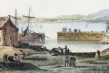
The Cromarty Library Circle by Shona MacLean
‘No one in the room could have been unaware of what it was that Dr Fraser alluded to. The horrors pe …
-

In Search of Gems by Kenneth Steven
‘It still amazes me that these magnificent shells grow in a river. Never mind whether they have pear …
-

Winterbourne by Elisabeth Wolf
‘The Coopers stared at each other for a second, two seconds. ‘It’s a sign—’ said Cooper.’
FEATURED AUTHOR:
Gabrielle Griffiths
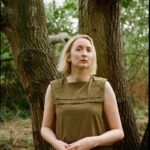
Gabrielle Griffiths grew up in Aberdeenshire and now lives in Brighton. She was a Madeleine Milburn Agency mentee in 2021 and is a graduate of the Curtis Brown Creative novel writing course. Her short fiction has been shortlisted for the Bridport Prize …
FEATURED PUBLISHER:
Vagabond Voices

Vagabond Voices is an independent publisher based in Glasgow, committed to introducing new titles from Scottish authors and translating fiction from other languages. We also publish poetry and polemics. Our carefully selected list aims to reflect liter …