


Evelyn Clarke is the pseudonym for Number One Sunday Times bestselling author V.E. Schwab, and screenwriter and YA author Cat Clarke.
SELECTED FOR 2026 ONES TO WATCH:
Daily Express, Daily Mirror, Radio Times, BBC News Online, Stylist, Scotland on Sunday, The Herald Scotland, My Weekly, The Scotsman, Muddy Stilettos Berkshire
* * * *
It’s the perfect plot. All it needs is a killer ending.
Six authors.
One private island.
Seventy-two hours to write the ending.
* * * *
World-famous author Arthur Fletch is dead. His final novel, the most anticipated book in history, remains unfinished. But the ending won’t write itself.
When six struggling authors are invited to Fletch’s private Scottish island and presented with the opportunity of a lifetime, the plot thickens: whoever writes a worthy ending will receive a game-changing book deal and two million dollars.
Why have they been chosen to attend? Who is behind the invitation? And just how far would they go to secure a place on the bestseller list?
They have just seventy-two hours, a typewriter and a blank page. All they have to do is write…
Starting is often the hardest part. But getting to the end could be murder.
SCOTLAND, 1983. The key musicians of the country’s first wave of post-punk had either disbanded or taken the big gold road south in search of major label deals in London. Into the vacuum came a new generation – rebellious, young musicians determined to reinvent the scene in their own image.
In this compelling and dynamic oral history, POSTCARDS FROM SCOTLAND chronicles the radical transformation of Scotland’s independent music scene from 1983-1995. Based on over 100 first-person interviews with the musicians, record labels, venues, promoters, and journalists who shaped the era, Grant McPhee lets the key players tell the story in their own words – including the Cocteau Twins, Shop Assistants, Teenage Fanclub, The Jesus and Mary Chain, Primal Scream, and many more.
POSTCARDS FROM SCOTLAND is the definitive story of the radicals, misfits and experimentalists who made independent music what it is today.
Ali regularly takes Jack, a friendly and mischievous miniature Shetland pony, to visit people in care homes. During one visit, they meet Billy, a boy who often visits his grandfather. Billy is surprised but delighted to meet Jack, and he praises the hard-working nurses. His comment about the need for more specialist nurses gets Ali thinking –could Jack Brock somehow help?
A new history of painting as told through the eyes and hands-on insights of a practising artist.
The first question that Lachlan Goudie asks himself when he sees a work of art is not ‘why’ it was created but ‘how’. For this book he poses that question of artworks created by the earliest humans to artists today, focusing on the technical inventions and turning points that at each stage have marked a new chapter in the history of art.
Goudie knows from experience that masterpieces don’t emerge serenely from an artist’s studio. They are the result of a long tussle between dirty hands and crushed pigment, hog’s-hair brushes and linseed oil, rabbit-skin glue and pulverized chalk. Great paintings are always the product of a struggle involving artists and their materials, one that pushes the practitioner to the very limits of technical ability.
The secrets of painting lie above all in the physical elements from which an image is crafted. The nature of these elements has changed over time and across continents. And as each generation of painters exploits the new material and technical innovations of their era, they transform the character of their work and help propel the course of art history.
Goudie traces this story all the way back to the original ‘big bang’ in the story of art: the very first painting pigments, made from charcoal and minerals, that were used to paint extraordinary art on the walls of the caves at Chauvet 36,000 years ago. He goes on to explore the impact of numerous new inventions and discoveries over the centuries, including ink, fresco, egg tempera, oil paint, canvas, watercolour, gouache, impasto, tubes of manufactured oil paint, collage, household gloss, acrylic, digital media and AI. Each chapter focuses on a technical turning point as embodied in the work of particular artist, including Giotto, Artemisia Gentileschi, Alma Thomas, Anselm Kiefer, David Hockney and many more.
In the skies above war-torn Europe, Stanley Wake and his fellow aircrew at Bomber Command risk their lives on missions that are incredibly dangerous and highly pressured. As the strains of their work press on him, Stan is beginning to suspect that either their plane is haunted or Stan himself may be haunted by his part in bringing about death and destruction to so many.
On the ground in Lincoln, Abby Sallow is desperately trying to keep her own ghosts at bay. Working in a factory dismantling wrecked aircraft, Abby struggles to escape the nightly visions of her only son, who was killed at the very outset of war. While Stan longs to live, Abby seems intent on bringing about her own death.
And for intensely superstitious Harry Culpepper, one of Stan’s crewmates, it is only the Fates can keep him alive. He has crafted a talisman – a bird skull – that he is convinced will guarantee his safety.
But as the bombing intensifies and the crew count down towards 30 flights completed – the point at which they will be given a reprieve from their deadly work – all three characters will discover whether they can find a chance of peace amongst the devastation of war, and whether the ghosts that haunt them can ever truly be laid to rest.
Moving, evocative and beautifully written, Night Fire establishes Richard Strachan as a major new name in historical fiction.
In 2015, the landscape of British politics was changed forever – Westminster was suddenly the new workplace for dozens of freshly elected SNP members. What followed was one of the most remarkable decades in British political history.
Joanna Cherry was part of this cohort, and in this explosive and revealing memoir she tells her own story of Scottish and British politics during this turbulent period .Covering everything from the party’s rejection of its popular leader, Alex Salmond, to the scandals that engulfed his successor Nicola Sturgeon, Cherry also reflects on the opportunities that followed the 2015 landslide and offers remarkable insight into why the party failed to further the cause of independence despite a series of electoral victories.
As well as offering an astonishing insider’s view of the culture of the SNP, Keeping the Dream Alive also looks to the future and offers a clear-eyed view of how political reform in Scotland and the revival of the independence cause could take place.
Boyhood opens in 1979 with the abduction of a young boy outside a Glasgow football ground. Nine years later, the boy’s brother, Aaron Murray, is on the cusp of that moment when adolescence becomes adulthood. His own journey of grief and recovery has been guided by an angel, ‘The Precious Gift’ – perhaps imagined, perhaps real – who has blessed Aaron with redemptive, messianic powers. These have enabled him to see through the past and present, joining the dots between a vast array of characters; ballerinas, soldiers, poets, burlesque dancers, East End gangsters and the Vampire of Derry over five decades, all tied up in each other’s fate.
As Aaron’s visions span cities and decades, from wartime Paris to the Troubles in the 1970s, Mexico City in the 1980s to – of course – Glasgow, Boyhood builds to an extraordinary, intense, climactic moment of redemption.
A book of great joy, of laughter in the face of horror and delight in storytelling by the beloved and critically acclaimed author of This Is Memorial Device, Boyhood is a hymn to the resilience of youth, to the brave dreams of artists and lovers and a love letter to Glasgow – a city where magic happens.
An extraordinary portrait of the Scottish Highlands: this is an epic and urgent story of destruction and renewal, told through unforgettable encounters with its people.
This is the story of a Scottish glen and its inhabitants, and of how I came to call it my glen.
From the powerful rivers that bring life and prosperity, to the Pictish cairns, undisturbed for centuries and the meadows of bluebells, from which deer emerge, god-like, in a flash, Kapka Kassabova reveals a world that has been abused, but remains achingly beautiful and alive.
In the Highlands, centuries-old connections between the land, nature and people have been, and continue to be, shaken by the forces of colonialism, industry, depopulation and private property speculation.
Borrowed Land tells the stories of those who are working against this disconnect: the last true Highlanders, fighting to preserve their home.
They’re rivals on the court. But off it? The real match is just beginning…
Inés Costa, Spain’s golden girl, hasn’t scored a Grand Slam since her breakout two years ago. Now, injuries and sky-high expectations are breaking her serve.
Enter Chloe Murphy: brash, brilliant, and America’s newest tennis obsession. With her eye on another US Open trophy, she’s not about to rally with a washed-up has-been like Inés — or fall for one.
But when fate forces them to play doubles off the court, the tension is advantage: chemistry.
The rallies get longer, the lines blur, and love might just be the ultimate game-changer.
Tropes:
· Sports Romance
· Celebrity
· Pro Athletes
· Sapphic Romance
· Forced Proximity
· Open Door
· Dual POV
When a chance encounter brings them together, Tom is fascinated by Raina’s wit and intelligence and she reluctantly agrees to let him profile her for his next book. Though if he betrays her or her community, she warns, she’ll end his career – with a smile.
What starts as a professional arrangement soon blurs into a sizzling romance. But when Tom’s work comes under scrutiny, he faces a decision: should he save his sought-after career, or the unapologetic love he never thought he’d find?
Big-hearted, bold, and full of bite, Unapologetic Love Story is the dazzling debut adult romance novel from bestselling author, Elle McNicoll. For fans of Emily Henry’s Book Lovers and Talia Hibbert’s Get a Life, Chloe Brown.
From the award-winning author of All My Wild Mothers: a lyrical, tender story of creating a wild apothecary garden on the Scottish archipelago of Orkney.
With the years of early motherhood and elderly caregiving over, Victoria faces a time of change. She and her family decide to take a leap, moving five hundred miles north of everything they know to the northern Scottish islands of Orkney, where the winters are long and the summer a perpetual light.
Uprooted and in an unfamiliar landscape, Victoria instinctively returns to the work of growing, setting out to transform her scrappy backyard into an abundant apothecary garden by the sea, inspired by Orkney’s folklore, ancient landscapes and wild nature.
Shaped by tides and storms, wild plants and seaweeds, she creates a biodiverse backyard sanctuary filled with micro-habitats, wildflowers and herbs. Here, in her apothecary by the sea, she crafts teas, tinctures and balms inspired by the surrounding soil and seas.
As the year closes and the endless summer light turns once more to dark, Victoria finds belonging not only in the garden she has nurtured, but in the landscape that has quietly embraced her and called itself home. Here, at the wild edge of things, she is reclaiming parts of herself long set aside.
A book that literally walks the reader through the many miles of ‘dismantled railway’ in Edinburgh, which have have been transformed into smooth, gently-graded, tarmac routes, ideal for pedestrians of all ages, cyclists and joggers. The railway engineers, who balanced excavation and infill, have left a legacy of cuttings and embankments which are generally unobtrusive and often surprisingly tucked away from today’s city life.
In 1981 Lothian Regional Council acquired various disused lines and other railway land, making possible the creation of cycleways-cum-footpaths. The programme began in 1983 and has flourished ever since. More might have been achieved had the line closures of the 1960s been accompanied by comprehensive plans for re-utilisation, which the mood of the times did not favour. There was instead piecemeal redevelopment for domestic housing, commerce and industry. Although a more enlightened policy subsequently prevailed, these results are not easily undone.
Nevertheless, the maze of track beds has very largely been preserved covering a total of some 40 miles – in part the product of inter-company rivalry and duplicated provision. Thirteen walks are described and, although each stands alone, tackling them in sequence opens windows on two centuries of urban expansion which has subsumed once-independent communities, all with their own histories.
The first walks described begin at Waverley Station in the city centre. Where track beds have been lost – especially through parts of old Leith – exploratory detours are detailed. The authors therefore advise that more time is allowed than the distances cited may suggest!
This book explores the amazing story of the magnificent luxury steam yachts built at Leith. More than 100 of these beautiful vessels were build between 1870 and the end of World War 1, primarily by the shipbuilding firm Ramage & Ferguson.
Floating palaces built with consummate skill by the shipbuilders of Leith, this tradition was often overshadowed by the more well-known and fairly larger concerns based in the west of the River Clyde.
The Weight of Quiet Things gathers essays, stories and poems that explore the deep, enduring relationship between the Scottish landscape and its people. Many of the contributing writers were born, raised and built their lives in Scotland, while a few are visitors who were changed by their time in Scotland – be it the isolation of the Highland hills, the voices in the howling gaoth mhór or the humble power of a lone damh.
Together, these works trace a Scotland shaped by labour, collective memory and inheritance of a land that can never be owned. This is a collection about what we take from the land, what the land takes from us and the weight of what remains.
Amidst island tales of long-lost fairies and pirate chickens, Tia discovers the true magic of the elusive storm petrel in this uplifting tale of conservation from Gill Lewis.
Long-lost fairies hiding near the lighthouse?
Chickens belonging to a sea witch that warn sailors of coming storms?
There are a lot of wild stories going about as some tall ships seek shelter in Gull Have Bay. Tia and Nat don’t believe any of them to begin with. But when Nat’s dad helps unravel the truth, they learn about a seabird that’s in danger.
Can Tia and Nat find a way to help, and will it allow them to rediscover the magic of the real world all around them in their island home?
Particularly suitable for readers aged 7+ with a reading age of 7.
Enter Eddie Shakespeare invites young readers into the bustling world of Elizabethan theatre through the eyes of 11-year-old Eddie. Dreaming of stardom, he runs away to London, eager to revive his family’s honour under the guidance of his older brother, the promising playwright Will. However, when Eddie discovers a sinister plot to sabotage Will’s big break, he finds himself facing a villain worthy of the stage! Will Eddie’s story end in tragedy, or can he turn the tide?
This thrilling historical fiction novel is perfect for children and will captivate parents and teachers alike. It unveils the lesser-known tale of Shakespeare’s younger brother while providing fascinating insights into the early days of Shakespeare’s remarkable career.
Ideal for young readers aged 8 to 12, this book will appeal to those interested in history, theatre and stories of sibling bonds, making it an excellent addition to school curriculums and libraries. Teaching resources will also be made available upon this books publication.
Rona the Seal is looking for a singing teacher, but no one wants the job!
The sea eagles fly for cover when they hear her sing, and the humpback whales dive into the deep. But then one morning she hears about the Seal Choir . . . and she realises she’s been looking in the wrong places all along.
Names are incredibly powerful things and are a crucial part of the way we see and classify the world around us. Plant names are especially fascinating in this respect. Some are simply descriptive or speak of ancient uses and remedies, whilst others have religious origins or roots in wider folklore, and some are very recent inventions.
This book introduces almost 300 plant names to showcase the enormous variety of Scotland’s native species. It includes English, Gaelic and Scots (Including dialect) names, revealing the country’s diverse linguistic history. Short descriptions, together with historical and cultural information in each entry, make this book an ideal companion for all those with an interest in Scotland’s rich botanical tradition.
Emma Propeller is trying to swerve the wreckage of her marriage.
When her husband returns from rehab with a new lover, Emma bolts with her baby on a midnight train to a castle in the Scottish Highlands. A job as a live-in driver for a glamorous marchioness promises safety and the chance to reinvent herself. Everything seems to have fallen into place.
But the castle is no sanctuary. Dark secrets stalk its halls, the marchioness’s behaviour spirals into the unhinged and someone, Emma suspects, is following her. She hasn’t steered herself out of danger – she’s driven straight into it.
A poet’s skill lies in their ability to distil complex themes into a few paragraphs; to pick out the fundamental quality in people that make us unique; they can describe nature in a way that makes us see its majesty. The poet traverses contents and political divides; they help us understand where we have come from which in turn allows us to figure out where we are going.
And no one does this better than Alexander McCall Smith. He has brought – through his novels – many wonderful characters to vivid life and entertained readers all over the globe. And in his third collection of poetry, he guides the reader by the hand and takes them through time and place exploring the majestic themes of nature and the complexities of relationships and what it is that makes us human with his trademark warmth and humour.
ALSO ON BOOKS FROM SCOTLAND
-

David Robinson Reviews: The Loch of the Bees
‘The past’s current flows through the characters in his fiction so strongly that it almost becomes t …
-
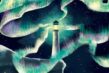
The Nightkeeper’s Apprentice by Jude Reid
‘She’d never seen anything like it. The whole sky was lit up in ribbons of colour – blue, green, yel …
-

David Robinson Interviews: Gavin Francis
‘He’s not my GP so I can’t say this for sure, but based on this book – wise, informed, well-written, …
-
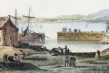
The Cromarty Library Circle by Shona MacLean
‘No one in the room could have been unaware of what it was that Dr Fraser alluded to. The horrors pe …
-

In Search of Gems by Kenneth Steven
‘It still amazes me that these magnificent shells grow in a river. Never mind whether they have pear …
-
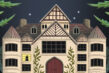
Winterbourne by Elisabeth Wolf
‘The Coopers stared at each other for a second, two seconds. ‘It’s a sign—’ said Cooper.’
FEATURED AUTHOR:
Kirstin Innes

Kirstin Innes is a writer based in the West of Scotland. Her latest novel, Scabby Queen, published by 4th Estate, was nominated for the Gordon Burn Prize and Scottish Novel of the Year, and is being adapted for television by Moonage Pictures. Her debut …
FEATURED PUBLISHER:
Leamington Books

Leamington Books publishes a variety of fiction and non-fiction titles under our ethos, Transformative Publishing. Our authors are chosen for their undiscovered talents, unique perspectives and one-of-a-kind stories to tell. Leamington’s work is driven …