


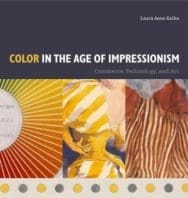
ABOUT THIS BOOK
PUBLISHER: Pennsylvania State University Press
FORMAT: Paperback
ISBN: 9780271077024
RRP: £24.95
PAGES: 288
PUBLICATION DATE:
August 15, 2018
BUY THIS BOOK
As an Amazon Associate and Bookshop.org affiliate we earn from qualifying purchases.
Color in the Age of Impressionism: Commerce, Technology, and Art
Laura Anne Kalba
This study analyzes the impact of color-making technologies on the visual culture of nineteenth-century France, from the early commercialization of synthetic dyes to the Lumiere brothers’ perfection of the autochrome color photography process. Focusing on Impressionist art, Laura Anne Kalba examines the importance of dyes produced in the second half of the nineteenth century to the vision of artists such as Edgar Degas, Pierre-Auguste Renoir, and Claude Monet.The proliferation of vibrant new colors in France during this time challenged popular understandings of realism, abstraction, and fantasy in the realms of fine art and popular culture. More than simply adding a touch of spectacle to everyday life, Kalba shows, these bright, varied colors came to define the development of a consumer culture increasingly based on the sensual appeal of color. Impressionism-emerging at a time when inexpensively produced color functioned as one of the principal means by and through which people understood modes of visual perception and signification-mirrored and mediated this change, shaping the ways in which people made sense of both modern life and modern art.Demonstrating the central importance of color history and technologies to the study of visuality, Color in the Age of Impressionism adds a dynamic new layer to our understanding of visual and material culture.
Reviews of Color in the Age of Impressionism: Commerce, Technology, and Art
"Laura Kalba tells us a bottom-up story about color: a history of the chemical, optical, commercial, and nationalist practice of color. Moving from one key visual phenomenon to another, she shows how inherent qualities of color were understood in the particular time and place she studies. Color, she convinces us, is both a material quality and a condition of visuality. Her method allows Impressionism to become only one among several key color phenomena of late nineteenth-century France. Paradoxically, that is exactly what allows her to make fresh, basic, compelling arguments about Impressionism. The whole book is a game-changer."-Anne Higonnet, author of A Museum of One's Own: Private Collecting, Public Gift "A first-rate study of a significant historical shift in the relationships among art, culture, and the technological basis of vision in nineteenth-century France. This book enlarges our understanding of the links that connected nineteenth-century French laboratory science and industry with the popular imagination. It deserves to be read widely."-Jennifer Tucker, author of Nature Exposed: Photography as Eyewitness in Victorian Science "Laura Kalba brilliantly redefines the relationship between Impressionism and color. Beginning with the proliferation of new chemical dyes, she extends her study to effects of their bright and increasingly variable colors on fashion, horticulture, advertising, interior decoration, and even fireworks. She argues forcefully and convincingly that thanks to industrial and technological developments, the modernity to which the Impressionists were committed became both a democratic and polychromic spectacle-a modern vision that the French often called bariolage."-James H. Rubin, author of Impressionism and the Modern Landscape: Productivity, Technology, and Urbanization from Manet to Van Gogh "In this beautifully conceived and written book, Kalba shows her depth of vision and understanding of the relationship between Impressionism and the technological advances that allowed Impressionism to have such a unique impact on society in the late 1800s and beyond. The examples are well chosen, and the book is a joy to experience. Summing up: Essential."-J. Allison, Choice
Laura Anne Kalba
Laura Anne Kalba is Associate Professor of Art History at Smith College.
ALSO ON BOOKS FROM SCOTLAND
-

David Robinson Reviews: The Loch of the Bees
‘The past’s current flows through the characters in his fiction so strongly that it almost becomes t …
-

The Nightkeeper’s Apprentice by Jude Reid
‘She’d never seen anything like it. The whole sky was lit up in ribbons of colour – blue, green, yel …
-

David Robinson Interviews: Gavin Francis
‘He’s not my GP so I can’t say this for sure, but based on this book – wise, informed, well-written, …
-
The Cromarty Library Circle by Shona MacLean
‘No one in the room could have been unaware of what it was that Dr Fraser alluded to. The horrors pe …
-

In Search of Gems by Kenneth Steven
‘It still amazes me that these magnificent shells grow in a river. Never mind whether they have pear …
-

Winterbourne by Elisabeth Wolf
‘The Coopers stared at each other for a second, two seconds. ‘It’s a sign—’ said Cooper.’
FEATURED AUTHOR:
Lesley Glaister

Lesley Glaister is a fiction writer, poet, playwright and teacher of writing. She has published fourteen adult novels, the first of a YA trilogy and numerous short stories. She received both a Somerset Maugham and a Betty Trask award for Honour Thy Fat …
FEATURED PUBLISHER:
Wild Goose Publications
Wild Goose Publications produces books, e-books, CDs and digital downloads relating to the community’s concerns for social justice, political and peace issues, holistic spirituality, care for creation, and healing, and supplies innovative resources for …