


ABOUT THIS BOOK
PUBLISHER: Brown, Son & Ferguson Ltd
FORMAT: Hardback
ISBN: 9781849270137
RRP: £25.00
PAGES: 384
PUBLICATION DATE:
November 27, 2009
BUY THIS BOOK
As an Amazon Associate and Bookshop.org affiliate we earn from qualifying purchases.
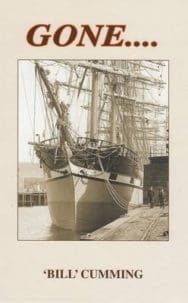
Gone: A Chronicle of the Seafarers & Fabulous Clipper Ships of R & J Craig of Glasgow : Craig’s “Counties”
Bill Cumming
The Theme of “Gone” Origins of the 4-masted iron sailing ship, which unexpectedly prolonged the usefulness of windjammers during the ascendancy of steam ships. It is the human story of events at the high point of merchant sail-power between 1870 & 1907. The Storyline…Based on real people and events this is a gripping factual account of the background events and repercussions of the milestone launch of the world’s first 4-masted iron merchant ship in 1875. The phenomenal success of this large square rigged sailing-ship, named County of Peebles, prompted R & J Craig of Glasgow to launch a further eleven fabulous jute clippers. Initially they traded between Cardiff, East India and Dundee and were referred to as the Scottish East India Line. R & J Craig’s bold decision to build sailing vessels (the fleet was known as Craig’s “Counties”) during the ascendancy of steam power, created an unanticipated demand for 4-masted iron and later steel windjammers. These flourished at the peak of the sailing ship era, and continued for 50 years longer than predicted. One of these ships was perhaps the fastest wind ship ever created.The careers of each of the twelve renowned 4-masters are revealed in detail for the first time in one publication. Remarkably, the dilapidated hulls of the County of Peebles and County of Roxburgh still survive!
Reviews of Gone: A Chronicle of the Seafarers & Fabulous Clipper Ships of R & J Craig of Glasgow : Craig’s “Counties”
Whilst this publication is not inexpensive the quality and contents more than make up. As many know the reviewer has a love of the final merchant sailing vessels in the last trades open to them with the increasing competition from powered vessels. Bill Cumming has taken the story of one company, its development, organisation and the vessels it operated, whilst not forgetting the human side of the officers and men that manned these ships. He has produced an exceptional publication that addresses many of the myths of current thinking and, refreshingly, tells it 'as it was.' Many readers will know Brown Son & Ferguson, specialist publishers who have been in business since 1832 producing technical books for the maritime trades and – possibly better known to our members – for the books on sail written by Basil Lubbock, and Harold A. Underhill, together with their monthly Nautical Magazine.; now joined by Bill Cumming. The author has chosen to lay out the narrative into descriptive sections – Bowsprit; Foremast; Mainmast; Mizzen Mast; Jigger Mast and Wake. These detail in 22 chapters the commencement, growth and eventual decline of the company and their very well-known ships, starting with the wood barque Majestic, through five iron ships, seven composite, and twelve iron 4-masted barques from the County of Peebles of 1875, and culminating in the County of Linlithgow of 1887, and covering a building period from 1846 to 1887. Each vessel is dealt with in considerable detail and well illustrated, many of which photos have previously not been published. The County of Peebles pioneered (with the Tweedsdale) the genre of 4-masted vessels, albeit there were earlier 4-masted vessels – notably the Great Republic of 1853 and even the 'rafts' Columbus and Baron of Renfrew of the 1820s, which latter were built to avoid taxation! This is a really excellent book which also deals in depth with the masters, officers and crew of the ships and one is left with the heady smell of hemp, tar, rust and paint evocative of those last days of commercial sail which generally saw hard work and poor provisions the order of the day. The author is the grandson of two of the masters' on Craig's 'County' Line vessels and has spent many years on this original research, the results for which he deserves congratulations. My only criticism are, perhaps the pagination numbering which is omitted in the 'Contents' headings, and makes it less than user-friendly to locate a specific chapter quickly; and the cost of the book which is likely to make it a scarce item in booksellers' premises. The book can however be obtained direct from the publishers, address as above or Telephone Number 0141 429 1234. That apart I could not put the book down and it is both a great read and full of detailed and often previously unpublished information. David. B. Clement
Bill Cumming
‘Bill’ Cumming, the great-grandson of two Master Mariners employed by R & J Craig, is a well-travelled Chartered Engineer who has accumulated the original material for this book over many years.
ALSO ON BOOKS FROM SCOTLAND
-


The Scottish Colourists: Art & Life by Alice Strang
‘Together the quartet embodied a new spirit in Scottish art and they are celebrated as Scotland’s le …
-

David Robinson Reviews: Our Noble Selves by Kate Atkinson
‘As I suggested at the start, there’s a whole heap of plot in Our Noble Selves – spies, murders, and …
-
‘They had spoken perhaps ten sentences each and it had already begun. Moira’s resentments, her preju …
-

Ayont the Thistle by Jim Mackintosh, Alan Riach and James Robertson
‘Nane ae this then but – ma hert daen its hing/ an yon wee smile ae yours in the saft smir ae the ga …
-

David Robinson Reviews: This Door of the Seas
‘He sees what he wants to. And it makes a kind of sense too – especially to colonists from Scotland, …
-

The Broons and Oor Wullie Celebrate their 90th Birthdays!
‘Whatever the future may hold, we can be sure that The Broons and Oor Wullie will always be a part o …
FEATURED AUTHOR:
Lorraine Wilson

Lorraine is an award-winning writer, biologist, herder of cats and drinker of tea. Having spent years working in remote corners of the world she now lives by the sea in Scotland and writes stories full of the wilderness and folklore, exploring themes o …
FEATURED PUBLISHER:
Sunono Publishing Ltd

Sunono is an Arabic publisher established in the UK. We publish our books in Arabic and in English. We publish children’s books with the approach to extend our work to introduce adult books and novels. In 2020 and 2021 we won the Sharjah Translation Gr …