


From Mexico to Patagonia, the struggle for women’s rights in Latin America comes alive in the voices of the artists and activists making the change.
La Lucha gathers the voices of 30 artists, scholars, and activists, from 17 countries, actively engaged in the fight for women’s rights in Latin America. From the patriarchy to femicide, to the inflections of identity embedded in colour, class, and indigenous cultures, their struggle embodies the contested definitions and priorities of feminism. Their solidarity, and tirelessness, has yielded striking, game-changing results in areas as disparate, and as fundamental to women’s lives, as reproductive health, environmentalism, anti-colonialism, and human rights. With contributors that include Isabel Allende, Selva Almada, Gabriela Cabezón Cámara, Valeria Luiselli, Lina Meruane, Claudia Piñeiro, and Cristina Rivera Garza, this unprecedented collection is sure to challenge, provoke, and inspire.
The Burning Grounds is the award winning novel from the author of Hunted – the British Book Awards Crime Thriller of the Year 2025 and Theakston Old Peculier Crime Novel of the Year 2025
In the Burning Ghats of Calcutta where the dead are laid to rest, a man is found murdered, his throat cut from ear to ear.
The body is that of a popular patron of the arts, a man who was, by all accounts, beloved by all: so what was the motive for his murder? Despite being out of favour with the Imperial Police Force, Detective Sam Wyndham is assigned to the case and finds himself thrust into the glamorous world of Indian cinema.
Meanwhile Surendranath Banerjee, recently returned from Europe after three years spent running from the fallout of his last case, is searching for a missing photographer; a trailblazing woman at the forefront of the profession. When Suren discovers that the vanished woman is linked to Sam’s murder investigation, the two men find themselves working together once again – but will Wyndham and Banerjee be able to put their differences aside to solve the case?
The North Sea, a maritime highway and the edge of a nation of islanders with a proud sea-faring past. Running from Kent and the Rhine estuary to the Norwegian coast and the tip of the Shetland islands, it has been home to warring tribes, foreign invaders, lost civilisations and holidaymakers. Its history spans millennia, since a seismic shift sent land retreating and water rushing in. Today, the North Sea continues to rise, claiming land mass as the east coast crumbles and sinks.
In The North Sea, renowned historian Alistair Moffat spends a year travelling its shores to better understand our relationship to the sea. He takes us on an epic, sweeping history from the Kentish coast to flooded homes, crossing wild fenland and Brexit fault lines, visiting well-worn seaside towns and windswept island monasteries.
The story he tells is one of newcomers and the mark they left, of Roman invasions, the arrival of the Saxons and the Viking raids. But it is also a story of those they met, of Pictish citadels and Orcadian stone circles. It is a story of technological advancement, of submarine engineering and weather forecasting. It is a story of huge industry, from whaling expeditions and fishing trawlers to the boom of North Sea oil and offshore wind farms. This is the story of how the North Sea shaped us and will continue to do so; it is above all a story of insistent, inescapable change.
Badlands opens with the horror of a man gradually waking to find himself fully and sharply dressed on a hotel bed in the Highlands with no memory of who he is or how he got there. And he is not alone, a secondary horror which drives him to seek the help of a girl in a pub before he takes off on a flight through the landscape in search of answers and an identity.
The girl in the pub, herself a stranger, is on a quest to unlock family secrets that are rooted in Vienna. Two characters, an amnesiac man stumbling around the countryside and a single-minded young woman forced by circumstance to reconnect with her Austrian roots, carry the plot and their paths cross and divide as they gradually work towards its eventual resolution.
Book 5 in the Edinburgh Nights series.
‘I’ve had my arse kicked more times than I can count’
Ropa Moyo is dead, banished to the Other Place by the reanimated spirit of Henry Dundas, 1st Viscount Melville of Scotland. Turns out being on the losing side sucks worse than being skint.
Now, the Cult of Dundas intends to ascend to godhood, spreading their corrupting reach from Edinburgh to all of Scotland’s schools of magic. Ropa must find some way to escape the Other Place, save her sister and gather allies across the country before Edinburgh falls.
A royal plot, a family secret and a stolen body. As Scotland descends into petty in-fighting, Ropa’s only hope lies in her grandmother’s final secret: the first school of magic.
An ancient power is returning . . . and is hungry for revenge.
Past and future collide in this engaging journey through climate change, fossil capitalism and the struggle for a sustainable world.
Scotland’s history and future are entangled with climate change and the story of the modern world. This small country on the fringes of northern Europe pioneered fossil capitalism and played a key role in its spread across the planet. It is a living museum of the crisis of the west, of deindustrialisation, stagnation and the struggle to build a better future from the ashes.
Journalist and sociologist Dominic Hinde travels from the treeless Highlands to the lowland cities, struggling to balance memories with aspiration. Through this journey he finds that his own sensory turmoil, shaped by recovery from a near fatal accident, mirrors the disarray of the fossil fuel transition – an uncertain passage between what was and what must be.
Part memoir, part environmental history, part travelogue, this is a compelling narrative of connections – to place, energy and the possibility of renewal. Through the lens of one country, it asks a vital question: can the lessons of the past help us build a more sustainable future?
St Andrews, Scotland: When a woman’s eviscerated body is found on the golf course close to the Fairmont Hotel, DCI Andy Gilchrist and his associate DS Jessie Janes are assigned the investigation. But the post-mortem examination uncovers a shocking detail that must be kept from the public…
Who could carry out such a brutal murder? And what is the significance of the gruesome trophy?
When DNA uncovers links to a murder committed thirty years earlier, Gilchrist fears a killer of old has resurfaced, or worse, a debut serial killer setting out to learn his murderous trade. The hunt for the killer forces Gilchrist down a dangerous path that puts his and Jessie’s lives in danger, and ultimately leads them to a mind-playing madman who would rather kill again than go to prison.
As Gilchrist homes in on the murderer, he finds himself relentlessly drawn into the killer’s mind games and a desperate fight for his life, in which there can only be one winner.
Has Gilchrist finally met his match?
In Glasgoscopy a community health professional takes the pulse of North West Glasgow, observes connections and disconnections between city and citizen, examines how language, physical and social environments affect health. Vicki Husband has created a series of microstories, which are a fictionalised collage of her experience and her lyrical reflections on over twenty-five years of being a brief guest in so many lives.
Finlaggan on Islay has long been recognised as an important medieval site; the centre from which the MacDonald Lords of the Isles exercised control and patronage over large areas of Scotland. This major archaeological project undertaken from 1989 to 1998 led to a better understanding of how the Lords of the Isles created a Gaelic state and how Finlaggan contributed to the culture and heritage of Scotland. The excavations also uncovered evidence of prehistoric occupation and ritual, lead mining, and post-medieval settlement including a fort. In addition to the excavation results, this book reviews all available historical documentation to place Finlaggan in its local West Highland setting as well as a wider British and Irish context. Richly illustrated with photographs and plans of the excavation sites, the book discusses Finlaggan as a castle, palace and administrative hub. The volume is supplemented by an online catalogue of artefacts and environmental material that provides a wealth of information on the inhabitants, their pastimes, their activities and their quality of life.
The Great Mixed Climbs of Scotland is the definitive guidebook to the most iconic, challenging, and inspiring winter climbing routes across the Scottish mountains. Published by the Scottish Mountaineering Press, this beautifully produced volume brings together in-depth route descriptions, expert insight, and stunning photography to celebrate Scotland’s world-class winter climbing tradition.
Inside, climbers will discover legendary routes on Ben Nevis, Glencoe, the Cairngorms, Torridon, Creag Meagaidh, and the Northwest Highlands, making this book an essential companion for planning, training, and adventuring in Scotland’s dramatic winter landscapes. Each climb is carefully detailed to help mountaineers of all levels — from seasoned experts to ambitious newcomers — get the most out of their Scottish winter experience.
Includes routes on Ben Nevis, Glencoe, Cairngorms, Torridon, Creag Meagaidh, and the Northwest Highlands
Packed with detailed route descriptions, mapping, and expert advice
Illustrated with breathtaking Scottish mountain photography
Perfect for both experienced winter climbers and those new to Scottish mountaineering
A beautifully designed book — ideal for reference, inspiration, or as a gift for climbers
Whether you are planning your next ascent, reliving unforgettable climbs, or searching for the perfect gift for a mountain enthusiast, The Great Mixed Climbs of Scotland is a must-have addition to every mountaineer’s library.
Square Baw is a collection of football poems that not only covers personal experience, but takes a deep dive into the history of the Scottish game itself, and thereby goes to the heart of Scottish masculinity. The poems are mainly told through the experiences of Mac- Donald’s grandfather William McKenzie Grant (b. 1887). Grant played at Junior and amatuer level, including with Queens Park in 1917-18, before playing at top level in Scottish football, with their home being the legendary Hampden Park. MacDonald’s interest in Scottish football was rekindled in his grandfather’s story after a post- card from a distant relation was discovered, which had been sent from the Western Front in May 1915 by his grandfather to his nephew in Glasgow. It prompted MacDonald to re-ex- amine his grandfather’s life, through his 95 year old mother’s memories, books, records and war diaries.
A lyrical and personal account of Jim Crumley’s lifelong quest to find harmony in nature and to hold nature at the centre of his every thought and action as he celebrates our precious planet.
Renowned nature writer Jim Crumley draws on more than six decades of immersion in wild landscapes to explore the profound harmony at the heart of the natural world―and why it matters now more than ever.
With the lyrical clarity and passionate advocacy that have made him Scotland’s foremost nature commentator, Crumley weaves together close observation, personal encounters, and ecological insight to reveal nature as a vast, interconnected symphony. He argues that our survival depends on relearning how to listen to the land, to recognise our place within the great orchestration of life rather than apart from it. Through evocative prose built on his expertise and care, Crumley urges us to defend the beauty and balance of the living world, offering both a celebration and a clarion call.
Symphonic is a vital testament from a writer whose life’s work is a passionate defence and celebration of nature’s enduring―and endangered―harmony.
Young Billy Queen is angry. He’s going to find the English officer who bullied his dad in the army and probably kill him. What he doesn’t yet know is that his search will take him to deepest India and that it will become an intellectual journey from which there will be no turning back. Hunting Captain Henley tracks the progress of a tormented boy who turns into a subversive man hell-bent on vengeance for a covert military incident in Suez 1952.
Paris, 1968. In the heady youth culture of Summer 1968, students in Paris erupt into what becomes a national rebellion, nearly toppling the French economy and their august, king-like President Charles de Gaulle. Amid the turmoil, Blanche Lanyon is on her own mission to create a journalistic career in mid-life, struggling against a failing marriage, a controlling, aristocratic family and a devastating health diagnosis. And as her path crosses de Gaulle’s in his time of crisis, he unwittingly gives shape to her future.
Six friends. One city. The time of their lives.
It’s 1988, and on the verge of a reunion with friends she hasn’t seen since graduation, Julie recalls her halcyon student days of 1984 and the strange tumultuous time they lived through.
The friends – each from a very different background – are living in a gorgeous terraced flat in their Edinburgh idyll. As they navigate relationships and the unspoken rules of flat sharing, the troubled world all around them seems rather distant. But in the nearby hometown of one of the flatmates, the Miners’ Strike is bringing about a huge political shift.
Despite their differences, can these six strangers help each other see the world from a different perspective? Is there such a thing as being too close? And what are the limits of love between friends?
A Shona Sandison Mystery
Shona Sandison might be about to get her biggest scoop yet – if she can make it to the end of the investigation alive.
In a darkening, post-COVID world, fearless investigative reporter Shona Sandison is seeking meaning – and her next big story. A secret contact inside the government has promised her something huge, but she has no idea of the danger she is in. Meanwhile, her old friend Hector Stricken has taken on a position in communications for a new state agency, where he stumbles across a sinister, top-secret project codenamed ‘Grendel’. And on the Scottish coast, an ageing spy chief, living in seclusion, grieves his murdered son – and contemplates revenge.
Connecting them all is an insidious conspiracy within the UK’s most powerful institutions, a rot so deep that the only way to cure it may be to cut it out – or burn the whole thing down.
Set in the stunning landscape of Loch Broom during the late 1800s, An Taobh Dorcha immerses readers in a world of hardship, power and humanity. This compelling Gaelic historical fiction follows two newcomers: Gibson, who arrives from Glasgow seeking his roots, and Donald, who assumes the identity of a murdered minister after committing a heinous crime. Their arrival disrupts the quiet community, where the kindness of locals masks an undercurrent of tension. As the story unfolds, the stark contrasts between Both men, whilst different in their morals, are at pivotal crossroads, and their impulsive actions lead to tragic consequences.
Charity’s narrative captures the harsh realities faced by crofters under oppressive landlords and an unsympathetic clergy while celebrating the resilience of ordinary people. With lyrical prose, the author transports readers to enchanting moors and lochside, where beauty contrasts with struggle. An Taobh Dorcha is a poignant reflection on the human spirit, making it a must-read for those captivated by the complexities of life in a bygone era.
1957. Sonny is working on a whaling ship in the South Atlantic, reckoning with the most vicious storms he has ever seen. It’s a brutal way to make a living. When he finally returns to his Shetland home to build a life with his wife and young son, the legacy of his time at sea is felt by all of them.
In present day Shetland, Jack is an old man, living alone in the cottage where he grew up, in the shadow of a hill. And it is here, one evening, that something appears on his doorstep. Something that throws off the rhythm of his solitary existence in the most profound way.
This is a story of unlikely friendship, longing, the power of music and the pull of home. It is about a life revisited – and reimagined.
Scotland has given the world some of its most distinctive – and most lovable – dogs. In Tails of Scotland, dog-loving Scotsman Peter MacQueen journeys from the wild Highlands to the rolling Lowlands, meeting native breeds and the people who know them best.
From the regal Scottish Deerhound, the gentle giant of the glens, to the mischievous West Highland White Terrier stealing hearts (and socks!) across the country, Peter uncovers the history, quirks and enduring charm of fourteen remarkable breeds. Whether it’s a Border Collie commanding its flock or a Dandie Dinmont nosing through the undergrowth, these dogs are more than pets, they are part of Scotland’s spirit.
Packed with lively storytelling, stunning photography of dogs in breath-taking landscapes, and practical tips for current and future owners, this is a heartfelt celebration of our four-legged heritage.
Joy Chose You is a beautiful, colour-illustrated collection of Donna’s most-loved poems to bring more joy into our imperfect lives. When we allow joy to wrap her quiet warmth around us we find ourselves opening up to more life, love and light.
With poems such as ‘Joy Comes Back’, ‘Happy’ and ‘Unstoppable’, as well as 20 new poems, including ‘This Little Moment’, ‘Love Wins’ and ‘A Little Weird’, Donna’s wise words help us find hope in the dark, calm amid worry and greater joy in the beauty of living.
ALSO ON BOOKS FROM SCOTLAND
-

David Robinson Reviews: The Loch of the Bees
‘The past’s current flows through the characters in his fiction so strongly that it almost becomes t …
-

The Nightkeeper’s Apprentice by Jude Reid
‘She’d never seen anything like it. The whole sky was lit up in ribbons of colour – blue, green, yel …
-

David Robinson Interviews: Gavin Francis
‘He’s not my GP so I can’t say this for sure, but based on this book – wise, informed, well-written, …
-
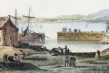
The Cromarty Library Circle by Shona MacLean
‘No one in the room could have been unaware of what it was that Dr Fraser alluded to. The horrors pe …
-

In Search of Gems by Kenneth Steven
‘It still amazes me that these magnificent shells grow in a river. Never mind whether they have pear …
-

Winterbourne by Elisabeth Wolf
‘The Coopers stared at each other for a second, two seconds. ‘It’s a sign—’ said Cooper.’
FEATURED AUTHOR:
Anna Groundwater
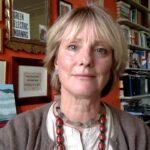
Anna Groundwater is currently the Principal Curator for Renaissance and Early Modern History at the National Museum of Scotland. She previously lectured in early modern Scottish and British History at the University of Edinburgh. She’s the author of wo …
FEATURED PUBLISHER:
Edinburgh University Press

Connecting people and ideas to inspire creative thinking, open new perspectives and shape the world we live in. Our ambition is to create a community of authors, editors, advisors and practitioners committed to publishing world-class academic research …