


Margaret Tait (1918-1999) was a pioneering filmmaker for whom words and images made the world real. In ‘documentary’, she wrote, real things ‘lose their reality … and there’s no poetry in that. In poetry, something else happens.’ If film, for Tait, was a poetic medium, her poems are works of craft and observation that are generous and independent in their vision of the world, poems that make seeing happen.
Sarah Neely, Lecturer in Film at the University of Stirling, draws on Tait’s three poetry collections, her book of short stories, her magazine articles and unpublished notebooks to make available for the first time a collection of the full range of Tait’s writing. Her introduction discusses Tait as filmmaker and writer in the context of mid-twentieth-century Scottish culture, and a comprehensive list of bibliographic and film resources provides an indispensible guide for further exploration.
‘Brigid writes with warmth and appreciation of communities that she knows and loves, and she inspires us to explore them’ – Rick Stein
‘Whenever I am talking to customers about the NC500, I always recommend your book for the wonderful photographs and all the extra information it contains’ – David Duguid, Picaresque Books
This is the essential guide to the north of Scotland, on a route which begins in Inverness, weaves westwards to Applecross and then northwards towards Torridon. From Ullapool it leads to the most northerly points in Britain, passing by Caithness and John o’ Groats before heading south again through Dingwall and to Inverness.
In addition to stunning mountains, moors, lochs and beaches, the route also features exquisite towns and villages, castles, distilleries, breweries, natural wonders and wildlife.
Brigid Benson, who knows the road intimately, divides the route into manageable chunks, suggesting where to discover history, observe wildlife, meet great local characters, shop at quirky stores, taste outstanding food, drink in friendly bars and cafes, stand in awe of amazing sights, and recommending places to picnic, swim, surf, walk and stargaze. And great places to camp and stay. She also draws attention to potential pitfalls, offering useful advice on single-track roads, fuel, car problems, planning realistic itineraries, and much more.
Stunning, full-colour landscape photography features throughout, and a full list of photographs can be found on page 229 for your reference.
Can a killer ever be on the side of justice?
In 1983, Professor Robert Balfour was found floating in Airthrey Loch at the heart of Stirling University’s campus. His death was deemed a tragic accident but there were other, darker rumours. The death of a politics professor allegedly linked to the armed wing of the Scottish Liberation Brigade was always going to attract conspiracy theories.
But that’s all they were. Theories. Until now.
To mark the 40th anniversary of his father’s death, Jonathan Rodriguez has travelled back to Stirling – and he’s brought a camera crew with him. Rodriguez is convinced his father’s death was no accident – and that at least one of the killers wore a uniform. Desperate to make the problem go away, DCI Malcolm Ford turns to Connor Fraser for help. And then another body is found at nearby Bannockburn.
On the trail of a double killer, Connor is forced to confront dark truths about the meaning of justice. And those truths may just break his heart – or stop it, for good.
Praise for Neil Broadfoot:
‘Tense, fast-moving and bloody. Broadfoot’s best yet’ Mason Cross
‘A true rising star of crime fiction’ Ian Rankin
‘Beautifully crafted . . . There’s no filler, no exposition, just action, dialogue and layering of tension that’ll hold you breathless until the very end’ Helen Fields
‘Wonderfully grisly and grim, and a cracking pace’ James Oswald
‘A frantic, pacy read with a compelling hero’ Steve Cavanagh
LONGLISTED FOR THE WAINWRIGHT PRIZE FOR NATURE WRITINGSHORTLISTED FOR THE BOOKS ARE MY BAG READERS AWARD FOR NON-FICTIONTHE TIMES / WATERSTONES TOP 10 BESTSELLERA BOOK OF THE YEAR FOR THE INDEPENDENT, STYLIST, RHS, GARDENS ILLUSTRATED and more
Women have always gardened, but our stories have been buried with our work. Alice Vincent is on a quest to change that: to understand what encourages women to go out, work the soil, plant seeds and nurture them, even when so many other responsibilities sit upon their shoulders. To recover the histories that have been lost among the soil and to understand women’s lives, their gardens and what the ground has offered them.
Wise, curious and sensitive, Why Women Grow follows Alice in her search for answers, with inquisitive fronds reaching and curling around the intimate anecdotes of others.
This highly accessible and enjoyable guide is full of practical and fascinating information about how to enjoy whisky.
All whisky styles are covered, including (just whisper it) blends. Along the way a good few myths are exploded, including the idea that whisky has to be taken neat. In ‘What to Drink’, world-renowned expert Dave Broom explores flavour camps – how to understand a style of whisky – and moves on to provide extensive tasting notes of the major brands, demonstrating whisky’s extraordinary diversity. In ‘How to Drink’, he sets out how to enjoy whisky in myriad ways – using water and mixers, from soda to green tea; and in cocktails, from the Manhattan to the Rusty Nail. He even looks at pairing whisky and food.Whisky: The Manual is a spirited, entertaining and no-nonsense guide, dispelling the mysteries of whisky and unlocking a whole host of exciting possibilities for this magical drink.
A striking debut exploring the power of identity, community and the Scottish working class. This coming-of-age story is an incisive look at young masculinity and the way even the most fraught childhood is not without hope.
Neither Finlay or Banjo can remember the last time they had a hug. Against all odds, 18-year-old Finlay has begun his nursing degree at Glasgow University. But coming straight from the care system means he has no support network. How can he write essays, focus on his nursing placement and stop himself from falling in love when he’s struggling to even feed himself? Meanwhile, 17-year-old Banjo is trying to settle into his new foster family and finish high school, desperate to hold down his job and the people it contains. But his anger and fear keep boiling over, threatening his already uncertain future.
Underpinning everything is what happened three years ago in their group care home, when Finlay and Banjo were as close as brothers until they stopped speaking. If these boys want to keep hold of the people they love, they have to be able to forgive one another. More than this, they must find a way to forgive themselves.
Rory is an unusual sort of dragon – he would rather hide than go hunting and he would far rather eat a tasty bicycle than a juicy princess.
In this first book in the Snack Dragon series, Rory bites off more than he can chew when he steals a bike and accidentally kidnaps the princess who owns it. Now both their kingdoms are in danger and they must team up to save them – but what hope do they have, when they can’t even agree on what (or who) is for lunch?
A magical adventure story for children aged 6+, with themes of resilience, teamwork and sustainability.
Rory And The Snack Dragons is the first book in a brand new chapter book series for 6 to 9 year-olds. This funny, magical story from debut author Louisa MacDougall is about about the unlikely friendship between Rory, a dragon outcast who likes to eat bicycles, and Flora, a plucky princess who loves to ride them.
War is hovering on the horizon, and Lady Dandy Gilver wants nothing more than to keep her friends and family close. But then a call in the night places her oldest friend Daisy at the centre of a murder investigation. With her friend’s future on the line, Dandy and her fellow sleuth Alec Osbourne must race to prove her innocence.
But when they reach the idyllic Scottish village of Dirleton, residents confirm a woman was seen at the crime scene – an ancient stone called the louping stane, still spattered with the victim’s blood. And the longer the detectives spend in the village the more they question Daisy’s involvement. They’re not getting the answers they need, but are they asking the right questions? . . .
War is hovering on the horizon, and Lady Dandy Gilver wants nothing more than to keep her friends and family close. But then a call in the night places her oldest friend Daisy at the centre of a murder investigation. With her friend’s future on the line, Dandy and her fellow sleuth Alec Osbourne must race to prove her innocence.
But when they reach the idyllic Scottish village of Dirleton, residents confirm a woman was seen at the crime scene – an ancient stone called the louping stane, still spattered with the victim’s blood. And the longer the detectives spend in the village the more they question Daisy’s involvement. They’re not getting the answers they need, but are they asking the right questions? . . .
The Tunnel Tigers were an elite group of construction workers who specialised in a lucrative but hazardous profession – blasting tunnels through mountains and under rivers, in dangerous conditions few men could endure.
Alice Larkin, the headstrong daughter of a millionaire and former news reporter, claims her lover, a Tunnel Tiger, died in mysterious circumstances many years ago, and she wants journalist Rebecca Connolly to investigate.
Intrigued, Rebecca throws herself into investigating the story, but she soon comes face to face with an old adversary. Family legacies and influential reputations are at stake – and danger is shockingly close to home.
‘[A] warm and witty exploration of our hidden vulnerabilities’ – Catherine Simpson
Ellis’s life has crumbled without warning. Her boyfriend has fallen in love with someone else, her job’s insecure, her bank account’s empty and she has a mouthful of unreliable teeth. Forced back to her childhood home, there is little in the way of comfort. Her mum is dating a younger man (a dentist, no less) and is talking of selling the house, her sister, Lana, is furious all the time, and a distant cousin has now arrived from the States to stay with them.
During a long, hot Edinburgh summer, Ellis’s world spins out of control. She’s dogged by toothache, her ex won’t compensate her for the flat and somehow she’s found herself stalking his new lover on Facebook.
Will Ellis realise before it’s too late that the bite she was born with is worth preserving?
‘There’s a huge emotional punch packed into this deceptively light novel’ – Sally Morris, Daily Mail
For fans of Sally Rooney, Meg Mason and Marian Keyes.
The Tunnel Tigers were an elite group of construction workers who specialised in a lucrative but hazardous profession – blasting tunnels through mountains and under rivers, in dangerous conditions few men could endure.
Alice Larkin, the headstrong daughter of a millionaire and former news reporter, claims her lover, a Tunnel Tiger, died in mysterious circumstances many years ago, and she wants journalist Rebecca Connolly to investigate.
Intrigued, Rebecca throws herself into investigating the story, but she soon comes face to face with an old adversary. Family legacies and influential reputations are at stake ? and danger is shockingly close to home.
This humourous, accessible collection explores a diverse range of themes: death, infidelity, politics, homesickness, racism, humanity as well as every day life. The topics, found within the lines of this book, are portrayed with such humour and warmth they will delight, shock and amuse readers in equal measure. Reading this collection has been described as, ‘feeling like I was at a book festival, stand-up comedy night and therapy session all at once. Every poem is an event.’ Kevin MacNeil, author of The Brilliant & Forever, A Method Actor’s Guide to Jekyll and Hyde and The Stornoway Way.
Raw, beautiful and completely devoid of pretension, Ali Whitelock’s poems will speak to anyone who’s ever messed up, been confused or wished they’d done things differently.
With the announcement of ‘Lockdown’ in March 2020, all notions of ‘normal life’ were shattered, affecting everyone nationwide. Among rural folk in Highland Perthshire, where fireside visits were a way of life, suddenly it all changed: no visiting, not even a wee ceilidh by the fire.
This book records a ‘pandemic project’ that was devised so that folk in the glens and villages of Strathearn could still enjoy sharing stories, information, news and laughter without breaking ‘lockdown’ rules. Through these ordinary conversations we meet some extraordinary people; discover part of Scotland’s history; learn about traditions that sustained a way of life, and listen to stories that might otherwise be forgotten.
‘In the heart of Scotland, in the grip of a pandemic, Margaret Benne created a virtual hearthside to counter isolation and depression. This wonderful book is the result. It is a unique record of rural life, a distillation of shared humanity, and a vivid demonstration of how stories and memories can leap across the generations to connect past and present. If you put Margaret Bennett in solitary confinement, somehow she would still start up a ceilidh!’ A note by Donald Smith, Director, Scottish International Storytelling Festival
A thousand years ago in an ancient Scottish landscape, a woman is on the run with her three bosom companions – a healer, a weaver and a seer. If the men hunting her find them, they will kill her because she is the only one who stands between them and their violent ambition. She is no lady: she is the first queen of Scotland, married to a king called Macbeth.
Shakespeare fed us the myth of the Macbeths as power-hungry murderous conspirators. But now Val McDermid drags the truth out of the shadows, exposing the patriarchal prejudices of history.
As the net closes in on the queen, we discover a tale of passion, forced marriage, bloody massacre and the harsh realities of medieval Scotland. At the heart of it, one strong charismatic woman who survived loss and jeopardy to finally outwit the endless plotting of a string of ruthless and ambitious men. Her struggle won her a country. But now it could cost her life.
The island of Scarp lies off the west coast of North Harris in the Outer Hebrides and was populated for more than 400 years until 1971, when the last of the native population left. This magnificent account of Scarp describes an island community and a way of life now all but forgotten. It includes the harvests of the land and the sea; children’s games and pastimes; long traditional folktales told around the peat-fire; social customs and occasions; and some of the notable characters of the day. It fills a long-felt gap, for the story of Scarp – unlike its westerly neighbour St Kilda – has not been told in this way before.
When Russian tanks rolled into Ukraine, millions of lives changed in an instant.
Millions of people were suddenly on the move. In this great flow of people was a reporter from the north of Scotland. Jen Stout left Moscow abruptly, ending up on a border post in southeast Romania, from where she began to cover the human cost of Russian aggression. Her first-hand, vivid reporting brought the war home to readers in Scotland as she reported from front lines and cities across Ukraine. Stories from the night trains, birthday parties, military hospitals and bunkers: stories from the ground, from a writer with a deep sense of empathy, always seeking to understand the bigger picture, the big questions of identity, history, hopes and fears in this war in Europe.
Night Train to Odesa begins in Russia and continues to focus on people, relationships and individuals in Ukraine. It is the account of a young female reporter with no institutional backup or security. Both in language and themes, it is accessible and highly readable.
When Russian tanks rolled into Ukraine, millions of lives changed in an instant.
Millions of people were suddenly on the move. In this great flow of people was a reporter from the north of Scotland. Jen Stout left Moscow abruptly, ending up on a border post in southeast Romania, from where she began to cover the human cost of Russian aggression. Her first-hand, vivid reporting brought the war home to readers in Scotland as she reported from front lines and cities across Ukraine. Stories from the night trains, birthday parties, military hospitals and bunkers: stories from the ground, from a writer with a deep sense of empathy, always seeking to understand the bigger picture, the big questions of identity, history, hopes and fears in this war in Europe.
Night Train to Odesa begins in Russia and continues to focus on people, relationships and individuals in Ukraine. It is the account of a young female reporter with no institutional backup or security. Both in language and themes, it is accessible and highly readable.
‘Royal court intrigue at its finest.’ – Historical Writers Association
‘A stunning novel about the birth of the United Kingdom that demonstrates the scholarship of the author, as well as her imaginative power.’ – Richard Holloway
George Heriot, jeweller to King James VI and I, moves with the Court from Edinburgh to London to take over the English throne. It is 1603. Life is a Babel of languages and glittering new wealth. The Scottish court speaks Danish, German, Middle Scots, French and Latin. King James gives Shakespeare his first secure position, and to calm the perfidious religious tensions, he commissions his translation of the Bible.George becomes wealthier than the king as he creates a fashion for hat jewels and mingles with Drummond of Hawthornden, Ben Johnson, Inigo Jones and the mysterious ambassador Luca Von Modrich… However both king and courtier bow before the power invested in their wives.
A thousand years ago in an ancient Scottish landscape, a woman is on the run with her three bosom companions – a healer, a weaver and a seer. If the men hunting her find them, they will kill her because she is the only one who stands between them and their violent ambition. She is no lady: she is the first queen of Scotland, married to a king called Macbeth.
Shakespeare fed us the myth of the Macbeths as power-hungry murderous conspirators. But now Val McDermid drags the truth out of the shadows, exposing the patriarchal prejudices of history.
As the net closes in on the queen, we discover a tale of passion, forced marriage, bloody massacre and the harsh realities of medieval Scotland. At the heart of it, one strong charismatic woman who survived loss and jeopardy to finally outwit the endless plotting of a string of ruthless and ambitious men. Her struggle won her a country. But now it could cost her life.
ALSO ON BOOKS FROM SCOTLAND
-

David Robinson Reviews: The Loch of the Bees
‘The past’s current flows through the characters in his fiction so strongly that it almost becomes t …
-

The Nightkeeper’s Apprentice by Jude Reid
‘She’d never seen anything like it. The whole sky was lit up in ribbons of colour – blue, green, yel …
-

David Robinson Interviews: Gavin Francis
‘He’s not my GP so I can’t say this for sure, but based on this book – wise, informed, well-written, …
-
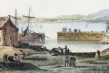
The Cromarty Library Circle by Shona MacLean
‘No one in the room could have been unaware of what it was that Dr Fraser alluded to. The horrors pe …
-

In Search of Gems by Kenneth Steven
‘It still amazes me that these magnificent shells grow in a river. Never mind whether they have pear …
-

Winterbourne by Elisabeth Wolf
‘The Coopers stared at each other for a second, two seconds. ‘It’s a sign—’ said Cooper.’
FEATURED AUTHOR:
Akemi Dawn Bowman

Akemi Dawn Bowman is the author of William C. Morris Award Finalist Starfish, Summer Bird Blue, and Harley in the Sky. Her sci-fi series, The Infinity Courts, was published in 2021, followed by her middle-grade debut, Generation Misfits. A proud Ravenc …
FEATURED PUBLISHER:
Waverley Books

Quirky, special, niche and Scottish, Waverley Books publish well-designed, high-quality books on Scotland, history, trains, nostalgia, fiction, cookery. We’ve been publishing books for the past 25 years.