


As the storm rages, the sea throws up gigantic waves. The rain hammers down, illuminated intermittently by the flash of thunder where a figure can be seen. Paintbrush in hand, with her easel and canvas secured to the ground with rocks and rope, she battles, yet works in harmony with the elements. Razor sharp, her eyes concentrate intently on the canvas, her hand working rapidly as she uses the paint to harness the weather, sky, land and sea.
Joan Eardley was a passionate painter who, in a short career, managed to create some of the most important works of the twentieth century.
Working predominantly in Scotland, Eardley also documented the children of the Glasgow tenements from the 1940s up until her untimely death at only forty-two in 1961.
Hers was a truly wild and beautiful art.
Come and take a look inside her world…
Living Generously complements a suite of existing digital resources from the Church of Scotland to promote a whole-life approach to Christian stewardship. Its holistic approach comes from a perspective of abundance rather than scarcity, and invites readers to reflect on God’s goodness and the resources we have at our disposal, both personally and collectively in our churches. It offers a practical and positive alternative at a time of anxiety about decline.
It explores how we recognise and steward gifts in twelve different areas:
God – Vision – Relationships Volunteers – Gifts – Time – Money – Possessions – Youth – Body – Mind – Earth
A range of contributors offer real life examples of the impact of effective and generous stewardship and conversation around each theme is facilitated by the Share, Reflect, Act process. Individuals and groups are enabled to bring their own experiences and understanding to the topics.
The Perfect Passion Dating Company at No. 24 Mouse Lane in Edinburgh’s New Town is run by Katie Donald who has an innate instinct for bringing people together. She has developed a skill for finding out what it is that people really want. Along the way, Katie learns profound lessons about her own desires as she works at better understanding others. Although Katie has little in the way of direct experience, with the help of her amiable and handsome office neighbour William Kidd, she soon finds herself making matches for the lonely hearts tired of meeting online ? and who want a more personal touch.
For fans of Alexander McCall Smith’s many beloved series and romantic standalone novels, The Perfect Passion Company shows him at his most perceptive, playful, and generous. In the way that only McCall Smith can, this novel offers a glimpse inside the psychology of matchmaking, the search for love and companionship, and the mysterious spark of attraction that can, at times, catch hold of us all.
Volume 4 of the acclaimed Leith-built Ships series follows Ship Nos 495 to 535 built from 1965 until the eventual closure of the shipyard in 1984 by a government that was hell-bent on destroying British industry and breaking the powerful unions.
Great ships such as Lloydsman Ship no 509 and SA Wolraad Woltemade, Ship no 516, the two most powerful ocean-going salvage tugs, were built by Robb Caledon and Leith-built ships also played their part in the Falklands War. A great many working ships took their crews safely around the globe, and although tragedy befell some, most survived.
The author features them all, from the huge tug Lloydsman, fighting in the Icelandic ‘cod wars’ with her crew using tomato sauce bottles for ammunition, to hospital ship HMS Herald which took part in the Falklands War along with another four ships built at Leith. There were also ferries that captured the imagination of the Scottish Islanders who relied on them for transport, one of which was converted to carry out much-needed rescue work in West Africa.
Robb-built ships were anything but slab-sided vessels, with most being one-off specialised ships that were complex to build, requiring much skill which the Leith shipbuilders had in abundance.
This volume concludes the series on commercial ships built at the yard and is complemented with many first-hand accounts from the men and women who sailed or served on the ships.
Neither Finlay or Banjo can remember the last time they had a hug. Against all odds, 18-year-old Finlay has begun his nursing degree at Glasgow University. But coming straight from the care system means he has no support network. How can he write essays, focus on his nursing placement and stop himself from falling in love when he’s struggling to even feed himself? Meanwhile, 17-year-old Banjo is trying to settle into his new foster family and finish high school, desperate to hold down his job and the people it contains. But his anger and fear keep boiling over, threatening his already uncertain future.
Underpinning everything is what happened three years ago in their group care home, when Finlay and Banjo were as close as brothers until they stopped speaking. If these boys want to keep hold of the people they love, they have to be able to forgive one another. More than this, they must find a way to forgive themselves.
Midwinter in Orkney. Six hours of daylight. A race against time to catch a killer.
Reporter Freya Sinclair has always known she was different. While waiting on the outcome of an autism assessment, Freya uproots her life in Glasgow, quitting her job at one of Scotland’s top broadsheets and taking a local beat in her childhood home of Orkney. But her plans for a quiet life are shattered when human remains are unburied by a winter storm on Orkney’s wild Atlantic coast.
The identity of the bones opens old wounds in the islands, and sheds light on a darker truth nobody wants to accept. As the nights draw in, Freya’s obsessive hunt for answers turns into a cat and mouse game, with each secret she unearths threatening her job, her family, and presenting a murderer with their next victim.
In a place where nothing stays buried forever, is uncovering the truth more important than saving lives?
Midwinter in Orkney. Six hours of daylight. A race against time to catch a killer.
Reporter Freya Sinclair has always known she was different. While waiting on the outcome of an autism assessment, Freya uproots her life in Glasgow, quitting her job at one of Scotland’s top broadsheets and taking a local beat in her childhood home of Orkney. But her plans for a quiet life are shattered when human remains are unburied by a winter storm on Orkney’s wild Atlantic coast.
The identity of the bones opens old wounds in the islands, and sheds light on a darker truth nobody wants to accept. As the nights draw in, Freya’s obsessive hunt for answers turns into a cat and mouse game, with each secret she unearths threatening her job, her family, and presenting a murderer with their next victim.
In a place where nothing stays buried forever, is uncovering the truth more important than saving lives?
It is fascinating to study the structures of Aboriginal, Polynesian and Native American society and beliefs. It doesn’t take long to realise that whatever form a person’s sexuality took, it would have been considered a normal and healthy part of these societies. As our understanding of sexuality(ies) grows it is hoped that everyone will be able to take their place proudly within the world, no longer confined by the clichés that some people have been tagged with. This book is a guide and tool, not just to the Pagan LGBT+ community, but to every Pagan. When we see everyone as equal in spirit and voice then we really can make a difference.
Beneath all the anxieties about church decline and strategies and restructures to reverse that, this book speaks to a problem that has not been addressed – the widespread disinterest in the church and the church’s inability to capture the public imagination or to be relevant.
It argues that the church needs to recover a sense of authenticity – in the gospel it believes, in the vision of human flourishing it promotes, in its place within a multicultural society, in its primary vocation to serve society and not be its moral guardian. It calls on all kinds of resources that can help refresh the church’s self-expression – in engagement with art, music and poetry, in searching for better language (drawing on people like Barbara Brown Taylor, Padraig O Tuama and George MacLeod), through biblical stories that resonate with the Scottish experience, through meaningful engagement with communities and with the landscape, and more.
Power. History. Love. Hate. Vengeance
.She will be Queen. Whatever it takes…
Daughter of an ousted king. Descendant of powerful druids. Destined to take her place in history.
As a child, Gruoch’s grandmother prophecies that she will one day be Queen of Alba and reclaim the lands of her Pictish kin. When, many years later, she is betrothed to Duncan, the heir-elect, the prophecy appears to come true. Determined to never to be as powerless as her parents, Gruoch leaves behind her home, her family and her friend MacBethad, and travels to the royal seat at Scone to seal her fate.
But when a deadly turn of events forces Gruoch to flee Duncan and the capital, Gruoch finds herself at the mercy of an old enemy.
Her hope of becoming Queen all but lost, Gruoch does what she must to survive, until she is given a choice: live a long, peaceful life but fall into obscurity, or seize her chance for vengeance and a path back to the throne.
An unputdownable, sweeping historical epic, Lady MacBethad reimagines the life of Gruoch – the real life Scottish Queen who inspired one of Shakespeare’s most famous characters.
Reader Reviews:
‘I adored this book’
‘One of the most interesting, complex and captivating protagonists I’ve ever come across’
‘I could not put this book down’
‘So good that I’m almost sad I’ve finished it’
Hugh McMillan’s first collection in Scots, Whit if? poses the questions that you never thought to ask about Scottish history like ‘Whit if Alexander haed Twitter?’, ‘Whit if John Knox haed fawen in luve wi Mary Queen o Scots’? and ‘Whit if Jacques Brel haed jynt the Corries?’
As both poet and long-time student of Scotland’s strange and undervalued history, McMillan is the ideal guide to all the micht-hiv-bins of Scottish history, as well as all that wis. Humour is guaranteed, but that doesn’t mean he won’t be digging up many an educational gem along the way!
Published to coincide with the 40th anniversary of the 1984-1985 national UK Miners’ Strike – the largest industrial action by a UK union in the 20th Century – Here We Go, Here We Go, Here We Go! Is comprised of Rab’s previous mining poems as well as new poems that relate to current social and economic problems in Scotland and the UK.
Once he left school in 1977, Rab Wilson worked in the mining industry along the west coast of Scotland for eight years. On the 12th March 1984 Rab joined the Miners? Strike, where he remained on strike until the 21st March 1985, after nearly a full year on strike.
The poetry in this collection chronicles the events and aftermath of the Miners’ Strike, through the eyes of a miner who was very much involved in it, a momentous landmark of the working-class struggle. Rab has witnessed the first-hand implications of the demise of Scotland’s mining industry. No other Scots poet today is better placed than Rab to record the history and importance of Scotland’s mining industry and the challenging strike.
This poetry collection is beautifully and skilfully read by the author, renowned poet Jackie Kay.
May Day is the long-awaited new collection from one of our best-loved poets and former Makar of Scotland, Jackie Kay. As the title suggests, these poems cast an eye over several decades of political activism, from the international solidarity of the Glasgow of Kay’s childhood, accompanying her parents’ Socialist campaigns, through the feminist, LGBT+ and anti-racist movements of the 80s and 90s, up to the present day when a global pandemic intersects with the urgency of Black Lives Matter.
Kay brings to life a cast of influential figures, delving beneath the surfaces of received narratives: the Jamaican model Fanny Eaton, for example, muse of the Pre-Raphaelite Brotherhood in England; Paul Robeson, Angela Davis and the poet Audre Lorde; and a ‘what-if’ poem concerning Rabbie Burns and a road-not-taken towards the West Indian slave trade. Woven through the collection is a suite of lyric poems concerning the recent losses of Kay’s parents: poems of grief and profound change that are infused with the light of love and celebration.
‘A delicious trip through the geography, history and culture of the region’ – Sunday Telegraph
Ever since the days of the Grand Tour, Tuscany has cast its magic spell on foreign vistiors. Attracted by the perfect combination of history, art, architecture, superb natural beauty and weather – not to mention magnificent traditions of food and drink – British visitors and residents have been at times so numerous that the local word for foreigners was simply ‘gli inglesi’ – ‘the English’.
What is it that makes this exquisite part of Italy so seductive? Alistair Moffat embarks on a journey into Tuscany’s past. From the flowering of the Etruscan civilization in the seventh century bc through the rise of the powerful medieval communes of Arezzo, Luca, Pisa and Florence, and the role the area played as the birthplace of the Renaissance, he underlines both the area’s regional uniqueness as well as the vital role it has played in the history of the whole of Italy. Insightful, readable and imbued with the author’s own enthusiasm for Tuscany, this book includes a wealth of information not found in tourist guides.
‘A sun-drenched meditation on the character of the place and its people’ – The Scotsman
Sudden Deaths and Fatal Accident Inquiries in Scotland: Law, Policy and Practice considers the unique Scottish system of sudden deaths investigations leading to Fatal Accident Inquiries (FAIs).
This book explains the role of the Lord Advocate and the Crown Office and Procurator Fiscal Service (COPFS) as core to the death investigation process. It examines the reporting of sudden deaths, COPFS?s investigation process, and the holding of mandatory and discretionary FAIs, concluding with issuing of determinations and recommendations.
The historical development of the FAI system charts their inception from the late nineteenth century to the FAIs held under the Inquiries into Fatal Accidents and Sudden Deaths (Scotland) etc. Act 2016 (2016 Act).
This new title:
– Examines the FAI process from the sudden deaths to the holding of an FAI
– Contrasts the FAIs with inquiries held under the Inquiries Act 2005
– Analyses how the 2016 Act works given current issues of delay and Covid-19
– Considers the judiciary’s role relating to FAI determinations and recommendations made under the 2016 Act
– Focuses on mandatory FAIs relating to deaths in custody
– Compares the FAI process in Scotland with England and Wales and provides a brief international overview
– Considers the State’s requirements under Article 2 of the European Convention on Human Rights
– Discusses availability of public information on FAIs and access to legal aid
– Advises how the public may access FAI records
This first comprehensive survey takes account of changes made by the 2016 Act, providing fresh insight into the investigations into sudden deaths and the holding of FAIs. It provides an essential basis to understand and assess the current working practices of the FAI system.
This title is included in Bloomsbury Professional’s Scottish Law Service.
May Day is the long-awaited new collection from one of our best-loved poets and former Makar of Scotland, Jackie Kay. As the title suggests, these poems cast an eye over several decades of political activism, from the international solidarity of the Glasgow of Kay’s childhood, accompanying her parents’ Socialist campaigns, through the feminist, LGBT+ and anti-racist movements of the 80s and 90s, up to the present day when a global pandemic intersects with the urgency of Black Lives Matter.
Kay brings to life a cast of influential figures, delving beneath the surfaces of received narratives: the Jamaican model Fanny Eaton, for example, muse of the Pre-Raphaelite Brotherhood in England; Paul Robeson, Angela Davis and the poet Audre Lorde; and a ‘what-if’ poem concerning Rabbie Burns and a road-not-taken towards the West Indian slave trade. Woven through the collection is a suite of lyric poems concerning the recent losses of Kay’s parents: poems of grief and profound change that are infused with the light of love and celebration.
‘Wonderful and moving’ Clare Chambers
‘Utterly absorbing’ Sunday Post
SHORTLISTED FOR THE WINSTON GRAHAM HISTORICAL PRIZE
Jamesina Ross is long finished with men. But one night a stranger seeking lodgings knocks on the door of her tenement flat. He doesn’t recognise her, but she remembers him at once. Not that she plans to mention it. She has no intention of trusting anyone enough to let herself be vulnerable again.
A lifetime ago, growing up in a Highland glen, Jamesina Ross wrote songs about the land and the kin who had worked it for generations. But her music was no match for the violence her community faced in the Highland Clearances. Jamesina has borne the disfigurements of that day ever since, on her face and inside her head. Her lodger thinks that if she would only dare to open the past, she might have the chance of a future.
This is a story about resilience, memory, resurrection – and those parts of who we are that nobody can take away.
A beautiful exploration of unlooked-for love in later life, its contrariness and its awkward, surprising joys, this is a story about resilience, memory, resurrection – and those parts of who we are that nobody can take away.
May Day is the long-awaited new collection from one of our best-loved poets and former Makar of Scotland, Jackie Kay. As the title suggests, these poems cast an eye over several decades of political activism, from the international solidarity of the Glasgow of Kay’s childhood, accompanying her parents’ Socialist campaigns, through the feminist, LGBT+ and anti-racist movements of the 80s and 90s, up to the present day when a global pandemic intersects with the urgency of Black Lives Matter.
Kay brings to life a cast of influential figures, delving beneath the surfaces of received narratives: the Jamaican model Fanny Eaton, for example, muse of the Pre-Raphaelite Brotherhood in England; Paul Robeson, Angela Davis and the poet Audre Lorde; and a ‘what-if’ poem concerning Rabbie Burns and a road-not-taken towards the West Indian slave trade. Woven through the collection is a suite of lyric poems concerning the recent losses of Kay’s parents: poems of grief and profound change that are infused with the light of love and celebration.
This pilgrimage walk runs for 55 miles (89 km) from the Firth of Forth via Dunfermline Abbey to its famous destination of St Andrews. It is rich in industrial heritage, passing through mining communities, former railways, castles and former textile centres. Above all, it celebrates Fife’s pilgrim kingdom and history through many churches and religious sites.
Start from either the historic village of Culross or the pilgrim landing at North Queensferry, and make your way across the heartlands of Fife. The route has fine scenery and passes through country parks, native woodlands and river valleys rich in wildlife. Most walkers will need 5-6 days to complete the journey.
Cyclists with mountain or gravel bikes can enjoy most of the route in most conditions, but in some circumstances – where the ground is very wet or the path too narrow – they may need to dismount. Most cyclists will want 2-3 days to complete the route.
The guidebook features step-by-step directions with detailed mapping, and illustrated sections on history, heritage and wildlife. It directs readers to side-trips, refreshments and accommodation along the way. Lavishly illustrated, the book features custom mapping at 1:40,000 on 12 of its pages and has nearly 100 colour photos.
This book offers an in-depth exploration of the lives of EU migrant workers in the UK following Brexit and COVID-19.
Drawing on a longitudinal study, the book delves into the legal problems migrant workers face and sheds much-needed light on the hidden interactions between the law and communities around issues such as employment, housing, welfare and health. Through personal narratives and insights gathered from interviews, it reveals how (clustered) legal problems arise, are resolved and often bypass formal legal resolution pathways.
This is an invaluable resource that provides a rich picture of everyday life for migrant workers in the UK and highlights the vital role of NGOs working to support them.
ALSO ON BOOKS FROM SCOTLAND
-

David Robinson Reviews: The Loch of the Bees
‘The past’s current flows through the characters in his fiction so strongly that it almost becomes t …
-

The Nightkeeper’s Apprentice by Jude Reid
‘She’d never seen anything like it. The whole sky was lit up in ribbons of colour – blue, green, yel …
-

David Robinson Interviews: Gavin Francis
‘He’s not my GP so I can’t say this for sure, but based on this book – wise, informed, well-written, …
-
The Cromarty Library Circle by Shona MacLean
‘No one in the room could have been unaware of what it was that Dr Fraser alluded to. The horrors pe …
-

In Search of Gems by Kenneth Steven
‘It still amazes me that these magnificent shells grow in a river. Never mind whether they have pear …
-

Winterbourne by Elisabeth Wolf
‘The Coopers stared at each other for a second, two seconds. ‘It’s a sign—’ said Cooper.’
FEATURED AUTHOR:
David Alston
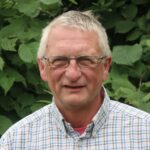
David Alston is a Historian and Independent Researcher. He is the author of Ross & Cromarty: A Historical Guide (1997) and My Little Town of Cromarty: The History of a Northern Scottish Town (2006). He was a Highland Councillor and from 1991–2003 w …
FEATURED PUBLISHER:
Saraband

Saraband is a creative independent publisher known for its engaging, well-written and beautiful non-fiction titles (especially in nature, history and memoir), and for its emerging literary and crime fiction lists. The crime, mystery and noir titles are …