


READ IN A DAY. REMEMBER FOR A LIFETIME.
Scotland is one of the oldest nations in Europe. Its territory remains fundamentally unchanged since the fifteenth century, and its southern border with England has barely altered since 1237. And yet Scotland – a country with a global brand, its own law, education and church – is not a state at all. In The Shortest History of Scotland, Murray Pittock argues that this very ambiguity is what has made the nation a central part of the global story.
From first tribes to devolution, Pittock unpicks the myths from the reality. He explores the glories – real and imagined – of Scottish history, from Robert Bruce to Robert Burns, tartan to paisley, Scott to Sturgeon – and asks what the past can tell us about what lies ahead. All in just over 200 pages…
An occult assassin, an elderly royal and a living god face off in The Regicide Report, the thrilling final novel in Charles Stross’ epic, Hugo Award-winning Laundry Files series.
When the Elder God recently installed as Prime Minister identifies the monarchy as a threat to his growing power, Bob Howard and Mo O’Brien – recently of the supernatural espionage service known as the Laundry Files – are reluctantly pressed into service.
Fighting vampirism, scheming American agents and their own better instincts, Bob and Mo will join their allies for the very last time. God save the Queen― because someone has to.
Man is cruel but the flowers will take their revenge. A gorgeously dark and magical novel inspired by three Celtic heroines.
‘A masterpiece… an intricate, otherworldly, complex and dramatic novel that held me spellbound.’ Barbara Erskine, Sunday Times Bestselling Author
Darkness is falling across the land. All that stands against it are three determined women: slave queen Goewin, the reclusive sorceress Arianrhod, and Blodeuwedd, a woman conjured from flowers. Can they unite against the deadly force who threatens them all?
The sadistic ambition of the magician Gwydion wreaks havoc across the forests, cliffs and fields of the kingdom. With the earth itself at stake, Goewin, Arianrhod and Blodeuwedd must unleash their most uncanny powers to challenge him.
In this vital and visceral novel, Brigid Lowe casts ancient light on desire, sex and our relationship with nature to bring these Celtic heroines to explosive, sensuous, blossoming new life.
Cornwall, 1779: On a late August evening Kensa comes across a dying sea monster under the light of a full moon. The first of its kind to grace the storm-torn shore of Portscatho in centuries, it is an omen . . .
For scarlet-haired Kensa, daughter of the most feared smuggler to ever roam the Cornish coast, her destiny is sealed as apprentice to the local wise woman. Under the guidance of Isolde, Kensa learns secrets of the Old Ways, the ancient magic that binds the land and sea.
But when Isolde sickens Kensa turns to the Bucka, the Father of Storms, a vengeful sea god chained to the ocean. Desperate to save her mentor, Kensa makes a deal with the deadly creature; a pact that risks everything she’s sworn to protect.
The Salt Bind is an unputdownable and hypnotising historical fantasy page-turner steeped in salt, superstition and seafolk – a world of forgotten sirens, sea gods and the alchemy of the Old Ways. Perfect for fans of The Bear and the Nightingale and The Binding.
She bought a return ticket. She never came back…
When Holly Campbell’s body is found on the train tracks at Glasgow Central, police quickly rule it a suicide.
She’d had a troubled past. She’d tried before.
But Sergeant May Mackay can’t let one detail go. If Holly never wanted to come home, why did she buy a return ticket?
Driven by her own haunting loss and a promise to Holly’s grieving mother, May is determined to solve the mystery.
But the deeper she digs, the more sinister the truth becomes.
Someone is hiding a terrible secret. And they’ll do whatever it takes to keep it buried.
Even if it means silencing May for good…
Ghosts don’t exist.
They don’t. End of.
Story, however.
It is haunting.
Everything tells it.
It all starts when Petra and her little sister Patch hear a horrifying story from the past and find themselves making up a ghost.
Is it imaginary? Is it real?
Then it all starts again thirty years later when Petra, now estranged from Patch, finds a phantom horse kicking the furniture to pieces in her bedroom.
What to do? She phones her sister.
In a chiaroscuro dance through our increasingly antagonistic era, Glyph asks if we’re attending to the history that’s made us and to the history we’re making. A funny, warm and clear-eyed take on where we are now, Glyph is about what our imaginations are for and how, in a broken, brutal and divided time, we rekindle care, solidarity, resistance and openness.
This anti-war novel, Ali Smith’s most soulful, playful and vital yet, is a work of lightness that goes deep to counter the forces currently flattening the modern world.
A standalone novel, it’s family to Gliff (2024).
An evocative journey through geology and landscape, seen through the eyes of one of Scotland’s most beloved poets and storytellers.
Blending lyrical prose with personal reflection, Kenneth Steven explores mountains, glens and shores in search of gemstones and crystals. He recounts his delight at discoveries of gold glinting in Highland burns, freshwater pearls embedded in mussel shells, and aquamarines, garnets, amber and agates hidden in the wild places where others rarely roam.
Beguiled by their forms, colours, and sometimes glittering bril- liance, he finds the thrill of unearthing riches more precious even than the gems themselves. Stone by stone, he considers the origins and allure of these natural treasures, revealing not only their geo- logical stories but their place in history and imagination. Steven’s deep connection to the land shines through as he interprets the meaning and magic, inviting readers to see both the landscape and its hidden gems with fresh wonder.
Alfie and Kat’s school trip takes an unexpected turn when they’re whisked back to a Viking village in this exciting time-slip adventure from bestselling author Karen McCombie.
Things take a weird turn for Alfie and Kat when they get separated from the rest of their group on a school trip to the Viking Museum. The models around them start to come to life, and at first Kat is sure they’re being pranked for a TV game show.
She urges Alfie to play along, and they take part in Viking village life – cooking, weaving and even digging a toilet pit. But will they ever be able to find their way back home?
Particularly suitable for readers aged 7+ with a reading age of 7.
Sins never stay buried.
You may call it a sin; I say it was an act of desperation.
Like all pathologists, Cuthbert finds dealing with dead children the hardest part of his job. However, when the body of a young boy is found in the grounds of a church orphanage, Cuthbert not only has to steel himself for the task ahead, he is also forced to revisit his own childhood grief. The boy in his shallow grave has been interred with some ritual, but just how did he die? And why was he killed?
Working closely with his assistant and the team at Scotland Yard, Cuthbert slowly and painstakingly reveals the terrible truth.
Dàn nam Ban / Fate of Women is the debut collection from award winning bilingual Gaelic English poet, singer and teacher Ceitidh Chaimbeul.
The collection is rooted in Ceitidh’s heritage from the Isle of Raasay and Midlothian and plaits the stories of women of folklore, local history, family and her own experience as a mother. Dàn nam Ban shows how the ripples of the past lap on the shores of the present. It tackles hard hitting subjects of Altzheimers’, child death and moves seamlessly into bedtime stories, love and sex.
This book provides a voice to women’s stories across generations, highlighting both historical and contemporary issues. The primary themes include folklore, family history, motherhood, and the impact of the past on the present. The focus is on women’s experiences, both personal and communal, and how these narratives shape our understanding of identity and heritage.
Dàn nam Ban by Ceitidh Chaimbeul is a much anticipated first collection from a writer who was the Scottish Poetry Library’s first Gaelic ambassador.
The Scottish Labour Party – or rather the Labour Party in Scotland – was the dominant political party in Scotland from the 1950s until the early twenty-first century. It won the largest share of the vote at every UK general election between 1964 and 2010. While its electoral fortunes declined with the rise of the Scottish National Party during the 2000s, the Party has remained a significant force in Scottish politics.
This book provides an overview of the early decades of Scottish Labour politics, studying the party’s origins in late nineteenth-century working class politics and trade unionism. It also traces the party’s organisation, ideology, personnel and electoral performance over the past century. The book also analyses the party’s often surprisingly limited membership, its links with trade unions and the role of women’s organisations.
It’s hard to be good when living is expensive. And times are tough on the streets these days. Luckily for Rilke at Bowery Auctions the demand for no-questions-asked cash is at an all-time high, and business is booming.
When Rilke hears his old acquaintance Les is fresh out of prison, his inclination is to stay well out of his way. Letting sleeping dogs lie is one thing – but when one of Bowery’s customers winds up dead on their tarmac, Rilke needs a bit of help from his friends to tidy things up. If only his friends didn’t have such a habit of making things worse.
In this tense thriller from the winner of the Bloody Scotland Debut Prize, PI Callie Munro is hunting a serial killer on the streets of Edinburgh. But he’s already found her…
As private investigators go, Callie Munro is tougher than most. She’s had to be. Abandoned as a baby and raised by a succession of strangers, she knows a thing or two about surviving…
…but she never expected to find herself hunting a serial killer.
After uncovering a string of missing women―women no one seems to care about―Callie refuses to look away. With police ignoring the evidence, her only ally is an organised crime boss with his own agenda.
The deeper Callie digs, the more dangerous the hunt becomes. Every clue exposes another lie. Every step brings the killer closer.
She’s fighting for the forgotten. But if she’s not careful, she’ll be next.
The high school is on fire. Aaron Smith, the local bad boy, is arrested at the scene. He’s locked up by the end of the night, guilty until proven innocent. Only two people know the truth about what happened; Aaron and his little sister. Aaron will do anything to save his sister, including going to prison without a trial. But then the pandemic comes to Scotland, and trials are cancelled. Aaron finds himself locked up, in a lockdown, and no one is able to help him.
Blood Red Sky is a story of love, loss, humour and hope and makes you wonder; what should we do with teenagers who cross the line? Should we lock them up, or take time to find out the truth?
Anesu agus na Creutairean Uisge (Anesu and the Water Spirits) is a new children’s book, written by Tawana Maramba and beautifully illustrated by Ann Macleod. Published by Skye and Lochalsh based arts organisation, ATLAS Arts, the story centres the experience of Afro Gaels in Scotland, and children starting school in a new place for the first time. Anesu, who has recently moved from Zimbabwe with her family, is beginning her first day of school. Encouraged by her teacher and classmates, she shares experiences from Zimbabwe, and the story of a water spirit called Njuzu, inspiring her class to share stories of sea creatures, and to grow closer, in turn.
This wide-ranging anthology showcases the talented cohort of Gaelic poets who have come to prominence since the turn of the millennium. Contributors engage with political and social concerns, women’s and LGBTQ identities, local, multicultural, and international perspectives, alongside explorations of history, cultural exchange, love, land and language. Their oeuvre spans free verse, vibrant re-imaginings of traditional poetry and song forms, nature poetry, urban lyrics and panegyrics.
Nì farsaingeachd an duanaire seo taisbeanadh buidheann tàlantach de bhàird na Gàidhlig a thàinig am bàrr o char na mìle bliadhna. ‘S ann an-seo a tha sùil aca air cuspairean poilitigeach is sòisealta, fèin-aithne nam ban is dhaoine LGDTC, seallaidhean ionadail ioma-chultarail is eadar-nàiseanta, cho math ri cnuasachadh air eachdraidh, iomlaid chultair, gaol is gràdh, tìr is cànan. Bheir saothair nam bàrd a-staigh saor-rannaigheachd, ath-chruthachadh beòthail bàrdachd thraidiseanta is de chruthan-òrain, bàrdachd nàdair, liricean bailteil is dàin molaidh.
Jist Sayin is a collection of short stories, poems, and prose about Lilian Ross’s own memories, observations and life experiences of the folk and culture of Aberdeenshire. The collection’s theme is, ‘Echoes o the past to inspire voices o the future’, and feature works on identity, language and community, shaped by the traditions, customs and landscapes of a whole way of life. Presenting vivid imagery and vibrating with rich Doric lyrical colloquialisms from ‘folk o my ain kin.’ these poems and stories are a marrying of autobiographical and fictional accounts illuminated by humour and intimate nostalgia.
Hallaig, Raasay, 1853. There are rumours that the people are going to be evicted by the landlord, Seòras Rainy, who keeps a tight rein on them with unreasonable rules. The locals are running out of time.
Ruairidh is banished to Arnish where he meets Isabel, a beautiful, lively woman whom he wants to marry.
Will she accept him, and will they find a solution to the rule of Rainy that people cannot marry?
And can they stay in Hallaig? Or move to the other side of the world?
Hallaig, Eilean Ratharsair, 1854.
Tha fathannan ann gu bheil na daoine gu bhith air am fuadach. Le Seòras Rainy, an t-uachdaran, a’ cumail smachd teann orra le riaghailtean gun chiall, is gann an ùine a th’ aig muinntir an àite.
Tha Ruairidh air fhuadach gu Àrnais, far a bheil e a’ coinneachadh ri Iseabail, tè bhrèagha, bheothail, agus tha e airson a pòsadh.
Am faigh iad fuasgladh air riaghailt Rainy, nach eil e ceadaichte do dhaoine pòsadh? An urrainn dhaibh fuireach ann an Ratharsair? No a bheil raointean farsaing taobh eile an t-saoghail gan tàladh?
Awa Doon e Toon is an illustrated children’s book that follows a young boy’s determination to travel into town by all sorts of imaginative forms of transport but is thwarted each time by the wild Scottish weather outside. This book is an educational and entertaining introduction to the Doric dialect for children, teaching young readers many new words about weather conditions and modes of transport.
A wonderful translation into Scots Language of Julia Donaldson and Axel Scheffler’s Jonty Gentoo, translated into Scots by James Robertson.
Are ye aw set for a pole-tae-pole adventure?
Jocky, a gallus wee gentoo penguin, is aw a for the jaunt o a lifetime. But shairly he’ll no can hoddle aw the wey tae Antarctica?
Following the huge success of titles such as The Gruffalo, Room on the Broom and Stick Mannie in their Scots language versions, Jocky Gentoo is sure to be another big hit wi’ Scottish mums, dads and bairns.
ALSO ON BOOKS FROM SCOTLAND
-

David Robinson Reviews: The Loch of the Bees
‘The past’s current flows through the characters in his fiction so strongly that it almost becomes t …
-

The Nightkeeper’s Apprentice by Jude Reid
‘She’d never seen anything like it. The whole sky was lit up in ribbons of colour – blue, green, yel …
-

David Robinson Interviews: Gavin Francis
‘He’s not my GP so I can’t say this for sure, but based on this book – wise, informed, well-written, …
-
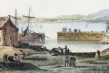
The Cromarty Library Circle by Shona MacLean
‘No one in the room could have been unaware of what it was that Dr Fraser alluded to. The horrors pe …
-

In Search of Gems by Kenneth Steven
‘It still amazes me that these magnificent shells grow in a river. Never mind whether they have pear …
-
Winterbourne by Elisabeth Wolf
‘The Coopers stared at each other for a second, two seconds. ‘It’s a sign—’ said Cooper.’
FEATURED AUTHOR:
David F. Ross

David F. Ross was born in Glasgow in 1964 and lived in various part of the city until the late 70’s, before moving to Kilmarnock where he now lives with his wife and their two children. He studied architecture at Glasgow School of Art, and in 1992 grad …
FEATURED PUBLISHER:
Sparsile Books

Sparsile Books is a small independent publisher, based in Glasgow, specializing in high quality fiction and non-fiction. We see publishing as an art in itself, and we work closely with our authors to ensure that the books we publish give readers a uniq …