


Now in its eighth decade, can the Edinburgh Festival survive?
Where do we go from here?
1947. The beginning of the Edinburgh Festival and Richard Demarco – later to become gallery director, artist and teacher – is at the heart of it and has been every year since.
The same year, Roddy Martine is born. In 1963, at the age of sixteen, he interviewed Sir Yehudi Menuhin and David Frost for an Edinburgh Festival magazine he edited, and the following year he met Marlene Dietrich.
Both Richard and Roddy have unique perspectives on the most remarkable international festival of the arts the world has ever known. They have witnessed its evolution over the years and are passionate believers in the power of creativity within everyone.
In this fascinating book, Richard – the 2013 uk recipient of the Citizen of Europe medal – explores the original world vision of Sir John Falconer and Rudolph Bing and, with Roddy, recalls the highs and lows of Edinburgh’s Festivals from a unique perspective.
The Edinburgh Festival of those days was a much more accessible village… The ground rules were well enough understood. Everything about it was containable. The Fringe was the seedbed for talent and ran happily in step with its established elders and betters.They both knew their place.
But then something equally remarkable was about to take place in the New Town of the city I knew and loved…
- One hundred remarkable works of art from the National Galleries of Scotland’s collection reveal Scotland’s art history
- Displaying works from the sixteenth century to the present day
The National Galleries of Scotland is home to the most important collection of Scottish art in the world. This beautifully illustrated book introduces the collection through 100 works, specially chosen by the curatorial team who care for them. The selection ranges chronologically from a 16th century portrait of a Scottish king to 21st century installations and prints. Some of the most famous painters in Scotland’s history feature alongside some of the finest artists working in Scotland today. Many of the most distinctive movements in Scotland’s artistic heritage are represented, including the Celtic revival, Arts and Crafts, the Glasgow Boys and the Scottish Colourists.
Each of the 100 works is reproduced alongside a text by one of 23 expert contributors. The introduction gives an overview of the collection and Scottish art history more broadly. It is perfect for those who already love Scottish art, and those who are yet to discover its riches.
It’s OUR bridge.
Scotland’s famous Forth Bridge spans more than a body of water. It connects centuries, communities, land and sea, past and present.
Beyond the famous red struts and lattices lies a varied and lively community, every bit as interconnected and interdependent as the girders of the bridge itself. Just like the six-and-a-half million rivets holding the Forth Bridge together, there are countless points of contact between the people who form the Forth Bridge community in its widest sense, including engineers and environmentalists, managers, model makers, construction workers, campaigners, tour guides and train drivers.
Writer Barbara Henderson and photographer Alan McCredie lift the curtain on the people who work on the bridge, promote the bridge, protect the bridge, live by it, or play a significant part in its story.
One sentiment unites them all.
In one way or another, they all claim ‘the Bridge’ as their own.
We inhabit everything that comes our way: people, places, nature. Writing itself is our habitat. It is this space that Bashabi Fraser that explores in her new collection Habitat.
These poems challenge our understanding of rules and form when it comes to poetry. Bashabi plays with the duality that her life has instructed her with – through having lived in two different countries, experiencing two different cultures – yet allowing the parallels to still come through. At its core, this collection is about our journeys – where we have been, where we are going, and what we are moving through. It is all about our habitats and our connection to them.
The enchanting festive poem from Carol Ann Duffy, former Poet Laureate of the United Kingdom, and adorned with sumptuous illustrations by artist Margaux Carpentier, Christmas Eve at The Moon Under Water is the perfect festive gift for the poetry lover in your life.
All the lights were on at The Moon Under Water
and the landlord, an Owl, was slowly pulling a pint
to test his ale. Toothsome. It was Christmas Eve
and the fire in the ancient grate gargled its flames…
A horse walks into a bar. A hedgehog plays the piano. An owl mulls a flagon of wine. On Christmas Eve at The Moon Under Water, anything is possible, so when the landlord announces a festive prize for the best performance of the night, all and sundry pile into the pub, eager for a chance at victory.
In Christmas Eve at The Moon Under Water all the old rivalries of the natural world are suspended for one miraculous night, as man stands shoulder to shoulder with animal, and predator and prey add warble and wail to the Yuletide chorus.
She thought his death was the worst thing that could happen . . . then he came back
Nancy and Calder are moving from London to an isolated slate island, off the west coast of Scotland. Nancy is focussed on their new beginning, but is increasingly unsettled by the stark island, the mysterious inhabitants and Calder’s dark past, which he’s kept hidden from her.
Then one of Nancy’s nightmares plays out in real life: she finds Calder’s boat upturned in the bay, his body adrift in the icy water. He’s clinically dead with no heartbeat. But miraculously the doctors manage to bring him back to life. Everyone think he has made a full recovery, but Nancy doesn’t recognise the man who has come back from the dead. She is now living with a stranger. As secrets, lies and bodies begin to wash up on the island, Nancy must come to terms with the fact that despite the fresh start, sometimes the slate cannot be wiped clean.
“I can see the disgust on the face of one neighbor when Jack, the farmer, asked to lend a man, produced a land girl.”
Mona Macleod worked in Kirkubrightshire during the second World War, providing the skilled labour needed on farms before mechanization. The girls were given heavy agricultural work in fields, with animals, carrying hundred weight sacks, sawing wood, felling trees, filling up rat holes. It was a tough way to grow up, but this illustrated memoir provides a record of a time when women faced the rigorous physical challenges involved in winning the war at home.
‘If you have been still enough for long enough, your eyes will have attuned and begun to read the sea-surge fluently, so you recognize the blunt curve and flourished tail of a diving otter. Home your eyes in on that portion of the sea, permit nothing else to move, and you will see the otter eel-catching, resurfacing.’
It is a special privilege and a richly rewarding experience to observe a wild animal hunting, interacting with its young or its mate, exploring its habitat, or escaping a predator.
To watch wildlife, it’s essential not only to learn an animal’s ways, the times and places you may find it, but also to look inward: to station yourself, focus, and wait. The experience depends on your stillness, silence, and full attention, watching and listening with minimal movement and if possible staying downwind so that your presence is not sensed.
With decades of close observation of wild animals and birds, Jim Crumley has found himself up close and personal with many of our most elusive creatures, studying their movements, noting details, and offering intimate insights into their extraordinary lives. Here, he draws us into his magical world, showing how we can learn to watch wildlife well, and what doing so can mean for our ability to care for it, and care for ourselves.
Edinburgh, 1923.
Evelyn Hazard is a young woman living a comfortable and unremarkable middle-class life. One day, her quiet existence is shattered when her steady, reliable husband Robert makes a startling announcement: he can communicate with the dead.
As the couple are pulled into the spiritualist movement that emerged following the mass deaths caused by the First World War and the Spanish Flu, Evelyn’s life becomes increasingly unsettled as dark secrets from her past threaten to surface.
Faced with the prospect of losing all that is dear to her, Evelyn finds herself asking: is the man she loves a fraud, a madman or – most frighteningly – is he telling the truth?
A gothic literary mystery, written in sparkling prose, Hazardous Spirits evokes the spirit of 1920s Edinburgh, in all its bohemian vibrancy.
The brand new feel-good Christmas novel from Sunday Times top ten bestselling author, Jenny Colgan.
Carmen is at a loose end. Her gorgeous bookshop is the filming site of a cheesy Christmas movie, she’s been ousted from her sister’s house, and the love of her life has just flown thousands of miles away. It’s threatening to be a very unjolly Christmas indeed!
But when the elderly owner of the shop comes to Carmen with a Christmas wish that threatens to never come true, Carmen knows she must buckle down to get the funds to save not only his trip, but the shop itself. While fending off a shady tatt-selling businessman, Carmen discovers wonders to the shop she could have never imagined, and opens a labyrinth of bookish backrooms for the customers to get lost in.
With her deadline looming, it might take more than a fresh coat of paint to solve Carmen’s problems. But with the help of their neighbours, her nieces and nephew, and a very distractingly cute male nanny, Carmen might just pull her greatest magic trick yet…
Inverness, 1769.
On a freezing winter’s night, astronomer Nancy Lockaby arrives at Blackthistle House, home to renowned, enigmatic Shakespeare scholar Caleb Malles.
When, a month before, Nancy received an invitation from Caleb to leave her position at the Royal Observatory and join him as a research fellow, she saw the opportunity to leave behind a past riddled with tragedy – and to find adventure and freedom in Scotland.
In her new home, Nancy initially finds herself captivated by Caleb’s eccentric mind and deep passion for Macbeth. So, when she crosses paths with three old crones who reveal that Caleb is keeping secrets from her, she is dismissive – after all, the women also claim to have lived many centuries and possess powers that defy any logical reasoning.
Yet as Caleb’s behaviour becomes more erratic, she begins to suspect that the mysterious scholar might have had hidden motives to lure her into his home. But can Nancy trust these three strange women when they warn her that if she doesn’t uncover Caleb’s true intentions, great danger awaits them all?
Offering a fresh, feminist perspective on literature’s most infamous trio, The Wayward Sisters is an enthralling, intricately woven story of friendship, intrigue and magic.
Every day is freighted with baffling questions.
About pain and love, about joy and purpose.
In an age when we’re shy of certainty and suspicious of authority, many of us no longer turn to the great houses of faith for inspiration. But for all we’ve let go, there’s so much to hold on to. Drawing on wisdom from the ages and insights from the everyday, this deeply human collection of daily readings is the ideal travelling companion on the bumpy road to peace, love and understanding.
Less of a ‘how to’ book than a ‘try this’ book, Hold On, Let Go is about keeping your feet on this sacred earth. And taking wing. At the same time.
In Notes from the Henhouse, you will find:
A Gothic castle, a draughty Norfolk farmhouse and a malevolent Aga
A pet pig, Portia with a penchant for drama, an obsession with geraniums and an addiction to wine (the Bulgarian vintage)
George Barker, poet and beloved husband, warbling cowboy songs into his glass and declaiming Hopkins and Houseman in The Drinking Room
Five entrancing baby cherubimos, rolling and bouncing about in a big brass bed, before growing up at breakneck speed
The ecstasy of writing, the dither of procrastination, and the endless adventures to be had in the wild realms of the imagination
The outrage of death, the loneliness of widowhood, and then the surprising joys of dereliction: of moving very slowly round the garden in a shapeless coat, planting drifts of narcissus bulbs for latter springs.
Today Rena is going to change her life…
Rena Jarvie is ahead of her time. Ambitious, attractive, and determined her family escape their shameful past. When she moves to a new town and marries the charming and cosmopolitan Bobby Young, doors finally begin to open. But as Bobby already knows, some things cannot be run from. Spanning the 1930s to the 1960s, Catch the Moments as They Fly is an assured portrait of a rapidly changing Scotland, vivid with humour, and hardship, and love.
An American professor discovers the diaries of John Ledbury, known as the counterfeit detective, a minor poet who, in Victorian London, is employed to reply to the mail that comes addressed to Sherlock Holmes at 221b Baker Street. Through the diaries he unearths a series of baffling unsolved murders. He travels through England and Scotland but he realizes that, in order to solve the mystery, he has to travel further, back through time itself.
THE COUNTERFEIT DETECTIVE is an epic Gothic literary crime thriller set mostly in Victorian London in 1900 but also in 1970s England, Scotland and the United States.
Scotland and Bengal. Two lands, and two cultures with ties that go back centuries. Hot Blood Cold Blood: Tartan Noir Meets Kolkata Crime brings together some of the most impressive established, world-famous authors and exciting new talent from both the Highlands of Scotland and the heat of Ganges delta. The themes of relationships, and wrongs committed, between husbands and wives, resonate across cultures while others highlight the contrasts between the two nations. The stories not only entertain but provide an insight into two very different societies, whether it be the familial, honour-bound world of the Bengali middle class with its emphasis on rank and the petty squabbles that go with it; or the cold, hard, windswept environment of life in the cities of central Scotland.
Private Detective Cormoran Strike is contacted by a worried father whose son, Will, has gone to join a religious cult in the depths of the Norfolk countryside.
The Universal Humanitarian Church is, on the surface, a peaceable organisation that campaigns for a better world. Yet Strike discovers that beneath the surface there are deeply sinister undertones, and unexplained deaths.
In order to try to rescue Will, Strike’s business partner Robin Ellacott decides to infiltrate the cult and she travels to Norfolk to live incognito amongst them. But in doing so, she is unprepared for the dangers that await her there or for the toll it will take on her . . .
Utterly page-turning, The Running Grave moves Strike and Robin’s story forward in the epic, unforgettable seventh instalment of the series.
Edinburgh, haunted by the ghosts of its many writers, is also the cold case beat of DCI Karen Pirie. So she shouldn’t be surprised when an author’s manuscript appears to be a blueprint for an actual crime.
Karen can’t ignore the plot’s chilling similarities to the unsolved case of an Edinburgh University student who vanished from her own doorstep. The manuscript seems to be the key to unlocking what happened to Lara Hardie, but there’s a problem: the author died before he finished it.
As Karen digs deeper, she uncovers a spiralling game of betrayal and revenge, where lies are indistinguishable from the truth and with more than one unexpected twist.
‘Girl A’ was convicted of murdering three people when she was a child. Now she’s missing and a man is dead. The clock is ticking for Scottish detective DCI Christine Caplan to bring her to justice – but the truth may be darker than even she fears . . .
When a body is discovered in the water at Connel Bridge, the police assume it’s an open-and-shut case of suicide. But when DCI Christine Caplan is called in to take a closer look, she discovers that darker truths lurk beneath the surface, and suspicion begins to turn to a young woman recently out of care.
Known only as Girl A, her identity remains anonymous, protected under law. Her violent past includes an allegation of the murder of a younger sibling, so the timing of this new death seems too coincidental. Then a vigilante sets her home on fire and she flees, so the ‘child killer’ is now on the loose – and at risk herself.
As Caplan launches a search for the elusive teenager, looking for connections between her and the dead man, she turns to Girl A’s past for answers. And when she gets them, she realizes the truth may be even more sinister.
The Simulacrum is the most famous lost movie in film history – would you tell someone your darkest secrets, just to lay hands on a copy?
104-year-old Mary Arden is the last surviving cast member of a notorious lost film. Holed up in Garthside, an Art Deco mansion reputed to be haunted, she has always refused interviews. Now Mary has agreed to talk to film enthusiast Theda Garrick. In return she demands all the salacious details of Theda’s tragic past. Only the hint of a truly stupendous discovery stops Theda walking out.
But Mary’s prying questions are not the only thing Theda has to fear. The spirit of The Simulacrum walks Garthside by night, and it will turn an old tragedy into a new nightmare…
ALSO ON BOOKS FROM SCOTLAND
-

David Robinson Reviews: The Loch of the Bees
‘The past’s current flows through the characters in his fiction so strongly that it almost becomes t …
-
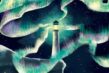
The Nightkeeper’s Apprentice by Jude Reid
‘She’d never seen anything like it. The whole sky was lit up in ribbons of colour – blue, green, yel …
-

David Robinson Interviews: Gavin Francis
‘He’s not my GP so I can’t say this for sure, but based on this book – wise, informed, well-written, …
-
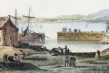
The Cromarty Library Circle by Shona MacLean
‘No one in the room could have been unaware of what it was that Dr Fraser alluded to. The horrors pe …
-

In Search of Gems by Kenneth Steven
‘It still amazes me that these magnificent shells grow in a river. Never mind whether they have pear …
-
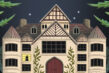
Winterbourne by Elisabeth Wolf
‘The Coopers stared at each other for a second, two seconds. ‘It’s a sign—’ said Cooper.’
FEATURED AUTHOR:
Graeme Armstrong

Graeme Armstrong is a Times bestselling, multi-award-winning author from Airdrie. His teenage years were spent within Scotland’s ‘young team’ gang culture. After studying English as an undergraduate at the University of Stirling, he completed a Master’ …
FEATURED PUBLISHER:
Glasgow Museums

We have a long history of publishing – Kelvingrove Art Gallery and Museum opened in 1901, and people have been writing about and publishing on the city’s collections ever since. The focus of Glasgow Museums Publishing programme is naturally the one mil …