


Born the son of Scotland’s last telescope-maker, Stuart Braithwaite was perhaps always destined for a life of psychedelic adventuring on the furthest frontiers of noise in MOGWAI, one of the best loved and most ground-breaking post-rock bands of the past three decades.
Modestly delinquent at school, Stuart developed an early appetite for ‘alternative’ music in what might arguably be described as its halcyon days, the late ’80s. Discovering bands like Sonic Youth, My Bloody Valentine, and Jesus and Mary Chain, and attending seminal gigs (often incongruously incognito as a young girl with long hair to compensate for his babyface features) by The Cure and Nirvana, Stuart compensated for his indifference to school work with a dedication to rock and roll . . . and of course the fledgling hedonism that comes with it.
Spaceships Over Glasgow is a love song to live rock and roll; to the passionate abandon we’ve all felt in the crowd (and some of us, if lucky enough, from the stage) at a truly incendiary gig. It is also the story of a life lived on the edge; of the high-times and hazardous pit-stops of international touring with a band of misfits and miscreants.
The search for a Northwest Passage connecting the Atlantic and the Pacific was one of the great maritime challenges, and it was not until the 1850s that the first one-way partial transit of the passage was made. Previous attempts had all failed, and some, like the ill-fated attempt by Sir John Franklin in 1845, ended in tragedy with the loss of the entire expedition comprising two ships and 129 men.
This book charts the remarkable contribution to Arctic exploration made by the Scots – whose role has often been overlooked because they were identified as English by modern writers. It includes many significant names: John Ross, an eccentric hell-raiser from Stranraer, veteran of three Arctic expeditions; his nephew, James Clark Ross, the most experienced explorer of his generation and discoverer of the Magnetic North Pole; Dr John Richardson of Dumfries who became an accidental cannibal and deliberate executioner of a murderer as well as a most engaging natural historian; and Orcadian John Rae, the man who first discovered evidence of Franklin’s demise. But it also pays tribute to many others too, the Scotch Irish, the whalers and not least the Inuit, with whom the explorers cooperated and generally enjoyed good relations, in many crucial cases depending on their knowledge of the environment.
Did you know that long ago Scotland was buried under a layer of ice one kilometre thick? That Orkney’s neolithic village of Skara Brae is older than the Great Pyramid in Egypt? Or that, in order to take back Roxburgh Castle, Robert the Bruce’s soldiers disguised themselves as cows?
From Neolithic settlers and Viking invaders, to Jacobite rebels, great Enlightenment thinkers and World War II evacuees, this fun and fascinating historical atlas takes readers on a tour through time and place. Discover how Scotland’s islands, Highlands, cities, castles and crofts connect to the most amazing moments in this nation’s rich history.
Packed with interesting and informative facts from David MacPhail, and brilliantly vibrant illustrations by Anders Frang, An Amazing Illustrated History Atlas of Scotland will bring history to life for young readers.
There are two kinds of people in this world. Those who insist that football is just a game, and those who know better. Take the April 1967 clash between England and Scotland. Wounded by their biggest rivals winning the World Cup just nine months earlier, Bobby Brown’s Scots travelled to Wembley on the mother of all missions. Win and they would take a huge step towards qualifying for the 1968 European Championship, end England’s formidable 19-game unbeaten streak, and, best of all, put Sir Alf Ramsey’s men firmly back in their box. Lose? Well, that was just unthinkable. Meanwhile, off the pitch, the winds of change were billowing through Scotland. Nationalism, long confined to the margins of British politics, was starting to penetrate the mainstream, gaining both traction and influence. Was England’s World Cup victory a defining moment in the Scottish independence movement? Or did it consign Scotland to successive generations of myopic underachievement? Michael McEwan, author of The Ghosts of Cathkin Park, returns to 1967 to explore a crucial ninety minutes in the rebirth of a nation.
Brings together 15 principal essays by David Sellar (1941 2019), reflecting his pioneering contribution to Scottish legal history
Groups essays into topics, covering Celtic law and institutions, the influence of Canon and English law across a wide range of legal subjects (including family law, succession, criminal law, evidence) and customary law
Includes a paper written during Sellar’s time as Lord Lyon King of Arms (2008 14) but left unpublished at his death, dealing with the history of the office of Lyon itself and arguing for its ancient Celtic origins
Demonstrates the continuity of legal institutions in Scotland from the early middle ages on, assesses influences shaping change over time, and the processes of integration and then re-integration down to the present
Includes a general introduction by Hector L. MacQueen assessing and contextualising Sellar’s contribution to the field
David Sellar was a pioneering historian of Scots law who rejected previous interpretations of the subject as a series of false starts and rejected experiments. He emphasised instead the continuity of legal development, with change a process of integration of external influences from very early times on. Sellar’s approach, articulated mainly through essays published in diverse places over four decades, significantly influenced our general understanding of legal history in Scotland as well as leading to appreciation elsewhere of its comparative significance.
By gathering Sellar’s major essays in a single collection, this book demonstrates the scope and reach of Sellar’s overall contribution. It provides an opportunity to view Sellar’s work as a whole and to access his distinctive perspective on the overall trajectory of Scottish law.
Studies continuity and change in the practice of town and country planning in the Scottish Borders, 1946-1996
Provides a comprehensive appraisal of the changing role of town and country planning within a unique area of Scotland over a fifty-year period
Examines continuity and change in planning practice in the Scottish Borders
Explores the relationships between planning and economic development in stimulating development in a rural region of Scotland
Analyses how town and country planning in the Scottish Borders developed from a simple land use control mechanism to a dynamic, pro-active, and multi-disciplined activity
The book combines scholarly analysis with a practitioner’s perspective of town and country planning in Scotland at both central and local government level
The Scottish Borders comprises the historic counties of Peeblesshire, Selkirkshire, Roxburghshire and Berwickshire, traditionally an area synonymous with woven cloth [tweed], knitwear and agriculture. It is also an area that suffered from rural de-population during the first half of the twentieth century. Against the background of social, economic and political change in the twentieth century, the book provides a detailed account of continuity and change in the practice of town and country planning in the Scottish Borders from the 1940s to the re-organisation of local government in 1996. It shows how town and country planning emerged from being a fringe activity in Borders local government to become a beacon for rural regeneration at the forefront of rural development policy. This book will be an essential read for all those interested in the history of town and country planning in Scotland and for those who love the Scottish Borders.
Travelling a thousand miles and across three billion years, Christopher Somerville (walking correspondent of The Times and author of Coast, The January Man and Ships of Heaven) sets out to interrogate the land beneath our feet, and how it has affected every aspect of human history from farming to house construction, the Industrial Revolution to the current climate crisis.
In his thousand-mile journey, Somerville follows the story of Britain’s unique geology, travelling from the three billion year old rocks of the Isle of Lewis, formed when the world was still molten, down the map south eastwards across bogs, over peaks and past quarry pits to the furthest corner of Essex where new land is being formed by nature and man.
Demystifying the sometimes daunting technicalities of geology with humour and a characteristic lightness of touch, Somerville’s book tells a story of humanity’s reckless exploitation and a lemming-like surge towards self-annihilation but also shows seeds of hope as we learn how we might work with geology to avert a climate catastrophe.
It cannot fail to change the way you see the world beyond your door.
Kate Atkinson, one of the world’s great storytellers conjures a captivating new book of short stories; a gift for Kate Atkinson fans.
In this first full collection since Not the End of the World, we meet a queen who makes a bargain she cannot keep; a secretary who watches over the life she has just left; and a man whose luck changes when a horse speaks to him. Witty and wise, with subtle connections between the stories, Normal Rules Don’t Apply is a startling and funny feast for the imagination.
In Kate Atkinson’s world nothing is over until ‘ the talking dog speaks.’
Praise for Kate Atkinson:
‘Inexhaustibly ingenious’ HILARY MANTEL
‘Simply one of the best writers working today, anywhere in the world’ GILLIAN FLYNN
‘A brilliant and profoundly original writer’ RACHEL CUSK
‘Atkinson is a novelist of unrivalled immediacy, authority, and skill’ FINANCIAL TIMES
‘Atkinson has a plotter’s mind: intricate, clever, satisfying’ THE SUNDAY TIMES
‘One of our finest novelists’ SUNDAY EXPRESS
‘Kate Atkinson is an international treasure: She creates characters with the ease of Agatha Christie, makes narratives out of mysteries and mystery out of narrative, and has written some of the most memorable scenes and dialogue I’ve encountered in the past decade’ VANITY FAIR
‘I can think of few writers who can make the ordinary collide with the extraordinary to such beguiling effect’ OBSERVER
‘One of the country’s most innovative, exciting and intelligent authors.’ SCOTSMAN
Shaun Bythell owns The Bookshop, Wigtown – Scotland’s largest second-hand bookshop. It contains 100,000 books, spread over a mile of shelving, with twisting corridors and roaring fires, and all set in a beautiful, rural town by the edge of the sea. A book-lover’s paradise? Well, almost…
In these wry and hilarious diaries, Shaun provides an inside look at the trials and tribulations of life in the book trade, from struggles with eccentric customers to wrangles with his own staff, who include the ski-suit-wearing, bin-foraging Nicky. He takes us with him on buying trips to old estates and auction houses, recommends books (both lost classics and new discoveries), introduces us to the thrill of the unexpected find, and evokes the rhythms and charms of small-town life, always with a sharp and sympathetic eye.
Kate Atkinson, one of the world’s great storytellers conjures a captivating new book of short stories; a gift for Kate Atkinson fans.In this first full collection since Not the End of the World, we meet a queen who makes a bargain she cannot keep; a secretary who watches over the life she has just left; and a man whose luck changes when a horse speaks to him. Witty and wise, with subtle connections between the stories, Normal Rules Don’t Apply is a startling , and funny feast for the imagination.In Kate Atkinson’s world nothing is over until ‘ the talking dog speaks.’____________Praise for Kate Atkinson:’Inexhaustibly ingenious’ HILARY MANTEL’Simply one of the best writers working today, anywhere in the world’ GILLIAN FLYNN’A brilliant and profoundly original writer’ RACHEL CUSK’Atkinson is a novelist of unrivalled immediacy, authority, and skill’ FINANCIAL TIMES’Atkinson has a plotter’s mind: intricate, clever, satisfying’ THE SUNDAY TIMES’One of our finest novelists’ SUNDAY EXPRESS’Kate Atkinson is an international treasure: She creates characters with the ease of Agatha Christie, makes narratives out of mysteries and mystery out of narrative, and has written some of the most memorable scenes and dialogue I’ve encountered in the past decade’ VANITY FAIR’I can think of few writers who can make the ordinary collide with the extraordinary to such beguiling effect’ OBSERVER’One of the country’s most innovative, exciting and intelligent authors.’ SCOTSMAN
Brought to you by Penguin.One of the world’s great storytellers conjures a captivating new book. In this first full collection since Not the End of the World, we meet a queen who makes a bargain she cannot keep; a secretary who watches over the life she has just left; and a man whose luck changes when a horse speaks to him. Witty and wise, with subtle connections between the stories, Normal Rules Don’t Apply is a startling , and funny feast for the imagination. In Kate Atkinson’s world nothing is over until ‘ the talking dog speaks.’©2023 Kate Atkinson (P)2023 Penguin Audio
John Niven’s little brother Gary was fearless, popular, stubborn, handsome, hilarious and sometimes terrifying. In 2010, after years of chaotic struggle against the world, he took his own life at the age of 42.
Hoping for the best while often witnessing the worst, John, his younger sister Linda and their mother, Jeanette, saw the darkest fears they had for Gary played out in drug deals, prison and bankruptcy. While his life spiralled downward and the love the Nivens’ shared was tested to its limit, John drifted into his own trouble in the music industry, a world where excess was often a marker of success.
Tracking the lives of two brothers in changing times – from illicit cans of lager in 70s sitting rooms to ecstasy in 90s raves – O Brother is a tender, affecting and often uproariously funny story. It is about the bonds of family and how we try to keep the finest of those we lose alive. It is about black sheep and what it takes to break the ties that bind. Fundamentally it is about how families survive suicide, ‘that last cry, from the saddest outpost.’
John Niven’s little brother Gary was fearless, popular, stubborn, handsome, hilarious and sometimes terrifying. In 2010, after years of chaotic struggle against the world, he took his own life at the age of 42.Hoping for the best while often witnessing the worst, John, his younger sister Linda and their mother, Jeanette, saw the darkest fears they had for Gary played out in drug deals, prison and bankruptcy. While his life spiralled downward and the love the Nivens’ shared was tested to its limit, John drifted into his own trouble in the music industry, a world where excess was often a marker of success.Tracking the lives of two brothers in changing times – from illicit cans of lager in 70s sitting rooms to ecstasy in 90s raves – O Brother is a tender, affecting and often uproariously funny story. It is about the bonds of family and how we try to keep the finest of those we lose alive. It is about black sheep and what it takes to break the ties that bind. Fundamentally it is about how families survive suicide, ‘that last cry, from the saddest outpost.’
Brought to you by Penguin.Travelling a thousand miles and across three billion years, Christopher Somerville (walking correspondent of The Times and author of Coast, The January Man and Ships of Heaven) sets out to interrogate the land beneath our feet, and how it has affected every aspect of human history from farming to house construction, the Industrial Revolution to the current climate crisis.In his thousand-mile journey, Somerville follows the story of Britain’s unique geology, travelling from the three billion year old rocks of the Isle of Lewis, formed when the world was still molten, down the map south eastwards across bogs, over peaks and past quarry pits to the furthest corner of Essex where new land is being formed by nature and man.Demystifying the sometimes daunting technicalities of geology with humour and a characteristic lightness of touch, Somerville’s book tells a story of humanity’s reckless exploitation and a lemming-like surge towards self-annihilation but also shows seeds of hope as we learn how we might work with geology to avert a climate catastrophe.It cannot fail to change the way you see the world beyond your door.©2023 Christopher Somerville (P)2023 Penguin Audio
Travelling a thousand miles and across three billion years, Christopher Somerville (walking correspondent of The Times and author of Coast, The January Man and Ships of Heaven) sets out to interrogate the land beneath our feet, and how it has affected every aspect of human history from farming to house construction, the Industrial Revolution to the current climate crisis.In his thousand-mile journey, Somerville follows the story of Britain’s unique geology, travelling from the three billion year old rocks of the Isle of Lewis, formed when the world was still molten, down the map south eastwards across bogs, over peaks and past quarry pits to the furthest corner of Essex where new land is being formed by nature and man.Demystifying the sometimes daunting technicalities of geology with humour and a characteristic lightness of touch, Somerville’s book tells a story of humanity’s reckless exploitation and a lemming-like surge towards self-annihilation but also shows seeds of hope as we learn how we might work with geology to avert a climate catastrophe.It cannot fail to change the way you see the world beyond your door.
Imagine a reality where the world s most powerful super-being does not grow up in Smallville, Kansas or even America, for that matter Superman: Red Son is a vivid tale of Cold War paranoia, that reveals how the ship carrying the infant who would later be known as Superman lands in the midst of the 1950s Soviet Union. Raised on a collective, the infant grows up and becomes a symbol to the Soviet people, and the world changes drastically from what we know – bringing Superman into conflict with Batman, Lex Luthor and many others. The acclaimed story by writer Mark Millar and artists Dave Johnson & Kilian Plunkett is collected here, featuring an extensive sketch section by Johnson, Plunkett and Alex Ross. Collects Superman: Red Son #1-3.
Iona Lee’s debut collection charts the journey of the writer, artist and performer into adulthood. Written in a unique voice, Iona playfully toys with thematic devices in this entertaining exploration of art and artifice, absence and impermanence, truth and tale telling. Characterised by a deep love of language, its music and its magic, these poems reflect on memory, the future and other hauntings. Wittily observed, this collection is an attempt to connect the stars into tidy constellations, and to join the tiny, inchoate dots of self into something traceable and translatable.
Humorous and self-aware, gentle and philosophical, Anamnesis is written in the knowledge that in telling one’s life-story, one creates it.
This relatively remote cruising area at the edge of the North Sea has much to offer small and shoal-draught boats that will take the ground, but skippers of larger, deeper keeled yachts will also find a good selection of harbours and anchorages to choose from, particularly during settled conditions or in periods of offshore winds.
Ashore, there is a long and rich history of Scottish culture and innovation to discover, as well as superlative landscapes to explore. Popular as a landfall destination for yachts sailing across the North Sea from the approaches to the Baltic, the east coast of Scotland is well worth exploring as part of any circumnavigation of Great Britain.
SOON TO BE A MAJOR FILM STARRING EMMA STONE, FROM THE DIRECTOR OF THE FAVOURITE
Winner of the Whitbread Novel Award and the Guardian Fiction Prize
A life without freedom to choose is not worth having.
Godwin Baxter’s scientific ambition to create the perfect companion is realized when he finds the drowned body of the beautiful Bella, who he brings back to life in a Frankenstein-esque feat. But his dream is thwarted by Dr. Archibald McCandless’s jealous love for his creation…But what does Bella think?
This story of true love and scientific daring whirls the reader from the private operating-theatres of late-Victorian Glasgow through aristocratic casinos, low-life Alexandria and a Parisian bordello, reaching an interrupted climax in a Scottish church.
‘A magnificently brisk, funny, dirty, brainy book’ London Review of Books
‘Visionary, ornate and outrageous’ The Independent
‘Witty and delightfully written’ New York Times
‘A brilliant marriage of technique, intelligence, and art.’ Kirkus Reviews
‘The greatest Scottish novelist since Sir Walter Scott’ Anthony Burgess
‘Those who, like me, are unsure if they are Alasdair Gray fans or not, ought to fall on Poor Things with delight, and not just because of the almost excessive beauty of its appearance’ Philip Hensher, Spectator
‘A phenomenal memoir. I am in awe’ AMY LIPTROT
‘Beautiful, deep, dangerous, transfixing . . . it will burn a home in your heart, it has in mine. Read every word of every page. Turn them carefully. Jenni Fagan is made of fire and spirit. From start to finish I could not put it down. Close the door. Sit down now. Read Ootlin. Read’ LEMN SISSAY
‘Essential reading, life changing, I couldn’t stop reading once I started . . . Unbelievably brave. Beautiful , earth shattering and unforgettable. A truly rare talent’ SAMANTHA MORTON
The government told a story about me before I was born.
Jenni Fagan was property of the state before birth. She drew her first breath in care and by the age of seven, she had lived in fourteen different homes and had changed name multiple times.
Twenty years after her first attempt to write this powerful memoir, Jenni is finally ready to share her account. Ootlin is a journey through the broken UK care system – it is one of displacement and exclusion, but also of the power of storytelling. It is about the very human act of making meaning from adversity.
ALSO ON BOOKS FROM SCOTLAND
-

David Robinson Reviews: The Loch of the Bees
‘The past’s current flows through the characters in his fiction so strongly that it almost becomes t …
-

The Nightkeeper’s Apprentice by Jude Reid
‘She’d never seen anything like it. The whole sky was lit up in ribbons of colour – blue, green, yel …
-

David Robinson Interviews: Gavin Francis
‘He’s not my GP so I can’t say this for sure, but based on this book – wise, informed, well-written, …
-
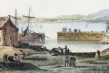
The Cromarty Library Circle by Shona MacLean
‘No one in the room could have been unaware of what it was that Dr Fraser alluded to. The horrors pe …
-

In Search of Gems by Kenneth Steven
‘It still amazes me that these magnificent shells grow in a river. Never mind whether they have pear …
-

Winterbourne by Elisabeth Wolf
‘The Coopers stared at each other for a second, two seconds. ‘It’s a sign—’ said Cooper.’
FEATURED AUTHOR:
Jean Menzies

Jean Menzies is an author, presenter, and as of 2022 Dr Jean Zacharski Menzies, PhD in ancient history! She is Edinburgh born and based. You might know her from her YouTube channel JeansThoughts where she’s been discussing books, writing, studying, an …
FEATURED PUBLISHER:
Society of Antiquaries of Scotland

The Society of Antiquaries of Scotland has been an active publisher of Scotland’s history and archaeology since 1792. We publish beautifully illustrated volumes covering the entire range of Scotland’s past, helping to bring it to life for future genera …