


ABOUT THIS BOOK
PUBLISHER: Equinox Publishing Ltd
FORMAT: Hardback
ISBN: 9781781795934
RRP: £80.00
PAGES: 256
PUBLICATION DATE:
September 1, 2018
BUY THIS BOOK
As an Amazon Associate and Bookshop.org affiliate we earn from qualifying purchases.
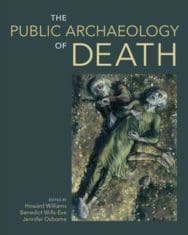
The Public Archaeology of Death
Howard Williams
Benedict Wills-Eve
Jennifer Osborne
From the tomb of Tutankhamun to the grave of Richard III, archaeologists have studied, displayed and debated rich and varied evidence of the burial and commemoration of the dead from past times to the present day. Mortuary data is not only a key window into the human past, it defines and resonates through 20th and 21st-century popular culture. Yet, in many regards, archaeologists’ engagements with death and the dead are contentious and problematic, emotional and political. For instance, in what circumstances if at all is it ethical to dig up and display human remains? What do people learn from meeting ancient people in museums and heritage sites? How significant is mortuary archaeology in our own present-day imaginings of prehistoric and historical societies, as well as fantastical and fictional societies portrayed in literature and film? Tackling questions such as these, osteoarchaeologists and mortuary archaeologists have often found themselves at the forefront of the public engagements for interdisciplinary and archaeological research. This book identifies a series of lacunae in recent discussions of mortuary archaeology’s interactions with contemporary society. It aims to re-evaluate the range and character of public mortuary archaeology critically through a range of case studies from the UK, Europe and farther afield. In particular, this book seeks to address a network of relationships between mortality, material culture and archaeological theory, method and practice through a series of themes that connect the digging, display and dissemination of mortuary contexts and remains with wider popular culture themes and media.
Howard Williams
Howard Williams is Professor of Archaeology at the University of Chester. Benedict Wills-Eve is a PhD candidate in archaeology at the University of Chester. Jennifer Osborne is a Masters degree candidate in Zooarchaeology at the University of York.
ALSO ON BOOKS FROM SCOTLAND
-

David Robinson Reviews: The Loch of the Bees
‘The past’s current flows through the characters in his fiction so strongly that it almost becomes t …
-

The Nightkeeper’s Apprentice by Jude Reid
‘She’d never seen anything like it. The whole sky was lit up in ribbons of colour – blue, green, yel …
-

David Robinson Interviews: Gavin Francis
‘He’s not my GP so I can’t say this for sure, but based on this book – wise, informed, well-written, …
-
The Cromarty Library Circle by Shona MacLean
‘No one in the room could have been unaware of what it was that Dr Fraser alluded to. The horrors pe …
-
In Search of Gems by Kenneth Steven
‘It still amazes me that these magnificent shells grow in a river. Never mind whether they have pear …
-
Winterbourne by Elisabeth Wolf
‘The Coopers stared at each other for a second, two seconds. ‘It’s a sign—’ said Cooper.’
FEATURED AUTHOR:
Marianne Brown

Raised in Edinburgh, Marianne Brown spent many years working as a journalist in Southeast Asia and later in Britain as the editor of an environmental magazine. She now works for a community-owned energy cooperative based in Bristol. She lives in Devon …
FEATURED PUBLISHER:
Scottish Mountaineering Press

Launched in 2020, the Scottish Mountaineering Press exists to promote and share Scotland’s natural wonders, embracing the creativity born out of an explorer spirit and celebrating the joy and endeavour in a life lived outdoors. We are a wholly-owned su …