


Recipe from Hamish H. Johnston
Submitted by National Museums Scotland
Ingredients
2 oz butter
4 chicken portions
1 heaped tablespoon flour
1 heaped tablespoon finely grated Parmesan cheese
1 teaspoon salt
pinch of curry powder
Method
Melt the butter in a shallow roasting tin in the oven. Dip the pieces of chicken in the butter and then coat with the flour, cheese, salt and curry powder, all mixed together. Lay them in the baking tin in a single layer, skin side down. Bake, uncovered, in preheated oven Mark 7, 427° F., for 20 minutes, then turn the chicken skin side up over and continue cooking for a further 10 minutes, or until golden brown and tender. Serve plain with green salad and sauté potatoes and cream gravy. To make cream gravy, sprinkle a rounded tablespoon of seasoned flour into the buttery residue in the pan and stir it over a gentle heat for a minute. Stir in 1/4 pint chicken stock and then 1/4 pint single cream. Boil rapidly for several minutes, stirring all the time.
This recipe, taken from Margaret Costa’s Four Seasons Cookery Book (Sphere Books, 1972), played an important part in my life. It is absolutely delicious, and incredibly easy to make – a foolproof success. I was single in the mid-1970s, and decided to go to cookery evening classes. I wanted to improve the quality and variety of my cooking, and maybe to meet somebody. I achieved the former, but not the latter. Not long after, however, I did meet someone I liked who was already an excellent cook. I hoped that my new skills would be an asset, if only to be able speak knowledgably about the different types of pastry and sauces. Every week we used to have a cooking evening, for which we would plan a menu and each of us would make one course. This recipe was one of my great successes, and now, after we have been married for more than 30 years, it still makes an appearance and is consumed with much pleasure. These days, however, it is my wife who makes it, and my contribution does not often extend to making the second course!
 Hamish H. Johnston is the author of Matthew Forster Heddle: Minerologist and Mountaineer. This biography chronicles the life of one of Scotland’s most famous mineralogists, Orkney-born Matthew Forster Heddle (1828-97). His legacy includes The Mineralogy of Scotland, and more than 5700 specimens now in the National Museums Scotland collection. Written by the Heddle’s great-great-grandson the book offers a far richer portrait of this larger-than-life character than anything that has appeared before.
Matthew Forster Heddle: Minerologist and Mountaineer is published by National Museums Scotland.
Recipe from Eileen Dunlop
Submitted by National Museums Scotland
Ingredients
For the Pasta
6 oz. macaroni or penne pasta
¾ pint cheese sauce, bought or home-made
small packet potato crisps, crushed
grated cheese for topping
For the Tomato Sauce
8 rashers of bacon, chopped
1 medium onion, diced
1 large tin of chopped tomatoes
1 tablespoon tomato puree
1 tablespoon Worcestershire sauce
1 teaspoon sugar
salt and pepper to taste
Method
Fry onion and bacon in a little oil. Add all the other sauce ingredients, stir and simmer for 10 minutes.
Meanwhile cook macaroni until al dente. Make or heat the cheese sauce, mix with the drained macaroni. Put half the macaroni cheese in an ovenproof dish. Spread the tomato sauce over it, then the remaining macaroni cheese. Mix potato crisps and grated cheese and sprinkle on top.
Cook in oven at 190 degrees, gas mark 5 for 15 minutes.
Grace was my mum and May was my aunt. I don’t know whether Grace gave this recipe to May, or May gave it to Grace, but it was a favourite with all their children, forever associated with happy arrivals for holidays in one another’s houses. Grace’s daughter Eileen,and May’s daughter Jennifer occasionally make it for each other to this day, with much nostalgic reminiscence.
 Eileen Dunlop is the author of Queen Margaret of Scotland, the captivating story of Saint Margaret (1045-1093). Eileen Dunlop takes a fresh look at the dramatic life of the queen and saint and delves deep to find the woman behind the legend.
Queen Margaret of Scotland is published by National Museums Scotland.
Recipe from Kirsty Logan
Submitted by ASLS
Ingredients
900g Potatoes suitable for roasting
50g dripping or goose fat
Salt
Method
First place the roasting tray with the fat in it on the highest shelf of the oven while it pre-heats. Thinly peel the potatoes, leaving the small ones whole and cut the larger ones in half.
Boil or steam the potatoes for about 10 minutes. Drain off the water, place the lid back on the saucepan and shake the saucepan vigorously. This shaking roughens up the cooked edges of the potato and makes them fluffy – this is the secret of getting crunchy edges.
Now remove the hot roasting tray and quickly lower the potatoes into the hot fat, turning each one over a couple of times until coated. Place them back on the highest shelf of the oven and leave them unattended for 50 minutes to 1 hour, or until they are golden brown.
Sprinkle them with a little crushed salt before serving straight away, preferably with a free range roast chicken and honey glazed carrots. The Logan family’s favourite Sunday dinner!
Why can we never make roast potatoes quite like our mothers did? My pale child hands fidget against my brother’s chubby babyfingers, both of us digging through the steaming dish to find the crispiest bits: not quite black-burnt but close to it, fatter and crunchier than a crisp, the soft inside scalding the tongue.
Use a spoon! But of course, we don’t. We both wanted the prize of the biggest, crispiest bit. And burned fingers could be soothed by sucking them, meaning an extra hit of salt.
There’s a secret, my mother says, to making your potatoes crunchy on the outside and fluffy on the inside. The secret is to shake the pan. And now that I’m grown – older than my mother was when she had me – I’ve tried her secrets. But my potatoes never come out like hers.
Mum, you’re better with secrets than I am. Next Sunday I’ll come round to yours, and you can shake the pan, and we’ll both burn our fingers trying to find the crispiest bits.
 Kirsty Logan is the author of A Portable Shelter. This beautifully produced collection of elegant, haunting short stories comes from one of Britain’s most exciting new talents. Each story is accompanied by an illustration by award-winning artist Liz Myhill. Produced with the assistance of the Dr Gavin Wallace Fellowship.
A Portable Shelter is published by ASLS.
Recipe from Alex Nye
Submitted by Fledgling Press
Ingredients
Kippers, or other smoked fish
Prawns
Bacon
1 large onion
2 cloves garlic
2 carrots
1 litre water
250 ml cream
Parsley
Method
Simmer the fish (but not the prawns) in water in a heavy pan for 5 mins. Reserve the stock from it. Put the fish on a plate and flake it with a fork.
Heat a little oil in a pan, scissor-cut some bacon into it and fry with onions and garlic. Add the reserved fish broth, bring to the boil, and grate the carrots over it. Simmer for 10 minutes. Stir in a cup of cream, the flaked fish and the prawns. Heat gently without boiling.
Serve in big flat bowls with crusty bread and garnish with fresh parsley.
This is a soup inspired by a visit to the Isle of Coll, and is a variation on Cullen Skink. It has a sophisticated twist which is actually very cheap but tastes dead expensive! I’m not known for my culinary skills in our household (to say the least), but I cooked this for some friends who enjoy good food and they assured me it tasted like something you could serve in a classy fish restaurant. The secret is the grated carrot which gives the thin creamy broth an amazing saffron-coloured glow. It brings back memories of cycling for miles across the island, and camping on the beach surrounded by the machair. The look of the soup even brings to mind rock pools, especially if you add mussels as well, then the shells gleam through like blue-black rocks.
 Alex Nye is an award-winning children’s author whose most recent book is Darker Ends. Inspired by the landscape and history of Scotland, it takes Glencoe as its setting, where the ghosts of the recent past mingle with the darker events centuries earlier, and two children confront Glencoe’s ancient tales.
Alex Nye is published by Fledgling Press.
Recipe from Pam Thomas
Submitted by BrightRED Publishing
Ingredients
for the pastry
100 g plain flour
25 g butter
25 g lard
for the sponge
100 g butter
100 g caster sugar
100 g self raising flour
2 eggs
Jam
for the glaze
100 g icing sugar
Water
Method
To make the pastry, sieve the flour into a large bowl. Add the fat. Cut into small pieces before rubbing in to form fine breadcrumbs. Use some cold water to bring together to form a dough. Knead lightly before resting in the fridge overnight.
Preheat oven to 190 degrees Celsius. Grease a 20cm round cake tin. Remove pastry from the fridge and bring to room temperature.
To make the sponge, cream together the butter and sugar until light and fluffy. Add the egg and fold in the flour.
Lightly flour the work surface before rolling out the pastry. Line the cake tin. Leave to relax before trimming.
Spread the base with jam.
Add the prepared sponge mixture on top. Bake for approx. 25-30 mins.
Remove from the oven when well risen, golden brown and bounces back when pressed. Cool.
Mix together approx. 100g icing sugar with some water to form a thick glace icing; spread onto the top of the cake.
My paternal grandmother was a wonderful baker; pastry in particular was her speciality. We used to visit as a family for Sunday lunch and the highlight at the end of the meal was one of her cakes – an Albert Cake. This cake had a short-crust pastry base, home-made strawberry jam, light and fluffy sponge topped with white glace icing.
My sister loved the sponge and icing, but didn’t like jam and as she was older than me, she used to carefully cut off the pastry base, making sure all the jam was left behind and pass the pastry with jam to me – leaving her to eat the sponge…..and me with the pastry and jam.
My gran used to claim her success was due to the fact she made the pastry in advance and always chilled it over night. My dad adored getting the pastry scraps made into a jam turnover for him.
 Pam Thomas is the author of BrightRED Study Guide N5 Hospitality: Practical Cake Craft.
Pam Thomas is published by BrightRED Publishing.
Recipe from Frank Stark
Submitted by Acair Books
Ingredients
1 lb sloes
½ lb sugar
1 litre gin
Method
Place the sloes in a 1.5 litre sealed Kilner jar. Add the sugar and gin. Invert the container occasionally and wait. Simples. Eventually your clear Gordon’s will become a beautiful pink hue with a delicious flavour. If you prefer something a bit sweeter, then add a syrup made by dissolving sugar in some warm water.
Some years ago in Lewis I was photographing waxwings on the old Marybank-Lewis castle college road. As I watched the birds feeding on hawthorn and whitebeam berries I happened to notice a couple of blue-black sloes on a neighbouring blackthorn bush. It kindled old memories of autumn days in the Lothians when family members collected these fruits to make jam, wine and, particularly, to flavour gin. Old habits die hard and when the waxwings left the hedgerow to quench their thirst I smartly walked in and plucked the two sloes from the bush.
Sadly I was unable to find any more in the area and given the scarcity of woods and hedges on Lewis there was a distinct possibility I had just collected the island’s whole harvest. Not nearly enough for the amount of hooch I had in mind. I decided then that blackthorn was an obvious candidate for inclusion among the plants to grow on the piece of land set aside for my wild-life meadow project.
As that is still a work in progression I have to collect the fruit on my annual autumn journeys to old southern haunts where the bushes and berries are abundant. The small purplish drupe is the ancestor of our cultivated plums but it is acidic and astringent and its taste, if you care to experiment, will linger with you for a long time.
They are best gathered after a hard frost, but if this is not possible place them in a freezer immediately after they have been collected. This means you can make the gin whenever it is convenient and also avoid the tedious task of pricking each sloe with a needle.
 Frank Stark is the author of Wild Lewis: A’ Mhòinteach Mhòr, a wonderful photographic safari of the largest island in the Highlands and Islands of Scotland – just a sample of the stunning combination of wildlife that can be viewed at few other locations on the planet. This north-western corner of Europe, perched on the edge of the ocean, is a unique mix of geography and biodiversity that has inspired naturalists and poets for centuries. The bilingual text gives an added richness to this visually stunning collection.
Frank Gault is published by Acair Books.
Recipe from Moira Forsyth
Submitted by Sandstone Press
Ingredients
1 small onion
1 medium carrot
Two tins chopped tomatoes
1 tablespoon oil
4oz (100g) lentils
One and a half pints vegetable stock or water
A bay leaf
Half teaspoon Marmite
Salt and pepper to taste
Method
Soften onion in oil till transparent; add carrot and cook for a few more minutes on low heat. Add tomatoes, water (less or more depending on thickness of soup you like – you need to experiment!) and lentils. Add bay leaf and Marmite, season to taste (Marmite is salty so less salt than usual). Bring to boil, cover and simmer on low heat for 30-40 minutes. Whizz a bit with a hand blender when it’s ready if you like a smoother soup.
We were close when our children were young. After I moved away we kept in touch, as women do. Then her marriage ended with appalling suddenness. She didn’t talk about that – too painful. Surprisingly soon, there was another man. Our lives had diverged, but we still talked about the children, and we still shared recipes.
She was a scones-and-pancakes sort of woman, demure. But when I asked her for a story to go with her recipe, this is what she sent:
‘I wasn’t eating much. Even less since we’d been together on that residential course, when something changed, so that even seeing him caused my heart to thump too fast.
‘During the years to come, years unimaginable in those giddy weeks, he would say to me, as we fell joyfully into bed, ‘a hungry lover is a good lover’.
‘I wasn’t hungry that first time. I’d been thrumming like a plucked wire, breathless with fear and anticipation.
‘Afterwards, he said we must eat. I must eat. He had made soup. So I sat down at his rented kitchen table, in his temporary home, while he stirred the pot of soup he’d made that morning, before I arrived. It was a temporary place because he was between marriages (he said) while I was tumbling too fast and frightened out of mine. He filled blue bowls with tomato and lentil soup. I was to guess the secret ingredient. I ate it, like someone who has just discovered it’s all right to eat. That might be true – I’d had years of starving myself.
‘Soup is generally seen as a comforting food, warm and warming, a food for winter days and happy families and coming in from the cold and being looked after. Not a food, you’d think, for new lovers, for the day your life falls from grace, from security into terror and the guilty future.
‘I make the soup now, not him, and each time it’s thicker or more peppery, different. No two soups alike, if you’re a slapdash cook like me. And yet it’s always the same in one way, it’s always the soup that against impossible odds, comforts and reassures. There was a future, after all, if not the one I thought I would have.’
 Moira Forsyth is the author of The Treacle Well, a tale of family secrets and severed relationships. Daniel and Caroline are closest to each other, twins for whom the rest of the world is always distant. But underneath the stable family life run currents of insecurity and restlessness, and a secret only one person is able to uncover.
Moira Forsyth is published by Sandstone Press.
Recipe from Mark Greene
Submitted by Muddy Pearl
Ingredients
12 -13 ounces of chicken livers
3 eggs
2 medium mushrooms (e.g. chestnut)
1 medium onion
2 garlic cloves
2 flat tsp of sugar
Salt & pepper
Method
Chop the onion and mushrooms into smallish pieces, crush and the garlic and fry gently in oil until the onion is golden brown. Remove from the pan. Fry the chicken livers til cooked. Hard boil the eggs. Mix two of the eggs with the other ingredients in a mixer to create a smooth or slightly coarse pate to taste. Put in a serving bowl or shallow dish and slice or crumble the third egg on top of the pâté.
Serve with crunchy toast or matzah and sweet and sour cucumber pickles.
I grew up Jewish – with some emphasis on the ‘ish’. My father, Abraham Maurice Greene of the Giffnock Greenbergs, came from an orthodox family, but my mother was a Gentile from Kelvinside, the daughter of a man who fought in the Spanish Civil War and sent her to Socialist Sunday School. Still, when children came along my parents decided to bring us up Jewish. Friday nights were special: the weekend and the Sabbath started here.
We always spent Friday night together, at home or out at my grandparents’ or uncle’s house. And when I say ‘always’ I mean always – except for one black Friday when my parents went to some swanky party. I was about ten and remember standing out in the driveway shouting at them in their ‘Saturday’ best as they pulled away in our Vauxhall Victor. It wasn’t just a missed appointment, it wasn’t just abandonment, it was betrayal. They knew what they’d done – guilt was as clear on their faces as the nose on a rhino. They never did it again.
On Friday nights, we would light two tall candles, majestic in their brass candlesticks, to welcome the Sabbath in. Dad would stand to read a few prayers in Hebrew – a snippet of Genesis, and it was evening and it was morning – the sixth day… and the blessing over the wine and over the bread – a giant, golden brown, plaited challah. We’d all get a sip of sweet wine from the same cup and a piece of challah from the same loaf with a sprinkle of salt. And then we’d have chopped liver – always. Main courses would vary and there would be at least two desserts. There might be other starters – brilliant fuchsia-coloured borscht or smetana with chunks of cucumber and spring onion – but we’d always have chopped liver. God, home, prayer, everyday life, celebration, chopped liver all mixed together – that same experience shapes the Christmas poems in Adventure, that sense of God being involved, there with us in the ordinary stuff of life.
Now chopped liver is simple food, inexpensive, everyday fare and there’s an idiom that you hear in Jewish circles, “What am I, chopped liver?” It’s essentially a good-natured way of saying, “Why aren’t you treating me with the adulation and adoration that my status and character deserve?” Why chopped liver should be singled out for this calumny is beyond me. It’s an outrageous slander – somebody should sue. Chopped liver is magnificent. I love it – thickly spread on matzah, or challah, with lots of salt and a roundel of pickle. My Dad makes it still and drops off small tubs to me, an occasional reminder of childhood – mum, dad, my brother – an abiding truth in my life, my family’s love.
 Mark Greene is the author of Adventure, a beautiful, original and compelling invitation into the drama, wonder and mystery of the Christmas story. The warm rhythms and fresh directness of Mark Greene’s poems are graced not only by illuminating design and gorgeous illustrations but by reflections that poignantly and powerfully connect the ancient world with our own. Intriguing and uplifting, Adventure makes an exquisite gift for Christmas, an enriching companion for Advent and a source of inspiration in any season.
Mark Greene is published by Muddy Pearl.
Recipe from Mary Easson
Submitted by Ringwood Publishing
Ingredients
125g shredded suet
250g self raising flour
125g oatmeal
250g mixed dried fruit (sultanas, raisins, currants
75g soft brown sugar
2 eggs, beaten
1 tbsp golden syrup
1 tsp ground ginger
1 tsp cinnamon
4 tbsp (approx) milk or buttermilk
Extra flour
Method
In a large bowl rub suet (or margarine if you prefer) into the flour. Mix in dry ingredients (oatmeal, fruit, sugar, spices) and make a well in the centre. Pour in eggs and syrup and mix well with a wooden spoon. Add just enough milk to make a sticky mixture. Wrap a small coin in waxed paper and push into the mixture.
Prepare cloot (a muslin square or cloth) by dipping in boiling water. Spread out on table and sieve flour liberally over it. Place mixture in the middle and tie up the cloth tightly with string leaving enough room for the mixture to expand. Place in a clean pillowcase and close with string.
Part fill a large pan with boiling water. Gently place the pillowcase with the dumpling into the pan and simmer for at least 3 hrs. Remove from pan, gently remove the cloth and allow to dry and cool on a plate. Traditionally the dumpling was placed in front of the fire for 30-40 minutes to allow a shiny skin to form.
Slice when cool and serve spread with butter or with custard as a dessert. A full Scottish breakfast often includes a slice of fried dumpling! Can be kept in a tin for several weeks before use.
Clootie dumpling is so-called because it is made in a cloot, the Scots word for cloth. The method of cooking developed in the days when people cooked over an open fire and ovens were a rarity. Since the fire was lit more or less all of the time the long cooking time was not problematic. My mother made them for special occasions such as New Year and birthdays. I do not recall having a birthday cake until I was about ten years old. Until then it was always a clootie dumpling with a silver threepenny in it. The person who found the ‘lucky penny’ was assured good luck. We were not well-off in a material sense but I am reminded of the important things in life when I remember my mother’s clootie dumplings, made with love, and enjoyed in the company of family and friends.
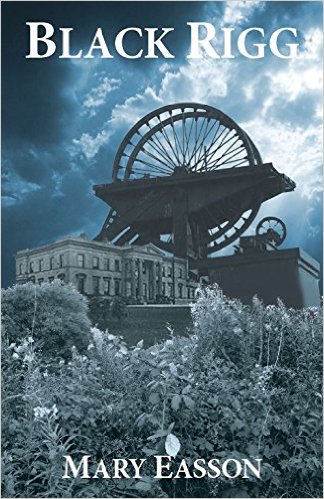 Mary Easson is the author of Black Rigg. Set in a Scottish mining village in the year 1910, the story unfolds during the period of social and economic change when the foundations of modern Scotland were being laid. Class, power, injustice, poverty and community are raised by the narrative in powerful and dramatic style, and set this novel apart as a multi-layered exposition of Scottish social mores and manners in the rapidly changing years of the early 20th century.
Mary Easson is published by Ringwood Publishing.
Recipe from Craig Smith
Submitted by Pilrig Press
Ingredients
Potatoes
Lean steak mince (from your butcher preferably)
Onions (a couple, finely chopped)
Carrots (a few, diced)
Oil
Beef stock cube
Water
Worcester sauce
Brown sauce
Whisky (your call)
Salt, black pepper, butter
Method
Heat a glug of oil in the bottom of a good heavy-based pan. Add the carrots and onions and fry in the oil for a couple of minutes to soften. Add the mince and cook until browned and sizzling. Add a good glug of Worcester sauce, a bit of whisky, salt and pepper, stir and cook for another few minutes. Crumble the beef stock cube into the mince. Add a bit of brown sauce and boiling water (your call, not too much or it’ll be the dreaded “granny mince”).
Simmer with lid on (leave partially off otherwise the mince will weld to the pan). Keep checking, adding more water, or whisky, if required. Taste after 30-40 minutes, probably best to add more whisky here.
Keep simmering – the longer you give it, the more tender the mince will be. Usually 45-50 minutes is enough.
Meanwhile peel, chop in half, and get the spuds on the boil (20 minutes should do it). Once the potatoes are boiled, drain, add butter, and mash to within an inch of their lives. Nobody likes lumpy tatties.
Check the mince, add more seasoning if required (no herbs though, it’s not an Italian you’re making).
Pile onto plates, side by side (kids may enjoy making a “Close encounters” style mountain of mash, topped with the mince).
The meal is traditionally ended with a slice of plain white bread, dropped onto the plate to mop up the remaining gravy and mince. This also makes “doing the dishes” easier (but don’t, as I once did, mop the plate, decide it’s spotless, and stick it back in the cupboard).
Somewhere in central Scotland, on a Saturday evening in the grey winter of 1980, a 12-year-old boy settles on the rug in front of the big wooden-cased TV for the next thrilling instalment of Buck Rogers in the 25th century. Two bars burning on the electric fire, he knows never to risk turning on the third. His father’s keen nose would smell the burning dust a mile away.
He gazes at the screen, enjoying the warmth from the fire (on his right-side at least), and sniffs the air like a Bisto kid. Tea would be ready soon, but hopefully not until he’d enjoyed his hour’s escape from the dreich reality of life in 80s Scotland. A Scotland that seemed to be crumbling around him thanks to the evil machinations of the real-world villain – the dreaded Iron Lady, wreaking havoc from her distant, dark planet, laying waste to everything he knew.
In contrast, Buck’s world seemed dazzling. The gleaming chrome and polished glass towers. The sleek spaceships, silver robots and shiny jumpsuits promised a future light-years away from the bleak industrial battleground of 20th century Scotland.
He sniffed the air again. His sensors detected that his mother’s work was nearly done, and Buck’s adventures were almost over for another week. The galaxy had been saved again.
The future looked fantastic, he thought, but in 25th century Scotland, he hoped they’d still be eating mince and tatties.
Mince and Tatties comes in many forms. Some are better than others. In fact – to be brutally honest – some are just rank. On occasion, while playing with a pal, we’d end up at his granny’s. As the day wore on, we’d usually be asked if we wanted our tea. ‘Aye, thanks!’ we’d cry. Then, remembering the last time – the plate of lumpy tatties and watery mince – think ‘shite, I hope it’s not mince and tatties.’
It was always mince and tatties.
This inconsistency is probably what makes Scotland’s 2nd national dish so typically Scottish – there’s no right or wrong way. There’s only your way. My way isn’t even my Mum’s way (yes, I was that 12-year-old boy). It divides opinion so much, that it’s only recently I’ve managed to get it back on the menu in my own home.
So, this is my way, don’t follow it, your way’s probably better!
 Craig Smith is the author of The Mile. The Mile is an entertaining, alcohol-fuelled stagger down a street that has a lot more to it than tartan rugs and cashmere shops. Join three friends on the eve of the Scottish Referendum, their hangers-on, and their pursuers, as they take in 300 years of Scottish history. And a skinful of beer and whisky…
Craig Smith is published by Pilrig Press.
Recipe from Catherine Gault
Submitted by Pilrig Press
Ingredients
Scrag end of mutton
850 ml water
100 g of pearl barley
50 g of dried peas
2 good size carrots
(to allow for a carrot-loving child)
Small piece of turnip
1 leek
Method
Soak barley and peas overnight.
Boil mutton in water until cooked then remove from pot.
Add barley and peas and cook until soft.
Add chopped and grated vegetables.
My recipe is for a warming broth my mother used to make when I was a child. It consisted of barley and peas with carrot, turnip and leek in a mutton stock. It’s a somewhat rough and ready recipe with estimated quantities for the barley and peas. My mother never referred torecipes when cooking meals and making soup seemed to be simply something she knew how to do.
The making of the soup was a Sunday ritual, enough made to do on the Monday as well. In preparation the barley and peas were soaked overnight on the Saturday. Come Sunday the mutton was put onto to boil whilst the turnip and leek were chopped. The carrot was grated with always enough left over for me to munch on. When the meat was removed from the pot and set on a plate to cool, I would move from munching on the carrot to picking at the mutton, the slivers of meat all the more delicious for the pain of getting them.
By the time the soup was ready, the smell from the small kitchen had thoroughly whetted our appetites. The soup was a soft gold colour with the green of the peas standing out. It was thick, filling and very tasty, a real winter warmer. I always had a second helping and made a special point of having peas in every spoonful.
By Monday, having lain overnight in the pot on the stove, the soup was thicker and had even more flavour. It was so thick at times that water had to be added to get it out of the pot which ensured second helpings were available.
I make my own soup nowadays, still without reference to a recipe, though more often it is lentil soup, another childhood staple, rather than the broth with barley and peas. And as a vegetarian, meat stock is out of the question. Yet despite that, it is that warming, nutritious broth I think of with nostalgia. And when I do make my lentil soup it tends to be on a Sunday with enough left over to do on the Monday.
 Catherine Gault’s most recent novel is Bones and Whispers. Her love of Edinburgh, with its twists and turns and nooks and crannies, inspires her writing. Now working on her second novel she continues to find that walking the city provides the inspiration and sustenance she requires.
Catherine Gault is published by Pilrig Press.
Recipe from Kate Hartley
Submitted by Isle of Arran Distillers
Ingredients
1 kg beef fillet
30 ml Arran 12-year-old malt
Butter and olive oil for browning the beef
Mushroom Filling
125 g finely chopped mushrooms
2-3 shallots, finely chopped
Salt and freshly ground black pepper
1 large pinch of dried thyme
1 tbsp flat leaf parsley, finely chopped
350 g puff pastry (made with butter)
Whisky Sauce
50 ml Arran 12-year-old malt
100 g butter
150 ml double cream
150 ml chicken stock
3 tsp gravy granules
Method
Trim the fillet of any fat, brush with some of the whisky and set aside for an hour.
Heat the butter and oil in a large pan till very hot and brown the joint on all sides. Then roast the beef on a rack for about 15 minutes until part cooked. Remove the beef from the oven and leave to cool, reserving the juices.
Gently fry the shallots and mushrooms in the pan the meat was browned in, adding a little butter if necessary, season with the remaining whisky, salt and black pepper and stir in the thyme and parsley. Allow this mixture to cool until you are ready to complete the dish.
About 45 minutes before you want to serve the beef heat the oven to 220 degrees Celsius/gas mark 7.
Roll out the pastry into a rectangle, slightly longer than the joint, wide enough to cover the beef and still have sufficient room to tuck in and seal. Spread the mushroom mixture in the centre of the pastry, place the beef on top and season lightly with salt and black pepper. Cut out four squares from each corner of the pastry and set them aside. Brush the edges of the pastry rectangle with beaten egg and wrap them over the beef.
At this stage make sure you do not have too much double thickness because the pastry on the bottom will not cook in time.
Turn the beef parcel over so the sealed edges are on the bottom and transfer to a lightly oiled baking sheet, brush with egg glaze and decorate with pastry trimmings and glaze them as well. Bake for about 30 minutes till golden brown.
Once meat is ready, cut the croute in thick slices, place on plate and drizzle with whisky sauce.
Whisky sauce can be made in advance or when the beef is cooking.
To make the whisky sauce, add 40 ml of whisky to a pan and burn off alcohol. Add butter and then cream and stock. Bring to boil then thicken with gravy granules. Add remaining 10ml of whisky and correct seasoning.
 The Isle of Arran Distillery was built in 1995 and remains one of the few independent distilleries in Scotland, producing award-winning Single Malt whiskies which are sold across the globe. They have been proud supporters of Publishing Scotland for over 10 years. They have been awarded Scottish Field’s Visitor Experience of the Year in 2014 and 2015, and are proud of the warm welcome they offer everyone who comes to visit. Their CASKS Cafe supervisor Kate Hartley would like to offer her family recipe for Beef Wellington. She has found that the rich, luxurious and warming spice notes in our 12-year-old Cask Strength Single Malt compliment this recipe perfectly and make it a truly Arran-inspired family meal.
Recipe from Wee Lassie
Submitted by Floris Books
Ingredients
300 g raisins
150 g currants
150 g sugar
250 ml cold water
1 tbsp cornflour
1 tsp ground all spice
350 g self raising flour
Salt
185 g butter
Milk for brushing
Caster sugar for sprinkling on top
Method
To make the filling – mix the cornflour with the water in a pan. Add all the other filling ingredients, stir and boil for 3 mins until reduced and syrup-like. Take off the heat and leave to cool completely. To make the pastry – sieve the flour and salt into a bowl. Rub the butter into the flour until it resembles breadcrumbs. Add a little cold water, sprinkling over the mixture, and draw together until you get a soft dough. Cut the dough in two equal portions and roll out the two halves over a floured surface. Place one of the rolled halves on tray. Spread fruit mixture on top, then place the other pastry half on top of that. The pastry should overlap the filling slightly. Brush top with milk and bake for 20 minutes at 190 degrees Celsius. Take out and sprinkle with sugar.
There was a wee lassie who swallowed a midgie.
I don’t know why she swallowed the midgie,
so teeny and squidgy!
There was a wee lassie who swallowed a trout;
it flip-flopped and swim-swam and bubbled about.
She swallowed the trout to catch the midgie;
I don’t know why she swallowed the midgie,
so teeny and squidgy!
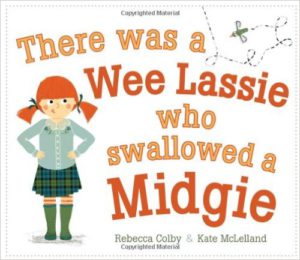 In Rebecca Colby’s hilarious twist on a much-loved rhyme, the wee lassie swallows a succession of Scotland’s favourite creatures to catch that pesky midgie – including a puffin, a Scottie dog, a seal, and even Nessie! Kate McLelland’s funny, engaging illustrations bring to life this uniquely Scottish version of a classic rhyme.
Rebecca Colby and Kate McLelland are published by Floris Books.
Recipe from Sue Lawrence
Ingredients
125 g / 4½ oz unsalted butter
1 kg / 2¼ lb golden granulated sugar
300 ml / 10 fl oz full-fat milk
200g / 7 oz condensed milk (half a tin)
1 – 2 tsp pure vanilla essence
Method
Place the butter in a large heavy-based saucepan. Melt over a low heat. Add the sugar, milk and a pinch of salt and heat gently until the sugar is dissolved, stirring occasionally. Once it has dissolved, bring to the boil and simmer over a fairly high heat for 8-10 minutes, stirring often. Add the condensed milk, stir well then simmer for a further 8-10 minutes (it should bubble, but not too fiercely), stirring constantly. After 8 minutes, test if it is ready. What you want is the ‘soft ball’ stage. On a sugar thermometer, it should read 115 degrees Celsius. Remove from the heat at once and add the vanilla (or other flavourings). Using an electric beater, beat on medium for 4-5 minutes just until you feel it begin to stiffen a little and become ever so slightly grainy. Pour immediately into a buttered swiss-roll tin (23 x 33 cm) and allow to cool. Then mark into squares or oblongs when it is almost cold. When completely cold, remove and store in an air-tight tin or wrap individually in waxed paper.
The scene is a large garden somewhere in Scotland on a warm, summer afternoon. The date is circa 1965. The occasion is the church garden fête. I remember so vividly queuing up (probably in my best cotton frock) at the cake and candy stall before the fête had even been opened with my 3d – or whatever – to buy a bar of tablet. And I was not alone. Tablet, neatly wrapped in waxed paper was first to sell out at any fête, sale of work or bazaar and the people in the queue stretching past the bric-a-brac and tombola stalls invariably ignored the lady in the big hat who was officially opening the fête, while attempting (politely – it was a church fête, remember) to edge up the queue a little more.
Fast forward some decades. These days when invited to help at my church fair or coffee morning I am often asked to manage the cake and candy stall. The scene might be inside a hall instead of outside on rolling lawns, but the spirit is still the same. The tablet is always first to go – and there is never enough.
Almost unknown south of the border, tablet is one of Scotland’s oldest types of confectionery. There is reference to it in Marion Lochhead’s book, The Scots Household in the Eighteenth Century. By 1929, when F Marian McNeill wrote her book, milk had been added – her recipe entitled ‘Scots tablet’ calls for granulated sugar, thin cream or milk and flavouring. For the latter, she suggests adding cinnamon, coconut, fig, ginger, lemon, orange, peppermint, walnut or vanilla.
Having been brought up on tablet embellished with nothing other than its neatly packaged waxy wrapping, I like it only with the merest hint of vanilla, pure and simple. If ever there was a childhood memory to evoke happy thoughts of sunshine, laughter and lush green gardens, it is an indulgent bite of tablet. I leave the rather more rarefied confections such as madeleines to Proust.
 Sue Lawrence is a renowned food writer, journalist, broadcaster and former winner of BBC TV’s Masterchef. Her cookery titles include The Sunday Times Cookbook (1998), Sue Lawrence Book of Baking (2003), A Cook’s Tour of Scotland (2006), and Scottish Baking (2014). Fields of Blue Flax is her debut novel, in which dark Victorian secrets mirror the pattern of betrayal and deception in the present.
Fields of Blue Flax is published by Freight Books.
Recipe from Jane Cheape
Submitted by Acair Books
Ingredients
4-5 lbs of Rowan berries, washed and weighed
1 lb small Bramley apples, washed and chopped
Lemon peel
Sugar
Method
Put the fruit into a large saucepan and just cover with water. Simmer until it is pale and pulpy and the liquor has turned a rich red – 4-5 hrs.
Overnight, strain the contents through a jelly bag or a sieve lined with muslin. A ‘J’ cloth will do. Do not be tempted to squeeze or press the fruit. This results in a cloudy jelly.
Measure the juice. To each pint of juice add a pound of sugar and a strip of lemon peel. Stir over a low heat in a large, clean saucepan. When the sugar has melted allow to boil. Chill 2 saucers in the fridge. Check for a set after 15- 20 minutes. The mixture will begin to show a rolling boil which indicates it is near setting. Test by putting a little jelly onto a cold saucer. Give it a push and if it wrinkles you have a set.
Skim any scum off the surface, remove lemon peel and pour into small pots. Cover when cold.
There are a few telling remains of an old house across the track here; smooth, heavy washed pebbles which once held down a thatched roof with heather ropes, fragments of pottery and china now buried in the earth which once adorned a dresser. Most conspicuous are the rowan trees, bent with age but still giving a brave flurry of berries. The rowan tree, sorbus, was believed to protect against witchcraft and was planted at the gable of a house for that purpose. With its white flowers and red berries, each with a tiny five-pointed star, they indicate human habitation in the Highlands more emphatically than any gloomy rickle of stones. So as I gaze into my little pots of clear, blood-red jelly I’ll quietly celebrate with Lady Carolina Nairne who published her poem The Rowan Tree in 1822.
Oh rowan tree, oh rowan tree,
Thoul’t aye be dear to me.
Entwin’d thou art wi’ mony ties’
O’ hame and infancy.
And those Bramleys, small, misshapen, sometimes scabby, strangely greasy, return me not quite to infancy but to a job as a teenager picking apples in a Kentish orchard. We were provided with a ladder and a sizing device consisting of a metal ring mounted on a wooden handle. Those apples that passed through were rejected by the market and packed separately into old wooden boxes. Some of them were left at the gate or deposited in Church porches for anyone to take. They were wild food, of a type. This year I was given a bag of Fife-grown Bramleys. Next year the apple tree I planted in 2011 to celebrate 40 years of coming to the Scottish Highlands should fruit, just a few yards from the ancient rowan trees. I hope so.
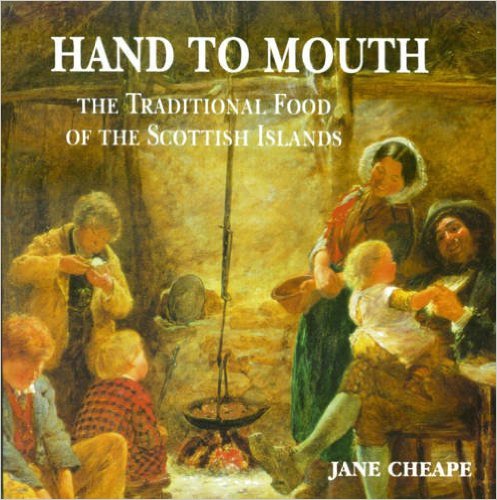 Jane Cheape is the author of Hand to Mouth: The Traditional Food of the Scottish Highlands, a readable and informative book on the development of food preparation
Jane Cheape is published by Acair Books.
Recipe from Catherine Simpson
Submitted by Sandstone Press
Ingredients
1 white onion
2 cloves of garlic
A few glugs of olive oil
8 pork ribs
Half a jar of passata
500 g of fresh tomatoes, liquidised
500 g of dried pasta
Method
Finely chop onion and gently fry in olive oil. Add garlic and continue frying. Add pork ribs and continue frying for 10 more minutes. Add half jar of passata and the liquidised tomatoes and leave to simmer for twice as long as a soap opera omnibus.
Boil pasta, drain and mix with sauce.
In my novel, Truestory, Larry, an itinerant stranger fresh from the pub, claims to make a ‘world famous pasta sauce’ and goes on to demonstrate how to do it.
In fact Larry’s sauce is based on the sugo made by my Italian mother-in-law, Rosa, every Sunday for lunch in her flat in Leith. Rosa does not use recipes; she works by sight, taste and smell, so my instructions here necessarily involve some guess work. As a rule there are meatballs too, but how these succulent delicacies come about remains a mystery to everyone but Rosa.
Rosa produces delicious meals from a kitchenette not much bigger than a wardrobe from which she pokes her head every minute or two to catch up on the latest soap opera goings-on. She shakes her head at the telly, which is balanced on a great display cabinet full of glasses and ancient bottles of liqueur, and announces: ‘He’s a bad-a man.’ Then she shrugs as though all hope is lost for humanity. She wipes her hands down her pinny, and in despair declares that the sugo is ‘no very good’ this week – which is apparently all the fault of the meat, the tomatoes, the oil, the weather, her health, or any number of other reasons. Then with a glum expression and a: ‘I cannae help it’ she disappears back into the kitchenette to stir the sauce and clatter a few pans.
The pasta is served with crusty bread and a tossed salad. When I first joined the family for lunch twenty-five years ago I was told in no uncertain terms that I was eating the salad all wrong. ‘No! No!’ shouted Giuseppe, my late father-in-law, ‘not like that!’ and I was ordered to put my knife and fork down and pick the salad up with a fistful of bread. I did as I was told.
Sometimes the meal is served with a glass of Barolo but Rosa thinks Barolo is too strong. She rubs her stomach and says: ‘I cannae help it,’ as she dilutes the rich red wine with a great glug of Irn Bru.
 Catherine Simpson has been shortlisted for the Bristol Prize and the MsLexia Novel Award. Her debut novel, Truestory is by turns blackly comic, heart-breaking and heart-warming. It looks at what happens when sacrifice slithers towards martyrdom, and, ultimately, it is a tale of hope.
Catherine Simpson is published by Sandstone Press.
Recipe from Colin, Social Bite Assistant Chef
Submitted by Freight Books
Ingredients
2 mackerel fillets
2 tsp red pesto sauce
8 baby potatoes, cut in half
150 g frozen peas
8 cherry tomatoes, cut in half
Lemon wedges
Method
1 . Place your mackerel fillets on a chopping board, skin side up. Use a sharp knife to score the skin 3 times, but don’t cut too deeply or the fish will fall apart. Spread a teaspoon of red pesto sauce on each fillet and leave in the fridge for at least an hour.
2 . When you’re ready to eat, preheat your oven to 180 degrees.
3 . Place the potatoes in a pan of cold water, and bring to the boil. Lower the heat and simmer for around 10-12 minutes.
4 . Place fish on a tray and cook in the oven for 8-10 minutes.
5 . Boil the peas for about 3 minutes, then drain.
6 . Heat up a tablespoon of olive oil in a pan, add the peas and cherry tomatoes and cook for 3 minutes. Season with salt and pepper. Then plate up and garnish with lemon.
I spent 16 years of my life living on a bus and travelling around Britain. It was a fun time for me, but when the hangover wore off and I realised I was 36 with no home or job to come back to real life with, I was in a bit of trouble. I moved in with a girlfriend and made ends meet however I could, but I became homeless when I fell out with my girlfriend 5 years ago. I lived on the streets with a pet dog and tried to crash on couches and in hostels when I could.
Eventually I started selling the Big Issue on street corners. However, 2 years ago, I heard about Social Bite and managed to get a job there being a kitchen porter, a few hours a day, with the promise of full time hours as soon as a position was available. True to their word, I’m now working full time in the central kitchen where I make all of the panini and focaccia breads, and live with my mate Joe who works there too. I’m also now in a great relationship with my girlfriend Sam who stays in Dundee, where I’m from, and once Social Bite opens a store in Dundee in the next year or two, I will get to move up there to be with her full time and work in the shop.
 Colin is a contributor to The Social Bite Cookbook. Social Bite are a Social Enterprise who train and employ people from backgrounds of homelessness. In this book, head chef Michael Thomas and his five apprentices – Joe, John, Sonny, Iain and Colin – combine the principles that they learned whilst living on the streets with their newfound skills as trained chefs to create delicious recipes for under £5. This is a one-of-a-kind illustrated recipe book where you can read the inspirational stories of how the contributors have transformed their lives, alongside 36 delicious, easy-to-make new recipes.
The Social Bite Cookbook is published by Freight Books.
Recipe from René La Sagne
Submitted by Waverley Books
Ingredients
500 g minced lamb
1 onion, sliced in circles
Salt and pepper
Lamb stock or good gravy, about 1 cup
6 large potatoes, boiled, mashed and cooled
25 g butter
Method
Brown the minced lamb in its own fat. Add the onion and fry until soft. Place in a pie-dish. Add enough gravy or stock to moisten, but don’t make it too runny. Cover with cold mashed potatoes. Dot potatoes with butter and bake for 40 minutes at 190 degrees Celsius/gas mark 5 until brown.
This recipe for Scotland’s national dish, mince, comes from my first book The Complete Book of Mince which was written by me, René La Sagne. My book was very nearly almost an international bestseller when it was published. The Sun said about me ‘René is The Prince of Mince’, and as a result many people tried to find my restaurant in Paisley – ‘Maison de Mince’. My book sold very well in Paisley and on its publication STV news made a special piece about mince and my book in their ‘And finally’ slot. I was a TV celebrity (mince) chef!
Mince for me is truly special. I grew up in Filo-et-Choux-sur-L’Eau in La Sagne, Switzerland where mince is not a national dish. I met my Glaswegian wife on holiday and she brought me home to Paisley, opened our restaurant, and taught me mince.
Here I share with you my Shepherd’s Pie recipe.
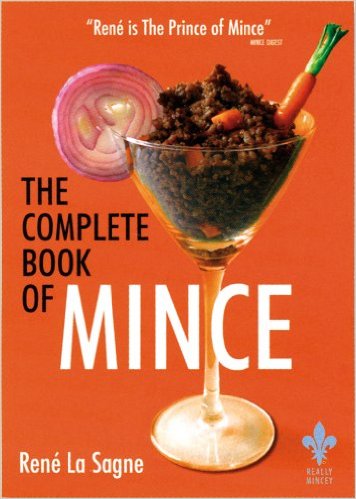 Brighten your day and life with this funny book full of insights on life while you cook the nation’s favourite staple – mince – in 72 different ways. Includes 72 recipes for mince: turkey, beef, chicken and vegetarian recipes. This hilarious cookbook explores the life of René La Sagne, his café that serves mostly mince in Glasgow, and expert tips on serving mince to a nation that prizes mince above all else.
René La Sagne is published by Waverley Books.
Recipe from David C. Flanagan
Submitted by Fledgling Press
Ingredients
2 large onions
4 oz ground cashew nuts
4-6 oz grated Cheddar cheese
One teaspoon mixed herbs (optional – smoked paprika)
Seasoning
Olive oil
2 oz fresh brown breadcrumbs
2 eggs
Optional – 1 teaspoon of yeast extract, or French mustard
Method
Peel and chop the onions and cook in the olive oil until golden. Beat the eggs. Add to the remaining ingredients, mix well and spread in a greased baking dish. Cover top with foil and bake in oven at 200 degrees Celsius/gas mark 6 for 30-40 minutes. Foil can be removed for the final five minutes to brown top. Serve with boiled or mashed potatoes and veg.
I became a vegetarian when I turned 16. As an animal lover who had always struggled to eat meat as a child, particularly if I gave too much thought to its origins, it seemed like a logical choice. I’d also lost my dad to a heart attack when I was seven, so the health benefits of vegetarianism appealed almost as much as the animal welfare aspects.
My mum, after a lifetime of cooking traditional Scottish mince and tatties, beef stews, roasts, sausages and a variety of fish dishes, took it all in her stride. Indeed, she opted to become vegetarian herself, obtaining a selection of slightly funky looking 70s cookbooks that were apparently written by ‘hippies’.
Many of the earnest recipes in those books were industrially healthy – heavy on wholemeal, or just heavy – and proved too much of a palatability challenge for even the most committed young veggie. But after weeks of experimentation, my mum had collated a selection of the best dishes, including a simple, but tasty, recipe for cashew nut roast.
I took the recipe with me when I went off to study journalism in Edinburgh and, when I wasn’t eating beans on toast, I’d cook the nut roast in my flat. Not only was it a taste of home, it probably kept me alive.
Decades later, I’m still making, eating and enjoying cashew nut roast. My wife – not a vegetarian – mostly cooks it these days and loves it. My mum, still vegetarian and now well into her 80s, has never tired of it either. For me, it represents family, comfort and, fundamentally, a lifestyle choice.
 A journalist living in an island community, David C. Flanagan is the author of Board. Warm, funny, touching and honest – with a strong dose of adrenaline – Board explores loss, ego, fear and fatherhood, charting a quest for inner peace against a backdrop of thundering Atlantic waves.
David C. Flanagan is published by Fledgling Press.
Recipe from Fiona J. Houston
Submitted by Saraband Books
Ingredients
Small basket of young nettles, roughly chopped
2-3 medium potatoes, roughly chopped
2-3 medium onions, roughly chopped
2-3 pints/1- 1 ½ litres water or vegetable stock
Salt & pepper
Butter
Method
Wearing gloves, cut or pluck a small basket full of young nettles, or, if they are older, nettle tips. Gently soften onions in butter. When they are transparent, add the potatoes and some water or vegetable stock and simmer until they are soft before adding the chopped nettles. Cook a further few minutes until the nettles have softened but not lost their bright green colour. Blend until smooth with a hand-held machine, or simply break up with a potato masher until there are no large lumps.
When I spent a year re-creating the 1790s lifestyle of my ancestor, a Scottish schoolmaster’s wife, I either grew or foraged for almost all of my food – apart from buying oats and barley by the sackful, keeping chickens and bartering for dairy goods.
Until late spring I had plenty of winter vegetables and stores of dried fruit. But by May I was facing the ‘hungry gap’, that part of the season when the old stores are gone, but there is nothing new to harvest; the kale and cabbages are not yet ready to eat. This is the time of year when when nettles come into their own.
As soon as there were a few inches of growth on the nettles in my patch, I was making soup with them (as I do every year!). It’s easy to make, tastes delicious, and it was once a staple of the Scottish diet. The taste is rich, slightly astringent, and deeply evocative of wild places. Nettles can be used in many recipes, cooked as you would prepare spinach; for example in a frittata, or simply as lightly cooked greens. Nettle tea is a favourite, too.
Nettles are not just tasty but can be beneficial as a natural diuretic, in aiding digestion, and as a rich source of vitamins and minerals, including iron. By strimming a nettle patch you can extend the season to the whole summer, with a steady supply of young growth.
 Fiona J. Houston is the author of The Garden Cottage Diaries. She is an educationalist, museum researcher, feature journalist, grandmother and campaigner for healthier, sustainable lifestyles and a greener, cleaner world. For a full year, Houston carried out an extraordinary experiment, immersing herself in the 1790s lifestyle of her rural ancestors. The Cottage Garden Diaries is her quirky, lively and down-to-earth account, packed with history, folklore, facts, practical tips and curiosities.
Fiona J. Houston is published by Saraband Books.
ALSO ON BOOKS FROM SCOTLAND
-


David Robinson Reviews: From Scotland with Love by Fred Bridgland
‘There are so many unsung heroes in Fred’s book that I almost lose count.’
-

Winter Round Up of New Scots and Gaelic Books
‘what would happen if someone really scrieved in thir ane langwij / didn’t turn on their mouth lit i …
-

David Robinson Reviews: Blurred Faces by Allan Radcliffe
‘Radcliffe writes with an enviably economical and engaging style.’
-

Alfred Buckham: Daredevil Photographer
‘ALFRED BUCKHAM (1879–1956) was a daredevil photographer. A maverick of early aviation, he created h …
-

‘She is still walking but he has stopped. She turns to find that he is waiting for a response to som …
-

David Robinson Reviews: Upon a White Horse by Peter Ross
‘Ross is always lucid, almost reverent, about the whole process of archaeological discovery.’
FEATURED AUTHOR:
Todd Westbrook

Todd is a writer lucky enough to have appeared in newspapers, magazines, agencies and online outlets in a number of countries and across a wide range of subject areas. His first book, the non-fiction work Revolution, was published in October 2020. He f …
FEATURED PUBLISHER:
Bright Red Publishing

Bright Red Publishing is an independent educational publishing company based in Edinburgh with our own distribution warehouse in Fife. We are a small, but perfectly formed, team of seven and we manage every part of our publishing process here in Scotla …