


ABOUT THIS BOOK
PUBLISHER: Neil Wilson Publishing
FORMAT: Electronic book text
ISBN: 9781906000950
RRP: £9.99
PUBLICATION DATE:
September 23, 2016
BUY THIS BOOK
As an Amazon Associate and Bookshop.org affiliate we earn from qualifying purchases.
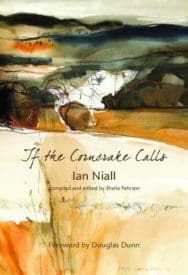
If The Corncrake Calls
Ian Niall
Sheila Pehrson
Barbara Greg
When the Scottish writer John McNeillie died on the 24th June 2002 aged 85, he left behind a legacy of over 40 books, several of them minor classics, and several decades of weekly journalism in the dentist’s favourite sedative, Country Life. Almost all were written under his pen name, Ian Niall. He made his debut at the age of 22 when Putnams published his novel Wigtown Ploughman: A Part of His Life in 1939, a Scottish classic that caused a national controversy and provoked improvements in social conditions. In later life John McNeillie did not like to be reminded of his ‘ferocious account of peasant life in Galloway’, as one fan described it! He saw himself differently, an essayist and a recorder of landcape and natural life. It is certainly here that McNeillie’s output is best represented and where his well crafted prose reveals the eye and the ear of a poet, a gift for telling a good story and just something of the realism that haunted his first book. The natural history essay was his true metier as found in such volumes as The Poachers’s Handbook (1950), Trout from the Hills (1961) and his memoir A Galloway Childhood (1967). Drawing on these and others of his non-fiction books, and including the first chapter of his first novel, his daughter, Sheila Pehrson, has put together an anthology that both showcases his talent and reveals the world that shaped the writer he became. John Kincaid McNeillie was the eldest son of Robert McNeillie and Jean McDougall. It was during an epidemic of meningitis, in which his younger sister died, that the infant John McNeillie was despatched from the family home near Dalmuir to be in the care of his paternal grandparents. North Clutag was the farm tenanted by his Grandfather in Wigtownshire and it was here in a horse-drawn time-warp, a world closer to the 19th century and the world of Robbie Burns than to the twentieth-century, that he was to spend the formative years of his life. Although this was a childhood marked out by separation, dislocation and loss it was also a childhood that tied him into the natural world, seasonal change, and the rhythm of farming life. It was a time he would always describe as idyllic and which he celebrated in his writing, just as Richard Jefferies and others had done before him. John McNeillie was made a Doctor of Letters by Glasgow University, for his contribution to Scottish literature, in 1998.
Reviews of If The Corncrake Calls
A compilation of John McNeillie's best nature writings drawn from his published works and articles edited by his daughter Sheila Pehrson. Illustrated by Barbara Greg. When the Scottish writer John McNeillie died on the 24th June 2002 aged 85, he left behind a legacy of over 40 books, several of them minor classics, and several decades of weekly journalism in the dentist's favourite sedative, Country Life. Almost all were written under his pen name, Ian Niall. He made his debut at the age of 22 when Putnams published his novel Wigtown Ploughman: A Part of His Life in 1939, a Scottish classic that caused a national controversy and provoked improvements in social conditions. In later life John McNeillie did not like to be reminded of his 'ferocious account of peasant life in Galloway', as one fan described it! He saw himself differently, an essayist and a recorder of landcape and natural life. It is certainly here that McNeillie's output is best represented and where his well crafted prose reveals the eye and the ear of a poet, a gift for telling a good story and just something of the realism that haunted his first book. The natural history essay was his true metier as found in such volumes as The Poachers's Handbook (1950), Trout from the Hills (1961) and his memoir A Galloway Childhood (1967). Drawing on these and others of his non-fiction books, and including the first chapter of his first novel, his daughter, Sheila Pehrson, has put together an anthology that both showcases his talent and reveals the world that shaped the writer he became. John Kincaid McNeillie was the eldest son of Robert McNeillie and Jean McDougall. It was during an epidemic of meningitis, in which his younger sister died, that the infant John McNeillie was despatched from the family home near Dalmuir to be in the care of his paternal grandparents. North Clutag was the farm tenanted by his Grandfather in Wigtownshire and it was here in a horse-drawn time-warp, a world closer to the 19th century and the world of Robbie Burns than to the twentieth-century, that he was to spend the formative years of his life. Although this was a childhood marked out by separation, dislocation and loss it was also a childhood that tied him into the natural world, seasonal change, and the rhythm of farming life. It was a time he would always describe as idyllic and which he celebrated in his writing, just as Richard Jefferies and others had done before him. John McNeillie was made a Doctor of Letters by Glasgow University, for his contribution to Scottish literature, in 1998. Foreword by Douglas DunnIntroduction1 The World of the Rabbit, the Stoat, the Pheasant â ¦ and the Ways of Fish and FishermenHere are descriptions of natural life: in woodlands and fields, and in the landscapes of mountains and water. From the hare in its form to the pigeons `carried across the undulating country by the buffeting wind' and the trout rising in the black water of a mountain lake, Ian Niall is never more in his element.2 Characters: fact and fictionSome of these men were his childhood heroes, some were kindred spirits and all we can recognise. We may have seen them loitering, just as Snib or Black Bill did, with an eye to the almost invisible main chance. On the edge of society, they are, in their way, universal characters to be found in any country village or along a road in any remote rural backwater. They are celebrated here with a knowing understanding and a gentle humour.3 Tall Trees and Bright MorningsThese memoir pieces describe the writer's growth from child to adult. They show us a solitary child, his growing attachment to the natural world, and the seasonal routine and daily rituals of a farming life more in keeping with the 19th century than the 20th.4 From the Far Moss, the Fiels and MigneintWhether it is observation of the rising hay `dotted with yellow-flowered weeds and seeding thistles', the `contour of the ground with its ridges of a past season's ploughing', the `loose stones about your heels' or a description of the awe-inspiring emptiness of a remote landscape, the importance of place in Ian Niall's writing cannot be ignored.5 First Words: Chapter One from Wigtown Ploughman: Part of his LifeThe first chapter of Ian Niall's first novel. It was published under his own name, John McNeillie, when he was 22 years old. Amongst other things it shows us how he drew upon his time at North Clutag to tell his story.Bibliography & Acknowledgements Ian Niall is the pen name of John McNeillie who wrote over 40 published works and many articles, mostly dealing with nature and the outdoors. Ian Niall was one of the most important rural writers of the 20th century, in the postwar era and before the emergence of what is called 'The New Nature Writing'. Among his 40 books, and more than a million words of journalism from which one or two key collections were drawn, are several classics including most notably The Poacher's Handbook (1950), Fresh Woods (1951), and Pastures New (1952);In If the Corncrake Calls, a delightful anthology of her father's work, Sheila Pehrson has made a finely-judged selection that captures Niall's lyric voice to perfection. Niall had a genius for plain writing, just as he had for seeing into the world about him, from shore-land to moorland, by field and stream, and on into the far hills of his childhood. Sheila Pehrson's sensitivity to his writing is second to none, as clear-eyed and unsentimental as that writing itself;This is a wonder of a book of work by a writer who knew what wonder is and how to inspire it in his readers;Andrew McNeillie for the 2016 Thame Book Festival programme
Ian Niall
Ian Niall is the pen name of John McNeillie who wrote over 40 published works and many articles, mostly dealing with nature and the outdoors.
OTHER BOOKS BY THE SAME AUTHOR

ALSO ON BOOKS FROM SCOTLAND
-

David Robinson Reviews: The Loch of the Bees
‘The past’s current flows through the characters in his fiction so strongly that it almost becomes t …
-

The Nightkeeper’s Apprentice by Jude Reid
‘She’d never seen anything like it. The whole sky was lit up in ribbons of colour – blue, green, yel …
-

David Robinson Interviews: Gavin Francis
‘He’s not my GP so I can’t say this for sure, but based on this book – wise, informed, well-written, …
-
The Cromarty Library Circle by Shona MacLean
‘No one in the room could have been unaware of what it was that Dr Fraser alluded to. The horrors pe …
-

In Search of Gems by Kenneth Steven
‘It still amazes me that these magnificent shells grow in a river. Never mind whether they have pear …
-

Winterbourne by Elisabeth Wolf
‘The Coopers stared at each other for a second, two seconds. ‘It’s a sign—’ said Cooper.’
FEATURED AUTHOR:
Louise Welsh

After Graduating from Glasgow University, Louise Welsh realised she had serious aspirations to become a novelist; these were at odds, however, with the need to earn a living. After setting up and running a second hand bookshop for most of her twenties, …
FEATURED PUBLISHER:
Scottish Mountaineering Press

Launched in 2020, the Scottish Mountaineering Press exists to promote and share Scotland’s natural wonders, embracing the creativity born out of an explorer spirit and celebrating the joy and endeavour in a life lived outdoors. We are a wholly-owned su …