


Staying with backdrop of the Italian Resistance during World War Two, BooksfromScotland is delighted to share with you an extract from Gordon Kerr’s debut thriller, The Partisan Heart. Michael Keats is a journalist, mourning the loss of his wife who has been killed in a hit-and-run incident in the Italian countryside. When he discovers she was having an affair, he decides to travel to Italy to find out the truth behind her infidelity and uncovers a story of betrayal that goes back decades. We pick up the action when Michael has requested a meeting with the man he believes is his wife’s lover.
Extract taken from The Partisan Heart
By Gordon Kerr
Published by Muswell Press
The station bar was quiet. The waiters lounged at the till, talking to each other, glad of the rest. The gap between breakfast and lunch seemed, to some of the old- timers, at least, to get shorter every year and soon they would again be gliding across the stone floor, trays carrying impossible quantities of drinks, hands dealing out change like lightning and placing receipts on tables, or pulling the tops off bottles, always with their eyes looking in another direction, searching out the next order or the nearest short skirt.
Michael sat at a table close to the wall with a good view of the entrance to the bar and ordered his usual macchiato. ‘Dirty coffee,’ Rosa used to call it. To make identification possible, he had asked, in his letter to the man who had been with Rosa, that he carry a copy of each of two newspapers – La Gazzetta dello Sport and the London Times. This was a mixture he felt was unlikely to be found very often. The place was so quiet, however, that this fussiness seemed slightly redundant.
There was a huge clock on the wall behind the bar. The hands moved laboriously, with a loud clunking noise. It was, indeed, as if time had become audible, as if it could be heard passing.
Ten to twelve . . . clunk, clunk . . .
Seven minutes to twelve . . . clunk, clunk . . . The hands moved as if passing through something viscous and heavy. Michael began to sweat, in spite of the fact that it was chilly in the vastness of this huge edifice.
With four minutes remaining before the appointed time for the meeting, he regretted having sent the letter. He regretted having gone to Rogerson & Gilchrist, he regretted his trip to the Lighthouse Hotel. He began to feel very warm. What was he going to say to this man, anyway? ‘So, you’re the chap who was screwing my wife? Pleased to meet you.’ It was not going to be the easiest conversation. He fought for the right words, but his mind was confused and nothing of any sense was rising to the surface. Most likely, he was going to walk away without saying a word, but, somehow, for some unknown reason, he felt he had at least to see him.
Three minutes to twelve . . . he lifted his coffee cup to his lips only to find his mouth filling with the bitter dregs from the bottom of the cup.
Two minutes to twelve . . . A man came in carrying La Gazzetta and Michael sat up, but there was no English paper and he turned round and walked out again just as soon as he came in.
Three minutes past twelve . . . He checked his watch, but the bar clock was indeed correct.
Ten minutes past twelve . . . His eyes darted to his watch again and his heart sank and rose at the same time. He need not find out the truth, need not confront Rosa’s secret life.
Twenty- three minutes past twelve . . . Positive joy at the thought of not having to deal with this, of being able to luxuriate in the idea that it might not be true; he may, in fact be wrong about what had been happening in the most important part of his life.
At half past twelve he stood up and negotiated a path between the tables to the door and out through the main section of the station towards the massive exit.
He failed to notice the figure leaning on the wall just outside the bar who pulled the collar of his heavy jacket tight around his neck, threw a darting glance to his right and his left and then fell into step about twenty yards behind him.
*
His train of thought was interrupted by a plump figure making his way between the rows of desks. Bruno Barni and Michael had spent time in each other’s company on several occasions. Most memorably, they had travelled together across America with Bill Clinton’s cavalcade of journalists and hangers- on for the last month of the 1992 American election campaign. They had spent many nights carousing and bemoaning their journalistic fates in small town America and, as is always the case in such circumstances, had, on their last night in each other’s company, sworn eternal friendship. Since then they had exchanged the occasional postcard, but had always failed to meet up whenever Michael had visited Italy or when Bruno had come to London.
‘Michael, how are you?’
‘All the better for seeing you, my old friend.’ They clasped each other in a bear hug and then Bruno stepped back, holding Michael by the shoulders.
‘I was so sorry to hear about your wife, Michael. I couldn’t believe it. I still can’t.’
‘Me neither, Bruno. As you can imagine, it’s not been easy.’ Bruno put an arm around Michael’s shoulder, walking him back the way he had come.
‘Come on, let’s get out of this dump and grab some lunch. I’ll just get my jacket.’
They had almost finished their first bottle of red wine before the food arrived at the table. Michael had explained everything to Bruno and Bruno now sat shaking his head and running his hand through his thinning black hair.
‘You mean you had no idea?’
‘None whatsoever, Bruno.’ He smiled at the apparent absurdity of it. Surely you can tell when someone has fallen out of love with you? Surely you know when that someone is dreaming of a life with someone else? ‘Hey, I know what you’re thinking. How come I didn’t realise? Well, Bruno, it seems you just don’t.’ He smiled at Bruno and reached for the bottle, sharing the remnants between both glasses, at the same time indicating to a passing waiter that they were in need of another.
‘Ah, Michael.’ Bruno shook his head and stared into Michael’s eyes. ‘But, hey, you remember what we used to say whenever we hit one of those small towns in the States in ninety- two?’
They said it together, smiling at the memory: ‘It don’t get much worse than this!’
‘But look, you say you don’t know who this guy is . . .?’ Bruno said this between hungry mouthfuls of cotoletta alla Milanese and Michael recalled just how much Bruno had loved his food in America. He would start the morning with a huge pile of pancakes and maple syrup and work his way through whatever food he could get his hands on as the day wore on. Michael, a sparing eater at the best of times and especially when on the road, would look on in wonder and sometimes even disgust, as steaks, ice cream, waffles, and hamburgers would disappear in ever larger quantities into that grinning mouth. ‘You have no idea . . .?’
‘Well, I know he’s Italian. I know he wears a size forty- four jacket. I know he has expensive taste. Oh, and I think I have a name that has some kind of connection to him.’ He put down his knife and fork and searched in his inside pocket for his wallet. From it he fished out the card that he had discovered in the jacket pocket that drunken night at the Lighthouse Inn and handed it to Bruno. ‘Or it could even be him, for all I know. I found that card in the pocket of the jacket I was sent.’
Bruno, in turn placed his knife and fork on the table and took the card from Michael.
‘Massimo Di Livio, Via Broletto No. 110, Milano.’ He read from the card and then turned it over in his fingers like a playing card with which he was performing a conjuring trick. ‘I’m sorry, I don’t know the name, but I know the street. To live in Via Broletto it helps if you have a lot of money in the bank. This guy is pretty well off.’ He sat up, as if a thought had just occurred to him. ‘But, hey, here’s an idea. Why don’t I run his name through our computers back at the office and have a word with a few people? Even if this isn’t your man, he may at least be able to point you in the right direction.’
Michael concurred. ‘Well, if it’s not too much trouble . . .’
‘It’s no trouble at all, Michael. To tell you the truth, I’d like to help you get to the bottom of this. You seem a little, how do you say . . . dislocated from things, my friend. Understandably so, I might add.’
‘Yes, you’re right, Bruno,’ Michael replied, nodding and smiling slightly. ‘I think I need what our American friends would call closure.’
They finished the meal talking about the old days and took leave of each other, agreeing to speak by telephone later in the day once Bruno had made his enquiries.
Michael walked unsteadily back to the Stazione Centrale and, even after drinking a bitter espresso at the bar in which he had waited in vain earlier in the day, he dozed all the way back to Beldoro, waking with a start as the train pulled into the station. He had intended to finish his piece at the office, but he had drunk way too much and would need to sleep it off before he could concentrate sufficiently to put together something cogent.
His shadow in the heavy jacket who had followed him to the newspaper office and sat at a corner table of the restaurant, slowly eating a dish of pasta, watched him climb onto the train before walking purposefully in the direction of a phone box at the exit to the station.
*
‘Michael! I so enjoyed our lunch. I am just sorry it couldn’t have taken place in happier circumstances.’
Michael’s head felt fuzzy. He had lain down and almost immediately fallen asleep on the bed when he had returned to his room. Just before the telephone’s shrill ring had jarred his senses around seven, he had once again found himself in the blue room with Rosa’s flailing body speeding towards him, but never quite reaching him, on the bonnet of the blue car.
‘But let me tell you, I’ve found something on your Massimo Di Livio. Something very interesting.’
‘Yes, go on, Bruno. What have you got?’ He rubbed the sleep from his eyes, making himself comfortable against the headboard of the bed.
‘Now look, Michael, you said that this man was a big man?’
‘Yes . . . the jacket was a size forty- four. I don’t know what that is in European sizes . . .’
‘Oh, don’t worry, Michael, I’ve bought clothes in England. Forty- four is a substantial man. Not as substantial as me, of course, but that only comes with a lot of practice.’
Michael smiled.
‘No.’ His voice turned serious now. ‘This Di Livio character, he is known to us. In fact, he is known also to the police; perhaps a little more intimately than we know him.’
‘What do you mean, Bruno?’
‘Well, I asked around – as you know I have some friends in the police – and I also had a look in our archives and came up with some interesting stuff about signor Di Livio.’ There was a moment’s silence and Michael guessed that Bruno was probably taking a sip from a glass of the bourbon he had grown to like so much in the States and which had been the cause of so many hangovers during those few weeks. ‘For example, in 1968, he was suspected of being one of the henchmen of a guy running a protection racket in Turin. Three of his colleagues went to prison. He walked.’ Another pause, another sip. ‘In 1973, he was charged with rearranging the face of another character in the same line of business. Again, he walked – this guy has good lawyers, believe me. He stayed clean for ten years and then in 1979 he did time for some very tricksy financial dealings. His crime had gone legit,’ – Bruno enjoyed using the argot of the American crime novels he loved so dearly – ‘but signore Di Livio hadn’t. He did three years and since he came out he seems to have kept his nose clean. He is very careful.’
‘Good God, Bruno. That’s unbelievable! How could Rosa get mixed up with such a man?’ Michael was by now sitting bolt upright on his bed.
‘That’s just it, Michael. I’ve asked around and I also found some pictures. This is a seventy- year- old man who is as thin as a string of spit and is no more than five feet five inches tall. And if that wasn’t enough to convince you, well, let me just say that from the conversations I have had, Di Livio’s proclivities lie on the more, erm, muscular side, if you get my drift. No, believe me, Michael, this is definitely not your man.’
The Partisan Heart by Gordon Kerr is published by Muswell Press, priced £12.99
Karen Campbell may be best known for her crime series starring her detective Anna Cameron, but, as Alistair Braidwood writes, she is fast becoming a writer of real range and emotional power.
The Sound of the Hours
By Karen Campbell
Published by Bloomsbury
Sometimes a novel comes out of nowhere to delight and surprise you, not following any current trends or themes. That is the case with The Sound of the Hours, Karen Campbell’s latest. Set in Italy in 1943, just after the arrest of Mussolini, it uses an unlikely romance, set against the backdrop of World War II, to examine religion, politics, race, family, and what it means to belong. Perhaps the least surprising thing about it is that Campbell is the author as there are few writers who have the range of subjects and styles evident in their bibliography as she now does. The Sound of the Hours is her seventh novel and, after her initial series of Glasgow-based police procedurals, she wrote This Is Where I Am, a powerful account of the relationship between a Somalian refugee and his mentor, (which was a BBC Radio 4 Book at Bedtime). She followed that with Rise, a novel that takes some of the familiar themes and tropes of Scottish literature and art and plays with them to great effect.
The Sound of the Hours is the first time Campbell takes her readers outside of Scotland (with a couple of notable exceptions), setting the majority of the story in Barga, a Tuscan town with strong Scottish connections to this day. She has clearly got a keen sense of the place and its history – knowledge that you suspect comes not only from time spent there, but also from extensive investigation. This allows you to immerse yourself in this world, and you feel you could find your way around the streets, and to the houses, markets, churches, and graveyards that are portrayed, with little trouble. Yet, it’s a novel that wears such research lightly, getting the balance between entertaining and informing just right. As with all of Karen Campbell’s novels, her characters are the key.
We are introduced to seventeen-year-old Vittoria ‘Vita’ Guidi and her family whose split loyalties and the tensions that result mirror the Italy of the day. It is a country that became disputed territory in the last throws of the Second World War, with German occupation under threat from an encroaching United States Army. Many Italians became pawns in this dangerous game, having to react to changes in who was in charge on a regular basis. Campbell captures the pressures on civilians as war rages around them, and how that heightens day-to-day living as well as emotions. Vita and her family are caught in the middle and have to find new ways to survive.
The other strand of the novel is the story of Frank Chapel, a ‘Buffalo Soldier’, the nickname for African American U.S. Army personnel. Frank is an educated liberal, a Berkeley College straight-A student who believes he is destined for officer status but soon finds out that the army is not going to allow him to reach the higher ranks, and he finds himself the victim of institutional racism for the first time in his life. Frank has to quickly adjust his view of not only what the army has to offer, but also how his life may unfold.
Campbell puts us in the boots of men fighting for a country that does not let them vote. Even after swearing an oath to lay down their lives they find themselves eating and sleeping in separate areas from other soldiers. When even the army becomes segregated it becomes clear where cultural priorities lie. Shipped to Italy to help liberate the country from German occupation, and make sure that Mussolini and his acolytes remain out of power, Frank finds himself in a strange land where his uniform creates one response, the colour of his skin another.
When Frank and Vita meet (an unforgettable scene) it is clear that theirs is a relationship that will have to overcome huge odds, and it unfolds beautifully with Campbell eschewing the easy and obvious route of love conquering all for a more nuanced and believable story. Rather it’s the other strands of their stories that are brought to the fore as they are separated almost as soon as they meet, making not only for a more interesting read, but adding a romantic tension and suspense that it would not have otherwise. Vita’s priority is to keep herself and her family safe, while Frank must negotiate fighting battles internally and externally as he tries to make his way back to her.
As I mentioned earlier, Campbell uses this relationship to examine wider concerns. She looks at how carrying fundamental positions and prejudices, whether religious, political, or ideological, can tear families, and nations, apart, themes that have rarely been more expedient than they are today. She also considers the role of women in times of war, and how that alters family dynamics and relationships. As the boys play at soldiers the women have to not only patch them up, but also try and live as normal a life as possible all the while fearing the worst. Questions of heroism and sacrifice, and what forms they take, are never far from the surface.
If you can imagine Captain Corelli’s Mandolin meets Catch 22 you’ll have some idea as to what The Sound of the Hours is like. There is the romance of place and its people of the former, the absurdity and madness of war of the latter, and the clash of cultures of both. It’s a novel to get lost in – one that transports you to another time and place, and you cannot help but become involved and emotionally invested with the lives of those who live there. It’s also a timely reminder that any discussion about the best contemporary Scottish novelists should include Karen Campbell.
The Sound of the Hours by Karen Campbell is published by Bloomsbury, priced £14.99
Scotland’s excellent crime writing community have been knocking it out the park in 2019, so if you’re really having trouble deciding what book to take to the beach, the hills, the tent, the caravan, or the swanky hotel (if you’re pushing the boat out), then look no further than this dazzling dozen . . .
Breakers by Doug Johnstone (Orenda Books)
Doug Johnstone’s latest novel has been generating the kind of reviews every writer dreams of, has been longlisted for the McIllvanney Prize, and comes recommended from the likes of Mark Billingham, James Oswald and Ian Rankin – we’re not going to argue with those plaudits!
The novel follows the troubled seventeen-year-old Tyler, who lives in one of Edinburgh’s most deprived areas, is caring for his sister and his drug-addict mum, and is bullied into robbing rich people’s homes by his older, tougher siblings. When one robbery goes disastrously wrong, Tyler not only has the the police to worry about but the ruthless crime lord, Deke Holt. Then, he meets posh girl Flick, and he thinks she may just be his salvation … unless he drags her down too.
Fallen Angel by Christopher Brookmyre (Little, Brown)
Christopher Brookmyre keeps getting better and better with each new novel, and he’s unafraid to push what can be done in crime writing. His new novel, Fallen Angel, also McIllvanney-longlisted, sees his characters in sunnier climes, but of course, darkness lurks . . .
When new nanny Amanda accompanies the accomplished Temple family to their seaside villa she finds that beneath the smiles is a family tragedy from the past. She begins to suspect one of them might be hiding the truth about what happened sixteen years ago, and finds herself in dangerous waters.
As ever, Brookmyre keeps the reader on their toes with this one – it’s full of brilliant twists and turns.
Thunder Bay by Douglas Skelton (Polygon)
Douglas Skelton leaves behind his familiar Glasgow settings for this pitch-perfect thriller set on the fictional Scottish island of Stoirm.
Reporter Rebecca Connolly sniffs a good story and travels to Stoirm when she hears that Roddie Drummond – charged but found Not Proven for the murder of his lover years before – is returning to the island for his mother’s funeral. Defying her editor’s wishes, Rebecca digs into the secrets surrounding Mhairi’s death, and her mysterious last words of Thunder Bay, the secluded spot on the west coast of the island where, according to local lore, the souls of the dead set off into the after life. Then another body is found . . .
With his signature jet-black humour, and the stamp of approval from a McIllvaney longlisting, this is the novel which should see Skelton take his rightful place at the top of Scottish crime writing.
Death at the Plague Museum by Lesley Kelly (Sandstone Press)
If you haven’t caught up with Lesley Kelly’s Health of Strangers series yet, then now is the time! The North Edinburgh Health Enforcement Team is an uneasy mix of seconded police and health professionals charged with dealing with The Virus, a mutant – and deadly – strain of influenza that is running riot in the near future.
Death At The Plague Museum is book three, and follows the investigation of the deaths or disappearance of three senior civil servants whose brief is management of the deadly Virus. Bernard, Mona and the rest of the hard-pressed Health Enforcement Team find themselves fighting not just the pandemic, but government secrets.
A Breath on Dying Embers by Denzil Meyrick (Polygon)
Released this month, the much-loved DCI Daley is back, along with fan favourite DS Scott, in this McIllvanney-longlisted seventh book in this series, which began with the bestselling Whisky From Small Glasses.
The UK Government are taking a high-powered group of businessmen and women on a tour of the British isles in a luxury cruiseship as part of a push for global trade. When they dock in Kinloch, one of the crew goes missing, and an elderly local ornithologist disappears, which DCI Daley must investigate. Then the arrival of a face from Daley’s past sends him into a tailspin while the lives of the passengers and crew of SS Great Britain, as well as the country’s economic future, hang in the balance.
Early reviews suggest that this is Meyrick’s best book yet, and for his diehard fans things might get emotional . . .
The Unquiet Heart by Kaite Welsh (Tinder Press)
Who doesn’t like a bit of murder, mystery and derring-do set in Victorian Edinburgh? Kaite Welsh’s Sarah Gilchrist series gives us all those delicious ingredients and more.
Sarah Gilchrist is a woman determined to make her own way in life, and to become a doctor, though her family insists she must marry the dull Miles Green. Yet, when a housemaid in Miles’s family is murdered, and it is Miles himself who comes under suspicion, she comes to his aid. She may not want to marry him, but she won’t see him accused of murder, especially when she has her own suspicions about the killer’s identity.
The Peat Dead by Allan Martin (Thunderpoint)
Scotland is not short on its fictional detectives, but we think it worth your time to introduce yourself to Detective Inspector Angus Blue, sent over to Islay to investigate when five corpses are dug up by a peat-cutter. All of them have been shot in the back of the head, execution style. It is soon discovered that the men were killed on a wartime base over 70 years ago, and that despite the intervening years, the truth behind the men’s deaths should stay hidden.
The Peat Dead has been shortlisted for the inaugural McIllvaney debut prize to be handed out at this year’s Bloody Scotland Festival in September. That’s a good enough endorsement for us!
Fixed Odds by William MacIntyre (Sandstone)
Robbie Munro returns in this fifth outing, defending George ‘Genghis’ McCann on a charge of burglary, and Oscar ‘the Showman’ Bowman, snooker champion, on betting fraud. Genghis has stolen – and lost – a priceless masterpiece, while Oscar doesn’t seem to have a defence of any kind. With another mouth to feed and promises of great rewards if he finds both painting and defence, Robbie has never been more tempted to fix the legal odds in his favour.
If you like your legal thrillers with pace, wit, good humour, and lots of fun, there is no better place to start than here!
Mr Todd’s Reckoning by Iain Maitland (Contraband)
We had to include this new novel from our friends at Contraband, despite the fact that it isn’t by a Scottish author, or has a Scottish setting. But it’s been garnering great reviews, and is surely ripe for adaptation. We’re keeping our fingers crossed!
Behind the normal door of a normal house, in a normal street, two men – father and son – are slowly driving each other insane.
Mr Todd is at his wits end. He’s been robbed of his job as a tax inspector and is now stuck at home with his son, Adrian, who has no job, no friends and stays at home all day, obsessively chopping vegetables and tap-tap-tapping on his computer. And he’s getting worse, disappearing for hours at a time, sneaking off to who-knows-where.
One of them is a psychopath and has developed a taste for killing. And he’ll kill again.
Worst Case Scenario by Helen Fitzgerald (Orenda Books)
Helen Fitzgerald should be on everyone’s bookshelves. If you are interested in writers who are bold, exciting and unapologetic with their themes, characters and humour, then look no further.
Mary Shields is a moody, acerbic probation officer, dealing with some of Glasgow’s worst cases, and her job is on the line. Liam Macdowall was imprisoned for murdering his wife, and he’s published a series of letters to the dead woman, in a book that makes him an unlikely hero – and a poster boy for Men’s Rights activists. When Liam is released on licence into Mary’s care, she develops an obsession with Liam and his world. Then her son and Liam’s daughter form a relationship, and Mary will stop at nothing to impose her own brand of justice with devastating consequences. . .
February’s Son by Alan Parks (Canongate)
Bruised and battered from the events of debut Bloody January, Detective Harry McCoy returns for another breathless ride through the ruthless world of 1970s Glasgow.
Bodies are piling up with grisly messages carved into their chests. Rival gangs are competing for control of Glasgow’s underworld and it seems that Cooper, McCoy’s oldest friend, is caught up in it all. The laws of the street are changing as the wealthy and dangerous play for power. And the city’s killer continues his dark mission. Can McCoy keep his head up for long enough to solve the case?
Dark, pacy yet shot through with compassion on how justice is really served, Harry McCoy might just become your new favourite literary detective.
Perfect Crime by Helen Fields (Avon)
Helen Fields is now onto book five of her DI Callanach thrillers, and they keep getting better and better . . .
Stephen Berry is about to jump off a bridge until a suicide prevention counsellor stops him. A week later, Stephen is dead. Found at the bottom of a cliff, DI Luc Callanach and DCI Ava Turner are drafted in to investigate whether he jumped or whether he was pushed. As they dig deeper, more would-be suicides roll in: a woman found dead in a bath; a man violently electrocuted. But these are carefully curated deaths – nothing like the impulsive suicide attempts they’ve been made out to be.
Little do Callanach and Turner know how close their perpetrator is as, across Edinburgh, a violent and psychopathic killer gains more confidence with every life he takes…
We don’t mind admitting that BooksfromScotland have been on tenterhooks all year for the publication of Lucy Ellmann’s new novel, Ducks, Newburyport. The more we heard about it, the more we were intrigued. So we’re so thrilled it’s now on the bookshelves, and even more thrilled that Lucy Ellmann agreed to speak to Lee Randall about her thoughts on the writing life, and particularly on the conflict between the private world of creating and the public world of promotion.
Ducks, Newburyport
By Lucy Ellmann
Published by Galley Beggars Press
Ducks, Newburyport is full of love and grief. Its 1020 pages of stream-of-consciousness plunge in and out of the lives of a middle-aged American woman and a mountain lion. I’d just finished it when Lucy Ellmann emailed to say she’d prefer to let the book speak for itself and talk instead about the custom of sending writers to public readings and book festivals.
Fine—but I predicted we were destined to disagree. Book events are my natural habitat. I programme the Granite Noir festival, on behalf of Aberdeen Performing Arts, and frequently chair book events.
Lee Randall: I was struck by the strength of your feeling that festivals and other events don’t serve writers. Why not?
Lucy Ellmann: For one thing, writers need money. If you entice writers away from their desks, at least use it as an opportunity to shove money at them. It would also be good to give them a chance to talk to each other more. I don’t think most festivals provide for that enough, except maybe in the green room, by accident.
Randall: What would constitute a useful dialogue?
Ellmann: A conference for only writers, where you have time to talk to each other about books and the book business, and how it’s all gone to pot. The collapse of the Net Book Agreement ruined things for writers. I think it made working in publishing a lot less fun, too.
I was treated really well at Bloomsbury, especially by my excellent editor there, Alexandra Pringle. But I’m getting interested in independent publishers now, because they seem more open than mainstream places to outlandish writing. My new editors at Galley Beggar are very good, and fun to work with. This novel went through a few edits.
Randall: Editing it was time-consuming, I gather.
Ellmann: Yes, it took me at least a month to reread it every time. Fourteen-hour days.
Randall: Can you talk about the book’s technical oddity?
Ellmann: The whole form arose from my current fatigue with straight narrative, which seems sort of phoney to me.
The repeated phrase, ‘the fact that’, was there from the beginning, as an emphatic refrain. But making the whole novel one sentence—that came later.
Randall: Back to festivals and bookstore appearances, aren’t they good ways of connecting with readers?
Ellmann: Sure, but my ability to connect with most people is limited—I’m shy. The ability is in the book if it is anywhere. I don’t want to get up in front of a tough crowd and try to spout my usual insane rhetoric.
People who don’t mind [events] can do them. But if it’s going to set you back for weeks, either preparing for it, or trying to get over the mess you made of it—that’s no help.
Randall: For someone introverted, unhappy with the performative end of writing—or any art form—yeah, public events would be a nightmare. My argument is that a festival tries to create a situation where writers meet people who care passionately about their work—or people who have no idea who they are, but are converted by this exposure to thinking, “Wow, I want to read all their books!”
Ellmann: Or they think, why am I listening to this one when I came to hear the other one?
Festivals need more controversy, conflict. It’s all too optimistic! I’d like a real debate once in a while, not fake ones. I don’t like it when they get too touchy-feely, every book is good, reading is good, buy this one, buy that one. It’s demeaning to books. Every book is treated the same. It’s a way of compacting you, like a crushed car. The individuality is gone.
Randall: For some, events are an antidote to the job’s loneliness.
Ellmann: Ah, but the loneliness is why I like writing. Or aloneness anyway. I am not good with people and they need to be spared me most of the time. Reading a book is totally voluntary, so I don’t feel I’m imposing myself on anybody.
Randall: Are you good with criticism?
Ellmann: It depends how much criticism. I’m pretty easily shaken. But for some reason I am kind of immune to bad reviews! What’s hard is figuring out what the next book is. But I don’t think that’s influenced by the last book’s reception all that much.
My father [biographer Richard Ellmann] once marked some essay of mine all over in red ink, and I couldn’t look at the thing ever again.
Randall: Didn’t you get your own back by editing his Oscar Wilde biography?
Ellmann: Ha ha, yeah! At his request. He was dying, and needed help finishing the book in time. I don’t think I’ve ever used editing as a weapon—yet! But you’re right, that was potentially quite a revenge moment.
Randall: Why don’t you want to talk about Ducks, Newburyport?
Ellmann: I want a book that works on so many levels that it’s hard to talk about. Besides, you’re usually wrong about your own books. You can tell people what you thought you were doing, but that’s the bombardier’s view. You don’t know what’s happening on the ground: I hit the target, or I didn’t quite hit it. Meanwhile, there’s death and devastation all around that you never have to look at. It’s up to the victims to decide what you’ve achieved. We’ll see how they feel.
Randall: Your last novel, Mimi, included a Manifesto of the Odalisque Revolution. What kind of manifesto for change would you present to the festival industry?
Elllmann: The money. It should be in the thousands. Let’s stop pussyfooting around. Writers need heat, clothing, food, a new computer every five years or so, and as much time to write as possible. This book took six years.
Create a festival just for good books, and not necessarily books published that year—why not older books? Organisers always want to promote new stuff. Why?
Or get fifty vetted people in a room with an invited writer. Really engaged people who’ve read all the writer’s books.
Randall: And in your manifesto for publishers?
Ellmann: It’s hard to say. Multiple book deals are a way of nurturing somebody—but it’s a terrible pressure for many writers. And then the publisher often feels, “Well this isn’t quite what we were hoping for,” and there’s ill feeling on both sides. I wish they’d stop bringing out début people and then dropping them because the sales figures weren’t good—the publisher needs to take some responsibility for that. They rarely publicise literary stuff enough.
Randall: You know that’s not true and lots of books sell loads of copies.
Ellmann: Hype.
Randall: How can you say publishers aren’t putting money and marketing muscle behind writers, then complain about hype?
Ellmann: What publishers call ‘literary books’ usually aren’t. More challenging novels are a minority interest, I know. But it shouldn’t all be about sales. At The New Yorker, in the old days, the money people were on a totally different floor and had nothing to do with the editorial board. You’ve got to go back to that. Editors should not have to explain to every marketer why they’re buying a book.
Randall: It strikes me you’d prefer to be an old-fashioned author, a Currer Bell, left to herself to write. The book sinks or swims without you having to do in-person promotion.
Ellmann: Yes. Anonymity might be the way to go. Or a hologram.
Ducks, Newburyport by Lucy Ellmann is published by Galley Beggars Press, priced £14.99
This year, Edinburgh University Press celebrates 70 years of exceptional publishing. They tell us their story by crunching some numbers . . .
- Founded in 1949, we are among the leading academic publishers in the UK, rooted within one of Britain’s oldest and most distinguished centres of learning.
- Our 2 homes – in 2014 we relocated from our long-term residence at George Square to The Tun at the bottom of the Royal Mile. With more space to grow (and easy access to Arthur’s Seat) it’s been an excellent move for the business.

- We’re multiplying! Investment in staff to expand our publishing programme and outreach has led us to grow from 26 people in 2009 to 39 in 2019. Combined, our current team have worked at EUP for a mammoth 385 years.

- 2018 was a milestone year for us – we published 200 new books for the first time and reached £3 million in revenue for the first time.
- Our 70 years of publishing have produced over 2,300 journal issues, 22,000 articles and over 10,000 book reviews
- From Singapore to Gdansk and Chicago to…Preston, this year our editors and marketers will be travelling to 46 conferences in 13 different countries.
- Our longest running journal is Archives of Natural History – first started in 1936 and published by us since 2008.
- We are proud to put our authors at the centre of all we do – with 5 key commitments:
1. Exceptional communication: authors know what’s happening at each stage of their project’s development, with a named contact in every department.
2. A flexible approach to publishing: open access, colour images, multiple languages – we will explore various format options to find the best fit for each project.
3. Adapting to address academic needs: we now publish every monograph as a paperback within two years of the hardback release, ensuring our scholarship is accessible and affordable.
4. Producing the highest-quality scholarship: all EUP research undergoes a rigorous peer-review process to gain insightful feedback, inspire discussion and strengthen projects before publication.
5. Collaborating to reach a global audience: we work with international sales teams, ebook partners, librarians and bookshops to guarantee our research is discoverable and makes an impact all over the world.
- This year we’ll be reintroducing some of our bestselling gems from the archive that have made a lasting impact on research and teaching. Here are 10 of our favourites:
- Modernism: An Anthology of Sources and Documents. Edited by Vassiliki Kolocotroni, Jane A. Goldman and Olga Taxidou
- The Cultural Politics of Emotion. By Sara Ahmed
- Introducing Sociolinguistics. By Rajend Mesthrie, Joan Swann, Ana Deumert and William Leap
- Assemblage Theory. By Manuel DeLanda
- The Crusades: Islamic Perspectives. By Carole Hillenbrand
- From Pictland to Alba, 789-1070. By Alex Woolf
- Recovering Scotland’s Slavery Past: The Caribbean Connection. Edited by Tom M. Devine
- Film Genre: Hollywood and Beyond. By Barry Langford
- Scottish Education. Edited by T. G. K. Bryce, W. M. Humes, D. Gillies and A. Kennedy
- The End of the Roman Republic 146 to 44 BC: Conquest and Crisis. By Catherine Steel
- 35 bottles of prosecco – the amount we expect to imbibe during our 70th birthday summer party (a glass must be raised for every year – plus some for luck obviously!).
So what does our future hold? Over to Nicky and Sarah, our heads of editorial for books and journals:
‘Our books programme continues to go from strength to strength: we’ll be publishing around 250 new books next year across our 9 subject areas, and our team of 8 commissioning editors will be working hard to bring another 300 or so new authors into the EUP family. Highlights for the next year include The Edinburgh Companion to the Gothic and the Arts, the beautifully-illustrated Nile: Urban Histories on the Banks of a River, an edition of Walter Scott’s Shorter Poems and a revamped edition of our classic text The Making of Classical Edinburgh.’ – Nicola Ramsey, Head of Books
‘Our journals list continues to expand and is now approaching 50 titles. We are delighted to launch two new journals in 2020: Crime Fiction Studies, which fills a much-needed gap in crime fiction as an academic subject area and supports our expansive list in Literary Studies, and Global Energy Law & Sustainability, an international journal dedicated to research in energy law and policy which boosts our Law offering.’ – Sarah McDonald, Head of Journals

And we at BooksfromScotland raise a glass to another 70 years!
In the latest feature in our Translation as Conversation strand, in association with A Year of Conversation, we asked Allan Cameron of Vagabond Voices to write about his thoughts on literature in translation. Vagabond Voices are an independent publisher at the vanguard in bringing literature from around the world to readers in the UK.
When the title of a blog post looks like a question, it’s really an announcement that you’re about to be enlightened in the manner of Lenin’s What Is to Be Done? There will be a bit of that, as we believe in translated novels, having published a good number of them and many more are on their way. Be assured that translation doesn’t allow for certainty, and I am still uncertain about it even after having worked in the sector for decades.
Why should you read a translated novel, when there are so many good ones written in English? Surely a translation is never as good as the original? Good questions, and I understand their weight. Translation, particularly literary translation, is impossible, and this is truer of poetry than it is of prose. The fundamental problem is that languages don’t just do things differently; they see things differently. Language is a process of categorisation, not only of vocabulary but also of grammar – not only of nouns and adjectives, but also of verbs and their tenses, and these can be done in any manner of ways. Kivunjo, which is spoken in Kenya and Tanzania, has tenses that refer the action of a verb to today, earlier today, yesterday, no earlier than yesterday, yesterday or earlier, the remote past, the habitual, the ongoing, the consecutive, the hypothetical, the future, an indeterminate time and the occasional. Most East Asian languages have no commonly used tenses.
In a sociolinguistic experiment, a group of English speakers and a group of Indonesian speakers were asked to pair off two out of three pictures, the first of which showed a man (A) kicking a ball, the second the same man (A) about to kick a ball, and the third a different man (B) kicking a ball. Most of the English speakers paired off the two different men (A and B) both kicking the ball, and most of the Indonesians paired off the same man (A) kicking the ball and about to kick the ball. These extraordinary results would appear to reflect the different tense usage in the two languages. English has a clearly defined tense usage, and generally Indonesian doesn’t. Language affects the way we perceive time and action, but it does much more – often in more subtle ways that would defy such experimentation.
Languages come with different literary histories and cultural references, and if a language is spoken in more than one country, these can change within a language. Languages provide different tools and are more or less adept at particular tones. Rhyme can be easy in some languages and difficult in others. Where it has a very limited number, as in English, it can often sound stilted and forced, whereas in other languages the poet can use it at will and make a purely aesthetic judgement. The mechanisms of humour are perhaps the most varied element between languages, and comedy, rather than tragedy, is difficult to write and often impossible to translate.
I’m not arguing my case very well, you may think, but one reason why translation is so important is precisely the huge obstacles that lie in its way. The history of literature is the history of translation: Roman letters became what we know them to have been, because of the Greeks; European vernacular literature was influenced by Latin and for many centuries lived alongside it; the influence of Italian on European literature led to such figures as Shakespeare and Cervantes; French dominated in the late seventeenth and eighteenth centuries, while English is now a global power. Influence does not always follow power: the Greeks were defeated by Rome, but managed to persuade their conquerors that Greek culture was superior, and Brythonic tales from Wales, Cornwall and Brittany were translated into French and from France around Europe.
Literatures are at their best when they have an ear for what other literatures are doing. English literature in the nineteenth century was harmed by its insularity, almost certainly due its supreme power at the time. There were exceptions: George Eliot, who translated from German, was the only writer to adopt new techniques such as free indirect discourse (often referred to by the German term, erlebte Rede, not introduced into English until the 1920s), and Robert Louis Stevenson started his career with Travels with a Donkey, a travelogue in Provence, and finished it with his extraordinary and innovative South Sea Tales – neither of these are strictly translations, but they definitely are in the etymological sense of “transferring across”, from one culture to another.
Readers may feel underwhelmed; haven’t they read their Tolstoys and Flauberts? Aren’t most translations of a poor quality? It is not the case that the classics are always well translated, and yet they’re so powerful that, though diminished, they manage to hold their position. Equally many minor works are well translated and perhaps even improved upon. When it comes to choosing translated novels, careful browsing does pay dividends, and if there are more than one translation of the same work in the bookshop, you can discover much about what translation involves. Translators are not paid a fortune and may be working against the clock, as do writers and journalists, but readers looking for variety may find substandard work little more than an irritant, as the taste of another unfamiliar world compensates for it. However, if we can define what a good translation is, we’ll also understand what a translation is.
Translations introduce readers to the many ways we can set about literature. Seemingly new techniques and plot devices can be striking, though they may be common in the original language. Cultural autarky is sterile, and the Anglosphere is in danger of falling into that trap. A translation can be informative about how other peoples live, and it teaches us about the other. It has a humanistic influence, which has outcomes in those many countries where translation is common (Italy publishes around 25% of its books in translation, France around 20% and Germany somewhere in the teens, whilst it is around 3% in the English-speaking world). Could we build Europe without translation? Probably not. Translation’s main purpose, however, is to increase the provision of good literature, so a good translation has to read as though it had been written in English (not contaminated by the source language’s syntax), and yet it must retain as much as possible of the original’s cultural difference, which is the main thing translation brings to the reading experience. This is not easy. This is yet another impossibility in translation, but it’s something translators should strive for.
Who benefits from translation? Most governments see it as the means to export their own cultures, and consequently subsidise foreign publication of their literature. This is good for their writers, who earn more money and enjoy the odd trip abroad – a significant benefit and a cultural exchange – but the culture of the target language is, I think, the greatest beneficiary, because the translated literature it consumes will broaden its understanding of literature and of the world.
When giving talks on translation, I often ask, “Is translation an exercise in uncertainty or an obstacle to communication?” It is both of course, and the miscommunications also have their usefulness, because the target culture adds meanings not originally intended in the source culture. The whole process is about judgement where there’s a degree of uncertainly, and translation is not unique in this, but this is uniquely essential to what translation is about. For practitioners, translation is an excellent apprenticeship in writing, because it teaches them as much about their own language as it does about the language they’re translating from. It teaches them about the strengths and limitations of both languages. Every human language is deficient. During Q&As, someone asked me if this could be said of English too. The question told its own story, and of course English is deficient, and translators into English from different languages will notice different deficiencies. English is no different from any other language in its uniqueness, its commonality, its strengths and its weaknesses.
“Literary novel” is not a term that I like. It used to be called the novel, but that term is now the domain of genre, the formatted novel. The distinction is not clear-cut, many good writers having switched to genre in order to survive as writers. The literary novel is consequently defined by what it is not, but I would like to emphasise what it is: a novel whose secrets cannot be guessed at until it has been read, because it’s innovative, often elegant in prose style, and concerned with issues of importance which only it can analyse in an open manner leaving readers to make what they want of it. As with all definitions in the arts, this definition is not exhaustive nor can it be. In Britain, the literary novel does not sell well and perhaps never has compared with other European countries. It is difficult for publishers to continue to publish them and remain solvent, and that is a problem for young writers. A distressing one, if we care about our literary culture in Scotland and in the wider English-speaking community.
If it is headache to cover costs when publishing literary novels originally written in English, it is an eternal migraine to do so when they’ve been translated into our language. We often receive praise – from both readers and publishing colleagues – for taking on the difficult but worthwhile task of translation. What may not be obvious to those who praise us, however, is that we are in a precarious place with our translated literary fiction, and if we don’t start covering our costs soon (let alone making a profit), we’ll have to drop our translations altogether and focus instead on what sustains us: our literary novels, poetry and political polemics written in original English.
If it were simply a matter of finding better books to translate, that’d be one thing, but even high-quality translated fiction can be difficult to sell. As an example, our accountant recently enquired about a “hole” in our accounts related to a particular translated novel that had lost us money. That novel was Lars Sund’s remarkable masterpiece, A Happy Little Island. A Happy Little Island is a staff favourite. It’s beautifully translated by Peter Graves, and perhaps even more important, it’s relevant, as it explores a small island’s response when dead bodies begin washing ashore, with no identification and no one to claim them. Of course we are aware that many fantastic books don’t receive the recognition they deserve. But the issue we wish to bring to light here is that we – and surely other small publishers of translated literary fiction – cannot keep producing translations if no one is buying them.
Our hope is that if people know that small publishers are struggling to sell translations, perhaps they’ll be more inclined to purchase a few. In the age of crowdfunding and other appeals, it is more acceptable to be a little self-serving, but obviously it is not just our own translated novels that have to be read! There are a small number of usually very small publishers trying to turn the tide, and they are all worthy of your custom and support, but we could suggest that Vagabond Voices would not be a bad place to start.
Wait, I’m going to be even more self-serving: if you want to know more about the importance of diversity of languages and dialects, the diversity of language within a language (registers and argots) and even lingua francas (they too have a role, though the predominance of English over the other lingua francas is a danger to our linguistic ecology), you could read my own work on this related subject, In Praise of the Garrulous.
Vagabond Voices have a dedicated website on issues of translation with plenty more insightful and interesting blogs and podcasts. Find out more at Think in Translation: https://www.vagabondvoices.co.uk/think-in-translation-home.
You can purchase Vagabond Voices books in translation on their website https://www.vagabondvoices.co.uk/.
This weekend we take to the streets to celebrate #Pride2019, and there are some brilliant books out there to read when you’re done marching. BooksfromScotland has gathered together books with LGBT voices, authors and stories, with a bit weirdness and witchcraft thrown in!
From the diverse collection of titles published right here in Scotland we have spotted:
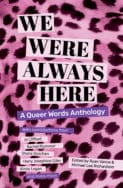 We Were Always Here – A Queer Words Anthology edited by Ryan Vance and Michael Lee Richardson (404 Ink)
From drag queens and discos, to black holes and monsters, these stories and poems wrestle with love and loneliness and the fight to be seen.
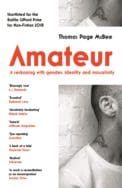
Amateur – A Reckoning With Gender, Identity and Masculinity, Thomas Page McBee (Canongate)
An exploration of modern masculinity by the first transgender man to box at Madison Square Garden, shortlisted for the Baillie Gifford Prize.
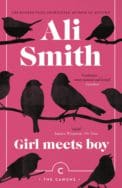
Girl Meets Boy, Ali Smith (Canongate)
Ali Smith’s remix of Ovid’s most joyful metamorphosis is a story about the kind of fluidity that can’t be bottled and sold. It is about girls and boys, girls and girls, love and transformation, a story of puns and doubles, reversals and revelations. Funny and fresh, poetic and political, here is a tale of change for the modern world.
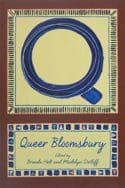 Queer Bloomsbury edited by Brenda S. Helt, Madelyn Detloff (EUP)
This anthology presents fifteen wide-ranging readings that trace the cultural, ideological and aesthetic facets of the Bloomsbury Group’s development as a queer subculture.
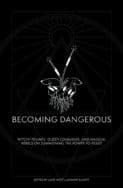 Becoming Dangerous edited by Katie West and Jasmine Elliot (Fiction & Feeling)
A non-fiction book of deeply personal essays by marginalised people operating at the intersection of feminism, witchcraft, and resistance to summon power and become fearsome in a world that would prefer them afraid. With contributions from twenty witchy femmes, queer conjurers, and magical rebels.
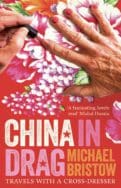 China in Drag: Travels with a Cross-dresser, Michael Bristow (Sandstone Press)
Approaching the end of his eight-year stay in Beijing, Michael Bristow decided he wanted to write about the country’s modern history. To assist him he asked for the help of his language teacher, who was born just two years after the communist party came to power in 1949. It came as a surprise though, to learn that the teacher was also a cross-dresser. The teacher’s story is the story of modern China.
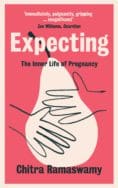 Expecting: The Inner Life of Pregnancy, Chitra Ramaswamy (Saraband)
When Chitra Ramaswamy discovered she was pregnant, she longed for a book that went above and beyond a manual; a book that did more than describe what was happening in her growing body. One that, instead, got to the very heart of this overwhelming, confusing and exciting experience.
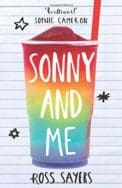 Sonny and Me, Ross Sayers (Cranachan Publishing – Young Adult)
When Daughter and Sonny’s favourite teacher leaves unexpectedly, they decide to investigate. As they dig deeper into the staff at Battlefield High, they discover a dark secret which one person will kill to protect… Will they uncover the truth without being expelled? Can their friendship survive when personal secrets are revealed?
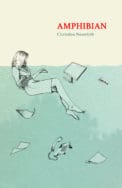 Amphibian, Christina Neuwirth (Speculative Books)
It’s summer in Edinburgh. Rose Ellis arrives at MoneyTownCashGrowth one morning to find that the entire fourth floor has been flooded with water, in a desperate attempt to improve productivity. As the water steadily rises, her working situation becomes more and more absurd…
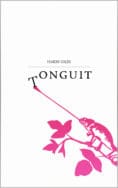 Tonguit, Harry Giles (Stewed Rhubarb)
Politically radical and formally inventive, Tonguit plays at the borders of nationality and sexuality with irreverent affection, questing through languages for a place to speak.
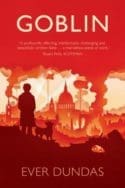 Goblin, Ever Dundas (Saraband)
Set during the Blitz and the London riots of 2011, Goblin tells the story of “an iconic protagonist” with “a powerful imaginative force”. An outsider, the titular Goblin uses the power of imagination to help her navigate and survive in a cruel world, even to find a desperate kind of joy.
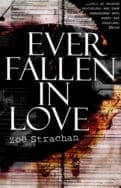 Ever Fallen in Love, Zoe Strachan (Sandstone Press)
Richard fell for Luke at university. Luke was handsome, dissolute, dangerous; together they did things that Richard has spent the last decade trying to forget. Zoe Strachan takes us on a journey through hedonistic student days to the lives we didn’t expect to end up living, and the hopes and fears that never quite leave us.
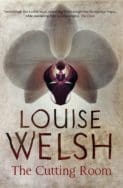 The Cutting Room, Louise Welsh (Canongate)
When Rilke, a dissolute and promiscuous auctioneer, comes across a collection of highly disturbing photographs during a house clearance he feels compelled to unearth more about the deceased owner who coveted them.
And beyond the Scottish publishing scene there are more brilliant LGBT stories from Scottish writers to keep you busy:
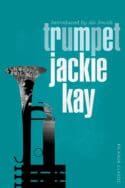 Trumpet, Jackie Kay (Picador)
This novel is centred on jazz player Joss Moody. His trumpeting has made him famous, but after his death a fact emerges: he was a woman. Kay deals sensitively with race and gender, adoption and inheritance, to create a vivid portrayal of love.
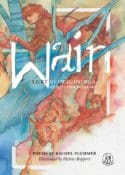 Wain: LGBT Reimaginings of Scottish Folk Tales, Rachel Plummer (The Emma Press)
Wain is a collection of LGBT themed poetry for teens based on retellings of Scottish myths. The collection contains stories about kelpies, selkies, and the Loch Ness Monster, alongside perhaps lesser-known mythical people and creatures, such as wulvers, Ghillie Dhu, and the Cat Sìth. These poems immerse readers in an enriching, diverse and enchanting vision of contemporary life.
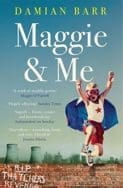 Maggie & Me, Damian Barr (Bloomsbury)
A touching and darkly witty memoir about surviving Thatcher’s Britain. It’s a story of growing up gay in a straight world and coming out the other side in spite of, and maybe because of, the iron lady.
 The Rental Heart and Other Fairytales, Kirsty Logan (Salt)
These stories feature clockwork hearts, lascivious queens, paper men, island circuses, and a flooded world; some are radical retellings of classic stories, some are modern-day fables, but all explore substitutions for love.
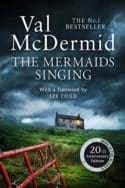 The Mermaids Singing, Val McDermid (HarperCollins)
You always remember the first time. Isn’t that what they say about sex? How much more true it is of murder. A tense, beautifully written psychological thriller, The Mermaids Singing explores the tormented mind of a serial killer unlike any the world of fiction has ever seen.
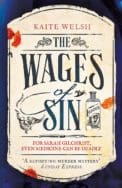 The Wages of Sin, Kaite Welsh (Tinder Press)
Sarah Gilchrist has fled from London to Edinburgh in disgrace and is determined to become a doctor, despite the misgivings of her family and Victorian society. Sarah finds herself drawn into Edinburgh’s dangerous underworld of bribery, brothels and body snatchers – and a confrontation with her own past.
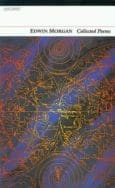
Collected Poems, Edwin Morgan (Carcanet)
Edwin Morgan’s wonderful transforming imagination is democratic, generous and inclusive. Even the sonnet form becomes a new experiment for a poet of questing and anarchic vision, unwilling to rest on rules. An absolute must-have for every bookshelf.
For children’s titles the Scottish Book Trust have pulled together a lovely list of picture books.
We are used to Historic Environment Scotland bringing us the most beautifully-produced books, with fantastic images, and their latest book is no exception. Let us share a little bit of those treasures that you will find inside.
The Honours of Scotland: The Story of the Scottish Crown Jewels & The Stone of Destiny
By Chris Tabraham
Published by Historic Environment Scotland
On 4 February 1818, a distinguished group of men gathered on the stair outside the Crown Room in Edinburgh Castle. Standing beside the Lord President of the Court of Session, the Lord Justice Clerk, the Lord Chief Commissioner of the Jury Court, the Lord Provost of the City of Edinburgh and the Commander-in-Chief of the Army was an anxious Walter Scott, one of Scotland’s foremost authors and antiquarians. His urgent pleas to the Prince Regent (the future King George IV) had resulted in a royal warrant permitting Scott to accompany the Scottish Officers of State to open the sealed Crown Room in search of the Scottish Crown, Sceptre and Sword of State, known as the Honours of Scotland. The group watched in silence as the masonry blocking was removed from the doorway. In the darkness beyond they spied a great iron-bound oak chest. They approached with great apprehension, for there was a suspicion that the chest was empty. The Honours had been locked away in 1707 following the Treaty of Union with England but many believed that ceremony had been a hoax.
Let Walter Scott himself describe what then happened:
‘The chest seemed to return a hollow and empty sound to the strokes of the hammer, and even those whose expectations had been most sanguine felt at the moment the probability of disappointment … The joy was therefore extreme when, the ponderous lid of the chest being forced open, the Regalia were discovered lying at the bottom covered with linen cloths, exactly as they had been left in the year 1707 … The reliques were passed from hand to hand, and greeted with the affectionate reverence which emblems so venerable, restored to public view after the slumber of more than a hundred years, were so peculiarly calculated to excite. The discovery was instantly communicated to the public by the display of the Royal Standard, and was greeted by shouts of the soldiers in the garrison, and a vast multitude assembled on the Castle Hill; indeed the rejoicing was so general and sincere as plainly to show that, however altered in other respects, the people of Scotland had lost nothing of that national enthusiasm which formerly had displayed itself in grief for the loss of these emblematic Honours, and now was expressed in joy for their recovery.’
No one can have been more overjoyed than Scott himself. And the drama of that February morning proved a fitting climax to the fascinating and eventful story of the Honours of the Kingdom, a story which begins in the Dark Ages, takes us through the glory of Scotland’s medieval history and reaches right up to the present day, with the Honours on display in Edinburgh Castle’s Crown Room.

The Crown of Scotland was first worn by James V in 1540, and is still taken to Holyrood for the State Opening of the Scottish Parliament every four years.

The Sceptre, created in Renaissance Italy and given to James IV by the Pope, was remodelled during the reign of his son, James V.
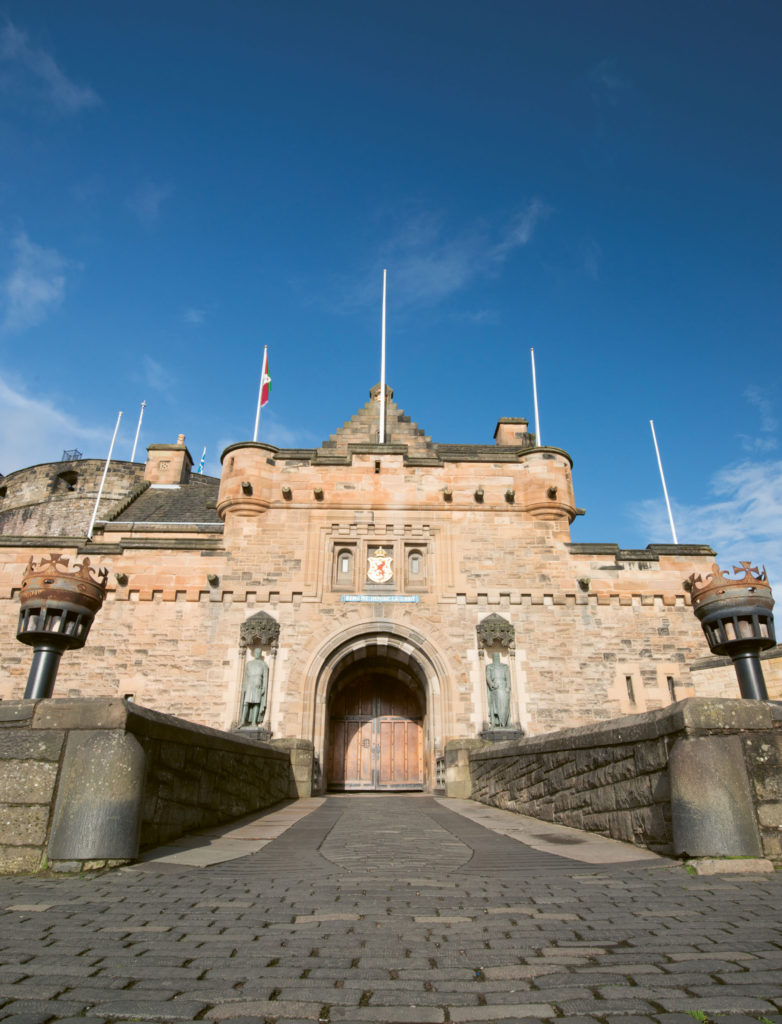
Main gate of Edinburgh Castle photographed from the esplanade. Edinburgh Castle is not only the modern home of the Honours – the Crown Room was created around 1615. The Crown Room was where they were sealed up following the Act of Union, only to be dramatically rediscovered.
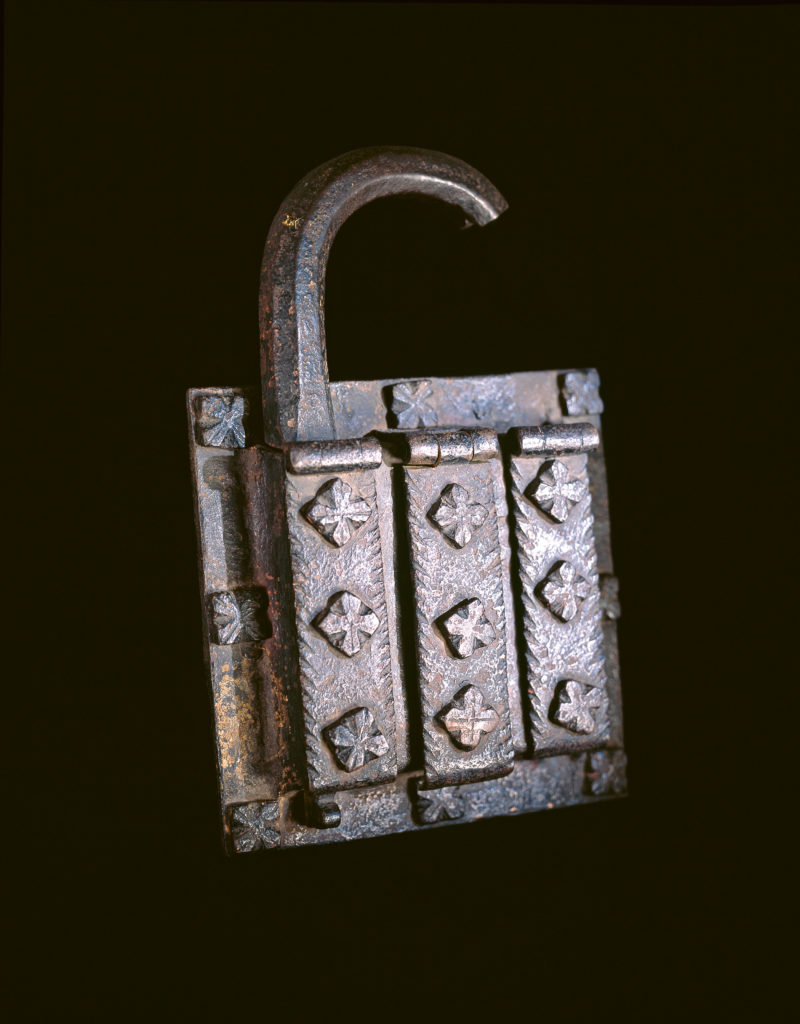
One of the two padlocks broken as the oak chest was forced open to reveal the Honours, which had been hidden away for over one hundred years.
The Honours of Scotland: The Story of the Scottish Crown Jewels & The Stone of Destiny by Chris Tabraham is published by Historic Environment Scotland, priced £9.99
Canongate’s latest fiction release, My Name is Monster by debutant Katie Hale is influenced by two of literature’s heavyweight classics. Kristian Kerr finds that it is a novel that uses its influences in an enjoyable and exciting way.
My Name Is Monster
By Katie Hale
Published by Canongate
Monster is shipwrecked on the island of Great Britain, a designation purely geographical, referring to the landmass that comprises England, Scotland, and Wales. There is nothing Great about it. The landscape has witnessed the disintegration of the world humans have wrought, in an all-too-plausible scenario: competition over resources destroyed the world economy, the War brought dirty bombs and the Sickness. Monster is only alive because her longing for isolation took her to work at the Seed Vault, a repository in the Arctic circle. She begins the business of survival in this depopulated land, salvaging what she can from her small boat and heading south. Beset by hunger, cold, fatigue, she scavenges her way towards familiar territory and begins to establish a life.
Katie Hale’s debut novel, My Name Is Monster, is partly inspired by two classic novels, Robinson Crusoe and Frankenstein and, therefore, is freighted with quite some literary baggage. It doesn’t bend under this weight, I’m pleased to find, for Hale has produced a book that combines a post-apocalyptic setting, a fascinating and resourceful protagonist, and a tight, tense plot that ticks, or, as we should rather say, tickerts along. This exploration of isolation and resilience, language and power, feels thoroughly modern and, aside from the name Monster itself, the novel wears its antecedents lightly.
Hale has not attempted a point-by-point reworking of Defoe and Shelley’s novels, and My Name Is Monster is the stronger for it. Certainly, characteristics typical of a re-boot may be discerned: the shipwreck washing up on the shores of post-everything Britain inverts Robinson Crusoe’s colonialism. The setting is a deliberately female and feminist world. The novel shares with Crusoe a relentless focus on the collecting or making of objects necessary for survival (food, tools, clothing), offering a critique of the genre’s precisely three-hundred-year partnership with consumer capitalism and drawing it forcibly to a close. Hale’s Man-Friday moment, though, is a game-changer that leaves Defoe in its dust.
In early chapters, Monster repeatedly professes her desire for solitude, claiming not to mind the isolation per se. She longed to be alone as a child, to fulfil a compelling need and ambition, to ‘shut out all the noise, make my mind go still enough to explore, to experiment with circuits and motors and cogs, to create. … I would become an inventor, left alone in a lab or workshop to develop my brilliant ideas, to bring my new creations into being. The logical complexities of objects, set apart from human inconsistency.’ Young Monster is a proto-Victor Frankenstein, a collector of plugs, and mechanical fragments from which she draws solace. Yet in this new world, having achieved total isolation, she finds her creative drive thwarted: ‘there is nothing to create, and nobody to create it for. There is only survival, a continuous plateau of existence’ – until, that is, there isn’t, and things get really interesting.
That name, ‘Monster’ is a play on the afterlife of Mary Shelley’s novel and the infamous slippage of the name ‘Frankenstein’ from creator to creature. As such, it underlines the productively loose relationship between Hale’s novel and its 200-year-old predecessor, which casts Monster as both enthusiastic scientist and lonely progeny, both a creator and a creature.
In the novel’s tense central, pivotal scene, Monster encounters a feral girl in the boarded-up corner shop she had been using as a store cupboard. She describes, in a reversal of previous declarations, her breathlessness at the ‘simple beauty of another human face, the unexpected ecstasy of touch’ but the climactic, transformative moment is brought about through language. ‘I use my free hand to point to myself. Monster, I am about to say – but what if she recognises the word and is afraid? Instead, I think of the most comforting and caring word I can. I point to myself and say, “Mother.”’ By changing her name in this instinctive but unforeshadowed gesture of protection, Monster transforms herself into a different kind of creator. Becoming Mother to this new Monster she bestows language on the girl, binding them together in an imperfect relationship that is sustained by will, generosity, the careful disclosure and withholding of information, and a kind of love not betokened by Monster’s earliest self-narration.
In depicting this coming together of two traumatized people, Hale handles the different voices of these two women deftly, all the time drawing attention to the words they share and the words they don’t. Neither is passionately eloquent, as Shelley’s creature taught himself to be, but their (and Hale’s) careful attentiveness to words and silence combines to make a novel that is exquisitely paced. Time’s passing is marked in the silence between the ticks of a broken clock and the blank space on the page between the novel’s mostly short chapters, as the story and the reader is drawn inexorably on.
My Name is Monster is published within weeks of another Frankenstein novel, Jeanette Winterson’s Frankissstein: A Love Story (Jonathan Cape). The two wear their connections to Shelley in near-opposite ways. Winterson’s is a virtuosic re-telling of the novel’s famous composition story (the creation parable’s creation myth, if you like) paralleled by the developing romance between young transgender doctor Ry Shelley and AI academic Victor Stein. Artfully constructed, it fizzes with winks and nods across centuries of scientific progress speculating on the challenges for gender, sexuality, and individual liberty posed by accelerated evolution, reanimation and artificial intelligence.
With its interweaving of environmental, social, and political catastrophe into a story so tightly focused on just two consciousnesses, My Name Is Monster stops progress in its tracks to ponder the nature of humanity’s original technologies, speech and feeling. This is a novel at its most powerful when dealing with those subjects, when the conventional trappings of the post-apocalypse are stripped away, a trait that bodes well for Hale’s future as a novelist.
My Name Is Monster by Katie Hale is published by Canongate, priced £16.99
Scotland’s long distance Ways have been a mainstay for tourists and residents for a long time, and the resurgence of pilgrim trails is a welcome addition for those interested in the landscape and history of Scotland. In July, The Fife Pilgrim Way opens, and here we share an extract from the guide to the trail, brought to us by Birlinn Ltd.
Extract taken from The Fife Pilgrim Way: In the Footsteps of Monks, Miners and Martyrs
By Ian Bradley
Published by Birlinn Ltd

Fife was long known as the pilgrim kingdom. This is because within its bounds were found the two most important places of pilgrimage in medieval Scotland, Dunfermline (which was also the residence of successive Scottish monarchs – hence the kingdom designation) and St Andrews. At the height of the pilgrimage boom in the Middle Ages, thousands of people from many parts of the British Isles and beyond traversed Fife to venerate the shrines of St Margaret and St Andrew. In the words of the medieval historian Tom Turpie, ‘The economy, communication networks, landscape and religious and cultural life of Fife, perhaps more than any other region of medieval Scotland, was shaped by the presence of pilgrims and the veneration of saints’ (Turpie 2016: 4).
The Fife Pilgrim Way, officially opened in July 2019, allows modern pilgrims to follow in the wake of their medieval predecessors and walk, cycle or otherwise make their way across Fife towards St Andrews on a route that has two starting points on the northern shores of the Firth of Forth: Culross, with its associations with two early Scottish saints, and North Queensferry, where Queen Margaret established the ferry crossing for pilgrims going to St Andrews. It is based on the premise that following in the footsteps of medieval pilgrims across Fife is a great way to discover the region’s remarkable past, its lively modern communities, countryside, historic towns and natural treasures. But it is much more than an exercise in historical reconstruction. For a start, it does not follow the route taken by most medieval pilgrims who would have gone directly north from Kelty to Loch Leven and travelled on via Scotlandwell, taking a more northerly course. The modern pilgrim way has been deliberately routed through old mining and industrial areas of West Fife and the new town of Glenrothes. This is partly in the hope of bringing economic and other benefits to places which have experienced decline and do not see many visitors or tourists, as has happened in Galicia in Spain, the site of Europe’s most famous pilgrim way, the Camino de Santiago, which leads to the shrine of St James.
There is also a conscious desire that those journeying along the Fife Pilgrim Way will not only see pretty vistas and affluent villages, but also come into contact with places and people that have not been so favoured. King James VI of Scotland (later King James I of England) famously described Fife as ‘a beggar’s mantle fringed with gold’. The golden coastal fringe, with its quaint fishing villages and breathtaking views across the Forth, has long been the route of a hugely popular walk developed and maintained by Fife Coast and Countryside Trust.
*
The practice of pilgrimage, understood as a departure from daily life on a journey with a spiritual intention, and often – although not invariably – to a destination with a religious significance, is a central feature of all the world’s major faiths. It is not obligatory for Christians but it has long been a significant aspect of Christian life and devotion. Jesus sent out his disciples to preach the kingdom of God and to heal, telling them to go from house to house, taking nothing on their journey. Some early Christians, like the Celtic monks who wandered across continental Europe as well as around the remoter shores of the British Isles, took to almost perpetual pilgrimage as a demanding form of witness and exiled themselves from home comforts as they sought to follow the Son of Man who had nowhere to lay his head. The desire to walk in Jesus’ footsteps led other early Christians to journey to the Holy Land. As the cult of saints developed and certain places came to be seen as especially sacred, Christian pilgrimage reached its zenith in the Middle Ages, with thousands travelling for many months across Europe to Rome, Santiago, St Andrews, Dunfermline and other shrines associated with apostles, saints and martyrs.
Pilgrimage effectively ceased in Scotland with the Reformation. In fact, there is considerable evidence that St Andrews was in significant decline as a pilgrim destination fifty years or so before Protestantism was officially established in 1560. For the next 400 years and more pilgrimage and pilgrim places largely disappeared across Scotland as they did across the whole of Protestant Europe. The Reformers had good and understandable reasons for attacking the practice of pilgrimage, which had become associated with the buying and selling of indulgences and the idea of paying your way into heaven. The result was that pilgrimage became almost a dirty word in Scotland, at least in Presbyterian circles.
In the last three or four decades something remarkable has happened. There has been a widespread and striking revival of interest in the practice of pilgrimage across Europe. Somewhat surprisingly, perhaps, given its reputation for Presbyterian disapproval of the more Catholic practices of the Middle Ages, Scotland is in the van of this movement, with more new pilgrim routes being created here than in any other part of the United Kingdom. Significant initiatives across the country have been stimulated by a combination of local enthusiasm and support from the Scottish Government and local authorities keen to promote health, well-being and economic regeneration, as well as revived interest in local saints, and the Scottish Pilgrim Routes Forum’s efforts to bring together interested parties within churches, heritage groups and the tourism sector. Lingering Presbyterian unease has at last been put to rest, not least by a spectacular vote of confidence at the 2017 General Assembly of the Church of Scotland, which passed with acclamation a deliverance from its Church and Society Council affirming the place of pilgrimage within the life of the Church and encouraging congregations to explore opportunities for pilgrimage locally and the provision of practical and spiritual support for pilgrims passing through their parishes.
The Fife Pilgrim Way is one of six major walking and cycling pilgrimage routes currently being developed across Scotland by steering groups made up of local enthusiasts, churches, voluntary bodies and local authorities. Many of these volunteers represent member organisations of the Scottish Pilgrim Routes Forum, a national network set up in 2012 and a fully constituted Scottish charity which supports and facilitates the work of the steering groups and meets twice a year in locations closely associated with their work. The most ambitious of the new pilgrim ways will be a 185-mile coast-to-coast route linking Iona and St Andrews, two of Scotland’s most iconic religious sites and places of medieval pilgrimage. The second longest, initially created in 2013 by a group of enthusiasts from Paisley Abbey, is the 149-mile Whithorn Way from Glasgow to Whithorn, once the site of a major cathedral associated with St Ninian and an important place of pilgrimage since the seventh century. The 72-mile Forth to Farne Way, linking North Berwick to Lindisfarne, opened in 2017. In north-east Scotland, the 40-mile Deeside Way follows the route of the old railway track between Aberdeen and Ballater. The most northerly of the new pilgrimage routes is the St Magnus Way, a 55-mile walking trail across mainland Orkney from Evie to Kirkwall, opened in 2017 to mark the 900th anniversary of the martyrdom of Orkney’s patron saint. The development of these six routes represents the beginning of a longterm strategy co-ordinated by the Scottish Pilgrim Routes Forum to create opportunities for local people and overseas visitors alike to learn from and experience Scotland’s rich pilgrimage heritage through the outdoor environment.
The Fife Pilgrim Way: In the Footsteps of Monks, Miners and Martyrs by Ian Bradley is published by Birlinn Ltd, priced £14.99
Wild and Majestic: Romantic Visions of Scotland, the summer exhibition at the National Museum of Scotland (26 June–10 November 2019), tells the fascinating story of how tartan, bagpipes and rugged, wild landscapes became established as enduring, internationally recognised symbols of Scottish identity and how Scotland became established in the popular imagination as a land of wilderness, heroism and history.
Wild and Majestic: Romantic Visions of Scotland
by Patrick Watt and Rosie Waine
Published by NMS Enterprises
The exhibition spans the period from the final defeat of the Jacobites at the Battle of Culloden in 1746 to the death of Queen Victoria in 1901. In exploring the efforts made to preserve and revive Highland traditions in the wake of post-Jacobite persecution, depopulation and rapid socio-economic change, it will show how Scotland’s relationship with the European Romantic movement transformed external perceptions of the Highlands and was central to the birth of tourism in Scotland.
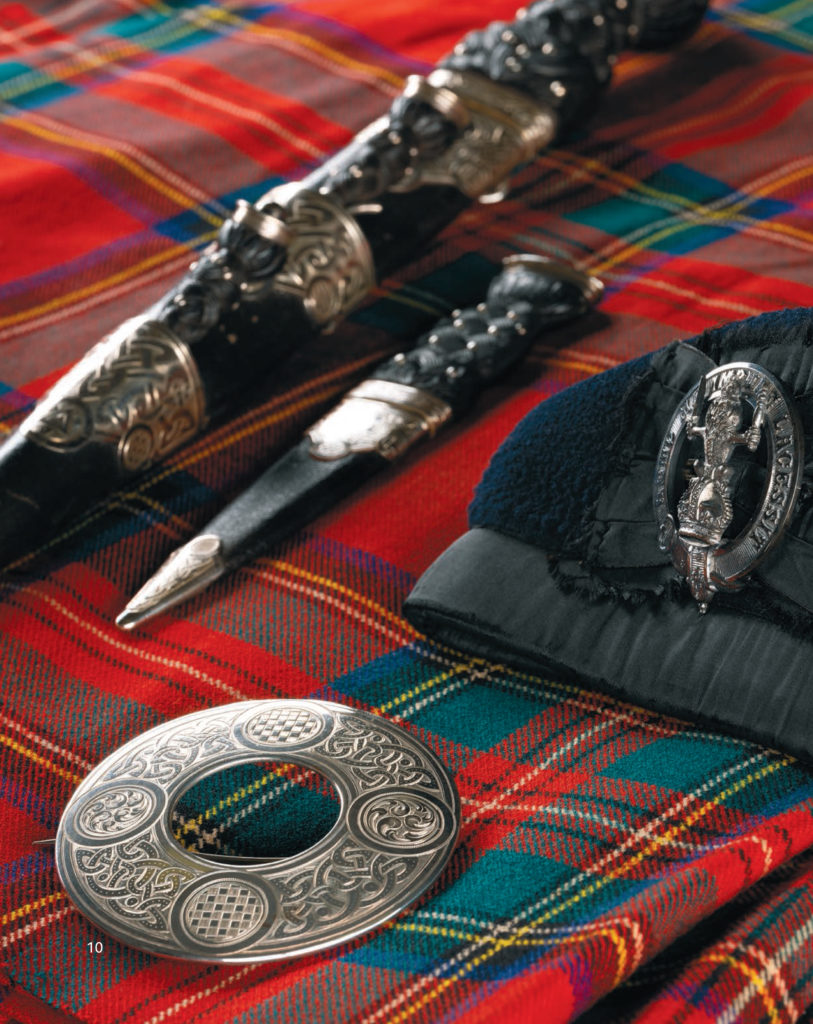
Uniform of the Balmoral Highlanders c.1903, National Museums Scotland
Over 300 objects will be on display, many of them showcased in this souvenir guide, drawn from the collections of National Museums Scotland and thirty-eight lenders across the UK.
Throughout the exhibition, the influence of Gaelic language and culture, and the impact of these developments on it will be shown through objects, text and film. This is reflected in the book.
The objects tell a story with a stellar cast, including King George IV, Queen Victoria and Prince Albert, Sir Walter Scott, Robert Burns, JMW Turner, Henry Raeburn, Felix Mendelssohn, William and Dorothy Wordsworth, Ludwig Van Beethoven, Lord Byron, whose 1807 poem Lachin y Gair (Lochnagar) is quoted in the exhibition’s title, and the Ossian author-translator James Macpherson.
From the late 18th century, visitors were drawn to Scotland in increasing numbers, attracted to locations depicted in romantic paintings, prints and literature. Many artists, writers and musicians visited, often on personal pilgrimages inspired by the lasting influence of Ossian, or the fame of Burns, Sir Walter Scott and others.
Works by major figures, including Wordsworth, Turner and Mendelssohn – all of whom met with Scott during their travels – inspired more people to seek out for themselves the places evoked in music, art and literature. Dorothy Wordsworth’s travel journal, Mendelssohn’s sketchbook and his original score of the Hebrides Overture, and a silver urn gifted from Byron to Scott after the two literary giants met in 1815 all feature in the exhibition.
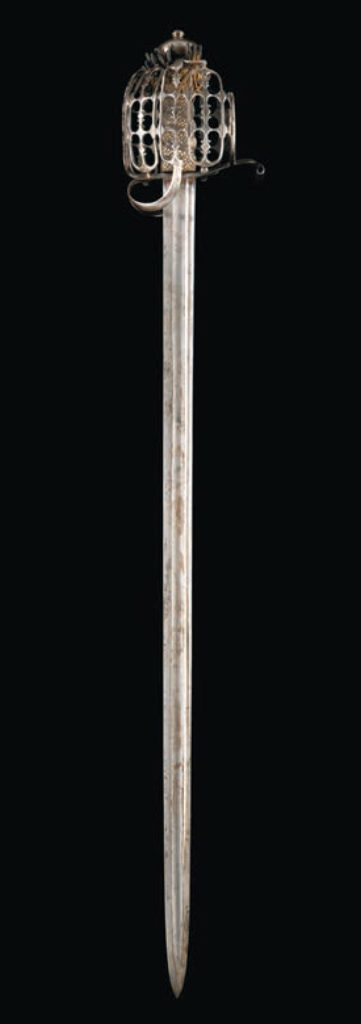
Backsword belonging to Prince Frederick, Duke of York and Albany Late 18th century, National Museums Scotland
Through rich displays reflecting the colour and flamboyance of the Highland image, visitors will encounter key developments such as the Ossian controversy, the over-turning of the ban on Highland dress, the pageantry around King George IV’s visit to Edinburgh in 1822, the Highland tourism boom, and the creation of a Romantic idyll for Queen Victoria at Balmoral.
Dr Patrick Watt, exhibition curator, says:
‘This is a contested, complex history, and also a fascinating one. There are competing claims, still, over the extent to which those symbols of Scotland we see today are Romantic inventions, or authentic expressions of an ancient cultural identity.
Using material evidence, we will examine the origins and development of the dress, music, and art that made up the Highland image. We will show how cultural traditions were preserved, idealised and reshaped to suit contemporary tastes against a background of political agendas, and economic and social change.’
Wild and Majestic: Romantic Visions of Scotland by Patrick Watt and Rosie Waine is published by NMS Enterprises, priced £9.99.
Wild and Majestic: Romantic Visions of Scotland, the exhibition, is on at the National Museum of Scotland in Edinburgh 26 June–10 November 2019.
https://www.nms.ac.uk/exhibitions-events/exhibitions/national-museum-of-scotland/wild-and-majestic/
BooksfromScotland is starting a new, regular strand, ‘Rediscovering’, bringing back into focus authors from the past whose books still deserve a spotlight shone on them. We kick off this strand with the hugely talented master of the historical novel, Dorothy Dunnett. This tribute is brought to you by the fine folks of the Dorothy Dunnett Society who are enthusiastically dedicated to promoting Dorothy Dunnett’s great body of work.
“Lymond is back.” So begins The Game of Kings, a dense historical novel by Dorothy Dunnett that became an instant bestseller upon its publication in 1961, inviting readers into the world of the Lymond Chronicles: a sweeping saga of human passion and the slow cogs of history that has enchanted thousands.
These three words proved themselves to be (in a typically Dunnett-esque fashion) a disingenuous herald to the legend she would become. Nonetheless, they represent the first step into the rich and varied world of Dunnett’s spectacular literary corpus of over twenty books—among which are her fifteen volumes of incomparable historical fiction. Fifty-eight years on from its first appearance, The Game of Kings and its successors are still as enthralling, ambitious and relevant as ever. Deftly plotted, bitingly intelligent and passionately felt, they are as dexterous and unique as their creator: Renaissance literature by someone who was truly a Renaissance woman.
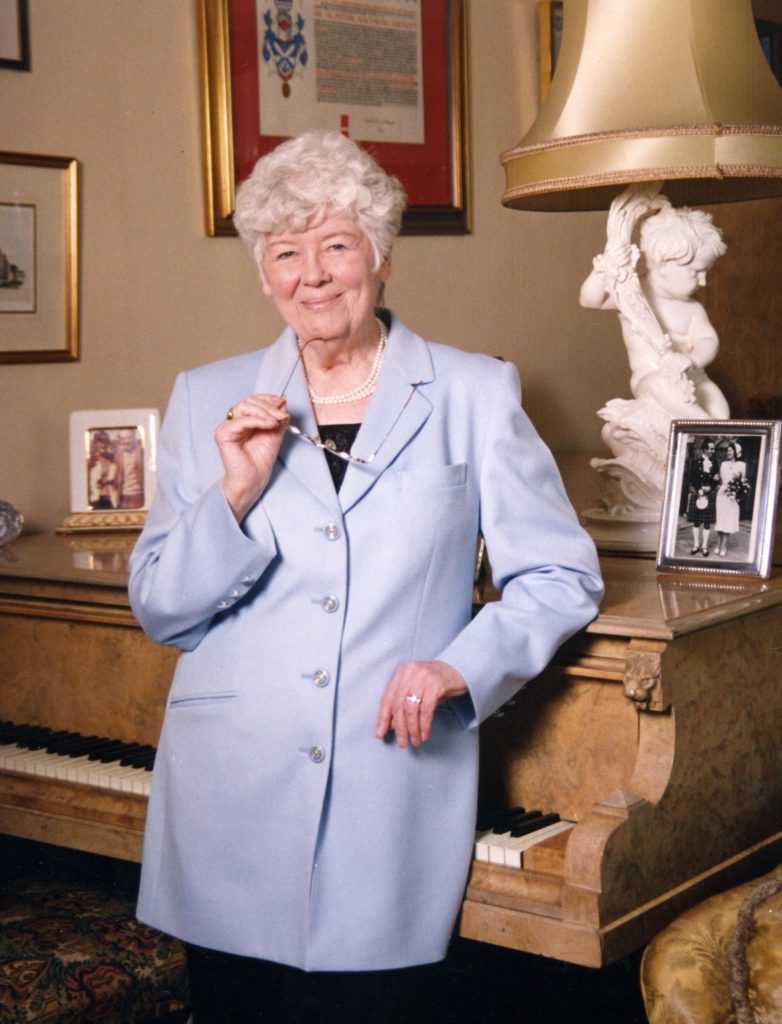 Despite creating a literary output that would fill up several normal lifetimes, Dorothy Dunnett lived her public and private lives with equal voracity. Born in Dunfermline in 1923, she was married to celebrated journalist Alastair Dunnett in 1946; worked as a professional portrait painter and sculptor and was an accomplished musician; and provided invaluable public service as a dedicated historical researcher and Scottish heritage advocate. But it is for her historical fiction that she is best remembered, beginning with those three fateful words: Lymond is back.
The Lymond Chronicles are a series of six books beginning in 1547 and recounting the exploits of Francis Crawford of Lymond, a Scottish nobleman-turned-outlaw who is as notorious as he is intelligent and as dangerous as he is coveted. Drawn over the course of the books from France to Malta to Istanbul to Russia, it is nonetheless Scotland that remains his true home. Surrounding him and his homeland (poised on the edge of political collapse) is a cast of magnificent, vicious and vulnerable characters, and an intricate web of plots and machinations that loom over the gameboard of Renaissance Europe.
Despite being Dunnett’s first novel, The Game of Kings pulls no punches, immediately launching the reader into the captivating world of the enigmatic Francis Crawford. To date, the Lymond books remain her most popular, imbued with their protagonist’s stubborn refusal to simply fade away. The series contains what are some of the finest and most dramatic moments in literature, such as a real-life chess game in which humans are used as pieces with deadly consequences—or a night-time race across the rooftops of Blois—or what is an honest-to-god sixteenth-century race-against-the-clock bomb-defusal. From the deceptively simple words of her opening gambit, Dunnett lays the stage for an intricate game of politics and passion into which the reader is thrust headlong. But if first-time readers are left blinking in stupefaction by the complexity of Dunnett’s creation, they only have to read on to be slowly but completely absorbed by Lymond’s story.
Dunnett went on to write King Hereafter: a monumental standalone novel about Earl Thorfinn of Orkney, whom she believed she could prove to be the real-life figure behind Shakespeare’s distorted Macbeth. Thorfinn, like Lymond before him, is a contradictory hero: a legendary figure of epic proportions tempered with all-too-human passions and failings.
After completing King Hereafter (and taking occasional breaks to dip into the delightful world of bifocal-wearing detective and portrait-painter Johnson Johnson) she embarked on a new series, The House of Niccolò series, set this time in the late fifteenth century. She weaves a colourful tapestry, detailing a quarter of a century fraught with double-dealing, vicious battles on a variety of scales, feuding dynasties and convoluted family trees. At its heart is a hero as brilliant and flawed as his predecessors: Nicholas vander Poele—polyglot, mathematician, adventurer, and charismatic leader of men (and women!)—who rises from the dye-yards of Bruges to the heights of Renaissance trade and intrigue.
Perhaps it is no surprise that an author of such unique literary talent and vision should remain unmatched in the fifty-odd years since her first appearance. Her brilliance lies in her combining of literary skill with the integrity and passion that underlay her depictions of human lives, histories and societies. Her characters hail from a range of backgrounds, cultures, religions and social classes, and the multiplicity of experiences adds a richness of narrative rarely seen elsewhere. With honesty and sincerity of expression she produces some of the finest representations of all facets of identity, with on-the-page LGBTQ+ rep, explorations of mental illness and unflinching social commentary. In a genre where women are so often reduced to wives and collateral damage, her novels are packed full of female characters of intelligence, strength and agency to rival and even surpass their male counterparts.
It is not without reason that the novels of Dorothy Dunnett have gathered such a loyal fanbase over the years, and indeed keep attracting new readers and fans today. Historical fiction is often scorned for being escapist and fanciful—but Dorothy Dunnett is so much more. She embraces the manifold pitfalls and wonders of the genre and makes them her own, and her books, far from being dated, sing with immediacy and relevance. More than fifty years on, they still exemplify the best of what literature has to offer. At the time of writing, her books are being reissued—The Lymond Chronicles and King Hereafter have already made an appearance in long-overdue new editions, and The House of Niccolò is soon to follow. Her dedicated networks of fans have roots in all corners of the world and the internet, and Francis Crawford may soon be making his television debut. Though he has never been absent from his readers’ hearts, Lymond is well and truly back—and if I know him at all, he’s here to stay.
The Dorothy Dunnett Society
Dorothy Dunnett loved talking to her readers, and hearing their views. She set up the Dorothy Dunnett Society to make it easier for readers to keep in touch with each other and share their thoughts. Members around the world receive Whispering Gallery, the Society’s quarterly magazine about all things Dunnett, with articles about the characters and sources as well as the history and art of the times in which the books are set. The Dunnett Weekend is held each April in Scotland, and other Gatherings happen from time to time in many different places. International Dorothy Dunnett Day meetings are held on the second Saturday in November around the world, and are open to non-members too.
Please visit our website to find out more about who we are, what we do and what is happening, and to join a community of like-minded souls who love the books and who love to talk about them whether in person or online: is www.dorothydunnett.org
The Dorothy Dunnett Society is a charity registered in Scotland, number SC030649.
Dorothy Dunnett picture credit: Alison Dunnett
Frank Wood brings together themes of community, history, war and power in his novel, Where the Bridge Lies, set in and around Clydebank. Here we share an extract that takes place during the Clydebank Blitz.
Extract taken from Where the Bridge Lies
By Frank Woods
Published by Ringwood
Kilbendrick, March 14th 1941
Joe Connor pushed back his ARP helmet, fished cigarettes and matches from the breast pocket of his blue overalls, lit up, and leaned his elbows on the wall at the top of Church Brae.
This spot, with its bird’s eye view of Kilbendrick nestling in the tight turn of the Clyde, was one of his favourite places. When he was a kid, he and his pals had often dangled their legs over this high wall and argued about which of the toffs’ gardens below them were ripe for raiding. The pears on the minister’s tree were always September favourites. On the other hand, Henderson the shipbuilder’s walled garden spread its treasures over a wide season – early rasps, strawberries, goosers, plums, apples. Then there was Dr Robertson’s. Despite the threat from his spaniel, his cherry tree needed regular, critical sampling before the decision to plunder could be made. To Joe this hadn’t been stealing, but an adventure that was his by right, a sort of balancing of the books. Looking back, he could see how those escapades seeded an attitude in him, a first understanding of social difference, of them and us. And they’d been stepping stones on a journey that had led him to serve his apprenticeship in Henderson’s yard, to become a tradesman, to become a trade union man, too.
And he’d stood here and proposed to Sarah as they walked back from a long kiss and cuddle in the bluebell woods. When she said yes, they’d wrapped themselves around one another and gazed down on the lovely vista of river and village. He’d thought his heart would burst.
Aye, that was a world away. Now he was up here on lookout while down there Sarah cared for his grief-crazed sister and got ready for another night of … of what? He looked eastwards towards Clydebank. Just two miles away, the damaged oil storage tanks at Old Kilpatrick continued to pour out flames and thick black smoke. In and around Clydebank itself, countless fires were still burning. He could just make out the barrage balloons above Brown’s shipyard. To their left, a square mile of desolation flickered and smouldered where Singer’s wood storage yard had been left to burn itself out while overstretched fire crews and rescue teams had focussed on saving human lives and dwellings. A menacing pall of smoke billowed like a warning above the devastated town.
High in the Kilpatrick Hills behind him, smoke still rose from the embers of the flimsy timber decoy towns that had been set alight last night in the vain hope of misleading the raiders. But the unmistakeable ribbon of the moonlit Clyde had beckoned the German bombers and tonight’s fires would make their job easier still. Those blazing oil tanks would draw them further west and more bombs were bound to hit Kilbendrick. At this thought, his eyes sought out the wreckage of Hillcraig Terrace then, nearer at hand, the burntout wing of Henderson’s mansion where the old woman had died. Twenty-four hours could make a hell of a difference. Boss or worker. Victim or rescuer. Life or death. For now, you could hardly slip a tram-ticket between them. Bombs didn’t give a shit about the social class of the people they were blowing to bits.
Day faded into dusk. The river glittered red in the remnants of a sunset that, further to the west, silhouetted the dome of Dumbarton Rock and painted reds, pinks, blues and mauves in the western sky above the distant Cowal hills. For a moment he felt a surge of wonder that such beauty could exist in the midst of so much death and destruction. In the village below him, a light flickered in a top floor window of Erskine View. Sure enough, Maggie Thomson had forgotten to close her blackout blinds again. What was it going to take before she got the message? He looked again at the flaming oil tanks and the burning town in the distance. What the fuck did it matter? Tonight wasn’t going to be about blackout rules, it was going to be about survival. He dropped his cigarette end, crushed it under his boot, and set off downhill.
As he approached the foot of Church Brae he could see beneath the railway bridge the shapes of tonight’s two Home Guard sentries. Although it was now almost dark, he recognised them from their shadowy outlines – Sandy Downer and Jock Wilson, respectively the shortest and the tallest in the shipyard. Sandy insistently described himself as ‘over five feet’, a claim that had once been put to the test in the plating shed where he had lain down and been marked out. Careful measuring put him a sixteenth of an inch over. Disbelievers subsequently claimed either that he’d kept his socks on or needed a haircut, but Big Sandy, as he was affectionately known, stuck to his guns. Despite his size, he was good for a full shift swinging his riveting hammer with the best of them. Wee Jock Wilson was a clear fifteen inches taller and about twice as broad as Sandy. Putting them on guard duty together was the one bit of evidence that old Colonel Somerville had a sense of humour buried somewhere beneath his florid and grumpy exterior.
Big Sandy’s face wrinkled in concern. ‘How’s it looking up there, Joe?’
‘Terrible. The tanks are still blazing and there’s fires all over the place in Dalmuir and Clydebank.’
‘Think they’ll be back the night?’
‘It’s not what I think, Jock. I’m sure of it. The weather’s perfect. They’ll see the fires from miles away. Those bloody incendiaries. Makes it easier to find the target the second night. Look at last year. Birmingham, three nights. London, two nights. Liverpool and Manchester got two each as well. Aye. They’ll be back all right.’
‘After what happened last night,’ said Wee Jock, ‘you wonder what we’re up against here. I mean. Just look at us.’ He held out the makeshift weapon he was carrying, a scaffolding pole with a bayonet lashed onto one end.
‘Stop complaining, you big lassie. We agreed it was night about with the musket.’ Big Sandy held up an old bolt-action rifle. ‘And tonight, I got not just one bullet, I got two. Bring on the Wehrmacht! Anyway,’ he added as an afterthought, ‘that thing you’ve got is too heavy for me. It’s designed for big brainless people.’
‘Sandy, if you kill any Wehrmacht it’ll be because they die laughing. I mean, look at him, Joe. Churchill’s secret weapon, done up to make the Jerries think Scotland’s being defended by wee boys dressed up as soldiers. The shoulders of that battledress are somewhere round about his elbows and the arse of his trousers is at his knees.’
‘Ach, the big eunuch’s just jealous, Joe. He’s bothered because I need a lot of room down there in my pants. Unlike him.’
‘Boys, boys.’ Joe pretended to placate with outstretched hands. ‘Don’t drag me into it. When you two are doing the sniping, my head stays below the firing line. But I’ll say one thing, Sandy. You showed plenty of balls the day. Crawling in under that roof.’
‘No. Don’t say that. I was the obvious one to go. The rest of you buggers are all too big. No. I’ll tell you who the real heroes are. Mrs Brownlee when I handed her wee Shona’s body. And people like your sister Nessa who’s lost her man along with most of her family. How is she?’
‘Still not talking. The doctor came in and checked her. “She’s one of many,” he said. “Time’ll take care of it.” Whatever you say, Sandy, you did a great job.’
‘What I can’t get over is Mrs Dagerelli. I knew I was in their kitchen, at the back of the café. Most of the walls were still standing but it was a hell of a mess. And a strong stink of gas. That really bothered me. I looked everywhere I could. There was no sign of her. When I crawled back out, Ernesto wouldn’t believe me. “I know she’s-a-there. In-athe kitchen. Please. Please. I know she’s-a-there.” So in I crawled again. Checked under the table, under the bed, in the pantry. Not a sign. The kitchen door had swung wide open. Then I noticed the door wasn’t hard up to the wall. I pulled it back. There she was. Bolt upright. And stone dead. It must’ve been something to do with the blast. Or maybe she’d changed her mind and was at the door on her way to the shelter when the bomb exploded.’
The other two had heard Big Sandy’s account before, but they listened respectfully. Joe clapped him on the shoulder. ‘You did well, Sandy.’ He set off to complete his rounds.
Where the Bridge Lies by Frank Woods is published by Ringwood, priced £9.99
Kenneth Steven uses the inspiration of Scotland’s landscape to write his many poetry collections. In West, he uses the landscape to pay tribute to his late sister, peace activist Helen Steven.
Extracts taken from West
By Kenneth Steven
Published by Wild Goose Publications
MY SISTER HELEN
She was Scotland to me:
bedtime stories that woke me
to the history of Wallace and Bruce,
would have had me up in a saddle,
galloping back in time
for the bits of the border we’d lost.
She lived down endless long windings of bumps,
in cottages with attics and owls –
the hope of conkers in the morning.
She drove me one August night
when the skies were orange and bruised,
till the storm was flickering booms
and we came home in silvering rain.
She was drives at high speed
down roads that should have closed long ago,
in cars that were held together
by the hope of a better tomorrow.
She could conjure a whole ceilidh
out of a candle and an old bothy;
she was songs and tin whistles
in the middle of the worst of blizzards.
She was a beach where you could always swim,
and a place you’d not known before;
she was a fire that would set you alight –
an adventure that was yet to be planned.
WEST
Leave Craignure and the woods around Duart Castle
and hug the shore before you climb the lion-coloured hills:
Glen Gorm, from which the people once were burned.
Up higher and still higher, until the lochs lie far below
and if you’re lucky, the whole bald head of Ben More
has broken out of cloud and stares west, a weathered sphinx.
A telephone box, a single house, and miles of salt marsh
for the constant hope of otters. Then on, to Pennyghael,
and the thin single road that winds like a piece of thread
over to the cliffs of Carsaig. But keep on heading west,
until Bunessan and the harbour and the clustered houses.
You’re almost there. An inland loch, impossibly blue,
and now the breeze blows every way at once –
the land lies low, left with a few wind-twisted trees,
and see, ahead, there, on the edge of the sky,
the island still at anchor; the abbey nestled by the sea –
guarding, keeping, waiting.
THIS LANGUAGE
Even now, so long after the motorway and the wire
have torn tranquillity, it is worth coming here
to listen. But if you really want to understand this language,
you must throw away the rules
forget all you thought you knew –
begin again. Open the book of the moorland
read what is written there in the morning by the mist,
trace with your finger the runes of the birds.
Go and hear the water in the wood as it splays downhill
cold as Greenland. Wait by your window
as the larks on the edge of summer rise and rise,
singing. This land is not for sale –
this language takes a life to learn.
West by Kenneth Steven is published by Wild Goose Publications, priced £6.99
Val McDermid is one of Scotland’s brightest literary stars with fans around the world captivated by her brilliant crime thrillers. Her latest book, My Scotland, sees her take a trip down memory lane, travelling around Scotland sharing the places that have meant a lot to her in life, and as inspiration for her books, all accompanied with beautiful photography by Alan McCredie.
My Scotland
By Val McDermid, with photographs by Alan McCredie
Published by Sphere
BooksfromScotland went to see both Val and Alan at the Bloody Scotland launch event in Stirling, and here, she reads from her chapter on Edinburgh, answers questions from the audience, and tells us more about the My Scotland project.
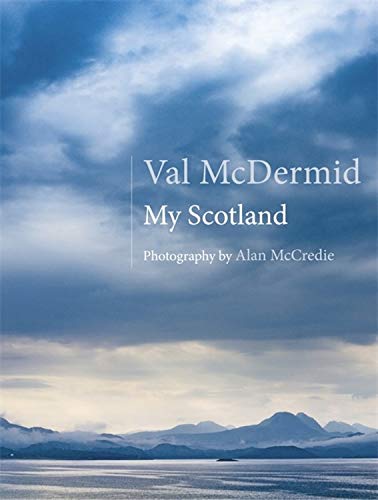
My Scotland by Val McDermid, with photographs by Alan McCredie, is published by Sphere, priced £20.00
David Robinson welcomes back fan favourite Jackson Brodie and a writer on top of her game.
Big Sky
By Kate Atkinson
Published by Doubleday
When it comes to crime fiction, I’m with WH Auden. In his 1948 essay “The Guilty Vicarage”, he described how, once he started reading a crime novel he was unable to write anything until he had finished it. And yet when he had done so, he forgot the book’s plot immediately and never had the slightest urge to re-read it. “If, as sometimes happens,” he added, “I start reading and find after a few pages that I have read it before, I cannot go on.”
I never knowingly re-read crime fiction either. Granted, I hardly re-read at all, what with life being so short and everything, but I just can’t see the point of picking up a puzzle whose answer I already know. There is only one crime novelist whose work I can ever imagine myself reading for a second time, and even then she probably doesn’t think of herself as a crime novelist in the first place.
It has been nine years since Kate Atkinson published her last Jackson Brodie novel, and her new one, Big Sky, reminds us what we have been missing. The plot, though intricate, isn’t the point. By the end of the book, when it spins out of its hitherto tight constraints for a big-picture, collapse-all-the-dominos finale, she seems to be positively revelling in its artifice.
But then again, I could say exactly the same thing about the way in which she starts the book too. Jackson is sitting next to his bored 13-year-old son Nathan watching the model ship naval battle staged for tourists on the lake at Scarborough’s Peasholm Park. When he was Nathan’s age, Atkinson points out, Jackson’s mother had already died of cancer, his sister had been murdered and his brother had killed himself. Yet Nathan’s mother Julia, she adds, “could go toe to toe with Jackson in the grief stakes – one sister murdered, one who killed herself, one who died of cancer. (‘Oh, and don’t forget Daddy’s sexual abuse,’ she reminded him. ‘Trumps to me, I think’).” Another couple of pages further on, and we are re-introduced to Tatiana, the Russian girl Jackson first met “in another lifetime when she had been a dominatrix and he had been fancy-free and briefly – ludicrously though it seemed now – a millionaire.”
All of this is the barest precis of Atkinson’s first two Jackson Brodie novels, Case Histories and One Good Turn, and you no sooner read it than you wonder whether anything plausible could conceivably come from such an extravagant gallimaufry of grief and good fortune. But Atkinson takes off on her own track. She both uses and then makes you forget the basics of genre fiction. She takes a cliché – the maverick cop, the sullen teen – out for a spin, and by the time she’s finished with it you’ve forgotten that it was a cliché to start with.
Let’s take another example: Vince Ives, middle-aged telecoms area sales manager living on the Yorkshire coast, and a central character in Big Sky. Here’s how Atkinson introduces him:
“He was grinding towards fifty and for the last three months had been living in a one-bedroom flat behind a fish-and-chip shop, ever since Wendy turned to him one morning over his breakfast muesli – he’d been on a short-lived health kick – and said, ‘Enough’s enough, don’t you think, Vince?’ leaving him slack-mouthed with astonishment over his Tesco Finest Berry and Cherry.”
I can imagine Atkinson mouthing “Yesss!” and clenching her fist as she finished that sentence. It is waspishly witty, but it is also a blatant stereotype of the put-upon mild-mannered middle manager nudging fifty who is also just about to lose his job. Vince’s friend Tommy’s neat freak trophy wife Crystal is another (“‘Yeah, OCD,’ she said triumphantly, as though she’d worked hard to acquire it”). But though they might start out as stereotypes, Atkinson’s characters are so delightfully described that the reader never thinks of them like that.
In Big Sky we are back in the seaside towns and villages of Atkinson’s native Yorkshire. She touched on this territory in her last Jackson Brodie novel, 2011’s Started Early, Took My Dog, in which crimes from the present also resurface in the present. Big Sky also sees the welcome reappearance of Reggie Chase, the plucky 16-year-old Scottish orphan last seen in 2010’s When Will There Be Good News? who resurfaces here as a rookie policewoman investigating a murder. A woman’s body has been found sprawled out on her garden lawn, her skull bashed in by a golf club (as is surreptitiously pointed out, this case is “only the thin end of the wedge”). The rest of the wedge takes us firmly into a Brexit-y Britain swirling with prejudice and sexism, as washed-up comedians like Barclay Jack (“who had done a gig for Britain First”) prove every time they take to the dilapidated seaside stage.
All of this is well handled, but neither that nor the reminders of Jackson Brodie’s other adventures are the real reason I enjoy Atkinson’s forays into crime fiction so much. For that, all you have to do is to go back to the scene I mentioned at the start of the book which (re)introduces the reader to Brodie. While watching that model ship naval battle with his son, he is also ostensibly working as a private eye shadowing a husband who is having an affair. Plotwise, it’s not a particularly significant scene, yet it is one that contains all the secrets of Atkinson’s craft and is worth looking at in detail.
For one thing, she doesn’t rush. That concatenation of the past tragedies in Brodie’s life I mentioned earlier might make you think that she does, but really it’s the opposite. His mind idles, and there’s a whole stream of inconsequential consciousness the differences between his son Nathan’s teenage years and his own. In the background, the Battle of the River Plate is being refought with 20-foot model boats on the park lake, and some of the Tannoy commentary drifts into the story, a little hint of the more mannered, orderly wartime world that overhung Jackson’s childhood and now looks just as absurd to Nathan as Jackson’s (true) claim that the model boats actually have people inside them, steering and firing the guns. So it passes, this summer afternoon, Jackson thinking of his own schooldays, Nathan slumped and sarcastic and bored next to him, the dialogue between them stitched with irrelevancies and mutual incomprehension. And ever so carefully, and with more confident whimsicality than you can imagine from any other writer, Atkinson launches the plot on that park lake without a single ripple, and you, dear reader, will be hooked before it has even before it has got into gear.
And who knows, one day we might both of us pick up Big Sky and start re-reading Kate Atkinson. Because she’s worth it.
Big Sky by Kate Atkinson is published by Doubleday on 18 June, priced £20.
Naomi Mitchison was a force of nature, and BooksfromScotland is delighted to see a new edition of Jenni Calder’s biography of this amazing writer and woman. Carla Sassi discovers that this is a biography that shall surely herald a new generation of fans.
The Burning Glass: The Life of Naomi Mitchison
By Jenni Calder
Published by Sandstone Press
‘To understand just one life you have to swallow the world’ says Saleem Sinai, the narrator of Salman Rushdie’s novel Midnight’s Children. If this is true of any life, it applies even more so to that, extraordinarily long and rich, of Naomi Mitchison (née Haldane 1897 –1999) — a life that literally, and not just metaphorically, embraced the whole planet, well beyond her native Scotland and her second, equally loved adoptive home, Botswana. A polymath, an avid traveller, a Scottish nationalist, a socialist, an aristocratic cosmopolitan, a feminist, a most prolific writer, an outspoken advocate for those who were oppressed and silenced (‘the people who have not spoken yet’), Mitchison was a free spirit — generous, brave, relentless and indomitable. She championed the local, but always in the name of a universal vision of social justice. She came from an exceptionally privileged background, both socially and culturally, but she felt in many ways more at home with the Highland fishermen and the Bakgatla tribesmen of Botswana. A writer of historical novels often set in the ancient past, she was also an attentive recorder of her own time and life, leaving behind a wealth of journals, diaries, letters, sketches and three autobiographical volumes. To bridle such complexity one is tempted to borrow Muriel Spark’s concept — the quintessentially Edinburgh ‘nevertheless’ that can ineffably and effectively bridge the most incompatible of opposites. ‘I find that much of my literary composition is based on the nevertheless idea. I act upon it,’ said Spark in her essay ‘What Images Return.’ An Edwardian child, Mitchison lacked Spark’s postmodern irony, but she could have easily identified with her younger colleague’s transcending of conventional binaries through ‘action’ — by ‘performing’ conflicts in her own writing and life she made continuous and compatible stances and experiences that for many were irreconcilable. To engage in the writing of the biography of such a charismatic and kaleidoscopic figure, when she was still alive and vigilant, and very much in control of the narrative of her life, must have been an extraordinarily daunting task even for Jenni Calder — herself an established writer, a distinguished scholar and in a relationship of friendship and familiarity with her subject.
First published by Virago Press in 1997, only two years before Mitchison’s death (at the age of 101), Calder’s biography is a remarkable tour de force — embracing the complexity of its subject and going a long way to doing justice to her multifaceted career. Originally titled The Nine Lives of Naomi Mitchison (a title that, after reading the biography, is bound to sound more an understatement than an exaggeration), this is a most thorough and thoughtful work, comparing and balancing out Calder’s research with Mitchison’s comments and memories as they surfaced in the conversations with her biographer and emerge from a vast corpus of autobiographical writings. Calder’s admiration for her subject is (understandably) strong, but not unconditional, as she goes a long way to pinpoint the grey areas that characterised Mitchison’s endeavours and experiences by discreetly letting them emerge and define by themselves, without pointing her finger at them. From Mitchison’s intellectual and competitive bond with her brother Jack, to her affectionate but controlling and possessive relationship with Linchwe, the Bakgatla chieftain whose friendship introduced her to Africa, the reader is provided with numberless cues as to the many tensions and contradictions that animated Mitchison’s long life.
There other features that make this biography remarkable, and they all have to do with Calder’s approach to her task. Accurate and painstakingly researched, The Burning Glass, aims at memorialising an extraordinary writer and intellectual in the most possible ‘objective’ way, but also at discreetly acknowledging and recording that complex bond that ties any biographer to his/her subject. This is most obvious in the last section of the biography — chapter 9 (‘Personal and political’) — where the process underlying the writing a life subtly takes centre-stage, and where the lives of Calder and Mitchison intersect and reveal more than accidental similarities and parallelisms. A bond made of affinity and mutual understanding unfolds from their first chance encounter on a flight from Nairobi to London in 1970, to the many visits Calder paid to Mitchison at her Carradale ‘ancestral’ home when working on her biography. ‘By this time’, Calder recalls ‘I had become part of the story I was going to tell’. As the notes she took in the course of those visits are woven into the story of Mitchison’s life, Calder becomes aware that ‘the biographer of a living and co-operative subject cannot avoid stepping on to the stage’ — ‘I was a character as well as audience’ she explains (p. 379).
The revised edition published by Sandstones has a new (more convincing) title, and a new epigraph — ‘For intensity there must be: a focus, a burning glass, a painful shaping’ — both borrowed from Mitchison’s essay ‘Poets and Prophets’ in What the Human Race is Up To (1962). Very much in line with her approach to biography writing, Calder lets Mitchison ‘speak for herself’ and selects from her writings a single image — conflating intensity with burning passion — to provide a unifying perspective on her tumultuous existence. There are other (minor) adjustments and corrections, and there is a thoughtful foreword by Scottish-based writer Ajay Close, but on the whole The Burning Glass does not represent a radical departure from the first edition. For those of us who enjoyed the 1997 edition, it is certainly worthwhile, after almost 20 years, to go back to it, and re-discover both Mitchison’s legacy and the subtle art of Calder. For those who know little (or nothing) about Mitchison, Calder’s biography represents no doubt the best starting point for a journey of discovery.
The Burning Glass: The Life of Naomi Mitchison by Jenni Calder is published by Sandstone Press, priced £9.99
Sarah Jane Douglas brings us a hugely inspiring, touching and funny memoir that teaches us all about the value of perseverance. All through the challenges of life, she finds herself in Scotland’s mountains, finding solace and constancy and some breathtaking landscapes. In this extract, we find Sarah Jane putting her best foot forward with her son, Marcus on the majestic Beinn Eighe.
Extract taken from Just Another Mountain: A Memoir
By Sarah Jane Douglas
Published by Elliot & Thompson
In the same way I had once used the bottle and blow to bury all the hurt, I now found salvation in the freedom of wide, open spaces. Among mountains I enjoyed a natural high. And I wondered, momentarily, if it was a similar pain that my father had tried to blot out when he chose to drink himself to death. He chose drink and drugs. I had chosen to live, to find a more positive outlet for my turmoil, and to be there for my sons.
As Marcus and I climbed out from the dark confines of the corrie on Beinn Alligin and topped out onto a fairly flat plateau, we were rewarded with sudden and extensive views over sparkling waters to Skye, Harris and the low-lying profile of Lewis. We were standing high on the north-western edge of Scotland, with nothing between us and the islands of Skye and the Outer Hebrides, dark, angular outlines across the Minch. Behind and now way below us, Loch Torridon glinted in still, blue perfection. Rising steeply above its southern shore stood Beinn Damh, smaller than its neighbours but stark and prominent with endless peaks sweeping gracefully away behind it. We couldn’t help but keep stopping to admire the grandeur – while also enjoying some respite from the hot work. With a film of sweat across our foreheads we climbed higher still to reach the first summit, where we had a well-earned rest. We weren’t even bothered by the flies that buzzed around us as we ate some lunch. Liathach dominated our view to the east, that intimidating yet fascinating terraced sandstone monster. And behind us, almost five kilometres in length, was the rest of our ridgewalk. After our break, still feeling the heat, I whipped off my sweat-soaked vest before moving on.
We could admire our surroundings properly now, like a work of art, the sandstone ridge gently curving in a serpentine line all the way towards the second summit, Sgurr Mor, and beyond it the Horns. We carefully descended the steep, narrow ridge and the rock felt warm against the palms of our hands as we lowered ourselves over awkward drops that presented a stretch too long for our legs. Being with Marcus, and given the combination of good weather, incredible scenery and the challenge of the terrain, I felt consumed by an enormous sense of joy, and it seemed no time before we’d reached the col between the two Munro tops – only to have to begin another steep climb upwards. After ascending a smaller top, to our right a fantastically dramatic gash – the Eag Dubh gully – split the ridge. We paused momentarily to peer down and marvel at all the fallen rocks and rubble that had been weathered away and were now lying strewn on the corrie floor. I turned my face from the dark, shadowy confines of the gully and continued the trail, so brightly illumined in sunshine, to the height of Sgurr Mor. It felt good to be up here, to be part of nature’s glorious mountain canvas. We’d done it together, me and my boy, and we couldn’t stop grinning foolishly at each other, flushed with pleasure at our achievement.
From our second summit Liathach appeared even more imposing. My eyes remained transfixed on this isolated bastion with its precipitous walls. I knew one day I’d have to climb it, to satiate my curiosity. Beyond it were even more jagged tops. Land dressed in purple and deep-blue hues swept away into the distance to merge with the heated haze of the day and vastness of the sky, and I surrendered myself to the magic of the silence and beauty. Turning through 180 degrees, I gazed upon the Dundonnell and Fisherfield Hills, yawning off to the north. We sat quietly together, Marcus and I, tired but satisfied by the physical challenge.
We would have been content to stay there on the mountain’s peak, but we still had to tackle the three pinnacles, so off we sauntered towards the Horns, with Beinn Dearg and Beinn Eighe as their backdrop. Scrambling over the airy sandstone towers held an attraction of its own. It was basically easy rock climbing and added an element of real fun to the day. Finding foot and hand holds with natural ease, Marcus scrambled up and down the rocky architecture of the Horns, loving every second of it. The warm wind blew more gustily, but, unfazed, he continued his route-finding with the utmost confidence, and his beaming smile as we arrived on the final pillar said more than the spoken word – almost.
‘Can I call Dad?’ he asked.
‘Yeah, course you can,’ I nodded, handing him my mobile.
‘Dad was up here a few weeks ago, but he told me didn’t manage the Horns because his legs were too tired for it. I can’t wait to tell him I’ve done them,’ he said gleefully.
‘Dad! Guess where I am?’ sang Marcus. ‘I’m on the last Horn on Beinn Alligin.’
‘Well done, Son,’ I heard his father say, ‘I’m going to have to attempt it again then.’
*
Coming off the final ridge felt rough on my knees, but I watched with pride as Marcus skipped and bounced his way downwards. Stopping in his flight, he turned to look at me, his face all tanned. ‘Mum, I really enjoyed myself today,’ he said. I beamed back, and with that he bounded off again. Marcus and I had always been close, and it was wonderful to be able to share these experiences with him.
Left alone with my thoughts for a moment, my mind wandered back to a conversation I’d had with a random stranger I’d walked this same bit of trail with weeks earlier.
‘I want to climb Kilimanjaro. It’s the highest free-standing mountain in Africa. It borders Tanzania and Kenya . . .’ When he had said that I’d immediately thought of Mum. She had lived in Kenya as a kid. An idea started to take form.
As Marcus and I neared the bridge and the path that would return us to the car, I was convincing myself more and more that it should be me making the trip to Africa. If I felt released from the burden of my grief on the heathers and hills at home, maybe Kilimanjaro would expunge it for ever. I could climb that mountain as a personal tribute to Mum – and raise some money for charity too. It made sense.
‘Hey, Mum,’ Marcus called, breaking my train of thought. ‘I found a stone and it’s got a smiling face!’ He pressed it into my hand; sure enough, iron oxide within the rock had created the illusion of two eyes and smile. Perceiving it as a good omen, I took it home as a reminder of our day. I was now a woman with a plan.
Just Another Mountain: A Memoir by Sarah Jane Douglas is published by Elliot & Thompson, priced £14.99
The history and character of Edinburgh infuse every piece in Stewart Conn’s new collection. Conn’s poems, paired with John Knight’s detailed drawings evoke the spirit of the city and its unique aspects. Knight’s pieces are not simply illustrative: the poems and images complement and enhance each other, showing us how the essence of the city infuses every stone.
Extract from Aspects of Edinburgh: Poems and Drawings
By Stewart Conn and John Knight
Published by Scotland Street Press
From 2002 to 2005 Stewart Conn was Edinburgh’s inaugural makar, or poet laureate. Publications include An Ear to the Ground (Poetry Book Society Choice); Stolen Light (shortlisted for the Saltire Prize), The Breakfast Room (2011 Scottish Poetry Book of the Year) and most recently a new and selected volume The Touch of Time (Bloodaxe), plus The Loving-Cup, Estuary and Against the Light (Mariscat Press). Distances, a personal evocation of people and places, was published by the Scottish Cultural Press. He also edited 100 Favourite Scottish Poems and 100 Favourite Scottish Love Poems for Luath Press. Of his plays The Burning, The Aquarium, Play Donkey and Clay Bull were premiered by the Edinburgh Royal Lyceum Company; while Herman and Hugh Miller won Fringe First Awards. A fellow of the RSAMD and an honorary fellow of the Association of Scottish Literary Studies, he can be heard reading from his own work on The Poetry Archive.
Closely allied to his work as an architect with Historic Scotland (now Historic Environment Scotland), John Knight’s drawing skills were honed through observation of the many historic buildings the length and breadth of Scotland he worked on for 25 years. In 1974 he was commissioned by East Lothian District Council to draw thirteen East Lothian villages for heritage display boards – published subsequently as a book – requiring some 90 sketches. More recently he was asked, by the local history society, to prepare a set for East Linton. Also in the 1970s he was commissioned to provide illustrations of the houses associated with Robert Louis Stevenson in Edinburgh for James Pope-Hennessy’s biography of the author. His work has been included in mixed exhibitions at galleries including the Talbot Rice and the Fine Art Society, and a collection of his drawings taken into the Historic Environment Scotland archive will shortly be accessible online. On retirement as a Principal Architect in 2002 he was awarded the OBE.
From Arthur’s Seat
North-east the Firth, a bracelet
merging with mist; south-west
the Pentlands, sharply defined.
Directly opposite, the Castle.
A sudden gust makes me lose
my footing. Gulls slip past,
eyeing us disdainfully.
Strange to contemplate this spot,
gouged cleanly out, as going back
millions of years; its saucer
fire and ice, volcanic rock
shaped by glaciers,
where now cameras click,
and lovers stroll in pairs;
while those golfers
on the fairways below
keep their heads down
and eyes on the ball –
oblivious of the shadows
furtively closing in,
the imminence of rain.
Tempting, watching us
here, to deduce
the same; whereas
often when happiest,
we are most conscious
of darkness. See, it sweeps
towards us, the rim of an eclipse.
Aspects of Edinburgh: Poems and Drawings by Stewart Conn and John Knight is published by Scotland Street Press, priced £9.99
BooksfromScotland would love to congratulate Theresa Breslin on being awarded the OBE for services to childrens’ literature in the Queen’s Birthday Honours. Well deserved! We absolutely love her illustrated treasury books of folk tales, published by our good friends at Floris Books, and featuring the amazing artwork of Kate Lieper. An Illustrated Treasury of Scottish Castle Legends, the new book by this dream team, features stories from iconic castles including Edinburgh, Caerlaverock and Eilean Donan. In this extract, find out how Dunvegan Castle was saved by a magical ‘faery flag’.
Extract taken from An Illustrated Treasury of Scottish Castle Legends
By Theresa Breslin, illustrated by Kate Lieper
Published by Floris Books
The Faery Flag of Dunvegan Castle
For eight centuries, Dunvegan Castle on the Isle of Skye has been the home of the MacLeod Clan. The MacLeods have held on to their ancestral seat longer than any other family in Scotland.
Perhaps this is due to the fact that they own a magical flag, Am Bratach Sith, which can summon the Folk of Faery/and to help them in times of need. It is spun from faery silk and gossamer, and stitched with tiny stars. Before the land bridge was built, Dunvegan Castle was surrounded by water. Visitors came by boat through the iron-barred sea gate. It was said that a sleeping Dragon, dark and dangerous, had its lair in a deep cave below the castle walls …

Eight centuries ago, when Price Leod married the daughter of the Seneschal of Skye, the newlywed couple came to live in the castle at Dunvegan. Thus began the great Clan of MacLeod, who guided and guarded their kith and kin from this fortress on a craggy isle facing out to the North Atlantic Ocean. The only way into the castle was through the iron-barred sea gate, which opened to allow boats to enter along a narrow canal. With the mountains to shield them and the waters of Loch Dunvegan all around them, the MacLeods believed their castle to be safe from invaders. No one paid much attention to the old tales of a dark and dangerous Dragon living in a cave below the castle walls.
Now, it is known that the men of Clan MacLeod are invariably handsome, and one young chieftain, a descendant of Leod, was no exception. Every lass on Skye fell in love with him, but he never met anyone whom he might love in return. That is, until the day he was walking by the shore of Loch Dunvegan and saw a girl sitting singing upon a rock. The song she sang had no words, but the melody was so sweet and haunting that Chieftain MacLeod paused to listen. He approached the girl, who turned her head and smiled. And at that moment love filled his heart. She too was enchanted with him. But, when he said that he wanted to ask her father for her hand in marriage, she looked troubled.
The young chieftain soon found out why. The girl was a princess of Faeryland and her father, the king, did not look kindly upon any mortal man who wished to take her away from her home.
“Humans age and die more quickly than us,” the king told his daughter. “This union would bring you heartache and sorrow.” “If heartache and sorrow is the price that I must pay for love, then so be it,” the princess replied.
The king was impressed by her spirit and courage, and he agreed that the young couple could marry… on one condition. “After a year and a day my daughter must return to Faeryland, bringing nothing with her from the human world.”
This was a harsh condition, but the chieftain and the princess decided that they would enjoy the time they were allowed. They spent spring wandering happily on the hills among the yellow whins. They spent summer sitting cosily together on the sands by the shoreline. They spent autumn brambling for wild berries. They spent winter singing and dancing and feasting by the fire. Their days were filled with happiness, none so much as the morning that their son was born.
All too soon a year and a day was completed, and, at midnight, they knew that they must obey the condition placed upon them by the king. The princess bade a sad farewell to her husband. Before she left she made him promise that he would not let their son cry for long without being comforted.
“Supposing our son is in danger?” he asked her. “Would you never be allowed to return to help him?”
At this she replied, “You, the MacLeod of MacLeod, have treated me, a royal faery princess, with honour and love. And so, should Clan MacLeod be in danger, the whole Faery Host will come to their aid.” She regarded him solemnly and then said words he did not understand:
Fear not the Dark Dragon of Dunvegan.
If it should ever awake from sleep, then,
though I am gone from your side, you must summon me.
Send me a signal, and the Faery Host
will fly to your aid.
With a heavy heart the chieftain watched his faery wife leave him.
As the days passed, his sorrow did not lessen but increased in measure. Another year went by, with sadness hanging over the castle like grey mist.
On the eve of the anniversary of his wife’s departure, the chieftain sat silent in the castle hall, his head sunk in his hands. To cheer him, his friends and relations decided to organise a clan ceilidh for the next day. They opened the iron-barred sea gate so that members of Clan MacLeod arriving from the Islands and the Highlands could row their boats through the canal into Dunvegan Castle.
In the tower room that was his son’s bedroom, the chieftain spoke to the child’s nursemaid. “Be watchful over my babe this night of all nights,” he told her. “I am charged with not letting my son cry without being comforted.” And the chieftain heaved a huge sigh, for, since his wife had left, many a long and lonely night he himself had cried without being comforted.
The nursemaid sat by the baby’s cradle and she rocked him gently to sleep.
As the sun set on the Isle of Skye, the noise of feasting sounded throughout Dunvegan Castle. As the food was served, the clatter of crockery and clash of cutlery reached the tower room where the young babe slept.
The child snuffled in his sleep.
The nursemaid rocked the cradle and the child fell silent.
As the moon rose on the Isle of Skye, the noise of storytelling sounded throughout Dunvegan Castle. As the tales were told, the lilt of laughter reached the tower room where the young babe slept.
The child turned over in his sleep.
The nursemaid rocked the cradle and the child was still.
As the hour of midnight approached on the Isle of Skye, the noise of the ceilidh sounded throughout Dunvegan Castle. As the dancing began, the merry music of fiddle and frolicking reached the tower room where the young babe slept.
The child opened his eyes.
But no nursemaid was there to rock the cradle. She had tiptoed from the room to lean over the staircase and watch the people whirling in reels and jigs.
The child did not slip back to sleep.
No nursemaid was at the cradle…
…and no guard was at the sea gate.
When the sun had set on the Isle of Skye, and the noise of the feast sounded throughout Dunvegan Castle, the clatter of crockery and clash of cutlery reached the cave where the Dark Dragon slept deep below the castle walls.
The Dragon snuffled in its sleep.
When the moon had risen on the Isle of Skye, and the noise of storytelling sounded throughout Dunvegan Castle, the lilt of laughter reached the cave where the Dark Dragon slept deep below the castle walls.
The Dragon turned over in its sleep.
When the hour of midnight had approached on the Isle of Skye, and the noise of the ceilidh sounded throughout Dunvegan Castle, the merry music of fiddle and frolicking reached the cave where the Dark Dragon slept deep below the castle walls.
The Dragon opened its eyes.
With no one to rock the cradle or comfort him, the child began to cry.
The Dark Dragon began to growl.
No one heard the sobbing of the child.
No one heard the scrabbling of the Dragon’s claws, the beating of its enormous wings, the screeching of its hideous voice.
Midnight struck the hour. The chieftain thought again of his lovely wife – the faery princess from whom he’d parted one year and one day ago. He remembered the promise he’d made to her: that their son would never cry without being comforted. He raised his head. Through the noise of the feast and the chatter of the stories and the music of the ceilidh, he heard the sobbing of his son.
With the clock bell chiming, he hurried from the hall and raced up the stairs of the tower. Faster and faster he ran, the crying becoming louder and louder as he neared the nursery room. But, just as he put his hand on the door, the cries became a gurgle of delight. The child crowed in happy contentment.
The chieftain stopped in surprise.
Slowly he opened the door.
The shadowy figure of a woman was leaning over the cradle. He heard his son murmur: “Mama!”
The last bell of midnight chimed. A gleam of light flashed at the window. And by the time the chieftain entered the room, he was alone with his son.
In wonderment he lifted his smiling child from the cradle and hugged him. There was no doubt in his mind that the figure he had seen was his wife. And although it saddened him that she could not stay, it was also a comfort that she was close by and watching over them.
When the chieftain laid the child back to rest he noticed a silken shawl draped over the cradle. Had his faery princess left it deliberately? As he bent to tuck it round his son, the window glass shattered. A clawed foot scraped at the frame, and a fierce yellow eye peered into the room!
The Dark Dragon of Dunvegan Castle had awoken, crashed through the open sea gate and was now inside the castle grounds!
The beast spotted the baby in the cradle. It thrust forward its mouth and opened up its jaws…
There was a shout from below and a rainstorm of arrows struck the Dragon’s scaly body. With a roar of anger it turned and flew down into the courtyard.
The chieftain ran to the window. His clansmen surrounded the thrashing beast. But the Dragon lashed its tail in a circle and hurtled them into the loch. Beating enormous wings, the beast took off, heading once again towards the tower and its prey.
The chieftain drew his claymore.
The Dragon’s mighty face was at the broken window and murder was in its mind.
It was not within the reach of his sword, but the chieftain held fast in the face of danger, for he would not leave his son to run and save himself.
The child cried out.
The chieftain glanced towards the cradle. His son had wriggled free from his shawl of faery gossamer.
The Dragon’s eyes shone with rage.
The child cried out a second time.
The chieftain glanced again towards the cradle.
His son had kicked the shawl towards him.
The Dragon drew in a long breath, preparing to belch out a firestorm of red-hot flames.
A third time the child cried out.
And for a third time the chieftain glanced at the cradle.
The shawl was floating free in the air.
And suddenly the chieftain remembered the words of his faery bride and he understood.
Fear not the Dark Dragon of Dunvegan.
If it should ever awake from sleep, then,
though I am gone from your side, you must summon me.
Send me a signal, and the Faery Host
will fly to your aid.
Swiftly the chieftain grasped the shawl. He spun around to stand alone before the Dark Dragon of Dunvegan Castle. Raising his hand, he waved the shawl like a flag in battle and called upon his one true love to come to his aid.
And instantly, there was rushing wind and the Faery Host were on either side of the chieftain, in the air and on the earth. Above, around and below the tower, the magical horde battled the Dragon. And with a thousand spears they brought down the Dark Dragon of Dunvegan Castle.

When the chieftain’s son grew to manhood he declared that he remembered his mother rocking him to sleep that fateful night when she left him wrapped in the Faery Flag. And he also clearly recalled her promising that the Faery Flag of Dunvegan Castle would rescue the MacLeods from death three times more.
Twice more, indeed, the Faery Flag has saved Clan MacLeod. The first time, Clan MacDonald set fire to Dunvegan Castle. As the MacLeods were escaping, their chieftain snatched up the Faery Flag and, immediately, the Faery Host appeared. Armed with claymores, they drove the MacDonalds into the sea. Centuries later a pestilence came upon the Isle of Skye, destroying crops and cattle. The MacLeod chieftain, who knew the old stories, carried the Faery Flag through the fields, and, as he went, the Faery Host went with him, and the crops and cattle were healed. So Clan MacLeod may use the flag only one more time to call upon help from Faeryland.
The Faery Flag remains in Dunvegan Castle, lying there until it may be needed. It is treasured by Clan MacLeod, for within it rests the powerful love of a beautiful faery princess for a mortal man and the baby she bore him.
An Illustrated Treasury of Scottish Castle Legends by Theresa Breslin and illustrated by Kate Lieper is published by Floris Books, priced £14.99
ALSO ON BOOKS FROM SCOTLAND
-

David Robinson Reviews: The Loch of the Bees
‘The past’s current flows through the characters in his fiction so strongly that it almost becomes t …
-

The Nightkeeper’s Apprentice by Jude Reid
‘She’d never seen anything like it. The whole sky was lit up in ribbons of colour – blue, green, yel …
-

David Robinson Interviews: Gavin Francis
‘He’s not my GP so I can’t say this for sure, but based on this book – wise, informed, well-written, …
-
The Cromarty Library Circle by Shona MacLean
‘No one in the room could have been unaware of what it was that Dr Fraser alluded to. The horrors pe …
-

In Search of Gems by Kenneth Steven
‘It still amazes me that these magnificent shells grow in a river. Never mind whether they have pear …
-

Winterbourne by Elisabeth Wolf
‘The Coopers stared at each other for a second, two seconds. ‘It’s a sign—’ said Cooper.’
FEATURED AUTHOR:
Allan Gaw

Allan Gaw studied medicine at Glasgow University and trained as a pathologist. Having worked in the NHS and universities in the UK and the US, he took early retirement and now devotes his time to writing. His published non-fiction works include medical …