


EXPLORE ISSUES



‘But if it’s language and landscape that unlocks Hadfield’s commitment to Shetland – and I defy you to find a more compelling example of what it feels like to fall in love with a place – its people play their part too.’
David Robinson finds himself falling in love with the Shetland Isles all over again reading Jen Hadfield’s beautiful and brilliant memoir of her time living there.
Storm Pegs: A Life Made in Shetland
By Jen Hadfield
Published by Picador
Dünnerseitentraurigkeit, I’m going to call it: that melancholic realisation that you have, between right-hand thumb and finger, only a short chapter left to read of a book you have enjoyed. And if only Google Translate did Shaetlan as well as German, I would be able to suggest an even more precise description of the effect the final chapters of Jen Hadfield’s latest book is likely to have on a reader.
Storm Pegs: A Life Made in Shetland, the first book Hadfield has published since the April announcement that she has won a £140,000 American literary award for her poetry, is a potent mixture of lyricism and precision. Some of the precision comes from Shaetlan itself: this is a dialect that has words for which there is no equivalent in English, like da ar’ris ‘the last weak movement of a tide before still water’ or whaarm, for ‘the edge of an eyelid on which the eyelash grows’, a cornucopia of nouns for describing wind, fog and weather, and a whole mini-vocabulary of workaround nouns that fishermen used while at sea to avoid annoying the Nose sea god Aegir.
Hadfield first realised the range and potential of the dialect in a booklet she was given while on a visit to Fair Isle in May 2005. The booklet – anonymous, incomplete – was a reprint of a 1945 hardbound dictionary, A to P, An Old Record of FAIR ISLE Words With Phonetics. It changed her life. A’, she read, ‘All, everything.’ Aanda, ‘To keep a boat in one position against wind and tide.’ As she turned the pages, something unlocked within her. She was in Fair Isle as a writer-in-residence, but the thought of settling down on the Northern Isles hadn’t yet crossed her mind. In truth, she had writer’s block. Yet the more she read of A to P, the more it dissolved, like sea-mist in the sun.
Oddly, perhaps, for a book with a sub-heading that at least hints at memoir, Storm Pegs hardly tells you anything about the pre-2005 Hadfield. Fair enough. She’s modest, with a lot to be immodest about (youngest poet to win the TS Eliot Prize, to say nothing of the Windham-Campbell Prize she’ll be picking up at Yale in September). ‘But when A to P fell into my hands,’ she writes, ‘it felt like I could suddenly, like a bee, see a brand-new spectrum of colours’.
At first, it was Shaetlan itself that turned the key: its human scale, its inherent poetry (pipper, to shake, sprikkel, to flounder, as a fish out of water or a woman in her lover’s arms). But then it became the place itself that made her want to live there. Yes, she sometimes felt a bit of a fraud, a sooth-moother from Cheshire and Edinburgh, Glasgow and Strathclyde universities coming up and falling viscerally in love with, it seems, everything about the archipelago’s unforgiving landscape. But just as, when you’re in love, the past and the present disappear and you live in an endless present, so it was here: driving over a hill, with Burra in front of her in the mid-distance and Foula hovering magically on the horizon, she caught herself swearing softly, continually, under her breath at the impossible beauty the islands she was now learning to call home.
Once moored in her own caravan, on a long-term project to build a house on Burra, she set about obsessively exploring her surroundings, come stormy hell or high water or often both. Her neighbours probably thought her mad, the way she headed off at all times of the day, no matter the weather, for no discernible purpose. She, though, was in her element(s): place was always central to her poetry, but there was so much to explore, to fit into (new) words. ‘I stopped writing love poems to unavailable men and started writing love poems instead to ootadaeks’ [adv: outside the hill dykes, used metaphorically to mean a place that isn’t someone’s normal place of abode]. ‘Praise poetry was all that I could write.’
She has a poet’s eye for detail, spotting for example, ‘a jellyfish, like a fat nightie, plump and pulse by’, while ‘the spray reveals brief blink rainbows, like secret writing, sharp and clear as lemon juice’ yet this sometimes tips over into the wildest lyricism: ‘Approaching the equinoxes,’ she writes, ‘it becomes apparent that where we really live, in Shetland, is inside a rainbow, writ large in upwellings of colour, wrung out in floods of light. Surrounded by lochans and the changing sea, birled about by changing weathers, we live inside the prism; appearing and disappearing with the flexing sun.’
But if it’s language and landscape that unlocks Hadfield’s commitment to Shetland – and I defy you to find a more compelling example of what it feels like to fall in love with a place – its people play their part too. The wild swimming women splashing about in the bioluminescent summer-night sea. The folk musicians, so impossibly talented and yet grounded and self-deprecating. The neighbours stopping for a yarn or quietly dropping off a bag of herring. The friendships that made her not want to leave in the first place.
Oddly, even though I’m a townie and will be one till I die, I can understand all of this. Years ago, I found myself staying at the Fair Isle croft the poet and singer-songwriter Lise Sinclair shared with her boatbuilder husband Ian Best. There’d been a book launch in the island’s village hall, and the fiddler Chris Stout had come back with us. In the candlelight, with an audience of no more than half a dozen, a small folk music session began. To my shame, I can remember nothing more of it other than it was the most magical evening I have ever spent among strangers.
Lise is mentioned right at the start of Storm Pegs, which is dedicated to her memory, along with that of Yell artist, polymath and former GP Mike McDonnell. I knew both of them, however briefly, just as I know at least another dozen writers, musicians and artists from the islands – a higher proportion than from almost anywhere else in the country, and certainly from anywhere with a population of less than 23,000. If Shetland were to make a case for being the most creative part of the country, I’d find it difficult to disagree.
Certainly right now it’s the least dark part of the UK, with no actual night and just over an hour of twilight. In Storm Pegs, Hadfield writes about walking up a hill with a neighbour who wants to see if the sun will set with a Green Flash. (I’ve never seen that phenomenon, so I look it up on the internet.) The neighbour doesn’t actually witness a Green Flash, but instead he points out the noctilucent clouds, which are, he says, quite rare because they are very high up and reflect the sun’s rays from the other side of the world. I look that up too.
I carry on YouTubing, and suddenly there is Lise Sinclair. It’s 2010 – the year I visited her and Ian – and some Norwegians sailors have filmed a folk music session at her croft. Maybe one of her sons had come back from Norway in a boat Ian had built: I vaguely recall something about that. Anyway, she is singing, playing guitar and flute, and apart from the fact that it’s daylight, it reminds me of my time there and what I loved so much about Shetland: that the people I met were so kind, generous, interested and interesting, obviously resilient (sailing from Norway, anyone?), somehow not as stuck in their own little worlds as we townies are, a bit more freed from timetables and routine, the way you are when you can’t fly back to the mainland if the wind on the island’s airstrip is more than 20 knots or so.
There’s a man straight in front of the camera playing the guitar. I’ll never forget his face, but Storm Pegs tells me his name: Neil Thompson. He was the skipper of The Good Shepherd IV, the ferry from Grutness to Fair Isle. As the island finally hove into view over the bow, I was vomiting copiously over the stern. Neil came down from the wheelhouse, and put his arm round my shoulder. ‘Don’t worry,’ he said, ‘these waters’ll get anyone. I’ve seen admirals in the Real Navy get as sick as dogs. You’ll be fine.’ Which not only was the kindest thing anyone could have said to me at the time but something I have never forgotten. If anyone knows him, I’d be glad if you pass that on. Ditto for Ian Best. Remember those noctilucent clouds, splendidly illuminating the night sky from the sunnier side of the earth? In a way, that’s how I remember my stay at his croft.
Finally, back to Neil Thomson. For 20 minutes on the YouTube clip I can see him strumming away, setting the rhythm for the elderly violinist to his left and the accordionist in the corner of the room. To his left, there’s Lise, as talented and beautiful as ever, though she died three years later of a brain tumour aged just 42. But Neil Thompson isn’t just an important stranger in my own life. He matters to Jen Hadfield too. Because when she came over to Fair Isle on The Good Shepherd IV, he gave her the copy of A to P that kickstarted her career as a poet.
‘People have asked me quite often what made me move to Shetland,’ she writes, ‘but that peerie book was at the very start of it all.’
Storm Pegs: A Life Made in Shetland by Jen Hadfield is published by Picador, price £18.99
ALSO ON BOOKS FROM SCOTLAND
-


Spring 2026 Round Up of Scots & Gaelic Releases
‘Discover Jansson’s uninhibited imagination full of love, kindness, and adventure.’
-

Walking Edinburgh’s Lost Railways By Robin Howie and John McGregor
‘In earlier times it was a site where lovers came to relax and dream, hence the beautiful traditiona …
-
David Robinson Reviews: The Loch of the Bees
‘The past’s current flows through the characters in his fiction so strongly that it almost becomes t …
-

The Nightkeeper’s Apprentice by Jude Reid
‘She’d never seen anything like it. The whole sky was lit up in ribbons of colour – blue, green, yel …
-

David Robinson Interviews: Gavin Francis
‘He’s not my GP so I can’t say this for sure, but based on this book – wise, informed, well-written, …
-
The Cromarty Library Circle by Shona MacLean
‘No one in the room could have been unaware of what it was that Dr Fraser alluded to. The horrors pe …
FEATURED AUTHOR:
Gabrielle Griffiths
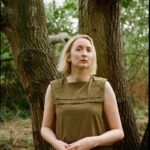
Gabrielle Griffiths grew up in Aberdeenshire and now lives in Brighton. She was a Madeleine Milburn Agency mentee in 2021 and is a graduate of the Curtis Brown Creative novel writing course. Her short fiction has been shortlisted for the Bridport Prize …
FEATURED PUBLISHER:
Luath Press

Luath Press takes its name from Robert Burns, whose little collie Luath (Gael., swift or nimble) tripped up Jean Armour at a wedding and gave him the chance to speak to the woman who was to be his wife and the abiding love of his life. Burns called one …