


EXPLORE ISSUES



‘Glowsticks and Tam o’ Shanter bonnets at the ready.’
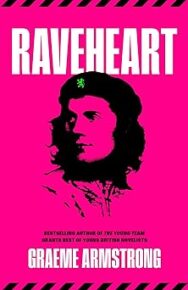
Raveheart is Graeme Armstrong’s second novel, set in a dystopian near-future Scotland where there is a government clampdown on electronic music. His hero, DJ Turbo sets up a rave resistance, determined to save their music scene, and the country itself. We spoke to Graeme Armstrong about the tunes that inspired the novel.
Raveheart
By Graeme Armstrong
Published by Fourth Estate
1. Hardcore Vibes – Dune (1995)
My cultural obsession and journey towards writing my second novel, Raveheart, started almost 25-years ago. Understanding the ’00s ‘Baby Raver’ generation means appreciating that while Gen-Z may be the so-called ‘Digital Natives’, Millennials were the true ‘Digital Adventists’ – the first teenagers to be unleashed online with seemingly infinite power at our fingertips. The films Human Traffic and Kevin & Perry Go Large set the tone. My early exposure to rave was at home through transmission on new technologies – broadband internet, Windows 2000, MSN Messenger, Limewire, and a new video-sharing website called YouTube. The Gen-X dance pioneers laid the road, and their scene was being documented and shared to us wide-eyed youngsters ready and waiting for our chance to experience the rapture in our own way. The PC-DJ revolution was beginning in Scottish teenage bedrooms, unleashing thousands of bootlegged underground tracks and creating a unique subculture. Then came The Time Capsule ice disco in Coatbridge, with its resident spinner laying down Paffendorf, Pulsedriver, Flip & Fill, Lasgo, and Ian Van Dahl on vinyl from a neon-lit booth in the corner. Good clean fun – at least for a while before the days of the young teams and territorial tribalism took over. I knew this was the perfect setting for my new tale. ‘Hardcore Vibes’ was one of the first tracks I heard sitting with my best mate on his family PC – where we would illegally download and burn hundreds of early sounds to CDs, then scribble on them with permanent markers: GRAEME’S RAVED UP MIX! They truly were wonderful days…
2. Gamemaster – Lost Tribe (1997)
The Trance revolution started in the latter half of the 1990s, spearheaded in the Balearic Holy Land of Ibiza which demanded an annual pilgrimage to those of age and persuasion. It was here this sublime genre found its home in the island’s superclub culture and spread into mainstream rave consciousness. We would make our own journey to the White Isle later and, admittedly, missed the best years. The widespread proliferation of Methylene-Dioxy-Meth-Amphetamine (MDMA) and other mind-altering substances paved the way for this definitive change in sound. Trance music is aptly named – its euphoric anthems, often progressive and uplifting, mimic the sensation of the Class A drug, creating those eyerolling, arms to the sky rhythms. Illegal – absolutely. Dangerous – without doubt… but many, myself included, chose to ignore the warnings to sample these forbidden fruits which became synonymous with this genre and era. Substance abuse isn’t the main theme of Raveheart – but does represent a Catch 22 scenario and complex moral debate beyond the novel. It dances with the drugs debacle and seeks to inform to reduce harm in an appropriate (and entertaining) way – neither condemning, nor glorifying drug use – but giving the cold, hard facts. These chemicals produce sensations people recognise as pleasurable, but there are serious ramifications for some, not to say the threat of death. Capturing this in a literary work can be fun, but must be handled with due care. It’s unlikely the culture and music would exist without the accompanying illegal narcotics, but these dangerous chemicals have brought regular controversy and occasional tragedy to a scene which claims to want a drug-free culture. Is this lip service or a genuine sentiment? I’ll leave that to adult readers to make up their own minds. I’ve lived drug and alcohol free for more than a decade and it was the best decision of my life, after years of abuse and eventually a nasty addiction. True gamemasters just say naw!
3. Elysium Plus – Scott Brown (2002)
Fantazia: Clash of the Titans. Braehead Arena, Glasgow, September 27th, 2007. This big hall rave event was unofficially a Rezerection reunion and an attempt by legendary organiser, Ricky Magowan, of Colours fame, to reunite the original event’s line-up for another lap around the sun. It just so happened to be 16-year-old Graeme Armstrong’s first major rave event. Scott Brown headlined, and I remember clearly ‘Elysium Plus’ being played, that powerful familiar tune creating universal excitement and ripples of devotional movement throughout the sea of colour before me. During the Noughties, Scotland was in the midst of a rave renaissance. Me and my friends went to tens of major events, drawing some of the world’s most renowned talent: Tiëtso, Ferry Corsten, Showtek, as well as plenty ’90s pioneers back in the mix, such as the late, great Mallorca Lee of Ultra-Sonic fame, an Ayrshire lad who created the culture we came to know and love with his unmistakable energy, passion for the tunes, and sound as f**k personality. The sacraments of the rave religion were as follows: pre-party in a mad scheme gaff dressed in weird and wonderful outfits, magical bus tour with tunes blaring (curated to correspond with the line-up), then into the belly of the beast for 9-12 hours of non-stop hardcore sound and demonic dancing. Then the ill-advised afters, and invariably missing school/work on Monday. What goes up… must come down. These parties lasted days and we truly stretched the stratosphere. Our time had finally come to enter the arena.
4. FTS – Showtek (2007)
Nothing lasts forever. The Hardstyles rebellion had begun and EDM was on the march. Trance’s days were numbered. It’s hard to believe it while you’re neck-deep in your specific moment, but it’s as fleeting and ephemeral as the chemical sensations which define the sensory experience of rave. The pioneers before us called us ‘Baby Ravers’ as a pejorative; we listened to high-tempo, hamsters-on-helium sounding vocals with cheesy Eurodance and Makina beats. This felt like a corruption of the early sounds as Piano House became Happy Hardcore and Bonkers, evolving into the likes of Scooter and the Clubland generation – us. When Showtek released Today is Tomorrow, their debut album, on the Dutch Master Works label in 2007, my mate introduced me to it and we sat on a Sunday night, hungover and coming down as this new, harder sound pulsed out the old beat-up stereo speakers. Era-defining tracks like ‘Party Lover’, ‘The Colour of the Harder Styles’, and the ultimate defiant track, ‘FTS’, were included. The winds of change were blowing. Showtek became gamechangers, brilliant showmen, and regulars on the Scottish scene in the ’00s. This fist-pumping anthem was an easy choice for the first of over 300 tracks I curated for Raveheart. The music tells the story as we descend into our cultural coup d’état. But don’t worry, for those not totally fanatical or even au fait with rave jargon, Raveheart is a classic hero’s journey filled with dystopian tropes. Our hero, DJ Turbo’s mission is simple: save the rave and liberate Scotland from an ultra-nationalist regime which has swept to power, with a flagship ‘cultural cleansing’ policy that includes the total outlawing of electronica. Raveheart is a love letter to rave reverence, and a political parable inspired by a fragmented and turbulent geo-political world beyond. Glowsticks and Tam o’ Shanter bonnets at the ready.
5. Stomp Your Feet – Hannah Laing, Marlon Hoffstadt, Caroline Roxy (2026)
Time, tide, and tunes wait for no one. My final track pays homage to the Scottish nu-gen in their seemingly unstoppable trajectory from digital infancy to world domination. The global Techno scene is thriving with new, vibrant talent and has found its Mecca in Berlin. Scotland has much exciting talent forging their own way too: Ewan McVicar, Mha Iri, Franck, Big Miz, Aisha, Laüz, La La, EVA, Will Atkinson, MISS FRENXH, David Rust, Jude Bradshaw, ASLØ, DIØR, Adam Shaw – and many others. Raveheart cherishes rave’s genesis and pathfinder legends, but pays due respect to the new cultural custodians and creators. It’s a tough industry to break through in, but one thing’s for sure: Scotland produces some of the most genre-defining music and top rave personalities who often lead the charge. Perhaps the most obvious current example is Dundee native, Hannah Laing, who started DJing in Ibiza as a teenager in the famous Highlander Scottish bar. Within a few years she was playing as a resident in Hï, starting her own label ‘Doof’, taking her iconic ‘Good Love’ to No.7 on the UK Singles Chart, and creating a major festival in Camperdown Park, Doof in the Park. This year, headliners such as Armin van Buuren and Paul van Dyk are scheduled to appear. Needless to say, my ticket has been secured for months. Hannah’s latest track ‘Stomp Your Feet’ is said to be inspired by her own movement behind the decks. For me, it symbolises electronica’s never-ending evolutionary cycle. Rave shapeshifts, but one thing remains a constant: our Alba homeland will always have a part to play in this scene. Wild crowds chanting an intoxicating incantation of ‘here we f**king go!’, taps aff, arms and Saltires held high, and our energy of rebellion – all makes for an electric atmosphere. Scotland the rave!
Raveheart by Graeme Armstrong is published by Fourth Estate, priced £16.99.
RELATED BOOKS
ALSO IN THIS ISSUE

 Quite Ugly One Evening: A Q & A with Chris Brookmyre
‘It begins with Jack Parlabane locked in a state room with a body: not only is he covered in the dea …
 David Robinson Reviews: Borrowed Land by Kapka Kassabova
‘The pain is real because the love of place is real.’
ALSO ON BOOKS FROM SCOTLAND
-

The Scottish Colourists: Art & Life by Alice Strang
‘Together the quartet embodied a new spirit in Scottish art and they are celebrated as Scotland’s le …
-

David Robinson Reviews: Our Noble Selves by Kate Atkinson
‘As I suggested at the start, there’s a whole heap of plot in Our Noble Selves – spies, murders, and …
-

‘They had spoken perhaps ten sentences each and it had already begun. Moira’s resentments, her preju …
-

Ayont the Thistle by Jim Mackintosh, Alan Riach and James Robertson
‘Nane ae this then but – ma hert daen its hing/ an yon wee smile ae yours in the saft smir ae the ga …
-

David Robinson Reviews: This Door of the Seas
‘He sees what he wants to. And it makes a kind of sense too – especially to colonists from Scotland, …
-

The Broons and Oor Wullie Celebrate their 90th Birthdays!
‘Whatever the future may hold, we can be sure that The Broons and Oor Wullie will always be a part o …
FEATURED AUTHOR:
Iain Hood

Iain Hood was born in Glasgow and grew up in the seaside town of Ayr. He attended the University of Glasgow and Jordanhill College, and later worked in education in Glasgow and the west country. He attended the University of Manchester after moving to …
FEATURED PUBLISHER:
Edinburgh University Press

Connecting people and ideas to inspire creative thinking, open new perspectives and shape the world we live in. Our ambition is to create a community of authors, editors, advisors and practitioners committed to publishing world-class academic research …