


ABOUT THIS BOOK
PUBLISHER: Cambridge University Press
FORMAT: Hardback
ISBN: 9780521809573
RRP: £59.99
PAGES: 268
PUBLICATION DATE:
March 10, 2011
BUY THIS BOOK
As an Amazon Associate and Bookshop.org affiliate we earn from qualifying purchases.
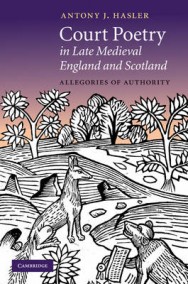
Court Poetry in Late Medieval England and Scotland: Allegories of Authority
Antony J. Hasler
This book explores the anxious and unstable relationship between court poetry and various forms of authority, political and cultural, in England and Scotland at the beginning of the sixteenth century. Through poems by Skelton, Dunbar, Douglas, Hawes, Lyndsay and Barclay, it examines the paths by which court poetry and its narrators seek multiple forms of legitimation: from royal and institutional sources, but also in the media of script and print. The book is the first for some time to treat English and Scottish material of its period together, and responds to European literary contexts, the dialogue between vernacular and Latin matter, and current critical theory. In so doing it claims that public and occasional writing evokes a counter-discourse in the secrecies and subversions of medieval love-fictions. The result is a poetry that queries and at times cancels the very authority to speak that it so proudly promotes.
Reviews of Court Poetry in Late Medieval England and Scotland: Allegories of Authority
"This work is a challenging examination of eight poets associated with royal courts, English and Scottish, between 1485 and 1528. Its concern is the way in which these writers engage with authority-royal, political and patronal, cultural, literary, and generic – and how those engagements shape the poetic I." –Renaissance Society of America "This is a careful study that attempts to set the literary construction of late medieval Scottish and English court poetry in the context of European humanism." –Parergon – Journal of the Australian and New Zealand Association for Medieval and Early Modern Studies
Antony J. Hasler
Antony J. Hasler is Associate Professor in the Department of English, Saint Louis University.
OTHER BOOKS BY THE SAME AUTHOR

ALSO ON BOOKS FROM SCOTLAND
-
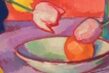

The Scottish Colourists: Art & Life by Alice Strang
‘Together the quartet embodied a new spirit in Scottish art and they are celebrated as Scotland’s le …
-

David Robinson Reviews: Our Noble Selves by Kate Atkinson
‘As I suggested at the start, there’s a whole heap of plot in Our Noble Selves – spies, murders, and …
-
‘They had spoken perhaps ten sentences each and it had already begun. Moira’s resentments, her preju …
-

Ayont the Thistle by Jim Mackintosh, Alan Riach and James Robertson
‘Nane ae this then but – ma hert daen its hing/ an yon wee smile ae yours in the saft smir ae the ga …
-

David Robinson Reviews: This Door of the Seas
‘He sees what he wants to. And it makes a kind of sense too – especially to colonists from Scotland, …
-

The Broons and Oor Wullie Celebrate their 90th Birthdays!
‘Whatever the future may hold, we can be sure that The Broons and Oor Wullie will always be a part o …
FEATURED AUTHOR:
Barbara Henderson
Barbara Henderson has lived in Scotland since 1991 and has an MA in English Language and Literature. She has previously worked as a relief librarian, receptionist and even a puppeteer. Her historical and eco-fiction for children is widely studied in sc …
FEATURED PUBLISHER:
Dalen

Publisher of European comic books in Gaelic and Scots, as well as in other Celtic languages.