


EXPLORE ISSUES



‘They had spoken perhaps ten sentences each and it had already begun. Moira’s resentments, her prejudices, her worry. The usual discordant ingredients comprising her tapestry of care.’
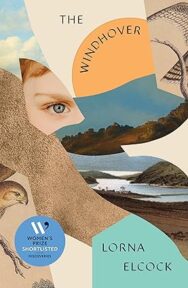
The Windhover is the debut novel by Lorna Elcock that tells the tale of a fractured family devastated by their shared history. This extract introduces siblings Ewan and Moira who haven’t spoken to each other in years.
The Windhover
By Lorna Elcock
Published by Dead Ink
‘Don’t answer it,’ Anthony counselled. ‘Nothing good ever comes of telephones.’
But it rang and rang, so Ewan stubbed out his cigarette in the ashtray where it rested so steadily on Anthony’s stomach, and leaned over to the telephone table.
‘Ewan?’ came a woman’s voice. ‘Is that you?’
There was a rush of cold, as though he had jumped into deep water. The shock knocked his breath out of him.
Moira. Her voice, twisting and straining its four hundred miles south along the line, and to him: to Ewan Cameron, painter of more than tolerable renown, listening now to his almost-forgotten sister, who was speaking, in point of fact, as from a grave. Yes, to him, high up here in his studio at the top of its tall building in Seven Dials, with Anthony lying sweat-licked and lascivious beside him on the daybed, and the last of the weak evening sun washing down through the roof-panes – the green tinge to the air from the algae multiplying, as it always did in May, on the outer surface of the glass.
Whatever did she mean by it – by telephoning now?
Here came an acute sensation of his heart being clutched. It was almost a thrill. Because what she meant by it must be: Dad. Yes, that would be it – the only possible reason. It had been ten years.
‘Ewan,’ she said again. He found that still he could not speak.
‘It’s me.’
And yet – he wouldn’t mind, would he? – or not particularly – if it was Dad. They would drown Ewan, the lot of them; he would never again go near.
‘Hello?’ she said. ‘Ewan?’ – as though the word belonged to her.
And how awful his name sounded, through the prism of her accent! He so seldom encountered Scottish people nowadays, and few enough of those would speak as she did, giving away exactly who they were. The high tone of her speech, its speed. It would certainly make things challenging for an Englishman. However kindly you had resolved to think of Glaswegians, you could never shake off the idea that they sounded like a dog who was learning to talk.
After all this time, too. After all your imagining that you were free of her, of all of them – for an entire decade you had been wrong. You had been going along, all this time, quite at someone else’s mercy; you had, in fact, been going along quite prone. Moira might, at any moment, have lifted her telephone. To be surprised by her this way, to have so easily fallen, now, within her range—
Oh, it was outrageous. It was enough to make you spit.
But there, surfacing from shock, he caught himself. Here was anger coming, crackling through his veins. And yet he had – so long ago that he never, now, thought of it – resolved against such feelings, and their harms. And then, being so decided, he had painted upon himself his extra layers of thickness – which would suffice to hold him steady now.
He took a long deep breath in through his nose. Sweat. Smoke. Dirty hair and sunlight. Dark roasted coffee, the grounds at the bottom of a cup. And paint – always, there was paint, together with its lacing of distilled turpentine. Two larger canvases leaning against the walls while they dried; one smaller, still standing on the haphazard easel. Brush soap and clean brushes, the bristles slicked with gum arabic.
There was not a detectable atom of Moira, of Scotland, in any of it.
‘Moira,’ he said, rolling his eyes for Anthony, and turning down the corners of his mouth. ‘Well, hello, I suppose. How did you get this number?’
Yes, they were the easiest words he had ever said.
‘Damn Moira, whoever she is,’ Anthony said, loudly. He always saw everything you chose to show him. ‘Get rid of her, won’t you, and come back to me? We were about to fuck, and you’re ruining it.’ He had stretched himself out under the sunlight, like a cat waiting to be stroked.
‘Who’s that with you?’ Moira asked. ‘Have you got company?’
‘Oh, it’s nobody,’ Ewan said. ‘Just a friend.’
‘Nobody,’ said Anthony, not minding. ‘I’ll show you nobody.’
Ewan put his hand over the telephone’s mouthpiece. ‘Look here, you are a menace. I promise I’ll be free in a moment and I promise you’ll be glad you waited.’
He lifted up the heavy base of the telephone and walked away with it across the studio. Its bell gave out a glassy half-ringing echo as he moved.
‘I’m trying to talk to you,’ Moira complained. ‘Can you not get a minute’s peace?’
‘I’m afraid I’m rather busy. I was – well, you’ve caught me in the middle of something.’
‘Oh, don’t,’ said Moira. ‘Spare me your details. You’re still very popular, I take it?’
‘Wonderfully,’ said Ewan. ‘I’m never alone, really.’ And wasn’t it nice – he remembered – to provoke her? Her toes would be curling.
‘It’s beyond me how you can stand it,’ she said. ‘Down there in London, surrounded wherever you look by traffic and strangers.’
‘Some of us, down here, might say the same thing about you. Up here in – well, where is it, now? Glasgow, still?’ He took extra care to flatten his vowel sounds. Glawhz-gaow. ‘Surrounded wherever you look by weather and criminals.’
‘It’s Cumbernauld, actually,’ she said. ‘I would have thought you might remember. Since I was living here when we last saw each other, too – sharing the house with Granny then, mind you. Now I’m in my own place. My own house. I bought it, with Andrew.’
‘Andrew?’ He remembered a hand, reaching down to take his own. Andrew, hauling him back up to his feet, and pulling out a paper handkerchief for him from the breast pocket of a polyester suit.
‘My husband. You met him at Granny’s funeral, when he was still my fiancé. And then you didn’t come to our wedding.’
‘Can you blame me?’
She paused, and then she said, ‘We missed you. Andrew and me. We were sad you weren’t there.’
Moira and Andrew taking Ewan in a taxi back along the loch from the village, propping him up between them – all the way to the inn at Rannoch station. Blood pouring down, still, mixed through with tears. Their kindness, their care. And Moira saying, Don’t worry, Ewan. He’ll never even know it happened, in the morning.
‘It was all so long ago, I couldn’t possibly remember. I was only twenty then!’
‘You’re making a meal of it,’ said Moira. ‘Andrew. Tall. Glasses. Dark hair. Likes poetry, and fishing.’
‘Oh, that Andrew.’ She would be boiling. It was too easy. ‘Of course, I’m remembering him now. Teacher-looking sort of chap.’
‘It’s me who’s the teacher, in a primary school. He’s an education officer, actually.’
‘I suppose there’s a difference, is there?’
‘He has a degree from Stirling University.’
‘How fortunate,’ said Ewan. ‘You must be very proud.’
They had spoken perhaps ten sentences each and it had already begun. Moira’s resentments, her prejudices, her worry. The usual discordant ingredients comprising her tapestry of care. It had always been a mistake to encourage her into thinking she was needed. An unkindness, even. So – he would not encourage now. It was not for him to worry about her. Or about any of them. He would simply suffer through this conversation and then forget about her; that latter part, at least, had proved easy enough before.
The Windhover by Lorna Elcock is published by Dead Ink, priced £10.99.
RELATED BOOKS

ALSO ON BOOKS FROM SCOTLAND
-


The Scottish Colourists: Art & Life by Alice Strang
‘Together the quartet embodied a new spirit in Scottish art and they are celebrated as Scotland’s le …
-

David Robinson Reviews: Our Noble Selves by Kate Atkinson
‘As I suggested at the start, there’s a whole heap of plot in Our Noble Selves – spies, murders, and …
-

Ayont the Thistle by Jim Mackintosh, Alan Riach and James Robertson
‘Nane ae this then but – ma hert daen its hing/ an yon wee smile ae yours in the saft smir ae the ga …
-

David Robinson Reviews: This Door of the Seas
‘He sees what he wants to. And it makes a kind of sense too – especially to colonists from Scotland, …
-
The Broons and Oor Wullie Celebrate their 90th Birthdays!
‘Whatever the future may hold, we can be sure that The Broons and Oor Wullie will always be a part o …
-

Pretty Valuable Things by A. J. Leslie
Harper considered Charles for a few moments, lit a cigarette, then said ‘we are treating it as murde …
FEATURED AUTHOR:
Kapka Kassabova

Kapka Kassabova is a poet and writer of narrative prose. At the core of her work is a quest for transformative encounter with places and people. Margins, confluences, aftermaths – those are her places. In the last decade she has created a body of work …
FEATURED PUBLISHER:
Main Point Books

Main Point Books was established in 2023 by Jennie Renton and Madeleine Mankey as a publisher of alternative poetry. As publishing freelancers, Maddie and Jennie sought to pool their skills and expertise to bring projects that excite them to life. Base …