


EXPLORE ISSUES



‘He sees what he wants to. And it makes a kind of sense too – especially to colonists from Scotland, already pushed to the brink of economic collapse and famine by a succession of poor harvests in the ‘seven ill years’ of the 1690s.’
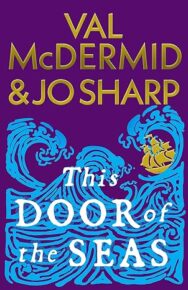
In This Door of the Seas, Val McDermid and Jo Sharp revisit the ill-fated Darien Venture through the letters of expedition scientist Dr James Wallace. David Robinson considers their take on the event that altered Scotland’s future.
This Door of the Seas
By Val McDermid and Jo Sharp
Published by Polygon
How far is a league? Where is Crab Island? Can you eat a peccary? What years were Britain at peace between 1688 and 1702? Who was Colonel Fonab and why is he a hero? Where is Curacao and why did the Spanish not attack it?* If I am looking up answers to all of these questions on the internet, what is the subject of the book that prompts me to find out?
A clue. It’s called This Door of the Seas by Val McDermid and Jo Sharp, and it is the latest in the excellent Darkland Tales series from Polygon. Still no wiser? ‘This door of the seas’ was what William Paterson – Scottish founder of the Bank of England and a man I can’t help thinking of as a late seventeenth-century Dominic Cummings – called the place on the east coast of the Isthmus of Panama which he intended to turn into the founding city of a Scottish empire. These days there’s nothing there apart from dense forest, but once it was where a poor country dreamt of becoming rich.
The book’s publishers call the book ‘a gripping imagining of a little-known episode in Scottish history’ and they’re right about the first part but wrong about the second. The catastrophic failure of the Darien scheme in terms of lost lives (2,000) and capital (£400,000 – between a quarter and a half of Scotland’s liquid capital) was cataclysmic and one of main reasons behind the Treaty of Union. Surely most Scots know that?
Whether you do or not, whether you are a veteran history buff or a pupil studying one of the two units in which Darien appears on the SQA’s National 5 and Higher History curriculum, McDermid and Sharp’s novella is both enlightening and involving. It is told in epistolary form, in a series of gradually darkening letters from Dr James Wallace, who is on board one of the five ships that set out from Leith on 19 July 1698 to boldly go where no Scot – not even William Paterson, whose idea it was – had ever been before. One of the first of many things I didn’t know about the Darien venture was that none of those would-be colonists knew precisely where they were heading either. Until they arrived in Madeira, and the ships’ captains opened their instructions, their destination was secret.
From his ship, Wallace writes home to his wife Eliza and his mentor, Sir Robert Sibbald, Scotland’s first Geographer Royal (Sharp is the first woman in the role), who had asked him to report on what he finds on Darien, on the rugged east coast of Panama. First impressions are good: the natives are friendly - welcoming, even - and there are rumours of gold. Even if there isn’t any, the site on which they have chosen to build New Edinburgh overlooks a bay that will easily hold the thousand ships that will one day come and trade. Until they do, there is sugar cane in abundance, plenty of fish and game, and once hard-working Scots get to work planting tobacco ‘just imagine what industrious Scots will achieve once we have cleared the land and made it productive.’
These are, admittedly, first impressions, but underpinning them is Wallace’s faith in Paterson’s project. He sees what he wants to. And it makes a kind of sense too – especially to colonists from Scotland, already pushed to the brink of economic collapse and famine by a succession of poor harvests in the ‘seven ill years’ of the 1690s. Why? Just look at geography. Control the Isthmus of Panama and you’d effectively control half the world’s trade. This is why the novella gets its title: Darien is, Paterson writes, ‘this door of the seas’: a colony there could be a free trading port but also the start of a road carrying cargoes to the Pacific coast just 100 miles to the west, cutting out the necessity for the perilous sea journey round Cape Horn.
All of this is spelt out in Wallace’s letters home, as imagined by McDermid and Sharp, but so too is the steady disintegration of his dream. Ineffectual leadership, fever deaths running at ten a day, internal rivalries, the sinking of ships and delays in sending supplies, the arrival of the rainy season, resentment at unfair rationing – all played their part. But the main reason for the failure of the colony, in this reading at least, is that no-one wants to trade with them. King William – nominally the king of the Scots as well as the English – has succumbed to lobbying from the East India Company and ordered English colonists to have nothing to do with the upstart Scots. ‘We are underlined by our own monarch,’ moans Wallace. ‘The Stuarts may not have been models of probity and decency but at least they never set out to sabotage our country.’
So, perfidious Albion again then? That is certainly the direction that McDermid and Sharp shape their narrative, and it is certainly a plausible interpretation. If you or I had invested our savings in such a spectacular failure, we would doubtless be looking for someone to blame too. We would side with all those dead and starving Scots and not put ourselves in the mind of William III, ruler of a country not fighting a war in Europe for the first time in 30 years, wanting to keep it like that and not start another war with Spain by putting a dicey scheme by his Scottish subjects ahead of the immensely successful East India Company.
Betrayal or realpolitik? That’s the split that the Darien scheme still opens up, and it is precisely why an epistolary novel dealing with it makes such sense. Read Wallace’s letters and we get one side of the story and all of his arguments and emotions are real enough; they don’t need an ‘on the other hand’ counterbalance. They are what he knew and what he wanted to believe. Surely, he thought, the Spanish would never attack the new Scottish colony. Surely the rising tide of regional trade would lift all boats? After all, the Spanish had left the Dutch colonists in Curacao alone. And in any case, the natives tell them how much they hate the Spanish (true) and Spain was such a spent military force that they wouldn’t go to the trouble of taking on the Scots. Wrong, wrong, wrong.
McDermid and Sharp have gone in deep. Their Dr Wallace isn’t a caricature but entirely believable. To take just one example, consider his thoughts when, after the failure of the Darien expedition, he gets a job as a secretary on a plantation in Carolina. Charleston, he notes, has pretty much the same kind of climate as Darien, and its wild landscape had been tamed by plantations worked by African slaves. Was this, he wonders, writing to Sir Robert Sibbald, where the Company of Scotland Trading to Africa and the Indies went wrong? Lord knows, Scotland’s involvement in the slave trade was extensive enough. But if there is the smallest consolation from the spectacular failure of the Darien scheme, it is that it could have been so much worse.
This is a relatively short book, but it succeeds more completely than many far longer ones in making one think about the past. More than anything, it makes you realise how isolated these colonists were – not just geographically but in time. If anyone ever answered their letters home, the reply would take half a year to reach them, by which time any amount of tragedy may have already happened to them, their dream of a new Eden in the New World evaporating and gradually turning into a very real hell.
* A league is about 3 miles; Crab Island, off modern-day Puerto Rico, where the Scottish colonists first raised their (rather attractive) flag, was already claimed by the Danes; you can eat a peccary – about the size of a small wild boar, though genetically different – but only if you first remove its musk gland; Britain was at peace between 1698 and 1701; Colonel Alexander Campbell of Fonab was the victor of the battle of Toubacanti (1700) a pre-emptive strike against a Spanish force on its way to attack the Scottish colonist; and the Dutch settlement of Curacao was formally recognised by Spain, heavily fortified, and far from the strategically important isthmus of Panama. Darien wasn’t.
This Door of the Seas by Val McDermid and Jo Sharp is published by Polygon, price £12. The authors will be at the Edinburgh book festival on 17 August.
RELATED BOOKS

ALSO ON BOOKS FROM SCOTLAND
-


The Scottish Colourists: Art & Life by Alice Strang
‘Together the quartet embodied a new spirit in Scottish art and they are celebrated as Scotland’s le …
-

David Robinson Reviews: Our Noble Selves by Kate Atkinson
‘As I suggested at the start, there’s a whole heap of plot in Our Noble Selves – spies, murders, and …
-
‘They had spoken perhaps ten sentences each and it had already begun. Moira’s resentments, her preju …
-

Ayont the Thistle by Jim Mackintosh, Alan Riach and James Robertson
‘Nane ae this then but – ma hert daen its hing/ an yon wee smile ae yours in the saft smir ae the ga …
-

The Broons and Oor Wullie Celebrate their 90th Birthdays!
‘Whatever the future may hold, we can be sure that The Broons and Oor Wullie will always be a part o …
-

Pretty Valuable Things by A. J. Leslie
Harper considered Charles for a few moments, lit a cigarette, then said ‘we are treating it as murde …
FEATURED AUTHOR:
Stephen Rutt

Stephen Rutt is a naturalist and the award-winning author of five books. Despite falling into a river when he was two years old, he has never learned to swim. But water has fascinated him ever since. Birds have also been his life’s guiding passion sinc …
FEATURED PUBLISHER:
Edinburgh University Press

Connecting people and ideas to inspire creative thinking, open new perspectives and shape the world we live in. Our ambition is to create a community of authors, editors, advisors and practitioners committed to publishing world-class academic research …