


EXPLORE ISSUES



‘We need to be better aware of that to understand the challenges and achievements of the past, and to use them to assess the present and be confident in addressing it.’
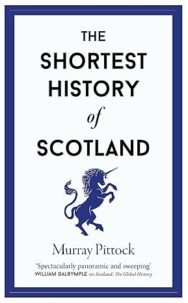
Historian Murray Pittock brings us Scotland’s past in a concise but brilliant way in his latest book, The Shortest History of Scotland. We asked him how history keeps him inspired.
The Shortest History of Scotland
By Murray Pittock
Published by Old Street Publishing
Scotland has a long and complex national history. How did you approach shaping such a vast subject into this short format, and what were the most difficult choices about what to include, exclude, or treat only briefly?
There were three important considerations I kept in mind: to offer coverage of the lived life and environment of people (rather than just dwell on kings/queens and battles); to offer enough coverage in depth on at least one or two issues to raise people’s curiosity for wider reading; and to relate Scotland historically to the choices it faces today.
Do you have a favourite moment or period in Scottish history?
The Jacobite era (1688-1760) and its effect on global politics and international conflict.
If you had to identify one or two moments that most profoundly shaped modern Scotland, which would they be and why?
Two moments comes to mind. Firstly, the Reformation. I say this because it broke the link between the Crown and the Church and between Scotland and France and thus rendered the country more vulnerable. Another moment of great importance would be the Romantic era, 1760-1830: which gave Scotland the global brand (including tartan) it enjoys today.
What books have shaped your understanding of Scottish history?
I have read and admired so many over the years, including:
Geoffrey Barrow, Robert Bruce.
T.M. Devine, The Clearances.
Christopher Harvie, No Gods and Precious Few Heroes.
Frank McLynn, France and the Jacobite Rising of 1745.
What are your thoughts on the future of studying Scottish history?
I would like to see more teaching of it at an earlier stage. Scotland has a global history: in terms of reach, brand and innovation it is a global actor. We need to be better aware of that to understand the challenges and achievements of the past, and to use them to assess the present and be confident in addressing it.
The Shortest History of Scotland is published by Old Street Press is available now, priced £14.99.
RELATED BOOKS
ALSO IN THIS ISSUE
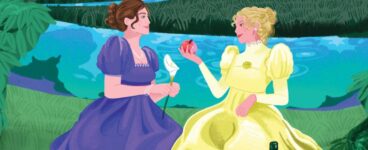
 Chantelle Streete Reviews: The Miseducation of Caroline Bingley
‘McLeod uses these moments to great comic effect, while also showcasing the class tensions and ingra …

ALSO ON BOOKS FROM SCOTLAND
-


Flight Patterns by Lorna J. Waite: An Appreciation by Janette Ayachi
‘I’ve recently heard poetry archives described as ‘fugitive, ephemeral’, but here the wish of collec …
-
The Scottish Colourists: Art & Life by Alice Strang
‘Together the quartet embodied a new spirit in Scottish art and they are celebrated as Scotland’s le …
-
David Robinson Reviews: Our Noble Selves by Kate Atkinson
‘As I suggested at the start, there’s a whole heap of plot in Our Noble Selves – spies, murders, and …
-
‘They had spoken perhaps ten sentences each and it had already begun. Moira’s resentments, her preju …
-

Ayont the Thistle by Jim Mackintosh, Alan Riach and James Robertson
‘Nane ae this then but – ma hert daen its hing/ an yon wee smile ae yours in the saft smir ae the ga …
-

David Robinson Reviews: This Door of the Seas
‘He sees what he wants to. And it makes a kind of sense too – especially to colonists from Scotland, …
FEATURED AUTHOR:
Gordon Brown

Gordon Brown served as Prime Minister of Britain from 2007 to 2010, during which time he is widely credited with having prevented a second Great Depression in the wake of the financial crash. Previously, he was Britain’s longest-serving Chancellor from …
FEATURED PUBLISHER:
McNidder & Grace
McNidder & Grace is an award-winning independent publisher specialising in biographies and memoirs, music literature, art, travel, history, sport, and crime fiction. McNidder & Grace carry the stories and voices of a wide range of authors and g …