


EXPLORE ISSUES



‘It is their resistance to the intrusions of the outside world − culturally, economically, environmentally − that has powered the Yanomami’s survival, and with them their home territory and the ecosystem within it.’
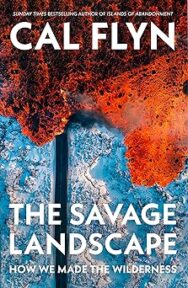
The Savage Landscape by Cal Flyn takes readers to places around the world chosen for their physical beauty and perceived isolation, daring us to reimagine what it means to be ‘wild’. Below, we follow Cal through the Amazon rainforest.
The Savage Landscape
By Cal Flyn
Published by William Collins
There are a great many ways to die in the Amazon rainforest. The self-evident ways, of course: the anacondas and the alligators, the many varieties of venomous snake − the bushmaster and the fer-de-lance, for starters. There are the poison-skinned frogs of a thousand colours. The nightwalking scorpions and the dangerous arachnids (a bite from a Brazilian wandering spider will inflict extraordinary pain, a splitting headache and, if you are male, a throbbing erection). The jaguars, which stalk silently from above.
In truth, it is the less obviously threatening animals that you really need to look out for. The anteaters which will split you open from throat to navel with a swipe. The ants themselves, which will eat you alive.
One might overturn in a badly balanced boat, be dragged through rapids, sliced by a mistimed stroke of a machete, spiked through the hand by a spiny palm, shocked by an electric eel. Even minor injuries − a nick with a penknife, an insect bite, a blister from an ill-fitting boot − have a deadly potential far beyond appearances, escalating rapidly to open sores or suppurating wounds, inviting flesh-eating parasites or incapacitating fevers.
Stories of the exploration of the Amazon by early European voyagers are rife with tales of death and disappearance: entire platoons striking out into the empty spaces on the map, intent on bashing a path from A to B − a hundred miles, maybe two, how hard could it be − and only a few straggling survivors stumbling from the tangle of vegetation at the other end, emaciated, half mad with hallucinations, horrified by the depths to which they had stooped in a matter of weeks.
Francisco de Orellana’s ill-fated search for ‘the Land of Cinnamon’ (1541–1542) resulted in the deaths of more than 3,000, his procession of porters and slaves quickly decimated by disease, starvation and deadly attacks from indigenous groups whose territories they had inadvertently invaded. After consuming pigs, dogs and horses, they turned to the soles of their shoes ‘cooked with certain herbs’. A survivor of a later expedition spoke of discovering a member of his party boiling a quarter of a child ‘together with some greens’. Many, like the English adventurer Percy Fawcett, lost with his son and a second boy in 1925, were simply never seen again, as if the jungle had absorbed them entirely, swallowed them or sealed up over their bodies as if they had never been.
Even today, roads and tracks cut into the thin, floodprone soils of the rainforest are apt to dissolve, wash away in the deluge. There is always too much water − far too much, rendering hundreds of square miles swamp, gouging out gullies and rerouting rivers − or too little, the fat streams simmering away to nothing, fish gasping, flipping from the mud, cannibalising the bodies of their brethren.
Then, of course, there were the people. Early explorers passed through territory after territory, encountering hundreds of tribal groups, each with their own cultures, cosmologies, unrecorded languages. If one group was friendly, it did not follow that the next group should be; each maintained its own relations with the outside world, and many were suspicious if not downright hostile. And for good reason: the arrival of white adventurers was invariably a harbinger of disaster on the grandest scale.
In the hundred years that followed the arrival of Europeans in the Americas – and the weapons and pathogens they carried – the indigenous population, ravaged by brutal warfare and repeated epidemics, is believed to have collapsed by 90 per cent. (As a result, forest reclaimed an area the size of France, which in turn is thought to have triggered a period of global cooling dubbed ‘the Little Ice Age’.) They have faced oppression, discrimination and displacement ever since.
Despite everything, a great many indigenous groups survived the onslaught. An estimated 300 different peoples make their home in the Amazon, including the Yanomami, which is the largest. Despite relentless external pressure, many Yanomami maintain relatively isolated lives and retain many aspects of their traditional culture.
It is their resistance to the intrusions of the outside world − culturally, economically, environmentally − that has powered the Yanomami’s survival, and with them their home territory and the ecosystem within it. But reports of their intimidating character and unfamiliar practices have also fed and perhaps entrenched their perception in the outside world with reference to an age-old stereotype: that of the ‘savage’ man, a semi-mythical figure posited in many cultures as an intermediate between man and beast. Though long now discredited, the spectre of the savage still haunts the contemporary wilderness debate too, summoning outdated assumptions around the human relationship with the natural world, whether a wilderness can be peopled, and if it is, who has the right to protect and exploit it.
Certainly the Yanomami’s reputation had spread far enough and wide enough that, as the sky dimmed and the forest scrolled by, I felt apprehension welling in my chest − not fear, exactly, but a nervous anticipation. They hadn’t heard much about me, I knew. But I’d heard a lot about them.
Finally, finally, I was beginning to recognise at the water’s edge faint signs of human presence. That opening in the vegetation − did it not seem artificial, somehow? As if someone had passed that way recently, disturbing the foliage? And there, high on the bank, was that a washed-up tree, or a dugout canoe? Yes, there − abandoned on the riverbank. Roughly debarked, hollowed out, wooden paddle slung carelessly inside it.
After the next bend, the canopy opened out where a curve of river sand suggested a natural place to land. Through a fretwork of broad leaves and wildflowers I could make out the shadow of a thatched roof, and beyond a red-rock outcrop nine or ten children were frolicking in the shadows, naked and gleaming, leaping from the water like dolphins. The sun, ember-red, was glowering behind the trees, setting the sky alight with streaks of rose-gold and copper.
Wow, I said. My voice was light and airy.
Yes, said Auri simply: it is like a paradise. And it was.
The Savage Landscape by Cal Flyn is published by William Collins and is available now, priced £20.00
RELATED BOOKS

ALSO ON BOOKS FROM SCOTLAND
-

The Scottish Colourists: Art & Life by Alice Strang
‘Together the quartet embodied a new spirit in Scottish art and they are celebrated as Scotland’s le …
-
David Robinson Reviews: Our Noble Selves by Kate Atkinson
‘As I suggested at the start, there’s a whole heap of plot in Our Noble Selves – spies, murders, and …
-
‘They had spoken perhaps ten sentences each and it had already begun. Moira’s resentments, her preju …
-

Ayont the Thistle by Jim Mackintosh, Alan Riach and James Robertson
‘Nane ae this then but – ma hert daen its hing/ an yon wee smile ae yours in the saft smir ae the ga …
-

David Robinson Reviews: This Door of the Seas
‘He sees what he wants to. And it makes a kind of sense too – especially to colonists from Scotland, …
-

The Broons and Oor Wullie Celebrate their 90th Birthdays!
‘Whatever the future may hold, we can be sure that The Broons and Oor Wullie will always be a part o …
FEATURED AUTHOR:
Iain Maloney

Iain Maloney is the author of eight books, including the critically acclaimed The Only Gaijin in the Village (Birlinn, 2020), a memoir about his life in rural Japan. He is also a freelance editor and journalist, mainly for The Japan Times. He was born …
FEATURED PUBLISHER:
Vagabond Voices

Vagabond Voices is an independent publisher based in Glasgow, committed to introducing new titles from Scottish authors and translating fiction from other languages. We also publish poetry and polemics. Our carefully selected list aims to reflect liter …