


EXPLORE ISSUES



‘The past’s current flows through the characters in his fiction so strongly that it almost becomes the story itself.’
David Robinson appreciates Donald S. Murray’s sense of history in his latest novel, The Loch of the Bees.
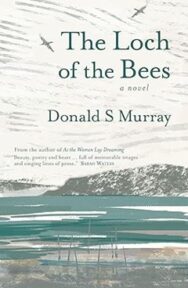
The Loch of the Bees
By Donald S. Murray
Published by Saraband
Just as copper is a good conductor of electricity and cotton a poor one, so some writers have a better sense of the past than others. By this, I don’t just mean that they might be able to reimagine what, say, a particular event a century or two ago might have felt like. That is indeed an impressive skill and, for writers of historical fiction, an essential one.
But the true masters of the art of writing about the past can imagine something else. As well as describing a historical event, they also have a sense of how the current of history also flows through their own fictional characters. This is a lot harder. If you or I had all the time in the world to research a particular historical event, perhaps we might be able to imagine precisely how it happened. But would we also be able to see how well or badly the past plays out in the minds of our characters? If, to extend my opening metaphor, it were somehow possible to show this – I’m thinking back to S1 physics lessons in how to measure the flow of an electric current – would they be copper or cotton?
This is, I think, the particular skill of Donald S. Murray. The past’s current flows through the characters in his fiction so strongly that it almost becomes the story itself. That was the case with his award-winning 2018 debut novel As the Women Lay Dreaming, in which he concentrated on showing how the trauma of the sinking of the Iolaire off Stornoway in 1919 unrolled across subsequent generations rather than just describing the disaster itself. Similarly, although ostensibly about the experience of twentieth-century Hebridean emigrants in North America, his 2024 novel The Salt and the Flame is at least as much about the emotional pull of the island – Lewis – they left behind. ‘The past,’ as Faulkner famously said, ‘isn’t dead and buried. In fact, it isn’t even past.’
This sense of history as something which continues to shape the present is never more clearly displayed than in Murray’s latest novel, The Loch of the Bees. Its ambition is epic: nothing less than reimagining the lives of people living on a fictional Hebridean island from the eighth century to the present through a series of interlinked stories. Few novels have such a sweep: even Adam Thorpe’s Ulverton, which reconstructs the unrecorded history of an English village, only managed the 300-plus years from Cromwell to Thatcher. The novel it most reminds me of is James Robertson’s News of the Dead, which chronologically mirrors Murray’s novel with scenes ranging from early Scottish Christianity to the Covid pandemic. Although it deals with similar themes, structurally it is completely different.
Murray’s opening chapters have a dreamlike quality. There has been a battle, and a wounded warrior on the defeated side throws away his shattered sword into the nearby Loch nan Seillean (the loch of the bees), named after the insects buzzing around the corpses around him. (We will see the sword’s broken hilt recovered over a thousand years later when almost everything else has been forgotten). The bees, people then thought, carried souls into the afterlife, or maybe they just told the survivors’ families of their relatives’ deaths: religion still leaves such things unclear, unformalised by dogma.
But because there has been a battle, a holy man wants to clear away the pain from the land, so he builds a beehive shieling on a crannog (man-made island) on the loch as both a ladder to heaven and escape from the world. The bees do not sting him, and he talks to the birds and animals, but when word spreads of his holiness and the local priests try to make the shieling a place of pilgrimage, he leaves it behind. Some people say he has been taken away by a friendly whale, others that he has been given wings and has flown away to another island where he is being fed honey by the bees.
In successive short chapters, usually edged with poems or snippets of fictional history, such legends gradually disappear from the island, though they live on longest among the moor-people who, as an incoming minister discovers to his horror, even in the nineteenth century ‘still worship the old gods of moon and water with far more fervour than they mouth their catechisms’. Though stories surrounding the shieling are still being told, the islanders are learning to do so in a different language, whether because they have been press-ganged into the Napoleon-fighting Royal Navy, forced to emigrate in the Clearances, or taught English at the new school in the nearby township in the 1880s.
Even the school’s English teacher, however, realises that his lessons somehow diminish the island. Telling the story of the siege of Troy, he yanks hard at the ear of a pupil who explains why he doesn’t want to learn this new language: ‘Like my grandfather, I fear if we all learn to speak it, we will lose our real tongue, our hearts and minds.’ Maybe the boy was right, he thinks to himself. Maybe, like the Trojans, they would all live to see their ‘familiar existence collapsing because a peculiar gift had been left behind’.
Murray steers clear, however, of painting his fictional island as a paradise. Those who emigrated from it, one Canadian minister admits in the 1920s, brought with them ‘more than a little self-righteousness as well as a narrow vision and a sense of guilt’. That trait is more than present a century later in the hellish neighbour to a couple who have moved to the island from Cumbria. And the book ends not only with the rediscovery of a potent link to the past but with a very real threat of ecological disaster.
All the same, there is enough in the novel to make you realise that the teacher was right about what was lost when Gaelic started to wither: after all, we have seen from the outset how, in the loch of the bees, the linguistic link to the land is part of not just communal but even spiritual history. But Murray also makes a subtler point about history too: that the way it filters down through the generations isn’t a pellucid and continually flowing stream; instead it also involves gaps, accidental distortions, and deliberate myths. Dealing with the kind of history that has never been written down, this is inevitable. We might know that the ruined shieling by the shore is something to do with a holy man long ago, but we’re not quite sure what. There might be a folksong about a sailor who returned from the Napoleonic wars and spent the night there before disappearing again but we’re not quite sure why.
These are the realities of how history flows through all of us, and Murray’s novel captures it perfectly. The late Allan Massie – no mean writer of historical fiction himself – hailed Murray as ‘one of the best and most enjoyable novelists writing in Scotland today’. If he had lived to read The Loch of the Bees, it would have only confirmed his judgment.
The Loch of the Bees by Donald S. Murray is published by Saraband, priced £10.99.
RELATED BOOKS

ALSO ON BOOKS FROM SCOTLAND
-

The Scottish Colourists: Art & Life by Alice Strang
‘Together the quartet embodied a new spirit in Scottish art and they are celebrated as Scotland’s le …
-
David Robinson Reviews: Our Noble Selves by Kate Atkinson
‘As I suggested at the start, there’s a whole heap of plot in Our Noble Selves – spies, murders, and …
-
‘They had spoken perhaps ten sentences each and it had already begun. Moira’s resentments, her preju …
-

Ayont the Thistle by Jim Mackintosh, Alan Riach and James Robertson
‘Nane ae this then but – ma hert daen its hing/ an yon wee smile ae yours in the saft smir ae the ga …
-

David Robinson Reviews: This Door of the Seas
‘He sees what he wants to. And it makes a kind of sense too – especially to colonists from Scotland, …
-
The Broons and Oor Wullie Celebrate their 90th Birthdays!
‘Whatever the future may hold, we can be sure that The Broons and Oor Wullie will always be a part o …
FEATURED AUTHOR:
Gabrielle Griffiths
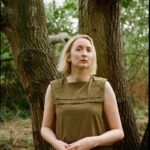
Gabrielle Griffiths grew up in Aberdeenshire and now lives in Brighton. She was a Madeleine Milburn Agency mentee in 2021 and is a graduate of the Curtis Brown Creative novel writing course. Her short fiction has been shortlisted for the Bridport Prize …
FEATURED PUBLISHER:
Arkbound

Arkbound is a publishing social enterprise based in Glasgow. Their aim is to support authors from disadvantaged and diverse backgrounds to get their voices heard, especially for writing that covers important social and environmental themes. They are on …