


EXPLORE ISSUES


‘Without bacteria we’d be drowning in shit. No digestion. No wine, beer, cheese, kimchi, kombucha. Some of them even protect us from other harmful bacteria.’
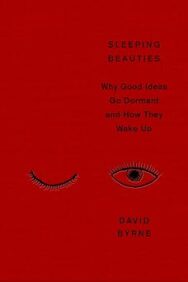
In Sleeping Beauties, Talking Heads legend David Byrne takes us through a fascinating history of art, literature, science and conservation to investigate how we come to re-evalaute forgotten or disparaged ideas offering hope and inspiration. In this extract, he looks at the work of pioneering evolutionary biologist, Lynn Margulis.
Sleeping Beauties: Why Good Ideas Go Dormant and How They Wake Up
By David Byrne
Published by Canongate Books
THE SYMBIOTIC ORIGIN OF CELLULAR LIFE
Lynn Margulis
You cannot understand anything in biology without recognizing the community nature of all life. — Lynn Margulis
Beyond Darwin— Not Just Evolution by Mutation
The implications of Margulis’s idea were profound, and for neo- Darwinists, it must have seemed crazy or threatening or both. They clung to Darwin’s idea that it was random mutations in the gene that, if they proffered greater fitness and adaptability, would come to dominate— and insisted that was pretty much exclusively how evolution happens. We slowly pass on this new accidentally formed genetic material, originating in mutations, through the genetic combinations resulting from reproduction. Bacteria, however, are different, at least as far as reproduction goes, because they can transfer their genes directly to other bacteria that are strangers, even to those that are different from themselves. So she was saying that evolution wasn’t only about the mutations in the genes in the nucleus of the cells, which is where most of the scientific attention was, but that via symbiotic merging and sharing, whole new forms could emerge that weren’t the result of what goes on in the nucleus. It’s still evolution, but it can happen in different ways.
As with Altmann’s idea and Wallin’s, Margulis’s was repeatedly dismissed. She was rejected by fifteen journals! (“Your research is crap, do not bother to apply again” was one response.)29 She had powerful, influential enemies— Selfish Gene author Richard Dawkins among them.30 I’m noticing that with some of these sleeping beauties, an idea often keeps getting slapped down and ignored, but keeps resurfacing over time, sometimes over generations.
Classification and Language as Blinkers
Besides challenging orthodoxy, were there other reasons why Margulis was ignored? Was it because she was relatively young, a junior faculty member at Boston University in 1967, when she published her paper? Was it because she wasn’t trained in molecular biology? The course that influenced her (and also James Watson!) was called MathSci2, which was about the material basis of heredity— her specialty was genetics. Was it because she was a woman? A woman with a radically new idea who somehow believed enough in herself and her work to persevere.*
In the book Lynn Margulis: The Life and Legacy of a Scientific Rebel— a collection of essays and reminiscences compiled by Dorion, her son with Carl Sagan— she explains why she thought her ideas were dismissed by much of the scientific community:
‘I’ll tell you why, there are a lot of reasons. Some of them are just our language and some of them took me years to realize because I was taught the same language as everybody else. It’s a representation of the paradigm just like reciprocal altruism and fitness and the parental investment of male children are indicative of this neo- Darwinist paradigm.’
As noted elsewhere, language— the way we refer to things, people, and ideas— amounts to a kind of classification box, a silo. The language and terms we use can limit our thinking. Translation into another medium— often a visual medium— bypasses the language bias.
‘Neo-Darwinists are people who emphasize individual differences, selection of individuals, which make us people nuts because an individual can’t even reproduce, right? It’s a system of looking at the world and it’s reflecting Victorianism, nineteenth-century capitalism.’
Yes, she said that.
After her initial publication, Margulis increasingly argued for breaking down the walls between scientific disciplines. She claimed more sharing would lead to more understanding, but the urge to guard academic fiefdoms is strong. Margulis claimed that one of the reasons she came to the conclusions she did was because she schooled herself in a wide variety of disciplines all related to cells. This cross-disciplinary study was unusual and often actively discouraged, though we see it throughout this book.
‘At Berkeley there was absolutely no relationship between members of the department of paleontology, where evolution was studied, and those of the department of genetics, where evolution was barely mentioned. Because I sought an education in all aspects of evolution, paleontology, and genetics that could illuminate the evolutionary history of cells, at first I was shocked by the depth of academic apartheid. Each department seemed oblivious of people and subject matter beyond its borders. Nearly all the bacterial geneticists at the Bacterial- – – Virus Laboratory (BVL), on the east side of the campus began their careers as chemists. Most were abysmally uninformed about the genetics of plant and animal cells. Few had ever heard of cytoplasmic heredity or of organelles [such as mitochondria or chloroplasts] in cells with nuclei.
What is it about symbiosis that people don’t like, [do] they think it’s this leftist conspiracy? It’s female. [It] is cooperative and noncompetitive. Doug Caldwell did an analysis of the Origin of Species and the numbers of times that competition, struggle, fight to death, these words [occur], it’s something like 10,000 to 1. I think that monarchy and monotheism that is deep within our culture . . . that when they talk about monophyly in biology which means one single ancestor, it’s just an extrapolation from monarchy and monotheism.’
Lastly, one more strike against acceptance of Margulis’s ideas is the general perception that bacteria were by and large associated with disease and infection. Bacteria were often considered something we needed to eliminate wholesale. Though some bacteria do cause diseases, many of them are useful and helpful to us. Without bacteria we’d be drowning in shit. No digestion. No wine, beer, cheese, kimchi, kombucha. Some of them even protect us from other harmful bacteria.
Some have also claimed that these ideas of deep and profound cellular intimacy— and the whole idea that sharing and working together might be more productive than relying on innovation just by lone individuals— emerged from the utopian, countercultural, and spiritual ideas that were floating around in the 1960s, when Margulis was doing her research. She even referred to what the cells do as an “orgy of cooperation.” And she shocked some scientists when she said that bacteria hosted in plant root systems were there for food and sex. Fellow scientists have commented that she seemed to enjoy this controversy, and so at times her ideas were dismissed for promoting silly hippie idealism.
* For more on persistence, see Gregor Mendel, Vera Rubin, and Hyman Minsky.
Sleeping Beauties by David Byrne is published by Canongate Books and is available now, priced £26.00
ALSO IN THIS ISSUE

 A Year in Water by Beth McDonough
‘Only a moment ago, dolphins flicked / from this firth’s surface, grace-danced air.’
 The Whole Package: A Q & A with Sophie Gravia
‘Sometimes you get so used to keeping everyone else happy that you forget to ask yourself if you’re …
ALSO ON BOOKS FROM SCOTLAND
-


Flight Patterns by Lorna J. Waite: An Appreciation by Janette Ayachi
‘I’ve recently heard poetry archives described as ‘fugitive, ephemeral’, but here the wish of collec …
-

The Scottish Colourists: Art & Life by Alice Strang
‘Together the quartet embodied a new spirit in Scottish art and they are celebrated as Scotland’s le …
-

David Robinson Reviews: Our Noble Selves by Kate Atkinson
‘As I suggested at the start, there’s a whole heap of plot in Our Noble Selves – spies, murders, and …
-
‘They had spoken perhaps ten sentences each and it had already begun. Moira’s resentments, her preju …
-

Ayont the Thistle by Jim Mackintosh, Alan Riach and James Robertson
‘Nane ae this then but – ma hert daen its hing/ an yon wee smile ae yours in the saft smir ae the ga …
-

David Robinson Reviews: This Door of the Seas
‘He sees what he wants to. And it makes a kind of sense too – especially to colonists from Scotland, …
FEATURED AUTHOR:
Mark Douglas-Home

Mark Douglas-Home is a journalist turned author, who was editor of the Herald and the Sunday Times Scotland. His career in journalism began as a student in South Africa where he edited the newspaper at the University of the Witwatersrand, Johannesburg. …
FEATURED PUBLISHER:
Frontline Noir

Frontline Noir, founded in 2008, is a publisher of current affairs and recent history titles covering controversial topics and events, often written by people who were participants or otherwise affected. Our aim is to ensure such subjects are given a h …