


ABOUT THIS BOOK
PUBLISHER: The University of Chicago Press
FORMAT: Hardback
ISBN: 9780226661759
RRP: £79.00
PAGES: 248
PUBLICATION DATE:
October 18, 2019
BUY THIS BOOK
As an Amazon Associate and Bookshop.org affiliate we earn from qualifying purchases.
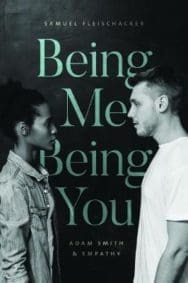
Being Me Being You: Adam Smith and Empathy
Samuel Fleischacker
Modern notions of empathy often celebrate its ability to bridge divides, to unite humankind. Yet how do we square this with the popular view that we can never truly comprehend the experience of being someone else? In this book, Samuel Fleischacker delves into the work of Adam Smith to draw out an understanding of empathy that respects both personal difference and shared humanity.After laying out a range of meanings for the concept of empathy, Fleischacker proposes that what Smith called “sympathy” is very much what we today consider empathy. Smith’s version has remarkable value, as his empathy calls for entering into the perspective of another–a uniquely human feat that connects people while still allowing them to define their own distinctive standpoints. After discussing Smith’s views in relation to more recent empirical and philosophical studies, Fleischacker shows how turning back to Smith promises to enrich, clarify, and advance our current debates about the meaning and uses of empathy.
Reviews of Being Me Being You: Adam Smith and Empathy
"In this impressive book, Fleischacker conducts an inquiry into the intersection of two currently much discussed topics: the ethical import of empathy and the philosophy of Adam Smith. Writing with elegance, insight, and an admirable degree of intellectual breadth, Fleischacker adjudicates the multiple uses and misuses of the term empathy in the literature, criticizes currently fashionable rejections of empathy's moral value, and defends his own account in harmony with his interpretation of Smith's outlook. This is a major contribution."–C.A.J. (Tony) Coady, University of Melbourne
Samuel Fleischacker
Samuel Fleischacker is professor of philosophy at the University of Illinois at Chicago. He is the author of many books, including On Adam Smith’s “Wealth of Nations”: A Philosophical Companion and, most recently, The Good and the Good Book: Revelation as a Guide to Life.
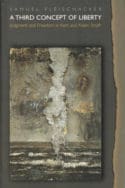
OTHER BOOKS BY THE SAME AUTHOR

ALSO ON BOOKS FROM SCOTLAND
-


David Robinson Reviews: Our Noble Selves by Kate Atkinson
‘As I suggested at the start, there’s a whole heap of plot in Our Noble Selves – spies, murders, and …
-
‘They had spoken perhaps ten sentences each and it had already begun. Moira’s resentments, her preju …
-

Ayont the Thistle by Jim Mackintosh, Alan Riach and James Robertson
‘Nane ae this then but – ma hert daen its hing/ an yon wee smile ae yours in the saft smir ae the ga …
-

David Robinson Reviews: This Door of the Seas
‘He sees what he wants to. And it makes a kind of sense too – especially to colonists from Scotland, …
-

The Broons and Oor Wullie Celebrate their 90th Birthdays!
‘Whatever the future may hold, we can be sure that The Broons and Oor Wullie will always be a part o …
-

Pretty Valuable Things by A. J. Leslie
Harper considered Charles for a few moments, lit a cigarette, then said ‘we are treating it as murde …
FEATURED AUTHOR:
Gabrielle Griffiths

Gabrielle Griffiths grew up in Aberdeenshire and now lives in Brighton. She was a Madeleine Milburn Agency mentee in 2021 and is a graduate of the Curtis Brown Creative novel writing course. Her short fiction has been shortlisted for the Bridport Prize …
FEATURED PUBLISHER:
Studies in Photography

Studies in Photography is the trading name of the Scottish Society for the History of Photography. It is developing two complementary book series in partnership with Edinburgh University Press. Visual Arts and Culture: Thematic Studies The first …