


Tom Maxwell is a journalist and press officer who grew up in Berwick-upon-Tweed. After graduating from Stirling University, he studied journalism in Sheffield before becoming a reporter for The Midlothian Advertiser. Now freelance, he has written for publications including The Times, The Scotsman and Scotland on Sunday. The Lone Rangers, a history of Berwick Rangers football club, is his first book.
Tom Leonard, the poet, was born in Glasgow and attended Lourdes Secondary School. He then studied at Glasgow University and later became a member of Philip Hobsbaum’s Glasgow Writer’s group, which included James Kelman and Alasdair Gray.
His first collection, Six Glasgow Poems, was published in 1969. His subsequent work includes Intimate Voices: Poems 1965-1983, which was republished in 2003 by Etruscan Books; Etruscan also published another recollection of poetry, Access to the Silence: Poems 1984-2004, in 2005. Tom has also written other essays and articles over the years and collaborated on books, like Three Glasgow Writers, with James Kelman and Alex Hamilton. Places of the Mind: the Life and Work of James Thomson was published by Cape in 1993 and Reports from the Present: Essays, Political Satires and Poems 1982-1994 was published by Cape in 1995. He also wrote a radio play in 1979, ‘If Only Bunty Was Here’.
Leonard has been the writer in residence at the Universities of Glasgow and Strathclyde, at Bell College of Technology and at Renfrew District Libraries. While at Renfrew Libraries he edited Radical Renfrew: Poetry from the French revolution to the First World War, which was published by Polygon in 1990.
Tobias George Smollett was an 18th century novelist and playwright originally from Dumbartonshire, but made his name in London. At the age of 14 he was apprenticed to a Glasgow doctor, and later studied medicine at Glasgow University. As a ship’s surgeon in the Carrangena expedition against the Spanish in the West Indies, Smollett lived in Jamaica until 1744.
His early plays, like his medical practice, did not succeed, but his first novel, Roderick Random (1748), was an immediate success. His books were often satirical, humourous and coarse. Although his books were well received, he was not a rich man, and relied on translations and editing for funds.
The Adventures of Peregrine Pickle (1751) was written as a satire on the Grand Tour, yet Smollett was an eager exponent of travel. One of his finest works was the travelogue Travels in France and Italy (1766).
He was quick with his temper, and made several enemies in London. In 1760 his was fined £100 and imprisoned for three months for libelling Admiral Knowles. In later years he was unwell, and lived abroad for his health. Smollett died in Livorno in Italy in 1771, the year in which his finest novel, The Expedition of Humphrey Clinker, was published.
Tim Turnbull’s collection Stranded in Sub-Atomica was nominated for the Felix Dennis award for best first collection in 2006 and followed two pamphlets – Work and What was that?. Born in North Yorkshire in 1960 he moved to Scotland in 2001 after ten years in London.
He has performed his poetry across Europe and America and was awarded the Arts Foundation Performance Poetry Fellowship in 2004 with which he developed the stage show Caligula on Ice based on a forthcoming collection. The poem Caligula on Ice is available in a signed and extremely limited edition from Donut Press.
In 2006 Turnbull was appointed Writer in Residence at HMP Edinburgh.
Theresa Breslin is a Carnegie-awarding winning novelist of 25 books for children. A former librarian, she wrote her first novel, Simon’s Challenge, when a local steel mill closed, devastating the local community. A common element in many of her books is a strong sense of place and setting, which Breslin describes as coming from the landscape and history of Scotland.
Breslin uses a wide variety of literary styles, from historical fiction (Across the Roman Wall, Remembrance), science fiction (Alien Force, Starship Rescue) and issue-lead contemporary fiction, such as Bullies at School and Divided City.
Simon’s Challenge won the Kathleen Fidler award; Whispers in the Graveyard, about a boy facing up to his dyslexia, won the Carnegie Medal for Children’s Fiction in 1994.
Suhayl Saadi was born in East Yorkshire in 1961, but moved to Glasgow in 1965. He studied medicine at Glasgow University, and was working as a GP when his first novel was published in 1997. The Snake was an erotic novel written under the pseudonym ‘Melanie Desmoulins’, but Saadi had been writing articles, stories and poems ever since joining a writer’s group in the late 1980s.
Now writing novels, stage and radio plays, as well as newspaper articles and song lyrics, Saadi is also the editor of a number of anthologies, including Macallan Shorts 5 (2002) (Saadi won second prize in the Macallan Shorts competition in 1999).
His first short story collection The Burning Mirror was published by Polygon in 2001, and was shortlisted for the Saltire First Book Prize. Psychoraag, was published in 2004 Black and White. Saadi has also written for Sandstone’s Vista series, with the novella The White Cliffs. His most recent novel Joseph’s Box was launched at the 2009 Edinburgh International Book Festival.
Sue Reid Sexton is a writer based in Glasgow, whose first novel, Mavis’s Shoe, was published in March 2011. The sequel Rue End Street, followed in 2014. Sue has been writing short stories, poetry and play-scripts for a number of years, and took an MLitt in Creative Writing from the University of Glasgow in 2007. Prior to this, she was a counsellor and social worker, with a background in mental health, homelessness and trauma.
As well as her own writing, Sue Reid Sexton ran “Swapping Stories”, a writing group for refugees in Glasgow, working with the Glasgow West Integration Network. With a particular interest in writers working in English as a second language, Sue also works with Iraqi writer Kusay Hussian helping him write his stories in English. She also ghosts for other people.
Writing On The Road: Campervan Love and the Joy of Solitude is Sue’s first full-length work of non-fiction. Sue is currently working on a new novel while finishing two others. She has two children.
Sue Peebles was born in Arbroath in 1955. She spent some of her childhood in Detroit before returning to Scotland, where she now lives. Since graduating in Psychology she has worked as a researcher, social worker and university teacher. Her first novel, The Death of Lomond Friel, won the Scottish First Book Award and the Saltire First Book Award, and was shortlisted for Scottish Book of the Year.
Her latest novel, Snake Road was published in August 2013. She is appearing at the 2013 Edinburgh International Book festival on 14 August with Alison Moore.
Writer, broadcaster and storyteller Stuart McHardy has long been interested in Scotland’s cultural heritage, from Pictish prehistory to contemporary folklore and music. As a storyteller he performs regularly across Scotland, and appears at many book festivals. As an author he has written of various Celtic, mythological and Pictish subjects – and on his other loves, whisky and beer.
McHardy was Director of the Scots Language Resource Centre from 1993 to 1998, and is a founder member of the Pictish Arts Society. He lives in Edinburgh.
Stuart MacBride was born in Dumbarton, but moved to Aberdeen when he was two. His parents run an offshore and remote site catering company and his brother is a head chef in Dublin, but MacBride bucked the family trend and studied architecture in Glasgow. A variety of jobs followed, including stints on an oil rig, a graphic designer, a short-lived attempt at acting, before becoming and web developer and IT manager.
MacBride’s first published novel, Cold Granite, is actually the fifth book he wrote, and it was snapped up by publishers HarperCollins. He has recently published a fifth title in the series, Blind Eye, which shot straight into the Scottish bestseller lists. The novels, named after and set in MacBride’s native Aberdeen, feature Detective Sergeant Logan McRae.
Stuart MacBride has also written for Barrington Stoke’s Most Wanted series with the chilling thriller Sawbones.
He was nominated for the 2009 Theakstons Old Peculier Crime Novel of the Year Award for Broken Skin. MacBride has now turned his hand to science fiction – and a new city – with Halfhead.
Stewart Conn was born in Glasgow, grew up in Ayrshire (the setting for much of his early poetry) and has for many years lived in Edinburgh. From 2002-2005 he was the city’s inaugural Makar.
Among his publications are Stolen Light: Selected Poems, Ghosts at Cockcrow, a pamphlet The Loving-Cup, and as editor 100 Favourite Scottish Poems and 100 Favourite Scottish Love Poems. He has also published a memoir Distances, and a number of stage plays.
He has received awards from among others the Scottish Arts Council, Society of Authors and Poetry Book Society. He is a fellow of the RSAMD, and honorary president of Edinburgh’s Shore Poets.
“A sympathetic, if quite unsentimental, treatment of the natural world, or the rural one at least, does run throughout his poetry, but so do the themes of love, family relationships, the nature and power of art, and that time-honoured subject of poetry – the fragility and transitoriness of life itself” – DAVID McCORDICK, Scottish Literature in the 20th Century
Stef Penney won the 2006 Cost Book Award for her début novel The Tenderness of Wolves. Born in Edinburgh but now living and working in London, Penney studied Philosophy and Theology at Bristol University. After studying Film & TV at Bournemouth College of Art, she became screen-writer and director and has written and directed two short films.
The Tenderness of Wolves, a western set in Canada in the 1860s, features a main character called Mrs Ross, who appeared in an earlier screenplay written by Penney. Famously, Stef Penney never visited Canada while writing the novel; an agoraphobic, she did all her research at the British Library. She is currently working on a second novel, The Invisible Ones
Sorley Maclean (Somhairle MacGill-Eain) is reckoned to be one of the finest poets Scotland has had. That he was not better known beyond his native land is probably due to the fact that he wrote almost exclusively in Gaelic, though bilingual editions of his poetry, published since the 1970s, have widened his appeal.
Born on the island of Raasay in 1911, Maclean came from a family steeped in Gaelic culture. He fought in World War Two in North Africa before becoming a teacher in Mull, Edinburgh and Plockton, and continued in that career until his retirement.
The publication of his first book of poetry, 17 Poems for 6d, with the poet, Robert Garioch, marked his entry into the world of Scottish letters. Three years later, a collection of love poems called Dàin do Eimhir agus Dain Eile (Poems to Eimhir) appeared; it remains one of the key texts of 20th-century Scottish poetry. Maclean’s output, unlike some other of the poets of his generation, was not prolific but his books and poems have become iconic. The best known, the elegiac ‘Hallaig’, is a moving poem on the Clearances. (For those interested in hearing Maclean read from one of his poems, and he had a very distinctive voice and diction, the folk group, Capercaillie, have recorded a version of ‘Calvary’ on an album by their lead singer, Karen Matheson.)
He died in 1996 at the age of 85 and is buried in Skye, south of Portree.
Sophie Cooke is an author from Perthshire. Raised in the hamlet of Kilmahog, she went to McLaren High School in Callander and later studied Social Anthropology at the University of Edinburgh. Her father was a wildlife conservationist and her mother a care worker.
In 2000, Cooke’s short story Why You Should Not Put Your Hand Through The Ice won runner-up prize in the MacAllan/Scotland on Sunday Short Story Competition. Her first novel, The Glass House, was shortlisted for the Saltire First Book of The Year Award. Her second novel, Under the Mountain, was inspired by Kilmahog’s location at the foot of Ben Ledi.
As well as her novels, Cooke has written a number of short stories, and her poem Forward Deck won the first prize in the 2010 ESRC Genomics Forum Poetry Competition.
After a period living in Berlin, she now lives in Edinburgh. She is working on a third novel, and writes for The Guardian newspaper.
This profile has been written by Simon Puttock
Chapter One: In Which I am Born And Embark Upon My Very Own And Brand New Life, and Remember Not A Bit Of It.
Eyewitness accounts of the time all agree that Simon Puttock was born in Wellington, New Zealand, in the Spring of 1964. (Antipodean Spring that is.) He went on to spend most of his childhood wondering why anywhere would share its name with a rubber boot.
Chapter Two: Islands Quite Small, And Enormous.
At a very tender age indeed, Simon was moved to Trinidad, where over the course of some three and a half years he fell into a mangrove swamp, learned how to cajole sweeties out of the old folks on the other side of the wasteland, was taken to Australia to be shown off to his grandparents, and furthermore but not subsequently, learned how to swim.
Chapter Three: Blighty, Part One.
From Trinidad, Simon sailed to England at the ripe old age of three and quite a lot. Here he lived in a haunted house in Kent and saw his first UHO (Unidentified Hovering Object), learned – under severe parental pressure – how to read, and forgot how to swim.
Chapter Four: Warmth! Sunlight! Obviously Not In Britain Any More.
Two brief years and perhaps another half one saw Simon setting sail once again, this time for Barbados. This period of Simon’s life is memorable for so very many things, they are just too many to mention. Let us merely say that it was during this time that Simon re-learned how to swim, developed a passion for books (Arthus Ransome, Richmal Crompton, Rosemary Sutcliff and Eleanor Farjeon figuring prominently), fell down quite a bit of a cliff, and became mildly convinced he was being followed round the world by a satanic salad fork which was possessed not only of the ability to move mysteriously from country to country, but also of some nebulous and menacing intent.
Chapter Five: Blooming Blighty Again, Or Part Two Thereof.
Five more years passed, and our young hero, now aged very nearly thirteen, returned to the land of cold and damp and those things called proper seasons: England again. He was not best pleased, and would prefer to gloss over most of the ensuing years, pausing only to mention that he did his time at school and then signed up for another stretch at university in Newcastle Upon Tyne where he discovered what it was like to be properly cold.
Chapter Six: The Unpromising Twenties.
After gaining an ignominious degree in English Literature, Simon went on to do such unmemorable things that they cannot be dredged from his mind to be recorded here. However, he does remember having a serious and very nasty writing accident that is probably the reason for his blotting out of so much else. It may also be notable that sometime in the latter half of that decade, Simon managed to forget, for an entire year, his true and actual age. It came as some surprise to him when, on attaining another birthday, he realised that he would have to go back repeat a year. It was also during this period that he became, quite unintentionally, a DJ. Or anti-DJ.
Chapter Seven: The Slightly More Promising Thirties.
At last! Simon began to write quite well and think seriously about being published. This eventually happened. Meanwhile, he began spending time in Scotland, and realised that by some quirk of microclimate, most of it is less cold than Newcastle. Whilst hardly tropical, this could only be A Good Thing. He learned to keep warm by taking a course in silversmithing. (The judicious use of blowtorches helped combat the onset of frostbite.)
Chapter Eight: The Forties So Far – Onward and Upward. (If North Counts As Being At The Top.)
Simon chose the beginning of this auspicious decade to Do The Right Thing and finally move lock, stock and inkwell to Scotland. More specifically Edinburgh. Here, and much to his surprise, he has won a couple of awards and so far only lived in three different flats – positively stationary by his standards. He is currently writing this potted autobiography. Except that by the time you read this, he won’t be.
Sian Hayton (the name is a pen name) produced a well-received trilogy in the late 1980s and early 1990s: Cells of Knowledge (1989) which won a Saltire Award for First Book of the Year, Hidden Daughters (1992), and The Last Flight (1993), all published by Polygon and The Governors, published by now defunct publishing house, Balnain, in Invernesshire.
S. G. MacLean (Shona) has a PhD in History from the University of Aberdeen. She is the author of two historical crime series – the Alexander Seaton series, set in seventeenth century Scotland and the Damian Seeker series, set in Oliver Cromwell’s London, for which she has twice won the CWA Historical Dagger. Her standalone Jacobite thriller, The Bookseller of Inverness, was Waterstones Scottish Book of the Year 2023. Shona lives in Conon Bridge, Scotland.
Author photo credit – Ewen Weatherspoon.
Although born in Tynemouth, author Shirley McKay now lives and writes in Fife. She studied English and Linguistics at the University of St Andrews, and later read Romantic and seventeenth-century prose at Durham University. She writes historical crime fiction set in St Andrews in the 16th century, featuring academic and lawyer Hew Cullan. Her novels are peppered with archaic Scots words.
McKay was shortlisted for the CWA Debut Dagger for Hue & Cry. She has also written a non-fiction travel guide, The Wee Book of Fife. She works as a freelance proofreader, and is working on the fourth Hew Cullan novel.
Sharon Blackie’s roots are in the north-east of England and in Edinburgh, though she has travelled all over the world and lived in France, Ireland and America. She spent many years firmly attached to a lochside croft in the north-west Highlands of Scotland, where she lived with her husband, David – until very recently a pilot in the RAF – and a growing collection of livestock. They are now based near mount Errigal in Donegal where she continues to write and also publishes EarthLines magazine.
Originally trained as a neuroscientist, Sharon has worked in a variety of corporate consultancy roles, practised as a therapist, and is now a publisher, having established Two Ravens Press in November 2006. She has a degree in psychology, a PhD in neuroscience, and more recently she completed an MA in Creative Writing from Manchester Metropolitan University. In 2008 she was selected as a ‘woman of achievement’ to attend the prestigious Woman of the Year lunch in London.
Once upon a time in the great American south-west Sharon Blackie struggled to obtain a pilot’s licence to overcome a fear of flying. This experience became the foundation for her first novel, The Long Delirious Burning Blue.
Blackie was co-editor of Riptide: New Writing from the Highlands and Islands and editor of Cleave: New Writing by Women in Scotland. She is also translator from the French of renowned Franco-American author Raymond Federman’s memoir of and tribute to his friend, Samuel Beckett: The Sam Book.
With her husband David, Blackie founded Two Ravens Press which is now under new ownership.
Born in Glasgow in 1967, Shari spent her first sixteen years living in Scotland. At age 16 she left school and began a career in sales, selling fire extinguishers to clients in the UK, Ireland, and Amsterdam. Shortly after her stint as a sales person, Shari returned to her native Glasgow and worked as a manager for nightclubs around the city. She went on to manage nightclubs in Sheraton hotels in Shanghai and Hong Kong. At 23 she went back to Glasgow and found work as a sales manager for a UK company. During this time she also met and married her husband.
She decided to pursue writing in 2000. Her first novel, What If? was published in 2001 by Piatkus Books. Its sequel, Why Not?, was published the following year. In 2011, she is now author of seven books – several of which have been translated –, contributor to an anthology, and writer of a weekly book column and several articles for the Daily Record.
She currently lives in Glasgow with her husband and two sons.
ALSO ON BOOKS FROM SCOTLAND
-


The Savage Landscape by Cal Flyn
‘It is their resistance to the intrusions of the outside world − culturally, economically, environme …
-

The Shortest History of Scotland: A Q & A with Murray Pittock
‘We need to be better aware of that to understand the challenges and achievements of the past, and t …
-
David Robinson Interviews: John Lister-Kaye
‘I enjoy stillness. It creeps up on you and becomes almost a force. I’ve had squirrels run over my f …
-

Spring 2026 Round Up of Scots & Gaelic Releases
‘Discover Jansson’s uninhibited imagination full of love, kindness, and adventure.’
-

Walking Edinburgh’s Lost Railways By Robin Howie and John McGregor
‘In earlier times it was a site where lovers came to relax and dream, hence the beautiful traditiona …
-
David Robinson Reviews: The Loch of the Bees
‘The past’s current flows through the characters in his fiction so strongly that it almost becomes t …
FEATURED AUTHOR:
Cal Flyn
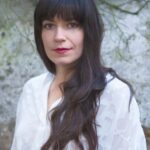
Cal Flyn is an award-winning writer from the Highlands of Scotland. She writes creative nonfiction, literary criticism, and long-form journalism. Her first book, Thicker Than Water, about frontier violence in colonial Australia, was a Times book of the …
FEATURED PUBLISHER:
Tippermuir Books Ltd

Tippermuir Books Ltd is a book publisher based in Perth. Established in 2009, Tippermuir seeks to add to the cultural life of Scotland by publishing interesting and worthy books in English and Scots. Our strength is our smallness and love of the writte …