


M.C. Beaton is the best-known pen name for the hugely prolific author Marion Chesney. She was born in Glasgow in 1936 and has worked as a bookseller, journalist, theatre critic and editor before becoming a full time writer. As a journalist she has written for the Daily Mail, the Daily Express and The Star. After marrying Harry Scott Gibbons she moved to the USA, where she first started writing her Regency romances under the name Marion Chesney.
It was on a holiday to Sutherland that Chesney was first inspired to write the Hamish Macbeth stories, and the family moved to Scotland where her husband became a sheep farmer. Later they moved to the Cotswolds to be closer to her son in London, and she started the Agetha Raisin mystery novels.
Although she is now best known as M.C. Beaton, Marion Chesney has written under a variety of pen names including Sarah Chester, Helen Crampton, Ann Fairfax, Marion Gibbons, Jennie Tremaine and Charlotte Ward.
Many of her novels have appeared on TV and Radio, including a BBC TV series based on Hamish Macbeth starring Robert Carlisle, and a BBC Radio production based on Agatha Raisin starring Penelope Keith. Marion Chesney was not happy with the Hamish MacBeth series, and has said:
“No I was not happy about the show. Hamish was nothing like the Hamish Macbeth I had in mind; nothing like the books. But fortunately the books were established by then and you leave people to make up their own minds.”
Marion Chesney now lives in a cottage in the Cotswolds with her husband Harry Scott, and also keeps a holiday home in Paris. Her most recent novels include There Goes The Bride, an Agatha Raisin mystery, and the Travelling Matchmaker series was republished in 2011.
Maureen Reynolds was born in Dundee and grew up during the Second World War; the influence of her upbringing clearly evident in the autobiographical Voices in the Street and Teatime Tales from Dundee. She is the author of the successful Neill family trilogy (The Sunday Girls, Towards a Dark Horizon and The Sun Will Shine Tomorrow) and the Molly McQueen mysteries.
Reynolds now lives in Perthshire and has four children and seven grandchildren.
Maud Sulter was a visual artist, writer, playwright and cultural historian. She was born in 1960 in Glasgow of Scots and Ghanaian descent, and was considered immensely proud of her African and Scottish heritage.
Maud held a Masters degree in photographic theory and wrote and lectured extensively on art history, focusing on Women’s art practice 1840 – 1990. During the 1980s and 1990s she was an active figure in cultural politics. She recently explored the continuing presence of Africa in Europe through an exhibition about Jeanne Duval at the Scottish National Portrait Gallery.
Her book of poems As a Blackwoman won the Vera Bell prize for poetry in 1985. Other publications include the poetry collection Zabat Narratives and the play Service to Empire. Maud Sulter also edited the book Passion: Discourses in Blackwomens Creativity.
Art exhibitions include African Themes, Victoria and Albert Museum London (1993) Intimate Lives, City Art Centre Edinburgh (1993) and Hysteria, Tate Gallery Liverpool (1991). She curated several international exhibitions, and her artwork, Akwambo, has been exhibited at the Scottish Parliament.
Maud was a very private person and latterly she lived in Dumfries on the outskirts of a monastery. She died in March 2008.
Matthew Zajac grew up in Inverness and studied drama at Bristol University. He had worked as an actor for 30 years, appearing in theatres throughout the UK and in numerous film, TV and radio productions. He has worked as a director and producer for several theatre companies and has also produced two films. He is currently Joint Artistic Director of Dogstar Theatre Company which tours its productions in Scotland and abroad. In 2009, he was named Best Actor in the Critics’ Awards for Theatre in Scotland for his performance in his play The Tailor of Inverness.
Matthew Fitt has lived all over the world: Prague, New York and Sydney but now lives in Lanarkshire. He is a writer and teacher who goes to schools encouraging pupils and teachers to feel more confident in their use of the Scots language.
His passion for the Scots language led him, in 2001, to co-found, with James Robertson and Black & White Publishing, the imprint Itchy-Coo; which is a press for children’s books in Scots. The company describes itself as offering ‘braw books for bairns o aw ages’.
Fitt fills the role of Education Officer at Itchy-Coo as well as continuing to write. He has been a writer in residence at Greater Pollok and a Brownsbank Fellow (Brownsbank Cottage being the former home of poet Hugh MacDiarmid).
He has visited Holland and the Czech Republic through the British Council in a bid to introduce Scots language and culture to young people; a help in times of Europe-wide migration.
Fitt has published many works, but is best known for But N Ben A-Go-Go, a cyberpunk novel set in a futuristic Scotland; Kate O Shanter’s Tale: And Other Poems and the latest Itchy-Coo publication aimed at babies and toddlers, Katie’s Moose. He also translates books into Scots, including a retelling of Hercules and a translation of Roald Dahl’s The Twits, The Eejits.
Martin MacIntyre, or Màrtainn Mac an t-Saoir in Scottish Gaelic, grew up in Lenzie, a town on the outskirts of Glasgow, but his family are originally from South Uist in the Outer Hebrides. Martin went on to study medicine at Aberdeen University, where he graduated in 1988. In 1992 he graduated from Sabhal Mòr Ostaig, the Gaelic college on Skye, after studying Broadcasting and Gaeltachd studies. In the same year he won the first William Ross Prize for Gaelic Writing. One of his short stories, Love Games/Geamaichean-Gaoil, was broadcast in 2000 on BBC Radio nan Gaidheal.
His writing flourished and in 2003 MacIntyre won the Saltire Society First Book of the Year Award for his book, Ath-Aithne. Martin maintains the tradition set by Sorley Maclean in the 1940s of bringing Gaelic literature to the world stage. Whereas Maclean and his cohorts were from a traditional Protestant or Presbyterian background, the spirit of the Hebrides is also being skilfully conveyed by writers from the Catholic islands.
Martin was awarded a Scottish Arts Council Writers Bursary in order to write the follow up to Ath-Aithne. Called Gymnippers Diciadain, the novel, set in Edinburgh, was shortlisted for the Saltire Society Book of the Year in 2005. He has also written short stories and performed his own and others work. He lives in Edinburgh with his wife and two children.
Mark Millar is one of the world’s most popular comic-book writers, with a string of commercial successes in both the US and the UK comic markets. The Coatbridge-born writer wrote his first comic Saviour while still at high school, and later wrote for 2000AD. He started studying at Glasgow University, but dropped out after the death of his father. His mother had died four years previously.
During the 1990s he wrote for a number of British comics including Maniac 5, Judge Dread and Janus: Psi-Division, and his successes attracted the attention of American publishers Marvel Comics. He was mentored by fellow Scottish comic writer Grant Morrison. Since 1994 he has been writing for US comics such as Marvel’s Civil War, Ultimate X-Men, Marvel Knights Spider-Man and Ultimate Fantastic Four. Millar has twice won an Eagle Award for his comics.
Millar has also published a number of comics under his own name, including two which have subsequently been turned into Hollywood movies: Wanted (starring Angelina Jolie and James McAvoy) and Kick-Ass (starring Nicholas Cage). Millar maintains a close working relationship with Marvel and has been praised for creating the template for their recent movies with his Ultimates series. He also continues to develop his own movies and comic books.
Mark Millar is married and lives in Glasgow. He is a lay Catholic preacher.
Marianne Wheelaghan is from Leith, Edinburgh. She left home when she was seventeen and lived in England, Spain, Germany, Papua New Guinea, Fiji and the Republic of Kiribati before returning to Edinburgh to settle there with her family.
Before Marianne started writing novels she studied at Newcastle, Napier and Lancaster Universities and was a croupier, a marketing manager for a company that sold warm air hand dryers, a chambermaid, a cashier in a pizza restaurant and a script writer. Most of the time, however, Marianne taught English and Drama to young adults in Spain, the Republic of Kiribati and Papua New Guinea.
From when she was very young Marianne liked telling stories. However, she never considered writing stories until she took a change of direction in her life and completed her Masters in Creative Writing at Lancaster University. In 2002 she founded the international online creative writing school, www.writingclasses.co.uk.
Marianne writes both crime fiction and historic fiction. Her aim as a writer is to ‘tell the story she means to tell, as wholly as she can, tell it by exploring the different ways of telling it.’ She is fascinated by connections between identity, home and place and explores these themes in her writing. As director of writingclasses.co.uk she helps new writers find their unique creative voice by offering them a stimulating, supportive and encouraging writing environment to work in.
Marianne’s debut novel, The Blue Suitcase, was published at the end of 2010 and was an immediate bestseller. Based on letters and diaries Marianne found after her mother’s death, The Blue Suitcase is the under-told story of an ordinary Christian girl growing up in Nazi Germany. Often referred to as a hybrid novel, Marianne expertly blurs the lines between fact and fiction.
“We think by now that there can be no more untold stories from the 1930s and the Second World War. Then a book like The Blue Suitcase comes along and we are once again astonished by the capacity of some humans to do unspeakably cruel things, and of others to survive them. The simple, almost mundane tone of Antonia’s diary makes The Blue Suitcase all the more shocking. It’s hard to read, but harder to stop.” James Roberston
The Blue Suitcase is the first in The Blue Suitcase trilogy. The second in the trilogy, The Brown Paper Parcel, is due out at the beginning of 2015. It carries on from where The Blue Suitcase finishes and is set in Edinburgh during the 1950s.
Marianne’s second novel, Food of Ghosts, is a crime thriller set on Tarawa, a remote coral atoll in the Pacific, and another bestseller. Like Robert Louis Stevenson when he sojourned in the Pacific over a hundred years ago before her, Marianne is fascinated by the ‘old society’ in many of the Pacific island countries. In Food of Ghosts she hopes to bring to life what remains of the unique ‘old society’ of Kiribati before it vanishes forever. Her protagonist, DS Louisa Townsend is from Edinburgh and far from perfect. She suffers from an obsessive compulsive disorder, is opinionated, often rude and develops a reputation for doing things in a weird way, but she always gets things done.
Marianne’s next book, Double Deaths and Double Lives, is the second crime novel in the DS Louisa Townsend series and set in Fiji. It is due out in the summer of 2014. DS Louisa Townsend finds her life at risk when she becomes caught up in the investigation into the brutal murder of a suspected peadophile.
Born in Bathgate but raised in Glasgow, Margaret Thomson Davis was a children’s and Red Cross nurse who had written for many years before her first novel, The Breadmakers, was published in 1972. She moved back to central Glasgow seeking inspiration for her writing, and has now written over 40 novels and over 200 short stories. Two of her novels have been adapted for the stage. She is most famous for her historical series The Breadmakers and The Clydesiders, but has also written contemporary crime thrillers such as A Deadly Deception.
In 2006 she wrote her autobiography, Write from the Heart. Margaret Thomson Davis is Honorary President of the Strathkelvin Writers’ Group.
Margaret Ryan is a former primary teacher who gave up teaching when the maths got too hard and she lost her teacher’s book with the answers at the back.
She was born in a park in Paisley-there was a hospital in the park, but that spoils the alliteration. She went to Jordanhill College of Education and, to earn some money during the long holidays, worked in a supermarket, a shoe shop and a sausage factory. To this day, she still buys groceries and wears shoes, but she never ever eats sausages. She started writing as a hobby and won a children’s story competition. To date she has written over eighty books for children, including some for reluctant readers. She won a Scottish Arts Council award for her book, The Queen’s Birthday Hat, and the first book in her series Roodica the Rude, set back in Celtic times when the Romans invaded Britain, was one of Richard and Judy’s picks for the launch of their Children’s Book Club.
Margaret now lives in an old mill in St Andrews with her husband, John, who regrets the lack of sausages in his diet, and some red squirrels who don’t.
Margaret Oliphant was a novelist and historical writer who was born in Wallyford in 1828. She is best known for her novels Miss Marjoribanks and Kirsteen. She normally wrote under the name Mrs Oliphant.
The only daughter of a clerk, Margaret Oliphant was raised in Lasswade, Glasgow, and later Liverpool. Her first novel, Passages in the Life of Mrs Margaret Maitland, was published in 1849, and over the following forty years she wrote over 120 novels, travel books, biographies and literary critiques. She was a frequent contributor to Blackwood’s Magazine, and has been described as Queen Victoria’s favourite novelist.
She married her cousin Frank Wilson Oliphant, an artist, in 1852, and settled in London. Frank Oliphant’s ill-health took them to Florence and Rome, where he died just seven years later. Margaret Oliphant returned to England to raise her three surviving children, supporting her family through her writing. Her English novels, particularly those set in the fictional town of Carlingford like Miss Marjoribanks, were better known than her Scottish historical titles. She also wrote an autobiography. All of her novels are out of print, except Kirsteen, which was republished in 2010 by the ASLS.
In later years her prolificacy undermined her commercial and critical success. Margaret Oliphant died in London in 1987, having survived all of her children.
Born in Kent and educated in London and Durham, author Margaret Elphinstone has lived and worked in Scotland all her adult life. She has lived in Shetland, Galloway and Edinburgh, and now lives and works in Galloway. Her first short stories were published in 1983, when she was working as a gardener (and has written two books on organic gardening), Elphinstone is now a Professor of Writing at Strathclyde University.
The Sea Road won the Scottish Arts Council Spring Book Award for 2001, and was listed as one of the ‘100 Best Scottish Books of All Time’ by The List magazine. Her latest novel, The Gathering Night, was published by Canongate in 2009. She now lives in Castle Douglas.
Described by The Scotsman as a ‘backwoods philosopher’, Mandy Haggith is an environmental campaigner and former academic whose writing career has embraced poetry, fiction and non-fiction. Her work is mostly concerned with nature and the arts, and her first novel, The Last Bear, won the Robin Jenkins Literary Award in 2009. She has had two collections of poetry published, Castings and letting light in, and was selected as poet-in-residence for the Royal Botanic Garden Edinburgh in summer 2013 to celebrate Creative Scotland’s Year of Natural Scotland. She has written a well-received non-fiction book on the environmental impact of the paper industry. Mandy’s most recent novel is Bear Witness, a novel on the theme of rewilding published by Saraband in 2013, who are soon to publish Into the Forest, an anthology of Tree Poems.
Manda Scott was born and raised in Glasgow. She studied veterinary surgery at Glasgow University, and moved to Newmarket in 1986, working specifically with horses. While at Newmarket she started writing, first for television and then novels. Her first book, Hen’s Teeth, was published in 1996 and was shortlisted for the 2007 Orange Prize. Scott’s first four novels were contemporary crime thrillers, but in 2000 she turned to historical novels with her hugely successful Boudica series. The first of these, Boudica: Dreaming the Eagle, was published in 2001. There are now four novels in the Boudica series.
Her novel The Crystal Skull, is a thriller and was published in January 2008, and was re-released in 2009 to coincide with a movie on the same theme, 2012. She continues to work part-time as a veterinary surgeon, and lives in Shropshire with her partner and dog, Inca.
Although she was born in Gourock, and attended the Edinburgh College of Art, the highlands and islands of Scotland have always been Mairi Hedderwick’s true home. She took her first job, as a mother’s help, on the Isle of Coll in the Hebrides aged just 17. In 1962 she settled on Coll, where she raised her family and taught art at primary school. Her first home on Coll had no electricity or running water, and the nearest neighbour lived two miles away.
Mairi Hedderwick is the author and illustrator of the much loved Katie Morag series of children’s books. The first Katie Morag book, Katie Morag Delivers the Mail, was published in 1984. Although Katie lives on the fictional island of Struay, it is clearly inspired by Coll, and Katie’s adventures come from Mairi’s own experiences. The Katie Morag stories are now being animated for a children’s TV series. Hedderwick continues to write the stories; the most recent, Katie Morag and the Dancing Class, was published in 2007.
Hedderwick has also written and illustrated several travel books, including Highland Journey and An Eye on the Hebrides.
Maiolios Caimbeul, or Myles Campbell, is a Gaelic poet from Staffin on the Isle of Skye. He was born in March 1964, and was schooled only in English. Although he could speak and listen to Gaelic, he did not learn to write in the language until he was 20. After some time in the merchant navy, Caimbeul studied at the University of Edinburgh, and trained to be a Gaelic teacher. He started writing verse in the 1960s, and his first Gaelic poem was published in the magazine Gairm in 1974.
Maiolios Caimbeul returned to the Isle of Skye in 1992, and continues to write poetry. He was the Bard at the 2002 Royal National Mod, and won the Wigtown Gaelic Poetry prize in 2008. His recent book The Two Sides of the Pass is a collaborative bilingual collection written with Mark O. Goodwin, an English poet living on the island.
Poet and writer Magi Gibson was born in Kilysth, but has lived and worked around Glasgow for most of her life. In 2009 she was appointed Makar of Stirling, a post she will hold for three years.
Gibson studied French and German literature at Glasgow University, and then trained to become a teacher. She has worked extensively with marginalised adults, prisoners, and teenagers with social and behavioural difficulties. She now lives in Glasgow with her partner Ian Macpherson, with whom she set up DiScomBoBuLate.
Magi Gibson has has held three SAC Creative Writing Fellowships, and in 2007 held a Royal Literary Fund Fellowship. She was also writer in residence at the Gallery of Modern Art in Glasgow in 2007.
Her poetry has been widely anthologised, and has had four collections published. She is currently working on a series of novels for young teenagers, beginning with Pinch Me I’m Dreaming in 2009, writing under the name Maggi Gibson.
Maggie O’Farrell was born in Coleraine in Northern Ireland in 1972, and was raised in Wales and Scotland. Formerly a journalist, working in Hong Kong and later as Deputy Literary Editor of the Independent on Sunday, she is now a novelist.
Her first novel After You’d Gone won international acclaim and a Betty Trask Award; her third novel, The Distance Between Us, won a Somerset Maugham Award. Her latest novel, The Hand That First Held Mine, will be published in 2010.
Maggie O’Farrell is married to the novelist William Sutcliffe, and now lives in Edinburgh with her family.
Maggie Craig is a Scottish writer and historian, author of the ground-breaking and acclaimed Damn’ Rebel Bitches: The Women of the ’45, When the Clyde Ran Red, a popular history of Red Clydeside, and several page-turning historical novels. Her Glasgow & Clydebank novels are set during the first half of the 20th century and inspired by the joys, struggles and sense of humour of her own family, although they are also works of research and imagination. One Sweet Moment is a poignant and passionate tale of Old Edinburgh. Her latest novel, Gathering Storm, is a political and romantic thriller set in 1740s Edinburgh and is the first in a planned suite of Jacobite novels. She is also a contributor to Twisted Sisters: Women, Crime and Deviance in Scotland since 1400 and the Biographical Dictionary of Scottish Women.
Maggie is a member of the Society of Authors in Scotland and has served two terms as a committee member. She is a regular and popular speaker around Scotland’s libraries and at book festivals including the Edinburgh International Book Festival, Aye Write! & the Wigtown Book Festival.
She comes from a family where writing is considered an entirely normal thing to do and which numbers among its forebears the weaver-poet of Paisley, Robert Tannahill, who most famously wrote The Wild Mountain Thyme/Will ye go lassie, go? (“So does hauf o’ Paisley, hen.” Response of wee man in Paisley museum to the foregoing statement.)
Luke Williams was born in 1977, and raised in Fife. He studied at Edinburgh University, and later read creative writing at the University of East Anglia. He now divides his time between Edinburgh and London.
His debut novel, The Echo Chamber, was published in 2011, and is set during the dying days of the British Empire in Nigeria. The character of Damaris in the novel was written by a friend of Williams’, Natasha Soobramanien. Luke has also contributed to book on the writing of W.G. Sebald, who taught him at East Anglia.
ALSO ON BOOKS FROM SCOTLAND
-

The Savage Landscape by Cal Flyn
‘It is their resistance to the intrusions of the outside world − culturally, economically, environme …
-

The Shortest History of Scotland: A Q & A with Murray Pittock
‘We need to be better aware of that to understand the challenges and achievements of the past, and t …
-
David Robinson Interviews: John Lister-Kaye
‘I enjoy stillness. It creeps up on you and becomes almost a force. I’ve had squirrels run over my f …
-

Spring 2026 Round Up of Scots & Gaelic Releases
‘Discover Jansson’s uninhibited imagination full of love, kindness, and adventure.’
-

Walking Edinburgh’s Lost Railways By Robin Howie and John McGregor
‘In earlier times it was a site where lovers came to relax and dream, hence the beautiful traditiona …
-
David Robinson Reviews: The Loch of the Bees
‘The past’s current flows through the characters in his fiction so strongly that it almost becomes t …
FEATURED AUTHOR:
Mairi Kidd
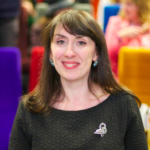
Mairi Kidd is the Director of The Saltire Society. She leads on delivery of the Society’s programmes championing the arts and culture of Scotland. She has previously worked at Creative Scotland providing strategic leadership for literature, languages a …
FEATURED PUBLISHER:
Birlinn

Birlinn Ltd is an independent publishing house based in Edinburgh, Scotland. The company is built on traditions of the written and spoken word and is constantly looking to the future. Established by Hugh Andrew (2022 recipient of the Royal Scottish Geo …