


Lucinda Hare is a children’s writer and illustrator from Edinburgh, who now lives in Lasswade in Midlothian. She was born in Edinburgh and raised in East Lothian. She studied history at history and worked in a number of roles in Scotland and South Africa. In 1999 she married her husband Paul and moved to Lasswade where she started adopting rescued animals – dogs, cats, rabbits, guinea pigs and hens.
Although Hare has always been a keen writer and illustrator of fantasy fiction and creatures, it wasn’t until 2009 that her first novel, The Dragon Whisperer, was published, and it was shortlisted for the Royal Mail Awards for Scottish Children’s Books in 2010. Her novels are set in a fantasy world called Dragonsdome, and she has written two unpublished novels set in the same world from a young adult perspective. The map from the Dragonsdome world bears a remarkable similarity to that of Scotland, with many crossovers between the novels and the geography of Scotland.
After Graduating from Glasgow University, Louise Welsh realised she had serious aspirations to become a novelist; these were at odds, however, with the need to earn a living. After setting up and running a second hand bookshop for most of her twenties, she composed The Cutting Room, obviously drawing from her experiences dealing with Glasgow’s colourful and eclectic community to create controversial yet realistic characters and bring them to life beautifully for her readers. This début novel was awarded the John Creasey Dagger and shared the Saltire First Book Award. It was also nominated for the Orange Prize and is included in the Stonewall honour book in the USA.
Her second book, Tamburlaine Must Die, was published in 2004 and received much critical acclaim; The Bullet Trick was published in July 2006. Her forth novel is the mystery thriller Naming the Bones, published in 2010.
Louise Welsh lives in Glasgow with her partner, the writer Zoë Strachan.
Liz Niven was born and raised in Glasgow. After qualifying as an English teacher she left Glasgow and taught in various locations in Scotland while bringing up her three children. She has lived in Dumbarton, Easter Ross, Newton Stewart and currently lives in Dumfries.
She is a freelance writer and is regularly invited to deliver creative writing workshops across Scotland. She has held many writing residencies in schools and communities in Scotland, including three years as Writer-in-Residence at Dumfries and Galloway Arts Association and a Highland and Island Airports Residency subsequently the subject of ITV’s ‘Poet on a Plane’ documentary.
Although no longer teaching she keeps a close association with schools by delivering writing workshops and writing the Advanced Higher Language paper for SQA. Poetry Projects have been hosted by the Scottish Poetry Library and the Poetry Society of London.
She first started writing poetry in her thirties after exploring prose and drama, the former broadcast on BBC, the latter performed by community groups. A poetry pamphlet published by Duncan Glen’s akros was followed by A Drunk Wumman Sittin oan a Thistle from Markings publications. Two full collections followed, Stravaigin, originally published by Canongate and republished by Luath, then Burning Whins also from Luath.
Niven has been an award-winner on three occasions in the McCash Scots Poetry awards.
Currently editing New Writing Scotland for the ASLS, she has also edited many books for educational use, The Kist/A Chiste, Turnstones an English Course for Scotland, The Scots Language: its place in education and the Scots Language in Education in Scotland for the European Bureau of Lesser Used Languages.
Having been invited to participate in Literary Festivals around the world her poetry has been translated into Lithuanian, Slovakian and Mandarin. For several years, she worked to promote the Scots language in Education and was involved in comparative work in Friesland, Jutland, and Catalonia through the European Bureau of Lesser Used Languages.
Liz Lochhead is one of Scotland’s best-known poets and dramatists, with her books and poetry attracting both critical and commercial success. She is also a tireless performer and screenwriter, performing all over the UK and overseas.
Born in Motherwell, Lanarkshire, in 1947, she taught art in schools before embarking on a writing career. She formed part of the now famous Glasgow writer’s group of the 1970s, centred around Philip Hobsbaum at Glasgow University, along with the writers, James Kelman, Tom Leonard, and Alasdair Gray.
She has won numerous awards and bursaries, beginning with a Scottish Arts Council award for Memo for Spring in 1972, and more recently with Medea, which won the Saltire Society Scottish Book of the Year Award in 2000. In January 2011 Liz Lochhead was awarded the position of Scots Makar, which had been vacant since the death of Edwin Morgan.
Her plays have been performed at the Edinburgh Festival and elsewhere: Mary Queen of Scots Got Her Head Chopped Off and the translations from Moliere into Scots were particularly well received.
Lochhead manages to bridge the gap between the literary and the popular with her lively, witty takes on modern life and relationships, particularly her poems on the lot of modern women. The language she employs is redolent with everyday speech patterns and idioms.
Children’s author Linda Strachan was born in Edinburgh, but was taught in boarding schools in both Aberdeen and Perthshire. A former hospital laboratory technician, model and restaurant manager, she has written over 50 books for children. Her first book, Zoola, was published in 1996, and is well known for her Hamish McHaggis series of books. Her first novel for teenagers, Spider, was shortlisted for Falkirk Council’s RED Book award in 2009.
Strachan has also written Writing for Children. She lives in East Lothian, and regularly leads creative writing workshops with children and adults across Scotland.
Linda Gillard graduated from Bristol University with a degree in Drama and German and has had careers as an actress, journalist and teacher. She now writes full-time and lives on the Isle of Arran.
Linda’s first novel, Emotional Geology (Transita), set on the Hebridean island of North Uist, was short-listed for the 2006 Waverton Good Read Award. A Lifetime Burning was published by Transita in 2006. Star Gazing, (set partly on the Isle of Skye where Linda lived for seven years) was published in 2008 by Piatkus and was short-listed for The Romantic Novel of the Year 2009 and the Robin Jenkins Literary Award, the UK’s first environmental book award. In 2010 Star Gazing topped Woman’s Weekly’s reader poll for “Favourite Romantic Novel 1960-2010”.
“Linda Gillard is an original and versatile author. Always challenging, I never know what to expect from her novels – except a gripping investigation of the twists of human life and love. All this, and heroes to die for.” Gillian Philip, author of Bad Faith and Firebrand.
Linda Cracknell was born in the Netherlands and raised in the south of England, but has lived and worked in Highland Perthshire since 1990. After studying at the University of Exeter and the International Language Institute in Paris, she spent a year teaching English in Zanzibar in Tanzania. A number of education and consultancy jobs in the UK followed.
After winning the Macallan/Scotland on Sunday short story competition in 1998 her first collection, Life Drawing, was published, which was shortlisted for the Saltire First Book of the Year Award in 2001. Her second collection, The Searching Glance, was published in 2008.
As well as fiction, Cracknell has written numerous radio plays and drama scripts, and teaches creative writing in workshops across Scotland and internationally. In 2002 to 2005 she was writer-in-residence at Brownsbank Cottage near Biggar, the final home of Hugh MacDiarmid.
Crime writer Lin Anderson was born in Greenock, and studied at Glasgow, Edinburgh and Napier Universities. Her father was a Detective Inspector in the CID, and during the 1980s she lived in Nigeria. Anderson was a teacher of maths and computing at high school until she took up writing full-time.
She started writing in the late 1990s, first writing screenplays and later novels featuring Forensic Scientist Rhona MacLeod. Her novels are well researched, and Anderson attended an evening class on forensic science in Glasgow. Her first novel, Driftnet, was published in 2003, and there are now seven novels in series. A prequel short story Blood Red Roses has also been published, and a television series based on the novels is under development.
Lin Anderson has also written a non-fiction title Braveheart: From Hollywood to Holyrood.
Anderson now lives in Edinburgh and is a member of the Femmes Fatales crime writing trio, along with Alex Gray and Alanna Knight.
Professor Liam McIlvanney, the son of novelist William McIlvanney, was born in Kilmarnock in Ayrshire, and studied at Glasgow and Oxford Universities. After ten years lecturing in Scottish and Irish literature at the University of Aberdeen, he moved to Dunedin in New Zealand to teach at the University of Otago. He lectures in Scottish literature, culture and history, and on Irish-Scottish literary connections, and holds the Stuart Professor of Scottish Studies chair at the University.
He won a Saltire Award for his first book, Burns the Radical, in 2002. A chance meeting with an editor for Faber and Faber persuaded him to turn to fiction, and his first novel, All the Colours of the Town, was published in 2009. He is currently working on a second novel featuring journalist Gerry Conway.
He has also written reviews and criticism for the London Review of Books, The Guardian, and others. He lives in Dunedin with his wife and three children.
In 2002 Liam Leddy’s GP advised him to take up a ‘hobby’. His obsession with reading, having been nurtured to a Higher English A at St Mungo’s Academy, pointed him towards the idea of writing.
He began with a pen and a piece of paper and soon after produced his first short story. The next step was to upgrade to a typewriter which was purchased from a street market. He read constantly and rejoined his local library; while also attending other libraries. He felt that the time was right for the emergence of a new short story writer and at first focussed on the most renowned short story writers – Saki, Stephen King, James Lee Burke and a host of others.
Liam does not feel that a person can be taught to write; he does believe, however, that you can teach someone to improve their writing skills. He enrolled in writing classes and purchased the Writers and Artists Yearbook which led to a deeper understanding of what it is to be a writer and how to accomplish that.
He was first picked up by and ebook publisher, Deunant Books. His short stories – by then collections – sold, and he became more established as a writer. He felt that he had proved both to himself and to others that he could actually write. He appeared in The Hamilton Advertiser and The Sunday Post as a local author, and on local Thistle Television as an up-and-coming writer.
Before parting company with Deunant Books they published Body Language, his first novel which sold well. He continued to write short stories and joined The Society of Authors and The Writers Guild. As it proved more difficult to find funding and publication Liam decided to forge ahead and self-publish. He moved upwards with technology when a friend offered him his old computer. His stories continued to garner interest.
Liam has his own website and all his work to date can be found on Amazon and Lulu. His stories are available in hardback, paperback and ebook formats. They are also available in The Mitchell Library and South Lanarkshire Libraries who have given tremendous support to Liam.
Lewis Grassic Gibbon was born James Leslie Mitchell in 1901 in Aberdeenshire and grew up in Arbuthnott in the Mearns. His masterpiece trilogy, A Scots Quair, is familiar to most people in Scotland while Sunset Song was voted the Top Scottish book in a recent poll.
Mitchell began his working life as a journalist in Aberdeen and Glasgow. He did not prove to be a success in that profession and joined the Forces, combining his working life with writing. He was a prolific writer with over seventeen books published between 1928-34: short stories, non-fiction, fiction and science fiction.
He died tragically young in 1935 in Welwyn Garden City.
His works are now gradually being republished in their entirety and with copyright lapsing on The Scots Quair, there should be a flurry of new editions in the next year or so.
Lesley McDowell is a literary critic for The Herald, The Scotsman and The Independent on Sunday. Her latest book, Unfashioned Creatures, is a gothic novel set in the 1820s based on a young woman – a real-life friend of Mary Shelley – who is suffering from her husband’s mental health disorders, and an ambitious young doctor who hopes to make a name for himself in the emerging science of psychiatry.
Lesley is based in Glasgow and has a PhD from Glasgow University on the work of James Joyce and feminist theory. Her first novel was The Picnic (2007). Her second book, Between the Sheets: The Literary Liaisons of Nine 20th-Century Women Writers, was shortlisted for the non-fiction prize in the 2011 Scottish Book Awards. She has been the recipient of two Creative Scotland writing bursaries and will be Writer-in-Residence at Gladstones Library in May, 2013.
Born Elizabeth Dodd in 1906, Lavinia Derwent is from the Cheviot hills near Jedburgh. A writer and broadcaster, she is best known for her island novel series Sula, which she started in 1969.
Her 1920s stories of Tammy Troot were read on Auntie Kathleen’s Children’s Hour on Scottish Radio. In the 1970s she presented, along with Molly Weir and Cliff Hanley, a TV series on her Borders childhood. The stories from this series were collected in two autobiographical anthologies, A Breath of Border Air and Another Breath of Border Air.
Laura Marney is from Glasgow and her comic tales are dotted with the colourful language of the city. Although her books are not all set in the city, they are filled with the spirit of the place.
Laura studied for a degree in Business administration at Strathclyde university in Glasgow before taking up a post as a medical sales rep. Laura claims to always having had a passion for writing, ever since primary three. She graduated from the M.Litt in Creative Writing, run by Glasgow and Strathclyde Universities, in 2001.
She was first published in 2004 with her novel, No Wonder I Take A Drink, which was Waterstone’s book of the Month. With the success of this, her publisher, Black Swan Books, commissioned another two from her and never a woman to waste time, Laura’s second novel, Nobody Loves A Ginger Baby, was released in 2005. Her third book, Only Strange People Go To Church Nowadays, was published in 2006.
Laura won a writer’s bursary from the Scottish Arts Council in order for her to concentrate on writing her second novel, which allowed her to give up her medical rep job and move to Barcelona for part of the year, after falling in love with the city after watching it on a TV travel programme.
On her return from Spain, she took up a part-time teaching post on the M.Phil Creative Writing course at Glasgow University, where she continues to work. Laura also teaches aerobics.
She has had short stories published in magazines and broadcast on radio, and harbours a desire to start screen writing. Her novels are being republished in 2012.
Laura Hird was born in Edinburgh in 1966. She studied at Middlesex Polytechnic, graduating with a degree in Contemporary Writing. After a varied of careers, from coleslaw packer to Council Tax canvasser, a Scottish Arts Council bursary in 1997 allowed her to writer full time. She was first published in the Rebel, Inc. anthology Children of Albion Rovers in 1997, alongside other leading Scottish authors such as Irvine Welsh and Alan Warner.
The short story collection Nail & Other Stories was published in 1998, and her first novel, Born Free, was published in 1999. The novel, which was shortlisted for the Whitbred First Novel Award, took her back to her childhood home of Gorgie in west Edinburgh. Her latest anthology, Hope and Other Urban Tales, was published in autumn 2006.
She has also published a memoir, called Dear Laura. Laura’s mother, June Hird (a ‘thwarted actress, insatiable reader and self-confessed “constipated romantic”‘) wrote a stream of letters to Laura while she was at University, which Hird has used to explore her relationship with her mother.
Children’s fantasy author Lari Don was born in Chile, and travelled widely in South and Central America as a child, before her family settled in North East Scotland. She lived in Tain, Innerleithen and Dufftown, and went to Speyside High School. She studied at Glasgow University, then became a Press Officer for the SNP. Later, she worked as a researcher and producer for BBC Radio Scotland.
Although she had been writing for a while, her first success came in 2001 when she won the Canongate Prize for her short stories, which were written for adults. Her first children’s book, First Aid For Fairies, was published in 2008 and won a Royal Mail Award for Scottish Children’s Books a year later. Since then she has written three other fantasy novels, most recently Rocking Horse War, as well as a version of Robert Burns’s Tam O’Shanter. She has also written picture books for pre-school children, such as The Big Bottom Hunt.
Lari Don now lives in Leith in Edinburgh with her two children, and is a full time author and storyteller.
Kirsty Logan is the author of the novels Now She is Witch, The Gracekeepers, and The Gloaming, the short story collections A Portable Shelter and The Rental Heart & Other Fairytales, the flash fiction chapbook The Psychology of Animals Swallowed Alive, and the short memoir The Old Asylum in the Woods at the Edge of the Town Where I Grew Up. Her latest novel, Now She is Witch, was published in 2023 with Harvill Secker. Her books have won the LAMBDA Literary Award, the Polari First Book Prize, the Saboteur Award, the Scott Prize and the Gavin Wallace Fellowship, and been selected for the Radio 2 Book Club and the Waterstones Book Club. In 2019 she was selected as one of the ten most outstanding LGBTQ British writers for the International Literature Showcase. Her short fiction and poetry has been translated into Japanese and Spanish, recorded for radio and podcasts, exhibited in galleries and distributed from a vintage Wurlitzer cigarette machine. She lives in Glasgow with her wife and their rescue dog.
Kirsty Gunn is the author of four novels—Rain, The Keepsake, Featherstone and The Boy and the Sea—a collection of short stories, This Place you Return to is Home, and the non-fiction book, 44 Things.
In 2004, she was awarded the Scottish Arts Council Bursary for Literature and in 2007 she won the Sundial Scottish Arts Council Book of the Year Award for The Boy and the Sea. A regular contributor to various newspapers and magazines, she is also Professor of Writing Practice and Study at the University of Dundee, where she established and directs the writing programme.
She lives in London and Scotland with her husband and two daughters.
Kirsty’s latest book, The Big Music, has attracted much attention and praise from the likes of DBC Pierre and Adam Mars Jones.
Kevin MacNeil is an award-winning novelist, playwright and poet, originally from the Isle of Lewis in the Outer Hebrides, but now living and working in Edinburgh. He studied at the University there, and has also taught Creative Writing at Edinburgh University.
MacNeil’s first poetry collection Love and Zen in the Outer Hebrides won the Tivoli Europa Giovani International Poetry Prize in 2001, and he has held a number of writing residences in Europe, including in Uppsala University and the Villa Concordia in Bavaria. His debut novel The Stornoway Way was an instant bestseller. His latest novel, A Method Actor’s Guide to Jekyll and Hyde, is set in Edinburgh.
Kevin MacNeil is a founder member of the trip-hop poetry band Tommorrowscope, and he regularly collaborates with artists, musicians and fellow poets, and is due to release an album with William Campbell in 2010.
In September 2009 he cycled 1300km of the river Danube, from its source to Budapest, to raise money for two cancer charters. The BBC filmed a documentary about his journey, and he is also working on a book about the trip.
Kerry Hudson was born in Aberdeen. Her first novel, TONY HOGAN BOUGHT ME AN ICE-CREAM FLOAT BEFORE HE STOLE MY MA was published in 2012 by Chatto & Windus (Penguin Random House) and was the winner of the Scottish First Book Award while also being shortlisted for the Southbank Sky Arts Literature Award, Guardian First Book Award, Green Carnation Prize, Author’s Club First Novel Prize and the Polari First Book Award. Kerry’s second novel, THIRST, was published in 2014 by Chatto & Windus won France’s most prestigious award for foreign fiction, the Prix Femina and was shortlisted for the Green Carnation Prize. Her books are also available in the US (Penguin), France (Editions Phillipe Rey) and Italy (Minimum Fax). Kerry founded The WoMentoring Project and has written for Grazia, Guardian Review and YOU Magazine. She teaches with the National Academy of Writing, Arvon Foundation, Writers’ Centre Norwich and is a mentor for IdeasTap Inspires.
ALSO ON BOOKS FROM SCOTLAND
-

The Savage Landscape by Cal Flyn
‘It is their resistance to the intrusions of the outside world − culturally, economically, environme …
-

The Shortest History of Scotland: A Q & A with Murray Pittock
‘We need to be better aware of that to understand the challenges and achievements of the past, and t …
-
David Robinson Interviews: John Lister-Kaye
‘I enjoy stillness. It creeps up on you and becomes almost a force. I’ve had squirrels run over my f …
-
Spring 2026 Round Up of Scots & Gaelic Releases
‘Discover Jansson’s uninhibited imagination full of love, kindness, and adventure.’
-
Walking Edinburgh’s Lost Railways By Robin Howie and John McGregor
‘In earlier times it was a site where lovers came to relax and dream, hence the beautiful traditiona …
-
David Robinson Reviews: The Loch of the Bees
‘The past’s current flows through the characters in his fiction so strongly that it almost becomes t …
FEATURED AUTHOR:
Anna Deacon
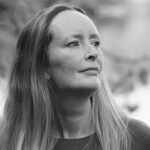
Anna Deacon has worked as a photographer for over a decade following a career in the music industry in London. Her photographic work has been published in The Times, The Scotsman, The Herald, Hood, The Big Issue, Refinery 29, Sunday Post and Outdoor Sw …
FEATURED PUBLISHER:
The White Horse Press
The White Horse Press is a small independent publisher specialising in scholarly books and journals on environment and society. We aspire to standards of academic quality as high as those of the best international scholarly publishers, and to a friendl …