


Born in Glasgow in 1968 and raised in Highland Perthshire, Kenneth C. Steven is a widely published novelist, poet and children’s author.
His latest works include the 2007 collection of poems, Salt and Light (Saint Andrew Press), The Santa Maria, a children’s novel set in the Hebrides, and The Dragon Kite, a picture book about one boy’s search for a real dragon.
Steven has also produced a number of translated works. His translation of Lars Saaybe Christensen’s Half Brother was long-listed for the 2004 Independent Foreign Fiction Prize, and short-listed for the international IMPAC Award.
As well as writing, Steven also likes to help promote creativity within schools. Group reading and imagination workshops are also amongst his services for primary schools, and for secondary schools, there is the chance to recruit Steven to help older children build a portfolio of creative work.
Steven caters for adult readers and aspiring writers too, by visiting writers’ groups and teaching day courses, as well as longer courses. For six years he has co-tutored Into Blue Silence, a week-long writing retreat on the Isle of Iona. More recently, he set up a similar course in Castle of Park in Aberdeenshire, and intends to take this course elsewhere.
Ken McClure was born and raised in Edinburgh. He had the good fortune to be taught by Norman MacCaig at Craiglockhart Primary School and later Sorley Maclean at Boroughmuir High School. His first career plan was to join the Merchant Navy, but after a year of studying engineering in Glasgow he realised that engineering – and a possible 18-month post in the Antarctic – wasn’t for him.
He turned to music for a year or so, playing guitar with a small jazz combo and several pop groups, before taking a job as a junior lab technician at Edinburgh City Hospital. Under the influence of consultant bacteriologist Dr Archie Wallace, Ken McClure took a night-school course, and later a degree from the Open University and a PhD in molecular genetics from Edinburgh University. His research work won him the Difco Triennial Prize in 1980, and, while working with the Medical Research Council, had a gene named after him: ftsK.
McClure first turned to writing after a research trip to Tel-Aviv; his time there became the basis of his first novel The Scorpion’s Advance. Now writing full time, McClure has written over 15 medical and scientific thrillers, and has had the most success with his Dr Steven Dunbar series, most recently The Lazarus Strain. He lives in East Lothian.
Following the US publication of Ken MacLeod’s Fall Revolution series, online magazine salon.com joked that MacLeod was a “Trotskyite libertarian cyberpunk”. But more than a joke, this is a good description of his early science fiction novels.
Born in Stornoway, Ken MacLeod is perhaps Scotland’s most political of authors. He studied Zoology at Glasgow University, during which time he became politically active. He has been a member of the International Marxist Group, the Communist Party of Great Britain, and other left-wing organisations, and his politics are prominent in his novels.
His first series of novels, the Fall Revolution series (starting with The Star Fraction), mix socialism, high technology and humour. The Engines of Light trilogy feels more like a traditional ‘space opera’. Learning the World, is less political but demonstrates his keen ability to create alien worlds which are both believable and different; The Execution Channel is a near-future novel of politics and lies.
Ken MacLeod is regularly shortlisted for the Arthur C Clarke and Hugo awards, the most prestigious science fiction awards.
Born and raised in Grimsby, but now lives and works in Edinburgh. A former truck driver and pizza restaurant waiter, he is now a full-time writer.
His first novel Creepers was published in 1996, and was shortlisted for the Guardian Children’s Fiction Prize; he was also shortlisted in 2002 for Warehouse which won him the 2003 Angus Book Award. He was first inspired to write after reading Robert Westall’s The Machine Gunners, and has 12 published novels.
Gray regularly reviews teenage fiction for The Guardian and The Scotsman newspapers, and was the first ever Scottish Book Trust Virtual Writer in Residence. He lives in Edinburgh with his partner Jasmine and a parrot called Bellamy.
Kathleen Jamie is an award-winning poet and travel writer. Born in Renfrewshire in central Scotland, she studied Philosophy at Edinburgh University. Now a lecturer in Creative Writing at St Andrews University, Kathleen Jamie travelled to Pakistan and was inspired to write The Golden Peak (republished as Among Muslims) and The Autonomous Region.
Jamie has twice won the Geoffrey Faber Memorial Award. In 2016 she won twice at the Saltire Literary Awards: The Bonniest Companie, published by Picador, won both the Poetry Book of the Year and Scottish Book of the Year.
Kathleen Fidler was born in Coalville, Leicestershire in 1890, and was raised in Wigan and North Wales, where he became a teacher and later school headmistress. She married in 1930 and moved to Edinburgh shortly afterwards, where she began writing stories for her children. She finally settled in Lasswade in Midlothian. Over the course of her career, she wrote over 80 novels and non-fiction books for children. Many of her novels followed the adventures of two families, The Brydons and The Deans. Her work has been praised for the depth and detail of research into the background of her stories.
After Fidler died in 1980, her publishers and members of the Edinburgh Children’s Book Group established the Kathleen Fidler Award in memory of her work and support for children’s literature. The award, which closed in 2002, was awarded to previously unpublished authors for novels for children aged 8 to 12.
Katherine Stewart’s first book, A Croft in the Hills, was first published in 1960 and has been reprinted many times since. Born in the Highlands in 1914, she spent WWII working in London but moved to Abriachan, near Inverness, after the war. With her husband she ran a croft in the area for many years, as well as the village post office, which closed in 2008.
In 2005 Katharine Stewart helped set up a small museum in Abriachan. A sequel to her crofting book, A Garden in the Hills, came out in 1995. She has also written books on her village of Abriachan and Highland life, such as Women of the Highlands, which presents biographies of many local women since the mediaeval period.
Although born in Yorkshire in England, Kate Atkinson studied English at Dundee University and now lives in Edinburgh. After winning a short story writing competition in Woman’s Own magazine in 1988, she began to write professionally. Her debut novel, Behind the Scenes at the Museum, was published in 1995, winning her the Whitbread Book of the Year award. Atkinson has written short story collections, novels, and plays for radio, TV and stage.
After her short story collection Not the End of the World was published in 2002, she has written four novels featuring former policeman Jackson Brodie, including the Saltire Society Award-winning Case Histories. Case Histories is to be televised by the BBC, who have moved the location from Cambridge to Edinburgh.
Kate Atkinson is a fan of country music and steam trains. In 2011 she was awarded an MBE for her services to literature.
Karen Grace McCombie is a best-selling children’s and YA novelist, originally from Aberdeen and now living and working in London. After studying Graphic Design and Communication, she became a journalist, writing for a number of girl’s magazines such as J17 and Sugar. She wrote on subjects ranging from fashion to pets, quizzes to features.
In the late 1990s McCombie was asked to write short stories for Sugar magazine, which formed the basis of a series of novels written under a pseudonym for Scholastic books. She now writes full-time, and has a number of different series, including Ally’s World, Stella Etc, Sadie Rocks! and Indie Kidd, as well as a number of stand-alone novels.
Karen McCombie lives in North London with her husband, daughter and two cats.
Writer Karen Campbell was born in Paisley, and raised in Glasgow. She studied English, Drama and French at Glasgow University, but joined the police force after graduation. She spent five years working for Glasgow’s ‘A’ Division, and met her husband through her training at Tulliallan Police College. She left the force after the birth of her first child, and later worked for Glasgow City Council as a media officer.
She went on to study at the Glasgow University Creative Writing Masters Degree, graduating in 2003 with an MLitt. A two-book deal with Hodder & Stoughton followed, with her first book, The Twilight Time, being published in 2008.
She still lives in Glasgow with her husband and two daughters. In 2009 she won the Best New Scottish Writer Award at the Scottish Variety Awards.
Born in North London, Julia Donaldson now lives and works in Glasgow. While studying French and Drama at Bristol University, she met her future husband. During the 1960s, Donaldson and her husband toured Europe, busking to make ends meet. Her songs, often made up in the language she was visiting, lead to a career as a singer songwriter for children’s TV.
A Squash and a Squeeze, one of her songs, was published as a picture book in 1993, but it wasn’t until the publication of The Gruffalo that Donaldson hit the big time. Illustrated by Axel Scheffer, The Gruffalo remains the UK’s best-selling picture book, and has been translated worldwide (including into Scots Gaelic).
Donaldson has written over 70 books, many specifically for the school and education markets, as well as novels, plays and picture books. She regularly performs at book festivals and theatres, and for three years was the writer-in-residence at Easterhouse, Glasgow.
In 2011, Julia Donaldson was appointed the UK’s Children’s Laureate for a two-year term. She was also awarded an MBE for her services to literature.
Joyce Holms is a Scottish crime fiction writer. She grew up in Glasgow, and now lives and works in Edinburgh. Prior to her writing career, she had worked in hospitality, managing a hotel and later a B&B. Holms has been writing since her twenties, when she started with short stories, then historical romances, before moving to crime fiction in the 1990s. Her romantic fiction had been criticised by her editor as “this is not a romance- it’s a romp!”. Her crime fiction is considered to be more humorous than most. The Fizz and Buchanan series, beginning with Payment Deferred, was first published in 1996. The series features law student Fizz Fitzpatrick and lawyer Tam Buchanan, and is set in Edinburgh.
Joyce Holms also teaches creative writing and gives workshops and classes to writing groups, readers’ groups and schools. Many of her books are available in the USA, under the Bloody Brits imprint.
John Innes Mackintosh Stewart was a Scottish novelist and academic, who wrote fiction and literary criticism, and detective novels under the pseudonym Michael Innes. He was born in Edinburgh and studied at the city’s Academy, and later read English Literature at Oxford University. He also studied psychoanalysis for a year in Vienna in 1929. He lectured in English at universities in Leeds, Adelaide in Australia, Belfast and Oxford. He retired from lecturing in 1973.
As an academic, Stewart wrote literary criticism of novelists including James Joyce, Joseph Conrad, Thomas Love Peacock and Thomas Hardy.
In 1936 he wrote his first detective novel under the pseudonym of Michael Innes, Death at the President’s Lodging, which introduced the recurring character of DI John Appleby. Many of these novels are light-hearted and tongue-in-cheek. His final novel, Appleby and the Ospreys, was published in 1986. The novel Christmas at Candleshoe was filmed in 1977.
In 1986, Stewart wrote his autobiography, Myself and Michael Innes. John Stewart was married to Margaret Hardwick, who died in 1979, and had five children. He died in South London in 1994.
John McGill was born in Glasgow. He studied for his teaching qualification in Edinburgh, and has taught in Orkney, Shetland, England and Germany. He now lives in Orkney with his wife, writer Morag MacInnes.
His first published book was a collection of short stories, That Rubens Guy, and a novel, Giraffes. His stories have featured in a number of anthologies and have been broadcast on BBC Radio 4 and Radio Scotland. His most recent novel, The Most Glorified Strip of Bunting, is set in the Arctic in the late 19th century.
John Hannavy is a photographer, writer and historian. He has written many articles and books with each one featuring his own images.
He was formerly Professor in Art and Design at Bolton University. He is Professor Emeritus and a Fellow of the British Institute of Professional Photography and the Royal Photographic Society.
John contributes regularly to various magazines. Some of his recent articles for Scotland Magazine include: The mighty forth, South to the border, and The Poet and the Engineer.
Some of his contributions to Scottish books include Scotland’s Heritage: A Photographic Journey a unique book combining stunning photography and engaging narrative, and Around Scotland’s Shores: Victorians And Edwardians In Colour a collection of photographs and postcards from the Victorian and Edwardian eras.
His own website features beautiful images of full spreads from the pages of his books and is well worth a visit.
He is currently working on The Way We Were: Victorian And Edwardian Scotland In Colour a reflective look at how Scotland was depicted in photographs and postcards 100-170 years ago. It is published by Whittles Publishing and will be available to buy here in September 2012.
Poet John Glenday was born in Monifieth and educated at Arbroath High School, and later at Edinburgh University. After three years of studying Literature and Language, he switched courses and trained to be a Psychiatric Nurse, a job he held in Dundee for 12 years.
His first poetry collection, The Apple Ghost, was published in 1989, and won an SAC Book of the Year award that year. A year later he was appointed the Scottish/Canadian Exchange Fellow, working at the University of Alberta. In the 1990s he co-founded and ran the Blind Serpent Press and his second collection, Undark, was published in 1995. It has taken him 14 years to produce his third book, Grain, which was published in November 2009.
He works as an addictions counsellor in the Highlands, and lives with his wife Erika. He has five children.
John Fardell was brought up in the countryside near Bristol, and has lived in Edinburgh since 1992. He is the author of two very well received children’s books, The Seven Professors of the Far North (2004) and The Flight of the Silver Turtle (2006), both published by Faber and Faber.
For the past seventeen years, John has mostly made his living as a cartoonist. His cartoons have appeared in various publications, including the Independent, the List, the Herald, the New Statesman, and Property Week; but it is his work for the adult comic Viz for which he is best known. John is the creator, writer and illustrator of ‘The Modern Parents’, ‘The Critics’, ‘Ferdinand The Foodie’, and a few others. His strips have appeared in Viz since the early nineties and generally tend to feature repulsively self-righteous and pretentious characters.
In addition to his cartoon and illustration work, John has also been involved in puppet theatre work from time to time, since the mid 1990s.
It was a chance meeting at the Edinburgh Book Festival in 2001 with Suzy Jenvey – the editorial director of Faber Children’s Books, and a Viz fan – that spurred John into writing his first children’s novel. John now spends most of his working time concentrating on writing and illustrating his novels, though still continues to produce some cartoon work, including strips for most issues of Viz. He works in a converted garage at his home in Corstorphine, Edinburgh, where he lives with his wife and two sons.
Playwright and artist John Byrne was born and raised in the Ferguslie Park are of Paisley. He attended the Glasgow School of Art from 1958 to 1963, where he won an art scholarship to Italy, visiting Assissi. He married in 1964, and took a number of illustration jobs, including book jackets for Penguin books, record covers for bands including The Beatles, and a graphic artist for Scottish TV. In the late 60s he released a series of artistic works under a fake name, “Patrick”, which met with some success.
He began writing in 1977. The Slab Boys is the first play in a trilogy, all set in a carpet factory in Paisley in 1957, and inspired by Byrne’s own experience as a ‘slab boy’ in the 1950s. Tutti Frutti, written for the BBC, is perhaps his most successful work.
He now lives in Nairn with his children. Some of his art, including portraits of leading Scottish figures such as Robbie Coltrane, partner Tilda Swinton, and Billy Connolly, are held by the Scottish National Portrait Gallery.
John Burnside (b. 1955) is the author of fourteen collections of poetry and eleven works of fiction, as well as three uncompromising memoirs. He has achieved wide critical acclaim, winning the Whitbread Poetry Award in 2000 for The Asylum Dance which was also shortlisted for the Forward and T. S. Eliot prizes, and winning the 2011 T. S. Eliot Prize for Black Cat Bone. In 2015 he was a judge for the Man Booker Prize. Born in Scotland, he moved away in 1965, returning to in 1995. In the intervening period he worked as a factory hand, a labourer, a gardener and, for ten years, as a computer systems designer. He is a professor of English Literature at the University of St Andrews and divides his time between Fife and Berlin.
John Buchan was born in Perth, the eldest son of the Rev. John Buchan. He grew up for a time in Fife, before moving with his family to Glasgow. He holidayed with his grandparents in the Scottish Borders.
Buchan was schooled at Hutchesons’ Grammar School in Glasgow and then studied Classics at Glasgow University, where he wrote poetry and first became a published writer. He then went on to Brasenose College, Oxford, where he studied law. He had to take another first degree at Oxford, as his degree from Glasgow University was deemed unsatisfactory. While at Brasenose Buchan continued his writing and won the Stanhope Essay Prize in 1897 and the Newdigate Prize for Poetry in 1898. After graduating from Oxford, he started a short-lived career in law, in 1901, before moving quickly into politics. He became the private secretary to Alfred Milner, who was High commissioner for South Africa, Governor of Cape Colony and Colonial Administrator of Transvaal and the Orange Free State. His time with Milner allowed him to become well acquainted with a region that would be a recurring setting in his writing.
On his return to London, in 1903, he became a partner in the publishing firm Thomas Nelson and Sons where he continued to write and publish his own works and for a time virtually edited The Spectator. In 1907 he married Susan Charlotte Grosvener, a cousin of the Duke of Westminster, and they had four children. Buchan had his first novel, Sir Quixote of the Moors, published in 1895, but in 1910, the first of his adventure novels, Prestor John, was published. During World War I he wrote for the War Propaganda Bureau and was a correspondent for The Times in France.
In 1914, whist recovering from illness, Buchan wrote his best known book, The Thirty-Nine Steps, which was published in 1915. This, his 27th book, introduced us to the British hero Richard Hannay, who was based on an old friend of Buchan’s from his South African days, Edmund Ironside.
In 1916 the sequel to The Thirty-Nine Steps, Greenmantle, was published. In this year Buchan joined the British Army Intelligence Corps, where he composed speeches for Sir Douglas Haig. Under Lord Beaverbrook, in 1917, he became the Director of Information. After the war Buchan became a director of the news agency, Reuters, and continued his interest in politics.
The Thirty-Nine Steps was by far his most famous novel and it has been filmed three times, the first being directed by Alfred Hitchcock. However, Buchan wrote much more widely than adventure tales: his output included poetry and biographies, including Sir Walter Scott, Caesar Augustus, Oliver Cromwell and Julius Caesar.
Buchan’s political endeavours saw him twice the Lord High Commissioner to the General Assembly of the Church of Scotland. In 1927 he was elected, in a by-election, as a Scottish Unionist MP for the Scottish Universities, a post he held until 1935.
In 1935 he became the 15th Governor General of Canada. The Canadian Prime Minister, William Lyon Mackenzie King wanted Buchan to take the post as a commoner, but King George V wanted to be represented by a peer, and so Buchan became the 1st Baron Tweedsmuir of Elsfield. Both Buchan and his wife took their roles in Canada seriously. Lady Tweedsmuir was active in promoting literacy in Canada, using Rideau Hall as a distribution centre for 40,000 books that were sent to readers in the remote west of the country, and this became known as The Lady Tweedsmuir Prairie Library Scheme.
John Buchan was recognised by Glasgow, St. Andrews, McGill, Toronto and Montreal Universities, which all conferred him Doctor of Law. He was made an Honorary Fellow and Honorary D.C.L. of Oxford University.
He died while still in office as Governor General of Canada. He never stopped working.
ALSO ON BOOKS FROM SCOTLAND
-

The Savage Landscape by Cal Flyn
‘It is their resistance to the intrusions of the outside world − culturally, economically, environme …
-

The Shortest History of Scotland: A Q & A with Murray Pittock
‘We need to be better aware of that to understand the challenges and achievements of the past, and t …
-
David Robinson Interviews: John Lister-Kaye
‘I enjoy stillness. It creeps up on you and becomes almost a force. I’ve had squirrels run over my f …
-
Spring 2026 Round Up of Scots & Gaelic Releases
‘Discover Jansson’s uninhibited imagination full of love, kindness, and adventure.’
-
Walking Edinburgh’s Lost Railways By Robin Howie and John McGregor
‘In earlier times it was a site where lovers came to relax and dream, hence the beautiful traditiona …
-
David Robinson Reviews: The Loch of the Bees
‘The past’s current flows through the characters in his fiction so strongly that it almost becomes t …
FEATURED AUTHOR:
Alan Parks
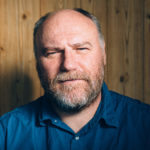
Alan Parks has worked in the music industry for over twenty years. His debut novel Bloody January was shortlisted for the Grand Prix de Littérature Policière. He won the McIlvanney Prize in 2022 for the fifth entry in the Harry McCoy series, May God Fo …
FEATURED PUBLISHER:
Tapsalteerie

Tapsalteerie is an independent poetry press based in rural Aberdeenshire. We publish a diverse range of poetry with a focus on new and innovative writing, translations, collaborative working, and the Scots language. Tapsalteerie started life as a pamph …