


Jan-Andrew Henderson was born in Kirriemuir, in Perthshire. He studied Journalism at Napier University, and completed a Masters in English Literature and Philosophy at Edinburgh University. A series of varied jobs followed, in Scotland and in the USA, where he lived for seven years after a vacation there lasted rather longer than originally planned.
Henderson returned to Scotland in 1999 to set up Black Hart Entertainment in Edinburgh, a ghost- and history-tour guide company. Around this time he also started writing books; first history and ghostly non-fiction based around Edinburgh, such as The Town Below The Ground, The Ghost That Haunted Itself and Edinburgh: City of the Dead, and latterly children’s fiction (Secret City, Hunting Charlie Wilson).
His first novel for teenagers, Bunker 10, was published in 2007; his latest novel, Colony, was published in early 2009.
James Stout Angus was a poet from Shetland, who wrote poetry in the Shetlandic dialect. Born in Catfirth Haa, the son of a local merchant, he trained as a housewright and joiner, and worked for a number of years as a ship’s carpenter. After marrying Margaret Gifford Blance, he settled in Lerwick and worked as a housewright. He first began to publish poetry in the 1870s, and was lauded for his Shetlandic poem Eels, written in 1877 and first published in The Shetland Times.
James Stout Angus compiled a guide to Shetlandic place names, and in 1914 he wrote a Glossary of the Shetland Dialect. He had a son, named Hercules after his father, born in 1871. James Stout Angus died in Lerwick in 1923.
James Robertson was born in 1958 and grew up in Bridge of Allan, Stirlingshire. A poet, editor, novelist and publisher, he is an active and prolific writer, enjoying stints at Hugh MacDiarmid’s cottage, Brownsbank, near Biggar, Lanarkshire, and as the first Writer-in-Residence at the Scottish Parliament.
He set up Kettillonia, a small pamphlet press in 1999, and was general editor of Itchy Coo, the successful Scots children’s book imprint at publishers Black and White.
His novel Joseph Knight won the Saltire Society Book of the Year in 2003 and the Scottish Arts Council Book of the Year award, and in 2010 his Scottish epic And the Land Lay Still won Robertson a second Saltire Society award.
James Robertson translates classic children’s novels, such as Roald Dahl’s The Fantastic Mr Fox as The Sleekit Mr Tod and George’s Marvellous Medicine as Geordie’s Mingin Medicine.
James Meek writes….: Born in Blackheath, London, in 1962, second of four children. Father, the son of Scots who spent working life in India; mother, the daughter of a journalist-novelist-war correspondent and a Hungarian-Jewish immigrant. Family moved to Scotland, after short stop in Nottingham, in 1967. After years in Polmont and Longriggend, where father worked in prison service, in 1969 family moved to Broughty Ferry, Dundee, where he grew up.
Six years at Grove Academy, state school in Broughty Ferry, where with the poet W. N. Herbert and others set up literary magazine, The Strawberry Duck, final school edition of which was seized and destroyed by the school authorities.
Went to Edinburgh University. First short stories published in New Edinburgh Review in early 1980s, first book publication story in Collins Book of Scottish Short Stories, 1984; play, Faculty of Rats, written with Duncan McLean, performed at Edinburgh Fringe.
From university went to City University, London, to do postgraduate journalism course. In 1985 got job as reporter on evening newspaper in Northampton, the Northampton Chronicle & Echo; worked there for three years, during which wrote first novel, McFarlane Boils the Sea, published 1989. Returned to Edinburgh in 1988 to take job as reporter on the Scotsman. During three years there wrote collection of short stories Last Orders, published 1992; helped Duncan McLean set up the Clocktower Press; and covered the 1991 Gulf War. One of first reporters to enter liberated Kuwait City.
In November 1991 left the Scotsman and drove in Volkswagen Polo from Edinburgh to Kiev, Ukraine, to work as a freelance journalist. Reported on the collapse of the Soviet Union for the Guardian and the Scotsman. During three years in Ukraine learned Russian, travelled widely and met his future wife, Yulia. In 1994 moved with Yulia to Moscow to work as reporter in the Guardian bureau there. Worked in Moscow for five years, married Yulia, visited four corners of the former Soviet space, published second novel, Drivetime, and began The People’s Act of Love. Interrupted The People’s Act Of Love to write second collection of short stories, The Museum Of Doubt. Moved to London in 1999 to work at the Guardian in various jobs, including covering the Afghan war and fall of Kabul in 2001 and the invasion of Iraq and its aftermath in 2003-4. Now working on fourth novel. Now living in Hackney, London.
Born in Kirriemuir, Angus, J.M. Barrie was the ninth of ten children. His father was David Barrie, a handloom weaver, and his mother was Margaret Ogilvy Barrie.
His older brother David died in an ice-skating accident just before 14th birthday, when Barrie was just 6 years old.
Though he had wanted to become a writer for some time, he was still persuaded by family to study at the University of Edinburgh. However, he kept up his love of writing by reviewing dramas for a local newspaper, which later helped him gain a job as a staff journalist for the Nottingham Journal.
Barrie’s first taste of recognition came with the publication of Auld Licht Idylls (1888), followed by A Window in Thrums (1890) and The Little Minister (1891), books that were based on his mothers’ stories about his home town. Though critics were less than favourable, the books were popular enough to establish Barrie as a very successful writer.
Though he had success with other novels, his attention soon turned towards the theatre. His first play was a biography of the poet Richard Savage, which was only performed once, to poor reviews. His next play, Ibsen’s Ghost (1891), was far more successful, and several other plays following this also enjoyed rave reviews. 1891 was also the year he met his future wife, actress Mary Ansell. The two married in 1894, but later divorced in 1909 after she had an affair.
In 1902 the novel The Little White Bird was published, and saw the first appearance of Barrie’s most beloved character, Peter Pan. Peter Pan, or The Boy Who Wouldn’t Grow Up, was first performed on stage in December 1904, and Barrie later developed this into the novel Peter and Wendy (1911). This has remained his most enduring piece of work, and as been adapted into feature films, musicals and more.
An important influence in Barrie’s work also came from befriending the Arthur Llewellyn Davies family in 1897, particularly the young sons. Peter Pan evolved from the stories he told them. After Arthur’s death in 1907, the boys’ mother Sylvia encouraged them to remain close to “Uncle Jim”, and when she died in 1910 he was named as a trustee and guardian to them.
In 1913, Barrie became a Baronet, later receiving the Order of Merit in 1922. He was chancellor of the University of Edinburgh from 1930 until his death, from pneumonia, on June 3 1937. He is buried in Kirriemuir, next to his parents and two of his siblings.
Born in Glasgow in 1946, James Kelman left school at fifteen to begin an apprenticeship as a compositor (where he became sensitised to the look of words on the page), which was followed by periods of work and unemployment and a brief spell in the USA. A keen reader, it wasn’t until the early 1970s, in his late twenties, that he began to seriously acknowledge his creative ability, enrolling on a writing course under the tutelage of the influential Philip Hobsbaum, alongside fellow aspiring writers Alasdair Gray, Liz Lochhead and Tom Leonard.
Variously described as gritty, essential, authentic, postmodern, existential, realist, socialist, experimental, original, traditionally working-class, traditionally Scottish, traditionally European in its similarities to Kafka, Joyce, or Beckett, or just incomparable, the work of James Kelman sparks commentators into a labelling frenzy which necessarily falls short of a true appreciation of this highly gifted writer.
Published first in the USA, Kelman had to wait until 1976 for his work to receive a British audience, in Three Glasgow Writers (with Alex Hamilton and Tom Leonard). But it was really during the following decade that Kelman’s unique voice started making waves on the Scottish literary scene. Not Not While the Giro, his first book-length collection of short stories, was published in 1983 by Polygon, and with his first two novels, The Busconductor Hines (1984) and A Chancer (1985), Kelman firmly established his artistic flair and commitment to showing real life in Thatcherite Britain as faithfully as possible (far removed from the falsities and stereotypes of the media).
The Busconductor Hines is the moving and frequently irreverent tale of Rab Hines, a family man and, as Kelman once referred to him, a ‘working-class intellectual’; a highly imaginative soul increasingly disillusioned with the monotony of his job. A Chancer, a book which the author had been struggling to finish for many years, is the brilliantly restrained narrative of a younger Glaswegian man whose only real sense of purpose is derived from the betting shop and the greyhound tracks.
In the late 1980s Kelman began to receive the recognition he deserved, when first his short story collection Greyhound for Breakfast (1987) won the Cheltenham prize and his third novel, A Disaffection (1989), took the James Tait Black award and made the Booker shortlist. With its nods to Kierkegaard and Kafka, A Disaffection brought extravagant literary comparisons on its author, and furthered Kelman’s championing of the ‘working-class intellectual’.
In 1994 James Kelman’s name shot to mainstream as well as literary prominence with the novel How Late it Was, How Late, the powerfully unsettling story of a few days in the life of Sammy Samuels, a tragic ne’er-do-well who is beaten blind by police and struggles to get by in a world of unremitting tension and danger. General astonishment followed when this most unlikely contender won that year’s Booker Prize, the most prestigious, anglocentric of book awards. Inevitably, this caused a fierce debate in the broadsheets which divided opinion between those who admired Kelman’s unwavering description of life on the edge and those who failed to see past the swearing. Simon Jenkins in The Times sneeringly referred to Kelman as an ‘illiterate savage’, while others believed that serious criticism constituted counting the instance of the f-word.
Following his Booker triumph and a new legion of supporters (although his novels have never achieved bestseller status), Kelman took up successive teaching posts on various creative writing courses, while his fiction took a rather new direction. In 2001, Translated Accounts emerged, a strange collection of anonymous testimonials introduced as originating from ‘an occupied territory or land where a form of martial law appears in operation’. While challenging his readership more than ever, Translated Accounts also offers a humanitarian, hard-hitting indictment of post-9/11 right-wing political newspeak, and wisely avoids commenting overtly on real people or places (and thereby narrowing the relevance of the message).
Kelman’s 2004 offering, You Have to Be Careful in the Land of the Free, is a return to his old style, albeit in a new setting. The first-person narrative belongs to Jeremiah Brown, a Glaswegian expatriate drinking in a small town somewhere in the USA, brooding over his past and his ex-girlfriend. There is renewed satire of governmental discourse and its treatment of ‘unassimilatit aliens’ like Jeremiah. As in the previous novels, what is striking is Kelman’s appreciation of the heroism of ordinary human beings just getting by, and Jeremiah Brown, with all his bad luck and resilient humour, is one of his best creations yet.
Of all the words used to describe James Kelman, perhaps the most pertinent then is ‘essential’. Kelman’s commitment to the ordinary individual struggling against systems of oppression, both in his work as a novelist and as a political activist (which he describes in his two collections of essays), is admirable. But it is the way he writes, his calculated subversion of the English language and his total disregard for convention, that singles him out as a truly great contemporary writer, and as much as one would like to avoid the labels, the comparisons with Kafka, Joyce, and Beckett are inevitable and much deserved.
James, or Jamie, Jauncey, was born in Perthshire but raised in Edinburgh’s New Town. His family later moved back to Perthshire, while he attended a boarding school in Oxford. Jauncey read law at Aberdeen University, before working as a journalist and magazine publisher. He left London after 20 years to focus on his own writing.
Jauncey has written four books for children and young adults, but only the most recent, The Witness and The Reckoning are in print. When not writing, he runs creative writing workshops and courses, helping businesses improve the quality and imaginative effort of their written materials. He is a part of 26, an organisation promoting creative writing in business. Jauncey is also on the board of the Edinburgh International Book Festival.
Besides writing, he has played in a number of bands, including the piano for The Funky String Band. He currently lives with his wife and two of his children near Dunkeld.
Born in 1770 in the Ettrick Valley in the Scottish Borders, James Hogg came from an unlikely literary background. (He is sometimes referred to as ‘The Ettrick Shepherd’.) Yet his best-known work, The Private Memoirs and Confessions of a Justified Sinner, published in 1824, is judged by many to be one of the greatest Scottish novels ever written, and one of the most famous men of the time, Romantic poet William Wordsworth, published a poem on hearing of his death in 1835.
Hogg’s father was a sheep-farmer and his son followed him into that calling after his schooling was cut short. He read widely however and began writing poetry, contributing some ballads to Sir Walter Scott’s Border Minstrelsy collection. There is no doubt Hogg’s connections with Scott helped him to reach a wider audience and granted him an entry into the literary world of writers and publishers.
James Hogg married in 1821 and the marriage produced five children. He did not give up on his farming background, dividing his time between Edinburgh and the Borders, but his farm was not financially successful, leading him to financial difficulties and bankruptcy. He died in 1835.
Edinburgh University Press are publishing the Collected Works of James Hogg, edited by Douglas Mack and Gillian Hughes.
James William Barke was born in Selkirkshire in 1905 to Galloway parents, he moved in Glasgow in as a teenager. He worked on the Clyde shipyards and was involved in location and Nationalist politics before embarking on a writing career. His first novel was published in 1933, but he is now best remembered for his five-volume novelisation of the life of Robert Burns, which began in 1946 with The Wind That Shakes the Barley.
The Robert Burns quintet is being republished by Edinburgh’s Black & White Publishing. Barke also wrote The Land of the Leal, a number of plays including Gregarach, and contributed to anthologies of the Bard’s poetry.
Jackie Kay was born in Edinburgh to a Scottish mother and a Nigerian father. She was subsequently adopted by a white couple from Glasgow and grew up there. Her adoptive parents, with whom she remains very close, were Communists and often took the children to anti-apartheid protests and peace rallies.
After school Jackie attended the Royal Scottish Academy of Music and Drama, where she took acting classes with the hope of becoming an actress. However, when some of her poems made it to the writer Alasdair Gray, he suggested that she had the talent to write and Kay enrolled in Stirling University, where she read English.
Jackie is a renowned poet, playwright and author, who was first published in 1991, with her collection of poetry, The Adoption Papers. This book reflected her own experiences as a black child being raised by a white family.
The Adoption Papers won the Scottish Arts council Book Award, the Saltire Society Scottish First Book of the Year Award and a commendation by the Forward Poetry Prize judges in 1992. The collection was also broadcast on BBC Radio 3 in 1990.
Her first novel, Trumpet, was published in 1998 and was awarded the Guardian Fiction Prize. It was also shortlisted for the international IMPAC Dublin Literary Award. The book is based on the life of the jazz musician Billy Tipton, who had fooled five wives and many band members into believing him to be a man. In fact Dorothy Tipton decided to dress like a man in 1933 and wasn’t discovered until medical intervention revealed the truth on his deathbed. Jackie has also written an account of the life of jazz singer Bessie Smith.
In 2002 Jackie published a collection of short stories, Why Don’t You stop Talking, and her first children’s book, Strawgirl. She has also written a memoir Red Dust Road. She was named Scotland’s Makar in 2016 and worked in this role until 2021. She was also the Chancellor of the University of Salford from 2015 – 2022.
In September 2024, it was announced that the National Library of Scotland had acquired Kay’s literary archive.
She has one son, born in 1988, and lives in Manchester.
J David Simons is a former lawyer, cotton farmer and lecturer at universities in Japan and the UK and is the author of three novels, as well as several short stories and essays. His first novel, The Credit Draper, was shortlisted for the McKitterick Prize, and he has been the recipient of a Creative Scotland Writer’s Bursary and a Robert Louis Stevenson Fellowship. His second novel, The Liberation of Celia Kahn, was published in 2011, whilst his most recent book is An Exquisite Sense of What Is Beautiful, which was published by Saraband in 2013. Having spent many years travelling the world, he now lives in Glasgow, the city of his birth.
Isla Dewar was born in Edinburgh. Prior to writing and publishing her novels Isla wrote articles for newspapers and magazines. She took a long time to finally pluck up the courage to send her first novel to an agent, but within a week she had been signed up and the first publisher who saw the manuscript offered her a two book deal. Her first book, Keeping Up With Magda, was published in 1995. Dewar found greater success with her second novel, Women Talking Dirty (1996), which was turned into a film starring Helena Bonham Carter. She has also contributed to the collection Scottish Girls About Town. She released her last novel, A Day Like Any Other, in 2020. She died in 2021.
Isla Dewar has also written for children: the picture book Rosie’s Wish and the young adult novel Walking with Rainbows, which was re-issued as Briggsy in 2008.
Violent, loud, obscene; funny, honest, intelligent – Irvine Welsh’s literature is all this and more. Born into working-class Edinburgh, Welsh attended Heriot-Watt University in the city, where, it is said, he started writing his first and most famous novel Trainspotting. His portrait of young heroin users living on the edge of society – on the edge of life – was famously filmed in 1996.
Writing predominantly in Scots vernacular, and writing about issues which will be familiar to anyone growing up in working-class Scotland over the last few decades, his novels and short stories are nonetheless popular across the UK and further afield. Irvine Welsh is now a partner in a film production company, 4 Ways. Porno, is a sequel to Trainspotting, and in 2012 a prequel, Skagboys was published. As well as his novels, Welsh has written a number of short story collections, most recently Reheated Cabbage.
Irvine Welsh currently lives in Chicago with his second wife, Beth Quinn.
Ian Rankin grew up in Cardenden in Fife, where he was locally educated before going on to study at Edinburgh University. Ian was always a prolific writer, having won prize for poetry before reaching university and more awards at university.
He never gave up on his writing, but did undertake a varied range of jobs while at university, including; chicken factory worker, alcohol researcher (lucky man), grape picker and tax collector.
It was while Rankin was supposed to be reading for his PhD in English Literature that he started writing novels, the third of which would become the first in his Rebus series, Knots and Crosses.
After running out of funding for his post-graduate study, Ian found himself in London and married to Miranda Harvey, whom he had met at university. In London he started working at the National Folktale Centre before moving on to the ‘HI-FI Review’ as firstly, assistant editor and then editor.
In 1988 Ian Rankin became a Hawthornden Fellow and was a guest of Hawthornden Castle Writer’s Retreat along with four other published writers, in Lasswade just outside Edinburgh.
Ian has won many awards for his writing and his contribution to literature. He won the Chandler Fulbright Award in 1991-1992 and has won umpteen awards from the Crime Writers’ Association, including; two CWA Daggers for Short Stories, the CWA Macallan Gold Dagger for Fiction and the CWA Cartier Diamond Dagger for Lifetime Achievement. He has also received two Honorary Doctorates from the University of Abertay Dundee and St. Andrews University. And in the Queen’s Golden Jubilee Honours list Ian was awarded an OBE for services to literature.
Rankin’s Rebus books were made into a television series starring John Hannah and Ken Stott. The series ran from 2000-2007. Exit Music was promised to be his final DI Rebus novel but he returned in 2012 with Standing In Another Man’s Grave and again in his latest book, Saints of the Shadow Bible. 2013 also marked Rankin’s debut as a playwright when he co-wrote Dark Road with Mark Thomson. The play premiered at Edinburgh’s Royal Lyceum Theatre in September 2013.
Ian spends his time in Edinburgh, London and France with his wife and two sons.
Ian left his Dundee school at the age of fourteen in 1939 and, after a brief period as an evacuee, began work as an apprentice clerk in a jute office. In 1943, he became a radio officer/purser with Alfred Holt & Co., owners of the Blue Line and the Glen Line, and remained with them until he resigned in September, 1951.
After leaving the sea, he worked for two years as a clerk in Dundee, but disliked the job so much that he went to work at GPO Coast Stations, spending a year at Wick Radio, followed by two years at Portishead Radio Station at Highbridge in Somerset. In August, 1956, he resigned from the GPO to train as a teacher at Edinburgh University and Moray House and entered teaching in 1961.
His first appointment, by request, was to Logie Junior Secondary School, in Dundee, where he had been a pupil, but spent only one term there before moving to Viewforth Secondary School, which subsequently became a High School, in Kirkcaldy. In 1965, he was promoted Principal Teacher of Modern Studies and retired in 1987.
All his seagoing memoirs were serialized in Nautical Magazine over several years and he was a regular contributor to that magazine from 1993 and until it was incorporated into Sea Breezes in 2011. He has also recorded six audio books, covering all his voyages.
He first book was Dundee Memories, published by Birlinn in 2005 but it is now out of print.
Iain Gale was born and went to school in London, but studied at the University of Edinburgh. He wrote non-fiction books in the 80s and 90s before publishing his first novel in 2006 – the critically acclaimed Four Days in June about the Battle of Waterloo. In 2007 the first book in his Jack Steel series was published, Man of Honour, and 2011’s The Black Jackals is the first in a series set during the Second World War.
Iain Crichton Smith (Iain Mac a’Ghobhainn) was born in Glasgow, Scotland’s second-largest city, but moved to the Hebridean island of Lewis when he was two. Raised with his two brothers in a small Gaelic-speaking community, Smith learned English at School and later studied English at the University of Aberdeen. Smith wrote prose and poetry in both English and Gaelic. A school teacher, Smith was also a prolific writer and translator of Gaelic texts. His best-known novel, Consider the Lilies, like many of his poems, explores the cruelty of the Highland Clearances.
One of the most inventive British authors, Iain Banks writes contemporary biting fiction and, under the name Iain M Banks, grand science fiction novels. He was born in Fife, and studied English, Philosophy and Psychology at Stirling University. His first novel, The Wasp Factory, established Banks as a new and fresh voice in Scottish writing. Many of his books share the dark tone of The Wasp Factory, although none are as graphically violent. Tackling politics, religion, pop culture, science and technology, Banks is unafraid of controversy. His fiction can be grounded in reality – Dead Air was one of the first post-9/11 novels – or in strange dreamscapes like the world of The Bridge.
His science fiction novels are mostly set in a futurist, idealistic, socialist anarchy called The Culture, where everything is possible and anyone can become anyone – or anything – they want. The non-Culture novels (Feersum Endjinn, Against A Dark Background and The Algebraist) are nevertheless fantastic worlds where technology and society are markedly different from our own.
Iain Banks usually rotates between ‘M’ and ‘non-M’ novels; the novel, The Steep Approach to Garbadale, was published in Spring 2007 and Matter, the subsequent Culture novel, was published in 2008.
In 2009 Banks dropped the ‘M’ in his name for the Science Fiction, but non-Culture, novel Transition.
In total Banks wrote twelve Science Fiction novels in addition to other fiction works. He died in 2013.
Hugh MacDiarmid was just one of the many pseudonyms of Christopher Murray Grieve, from Langholm in Dumfries and Galloway. A journalist with a strong political sense, he helped found the National Party of Scotland (later the SNP). He left School in 1910, and after serving in the Medical Corps in WWI, he returned to journalism and began to edit and publish a series of literary magazines. Northern Numbers was a poetry collection, while in Scottish Chapbook he first used the name ‘Hugh MacDiarmid’.
MacDiarmid was an exponent of the new Scottish modernism, and, with authors such as Lewis Grassic Gibbon, of the new Scottish literary renaissance. MacDiarmid wrote a series of articles with Gibbon on this new renaissance, a rejection of the 19th century sentimentalisation of Scottish literature.
His first published book was Annals of the Five Senses; his long poem A Drunk Man Looks at the Thistle is his most famous work.
Other pseudonyms used by MacDiarmid included Isobel Guthrie, A.K. Laidlaw, Arthur Leslie, Gillechriosd Mac a’Greidhir and James Maclaren. He wrote in Gaelic (and did several Gaelic to English translations), Lallans and English, particularly in later life. He was one of the greatest promoters and creators of Lallans, here referring to the synthetic combination of different forms of the Scots tongue. His attempt to establish a unified and standardised written form of Scots, in order to prevent a shift toward Standard English writing, met with approval as well as criticism. Poet Edwin Muir was particularly opposed to his use of Lallans, believing that “Scotland can only create a national literature by writing in English”.
MacDiarmid’s political views tended to be radical and still continue to stir controversy. He died in September 1978 in Biggar in the Scottish Borders.
Hilda Reilly is originally from Perth in Scotland and now lives in Glenshee, after spending most of her adult life abroad. Her occupations have ranged from the stupefyingly dull to the wondrously surreal; when asked that common question: What do you do? she has generally found that the most accurate reply is: “I live on my wits”.
After graduating from Edinburgh University she started training to become an actuary. Three months later she decided that not even the prospect of belonging to what was then the highest paid profession in the country could induce her to carry on in a career to which she was so unsuited.
Subsequent jobs have included oil industry analyst in London, artists’ model in Paris, technical translator in Baghdad, charity worker in Zanzibar, English teacher in Malaysia, journalist in Ho Chi Minh City and director of an educational organization in Khartoum.
In recent years she has returned to academic study, obtaining an MSc in Consciousness Studies, for which she specialised in the neuroscience of religious experience, and an MA in Creative Writing, focusing on the use of narrative to explore the medical concept of hysteria.
Her two travel books – Prickly Pears of Palestine: The People Behind the Politics, and Seeking Sanctuary: Journeys to Sudan – are the fruit of some of her overseas experiences. She is also the author of Guises of Desire, a biographical novel based on the life of Bertha Pappenheim, aka Anna O, the ‘founding patient’ of psychoanalysis.
ALSO ON BOOKS FROM SCOTLAND
-


The Savage Landscape by Cal Flyn
‘It is their resistance to the intrusions of the outside world − culturally, economically, environme …
-

The Shortest History of Scotland: A Q & A with Murray Pittock
‘We need to be better aware of that to understand the challenges and achievements of the past, and t …
-
David Robinson Interviews: John Lister-Kaye
‘I enjoy stillness. It creeps up on you and becomes almost a force. I’ve had squirrels run over my f …
-

Spring 2026 Round Up of Scots & Gaelic Releases
‘Discover Jansson’s uninhibited imagination full of love, kindness, and adventure.’
-

Walking Edinburgh’s Lost Railways By Robin Howie and John McGregor
‘In earlier times it was a site where lovers came to relax and dream, hence the beautiful traditiona …
-
David Robinson Reviews: The Loch of the Bees
‘The past’s current flows through the characters in his fiction so strongly that it almost becomes t …
FEATURED AUTHOR:
Gabrielle Griffiths
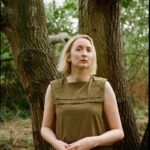
Gabrielle Griffiths grew up in Aberdeenshire and now lives in Brighton. She was a Madeleine Milburn Agency mentee in 2021 and is a graduate of the Curtis Brown Creative novel writing course. Her short fiction has been shortlisted for the Bridport Prize …
FEATURED PUBLISHER:
Hachette UK

Hachette UK is the UK’s second largest book publishing group. The award-winning adult publishing divisions are Orion; Little, Brown; John Murray Press; Hodder & Stoughton; Headline; Quercus; Octopus, and Bookouture. They publish fiction and non-fic …