


Henry Gabriel is a playwright, novelist and essayist, and native of Glasgow. He has had several of his plays produced at the Edinburgh Festival, the Pitlochry Festival Theatre, the Glasgow Citizens, and in London.
His first novel The Inner Case was published in 1989 and was acclaimed as the Book of the Week in the Scottish Sunday Post, Scotland’s largest Sunday newspaper.
His book of philosophical essays, Forward To Methuselah and a detective satire, Masks Of Eros were published respectively in 1996 and 1997.
In 2004-5, The Historical Mission Of Evil was published, a psychoanalytic perspective on the historical origin of evil. Henry presented a paper from this book at the 5th Annual Conference on Evil and Human Wickedness in Prague, 2004.
Henry has recently completed a full length play entitled After Day Breaks, in which the characters are Sigmund Freud; Anna Freud; Albert Einstein; Immanuel Velikovsky and Arnold Zweig.
One of his articles, ‘The Intuitions of Freud,’ was published in the European Journal of Psychoanalysis.
Although originally from Victoria, Australia, Helen Fitzgerald has worked and lived in Scotland for nearly twenty years. After studying English and History at the University of Melbourne she moved to the UK, and later studied for a Masters in Social Work at Glasgow University. For ten years she worked in criminal justice social work, mostly at Barlinnie Prison, including working with sex offenders and as a parole officer.
She has written four novels, the first of which, Dead Lovely, was published in 2008. Her books are deliberately dark, funny and unsettling.
Helen Fitzgerald lives in Glasgow with her husband, the screenwriter Sergio Casci, and her two children.
Hazel McHaffie is the award winning author of a new series of novels, described by Fay Weldon as “an entirely new genre for fiction and an absorbing and fascinating one too.” Originally a nurse then midwife, McHaffie has been a Research Fellow at Edinburgh University for over 20 years.
NcHaffie’s books weave together gripping plots with accurate medical detail and challenging ethical questions. Issues such as hybrid embryos, assisted dying, genetic engineering, proxy decision making for the mentally incompetent, surrogate pregnancy, drugs for patients with Alzheimer’s – all are address in her novels.
With her background in medicine and ethics, Hazel is well qualified to tackle these difficult subjects. During her twenty years as a university researcher she published a prolific number of articles and books, and her ground-breaking text, Crucial Decisions at the Beginning of Life, was voted BMA Medical Book of the Year 2002. Since moving into fiction she has kept a steady stream of stories coming. Paternity, Double Trouble and Vacant Possession were published by Racliffe Publishing in 2005. Her fifth novel, Right to Die, was published by Luath Press in May 2008, and has been described by reviewers as “an immensely sensitive and thoughtful book”, “written with rare understanding.” A sixth novel is already with her publisher, and a seventh one is well on the way. She has outlines and plots for many more.
These books have been used as an innovative introduction to ethics in many arenas and discussion points and additional information to augment their use is included on the author’s own website.
“There are very few novels which deal with the issues of contemporary medical ethics in the lively and intensely readable way which Hazel McHaffie’s books do. She uses her undoubted skill as a storyteller to weave tales of moral quandary, showing us with subtlety and sympathy how we might tackle some of the ethical issues which modern medicine has thrown up. She has demonstrated that hard cases make good reading.” Alexander McCall Smith
Harry Morris was born and raised in Plantation, Glasgow, in 1951. Prior to retiring from the Strathclyde Police Force after completing 29 years police service. Morris was involved with a Scottish/Irish Folk Band and performed the duties of Manager, Administrator, Treasurer, Agent and Organiser. Within one year, he raised the profile and quickly transformed them from a local pub band to international status, performing with some of the biggest names in Folk music.
Harry became part of the performing side of the band, playing percussion, organising stage-craft movement, choreographed the action on stage, involved himself in all musical arrangements, introduced humour to the live performances and arranged regular rehearsals, culminating in the recording of two musical CDs.
In 2003/4 he left the band to concentrate fully on his own projects, such as writing about all the funny stories he collated over his years in the police service. Initially, he went about self-publishing his own work, marketing, obtaining orders from book shops, creating his own publicity, contacting Radio Stations and Newspapers, making personal appearances at shops to sign his books, invoicing, delivering and packing. Everything required in getting his work out to the people who matter most, the buying public.
He performs regularly, afternoons and evenings at Libraries, Writers Work Shops, Roundtables, Art Centres, Town Halls, Theatres and Festivals. Harry Morris now lives in Waterfoot, Eaglesham.
Hannu Rajaniemi is a science fiction writer, originally from Finland but now living and writing in Edinburgh. He was born in the Finnish town of Ylivieska in 1978. He studied Mathematics at the Universities of Oulu and Cambridge, and moved to Edinburgh to read a Ph.D. in Mathematical Physics.
While studying at Edinburgh University he joined local writer’s group Writers’ Bloc. Hannu won a three-novel publication deal from Gollancz based on just a twenty-four page draft of his first novel The Quantum Thief, which was published in 2010. He is now writing on a sequel, The Fractal Prince.
Rajaniemi writes in both English and Finnish (he did not write the Finnish translation of The Quantum Thief). He is a founding director of a commercial research organisation, ThinkTank Maths.
Hamish Brown is a mountaineer, lecturer, photographer and poet. He was born in Colombo in Sri Lanka, and lived in Japan, Singapore and South Africa before making his home in Scotland at the end of World War II.
A keen walker and mountaineer, he climbed all the Scottish Munros in a single, 112-day trip in 1974, and later told the story in his book Hamish’s Mountain Walk. Further walking trips have been recounted in books such as Hamish’s Groats End Walk. Hamish Brown has written many walking guide-books to Scotland, and contributed to books such as the Rough Guide to Scotland. He is keen to say that he is not a ‘munro bagger’, and thinks mountains are to be enjoyed, not collected.
He received an Honorary Degree from the University of St Andrews in 1997, and another from the Open University in 2007. He was awarded an MBE in 2000, and is a fellow the Royal Scottish Geographical Society.
Hamish Brown has lived in Burntisland for many years, but spends several months in each year in Morocco where he walks the Atlas Mountains, as recounted in his book The Mountains Look on Marrakech. His most recent book is the whimsical tour of Scotland The Oldest Post Office in the World.
Born in Perthshire as James (Hamish) Scott Henderson in 1919, Hamish Henderson studied Modern Languages at Downing College, Cambridge. An important poet and pioneering folklorist, Henderson was central to the folk revival catalysed by the Edinburgh People’s Festivals in the early 1950s. Henderson travelled Scotland collecting traditional songs and tales: his mother, who spoke English, French, and Gaelic, imparted on the young Hamish a love of the Gaelic language, and he wrote and translated poetry from Gaelic, French, German, Latin and Greek. He also wrote songs, some bawdy, others political. While Henderson was in Italy after the war, he was ‘asked to leave’ while working on a translation of the letters of Antonio Gramsci, the founder of the Italian Communist Party. Henderson held several honorary degrees and after his retirement became an honorary fellow at the School of Scottish Studies. He died in Edinburgh on the 8th of March 2002.
Henderson’s Collected Poems and Songs were published in 2000 but songs such as ‘The Freedom Come-All-Ye’ and ‘The John Maclean March’, are classics examples of Henderson’s own compositions. His experience of war gave rise to two volumes of poetry, Ballads of World War II (1947), which included ‘The Ballad of the D-Day Dodgers’ and ‘The Highland Division’s Farewell to Sicily’, and the poem sequence Elegies for the Dead in Cyrenaica (1948). Later works include Alias MacAlias (1992) and The Armstrong Nose (1996).
“A scribbler of strange fictions and shouty verse, swearing like a sailor, smoking like a lum, I’m a Scotsman and a citizen of New Sodom. Which is everywhere.”
Hal Duncan’s twitter profile description of himself cannot but create an instant interest in this science fiction and fantasy writer.
Originally from a small town in Ayrshire, Duncan moved to Glasgow for university and remained after graduation. He worked as a computer programmer until 2005 before dedicating himself full time to writing.
He has written a range of fiction from novels to poetry including Escape From Hell!, Ink, and Vellum. His first novel, Vellum, has been translated into several languages and was nominated for the British Fantasy Award. He does not, however, confine himself to simple books. He has given spoken presentations of his work and been nominated for prizes for his exceptional blogging. In 2010 his musical, Nowhere Town, that he defines a “punk rock opera” and a “gay punk Orpheus” premiered in Chicago. He made the libretto available for free download on his website and promotes other work in this way alongside selling items for a fee.
In September 2011 Duncan took part in, and won, the ‘Literary Death match’ in Edinburgh. This year, he is a judge for the British Fantasy Awards.
Briefly I was born and went to school in Yorkshire, then agricultural college in Lancashire followed by brief spells in Wales and Nottinghamshire working on an Experimental Husbandry Farm for the Ministry of Agriculture. I had three Scottish grandparents and I feel I was drawn to Scotland. When I came to Dumfriesshire to work I immediately felt I belonged. It was May and the countryside was beautiful, the red stone of Dumfries, Queen of the South, was warm and welcoming, as were the people. I have never regretted the move. How could I? I married a Scottish dairy farmer, Bob, whose hobby was breeding and showing Clydesdale horses.
We have three children, adults now, each with two children of their own. Between the stories from my parents and grandparents and the lives of my children and grandchildren I have a lot of material for writing about life, as well as about farming. Unfortunately my husband died in 1994 and I had a break from writing to attend to family matters. I am a member of the Romantic Novelist Association and in 2000 I won the Elizabeth Goudge Trophy and became addicted to writing again.
Some of my sagas have gritty or sad episodes but they also have love and kindness and end with hope and optimism and often romance.
Written by Gwen Kirkwood
Glasgow-born novelist Graham McNeill studied architecture and building surveying at the Glasgow Caledonian University, graduating in 1996. But a short spell working in an architects office in Glasgow made him realise that his interests lay elsewhere. A speculative application for a staff writer job with the Games Workshop changed the direction of his career.
In 2000 he moved to Nottingham to work for Games Workshop, writing novels and codexes for their White Dwarf and Warhammer 40,000 games. He has written a number of science-fantasy novels for the Black Library imprint, as well as a number of books Games Workshop. He was written numerous short stories, and collaborated on two comics.
He lives in Nottingham with his partner and young son.
Graham Fulton is a poet, originally from Hampton in England but who has lived in Paisley since he was a child. After school in Paisley he studied for a Diploma in Art and Design at Glasgow’s Cardonald College. He first started writing and performing poetry in 1987 after joining Tom Leonard’s Paisley Writers’ Group, and his first major collection of poetry, Humouring the Iron Bar Man, was published by Polygon in 1990.
Fulton was a founding member of the Itinerant Poets performance and publishing group, and was joint winner of the Scotia Bar First of May Poetry Prize in 1992. Fulton ‘withdrew’ from poetry in 1997. Four years later he returned to the genre with the collection Ritual Soup and other liquids. His works include Reclaimed Land : A Sixties Childhood; Photographing Ghosts with illustrations by Hugh Bryden; and One Day in the Life of Jimmy Denisovich. He is also co-author of Pub Dogs of Glasgow, along with photographer Reuben Paris.
As known for his temper and acerbic, no-nonsense manner of speaking as his culinary skills, Gordon Ramsay is a TV chef with a fiery personality who owns a number of Michelin-starred restaurants. He was born in Renfrewshire and brought up in Stratford-upon-Avon, but is certainly proud of his Scottish roots.
Ramsay started playing football professionally as a teenager, but after he sustained some injuries he took a course in hotel management at college. After working his way up the career ladder in London he spent some time in France learning what he could about French cuisine before Marco Pierre White appointed him head chef at Aubergine, which went on to win two Michelin stars in three years. Ramsay opened his first restaurant in 1998 and has since owned several. He has been awarded thirteen Michelin stars to date.
A number of successful TV programmes have been produced featuring Gordon Ramsay; the most popular of which have been series such as The F-Word, Hell’s Kitchen and Ramsay’s Kitchen Nightmares. He has also appeared in several one-off specials such as Christmas with Gordon.
Ramsay’s life is chronicled in the bestselling Humble Pie and Playing With Fire and his cookery books range from general introductions to cooking to more specialised dishes. Some of his earliest books are out of print, but Just Desserts was published in 2003 just before his TV career started to take off in 2004. Gordon Ramsay Makes it Easy, Ramsay’s effort to bring cooking to a wider audience by producing tasty dishes using simple techniques, was published in 2005. Fast Food, based on recipes from The F-Word, was published in 2009 and more recently Ramsay embarked on a culinary tour of the world with Great Escape in 2010.
Gordon Ferris grew up in Kilmarnock in the west of Scotland. He began writing when he found himself with many hours to kill on long-haul flights.
Pilgrim Soul cover image
Gordon is an ex-techy in the Ministry of Defence and an ex-partner in one of the Big Four accountancy firms. Maybe that’s where he gets his interest in spies and crooks. He writes about the important things in life: conflicted heroes and headstrong women embroiled in tangled tales of life, love and death. He is the author of the No. 1 best-selling ebook The Hanging Shed and Bitter Water in the Brodie series as well as Truth Dare Kill and The Unquiet Heart.
His latest novel, Pilgrim Soul, was published in April 2013.
Gary Moffat is a criminal defence lawyer and crime novelist from Kilmarnock. He studied law at Strathclyde University, eventually becoming practising civil litigation. Following his marriage and the birth of his first daughter in 2000, Moffat began writing his first novel, set in Denver, USA, which was never published. His first published novel, the crime thriller Daisychain, was published in 2009, and features Glasgow-based lawyer Logan Finch.
GJ Moffat returned to Finch for his second novel, Fallout, in 2010. He now lives in Kilmarnock with his wife and two children.
Gillian Philip was born in Glasgow, the daughter of an Episcopalian priest. She moved in Aberdeen in 1975, where she first tried her hand at writing, and later studied Politics and International Relations at University. A number of jobs followed, including music shop assistant, wine sales rep, barmaid and political assistant to an aspiring MP. In 1989 she married the aspiring MP, who had failed to get elected, and a year later they moved to Barbados.
While working in a Barbados beach bar, and singing in a band in an Irish pub, she started writing seriously, and had many short stories published in the People’s Friend, My Weekly and Woman’s Weekly. In 2001, she and her husband returned to Scotland with their twins. She now writes full time, and lives near Dallas in Moray with her husband, children, and several pets.
Gillian Philip writes for the young adult market, and has had five books published writing under the name Gillian Philip, including Bad Faith and Crossing the Line, both in 2009. Her wonderful Rebel Angels trilogy is now complete, featuring Firebrand, Bloodstone, and Icefall all published by Strident.
She also writes a series of YA fantasy novels under the name Gabriella Poole, most recently Darke Academy – Divided Souls.
Gillian Galbraith is a former advocate and now Scottish crime writer. Born in Perthshire but raised in Haddington, she studied at the Universities of Edinburgh and Dundee and became a journalist, writing horoscopes for the Dundee Courier and as an agony aunt for a teenage magazine. In 1986 she retrained as a solicitor, and worked for 17 years as an advocate specialising in medical negligence cases.
Galbraith continued to write, and was the legal correspondent for The Scottish Farmer and has written for The Times. Following the birth of her daughter in 1999 she started writing fiction, and her first crime novel Blood in the Water was published in 2009. She has now written four crime novels featuring Edinburgh-based DS Alice Rice (who is based at St Leonards Police Station, the same as Ian Rankin’s DI Rebus).
Gillian Galbraith now lives near Kinross with her family and a number of farmyard animals.
Gill Arbuthnott was raised in Edinburgh and attended James Gillespies’ school, the setting for Muriel Spark’s classic novel The Prime of Miss Jean Brodie, from there Gill studied zoology at St. Andrews University before undertaking teacher training in Dundee. She worked for two years as a biomedical researcher in Southampton before returning to Edinburgh to take up a teaching post at Edinburgh Academy where she has taught biology for the past twenty years.
She claims to have written ‘in secret’ for ten years, with her husband assuming she was marking papers, during which time she wrote three unpublished science-fiction novels for adults. With a growing number of rejection letters it came as much of a surprise to Gill that she would write a children’s fantasy book that was then published.
The Chaos Clock was inspired by the Millennium Clock exhibit that stands in the lobby of the Museum of Scotland. Although the Millennium Clock deals with the darker side of history; the Holocaust, Stalin, Hitler and the darker side of humanity, it was the Clock’s way of telling stories from all sides in a beguiling way that attracted the attention of school children, who sit around it mesmerised by its movement.
The Chaos Clock was published in 2003 and the follow up, The Chaos Quest, was published in 2004. Her third book, Winterbringers, was published in 2005, and her most recent novel The Keepers’ Daughter came out in 2009.
Arbuthnott has also written factual books for children’s publisher Barrington Stoke.
Gerald Hammond was born in 1926 and worked as an architect for thirty years before retiring at the beginning of the 80s. He has written over thirty mystery novels since the late 1960s and his books are often set in Scotland. Keen on shooting and fishing, it is not surprising that his books often feature characters with faithful dogs – such as the Detective Honey Laird series, which features an Edinburgh-based female detective with a labrador called Pippa.
He has also written under the pen-name of Arthur Douglas.
George Mackay Brown, who died in 1996, was one of Scotland’s finest and most prolific novelists. He was born in Stromness, Orkney, in 1921, and lived there for most of his life, drawing inspiration from its past, people, and landscapes, to create his spare, beautifully written fiction and poetry. His father was a postman and tailor; his mother was a native Gaelic speaker from Sutherland.
Poor health in his teens and twenties meant he did not stray far from Orkney apart from a formative period at Newbattle College near Edinburgh followed by a degree at Edinburgh University. After taking his degree, he returned to Orkney and began to have his work published in 1954.
Mackay Brown’s friendship with the composer, Peter Maxwell Davies, was a fruitful one. Together, they collaborated on over 30 pieces of work: song cycles, operas, and music for plays celebrating Orkney’s distinctive cultural heritage. One of Mackay Brown’s last novels, Beside the Ocean of Time, was shortlisted for the Booker Prize in 1994. His autobiography, For the Islands I Sing, was published shortly after his death.
George MacDonald was a Scottish poet, fantasy and children’s novelist, and church minister, most famous for his novels Lilith and Phantastes, and his children’s novel The Princess and the Goblin. Born in Huntly in 1824 to a farming family, his Calvinist upbringing strongly influenced his later writings and sermons.
He attended the chemistry and natural philosophy at the University of Aberdeen and then studied at Highbury College, and was appointed pastor of the Trinity Congregational Church in the West Sussex town of Arundel. His sermons were not popular with Church leaders, however, and his pay was cut. In 1860 he converted to Anglicism. Later he taught at the University of London, and took a lecture tour to the United States in the early 1870s.
His first novel, Phantastes: A Faerie Romance for Men and Women was published in 1858, was not a commercial success, but has been credited with influencing later fantasy writers such as C.S. Lewis and Mark Twain, and indeed MacDonald’s own later novel Lilith, published in 1895. Lilith was selected as one of The List’s 100 greatest Scottish novels in 2005.
As his early fantasies did not make money, MacDonald also wrote a number of ‘straight novels’ set in the Scottish countryside, with books such as David Elginbroad and Alec Forbes, both written in the 1860s. His most successful children’s novel The Princess and the Goblin was first published in 1872 and has been adopted for film several times. Collections of his sermons were published throughout the late 19th century.
George MacDonald died in Surrey in 1905, aged 80, after a lifetime of poor health. With his wife Louise he had 11 children; his son Greville MacDonald became a writer himself.
ALSO ON BOOKS FROM SCOTLAND
-


The Savage Landscape by Cal Flyn
‘It is their resistance to the intrusions of the outside world − culturally, economically, environme …
-

The Shortest History of Scotland: A Q & A with Murray Pittock
‘We need to be better aware of that to understand the challenges and achievements of the past, and t …
-
David Robinson Interviews: John Lister-Kaye
‘I enjoy stillness. It creeps up on you and becomes almost a force. I’ve had squirrels run over my f …
-

Spring 2026 Round Up of Scots & Gaelic Releases
‘Discover Jansson’s uninhibited imagination full of love, kindness, and adventure.’
-

Walking Edinburgh’s Lost Railways By Robin Howie and John McGregor
‘In earlier times it was a site where lovers came to relax and dream, hence the beautiful traditiona …
-
David Robinson Reviews: The Loch of the Bees
‘The past’s current flows through the characters in his fiction so strongly that it almost becomes t …
FEATURED AUTHOR:
Alan Parks
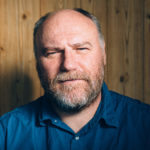
Alan Parks has worked in the music industry for over twenty years. His debut novel Bloody January was shortlisted for the Grand Prix de Littérature Policière. He won the McIlvanney Prize in 2022 for the fifth entry in the Harry McCoy series, May God Fo …
FEATURED PUBLISHER:
Royal Botanic Garden Edinburgh
The Royal Botanic Garden Edinburgh (RBGE) is a world renowned centre for plant research, conservation and education. Our four Gardens are also popular visitor attractions, offering fun and inspiring events for adults and children. The RBGE Publications …