


George Campbell Hay (Deòrsa MacIain Dheòrsa), a multilingual poet and figure of the Scottish literary renaissance, was born in Renfrewshire in 1915. His father, the novelist, John Macdougall Hay, author of the novel, Gillespie, died when George was four, after which the family moved to Argyll, an area of Scotland which was then home to many Gaelic speakers. That background gave George a lifelong interest in Gaelic culture.
After an education in Edinburgh and Oxford he served in the British Army during World War II in North Africa. ‘Mochtar is Dughall’, one of Campbell Hay’s best-known works, draws its inspiration from this time. Campbell Hay went on to produce a body of work in English, Gaelic and Lowland Scots, as well as French, Italian and Norwegian, much of which was not published in book form during his lifetime. Instead, he was a frequent contributor to periodicals and magazines such as Gairm, the Gaelic-language magazine, edited by Derick Thomson for many years. A Collected Poems and Songs, edited by Michel Byrne, appeared in 2000. Campbell Hay died in 1984.
A Welshman, Geoff Holder was born and brought up in Cardiff. He studied with the Open University (“a life-changing experience”) and then went to Stirling University as a mature student.
Holder writes non-fiction guides to the strange and paranormal in different parts of Scotland. In December 2006 his first book, The Guide to Mysterious Perthshire, was published. In May 2007 The Guide to Mysterious Iona and Staffa was published, followed by The Guide to Mysterious Loch Ness and the Inverness Area in December 2007. 2008 will see the publication of The Guide to Mysterious Arran and The Guide to Mysterious Stirlingshire, while The Guide to Mysterious Aberdeenshire is planned for 2009.
Each book is a comprehensive guide to everything strange, Fortean, paranormal, Gothic and grotesque in a given area. They tell you where to find stone circles, carved stones, gargoyles, graveyards and other mysterious or atmospheric sites. There’s also witchcraft, folk magic, ceremonial magic, ghosts, loch monsters, demons, folklore, cryptozoology, holy wells, miracles, religious mania, UFOs and general weirdness.
The books are a mix of extensive historical and documentary study combined with diligent field research, the latter of which usually means “spending far more time wading through nettle-shrouded ruins or lurking around graveyards than is probably healthy”. Much of this field research takes place on foot or via pedal power.
Since 1993 he has been a producer and scriptwriter with Speakeasy Productions, based in Perthshire. He has made hundreds of videos for large companies and Government departments. A number of them have even won awards. He wrote and produced the six-part STV documentary series Mysterious Scotland (2003) and also made a few documentaries for Channel 4. He used to write the weekly “Mysterious Perthshire” column for the Perthshire Advertiser and regularly gives talks to various groups on everything from Aleister Crowley to St Columba to historical witchcraft.
Journalist, broadcaster and novelist Gavin Esler was born in Clydebank and educated at Edinburgh’s George Heriot’s School, before studying English and American Literature at the University of Kent, and an MA at the University of Leeds. He joined the BBC in 1977 as a Northern Ireland reporter after working for the Belfast Telegraph, and has worked as Washington and North American Correspondent for the BBC. He is now presenter of the BBC’s Newsnight programme, and on Dateline London.
As a novelist, Esler has written five novels and one non-fiction book. His political novels are drawn from his experiences as a journalist, particularly working from Washington D.C. His most recent novel Power Play was launched at the 2009 Edinburgh International Book Festival.
Gary Gibson is a science fiction author from Glasgow. He studied Sociology, History and Politics at Glasgow Caledonian University in the late 1980s, and tried to become a rock guitarist before realising that he was better suited to writing.
In the 1990s he helped out with a number of small-press comics, and then studied desktop publishing and design. He now freelances as a graphic designer. After a number of years living and working in Taiwan, he returned to Glasgow in 2010.
Gibson’s first novel, the ambitious Angel Stations, was published in 2004. The latest in his Dakota Merrick space-opera series, Empire of Light, was published in 2010. He is a member of the Glasgow Science Fiction Writers Circle.
Franzeska G Ewart is a children’s author originally from Stranraer. She studied medicine at Glasgow University, but switched courses and graduated with a degree in Zoology. She then studied teaching, and worked as a primary school teacher in Glasgow. Ewart has also spent some time in Pakistan, teaching at Karachi Grammar School. She often uses shadow puppetry to help children express themselves, and has written several books on shadow puppets.
Franzeska Ewart’s first novel was Columbine, published in 1995, and since then she has written over 20 novels for children. Her most recent novels include Fire Mask – written with the help of Midlothian school children – and There’s a Hamster in my Pocket, published in 2011. Ewart says that she always draws the characters in her books before writing the novel.
Franzeska Ewart now lives in Lochwinnoch in Renfrewshire with her partner, also a writer, and her cats. In 2009 she became the Royal Literary Fund Writing Fellow in the University of the West of Scotland’s Ayr campus.
Frank Muir is a crime writer, originally from Glasgow. He studied at Strathclyde University, and worked abroad for 25 years in the USA and the Middle East, including a stint as a lumberjack. He now divides his time between Glasgow and Richmond, Virginia, USA, as he has dual citizenship.
His crime novels, featuring DI Gilchrist, are set in the Fife town of St Andrews. His first book Eye for an Eye was the winner of the 2004 Pitlochry Crime Award, and was chosen by Louise Welsh. Eye for an Eye was published by Luath Press in 2007, and the sequel, Hand for a Hand, was published a year later. He is currently working on the third novel in the series, Tooth for a Tooth.
Frank Kuppner was born in Glasgow in 1951 and has lived there ever since. He has been Writer in Residence at various institutions, most recently, Strathclyde University in Glasgow.
His writings, both prose and poetry, have attracted some critical acclaim and his distinctive voice marks him out as a truly original voice. His work has not yet brought him commercial success, however, despite winning national awards, and he remains a vastly underrated writer.
In 1994 he wrote A Very Quiet Street, part-meditation and part-investigation of the Oscar Slater case, a Glasgow murder case from the 1920s. In 1995 he won the McVitie’s Writer of the Year Award with Something Very Like Murder. This was followed by Life on a Dead Planet. His latest collection is The Same Life Twice.
Francis George Thompson was born in Stornoway in 1931, and after a career as an electrical engineer, technical writer, university lecturer and journalist, he became an author of a number of books on the Scottish Highlands and Islands. He taught at Lews Castle College on Stornoway, and is chairman of the Lewis Museum Trust. Thompson was also the editor of the English-Gaelic bilingual newspaper Sruth between 1967 and 1971.
His books include Harris Tweed (1969), Crofting Years (1984) and a number of Shell Guides to Scotland, some of which have been updated and republished by other companies. He also wrote a number of books on the mythology of the Scottish Highlands and Islands, including Supernatural Highlands and Highland Smugglers.
He held a number of roles with An Comann Gàidhealach, the body which runs the Royal National Mòd.
Florence Marian McNeill (1885–1973) was born in the Free Church manse, Holm in Orkney. Her mother died when her youngest brother was only three and her father, a graduate in divinity and medicine, kept up many of the old traditions and customs. It was her early life on the islands which was to shape her life-long passion for Scottish culture and history.
She moved from Orkney so that her secondary education could be taken in Glasgow as well as private schools in Paris and the Rhineland. She then returned to Glasgow to graduate from the university with an arts degree. She travelled extensively as a young woman, visiting Greece, Palestine and Egypt and then living and working in London as part of the suffragette movement.
Her first book Iona: A History of the Island was published in 1920 following a visit Marian made to the island. Her only novel, The Road Home, was published in 1932 and was loosely based on her years in Glasgow and London. The Scottish traditions which Marian had been brought up on shaped two of her books, The Scots Kitchen (published in 1929) and The Scots Cellar (1956), which both celebrated old recipes and customs and provide a social history of northern domestic life.
Marian MacNeill was most proud, however, of her four-volume work, The Silver Bough (1957–1968), which was a study of Scottish folklore and folk belief as well as seasonal and local festivals. The Scottish Arts Council celebrated the completion of this work by giving a reception in her honour.
Ewan Morrison is an award-winning novelist, scriptwriter and essayist. His fiction tends to focus on the subject of the modern family, cults, idealism, technology and extremism.
As a novelist he has won the The Saltire Society Literary Prize and the Glenfiddich Spirit of Scotland Awards.
Before turning to fiction Morrison was an award winning television writer and director, and was a resident scriptwriter at Madstone Films in New York from 2003-2005. His work explores relationships in the modern world. The film American Blackout (2014), co-written by Morrison and partner Emily Ballou, reached an audience of 45 million and was debated in the U.S Senate. It has a cult following among ‘Preppers’ and ‘Survivalists’ Morrison’s feature film, Swung (2016), an adaptation of his first novel, was nominated for two BAFTAs and one international award. The novel was also short-listed for the Le Prince Maurice Award (Mauritius) and led to Morrison being a finalist in the Arena Magazine Man of the Year Award (literature) 2006.
Morrison’s novel Nina X (2019) is being adapted as a feature film with the director of an Academy Award nominated film, with Morrison as scriptwriter. The television rights for the adaptation of Morrison’s book How to Survive Everything (2021) have been acquired by Made Up Stories and Endeavor and development has recently commenced. Morrison is the winner of a Royal Television Society Award for best drama (2001) and has been nominated for four BAFTAs.
Ewan Gault is an award winning Scottish writer. He was born in Kuwait and over the last decade has lived in Japan, Italy, Kenya, Ethiopia, The Western Highlands and now Oxford. Writing is the only way he can get back to all the places he has been.
Since graduating with a distinction from Glasgow University’s Creative Writing Masters in 2006, his short stories have been widely performed and frequently published in journals such as: New Writing Scotland, Gutter Magazine and From Glasgow to Saturn. Other short stories have won the Fish/Crime Writers Association prize in 2007, shortlisted 2008, won The Glasgow 2020 Prize, and the Runners Up prize in The Scotsman/Orange competition 2005. Last year two of his stories were shortlisted for The Scottish National Galleries Short Story Prize and The Bloody Scotland Festival Short Story Prize.
The Most Distant Way was inspired by the time Ewan spent training at a high altitude centre in Kenya’s Rift Valley, an area that is home to the legendary Kalenjin “running tribe,” who. since 1980, have won 40% of distance running men’s medals at World and Olympic Championships.
Although he was born in Wales, author Eric Robert Russell Linklater is strongly associated with Aberdeen, where he was schooled, and Orkney, the birthplace of his father and where he lived for many years. Linklaer studied at Aberdeen Grammar School and Aberdeen University, first reading medicine before moving to journalism following World War I. In 1925, he became editor of the Times of India.
Eric Linklater’s first novel, White Maa’s Saga, was informed by his family’s background in Orkney, and he went on to write over 20 novels, as well as short stories, travel writing and two autobiographies, The Man on my Back and later Fanfare for a Tin Hat. He also wrote for children, with books such as The Pirates and the Deep Green Sea.
Linklater married Marjorie MacIntyre in 1933, and they had four children together. He died in 1974, and is buried on Orkney.
In the author’s own words, Emma Blair was “about late forties, a bit of a tough cookie and had a certain amount of personal tragedy which is why she writes with such passion” – which all seems fine and well, apart from the fact that the author writing as Emma Blair was a 6’3″ Glaswegian man who enjoyed a pint and a smoke.
Iain Blair was born in Glasgow in 1942 and worked first as an insurance agent and lifeguard before becoming a journalist with the Sunday Post. After deciding to become an actor he studied at the RSAMD and took on roles for radio, television and stage, including the Royal Shakespeare Company. From acting he moved to playwriting and then began writing novels, where he took on the Emma Blair pseudonym upon the publication of Where No Man Cries.
The decision to write under a pen name was made by Blair’s publisher, who believed that romance novels and historical fiction would sell better under a woman’s name. Iain Blair secretly wrote as Emma for over a decade before revealing his true identity to the media when his novel Scarlet Ribbbons was nominated for the Romantic Novel of the Year award.
Iain Blair wrote around 30 romance novels and sold over 2 million books. His titles often featured on the library most-borrowed list. He stopped writing in 2007 after being diagnosed with diabetes and died in 2011 at home in Torquay.
Elspeth Davie, née Dryer, was born in Kilmarnock in 1918. Her father was a Scottish minister; her mother was Canadian. Although she spent much of her childhood in England, she returned to Scotland to study at Edinburgh University and Art College. Rather than complete her degree, she trained as a teacher and taught art in Scotland and Northern Ireland. It was there that she met her husband, the philosopher George Elder Davie, whom she married in 1944.
She started writing stories for literature journals such as the Transatlantic Review, Cornhill and London Magazine, and her first novel, Providings, was published in 1965. Several other novels followed, but it was for her short stories that Davie was best known. Her anthologies included The Spark, The High Tide Talker, and The Night of Funny Hats.
In 1977 Elspie Davie won a Scottish Arts Council Award, and in the following year she won the Katherine Mansfield Prize. Her final collection, Death of a Doctor, was published in 1992. Her stories typically had ordinary settings into which extraordinary characters and events took place.
Elspeth Davie died in Edinburgh in 1995.
Elizabeth Mackintosh was a novelist and playwright who wrote under a number of pseudonyms, most notably as Josephine Tey and Gordon Daviot. She was born and raised in Inverness and taught in the town’s Royal Academy, and later attended Anstey Physical Training College in Birmingham. She left her work as a physical training instructor in 1926 following the death of her mother, to look after her invalid father, which gave her the time to start writing.
Short stories appeared in the 1920s in the English Review and Glasgow Herald. Her first detective novel The Man in the Queue was published in 1929, and a play followed in 1932. She wrote eight mystery novels featuring Inspector Alan Grant of Scotland Yard, the last of which, The Singing Sands, was published posthumously.
Two of her books were filmed, A Shilling for Candles and The Franchise Affair, and others were adapted for radio and television. Her most successful drama was Richard of Bordeaux, first played in 1932.
Elizabeth Mackintosh died in 1952. She left her entire estate to the National Trust. In 2008, Josephine Tey was fictionalised in the novels An Expert in Murder and Angels With Two Faces by Nicola Upson.
Although born in Belfast in 1756 (the date is uncertain), Elizabeth Hamilton spent most of her life in Scotland. The daughter of a Scottish merchant who died when she was less than a year old, she moved to Stirlingshire aged just six. Hamilton was an essayist, poet, satirist and novelist. Her works ranged from orientalist studies, to historical, educational and domestic subjects. She is best known for her novel The Cottagers of Glenburnie, a popular satire of Scottish peasant life, and she wrote a number of essays on more and educational reforms. Although considered an anti-Jacobean conservative in her time, she was a proponent of equal education for women.
Elizabeth Hamilton lived for a time in London, and later in Edinburgh. In 1804 she was awarded a pension from King George III for her contribution to “religion and virtue”. She died in Harrogate in 1816 after a short illness. Her novel The Cottagers of Glenburnie has recently been republished by the ASLS, along with a number of her essays on education.
Bridgeton-born journalist, writer, comedian and community worker Elaine Marney studied Scottish Literature at University. After graduation, Marney worked with deprived communities in and around Glasgow, and her writing on poverty, drug and alcohol abuse and violence has helped shape her debut novel, Eating Jesus, published at the end of 2006. In the mid-nineties, Marney was the editor of the Gorbals News freesheet.
Elaine Marney is also a stand up comedian and actress, and has performed in venues across Scotland, including (Dunfermline’s) Carnegie Hall. She has also appeared on TV, in episodes of Taggart, Chewing the Fat, and Still Game.
Elaine Marney lives in Glasgow with her husband and three children.
Born and raised in Dumfries-shire, in south-west Scotland, author Eileen Ramsay is a former schoolteacher turned novelist now living near Arbroath in Angus. She lived and taught in the USA for 18 years, in Washington DC and in California. She also taught and travelled with the children of Senator Eugene McCarthy during the 1968 American Presidential Election campaign trail.
She wrote her first novel – a ‘Regency Romance’ which now makes her wince “only a little” – in California, in between frequent trips to Mexico and raising her sons. She describes herself as a proud writer of “women’s commercial fiction”, and is currently Honorary Secretary of the Romantic Novelists’ Association.
Edwin Muir was an Orcadian poet, born in Deerness, who travelled widely throughout Europe and who’s political views ran contrary to many Scottish writers of his generation. Muir moved to Glasgow in 1914, aged just 14, and within a few short years his parents and two brothers died in the city. Muir idolised his Orkney childhood, in comparison to his harsh life in Glasgow. In 1919 he married writer Willa Anderson, and the couple moved to London.
In the early 1920s Edwin and Willa lived in Prague, Dresden, Salzburg and Vienna, before returning to the UK. Together they worked on translations of a number of European writers, including Franz Kafka and Hermann Broch. Muir published seven volumes of poetry, and a number of controversial essays on Scottish nationalism and identity. He felt that in order to develop a Scottish literature, writers should write in English and not Scots.
He held a number of academic posts, including Warden of Newbattle Abbey College, and in 1955 became Norton Professor of English at Harvard University. Edwin Muir died in Cambridge in 1959, and is buried in the village of Swaffham Prior.
Edwin Morgan was Glasgow’s first Poet Laureate, in 1999; five years later he was named as the first Scots Makar (Scotland’s National Poet). He studied and later taught English at Glasgow University, turning down a scholarship at Oxford University. The university’s creative writing department, bringing forth young poets and novelists, is now named after the poet. Morgan retired from teaching in 1980 to write full-time. He then worked as a Visiting Professor at Strathclyde University and the University of Wales.
He produced poetry, drama and literary criticism, and also translated poetry from many languages, including Russian, Hungarian, Spanish, Portuguese, German, Italian and French. Edwin Morgan won a variety of literary prizes, among them an OBE in 1982, The Queen’s Gold Medal for Poetry (2000), the Weidenfeld Translation Prize (2001) and the Jackie Forster Memorial Award for Culture (2003). In 1997, he was awarded The Order of Merit of the Republic of Hungary for his services to Hungarian literature. In 2008 he won the Scottish Book of the Year Award for his poetry collection A Book of Lives.
Morgan’s writing is noted for the range of literary styles it covers, from sonnets to concrete poems.
Edwin Morgan died in August 2010, his death mourned by many as the loss of a significant contemporary poet and Scots Makar. Following the announcement of his death, the Glaswegian poet and British poet laureate Carol Ann Duffy expressed her sorrow in saying, Morgan “was poetry’s true son and blessed by her. He is quite simply irreplaceable”.
ALSO ON BOOKS FROM SCOTLAND
-


The Savage Landscape by Cal Flyn
‘It is their resistance to the intrusions of the outside world − culturally, economically, environme …
-

The Shortest History of Scotland: A Q & A with Murray Pittock
‘We need to be better aware of that to understand the challenges and achievements of the past, and t …
-
David Robinson Interviews: John Lister-Kaye
‘I enjoy stillness. It creeps up on you and becomes almost a force. I’ve had squirrels run over my f …
-

Spring 2026 Round Up of Scots & Gaelic Releases
‘Discover Jansson’s uninhibited imagination full of love, kindness, and adventure.’
-

Walking Edinburgh’s Lost Railways By Robin Howie and John McGregor
‘In earlier times it was a site where lovers came to relax and dream, hence the beautiful traditiona …
-
David Robinson Reviews: The Loch of the Bees
‘The past’s current flows through the characters in his fiction so strongly that it almost becomes t …
FEATURED AUTHOR:
Charles E. McGarry
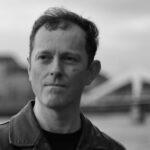
Charles E McGarry is a Scottish author. His first novel in the Leo Moran series of detective fiction, The Ghost of Helen Addison, was published in July 2017 to rave reviews. The follow-up, The Shadow of the Black Earl, was published in September 2018. …
FEATURED PUBLISHER:
Charco Press

Edinburgh-based Charco Press, founded by Samuel McDowell and Carolina Orloff, aims to change the current literary scene to make room for a kind of literature that has been overlooked’ and ‘expose the UK reader to new and exciting voices. Charco Press i …