


Born in Glasgow but raised in Stafford in England, Carol Ann Duffy studied Philosophy at Liverpool University. Her first published work was Fleshweathercock, in 1974. Some of her poetry has been included as part of the English & Welsh National Curriculum (some revision notes can be found at the BBC GCSE Bitesize site).
Duffy has won numerous awards for her work, including the Whitbread Award, The Cholmondeley Award, the Forward Poetry Prize, and, in 1995, an OBE. Carol Ann Duffy has written several books for children.
In May 2009 Carol Ann Duffy was appointed the UK’s first ever female Poet Laurate, succeeding Andrew Motion. Her latest poetry collection is The Bees.
Chick-lit author Carmen Reid was raised on a farm near Montrose, but the self-confessed urbanite escaped to London to study English Literature at University College London. A number of journalism jobs followed, in the local, regional and national press, before she gave up work to have children. She was aged just 28 when she started her first novel, and was published four years later.
Her popular novels, starting with Three in a Bed in 2002, have now been joined by a series of novels for teenagers, which are set in a fictional Scottish boarding school called St Jude’s.
Carmen Reid is married with two children, and lives with her husband in Glasgow.
Carlos Alba is a journalist, media consultant and novelist from Glasgow. He attended Glasgow High School and studied for a BA in Politics and Sociology at the University of Strathclyde, graduating in 1988. A twenty-year career in journalism followed, writing and reporting for papers in Dumfries and Galloway, Aberdeen and Edinburgh, eventually becoming Editor of The Sunday Times Scotland. He has won five national journalism awards. He now runs a media consultancy company Carlos Alba Media.
In 2001 he co-authored Keeping the Faith: The Story of Celtic’s Historic Treble Winning Season 2000-2001 with Ron Mackenna. His début novel, Kane’s Ladder, was published in 2008, and his second novel The Songs of Manolo Escobar, about the experiences of growing up Spanish in Scotland, was published in 2011.
Carlos Alba is married with 3 children, and lives in Glasgow.
Candia McWilliam is a novelist, born in Edinburgh in 1955. Her mother died in 1964, when she was just 36 years old. McWilliam studied at the Sherborne School for girls and then took a first in English at Cambridge University. She modelled for Levi Jeans and worked as a journalist.
Her first novel A Case of Knives won a Betty Trask Prize in 1988, and her second, A Little Stranger, won a Scottish Arts Council award in 1989. In early 2006 McWilliam began to suffer from blepharospasm, a contraction of the eyelid, which eventually left her blind. For two years she was without sight, until a last-ditch operation in 2009 restored her sight. The story of her blindness and return to sight was documented in her memoir What To Look For in Winter.
On Scotland, McWilliam once said:
“I don’t have a sense of belonging in England and I don’t really have a sense of belonging in life, but when I am in Scotland I have a sense of belonging to it. I have always felt intensely Scots.’
In 2006 Candia McWilliam was one of the judges for the Man Booker Prize for Fiction. She is twice married, with a daughter and two sons.
Dr Bruce Durie is recognised internationally as one of the leading practitioners in his field, particularly for his teaching, writing and broadcasting. He has authored over 25 books on family and local history.
He has had a busy year since he stood down as Head of the Professional Postgraduate Programme in Genealogical Studies at the University of Strathclyde, Glasgow, Scotland.
On the teaching side, he has been running and building genealogy courses at the Universities of Edinburgh and Dundee and helping establish the American School of Genealogy, Heraldry and Documentary Sciences.
As Chairman of the Ancestral Tourism Steering Group for Scotland, he is part of the team getting Scotland ready for 2014, the next Year of Homecoming.
Brian Whittingham left school at 15 and entered into the world of John Brown’s shipyard as an apprentice boilermaker, experiencing the concrete, spiritual and linguistic elements of the Clydeside shipyard that were to become the major element of his first post-school experience of life. He moved on to work as an oil-rig inspector, got retrained as a draftsman, worked as a draftsman, taxi-driver, plater then draftsman again before becoming the writer-in-residence in the Lothian district.
Whilst working in industry, he began writing at the age of 36, initially self publishing a booklet of a dozen poems set in the industrial setting of the shipyard, titled Industrial Deafness, whilst attending the Paisley Writer’s Group in 1990.
Following on from this in 1992 and 1996 Taranis Press published a further two poetry collections, Ergonomic Workstations And Spinning Teacans & Swiss Watches And The Ballroom Dancer then during his Lothian residency, Mariscat Press published The Old Man From Brooklyn And The Charing Cross Carpet, a collection of poems set in Scotland and the USA.
After the Lothian residency he has worked freelance as a creative writing tutor, lecturer, facilitator with along with a post as a creative writing lecturer in Glasgow’s College of Nautical Studies.
In 2004 Luath Press published Drink The Green Fairy, a collection of poems emanating from a stage play he wrote titled Diamonds In Bedlam, about the French impressionist movement, that originated during a fellowship at Yaddo, an artist’s colony in New York.
In 2007 Luath then published Septimus Pitt and the Grumbleoids a collection of poems & illustrations (by Mandy Sinclair) aimed at a readership of upper primary and young adults. This came about after Whittingham had taken numerous workshops with children and young adults in schools, museums and galleries, revolving around such subjects as Outer Space, Endangered Species, Turner Paintings, etc. then laterally being engaged to run short story writing workshops with boys deemed to be reluctant readers in a Clydebank High school where he had to focus on the engagement of readers who were also to be creative writers. He has created a website http://www.brianwhittingham.co.uk to be used a teaching resource along with the book.
Whittingham is currently a co-editor of New Writing Scotland, having previously co-edited West Coast Magazine and Nerve Magazine, has read and taught in the UK, Europe and the USA, has written 3 stage plays and has had various short fiction published along the way.
Scottish fantasy novelist Brian Ruckley was born and raised in Edinburgh. After studying at Edinburgh and Stirling Universities, he travelled and took on a number of diverse jobs, including researching gibbons in the rain-forests of Borneo. He later moved to London, and in 2003 he decided to concentrate on his writing, supporting himself as a freelance environmental consultant. Ruckley now lives in Edinburgh with his fiancée.
He has written two novels in his Godless World trilogy, and his website includes extended essays and maps to his novels. His first novel was Winterbirth, in 2007. In 2011, he is publishing a horror-fantasy set in 19th century Edinburgh, The Edinburgh Dead.
Brian Hennigan was born and raised in Scotland where he studied at St Andrews and Stirling Universities. He has had a varied commercial career including the automotive, textiles and spirits industries. His work has taken him all over the world and his writing continues to do so, including teaching Shakespeare in Japan and marketing Pringle clothing.
His first book, Patrick Robertson – A Tale of Adventure, was picked off the Jonathan Cape unsolicited manuscript slush pile and rightly so. Patrick Robertson has been broadcast on BBC Radio 4 and Radio Scotland and is currently under development as a film, with Film Council funding. It was also Ian Rankin’s Book of the Year in The Sunday Telegraph when it was published in 2000.
Brian then wrote a collection of stories, Brian Hennigan’s Urban Scottish Myths, which was published by Black and White Publishing in 2002; and his latest book, The Scheme of Things, was published in 2005 by Polygon.
Brian D Osborne was born in Glasgow in 1941 and grew up in Helensburgh. After a brief career in bookselling he worked in public libraries becoming District Librarian of Midlothian in 1983 and Chief Officer: Libraries and Museums in Strathkelvin in 1989. He was President of the Scottish Library Association in 1992 and was at various times Honorary Publications Officer for the Association. He was a member of the Scottish Book Marketing Group, a member of the Grants to Publishers Panel and of the Literature Committee of the Scottish Arts Council.
He retired from librarianship in 1995 to concentrate on writing and has written three historical biographies and collaborated on a large number of other books on Scottish literature, history and culture. He also wrote regularly for magazines in the United Kingdom and the United States an collaborated on writing two plays.
Recent works include Writing Biography and Autobiography and (jointly with Ronald Armstrong) Scotland’s Great Ships. Brian D Osborne died in 2008 and his final project was a history of the Home Guard in Scotland from 1940-1944, The People’s Army. Brian was Honorary Secretary of the Society of Authors in Scotland from 2002 to 2007 and was on the Board of Publishing Scotland as a representative of Network Members.
Brian had a special interest in the works of the Scottish novelist and short-story writer Neil Munro and has written extensively on Munro and, with Ronald Armstrong, edited collections of his writing. He was also Secretary of The Neil Munro Society.
William Knox was a Scottish author, journalist and broadcaster. Born in Glasgow in 1928, he went into journalism aged just 16, covering crime and motoring, and eventually becoming a news editor. William (Bill) Knox began writing crime novels in the 1950s, often writing under a pseudonym such as Robert MacCleod, Michael Kirk or Noah Webster, particularly when writing for the American market. Between 1957 and 1999 he wrote over 50 crime novels – the final of which, The Lazarus Widow, was finished posthumously by Martin Edwards.
In the 1970s Bill Knox joined Scottish Television as a crime show presenter, and made a number of programmes about famous Scottish crimes.
His most famous series of novels where the Thane and Moss books, and a number of his Glasgow crime novels have been republished by Constable. Bill Knox died in 1999.
Bernard MacLaverty was born in Belfast where he lived until 1975 when he moved, with his wife and four children, to Scotland. He first lived in Islay and then for a short spell in Edinburgh before finally settling in Glasgow.
MacLaverty left school with two A-levels, in English and Chemistry, which secured him a job as a lab technician in the anatomy department at Queen’s University, Belfast. He worked at Queen’s for ten years before returning to study English and training as a teacher.
He has been a Guest Writer for short periods at the University of Augsburg and at Iowa State University. He has also held posts as Visiting Writer/Professor at Liverpool John Moores University and the University of Strathclyde in Glasgow, and for a two years in the mid-eighties was the Writer-in-residence at the University of Aberdeen. Bernard MacLaverty is also a member of Aosdana, an affiliation of creative artists in Ireland.
Two years after his move to Scotland and whilst still working as a teacher his first collection of short stories, Secrets and Other Stories (1977), was published; which won the Scottish Arts Council Book Award. Bernard MacLaverty has written other collections of short-stories including: A Time To Dance and Other Stories (1982), The Great Profundo and Other Stories (1987), two anthologies of his best work, Walking The Dog and Other Short Stories (1994) and most recently Matters of Life and Death (2006).
He has also written four novels: Lamb (1980) his first novel won the Scottish Arts Council Book Award was runner-up for the Guardian Fiction Award, and has been adapted by MacLaverty for a film of the same name starring Liam Neeson (1984); Cal (1983), which has also been adapted by MacLaverty for a film starring Helen Mirran and John Lynch (1985); Grace Notes (1997) which was shortlisted for the Booker Prize that year and awarded the Saltire Book of the Year Award; and his latest novel, The Anatomy School (2001).
Bernard MacLaverty has written plays for television and radio, which include: My Dear Palestrina (1980), Phonefun Limited (1982), The Daily Woman (1986) and Sometime In August (1989) all of which were commissioned by the BBC.
Recently he wrote and directed a short-film, ‘Bye-Child’ which won a BAFTA Scotland Award for Best First Director and a BAFTA nomination for Best Short Film.
Other awards include Pharic MacLaren Special BBC Award for the adaptation of his own play, My Dear Palestrina, which was also a runner-up for the Pye Radio Award.
Peter Curran, the Belfast born arts and culture broadcaster, describes MacLaverty as; “…being able to use words with beautiful precision and his undestated style has made him accessible to readers from Nairobi to Norway – as well as Northern Ireland. Many of us first recognised ourselves in literature for the first time when reading MacLaverty’s work.”
Bernard MacLaverty has lived in Scotland almost as long as he lived in Ireland and has been a full-time writer since 1981. He wryly says of his occupation, “I suppose haven’t worked since 1981 and therefore I’m a writer.”
Children’s author Barry Hutchison was born and raised in the Highlands of Scotland. Always keen to be a writer, his first success came with the sale of a screenplay, the dark comedy horror Curse of the Bog Women, when he was just 17, although the screenplay was never filmed. After a number of writing jobs for magazines, he started writing children’s books in 2007.
Hutchison won a six-book contract for his Invisible Friends series. The first novel in the series, Mr Mumbles, was won a Royal Mail Scottish Children’s Book Award in 2010. Hutchison has also written novels based on the Cartoon Network TV series Ben 10.
He now lives in Fort William with his partner Fiona and their two children.
Arthur Conan Doyle was born and educated in Edinburgh. From 1882 to 1890 he practised medicine in Southsea, England. A Study in Scarlet, the first of about 60 stories featuring Sherlock Holmes, appeared in 1887. The character of Holmes, particularly his deductive reasoning ability, was based on one of Conan Doyle’s own university professors. The other featured characters are also brilliant creations: his friend Dr. Watson, the good-natured narrator of the stories, and the master criminal Professor Moriarty. Conan Doyle was so successful in his literary career he abandoned his medical practice to devote his entire time to writing.
Some of the best-known works featuring Sherlock Holmes include the novel The Hound of the Baskervilles (1902) and three short story collections, The Sign of Four (1890), The Adventures of Sherlock Holmes (1892), and His Last Bow (1917). These made Conan Doyle internationally famous and popularised the detective-story genre. The character of Holmes developed a large following, a cult-like devotion that still flourishes in international fan clubs. Conan Doyle was also renowned for his literary versatility, and published historical romances such as Micah Clarke (1888), The White Company (1890), Rodney Stone (1896), and Sir Nigel (1906), as well as a play, A Story of Waterloo (1894).
Conan Doyle Statue
After serving in the Boer War, Conan Doyle wrote two non-fiction books; The Great Boer War (1900) and The War in South Africa: Its Causes and Conduct (1902), attempting to justify England’s participation in the fighting. He was knighted as a result of these works. During World War I he wrote History of the British Campaign in France and Flanders (6 volumes, 1916-1920) as a tribute to British bravery. He died on July 8th 1930 and is buried at the rose garden in Windlesham.
Archie Hind was the winner of the 1966 Guardian Prize for First Novel for his first – and only – complete novel, The Dear Green Place. The award was only one of four it won, and The Dear Green Place has been voted as one of the 100 best Scottish novels of all time. The story features Mat Craig, a would-be-author determined to write the best novel about Glasgow.
Hind was born in Carntyne in Glasgow in 1928, and served in the medical corps in Singapore during the Second World War. His education was sporadic – he had to work to support his alcoholic father – but in 1950 he attended a creative writing course at Newbattle Abbey College. Although he never completed another novel, Hind wrote several plays and theatrical revues, as well as newspaper articles. He worked as a copytaker for newspapers in Aberdeen and Edinburgh.
Fur Sadie (pronounced as in the German Für), his second novel, was never completed, but has been included in recent Polygon edition of Dear Green…. The manuscript was pieced together by Alasdair Gray and John Linklater. Archie Hind was due to appear at the 2008 Aye Write! festival in Glasgow, but died just two weeks before the start of the festival.
Hind was married for 56 years, and had four children. A fifth child died in a road accident aged just 23.
Aonghas MacNeacail was a poet, journalist, broadcaster and scriptwriter who worked in both English and Gaelic. Raised in Uig, on the Isle of Skye, he wrote poetry in English without much success until a course in Higher Gaelic, at Glasgow’s Langside College, introduced him to the work of writers such as Sorley MacLean, Iain Crichton Smith and Donald MacAulay.
His poetry won a number of prizes, including the Stakis Prize for Scottish Writer of the Year for his collection Oideachadh Ceart (A Proper Schooling) and a National Mod Literary Prize for An Cathadh Mor (The Great Snowbattle). MacNeacail wrote for radio and television, including STV’s Gaelic-language soap Machair, and feature film Seachd: The Inaccessible Pinnacle. He also collaborated on a number of musical projects, including as librettist for two operas.
Aonghas MacNeacail was sometimes nicknamed Aonghas Dubh – ‘Black Angus’. He lives near Edinburgh.
Ann Swinfen spent her childhood partly in the English Midlands and partly on the east coast of America. She was educated at Wolverhampton Girls’ High School and Somerville College, Oxford, where she read Classics and Mathematics and married a fellow undergraduate, the historian David Swinfen. While bringing up their five children and studying for an MSc in Mathematics and a BA and PhD in English Literature, she had a variety of jobs, including university lecturer, translator, freelance journalist and software designer. She served for nine years on the governing council of the Open University and for five years worked as a manager and editor in the technical author division of an international computer company, but gave up her full-time job to concentrate on her writing, while continuing part-time university teaching.
From 1995 she chaired Dundee Book Events, a voluntary organisation promoting books and authors to the general public. Her first three novels, all with a contemporary setting, The Anniversary, The Travellers, and A Running Tide, were published by Random House, with translations also into Dutch and German. Her latest novel, The Testament of Mariam, marks something of a departure. Set in the first century, it recounts, from an unusual perspective and within a human context, what has been called the greatest story ever told.
Swinfen now lives in Broughty Ferry, with her husband, formerly vice-principal of the University of Dundee, a cocker spaniel, and two Maine coon cats.
Historical detective novelist Anne Perry was born in London in 1938, the daughter of an English physicist. She was born Juliet Marion Hulme, and as sickly child she lived in the Bamamas, South Africa and New Zealand in the hope that the warmer climate would improve her health.
In 1954 Juliet Hulme and her friend Pauline Parker were convicted of the murder of Parker’s mother, Honora Rieper, and she was imprisoned for five years.
In her twenties Hulme moved to California and then to England, and took the name Anne Perry, after her stepfather. She started writing her first novels after a suggestion from her stepfather, and funded her work through a number of jobs including air stewardess, ship and shore stewardess and insurance underwriter. Her first novel, The Cater Street Hangman, was published under the name Anne Perry in 1979, about the same time that she moved to Portmahomack near Inverness.
Perry has since written over sixty historical crime books, many featuring her characters Inspector Thomas Pitt or private investigator William Monk. Her short story Heroes, set during first world war, won an Edgar award in 2000. Her most recent novels are Betrayal at Lisson Grove and Acceptable Loss.
Annemarie Allan studied at Stirling University and worked as a teacher and librarian near London. Returning to Scotland, she took up a post at the Scottish Arts Council, and started writing fantasy and science fiction for children in her spare time. An earlier novel was shortlisted for the Saga/HarperCollins Children’s book award in 2006. Hox is her first published novel, and was the winner of the 2007 Kelpies Prize organised by publishers Floris Books. Hox was followed by the nautical fantasy Breaker, and Ushig in 2010.
Author and poet Anne MacLeod was born in Aberfeldy but now lives near Inverness, where she works as a dermatologist. Her first poetry collection, Standing by Thistles, was shortlisted for a Saltire Society award, as was her debut novel, The Dark Ship, a saga set in the aftermath of the Great War in the Hebrides.
Her medical background influences her writing, particularly her second novel, The Blue Moon Book, which tracks the slow recovery of a woman suffering from both aphasia and amnesia.
Anne MacLeod regularly performs her poetry at festivals in both Scotland and Canada, and her short stories have been recorded for radio. She lives in the Black Isle, and has four children.
Anne Forbes is a children’s writer from Edinburgh. A teacher for many years, she moved to Kuwait in 1996 to teach at an Anglo-American school. She now divides her time between Kuwait and Scotland. Her first published novel, Dragonfire, had been written years previously, and unearthed after Forbes’ daughter had gone to University.
Her children’s fantasy novels are set in Edinburgh and feature the MacArthurs, faery folk who live underneath Arthur’s Seat, and a healthy dose of dragons.
Anne Forbes is married with one daughter.
ALSO ON BOOKS FROM SCOTLAND
-


The Savage Landscape by Cal Flyn
‘It is their resistance to the intrusions of the outside world − culturally, economically, environme …
-

The Shortest History of Scotland: A Q & A with Murray Pittock
‘We need to be better aware of that to understand the challenges and achievements of the past, and t …
-
David Robinson Interviews: John Lister-Kaye
‘I enjoy stillness. It creeps up on you and becomes almost a force. I’ve had squirrels run over my f …
-

Spring 2026 Round Up of Scots & Gaelic Releases
‘Discover Jansson’s uninhibited imagination full of love, kindness, and adventure.’
-

Walking Edinburgh’s Lost Railways By Robin Howie and John McGregor
‘In earlier times it was a site where lovers came to relax and dream, hence the beautiful traditiona …
-
David Robinson Reviews: The Loch of the Bees
‘The past’s current flows through the characters in his fiction so strongly that it almost becomes t …
FEATURED AUTHOR:
Marion Todd
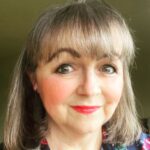
Marion grew up in the City of Dundee, now home to the magnificent V&A Museum. Always a keen writer, she has had point-of-view pieces published in the Dundee Courier and short stories in My Weekly magazine. She won first prize in the Family Circle …
FEATURED PUBLISHER:
Main Point Books

Main Point Books was established in 2023 by Jennie Renton and Madeleine Mankey as a publisher of alternative poetry. As publishing freelancers, Maddie and Jennie sought to pool their skills and expertise to bring projects that excite them to life. Base …