


EXPLORE ISSUES



‘Right from the start, her Elizabeth Stuart is daring, taking risks in the hunt that few others would even contemplate.’
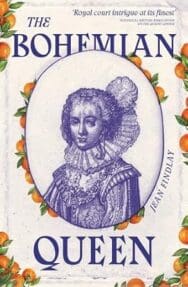
David Robinson looks at Jean Findlay’s latest historical fiction novel, The Bohemian Queen, which follows the turbulent life of Elizabeth Stuart, daughter of James I & VI.
The Bohemian Queen
By Jean Findlay
Published by Scotland Street Press
Imagine a world without Charles, William and Harry. Without Elizabeth II and Queen Victoria, without any of the Georges. Take away Mary Queen of Scots’ granddaughter, and we wouldn’t have had any of them. Maybe other people with similar titles, but not them.
Elizabeth Stuart (1596-1662) – the woman who links them all - is the subject of Jean Findlay’s impressive second novel, The Bohemian Queen, which picks up roughly where her first left off. That book, The Queen’s Lender, was ostensibly about George Heriot (‘Jinglin’ Georgie’), Edinburgh goldsmith, jeweller, and founder of the school that bears his name, and traced a jewel-encrusted trail to the heart of political power following the Union of the Crowns in 1603 – a trail that would have gone cold had it not been for the patronage of Queen Anne of Denmark, James VI’s wife.
The new book opens in Heidelberg in 1613. James and Anne’s daughter Elizabeth is married to Frederick, Elector of the Palatinate – a Protestant ruler who is offered the throne of Bohemia, a largely Protestant country technically under the aegis of the Holy Roman Empire. Frederick’s acceptance of the offer effectively marks the start of the Thirty Years’ War (1618-48) – a conflict so bloody that proportionately more Germans were killed in it than either the First or the Second World War. Emperor Ferdinand II raised an army to retake his land, and after its victory at the Battle of the White Mountain in 1620, Elizabeth and Frederick were forced to flee. Their rule in Prague was so short – just one season – that Elizabeth was known, somewhat derisively, but in a nickname that has stuck across the centuries, as The Winter Queen.
What drew Findlay to write about her? Pragmatically, she explains, it made sense as the middle book of a planned trilogy. Then when she visited the Prague Book Fair in 2024, the Czech translator of The Queen’s Lender showed her around some of the relevant sites. That put a bit of flesh on the bones, as did subsequent visits to Heidelberg – where Elizabeth created a garden by shifting half a mountainside that was then regarded as ‘the eighth wonder of the world’ – and The Hague, where Elizabeth spent many of her long years of exile.
The book’s biggest challenge, Findlay explains, was getting Elizabeth’s character right and showing how she changed over the years. ‘She starts off by being full of joy and creativity. She is naive and excitable – childlike, but in a very attractive way. Then the war comes. She is traumatised. She loses everything – she has her fifth baby while fleeing Heidelberg. In the Hague, where she lives in exile, she gets endless terrible news and instead of inspiration lives more on willpower. At the end, she is quite steely, but delights in abstract reasoning and talking to philosophers.
‘Elizabeth starts off as someone of great self-importance as the daughter of both a king and a queen [James VI and Anne of Denmark] and she has all these arguments about over precedence – that she should enter a room before her husband, because she is more than a mere Elector’s wife.
‘Then she has so many shocks. Twenty-seven of the nobles who welcomed her and Frederick to Prague have their heads chopped off. Her beloved garden in Heidelberg is destroyed. Her father doesn’t offer the support she counted on. But the important things, she comes to realise, are her children and their education. Her legacy will be her lineage.’
Ah yes, the lineage. This is where things can get complicated, because Elizabeth and Frederick had 13 children. The best way to work out who was who is a 10ft by 15ft painting by Dutch artist Gerrit van Hornthorst in the Museum of Fine Arts in Boston, to which Findlay devotes a whole chapter. It is called – somewhat ironically, given that Elizabeth was a widow living in exile and so broke she couldn’t afford to pay him – ‘The Triumph of the Winter Queen’.
This is one of the great political paintings of Protestant Europe. Granted, it is rather heavy on the symbolism, what with Elizabeth’s chariot, pulled by three lions (the Protestant powers of England, the Netherland and the Palatinate) crushing Neptune (spot the trident?) and thus gaining revenge for the accidental drowning of her eldest son seven years earlier in 1629 (that’s him and his dead dad in the celestial alcove on the left).
But look at her children. Guarding Elizabeth’s back are her three young sons – Charles Louis in the middle, who has taken up his dead father’s claim to the Palatinate, Prince Maurice on the far side and, carrying the lance, Prince Rupert of the Rhine. In the War of the Three Kingdoms, the English Parliament called him ‘the most dangerous Royalist general against us’ – and so he was, right up to the time that the Scottish cavalry smashed the royalists’ Northern Army at the Battle of Marston Moor in 1644. Here he is just 16 but has already fought his first battle in 1635, the year before the painting was made.
Now look at the women. The Windsors and the Hanoverians only come to the British throne because of Elizabeth’s six-year-old daughter Sophia, who is shown floating over her head as an angel. She died in 1714 just two months before our Queen Anne, which is why we have never had a Queen Sophia, but her son became our first royal George. Elizabeth Stuart herself had missed out on becoming England’s queen in 1605 when the Gunpowder Plot fizzled out in failure (she was the conspirators’ choice of ruler) so one of her descendants got to be Elizabeth II instead.
Yet the two other girls in the painting are even more fascinating. Elizabeth of the Palatinate (1618-80), the 18-year-old in the blue silk dress looking somewhat forlornly at the viewer, is one of the most intelligent women in Europe: a multilingual philosopher and mathematician. (Descartes himself, with whom she had an extensive correspondence, admitted he had never met a finer intellect.) In 1667, she became Princess-Abbess of the Lutheran convent at Herford in North Rhine-Westphalia. Her sister, Louise-Hollandine (1622-1709) – on Elizabeth’s right in the orange dress – also became a Princess-Abbess of a convent, albeit a Catholic on one Maubuisson, north-west of Paris. Before this, she had fallen in love with James Graham, the Marquess of Montrose, who had promised to marry her once he had but won over Scotland for her cousin, Charles II. This never happened because he was double-crossed by the king, so he ended up hanged, drawn and quartered in Edinburgh.
Two women, two princesses, two abbesses: and the reason I pick them out from Gerrit van Honthorst’s group portrait is that they will be the subject of Jean Findlay’s next book. She has already got its title – The Queen’s Sisters – and when I met her last month, she had just started researching it the night before.
*. *. *. *
To an extent, writing biographical fiction involves a certain amount of decluttering of the past. Findlay admits, for example, that she never really got her head around the day-to-day details of the Thirty Years’ War, with their endlessly shifting alliances and fallings-out between German statelets no longer on the map. It doesn’t matter. She doesn’t have to. There are websites for that – one YouTube site tears through the Thirty Years’ War week by week in a mere seven minutes - for anyone wanting to follow the Catholic and Protestant armies churning up Europe. What matters is being able to home in on the central drama of Elizabeth’s life.
As she is a playwright whose works have toured Europe, and as she has studied theatre under such luminaries as Tadeusz Kantor, this where Findlay scores. You don’t need to know all the details of which Bohemian noble or Prague bigwig first opposed Frederick and his Scottish bride if you can somehow show half the city turning against them. Similarly, if your dialogue convinces, you don’t need so much clunky exposition. So when, for example, Elizabeth and Frederick’s future in Prague starts to look ominous in 1619 and he closets himself with his top brass, two reproving words from her might be all that is needed: ‘Generals. Again?’
In her 2017 Reith lecture on writing historical fiction, ‘Can These Bones Live?’, Hilary Mantel pointed out that the novelist’s job was ‘not to be an inferior sort of historian, but to re-create the texture of lived experience, to activate the senses and the deepen the reader’s engagement through feeling’. So it is here: by the time one looks at Gerrit van Honthorst’s painting, Findlay has made sure that the reader has a clear idea of its subject.
Right from the start, her Elizabeth Stuart is daring, taking risks in the hunt that few others would even contemplate (true enough: in Elizabeth’s letters, she claimed that riding and hunting were just the thing for any woman feeling low after childbirth). She is fluent in at least five languages, charismatic, blisteringly intelligent, awesomely stubborn – even long after her husband’s death in 1632 – in trying to weave together a coalition of the willing and reclaim the Palatinate from the empire.
That’s the woman I see in Van Honthorst’s painting; in Findlay’s novel, there is a scene in which Elizabeth is first shown the complete painting. ‘It is strange,’ she tells the artist, ‘to see one’s life arranged into meaning. You make it seem coherent.’
That’s what art can do. In real life, as Findlay shows, at that time, Elizabeth’s husband was dead, her father and brother had never provided the military help she needed to win back her lands. Only the year before the painting was finished, the emperor had reassigned the Palatinate to the Catholic ruler of Bavaria. All three of those lions – or rather the countries they represent – had let her down.
And yet, just look at that painting again. It is all about triumph, justice, hope. Even the dead – Elizabeth’s husband, her son, two other children lost in infancy – look on from the afterlife, part of her cause. Elizabeth rolls on victorious in her chariot, and you would never know that she was effectively powerless, politically isolated and in exile. No: this is a painting that completely lives up to its name. The Triumph of the Winter Queen.
‘For a moment,’ writes Findlay in that scene, ‘she imagines the voices of all the dead; her father, Frederick, Maurice, Gustavus mingling with the loud chatter and shrieks of her children downstairs, still alive, still growing.
‘She thinks, This is my kingdom now: not land, but lineage.’
Oddly enough, she was right.
The Bohemian Queen, by Jean Findlay, is published by Scotland Street Press, priced £14.99
RELATED BOOKS


ALSO ON BOOKS FROM SCOTLAND
-


The Pocketbook Guide to Scottish Superheroes
‘I had seen a lot of weird shit in my job. Ballpoints turning into tulips, words blurring then trick …
-

In the Shade of the Peepal Tree by Selinder Narwan
‘I stepped back, holding my chunni over my mouth. Panic started to build up inside me; I needed to g …
-
‘It is the same with his poems and short stories, the crystalline and precise language; the way they …
-

Flight Patterns by Lorna J. Waite: An Appreciation by Janette Ayachi
‘I’ve recently heard poetry archives described as ‘fugitive, ephemeral’, but here the wish of collec …
-

The Scottish Colourists: Art & Life by Alice Strang
‘Together the quartet embodied a new spirit in Scottish art and they are celebrated as Scotland’s le …
-

David Robinson Reviews: Our Noble Selves by Kate Atkinson
‘As I suggested at the start, there’s a whole heap of plot in Our Noble Selves – spies, murders, and …
FEATURED AUTHOR:
Seona Calder

Seona Calder was born and raised in Scotland. After studying art, she went on to work as an illustrator on various projects, including books on science, astronomy and animal behaviour. Seona claims that ‘living with a menagerie of animals over the year …
FEATURED PUBLISHER:
Gaelic Books Council

The Gaelic Books Council (Comhairle nan Leabhraichean) is the lead organisation with responsibility for supporting Scottish Gaelic authors and publishers, and for raising the profile and reach of Scottish Gaelic books in Scotland and internationally. I …