


ABOUT THIS BOOK
PUBLISHER: Lexington Books
FORMAT: Hardback
ISBN: 9781498596930
RRP: £60.00
PAGES: 206
PUBLICATION DATE:
April 4, 2019
BUY THIS BOOK
As an Amazon Associate and Bookshop.org affiliate we earn from qualifying purchases.
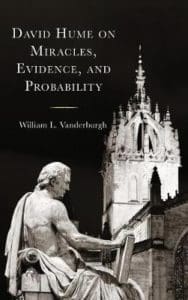
David Hume on Miracles, Evidence, and Probability
William L. Vanderburgh
David Hume’s argument against believing in miracles has attracted nearly continuous attention from philosophers and theologians since it was first published in 1748. Hume’s many commentators, however, both pro and con, have often misunderstood key aspects of Hume’s account of evidential probability and as a result have misrepresented Hume’s argument and conclusions regarding miracles in fundamental ways. This book argues that Hume’s account of probability descends from a long and laudable tradition that goes back to ancient Roman and medieval law. That account is entirely and deliberately non-mathematical. As a result, any analysis of Hume’s argument in terms of the mathematical theory of probability is doomed to failure. Recovering the knowledge of this ancient tradition of probable reasoning leads us to a correct interpretation of Hume’s argument against miracles, enables a more accurate understanding of many other episodes in the history of science and of philosophy, and may be also useful in contemporary attempts to weigh evidence in epistemically complex situations where confirmation theory and mathematical probability theory have proven to be less helpful than we would have hoped.
William L. Vanderburgh
William L. Vanderburgh is professor of philosophy at California State University, San Bernardino.
ALSO ON BOOKS FROM SCOTLAND
-

David Robinson Reviews: Our Noble Selves by Kate Atkinson
‘As I suggested at the start, there’s a whole heap of plot in Our Noble Selves – spies, murders, and …
-
‘They had spoken perhaps ten sentences each and it had already begun. Moira’s resentments, her preju …
-

Ayont the Thistle by Jim Mackintosh, Alan Riach and James Robertson
‘Nane ae this then but – ma hert daen its hing/ an yon wee smile ae yours in the saft smir ae the ga …
-
David Robinson Reviews: This Door of the Seas
‘He sees what he wants to. And it makes a kind of sense too – especially to colonists from Scotland, …
-
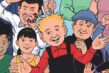
The Broons and Oor Wullie Celebrate their 90th Birthdays!
‘Whatever the future may hold, we can be sure that The Broons and Oor Wullie will always be a part o …
-
Pretty Valuable Things by A. J. Leslie
Harper considered Charles for a few moments, lit a cigarette, then said ‘we are treating it as murde …
FEATURED AUTHOR:
Carrie Marshall
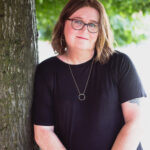
Carrie Marshall is a writer, musician and parent from Glasgow. Her latest book, Small Town Joy: How LGBTQ+ Music Changed the Sound of Scotland, was published in the spring of 2025. Her memoir about coming out as a trans woman, Carrie Kills A Man, was p …
FEATURED PUBLISHER:
Tapsalteerie

Tapsalteerie is an independent poetry press based in rural Aberdeenshire. We publish a diverse range of poetry with a focus on new and innovative writing, translations, collaborative working, and the Scots language. Tapsalteerie started life as a pamph …