


New Skin for the Old Ceremony is Arun Sood’s debut novel that follows four estranged friends reunited for a motorcycle trip up the Isle of Skye in the hope of coming to terms with how their lives have splintered since a transformative ride in Northern India years earlier. In remembering their pasts and looking to the future the friends explore family, friendship, race and belonging. In this extract, we introduce Rajeev Sabharwal, an anxious, expectant father.
Extract taken from New Skin for the Old Ceremony
By Arun Sood
Published by 404 Ink
Rajeev Sabharwal (Raj)
A silent sterility fell over the dusking second bedroom of Raj and Ibti’s third-floor Deptford apartment. Grey streaks of late London light added colour to porcelain walls, provoking an undefined melancholy over the failings of the powder spray paint can Raj was wielding. He was trying to decorate what had recently been dubbed “the baby room”, and previously called “the art studio”. But for every snowy ejaculation of glow-in-the-dark paint, the stencil frame of stars lifted to reveal his creations flake and flounder and disintegrate into the nothingness of the too-white walls. It seemed like a futile exercise, and Raj was glad to see Ibti’s vibrant green eyes glance around the bedroom door.
—Don’t bother too much with that, love. Just relax tonight. Before you go.
—Ach, I just wanted to get a bit done, y’know. Feel guilty as it is, leaving.
—Raj, I’m not popping anytime soon. Just go. And be careful.
—Not sure what we’re even doing, to be honest.
—Well, you can stay and watch birth partner vids with me instead then.
—God, they’re shite, eh.
—Hey, if I can get a back massage out if it . . .
Raj smiled at Ibti as she slinked back around the narrow corridor in her loose black pantsuit and headed towards the exercise ball in the small square living area overlooking cranes and KFC and, in the distance, a murky bend of the River Thames. For all his love and well-meaning articulations of guilt about swanning off to Skye, Raj was feeling more fragile about his ongoing numbness towards impending fatherhood than he was about leaving Ibti. It was the unexpected anaesthesia of it all. It was unsettling. No dread nor excitement, no fear nor quiet confidence. Nothing. Just a dull acknowledgement of what many call a miracle. The thought of Ibti glowing, happy, and plump in belly kept him going; but it had little to do with fatherhood or facing the unprecedented flurry of first times that are supposed to be exciting or scary or special or . . . something. He didn’t really feel much at all.
Raj fell back on the floor, supporting himself with one arm and using the other to gently spray a star-stencil banner onto the left shoulder of his black slim-fit shirt. It disintegrated to a stain of faded particles that would probably never wash away. He wouldn’t be wearing it to any more PR meetings at Whitehall. Tracing the outline of five forgotten points, he remembered the red stars he used to sew into vintage army jackets back at uni; the lively pride with which he espoused communism, anti-fascism and realpolitik! in the face of disinterested peers and pub-goers.
Raj brushed over the snowy particles with a nervous index finger, unsure if his guttural recoil was shaped by retrospective naïvety or a shrinking inability to reconcile his past self with who he was now. Shared homeowner in a gentrifying suburb of South London; financially secure; tenured to Her Majesty’s government; married to a brilliant middle-class Brazilian immigration lawyer engaged in social justice struggles from the NGO ivory tower of a Regent’s Park mansion. And now . . . soon-to-be father. Only the latter news had sparked unrepentant flashbacks. A pining for the irretrievable past. A hazy mist causing a cold in his soul. A malady of longing to feel life like you once did whilst simultaneously spluttering at the person who felt it.
Raj ruminated as the particles faded and freckled and streaked. A verse he once read by the Spanish mystic and poet St. John of the Cross came to mind. It described – as Raj thought, at least – some kind of temporary spiritual crisis. An emotional vacuum that was necessary for one to live through before the birth of a new belief, bond, or perhaps being:
In an obscure night
Fevered with love’s anxiety
(O hapless, happy plight!)
I went, none seeing me
Forth from my house, where all things quiet be
The sound of crushed ice avalanched into the room and Raj wiped his shirt clean. Ibti, his sublimation, called into the wilderness from the small square living area.
—Raj, come through. Made you a marg. Even did a non-alcoholic one for me!
—Thanks, ma love. You’re right. Let’s make a night of it. I’m gonna miss yi.
New Skin for the Old Ceremony by Arun Sood is published by 404 Ink, priced £9.99.
Arun Sood is a Scottish-Indian writer, musician and academic working across multiple forms. He was born in Aberdeen to a West-Highland Mother and Punjabi father, and has since lived in Glasgow, Amsterdam, DC, and now Plymouth, South Devon. Arun’s critical and creative practice ranges from academic publications, editorials, poetry and fiction to ambient musical tapestries. Broadly, his varied outputs engage with diasporic identities, mixed-race heritage, ancestry, language and memory. @arunskisood
Wacera Kamonji is a film Curator and Creative Cultural Practitioner who has a passion for film and social policy. Here she writes about how creativity can provide sanctuary.
In Tiwa Savage’s song Koroba, the first line to the song is ‘I no come this life to suffer’.
And it is true, we didn’t.
We hope that when we are born, we will be afforded at least the bare minimum to be able to live. But recently with the rise in cost of living many are finding themselves surviving.
With countries across the world emerging from the pandemic and many more countries fighting for survival, an increase in cost of living has put our most vulnerable in a more precarious situation.
In the United Kingdom, the 7th richest country in the world, where our most vulnerable were already fighting tooth and nail to be able to afford the bare minimum for themselves and their loved ones, the cost of living increase, doubled with the reduction or freeze in pay and aid, has left many grappling with what to do to keep themselves going.
After the second world war, the UK created a safety net, social security, providing healthcare and other public services for free. This meant that decent quality of life was guaranteed for all.
Now this social security is called welfare, and its often mentioned with such distain especially in relation to those who rely on these services who are looked down upon as beggars of the state, freeloading off other people’s money when all they need is a helping hand.
There have been and currently are many efforts by individuals and organisations who cater to the most vulnerable, but the problem is growing.
When I first moved to the UK, I thought it was great that there was a system available for people who were struggling to get by, that there was government help where people could get financial aid to be able to pay for their food, rent and bills, and at least afford a decent standard of living that would enable them to live, not just survive; that was their sanctuary.
But that sanctuary has been slowly pulled from under them, and people are protesting as to how many of the services they rely on are being decreased and that it is becoming harder and harder for them to cope. The 2019 Channel 4 documentary Growing up Poor: Breadline Kids gave an insight as to how some of the 4.1 million of children and families survive in poverty, with many detailing skipping meals, living in poor housing condition and their living conditions having an effect on their mental and physical health.
Throughout history, we see that the best way for all of us to live and thrive is by adopting the idea of community living. Where we help those who are struggling, providing the best care we can for our most vulnerable so that no one falls through the cracks. But with inflation rising quicker than dough, and budget cuts and freezes being introduced, we are abandoning others in the name of saving ourselves.
Recently MP Rachel Mclean came under fire for saying that for people to cope with the rising cost of living they should ‘work more hours or get better paying jobs’ adding that this method may not work for those with multiple jobs. Many found the statement tone deaf and insensitive as millions are working, taking extra shifts, and still struggling to make ends meet.
Many around the world, via Twitter or radio shows, have addressed their grievances to the government on how much the rise in cost of living has affected them. This has often been met with what some would call performative sympathy while not giving a solution to address the problems of the people.
The individualistic approach that some of the richest in the world have when it comes to tackling community issues is problematic to say the least. The idea that if you just work harder and pull your socks up will pay off doesn’t work for everyone. We all need help and support to be able to get over the hardest hurdles that daily life lays for us.
Celebrities as well have come under fire for similar sentiments, talking down to the masses about their lack of work ethic while sitting in their ivory towers, out of touch with many who don’t get to enjoy the same luxuries and necessities as them.
A community approach encourages equity and social connectedness. It means that people will have better control over their health and their lives and will aid the inequalities we have in this country.
So how do we implement a community approach to improve standard of living and quality of life? First by listening to each other. We all have our own subcommunities within wider society where we discuss issues that affect us, but we focus so much on an individual approach without thinking how one issue can aid in solving another. From home to charity and religious organisations and even in government, the individualistic approach is often pushed to benefit the few instead of thinking how it can benefit all.
Instead, we are fed the lives of the rich through reality tv shows as a way to escape – I’m guilty of watching such shows; Selling Sunset, anyone? – but though we may see those who managed to work extremely hard be able to afford the best of the best, it’s good to remind ourselves that we are only one pay check away from bankruptcy, it’s easier to lose it than to gain it and the mental strain it takes to work hard to reach a comfortable level of living can be both physically and mentally straining.
We rely on our government representatives to support us, be the voice of our needs and to bring balance and harmony to the country. But how can that harmony be achieved when they laugh at our pain, dance on our grievances, and steal from our pockets?
Every day, we see for ourselves our sanctuary crumble. That the idea of living life without hurdles is pushed out the window and that to survive and be successful and have a decent standard of living, we must first toil.
But why must it be so? Some say suffering makes you strong, a productive member of society. We celebrate those who manage to claw their way to the top, marvel at their struggle stories, hype 24/7 hustle, but it’s having a helping hand that strengthens you. To have people around you that support you, who you can lean on during hard times is vital. They say it takes a village to raise a child. It could be argued that it takes a community to build a stable society.
Sanctuary means a sacred place, a place for prayer, and has come to mean somewhere you feel safety and refuge. Sanctuary is in the silence where you are able to listen to yourself and your surroundings. Our world is sacred and should feel so and be treated as such, and we as a people deserve to feel safe, to know that no matter what happens we can find refuge in the spaces we create, in our own homes, in our communities, and the wider world around us.
Sanctuary can also be a place to discover and enjoy a sense of purpose. For many this may be found in the arts; being creative or appreciating creativity can be a way to find that enjoyment and a community of common purpose. Over the past two years, being confined to our own houses had made it hard to find or create these communities. But thank goodness for the internet and video call: many events were moved online, and this allowed many to be connected beyond their postcode. For me, personally, groups such as the Scottish BPOC Writers Network allowed me to explore my creativity in writing and challenge me to step out of my comfort zone, delve deep into my imagination and investigate topics that I am interested in exploring. Writing allows you to discover your thoughts and work through emotions, create worlds, and communicate to those around you. It allows you to reach different people, voice your opinions and even find the inner peace you have been searching for.
Having creative spaces allows you to channel and stress into something beautiful whether you want to share it with others or keep it to yourself.
As someone who has always found refuge in a creative experience, be it a movie, writing or dancing, I strongly advice everyone to pick up an artistic activity. You don’t have to be perfect at it, showcase it or monetize it. You might be surprised what you find out about yourself.
At a time where it feels we are all at competition, constantly striving to one up each other, and most likely having the worst work-life balance we have ever had, finding a community where you feel supported, safe, and heard is a way we could all find our purpose for living.
So why can’t we be each other’s refuge, and our world a place of refuge?
Wacera Kamonji is an Edinburgh based creative who works in various roles within festivals and grassroots organisations. She hopes to grow her work in film curation, exhibition and performance-based work collaborating with organisations to create space and opportunity for BIPOC and economically disadvantaged people to apply for roles, receive education and encourage diversity within the creative industries.
Lorraine Wilson is an up-and-coming writer of gothic, dystopian fantasy novels. Her second novel The Way The Light Bends will be released later this year by Luna Press Publishing. Here she writes of her work mentoring aspiring writers.
Perhaps the greatest thing about being a writer is the communities you discover – a group of fellow debuts, your trusted Critique Partners, genre peers … or writers who are similarly marginalised. It is an uncomfortable truth that while the community is wonderful, institutional change leaves a lot to be desired. We all know the stats and have heard enough anecdotes to suspect the stats are only the tip of the iceberg. Marginalised writers are confronted time and again with proof that the publishing industry should value us more. Instead, it often favours habit and comfort over uncomfortable change, and even those ‘like us’ who have succeeded can still be on the outside the moment the wagons circle. This can be deeply hurtful, and makes it hard to keep trying to write, especially if you feel alone. I believe the world of books needs us. Readers need the unheard, the unfamiliar and too-often-erased. What does not change stagnates, and the stories of the marginalised are the oxygen this system sorely needs. And so, I was propelled into action.
What could I, a new author with a very small platform, do to be part of positive change in publishing? I can write stories, creating characters and exploring themes that matter to me. And I can support other writers who are a rung or two below me on the ladder. Last autumn, after wrestling briefly with imposter syndrome, I took a deep, rather angry breath, and launched Rewriting The Margins.
Rewriting The Margins is my mentorship scheme for under-represented writers. I offer critique and advice, for free, to two randomly selected applicants every month (almost; it depends on my health). The free and the random are key. Financial constraints and other marginalisations are often intertwined, and too many opportunities for under-represented writers function on a competitive basis, which inherently disadvantages those who are already the most disadvantaged. What I critique varies depending on what the mentee needs, and I have had mentees at every stage from novice to prize-winning. The aim is simply to give each writer two things: 1. A way forward with their writing, and 2. The confidence in themselves to take that step forward. These two are equally important because as I said above, navigating a publishing industry that is difficult at best and downright hostile at worst can chip away at your self-belief. Everyone experiences that, of course, but multiply it many times over for those whose voices are made to feel intrinsically unwelcome.
One of the most wonderful and most heartbreaking things about running Rewriting The Margins has been the number of mentees who have told me my feedback made them cry, for all the right reasons. I am profoundly glad and honoured that my critique has given them insight, direction and validation; but I am also so sad, and so angry that their confidence has been torn down to the extent that just one person believing in them can mean so much.
I know what that feels like, but I’m lucky enough to have writerly friends who pick me up and remind me that yes, I do belong in this space and yes, there is a readership for my stories. Not-entirely-tangentially, I have recently fallen in love with the term ‘third culture person’ for those of us who are mixed-race or children of immigrants or both. We are often, I think, shaped by rootlessness; by the question of where we belong, and who gets to decide that. Perhaps it is not surprising then that these questions influence my writing, with themes of identity, the inheritance of trauma, and belonging threaded through my novels. Where my debut This Is Our Undoing explored personal agency and the legacy of loss, my upcoming second novel, The Way The Light Bends, looks at the consequences of being rootless within your own family. Very different books but they both hopefully represent a safe space for readers too used to seeing themselves erased or stereotyped in fiction.
We should not need safe spaces as readers or writers. But the brutal truth is that we do. Readers need positive representation; writers need sanctuary where our peers can support us, understand us, and empower us to come out fighting. Prime examples are the amazing work of the SoA’s new Authors with Disabilities and Chronic Illnesses group, and, of course, the wonderful Scottish BPOC Writers’ Network, and I’m lucky to be involved in both of these groups. I see my mentorships as another way of providing a safe space and a helping hand. It’s not much in the grand scheme of things, but it’s my small contribution to the rising tide of change. And I do think change is happening. The industry might resist but those who want change are manifold and determined. And, crucially, there is a demand for our stories. Look at the success of The Hate U Give. Or Douglas Stuart’s Shuggie Bain, N. K. Jemisin’s record-breaking Broken Earth trilogy, or the success of Leigh Bardugo’s Grishaverse TV adaptation.
Now, most of us are unlikely to scale those particular heights. But that does not make our stories, and the diversity that we create in those stories, any less important. There is space for the marginalised in this industry; not least because we are carving it out ourselves. Every writer who perseveres, and every book that includes positive, thoughtful representation, is one more necessary step forward. Whether you are marginalised or not, whether you are writing about that marginalisation or not, every story that presents diversity as the norm and not ‘other’ is a step towards diversity being perceived as normal, and not ‘other’. Which can only make publishing a richer, stronger world.
Having spent many years working as a conservation scientist in remote corners of the world, Lorraine Wilson now lives by the sea in Scotland writing stories influenced by folklore and the wilderness. Her short fiction has appeared in (amongst others) Strange Horizons, Forge Lit, The Mechanics’ Institute Review and Boudicca Press. Her debut novel, the dystopian thriller This Is Our Undoing, was released in 2021 and has been shortlisted for several prizes. A second novel, The Way The Light Bends is a dark folkloric tale coming out in August 2022. She runs the Rewriting The Margins mentorship scheme for marginalised writers, tweets @raine_clouds and her books and website can be found at https://linktr.ee/raine_clouds.
BooksfromScotland is particularly excited to read Alycia Pirmohamed’s forthcoming poetry collection Another Way to Split Water, which will be released in September. Alycia tells us more about what to expect on publication.
Another Way to Split Water
By Alycia Pirmohamed
Published by Polygon
Another Way to Split Water deals with themes of migration, inheritance, ancestral experience, and belonging, among many others. Could you talk a bit about that and what readers can expect from the poems in this collection?
I wrote the poems in Another Way to Split Water over several years, and so I think of the collection as capturing the different ways I’ve encountered and written about these themes as I’ve changed and grown. In my earlier work, family and familial stories and traditions are of particular importance. I also felt drawn to use my writing as a way to challenge misrecognition and Islamophobia, and to feel more connected with my faith. Figurative language gave me an opportunity to reflect on and interrogate slippery concepts like ‘homeland’, to cross borders, to write to the ghosts of people and places. For me, writing poetry is always a form of questioning, a search to better understand myself and to think more deeply about how my experiences fit into a larger context. Navigating how I belong in different spaces, what I’ve inherited, and what histories were passed down to me or written on my skin, has helped me uncover various truths about myself and the world I live in. I think of my work as constantly shifting and moving, finding shape in themes of womanhood and sexuality, as well as in meditations on the natural world. One of the most thrilling aspects of putting this collection together was placing some of this earlier work next to newer poems, and seeing what resonances and echoes were created between them.
What does the title come from, and what role would you say water – literally and figuratively – plays in this collection?
I find titles extremely difficult, and the manuscript had a lot of previous names. But it’s funny how now the collection has become sort of its own entity – I can’t imagine it being called anything else; it’s grown into its title. Another Way to Split Water came from one of the poems in the book, a poem that nods toward the collection’s different motifs: migration, inheritance, ecology, storytelling, reflections and selves, and multiplicity. Water, in all its forms, becomes one of the collection’s major metaphors, representing liminality, spirituality, crossings, and time as recursive. I feel water is so rich with imagistic and metaphorical potential, being a reflective surface as well as a site of nourishment, suspension, and erosion. I’ve been circling this idea of water as both a mode of connection as well as separation in my work.
The poems in this book often draw on nature and the natural world as lenses through which to express their themes. How would you say coming from two distinctly different national landscapes – Canada and Scotland – has influenced your depictions of and attitudes toward the natural world?
Sara Ahmed writes that for immigrant bodies, ‘the physical sense of moving through space is enough to trigger a memory of another place.’ I reference this quote a lot – it has deeply impacted the way I think about place, and the way I conceptualise my own interactions with place and the environment. I ask myself questions like, what does it mean for my particular body to take up space? What does it mean for me to walk the seams of different places; different environments? What have I asked the land to give up so that I can witness and feel and document these ways of moving and remembering? In terms of crossing borders, in writing about the natural world while simultaneously rooted/unrooted, I write toward figurative homelands, where spaces coexist, where the birch trees of Alberta and Edinburgh grow together. This extends beyond just these two places as well, and is multidirectional; in these poems, the sounds of water birds entwine with and repeat like prayer, or the rain falling in the prairies sounds like my first language.
In addition to your poetry writing, you’re involved with Ledbury Poetry Critics and have also taken part in interdisciplinary academic projects relating to poetry. How have your experiences in these areas shaped your approach to writing poetry?
I love this question because I’m increasingly excited by work that blurs the boundaries between genre, and between critical and creative writing. I used to feel conflicted, like I had to choose to be a creative writer or an academic, or like I was always a step behind other researchers because my degrees are in creative writing. But what I’ve learned about myself is that my critical research – whether that’s writing articles or facilitating workshops and other practical work – contextualises and feeds into my creative work. And, I’ve found myself engaging more with academic writing that is perhaps more self-reflective, or that edges toward a lyrical or creative writing style. I suppose my poetry is leaking into my essays and vice versa.
What advice would you give to new/emerging poets?
I think it’s important to connect and build relationships with other writers, to share work with each other and feel like part of a poetry practice outside of just your own. This is really difficult to do at first, and I know from experience that it’s easy to become isolated. Some of my tips include looking toward local bookshops. Edinburgh has the amazing Lighthouse Books, and they not only host poetry events and book launches, but specifically cultivate community through groups like the Nature in Colour reading group. Portobello Bookshop is another great space that hosts several events and cultivates a wonderfully warm atmosphere. Otherwise, Glasgow Women’s Library is an inclusive and safe space that has a number of community oriented programs, and Open Book similarly brings readers and poetry lovers together. I can’t forget Scottish BPOC Writers Network either, for all the beautiful spaces the whole team (past and present) have created.
Another Way to Split Water by Alycia Pirmohamed is published by Polygon, priced £10.00.
Alycia Pirmohamed is a Canadian-born poet based in Scotland. She is the author of the pamphlets Hinge, Faces that Fled the Wind, and the collaborative essay, Second Memory, which was co-authored with Pratyusha. She is co-founder of the Scottish BPOC Writers Network, a co-organiser of the Ledbury Poetry Critics, and she currently teaches on the MSt. Creative Writing at the University of Cambridge. Alycia received an MFA from the University of Oregon and a PhD from the University of Edinburgh. In 2020, She received the Edwin Morgan Poetry Award.
We continue our ‘Introducing . . .’ series, where BooksfromScotland highlight the work of up-and-coming writers, with poetry from Shasta Ali.
Threads across borders
‘One day this’ll be yours’
the words hang in the air waiting to be held
You cast a fleeting glance over
half noticing the way your mother
surrounded by a pile of neatly pressed clothes
sits, a queen on her throne
yet the throne seems fractured
You’re distracted as a series of alerts
glide across your screen
book a lunch
plan a date
pay an invoice
schedule an appointment
You catch a glimpse of her meticulously
folding, unfolding, refolding
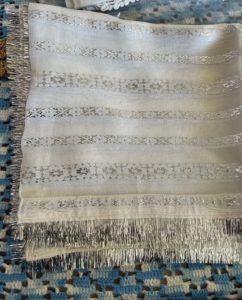
a creamy offset white dupatta
It shimmers with silver vertical lines
imprinted with flowers running down the fabric
And you think how the duppatta
with its on trend silver fringed border
will match your white outfit
for the many invitations pending
You watch as she gently lifts a green kameez
sparkling with golden sequins
And you know its a colour where endless debates will ensue
throughout changing seasons and lights
where no one will settle on the colour
but the colour will remain true
for four decades and more
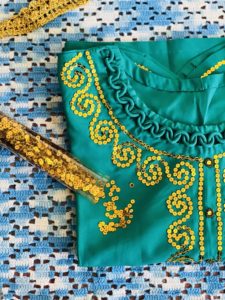
Her hands flatten the creases over and over
as her fingers loop around the swirls of gold
tracing a path long forgotten
A reminder, her once nimble fingers
stitched each golden sequin one by one
Whilst her cataracts cloud her eyesight with doubt
She marvels at her once intricate handiwork
A single tear rolls out the corner of her eye
and lands like a coin dropped in a golden wishing well
Time sprints around you, refusing to slow
yet the memory of the golden thread tugs
threatening to unravel
and among the chaos
You crave a stillness
that never comes
You’ll remember that time
Your mother spoke of silks and fabrics
of a white dupatta gifted by her mother
for the wedding yet to be
Of a 15 year old daughter
who by the solitarily glow of an antique oil lamp
eagerly sat through the stillness of the night
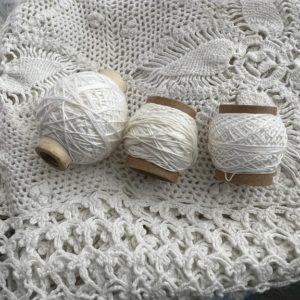
painstakingly threading a silver fringed border
A new chapter loomed ahead of her
as excitement and fear churned inside her
She embroidered, knitted and sewed her anxieties calm
carefully sealing her dreams into beautiful crafted pieces
And so the dupatta travelled
along its very own Silk Road
from Pakistan to Britain
Wrapped up in a collection of hand stitched clothes
of sindhi, moti and sitara kadahi
eager to be worn on the most special of occasions
Milestones came and went
Houses turned into homes
The family grew and grew
Yet the special moment was yet to arrive
The dupatta would wait patiently
away from the heat, the sun and light
in a battered old suitcase
surrounded by the chitter chatter of children
raised voices and laughter
Days turned into weeks
weeks into months
years into decades
and those voices faded and returned
and disappeared once again
but the special occasion was yet to arrive
Here You sit, decades later
folding, unfolding, refolding
the unworn dupatta that crossed lands and seas
the silver patterned flowers catching the morning light
dancing a thousand unspoken stories
You’ll think of threads across borders
holding family ties and memories together
and while you’re searching for a sense of belonging
through archives, people and places
amid hidden histories and untold stories
You’ll find it, somewhat, in a tale about a dupatta
delicately handled by four generations of females
a skill you’ll hear, taught from a grandmother, to a mother,
from an aunt to her daughter
legacies tangled and woven through time
And like threads across borders
stories unite and weave communities together
just as a single silk thread drifting in the wind
carries strength in its own tale
And suddenly it makes perfect sense
this sanctuary you seek
in finding your place in the world
is not actually a place, a person or thing
but a connection within
It’s a love for yourself and all that you are
Shasta Ali works in the Third Sector and is a writer, anti-racism and women’s rights campaigner. Her writing explores race, identity and heritage, with work published and featured in Scottish BPOC Writers Network, The National, STV Scotland and Fringe of Colour Films, among others. Shasta lives in beautiful Edinburgh and can often be found with a cup of tea, pondering over how we’re all part of a global story, with more uniting us than dividing us. @ShastaHAli
Leela Soma is a writer based in Glasgow. Here she gives us the story behind the formation of the Kavya Prize.
The new Kavya Prize, which I established this year for Scottish writers of colour working in all genres, started as a small idea that was partly conceived through inspiration, but also by a need to carve out a space for writers of colour to capture their stories on paper for future generations. Scottish literature and arguably Scottish culture have always been seen as somewhat separate from the body of British (although predominantly English) literature and culture, and oftentimes as monolithic.
The latter part is completely untrue, as Scotland is a nation with a rich history that has been shaped by people from all over the world. Over the centuries, the tapestry that makes up Scottish culture has been woven together by voices from different ethnicities, religions, and languages. As a writer of colour myself, I often noticed how my journey to publication involved several challenges, most notably that I was often told that literary works by writers of colour were unlikely to be commercial enough.
Given the wide variety of voices, from Robert Burns to Jackie Kay, which have shaped Scottish literature over the years, I have always found this viewpoint to be puzzling. When I began my journey into writing, I was determined to author a novel that captures the Scottish Indian experience with the caveat that like the Scottish experience, I recognize that there is no singular Scottish Indian experience. However, my hope in writing my first novel, Twice Born, was that future generations of Scottish Indians and other Scottish writers of colour would see an experience that reflected that of their own or that of their parents or grandparents.
As the 21st century continues to unfold, Scotland’s future and place in the world are still being formed. Whether as a part of the UK or as an independent nation, I know how important younger generations of Scots of colour are to shaping our country. Drawing inspiration from the Jhalak Prize for UK writers of colour, I began to get a sense of urgency to ensure that the next generation of Scottish writers of colour face less of an uphill climb than those who came before them.
After the warm reception to my debut crime novel, Murder at the Mela, I revisited my idea about how best to encourage future generations of writers of colour. The way my first crime novel was received showed me that there has been some progress and there is more of an appetite for diverse voices within the Scottish literary scene. On the heels of such a positive change, my initial idea was to have a small prize every two years, which would be presented at a local library. I approached a generous benefactor, who has asked to remain anonymous, about financially supporting such a prize. He was incredibly supportive and said that provided I was able to demonstrate there is a need for this, he would be happy to sponsor.
Shortly after my conversation with him, I approached Zoe Strachan at the University of Glasgow’s Creative Writing Department. She has been absolutely wonderful and has been working tirelessly along with a team of talented people at Glasgow University to get the prize off the ground. Moniack Mhor, Scotland’s Centre for Creative Writing, will offer a residency for the winner of the prize and the Association of Scottish Literature will provide some administrative support. Our judging panel was comprised of three tremendous Scottish writers and critics: Leila Aboulela, Tawona Sithole and Professor Bashabi Fraser.
The judges worked hard at this new prize and had encouraging words for all writers of colour. This is the first year of this unique prize so just raising awareness among emerging writers is a huge task. We were delighted to see the entries for the prize, and after much deliberation, the judges chose a shortlist of six superb pieces of literature:
The End: Surviving the World Through Imagined Disasters by Katie Goh (404 Ink)
Lament for Sheku Bayoh by Hannah Lavery (Salamander Street)
Toy Plastic Chicken by Uma Nada-Rajah (Salamander Street)
Sorrow, Tears and Blood by David Onamade (Arkbound Publishing)
Sikfan Glaschu by Sean Wai Keung (Verve Poetry Press)
This is Our Undoing by Lorraine Wilson (Luna Press)
The winner of the Kavya Prize – Toy Plastic Chicken by Uma Nada-Rajah – was announced at Glasgow’s Mitchell Library on 21 May as part of Aye Write, the second biggest book festival in Scotland and the biggest in the city of Glasgow. Bob McDevitt, the Director of the Aye Write Festival said, and I quote:
‘I’m especially inspired, this year, by the mix of authors: those long-established and much acclaimed; those who are just coming into our field of vision; those with their own personal stories to tell; and those whose mission it is to tell the stories of others.
Storytelling is what we’re all about here at Aye Write, and we hope that our packed 2022 programme will be the next compelling chapter in our very own story.’
What do I hope this unique prize will achieve? In the past few years, there has been clamour in the publishing world and demand from readers for more inclusive stories. The Kavya Prize will celebrate marginalized writers who have their own stories to tell. This is the Year of Scotland’s Stories 2022, a perfect start for Scottish writers of colour to contribute to mainstream Scottish Literature. The Kavya Prize will empower them to raise their voices, tell their stories and reach a wider audience. This biennial prize will ensure that writing in all genres is recognised. It also offers mentorship for aspiring writers, providing more role models that younger writers can look up to and setting a new standard for the future. I hope that the Kavya Prize will be a legacy that will place Scottish writers of colour on the literary map of Scotland, and a sanctuary for both writers of colour and their many readers in these dark times.
Leela Soma was born in Madras, India, and now lives in Glasgow. Her poems and short stories have been published in several anthologies and publications. She has published three novels, short stories and two collections of poetry; and a chapbook, ‘Chintz’, published by Dreich Press. Her poems have been published in Gutter, The Blue Nib, Anthropocene, Black Bough Poems, The Glasgow Review of Books and many others. She was nominated for the Pushcart Prize 2020 and has been appointed Scriever 2021 for the Federation of Writers, Scotland. She has just been added to the Scottish Poetry Library’s Guide to Scottish Poets. Murder at the Mela, the first DI Patel mystery, was published in 2020.
Etzali Hernández is a nonbinary latinx queer fierce femme poet, coder, dj and no borders organiser. Their pamphlet from murky waters, we rise will be published later this here, and you can catch a preview below.
Extracts from from murky waters we rise
By Etzali Hernández
Published by Forest Publications
ode to rainbow friendship
in memory of Shaun Mitchell,
i remember looking at you for the first time and immediately wanting to
be your friend. your hip and sharp demeanour. the realness of your
being, pouring uncontrollably.
seeing you standing, Queer and proud, Trans and magical, Black as
fuck, in your sea of caps, black hoodies and plaid shirts.
i remember calling you when I was about to board a plane for the first
time in years. i’m humming a made-up song, and you immediately say:
are you twerking?!
seeing you standing, Queer and proud, Trans and magical, Black as
fuck, in your sea of caps, black hoodies and plaid shirts.
i remember celebrating my birthday, rainbow cake and spliffs, tequila
and prosecco. the three of us were laughing. i’m about to open a
bottle while you’re shouting: don’t shake it, open it in the shower!
seeing you standing, Queer and proud, Trans and magical, Black as
fuck, in your sea of caps, black hoodies and plaid shirts.
i remember travelling on the night bus to birmingham, a baby crying
the entire journey, working on a technical task for a job interview, and
finally eating in a mcdonald’s crowded with drunk youngsters at 6 am.
seeing you standing, Queer and proud, Trans and magical, Black as
fuck, in your sea of caps, black hoodies and plaid shirts.
i remember travelling back to glasgow via manchester. a taxi arriving
way too early for us at your cousin’s, making a stop to eat chinese
food, hopping on the tram and getting lost, missing the train and
laughing hysterically at our mistake.
seeing you standing, Queer and proud, Trans and magical, Black as
fuck, in your sea of caps, black hoodies and plaid shirts.
i remember messaging you for the last time, a casual check-in in the
middle of a pandemic, a chat of chronic illness and medical racism as
we often did. a quick goodbye that says i am thinking of you.
seeing you standing, Queer and proud, Trans and magical, Black as
fuck, in your sea of caps, black hoodies and plaid shirts.
i remember us calling hospitals in the middle of a spring night and a
few days away from your birthday. we are looking for answers as to
why your door was broken. no one is telling us anything. calling here
and there is like an electric circuit having a shortcut.
seeing you standing, Queer and proud, Trans and magical, Black as
fuck, in your sea of caps, black hoodies and plaid shirts.
i remember him video calling me in the middle of my work shift. a
brown face, swollen red eyes and the damn answer. when i told her,
she fell to the ground like hurricane debris, and her cry made the flat
howl like a wolf lamenting after losing a cub.
seeing you standing, Queer and proud, Trans and magical, Black as
fuck, in your sea of caps, black hoodies and plaid shirts.
i remember burying you, a dystopian moment. 2 meters apart, without
a way of physically holding our broken selves together. i could not
muster the strength to see you once last time. i refused to make my last
memory of you, of us.
seeing you standing, Queer and proud, Trans and magical, Black as
fuck, in your sea of caps, black hoodies and plaid shirts.
i remember someone crying for you even after breaking you down to
nothing. the we were best friends claims. the fakeness of some
memorials. they used you as the face of their hypocritical
organisations. whitewash. pinkwash. everyone was washing away your
ideals, wants and struggles, just to get to say your name.
seeing you standing, Queer and proud, Trans and magical, Black as
fuck, in your sea of caps, black hoodies and plaid shirts.
i remember us bursting out laughing at their boldness and praying that
you cannot see all the fuckery from wherever you are now, because if
someone deserves better, that someone is you.
seeing you standing, Queer and proud, Trans and magical, Black as
fuck, in your sea of caps, black hoodies and plaid shirts.
i remember that i love you now as much as i did when we first met and
i wish i had told you that once more.
seeing you standing, Queer and proud, trans and magical, Black as
fuck in your sea of caps, black hoodies and plaid shirts.
i don’t have the stomach for it
remember the hollowness you felt
when she transitioned?
you became a black hole
full of fluid and cavities
emptiness and indigested love
that the first time you took ecstasy,
smoked weed and downed a bottle of alcohol,
was the same night that you had to pee in a glass
in the middle of your dj set
from all things to consume,
you let the four horsemen of the apocalyptic grief
to become part of your gut flora,
probiotics like her love,
tears as your probiotics,
chewed up your depression,
depression as your gastric mucus
gastric acid like her memories.
digest and absorb what is left of us.
from murky waters we rise by Etzali Hernández is published by Forest Publications, priced £10.00.
Etzali Hernández is a nonbinary latinx queer fierce femme poet, coder, dj and no borders organiser. Their work has been published in Ascend Magazine, We Were Always Here: A Queer Words Anthology, and Ceremony (Scottish BAME Writers Network). Etzali’s first poetry pamphlet from murky waters, we rise is forthcoming from Forest Publications. Website: www.panditita.uk.
As part of the Year of Scotland’s Stories, we are running a series of Responses on BooksfromScotland, commissioning writers to respond to books from the Publishing Scotland membership, engaging with work in different ways. This month photographer Nikki Kilburn considers the academic anthology Hadithi and the State of Black Speculative Fiction.
Hadithi & The State of Black Speculative Fiction
By Eugene Bacon & Milton Davis
Published by Luna Press Publishing
Eugen Bacon and Milton Davis define black speculative fiction as a genre that refuses to conform to our understanding of genre in the classical form. In part one of their collaboration, they present a catalogue of black authors who disrupt narratives that identify and categorise history, culture, and experience with the dominant white perspective. Among them Toni Morrison and Octavia Butler tell the stories they wanted to see themselves in and read as relatable to their identity. In alliance with a community of writers, their characters normalise and centre the black experience, refuting the othering of their identity and representation. They defy hard-boiled compliance with what constitutes science fiction, fantasy and horror, creating their own classifications rooted in tradition, culture, futurism, and black visionary. Throughout this dive into this vibrant pool of succulent nutrients, I noted anthologies and writers I wasn’t familiar with to and want to explore. I now have a list of new wave treats to indulge my appetite; sharing is caring so I urge you to get stuck in too.
Part Two of Hadithi is a stunning collection of seven short stories. Bacon ends each of her stories with a part of herself. She gifts us the story within the story. Her disclosure of the ‘rage’ she felt when she lost her own sister to AIDS is embodied in ‘Still She Visits’. The spirit presence of the protagonist Segomotsi’s sister Mokgosi in her counselling sessions is, Segomatsi qualifies, her psyche coming to terms with Mokgosi’s death. She is expressing the horror of bereavement by normalising the experience of the spectre as a natural part of grief and experience after the death of a loved one.
The bond between the sisters charts back to childhood when together they held up the sky, Mokgosi the elder lighting the way for Segomotsi’s transition through girlhood. Memories and metaphors that sink into the biology of our being act as a soothing agent for the geographical distance that migrate between two worlds, Botswana, and Australia. Reflecting Bacon’s lived experience, it echoes the occult wisdom of transforming our narratives into a call and response between ourselves and the stories we create.
Through my writing and creative practice as a photographer, I am often working in reverse, putting pen to paper after creating a visual to discover my narrative. It’s a purposeful process of feedback from the parts of myself that have been shadowed by a history of migration and a consequent search for home. Loss is a guiding part of the practice of finding neurological ways to come to terms with what can’t be replaced. I listen and follow the inner signs that show me how to attune to the voices of loved ones calling out from the spirit realm, leading me through the labyrinth into my future self.
In ‘Carnival’ Milton Davis transports us to a Nigeria of the future where DJs reign supreme as influencers. The protagonist Antwon, a code hacker, uses his fame and influence as a DJ to disrupt state control of information. A revolutionary in an apocalyptic world, where life is lived on the ‘Inside’ and the ecology of the ‘Outside’ is a vulnerable alien environment to human interaction. An urban cyberpunk thriller, Milton illustrates a reality that may not be too far in the future where every aspect of our existence is determined and monitored by tech, digital entertainment platforms condition our recreational choices, and where there is a neurotic dependency on universal cryptocurrency. It may be a while however before we have flying cars.
I hurtled through the story stimulated and jarred by proximity to the depicted near future. Like many people, the digital world overwhelms my daily life. One of my coping strategies is falling into fantasy, longing to live an analogue life where I’m not dependent on technology to earn a living and stay connected to the world. Film photography is a small way I can disconnect. Not knowing exactly what has been captured allows me to detach from the immediacy of automation, immersing in waiting, and then enjoying the darkroom process that risks failure. In this unknown landscape, I accept imperfection, depend on my instincts, and lean into the totemic whispers.
Hadithi is many wonderous things including a journey into black ancestry. Bacon’s, ‘The Water’s Memory’ reframes the dogmatic western perspective of arranged marriage where choice is central to the female experience. Joy and curiosity rise from the page, softly thundering a legacy of female voices whose stories have been told for them, not by them. The inheritance of colonialism posits a hybrid identity of opportunity and disease. The incandescent daughter Adaeze goes to a convent school while environmental destruction valleys alongside an innate ancestral relationship with nature. It resonates in ‘Baba Kelp’ and Davis’s ‘Swarm’ mythology, where fantasy and science fiction illustrate the life, death, rebirth cycle, and characters come together to fight with warrior strength to overcome and save people and the land.
Reprisal saunters then gallops through Davis’s ‘Down South’, set in post-war America in the ‘20s. An unassuming war veteran spectacularly annihilates bodies of white supremacy, in a classic superhero tale.
This collection is political, blackness centred by black writers. They push beyond boundaries, their writing cannot be pinned down or simply indexed as otherworldly; they are restating their genre, rewriting history and the future.
Hadithi & The State of Black Speculative Fiction by Eugene Bacon & Milton Davis is published by Luna Press Publishing, priced £13.99.
Nikki Kilburn is a photographer interested in exploring how identity and lived experience creates complex realities. Her writing and photography has featured in numerous publications and exhibitions among them are Glasgow Gallery of Photography, Juice Magazine, She is Fierce, Audacious Women, Ruthless Magazine, Art Hoe Collective and The View Magazine.
What is sanctuary?
The term is often used for a place of safety, but we often forget that with that safety comes the implication of danger elsewhere, of a hostile world to which sanctuary is the exception, not the rule. In medieval Europe, a person might have sought sanctuary in a church when fleeing persecution (or prosecution) from authorities – in other words, from a power structure that wished to remove their agency and being.
Today, although people are no longer fleeing to places of worship as means of legal escape, the essential concept of sanctuary has not changed all that much. Sanctuaries still exist as spaces where those who refuse to give in to society’s attempts to erase them can come together in safety. The Scottish BPOC Writers Network (SBWN) is one such space, conceived in 2018 as a sanctuary for Scotland’s writers of colour to develop and flourish away from the confines, pressures, and prejudices of spaces dominated by whiteness.
But we could not exist, as a sanctuary or really in any other respect, without the amazing writers of our network – some of whose work you’ll read in this month’s issue – so we reached out to them on social media to find out how they defined the concept of ‘sanctuary’. Among the comments we received were these thought-provoking responses:
‘Sanctuary for me is the place where there is warmth, people that understand you and a place with no judgement but a blanket to keep you safe. Allowing you to be the person you are’ – Sanjay Lago
Community is a key aspect of the safety that sanctuary provides. Going back to the medieval European example, the sanctuary of the church was sustained by the people who worshiped there, the clergy who presided over services, and the staff who kept its daily affairs running smoothly; the building may have served as the physical site of sanctuary, but the reality of that sanctuary depended upon groups of people drawing together to offer refuge to those who needed it.
The pieces published in this month’s Books From Scotland explore how such communities may be constructed and approached in a globalised Scottish context. From Lorraine Wilson’s essay on mentoring fellow writers of colour, to Shasta Ali’s long-form poem on the generational histories of migration contained in an item of traditional clothing, to Leela Soma’s article on creating the Kavya Prize for Scotland’s writers of colour across genres, they examine the connections that bring us together and encourage us to strengthen these in our own creative and personal lives.
‘Sanctuary is a place of renewal, where what was depleted can be restored and recreated.’ – Zebib K. A.
Seeking sanctuary is often a reaction to loss – not always in a quantifiable sense, but rather in the abstract: mental, emotional, psychological, and/or spiritual depletion, whether it accompanies more quantifiable losses or comes on its own. Sanctuary is a space where we might find wholeness and regain our full personhood, despite what the outside world bombards us with. We see this in, for example, Wacera Kamonji’s essay on carving out sanctuary in the face of hostile UK policies attempting to strip it away, and in Hannah Lavery’s reflection on themes of bloodshed, survival, and pandemic as a Black woman in Scotland. These pieces remind us that the sanctuary we need may be difficult to establish, but that makes it all the more necessary.
‘My sanctuary resides in the ancient crevices of my heart. Only I hold the key and I’m locked within.’ – Christiana Aliu
At the core of the community-building and struggles that build sanctuary is what each of us holds in our own heart. Sanctuary emerges from and comes back to these ‘ancient crevices’, acting as a space where we can shore up our innermost reserves: the tools that allow us to restore, renew, and reach out in future times of need. The books we have excerpts from this month – Jay Gao’s Imperium, Arun Sood’s New Skin For the Old Ceremony: A Kirtan, Alycia Pirmohamed’s Another Way to Split Water, the Re.creation anthology of queer poets, and Dean Atta’s Only on the Weekends – draw upon deeply personal wellsprings of experience, of individual histories, of inner conflict, and of breakthroughs.
We hope this issue of Books From Scotland provides a slice of sanctuary for you: a place to (re)connect, discover new writers and new ways of looking at writing, share in other communities and histories, and of course to find joy in the fantastic work put forth by some of Scotland’s many talented writers of colour.
Happy reading!
-Kelly Kanayama and the Scottish BPOC Writers Network
Edinburgh’s Makar Hannah Lavery’s debut collection Blood Salt Spring, explores nation, race and belonging. It is stirring, vital reading as these poems testify.
Blood Salt Spring
By Hannah Lavery
Published by Polygon
Blood Salt Spring – a making of a collection.
I grew up in Edinburgh, mixed race girl, in the 1980’s and 90s.
I am a daughter of a white mother and a black father.
I am the eldest of six.
I am a friend.
I am a wife.
I am a mother of three children.
I am one of many.
I am many things.
I write poems about all this and none of this.
I write for empathy.
I write to say wake the fuck up.
I write to wake myself up.
I am struggling to find belonging here.
Do you live here too?
Blood Salt Spring, my debut collection, was published earlier this year. Today, I am attempting to write about it…
How do I do that?
How should I begin?
I began this collection in blood- bleeding out. Looking for the way my blood pooled- where it would take me?
Where do you come from?
I am the granddaughter of a refugee, of a war bride, of a beautiful black woman – a woman that was the beating heart of my childhood.
Surely, this is where I begin?
And I do
in her wee Scottish kitchen, stirring in cannonballs of peppercorn.
I start with her voice as she remembers her long walk from Rangoon to Calcutta. As she remembers the fragile history she carries- broken bones and rubies. Haunted by her Jamaican grandmother, forced to survive by her Indian mother.
In my poem Cartographer’s Trap which is a reference to the map makers practice of making up a place on their maps- a made up place- to show they made it- that the map belonged to them. I come from all the pink on that old map. I remember that my grandmother came from a place, from a reality that no longer exists, that has been wiped away, that has been erased (how do you find roots in that?) a secret wee piss stain.
Is your collection a memoir, then?
I…
A cartographer’s trap?
Where is this bleeding coming from?
Claudia Rankine in her collection Citizen, talks of John Henryism. The process of being worn down by racism..
‘… you are reminded that a friend once told you there exists a medical term — John Henryism — for people exposed to stresses stemming from racism. They achieve themselves to death trying to dodge the build up of erasure. Sherman James, the researcher who came up with the term, claimed the physiological costs were high.’ Claudia Rankine, Citizen
I started the collecting for this collection in lockdown. Gathering in my voice ( my voices) in the year we were locked in, set apart and made witness, made subject, subjected to the loudest conversation in Scotland around race, racism and the legacies of colonisation that I have ever known. Conversations we had been trying to start with damp twigs were suddenly on fire. Words that we had been sharpening in the corners, started to cut through and it cut us, we bled. They wanted us to bleed.
What does it feel like?
Tell us about your pain?
Here in the Blood, there are poems which are rooted in the reality of living brown in this country. Someone once said to me, it feels like there are two Scotlands ( I think there are more than that) the one they live in and one that we brown and black people live in.
You want to know about that?
I will find it here in the blood- in the bleeding- like a witch I will divine for you (for me?)
But, there is my dad- returned to us from the Gods- turned into a kingfisher, punished and reborn. There are my sisters. There is my mother. There is my fight, there is my anger, there is my hurt, there is my longing. There is me, there is me, there is me…
‘In the morgue, I weep over your body’
Did you think to take me apart like a sum?
One part this, three parts that. Black. Brown. White. Half Caste. Mixed. Shared. Other. – Scottish?
No?
What is it to only see yourself in others’ reflections- to be only ever seen in others’ reflections – in a gaze that reduces you?
‘In the half-caste union/ match your shade.’
Salt
our old wounds- it is a familiar sting.
‘their conversations continue/ a drone under…’
In 2020, in our locked-in worlds, in our grief, and in our preemptive grief- we started to speak to each other.
Sorry, I was on mute.
A front page of the first victims of Covid. Nurses like my Dad was. The colour my Dad was. That smile in the last column of faces- is that no Dad’s smile?
Is he no, just like my Dad?
‘you already claimed him/you wore out his heart’
That video of George Floyd that I didn’t need to see. That I did not need to see.
That they wanted us to see – you seen this?
The conversations sprung from that, from all of that, that were for … Who?
We’d been talking already.
Salt our wounds.
‘the struck are silenced/ (as they always were)’
Is this a journal?
In some ways.
But this year is a collection of all the years before. This collection is a collection of voices, all my voices, from all those moments, from all those years, from my years that built up to… That attempted to erase me.
‘We sort of laugh, wonder how long it will be, before they move on.’
You see, those promises they made to us, they made them before.
Not me?
No, not you (but it was you all the same).
We are not the same.
No.
How do we navigate it now- this world?
In the haibun, prose becomes distilled into haiku. It was distilled, a concentration. It was a neat nip- a shot- in the dark. The prose failed us. Form left us and we fractured into fragments…
We are many
many things.
One of many…
I am one of many
I am many…
How do I return to myself?
How do I see myself again, not as I have been seen, but how I am?
I am just…
In the Spring – in the returning light ( I find the way back or the way through).
I am more than a sum of my parts… I am all of my parts – all at once.
Green
After Mary Oliver
First to remap it/ I fear I was drawn in border lines.
Gates with rotting signs. Trace indentation-
finger, feather, frost- father…
The lichen spume- the way green shatters and splints over time.
I hold a thrush with a broken wing.
Find a place in the airing cupboard-
it dies without seeing the sky.
What have I done?
(the fragility of a leaf spine- insects under rotting timber- remembering a truth- your mother)
forgive forgive forgive
My work is the work of loving/ the slow green on the Birch…
(the way it begins- the way it ends).
Blood Salt Spring by Hannah Lavery is published by Polygon, priced £10.99.
Hannah Lavery is an award-winning poet, playwright and emerging screenwriter;. Her pamphlet, Finding Seaglass was published by Stewed Rhubarb and her debut collection, Blood Salt Spring was published this year by Polygon. The Drift, her highly acclaimed autobiographical lyric play toured Scotland as part of the National Theatre of Scotland’s Season 2019, and in 2020, she was selected by Owen Sheers’ as one of his Ten Writers Asking Questions That Will Shape Our Future for the International Literature Showcase, a project from the National Writing Centre and the British Council. Her play Lament for Sheku Bayoh premiered at Edinburgh International Festival in 2020 and toured in its digital version to Auckland Arts Festival in 2021. She was also appointed Edinburgh Makar in November 2021 for a three year term. She is an associate artist with the National Theatre of Scotland and one of the winners of the Peggy Ramsay/Film4 Award 2022 with Traverse Theatre. She has written for Radio Four, Lyceum Theatre, Pitlochry Theatre and is under commission with Northern Stage and Fuel Theatre.
Dean Atta’s second YA verse novel follows Mack, a hopeless romantic, as he tries to decide between two boyfriends, Karim, his long-distance boyfriend or Findlay, who he has connected with in Scotland. In this extract Mack gets ready to leave Karim behind to return to Glasgow.
Extract from Only on the Weekends
By Dean Atta
Published by Hodder Children’s Books
MAY
SUNDAY MORNING
‘Mayday! Mayday!
Euston, we have a problem!’
I say, to fill the silence.
‘That’s funny,’ says K.
Maybe
But he doesn’t laugh.
Dad and Gem chat to Maz and Uncle O,
To give us some privacy.
The station concourse is full of people
Heading wherever they’re heading:
Watford Junction.
Birmingham New Street.
Manchester Piccadilly.
Glasgow Central, like us.
‘I know it’s meant to be Houston, like Whitney.
But it feels like I’m going into space today,’ I say.
K groans, ‘I got the joke, Cupcake.
You want me to kiss you, don’t you?
Here in front of all these strangers
And your dad and Gem and Maz and Uncle O.’
I think:
That would be nice
But I don’t expect it.
I say:
‘I don’t want that,
If it’s not what you want?’
‘I want to but I can’t.’
‘That’s okay.’ I mean it.
K leans in toward me.
I’m so confused.
I back away.
K stumbles forward,
Then rights himself,
Arms spread.
He looks like he’s been fouled in a basketball game
And looks round for the referee.
‘What the fuck?’ K loud-whispers.
‘I don’t understand you.
You said you couldn’t.’
‘I thought I couldn’t.
But when you said it was okay,
I felt like maybe I could.’
‘Then tell me
You’ve changed your mind.’
‘Doesn’t leaning in for a kiss tell you that?’
‘I’m sorry,’ I say,
Even though I don’t think I should be sorry.
‘I’m sorry, too,’ says K.
‘Can I kiss you now?’
‘You may,’ I say.
Relief, nerves, and excitement
Fill the air between us like a mist.
K reaches through it to grips my shoulders.
He leans in with an expectant smile.
As our lips touch,
We have liftoff!
I imagine
An LGBTQ Mission Control:
They
Appear
Before my eyes.
A dozen names
We learned in school
And a dozen more
I’d searched for: Alan Turing,
Billy Porter, Danez Smith,
Derek Jarman, Elton John,
Francis Lee, Frank Ocean,
Harvey Milk, Ian McKellen,
James Baldwin, Janelle Monáe,
John Waters, Josephine Baker,
Lady Gaga, Lady Phyll,
Laverne Cox, Lil Nas X,
Marsha P. Johnson, Oscar Wilde,
Peter Tatchell, RuPaul,
Russell T Davies, Sue Sanders,
Whitney Houston.
Like rocket fuel,
They lift us up and away!
I can hear them all
Cheering for us,
Proud of our achievement,
As if it were theirs.
Because it is theirs.
We didn’t get here on our own.
Only on the Weekends by Dean Atta is published by Hodder Children’s Books, priced £8.99.
Glasgow-based Maisie Chan’s second novel, Keep Dancing Lizzie Chu was released on 9 June. The book follows 12-year-old Lizzie, who lives in Glasgow with her granddad. The two of them move through grief together as Lizzie starts to care for him while also dealing with school, homework and friendships. They love Strictly Come Dancing and set off on a road trip to try and make it to a special dance event in Blackpool. A celebration of love, community and dancing, Lizzie Chu is a treat for child readers and adults alike. Nasim Asl spoke to her about her latest book.
Keep Dancing Lizzie Chu
By Maisie Chan
Published by Piccadilly Press
Why a book about dancing, why so much Strictly?
During the second lockdown in 2020 Strictly was all that kept me going. We’d say ‘okay, it’s nearly Saturday. We can sit down as a family, we’re not going anywhere, no one’s going anywhere, but we can have this family time together.’ It was just the most joyful thing that we had going on and I felt so emotional watching it every week. They put so much effort into making the production happen, so I wanted to pay homage to Strictly and all those production companies that were in bubbles and sacrificed to make content.
The cha-cha features heavily in the book as the favourite dance of Lizzie’s grandparents. Did you have to learn a lot about dancing and the cha-cha to write the book?
I did watch videos, like Lizzie. I spoke to one family – a Chinese-British dad with three children that danced ballroom and Latin. He sent me photos of them at Blackpool, and he said waltz is a good dance for memory, so I considered that, but the cha-cha is fun! Even though the grandma’s not there, her spirit’s there, so I stayed with it. I can’t dance. I was thinking about learning to do it for book promotion, but I’m not good with choreography!
The relationship between Lizzie and her grandfather is pivotal to the book, and your earlier novel, Danny Chung Does Not Do Maths, also focused on a grandmother and grandson. Why do you write about those specific dynamics?
I’m adopted and my English parents were quite a bit older when they adopted me. Even though they were my parents, I thought of them as grandparents too. I spent a lot of time in care homes, nursing homes, hospitals. I was a carer for each of them at points in my life. I think that’s why there’s old people in my books, I like them and hanging around with them. I met my own grandmother when I was 29 and couldn’t communicate with her, so that’s where the Danny Chung character came from. But Wai Gong, who’s in Lizzie, is sort of based on my dad who had dementia. He would see this character called Angel and sometimes he would mistake his carer for her when he was in his 70s and 80s.
I saw my grandma go through the same journey with dementia as Lizzie sees her grandad experience. It’s hard. What was it like writing that from the perspective of a 12-year-old and from your own experience?
I struggled at the beginning because I was watching videos of young carers and it was just so sad. When I first started sitting down to write I was like ‘oh my god, I can’t write this book. It’s too emotional’. I had to think about how to make it uplifting. I decided maybe it’s not about the dementia or going into care or foster homes, it’s about the time that they’ve got together. Their road trip is an internal journey for her moving through phases of her life. Reframing the story helped me deal with it, and the other secondary characters did too.
It feels like Lizzie moves into an early stage of adulthood on that journey, even though she’s so young.
Yeah, young carers have to be very mature. They’ve got to do the shopping and some of them physically have to clean their parents, which I did a few times. That journey’s also really special to me because after my mum passed away I took my dad to Dublin, just the two of us. He’d never been on a plane. I took him to the Guinness factory, which was his favourite drink. I was trying to recreate that feeling with this book, that one day together.
There are other serious issues touched on in the book too – racism, bullying, poverty. Why put such sad realities into a book for children?
I grew up in a council house with my family on benefits. I write those things because it comes from my own experience. Then more recently with austerity, Brexit, the pandemic, people just don’t have food. People are relying on food banks even though they’ve got jobs. It’s terrible. My books, even though they’re for children, there’s always a political viewpoint behind them. This is about fuel poverty and kids going hungry. That’s today’s reality. I write the kids I knew and grew up with, the kids I see in schools I visit.
As someone who stays in Glasgow, I loved all the times places like Byres Road popped up in the story!
The first part of the book takes place in Glasgow, which was an easy decision because I live here! I wanted to pay tribute because it’s such a welcoming city. We moved here five years ago – people on the street or in shops talk to you, which they never did when we lived in London or Birmingham. The book is about the kindness of strangers, and I’ve experienced that here.
One thing I loved about Lizzie Chu were the mythological stories told by the grandad, and the trip to Comic Con.
I used to be a Guan Yin storyteller, and dress up when telling Chinese stories, so that inspired that! I used to feel like her power was coming through. I like dressing up, so I wanted the characters to do it too. In the last few years there have been more Asian actors in Star Wars and Marvel, so it was nice to mention that, to say how important representation is on TV as well as in books and popular culture.
On that note, what’s the reaction been like from readers of Danny Chung?
I did have British Chinese boys contact me to say that he was like them, which was nice, but I’ve also heard from a lot of non-Chinese boys too who don’t like reading read Danny Chung, which is great. It helped reluctant readers get back into reading, and it helped British Chinese children see themselves, a lot of them for the first time, in a book. Some people say they also hate maths, some love the grandma. It’s been well-received, better than I thought it would ever be.
It has definitely been well received – you’ve just won the Jhalak Prize! Congratulations!
When they announced it on the night I just started crying! I got a custom piece of artwork but couldn’t take it on the train because it was too big, so I’m looking forward to getting that through the post soon!
Keep Dancing Lizzie Chu, by Maisie Chan is published by Piccadilly Press, priced £6.99.
In 2021, supported by Creative Scotland, the Re·creation project invited anyone in Scotland and the UK to write poems, develop their craft, and build a community through workshops, round-table feedback and 1-to-1 mentorship. This anthology is the resultant publication contains new work from nearly 30 writers of the LGBT+ community across the UK, including Joelle Taylor, Mary Jean Chan, Nat Raha, Harry Josephine Giles, Patience Agbabi, Christopher Whyte, Dean Atta, Jay Gao, and Andrew McMillan. Below is an extract from the anthology’s introduction.
Extract taken from Re·creation
Edited by Éadaoín Lynch and Alycia Pirmohamed
Published by Stewed Rhubarb
Introducing Re·creation
For this anthology, based in Scotland and looking out to the UK and the rest of the world, it is only fitting to open with Nat Raha’s heartfelt tribute to Callie Gardner. Callie’s passing on 8th July 2021 was a shock to the literary and queer communities, and it had been our early intention as editors to invite Callie to participate in the anthology.
One of Callie’s last poems, ‘fifth letter / moonletter,’ writes about how ‘we go out roaming with a hangry heart.’ We hope the work you read here inspires you to be just as hangry, as forceful, and as kind as them.
Ways and Means
Re·creation borrows its title from a poem by the incomparable Audre Lorde, a self-described Black, lesbian, mother, warrior, poet. In her poem, the act of creativity is understood as pleasure, and pleasure itself an act of creativity. We chose this word not only for its commitment to Lorde, and the intersectional feminism she stood for, but also these ideas of play, refreshment, recovery, restoration, and invigoration.
With Edinburgh-based independent publisher Stewed Rhubarb Press, Re·creation invited queer creatives to write poems, develop their craft, build a community, and be published in a landmark poetry anthology. One of our aims was to respond to the Covid-19 pandemic, emphasising professional opportunities and networking during a time of isolation and financial distress for many. The anthology includes 29 poets— nine solicited poets, 20 selected from an open submission call. Final selections for the book were chosen by a team of seven altogether: the two co-editors, two guest readers, and three members of Stewed Rhubarb Press. From the open call, we received over 270 submissions (nearly 900 poems) and recruited our two guest readers to help select our final poems for the anthology.
Workshops, round-table feedback, and 1-to-1 mentorship were also part of the project, free to the attendees, and all contributors received a £100 fee for their published piece. Our development opportunities were intended to provide support to underrepresented groups and were all held online. Re·creation was built and run as a community building experience, one that allowed the contributors to continue pursuing creative goals after the project was completed.
Transparency and accessibility have been priorities from the outset and we were keen to build them into the process. For any poets who were not accepted from the open call, we offered editorial feedback, and provided it to over 70 respondents. To select work from the open call, we recruited two BIPOC guest readers to ensure fairness across our shortlisting. As part of our values of equality and accessibility, we ensured there would be no submission fee to offer work in the open call, and no requisite or expectation of prior publication experience. We set up a simple webform for the open call, and no cover letter, supporting statement, or CV were required. We also made some places available in our workshops for contributors from our longlist who had not been selected for the anthology.
We couldn’t achieve any of the aims of the project as a team of two alone. Our application to Creative Scotland was supported by letters from Stewed Rhubarb Press, the Scottish BPOC Writers Network, Gutter Magazine, and Lighthouse Bookshop. We are forever indebted to them. A small network of people simply willing to bet on an idea was all that made Re·creation happen, and it’s our sincerest hope that Re·creation has offered the same confidence and care for the poets within these pages and outside them.
Representing poetry
As we were preparing for this project, foremost in our minds was the ongoing barriers to success for those in the margins: writers of colour, writers with disabilities, women writers, writers with caring responsibilities, older writers, and those of religious minorities. According to a report from 2020, commissioned by the Scottish BPOC Writers Network, the lack of successful writers with a similar background to their own was ‘a particular challenge to 51% of BAME writers’ (as opposed to 21% of white writers). Additionally, as cited by the Royal Society of Literature in 2019, the most commonly cited challenges to a writer’s early life are the combined lack of financial income, time, and confidence.
Recommendations from these and other reports include: recognising structural inequalities, offering development opportunities to writers early in their career, understanding that no one demographic is homogenous, taking responsibility to address inequalities in the literary sector, and challenging views that suggest diversity and quality are incompatible. As we were fashioning the structure of this project, we took these recommendations to heart and aimed to prioritise equalities, diversity and inclusion along the intersections of our poets.
Our central focus—the development of queer voices and delivery of an anthology platforming their work—has always been fundamentally intersectional. As a project funded by Creative Scotland and based in Edinburgh, we are also delighted that it features poems in Scots and Gaelic. We are particularly proud that over half of this anthology is from BIPOC poets, that over a third is from trans* and genderqueer poets, and that we have poets of every adult age group.
There is always more to do to uplift and support anyone living in the margins. Re·creation was one small enterprise to that aim, running as a sustainable, ethical, replicable process. We hope that our measurable successes inspire and prompt others in the sector to pursue projects like this and continue to promote and encourage writers of all minorities.
The Anthology
Every anthology, whether attempting to encapsulate a snapshot or a comprehensive overview, will fail—and the failure is necessary. Neither attempt is attainable or, frankly, desirable. By nature of being a queer anthology, any parameters we set on subject or context are inherently porous and undercut. This means there will inevitably be gaps, lacunae, and absences in this book.
Though we are proud and thrilled to have such strong representation from BIPOC poets, trans* and genderqueer poets, and every adult age group, there should be more representation from poets over 45, poets based outside Scotland and the UK, poets writing in languages other than English, and poets with disabilities. Anthologies, ours included, are limited by constraints of book length, budget, page size, and time, in addition to issues of consistency and diversity. We sincerely hope our failures here will galvanise others’ to try and succeed. When we look back on this book in years to come, we will no doubt notice more absences and failures we don’t see now—and that shift in perspective is essential and right.
In our original aims, as well as our submission call, we claimed that we sought ‘personal poetry,’ written out of first-hand experience. Mostly, this claim was born out of the desire to centre queer voices, but not narrow into a niche theme. (We also couldn’t decide on just one theme anyway.) We were starting something new, during a Covid lockdown, and had several learning curves ahead of us. Trans poets in our community rightfully corrected us on the problem of asking for personal poetry, noting that their bodies are ‘already politically overdetermined,’ that their authenticity ‘relentlessly commoditised,’ and their visibility is ‘both trap and door.’ Our appreciation for such honesty can’t be overstated; because of this feedback, we amended the call to invite submissions that directly challenge visibility and commodification. We know that this expansion has made the anthology a better book, and Re·creation a better project.
Return
We encourage you to dip in and out of this book as you like. You’ll find unpredictable shifts in theme, style, form, and subject. You’ll find work that surprises you, that confronts you, and work that intrigues you. Some of the best experiences of reading are ahead of you: what you feel days or weeks afterwards. Moments when you’re undertaking a mundane task and a line comes back to you out of the blue and fills you up from your soles, or you notice something new that you remember reading about, knowing you wouldn’t have noticed it otherwise. Poetry is not often perceived as a democratic form, but in the house of Re·creation, we hope there is a poem for everyone. We wish you might find it in these pages.
When this book is published, it will join a range of queer poetry books that did not exist when Re·creation was first dreamt up. In 2021, Anamot Press published their poetry anthology The Sun Isn’t Out Long Enough, a book that transcends national borders and showcases queer experiences told without shame. 2021 saw at least three more collections of queer work, including Lifeboat Press, which published Queering the Green, an unprecedented collection of Irish queer poetry; Muswell Press, which published Queer Life, Queer Love, a collection of fiction, non-fiction, and poetry; and Arkbound, which published the Writing Our Space: An LGBTQ+ Anthology of essays, short stories and poems. In 2022, Vintage launched their anthology 100 Queer Poems, edited by our very own contributors Mary Jean Chan and Andrew McMillan, another book that transcends borders, and also time, as it celebrates both contemporary voices and visionary poets of the past. May there be many, many more.
Return to this book as often as you want & know you are always welcome. And in the words of one of our cherished guest readers, Harvey Dimond:
It was an honour to have this experience and to be able to read such a breadth and diversity of writing, much of which touched on issues and experiences that are close to my heart.
There are so many talented poets in the following pages, and I hope you enjoy reading their work as much as I did.
Éadaoín Lynch and Alycia Pirmohamed
Re·creation, edited by Éadaoín Lynch and Alycia Pirmohamed is published by Stewed Rhubarb, priced £10.00.
Co-editor Éadaoín Lynch is an Irish poet & researcher based in Edinburgh, whose work has been published previously in The Kindling Journal, the Fawn Press anthology Elements, and shortlisted for the Jane Martin Poetry Prize and the London Magazine Poetry Prize. Their debut pamphlet, Fierce Scrow, is forthcoming from Nine Pens Press in August 2022.
Co-editor Alycia Pirmohamed is author of the pamphlets Hinge and Faces that Fled the Wind, and co-author of Second Memory. In 2020 Alycia was the winner of the Edwin Morgan Poetry Award. Her debut poetry collection Another Way to Split Water is forthcoming with YesYes Books (US) and Polygon Books (UK) in 2022.
Stewed Rhubarb Press was founded in 2013, winning the Callum Macdonald Award for its first pamphlet, The Glassblower Dances by Rachel McCrum. Since then, they have launched 3 collections, 2 anthologies, and published 24 pamphlets, from writers including playwright Jo Clifford, Scottish poets Dr HJ Giles, Colin Bramwell, Hannah Lavery, and David Kinloch. Stewed Rhubarb is known for its wildly diverse list, authentic appreciation of the spoken-word scene, and high production values. Its mission is to treat spoken-word poetry with the enthusiasm and respect it deserves.
Jay Gao’s debut poetry collection, Imperium, layer together formal experiments, lyric intensity and sardonic perspectives on today’s world. Enjoy this extract from this exciting collection.
Extract from Imperium
By Jay Gao
Published by Carcanet
The Sanctuary Shall Offer Safety
some say epochs later the Translator moved into the sublet sleeping so
close to his asylum of hot earth
some say the Translator noticed a surplus of abandoned beds but zero
doors zero windows
some say the runoff air from the factory vents burnt away the protective
linings on their organs
some say they were one unspeakable contract away from becoming
compacted into a precious fossil
some say like a napkin is stained through with fresh white wine the
Translator folded up the corners of their skins within those
molten micro-histories
some say to be rescued from the hungry angels in the sacked cities
some say to be rescued from the sacred technicians in the archives
some say to be carried down in his cave in the dark
some say to reciprocate his extension of hospitality and glorious
resourcefulness
some say to be occupied indefinitely
some say to survive
is the most beautiful thing
some say yesterday a draught that must have once been a person
caused the weft of their mosquito nets to blow apart, to break
down, to disassemble themselves
some say it was as if a woman in white unravelled as she fled
some say she bolted towards a distant rockfall in a story involving
trapped minors
some say she stacked up those stones from the inside like poison pills
some say to harbour doubt about how poor he proclaimed he was
some say to harbour suspicion about what he used to do in a past life
some say to harbour misgivings when he said he was a beggar back in the
real world
some say the past is never dead. It’s not even past
some say to cook those priceless bison etchings carved onto the cave
walls
some say to make sense of that wriggling punctuation mark he carried
across his shoulders one day
some say you have to use the metaphor that it was as small as a child
kicking and pleading
some say for its mother But I say
it is how we divide that head of the last white doe
calling out to be rationed
for eternity
in this loveliest nation of two.
Imperium by Jay Gao is published by Carcanet, priced £11.99.
Jay Gao is the author of Imperium, forthcoming from Carcanet Press, as well as three poetry pamphlets. He is a Contributing Editor for The White Review. Originally from Edinburgh, Scotland, he graduated with an MFA from Brown University.
Across 2022, Publishing Scotland will be curating a series of online content to tie in with Visit Scotland’s Year of Stories. Each month we will share the features, profiles and interviews that you can find over on their website.
You can visit Publishing Scotland’s Year of Stories homepage here.
In May, Publishing Scotland’s #YS2022 theme is THE GREAT OUTDOORS.
Each month Publishing Scotland will be offering Publisher Spotlights, so you can get to know some of Scotland’s publishers. Catch up with the latest profiles.
Publishing Scotland spotlight Scottish Mountaineering Press
Publishing Scotland spotlight Sandstone Press
Each month Publishing Scotland will have features too, including book recommendation lists and author interviews.
Click here to read an interview with David Howe about his book Extraction to Extinction: Rethinking our Relationship with Earth’s Natural Resources.
To read an interview with Nina Mingya Powles about her award-winning book Small Bodies of Water, click here.
To read an interview with Marchelle Farrell about her forthcoming book, Uprooting, click here.
If you want to take part in the Year of Stories, follow the hashtags #YS2022 and #TalesofScotland, or visit the VisitScotland website.
Catherine Munro’s book is a beautiful meditation on the relationship between people, places, and animals. We caught up with her to chat about her debut book.
The Ponies at the End of the World
By Catherine Munro
Published by Rider
Congratulations Catherine of the publication of The Ponies at the Edge of the World. You must be thrilled! Can you tell us all of what to expect from your memoir?
Thank you! The ponies at the edge of the world tells three interconnected stories.
The first is the story of people, ponies and landscape and how these relationships are connected to ideas of home and belonging. I describe the history of Shetland ponies and how their story, and the story of Shetland, is one of love and survival against the odds. I describe how when people work with ponies today they seek to preserve historic characteristics in ways that keeps the breed relevant for its current/future roles. Through their daily lives with ponies they connect to Shetland histories, the ponies living out in the hill today and with hopes for sustainable island futures.
I consider this in relation to ideas about domestication and critique traditional narratives of domestication which emphasise human control and domination over animals. Instead I consider how domestication relationships in Shetland are part of an ongoing process of communication where both humans and animals are active participants and are both affected by their shared lives
The third theme is my story about moving to Shetland. Before starting the PhD I had been living in Glasgow, I had been in a cycle of low paid, temporary contracts and the PhD was a way to do something different with my life. I write about how there is no one place that is home to me and my family- such a contrast to the extended networks of roots I found in Shetland, where memories of places, people, flocks and herds stretched back for generation. A landscape of history and connection. I write about how home is a journey, even for people who know their roots and can trace their connections, home is a daily practice of cultivating, creating and maintaining connection.
This is your first book. Can you tell us a little bit about its journey to publication?
While I was finishing my PhD I took part in a the XpoNorth tweet pitch. I tweeted the basic book idea and this led to me signing up with my agent Jenny Brown. She helped me to think about how I could turn the ideas and stories from the PhD into a book that would suit a wider audience. When we sent the idea out to publishers I was lucky to get some offers and chose to publish with Rider Books. It has actually been a lovely and relaxed process and I am lucky to work with a lovely editor and agent.
What was it that drew you to move to Shetland? What was your relationship with animals before the move?
My mum’s family is from Orkney and my dad spent many years in Shetland and so the islands were somewhere I heard a lot about. I visited Shetland when I was very young but it was a visit in 2012 where I fell in love with the place. At the time I was living in Glasgow and was in a cycle of short term temporary contracts which left me feeling anxious and unsettled. When I returned from Shetland, I just kept thinking about the islands and longing to return. I started to think about the possibility of doing a PhD and doing my fieldwork in Shetland. This would allow me to move to Shetland and go back to the work I had done in undergraduate, exploring connections between people and place. I was incredibly lucky to get a place with Aberdeen University’s Arctic Domus project, a five-year project studying human-animal relationships in northern places. This allowed me to follow my dream of going back to Shetland but also meant I could spend my days with horses.
As a child I grew up rurally and was surrounded by animals. For a time we had a goat, donkey, dogs, hens and a pet jackdaw. I was very lucky to live near to a trekking centre and riding school where I would help out at weekends and holidays, joining rides whenever the opportunity arose. I hadn’t realized at the time what a lasting effect my childhood love of horses would have, how these days would become part of me, continuing to shape my body and mind. Every time the wind carries the smell of horse manure baking in the summer sun, I feel a deep sense of happiness, and the sweet smell of grassy breath from soft-whiskered noses brings an instant release of tension. My separation from a life outdoors was not deliberate; it just slowly happened as jobs and money tied me to the city, in a life where I felt perhaps not unhappy, but somehow less me. The visit to Shetland in 2012 was like an awakening where I knew that things had to change.
How has your background in anthropology shaped your experiences and storytelling?
I think my background in anthropology has significantly shaped how I write and tell stories. Ethnographic research teaches you to spend time in a place, to observe what is happening around you and pay attention to the stories. Much of my anthropological work has been on human-animal relationships and multispecies ethnography and this has affected how I think about and write about places. When I write, I want to tell stories about the intertwined lives of people, animals and landscapes, to consider them all to be active participants in place making.
What do you hope readers from across the country, in diverse environments, can take from your book?
One of the stories I really want to tell is about the social bonds we can share with the animals in our lives and how these relationships can affect who we are. We become who we are through sharing our lives with others and this includes non-humans. In the book I look at this in relation to domestication and consider what domestication can mean for our lives with animals. A lot of writing about farming has, quite rightly, focused on the harm caused to animals and environments from large industrial farming.
Domestication has traditionally been understood as a point in history where humans gained control over animals and landscapes. It’s often associated with a separation from, and commodification of, nature. The violence of industrial farming wreaks unthinkable harm on animals and ecosystems, reducing biodiversity and accelerating climate change. Domination and violence don’t have to be part of domestication relationships, but too often they are, and narratives that imply this is an inevitable part of domestication can legitimate, and naturalise, exploitative practices. These processes turn nature into resources and profit rather than something to be understood and respected, something to be loved that may be capable of loving us in return. If we become who we are though our lives with others, then silencing so many potential relationships – those with landscapes and animals – leaves us isolated, feeling separate from the worlds in which we live, rather than part of an ongoing, engaged social life.
This is why I want to tell a different story about domestication and home. That domination is not the founding principle of Shetland domestication relationships. It is domus meaning ‘home’: a home co-created with animals, a home comprising myriad meaningful interspecies relationships, where through their domestication practices Shetland pony breeders actively create possibilities for shared lives. When Shetland summers are spent outdoors with foals that will form the next generation of island ponies, and winter winds simultaneously carry stories of past survival and hopes for unknown futures, then this land truly becomes part of body and mind. These connections are social and reciprocal. Through their love, their ways of noticing nature every day, people affect the land and animals, and feel this love returned through the landscape, their home.
Nature memoirs are hugely popular with readers. Do you have favourite books you return to? Which books have influenced your writing?
I absolutely love books where the landscape plays a role in the story. Neil M Gunn and George Mackay Brown are two of my favourite writers as they have the most amazing ability to make you feel the places and stories. Anna Tsing’s The Mushroom at the End of the World and Robin Wall Kimmerer’s Braiding Sweetgrass are two of my favourite non-fiction books and both were very influential to my writing. I loved Cal Flynn’s Islands of Abandonment, I really enjoyed her amazing descriptions but also the unusual locations that she described. I also loved Alice Tarbuck’s A Spell in the Wild and have already started to reread it despite only finishing it about six months ago!
You’re also a tour guide in Shetland. Other than Shetland’s ponies, what do you love to share about the islands to visitors?
I love how there are many areas in Shetland that have experienced near constant human habitation since the Neolithic. The history of people and animals is present in the landscape around us. Jarlshof archaeological site is a particularly good example of this as it has well preserved Neolothic, Bronze Age, Iron Age, Viking and Scottish Laird’s houses. It is like having a walk through 5000 years of history
What next for your writing?
It is very early stages but I have begin researching what I hope will be my second book. I am hoping to get some sample chapters done this summer.
The Ponies at the End of the World by Catherine Munro is published by Rider, priced £16.99.
Across 2022, Publishing Scotland will be curating a series of online content to tie in with Visit Scotland’s Year of Stories. Each month we will share the features, profiles and interviews that you can find over on their website.
You can visit Publishing Scotland’s Year of Stories homepage here.
In April, Publishing Scotland’s #YS2022 theme is INSPIRING TALES.
Each month Publishing Scotland will be offering Publisher Spotlights, so you can get to know some of Scotland’s publishers. Catch up with the latest profiles.
Publishing Scotland spotlight Cranachan Publishing
Publishing Scotland spotlight Super Power Books
Publishing Scotland spotlight Little Door Books
Publishing Scotland spotlight Pipin’s Book
Publishing Scotland spotlight National Galleries of Scotland Publishing
Each month Publishing Scotland will have features too, including book recommendation lists and author interviews.
Click here to read an interview with Angela Hughes on her memoir My Heart’s Content.
To read an interview with Bali Rai, author of The Royal Rebel: The Life of Suffragette Princess Sophia Duleep Singh, click here.
If you want to take part in the Year of Stories, follow the hashtags #YS2022 and #TalesofScotland, or visit the VisitScotland website.
Across 2022, Publishing Scotland will be curating a series of online content to tie in with Visit Scotland’s Year of Stories. Each month we will share the features, profiles and interviews that you can find over on their website.
You can visit Publishing Scotland’s Year of Stories homepage here.
In March, Publishing Scotland’s #YS2022 theme is BOLDNESS.
Each month Publishing Scotland will be offering Publisher Spotlights, so you can get to know some of Scotland’s publishers.
Publishing Scotland spotlight Luna Press Publishing
Publishing Scotland spotlight Polaris Publishing
Publishing Scotland spotlight 404 Ink
Each month Publishing Scotland will have features too, including book recommendation lists and author interviews.
Click here to read an interview with Bashabi Fraser and artist Vibha Pankaj on their poetry collection Patient Dignity.
To read an interview with Peter Burns and David Barnes, authors of Behind The Thistle, click here.
If you want to take part in the Year of Stories, follow the hashtags #YS2022 and #TalesofScotland, or visit the VisitScotland website.
Scotland’s Year of Stories sees many books being released that finds more ways to tell the story of Mary, Queen of Scots. Jennifer Morag Henderson’s Daughters of the North looks at Mary’s relationship with Jean Gordon – the Earl of Bothwell’s first wife – as well as exploring the political machinations and bloody events in the Highlands during her reign.
Daughters of the North: Jean Gordon and Mary, Queen of Scots
By Jennifer Morag Henderson
Published by Sandstone Press
The Downfall of the House of Huntly: 1562–1564
The prophecy of Lady Huntly’s tame witches had been fulfilled: Huntly was in Aberdeen without a scratch on him as they had promised – but he was dead. John Knox said that Lady Huntly blamed her chief witch for the defeat, but the witch defended herself by saying that her prophecy had come true to the letter. Huntly’s body had been carried from the battlefield with some difficulty; eventually thrown over two creels, or fish-baskets, and transported that way, and taken, along with Jean’s brothers John and Adam and the other prisoners, to Aberdeen Tolbooth. Huntly’s body lay there overnight, and was an object of curiosity for many, who came to see the extraordinary downfall of the Earl, as he lay dressed only in a canvas doublet, grey hose, and hastily covered by one of the fine wool tapestries more usually found hanging on the walls. One of Huntly’s children may have been able to come to him: Jean’s middle sister, Margaret, wife of the Master of Forbes. There had been Forbes on both sides of the conflict at Corrichie, but Margaret’s husband and parents-in-law were resolutely Protestant and had opposed Huntly. Margaret’s mother-in-law was in Aberdeen, and the morning after Corrichie she joined the groups of people who wished to view Huntly’s body: ‘What stability shall we judge to be in this world?’ Margaret’s mother-in-law asked when she saw him. ‘There lieth he that yesterday in the morning was held the wisest, the richest, and a man of greatest power that was in Scotland.’ ‘In man’s opinion,’ said John Knox, other than the royal family, ‘there was not such a one these three hundred years in this realm produced as Huntly’. He was the very greatest in the land, brought to the very worst end. His sons, Jean’s brothers the dashing John and the young Adam, were in prison. Moray’s triumph was almost complete.
As news of Huntly’s defeat was brought to Mary, Queen of Scots in Aberdeen, there was a scramble to decide what to do next. Moray at least had a plan and a vision. Meanwhile, Mary, Queen of Scots dined, passing her supper ‘in mirth’, and was distracted only by the fact that the English ambassador Randolph had just received a letter from Queen Elizabeth. Mary told Randolph that she hoped to now travel as far south as she had travelled north – since she was now ‘assured of good quietness at home’, but Randolph reported to Elizabeth that no one quite knew what to do with Huntly’s body, with some arguing that he should be buried and the matter thus laid to rest, while others advanced the competing idea of beheading the corpse.
The first thing to do was to try Huntly’s sons. It was decided that Adam should be freed on account of his young age, but John must finally be brought to trial. The original feud with the Ogilvies was forgotten in the new fault of taking arms against the Queen. Compromising letters from the Earl of Sutherland had been discovered in Huntly’s possession, which were shown to Mary, Queen of Scots to prove that not only Huntly but also Sutherland and others had treasonable thoughts. John, once again in a comfortable prison, was as confident and arrogant as ever, and declared that any fault must lie with his father, avowing his love and support for Mary, Queen of Scots.
However, faced with the implacable Moray, John had no chance this time of escaping or persuading Mary, Queen of Scots that he could be redeemed. He was sentenced to death, and the execution was to be carried out immediately.
Huntly Castle had become forfeit, to be handed over to Mary, Queen of Scots’ men, so Jean and her mother had to leave their home and travel to Aberdeen. Jean’s mother tried her best to speak to Mary, Queen of Scots, but once again she was refused an audience.8 Jean and her mother were left to watch events unfold without hope of influencing them.
John’s execution was designed to be a public event to show the crowds in Aberdeen what would happen to those who stood against royal authority, a public declaration that bands of young Gordon men were not in control of the north-east and that the new Earl of Moray was taking charge, under the lead, of course, of his half-sister, Mary, Queen of Scots. Mary herself, and her ladies-in-waiting, all came out to watch the execution as though it was another entertainment laid on for them.
His hands bound by ropes, Jean’s brother John was led to the Castlegate, the main marketplace where public executions often took place, followed by four of his closest friends. They were to be beheaded. John was young and handsome, and the crowd was moved by his strength and resolution in the face of death. When John saw the queen, it was said that he cried out that her presence gave him solace. He needed that solace, because the executioner, ‘a butcherlie fellow’, made a botch job of the killing. It was a truly horrendous scene, as a blunt blade meant several strokes were needed before John was dead. Mary, Queen of Scots was so appalled that she broke down completely, weeping uncontrollably, and had to be carried away by her waiting-women before spending the rest of the day, and much of the following day as well, resting in her chamber. The unseen killing of unknown soldiers at Inverness Castle was one thing but witnessing the horrendous death of a young nobleman who was known to her was another. It was only a few months earlier that John had been knighted at Moray’s wedding. The tourism aspect of Mary’s trip north was emphatically over.
Daughters of the North: Jean Gordon and Mary, Queen of Scots by Jennifer Morag Henderson is published by Sandstone Press, priced £24.99.
Across 2022, Publishing Scotland will be curating a series of online content to tie in with Visit Scotland’s Year of Stories. Each month we will share the features, profiles and interviews that you can find over on their website.
You can visit Publishing Scotland’s Year of Stories homepage here.
In February, Publishing Scotland’s #YS2022 theme is KNOWLEDGE.
Each month Publishing Scotland will be offering Publisher Spotlights, so you can get to know some of Scotland’s publishers.
Publishing Scotland spotlight Knights Errant.
Publishing Scotland spotlight Bright Red Publishing.
Publishing Scotland spotlight White Horse Press.
Each month Publishing Scotland will have features too, including book recommendation lists and author interviews.
Click here for Alasdair Gray book recommendations.
To read an interview with Aven Wildsmith, author and illustrator of Tamlin, click here.
To read an interview with Vixy Rae, author of The Secret Life of Tartan and The Art of Tweed, click here.
To read an interview with Gordon J Barclay and Ron Morris, authors of The Fortification of Firth of Forth, click here.
If you want to take part in the Year of Stories, follow the hashtags #YS2022 and #TalesofScotland, or visit the VisitScotland website.
ALSO ON BOOKS FROM SCOTLAND
-


Saltwater: A Midsummer Ghost Story by Elaine Thomson
‘The very thought of those grey faces made my skin grow cold.’
-

‘An Odious Campaign’ by Rob McInroy – Why a 1936 By-Election Still Resonates
‘This enraged the locals and he came close to being run out of town on several occasions.’
-

‘‘That’s right, Bobby,’ he growled. ‘I haven’t seen you in – well, since you decided to kill me.’ ‘
-

David Robinson Reviews: Solitary Agents by David Goodman
‘This is very much an up-to-the-minute story of spycraft, positively revelling in all the things tha …
-

The Savage Landscape by Cal Flyn
‘It is their resistance to the intrusions of the outside world − culturally, economically, environme …
-

The Shortest History of Scotland: A Q & A with Murray Pittock
‘We need to be better aware of that to understand the challenges and achievements of the past, and t …
FEATURED AUTHOR:
Caroline Logan

Caroline Logan is a writer of Young Adult Fantasy. Her debut novel, The Stone of Destiny, is the first in The Four Treasures series. She has since followed that up with The Cauldron of Life, The Sword of Light, and The Spear of Truth. Caroline is a hig …
FEATURED PUBLISHER:
Canongate Books

Canongate was founded in 1973, and was taken over by current CEO Jamie Byng in 1994 following a management buyout. It has since emerged as one of the most dynamic publishing houses in Britain. With a distinctly international outlook, Canongate Books co …