


Looking for a new, cracking crime fiction novel? Well, let us introduce you to C S Robertson’s The Undiscovered Deaths of Grace McGill. It comes recommended by some of Scotland’s most popular crime fiction writers including Helen FitzGerald and Doug Johnstone, and that’s good enough for us! We hope you enjoy this extract.
Extract taken from The Undiscovered Deaths of Grace McGill
By C S Robertson
Published by Hodder & Stoughton
The hallway is a sea of mail and fast food flyers. A narrow pathway has been cut through the middle of it by the feet and legs of police and paramedics, leaving knee-high mounds to either side. This is what you get when time stands still, when no one knows or cares that there’s no longer anyone at home. I’ve seen it too many times, letters continuing to be sent because direct debits continue to be paid, pizza offers and takeaway discounts that can’t tell the difference between life and death, and guilt-etched Christmas cards from people who can’t find the time to call or visit.
It was a water leak that brought people to the door. A student in number six noticed a small sag forming in his ceiling and called his landlord. Three visits to Mr Agnew’s flat brought no response so they’d little choice but to call the police, who put the door in and found the old man lying dead in bed.
That was two days ago. The cops have gone, what was left of Thomas Agnew has gone too, and only the smell remains. I’m suited up and wearing a respirator mask but there’s still no missing the odour. I got used to it ages ago, I’ve had to, but that doesn’t mean I’m unaware of it.
I know the science. The very second that life ends, decomposition begins. The gases and chemical compounds that get released from the body all have their own smell. Cadaverine and putrescine smell like rotting flesh. Skatole smells like shit. Indole is mustier, like mothballs. Hydrogen sulfide is rotten eggs, methanethiol is rotting cabbage, dimethyl disulfide and trisulfide are like the worst garlic you can imagine. They all smell bad, but together they smell like nothing other than death.
This one is bad. The boys in blue would have got it full blast when they put the door in. Some of them can’t handle it and you hear the odd tale of tough-guy cops throwing up, eyes streaming, stomachs heaving. If they’re lucky it might be so bad that the underwater unit gets called in with breathing apparatus to get the body into the shell.
I start, as always, with an appraisal of the property, doing an initial walk through and hazard assessment of the scene. Moving quietly through the flat, I head for the bedroom. Mr Agnew’s final resting place. His deathbed. It’s where the dangers are; potential biological hazards like bloodborne pathogens, human body fluids and tissue. They could be hiding in grout, cement, wood flooring, sub flooring, you name it. The entire room has the potential to emanate death odours, so my first task is to use cross-contamination protocol to control it by securing and separating it from the rest of the flat. I seal it off, then set about making it safe.
It’s my job. I’m a lonely death cleaner.
To give it its Sunday name, I carry out bioremediation. I do the deep clean that’s needed after a body has lain decomposing for so long. It’s smelly, it’s sad, it’s messy, and it’s dangerous.
People almost always want the clean-up done quickly. It’s another thing out the way, something else they don’t have to worry about, and it helps their grieving process and their sense of guilt if they don’t have to think about their loved one lying alone in their own dirt. From the door, I can see a chest of drawers topped with a ragged line of framed photographs, a large pine wardrobe with its doors half open. There are more unopened letters, discarded socks, and a small stack of yellowing newspapers.
I pick my way carefully across the room until I’m standing by his bed. I can’t help but stare. When someone has lain in the same place for five months, you can still see where they’ve been, still see their shape, long after they’ve gone.
I don’t know how many people have taken the time to remember him, but the bed has. The bed holds his memory, his length, his width, his final outline. It holds hairs on the pillow and his depth in its contours. It also holds a dark soup of bodily fluids. Mopping them up is my next job.
The police are waiting on post-mortem results, but they’ve told me there are no suspicious circumstances, sure that Mr Agnew just passed away in his sleep. I kneel by the bed, the only sound the rustling of my protective suit. As I look closer, my breath catches in my throat and I’m aware of my skin tingling and my heart rate rising, but nothing else. The room, the house, the outside world, all shrink into black silence and the only thing I can see or think of is the tiny object on the corner of Mr Agnew’s pillow.
My hands are gloved in blue as I pick it up. A dried daisy. I hold it up to the light, turning it between two fingers. The petals used to be white but now they’re a murky grey. The yellow centre is dull and burned out. I stare at it for what could be seconds or minutes until the spell breaks and I bring it near to my mouth and kiss it through my face mask before dropping it gently into a clear plastic bag. Mementoes must be kept or else there’s nothing to trust but memories.
I’ve only been told three things about the man. His name, that he’d lived alone, and that he lay undiscovered for an estimated twenty weeks. The police are appealing for family members to get in touch as there are no known relatives.
I use a fogger to get rid of the insects, flies mainly, that have infested the room. I don’t mind them particularly, it’s maggots that I can’t stand. I can’t even allow myself to think about their feasting.
To do this job you have to be two things that seem at odds with each other; professional and compassionate. Sometimes I’m too much of the second one, and that’s my curse. I do what I do because I care.
The Undiscovered Deaths of Grace McGill by C S Robertson published by Hodder & Stoughton, priced £14.99.
Who’s ready to start a new crime fiction series? Well, let us recommend you start here with the first book from the Dr Cathy Moreland Mysteries, Death by Appointment. Set in the village of Kinnaven in north-east of Scotland, Dr Moreland hopes her move there will bring her much needed peace. Instead, she’s drawn into investigating the murder of the local GP. . .
Extract taken from Death by Appointment
By Mairi Chong
Published by Bloodhound Books
The letters had begun the week before. The elderly GP initially thought they were either a mistake or a practical joke. The first two had been particularly cryptic. By the third, though, old Dr Cosgrove knew their meaning. She could almost predict what the following one might say. They spelt out a date that she remembered only too well. Vicious and cruel to bring it up again. And why now? With what purpose?
They had arrived by post. All had come in the same style of small white envelope with the address scrawled in blue ink. It looked like an elderly person’s writing, but Dr Cosgrove believed this was an amateurish attempt to disguise the actual hand. She hadn’t noticed the postmark on the first, but the last two had had an Aberdeen stamp. That hardly narrowed things down, though. Kinnaven was north of Aberdeen and the city was where most of its inhabitants did their ‘big shop’. She felt sure the culprit must be a Kinnaven resident.
She wondered if she should talk to someone. What would she say, though? The letters were hardly threatening and, to anyone else, they would be meaningless. Still, she wished she had someone in whom she could confide. She thought of Ruth, her practice partner, but almost immediately ruled this idea out. She had enough on her plate with the new salaried GP and thoughts of her, Dr Cosgrove’s, impending retirement. There was, of course, the minister. She shook her head. No, she couldn’t abide the idea. If only her father had been alive, or her mother, for that matter. It was a long time since she had been to the graveyard in Aberdeen to lay flowers.
Dr Cosgrove looked at her computer screen and saw that the next patient was in. At least at work, she felt safe. The letters had only been delivered to her home address. This, she thought, had been quite deliberate. It made them more personal. Dr Cosgrove sighed. The perpetrator might tire of the silly little game soon enough. She had suffered far worse when she first arrived in the village. The residents were a tough crowd to please. Stuck in their ways and wary of a strange face. Now, she was accepted. Yes, of course. If another letter came, she would toss it in the bin and think no more about it.
Dr Cosgrove removed her glasses and rubbed the bridge of her nose, indented by their weight.
She had been the lead clinician for what seemed like a lifetime. Both her parents had been general practitioners, and the idea of any other specialty seemed highly unlikely for her. As a student, she had fleetingly toyed with the notion of a career in ophthalmology but was quickly dissuaded. Her father had been instrumental in negotiating, and financially securing, the practice. Unfortunately for the newly established young Dr Cosgrove, her father’s interest was not purely financial and for the first few years, he was an ever-officious presence. But things had changed since those early days. Dr Cosgrove’s practice was no longer single-handed, and she had grown in confidence and skill. She had taken on a full-time partner eleven years before as the area population had grown. It had been an excellent decision. Ruth was quiet and capable.
Dr Cosgrove called out the name, one she did not recognise. The practice was relatively quiet by this time with Ruth now attending to any house visit requests that had come in earlier. The elderly doctor squinted in the pool of sunlight that filtered from the skylight in the roof of the reception area. A pretty-looking woman who had been sitting on one of the low benches in the waiting room got up and approached her.
‘Dr Cosgrove?’ she asked, and extended a hand.
Dr Cosgrove was momentarily taken off guard. She didn’t respond and left the woman standing with her hand outstretched. She stared for a moment or two, hardly able to comprehend. Her mouth was dry and her heart rate suddenly elevated. The sunlight from the waiting room was dazzling. The doctor involuntarily stepped back, her eyes flitting across the other woman’s features. No. How could it be? What with the letters too, it seemed almost impossible. The memories came flooding back with such intensity that she was rendered breathless. Closing her mouth, Dr Cosgrove swallowed twice, her throat occluded completely. How, after all of these years?
The other woman had dropped her hand and was looking at her in concern. ‘Dr Cosgrove? Are you all right?’
The doctor, whose eyes had been tightly shut, shook her head. She forced a smile. ‘I’m so sorry.’ She swallowed again and tried to compose herself. ‘Yes. So sorry. I felt a little light-headed for a moment. I was miles away, I’m afraid.’ She exhaled heavily. ‘Miles away. You reminded me of someone I once knew. It was a long time ago. Long forgotten. You’re a new patient though and not from these parts? I haven’t seen you before? No, of course not. Excuse my rudeness, please come in. Sit down and tell me what I can do for you today.’
Death by Appointment by Mairi Chong is published by Bloodhound Books, priced £13.99.
It’s time for the children’s adventures to continue, with a brand new series, Dragon Storm, by Alastair Chisholm. So excited he is to share these adventures with you, he will be releasing the first and second books in the series simultaneously! Here, though, we introduce you to Tom, who helps his dad make swords in his forge. But an adventure is brewing. . .
Extract taken from Dragon Storm: Tomas and Ironskin
By Alastair Chisholm
Published by Nosy Crow
Look out too for Dragon Storm: Cara and Silverthief
By Alastair Chisholm
Published by Nosy Crow
The forge had cooled, but after the chilly winter air outside it still seemed incredibly hot. Dad brought the swords down from the rack. They didn’t have handles yet, and they were black, with rough edges. Tom and Dad got to work.
Dad added the handles, and Tom sharpened the blades with a special grinding stone that spat sparks, scraping away the rough edges until the swords were smooth and sharp. The metal had a strange, swirling pattern, like oil. Dad said it was because of the secret ingredients he mixed into the ore, making them not just swords, but dragonswords, able to cut through a dragon’s hide.
Tom placed each sword carefully back on the rack. But as he reached for the last one, he glanced at the forge – and gasped!
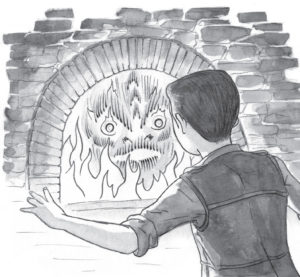
There was a face in the fire!
A long face hung in the flames like a shadow, dark and shimmering. It wasn’t human; it was longer, and bony, with a crest at the top of its head, and its eyes were two circles of fire.
Tom gazed at it as if in a dream. The eyes burned! Its mouth opened and showed rows of sharp, vicious teeth.
‘Tomásssssss,’ it hissed.
Tom’s mouth fell open.
‘Be ready, Tomássssssss…’
‘Tomás! Tom, what are you doing?’
Tom blinked and looked up. Dad was frowning at him.
‘Are you all right, son?’
‘I-I thought…’ Tom peered into the fiery forge, but there was nothing there. ‘I thought I saw something,’ he muttered.
Dad smiled. ‘It’s been a long day. Let’s finish tomorrow.’
Tom nodded, and they went in for supper.
That evening, tucked into his tiny bunk, he thought again about the face. The bony head, and the teeth, so sharp. And the eyes…
He woke in the dark with a start. Then he laughed to himself at his imagination, and went back to sleep.
They finished the last sword the next morning. Tom checked the flames several times, but today there was nothing – just crackling wood and white-hot charcoal.
He held up the sword, watching it glitter.
Dad inspected it. ‘Good job, son. Let’s finish up. Captain Hork will be here soon.’
They packed them into crates by the doorway. But as Dad left, Tom looked again at the fire – and the face was there! Unmistakable, dark and fierce, with eyes of flame…
‘Be ready, Tomásssss,’ it hissed. ‘He’s here…’
‘Tomás!’ bellowed Dad. ‘Come on, he’s here!’
Dragon Storm: Tomas and Ironskin and Dragon Storm: Cara and Silverthief by Alastair Chisholm are published by Nosy Crow, priced £6.99.
We love a little bit of history here at BooksfromScotland, and if you’re interested in starting off the young ‘uns on their journey to becoming history buffs, then we highly recommend Talking History: 150 Years of World-changing Speeches as a great starting point. We caught up with authors Joan Haig and Joan Lennon to chat more about the gorgeous history book.
Talking History: 150 Years of World-changing Speeches
By Joan Haig and Joan Lennon
Published by Templar
Hello Joan and Joan! Your 2022 has already got off to a cracking start with the publication of your children’s book, Talking History. Can you tell us how the collaboration came to pass?
Joan H.: Thanks – we’re excited to be chatting to you about it. We met at Moniack Mhor Creative Writing Centre in the Highlands – I had signed up for a retreat to start my novel and Joan Lennon was one of the tutors. We kept in touch after the retreat. The collaboration was an exciting new direction for both of us – Joan Lennon had many published children’s books to her name already, but not nonfiction.
Joan L.: Yes – a whole new area! A book about speeches was Joan Haig’s idea originally, but when she invited me on board, I jumped at it! We’re both excited about words and how they work, and also about telling stories. Non-fiction is another way of telling stories – and illustrated non-fiction adds another dimension as well. We started drawing coloured pen pictures of what we thought the book might look like on big sheets of paper on Joan Haig’s kitchen table. We were so excited – and so rubbish! Thank goodness they asked André Ducci to do the artwork!
You’ve both written books individually too. How was the switch to being co-authors? How have you found collaborating on the project?
Joan L.: Everything about writing non-fiction is collaborative, and that takes some getting used to! The two Joans worked together on whittling down the list of chapters, and the editorial team and the marketing department also made suggestions. When the list was agreed, we divided the chapters between us to write. Our editors worked on the text we submitted. There was the collaboration with the designer and the illustrator who created layouts into which the texts needed to fit. Then there were sensitivity readers and an overall external reader. Collaborating is a full-time exercise in the world of non-fiction!
If everybody who worked on the book was on the front cover if would have to be twice the size. Two Joans and an André plus everybody else make a good team – a good team that is going to be working together again very soon… watch this space!
Joan H.: I enjoyed the collaborative process. Having a co-author and editor to share ideas with was helpful. Going into the project I was fairly confident that I knew how to write nonfiction – although new to children’s writing, I’d had several papers and chapters published in academic journals and books. I quickly learned, however, that things I might have taken 5000 words to analyse in an academic paper, I had somehow to condense into 50 words for this readership! Having an experienced wordsmith like Joan Lennon, two sharp-eyed editors (both ruthless with wordcount!), plus a team of issue-specific consultants was, therefore, fantastic.
The histories you share are shaped by speeches. How did you decide which speeches to write about?
Joan L.: We wanted speeches that were inspiring, with a spread of time and gender and geography, but the question of copyright also had to be taken into account. Not every speech we were excited about was available to use in a book such as ours. But we were more than happy with the final chapters!
In the introduction you mention a knitting teacher who played you speeches in her class. Can you tell us more about that wonderful memory?
Joan H.: Mrs. Chamberlain was my Religious Education teacher, who took a catholic (with a small ‘c’) approach to her subject. It was the mid 1990s and she taught us to knit a special pattern of jumper for children in Africa suffering from hunger and drought. While we cast on and off, she played us famous orations, and sometimes music, on her vinyl record player. One clear memory is of the whole class falling silent – knitting needles paused – in the final section of ‘I Have a Dream’ by Martin Luther King, Jr. We abandoned the knitting and talked about the Civil Rights Movement. It was one of those magical classes where nobody wanted the bell to ring!
The book covers the last 150 years of international history. What prompted the decision to stick to modern history?
Joan L.: There are SO MANY amazing speeches! We had to narrow them down to 16 for the book, and the starting point of 150 years ago was one of the ways we did that.
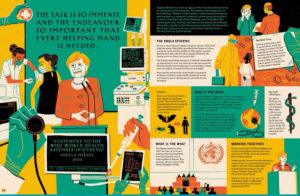
It is a beautiful book too, with such vibrant illustrations. Can you tell us a little more on working with the illustrator Andre Ducci?
Joan L.: It’s fabulous, isn’t it! And working with a designer and an artist has been a real eye-opener. The way image and story work together to make something more than just image or story on their own is magical.
Joan H.: I agree – the book is beautiful. There’s a luxurious quality to the paper, which is matt and suits the bold style.
We worked mostly with the editors, Lydia Watson and then Carly Blake, and the inhouse designer, Adam Allori, who would then work with André Ducci. There was usually some back-and-forth as text was edited or when we were dealing with sensitive topics – but really not much. They are wizards! Receiving the ‘scamps’ (Adam’s initial sketches) and then the ‘roughs’ (André’s initial illustrations) was one of the most exciting parts of the process.
We’re at the beginning of 2022, the year that has been designated the Year of Scotland’s Stories. If you could pick a favourite speech from Scotland’s history, which would you choose?
Joan L.: I’m going to choose the speeches of George Macleod. He was a passionate speaker on all sorts of issues – pacifism and CND, crofting, unemployment, the Green Party. I first came to Scotland in 1978 to work at the Abbey on Iona for a year, and the place was imbued with the practical humanity of his vision. Bringing unemployed workmen from poverty-stricken areas of Glasgow to rebuild the Abbey in the 1930s is definitely one of Scotland’s inspiring stories.
Joan H.: Sticking with modern history, I would choose the first speech given in Parliament by Winne Ewing, in 1967. As one of only four female MPs in Scotland, she was a trailblazer. In her address she said, ‘I am absolutely on the side of youth.’ And she was. She asked politicians and the wider public to listen to young people and to treat them with greater respect. Scotland has done well with this, but Ewing’s message is still relevant: we need to continue to work on representation so that youth from all sectors of society feel their voices are being heard.
Talking History: 150 Years of World-changing Speeches by Joan Haig and Joan Lennon is published by Templar, priced £15.99.
Time now to introduce you to a new voice in children’s fiction, Alex Mullarky. If you like your children’s books packed with magic, adventure and mischief, it’s time to put this book on your list! Here’s a sneaky peek . . .
The Sky Beneath The Stone
By Alex Mullarky
Published by Floris Books
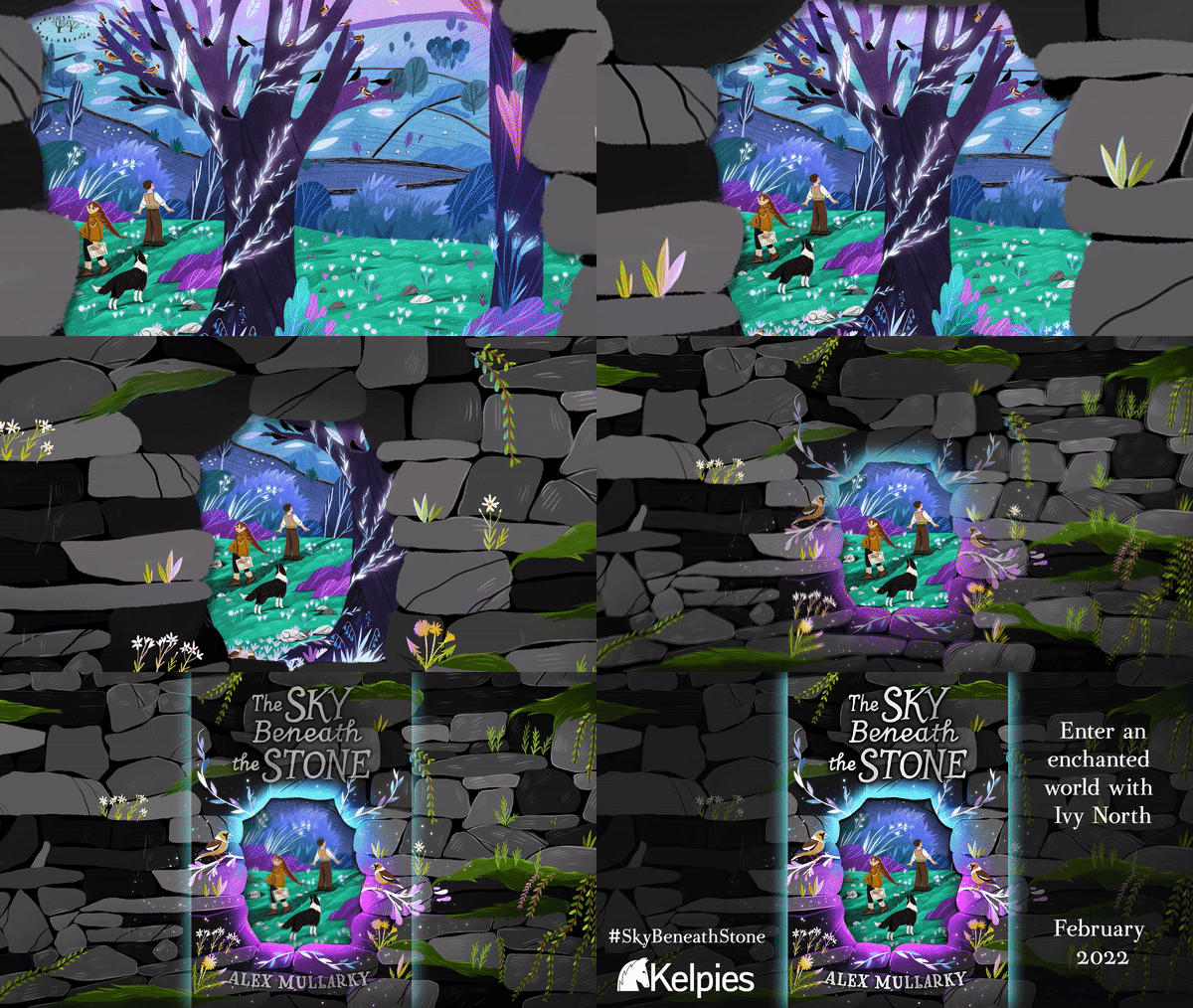
Thirteen-year-old Ivy North is an adventurer. She can pitch a tent in four minutes flat, knows the local landscape like the back of her hand, and she’s an expert map reader. There’s just one problem.
She’s afraid to go outside.
But when her little brother is transformed into a kestrel by a powerful sorcerer, Ivy is the only one who can rescue him. Following him through a mysterious hole in the garden wall, she emerges in Underfell — an enchanted realm that seems like the Lake District she knows, but is dangerously different…
The Sky Beneath the Stone is the immersive and beautifully written first novel from bold new voice in children’s fiction Alex Mullarky. Publishing on the 24th of February, this stunning fantasy adventure effortlessly blends the natural world with the fantastical in a celebration of nature, history and folklore. Join the author below for a special sneak peek at this breath-taking debut for 10-13 year olds…
‘Bright and brilliant — a perfect blend of magic, adventure and heart.’
— Sophie Anderson, author of The House with Chicken Legs
‘A beautifully written adventure steeped in the myths and magic of the Lake District.’
— Ross MacKenzie, author of the Nowhere Emporium trilogy
The Sky Beneath The Stone by Alex Mullarky is published by Floris Books, priced £7.99.
Celebrating Scotland is at the centre of 2022’s Year of Stories and Henry Bell’s The Inner Circle is packed with poetry as love letter to the city of Glasgow, its sights, smells, colours and characters. Here, we share three poems from the collection that have us ready to speed across the M8!
Poems taken from The Inner Circle
By Henry Bell
Published by Stewed Rhubarb
O Watermelons!
O honey mango shop!
O slick of sun tan lotion!
ripe back lane bins
and the laburnum’s yellow ropes
of poison thrill then fade
so breathe in deep
the back court smoke
a jungle of weed
and bar-b-ques
O buzzing copter!
O row of hot glass bottles!
radios roar from shimmering cars
twins hold
their shrieking guinea pigs
as the Bengal cat
prowls through knee high
yellow thistles
a paddling pool is filled
a phone rings
and a siren ripples
out along the street
O pizza boxes!
O boy racers!
Rat Caught in a Manhole Cover
Rat caught in a manhole cover
you have rolled a natural one.
Too fat but not quite greasy enough
you are suspended between the sewer
and the stars: easy prey for dogs, cats
or motorbikes. Dear rat
I do not offer you pity but fellow-feeling,
how rat-like, how human, to dream
of an open road, but find yourself
chained to your dankness.
I bet the other rats make fun of you.
Here, have this poem, it is about your courage,
your hope, your triumph, the way we see you,
full gut stuck in a manhole, straining
and all round the world say ‘aah
that brave rat is me.’
Comrade Teacake
I am watching
a Tunnock’s tea cake
fall to earth
in real time
from a height
of 37,262 metres.
It spins and glints. Little
Glasgow Sputnik,
pudding of whimsy,
facing the vastness,
the coldness,
the darkness.
There is nothing better
to do right now
than watch a tea cake
hurtle through space,
115 Eiffel towers above us,
556 Wallace monuments above us,
here in the future.
O little teacake,
from Glasgow to Saturn,
so alone up there.
But imagine
what we will achieve
when you have come back
to earth
sweet cosmonaut.
Your red foil and stars
bring tears
to a kulak’s eye.
No empire biscuit this, no.
A teacake
of internationalism,
circling the earth,
spreading
its mallowy joy.
The Inner Circle by Henry Bell is published by Stewed Rhubarb, priced £5.99
Tigeropolis, the trio of books from R D Dikstra is now a new 10-part weekly Fun Kids radio comedy series from Belle Media. Kay Hutchison from Belle Media tells us more.
Tigeropolis (Beyond the Deep Forest, The Grand Opening and Caught in the Trap)
By R D Dikstra
Published by Belle Media
The series is adapted from our popular Tigeropolis books about a family of vegetarian tigers battling to save the planet and is narrated by award winning Indian filmmaker Ashwika Kapur.
It’s the unbelievable story of these tigers whose peaceful life, hidden away deep in the forest, is suddenly under threat when the bulldozers are set to close in. Tiger cubs Bittu and Matti and the rest of their tiger family get up to all sorts of adventures as they battle developers, outsmart poachers, and take on a quest to find missing treasure.
We wanted these books to have a strong underlying enviromental message as they are inspired by the author’s long-term involvement in conservation. Richard Dikstra has travelled to all seven continents doing this work, but his first ever experience seeing a tiger prowling through the Indian jungle as dusk began to fall has stayed with him ever since.
This is the second children’s radio series Belle Media has produced from one of their titles. Last autumn they also produced the Adventures of Captain Bobo, which was narrated by late great John Sessions.
Belle Media have a background in radio and television, and have always been interested in exploring the wider potential of our IP. In addition to print, we’ve released a number of audiobooks, working with talent such as Richard E Grant and Bill Paterson, but with our children’s titles we knew we could do much more. They both offered up potentially rich audio worlds that could be adapted for radio with a story that would work as a series of stand-alone episodes .
We talked with Fun Kids about Tigeropolis last Spring. We also got to work to find out if some of the smaller local FM stations might be interested in collaborating as we’d already established good relationships with them following our earlier series. Happily they were positive about the proposal. With radio stations keen to broadcast our work, we went on to win funding from the Audio Content Fund to start work. Production for the Tigeropolis series began last summer.
In writing the scripts we brought in an experienced editor with extensive credits on short form children’s animation to make sure the translation from print to radio worked well. We knew from the outset we wanted to work with Ashwika. In addition to her beautiful, clear voice, Ashwika brings a deep knowledge of the real issues facing tigers in the wild. She’s based in Kolkata, so we had to record her ‘down the line’ from a studio there, with our director in London guiding her performance. Editing and sound effects were added by Strathmore Studios and the music was commissioned from the same young composer we’d worked with on Captain Bobo. A series like this doesn’t just require a theme, it also requires a number of musical stings to convey or emphasise emotion and to provide appropriate scene breaks/time shifts.
The series was also recorded in Gaelic for transmission on local FM stations across Scotland. The translation and narration is by well-known singer and actor Gillebride Mac ‘IlleMhaoil. Gillebride who also worked with us on Captain Bobo – it was recorded at Pacific Quays, Glasgow, the day before the site was locked down for three weeks ahead of COP26.
In addition to the drama, we also wanted to emphasize the conservation themes of Tigeropolis, so we decided that we would also produce a series of real-life eco-features enabling primary school children to question experts about key environmental issues.
Experts include award-winning Scottish wildlife filmmaker, Doug Allan, talking with children from Broomhill Primary in Glasgow about climate change and his work filming polar bears. Another episode features biologist and presenter Gillian Burke talking about water management and the re-introduction of beavers and recorded on location at a site in a flooded wood in deepest Cornwall.
To fit within the requirements of a broadcast schedule these eco-features had to be edited to fit 5 min spots. However, the children were so engaged in the discussions that we decided to make sure additional full-length podcast versions would be available online. The first of the Tigeropolis eco-features, was recorded at the Wildheart Animal Sanctuary on the Isle of Wight with zoologist Megan McCubbin talking about tiger conservation.
It’s been quite the ride bringing this project to fruition. We’ve learnt that it’s more than possible to take a well-loved book series and develop it in new ways. Radio production isn’t the simple option, but there are people out there that have the expertise to help bring everything together. It’s great fun and it can help books to find a new audience.
Tigeropolis goes out on Fun Kids every Friday from 14th Jan at 4.45, repeated the next day. The series runs through to Friday 18th March. The eco-features go out on Wednesdays from 19th Jan. Fun Kids is on DAB, on-line and on Smart Speaker.
The series is also being broadcast in English and Gaelic on Radio Skye, Isles FM, Nevis Radio, Two Lochs Radio, Paisley FM, Lochbroom FM, Arran Sound, Dunoon Community Radio and K107FM (Kirkcaldy) – check local listings for times.
Tigeropolis (Beyond the Deep Forest, The Grand Opening and Caught in the Trap) by R D Dikstra are published by Belle Media, priced £7.99.
Alison Watt’s latest artworks, A Portrait Without Likeness, asks exciting questions of portraiture, of seeing and knowing, in a way that excites David Robinson as he contemplates the book that accompanies the exhibition.
A Portrait Without Likeness
By Alison Watt
Published by the National Galleries of Scotland
You have to look really hard at Allan Ramsay’s portrait of Margaret Lindsay of Evelick, his second wife, before you realise that the rose she is holding in her left hand has a broken stem. The rose itself, pink and fading, is facing downwards, the stem almost translucent: compared to the immediacy and directness of Margaret’s gaze at the viewer, neither of them seem to matter. Minor details only.
Alison Watt had looked at that portrait for years before she noticed the broken-stemmed rose. She knew it was important, because when she looked at the rest of his works, there it was again, in a preparatory red and white chalk drawing of a hand holding the rose, the fingers and flower at precisely the same, slightly awkward, angles, the light and shade mirroring each other in both preliminary drawing and finished painting.
What does it mean, this broken rose? Does it mean anything at all? Maybe it’s just Ramsay saying: ‘Here is my wife arranging flowers. She is putting the finishing touches to a bouquet that is just as beautiful as she is and is weeding out the one solitary imperfection.’
Or is he saying something more? On the note next to Ramsay’s portrait of his first wife Anne Bayne, at the Scottish National Portrait Gallery, we are reminded that all three of their children died in infancy before she herself died in childbirth in 1743. The note next to his second wife’s portrait points out that only three of her ten children with Ramsay survived childhood. Such a crushing weight of familial death surely demands a significant memento mori, so perhaps that was the real purpose of the broken-stemmed rose. But whose death? His first wife’s? (Would his second wife join in that mourning?) His lost children – yes, but from which marriage? Or all of them?
Two and a half centuries on, we can only guess. We can make up stories from these incidental elements in Ramsay’s portraits of his female sitters – Margaret Lindsay’s broken-stemmed rose, the book held by the bluestocking Countess of Balcarres, the cabbage leaf held by society hostess Frances Boscawen, the pink ribbon round Anne Bayne’s lace cap – that may well be true, but we can never be certain.
Some people might find this lack of certainty irksome, but unknowability can be alluring too. In fact, it’s central to Alison Watt’s exhibition A Portrait Without Likeness, which ends next month at the Scottish National Portrait Gallery before transferring to Inverness Museum and Art Gallery (29 January-2 April). As she points out in the eponymous accompanying book the meaning of the broken-stemmed rose in Margaret Lindsay’s portrait, will always elude us – but that is not necessarily a bad thing: ‘It has come to represent for me the mysteriousness of painting itself.’
Because Watt’s 16 new paintings are all still lifes based on (but not copied from) details of Ramsay’s portraits of female sitters – an exquisitely worked lace handkerchief here, a quill pen there – the exhibition asks a series of intriguing questions about what we can ever learn from painting. To what extent, for example, do details in portraits – objects with which we surround ourselves in our daily life – matter? Can they deepen our appreciation of a portrait from the past? And – to get right to the heart of Watt’s work – does a portrait even need a face?
Apart from her exquisite skill with brush on canvas, one of the things I admire about Watt – and it’s reflected in the book, the exhibition, and in her book festival interview with Andrew O’Hagan (check it out on edbookfest.co.uk – it’s still up there) – is the way in which she talks about Art without slipping into Artspeak. I’m sure you know what I mean by that – examples litter Private Eye’s Pseuds’ Corner and conceptual art exhibition catalogues – but only last month an enjoyable reminder came in Alexander McCall Smith’s 14th Scotland Street novel Love In the Time of Bertie. In it, portrait painter Angus Lordie reluctantly attends a talk at which a remorselessly trendy lecturer decries figurative art as ‘fixations of a stale mind located in a stale world-view’. ‘We no longer need paintings,’ he says, ‘we need experiences. We need ideas that spring not from the material but the inner experiential universe.’
Although the plot then takes a sharp turn towards the improbable – Edinburgh socialite nun Sister Maria-Fiore reveals that she has been appointed a Turner Prize judge – Lordie is cheered by the nun’s reaction to these heresies. ‘I found myself thinking who is the stale one here,’ she says, going on to blame conceptual artists ‘for saying the same thing over and over again. Whereas anybody now who paints in a conventional style is the radical, the outsider.’
McCall Smith hasn’t yet seen Alison Watt’s show, but if and when he does, I think he will find her work proves the truth of his characters’ observations. At the Glasgow School of Art, Watt told O’Hagan at the Edinburgh book festival, ‘I was deeply unfashionable because I was looking at 19th century French painting, which led me to spend most of my time in the life room. In my final year there were just the two of us in the studio, just me and the model, because it was being gradually phased out as a discipline.’
A classical arts education was, she says, ‘invaluable’ – but it hasn’t meant predictability. Just the opposite: having established herself early on as a portrait artist (the Queen Mother sat for her in 1989) and painter of realistic nudes posing on drapery, her whole aesthetic then turned away from the human form and towards the backcloth. She herself would argue that she still sees her work as figurative – even if the human figure is no longer in it.
Why isn’t it? I’ve never even met Watt, never mind interviewed her, but if I did, I expect she’d say that it doesn’t always need to be. That a work like Still, her huge quadryptych of white cloth (an empty shroud?) in the Warriors’ Chapel in Edinburgh’s Old Saint Paul’s Church would lose all its massive spiritual heft if it had even the merest hint of a body. That likenesses in portraiture might have nothing to do with what a person is really like.
And how do you show that anyway? You might capture a typical expression, you might even be able to sum up some quintessential element of their character, but it won’t be all of their life, just one particular moment in it. But if what makes us us – the very thing the portrait painter is aiming for – is impenetrable, and the things we surround ourselves with aren’t? An artist can lift those objects out of time, drag them centuries into the future, and make us think about the humans who loved them in the past. It’s some trick, but in A Portrait Without Likeness, Alison Watt pulls it off.
A Portrait Without Likeness by Alison Watt is published by National Galleries Scotland, price £20.
As well as plates from the exhibition, it also contains an introduction and interview with Watt by Julie Lawson, an essay on her work by Tom Normand and a short story by Andrew O’Hagan. The exhibition at the Scottish National Portrait Gallery ends on 6 January and opens in Inverness on 29 January.
Who doesn’t love getting books for Christmas? They’re the perfect gift, and easy to wrap too! If you’re still having trouble deciding what to get your friends and family, here are some recommendations from us. . .
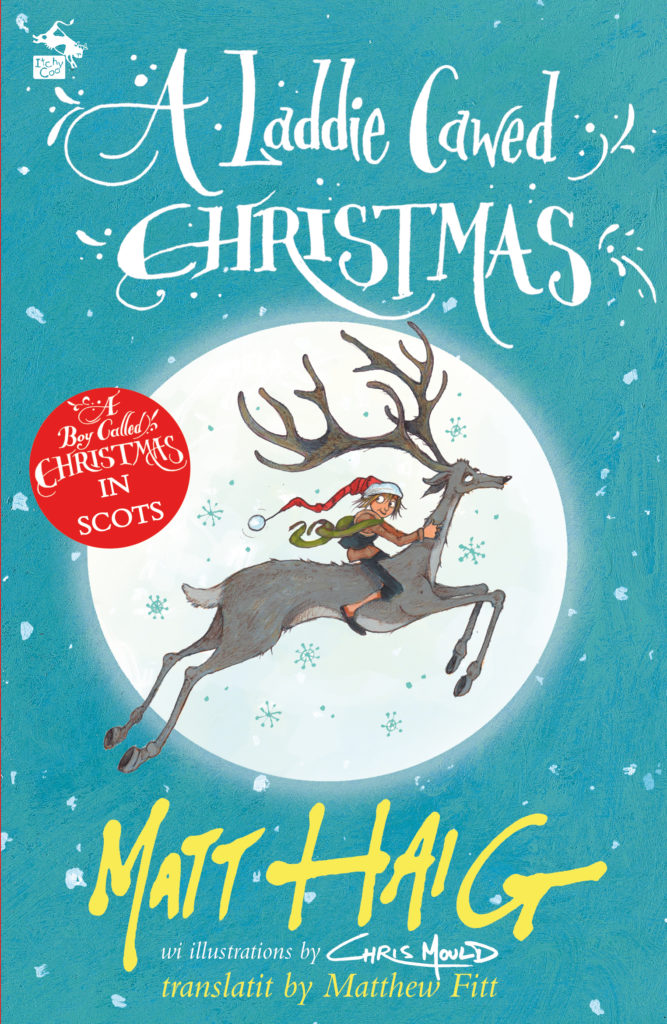 A Laddie Cawed Christmas
By Matt Haig, translated by Matthew Fitt
Published by Itchy Coo
Now in Scots for the first time, A Laddie Cawed Christmas is Matt Haig’s wonderful tale of adventure, snow, kidnapping, elves, more snow and a boy called Nikolas, who isn’t afraid to believe in magic.
Ye’re aboot tae read the richt story o FAITHER CHRISTMAS . . .
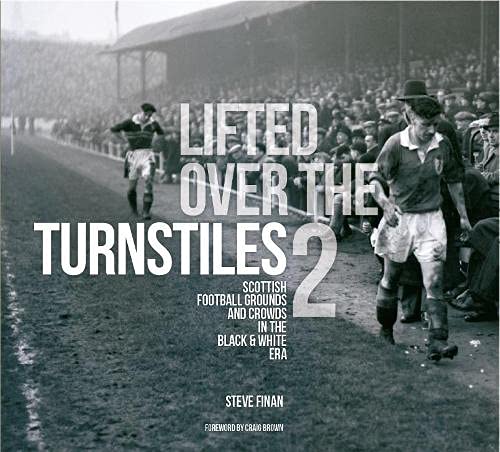 Lifted Over the Turnstiles: Scottish Football Grounds And Crowds In The Black & White Era, Volumes 1 – 3
By Steve Finan
Published by DC Thomson
Delve into vintage photos of Scottish football stadiums and crowds that have lain unseen, in archives and rarely accessed collections, for decades. Each volume also contains anecdotes and quirks gathered from fans, club historians and newspaper articles of decades past. Perfect for the football fanatic in your life!
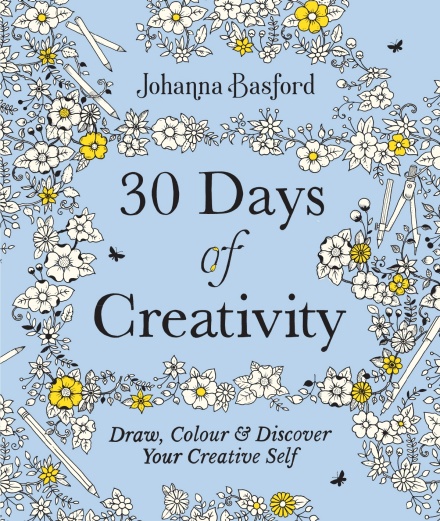 30 Days of Creativity: Draw, Colour and Discover Your Creative Self
By Johanna Basford
Published by Ebury
In just thirty days, you can develop a creative habit that allows a little more calm and joy into your life. These easy-to-follow daily practices will help unleash your creative spark and build the foundation of your artistic practice.
With a mix of whimsical doodles, pages of expert advice, and simple step-by-step drawing guides, this book is designed to nurture every inner artist.
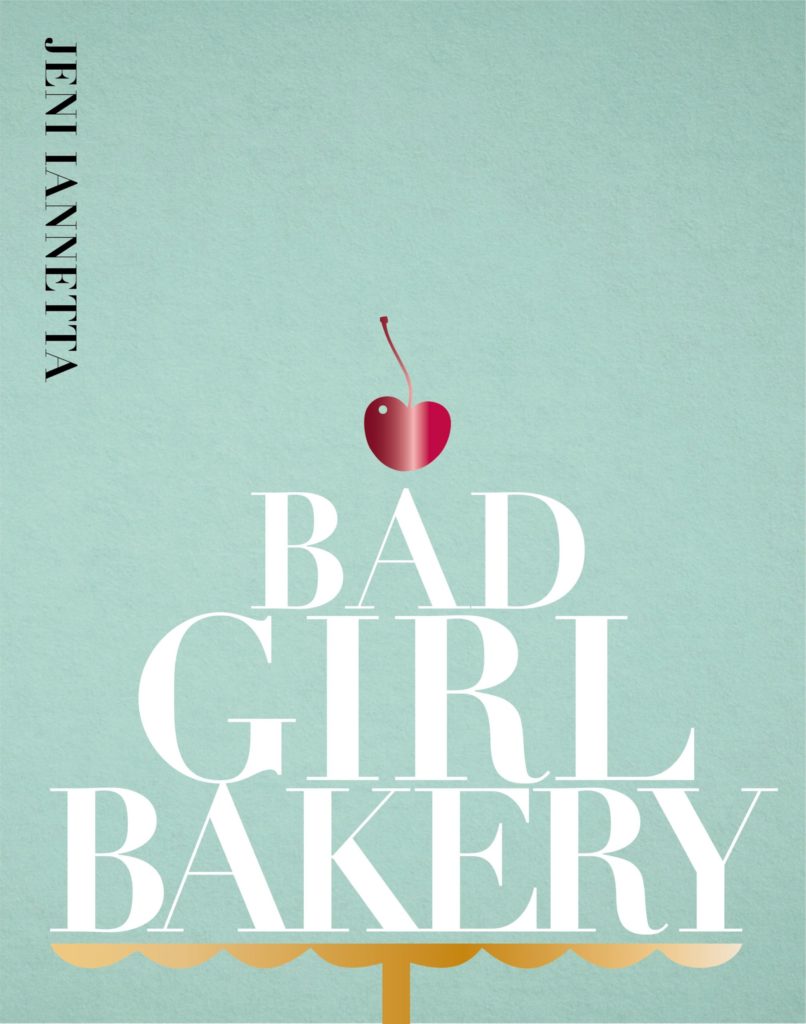 Bad Girl Bakery
By Jeni Ianetta
Published by Kitchen Press
Unapologetically generous and indulgent, Jeni Iannetta’s cakes, bakes and biscuits have won plaudits ever since the Highland bakery opened in 2017. A fantastic book for every keen baker with an eye on spoiling everyone around them in the festive break!
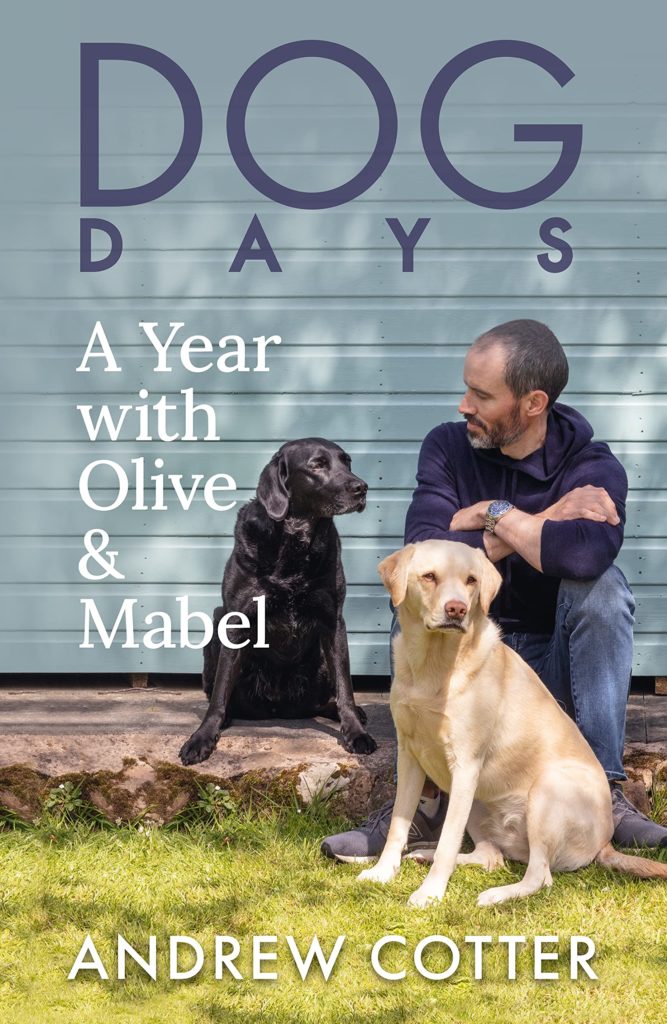 Dog Days
By Andrew Cotter
Published by Black and White
Olive and Mabel are back! And in this new diary from Andrew Cotter we find out what happened after his two superstar Labradors chewed up the lockdown internet and found international fame. Followed by whispers of ‘Is that really Olive and Mabel?’ the three of them pad around literary festivals, breakfast TV, live radio and even an appearance on Good Morning America. But has fame changed our favourite Labradors?
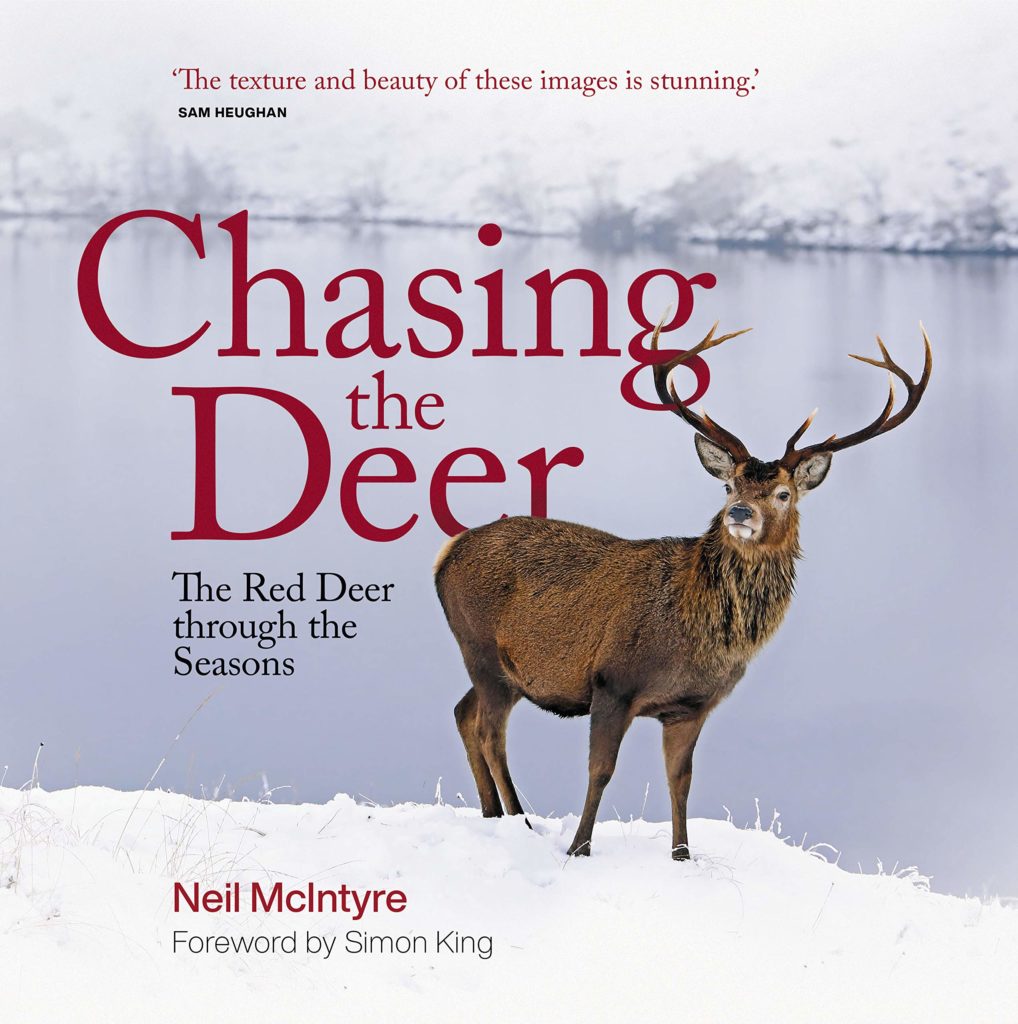 Chasing the Deer: The Red Deer Through the Seasons
By Neil McIntyre
Published by Sandstone Press
Born into a family of deer stalkers, Neil McIntyre has been fascinated by red deer all his life. They have been central to his career as a wildlife photographer and, in this stunning collection of photographs, he invites you to know and respect them as he does.
 Byobu
Byobu
By Ida Vitale
Published by Charco Press
Ida Vitale is a poet, translator, essayist, and literary critic. In 2018, she was just the fifth woman to receive the prestigious Miguel de Cervantes Prize, the highest recognition for literature in Spanish, and in 2019, she was named by the BBC as one of the 100 most influential women. Charco Press bring us her latest work into English, an intimate work filled with poetry and knowledge, densely interwoven without pretension, born of a single force: curiosity.
 50 Words for Snow
By Nancy Campbell
Published by Elliott and Thompson
A truly gorgeous gathering from writer and Artic traveller Nancy Campell, where 50 linguistic gems for these feather-like flakes we know as snow meet myth and story and bring new meaning to old magic. It is a journey to discover snow in all cultures through different languages.
 Hard Roads and Cauld Hairst Winds: Li Bai an Du Fu in Scots
By Brian Holton
Published by Taproot Press
In these astonishing poems, Brian Holton transposes the work of two of Ancient China’s most renowned poets, Li Bai and Du Fu, into the world of contemporary Scotland through a literary Scots full of joy and vitality. The poems are complemented by beautiful calligraphy by artist Chi Zhang.
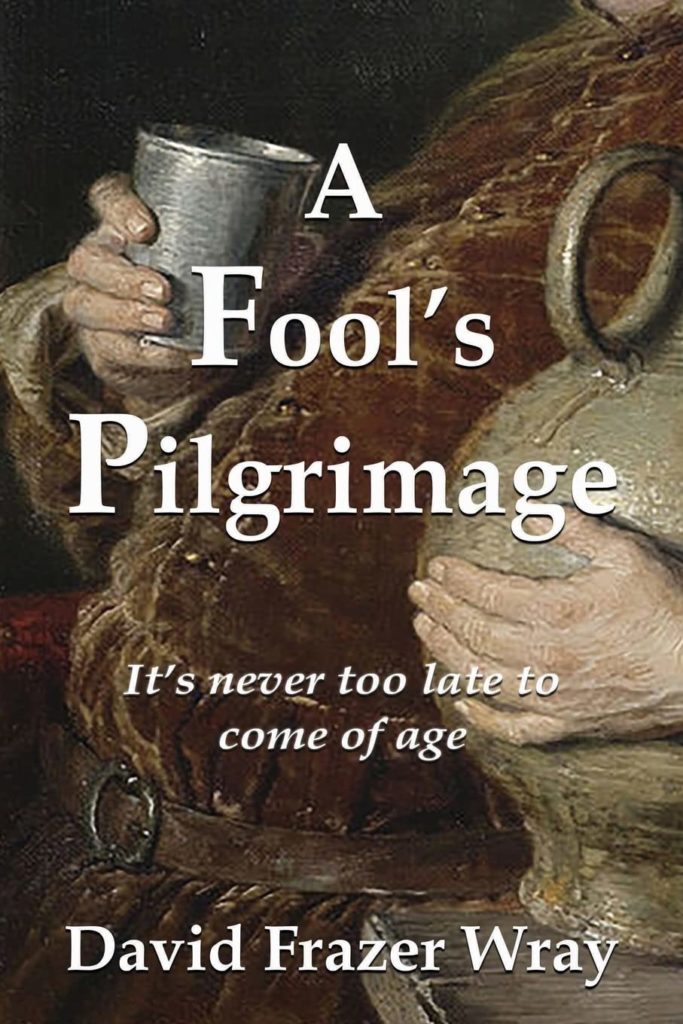 A Fool’s Pilgrimage
By David Frazer Wray
Published by Sparsile Books
A comic novel told in the distinctive voice of the bibulous old Sir John Falstaff, A Fool’s Pilgrimage is a daybook written in the early years of the fifteenth century. Peopled with strange and wonderful characters, such as Denys the Mad Holy Man, Guillermo the Gypsy Prince, and Jean-Baptiste of the Bone-Handled Knife, we are whisked through medieval France in a series of hilarious escapades.
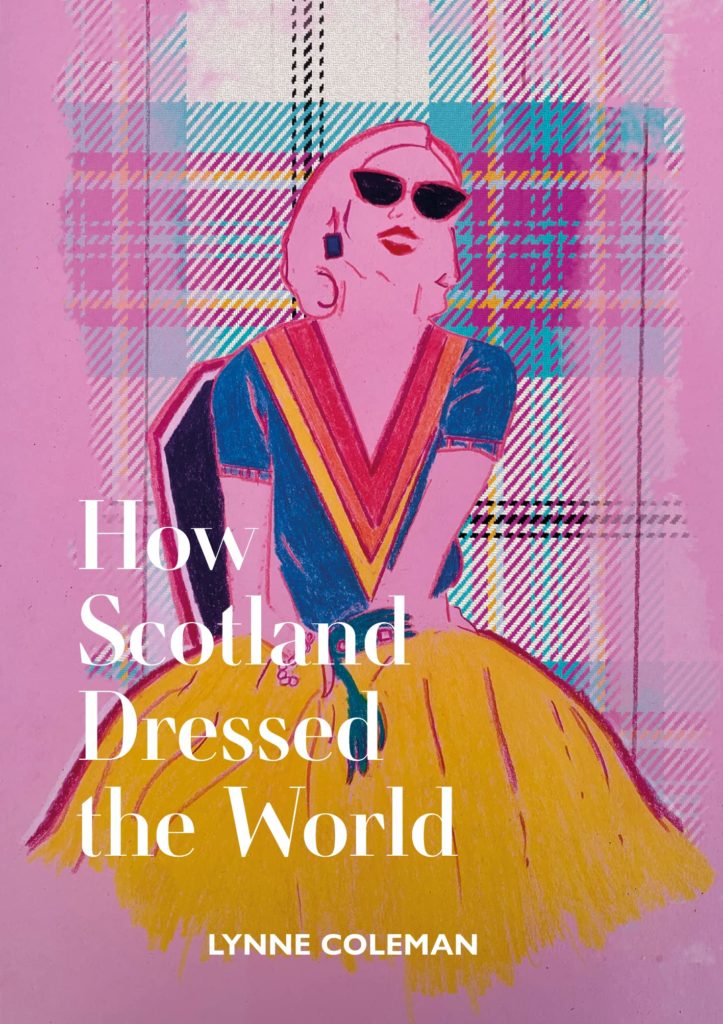 How Scotland Dressed the World
By Lynne Colman
Published by Luath Press
From Grace Kelly in her Pringle of Scotland twinset to Cher and Dionne tartan-twinning in Clueless, it all returns to Alba.
In How Scotland Dressed the World, Lynne Coleman explores the country’s rich cultural impact on the modern world. Telling the tales of the style and cloth that covers continents and how it has been woven into political and economic movements, this book is a must-have whatever your style tribe.
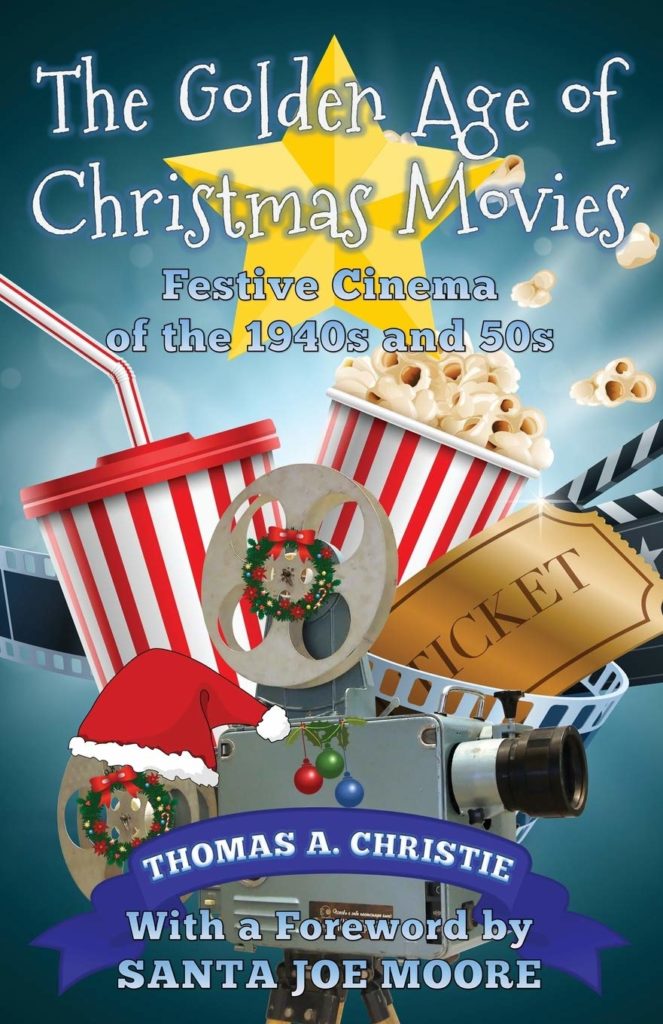 The Golden Age of Christmas Movies
By Thomas A. Christie
Published by Extremis
Today, the Christmas movie is one of the best-loved genres in modern cinema. This book takes a look back at the Christmas movies of the 1940s and 1950s that would define Christmas films for decades to come, including It’s A Wonderful Life, Miracle on 34th Street and White Christmas.
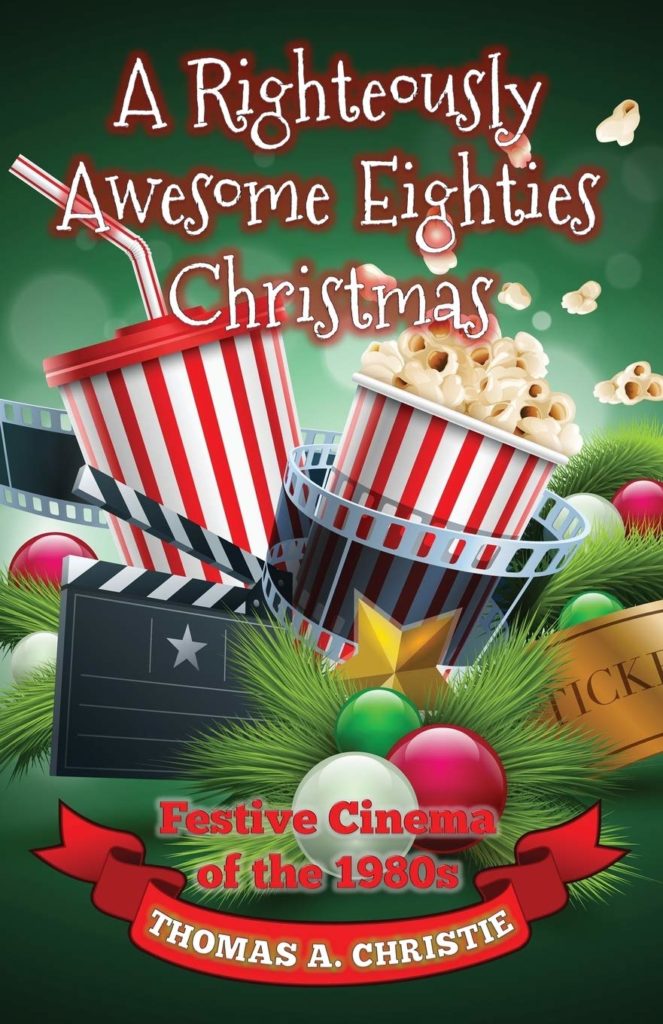 A Righteously Awesome Eighties Christmas
By Thomas A. Christie
Published by Extremis
But if you prefer more modern Christmas films, then this look back at the festive films of the 1980s should find its way into your stocking, as it celebrates the decade where the genre was mashed up with comedy, drama, fantasy and horror where nostalgia and modernity collide.
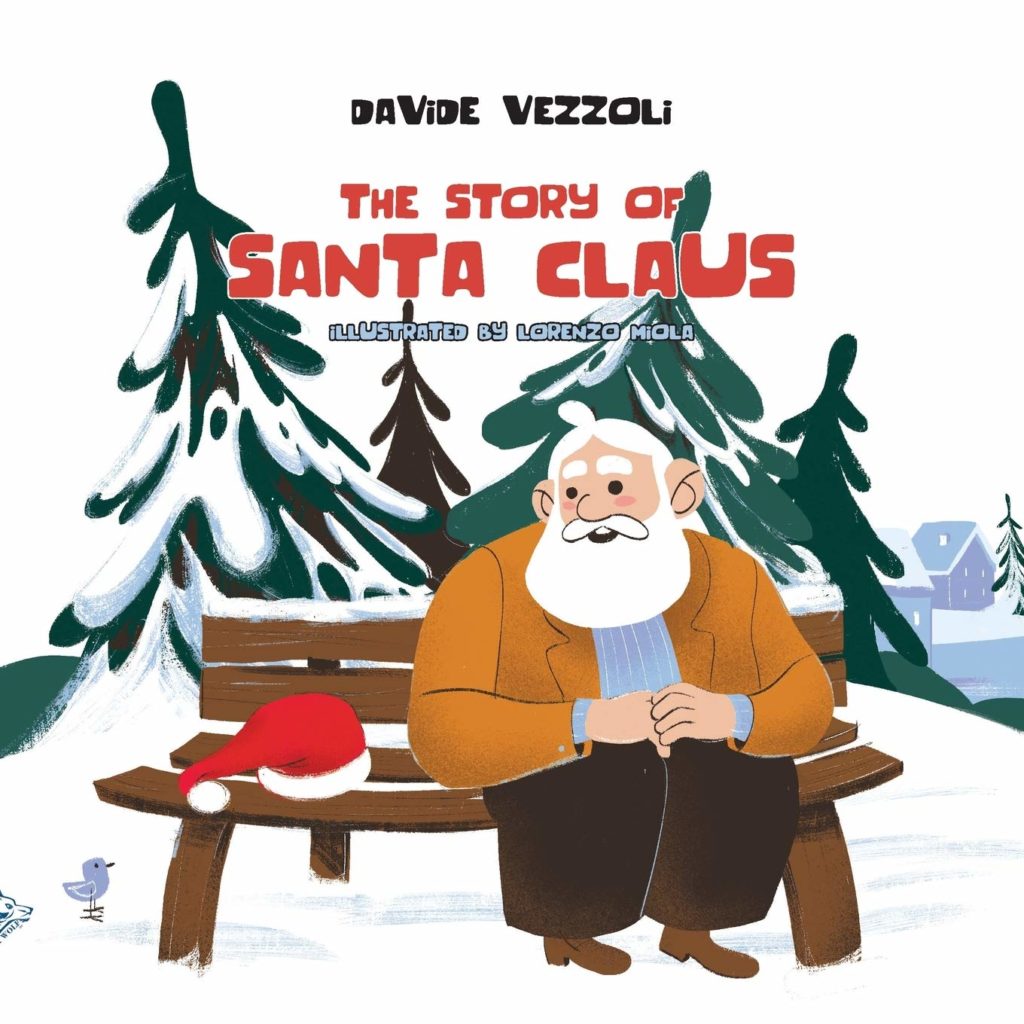 The Story of Santa Claus
By Davide Vezzoli, translated by Charlotte J. March
Published by Black Wolf Edition
An ideal gift for Christmas lovers from aged 8 to 80, this wonderfully illustrated book tells the story of Santa Claus as he and his elves get ready for their worldwide trip down everyone’s chimneys!
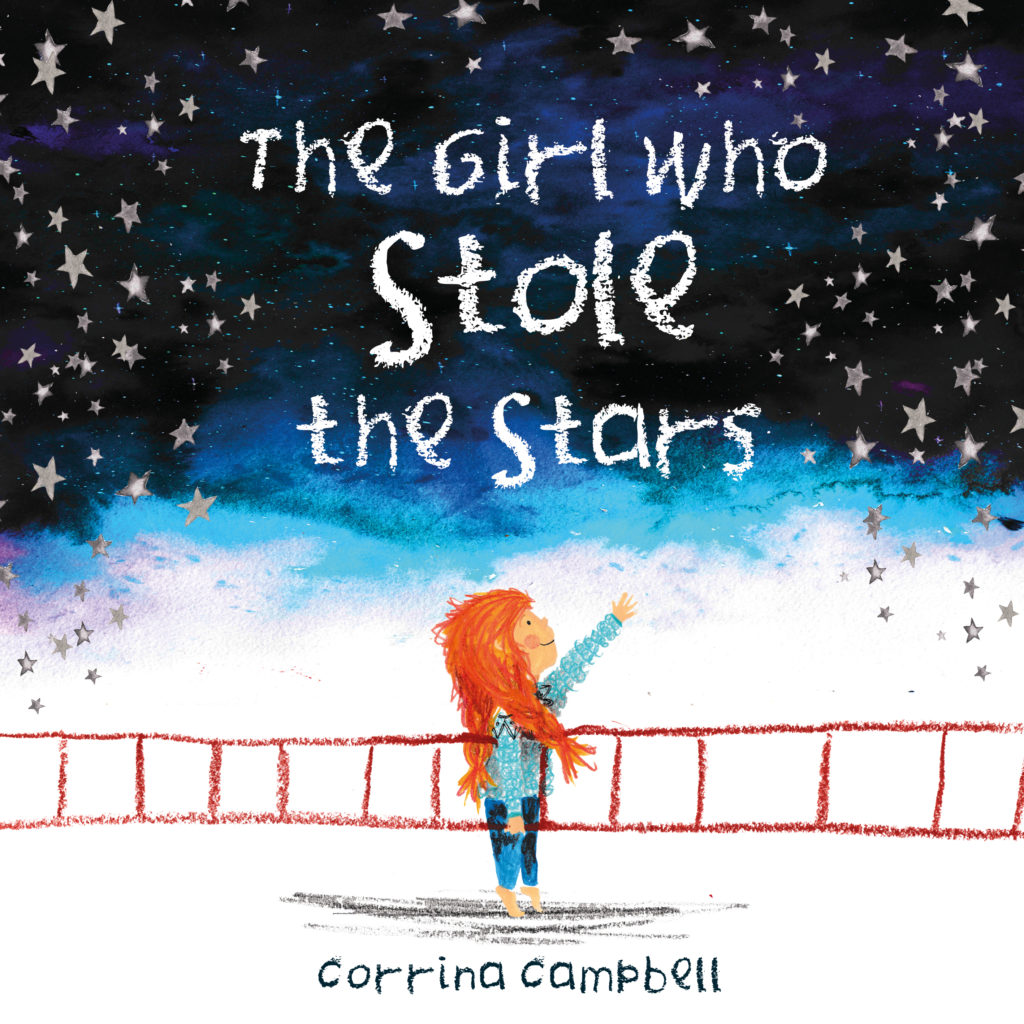 The Girl Who Stole the Stars
By Corrinna Campbell
Published by Little Door Books
This special seasonal tale is sure to be a festive favorite. Bringing themes of friendship, love, happiness, and doing the right thing alive through beautiful illustrations that touch the heart of every reader, Corrina Campbell shows she is just as much the shining star as all those that sparkle and gleam in her glowing debut.
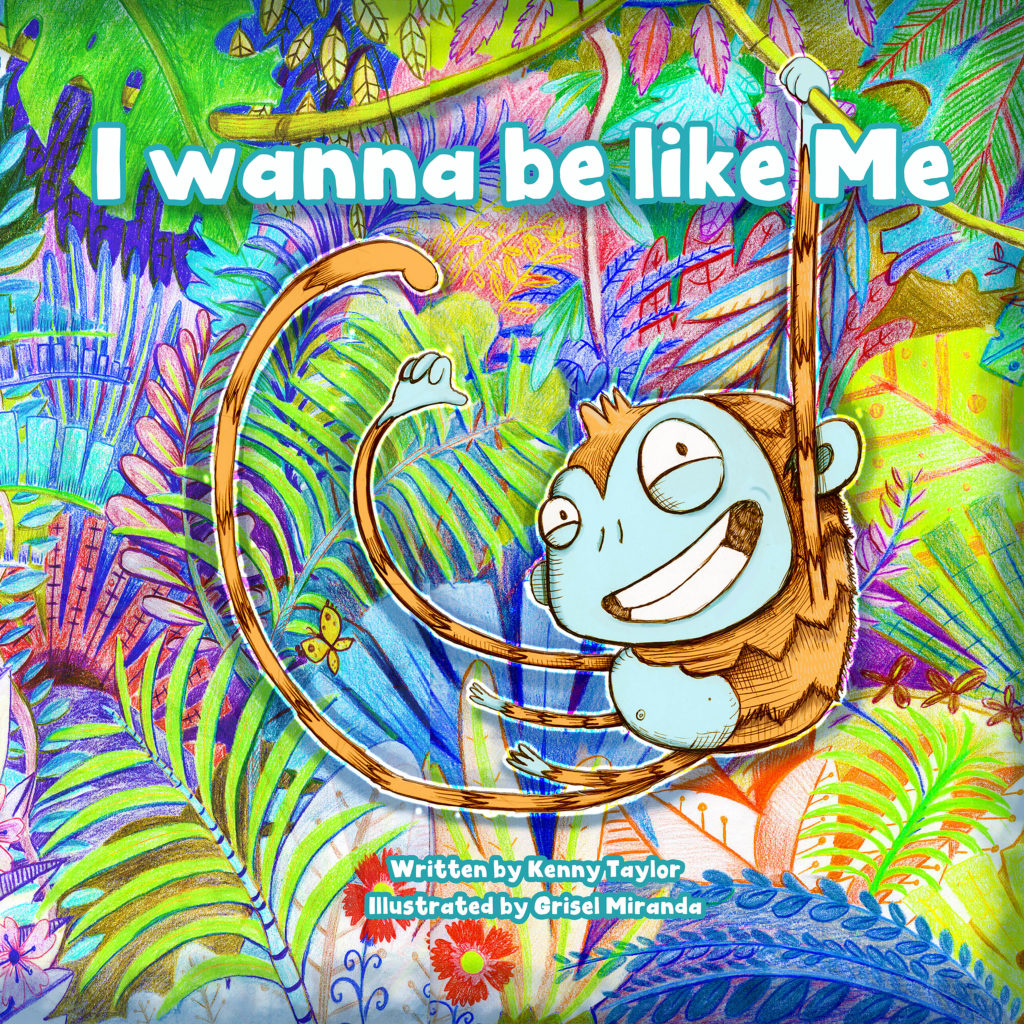 I Wanna Be Like Me
By Kenny Taylor
Published by Sparsile Books
But if your children prefer cheeky monkeys, then this super fun, silly story about a bored little monkey who is having a identity crisis is a perfect present. As the monkey’s ever-patient mother listens to her fantasies, in the end, she makes her see – and celebrate – who she really is.
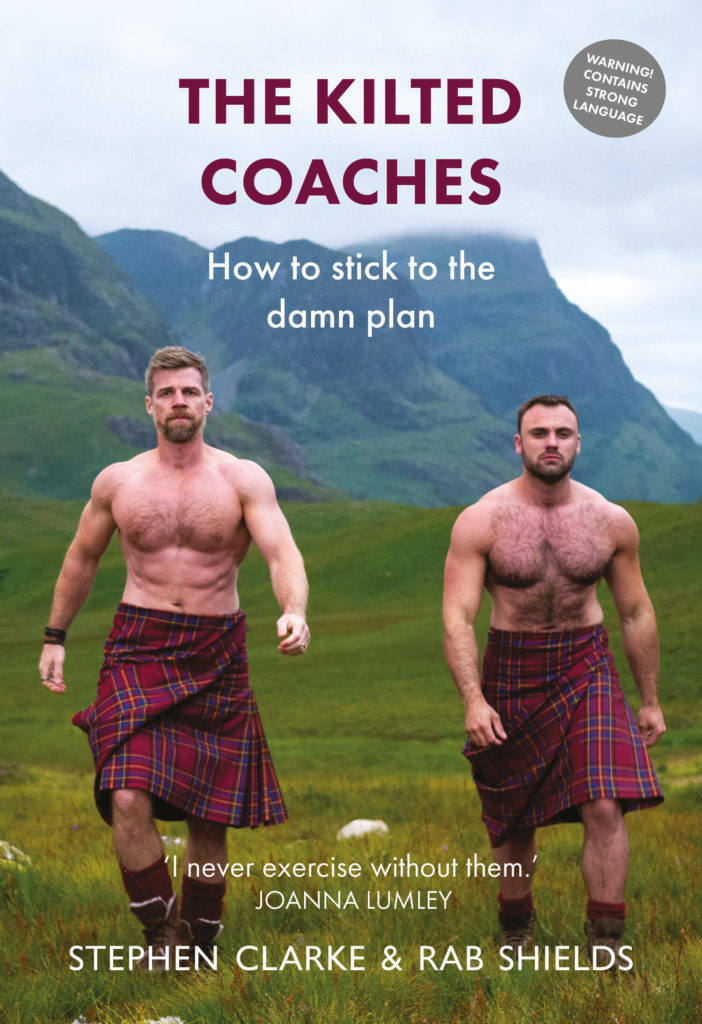 The Kilted Coaches: How to Stick to the Damn Plan
By Stephen Clarke and Rab Shields
Published by Luath Press
Then, for us all who have over indulged, The Kilted Coaches are here for us, channeling their years of experience as life coaches and weight loss experts into bite-sized nuggets of advice designed to build fitness, confidence and positivity that will promote health and happiness.
Angela Hughes’s first book tells us of priceless gifts. My Heart’s Content is a deeply moving memoir, and here, for BooksfromScotland, she tells us of her story.
My Heart’s Content
By Angela Hughes
Published by Liminal Ink
It’s here again, that bells a-jingling, chestnuts a-roasting, snow a-falling, consumers a-spending, debts a-rising time of year. And I love it. Always have. Not the full on, shop-til-you-drop approach, but that feeling of optimism, of togetherness. Of peace and goodwill to all. The Dickens’ effect, or in my case the muppets’ interpretation of Dickens.
As a child Christmas was Top-of-the-Pops, new pyjamas, an array of grandparents, selection boxes and party games. Sleep became a bargaining tool, carrots reindeer fodder and tangerines appeared in the toe of my dad’s work socks. And then there were books, filled with worlds in which to lose myself. Books with chickens and skies that fell in; books with witches and wardrobes, with dogs called Timmy and girls called George. Stories of soft rains and the death of a butterfly that changed the trajectory of the world. Moors and doublespeak and Beat poets and …
In later years Christmas brought an awareness of those who were alone. Those who were ill, suffering, in despair. It also brought It’s a Wonderful Life and the idea of reflection and reconciliation, of personal transformation. All of which came into sharp focus in early December 2013, when I was listed for an emergency heart transplant.
In a reverse Grinch moment, I was told my existing heart was three times larger than it should be. For seventeen days I occupied the liminal space between life and death. In a weird twist I felt better than I had in years. Hooked to a drip to support my heart function, I was surrounded by medical staff who were never more than several seconds away from my bedside, should anything untoward happen. There were mornings when I would wake and for a moment forget that the only way for me to walk out of the hospital doors would be if a donor were found. In time. Someone with the same blood and tissue type as mine. Of a similar height and weight.
The stark reality: for me to live, someone else must die. And though I understood the two events were in no way related, how could I hope for life when the only circumstances in which that were possible involved the death of another?
At any other time of my life, including my numerous previous stays in hospital, I would reach for a book or a pen. Read or write. Neither was possible. The drugs brought uncontrollable trembling and concentration eluded me.
Instead my mind meandered beyond my hospital room. I imagined the reflections from fairy lights agitating the feet of last minute shoppers. Friends trading stories, fingers curled round glasses of wine. My family, together for Christmas, laughing despite themselves. They had wanted to come to the hospital. My refusal brought sadness, and a sense of relief.
Only Paul, my husband, would be with me.
The call came just before midnight on Christmas Eve. An offer, that’s how they referred to it. ‘You’ve got a wee offer,’ the nurse who woke me said. And I smiled and fell back to sleep.
On Christmas morning, after the blood tests and skin scrubbing, and before I signed my consent form with the word MORTALITY, capitalised and underlined, I opened presents with Paul. Among them, books. The gift of Patti Smith’s New York; a wistful summer on the Med. Short stories bound in bright orange from Lydia Davis. Slivers of life expertly captured by John Burnside and Alice Munro. A book of poetry from African poets, foraged from a second-hand book shop. Pages of possibilities. Each a glorious confirmation of another’s belief that my life wasn’t over. That I would be home one day. Gifts that said we know you. We know who you are, what you like. Gifts that said you’re important, you matter, we haven’t forgotten you. We believe. My own George Pratt moment (or George Bailey if you prefer the film version).
During my stay in hospital, one of the nurses leant me a copy of the memoir by Diana Sanders, a heart and lung transplant recipient. It wasn’t an easy read and I often felt the need to hold it away from me, to read it out of the corner of my eye. But its veracity and honesty resonated with me. If she could survive, so could I.
Post-transplant, with renewed clarity and a steadier hand, I wrote My Heart’s Content. It wasn’t the book I had in mind for my debut, nor was it easy to write. I was compelled. It felt urgent. Immediate. I wrote to make sense of what had happened. To raise awareness. An affirmation: this happened.
My original intention was to use my experience in fiction. Yet somewhere along the way, I decided to tell my story. Perhaps it felt too personal to fictionalise. Too difficult to stand back from. Or maybe because memoir seemed the perfect hybrid of fact and fiction; the ‘based on a true story’ narrative. As accurate a retelling as any can be after the fact. It’s something I’ve considered a lot recently, particularly since reading the brilliant Mayflies by Andrew O’Hagan.
Signed by Freight but never published, for a while after, the manuscript lay dormant on my computer, until another set of extraordinary circumstances prompted a discussion with Paul. ‘Let’s set up our own publishing company and put it ourselves’, he said. And so we did.
Of the many messages of encouragement, enthusiasm and positive feedback I’ve received, the one that brought the greatest satisfaction was from a fellow heart transplant recipient, just before Christmas last year. Two words: ‘Nailed it!’
It’s the magic of Christmas. And books.
I believe.
*
Liminal Ink was formed just over a year ago. My Heart’s Content was our first release.
My Heart’s Content by Angela Hughes is published by Liminal Ink, priced
David Robinson discovers revelling in the wonder of the natural world is key to encouraging greater care of our planet as he reads these three excellent books.
The Vanishing Ice: Diaries of a Scottish Snow Hunter
By Iain Cameron
Published by Vertebrate Publishing
Extraction to Extinction: Rethinking Our Relationship with Earth’s Natural Resources
By David Howe
Published by Saraband
Mistletoe Winter
By Roy Dennis
Published by Saraband
The other day, I heard someone say that guilt and shame were the only things that would see us through the next 10,000 years. Maybe that’s true. Without guilt at the polluted planet we’re bequeathing to our descendants, without shame at the speed with which we demolished its resources, maybe human beings don’t either have or deserve a future of hundred years, never mind anything longer.
Even so, I have my doubts. Because finger-wagging and fact-shaming probably won’t make us actually want to save the planet. For that, we need something more: fascination and wonder at the world around us, perhaps, or a passion to discover more about it. And while the three new Scottish books I’ve picked this month might not have all the answers, they at least point in the right direction.
Iain Cameron’s The Vanishing Ice explains his fascination with Scotland’s snow so well (crisply and evenly, I’m tempted to add) that he makes you share it. There’s something so wonderfully quixotic about searching out and recording our longest-lasting snows that intrigues even those of us who have never been anywhere near Garbh Choire Mor on Braeriach in search of Sphinx and Pinnacles – the two most reliable patches of summer and autumn white in what is invariably, in winter, Scotland’s snowiest corrie. Close up, in October or November (at any rate before the first snows of winter) Sphinx and Pinnacles are rather unimpressive to look at: neurotically small, and stained with ptarmigan poo, decayed mosses and grasses. And yet snow-hunting out of season can be a visually magnificent obsession too: who wouldn’t want to look up at the scalloped roof of a Ben Nevis snow tunnel, as exquisite as the ribbed vaulting of a medieval cathedral, shown in Murdo McLeod’s cover picture?
The odds are, of course, that you and I might never see such things. We mightn’t venture inside a snow cave because we don’t really belong that far up Ben Nevis that late in the year and even if we did, we’d worry about its roof crashing down on our heads. We don’t know enough about the Cairngorms to work out where, in the 1930s was the only snow visible every month of the year from a British train station’. And again, if we did, and if we were, like Cameron, up there in the middle of a storm, with winds like being hit by a car, horizontal rain turning into swirling snow and the ever-present risk of rockfalls or 1000-foot tumbles, surely we’d call it a day rather than struggle onwards and upwards to check whether a particular piece of rock had any of last year’s snow on it before it got covered over with this year’s. Wouldn’t we?
In those circumstances, Cameron pushes on. Why? Because, he explains, ‘I had to count every last flurry of snow from the preceding winter before they were buried for another nine months or so’. Had to? Yes, because that’s what a true obsession is. In his case, it’s nothing to do with climbing (he is, apparently, not too good with heights, which to me makes him even more impressive). He wasn’t born halfway up a Scottish mountain, he works in building safety not in the wild outdoors, and when he bought his first book relevant to his new obsession (Scotland’s Winter Mountains by Martin Moran) he was not a geologist, meteorologist or any other kind of ologist but an apprentice Clydeside electrician.
Cameron is, however, both an authoritative and enjoyable guide to the rather niche subject of Scotland’s vanishing snows, whether for anyone set on checking out his map references or those of us armchair chionophiles (snow-lovers) who take them as read. There is an inevitable echo of Christopher Nicholson’s hauntingly elegiac Among The Summer Snows about the topic, although because Cameron’s mission is not fuelled by grief, it is inevitably less introspective. Or rather, there is a kind of grief, but it’s planetary, not personal. He admits that he feels sad when a patch of snow he had expected to find has already melted away: a ridiculous emotion, he realizes. (Or is it?.)
For the purposes of this column, though, I prefer to look instead at what sparked his obsession in the first place: the view north from his parents’ bedroom in the new house they’d just moved into when he was nine, the highest on an estate in Port Glasgow. One May morning in 1983, he looked across the Clyde at what looked like a white cloud or a strange and distant country but turned out to be the snow-covered top of Ben Lomond, Scotland’s most southerly Munro. There’s a photo of it in his book.
It all began there and then, not in a geography lesson at school or with anything he read, but with a sense of wonder. To the bemusement of his parents, he felt compelled to check snowfalls at Scotland’s ski resorts and, though a 13-year-old non-skier, rang the premium-rate phone lines to find out. He still can’t, he says, explain why he’s so fascinated with snow. I think he’s wrong and the book – unshowy, quietly heartfelt – is the proof.
To me, these initial moments of enchantment, when we can see a writer first shaping up to his subject, are fascinating. There’s another fine example in David Howe’s Extraction to Extinction. He was seventeen, standing on Alderley Edge (these days, that plush part of Cheshire where Manchester’s top footballers live) and his teacher asked him to reimagine what everything in front of him was like 250 million years ago, when it was a flood plain on the Tropic of Cancer. They then found some green and blue crystals in a rusty red rock. That’s malachite, the teacher said, pointing. What people used to smelt copper to make bronze – how they made arrowheads, brooches and tools before they’d learnt how to make iron. A seed was sown in his mind: geology became, for the first time, imaginable.
The book opens out into a highly readable study of well or (usually) badly we have made use of the Earth’s rocks and minerals, leavened with the kind of facts you really ought to know by now, such as where to go to see the world’s first concrete block of flats (25 rue Franklin, Paris from 1904) or that King Tut’s dagger was made from a meteorite, or that event just changing all the UK’s cars to electricity would eat up twice the world’s annual production of cobalt. He also has a pithy way with words: climate change, for example, is ‘what happens when we burn millions of years of fossilised sunlight in two lifetimes’. In every way looking beneath the surface, this is a convincing guide to our depleted, overheated planet.
In Mistletoe Winter, a delightful collection of essays that neatly pairs with last year’s Cottongrass Summer, conservation legend Roy Dennis comes up with the ultimate image for our times: mountain hares and ptarmigan, both in their white winter coats and plumage, against our increasingly brown and snow-denuded peaks. This would be, he says, ‘another wake-up call from nature’, but Dennis is growing tired of their repetitiveness: far better, he argues, to remove the vote from anyone over 60 (‘older people have had their chance and failed’) and give it to 14-year-olds.
As he has already outlined in Restoring the Wild earlier this year, Dennis is staging his own rebellion against extinctions by reintroducing lost habitats and reintroducing species that used to live there – projects which started with his attempt to bring back sea eagles to Scotland while he was warden of the Fair Isle Observatory in 1960. These are, he says, hard times for capercaillie and woodcock: maybe the foxes, badgers and pine martens preying on them would have other things to worry about if we could, as he wishes, reintroduce the wolf, lynx and brown bear. And even though the bearded vulture seen flying over the Peak District last summer – and the subject of one of the book’s 35 seasonally divided essays – isn’t native to our shores and never has been, you can practically hear him thinking Yes, but it should be. Wildlife may be in retreat, some species may be reaching the limits of their life on earth, but there’s a radical and invigorating optimism at the heart of Dennis’s work. If we really did heed the call of the wild, he suggests, then not only can threatened species be brought back from the brink, but so can we.
The Vanishing Ice: Diaries of a Scottish Snow Hunter, by Iain Cameron is published by Vertebrate Publishing, priced £20
Extraction to Extinction: Rethinking Our Relationship with Earth’s Natural Resources, by David Howe and Mistletoe Winter, by Roy Dennis, are both published by Saraband, priced £9.99.
Martin Painter has written a memoir of his birding passion, and about what it’s like being a birder in an age of natural decline. Here he shares his thoughts on pursuing this hobby while we tackle climate change.
Birding in an Age of Extinctions
By Martin Painter
Published by Whittles Publishing
Birding and Climate Change
Climate change is a looming reality for all of us and threatens to disrupt our accustomed lifestyles – and those of all living forms – in numerous ways. Birders – like all nature lovers – find themselves in the thick of it. Along with the parallel crisis of biodiversity loss, also caused by human impacts, birders are re-assessing some of their assumptions and practices.
I like to lump birders roughly into two groups – patchwatchers and world listers. The former stick mostly to local haunts and habitats, tracking the lives of resident birds while looking out for the arrivals and departures of familiar migrant visitors and of unfamiliar, rare vagrants. Patchwatchers are the descendants of 19th Century amateur naturalists. Global listers, on the other hand, are more concerned about arrivals and departures at the airport, as they head for distant parts to add to their life lists. World listers are the descendants of 19th Century trappers, shooters and bird skin or egg collectors – it’s all about discovery of the new, accumulation and the thrill of the search.
These two groups are not mutually exclusive – I am a birding member of both. My book, Birding in an Age of Extinctions, describes and reflects on my experiences as both a patchwatcher and a world birder. The impacts of climate change and of biodiversity loss as parallel threats to every kind of natural habitat, everywhere, have come increasingly to preoccupy my thoughts and actions as a birder. This is what I write about in my book
It’s not all bad news. Patchwatchers, wherever their home patch is, are keen observers of these impacts on local bird populations. They record declining numbers, changing migration patterns and new vagrants. Birding has always had a strong association with the conservation movement, right from the beginnings in the late 19th Century of the Audubon Society in the USA and the RSPB in the UK. Perhaps global listers have sometimes forsaken these roots with their obsessions, but recently the advent of eBird, where accumulated on-line birders’ lists assist with the tracking of bird populations, has been a public source of invaluable data points for conservation efforts.
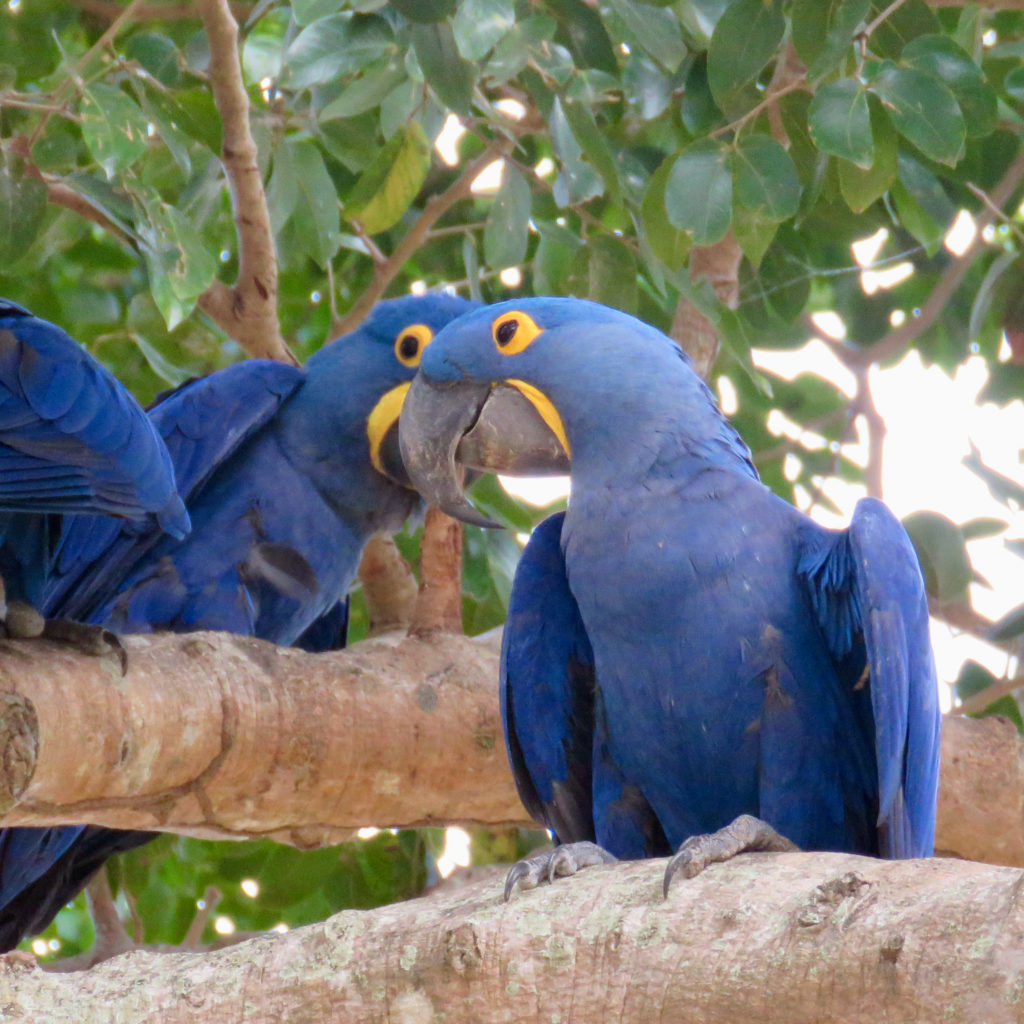
World listers, meanwhile, have prompted an explosion in avian tourism and in the support that this provides for local conservation, particularly in developing countries. I have come across numerous examples of remnant populations of endangered birds that are being protected by local villagers, NGOs and park rangers, in readiness for our visits and for the dollars we bring. Somewhat darkly, I label this ‘extinction birding’ – we get to see vanishingly rare birds in stunning, near-pristine habitats with relative ease, because they are being preserved for our benefit, and a comfortable lodge has been built nearby.
In this way, avian tourism is a bright spot in the litany of recent human impacts on nature. But birders are not always a positive influence. While birding associations and the avian tourism industry are keenly aware of the need to tread carefully when visiting fragile habitats, sometimes the eagerness to get the tick can be over-intrusive. Some of the potential harms are side-effects of our otherwise well-intentioned activities, such as over-use of ‘playback’ and of handfeeding. Perhaps more of these remnant survivors of once abundant bird populations are better left alone in their protected enclaves.
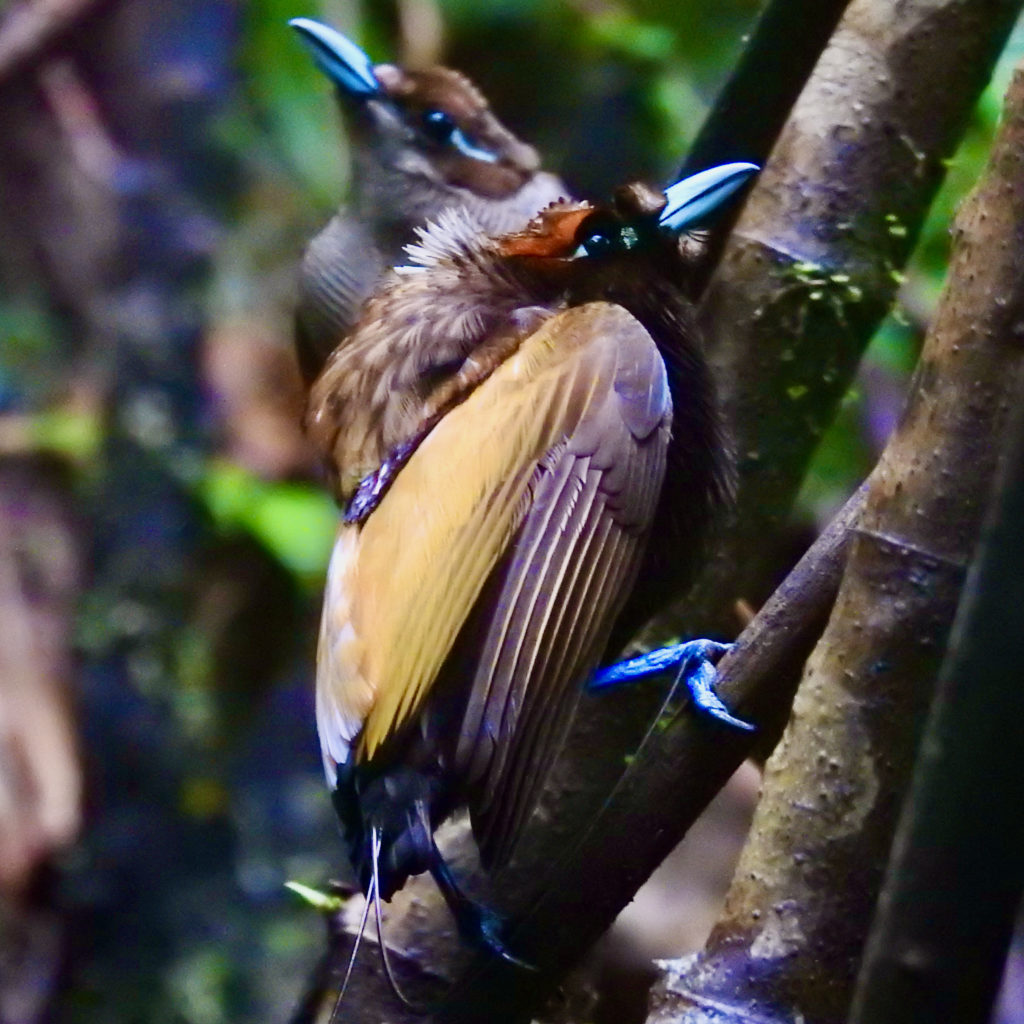
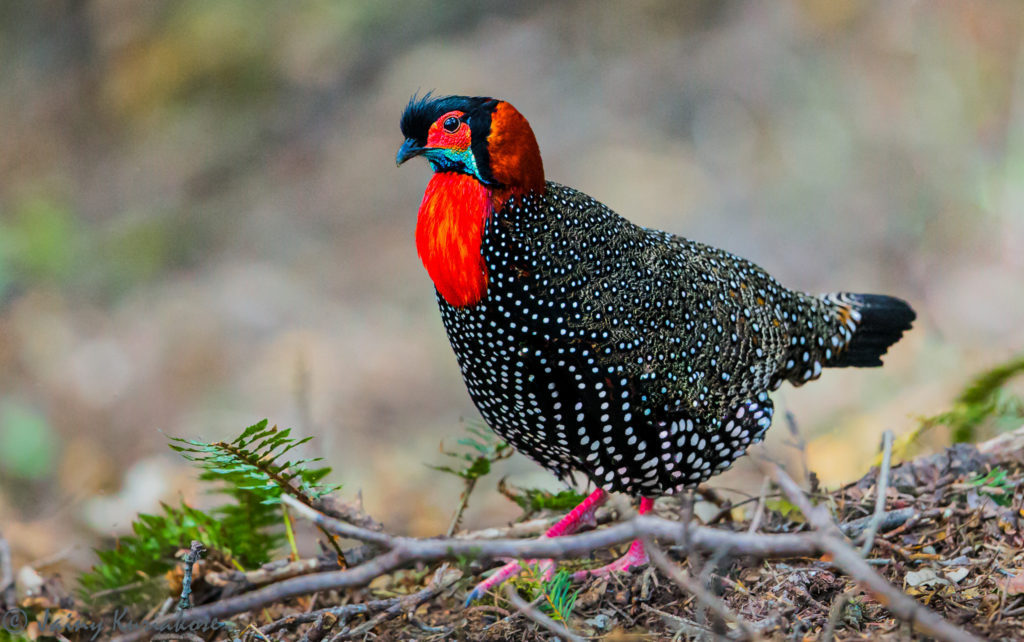
My birding travels afforded me some magical, never-to-be-forgotten birdwatching moments, such as close-ups of dazzling, dancing Birds of Paradise on their New Guinea display grounds, and encounters in the Himalayan foothills with strutting Tragopans, their startling plumage and their haunting dawn calls. The travels in themselves were exciting, occasionally scary. I experienced not only the thrill of the quest, but also the wonder of exploring some off-track, unknown forest patches, as if I were a 19th Century explorer and collector.
But the realities of 21st Century contacts between humans and nature are very different. Our impacts can be devastating. In an era of rapidly accelerating, human-induced climate change, the elephant in the room for world birders is the carbon footprint they leave from their frequent flyer miles. Since I began birding, my awareness of the potential harm of carbon emissions from global travel has grown. So, I have cut back my ambitions and slowed down my quest for additions to my life list. My travels in one respect were a classic case of the kind of over-consumption that has helped get us to where we are with our impacts on the planet. Had I stuck to my patchwatching, I might feel less troubled.
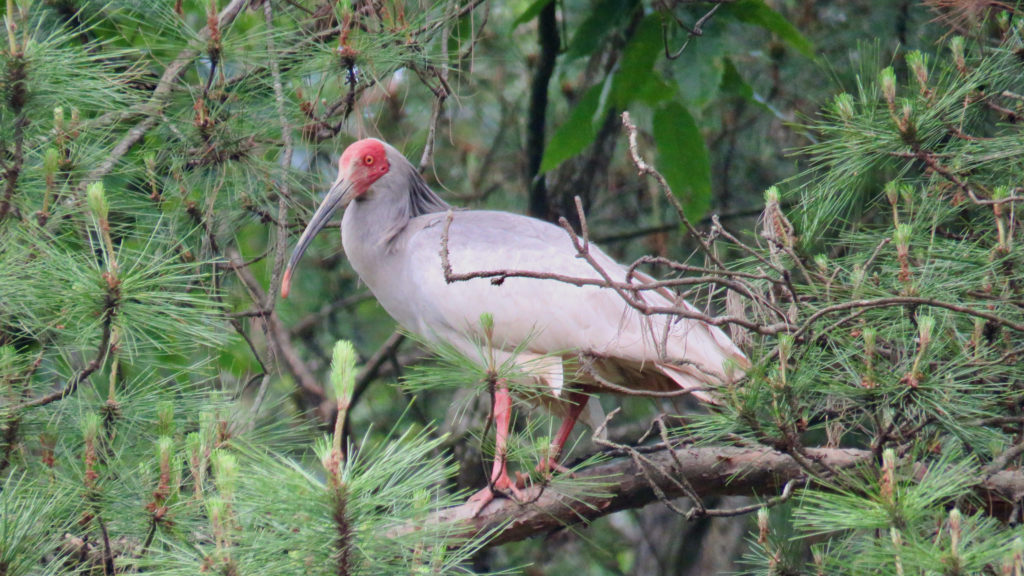
As with most things, moderation is the key, and a sense of responsibility is needed. With these provisos, birders – including world birders – should keep birding. I reflect on days spent on Cambodia’s Northern Plains scattered with ruins of the ancient temples of Angkor, in remote villages reached with the help of a local bird tour company. We are being hosted and guided by local villagers, who are protecting the rare, critically endangered birdlife (such as majestic Giant Ibis, and spectacular Red-headed Vultures). The bird tour company has devoted much of its revenue to educating the local people on how to look after the birds and helping them set up the modest local tourist infrastructure from which they make money. Without both their efforts and my birder’s thirst for encounters with the wonders of nature, birdlife would be even more diminished.
Birding in an Age of Extinctions by Martin Painter is published by Whittles Publishing, priced £18.99.
Clifton Bain’s latest book is not only a guide to the most scenic peatlands in the country, but celebrates the conservation efforts for this vital and beautiful habitat.
Extracts from The Peatlands of Britain and Ireland
By Clifton Bain
Published by Sandstone Press
Often described as the Cinderella habitat, peatlands have long been considered worthless, even malevolent, or simply a resource to exploit. Yet they are immensely important to our well-being and can display great beauty. These enchanting, saturated, watery landscapes can at first appear rather muted, with wide vistas displaying only pastel shades of browns and greens, but closer inspection reveals a wealth of colour and pattern, rich in the spectacle and sounds of unusual wildlife. This natural state of a peatland contrasts with the blackened, bare, eroding expanses that have been damaged in an often-failed attempt to make peatlands profitable. Our shocking treatment of this wonderful part of our natural environment not only threatens wildlife but has left a legacy of degradation that now imposes great cost on society as we lose the natural benefit of peatlands.
Peatlands are characterised by waterlogged conditions that restrict decay and allow dead plant material to build up over time as peat. Blanketing our mountain tops and engulfing low-lying land, peat is one of our most abundant soils, not surprisingly in such a persistently wet country. Peatlands also pervade our culture, from the drama of Wuthering Heights and Sherlock Holmes’s canine mystery on Dartmoor to the aromatic basis for whisky and the modern use of peat in gardens. Widely known, but now practised by few, is the craft of turf cutting to provide fuel in remote rural areas.
Going back over millennia, the association of people with peatlands has been uniquely captured by their excellent preserving qualities that have allowed us to come face to face with the actual bodies of our ancestors as well as incredible cultural artefacts. One of my earliest associations with peat was from my father’s bookcase in the form of a small paperback book, The Bog People by P. V. Glob, with its captivating cover of the perfectly preserved Tollund Man who had lived over 2,000 years ago. The serene, calm face belied the fact that this individual had been hanged and placed in the bog as part of an Iron Age ritual.
The peatland story is one of contradictions. Often disregarded as wasteland, peatlands are immensely valuable. Visions of dangerous, boggy swamps with their derogatory associations contrast with the reality of colourful carpets of mosses bejewelled by clear pools of water and hemmed with delicate, white cotton-grass heads.
Over the centuries, the draining and clearing of our peatlands has been one of the most extensive acts of environmental destruction ever imposed on this country. Worldwide, the situation is just as desperate in many other hotspots of human population, where extensive peatlands in Europe, America and South East Asia have been drained and exploited. Global news coverage has shown the human suffering resulting from huge fires on drained peatlands in Indonesia and Russia extending over thousands of kilometres. The economic damage from these fires was estimated at several billion US dollars.
We are now beginning to understand the full costly consequences to society of our peatland legacy. Global leaders herald their importance and action is being taken to conserve them. Huge projects are underway to repair damaged peatlands and reinstate their watery conditions, to allow wildlife to thrive and help secure the benefits we can all derive from them.
With awareness of their international conservation importance there has been considerable investment by governments and environmental charities to provide protected sites with excellent visitor facilities, offering the opportunity to get into the heart of these wildlife treasuries.
*
Peatlands’ true benefits
In our enlightened times, peatlands are seen as beneficial to society in their natural state, and we understand the costly consequences of past exploitation. Protecting peatlands from damaging development is not only preserving the past but also offering a positive future as a place to celebrate the uniqueness of rich wildlife and uninterrupted space. One of their main long-term rewards is in their natural ability to inspire, rejuvenate and re-energise people, just as they did for the ancient saints in Ireland. Across Europe, the opportunity to escape modern stresses and experience such an uplifting environment is becoming more and more challenging. With the world waking up to the importance of our peatlands, switching from exploitation to helping people enjoy the natural experience while conserving peatlands must surely be the right way to treat the goose that lays the golden eggs.
With climate change now a global priority, the role of peatlands and their behaviour as long-term carbon reservoirs has been increasingly scrutinised in recent years. There has long been a popular misconception that peatlands are damaging because they release methane, a potent greenhouse gas that contributes to climate change. However, we now understand that peatlands are a huge asset in storing vast amounts of carbon and locking it up on millennial timescales. Methane is produced deep in the peat as a byproduct of decay by bacteria that live in low-oxygen, waterlogged situations. In a healthy mire this methane is broken down by other bacteria in the oxygen-rich acrotelm before it can escape into the atmosphere. In damaged peatlands methane emissions may be reduced as oxygen penetrates the drying out peat, but there will be continued release from waterlogged drain-bottoms and peat cracks.
Flammable methane is often thought to be the source of the eerie lights referred to in folklore as ‘will-o’-the-wisp’, ‘fairy lights’, or ‘spunkie’ in the Scottish Highlands, though it may actually be another much less common gas based on the more reactive element phosphorus that is the true source. The names for these lights nevertheless all refer to some form of evil spirit holding a flaming torch or candle that draws travellers to their doom into the dangerous bog or fen.
Since methane forms in wet conditions, the draining of peatlands was thought to be a solution to halt the greenhouse gas emission. We now know that drainage results is a far greater problem through causing the release of large quantities of carbon dioxide as oxygen enters the system and allows aerobic decay of the peat. The loss of carbon dioxide in a drained bog far outweighs any reduction in methane loss and becomes a significant climate change problem.
Across the UK it is estimated that damaged peatlands release around twenty-three million tonnes of carbon dioxide annually – equivalent to over half of all the country’s annual greenhouse gas reduction achievements in recent years. In other words, it negates half of all the climate change efforts made in industry and households every year. With over three billion tonnes of carbon stored in peat deposits, we face serious consequences if peatlands are left in a deteriorating state. International climate change policy now recognises the importance of these natural carbon stores and encourages both protection and restoration to re-wet and rehabilitate the peatlands. In future, farmers could well be paid to maintain these carbon stores on behalf of the nation.
The Peatlands of Britain and Ireland by Clifton Bain published by Sandstone Press, priced £24.99.
Joan Eardley’s art was greatly inspired by the places dear to her. The latest book to celebrate her work focusses on the landscapes of Catterline, where she lived until the end of her life. Here, Patrick Elliott pays tribute to the spirit behind her work.
Joan Eardley: Land & Sea – A Life in Catterline
By Patrick Elliott
Published by the National Galleries of Scotland
The artist Joan Eardley would have been 100 this year, but her life was cut short in 1963, at the age of forty-two. She liked the countryside, but not the wilderness. Sublime Highland peaks and picturesque lochs held no interest for her; she responded instead to downtrodden working environments, particularly places where tight-knit communities held on in the face of modernity. Her favourite haunts, where she made most of her work, were the narrow Victorian streets of Townhead in the centre of Glasgow and the fishing village of Catterline on Scotland’s east coast, just south of Aberdeen – the focus of this book.
Eardley first visited Catterline in 1951, when she toured the area by car. A thriving fishing village in Victorian times, it had been bypassed by the railway and was too small for the bigger fishing boats, so fell into steep decline in the twentieth century. The young left and many of the cottages were abandoned. But the village spoke directly to Eardley’s interest in human resilience; the old and dilapidated were always, she said, more interesting than the new. A friend bought the old custom’s watchhouse for £40 and Eardley stayed there regularly until 1954, when she found a cottage of her own: No.1 South Row. She rented it for £1 a year. It had no electricity, gas or running water, a bare earth floor, no ceiling and hardly any furniture. It suited her perfectly. She eventually bought the cottage in January 1963, unaware of the cancer that would take her life just a few months later.
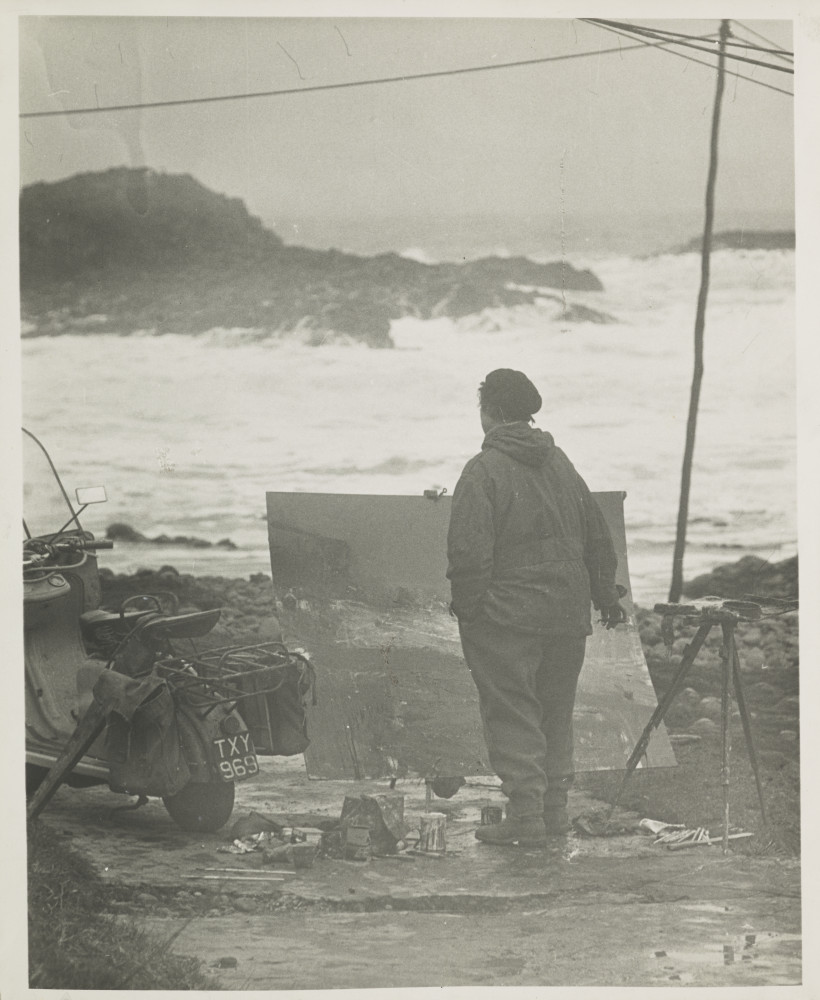
Eardley painting on the Makin Green, Catterline by Audrey Walker Credit line: © Audrey Walker.
Catterline provided her with all the subject matter she needed. The fields right behind the cottage offered an ever-changing source for her landscape paintings. The crops changed each year, from barley to corn, oats to grass – and the weather changed constantly too. Many of her landscapes were painted less than thirty paces from her front door. As she remarked in a letter: ‘It’s a lovely spot as no one comes near and I can always work away undisturbed … But every day and every week it looks a bit different – flowers come and go, and the colour grows – so it seems silly to shift about. I just leave my painting table out there, and my easel and palette.’[1]
Surprisingly, in the first five years she spent in the village, she seldom painted the sea. Rather than look out over the magnificent, crescent-shaped bay, she focussed her attention on the cottages. It was partly because she was used to painting tenement buildings in Glasgow, so she could adopt a similar formula in the village, and partly because she found the sea too difficult to paint at first. For a realist artist, whose training was based on analytical drawing, the churning, restless form of the raging sea must have seemed daunting. She approached it gradually; only in the last few years of her life did it become her central preoccupation. She painted the fields in the summer months and the raging sea in the winter. If she were in Glasgow and heard that gales were brewing in the North Sea, she would head over to Catterline on the train. She worked in all weathers, even using an anchor to moor her easel to the ground. You can still see the tight clamp marks at the edges of many of her sea paintings.
It is often remarked that in Glasgow Eardley painted the street children, and in Catterline she painted the fields and the sea, as if they were entirely different things. In fact, her Catterline paintings, like her Glasgow paintings, are rooted in the community. That was the main point of the book: to show that the village and the villagers were essential to her work. I was lucky to interview a number of people who grew up in Catterline and who remembered her; and chanced upon heaps of unpublished letters which tell of her daily routine – what she read, the music she listened to, village small-talk, long winter evenings sat by the fire. She painted the fields which had been sewn and harvested, the boats and nets which were used by the dwindling number of fishermen. Although she did not paint the people of Catterline, their working materials and their cottages and crops act as analogues for their lives. Stooks of corn and old nets can serve pictorial ends, but, in Eardley’s work, they also speak of resilience in the face of change.
Joan Eardley: Land & Sea – A Life in Catterline by Patrick Elliott is published by the National Galleries of Scotland, priced £24.99
Joan Eardley & Catterline is on display at the Scottish National Gallery of Modern Art (Modern One): Joan Eardley & Catterline | National Galleries of Scotland
[1] Joan Eardley Archive, National Galleries of Scotland Archive, A09/6
404 Ink’s Inkling series of pocket non-fiction books cover a range of brilliant subjects with fun and insight. The latest in the series takes a look at how popular culture and the apocalypse intersect.
The End: Surviving the World Through Imagined Disasters
By Katie Goh
Published by 404 Ink
The End explores our obsession with the end of the world in culture. What sparked your own interest in the end of the world, and the apocalypse as a concept?
Since I was a kid, I’ve been obsessed with the apocalypse. I used to have this recurring nightmare as a child where I would step on a crack in the pavement and set off a nuclear explosion, so I’ve always had quite an apocalyptic mindset and been worried about my own complicity with the end of the world. I grew up as a teenager in the 2000s, when the end of the world seemed to be everywhere, from pop culture, to politics, to economics, to technology, to the climate crisis. I think growing up in that specific context has also made apocalyptic doomsaying part of my everyday life and cultural awareness.
What drew you to write about the topic in more depth?
I first wrote about my – and society’s – obsession with the apocalypse for The Skinny magazine in January 2020. Then, a few months later, it felt like the end of the world actually did happen with COVID and lockdown. People were talking about the pandemic like it was a movie, and so many people (myself included) turned to art for answers, like the film Contagion or the book Severance. I thought that was fascinating: why are we turning to fictional disasters at a time of real disaster? Surely we would want more utopian escapism?
When 404 Ink did their callout for the book pitches, I thought the COVID context could be a really fascinating jumping off point to explore the relationship between fictional and real disasters which has existed long before this specific pandemic.
Why do you think we – as individuals, and society – are drawn to the end of the world?
At the most basic level, we’re human. We want to survive, and when the world is looking more and more apocalyptic, I think we want to hypothesize about our species’ survival. The end of the world is always actually about the start of a new world, and every single post-apocalyptic story, from The Bible’s Book of Revelation to Station Eleven, features survivors as their main characters. I think as our world, right now, feels increasingly unbearable, there’s an apocalyptic desire to say ‘game over, let’s start fresh.’
What does that offer viewers and readers?
I think it gives us perspective. The best apocalyptic and disaster stories take what’s happening right now and places it in a new context. For example, Squid Game is about the personal debt crisis in South Korea, as well as capitalism, reality television and individualism, but the TV show distills all these ideas into a dystopian ‘what if’ scenario. Having that distance, we’re able to explore these big political, economical and social ideas through characters, plot and theme, and I think that helps us to think about our own world with more clarity.
What is your favourite kind of fictional disaster and why?
I’m a big fan of the asteroid disaster. I think it’s the cruellest disaster scenario because, unlike other types of disasters, it’s not usually man-made and there’s nothing you can do about it (unless you’re Bruce Willis). I think that nihilistic apocalypse allows storytellers to really get at human nature: what are people really like when they have no plan b? I also think asteroid disasters are incredible metaphors. In the book, I explore Lars von Trier’s film, Melancholia, which is a disaster movie about depression. I don’t think a disaster is ever really just a disaster in art, usually it’s representing something else and I love that von Trier makes the end of the world feel intensely intimate and personal.
How did the topic evolve as the world faced a pandemic?
The idea for The End definitely crystallized with COVID, but I didn’t want to just write a book about COVID that would age badly. Instead the pandemic gives the reader a way in to think about disasters and grounds the book in real life to explore more existential ideas, like why are we so obsessed with imagining the death of humanity? I definitely think COVID has made people think more about social inequalities and injustice as the pandemic exacerbated the huge gap between the rich and the poor across the globe. That’s something I was especially interested in exploring in the book, particularly looking at dystopian fiction that similarly uses a crisis to uncover social inequalities that are so often normalized.
You write in depth about the climate crisis in regards to the end of the world – how do you think culture does in addressing the crisis through an apocalyptic lens?
I think in general culture hasn’t fully reckoned with the climate crisis yet – both in real life as an industry that is contributing to the crisis, and as a means of telling stories. You have big Hollywood movies like San Andreas, Geostorm and superhero movies which use imagery that we’ve come to associate with the climate crisis (earthquakes, ice shelves crashing into the sea, faminine, masses of climate refugees), but that imagery is severed from the reality of the climate crisis. It’s used to invoke the fear and anxiety that’s associated with the crisis, but without the real world consequences. I think it’s unfair to totally put the blame on filmmakers, but I think there needs to be a reckoning with how these blockbuster movies are creating a sense of passivity around disaster through numbing audiences to climate crisis imagery.
However, I think there are increasingly more storytellers who are interested, not in recreating the climate crisis on screen, but in exploring the complicated emotions around the crisis. For example, Annihilation is a film and book very much about climate grief but explored through personal grief and a strange, uncanny landscape.
You note that climate as a disaster is so large that films, for example, often struggle to capture the gravity of it. What would be your top reads and watches that do something interesting in regards to climate?
Annihilation is definitely one. And Jeff VanderMeer’s novels, generally, are incredible post-apocalyptic stories about our relationship to the environment. I think novels are really becoming the realm of nuanced fiction about the climate crisis. I would recommend Lydia Millet’s A Children’s Bible, Jenny Offil’s Weather, Margaret Atwood’s MaddAddam trilogy and Jessie Greengrass’s The High House. There are hundreds of non-fiction books about the climate crisis, but I think fiction can really explore the emotions of living through this crisis – which can be as powerful as fact.
I’m a bit skeptical of climate crisis documentaries which I think can sometimes do more harm than good at numbing people to the horrors of the crisis, but a recent film I found fascinating was A Living Proof by the Scottish filmmaker Emily Munro. Comprising archive footage, the film looks at Scotland’s relationship to the environment across decades and it really highlights how circular our conversations around the climate crisis have been over time.
What are your top tier apocalyptic recommendations? (Books, films, TV, etc)
I’ll pick a recommendation from the four chapters of The End: for a pandemic disaster, the novel Severance which explores globalisation and capitalism through the zombie apocalypse; for a climate disaster, The Day After Tomorrow because I love that silly movie and I think it really did make people sit up about climate change when it was released; for an extraterrestrial disaster, Arrival (or the short story the movie is based on: Story of Your Life by Ted Chiang), which is about aliens and determinism; and for a social disaster, The Parable of the Sower which is one of the most powerful (and hopeful) dystopian novels I’ve ever read.
The End: Surviving the World Through Imagined Disasters by Katie Goh is published by 404 Ink, priced £7.50
Science fiction novels play with the very many possibilities of how our world – and other worlds – can change. In the futuristic Earth that Jamie Mollart has created in his latest novel, natural resources are dwindling, the waters have risen, and hibernation is deemed a possible solution.
Extract taken from Kings of a Dead World
By Jamie Mollart
Published by Sandstone Press
Nobody talks. They keep their eyes on the ground in front of them. I understand. It’s hard to bring yourself around anyway and after The Sleep you are initially left with a desire to be insular. The limited time people are Awake tends to make people shy away from idle chit-chat to begin with. Too much to do when you first Wake. Not enough time and too much to do.
This is one of the things I miss, sitting around and talking. When I lived in London, in the days before the waters rose when it was still the capital, I used to spend hours strolling along the South Bank; sitting outside Gordon’s wine bar with a bottle of red wine that seemed to go on and on. Gordon’s is gone now. The Houses of Parliament. St Paul’s. Buckingham Palace. All of them swallowed by the murky waters of the Thames as it spread out across the country.
A scream startles me back to the present. A woman hits the pavement in front of me, her head bouncing off the tarmac. A cut opens on her forehead and her blood spreads out across her face, dripping on the pavement where it is soaked up by the dust. She pushes herself up to her knees and shakes her head. Drops of blood to land at my feet and she turns back to the Mart and begins shouting, her words quick, high-pitched, angry, indecipherable.
In her right hand she clutches a plastic bag, swings it around her head and launches it at the window. Powdered milk explodes from within it, showering the queue in white dust. Shock holds people still, then a solitary man shouts at her, telling her to watch it, calling her a bitch. She’s crying now, through her sobs shouting, ‘It’s not enough, it’s not enough, I can’t feed them all, it’s not enough!’ Then she realises what she’s done and falls to her knees to try to scrape the food back into the tatters of the plastic bag.
A young man in the queue realises what is happening and quickly squats down and pockets a carton of food that has escaped from her bag. Instinct makes me want to stop him. The camera on the wall tells me otherwise.
The man in front of me sees him too, though, and confronts him. ‘Oi you little fucker, give it back to her, it’s hard enough without you stealing what she’s got.’
I feel a flash of shame.
The young man sneers at him, scoffs and turns away. The older man taps him on the shoulder, but is ignored, so he punches him in the back of the head. I hear the crack as the young man’s face hits the wall. He drops to the floor.
The camera above my head whirrs, and I look up at it as it focusses on the older man. Immediately I realise my mistake, raise both hands and step away from them. I make sure it’s obvious this is nothing to do with me.
My body tenses. The adrenaline of remembered violence pumps through me. When I was younger, this was how I dealt with things. Memory pulls my fists tight, my shoulders straight, readies my body for impact and retaliation. I feel alive.
I’m awake now. Too awake, I have to suppress it. The camera has to see a tired old man, scared of the violence he sees in front of him, not thrilled by it. I force my shoulders to relax. I lower my head. I stretch my hands out, hold them flat against my legs. I concentrate on slowing my heartbeat down.
The younger man is on his feet now, his face a mess. His eyes are pure anger. He grabs the older man by the throat, and punches him twice in quick succession, once in the stomach, once above his eye. They wheel around holding one another, too close to hit each other, just careening about. The queue moves around them as one, like a flock of birds. Aware of the camera, no-one wants to appear involved, to step in and stop it, so they concentrate instead on keeping out of the fray whilst trying to maintain their position in the queue.
All the time, the woman is on her hands and knees scraping white powder into a tattered plastic bag.
Suddenly the street is full of sirens and blue lights. A Black Maria is beside us. The doors slide open and five Peelers jump out, clad in riot gear. For a second I feel sorry for them having to be called out like this so soon after Waking, but then they are upon the fighting men with sticks and boots and fists and all of my sympathy is gone.
Within seconds it’s over. Both men and the woman are gone. With a purr of electric motor the Black Maria is gone and the only evidence any of this ever happened is the blood in white powder and a smear across the wall where the young man’s face made contact. The queue silently reforms. No-one jostles for position. Where people were lost in their own worlds they now look around, joined in a collective fear.
Slowly the queue inches forward again. I step over the blood on the pavement. My feet leave prints in the powder.
Eventually I am at the door. A bored security guard in a uniform that looks too big for him scans my ID and lets me in.
Inside the Mart, the lights are dimmer. Images of Rip Van are plastered on the walls, cardboard cut outs of him hang down on wire hooks above every aisle. Piped music, calming and nondescript, fills the stale, recycled air.
I check the obligatory Chronos clock that hangs in the centre of the ceiling. I’ve been gone much longer than I would have liked. I can’t imagine that she’s still Asleep. The Tranqs will have left her body by now. Please Chronos, I don’t ask you much, but please keep Rose safe. Please let everything be OK when I return.
Quick, Ben, you need to be quick now. I am practised. Every shopping trip as far back as I can remember has been like this: the frustration of the queue then the rush to get what I need and get back. This I can still do.
I grab only the essentials powdered milk, eggs, vegetable supplements, bottles of water. I am careful, adding up as I go along, but when I get to the checkout I realise I have overspent and have to leave some of the shopping with the cashier. She is even more bored than the security guard.
I would never be able to do what they do. The early Wake Ups and being here to face the scorn of everyone else are not worth the pitiful few extra Creds they get. The cashier doesn’t even look at me as she scans my ID card. I try not to register how few Creds are left on it as they flash up on my display and concentrate instead on packing efficiently so I don’t have too many bags to carry. I fit it all in four. Four bags to last us the month. It will be tight.
Outside, a kid is pouring water over the powder and blood mess and trying to sweep it out into the street, but the water is turning the powder back into milk and the mess is just getting bigger and thicker.
I step over it and hurriedly retrace my steps. While I’ve been at the Mart the sweepers have been and the drifts of rubbish are gone. Lights are on in most of the apartment blocks and someone is playing loud hip-hop music which spills out from an open window and bounces out across the square.
Back in our apartment block I pray as I press the lift button and am both surprised and relieved as the button lights up and I hear the motor whirr. While I wait, I put the bags at my feet and watch as the blood floods back into the creases the handles have made in my skin.
The lift arrives, doors shuddering open. The lights inside flicker on and off, then off again and the interior is black dark. I hesitate, think about the stairs and, pushing my bags with my feet, enter the darkness. The doors shut and I climb. Above the door, crimson numbers mark my ascent. Between floors four and five the lights spark on for a second and I catch a glimpse of my reflection in the mirrored walls. I’m shocked at how thin I look, how old, how tired. A ghost of a man.
I pause at the front door. Rest my forehead against the metal and pray to Chronos everything is OK inside. Hold my breath as I push my ID card into the key slot.
The door clicks open and I work my way inside, pushing it with my toe. I place the bags on the floor and close the door behind me. The hallway is fine, from what I can see of the kitchen that’s fine too. I can hear the TV, volume low. She’s Awake.
It allows me to hope, it gives me something to cling onto. I walk down the corridor and enter the lounge, pasting a smile onto my face.
Kings of a Dead World by Jamie Mollart is published by Sandstone Press, priced £14.99.
Selva Almada’s powerful writing continues her novel Brickmakers, which looks at the troubled, violent lives of those who live and work in dusty, rural Argentina getting closer to ruin.
Extract taken from Brickmakers
By Selva Almada
Published by Charco Press
The Mirandas’ finances weren’t doing so great either. Elvio Miranda was a good brickmaker, maybe the best in town, shored up by his family history in the trade, but he was another man who liked to do things his way and didn’t keep up with the work. He preferred training his racing dogs to shovelling soil all day long and carting it to the pisadero. Every so often he’d hire some young guy to help, but since he didn’t keep up with the wages, either, the helpers all left in the end.
If they had enough to eat, it was only because Estela took charge of the household finances and started doing people’s sewing.
When she was a teenager, Señora Nena, her godmother, sent her to study dressmaking, and though she hadn’t made more than a couple of dresses – there was no need, she worked and her godmother never let her want for anything – she’d gone back to it later, helping with the costumes for the carnival dancers. She’d always been an enterprising woman, and though she let Miranda convince her to quit her job as a secretary when they married, on seeing the way things were going, she sent for the Singer from her unmarried days and put signs up in the local stores offering basic sewing services.
Señora Nena had told her that money worries could spoil even the best of marriages, and Estela, who had married for love and meant it to last, refused to let that happen to them. Elvio Miranda may have been useless, but she adored him, he was the father of her child and the man she hoped to grow old with: if he wasn’t going to earn any money, she’d make sure they had at least enough to get by.
Without Miranda’s addictions, which she indulged as if the man were a child, they’d have been better off: from alterations, hemming and mending, Estela quickly moved on to making clothes, and soon she was sewing her first wedding dress. It wasn’t that Miranda asked her for money or took any from her in secret, but rather she, not wanting her husband to feel like less of a man, always slipped something into his pockets to tide him over.
*
Marciano lifts one arm – the effort is agony – and strokes his father’s cheek, his stubble; he tries to reach his hair, which is longer than before, wavy and brown, but his arm falls back and hits the ground with a thud, like an old lady fainting at a funeral. He looks so young, his father. As if no time had passed.
‘Dad, remember when we went hunting in Entre Ríos?’
Miranda laughs.
‘’Course. In Antonio’s pickup.’
Marciano had loved it, it was like The Adventures of Tom Sawyer, the thick vegetation on either side of the river, the muggy heat, the insects. They’d taken a little motorboat and followed the water as it wound its way between the small islands.
He was eleven. The following year, in just a few months, in fact, his father would die. But at the time, his dad was full of life. Miranda had longer hair then and a longer beard, too, and the steam that came from the banks, or from the river itself, from the sun that beat down on the riverbed and warmed up the silt, the steam in the atmosphere, dampened his hair, stuck it to his head and face. He smiled and gazed into the distance. Antonio did, too. The older men didn’t speak and neither did Marciano. As if the landscape had left them breathless. All you could hear was the noise of the engine and the water the boat was slicing through.
Eventually they stopped and got out, wading through the water, then Antonio and his father pulled the boat up the little sandy beach and they made a fire. Night was beginning to fall, but where they were, with so many trees, it was already dark.
That evening they ate a rice stew. The men stayed up chatting till late, swapping stories from hunts gone by, their own and other people’s, comparing notes on how to catch a capybara.
Marciano lay on a mat and listened for a while, wanting to learn, to memorize all the stories so he could boast to his friends, until the men’s voices began to fade, merging with the rustling plants and the water, the squawks of nocturnal birds, the sound of a snapped twig now and then under an animal’s feet.
‘Remember when I said I wanted to go and live there?’
Miranda says nothing. He’s gazing into the distance, like that time on the boat, but he doesn’t smile.
‘Remember, Dad?’
‘Hmm?’
‘Me wanting to go and live in Entre Ríos…’
‘Oh, yeah, you going to? But you’re not looking too well, son…’
‘No, Dad.’
He wanted to live in a place like that. With all that green, all that water; even the birds were more beautiful than here, with brighter feathers, more colourful beaks. Here everything’s hard, dry, spiky, covered in dust. People were probably friendlier there, even. Here it’s different, here all anyone knows is violence and force.
Brickmakers by Selva Almada is published by Charco Press, priced £9.99.
Secrets of the Last Merfolk is set in Dunlyre, based on the real-life seaside village of Dunure on Scotland’s stunning west coast. Many of the novel’s action scenes take place in the chilly waters of the Firth of Clyde. Here, author Lindsay Littleson writes of how important this landscape is to her.
Secrets of the Last Merfolk
By Lindsay Littleson
Published by Floris Books
At the beginning of Secrets of the Last Merfolk, Finn is furious when he finds out his dad is in Dunlyre to work on a harbour development project, rather than on the holiday he’d been promised. He meets Sage, whose mums are environmental activists, determined to stop the harbour development. Their parents might be on opposing sides, but when Finn sees swimmers in the freezing sea and Sage hears strange singing, the two children begin to work together to investigate the mystery, and they discover merfolk in the Firth!
Despite being in constant danger from a terrifying enemy, the merfolk take their responsibilities very seriously.
‘When we merfolk realised we could live forever, we wondered what we should do with our time. We chose to live our lives caring for the creatures of the shore and the sea.’
However, they despair of the harm humans are doing to the marine environment.
‘They take too many fish from the seas and the dolphins go hungry. They dump rubbish so the seals must swim in dirty water.’
The theme of environmental conservation is of central importance to the story. My brother’s a keen scuba diver and described his dives in the Firth of Clyde. Being as accurate as possible was important to me, even though I was describing fantasy scenes.
The deeper they went, the dimmer and greener the light gleamed, and the stranger the environment became. As Finn swam through a strange, swaying forest of seaweed, he passed spiky pink sea urchins and scuttling hermit crabs. Spotlit in the torch beam, he saw the pale, drifting tentacles of a cluster of anemones.
Sadly, humans have caused terrible damage to the Firth of Clyde. Once, cod, skate and enormous shoals of herring swam in its waters. But a combination of over-fishing and the lifting of a ban on bottom trawling caused stocks of fish to decline alarmingly, and the fishermen began catching shellfish instead. Dredging methods caused further damage, until by the early 2000s the Firth of Clyde was described as becoming a ‘marine desert’.
Lately, some action has been taken to improve the situation, most notably in the waters around Arran. COAST is a community organisation working for the protection and restoration of the marine environment and their work is making a difference to restoring the biodiversity of the Firth.
We can all play our part, by supporting charities like COAST, by taking part in beach clean-ups and by ensuring that we always take our litter home.
This review of Secrets of the Last Merfolk sums up beautifully what I was trying to achieve when I wrote the novel.
‘Secrets of the Last Merfolk is exciting and action packed, and one of our favourite reads of the year. While it explores and embraces legend, it is also a reminder that we should appreciate our reality – and value the enchanting landscapes, wildlife, and people, that we do have.’
Secrets of the Last Merfolk by Lindsay Littleson is published by Floris Books, priced £7.99.
In his book, Phillip Edwards writes beautifully of intimate moments with the birds, the landscape and the weather of the saltmarshes in the west of England. His love of this area shines through in every page.
Extract taken from At the Very End of the Road
By Phillip Edwards
Published by Whittles
Slowly the wind diminishes. Clouds begin to break. Greyness sloughs from the landscape. Sunlight paints colours in dazzling saturation – skeletal trees russet-brown, river leaden, saltmarsh neon-green, lagoons deep ultramarine, reeds bleached ochre, the mud a rich umber. The sea turns steely-blue. Flocks of shelduck shine against the wet silvery shore. A flock of dunlin land along the edge of the dark tide. Their white bodies gleam like a string of pearls on a jeweller’s brown display cushion. Abruptly they levitate again, misting the air, almost motionless, drifting on the wind, passing high over the point to the river, then slowly precipitating into denser sinuous lines that oscillate and dive, disappearing against the dark backdrop of the fields and trees of the far bank, before rising again like wisps of smoke, away to decorate some other stretch of shore. From the sorcery of the sky, a rainbow blooms over the eastern hills. Short and squat, swallowed by the dark clouds above, it refuses to be extinguished and its truncated form glows brightly in its moment of glory before succumbing to the inevitable, to be devoured by the cloud. Yet the rainbow is not done, and as the showers and light shift again, sharpening still further the colours of the land, another rises phoenix-like in its place, flaring into a full arch, polished by the rain, glowing for its ephemeral moment of prismatic perfection, then withering slowly as it too fades into the trails of the storm. Seaward, still far out in the bay, those chameleons of light, the kittiwakes, are now dark grey against the ice-blue sky and shining sea as they journey back to the open ocean.
The top of a neap tide is turning; the mud that has remained above the brown waves is full of waders busy feeding or standing roosting, the sea sprinkled white with shelduck. Tension suddenly courses through the flocks, heads turning, necks craning. A peregrine sweeps around the point pushing a wave of wigeon seaward. She is a female, hatched this year but now large and heavy and sleek, gleaming bronze in the low late autumn light, muscles rippling rhythmically as they power her wings. Waders spasm upward, the beach clearing in a moment as if some giant unseen broom has pushed away unwanted dust from a floor. She swings low across the beach, spreading her wings and tail, arcing lazily upwards over the sea, her dark-streaked white underparts glinting briefly in the sun. Wings sleeked once more, she dives back along the water’s edge, gaining rapidly on a great black-backed gull, its white plumage still muddied with immature feathers as if it has spent too long dipped in the dirty sea. She rapidly overhauls the lumbering gull but slows as she passes over it, slipping easily to one side as the gull turns its heavy beak and lunges at her, as if irritated by the impudence of her proximity. She turns away and replicates the entire manoeuvre, hanging briefly over the gull with just enough distance to evade the danger held within the swipe of its beak. She retires once more. When she comes again, she does so from a different trajectory, flatter, slower, her wings more bowed and ballooning, enveloping the air beneath them. The gull ignores her this time with utter disdain, bored like a parent with a fractious child, for it is secure now in the knowledge that its much smaller tormentor is not hunting but simply using it for target practice, learning how to approach in different ways at different speeds and different angles. Twice more she comes in slowly and just above the gull, hanging briefly over it at the perigee of her orbit, then angling away. By the final time, the gull has moved too far from the point, and she heads back low along the now empty beach and lands on the opalescent mud. She preens.
Ten minutes later she lifts into the light wind and heads seaward. Shelducks paddle heavily through the waves to avoid her. She swings slowly into wind and closes over one, coming to the point of a stall directly above it, talons extended. She drops gently. The shelduck crash-dives in a shower of spray as if surprised to have been picked as a target, and the peregrine bends away, flapping leisurely, gaining height smoothly. She turns again, wings fully outstretched, and curves back in a shallow glide. The shelduck flock is now fully alert and scatters quickly ahead of her approach, but she is fast and comes quickly above another one, adjusting her attitude rapidly to hang just above it. It too dives to avoid her unwanted attention. But this time she stays on the cusp of a hover, waiting for its re-emergence nearby, angling quickly back towards it, then sharply upwards as the terrified shelduck dives again. She climbs steadily to a hundred feet, shakes herself in flight, sending rolls of ruffled feathers down her body like a dog shaking water from its coat, and glides back towards the mud, practising the same hovering manoeuvre briefly over a startled cormorant drying its unwaterproofed wings at the edge of the shore, as if she just cannot resist.
She rests and preens for another ten minutes and watches nine grey plovers that have the temerity to land and feed nearby. Then she opens her wings and flickers seawards again, but this time with purpose. She remains low, ignoring the shelduck flocks even as she cuts a swathe through them, intent instead on the flocks of wigeon swimming slightly further out. She angles in across the wind and comes to a hover, stationary on motionless wings angled finely enough to let the wind hold her momentarily, legs extended. The flock scatters in a storm of spray. Ducks that never dive, dive.
Anything to avoid the horror. The peregrine rises and banks steeply on a tight axis and approaches again, slowly and from a shallower angle, closer to the water, her silhouette now less distinctive to the wigeon but her presence just as terrifying. And this time all the morning’s practising generates the outcome she was trying to elicit: the wigeon panic and take flight. Instantaneously she climbs on straining wings, forcing the air away behind her as she wrenches herself upward. The wigeon flock coalesces, tightening even as it leaves the water, the white on the males’ upper wings flashing like distress beacons in the weak sunshine. Briefly, the flock diverges from the rising falcon, but as she rolls out of her climb and dives, that distance closes like a rifle’s recoil. She plunges through the flock, black talons grasping, then slows and turns but holds no prey. The wigeon have jinked away at the very last moment and now the gap between flock and falcon widens progressively. She returns shoreward, her loose flight seemingly carrying an air of dejection that failure inevitably accrues, yet only through failure comes knowledge and while her youth means she still has much to learn, the morning’s experience indicates that she learns fast. She will go hungry today, but that will only sharpen her schooling. The wigeon will soon face a formidable adversary.
At the Very End of the Road by Phillip Edwards is published by Whittles, priced £16.99
Bella Caledonia is a website that publishes essays, articles and reviews on Scottish political, social and cultural issues. Founder and editor Mike Small has put together an anthology of memorable contributions, and we share Mairi McFadyen’s essay here.
Essay taken from Bella Caledonia: An Anthology
Edited by Mike Small
Published by Leamington Books
The Art of Living Together
Mairi McFadyen
This month I was at The Ceilidh Place in Ullapool for the annual adult Fèis Rois gathering, a three-day festival of tuition in traditional music, song, dance, Gaelic language and culture alongside fringe events, gigs and late-night cèilidh sessions in pubs all over the north west’s cultural capital. There is such a spirit of community here. For many, this is a chance not only to meet friends old and new, but to learn from the great tradition bearers – such as fiddler Aonghas Grant or Gaelic singers Rona Lightfoot and Cathy Ann MacPhee.
This year the Fèis also welcomed a group of singers and musicians from Brittany, who threw a fest noz into the mix; two blind music students from the National Academy of Music in Bucharest and a young musician who is working hard to raise awareness of autism. Music has such an incredible power to connect, to bring people together. The whole weekend was a life-affirming and hopeful reminder of what is important to hold on to in the face of it all.With the relentless daily news cycle headlining the triple crisis of climate change, mass extinction and inequality alongside escalating trends of populism, isolation, alienation, uncertainty and disconnection, creating spaces for connection and conviviality is more vital now than ever.
A particularly special moment was the performance of the ‘Kin and the Community’ project Sgeulachd Phàdruig Mhoireasdain – one in a series of short films bringing to life audio archive recordings alongside newly composed music as a soundtrack to a life story. In this instance, we learned of the life of musician Pàdruig Morrison’s own grandfather, Peter (Pàdruig) Morrison, a man who survived the first world war and lived as a crofter in Grimsay, North Uist.The audience witnessed past and present fuse together as Pàdruig and friends accompanied his forebears in real time, unlocking layers of memory and meaning and inviting us to reflect on who we are and where we come from. Inspired by and created under the guidance of fiddler and composer Duncan Chisholm, this work of creative ethnology is a moving reminder of what it is to be human.
We live in a society that has forgotten to value what it is to be human, in a world where far too many people get left behind. Our economy cares not for localities, cultures, ways of life or the cohesion of kin and community.The pervasive growth-at-all-costs model – upheld by all of the main political parties and mainstream media – is so narrowly focused on the pursuit of profit, productivity and measuring GDP that it fails to count the damage it wreaks on the environment or the health, well-being and dignity of its citizens.
What can we do to resist and reclaim our lives, our communities, our planet?
Reclaiming the Commons
Across the globe, the commons movement is growing and reclaiming hopeful alternatives to the dispiriting status quo of market economics, challenging the deep pathologies of contemporary capitalism and suggesting cooperative, egalitarian and participatory alternatives.
Deeply rooted in human history, it is difficult to settle on a single definition of the commons that covers its broad potential for social, economic, cultural and political change. The commons includes natural resources – land, water, air, forests, food, minerals, energy. It also encompasses our cultural inheritance – the traditions, practices and shared knowledge that make society possible and life meaningful. Commoning is the lived expression of conviviality, understood as the ‘art of living together’ (con-vivere). Put most simply, perhaps, the commons is that which we all share that should be nurtured in the present and passed on, undiminished, to future generations.
The movement to name and reclaim the commons has roots in the struggle of English commoners against the ‘enclosures’ of the 15th, 16th & 17th centuries by the rising class of gentry who expropriated common land for their private use; and later, in both Lowland and Highland Scotland, the dispossession of the Clearances. These enclosures severed a deep connection to the land and destroyed local cultures, paving the way for the industrialisation, colonisation and globalisation of the modern world.
In the 21st century, it is not just land and resources that have been enclosed by capitalism, but almost all aspects of life itself. The modern tendency towards turning relationships into services, commons into commodities, human into machine has been described by commons scholar David Bollier as ‘the great invisible tragedy of our time.’ The ‘new enclosure’ can be seen in the patenting of genes, lifeforms, medicines and seed crops, the use of copyright to lock up creativity and culture, academic knowledge behind paywalls and attempts to transform the open internet into a closed, proprietary marketplace, shrinking the public domain of ideas, among many other examples.
The endgame of this process is the enclosure of the mind and the cooption of dissent.The absolute triumph of this system is demonstrated by the fact that so many of us have lost the ability to imagine our way out. As Naomi Klein has written, we are ‘locked in, politically, physically and culturally’ to the world that capital has made. We are up against the formidable capacity of global capitalist and colonial systems of power to enclose our sense of the possible.
Connection and Conviviality
Despite the rapid encroachment by capitalism on the commons, much of what we value in terms of quality of life is still created outside the spaces of economic exchange, through the voluntary association of friends, neighbours and citizens. Convivial co-operation is very much alive in scattered enclaves and in communities – in the home, the library, local clubs, community gardens, community land trusts, or simply in an open-mic night, cèilidh or pub session. These are the places and spaces where the impulse and catalyst to strike and kindle sparks of change, creativity and transformation are to be found.
The carrying stream of traditional music is a cultural commons. Every song, pipe march, slow air, jig or reel has its own story to tell, connected to the language, histories and memories of people, places and lives lived. At its heart, traditional music is a shared activity, a community practice, drawing on wells of deep communal and collective memory, passing from previous generations to the curiosity, ingenuity and dexterity of the next. The tradition has been created by many hands; first in the minds of individuals, but often reshaped – altered simply through the human process of forgetfulness or given new life by those with a desire to innovate. There is the spirit of the commons too among those who are generous with their passion and talents, willing to share and pass on their knowledge through playing and teaching.
This music does not represent some parochial caricature of a bygone age, but rather a living, breathing culture that is as contemporary today as it ever was. Rooted in place, it has a life force and an energy that demands to be reshaped, to continue, to be passed on.
Traditional music has always resisted mainstream commodification, despite the success of the ‘creative industries’ in packaging this music as an export brand for global consumption. While the brand-driven individualism of neoliberal economics demands of all artists to be professional entrepreneurs – and while some may enjoy or benefit from this situation in financial terms – many more sit precariously and uncomfortably within such a dehumanising ideology.
It is important to name it too: the neoliberal ideology and discourse of the creative industries belongs to the same story of economic growth, and is therefore enmeshed and implicated in the wider process of climate breakdown. It’s all connected.
This is not an argument to get rid of money or markets; neither is this an argument for an economics of scarcity or against regeneration. This is an argument for transforming and releasing ourselves from the grip and structures of contemporary neoliberal capitalism-as-we-know-it. Our very survival as a species depends on it.
Capitalism moves fast. We need time to slow down, reflect, remember, resist and make space for what really matters. When we slow down, our experience of being human swells. Our sense of possibility augments and swells with it. Paulo Freire wrote that it is our vocation to become more fully human. What he means by this is that we must move from existing as human objects to be acted upon towards becoming subjects who think and act with critical consciousness, liberating our imaginations and transforming the world.
We might think of reclaiming the commons as reclaiming our past and our future, reclaiming what it means to be human, to be alive. If, somehow, we are able to come together to confront and overcome the desperate challenges that lie ahead, we might just find a world far richer in possibilities than the one we leave behind.
Bella Caledonia: An Anthology edited by Mike Small is published by Leamington Books, priced £9.99.
ALSO ON BOOKS FROM SCOTLAND
-


Saltwater: A Midsummer Ghost Story by Elaine Thomson
‘The very thought of those grey faces made my skin grow cold.’
-
‘An Odious Campaign’ by Rob McInroy – Why a 1936 By-Election Still Resonates
‘This enraged the locals and he came close to being run out of town on several occasions.’
-

‘‘That’s right, Bobby,’ he growled. ‘I haven’t seen you in – well, since you decided to kill me.’ ‘
-

David Robinson Reviews: Solitary Agents by David Goodman
‘This is very much an up-to-the-minute story of spycraft, positively revelling in all the things tha …
-

The Savage Landscape by Cal Flyn
‘It is their resistance to the intrusions of the outside world − culturally, economically, environme …
-

The Shortest History of Scotland: A Q & A with Murray Pittock
‘We need to be better aware of that to understand the challenges and achievements of the past, and t …
FEATURED AUTHOR:
Neil Broadfoot

Neil Broadfoot worked as a journalist for 15 years, covering some of the biggest stories of the day. Falling Fast – which was shortlisted for the Dundee International Book Prize and the Bloody Scotland book of the year – is the first in the Edinburgh-s …
FEATURED PUBLISHER:
The White Horse Press

The White Horse Press is a small independent publisher specialising in scholarly books and journals on environment and society. We aspire to standards of academic quality as high as those of the best international scholarly publishers, and to a friendl …