


After shepherd Colvin Munro disappears, a mysterious trail of his twelve possessions leads into the Cairngorm mountains. His foster sister Mo and prodigal brother Sorley are driven to discover the forces that led to his disappearance.
As a former church minister and current owner of the local pub, Mo thinks she knows everyone’s story: Colvin’s Traveller mother, alcoholic war-vet father, Bolivian wife, musician daughter, bird-obsessed son, his friends and foes. Sorley, returning home from his life in the City, brings unsettling revelations.
Extract taken from Of Stone and Sky
By Merryn Glover
Published by Polygon
An uncertain April. By turns fragile and fierce, days shifting between mizzle and sun, nights curled up in cloud or naked to frost. The land is only half awake. Still a little crushed by that hard husband winter and not yet dreaming of summer, it heals slowly to the touch of spring.
Colvin was first up, dragged by a jangling alarm from his bed of unwashed sheets to the heap of unwashed clothes and down to the unwashed kitchen. Since Mo had left last summer, dust had settled on every surface, grime built up in crevices, mould spread. He had never known where to start or finish and Gid was no help and Sorley – so young and bewildered – little better. Eventually, Colvin had just given up the fight.
But he couldn’t give up on the farm. The sheep. They pulled him out in all weathers to be fed or gathered or lambed or rescued. Some days he cursed and wrangled with them like demons. Other times he felt protective, fond, even proud. A mix of Cheviot and Blackface with strains of Texel, Border Leicester and Swaledale, some of the ewes had bloodlines going back to the beginning of Rowancraig sheep walk two hundred years before, and in his grandfather’s time they’d been the prize flock of the strath. But that was history.
As Colvin stepped outside, the air was cool, the sky laden. Snow clung to the higher hills, but the ground on the farm was trodden mud. Last year’s lambs were pushed together in the fank, butting and bleating. On the far side of the pens, Gid was lighting a coal fire in a rusty 5 gallon drum. Bent over in his stained jacket and cap, with spidery red cheeks and lined face, he looked older than his 53 years and weary. Smoke rose in stinging plumes around him, making him cough and swear as he poked four irons into holes at the sides. Nearby, Sorley swung on a gate. His clothes were grubby, wellies split, his upper lip raw from constant colds, and he wiped it on the sleeve of his sweatshirt. No one put clean hankies in his pockets any more.
Colvin pushed through the sheep on the inside of the pen, the smells of damp wool and droppings rising to him on the waves of noise. Everything smelled of sheep: the house, his clothes, his hair and hands. He hauled the nearest hogg up against the fence, clamping it with his body and laying its right horn over a rung.
‘Here we go!’ Sorley yelped. He was like that. Bringing voice to the day’s work while Gid and Colvin said little. It was not companionable silence, but avoidance; a skirting around of the painful, unacknowledged things at the centre of their lives. The women. They did not speak their names or venture the reasons for their departures for fear of what that might reveal. They just carried on. And Colvin – now nineteen – carried his anger and grief like concrete in his lungs.
As for Sorley? Colvin saw that he was fed and clothed and sent to school each day, with something for lunch. A clumsy piece with jam, or a margarine tub of leftovers. At bedtime, he knelt beside him to hear the prayers that Agnes had taught and Mo had upheld.
I lie down this night
With the nine angels,
From the crown of my head
To the soles of my feet;
From the crown of my head
To the soles of my feet.
The head was a tangle of unwashed curls, the feet filthy, the angels nowhere to be seen. Colvin would hug him – feeling every rib under the flannelette pyjamas and the twiggy arms – and wait for the questions he could not answer. Till eventually they dried up and there was nothing in the hug but heartbreak.
Gid – who got up each day and went through the motions of the farm like a man on a chain gang – drew an iron out of the fire and pressed it into the hogg’s horn. There was a sizzling moment and then the same again with a second iron. R4. Rowancraig, 1974. Branded now, they belonged and would stay on these hills to breed for five years. Unless they died, or got barren, or difficult, or broke their teeth, when they would get marks in the horn and be sold for slaughter.
Sorley jumped off his gate and herded the branded hoggs into the next pen. ‘Whaw! Whoosh, whoosh!’ He clapped and glanced up at his brother and father. Nobody smiled. When the branding was done, Gid left his post at the fire drum and moved round to the side of the dipping trough, full of a stinking swill of chemicals to ward off scab, lice and tics. As Sorley released them down a run, Colvin ushered them through metal gates and one by one, shoved each hogg into the dip. Though it wasn’t necessary, he kicked them in. Gid then pushed them under with a long-handled broom and they surfaced a moment later, scrambling out of the trough, wet-brown and bleating.
Baptism by full immersion.
Of Stone and Sky by Merryn Glover is published by Polygon, priced £16.99.
In reading Roy Dennis’s latest book, David Robinson discovers hope, inspiration, and a lot of hard work needed for the future of our wild spaces.
Restoring The Wild
By Roy Dennis
Published by William Collins
Most of the nature books on my shelves are really about people. In them, depression, divorce, alcoholism and grief all find a cure in nature, wildernesses are traversed with poetic purpose, rivers walked as psycho-geographical pilgrimage. They might tell me quite a bit about nature, but usually a lot more about their authors’ psyches: if I met them in the pub, I’d know what to expect.
Roy Dennis’s Restoring the Wild is different. It tells you so little about the man himself that no sooner had I finished its 430 pages than I wanted to find out more. Internet interviews reveal a kind-faced man who looks two decades younger than his 81 years, who still talks with the soft burr of his native Hampshire even though he has lived and worked in the Highlands and Islands since 1959. But here too, it’s the work that counts, not his personal feelings or emotive responses to nature: if you want raptures about raptors, you’ll have to look elsewhere. However, if you want to find out how to help wildlife survive, thrive, and expand their own horizons, Roy Dennis is the very man: according to the RSPB, no-one else has done more for nature conservation in Scotland in the last 100 years. Informed by sixty years of fieldwork, his new book is a comprehensive guide to how well – or poorly – we are placed to rewild our skies, woods and waterways.
The work he is most famous for – reintroducing birds of prey to their former habitats – began in 1967 when, as director of the Fair Isle Bird Observatory, he was asked to help re-establish the white-tailed sea eagle on these shores. Once, there would have been around 1200 breeding pairs in Britain. Poisoned by famers, shot by fishermen, they were last seen in Scotland on Skye in 1916.
Reintroducing lost species isn’t a new idea – the capercaillie had been hunted to extinction in the eighteenth century before it was brought back by Lord Breadalbane at Taymouth in 1837 – but there were plenty of potential obstacles to overcome before the Norwegian sea eagles could be brought across to Fair Isle. Crofters had to be won over (what if the birds preyed on lambs or sheepdogs?), collection and transportation arrangements made, hacking cages designed and built, and a host of decisions made about the amount of human contact the birds should have, how long they should be kept in their cages, the best place to release them, and how much food should be provided afterwards without them becoming dependent on it. On the plus side, the island’s 3,000 rabbits, with over a century to forget all about the danger of predation by sea eagles, didn’t bother to hide when they saw one – even though it looked, in the words of one crofter, ‘like a barn door flying across the sky’.
That first project failed, but lessons were learnt. The four birds brought over from arctic Norway were clearly not enough, and subsequent releases in Scotland were made nearer sheltered cliffs where the young eagles wouldn’t be mobbed by gulls. These days, there are 140 pairs of white-tailed sea eagles ranging from Mull (where their value in ecotourism has been estimated at £5m a year) to Orkney. A 2007 attempt to establish them on the marshy Suffolk coast failed in the wake of a series of sensationalist stories about their potential threats to piglets, Christmas turkeys and bitterns, but a recent project to reintroduce them on the Isle of Wight appears to be succeeding.
Aren’t Suffolk and the Isle of Wight too er, douce for our wildest avian predators? Not at all, says Dennis. Nearly all of this land was their land once. The Isle of Wight-reared white-tailed sea eagle flying he tracked flying above the House of Commons might have had ancestors who fed on its land long before there was a parliament there, never mind a city. And not just raptors: storks used to nest (they did in 1680 anyway) on St Giles’ cathedral in Edinburgh, so why not again? Cranes give their name to more places in Scotland than any other bird (Cranloch, Cranstoun, Cranbeg Moss), and it would be good to welcome them back. Wolves howled in woods near our villages only three centuries ago – and should, Dennis insists, do so again, brought back along with lynx, elk and wild boar, so that our forests are no longer ‘ecologically dead’. Bears, too, belong here: according to the Roman poet Martial, the brown bears in the Colosseum in 80AD came from Scotland. Certainly beavers should again dam our streams, and not just in the remoter parts of the country either. Reintroducing the beaver is, says Dennis, a no-brainer: at a time of climate breakdown, we desperately need the ecosystems they provide, just as we need them to ameliorate floods and purify polluted waters. Farmers might complain at the damage beavers cause to riverbank crops, but they shouldn’t be growing them there anyway, what with the dangers of chemical run-off, and riverine trees the beavers could get their teeth into would be better for them and humans alike.
Projects to bring back all of these species to Scotland have at least been talked about in the last 60 years, although in most cases talk is all it has amounted to. But Restoring The Wild can point out some successes too: the defence of the red squirrel and the return of overwintering goldeneye ducks in the Highlands, the reintroduction of the red kite in both Scotland (the Black Isle) and England (the Chilterns), and of course, the recovery of the osprey from a single pair in the 1950s to close on 200 breeding pairs today, a programme further boosted by their 2001 reintroduction to Rutland Water. Dennis has played a key role in all of these projects, along with the reintroduction of the golden eagle to Ireland and of the white-tailed sea eagle to the Isle of Wight, but is modest about his role and is unfailngly generous about crediting other participants.
Perhaps, in fact, he is too modest to offer a specific manifesto for rewilding, although his book suggests the outline of one. We shouldn’t, he says, have to go to nature reserves to see nature: instead, we should give over half of our land to wildlife, and not just the impoverished uplands. It will take time to restore a fully functioning ecosystem with larger carnivores – it was, he points out, a full 60 years before the 1930s plans for Yellowstone National Park were implemented – but as our degraded land recovers from overgrazing by sheep and deer, and more extinct native species are reintroduced, ecotourism will flourish. If, in his hero Aldo Leopold’s famous phrase, we ‘think like a mountain’, and realise the interconnectedness of all living things, restoring nature’s balance will become feasible again.
It won’t be easy. If Dennis’s experience is anything to go by, the greatest opposition often comes from people one might expect to be on the same side. They’ll be too attached to their own projects to spare young birds for rewilding projects elsewhere, they’ll insist on lengthy feasibility studies or guidelines that don’t make sense, suggest alternative sites for translocation or prioritise plans to save another species. Meanwhile, choices narrow, priorities change, funding dries up, supporters move on. Not for nothing does Dennis title one of his chapters Endurance and another Bureaucracy.
Against that, the rewilders have their own networks too, often usefully international: bringing back the goldeneye depended on Swedish expertise, reintroducing the white-tailed sea eagles on the generosity of the Norwegians (although not so much at the start, when they still regarded the bird as a pest). Nothing makes this interconnectedness clearer than satellite tracking. Dennis was involved in this back in 1999, when he caught the first osprey for satellite tagging, expecting to find it overwintering in west Africa only to discover that it had settled on Spain instead.
I began with the white-tailed sea eagle, so I’ll end with one too – not from Dennis’s first, failed Fair Isle project but his latest one on the Isle of Wight. It’s a story about two young birds, G463 (a male) and G405 (a female), and their mapped early spring wanderings over England, Belgium and Germany and England and Scotland respectively. By the time you read this, they will have flown elsewhere, but at the end of April, you could have followed them on Dennis’s website (www.roydennis.org/category/latest-news), watching G463 become the first of the Isle of Wight ospreys to venture across the English Channel and discover the joys of Schleswig-Holstein (a great place for sea eagles, apparently), and G405 fly up to the Lammermuirs before heading back south.
On the website map, we can watch as they fly across borders. We know where they roost each night, whether they are flying with or against the wind, their height, speed, the landscape they’d see beneath them, even some of their prey. But we don’t yet know how strong their grasp on our world will turn out to be – whether G463 will return with a mate and help link up the European and English sea eagles, whether G405 would ever consider flying even further north next time, or whether they will further strengthen Roy Dennis’s hopes for a rewilded future. Yet oddly – especially oddly for a townie who can’t tell the difference between a sea eagle, a buzzard and a great bustard – I’m hooked by the challenge his book sets out.
Restoring The Wild by Roy Dennis is published by William Collins, priced £18.99
In Wild Winter, John D. Burns sets out to rediscover Scotland’s mountains, remote places and wildlife in the darkest and stormiest months. In this extract, he encounters deer in the glen of Strathconon.
Extract taken from Wild Winter: in search of nature in Scotland’s mountain landscape
John D Burns
Published by Vertebrate Publishing
Below, the Highland glen of Strathconon weaves its way into the horizon. To the east, the mouth of the glen opens out towards the market town of Dingwall. To the west, the fingers of the glen reach out to the outlying hills. Beyond the ridge lies Achnasheen, from where this chain of mountains rolls out to the sea loch at Lochcarron, and further still into the wild Atlantic. I know this place well. In my imagination I take an eagle’s ride over the sweeping ridges, across the dark lochs and down the wide glen to where the lights of houses twinkle at the roadside. The journey is filled with memories of days spent wandering in the rain, days on sunlit rock climbs, days on snow-crusted hills – some with friends and others alone with the landscape. These valleys and hills keep drawing me back. Here I am once more in this familiar glen, waiting for another day.
A glow begins to form in the V of the mouth of Strathconon. The light of the new day is creeping across the horizon and the features of the glen are slowly emerging. In the pale dawn, I struggle to make sense of light and shadow as colour gradually seeps out of the darkness, like a photograph developing. Soon I see a rocky crag above me; below, the dark wound of a stream bed winds across the floor of the shallow corrie. The shape of the landscape is no longer obscured as the reluctant night leaves the valley.
I miss too many dawns. I spend them idly in bed, or waste them buttering toast and bumbling about the internet. I am too concerned with the gibbering press or reading my mail, bleary-eyed. I never notice that outside a miracle is occurring. A new day is slowly coalescing into life. Every time I see a dawn, I vow that I will watch more of them, and yet somehow life distracts me and I forget to make space to wonder. At least I am here for this dawn. Now it will not tiptoe past unseen. The darkness is yielding, letting the burning colours of autumn slip through its fingers. Still I wait, listening to the forest breathing in the early morning breeze. I have been sitting amongst the trees for over an hour and it is difficult to keep warm. I shiver as icy fingers find their way inside my jacket. I try to ignore the cold, forcing myself to remain motionless, knowing that the slightest movement could mean that my nocturnal vigil has been wasted.
At last it comes, drifting through the trees: a deep, guttural, primeval roar. A grunting yell that has echoed through these trees and across these hills since the ice retreated thousands of years ago. A shape moves in the semi-dark, only to shift back into blackness as my brain tries to make sense of the gloom. Again the roar sounds across the glen, closer this time. After the echoes die, silence returns and the valley falls into a soft stillness. Minutes pass, until I think I may have given away my presence. The roar comes again, but still I see nothing. This time, the sound is followed by the rasping of great lungs filling with air. I can hear hooves picking their way through the boggy grass.
Out of the gloom swaggers a powerful creature, the master of this glen. He is so close that I feel the sound of his call vibrating the air as much as I hear it. He shakes his antlers, his breath clouding in the morning air. Seconds later, his challenge is answered by another male anxious to stake his claim. The stag turns his great antlered head and trots away towards his challenger. Now stags come from all directions, bellowing and roaring, each staking his claim on the rutting ground. As the morning grows brighter, the shape of the landscape reveals itself. Below me, the ground slopes away to a small ravine; beyond that, closed in by the hills above, there is a level area the size of half a dozen football pitches. This is where the drama I have come to see will unfold, where the battle of the rut is to take place. Now more and more stags are coming into view. Some beasts are huge and powerful, twice the weight of a man or more. Others are less impressive and will take another year to reach their full strength. These younger animals have no chance of winning the competition to mate with the females. Though they cannot win, the surge of hormones released as the autumn rut arrives compels them to be there.
Soon the amphitheatre echoes with challenges and answering calls from over thirty stags. Many are alone, but others have miniature harems of four or five hinds. The stags that have managed to collect a bevy of admirers have to fight off constant challenges from other males. The rut is an exhausting process for them, and by the end of the season, lasting from the end of September to the third week of October, many stags will have lost a fifth of their body weight.
Deer have acutely sensitive hearing and will flee if I so much as zip up a jacket. From the years of hunting by early man, they have learnt to detect humans by their outline. By staying close to the trees, I disguise the outline of my shape so they cannot see me. The stag that was close to me is challenging an older stag with four or five hinds in tow. He is roaring and shaking his antlers to show how big and strong he is. The old stag turns and faces him, responding to the challenge; if anything, he is larger than the animal I first saw. The pair walk parallel to each other for about ten minutes, each hoping that this display of bravado will intimidate the other into backing down and avoid a fight which could injure or even kill one of them. Although fights are common, stags try to avoid physical confrontations. Such battles are dangerous. A stag that gets an antler in his eye or whose internal organs are pierced will have a long, lingering death. Both the animals I am watching refuse to give way. On some secret cue, they turn and lock antlers. The sound of clashing bone echoes across the hillside. The stags grunt and snort with the effort of combat, their hooves sending grass and sods of earth into the air as they both struggle to keep their footing. They wrestle for almost ten minutes. At first the larger stag pushes the challenger back, his extra weight giving him the advantage. Then he stumbles on the broken ground and almost falls. The smaller animal chooses his moment and hurls himself forward, driving his antlers into his opponent’s side. The larger beast staggers back, blood dripping. He tries to mount another attack but his strength has left him, and he turns slowly and walks away. Perhaps his age was against him. It may be that he will never again hold sway over his own family of hinds. Defeat on the rutting ground has left him with a solitary life; he has lost his harem. The smaller stag strolls casually across to the hinds to make their acquaintance.
There are fights and roaring contests breaking out all over the rutting ground as males battle for dominance. Oddly, those not involved in the duels graze peacefully as if all this mayhem has nothing to do with them and they are just enjoying a light breakfast. This spectacle is being repeated all across the Highlands, in remote corries and glens, as it has been for thousands of years. I am watching an ancient ritual.
Wild Winter: in search of nature in Scotland’s mountain landscape by John D Burns is published by Vertebrate Publishing, priced £9.99.
Amongst all the loss of habitat and the animals and plants in spiralling decline, it’s easy to forget that there are a huge number of positive stories too: animals threatened with extinction having their fortunes reversed and their futures secured. In Back from the Brink, Malcolm Smith tells the stories of the Humpback Whale, The Black Rhino, The Iberian Lynx, the Mountain Gorilla and many others – and here in this extract, recounts the revival of the Florida Manatee.
Extract taken from Back from the Brink
By Malcolm Smith
Published by Whittles Publishing
The Mermaid That’s No Longer a Myth
The Florida Manatee
Hunted and killed over centuries for their meat, hides and oil, by the 1950s perhaps only 600 Florida Manatees remained. Now fully protected and with a huge public following, these gentle, plant-eating giants of the inshore coastal waters of Florida attract thousands of people who come to watch them in the warm river waters they seek out in winter. Boats kill or injure many; others die from cold stress or are poisoned by red algal tides at sea. Nevertheless, their numbers have slowly increased and today there are more than 5,000 in and around the state. Further population growth is by no means guaranteed as these endearing animals still face several problems. But they are back from the brink and the people of Florida are not going to allow their manatees to slip away.
Canoeing slowly along the tree-shaded Blue Spring, it was the sound of frequent noseblowing on the water’s surface that made the experience particularly surreal. These loud exhalations and intakes of air were a reminder that the aquatic creatures lolling away their winter months on the bed of this naturally warm, spring-fed waterway were mammals – and they needed occasional gulps of air to keep body and soul together. The stream, no more than a metre or two deep, was full of grey-brown, leathery skinned Florida Manatees, the adults three metres long, their youngsters smaller.
I was with Wayne Hartley – a Florida Manatee expert with the NGO, Save the Manatee Club – canoeing the 600 metres of Blue Spring stream from its confluence with the wide, slowly meandering St John’s River to its underground source. And in this short stretch of naturally warmed water Hartley counted no less than 102 manatees basking in its warmth. Sometimes he counts over 300; that wouldn’t leave much space here even for a small canoe! Blue Spring is one of Florida’s manatee public viewing sites and attracts tens of thousands of people each winter who come to admire these remarkable and endearing animals. The manatees share the crystal clear water with a motley collection of fish – Tarpon, spotted Florida Gar and Pinocchio-like Long-nosed Gar – as well as with the occasional American Alligator. Blue Spring is one of four warm-water springs discharging into the St John’s, a river that begins its slow-flow life over an almost pancake-flat landscape in a huge, unnavigable marsh and enters the sea on Florida’s northeast coast. A vital communication route for thousands of years in a part of the US in which much of the dense forest and swamp was impenetrable, today 3.5 million people live within its catchment. Manatees have used it in winter for evenlonger. To Blue Spring from the St John’s River estuary, it’s a 240 km manatee swim each way, a swim that, in the past, would have made them vulnerable to hunters. Avidly sought after for their meat, hides and bones, they were easy to catch and kill, especially in these shallow rivers during winter. By the 1950s or 1960s, they had been reduced to maybe 600. A concerted effort to protect and nurture their population since then brought their numbers up to around 3,300 by 2001 and to over 5,000 by 2014.
The Florida Manatee looks something like a grey-coloured, chubby dolphin with a flattened, wide tail that it uses for propulsion. Manatees lack the blubber layer that allows whales to tolerate cold; in water below 16°C they weaken and die. Through the summerthey are found all round the Florida coast in waters close to shore, in winter; when sea temperatures drop, they congregate inland at natural springs and other sources of warm water, including that discharged at electricity generating power stations around the coast. Florida-wide, there are ten significant natural warm water springs manatees can retreat to in winter plus around 13 warm water discharges from power stations, although they regularly use just six of these.
Before we start canoeing along Blue Spring, Wayne Hartley measures its temperature. ‘The spring temperature never varies,’ he comments. ‘Every time it’s a constant 22.5°C. That’s how it is.’ And that’s the way the manatees like it, many of the adult females with a youngster at their side and most of them just lounging away the winter months in these clear warm waters; the adults spending a good proportion of their time sleeping while smaller youngsters occasionally suckle.
As Hartley paddles us upstream, not only is he counting the numbers of adult manatees and their calves we pass alongside as they surface for air – or those we glide silently over as they sleep beneath us on the stream bed – incredibly he is also able to almost instantly identify each adult. His database of these animals is the longest running on any group of manatees in the world; over three decades of study. ‘Jacques Cousteau [film-maker and conservationist] heard about the Blue Spring manatees and came to film them in 1970. He filmed 11 animals, the only ones here then; six we kept track of and two, Merlin and Brutus, are alive today,’ says Hartley. ‘Judith came in to Blue Spring in 1998. She had calves over the years; they were Julie, Easter, Jip, Jim, Jemal, Jinx and an unnamed calf. Judith died in 2008 of unknown but natural causes. Julie, Easter and Jim are still with us. Julie had calves over several years; they’re Jolly, Mon, Jake, Jerry, Josh, Jaco and two unnamed ones.’ He points to those he spots by name as we pootle this way and that in the canoe to check them out.
But how is it that Hartley can possibly differentiate individual manatees? Ironically, this system of recognition relies on one of the major threats to the animals themselves: boats. Collisions between manatees and boat hulls or boat propellers – if they don’t kill the hapless animal outright or inflict an injury that causes a lingering death – leave large scars on their backs or chop pieces of flesh out of a manatee’s fluke-shaped tail. Often these scars heal slowly over time; more often than not they leave permanent disfigurations in their skin, each pattern unique, thereby allowing an individual to be identified. In an assessment done from 1974 to 2011, the Florida Fish and Wildlife Conservation Commission (FWC) found that over a quarter of manatee deaths were due to boat collisions compared with 17% attributed to natural causes.
‘When I first came to Blue Spring in the 1970s I told people that though summer was our busy season we often had 400 visitors coming to see manatees on a weekday in the winter and as many as 600 on a weekend day. That’s a joke now! With the publicity generated by the Save the Manatee Club, Blue Spring [a protected state park since 1972] gets 3,000 on a weekday and sometimes 5,000 on a winter weekend day!’ comments Hartley.
*******
For centuries, millennia even, the myth of mermaids has been an intrinsic part of many cultures worldwide. But what has this half fish, half human form to do with manatees? The answer to that is that manatees and dugongs are most likely to have been the origin of some, even many, of their reported sightings, most of them by sailors long at sea.
The first known mermaid stories appeared in Assyria about 1000 BC. The goddess Atargatis loved a mortal (a shepherd) and unintentionally killed him. Ashamed, she jumped into a lake and took the form of a fish, but the waters would not conceal her divine beauty. Thereafter, she took the form of a mermaid — human above the waist, fish below. A popular Greek legend turned Alexander the Great’s dead sister, Thessalonike, into a mermaid that lived in the Aegean. She would ask the sailors on any ship she would encounter only one question: ‘is King Alexander alive?’ to which the correct answer was: ‘he lives and reigns and conquers the world.’ This answer would please her, and she would accordingly calm the waters and bid the ship farewell. Any other answer would enrage her, and she would stir up a terrible storm, dooming the ship and every sailor on board.
In British folklore, mermaids have been described as able to swim up rivers to freshwater lakes (what mammal does that remind you of?). In one story, the laird of Lorntie went to aid a woman he thought was drowning in a lake near his house; a servant of his pulled him back, warning that it was a mermaid, and the mermaid screamed at them that she would have killed him if it were not for his servant. Not all mermaids were so nasty. Mermaids from the isle of Man in the UK are considered more favourable toward humans than those of other regions; there are various accounts of assistance, gifts and rewards. One story tells of a fishing family that made regular gifts of apples to a mermaid and was rewarded with prosperity. Just like manatees, mermaids are vegetarian!
In 1493, sailing off the coast of Hispaniola, Columbus reported seeing three ‘female forms’, which ‘rose high out of the sea, but were not as beautiful as they are represented’. The logbook of Blackbeard, an English pirate, records that he instructed his crew on several voyages to steer away from waters he called ‘enchanted’ for fear of merfolk or mermaids which Blackbeard himself and members of his crew reported seeing. These sightings were often recounted and shared by sailors and pirates who believed that mermaids brought bad luck and would bewitch them into giving up their gold and dragging them to the bottom of the sea. of course, most of them had been at sea for months or even years starved of female company and more; any apparition they encountered might have taken on a female form!
Back from the Brink by Malcolm Smith is published by Whittles Publishing, priced £18.99.
The Secret History of Here is the story of a single place, a farm in the Scottish Borders. The site on which Alistair Moffat’s farm now stands has been occupied since pre-historic times. The fields have turned up ancient arrow heads, stone spindles, silver pennies and a stone carved with the rune-like letters of Ogham. Walking this landscape you can feel the presence and see the marks of those who lived here before.
But it is also the story of everywhere. In uncovering the history of one piece of land, Moffat shows how history is all around us, if only we have the eyes to see it. Under our feet, carved into the landscape, in the layout of paths and roads, in the stories we pass down, our history leaves its trace on the land.
Extract taken from The Secret History of Here
By Alistair Moffat
Published by Canongate
3 May
This morning I was much moved by a trivial, simple detail.
Amongst the birches on the margins of the Bottom Track, one with a rich, red bark took a terrible beating in last year’s summer storms. About halfway up its peeling trunk, a major limb had almost been torn off and come to rest not on the ground but on the branches of a sitka spruce that stands beside it. To my great surprise, the bough had kept enough of a connection with the trunk to come into leaf this spring and help the birch to photosynthesise and grow. I liked that – mutual support amongst the community of the trees.
4 May
It is very cold this morning, a bitter wind blowing out of the north-east that feels as though it has come straight off the wastes of Siberia. Even though the sun is brilliant in a cloudless, cerulean blue sky, the eye-blearing, ear-nipping cold means it does not feel like a May morning. The buds are closed tight against the overnight frost and, having been out all night in it, the horses in the Tile Field stand motionless, side on to the rising sun, soaking up its warmth across as much of their body area as possible. Maidie and I hurry on down the Long Track.
I read yesterday that by 2050 two-thirds of the world’s population will live in large cities. Even now there are hundreds in China and India that are so new I don’t recognise their names. These migrations mean that a mass consciousness of the natural rhythms of the planet will be much reduced and most people will cease to observe the cycle of growth through the seasons. There are satellite photos taken in darkness that show dense concentrations of light in Western Europe, the USA, India and China. That means many fewer people can see the stars and planets of the night sky. Far from being cosmopolitan, cities close down the world and the cosmos, shrink horizons and diminish our sense of how the world’s seasons change.
On our farm, I have learned that the weather and not the calendar turns time. At the beginning of May last year, a long, warm and dry period began with average temperatures double this morning’s values at over seventy degrees Fahrenheit (about twenty-one degrees Celsius). These conditions created a different landscape. A year ago I could smell the sweet scent of the stand of poplars at the gate into the Deer Park and the strawberries-and-cream blossom of the geans was everywhere. In the raised beds, my early potatoes had pushed up into the light (only to be earthed over) and the plum and apple trees were white with the flowers that would become fruit. The well-worn and much misunderstood phrase advising caution, ‘Ne’er cast a clout till May is out’, has nothing to do with the calendar. Winter clothes should only go back in the wardrobe when the blossom on the May Tree is out, a sign that the year has turned and the weather warmed.
5 May
Potatoes are much cheaper to buy than to grow when the cost of labour is taken into account, but last year’s earlies tasted sweet and earthy at the same time, a subtlety not available in the shops. And when they were cut prior to cooking, the juice shot out as though they were lemons. Even so, their clean, fresh taste is not why I grow the humble potato. I want to be involved in the cycle, have an annual harvest of some small sort and feel that our land could be productive. As the years roll on, I hope to plant more vegetables, rotate crops and build more raised beds. In the windless warmth of the old conservatory, the tomatoes are a riot of burgeoning greenery that will soon need support. Like me.
6 May
Illness prevented the planned survey of the area of the Doocot Field where Rory dug out the piece of lead that was suggestive of a structure of some sort. We hope to get out next weekend.
But meanwhile the mystery has deepened. Using baby oil to clean the piece of lead and show up any detail, Rory has discovered a surprising series of markings along the thickest edge. A row of vertical and precisely horizontal straight lines cut with a chisel, a burin or some other sharp tool, they are not accidental. But what do they mean?
At first Rory thought they might be a line of Ogham, the tree language I found on the inscribed stone in the Deer Park, but they don’t look right to me. Ogham is usually arranged on either side of an edge, an analogy for the trunk of a tree, and the stones sometimes have two flat planes. Or the inscriptions can be vertical, often cut into stones carved for other uses, such as standing stones, tombstones or crosses. Many that were carved on flat planes have a clear stemline that the letters cross or are attached to. These marks on the lead are not arranged in any of those patterns. I wonder if they are tally marks, a sequence of early arithmetic. In an age before paper, workmen made notes on all sorts of surfaces, including stone and lead. The marks look a little like five-bar gates, a common method of tallying I still sometimes use. Which leads to another question. What was being counted? Quantities in a building project? And if so, where was the building? It could have stood some distance from the find-spot. As it is now, lead was valuable and Rory might have retrieved a chunk of stolen property.
Enigmas like this are exhilarating and they prompt the past to come racing back across the centuries, make a grass field nibbled by ewes and their lambs come alive, reminding us that we are only one of many, the most recent generation to walk our lives under the big skies of the Borders. The dozens of silver pennies Rory has discovered remember the workings of a money economy based on precious metals, carried in pouches and lost on a forgotten journey up the Long Track. They are resonant echoes of transactions we can understand, and sometimes they are very surprising, like the imperial coin of Otto IV from Germany. But the piece of lead is different, perhaps impossible to understand. Is it evidence of a crime, the coldest of cold cases, or a tantalising fragment of an important building long lost in the grass? The wooden houses of our medieval ancestors were almost entirely built from organic, perishable materials. They did not use lead to keep their roofs watertight or their windows draught-proof. Somewhere important, a building of high status, is hiding from us and so is its story.
My morning walk with Maidie through a soft drizzle revealed an image of cheer, of hope. In a moss-covered old tree trunk by the edges of the Bottom Track that I had thought was a boulder, two birch saplings have seeded, their leaves bright lime-green and flushed with vigour. Inside that old stump lies a store of ancient goodness. And the sight of such unlikely fecundity sparked another thought. The underground web of thread-like connections between trees – old, young and even apparently dead – that is so memorably described in Peter Wohlleben’s magical book The Hidden Life of Trees may suggest an alternative to Darwinian evolution. Perhaps there is co-operation as well as competition in the natural world. The fittest trees survive with the help of their ancestors.
The Secret History of Here by Alistair Moffat is published by Canongate, priced £20.00.
Otters are among Britain’s most popular and endearing wild creatures. Made famous by literary phenomenon Ring of Bright Water, they have taken their place in the hearts of the British people. Andy Howard has been photographing them for more than a decade, especially on the Isle of Mull, Shetland, and Vancouver Island in Canada. Here we share some of his photographs of these brilliant creatures.
The Secret Life of the Otter
By Andy Howard
Published by Sandstone Press
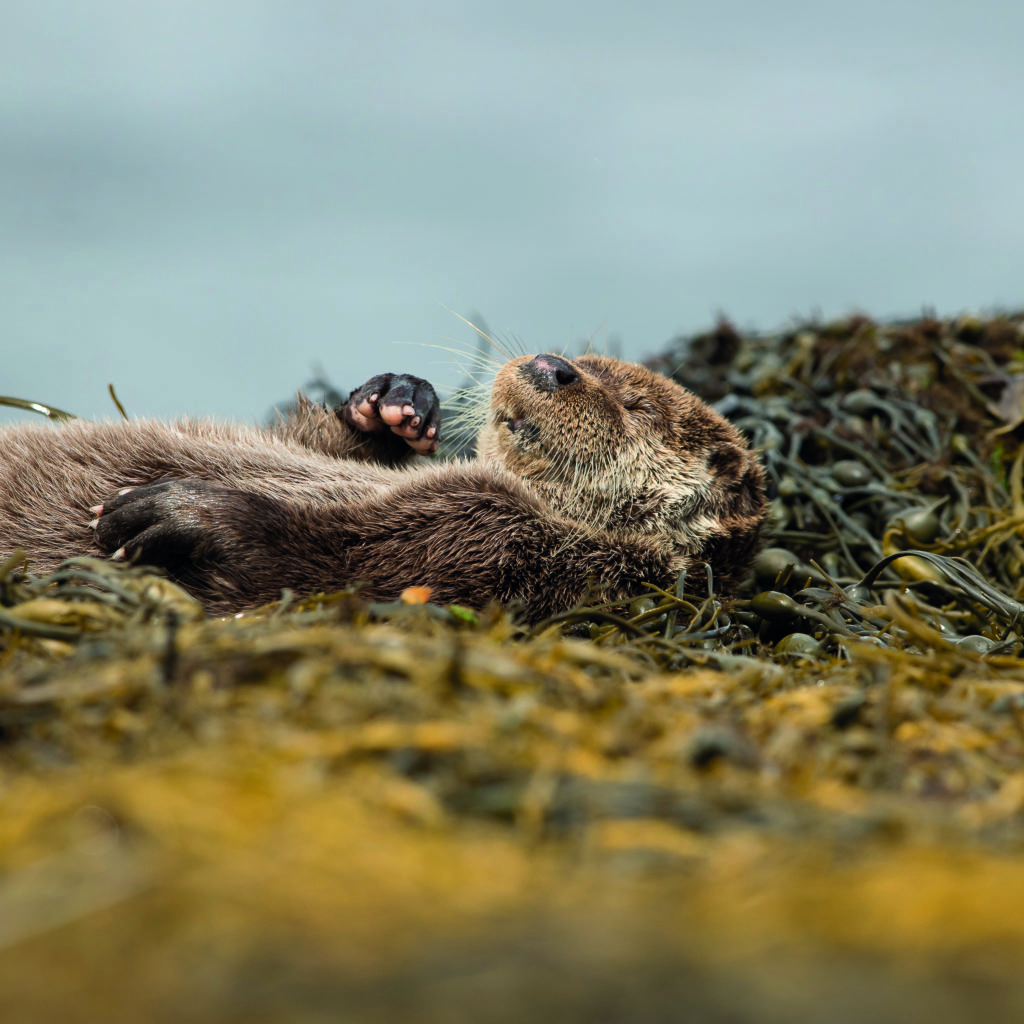
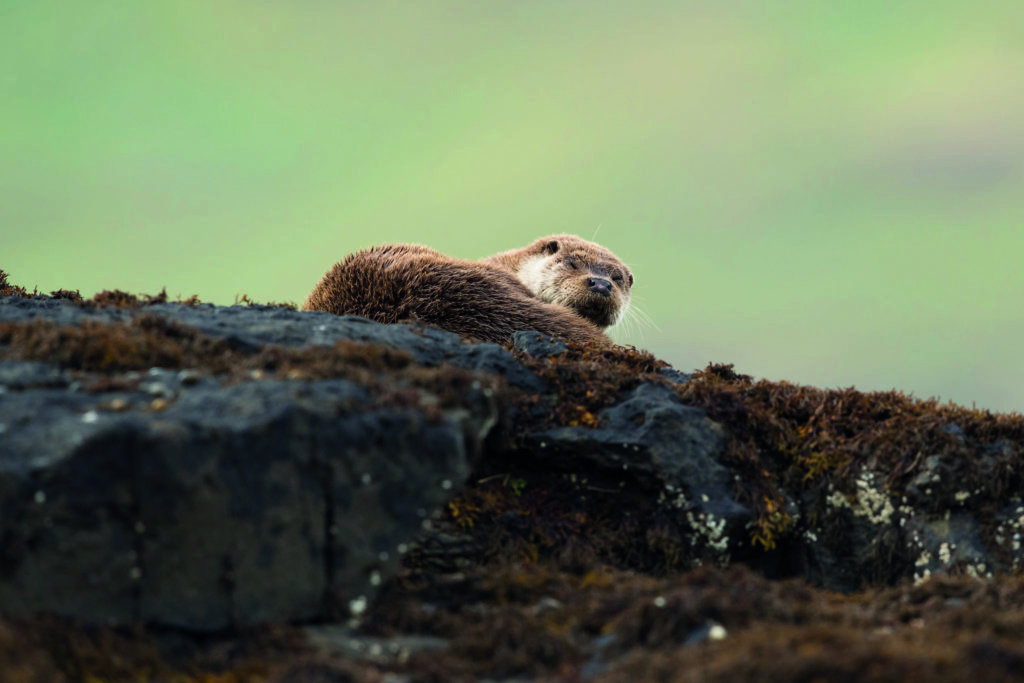
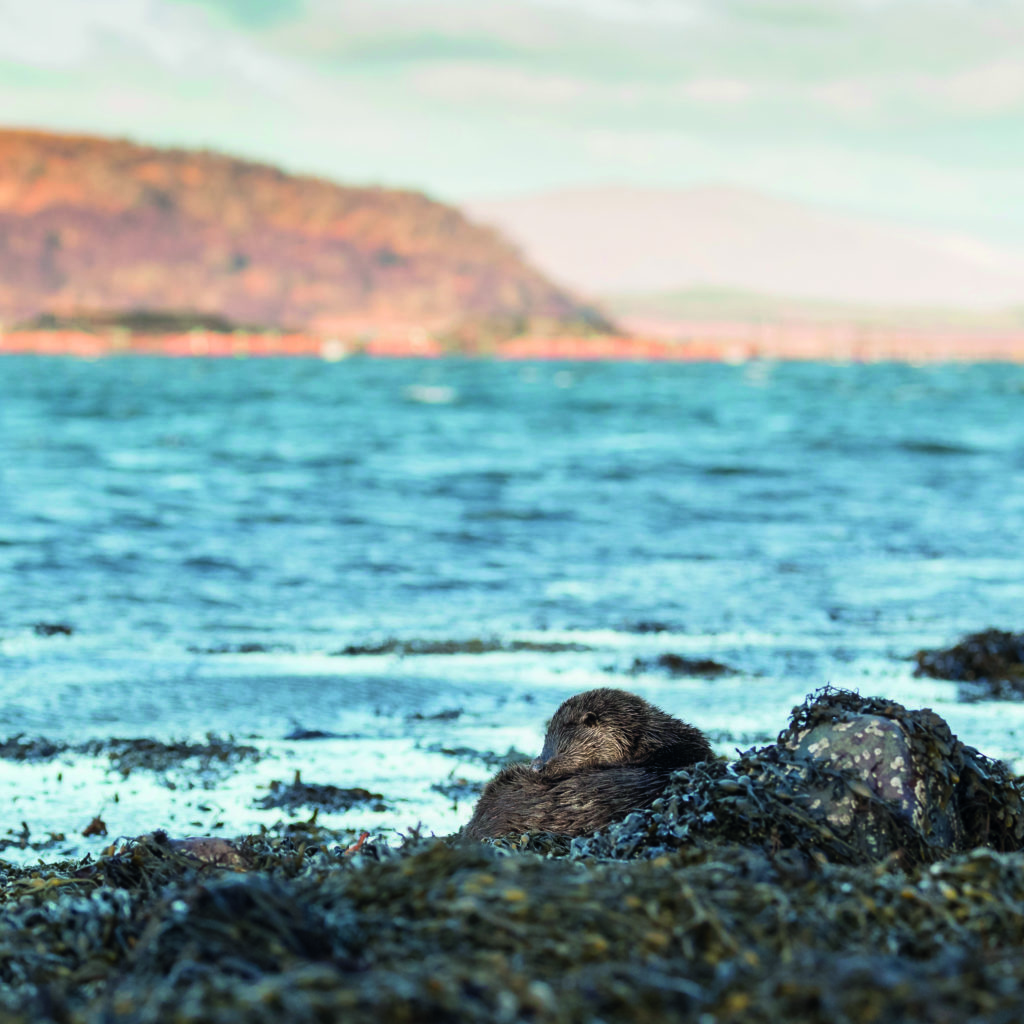
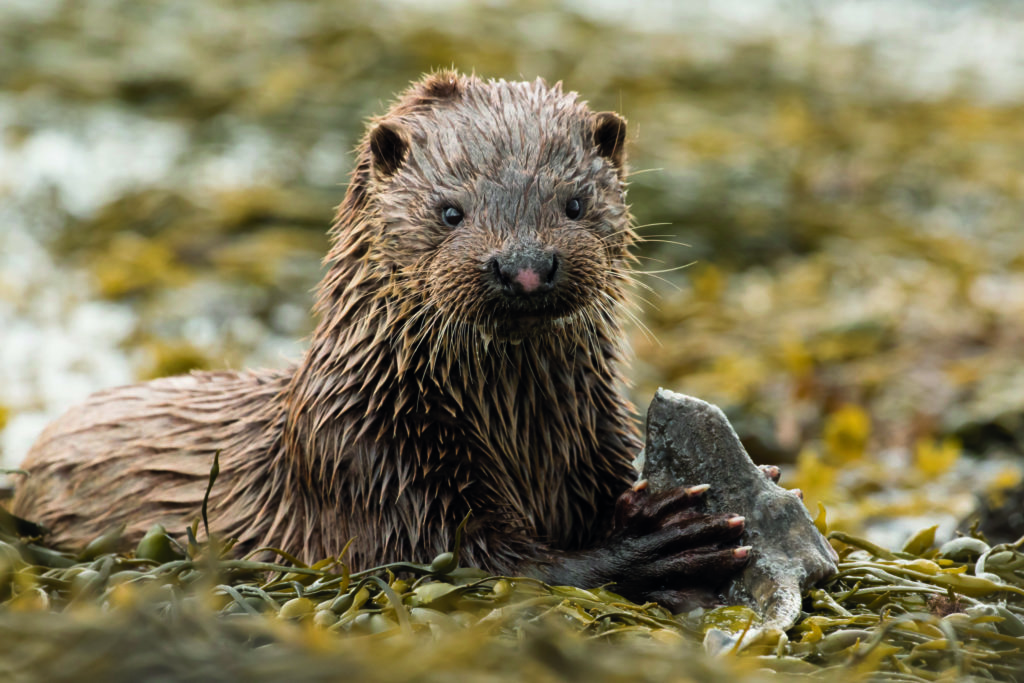
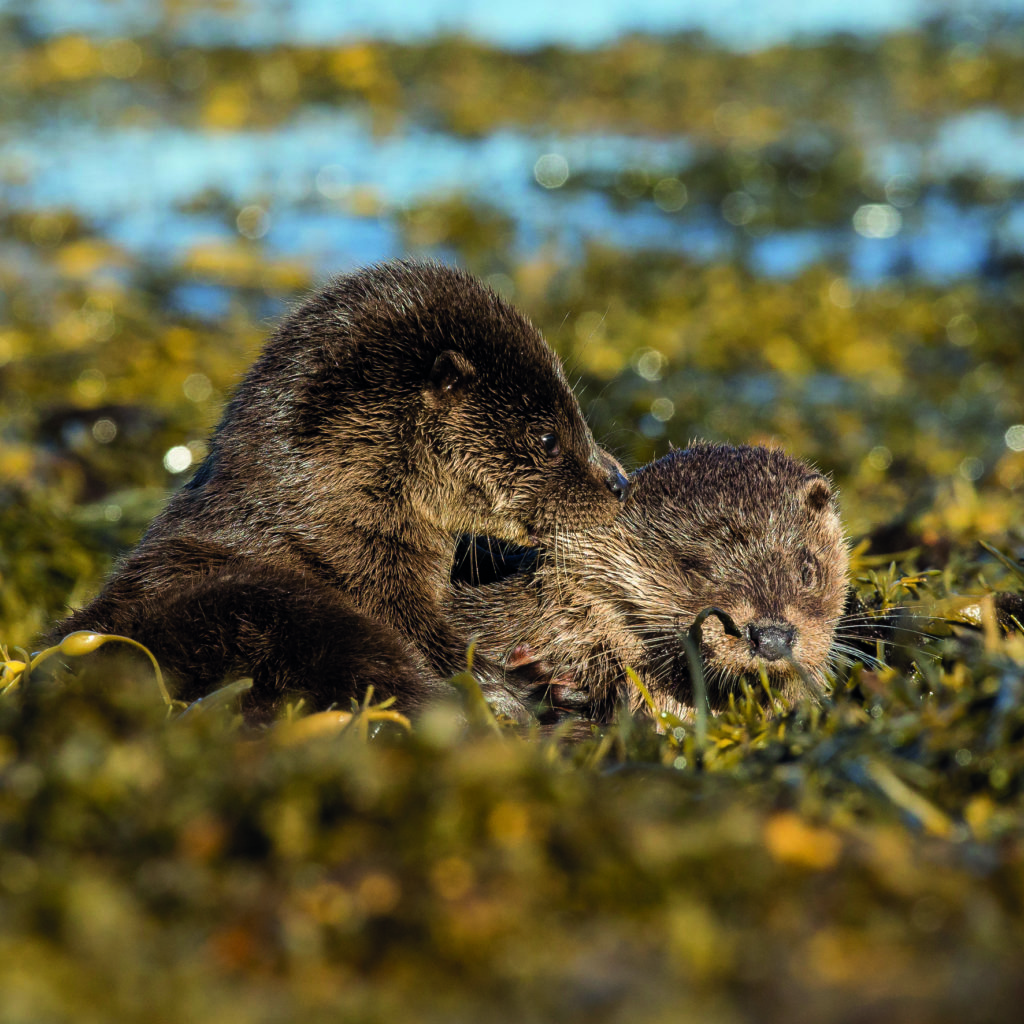

The Secret Life of the Otter by Andy Howard is published by Sandstone Press, priced £24.99.
In reviewing Katie Booth’s biography of Alexander Graham Bell, The Invention of Miracles, David Robinson discovers that scientific breakthroughs can have unintended consequences.
The Invention of Miracles: language, power and Alexander Graham Bell’s quest to end deafness
By Katie Booth
Published by Scribe
If you ever find yourself in Cape Breton driving south on the Trans-Canada Highway, make sure you turn left at Baddeck. And when you reach the Alexander Graham Bell National Historic Site, take the white glove tour. It’s a few dollars more, but it’s worth it.
If you do all of that, you’ll soon learn that there’s a lot more to Alexander Graham Bell than inventing the telephone. After he had made his millions from that and moved to his 37-room Nova Scotian mansion in the 1880s, he carried on inventing. An artificial lung. A mine detector. The first powered flight in the British Empire. The world’s fastest (70mph) hydrofoil. He never stopped.
On the white glove tour behind the scenes at the museum, though, you’ll realise that there was even more to him than that. You might be allowed to hold one of the 20 volumes of his diary, his pocket notebooks, or his photo albums. Guides will point out who the other people in the photos were. His deaf wife Mabel, to whom he gave all but ten of his shares in his telephone company. The grandchildren with whom he’d spend hours on end playing and teaching science in a way that allowed them to make discoveries of their own. Here’s one son of Edinburgh who was, you can’t help thinking, a good man, maybe even a great one.
No he wasn’t, says Katie Booth, author of The Invention of Miracles, a revisionist biography of the man she calls a ‘powerful enemy of the deaf community’.
Although she herself isn’t deaf, she draws heavily on the life experiences of family members who were. The book opens with an account of her deaf grandmother’s death in hospital, overlooked by the medical staff, who only dealt with her (hearing) daughter, and ends with a tribute to her deaf carpenter grandfather (‘my best friend’), who was repeatedly denied opportunities in the hearing world.
But although both her grandparents had been routinely marginalised, she had happier memories of them too. She’d seen them with their friends, signing away in ASL (American Sign Language), at ease with each other, outward-looking, confident, eager to learn. Yet thanks largely to the advocacy of Alexander Graham Bell, who as well as inventing the telephone had a keen interest in deaf education, ASL had been almost eradicated from the country’s deaf schools – the reason Booth blames him for a ‘dangerous ethnocide of deaf culture and language’.
Bell’s father had developed a complex phonetic transcription system called Visible Speech and he himself was passionate about using it to teach deaf children: indeed, this was what he felt he’d been put on the earth to do. After all, both his mother and his wife were deaf, and what could be more fulfilling than ensuring that people like them could be completely integrated into the hearing world?
The problem was that although some deaf children could indeed learn to speak by what were called oralist methods, only about one in ten did so with easily understood fluency. Deaf children had always found it easier to speak to each other – and to learn – using sign language (manualism), but to Bell this was a pernicious distraction. In any case, sign language was scorned in polite society: to Bell’s rich father-in-law Gardiner Hubbard (a key investor in his telephone company) ‘it resembles the language of the North American Indian and the Hottentot’.
So when Hubbard set up a school for the deaf in Boston – the very one that one of Katie Booth’s relatives also attended – there was no doubt about the educational principles on which it would be based. No matter how effective ASL would prove to be, no matter how easily it could open up the wider world of science, maths, geography, history and the rest of the curriculum, that was never going to happen – or at least not until pupils had achieved the almost-impossible and mastered the complexities of speaking. In such schools, signing would actually be banned in the classroom. Hands which attempted to sign would be slapped.
Until the tide began to turn in favour of ASL and manualism in the 1960s and 1970s, oralism blighted the education of generations of deaf children. ‘My grandparents deserved none of what came to them from Bell,’ Booth writes. ‘My grandfather deserved an education; he deserved language. And my grandmother deserved to follow her dreams, go to college, die with dignity. But the damage of oralism, of Bell’s legacy, ensured that they had none of this.’
So who’s right about Alexander Graham Bell – the Baddeck museum guides on the white glove tour, to whom he was a hero, or Katie Booth, to whom he is a well-meaning villain? Is he the man who ‘taught the deaf to speak’, as Helen Keller wrote, dedicating her memoir to him, or the man who never listened to them when they did, and stunted their education by trying to wipe out the language George Veditz – one of the first to film it – called ‘the noblest gift God has given to deaf people’?
Although this is a well-researched and at times engrossing biography – the story of Bell’s discovery of the telephone, which happened at the very time he was falling in love with Mabel is particularly well told – I am tempted to give Bell more of the benefit of the doubt than Booth does. Even an incomplete biography should have made room for the Baddeck side of his life and his inventions there, but this is hardly mentioned. And whether or not Booth ever went to Nova Scotia in search of her subject, there is no sign of her having visited his native Edinburgh.
If she had, she’d have known that she was wrong to write that Bell helped to found a school for the deaf in Greenock in 1878 because there was nowhere else in Scotland that would teach them. In fact, there were several other schools for the deaf here, many of them using sign language (like the one in Dundee, which had a deaf headmaster) and the school Bell briefly taught at in Greenock was only a class of four deaf pupils. At that time in Edinburgh, about 100 deaf children were being taught from the ages of seven to 14 in a Playfair-designed building so magnificent that Queen Victoria, who opened it in 1851, is reputed to have said it outclassed even her own palaces. It became known as Donaldson’s School for the Deaf, and its first pupils were mainly taught through signing. (If I know about its history, it’s mainly because I live just across the road.)
‘Every saviour narrative,’ writes Booth, ‘begins with a compassionate instinct.’ But did Bell really ever think of himself like that? This is a man who would have said that in his work with the deaf he was just following the science (he even wanted to call his first daughter Darwinia), promoting Visible Speech with filial loyalty, and constantly trying to improve the quality of oralist teaching. He was routinely generous, funding scholarships and fighting society’s ghettoisation of deaf people. ‘We should teach them to forget that they are deaf,’ he said.
And there’s the rub. If you do that, if you don’t listen to what they really want, you become deaf to the deaf themselves. And if that happens – as, Booth insists, it did with Bell – good intentions are never enough.
The Invention of Miracles: language, power and Alexander Graham Bell’s quest to end deafness by Katie Booth is published this month by Scribe, price £25.
Anna Cheung is a poet based in Glasgow. Later on in the year, Haunt Publishing will be releasing her first full poetry collection, Where Decay Sleeps. Katalina Watt caught up with Anna to chat about the book, and you can both listen to and read that interview here.
Where Decay Sleeps
By Anna Cheung
Published by Haunt Publishing
I am Katalina Watt and I’m delighted to be joined by Anna Cheung to talk about her debut poetry collection Where Decay Sleeps, which is forthcoming with Haunt Publishing in September 2021. To kick us off Anna, could you tell us both about your inspirations and aspirations for the collection?
Yes, for the inspirations, I grew up with a fascination for horror and the dark side. I loved to read and watch movies about monsters, whether vampires, zombies, werewolves, or mythological beasts. The collection reflects my love for these stories and a tribute to these creators who brought these monsters to life whether in the pages of a book or onscreen.
As for the aspirations, popular gothic horror fiction is mostly written and consumed in prose form. I’d like the collection to be a crossover where it can appeal to both prose and poetry readers. Like short stories the poems have a narrative thread, which engages the reader through suspense but with poetic language to evoke imagery and emotion.
That’s great, thank you. One thing I really loved about the collection is that it’s separated into various sections, beginning with Pallor Mortis (Birth) and ending with Skeletonisation (Metamorphosis). Why did you decide to order the collection in this way?
When I first started writing the collection, I didn’t have a theme or arc of a theme to work with and I wanted things to take place naturally. I started writing first and maybe a third of the way through the collection I realised there were recurrent themes which kept coming out. I thought it would be nice to structure the collection according to themes. I chose the decomposition process because of its horror elements and to tie into that theme. I also wanted to convey decay and death is everywhere around us, whether organically or symbolically. You’ll have maybe decay existing in mental health and the vulnerabilities of the human body, love in all its various facets, and the pitfalls and addiction to using modern technology. It’s about the duality of life and death. You can’t have one without the other. It’s the cycle of life, the yin and yang. That’s where the essence of storytelling begins.
That’s such a great answer. Anna is going to read three poems for us: ‘Lost and Found’, ‘Claudine’, and ‘Summoning Baba Yaga’.
Lost and Found
Crushed poppies pour as tincture,
reddish-brown and pungent as fox,
onto the spoon and down my throat.
The rabbit hole journey begins
to core deep into unconsciousness,
branching out into lucid chambers
set with trap doors and dead ends.
I lose myself in cobbled streets
cloaked by the twilight hue.
I find myself under the clock;
midnight, but the wrong time.
I wander on wandering nowhere
looking for you, the empty square
silvered by moonlight and stars.
Your silhouette stretches ahead.
Opaque alleyways roll tongues,
devouring my footsteps whole
as I follow you into the shadows.
You stop and turn and I hold
my breath, trying to piece
together memories of you.
Slowly you unfold your body,
emerging as a shadow creature;
elongated legs and empty eyes.
Your torso is a shipwreck; a ribcage
with the remains of a human heart,
a heart once familiar to me.
I reach out, desperate yet afraid
but you scuttle
sideways
away from me
and into the night.
Claudine
On the tower, under the bone-white moon,
my hand reached out for you but you fell away
like a stone plummeting down towards the forest.
You surrendered into freefall and unfurled;
a black-winged star as you raged upwards.
I was poisoned then, when your mouth curled in mine.
Rust-scented love promises petalled red on our tongues,
Only at my death do we part
My body corroded over time as it bore repetitious fruit,
flesh which ripened in indigo, iris and mustard under your lips.
We loosened slowly. I’d wake and notice that you were gone,
At dawn, you’d be there asleep; stone pallor softened/ sated.
I felt your absence everywhere; beside me, inside me,
in the perishing ember of your eyes, in your negative touch.
You’ve raged into the stars and I am left holding nothing
but ghosts bleached by the melancholy of the bone-white
moon; a lover forever lost in a transparent nightmare.
Summoning Baba Yaga
C’mon Stonie, we’d be legends
Nah
Sod you then
It was almost midnight
Candle Check
Matches Check
Mirror Check
Mobile Check
Friend Check
Stonie’s a loser
Miko crept upstairs
a slippery ghost on high alert
clutching a heart
flip
flopping
in his chest
The bathroom doorway
was a black gash
Focus!
Crushing his eyes shut
he spun around
once
twice
three times
and entered
He struck the matchstick and the flame flickered
long languid shadows along the walls
He wandered
over
to the mirror
emotions dancing across his face in shifting shades
Inflating courage into his chest
Miko whispered,
Baba Yaga…
Baba Yaga…
Baba Yaga…
Baba Yaga…
Baba Yaga…
The flame trembled
agitated
Miko’s eyes grew into huge glassy orbs
when he saw
a shape
drape
over his shoulder and
red eyes
hovering
in the dark
He felt a snag like a cobweb against his ear
and loose folds of chin sag soft on his neck
It emptied a smile
with pale gums
Miko fumbled for his phone
nerves fraying
- Double tap
- Unlock
- Pin
- Camera
- Mode: Selfie
A flash
and the phone
dropped
A spiderweb cracked on shiny black
Your work contains vivid imagery and a tangible sense of place, and I love the way you bring monsters the reader may be familiar with into new and modern settings. I’m thinking particularly of ‘Baba Yaga’, which you just read for us, but also ‘Zombies@the Arches’ and ‘Monster Tinder’. What appeals to you about bringing these monsters into the modern age?
I thought it would be fun because I wanted to find out what type of synergy could be created in the process of combining the old with the new. I was quite surprised by the results. I’d ask questions like: what if monsters exist now and they were looking for love, and they had to use the Tinder app? What if monsters liked techno music and clubbing? By asking these questions this helped me gain further insight into the spin on the story, and how I could create something new from something old. It also helped me to approach these iconic characters from a different angle.
I love the idea of zombies dancing at The Arches and all these Glasgow landmarks which are familiar to us both and some of the listeners as well.
I have personal experience clubbing in Glasgow as well, so it’s good to bring that real-life experience to the writing. The collection reflects who I am as well in some senses.
Absolutely. I understand there’s an audiobook edition planned for Where Decay Sleeps.
Yes.
That’s so exciting. I’d love to hear what your thoughts on audio as a medium for horror and the gothic?
I think audio’s extremely important particularly for horror and the gothic because it allows the audience to engage fully with their imagination and to use their own imagery in the full sense, compared to reading off the pages of a book. Think about campfire stories, whispered ghost tales in the dark. You can feel the thick sense of atmosphere, the fear, the suspense. I think you can only get that through audio. The oral tradition has existed for thousands of years and people used to gather in groups to listen to tales of folklore. It brought them a sense of community and belonging. The audio and oral storytelling format allows people to access these stories whether they could read or not.
That’s such a well-formed answer. I love the duality of going back to the history and tradition of the genre but also in terms of accessibility. People consume stories and media in different ways.
Yes.
What would you like to see more of in horror and the gothic? What are you craving to read more?
There needs to be more women in gothic horror. Women, particularly women of colour, are still very underrepresented in this genre. It will be great to see more opportunities available to encourage them, nurture them, and recognise their work in this field. Also, I’d like to see more poetry collections in this genre as well. I think poetry has a lot to offer. It has the capacity to create an additional sense of atmosphere and evoke sensations and emotions. That could be utilised more in gothic horror fiction.
Great! For any authors or publishers listening, you heard it here first. Are there any specific BIPOC writers in these genres would you recommend to our listeners? I’m sure there are already people out there creating this amazing work.
I’m like any other fan of horror and I love reading stories which elicit that primal visceral fear within me. For example, Asa Nonami is a Japanese writer and she has a short story collection out called The Body, which is a lot about body horror. But it’s not just about explicit horror, I also like reading about more subtle elements. Something which creates a sense of unease, eeriness, makes you feel unsettled. Seeps slowly into the skin and leaves a long-lasting impression. Japanese writer Haruki Murakami is a surrealist novelist who captures that well. Christina Sng is an author from Singapore who infuses dreamlike qualities with her beautiful dark poetry.
That’s great, I’m noting those down for my future reading as well. Sadly, this brings us to the end of our interview. Thank you so much Anna for sharing your beautiful work and for sitting down with me today to talk about your forthcoming collection. I cannot wait for this to be out in the world.

Photo credit Alan Trotter 2020
KATALINA WATT’s writing was Longlisted for Penguin WriteNow 2020 and has been published in anthologies Ceremony, Haunted Voices, and Unspeakable and in magazines Malefaction’s Femme Fatale, Extra Teeth Issue Two, and Cunning Folk’s Re-Enchantment Issue. Her work has also been featured online for Glasgow Women’s Library and Bitter Melon. She is currently working on her debut short story collection inspired by Filipinx folklore. Katalina also works in Audio and Digital publishing and as Audio Director for khōréō, a speculative fiction magazine publishing immigrant and diaspora authors. Twitter: @KatalinaWatt. Website: https://www.katalinawatt.com/
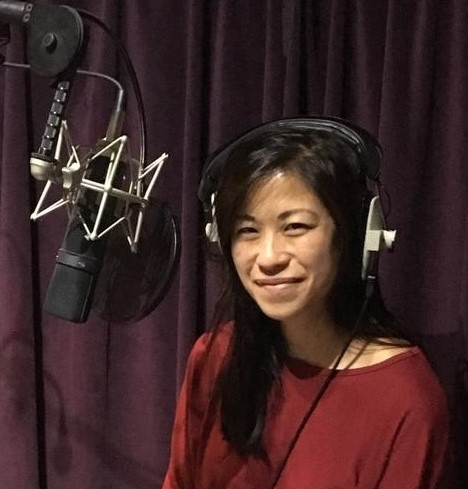
ANNA CHEUNG is a poet based in Glasgow, Scotland. Her poetry has been published in Dark Eclipse , Dusk and Shiver, Haunt Publishing and Zarf Poetry. She has a forthcoming publication in Dreich Magazine. Her poem, ‘Survival of Solitude’, was included in an illustrated book (published by Speculative Books) by the Royal Conservatoire of Scotland gifted to breast cancer patients in the UK to help boost women’s body confidence and mental health. Aside from poetry, she has written reviews for Bearded Magazine and Musicovered. Her full-length debut poetry collection, ‘Where Decay Sleeps’, will be published by Haunt Publishing in September 2021. Twitter: @annasmcheung
Where Decay Sleeps by Anna Cheung is published by Haunt Publishing, September 2021, priced £9.99.
The Scottish BPOC Writers Network (SBWN) provides advocacy, literary events and professional development opportunities for BPOC writers based in or from Scotland. SBWN aims to connect Scottish BPOC writers with the wider literary sector in Scotland. The network seeks to partner with literary organisations to facilitate necessary conversations around inclusive programming in an effort to address and overcome systemic barriers. SBWN prioritises BPOC-led opportunities and is keen to bring focus to diverse literary voices while remaining as accessible as possible to marginalised groups.
Web links: Website | Instagram | Facebook | Twitter | Newsletter
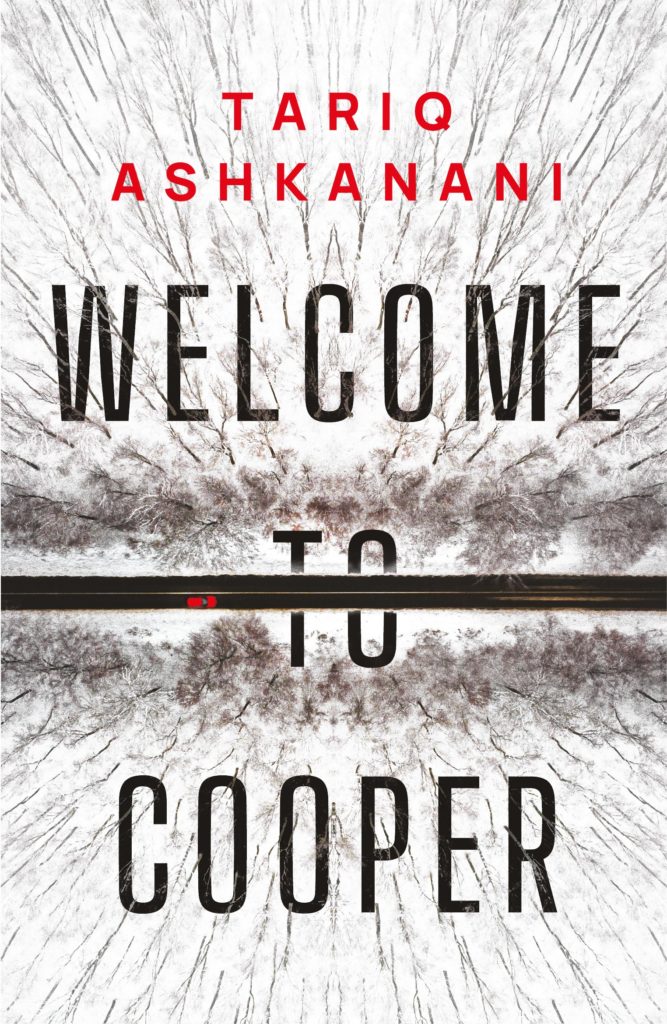
Welcome to Cooper is the much-anticipated crime fiction debut from Tariq Ashkanani. Nasim Rebecca Asl spoke to him about his writing journey so far. Also, in an exclusive with BooksfromScotland, he and his publishers have allowed us to give the novel its official cover reveal!
Welcome to Cooper
By Tariq Ashkanani
Published by Thomas & Mercer
Tariq Ashkanani is no stranger to the literary world. He’s co-host of The Page One Podcast, which features interviews with over 60 writers, including Joe Abercrombie, Nick Hornby and Claire Askew. He’s spent hours questioning literary greats about their processes, their careers and their lives – but when I chat to Tariq, it’s the first time he’s been on the receiving end of the questions.
His debut novel, Welcome to Cooper, will be published by Thomas & Mercer in October. When it’s released, Tariq will join an impressive roster of Scottish crime writers, though he has strayed away from the cobbles of his native Edinburgh and looked across the Atlantic, to Nebraska.
‘I wanted to do a story that wasn’t about your normal L.A. or New York cop, so I’ve made up a small town, Cooper. A cop gets transferred there after messing up on a previous job, he wants to escape and lose himself a little bit. Then, he stumbles on a larger web of conspiracy.’
From the classic Twin Peaks, to teen drama Riverdale and Marvel’s Westview, America is scattered with countless fictional towns. ‘Inventing a place means the layout is what you want it to be,’ Tariq explains, ‘you’re not restrained by reality in any way.’ Although Tariq hasn’t visited the Midwest himself, the location seemed perfect: ‘it’s set in America because everything I watch is American, all the crime I watch and read is set in America. I wanted to pick somewhere that was remote enough to be easy to get to, but somewhere in the middle of nowhere. It’s a purgatory-type place.’
Tariq has drawn from a wide range of references – as we chat, he mentions Mindhunter, Elmore Leonard, Quentin Tarantino, Twin Peaks, Luther – but notable among his influences is the drama series True Detective. ‘They’re in the middle of this nightmarish world, it’s almost unreal. I don’t think you get that in British cop dramas, it feels a lot more grounded.’ Documentaries like The Night Stalker explore this nightmarish world turned flesh and have millions hooked – including myself and Tariq. When you consider a seemingly endless list of serial killers who have populated the States, it’s no wonder the landscape lends itself so well to crime writing. ‘There’s something about the size of America. A serial killer can hit one place, then quickly and easily get to a hundred miles away. They’re a needle in the haystack.’
While Tariq’s research trip to the Midwest will have to wait (‘I would like to do it at some point. And it’s a nice excuse to travel!’ he laughs), Welcome to Cooper has drawn upon experiences a bit closer to home – Tariq’s work as a solicitor.
‘I don’t have any background in criminal law,’ he muses, ‘but I love interviewing and taking statements from people. You learn how people respond to things, how exactly they get angry. That’s good to draw on in characters.’
This first-hand knowledge has also helped with the practical aspect of writing dialogue. ‘There’s definitely a way people speak in those situations. Dialogue is what I struggle with most. It’s the hardest part, it’s quasi-realistic. Everything has to move [the] plot forwards or develop character, you can’t ramble on. It’s a real art.’
It’s an art that’s taken years to get right. Welcome to Cooper was born from a short story Tariq wrote nearly ten years ago for a writing group he was part of. ‘One week we were doing a detective one. I wrote it and thought it would make a good opening chapter for a proper novel.’ Within four years, Tariq had the bones of his book. ‘The first few drafts were vomit on a page,’ he laughs. ‘I drafted and drafted and drafted. I’ve learned this from experience, and from my podcast, but every author struggles with the first draft. So many have self-doubt, it’s a natural thing to have. Realising I wasn’t the only person who struggled with this, and knowing I wasn’t alone in it, was really helpful.’ He’d write both mornings and evenings while commuting from Edinburgh to Glasgow, spend more years redrafting, recruit friends to offer feedback, and eventually find an agent.
‘It took 18 months to find representation. I was getting knocked back and knocked back the whole time, then when it was I was on number 50-odd of agent submissions, I made it.’ Together, they worked on the book – ‘We added a subplot, added 15,000 words, made it ten times better’ – and submitted it to publishers. Then, it only took six weeks before Welcome to Cooper was picked up, and when it was, Tariq signed a two-book deal. His second novel is due out October 2022, and progress is well under way.
‘It’s still in draft form,’ he tells me, ‘but it was amazing to sign for both. It was great to know they liked me enough to want more from me but it’s come with horrible pressure – what if I can’t write another the same? I had unlimited time with the first one, then I was suddenly given eight months to write the second!”. Although he’s still continuing with his day job, the last year of almost continuous Stay at Home edicts have given Tariq a bit more time to write: ‘I’m lucky, my job’s not really been affected by lockdown. I’m working from home and it’s helped my routine.’ Here, he segues to give other writers crucial advice – ‘You need to find time in your day where you can write. Get up in the morning and write for an hour, or do it last thing at night. No video games, no crap TV – reward yourself with that after you’ve got a draft!’
As we speak, Tariq is just seven months away from holding his published novel in his hands. It’ll be the realisation of not just a decade of drafting, but a lifelong dream. ‘I wanted to be a writer as a kid,’ he says, ‘I loved writing. I got, what I think is possibly the saddest Scouts badge, the writing badge. Most kids were getting adventure badges, for climbing or abseiling, but I turned up with a notebook of short stories I’d written.’ Now, Tariq’s seeing the product of that first foray into literature. ‘It was amazing seeing the options of the Welcome to Cooper’s cover and seeing my name on the front. That was a dream come true moment.’
Inspired by his own journey, Tariq helped launch a planning system for aspiring novelists, The Writer’s Notebook, and The Page One Podcast, where established writers discuss their processes and share their wisdom. What advice then, I ask, would Tariq give to people who want to write a book? He ponders, staring off-camera as he reflects on everything he’s learned. ‘You have to ignore the self-doubt. Don’t worry about whether or not you can recreate what’s in your head on paper, just get it down on the page. Everything important happens in the redrafts. It’s all about the editing and the rewriting, but you can’t get it down on paper unless you put that self-doubt to one side.’
And here’s the evocative cover – catch it on bookshelves in bookshops near you in October!
 NASIM REBECCA ASL is a poet and journalist based in Glasgow. She has a master’s in Television Journalism and took part in the BBC’s Journalism Trainee Scheme. She has worked for programmes including The Andrew Marr Show, The Nine and Question Time, and in 2018 Nasim was nominated for the RTS Scotland Young Journalist of the Year award. Her poetry has featured in Gutter Magazine, Middleground Magazine and Modern Poetry in Translation, and she has performed her work across Scotland. In 2021 Nasim was a recipient of a Scottish Book Trust New Writers Award for poetry.

TARIQ ASHKANANI is a solicitor based in Edinburgh, where he also runs WriteGear, a company that sells high-quality notebooks for writers, and WriteGear’s podcast Page One. He had no formal writing training or consultation prior to writing Welcome to Cooper. He is currently working on a follow-up thriller.
Welcome to Cooper by Tariq Ash Kanani is published by Thomas & Mercer, October 2021, priced £8.99.
The Scottish BPOC Writers Network (SBWN) provides advocacy, literary events and professional development opportunities for BPOC writers based in or from Scotland. SBWN aims to connect Scottish BPOC writers with the wider literary sector in Scotland. The network seeks to partner with literary organisations to facilitate necessary conversations around inclusive programming in an effort to address and overcome systemic barriers. SBWN prioritises BPOC-led opportunities and is keen to bring focus to diverse literary voices while remaining as accessible as possible to marginalised groups.
Web links: Website | Instagram | Facebook | Twitter | Newsletter
We continue our ‘Introducing . . .’ series, where BooksfromScotland highlight the work of up-and-coming writers, with this essay from Zebib K. A.
A Symptom of Migration: Your Children will be Traitors to your Nostalgia
By Zebib K. A.
By age 6, I knew what nostalgia meant, and it already felt like a dirty word. Nostalgia was a lecture about old Africa, how things were better back then and there, yet again. Nostalgia was guilt and irritation, especially to a child trying to have fun. I wanted my own knickknacks, hoarded precious things, memories, risky adventures. We were supposed to feel nostalgic for a country we could not miss.
My parents grew up in our homeland, Eritrea, East Africa. They would still be there, we would have been born there, they say, if it was not for the War. The 30-year civil war, the War, drove my parents out of East Africa, out and away to America. They fled, one briefly imprisoned, one living in Sudan, but eventually won political asylum, settling in a city called Baltimore in America in the 1980s. My older sister was left behind with our grandparents, another conundrum of displacement.
I was born in America, felt American, and also felt acutely conscious of the splits in my identity. My parents never ceased to remind us where we came from. I often felt like a traitor to everything my parents stood for, held sacred.
My childhood memories mixed with the secondhand memories of Eritrea, my parents’ former lives, filling up my brain, my dreamscape. Our entire childhoods were reminiscences, our parents trying to impress us with the golden dappled haze of our origin. The projector reel of the past was always playing. We were honored young guests at nightly performances of soliloquies about our land before time. We heard tales of schoolyard fights, football injuries, a secretly cruel emperor, Addis Ababa in 1970. Ancestral spirits backed up lectures on filial piety. We wondered if these things had really happened. Maybe they were fables, myths.
We did not believe what they believed. We sang America, we were born on American soil. We sang odes to individualism, American girl dolls, Saturday morning cartoons, McDonald’s ice cream. As a child, I obsessed over medieval fantasy novels and Sabrina the Teenage Witch. As a teenager, I dreamt of visiting Scottish castles. I was a movie buff, an American pop culture fiend. I was struggling to come to terms with my queerness, my blackness, and endlessly struggling between self-acceptance and my conservative parents’ values. I rolled my eyes when we heard their old stories, to cover the confusion those stories brought up in me.
‘This country is a damn melting pot…a stew. We will disappear here.’ We were not really settled, but rather walking in a slow oblong path, a boomerang ellipse back to where we came from, sometime, someday.
I went to Eritrea for the first time, rode a plane for the first time, at age 8. My small body had never traveled so far. Exiting the small African airport at midnight, I saw the terrain was full of broken cement and mud, and tasted the atmosphere, smoky diesel. The dusty red surface of Mars, or like the red blood of Eritrean martyrs, red like Twizzlers. Our capital city was as beautiful as my Dad said, and more run-down, almost ruined. Asmara, an old world, art deco, abandoned colonial outpost. How small. Everywhere, in every corner, I saw oddly familiar streets, gas stations built like 1950s versions of spaceships, crumbling movie theaters with faded white façades. Villas, roosters, markets, incense-filled churches, mosques.
The past was bruises of orchid purple, pale blanched yellow, vibrant ink blue on brown skin, a history that bruised with expectation and guilt at our own family’s displacement. The condemnations of parents, even their praises, held a test. Do you remember the motherland?
Growing older, my self-realizations felt like selfishness. To be myself, I might just be desecrating, defiling, perverting everything that came before. Was I flying as a destroyer into the blaze of America? Burning down our museums and our treasures, for something new, anything new. Since the dawn of time, our ancestors had been born, had children, died, on our land, until us, a long unbroken chain. Our parents saw this chain as a precious rope tethering us to earth.
We were meant to believe in the idea of Eritrea more than we believed in our own existence. We came here because we had to, because we were escaping bodily harm, because we thought the streets were paved with gold. Could I have my own idea of Eritrea, of the homeland?
Nostalgia had been irritating, guilt-inducing for a child caught up in her own imaginings, but as an adult, I’d become curious about this feeling. Did I still have the time to find my own country, my own version of that place? The capital was no longer the same, not just crumbling but weary, and migrants poured out of the country in droves, dying in boats in the sea. It’s no longer the land my parents yearn for. I had the urge to capture all of their stories, secretly record my parents talking on my phone. I was not sure I could retell the stories myself.
I’d begun to see I could bring those stories with me into my present and my future self.
Like Dad talking about visiting his grandfather in the village. He claims he can remember it, even age 2, sneaking onto the last bus of the day. On the outskirts of the capital, in the country hills at night in 1947, there were only the deepest depths of blackness, the only light a thousand African stars and a red moon. In the dark of night, Dad rubbed his grandfather’s feet, pulled at his rough toes, cracked the old man’s toe joints to oozy relief. Dad was a child, once, how strange.
There were so many memories:
The red wax seals on the brown envelopes holding school exams.
The love note my mother passed from a boy to her best friend, written in English: ‘Love may be blind, but my love has two ELECTRIC eyes!’.
The nights studying in attics lit by kerosene lamps.
The promenades down Asmara streets in mini-skirts and three-piece suits.
Nostalgia still contained too much, too much weight, and too much depth, but I have been contemplating the feeling differently for some time now.
The deep warm waters of my species called. On weathered papyrus rolled out, across a whole wall, was the absurdist family map of our world. Seas and lands were all abstractions, misshapen and blown up, not to scale. A ‘You are here’ red dot on the eastern coast of the mass of North America. America, the shaded amorphous rectangular blob, huge, dotted with gold foil cutouts of coins, silver paper cartoon wolves. The Red Sea of Truth and Righteousness, near the pointy pinky tip of the Horn of Africa. A collection of dark waterways known as the Channels of Migrations. Ciao! Arrows, so many arrows across the globe, all pointing, all spread across like a burn, sailing and ripping across the map, from The Homeland to The Wild West. Out of the land Eritrean apparitions had gone.

Zebib K. A. (she/her) is a writer and psychiatrist. She recently moved from NYC to Scotland to do a Masters in Creative Writing at University of Edinburgh. She has been published in The Rumpus, Apparition Lit, and more. She is black, queer, and comes from an immigrant background, and explores these identities in her writing. She can be found at https://medium.com/@pegasusunder, Instagram: @pegasusunder, Twitter: @pegasusunder1
This essay was first published in Midnight & Indigo: https://www.midnightandindigo.com/symptom-of-migration/)
The Scottish BPOC Writers Network (SBWN) provides advocacy, literary events and professional development opportunities for BPOC writers based in or from Scotland. SBWN aims to connect Scottish BPOC writers with the wider literary sector in Scotland. The network seeks to partner with literary organisations to facilitate necessary conversations around inclusive programming in an effort to address and overcome systemic barriers. SBWN prioritises BPOC-led opportunities and is keen to bring focus to diverse literary voices while remaining as accessible as possible to marginalised groups.
Web links: Website | Instagram | Facebook | Twitter | Newsletter
Danny Chung Does Not Do Maths is the heartwarming and funny story of family, friends and finding your own voice. It stars young Danny, who wishes to be an artist despite his family’s preference that he buckle down at mathematics – a much more sensible subject! Here is an extract, where Danny’s dad lays down the law.
Extract taken from Danny Chung Does Not Do Maths
By Maisie Chan
Published by Bonnier Books
‘Ba, wait! Don’t throw those away.’ My heart beat faster in my chest. I couldn’t remember what was in those books, but I knew they deserved a better fate than the recycling bin. He shook the dust off the top of one, then flicked through it, tutting. That wasn’t a good sign. He stopped at one page entitled DANNY CHUNG DOES NOT DO MATHS.
‘DANNY CHUNG DOES NOT DO MATHS . . .? What does that mean? We all do maths – everybody does maths.’ I’d forgotten I had started that particular comic strip. I’d been bored in class while Mr Heathfield was talking about long division and I’d begun to draw all the things I could be doing instead of maths. It included balancing on a beach ball while playing a trumpet, blowing paper darts through a straw and flying on a giant kite in the shape of a stingray that had turbo jets underneath.
‘Oh, that was just for fun. A joke to make Ravi laugh.’ This was not the time to bring up how I had a hate–hate relationship with maths. Often I would try to get Ravi to help me or I would just give an excuse to Mr Heathfield if I couldn’t do something. He thought I had a dog who ate a lot of my homework. ‘If you tell yourself you cannot do something then you will not succeed at it. You need the right mindset. This . . . drawing stuff. It has no purpose.’ He put all of my old sketch books into the black bag. I felt like my hard work had been truly trashed.
‘But I like it,’ I mumbled, hugging the book I was now working in. Ba obviously hadn’t heard about famous painters like Van Gogh (all right, he was poor during his time and had a terrible incident with his ear, but now his paintings were worth millions). I tried to think of a less tragic artist that was famous. I slid my drawings under my pillow. ‘But why, Ba? Why can’t I be like Picasso?’
‘Why do you want to be like Pika— wossit . . .the yellow squeaky mouse thing from the telly?’
He shook his head, his brows deeply furrowed with confusion. ‘That’s not a career, Danny.’ I wondered if he was imagining, as I was, a grownup me dressed in a Pikachu onesie, holding a briefcase and going to an office. I stifled a laugh.
‘No, Ba, Picasso was a Spanish artist. He said, “Every child is an artist” – he was very famous. He’s not a Pokémon.’ He sat down on the side of the bed, shuffled next to me, then put his arm around me and gave me a squeeze. ‘Son, it’s for your own good that you do more constructive things in your spare time. You can draw in art class at school, but after you come home, you need to focus on getting good grades. We don’t want you to work in the takeaway like us. Maths, science, English, these are the subjects you have to work on.’

MAISIE CHAN is a British-born Chinese author. She has written early reader books for Hachette and a collection of fairy tales, myths and legends in Stories From Around the World for Scholastic, as well as many stories for The Big Think: a well-being curriculum based around stories for primary school children. She also started the group Bubble Tea Writers to support and encourage new British East Asian writers in the UK. Originally from Birmingham, Maisie now lives with her family in Glasgow.
Danny Chung Does Not Do Maths by Maisie Chan is published by Bonnier Books, June 2021, priced £6.99.
The Scottish BPOC Writers Network (SBWN) provides advocacy, literary events and professional development opportunities for BPOC writers based in or from Scotland. SBWN aims to connect Scottish BPOC writers with the wider literary sector in Scotland. The network seeks to partner with literary organisations to facilitate necessary conversations around inclusive programming in an effort to address and overcome systemic barriers. SBWN prioritises BPOC-led opportunities and is keen to bring focus to diverse literary voices while remaining as accessible as possible to marginalised groups.
Web links: Website | Instagram | Facebook | Twitter | Newsletter
Sha Nazir is the publisher at BHP Comics, and one of Scotland’s rising stars in the publishing industry. Here, he writes of his journey to establishing BHP as a key player in the comics scene and his plans for the future.
The comics ecosystem is as fragile and vulnerable as a baby. That might seem a little drastic but it’s pretty accurate. To fully understand the ‘comics industry’ in Scotland we really need a little bit of a history lesson. Much like evolution, there has to be a big bang. The comics big bang in Scotland happened back in the early ’90s. The formation of homegrown comic writers and artists making their work formed in a few places, notably Metaphrogs self-published surreal tale Strange Weather Lately and the Glasgow underground magazine comic Electric Soup. Both had Scottish voices told by Scottish creatives. Both were made in Scotland and, with cult success, both were distributed beyond the border.
The British Invasion
In parallel, something else was happening. The ‘British Invasion’ of writers and artists into mainstream Marvel and DC comics was prolific in this period. Following the footsteps of Alan Grant, more Brits took their talents across the pond to great international success, including Grant Morrison, Mark Millar, Robbie Morrison, Gary Erskine, Rob McCallum, Jock and Frank Quitley (who was spawned from the pages of Electric Soup). The big bang happened but after that the talent left. It created a stagnant creative void, where few voices were being heard or emerging.

Birth of the self publisher
The next catalyst in comics evolution came in the late ’00s. Digital printing had changed, it had become much cheaper and more accessible to print a 24-page staple-bound black and white comic. Between 2008 and 2011, there was a small growth of self-publishers. This was given a boost in 2011 when the first Glasgow Comic Con took place, it was the first ever BHP produced event and promoted indie self-publishers and comics in general. Not that we knew at the time, it would be a critical turning point.
A direct-distribution link to hungry readers now existed. This further escalated over the next 4-5 years, with an explosion of Comic Cons and a surge in new creators emerging to present their self-published works. By 2015, colour printing was also much cheaper and digital graphic tablet pens were much more affordable. All of a sudden there was a huge leap in the quality of work being made, and the ambition of a nation of makers began to flourish. Money is part of the problem for access to this creative industry. You have to love and have full passion for what you do because the economy of comics is not robust. There aren’t enough people buying enough books to grow the industry sufficiently,which means fewer opportunities and more mainstream publishers taking fewer risks.
Why am I telling you this?
I was asked to write about BAME comic creators in Scotland and, at this stage, the field is pretty thin. We are here, we have voices but the comics industry in Scotland (and the UK) is still very, very young. It’s not an excuse. It’s good to understand that comics are budding and that has affected the kinds of people who have been making them. For a long time, I was one of only two people who weren’t white making comics, the other being Padam Singh of Electric Soup fame.
BHP finds its voice
Around 2016, I shifted BHP from being a self-publisher of comics to find a space in the book publishing world as a comics graphic novel publisher. That opened a lot of doors for me. Once I arrived on the other side, I realised how very white that world was too. Standing at a publishing event in Edinburgh with 300 people, I looked around at the sea of smiling faces and only spotted a handful who weren’t white. So I embarked on making small actions. Small decisions. Basing some of the choices on works I published, not just the story content or saleability, but its ethical and social value. Who is being represented on the covers of the books I publish? Who are the characters within the works? Is it holding up a mirror? Is it reflecting more of our society? If I was 14 reading this book, would I relate to anyone in it?
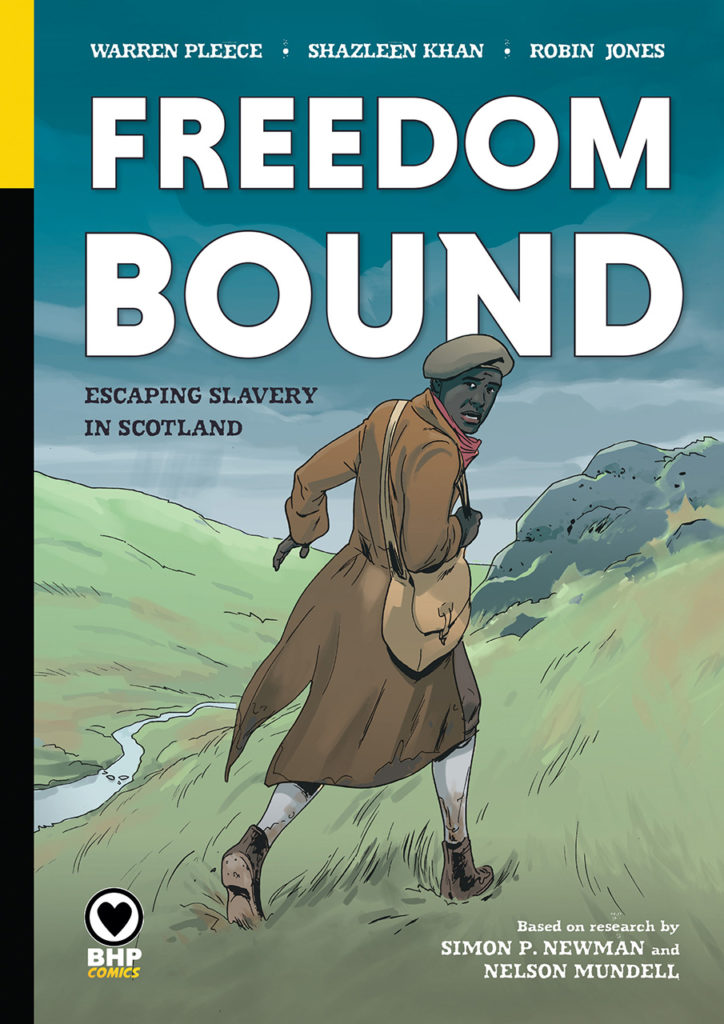
The Full Colour project
I was fortunate enough to manifest my ideas into a mentoring project, the ‘Full Colour project’ (2018), funded by Creative Scotland and co-led by Nyla Ahmad. The project allowed us to work with young people aged 14 – 26 from a diverse range of backgrounds. It gave a real insight into the lack of confidence and opportunity for BAME people, but helped me to realise that all change has to start small. Notable contributing alumni included; Ny Ali, well known amongst the Scottish crowd for her mini-comics and illustrations; Olivia Hicks, co-creator of the queer romance Grand Slam Romance for Good Comics, and also assistant editor at Rebellion; Natasha Natarajan’s slice of life book FML comics, published by Good Comics.
More creators to check out include Chris Manson, illustrator and comics maker based in Glasgow, with his brilliant fantasy comics and webcomic Elf Blood. And Etienne Kubwabo, who created Beats of War, a filmmaker and DJ based in Glasgow, with fantastic drive and ambition you can get behind.
New voices
We need new BAME creators in Scotland. We need new voices, new writers, new artists, new colourists, new letterers. If that’s you and you’re thinking it’s maybe not for you or you’re not good enough: you are, you can be. Drop me a line, I’d be happy to answer questions over a phone call or tweet, my door is always open. The scene is still small, I can’t yet count on two hands the number of BAME creators I know in Scotland, but that will change.
Planting seeds
As comics grow as a form of entertainment and escapism, the economy surrounding it will grow. In turn, I hope more comics publishers appear in Scotland allowing more opportunity for the vast array of talent at hand. In the meantime, I’ll keep planting seeds. I’m planning a new mentoring programme for original one-shot comics working with BAME creators. I’ll hopefully be able to talk more about that in late 2021. It’s hard to find your voice in a place struggling to find its own space in a sea of books, but comics will endure.
Photo credit @WeeRedWriter Julie Farrell
Sha Nazir is the publisher at BHP Comics and rights agent for 9 Panels Agency. He produces Glasgow Comic Con, Edinburgh Comic Art Festival and is the founding chair of the Scottish Independent Comic Book Alliance (SICBA) the UK’s longest running comic book awards. Working in partnership with the University of Glasgow he volunteers as co-Director of the National Comic Centre, a digital space advocating for comic engagement. He occasionally writes and draws comics. Twitter: @Sha_nazir @BHP_comics @9panelsagency @NCCentre
The Scottish BAME Writers Network (SBWN) provides advocacy, literary events and professional development opportunities for BAME writers based in or from Scotland. SBWN aims to connect Scottish BAME writers with the wider literary sector in Scotland. The network seeks to partner with literary organisations to facilitate necessary conversations around inclusive programming in an effort to address and overcome systemic barriers. SBWN prioritises BAME-led opportunities and is keen to bring focus to diverse literary voices while remaining as accessible as possible to marginalised groups.
Web links: Website | Instagram | Facebook | Twitter | Newsletter
Kei Miller is a brilliant writer of poetry and prose, and his new book, the essay collection Things I Have Witheld, promises to be as vital a read as the rest of his books. Here, Kei reads from the book, and you can read the extract afterwards too.
Extract taken from Things I Have Witheld
By Kei Miller
Published by Canongate
It is always the body that I return to – our bodies and their various meanings.
This is what happened: in the winter of 2004, a woman enters a shop in Manchester, England. It is a student shop attached to the student union and all the workers here either study at Manchester Metropolitan University or the University of Manchester. The vibe of the shop is a relaxed one, and the student-workers have not only devised a rota for their work shifts and their lunch breaks, but also one for DJ privileges – each taking turns to play their music as it filters through the speakers of the shop.
The woman who has entered the shop seems to carry with her the weight of some deep annoyance. At the till she is unimpressed by the man (the man is me) who smiles brightly at her and asks, as he has been taught to, ‘Anything else for you?’ There is something about her eyes and the curl of her lips that seems almost disgusted by him, but the man does not feel this is directed towards him. How could it be? What could he have done to earn such a visceral reaction by a stranger? She does not answer his question with words but by a sort of twitch of the head signals, no, no… nothing else. I just want to leave. As the man scans and cashes her goods and then sorts out her change from the ten-pound note she has handed him, it seems the woman can finally hold it in no longer. ‘For godsake could you turn that music off! Don’t you know how hateful it is?’
It is 2004. Terrifying stories have been leaking out about the violent homophobia on the island. Across England, Jamaican artistes are frequently being unbooked from shows after protest by LGBT rights groups accusing them of peddling hate music. In 2006 it will all culminate in an article in the Times declaring Jamaica ‘The Most Homophobic Place On Earth’. It is only when the woman snaps, it is only when she asks ‘Don’t you know how hateful it is?’ that the man (who is me) realizes that he has been humming all along to the music in the background, that the rota says he has DJ rights for this hour and so he has been playing music from his island. It was only now that he listens more intently to the words of I-Wane singing ‘Lava Ground’
We stan up pon de lava ground
An’ nuff a dem ah look fi see I mawga down
hype pon warrior cause dem have a gun
but tell dem seh de warrior naah guh run (we naah guh run!)
We stand up pon de lava ground.
A loose prose translation of the lines could be this: We stand up on this troubled ground, and lots of people would love to see us diminished, they taunt us because they have guns, but tell them that we, the warriors, will not run. We will not run! We stand up on this troubled ground.
The man wonders what could possibly be seen as hateful in this declaration of defiance, this insistence on standing one’s ground, this refusal to be intimidated even when we are approached with guns or with the threat of violence – this stance which has in fact been the stance of so many heroic LGBT Jamaicans? It takes the man a second – a solitary second of being reduced by the woman’s stare, her clear repulsion of him and his body, to understand what she is hearing and understanding. She understands correctly that the music is Jamaican and she understands that the man is also Jamaican. She had observed him – his over 200lbs black male body, his dreadlocks – and having read all the stories, she understands that Jamaica is a homophobic island and that much of its music stridently advocates for the killing of gay men. It stands to reason then – the big black man in front of her who is clearly the cause of this Jamaican music, who is singing along to it, must necessarily be humming a tune of hatred. If Jamaica is only defined by its homophobia, then every Jamaican must be either an agent of or a victim of such hate. She has, in her mind, some imagination of the broken, brown queer body. It is that body on whose behalf she believes she is now speaking. She does not imagine that the body before her is one such body. She does not understand that in the actual moment of encountering a brown, queer body from Jamaica, all she does is to berate that body and to silence it. But because the customer is always white (or is it that the customer is always right? In that moment they mean very much the same things) the man turns off the radio and hands his DJ rights over to another student worker whose music being less black will undoubtedly be less offensive.
 KEI MILLER was born in Jamaica in 1978 and has written several books across a range of genres. His 2014 poetry collection, The Cartographer Tries to Map a Way to Zion, won the Forward Prize for Best Collection; his 2017 novel, Augustown, won the Bocas Prize for Caribbean Literature, the Prix Les Afriques and the Prix Carbet de la Caraïbe et du Tout-Monde. In 2010, the Institute of Jamaica awarded him the Silver Musgrave medal for his contributions to Literature and in 2018 he was awarded the Anthony Sabga medal for Arts & Letters. Kei has an MA in Creative Writing from Manchester Metropolitan University and a PhD in English Literature from the University of Glasgow. He has taught at the Universities of Glasgow, Royal Holloway and Exeter’. He was the 2019 Ida Beam Distinguished Visiting Professor to the University of Iowa and is a Fellow of the Royal Society of Literature. @keimiller
Things I Have Witheld by Kei Miller is published by Canongate, May 2021, priced £14.99.
The Scottish BPOC Writers Network (SBWN) provides advocacy, literary events and professional development opportunities for BPOC writers based in or from Scotland. SBWN aims to connect Scottish BPOC writers with the wider literary sector in Scotland. The network seeks to partner with literary organisations to facilitate necessary conversations around inclusive programming in an effort to address and overcome systemic barriers. SBWN prioritises BPOC-led opportunities and is keen to bring focus to diverse literary voices while remaining as accessible as possible to marginalised groups.
Web links: Website | Instagram | Facebook | Twitter | Newsletter
Sean Wai Keung writes with searing precision about the joy and sadness of life through food. He conjured his debut full-length poetry collection, sikfan glaschu at a time when restaurants were shut and Scotland was in its first lockdown. Bhavika Govil spoke to him over Zoom about poetry, Glasgow, and his obsession with washing rice. Here is an edited version of our conversation.
sikfan glaschu
By Sean Wai Keung
Published by Verve Poetry Press
Can you share the significance of the title of your upcoming collection sikfan glaschu?
The word ‘sikfan’ is an anglicisation of a Cantonese phrase which is used when it’s time to eat. Literally, it just means to ‘eat rice’ – rice is often used interchangeably with the word for meal. So, it’s basically, ‘It’s time to eat food now’. And it’s a phrase that’s very dear to me. Growing up, on hearing it, I’d think, “Oh my God, it’s time for a meal!” So much happiness came from that phrase. And ‘glaschu’ is what I call Glasgow in the book. It’s about my own identity, in many ways; it’s also about the identity of the city, and that’s why [the collection] includes Gaelic in certain poems. It also includes Italian because of Italian migration. So, yeah, I really thought that this phrase ‘time to eat’ and then the city of Glasgow would encapsulate a lot of the things I want to talk about. To so many audiences that read that title, they won’t know what either word means and it could be a bit alien to them, even when actually it’s quite a simple meaning. So, hopefully when they read it, they’ll learn a bit more about what that the title means for themselves. And I really like that process.
Your work in this collection conjures such a strong sense of nostalgia, especially poems such as ‘dumpling monkey’, ‘di maggios’ and ‘time to go’. Can you share a personal food memory that’s special to you?
One of my very first memories is of being held in my mum’s arms and having rice in front of me. That’s a bowl of rice, uncooked rice in water and her taking my hand and dipping it in the water, and swishing it around so I could wash the rice. And then her sort of teaching me to pour the water out very slowly and add more water and splash around. I remember the one of the earliest times I got given the opportunity to do this on my own – oh, the pressure! I wanted the rice to be like the cleanest rice ever, washing it over and over again. And my mum commented and went, “What’s taking you so long!” I was so desperate to show that I could do it and that I could make her happy through the food. For me, that was one of the ultimate expressions of love as a kid, and it’s a memory that I hold very dear to me. It is as simple as that. Even just washing rice holds such deep memories for me.
How different was the process of writing your first full length poetry collection in comparison to your other pamphlets?
Interestingly enough, the idea came about from a callout that I saw during the first lockdown from another publisher asking people if they’d be interested in collaborating with others. I had this idea to write about restaurants and approached a couple of people that I knew are also interested in writing about restaurants and food, but they basically said that they’re really busy and I thought, “That’s totally fine.” But the more I thought about it, the more I wondered that maybe I could do this on my own – write about my experience with restaurants. And it was a way during lockdown to remember the good times, I guess, when we could go to restaurants. So I started writing a couple of poems at first to see what would come out. And I just had more ideas, more ideas, and some more and more, and eventually I started thinking that maybe this could be a pamphlet. I just kept writing and it was a crazy couple of weeks. When I saw the call-out from Verve Poetry Press asking for possible collections, I saw their guidelines for how long a collection should be from their perspective, looked at how many poems I had and I thought, “This is really close to a collection – maybe this could be a collection.” And it’s crazy because for many years I’ve been very daunted and scared by the idea of my first collection.
On the surface, these poems are about food, but really, they’re about race and racism, migration, working-class lives – even relationships. What appeals to you about writing about food as a way of writing about something bigger?
I think that through food you can really engage with audiences and readers in all the topics that you just mentioned. But when you approach a lot of people saying, “I have this work that concerns these kind of topics”, so many people already have an impression of what it’s going to be like, and there can be some sort of backlash or defensiveness about, ‘What’s that got to do with me?’ especially for white audiences, for instance. Whereas, if you say that you want to write about food, everyone will have some idea – even if it’s the wrong idea – about what that means. So, I think it’s a great way to talk about these things with people—even white audiences – people who maybe don’t think of themselves to be interested in things like identity and migration. Beyond that, food is a huge part of my own life. I think a lot about why I’m here. The journey that my family has taken to get here – my grandparents. [Food is] often how people from other cultures and people who migrate to different places learn to communicate with the local people and become part of a community. For instance, my grandparents never really spoke much English, but they were still well-loved in the community as, you know, the chippy owners who served delicious food, and were always smiling and stuff like that. There are so many different ways that you can go about writing about food, and all of them pretty much are going to touch upon identity and culture and racism, only that it’s less obvious to certain audiences. And that’s what really appeals to me about it.
That’s a great answer. Perhaps, reading about ‘other’ experiences through personal stories and food stories is one way of digesting them.
‘Digesting.’
Haha, yes. Lastly, are there any Scottish poets or poetry presses based in Scotland that you’d recommend?
Oh my god, where to begin! I highly recommend that people engage, if they can, with some of the publishers and magazines that are doing great stuff out there. Gutter magazine always do amazing things. So do Knight Errant Press and Speculative Books. There are a lot of small presses and zines doing great stuff as well, including SPAM zine, and they’re all so positive in what they do and how they go about it. That’s the most important thing, because I think when you have a culture like that with lots of small presses, lots of zines that are all trying to be more positive, it then creates a much more open atmosphere for other writers to blossom in. In terms of poets, I’ll start with Alycia Pirmohamed. She’s huge at the moment and I’m so happy for her. Then there’s Bibi June, Gray Crosbie, Nisha Ramayya, Nat Raha and Hannah Lavery – a few more names of people who have had a really positive influence on my writing.
chinatown
this place was built by migrants
therefore it is ours
they came from the gàidhealtachd
they came from the ghalltachd
sometimes i wonder what my 公公 would have thought
had he been given the chance to visit
he had lived in other cities built by migrants
hongkong – liverpool – bradford –
i like to think that if he had been given the chance
he would have liked it
but who can know for sure
when he first arrived in the uk i dont know
what glaschu would have been like
chinatown here opened in 1992
the year after i was born
i moved here three
years after he died
this place was built by migrants
and we have been eating here ever since
BHAVIKA GOVIL is a writer, journalist and editor born in New Delhi, India. Her short fiction and non-fiction are published or forthcoming in Extra Teeth, Gutter, Outlook Traveller and Vogue. She won the Bound Short Story Prize in 2019, was longlisted for the Toto Awards for Creative Writing (English) 2021 and mentioned as a Notable Contender for the 2020 Bristol Short Story Prize. She is on the lookout for the perfect crumb-less snack. You can read her work on bhavikagovil.com

SEAN WAI KEUNG is a Glasgow-based poet and performer. His pamphlet you are mistaken won the Rialto Open Pamphlet Competition 2016 and he has also released how to cook and be happy, both with Speculative Books. He has developed solo performances with the National Theatre of Scotland, where he was a Starter Artist in 2017, Anatomy Arts, Magnetic North and the Fringe of Colour, and is also a poetry editor at EX/POST magazine. He holds degrees from Roehampton University, London, and the University of East Anglia, Norwich and has been published in 404Ink, Blood Bath, datableedzine and The Suburban Review, amongst others.
sikfan glaschu by Sean Wai Keung is published by Verve Poetry Press, April 2021, priced £9.99.
The Scottish BPOC Writers Network (SBWN) provides advocacy, literary events and professional development opportunities for BPOC writers based in or from Scotland. SBWN aims to connect Scottish BPOC writers with the wider literary sector in Scotland. The network seeks to partner with literary organisations to facilitate necessary conversations around inclusive programming in an effort to address and overcome systemic barriers. SBWN prioritises BPOC-led opportunities and is keen to bring focus to diverse literary voices while remaining as accessible as possible to marginalised groups.
Web links: Website | Instagram | Facebook | Twitter | Newsletter
Cynthia Miller is a Malaysian-American poet, festival producer and innovation consultant living in Edinburgh. Her poetry collection, Honorifics, is an astonishing, adventurous, and innovative exploration of family, Malaysian-Chinese cultural identity, and immigration, and its invention and emotional heft will surely result in an army of fans.
Honorifics
By Cynthia Miller
Published by Nine Arches Press
SAYANG / SAYANG
n. / love
I have lived with this word
for 28 years and only now
is it taking root in my mouth.
See also: beloved, sweetheart
n. / waste
The thought of throwing food away.
The last bite of beef noodles,
gone rubbery and cold. Go on,
don’t make me save it.
See also: regretful loss
n. / pity
All this fruit left on the branch,
steeping in its own rot.
Who knows how long we have
before a plastic bag
of windfall rambutans
turns into sweet slop.
See also:
We’ll eat it anyway / yes darling /
my dearest / love is always dear /
love / is never a waste / love is
eating scraps for fear of waste /
love is / chiding you to finish
your plate / love, eat up / eat up
love / what a pity / such a
shame to waste love / love, how
much we’ve wasted
SOCIAL DISTANCING
after Charles Simic
It was the epoch of transmutation. Some evenings the neighbours turned into jaguars and
dragged their dinner up into the trees. You could touch anything you wanted and watch it
change. A bench became a hammerhead shark. Confetti became slices of wet ham. A postbox:
a baby grand piano. Where Town Hall once stood, now was a giant baklava oozing honey.
Someone turned their arm into long tentacles of squirming fingers and went trawling,
terrorising the streets by grasping everything in reach. We were afraid to venture out of our
homes.
Everything became a record of what we touched, or hadn’t – where our hands lingered, or
didn’t – how much distance we could afford to put between ourselves and others – what it cost
us, what it didn’t.
CYNTHIA MILLER is a Malaysian-American poet, festival producer and innovation consultant living in Edinburgh. Her poems have appeared or are forthcoming in Ambit, The Rialto, Butcher’s Dog, Poetry Birmingham Literary Journal, harana poetry, The Best New British and Irish Poets and Primers Volume Two. She is also Co-Founder of the Verve Poetry Festival.
Honorifics by Cynthia Miller is published by Nine Arches Press, June 2021, priced £9.99.
The Scottish BPOC Writers Network (SBWN) provides advocacy, literary events and professional development opportunities for BPOC writers based in or from Scotland. SBWN aims to connect Scottish BPOC writers with the wider literary sector in Scotland. The network seeks to partner with literary organisations to facilitate necessary conversations around inclusive programming in an effort to address and overcome systemic barriers. SBWN prioritises BPOC-led opportunities and is keen to bring focus to diverse literary voices while remaining as accessible as possible to marginalised groups.
Web links: Website | Instagram | Facebook | Twitter | Newsletter
The Library of the Dead is the first novel in T. L Huchu’s Edinburgh Nights series, and will show you the city in an entirely new and fantastical way. Here, Jeda Pearl discovers the influences that fed into T. L Huchu’s writing.
The Library of the Dead
By T.L. Huchu
Published by Tor
Content warning: death
With a bevy of entertaining and disturbing supernatural characters; a dystopian near-future Auld Reekie; and a plucky, young, ghost-talking detective named Ropa at the centre, The Library of the Dead by T. L. Huchu is an unflinching rollercoaster ride of a novel.
Ropa Moyo is a decisive and cynical teenager, who dropped out of high school so she could contribute to the household bills. Walking the outskirts of Edinburgh and educating herself with pirate podcasts, she plies her trade relaying messages from the dearly departed to their living descendants, occasionally performing exorcisms and helping spirits move on to ‘the land of the tall grass.’
We follow Ropa as she traverses the spectral everyThere, gains access to an elite occult library and sleuths through the stinking streets of Edinburgh trying to find missing children. Although she drops quotes from Sun Tzu’s The Art of War, Ropa has to evade and deal with some pretty terrifying beings. I spoke with Huchu to delve into Ropa’s Edinburgh and her extraordinary world.
Set in an eerily familiar Edinburgh, the effects of climate change and difficulties faced by much of the population – severe economic inequality, police brutality, corruption, exploitation – are simply facts of life and our protagonist Ropa’s environment. Did you originally plan to set the book in this near-future Edinburgh or did the setting and the related themes of inequality happen organically?
Every book has numerous moving parts that serve the whole and the setting is a critical component of that. It serves a greater purpose than is often paid attention to. A story that works excellently in twentieth century Harare may not necessarily play out to the same effect in twenty-first century Edinburgh. What you see in The Library of the Dead is a ‘third world’ Edinburgh, which doesn’t make much sense until you realise that prior to the Union of 1707, before Scotland benefited from the global plundering of the British Empire, it was the poorest nation in Western Europe. Therefore, this setting is designed to be jarring for the reader and to make them realise that in this universe the advances Scotland has made over the last 300 years are in the process of reversal. The chickens have come home to roost, in a sense. The book’s opening scene is in a house the historian Thomas Carlyle honeymooned in. This serves as an overt signal to the reader that we are telling a history of the future — the honeymoon is over.
With Ropa, her family and her friends Jomo and Priya, you’ve turned the idea of who gets to claim Scottish identity on its head. This is subtly and beautifully done – the streets of Edinburgh feel inseparable from Ropa and there are no ‘Where are you really from?’ moments. Her Shona heritage, culture and language are also woven with Gaelic, Scots and local slang. How deliberate was exploding the current assumptions around Scottishness and did your experience as a Black person living and working in Scotland influence these aspects of the culture in the book?
In a book like this, I suspect people would expect the characters to question their identity. Identity quests are, after all, an entire genre in their own right, and you’d be hard pressed to find a contemporary novel with a brown character in the west where the identity game isn’t playing out. But when I wake up in the morning, I don’t look in the mirror and think, ‘Oh my God, I’m Black. How did that happen?’ This is my default position, my factory settings, as it were. I choose to express my characters in terms of their core characteristics. Ropa is a strategist and a leader, Priya is an adrenaline junkie, Jomo is a beta male and insecure. The book is character driven and the characters take their heritage for granted, which I think is the way it should be when you’re a teenager. Because of this, what, I hope, you end up finding is that there are so many layers to their personhood, which I think is ultimately that which is universal about human beings.
Ropa knows Edinburgh better than any taxi driver! Did you regularly walk the neighbourhoods and landmarks featured in the book?
Edinburgh is such a small city and I’ve tramped through it for over fifteen years now, but each time she surprises me with something new. Most people think the historic centre of Edinburgh is all there is – that and a few touristy spots like Cramond or Portobello. You don’t really know this place unless you’ve been out to Wester Hailes, or Niddrie, or wound up at a random party in Liberton, or took the wrong bus and ended up in Trinity. If you wander with your eyes open you will see the city change with the seasons, old buildings torn down, new housing developments going up, businesses shut down and new ones taking their place. Edinburgh undergoes constant evolution – she is never the same city two days in a row. In fact, I would argue a single, unitary Edinburgh doesn’t exist. What you have are multiple Edinburghs, grosstopically linked (to use a China Mieville formulation), different cities existing within the same space but out of sync spatially and even temporally.
The cast of ‘deado’ ghost characters were really entertaining. Did you spend a lot of time in Edinburgh’s graveyards?
There’s a lot of fascinating history to be unearthed in those old graveyards. Reading the headstones will teach you things you never knew about life, love and loss. These are peaceful places with interesting flora and fauna. But, ultimately, when you visit the graveyards of Edinburgh, you’re confronted with your own mortality, which is what all great literature is really about.
Ropa can communicate with deados through playing her mbira and there are references to Shona and Zimbabwean music throughout the book. Do you play the mbira and is it part of your spiritual practice? Who are your top five mbira musicians to listen to?
I peaked at playing the triangle in nursery school and my sense of timing and rhythm is rather poor, so I don’t play any instruments. I’m a cultural Catholic hovering between agnosticism and atheism, but I have an interest in spirituality because of how central it is to the vast majority of people I share the planet with, including my own family. I believe it exists as an attempt to answer the really important questions about the nature of existence which plague us all, and so one cannot dismiss it outright. The mbira plays a central role in traditional Shona religion and there are many fine musicians who employ it in their craft. If I want to listen to a more traditional sound that draws deep from the culture, I turn to Mbuya Stella Chiweshe, Sekuru Gora, and the outstanding folk ensemble Mbira DzeNharira. If I feel like listening to a more contemporary sound, then I turn to the late Chiwoniso Maraire and the dazzling Hope Masike – they make it fresh and cool.
With nods to disturbing elements, such as women and girls being permitted to carry knives up to six inches long for self-defence, plus references to the scrap metal rush and times before and during the cataclysm, Ropa doesn’t hold back on the realities of living in her world. How important was it to you that these aspects weren’t glossed over and that Ropa would just get on with living her life (while investigating why kids are going missing)?
Ropa is your archetypal reluctant hero. She’d rather be getting on with her life than chasing villains around Edinburgh. And so, she is immersed in the day-to-day problems of the world she lives in. This is not Bruce Wayne going out to kick arse and then retreating to his comfortable mansion after the deed is done. For Ropa Moyo, heroism comes at great personal cost because her life is precarious, she lives from hand to mouth. And because she is from the underclass, bearing the brunt of the reality she lives in, these problems are an unavoidable part of her quotidian experience. For her there is nothing special about these things. That is why her tone is very matter of fact.
As well as funny and poignant moments, there are some chilling supernatural experiences in the book. Does this come from a personal tradition of folklore or storytelling and what folklore traditions inspire you?
I draw from so many sources, it is hard to even keep track of it all. If you know the history of Edinburgh, you will know there’s a lot of spooky shit that’s gone down through the ages. But because of Ropa’s heritage she is able to fuse this stuff with things she’s learned from her nan who is Zimbabwean. Some of the stuff I made up for myself, e.g., the Midnight Milkman. . . or did I? RIP Sean Connery. The spooky house in the novel came from a strangemare I had a few years ago. Greek mythology, which I’ve been interested in since primary school, also plays a very important role in all of this. And so, when you play around with all these things you, insha Allah, come up with something fresh, maybe even original.
Maternal bonds run deep throughout the book and, The Library of the Dead is dedicated to your mother, Josephine Huchu. Would you be open to sharing how your mother inspired and still inspires you?
Everything I am today is because of her. I work with words, but they are inadequate as a medium to convey anything truer than that.
Can you share any information about book two in the series?
Book two is currently on the hob. It’s titled Our Lady of Mysterious Ailments and you can expect even more thrills, unearthed histories, villains, and changes in Ropa’s life! Anything else about this manuscript is currently only accessible to high level security cleared spooks at GCHQ and, begrudgingly, the NSA — what can you do, hey?
Which Scotland-based Black writers and writers of colour are you excited about right now?
You’ve got very established authors like Zoe Wicomb and Leila Aboulela working in literary fiction. Or if you thinking of tartan noir then you want to read Leela Soma, author of the brilliant Murder at the Mela. But I also feel that beyond the writers of colour already working here, publishers like Canongate who have great editors like Ellah Wakatama Allfrey are going beyond that to publish exciting diverse authors from around the globe. From that catalogue alone I’ve already read Taduno’s Song by Odafe Atogun, A Tale for the Time Being by Ruth Ozeki, Stay With Me by Ayọ̀bámi Adébáyọ̀, and I’ve got Courttia Newland’s A River Called Time on my bedside table. It’s this sort of mix that fills me with hope for the future of literature in Scotland.
Jeda Pearl Lewis is a disabled Scottish-Jamaican writer and poet. She’s performed at StAnza, Event Horizon, Inky Fingers and Hidden Door and was awarded Cove Park’s Scottish Emerging Writer Residency in 2019. Her writing is published by Black Lives Matter Mural Trail, New Writing Scotland, Not Going Back to Normal, Tapsalteerie and Shoreline of Infinity. @jedapearl jedapearl.com.
T. L. Huchu is a writer whose short-fiction has appeared in publications such as Lightspeed, Interzone, AfroSF and elsewhere. He is the winner of a Nommo Award for African SF/F, and has been shortlisted for the Caine Prize and the Grand Prix de L’Imaginaire. Between projects, he translates fiction from Shona into English and the reverse. @TendaiHuchu
The Library of the Dead by TL Huchu is the first book of the Edinburgh Nights series, and is published by Tor, priced £14.99.
The Scottish BPOC Writers Network (SBWN) provides advocacy, literary events and professional development opportunities for BPOC writers based in or from Scotland. SBWN aims to connect Scottish BPOC writers with the wider literary sector in Scotland. The network seeks to partner with literary organisations to facilitate necessary conversations around inclusive programming in an effort to address and overcome systemic barriers. SBWN prioritises BPOC-led opportunities and is keen to bring focus to diverse literary voices while remaining as accessible as possible to marginalised groups.
Web links: Website | Instagram | Facebook | Twitter | Newsletter
Clementine E. Burnley is a migrant mother, writer and community organiser. During a writing workshop she was introduced to the poet and playwright Jay Wright, who lived in Dundee in the 1970s as a poet-in-residence. In this piece, Burnley explores how creative people can connect across space, time and communities.
The Workshop
I so very much want to be a poet in communion with other poets. I want to attend workshops held in distant physical locations. I have a fourteen year old, and no-one to provide childcare. The internet makes it all possible. I find out about the Obsidian Foundation on the facebook page of the Scottish Black and Minority Ethnic Network. In a matter of weeks I become an Obsidian Foundation student. The Obsidian Foundation organises a brand-new, weeklong Black Poets’ Workshop, online.
I first hear about Jay Wright from Dante Micheaux, a much anthologised, prize-winning poet, and most relevant at this moment, my workshop tutor. It’s Wednesday. We are in the hump day. ‘We’ are the ten poets in Group ‘C’. I say ‘we’ a lot since moving to Scotland. Mostly I mean poets. We sit in front of our screens, blear-eyed. We are at home, alone with others, but somehow we live and breathe poetry together. We do Home school, Pandemic, and Poetry together.
I am distracted by pandemic homeschooling. But the reason I am here is the pandemic. Organisers cancelled events. Some moved events online. Rather than be upset, I savour this novelty, which means hardship for many who are not able to work from home, or who fall on the wrong side of the digital divide. I have access to a decent internet connection and to a computer. I do not have to pay the fare to London, — workshops are always in London. I don’t have to pay for expensive accommodation or grovel for childcare support.
‘Jay Wright is, unequivocally, the greatest living American poet,’ Dante Micheaux says. Wright is a poet, jazz bassist and playwright. The poem Dante has chosen is from Wright’s first collection; The Homecoming Singer. ‘Wednesday Night Prayer Meeting’ takes me back to a Protestant childhood, where I spent almost every day in church.
Back to the workshop.
Dante Micheaux is still staring into the camera. I hear something about ‘poetry as a marginal art form’, how he’s ‘vexed’ at Jay Wright’s being hyphenated, reduced to African-American poet, made into a marginal figure in American poetry.
Dante Micheaux rivets us. He reads us ‘Wednesday Night Prayer Meeting’. We read it ourselves. He asks us what we notice about it. We puzzle at the text. At first, we miss the point, and then we work it out. Christ comes, but no one in church realises the shabbily dressed unobtrusive stranger is the answer to their shouted, performed prayers. I take the scene as a kind of sacred offering, from Dante to us.
Back to the workshop. Dante Micheaux is staring into the camera. The words fall into my ear. I write down: Wright, Jay. Transfigurations. Baton Rouge: Louisiana State University Press, 2000.
‘Redemptive’, ‘difficult poet’, ‘like Walcott’, ‘refuses the saga of Europe as the centre’.
‘Pick a poet,’ Dante says, ‘read everything by that poet.’
Everything by Jay Wright is ten collections between 1971 and 2008. Lots of reading aloud, ahead.
We’re writing till late, or early depending on your point of view, if that matters in Black poetry boot camp.
For me, it is midnight til three in the morning. Late nights are not my thing. I am a lark, awake and active from about five in the morning. Early rising is a holdover from childhood. Every morning my mother, or grandmother woke us up before first light for devotions.
For this workshop, late nights have become my thing.
When the workshop is over, my ears ring with instructions from all the different tutors.
Dante Micheaux only says, ‘If you like a poet, then study what they do.’
The poetry
When I look for The Homeward Singer – it is out of print. My order gets stuck in customs. When the strong brown paper envelope arrives two months later, I blink, surprised, at the battered secondhand book. The poems in The Homeward Singer must have been in Wright’s mind in Dundee. It was published the year after he left. I look for Scotland in Jay Wright’s poetry, but I don’t find it in his words.
The Poet
Weeks after the workshop, I discover Jay and Lois Wright were based in Dundee for two years at the beginning of the ’70s. I imagine a tall, light skinned man. He’s athletic. Jay Wright played college baseball. He has a paper map of Eastern Scotland in his hand. His eyes narrow as he contemplates the Firth of Tay. I try to relate to this brilliant, learned man. Few fixed points exist on our shared landscape. The city itself, people, the university, the local culture. The internet doesn’t exist in 1970. I discover the Kingsway, a ring road completed in 1919. The Kingsway passes through Dundee on its way from Perth to Aberdeen. The photograph I see from 1962 shows only three cars on the entire stretch over green verges to the horizon. Now there are at least twelve roundabouts on the Kingsway to cope with the city’s rapid growth.
I speculate on the experience of a black poet-in-residence. While living in Dundee, Wright must be quite visible. He’s seen as not being from ‘here.’ I wonder if a visiting Fellow interacts with the ‘institutions,’ in a very different way to a Black Scot, who makes their art here and is not going anywhere else. I wonder which communities open up for the racialised artist in the 1970’s. His stay is time-limited. There might be little point in setting root.
Jay Wright is a poet in habitual movement from one place of residence to another. Dundee is a single stop in his migrancies. Born in Albuquerque, New Mexico, he moves to San Jose, California and then to Germany, eventually travelling all over Europe.
The Poetry of Movement
A blurb on the back cover of Transfigurations highlights Wright’s talent as a ‘synthesiser of cultures’. His poems move between African, European, Native American, Latin American cosmologies. Wright combines rituals, rhythms, cadences, from different continents and cultures. The same blurb mentions the ‘sense of exclusion’ in his work.
Wright, a keen observer of culture, must know that Dundee is famous for it’s jam, golden jute and jubejubes. Within a few clicks I know the British East India Company sent shipments of golden jute thread from Kolkata to the flax spinners of Dundee. Wright’s work is fully conscious of the histories of capital and his place within it.
After two years in Dundee, Jay Wright travels to Mexico where he writes ‘Boleros’. His writing in this collection is influenced by Indian faith, world religions, Asian Indian and Catholic European ideas.
In his work, Wright claims a place in the centre for his own cultural identity. He reasserts connections between African religions, ancient cultural rites and modern American life. In that way his work reinscribes those made marginal, into the centre. His poetry carries the rhythms of West Africa but also the cadences of Native American cultures. Different histories confront each other in his words.
‘Twenty-two tremblings of the Postulant’ from Improvisations Surrounding the Body:
‘You understand the danger of being strippped
of totem and amulet, the bliss of being cold
to a god’s stroke and being set, untangled
darkened in wisdom, in the direction of a self
you may never reach.
A migratory man…
We own no land,
no love, no art, no death.’
I look up transfigurations and find when something changes radically into a more beautiful shape, it has been transfigured.
Poets of Colour in Scotland now
Plenty has changed between Wright’s time and now. The Black poets who I make work with, or alongside in 2021, are post-Brexit. We are a year into the pandemic. Afro Diasporic, Caribbean, Asian and Latinx people in Britain continue to get sick and to die at higher rates than white Britons. Despite physical isolation we’re actually hyper connected to each other through online spaces. I have a theory that despite the lockdowns, many creatives of colour are more connected than would have been possible in the ‘70s. When I meet with the creatives of SBWN at a Black Writers group, they are delighted about the diversity of events online.
‘A year ago, I couldn’t have dreamed this up.’
Jade Mutyira says the SBWN network is, ‘One of the best things in my whole life.’
‘I can’t believe the stuff I’m doing, the people I have access to!’
We talk about what impact digital spaces have on whether and how we make art.
‘A year ago, I couldn’t have dreamed this up.’
I talk with Jeda Lewis about looking after children, making work at home, and living with a chronic pain condition, about access to a greater audience, expanded access to community, and to mentors. It’s been ‘Wild, making work at home, trying to earn money and making art and trying to show it to the public as well.’
‘Yeah, so that it’s not just a private activity.’
For writers like Sharon Croome and Jeda Lewis with health problems and mobility issues, being online, is ‘Transformational.’
Online art spaces allow them to maintain connections to distant networks, come together safely, plan, organise, and think of ways to support each other.
‘There are so many more opportunities.’
‘Joy, pain, inspiration. Anger,– because disabled people have been fighting for better access to arts employment, but this was possible all along.’
We talk about not going back to normal, what normal was, and what a new normal could look like. Sharon and Jeda worry about access for people who haven’t had access before. Jeda mentions Not Going Back to Normal, a collective disabled artists’ manifesto created in Scotland last year.
‘That access has to be maintained for people as the lockdown eases.’
‘We can’t go back to making things inaccessible. I hope it stays hybrid.’
Sources Quoted:
Dante Micheaux has won the Four Quartets Prize, has received fellowships from Cave Canem Foundation and The New York Times Foundation, has been shortlisted for the Benjamin Zephaniah Poetry Prize, and the Bridport Prize.
Blog Entry. A Different Center by Dante Micheaux
https://blog.bestamericanpoetry.com/the_best_american_poetry/2010/09/a-different-center-by-dante-micheaux.html
Griffith, J. (2015). Mingus in the Workshop: Leading the Improvisation From New Orleans to Pentecostal Trance. Black Music Research Journal, 35(1), 71-95. doi:10.5406/blacmusiresej.35.1.0071
Not Going Back to Normal Website www.notgoingbacktonormal.com
Wright, Jay. Transfigurations. Baton Rouge: Louisiana State University Press, 2000.

Clementine E. Burnley is a migrant mother, writer and community organiser. She loves to walk in the Scottish Highlands. Her work has been shortlisted in various short story competitions and most recently, nominated for a Pushcart Prize. At the moment she’s a Reader in Residence at Smokelong Magazine, and a contributing editor at Barren Magazine.
The Scottish BPOC Writers Network (SBWN) provides advocacy, literary events and professional development opportunities for BPOC writers based in or from Scotland. SBWN aims to connect Scottish BPOC writers with the wider literary sector in Scotland. The network seeks to partner with literary organisations to facilitate necessary conversations around inclusive programming in an effort to address and overcome systemic barriers. SBWN prioritises BPOC-led opportunities and is keen to bring focus to diverse literary voices while remaining as accessible as possible to marginalised groups.
Web links: Website | Instagram | Facebook | Twitter | Newsletter
We continue our ‘Introducing . . .’ series, where BooksfromScotland highlight the work of up-and-coming writers, with the poetry of Clementine E. Burley.
Clementine E. Burnley is a writer, poet and community organiser based in Edinburgh. Her work has been featured in Ink, Sweat and Tears, and Barren Magazine, as well as the Bath Flash Fiction Anthology anthology One for the Cows. She’s been in the final selection for various flash and short story prizes. In 2021 she made a video for the Edwin Morgan Trust. In 2020 her work featured in Sorry I Was On Mute, part of the Fringe of Colour Films. She’s an alumna of The Obsidian Foundation and the Purple Hibiscus Trust.
On Luing
The scent of early, ripe soft fruit
is unfamiliar among last night’s wreckage
of bottled chilli sauces on the fridge top
He has brought the groceries in before
the slow trudge back into a world
I now imagine
While I work from home
as if work had not gone on at home
all the while
The thing I do at home is called love
the thing he does outside is called work
He has left the fire banked and porage oats in a bowl
He has left the creamy white milk ready to be poured
And later I will point to the strawberries grey with rot
and no more English than the pickers were Spanish
or I, Scottish but here we all are
And later his eye will find
the few good fruit I overlook
The lone citizen must save himself
On the first night, the warden flashes a thumbs-up sign. His face is tidy.
His fingers are onion-pale.
We stay cool.
We boil coffee from the Inter store; play music, mock, dance, tease. We knead flour and water, press the aseeda flat with empty beer bottles, clap sticky hands and watch the tiny white plumes spin from our fingers. We count hard currency. We reach too hard for our beautiful, unreachable futures.
Citizens pass back and forth under our single glazed window. She low sings. Époupa é ngéa, a little, perfect tune I will remember in fragments through the months of physical therapy. Head snuggled into her neck crook I draw in the unbaked bread smell. Her warmth penetrates my skin. I know époupa, is rain in energetic motion. Months later, it hurts to see rainclouds.
The second night, eager fists beat a tattoo on the entrance.
‘Tonight’ they chant.
The sour taste is fear. I want to ask; does she snatch at dreams and wake with her jaw clenched.
We pretend. On the other side of the city, open runways await us. We drape our coats over our faces. We escape over the rooftops. The old brightness shines from her eyes, then with a howl, the night ruptures. A thorn bush twines dark tendrils around us. The police stand back, pistols holstered. The warden’s trim figure fades.
This could be our country too; our rage, our inner void, our glut of flesh.
Towards morning, silence mounts like hate. Our medicine as Molotov cocktails rattle the first-floor windows is to make aseeda, gather in the basement kitchen and knead the loose shreds of us, bodies in search of places which no longer exist, coordinates on a map gone missing. We clap.
‘Outside,’ they chant.
For Caster Semenya
(After Gwendolyn Brooks)
We stand tall. We
love soft. We
Boss tough. We
Chase dreams. We
Stay strong. We
Shoot straight, We
Dig deep. We
Don‘t quit. We
Zone in. We
Train first. We
Move fast. We
Kick ass. We
Win gold. We
Die hard.
‘On Luing’ was performed as part of the 2020 Edinburgh Fringe of Colour film series Sorry I Was On Mute, directed by Hannah Lavery.
‘The lone citizen’ was published in the 2020 Ad Hoc Fiction Anthology, With One Eye on the Cows: Bath Flash Fiction Volume Four.
You can find out more about Clementine’s work by following her on Twitter @decolonialheart and Instagram @ewokila
A new novel from Alan Warner is always something to celebrate, and we’re thrilled to share this extract from Kitchenly 434 with you ahead of its publication later on in the month. A tale of the Golden Age of Rock n’ Roll told from an insider and outsider, it explores self-awareness and self-delusion in a time when great change is around the corner. Here, we are introduced to Crofton Park, butler to world famous guitarist Marko Morrell.
Extract taken from Kitchenly 434
By Alan Warner
Published by White Rabbit
No one behind, so I slowed the Volvo hatchback even more to gaze across, a single hand on the steering wheel. I was one of the few inhabitants of the vicinity who knew the concealed topographies beyond that calculated assemblage of trees ; a frieze of multi-coloured leaves – just like those dark Chinese Coromandel screens with their decorative lacquer in the master bedroom, behind which Marko’s unbearable lady – Auralie – changes into and out of her latest international fashions, two or sometimes three times daily.
Within those perimeter walls, I knew the tristesse of every weeping willow along those crawling waters’ edges. Overlooked by the precipitous manor house, I knew the laburnum slope with its stepped rill in ornamental brick, its rivulets channelled down from the moat to the twin culverts at the riverbank, cascading the acoustic steps. I knew the double mill buildings now connected by their two modern, triple-glazed air bridges.
Every time I approached Kitchenly Mill Race, I began to anticipate the paradisal compound of dolorous laburnum and lavender banks which scent the decorated interiors when the summer manor windows are fixed open on their ornate securing-arms. All of these enchantments which were hidden from common view.
Without fail, when advancing on Kitchenly from east or west, or down the farm track to the north, I would feel the same occult conviction, the same magic of its acreage. I fully believed in the abstract energies of its frequently-absent young owner. His aura, which to my mind, reached from the soil of his extensive grounds to beyond the very tips of his trees.
Even the lands around the house : solitary elms mid-field, encircled by cultivator markings, or the semi-transparent beech hedgerows split by unpainted tubular metal gates ; the roadside walls, the ditches, the pasture corners trodden bare by jostling livestock gathering at their troughs ; surely these hinterlands must be alive to the aura of that dwelling close by ? Could meandering Sunday motorists not sense world fame on their approach ? I was crazily convinced that every part of this landscape around Kitchenly Mill Race vibrated with an overpowering presence. Like a leaking nuclear power station, the radiation of Marko’s vast talent, his mystique, settled and shimmered like dust on the tops of telephone wires, on the flowers and leaves, nettles and bitter dock, lanes, fields and sunken tracks for at least several thousand yards about. I was dumbly certain everything was infected by his main residence and its glamorous pollution.
For six years in the smaller mill house – with its clamped but still-functional water wheel – I had held my staff flat of two small rooms and a kitchenette beneath. Sometimes, stepping through the gravelled car park from some chore in the big house, moving towards the white, fretworked wood of the footbridge across the headrace, I would spot a wood pigeon launching itself with a slap from one of the far pine trees on the other side of the boundary wall. That grey bird would slide across the public road, clear the orange brick and ivy, cross the driveway lawns and make upward ascent onto the corner guttering of the larger mill house. There it would resume its coo-cooing loop of song and I would feel a sense of outraged sacrilege. The feathered ones alone did not acknowledge the demarcated boundaries of this private Shangri-La. The impunity of the birds’ trespassing from public land into Marko’s haven was still somehow astonishing to me. Birds may fly free, but the very airspace above the renovated manor, the mills, the river gardens and outhouses was, as far as I was concerned, privileged and private too.
Kitchenly 434 by Alan Warner is published by White Rabbit, priced £18.99.
Author Elle McNicoll was one of last year’s huge success stories with the publication of her debut A Kind of Spark, which recently won the Blue Peter Award for Best Story. This month she has released her second middle grade adventure, Show Us Who You Are, which sees her protagonist Cora take on tech conglomerate Pomegranate on their troubling plans with AI. Here, Elle tells us more about her book and gives us a taster.
Show Us Who You Are
By Elle McNicoll
Published by Knights Of
Show Us Who You Are by Elle McNicoll is published by Knights Of, priced £6.99.
ALSO ON BOOKS FROM SCOTLAND
-


Saltwater: A Midsummer Ghost Story by Elaine Thomson
‘The very thought of those grey faces made my skin grow cold.’
-

‘An Odious Campaign’ by Rob McInroy – Why a 1936 By-Election Still Resonates
‘This enraged the locals and he came close to being run out of town on several occasions.’
-

‘‘That’s right, Bobby,’ he growled. ‘I haven’t seen you in – well, since you decided to kill me.’ ‘
-

David Robinson Reviews: Solitary Agents by David Goodman
‘This is very much an up-to-the-minute story of spycraft, positively revelling in all the things tha …
-

The Savage Landscape by Cal Flyn
‘It is their resistance to the intrusions of the outside world − culturally, economically, environme …
-

The Shortest History of Scotland: A Q & A with Murray Pittock
‘We need to be better aware of that to understand the challenges and achievements of the past, and t …
FEATURED AUTHOR:
Lindsay Littleson

Lindsay Littleson is a primary school teacher in Renfrewshire, Scotland. Since taking up writing for children in early 2014 she has published a short story with Walker Books, in addition to winning the Kelpies Prize with her first children’s novel, The …
FEATURED PUBLISHER:
NMS Enterprises Limited – Publishing

NMS Enterprises Limited – Publishing is the publishing division of National Museums Scotland. We produce lavishly illustrated catalogues for Museum exhibitions such as Catherine the Great: An Enlightened Empress and, in 2008, Silver: Made in Scotland, …