


Monstrous Regiment are a new micro-press worth paying attention to, releasing books that shine a light on ideas and start conversations that are needed. Their latest release is a collection of essays that explore the many issues surrounding hormones, and here, we share one of those essays, which looks at period poverty.
‘blood is back’ by Rachel Grocott is taken from So Hormonal
Edited by Emily Horgan and Zachary Dickson
Published by Monstrous Regiment
blood is back
how my knowledge and experience of periods were revolutionised while i wasn’t having them
by Rachel Grocott
I started freelancing for Bloody Good Period (BGP), the charity which provides period products to refugees, asylum seekers, and those who can’t afford them, when I was six months pregnant – so I had already been period-free for half a year. My periods returned when my son was just over a year old, meaning that for a good 18 months, while I was busily scheduling menstrual-themed art, writing period-related captions and reading every bleeding-related news piece around, I wasn’t actually having them myself. And when they did come back, they found me a rather different person to the one who had tentatively started writing about all things bloody, all those months before.
Like many people, I used to see periods as a complete pain, practically and literally. I certainly never thought much about the products I used, only whether I had enough (and how much chocolate to buy alongside my ‘feminine hygiene’ supplies – more on that naming convention later). I only had a vague concept of the problem of period poverty. Now I understand more of its reality, its prevalence, and its impact, particularly on refugees and asylum seekers – people who’ve already suffered indescribable trauma. It affects others too, of course: schoolgirls, the homeless, people affected by austerity – basically, anyone who can’t afford or access period supplies in this crazy world which allows big companies to make big money out of a biological function. Now I understand that to not have to worry about my period means that I have a very particular kind of privilege.
Research by Plan UK has shown that one in ten girls in the UK have been unable to afford period supplies. The issue of affordability is amplified for people living in any kind of vulnerable situation, including asylum seekers, who receive just £37.75 per week to live on, and (contrary to what many mainstream media outlets would have you believe) are generally not allowed to work. A heavy period can cost a quarter of that allowance, and the trauma of displacement (and possibly far more) means that this group is even more likely to suffer from irregular and heavy bleeding. As Marie, an asylum-seeking woman based in Birmingham, told BGP: ‘The stress of destitution changed my menstruation cycle. I was so worried about where we would eat, what would happen, I began bleeding more often’.
Gabby Edlin, BGP’s founder and CEO, started Bloody Good Period when she realised that drop-in centres (organisations offering a safe, welcoming, and supportive environment for refugees and asylum seekers, and practical support including food and other supplies) had simply not factored in menstruation. Most were not routinely giving out supplies, either at the frequency required or at all – that is, every single bloody month. So she set about collecting pads, and the rest is history. We are now partnered with 50 drop-ins across the country, giving out over 1,500 products per month. We estimate to have taken care of 60,000 periods.
This is a bittersweet set of figures. Whilst it is amazing that we can offer this support to people who would otherwise be unlikely to access these most basic of products, we shouldn’t have to. We shouldn’t have to rely on an act of charity for people to be able to manage their bleeding. We shouldn’t have to encourage people to donate products by describing how other humans would otherwise have to use socks, newspaper, loo roll, or nothing at all.
We also passionately believe that this isn’t just about giving out free products. For the past year, we have been piloting our education programme, getting vital menstrual and reproductive health information to the people we work with who, again, would otherwise be unlikely to access it. This is the kind of information we should all have access to, but most people have never had a comprehensive education about periods. Instead, we’ve had advertising campaigns aimed at making bleeding feel dirty. ‘Freshen up with our pads’, says this big corporation, ‘use our rustle-free wrapper’, shouts another. No wonder most societies have an impressive number of euphemisms for periods, everything from ‘shark week’ to ‘Aunt Flo’, and probably a load more you’ve never heard of. Many people struggle to say the word itself.
At BGP we set out to tackle this head on as well. We call the pads we collect ‘period products’, or ‘period supplies’. Or how about just ‘pads’? They are not, and never will be in our book, ‘sanitary’ or ‘feminine hygiene’ products. These delightful terms co-opted by those classic marketing campaigns are just another of the many layers of shame and embarrassment over periods. As Jane Garvey brilliantly put it on the Woman’s Hour podcast recently, you don’t find a ‘masculine hygiene’ aisle in Boots, do you? I’ve now started to understand how these layers have been present in my life and nearly everyone else’s, whether they have periods or not. Whether it’s the boys being sent out of the room for ‘the talk’ at school, or comments on social media about why women can’t just ‘hold it in’ (yes, really). The level of ignorance and stigma surrounding periods is astounding. But I just hadn’t thought about it before. I was, albeit unwillingly, complicit in it before.
Now I display my BGP sticker-adorned laptop on the train with pride, and talk to my friends about it – it turns out they’re quite happy to chat periods, too, because periods are actually pretty normal, and a widely shared experience. Having a baby, as I have recently done, is another shared experience: celebrated and rewarded, the details discussed over coffee or wine (okay, often wine), chatted about with other people in the playground, yet having periods is hushed up, seen as something disgusting, cloaked in euphemism. But the more we talk about it, the weaker the taboo becomes (to paraphrase Sally King’s ‘weak taboo’ description of menstruation). It’s my hope and intention that my five-year-old daughter is never embarrassed by her body functioning healthily, yet I also know that it’s easier said than done. Years of conditioning (i.e. a lifetime, and on top of that a few more generations’ influence through older relatives) don’t disappear overnight, and I recently had to challenge myself not to brush away my daughter’s questions about why I was bleeding. She didn’t overly care, as she wanted to get back to playing – always her priority – but I know my answers now will add up to important feelings about this later on.
My awareness has changed in other ways too. Whilst I knew the biological basics of what a period was before, now I realise my knowledge was pretty one-dimensional: it didn’t include any understanding or questioning of how it might affect my skills, sociability, energy levels, mood, and, well, my whole life each month. Or that it’s not just about the blood bit, but what happens during the rest of a menstrual cycle too. Thanks to learning about writers such as Maisie Hill through BGP, I now have a far better knowledge of what the hell is actually going on each month. I was even excited to start tracking my periods and symptoms and for once, it didn’t come as one of those ‘ohhhh’ moments when my period started. I understood how to listen to my body. Moreover, I understand that periods are a reflection of your health – indeed, many writers (including Chris Bobel and Maisie Hill) now describe how the menstrual cycle should be considered our fifth vital sign, an indicator of an individual’s health and wellbeing as much as temperature, pulse, breathing rate, and blood pressure. Understanding all of this can help you live a more informed and empowered life – something which is both fundamental and powerful. I will still be buying loads of chocolate (always), but I’ll be doing other things too, like supplementing with magnesium (for cramps – it seemed to help for the first one back, which can be notoriously tricky post-baby) and actually giving myself permission to rest (shocking).
But why isn’t this knowledge more readily available to everyone? Why aren’t we all taught about this at school? Everyone who has periods should be able to understand what is happening, and how to work with it each month. Everyone who cares about anyone who has a period should be able to do the same, so they can understand, empathise and support. Instead, we have a society that brushes periods under our collective and metaphorical rug and worse, marginalises people who have them, and then makes money out of them on top. It’s time to turn that craziness on its bloody head. My personal experience also shows that it’s not just period knowledge we need. Like many people who experience pregnancy, I rode a complete hormonal rollercoaster when my baby started reducing the amount he was breastfeeding, and my periods returned. Also, like many, I experienced anxiety and low mood, yet found that this topic is little talked about, under-researched, and too often dismissed. And that, of course, is all part and parcel of the much bigger problem of ‘women’s issues’ being side-lined, ignored, only seen as outliers. I was just as horrified to learn that some (not all, but some) doctors still dismiss sickness in pregnancy – yet pregnancy and having children is so revered and celebrated (it’s just all the messy stuff that comes with it that needs to be hidden away). Our society uses the term ‘hormonal’ as an apology and often as an insult too, and that’s another heap of craziness that needs to be turned around.
I fully recognise, of course, that I write all of this from a place of incredible privilege. I’ve been fortunate enough to have access to a whole load of inspiring and empowering information through my work; but before that, despite having a privileged upbringing, I had nowhere near enough information or support, something which is true of a vast majority of menstruating people in the UK. After all, nearly half of people in the UK don’t know what’s happening to them when they get their first period.3 That issue is writ large for the people with whom BGP works, and for anyone vulnerable in a society which has marginalised menstruation and the people who experience it. That urgently needs to change. The panic-buying of period products during the COVID-19 outbreak only underlines how essential period products are – but vulnerable people, including asylum seekers receiving £37.75 per week, can’t bulk buy anything. Neither can they routinely access the kind of information I’ve described here.
That’s why Bloody Good Period is not just about ending period poverty, and not just about giving out pads (as vital as that service is). We are for menstrual equity: a society in which the simple biological fact of bleeding doesn’t hold anyone back from participating fully in society, or in life. Or, more simply, a society where everyone has a bloody good period.
What next?
- Bloody Good Period (bloodygoodperiod.com) – Bloody Good Period gives period products to those who can’t afford them, and provides menstrual education to those less likely to be able to access it.
- Periods Gone Public by Jennifer Weiss-Wolf
So Hormonal, edited by Emily Horgan and Zachary Dickson is published by Monstrous Regiment, priced £11.99
Sue Black’s first book, All That Remains, won the Saltire Literary Award for Non-Fiction and made its readers think about death in a new way. She carries on this most necessary task in her new book too, and BooksfromScotland caught up with her to find out more.
Written on the Bone: Hidden Stories in What We Leave Behind
By Sue Black
Published by Doubleday
Congratulations on the publication of Written on the Bone. Reading your work, you clearly relish your experiences as an expert forensic anthropologist. Do you remember when you first started to be fascinated by the stories our bodies tell us?
I was always interested in biology from school days and in school found the lessons on human anatomy particularly interesting as they related to me and the others around me. At university, it was always the human element of study that appealed the most and when in my third year of undergraduate studies I was given the opportunity to dissect a human cadaver from the top of the head to the bottom of the toes – I was hooked for life. My research project in my fourth year looked at identification from the human skeleton and so the dye was set.
And has this fascination deepened with time? Is that what drew you to writing about your life’s work?
The honesty about my writing is that I wanted to leave a legacy in my own words about my life so that my girls might understand me better when I am no longer here. Somebody asked me which book I would like to read the most and I realised that it was one that would never be written. It would be about my grandmother’s life but she never wrote it down and now there is nobody left to tell it. I wanted to leave something for my children and their children and beyond. I was truly astounded by how much the public took to my writing and that has been an incredibly humbling process. I love my job now as much as I ever have and feel blessed that I have been able to do something so interesting. been reasonably good at it, and got paid for the privilege.
Your job has taken you to many interesting places. What has been the most unexpected aspect to your job?
It would seem terribly trite to say that everything in the job is unexpected and much of the time it is. No two cases are ever the same and no two disasters are ever the same. I am always astounded by how much kindness there is and how willing people usually are to help you do your job.
What story can you get from someone who, luckily like BooksfromScotland, has never broken a bone?
This is an essay question and in fact I wrote a whole book about it 🙂 The minimum you hope to recover is: Are the remains human? Who were they? How long have they been dead? Are there clues about the way they lived and the way they died. Then within each of these sections there are different subsets such as: Were they male or female? How old were they when they died? Always lots and lots of questions and you don’t know which ones will have answers until you start the investigation of the remains.
Your experiences are a gift to a novelist! Are you constantly battling off requests from crime writers for help?
There are a few. Of those I help it is either because they are new to the field and are desperate for realistic help or they are friends who I have assisted for a number of years.
What do you hope readers will take away from your books, especially during a year where health and death have been so present?
Health and death are always present and we don’t talk about death anywhere near enough. It is an inevitability but we postpone discussions often until it is too late. I would feel I have succeeded if people can become more comfortable to talk about their own death and that of others. Also I am aware that many of us know very little about our own anatomy and so I wanted to be able to start that conversation. It is one that we have at the GP or in the hospital, but much of the time people have limited anatomical language or understanding of their own bodies.
What do you like to do when you’re not studying bodies and bones?
I am the Pro Vice Chancellor for Engagement at Lancaster University and so with my research, my forensic case work, senior management responsibilities and writing – there isn’t a lot of spare time.
Which writers inspire you?
I like all sorts of authors. I am a Ken Follett fan but I also love Rachel Joyce and have just finished her latest. I love the way Sarah Langford write with her honesty and I am a huge Tolkein fan.
What books have you particularly enjoyed reading recently?
I have just finished Rachel’s Miss Benson’s Beetle and my next one is about the history of the sugarhouses in Lancashire.
Written on the Bone: Hidden Stories in What We Leave Behind, by Sue Black is published by Doubleday, priced £18.99.
As the founder and CEO of Mary’s Meals, Magnus helps feed and educate millions of children in 18 different countries across the world every year. In his new book, Give, he explores what charity means, and how it works, for both individuals and organisations.
Extract taken from Give: Charity and the Art if Living Generously
By Magnus MacFarlane-Barrow
Published by William Collins
‘… when all violence subsides in the human heart, the state which remains is love. It is not something we have to acquire; it is always present and needs only to be uncovered. This is our real nature, not merely to love one person here, another there, but to be love itself.’
MAHATMA GANDHI
When we feel bruised and battered by events – like the scandalous things that took place in Haiti or other mistakes of our own making – we need, first of all, to remind ourselves why: why are we doing this? Why is our charity so precious and so needed? We need to convince ourselves once again that the risk is worth taking. Because, make no mistake, every authentic act of charity – whether we make it as individuals or as an organisation – involves an element of risk: the risk of our gift being misused by the homeless person or the charity we donate to; the risk that the project we support does not, in the end, manage to solve the problems it set out to solve; the risk that our charity’s reputation is torn to shreds by the misdemeanours of a member of our staff ; the risk that one day we will not be able to raise the funds required to keep our precious project afloat and end up breaking our promises to vulnerable people. Such risks, along with our own mistakes and the criticisms we receive – both constructive and destructive – will require us to remind ourselves why. At times of crisis and disenchantment – and at many other times too, even before we attempt to learn from our mistakes and chart a way forward – we need to remind ourselves why. Why did we set out on this journey? Why should we keep going? We cannot ask these questions too often in our pursuit of charity.
*
Sometimes, even when we have thought we were leading the way with a new project, we have discovered that spontaneous charity has beaten us to it. And that has been good – a reminder that our role is only to steward that charity in a way that lets it fl ourish and grow and bear all sorts of fruit.
In the late 1990s, towards the end of one of Liberia’s civil wars, we began to accompany some of the Gola people, returning from years of exile in displaced camps, back to their villages in Bomi County. There they discovered that their homes were now overgrown ruins and that there was a new forest growing where their fi elds used to be. We tried to help them in various ways by providing machetes for them to clear the encroaching bush, tools to start rebuilding homes and food supplies until they could start growing and harvesting their own crops once again. In addition, we supported a mobile health clinic which began to serve remote villages with a team of local nurses and cases of medicines. Each Tuesday we visited Massetin, a leper colony where the people had been suffering terribly without any healthcare for many years during the war. Unlike the surrounding villages, Massetin had largely been left alone by the warring soldiers, whose terror of contracting leprosy led to them giving the place a wide berth, and therefore the people here had stayed while other villages emptied.
In Massetin we came to know a young man called Massaquoi and learnt his story. He had had to flee for his life from his own home village during the war. Eventually, as he stole in terror through the thick forest, he came by chance upon Massetin. He decided to stay there and began to tend to the lepers, who were at that time living in desperation. When the war ended he never left, continuing to help them as best he could. He was overjoyed when our clinic began to visit, and in time we provided him with training so that he could become a key member of our team.
We thought our little clinic was a particularly intrepid initiative, helping people in places far beyond the reach of other organised help. But of course, we discovered in Massetin that long before we arrived, charity was already at work and that, in the form of Massaquoi, heroic goodness was alive and well and ready to become part of something more organised. Experiences like that have left me feeling that it is a little odd that an organisation like ours is called ‘a charity’. We are a body established with the purpose of encouraging and making effective the acts of charity performed by individual people. We are not charity itself. Organisations do not perform acts of charity – individual human beings do. It is certainly possible, and expected, that the individuals who comprise an organisation like ours carry out acts of charity, but it is equally possible to work for a charity and not practise it. I can certainly be guilty of that. I do not want to get stuck here on semantics, nor am I proposing a change to a long-established terminology which I use myself, I raise it only because I feel it might correspond to certain wrong attitudes we can adopt when working for a charity. There can be a tendency to think we are ‘in charge’ in the wrong way, or even that we are the prime movers, when – certainly in the case of a grassroots movement like Mary’s Meals – we are the servants of people’s goodness rather than the leaders of it: we are enablers rather than key actors; we are joiners of dots rather than creative geniuses; and we are stewards rather than owners.
Give by Magnus MacFarlane-Barrow is published by William Collins, priced £16.99.
The Case of the Catalans lays out the historical, legal, political and economic aspects behind the present conflict between Catalonia and Spain, exploring why so many Catalans are no longer happy to be part of Spain. This extract presents a summary of the growing popularity of the independence movement, and a timeline of events that shows how the relationship between Catalonia and Spain has changed over the years.
Extract taken from The Case of the Catalans: Why So Many Catalans No Longer Want to be Part of Spain
Edited by Clara Ponsati
Published by Luath Press
The reasons behind the surge in support for independence
While for many in the international arena the Catalan pro-independence demands are new, secessionist groups have existed in Catalonia for at least the last 100 years. However, for the larger part of that period, explicitly pro-independence positions were never dominant within Catalan nationalism.
This is especially true for the post-Francoist period. Ever since the restoration of democracy in 1978, mainstream Catalan nationalism has sought compromise with Spain in order to achieve a gradual increase in devolved powers, rather than full separation. Even the parties that had self-determination and independence in their manifestos took part in the compromise strategy, and sought negotiations for increased autonomy.
This was congruent with the preferences of the population. When asked by the CEO, the Catalan Centre for Opinions, about their preferred constitutional arrangement in 2006, only 14 per cent of respondents chose secession as their first preference among four options – centralisation, status quo, federalism or secession. However, when the same poll repeated the question in 2013, the number had skyrocketed to 48.5 per cent, stabilising later on around 40 per cent. When asked directly about their vote in a potential referendum, around 50 per cent declared that they would favour independence.
However, this abrupt change obscures a more stable feature of Catalan public opinion: even if often falling short of demanding full independence, a majority of Catalan citizens have favoured full decentralisation ever since autonomous institutions were restored. This widespread demand for more autonomy was already over 60 per cent in 2002, according to a survey fielded by the Spanish governments’ Sociological Research Institute (CIS). Since then, those that believe that Catalonia has an insufficient level of autonomy have stood at around around 65 per cent of the population, according to the CEO surveys.
This is crucial, because it sets the preconditions for the shift towards secessionism. In 2005, the Catalan Parliament had passed the proposed reform of the Statute of Autonomy, and as we have discussed in Chapter 3 the response of both the PSOE and PP to this caused great frustration for Catalan voters. President José Luís Rodríguez Zapatero reneged on his promise to support it, imposing major amendments for its approval in the Spanish Congress. Rajoy, then leading the PP, challenged the Statute before the Spanish Constitutional Court, which four years later ruled against key parts of the text, thus further limiting autonomy.
That ruling of the Constitutional Court is often regarded as a key tipping point for the evolution of demands for independence in Catalonia. Moreover, it was further aggravated by the recentralisation strategy that the Popular Party implemented after it formed a government in 2011. Taking advantage of the Great Recession, the Rajoy government imposed a tight financial control on the autonomous communities that, in practice, suppressed any remaining financial autonomy.
These episodes – from the amendments and later ruling against the Statute of Autonomy passed by the Catalan Parliament, to the recentralisation policies set up by the PP government between 2011 and 2018 – illustrate a core concern for those that support Catalan self-government: the lack of guarantees in the Spanish constitutional framework. The state institutions, from the executive to the legislature and the judiciary, have ample margin to limit and water down the powers of the Catalan government and parliament. One of the goals of the 2005 statute passed by the Catalan Parliament was to set a system of guarantees to protect their autonomy from central interference, but that was rejected by the central power.
In the wake of the Constitutional Court decision and the Popular Party policies, the segment of the population that wanted further decentralisation faced a stark dilemma: either accept the status quo of limited, decreasing and insecure autonomy, or shift to a more radical demand for self-determination and full independence from Spain. This explains why a growing number of federalists started to support the idea of separation.
If we order the constitutional preferences in a continuum between full centralisation and full independence, the bulk of the electorate has for a long time been located somewhere in between the status quo and full independence. However, as the status quo moved backwards, towards recentralisation, these voters found themselves gradually moving closer to independence than to the status quo. Therefore, it is hardly surprising that a substantial proportion shifted towards independence.
How can we explain this realignment in such a short period of time? Alternative explanations have been put forward. The first one links the pro-independence movement to the general reaction to the financial crisis that was especially acute in Southern Europe. During the period of 2008 to 2014, the rate of unemployment in Catalonia and support for independence were strikingly parallel.
In a general sense, one could argue that the crisis did indeed play a role. First, it provided the Spanish government with the opportunity to pursue a recentralisation of financial powers. Second, we have some evidence that some of the new supporters of independence were motivated by instrumental concerns related to the negative net fiscal flows between Catalonia and Spain, and infrastructure under-investments of the Spanish government in Catalonia. The idea that the Spanish government’s fiscal and economic policies had a negative impact that probably amplified the effects of the crisis in Catalonia became relatively widespread.
However, under closer scrutiny, the empirical facts do not support the idea that the crisis was the primary or key driver of the movement. There are at least two reasons. First, because once the crisis ended around 2014 and both Spain and Catalonia recovered the path of economic growth, the movement did not fade away as one would have expected if the crisis were its driving force. On the contrary, the movement intensified, organised the referendum in October 2017 and reached its record-high number of absolute votes at the December 2017 Catalan elections, with 2.1 million. Second, there is no correlation at the local level between the growth of the pro-independence vote and increases in unemployment.
A second explanation, very widespread in Spain, attributes the surge in support for independence to nationalistic indoctrination through the Catalan schooling system. However, the empirical evidence does not support this idea either. The shift towards independence support was not the result of generational replacement, but happened in a relatively homogeneous way across generations. The magnitude, speed and generational composition of the shift is not compatible with the idea of school indoctrination. Indeed, there is no clear empirical relationship between age and independence support, except those over 65 – the only group in which those with pro-union views consistently outnumber pro-independence supporters by about 8 percentage points.
There are also reasons to think that the surge was not primarily driven by changes in national identity, as suggested by the indoctrination hypothesis. National identification is usually measured in Catalonia through a scale in which respondents express their self-identification as ‘Only Catalan’, ‘more Catalan than Spanish’, ‘More Spanish’ or ‘Only Spanish’. The proportion of those with exclusive Catalan identities was relatively stable around 20 per cent, and increased up to 30 per cent in an abrupt way by the end of 2012. This was not a progressive change that preceded the surge in support for independence, but rather a quick increase that, if anything, followed the shifts in constitutional preferences. Moreover, the share of those that support independence is consistently over 10 percentage points higher than those that self-identify as only Catalans.
Therefore, we can regard the surge in independence support among Catalan citizens as a reaction to the political context. The perception that further autonomy was not possible within Spain, and the trend towards recentralisation by Spanish central authorities led a large number of Catalan voters to shift towards demanding full independence.
Timeline of Catalonian history
From 878 – The Counts of Barcelona begin to distance themselves from the Carolingian Empire.
1137 – The Count of Barcelona marries the heir to the Aragonese Crown. It is the start of Catalonia’s history within the Aragon Crown, but with a Catalan lineage (‘Casa de Barcelona’ – the House of Barcelona). The first mentions of the term Catalonia appear during this period.
1359 – The Generalitat de Catalunya is established, with a president and one of Europe earliest parliaments.
1410 – Martí l’Humà, the last king of the House of Barcelona, dies with no heir.
1412 – In the Casp compromise representatives of Aragon, Catalonia and Valencia meet to vote in a new royal house. They decide, by majority, to appoint Ferdinand of Antequera, a member of the Trastamara house, the family that holds the Castilian crown.
1469 – Ferdinand of Trastamara, heir of Aragon, marries Isabella, the heir of Castile. He becomes king of Aragon in 1479.
1474 – First printed book in Catalan appears.
1516–7 – Ferdinand is succeeded as King of Aragon by his grandson Charles, from the Habsburg dynasty.
1517–1700 – The Habsburg monarchs rule as kings of the separate Aragonese and Castilian Crowns. Within Aragon, they swear to separate Catalan constitutions.
1640 – Catalan Revolt against the Spanish monarchy.
1641 – Pau Claris, 94th President of the Generalitat, proclaims the brief Catalan Republic under the protection of France.
1650 – War ends when Spain and France sign the Treaty of the Pyrénées, in which Catalonia loses its northern territories.
1700 – Charles II, the last Habsburg king, dies without heirs. Philip V, grandson of Louis XIV of France, is crowned king.
1705 – War of the Spanish Succession, that pitched the Bourbon Kings of France and Spain against all of Europe’s other major powers, supporting Archduke Charles, a Habsburg claimant to the Spanish throne. The Catalans side with Habsburg in defence of their traditional autonomy.
1713 – As Archduke Charles becomes Holy Roman Emperor, he loses much of his support. The British resolve to end the war and sign the Treaty of Utrecht that settles the new distribution of powers in Europe and the colonial world. Abandoned, Catalonia keeps fighting.
1714 – Barcelona falls to the Bourbons after a 14-month siege on 11 Sept – thereafter celebrated as Catalonia’s National Day.
1716 – ‘Nova Planta’ decree issued. Catalonia loses its constitutions and is administered from Madrid and in Barcelona through Captain Generals. The Catalan language is suppressed. From then on, Catalonia is ruled as a Spanish region rather than a distinctive entity.
1808–14 – Following Napoleon’s invasions of Spain, Catalonia is governed as a province of the French Empire between 1812 and 1814.
1810–27 – Spanish American Wars of Independence. Spain loses most of its colonial Empire as its colonies in Central and South America gain independence.
1868–73 – Spain seeks a new monarch, and invites King Amadeo, from the Italian Savoy dynasty, to take the throne. He rules Spain from 1871 to 1873.
1873 – The First Spanish Republic is proclaimed, but is overthrown by the army just a few months later in 1874.
1898 – Spain is defeated by the United States in the Spanish-American War. This results in Cuba gaining independence, and Puerto Rico, Guam and the Philippines being annexed by the United States.
1901 – Formation of the bourgeois Catalan Regionalist League, supporting autonomy, not independence.
1914 – Limited self-government returned to Catalonia under the leadership of Enric Prat de la Riba.
1923 – Miguel Primo de Rivera imposes a military dictatorship in Spain. Catalan self-government and language suppressed once again.
1931 – With the collapse of the Primo de Rivera dictatorship, the second Spanish Republic is proclaimed. In Barcelona, Francesc Macià briefly proclaims a Catalan Republic, but renounces it in order to lead the autonomous Catalan government.
1934 – Following the election of a right wing Spanish government new Catalan president, Lluís Companys, declares independence. However, this regime is suppressed by the army and Companys is jailed.
1936 – The left-wing Popular Front government elected in Spain. Catalan autonomy is restored.
1936–9 – The Spanish Civil War rages between the Nationalists and Republicans, supported by Catalonia. The Nationalists are victorious, allowing General Franco to establish a dictatorship.
1939–75 – Francisco Franco rules over Spain. Democracy, Catalan culture and autonomy are suppressed.
1975 – Francisco Franco dies and Juan Carlos I is declared King of Spain.
1976–7 – Adolfo Suárez is appointed Prime Minister and Spain begins its transition to democracy. In 1977 it holds its first democratic elections since the Second Republic.
1978 – Spain’s new democratic constitution is approved by a referendum. Catalonia’s autonomous institutions are restored.
1980 – Catalonia holds its first elections to the re-established Catalan Parliament. Jordi Pujol’s CiU win and remain in power until 2003.
2003 – The CiU loses power to a left-wing coalition of the socialist PSC (led by Pasqual Maragall) the ERC and ICV.
2005–6 – A new Catalan Statute of Autonomy is passed through the Catalan Parliament in 2005, and approved by a referendum in Catalonia in 2006. The Spanish Constitutional Court begins deliberations on the new Statute. The Popular Party organises a Spain-wide campaign against any changes to the Constitution.
2010 – Spain’s Constitutional Court rules the proposed new Catalan Statute of Autonomy unconstitutional. Large demonstrations against this decision are held in Barcelona. The CiU return to power in the Catalan government under the leadership of Artur Mas.
2012 – Catalan government makes plans for a ‘consultation’ on Catalan independence.
2014 – The Spanish Parliament and Constitutional Court both reject plans for an independence referendum. A consultative referendum is held regardless – drawing over 2.3 million votes, 1.9 of which support independence in the midst of a boycott by anti-independence groups.
2015 – The CiU and ERC form an alliance, ‘Junts pel Sí ’, to contest a snap Catalan election, which they hope to use as a plebiscite on independence. This alliance, alongside other pro-independence groups, gains 47.8 per cent of the vote and an absolute majority of seats in the Catalan Parliament. The new government declares that start of a ‘process’ towards independence.
2016 – Artur Mas steps down as President of the Catalan Generalitat in favour of Carles Puigdemont, with the support of Junts pel Sí and the far-left CUP.
2017 – Catalan referendum on independence held. 2.3 million votes are cast out of a total electoral roll of 5.3 million – anti-independence groups again boycotted the vote, with 2 million favouring independence. The Catalan government declares independence. The Spanish government suspends the Catalan government and either arrests or forces into exile a number of pro-independence leaders. New Catalan elections are called, yet pro-independence groups secure another majority.
2018 – Three attempts to elect a new Catalan President fail over the course of several months as the candidates are either in exile or prison. Joaquim Torra is eventually elected as Catalan President and a new government formed. PP loses motion of no confidence and PSOE takes Spanish government.
2019 – Trial against independence leaders at Spanish Supreme Court. Spanish snap election called in April and repeated in November. Both deliver a blocked Congress.
The Case of the Catalans, edited by Clara Ponsati is published by Luath Press, priced £7.99.
Michael J. Malone has carved out a successful niche in dark domestic thrillers that delve beneath the veneer of supposedly happy families. His new novel, A Song of Isolation, throws the underbelly of celebrity into the mix, to give us a story full of his signature twists and turns. He tells BooksfromScotland more in the video below.
A Song of Isolation
By Michael J. Malone
Published by Orenda Books
A Song of Isolation by Michael J. Malone is published by Orenda Books, priced £8.99.
This autumn we have more books being released than ever before. As ever, BooksfromScotland is here to highlight the best new releases and brilliant independent publishing in Scotland. Our publishers have much to offer, including fiction, childrens’ books and non-fiction that will make you see Scotland anew, to stories and ideas from around the world, showcasing our publishers’ international outlook. We’re sure you’ll find something here to delight, inspire, provoke and entertain!
Click through the covers and titles to purchase or find out more on each book.
If you’re looking for . . . FANTASTIC FICTION
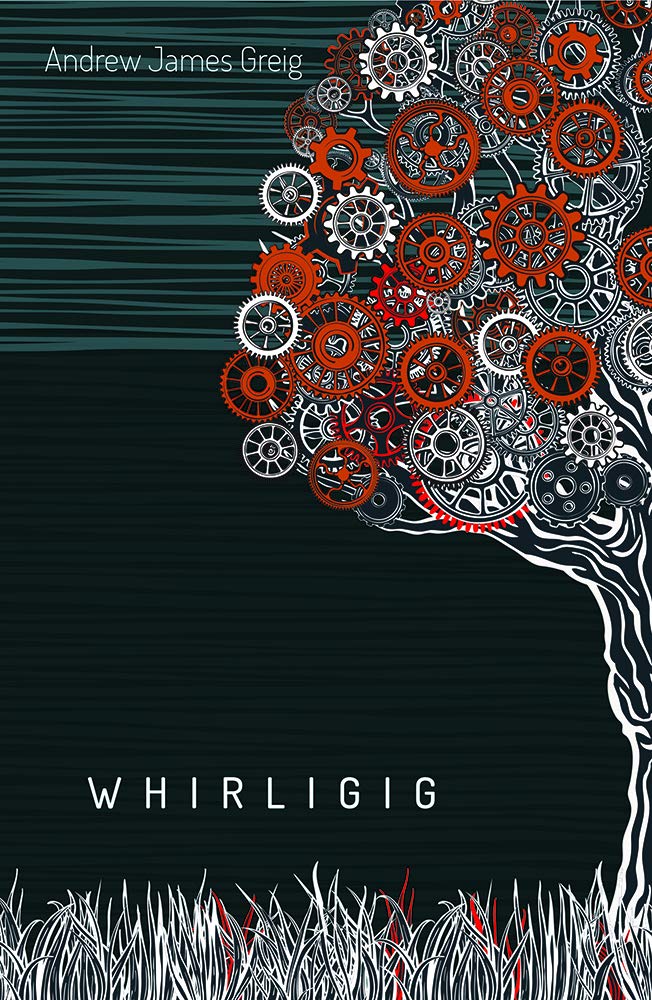
Whirligig, Andrew James Greig
Published by Fledgling Press, £9.99
Shortlisted for 2020 William McIllvanney Prize for Crime Fiction
Longlisted for the 2020 CWA John Creasey New Blood Dagger Award
Whirligig is a tartan noir like no other; an exposé of the corruption pervading a small Highland community and the damage this inflicts on society’s most vulnerable.
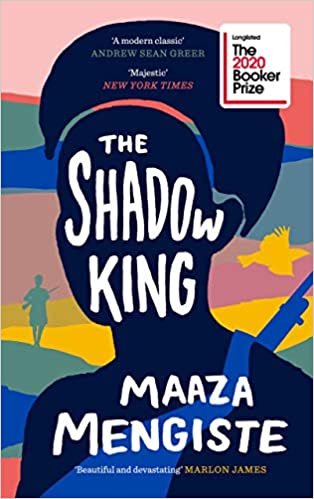 The Shadow King, Maaza Mengiste
Published by Canongate Books, £16.99
Longlisted for the 2020 Booker Prize for Fiction
This is an utterly captivating novel about female strength. Set during Mussolini’s 1935 invasion of Ethiopia, The Shadow King casts a light on the women soldiers written out of African history.
‘UNFORGETTABLE’ The Times
‘A MASTERPIECE’Washington Post
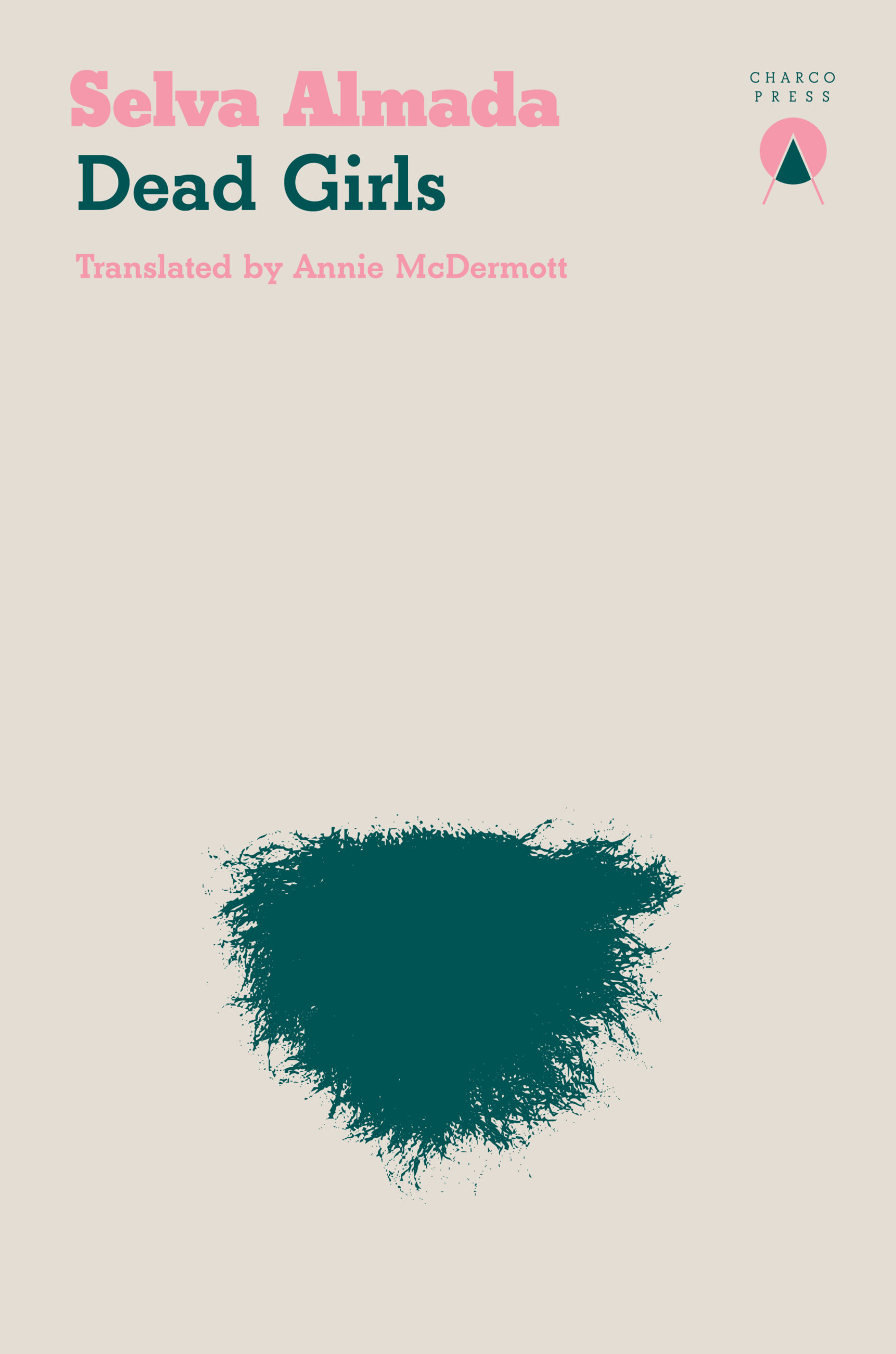 Dead Girls, Selva Almada
Published by Charco Press, £9.99
Almada narrates the case of three small-town teenage girls murdered in Argentina in the 1980’s. This is not a police chronicle, although there is an investigation. This is not a thriller, although there is mystery and suspense. The real noir element of Dead Girls lies in the heart of the women described here and of the men that have abused them. With her unique style of prose that captures the invisible, and with lyrical brutality, Almada manages to blaze new trails in this kind of journalistic fiction.
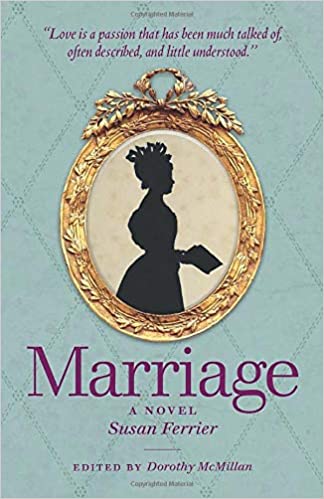
Marriage, Susan Ferrier
Published by ASLS, £14.95
Susan Ferrier has been described as the ‘Scottish Jane Austen’, and Marriage is her best-known novel, a witty and satirical examination of female lives in the Regency era.
This edition, edited and introduced by Dorothy McMillan captures the humour, sensitivity and elegance of the original bestselling novel, and gives Ferrier her proper place among Scotland’s notable writers.
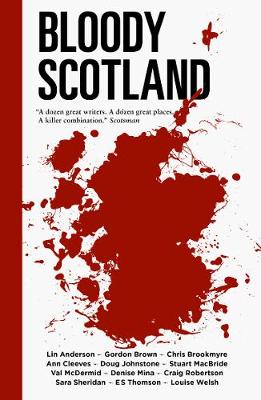
Bloody Scotland, Various Authors
Published by Historic Environment Scotland, £8.99
In Bloody Scotland, twelve of Scotland’s best crime writers use the sinister side of the country’s historical landmarks in stories that are by turns gripping, chilling and redemptive.
Stellar contributors Val McDermid, Chris Brookmyre, Denise Mina, Ann Cleeves, Louise Welsh, Lin Anderson, Gordon Brown, Doug Johnstone, Craig Robertson, E S Thomson, Sara Sheridan and Stuart MacBride explore the thrilling potential of Scotland’s iconic buildings, statues and locations.
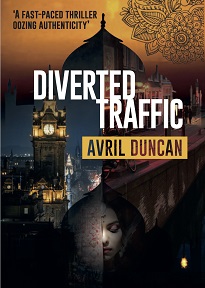 Diverted Traffic, Avril Duncan
Published by Tippermuir, £8.99
Set in Amsterdam, India, and Edinburgh, Diverted Traffic tells the story of Suman, a nine-year-old girl who is stolen from her village in India, trafficked and taken to work in the sex industry in Amsterdam.
The author uses her own experience of working with the victims of human trafficking and sexual slavery in Pune, Maharashtra to give us a novel packed with emotion, excitement and detailed knowledge of poverty in rural India and counterfeit Scotch whisky – strange and uncomfortable bedfellows until the story’s triumphal end.
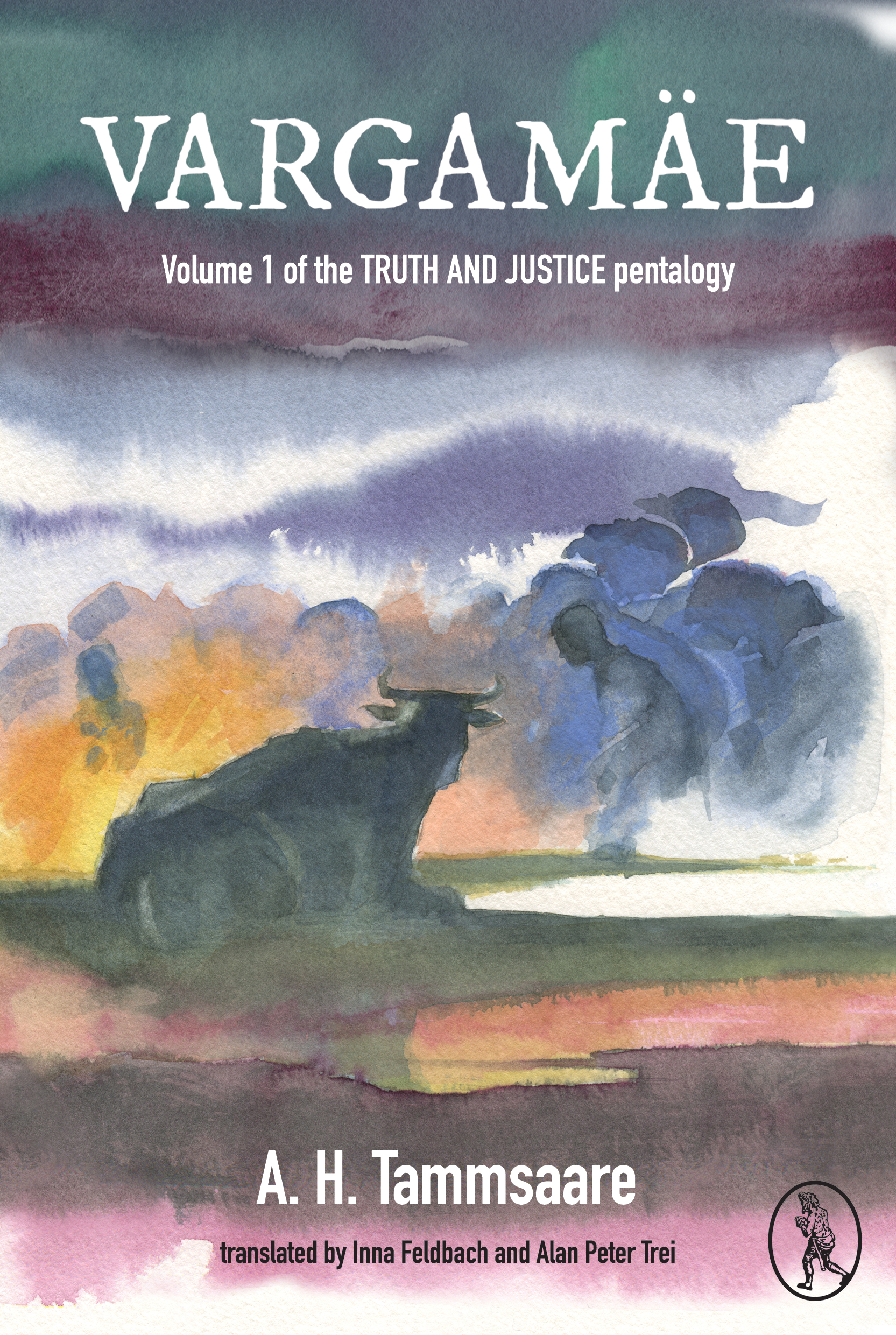 Vargamäe, A H Tammsaare
Published by Vagabond Voices
Translated by Inna Feldbach and Alan Peter Trei
This monumental work by Estonia’s greatest writer is a European classic which has for too long been neglected in the English-speaking world, and tells the story of how Tsarist Estonia developed into the First Republic through the experiences of one family who struggle through poverty first in the country and then the city.
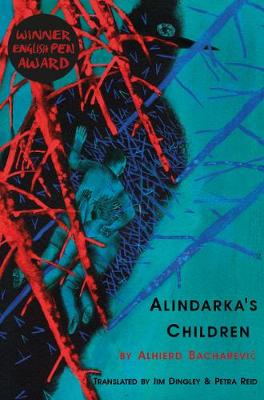
Alindarka’s Children, Alhierd Bacharevevič
Published by Scotland Street Press, £11.99
Alindarka’s Children is a contemporary novel about a brother and a sister interned in a camp. Here children are taught to forget their own language and speak the language of the colonizer, aided by the use of drugs as well as surgery on the larynx to cure the ‘illness’ of using the Belarusian language.
‘KAFAKAESQUE WITH ELEMENTS OF CYBERPUNK’ New Eastern Europe
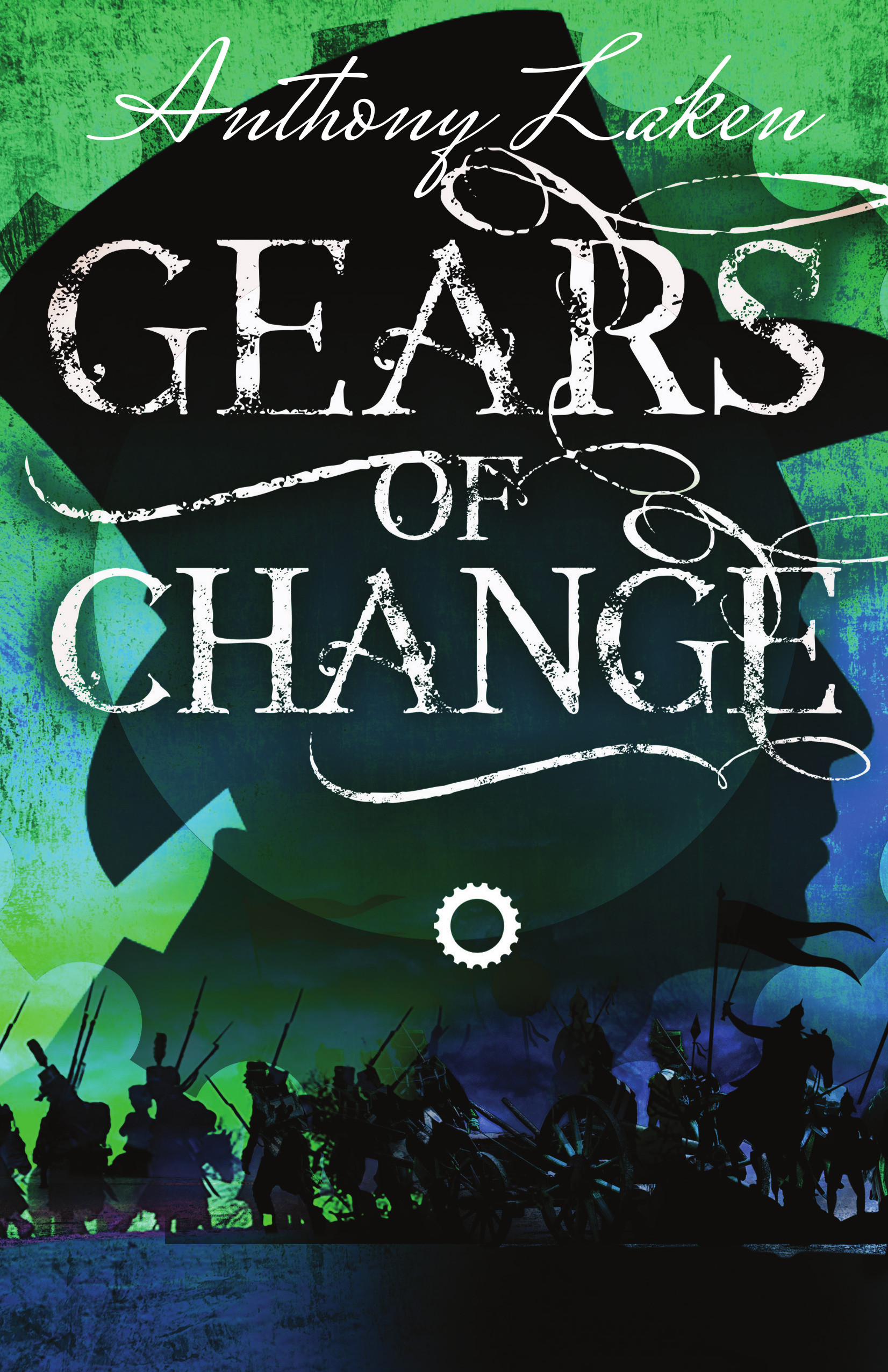 Gears of Change, Anthony Laken
Published by Luna Press Publishing, £9.99
Book III of the Infinity Machine Trilogy
In the shadow of a dark prophecy, the final game is set to determine the fate of the Estrian empire. Lady Bellina Ressa has gone through the twelve hells and back to retrieve a book – the key to bringing the bloody reign of Marmossa to an end. Now, she gathers her army: a newly awakened mage, one with Amlith’s blood, a healer, a warrior, a scholar, a thief, a father, a lover, and a fallen king.
But as different destinies intertwine, the mission begins to falter.
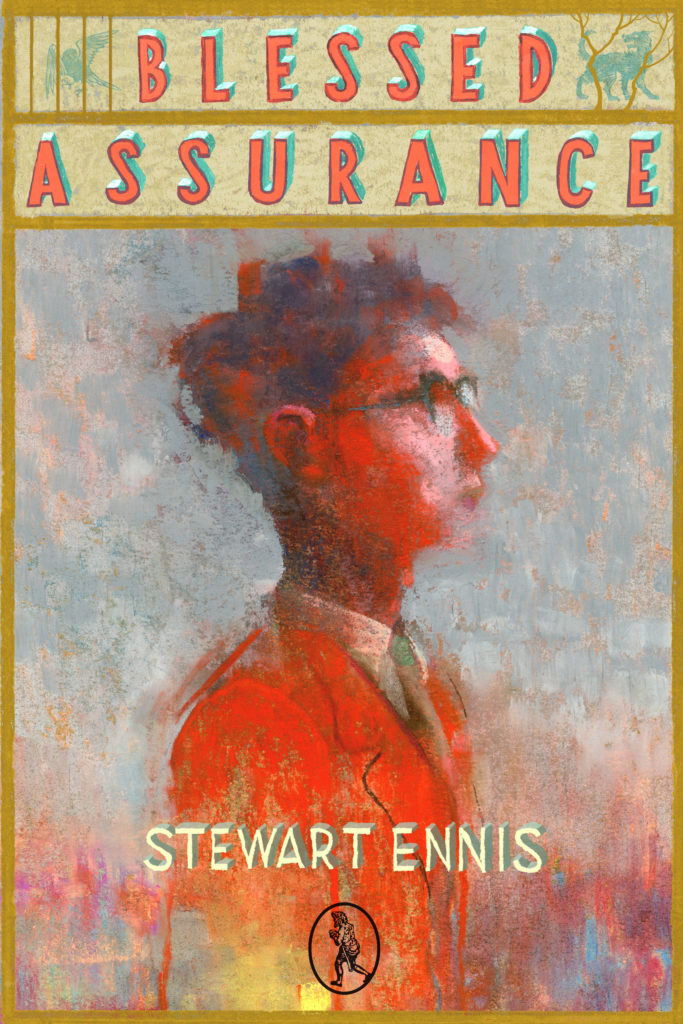 Blessed Assurance, Stewart Ennis
Published by Vagabond Voices, £9.95
Blessed Assurance is a coming of age novel set against the backdrop of a close-knit evangelical community in the fictional Scottish village of Kilhaugh. We follow God-fearing dog-thief and pyromaniac, 11 year-old Joseph Kirkland, and his godless, devil-may-care best friend, Archie Truman, as Joseph attempts to put right what he believes to be the most terrible of lies. With a cast of colourful characters, Blessed Assurance is an exploration of family, friendship, faith, loneliness and grief, and the compromises that sometimes have to be made to remain part of our community.
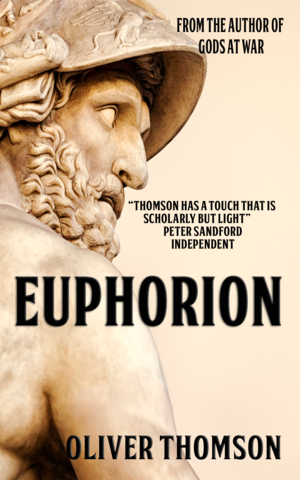 Euphorion, Oliver Thomson
Published by Sparsile Books, £9.99
Ancient Athens. War and Betrayal. Love and Murder.
2500 years ago, a man called Euphorion was born in Greece. he was witness to some of the most glorious episodes of ancient Athens, the wars, the crimes, and the political intrigues; he expected war, hoped for love and found murder and betrayal on his doorstep instead.
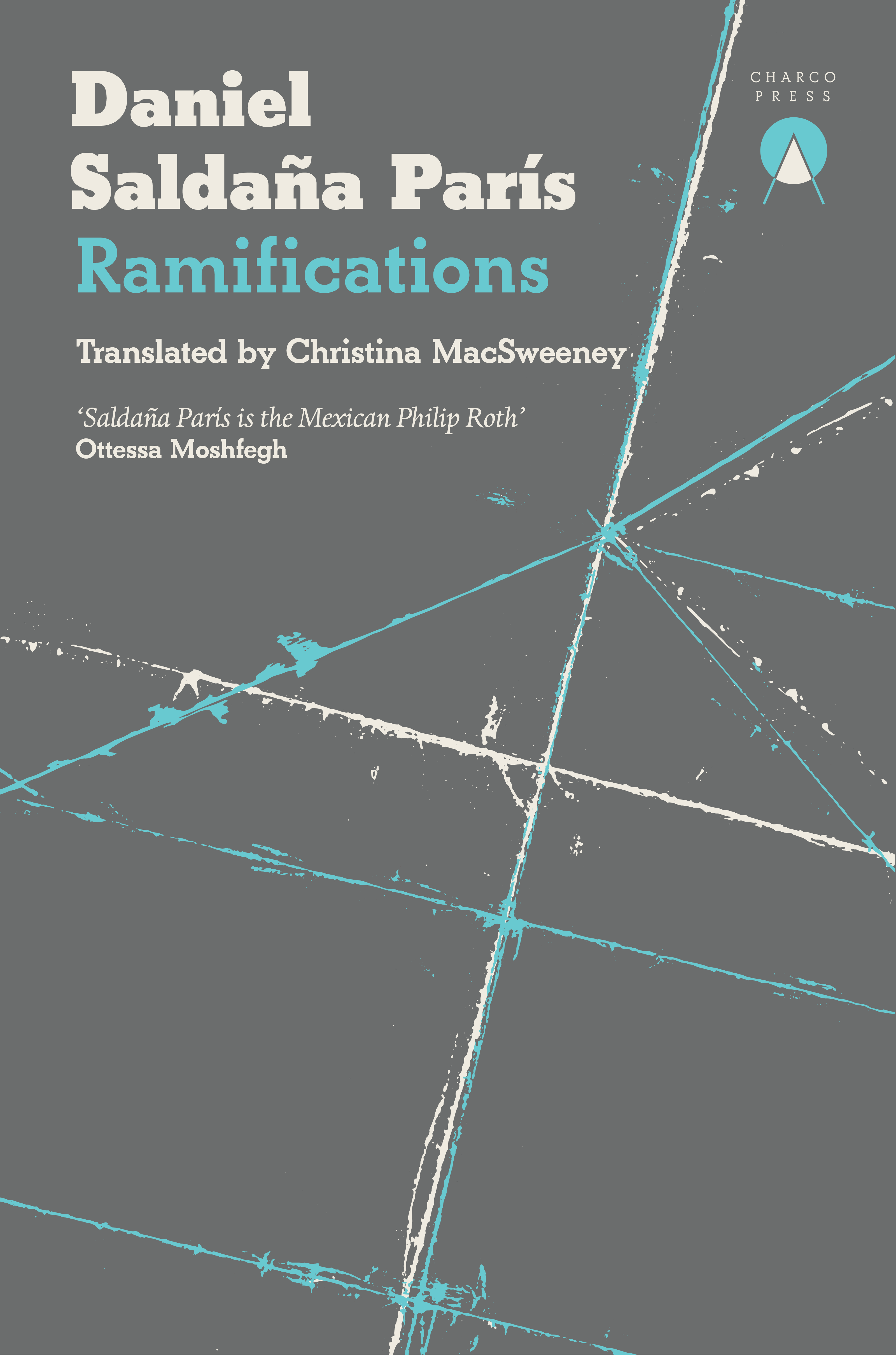 Ramifications, Daniel Saldana Paris
Published by Charco Press, £9.99
Translated by Christina McSweeney
A thirty-two-year old man can’t get out of bed or leave his apartment. All he can do is recall his life so far, dissect it, write it, gathering all the memories around what would mark his existence forever: his mother’s departure in the summer of 1994, when he was only ten, so that she could join the Zapatista uprising that was shaking up the whole country. A bone chilling, exacting portrait of a hypersensitive childhood with an unforgettable protagonist.
If you’re looking for . . . TREATS FOR CHILDREN
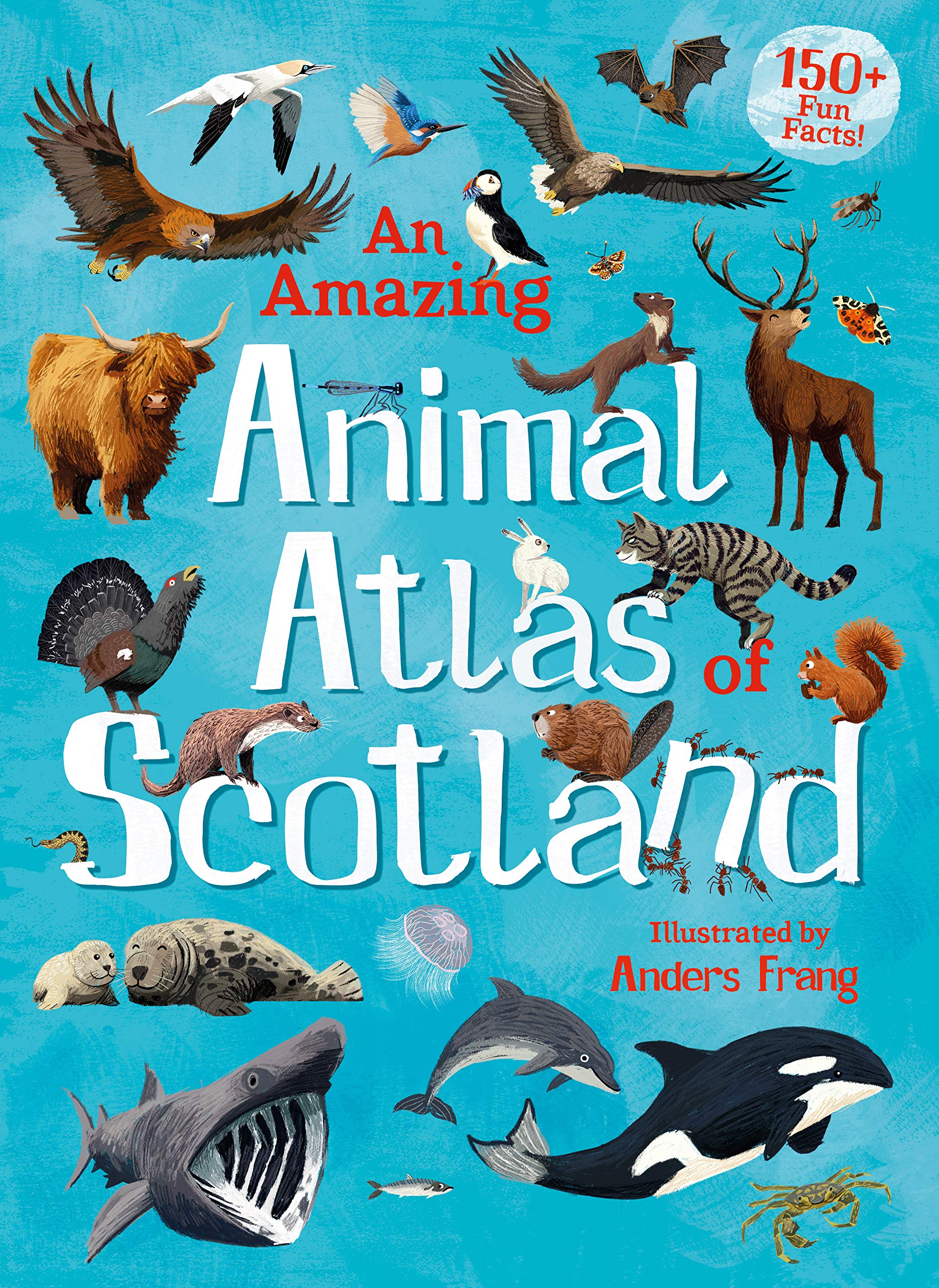 The Animal Atlas of Scotland, illustrated by Anders Frang
Published by Floris Books, £12.99
Meet the amazing animals of Scotland in this beautiful gift book, packed full of fun facts, vibrant illustrations and maps showing where to spot these wonderful creatures — from puffins and basking sharks to endangered wildcats.
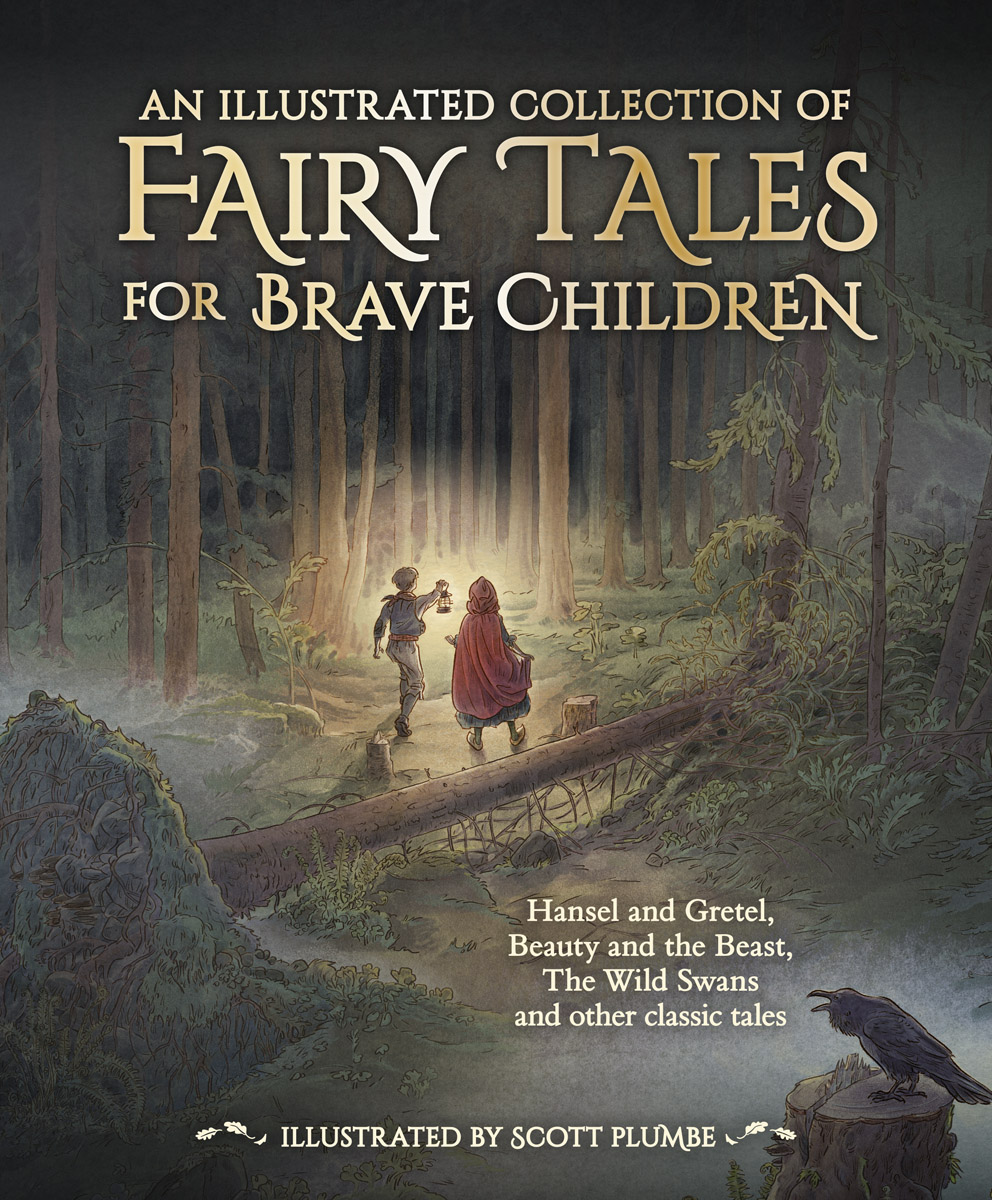
Fairy Tales for Brave Children, illustrated by Scott Plumbe
Published by Floris Books, £14.99
From wicked queens and fearsome beasts to sneaky witches and terrible giants, this atmospherically illustrated collection of darkly magical fairy tales gathers together stories of children who show true courage and face their fears.
Includes classic fairy tales such as Hansel and Gretel, The Selfish Giant and Beauty and the Beast.
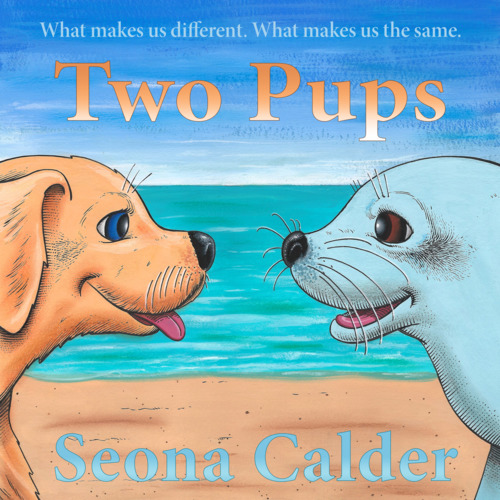 Two Pups, Seona Calder
Published by Sparsile Books, £4.99
In this delightful picture book on an unlikely friendship, artist and writer, Seona Calder, invites us to embrace our differences while celebrating what we have in common.
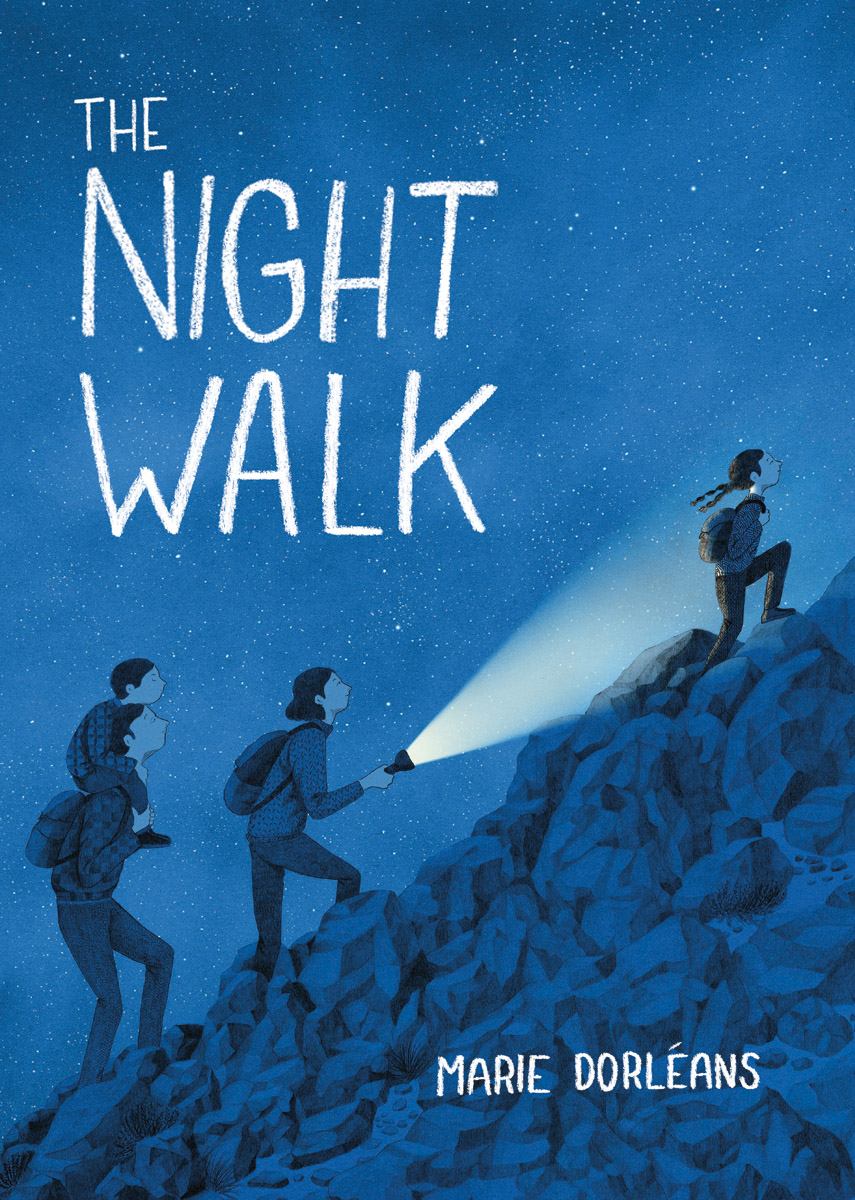 The Night Walk, Marie Dorléans
Published by Floris Books, £12.99
The dreamy story of a family’s exciting journey through the night. Beautiful and evocative, this award-winning picture book celebrates the importance of family time and the awe-inspiring power of the natural world.
- The rich, atmospheric illustrations brilliantly evoke a night-time journey through sleepy streets and rugged, beautiful countryside, and won the prestigious Prix Landerneau, in the best children’s picture book category, in France.
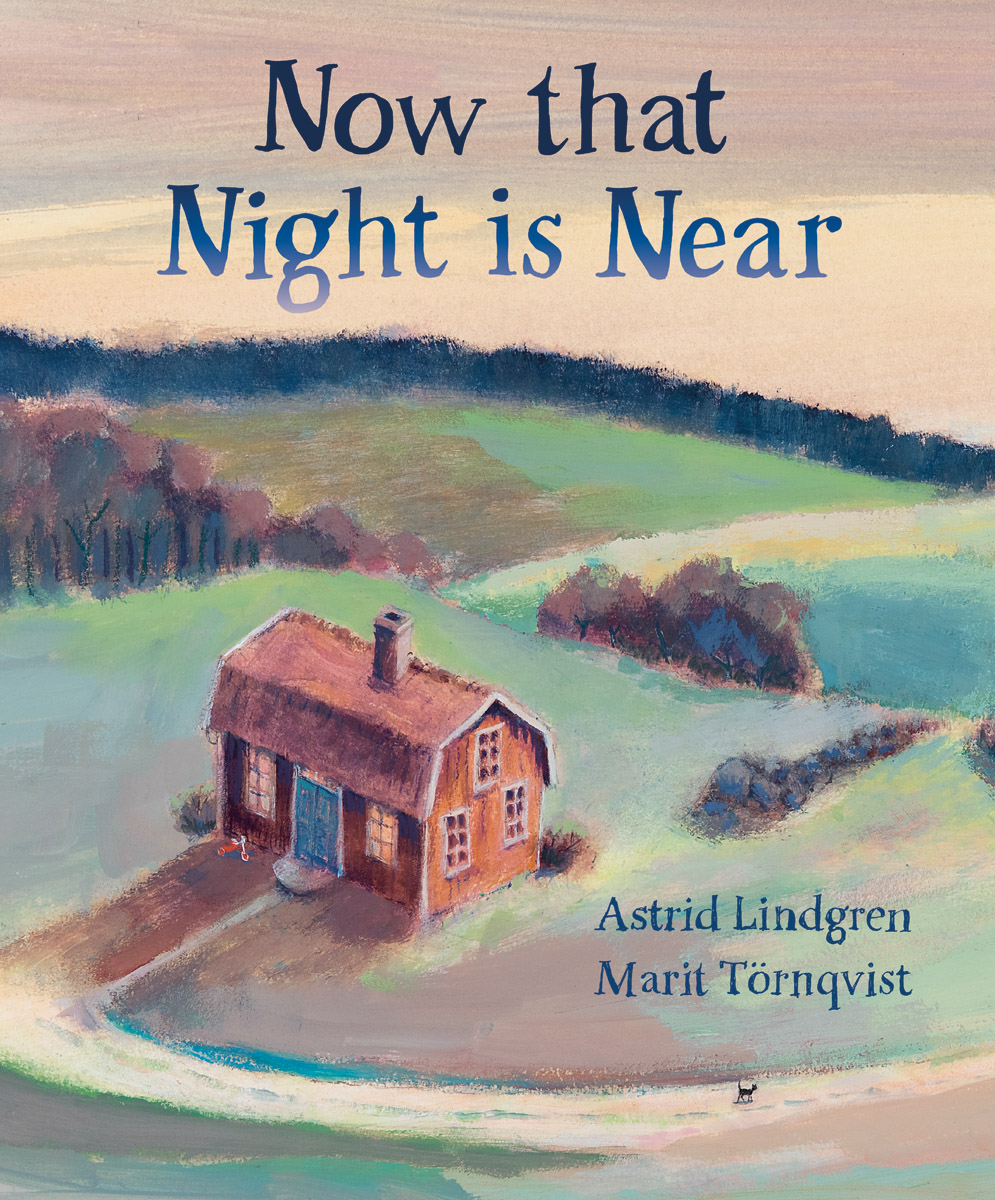 Now That Night is Here, Astrid Lindgren
Published by Floris Books, £12.99
It’s bedtime, and in the countryside, everyone is getting ready for sleep. But a curious cat isn’t tired just yet. This peaceful bedtime story by Astrid Lindgren is brought to life with luminous artwork by award-winning illustrator Marit Törnqvist.
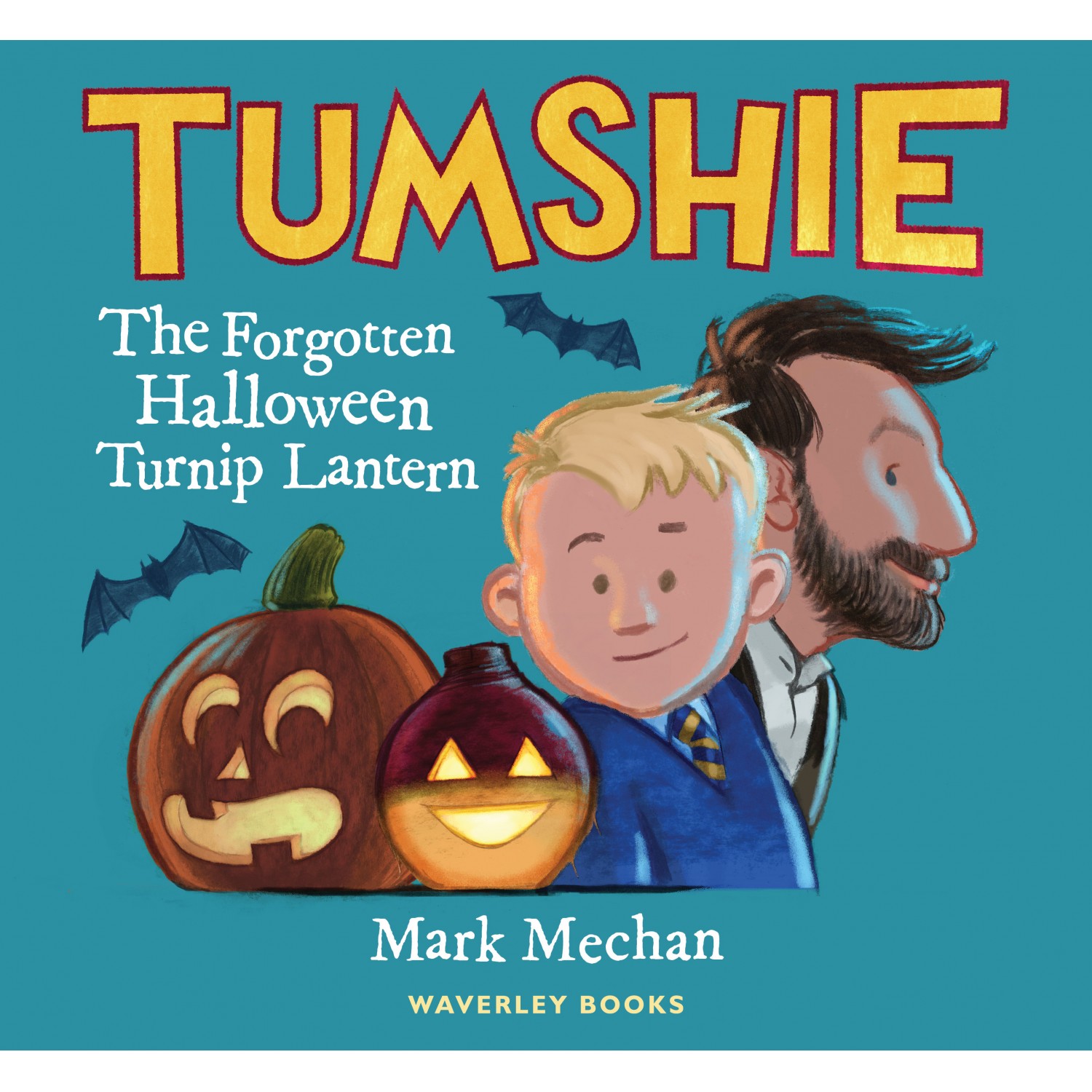 Tumshie, Mark Mechan
Published by Waverley Books, £7.99
It’s Halloween! And old traditions meet the new in Tumshie.
Set today in Scotland, Tumshie is a beautiful illustrated story of a father and his son making old fashioned Halloween lanterns and a costume like Elliot’s dad used to make when he was a boy. No off the rack costumes here!
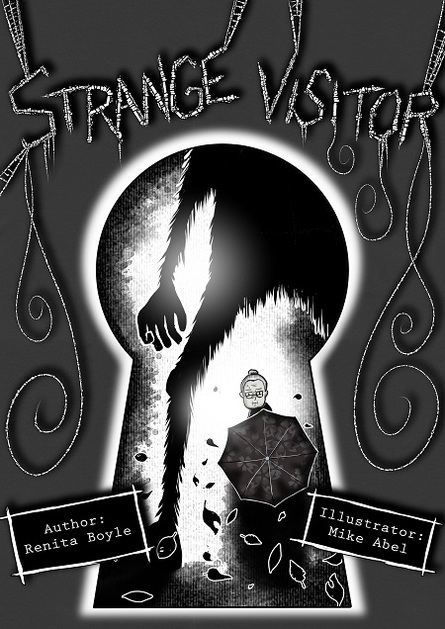 Strange Visitor, Renita Boyle
Published by Curly Tale Books, £9.99
In a cottage in the woods on a cold, dark night an old woman sat by the fireside. She rocked and rocked and sipped her tea and wished she had some company. The wind blew. The doors creaked. In came…
The twitchy tale of a wily old woman, wide-eyed cat, wild weather and the weird appearance of a very strange visitor.
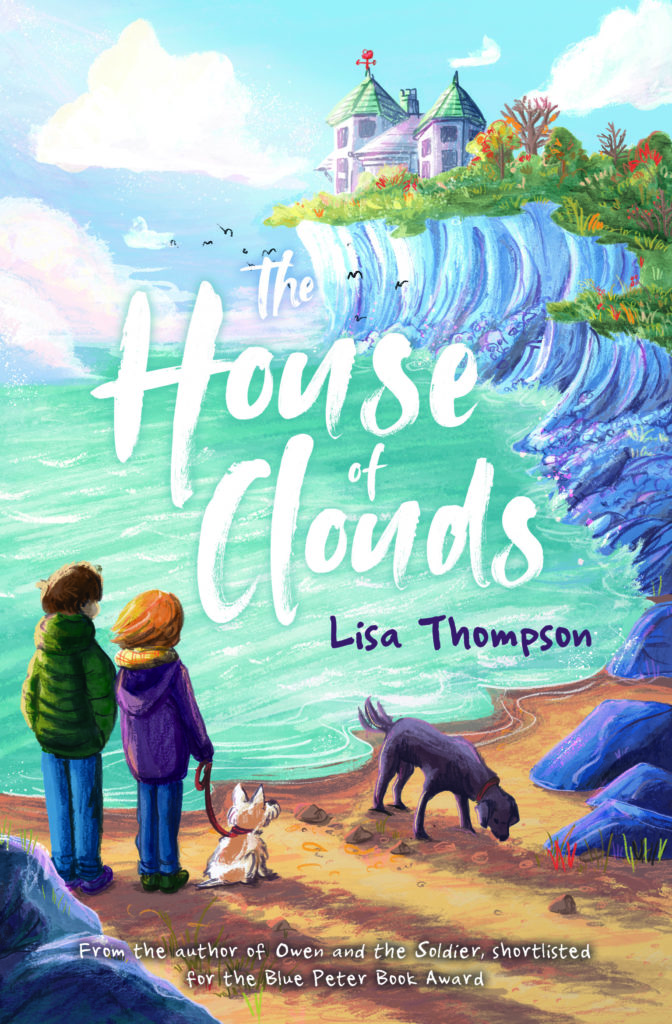
The House of Clouds, Lisa Thompson
Published by Barrington Stoke, £6.99
Tabby’s fed up. Fed up with losing her best friend and fed up that Grandad has come to stay. Grandad’s always telling the same old silly, made-up stories. But when Tabby spots something strange, her grandad reveals yet another fantastical story, and it’s only when tragedy strikes that Tabby wonders … could Grandad’s impossible tale be true?
A charming, magical tale that encourages to see wonder all around us.
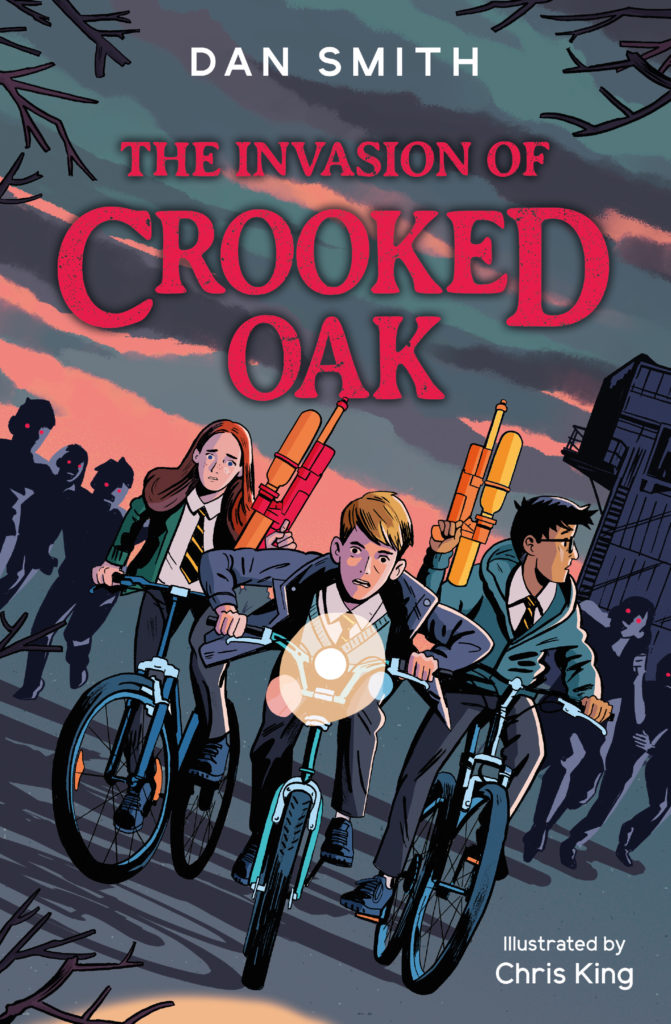
The Invasion of Crooked Oak, Dan Smith
Published by Barrington Stoke, £6.99
Something sinister is happening in Crooked Oak …
Ever since the fracking site closed, Nancy’s parents have been acting weird. Their eyes are blank, they won’t eat – it’s like they’re no longer themselves. Nancy and her friends Pete and Krish are determined to find out what’s going on. But the deeper they dig, the scarier the mystery gets. A dark presence is spreading its tendrils across Crooked Oak. Can they stop it before it takes over the whole town?
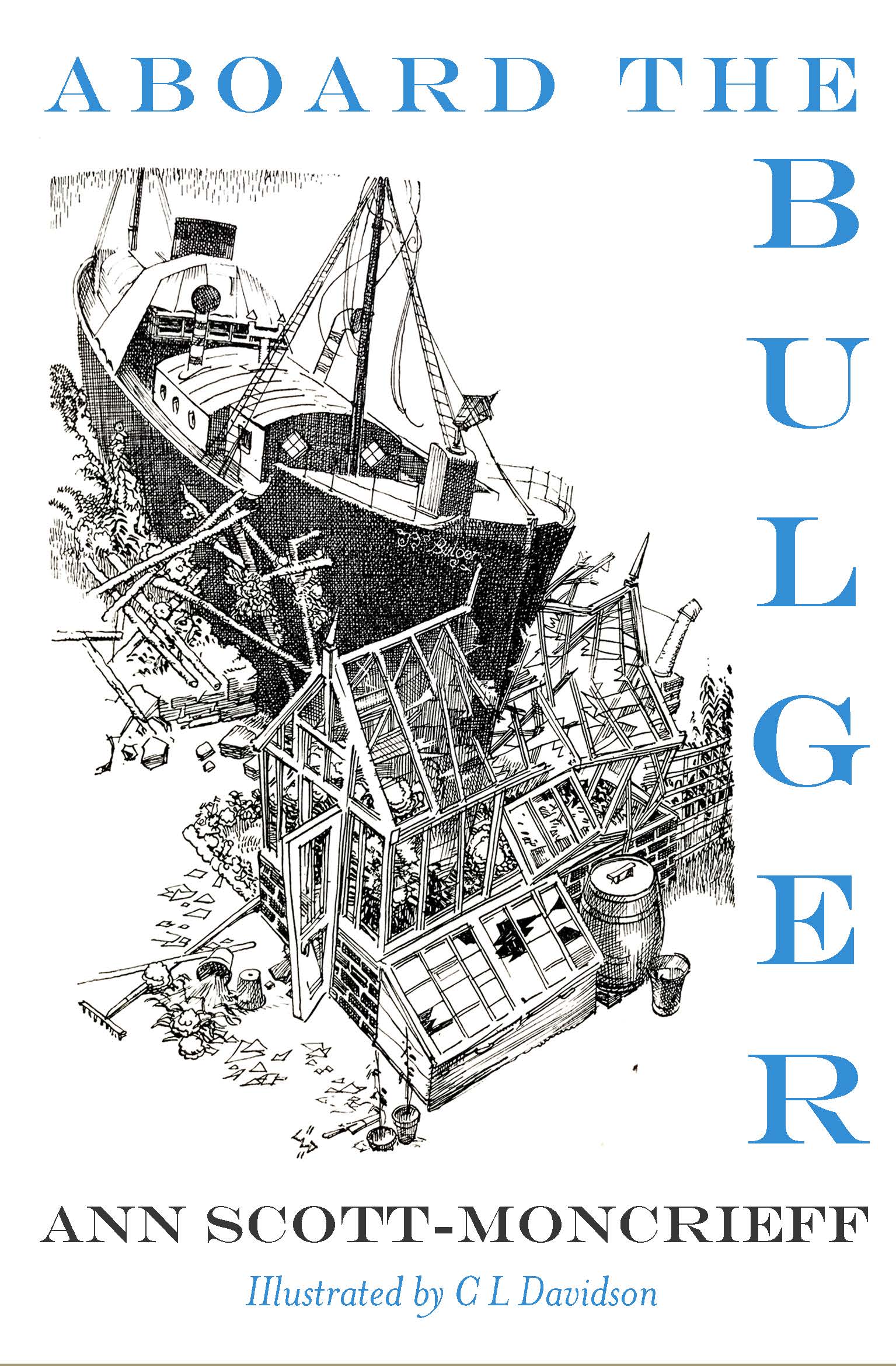 Aboard the Bulger, Ann Scott-Moncrieff
Published by Scotland Street Press, £9.99
In this childrens’ classic tale of derring-do, first released in the 1930s, five children escape from a Children’s Home, run away and steal a boat. They set sail to the Outer Hebrides for an unforgettable adventure.
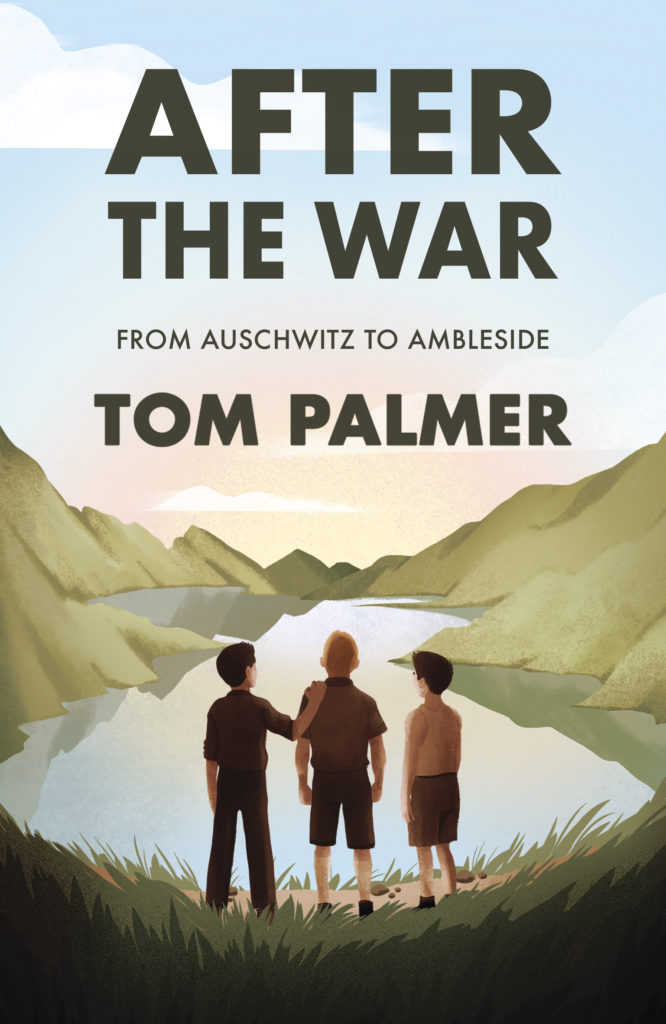
After the War, Tom Palmer
Published by Barrington Stoke, £6.99
The Second World War is finally over and Yossi, Leo and Mordecai are among three hundred children who arrive in the English Lake District. Having survived the horrors of the Nazi concentration camps, they’ve finally reached a place of safety and peace, where they can hopefully begin to recover.
But Yossi is haunted by thoughts of his missing father and disturbed by terrible nightmares. Will life by the beautiful Lake Windermere be enough to bring hope back into all their lives?
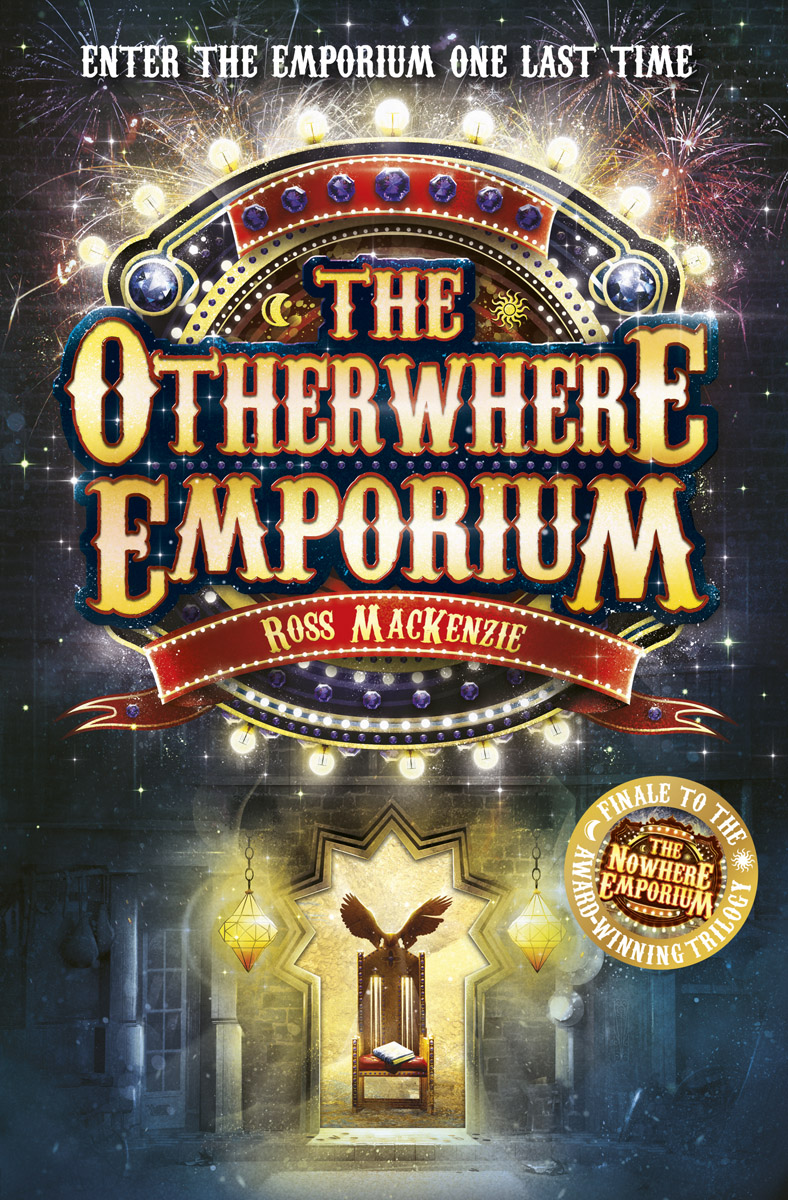 The Otherwhere Emporium, Ross Mackenzie
Published by Floris Books, £7.99
- The gripping conclusion to the highly-acclaimed Nowhere Emporium series.
The mysterious Nowhere Emporium has appeared once more, and is under the control of a menacing figure in a top hat who calls himself Vindictus Sharpe. Who is he? And where is the Emporium’s rightful owner, Daniel? Something sinister is lurking in this place of hidden wonders. . .
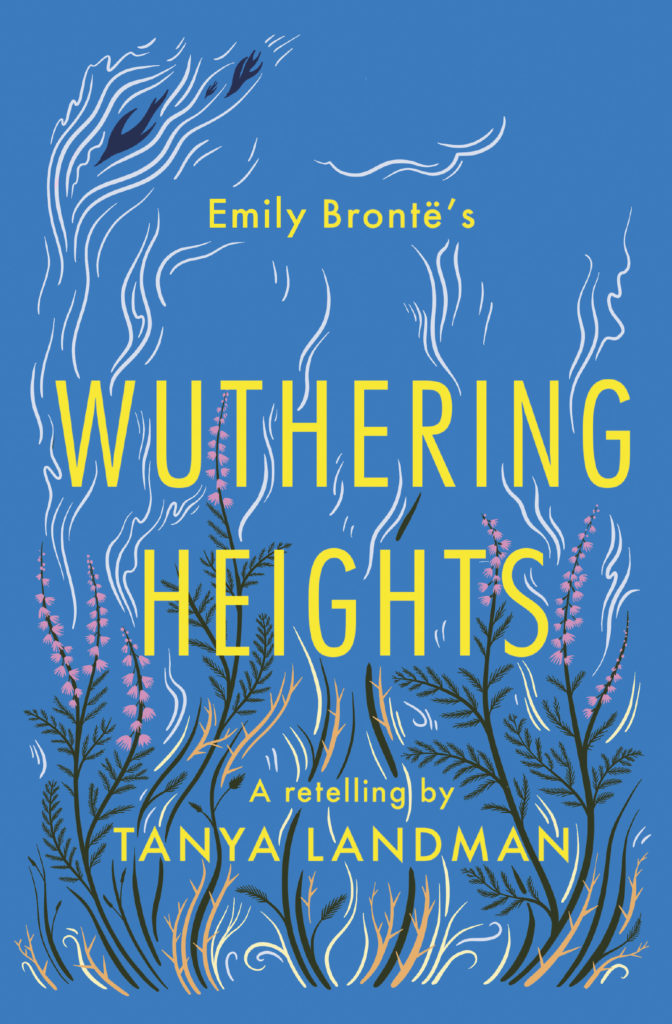
Emily Bronte’s Wuthering Heights, Tanya Landman
Published by Barrington Stoke, £7.99
When Cathy’s father brings Heathcliff, a filthy beggar boy, home to Wuthering Heights, she loses her heart to him. Cathy and Heathcliff are not destined for an easy life or a happy ending. Yet theirs is a love that defies everything: pain, punishment, disaster, even death. . .
Powerfully retold from Cathy’s point of view in this stunning new edition from Carnegie Medal-winning author Tanya Landman, Wuthering Heights is the tragic story of a passionate, obsessive love.
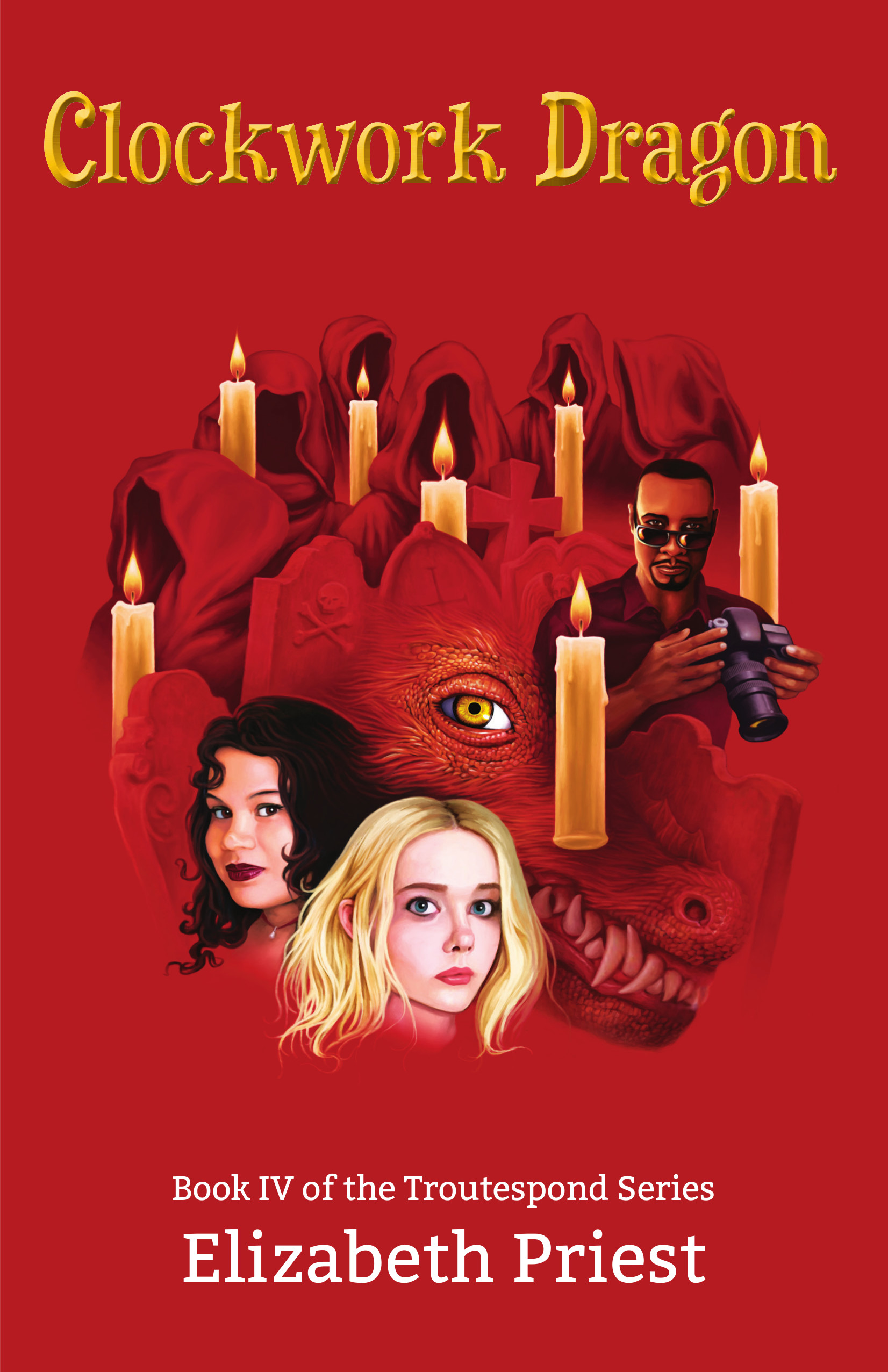 Clockwork Dragon, Elizabeth Priest
Published by Luna Press Publishing, £9.99
Book IV of the Troutespond series
Tanya, Alana, Teb and Ally are celebrating their exam results and planning for an exciting future ahead. Trouble is, a secret cult of red-robed figures is skulking around town, the Piper has been banished, the dead are reappearing, and being volunteered for human sacrifice seems to be the order of the day. Can they save themselves and their summer plans?
If you’re looking for . . . PLEASURES AND PASTIMES
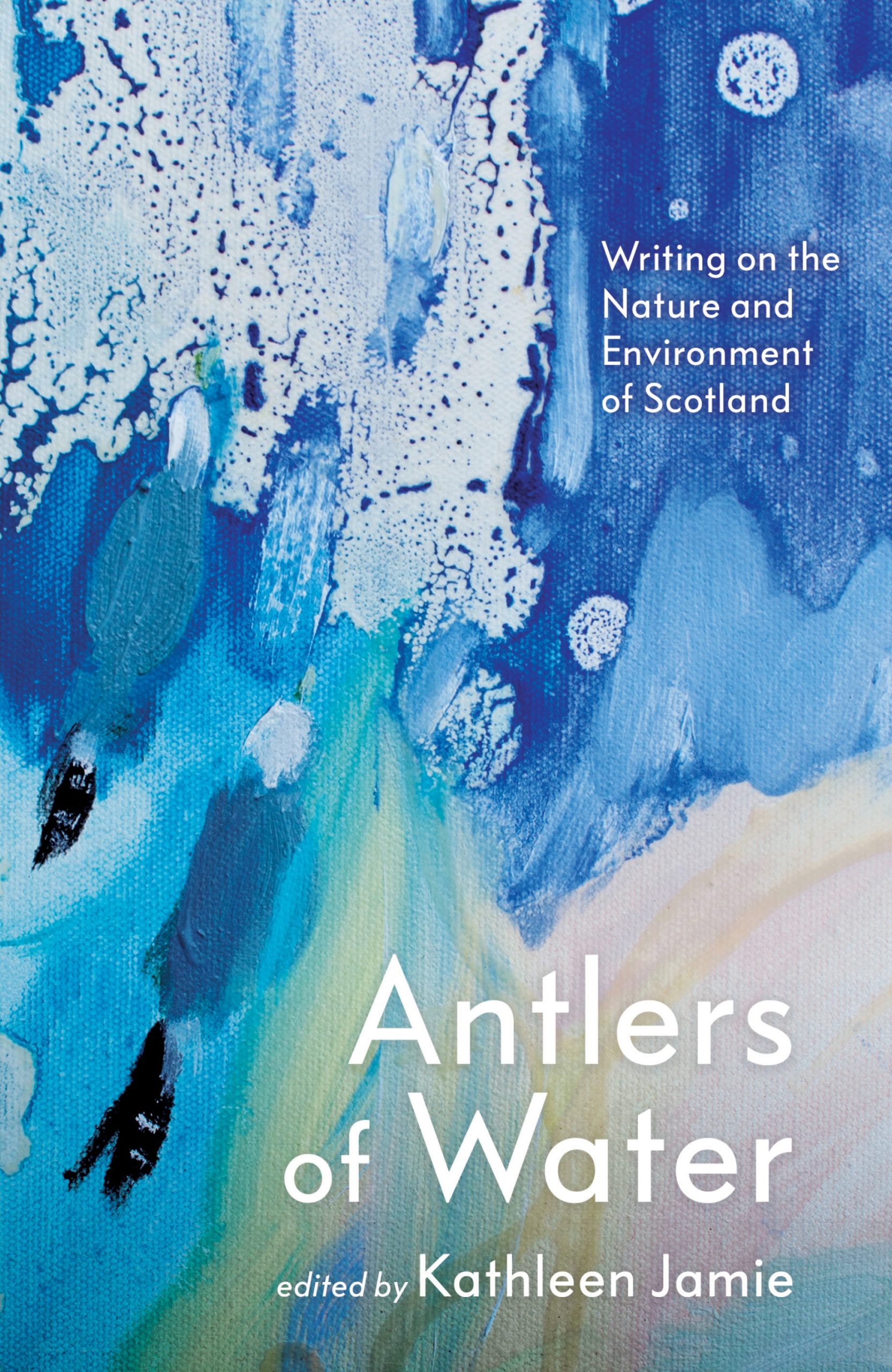 Antlers of Water, edited by Kathleen Jamie
Published by Canongate, £20.00
The first ever collection of contemporary Scottish writing on nature and landscape, Antlers of Water showcases the diversity and radicalism of new Scottish nature writing today.
Edited, curated and introduced by the award-winning Kathleen Jamie, this inspiring collection takes us from walking to wild swimming, from red deer to pigeons and wasps, from remote islands to back gardens.
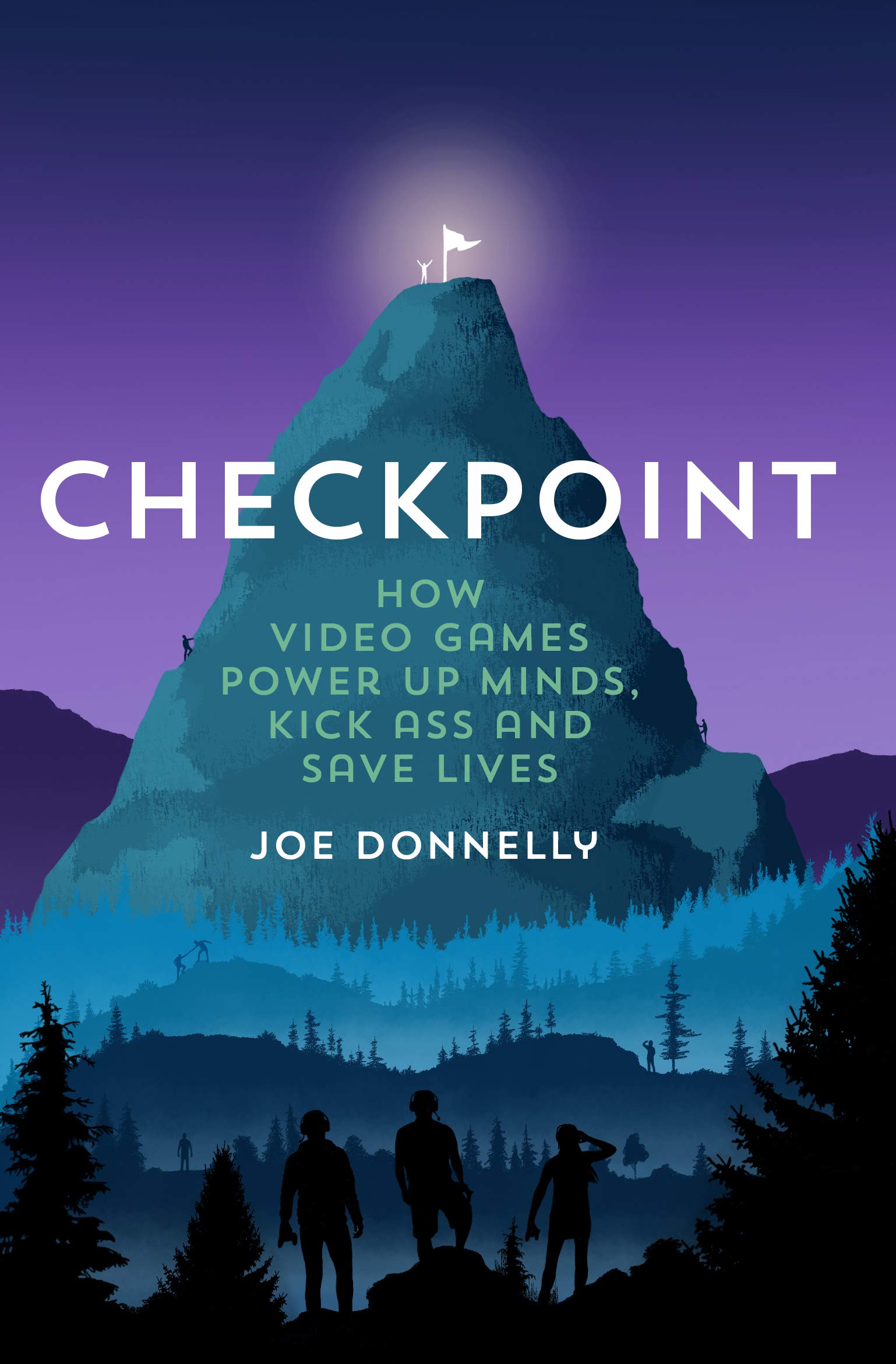 Checkpoint, Joe Donnelly
Published by 404 Ink, £9.99
Inspired by his own experience navigating depression following a tragic personal loss, Checkpoint reflects on the comforting and healing effect that entering into new digital worlds and narratives can have on mental health both personally and on a wider scale.
Through exclusive, in-depth interviews with video game developers, health professionals, charities and gamers alike, Joe makes the case for the vital value of gaming culture.
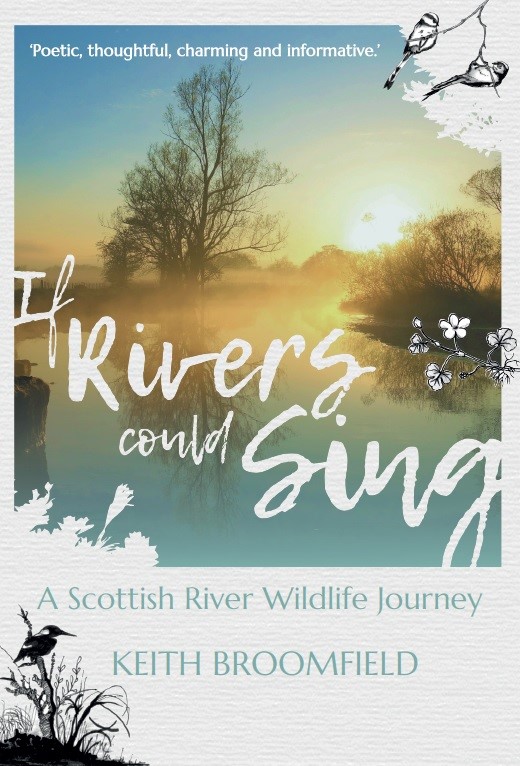 If Rivers Could Sing, Keith Broomfield
Published by Tippermuir Books, £9.99
Rivers have captivated wildlife writer Keith Broomfield since childhood and in this personal Scottish river wildlife journey, he delves deeper into his own local river to explore its abundant wildlife and to get closer to its beating heart.
If Rivers Could Sing is a book for all who love wildlife, wild places, and Scotland’s natural heritage.
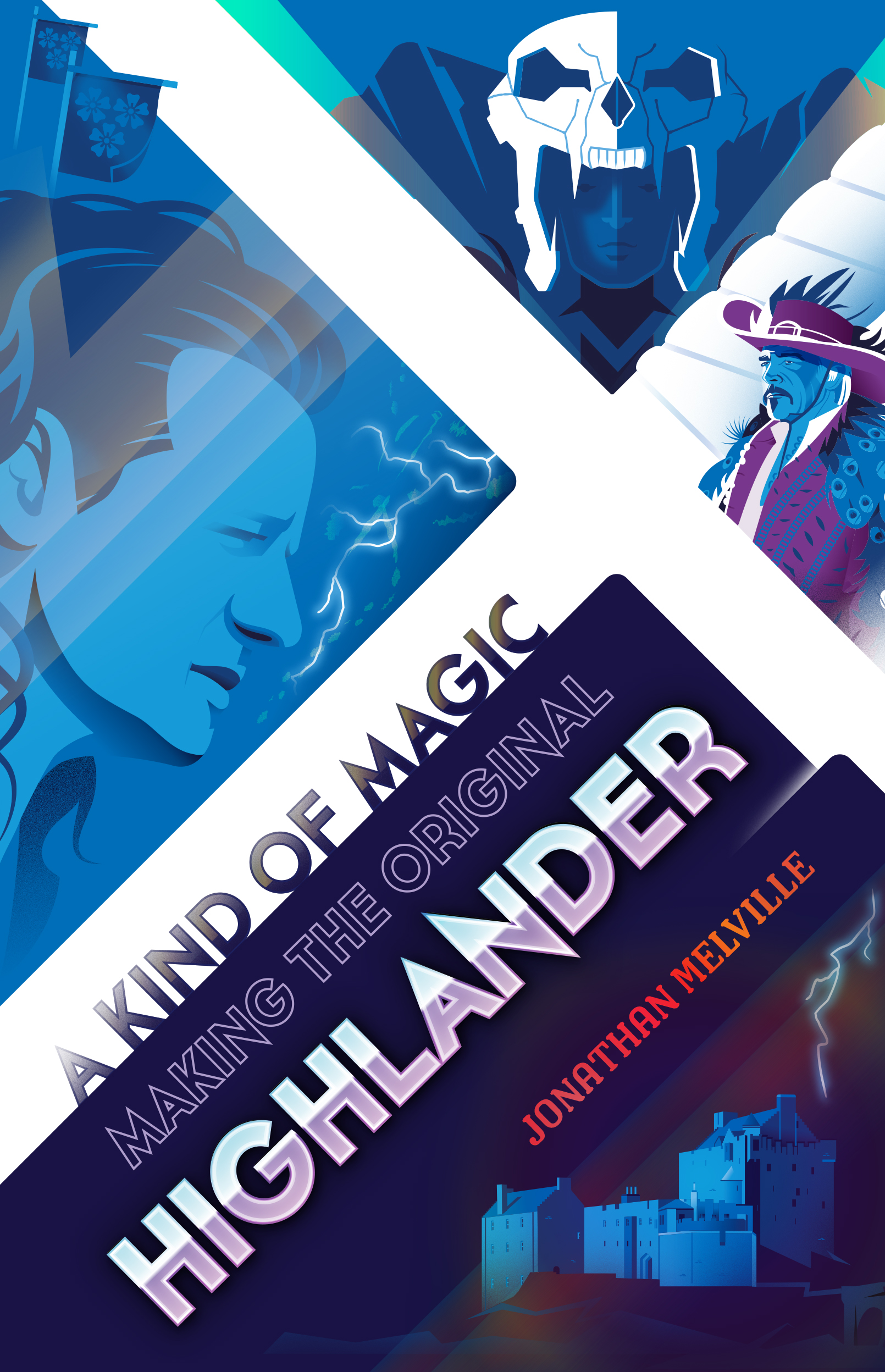 A Kind of Magic, Jonathan Melville
Published by Polaris Publishing, £16.99
The story of an immortal Scottish warrior battling evil down through the centuries, Highlander fused a high-concept idea with the kinetic energy of a pop promo pioneer and Queen’s explosive soundtrack to become a cult classic.
Author Jonathan Melville looks back at the creation of Highlander with the help of more than 60 cast and crew, including stars Christopher Lambert and Clancy Brown, as well as Queen’s Brian May and Roger Taylor, and takes the readers from London, to New York, and, of course, the Scottish Highlands.
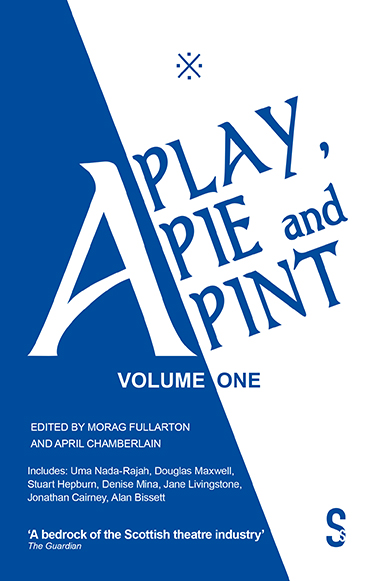 A Play, a Pie and a Pint, edited by Morag Fullerton & April Chamberlain
Published by Salamander Street, £17.99
If you’re missing watching this staple of Scotland’s theatre scene, then this collection of six plays is the the next best thing. This first volume includes the scripts for the following plays:
– Toy Plastic Chicken (Uma Nada-Rajah)
– A Respectable Widow Takes to Vulgarity (Douglas Maxwell)
– Chic Murray: A Funny Place for A Window (Stuart Hepburn)
– Ida Tampson (Denise Mina)
– Jocky Wilson Said (Jane Livingstone and Jonathan Cairney)
– Do Not Press This Button (Alan Bissett)
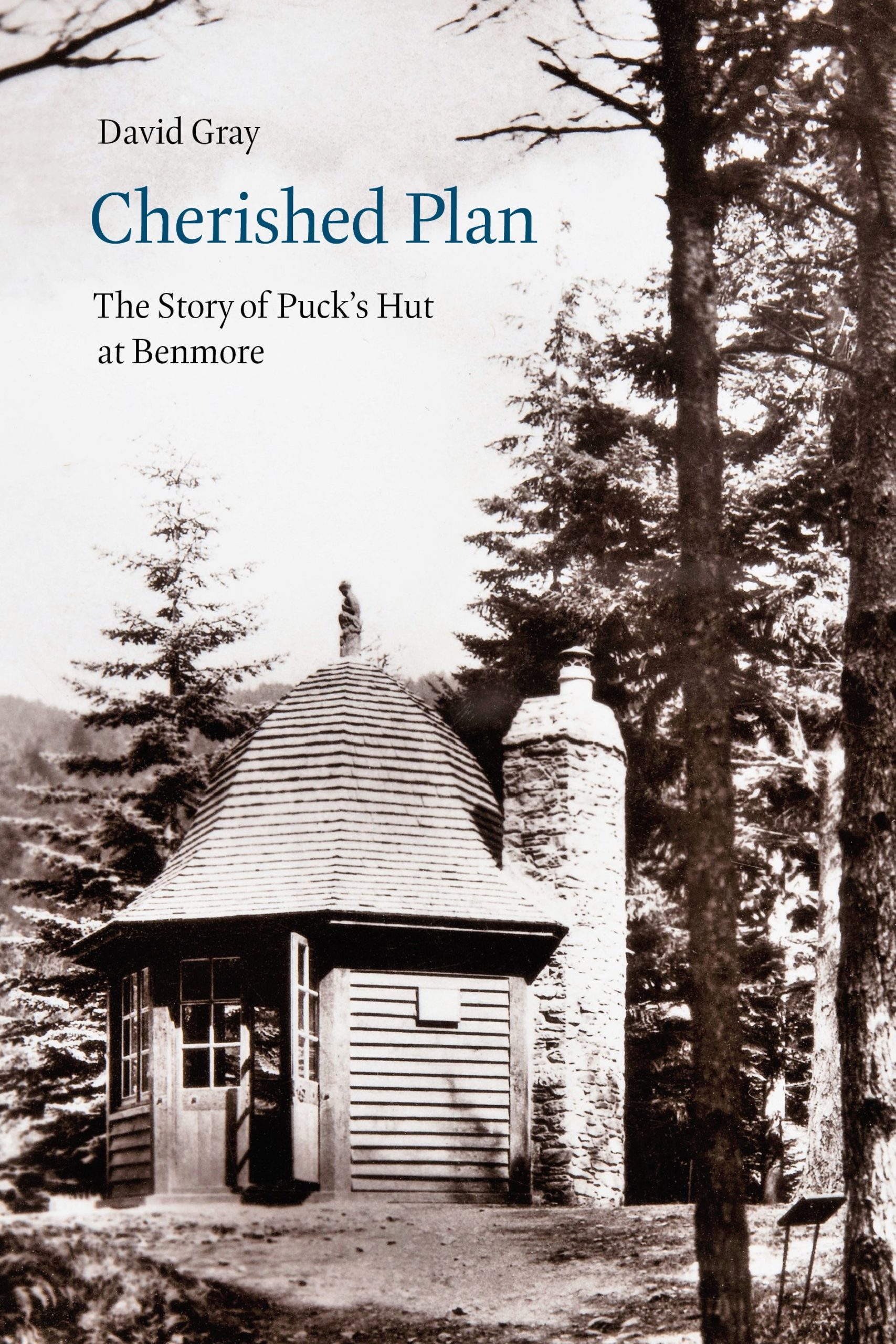 Cherished Plan, David Gray
Published by Royal Botanic Gardens Edinburgh, £8.00
Cherished Plan celebrates RBGE at Benmore and the desire to commemorate Sir Isaac Bayley Balfour, a renowned academic, botanist and visionary. Scratch a little deeper and it becomes clear that his modest memorial building Puck’s Hut, encapsulates and reflects a wide range of developments in Scotland’s environmental awareness over the past 150 years. A thought-provoking work on those interested in nature, climate change and land access.
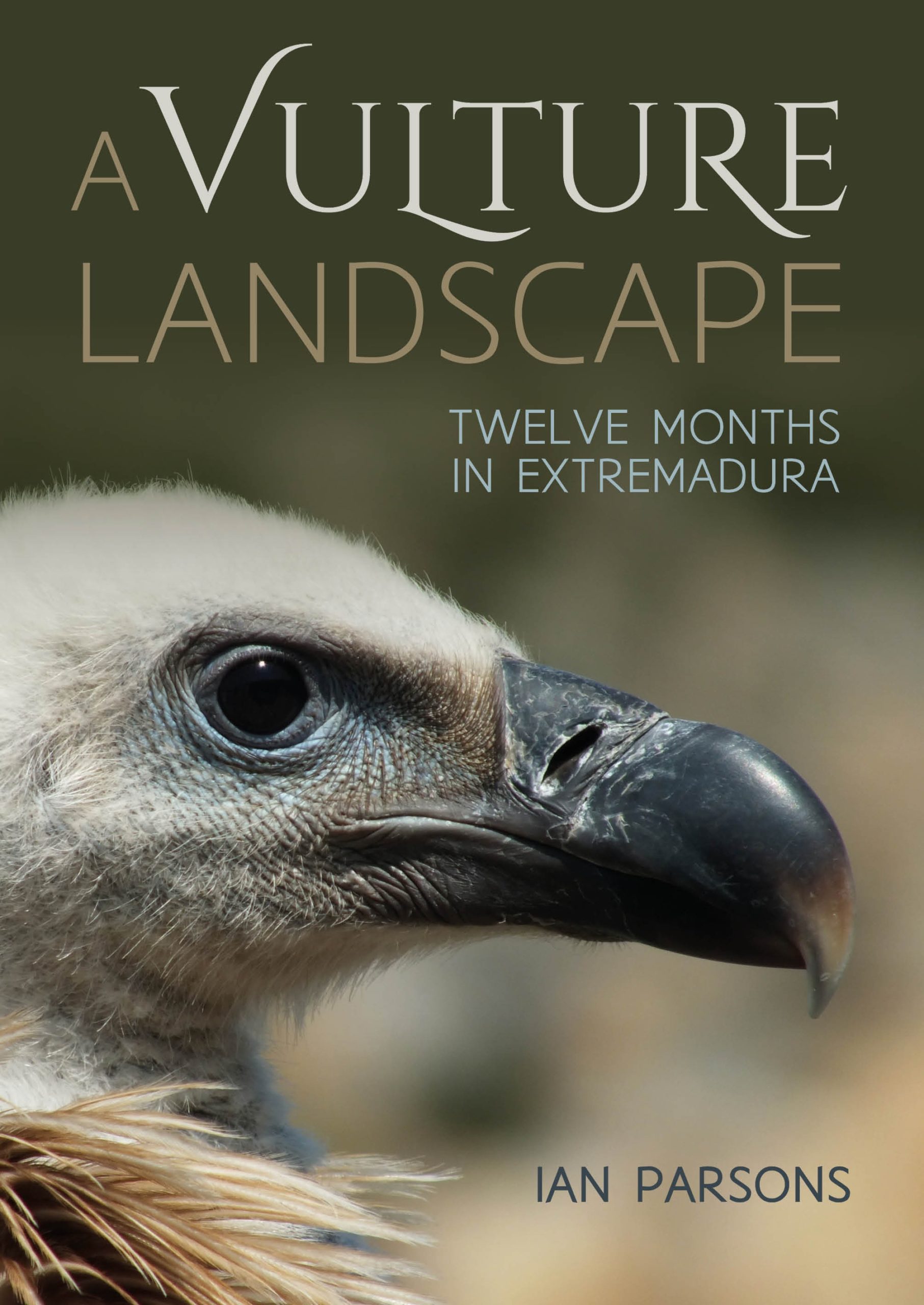 A Vulture Landscape, Ian Parsons
Published by Whittles Publishing, £17.99
A Vulture Landscape is more than just a book about vultures, in the same way that these majestic flyers are more than just birds. A calendar year in the lives of these gargantuan raptors is explored as they live, breed, feed and fly with effortless ease across the skies of the vulture landscape that is Extremadura in central Spain.
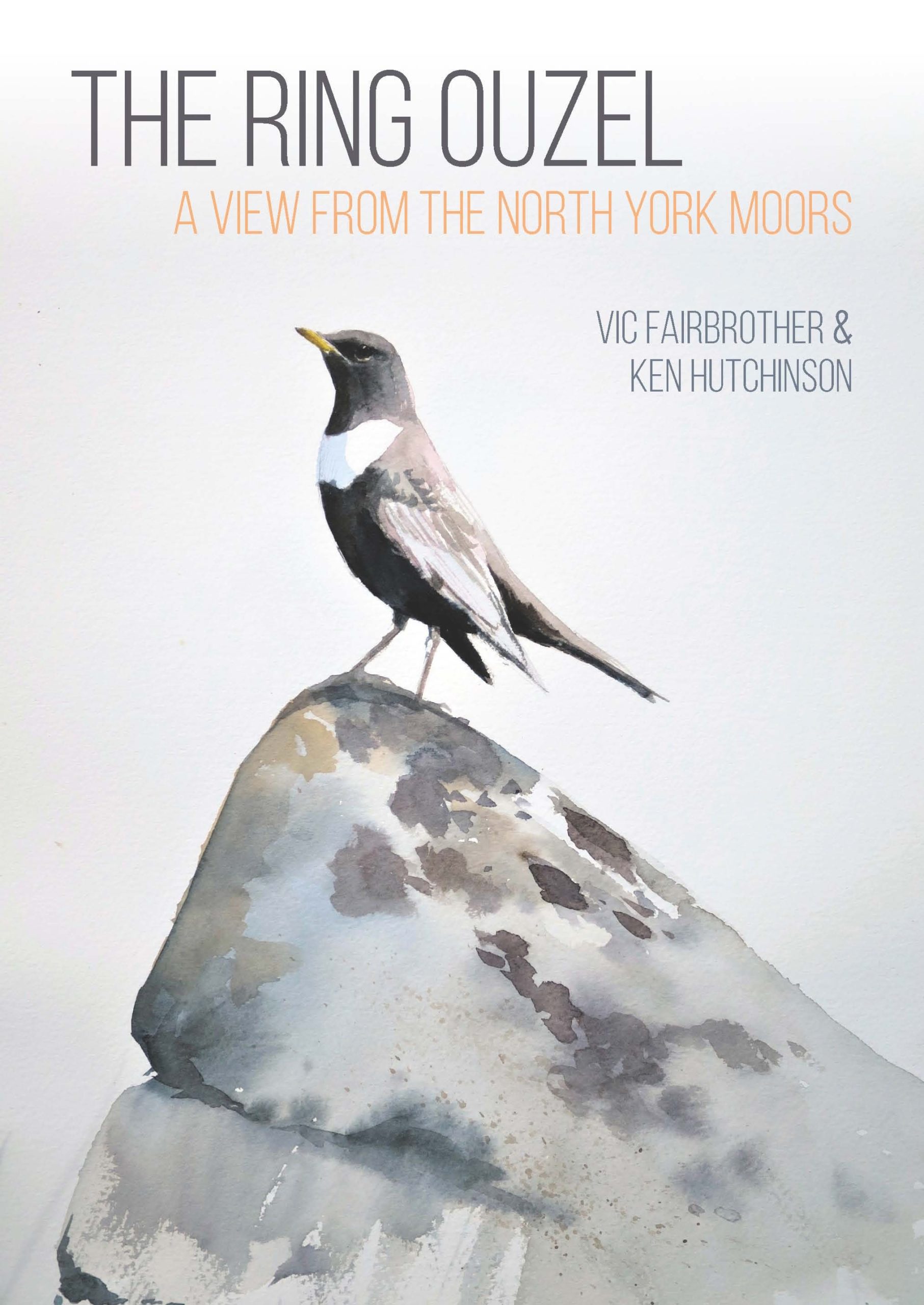 The Ring Ouzel, Vic Fairbrother & Ken Hutchinson
Published by Whittles Publishing, £21.95
Using vivid extracts from field notebooks, and illustrated with photographs as well as paintings and sketches by wildlife artist Jonathan Pomroy, the reader is transported to the beautiful North York Moors National Park to witness these creatures’ circle of life. We can share in the excitement as the first Ring Ouzels of the year return from their winter quarters in North Africa, witness their courtship displays, the establishment of territories, nest building, and the laying and hatching of Ouzel eggs.
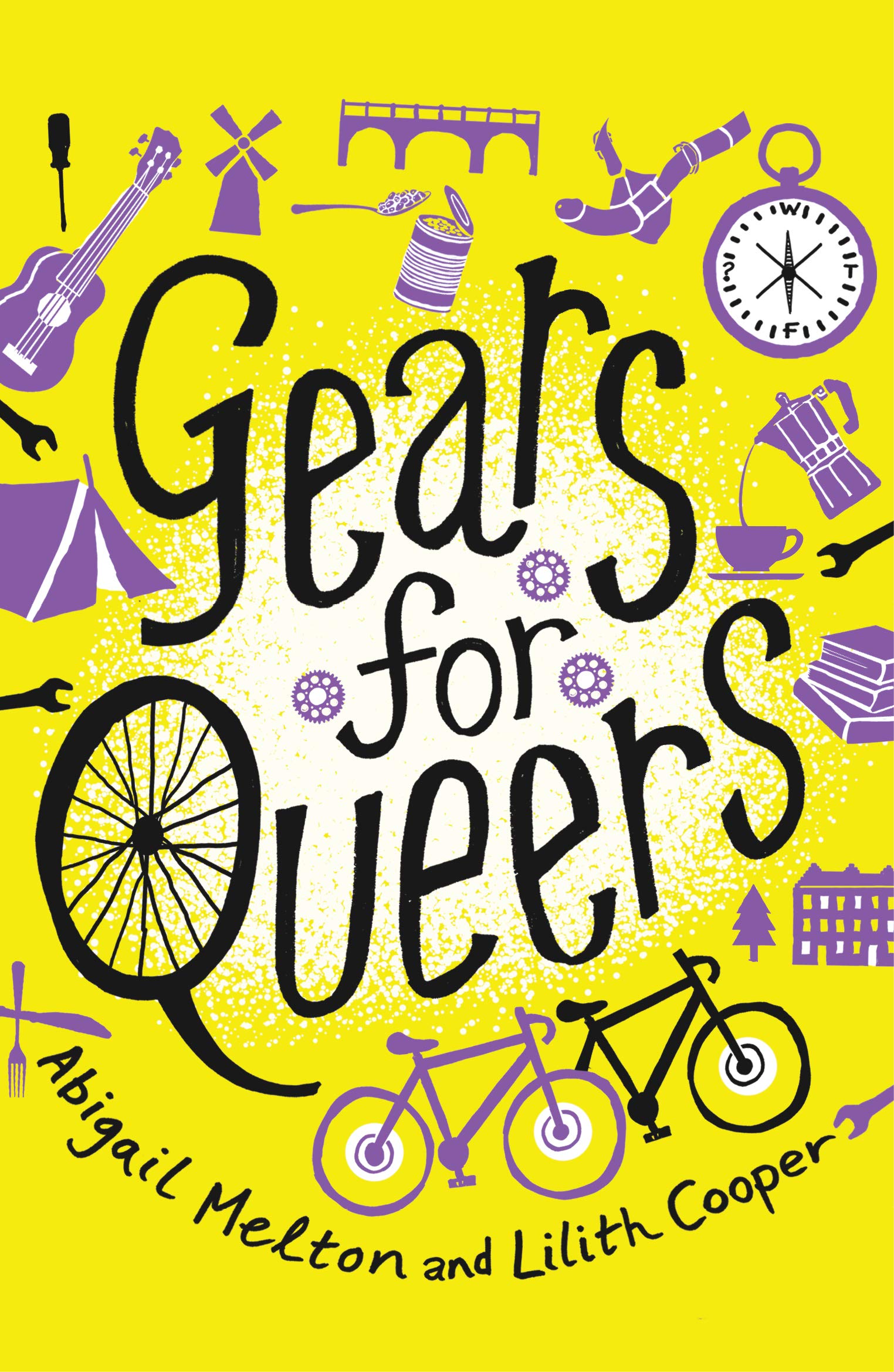 Gears for Queers, Abigail Melton & Lilith Cooper
Published by Sandstone Press, £8.99
Keen to see some of Europe, queer couple Lilith and Abigail get on their old bikes and start pedalling. Along flat fens and up Swiss Alps, they will meet new friends and exorcise old demons as they push their bodies – and their relationship – to the limit.
‘JOYFUL… A REFRESHINGLY HONEST AND THOUGHTFUL READ.’ Women’s Health
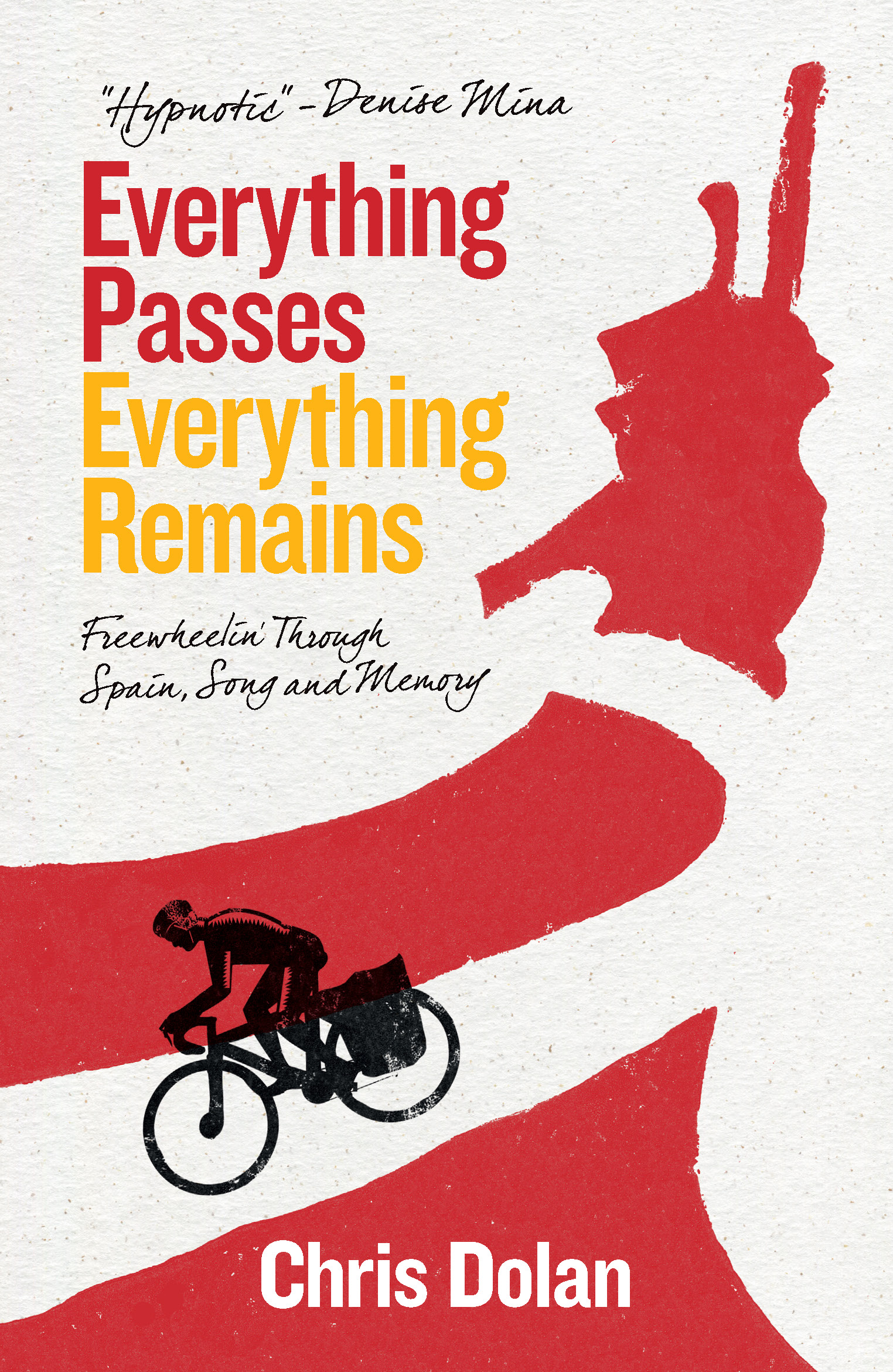 Everything Passes, Everything Remains, Chris Dolan
Published by Saraband, £9.99
How would any of us feel if we could meet our 16-year-old selves, a ghost on the road? This book is a confluence of journeys, made by Chris, his friends, and writers before him – especially Laurie Lee – in a kind of travelogue that contemplates history, memory, friendship, loss, music and writing. It’s a love letter to Spain’s poets and its history, from the Inquisition to the Civil War and to its current ‘interesting times’.
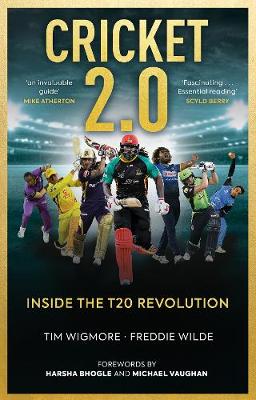 Cricket 2.0, Tim Wigmore & Freddie Wilde
Published by Polaris Publishing, £14.99
The 2020 Wisden Book of the Year
The Telegraph Sports Book Awards’ Cricket Book of Year 2020
Using exclusive interviews with over 80 leading players and coaches – including Jos Buttler, Ricky Ponting, Kieron Pollard, Eoin Morgan, Brendon McCullum and Rashid Khan – Tim Wigmore and Freddie Wilde chronicle this revolution with insight, forensic analysis and story-telling verve.
‘AN INVALUABLE GUIDE BY TWO SMART YOUNG WRITERS’ Mike Atherton, The Times
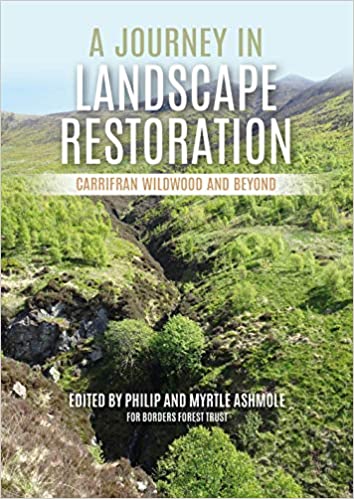 A Journey in Landscape Restoration, Philip & Myrtle Ashmole
Published by Whittles Publishing, £18.99
Carrifran Wildwood was the brainchild of local people who mourned the lack of natural habitats and decided to act. When Borders Forest Trust was founded the Wildwood became the Trust’s first large land-based project, and after 20 years of work it has become an inspirational example of ecological restoration.
The 40 contributors vividly describe all the challenges of carrying forward bold initiatives requiring close cooperation with local communities as well as funders, authorities, landowners and partners. This is the extraordinary story of how a group of motivated people can revive nature at a landscape scale.
If you’re looking for . . . INSIGHT FOR THE WORLD WE’RE IN
 The Basic Income Pocketbook, Annie Miller
Published by Luath Press, £9.99
The issue of a Universal Basic Income has shot to the forefront of people’s minds as the COVID-19 pandemic has affected job security in many sectors. This innovative book provides a new perspective on Basic Income – a regular, unconditional payment to every citizen resident in the country. Rigorously researched and concisely communicated, this guide will appeal to academics and policy makers, as well as to the general reader who is concerned about the current state of social security in the UK.
 Authentic Democracy, Dan McKee
Published by Tippermuir, £9.99
This accessible and thought-provoking guide unpacks the arguments and assumptions that justify our current political order, demonstrating that the existing political frameworks are in fact highly undemocratic; and that anarchism is what authentic democracy looks like.
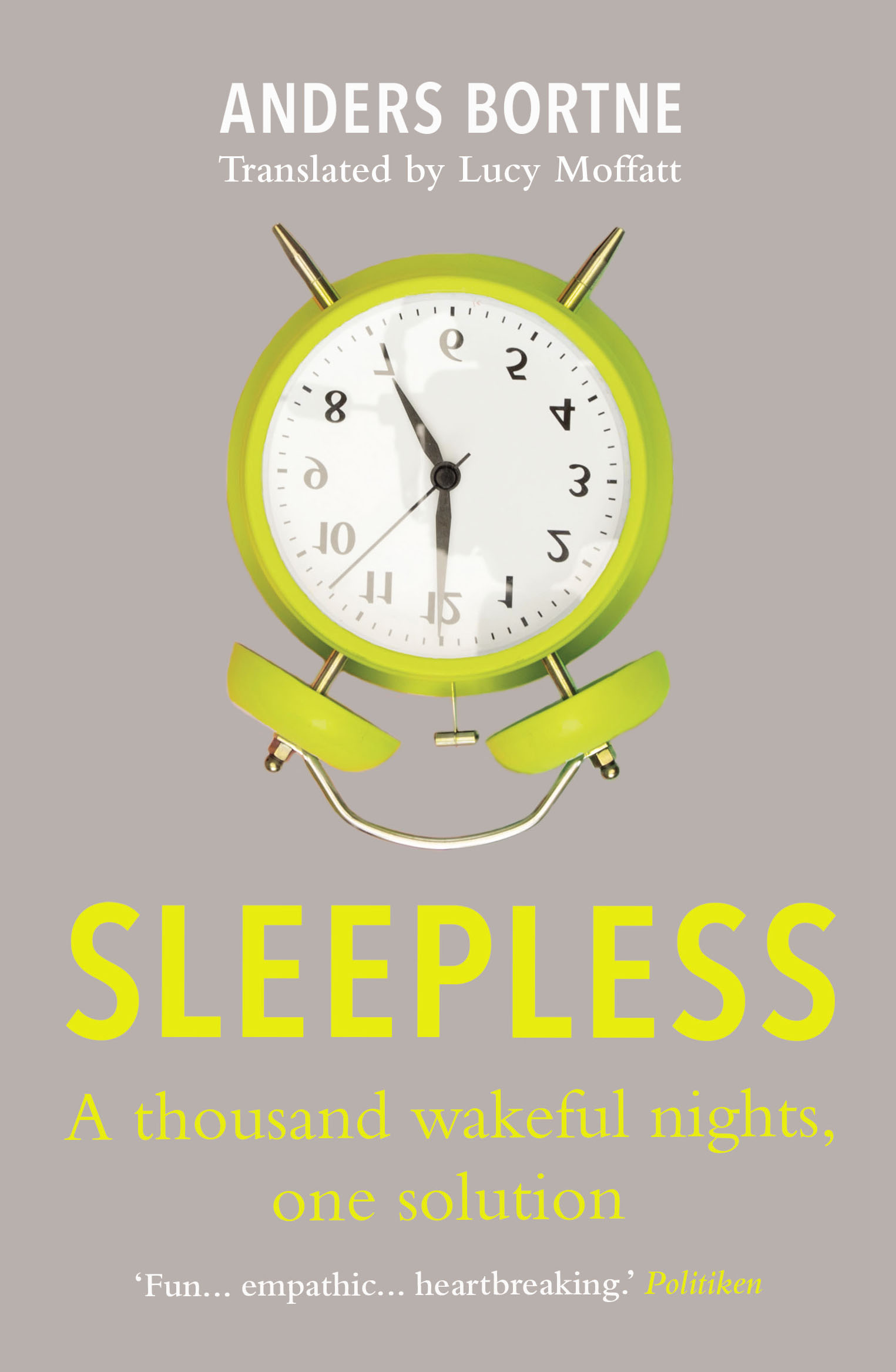 Sleepless, Anders Bortne
Published by Sandstone Press, £7.99
Translated by Lucy Moffatt
Anders Bortne enjoys a good life in Oslo.
Happily married with two delightful children, he works as a speechwriter and has a cartoon strip in the newspaper. But Anders has been sleepless for sixteen years and it’s taking a toll. No remedy has gone untested; not one has worked. Perhaps the solution to his insomnia is closer than he thinks…
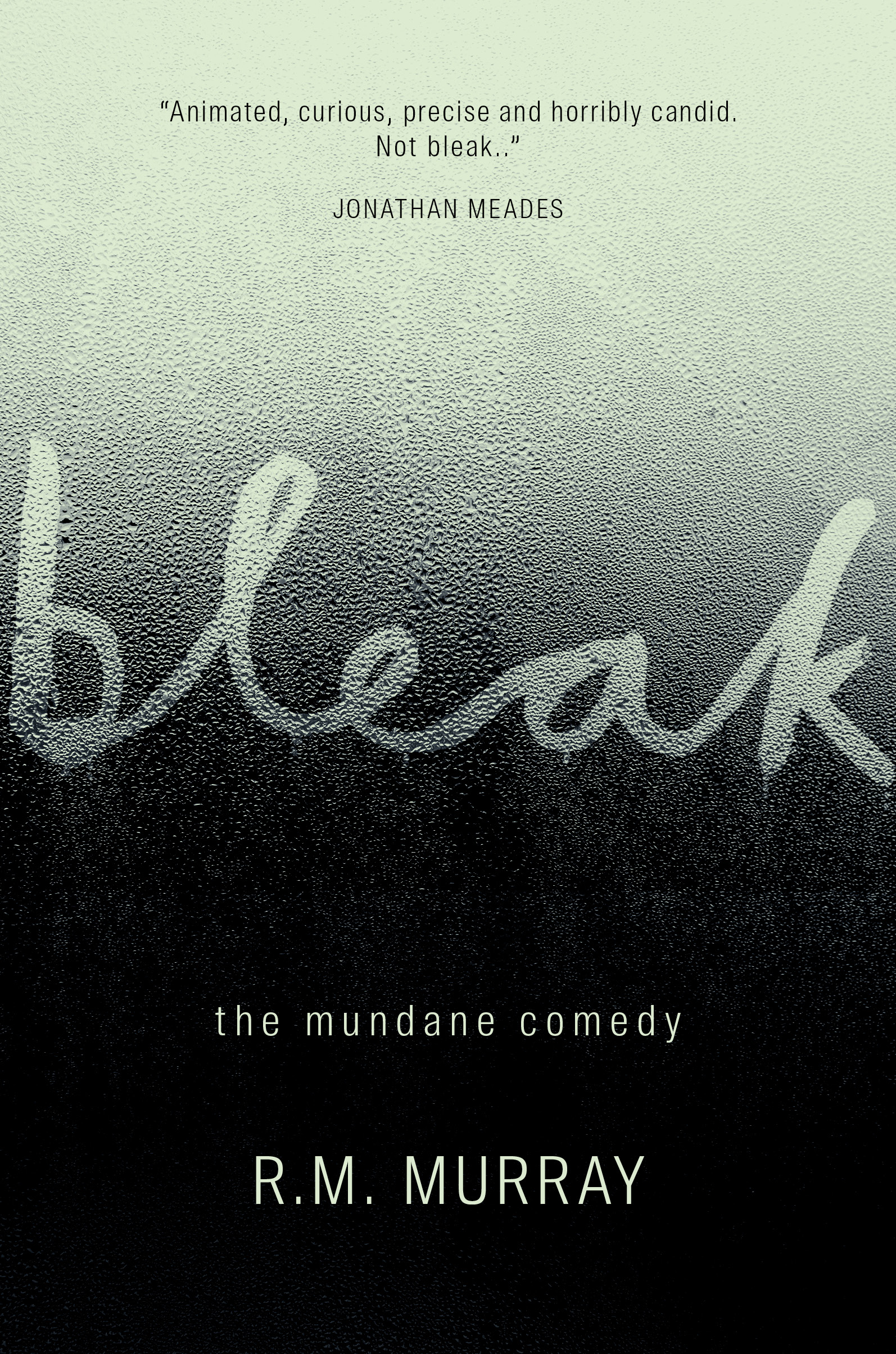 Bleak, R M Murray
Published by Saraband Books, £9.99
Roddy Murray has something to say. About a life full of mishaps, varied and various. Brushes with death he’d like to recount, truths and untruths he’d like to get off his chest. He’s no celebrity, but he has stories to tell. So this is a memoir… of sorts.
Roddy Murray is the embodiment of an essential human survival skill: our ability to laugh in the face of adversity, or even just embarrassment.
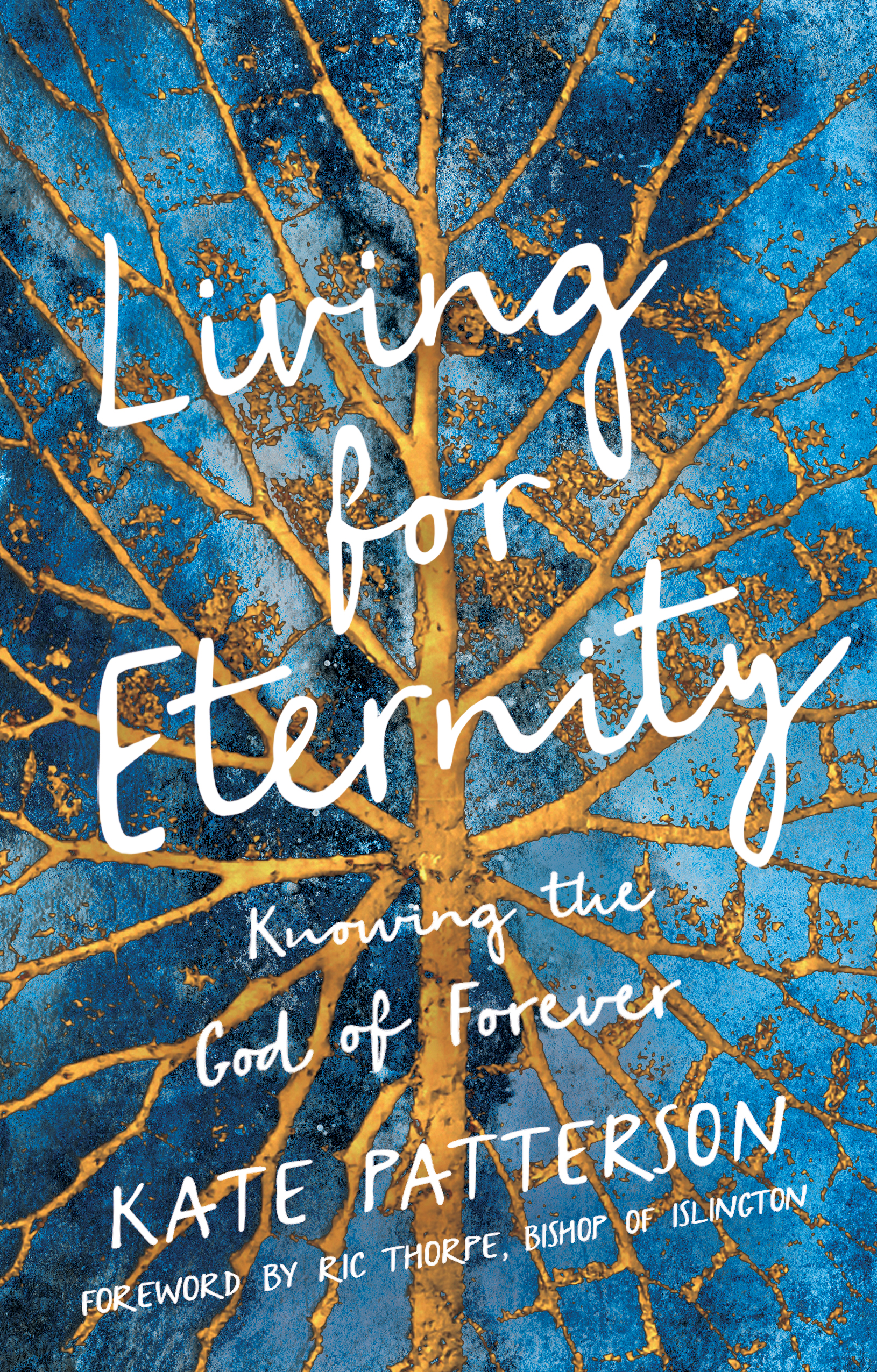 Living for Eternity, Kate Patterson
Published by Muddy Pearl, £12.99
What could be more important than knowing the Eternal God? In Living for Eternity, Kate Patterson explores what it means to be ‘eternally minded’ – living with a long view, keeping our eyes set on the eternal life we were made for – and how that reality has the power to transform our lives now.
Unveiling the freedom that being eternally minded brings, Living for Eternity encourages us to live fearlessly, even in life’s most difficult and grief-filled moments.
 Stolen Lives, Louise Hulland
Published by Sandstone Press, £11.99
136,000 people in the UK are in some form of slavery. This is big business, generating more than £120 billion annually for criminal organisations across the world.
Stolen Lives examines trafficking and slavery in Britain, hearing from those on the front line. Powerful and moving testimony from survivors reveals the individual stories behind the headlines from terror to freedom and independence.
‘MODERN SLAVERY WON’T END WITHOUT BOOKS LIKE THIS AND INVESTIGATORS LIKE LOUISE.’ Jeremy Vine
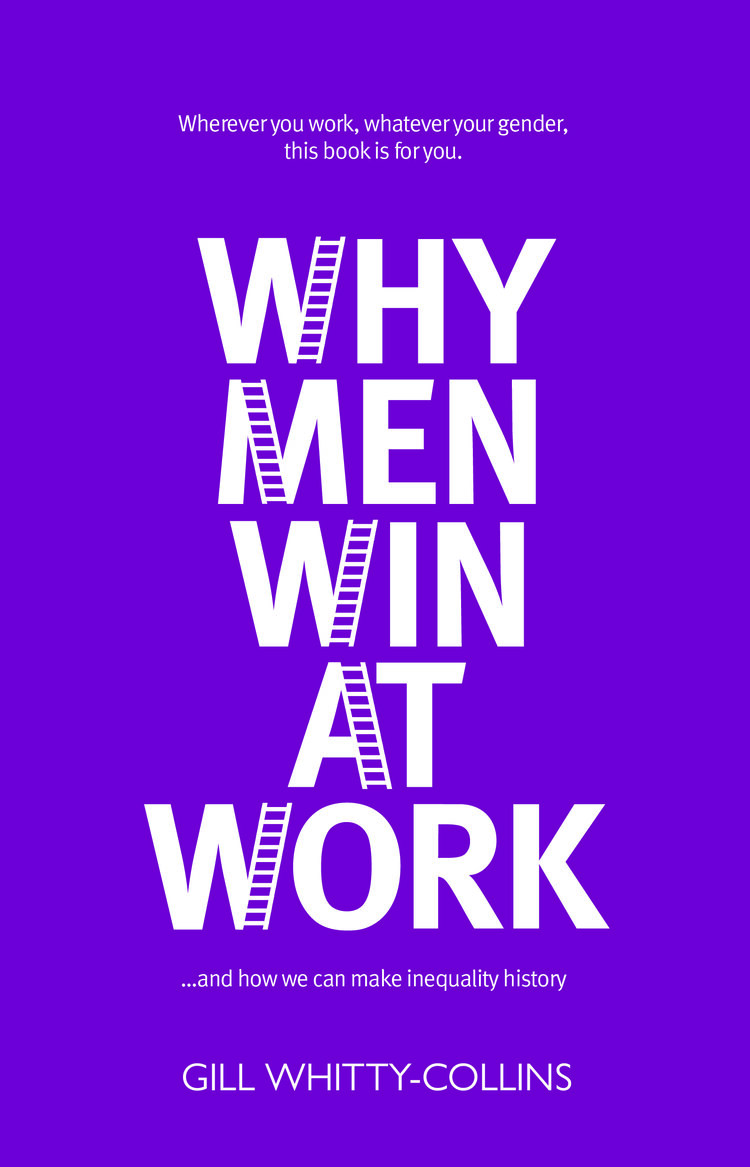 Why Men Win at Work, Gill Whitty-Collins
Published by Luath Press, £14.99
If women have equal leadership ability, why are they so under-represented at the top in business and society?
In this provocative book, Gill Whitty-Collins looks beyond the facts and figures on gender bias and uncovers the invisible discrimination that continues to sabotage us in the workplace and limits our shared success. Addressing both men and women and pulling no punches, she sets out the psychology of gender diversity from the perspective of real personal experience and shares her powerful insights on how to tackle the gender equality issue.
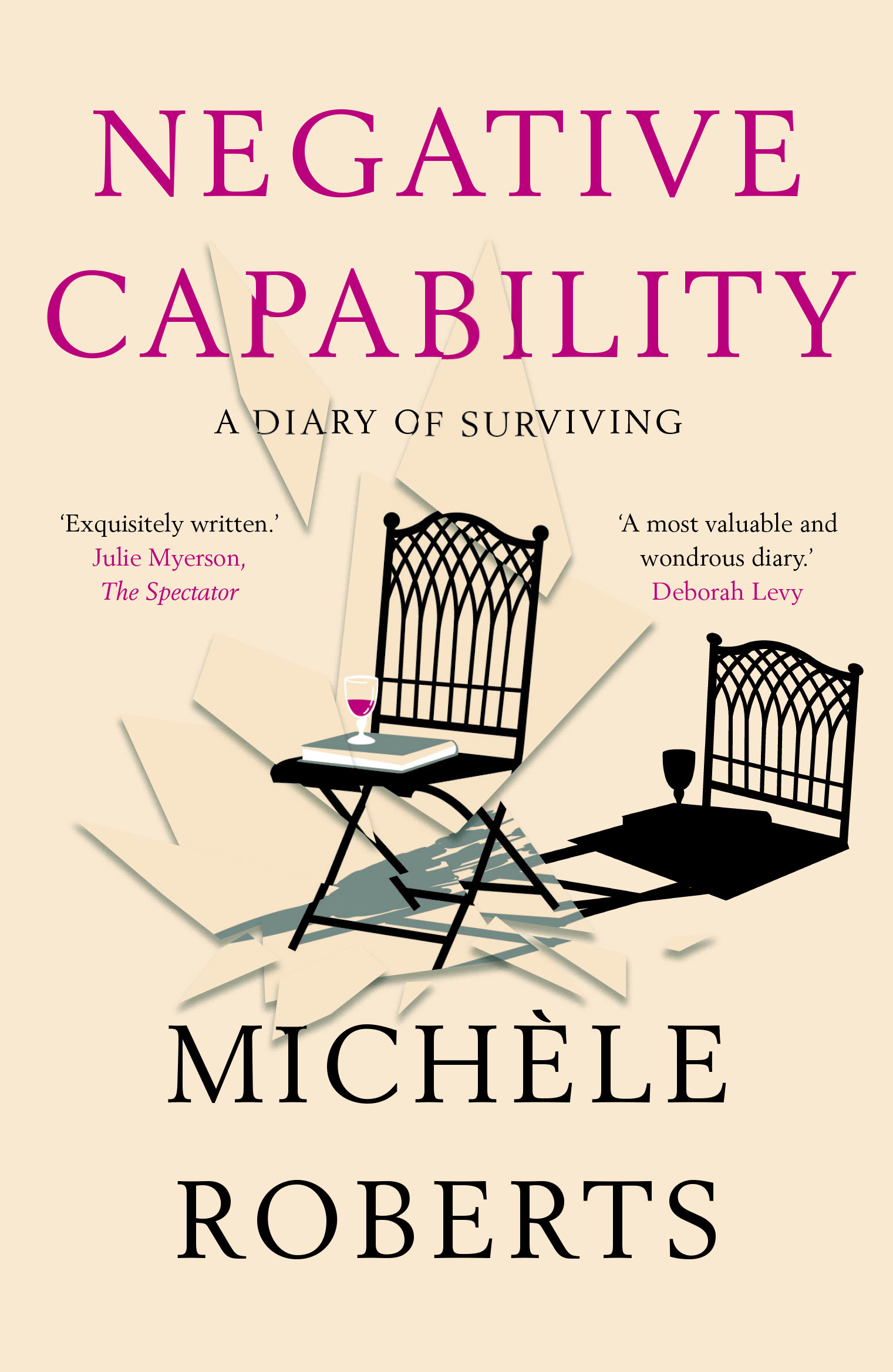 Negative Capability, Michèle Roberts
Published by Sandstone Press, £8.99
Following a series of devastating rejections, Michèle Roberts began keeping an account of her life in the hope it might help mend her shattered sense of self. In this intimate and wryly honest journal she reflects on cities and countryside, loss and love, food, friendships, sisterhood, pleasure and memories, her abiding relationship with France and with literature – and in doing so reconciles her inner life with her outer world.
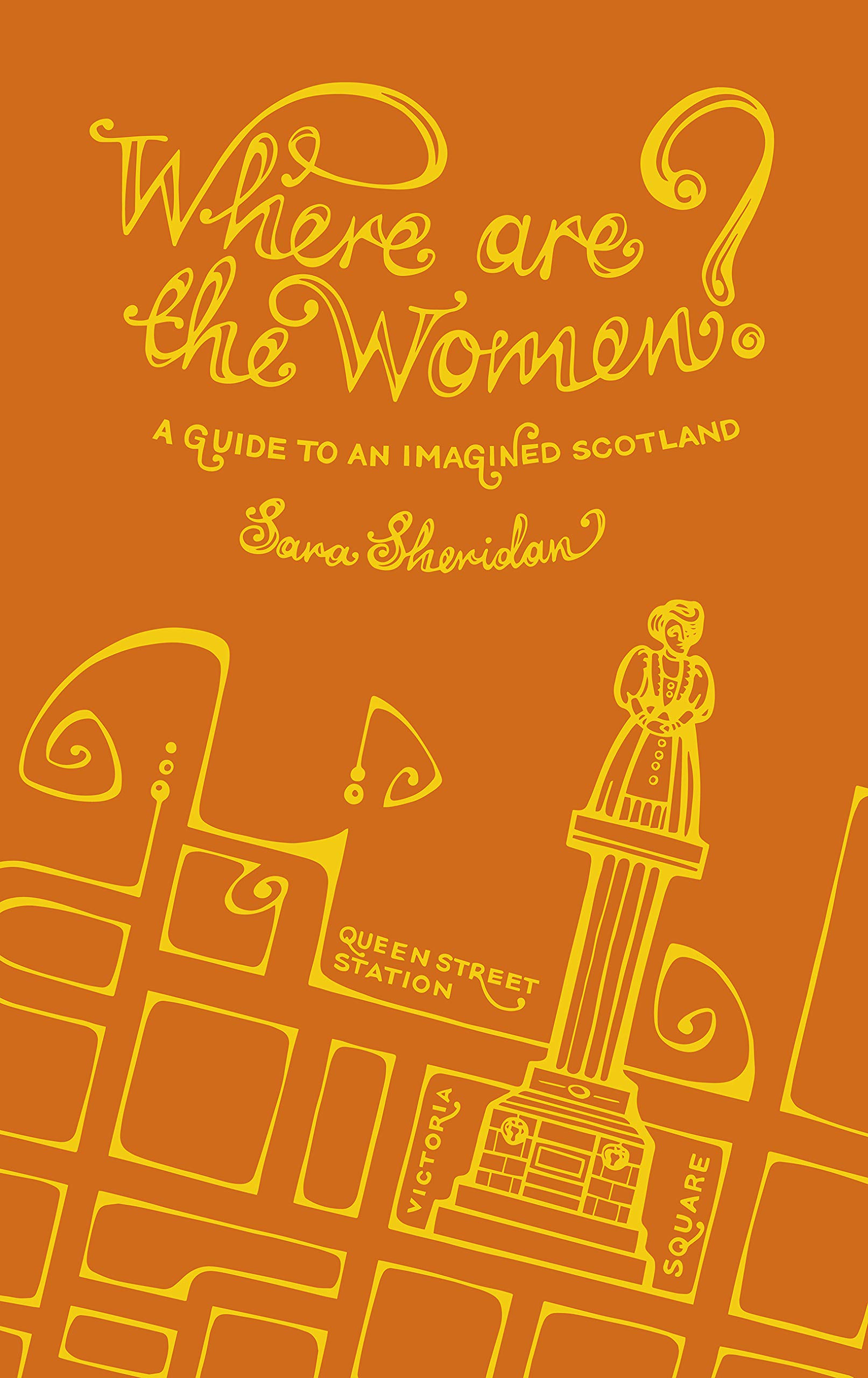 Where are the Women? Sara Sheridan
Published by Historic Environment Scotland, £16.99
For most of recorded history, women have been sidelined, if not silenced, by men who named the built environment after themselves. Now is the time to look unflinchingly at our heritage and bring those women who have been ignored to light.
Where are the women? They’ve been here all along…
Can you imagine a different Scotland, a Scotland where women are commemorated in statues and streets and buildings – even in the hills and valleys? This is a guidebook to that alternative nation, where the cave on Staffa is named after Malvina rather than Fingal, and Arthur’s Seat isn’t Arthur’s, it belongs to St Triduana. . .
Scotland’s History, Fiona Watson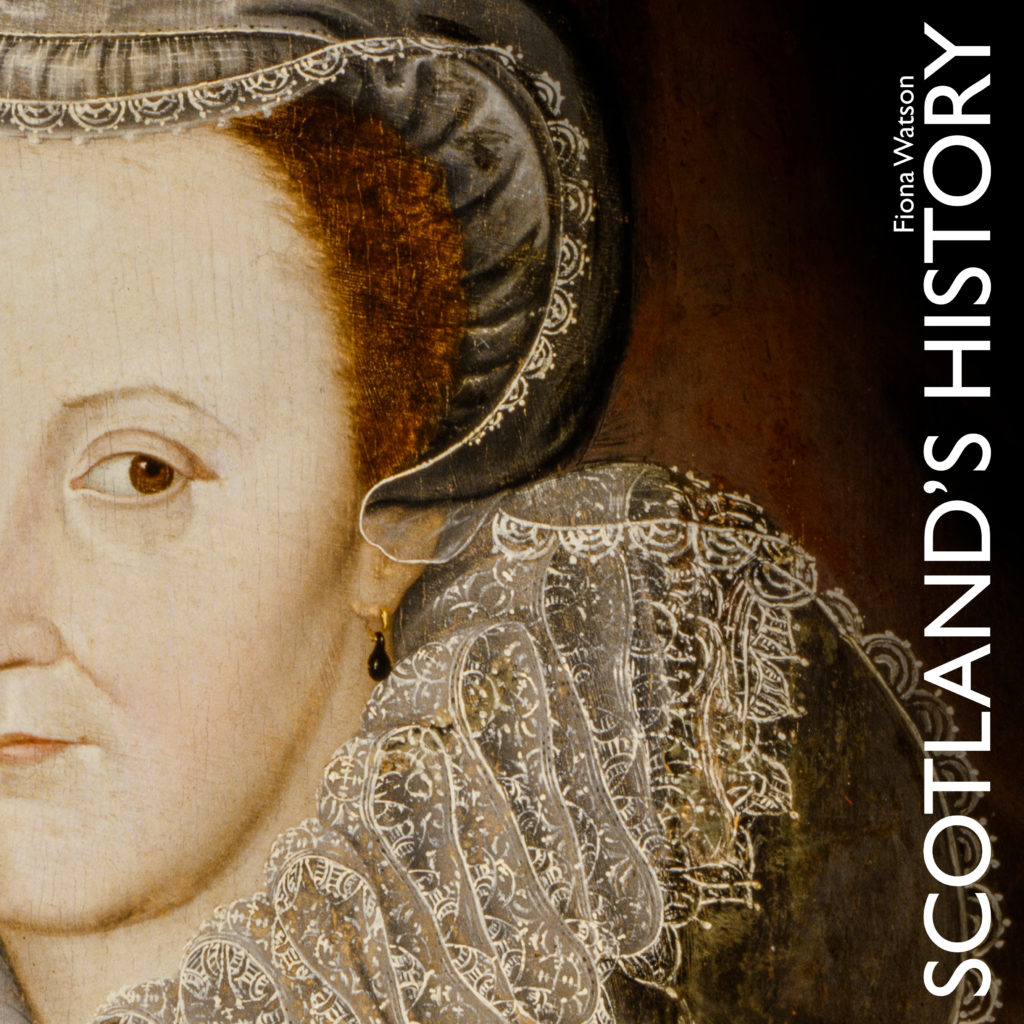
Published by Historic Environment Scotland, £9.99
Scotland’s vibrant and bloody past captures the imagination, but there is far more to Scottish history than murder and mayhem, tragedy and betrayal.
In this book, writer and historian Fiona Watson looks back across thousands of years into the lives of kings and queens, nobles and churchfolk, peasants and townspeople, capturing the critical moments – from the Picts to Bonnie Prince Charlie and the Battle of Bannockburn – revealing the truth behind the myths.
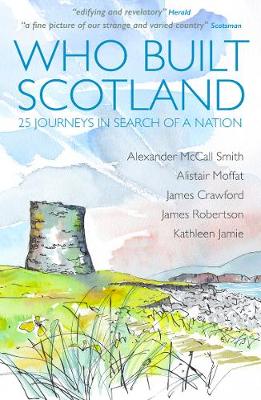 Who Built Scotland? Various authors
Published by Historic Environment Scotland, £9.99
Who Built Scotland is a landmark exploration of Scotland’s social, political and cultural histories.. Writers Kathleen Jamie, Alexander McCall Smith, Alistair Moffat, James Robertson and James Crawford pick twenty-five buildings to tell the story of the nation.
Travelling across the country, from abandoned islands and lonely glens to the heart of our modern cities, these five authors seek out the diverse narrative of the Scottish people.
Tailored for Scotland, Deirdre Kinloch Anderson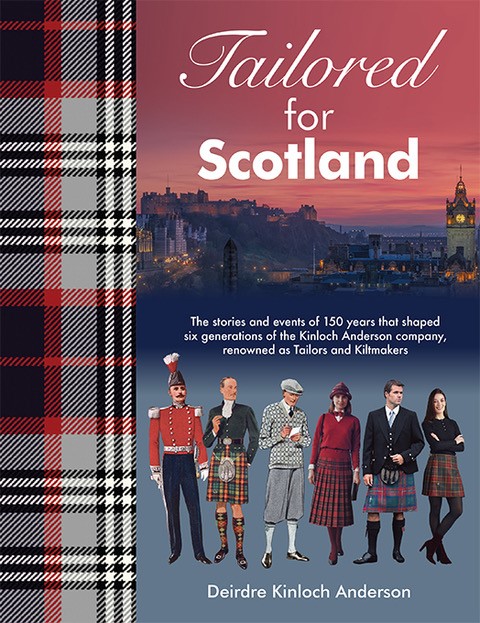
Published by Waverley Books, £20.00
Tailored for Scotland is a fully illustrated book that tells the story of the legendary Edinburgh family business Kinloch Anderson, tailors and kiltmakers who hold the Royal Warrants of Appointment. For over 150 years Kinloch Anderson has succeeded in business, design and Scottish fashion, and played a key role in the story of tartan. It’s a fascinating story of how a family business became a global brand.
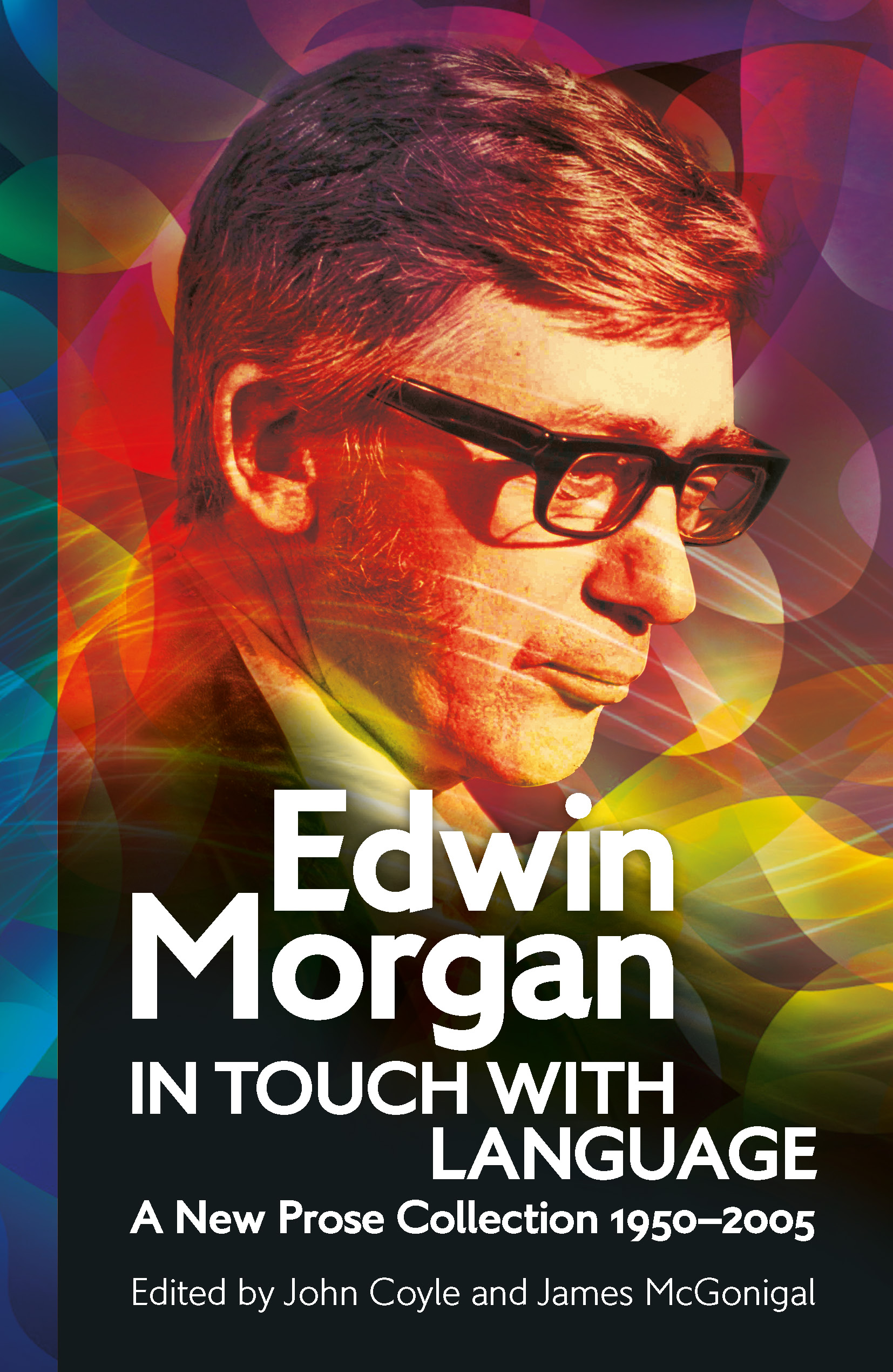 In Touch With Language, Edwin Morgan
Published by ASLS, £24.95
Edwin Morgan (1920–2010) is one of the giants of modern literature. Scotland’s national poet from 2004 to his death, throughout his long life he produced an astonishing variety of work, from the playful to the profound.
This book presents his prose; essays, journalism, book and theatre reviews, drama and radio scripts, forewords and afterwords – all carefully moulded to the needs of differing audiences. Morgan’s writing fizzes with clarity and verve: the topics range from Gilgamesh to Ginsberg, from cybernetics to sexualities, from international literatures to the changing face of his home city of Glasgow.
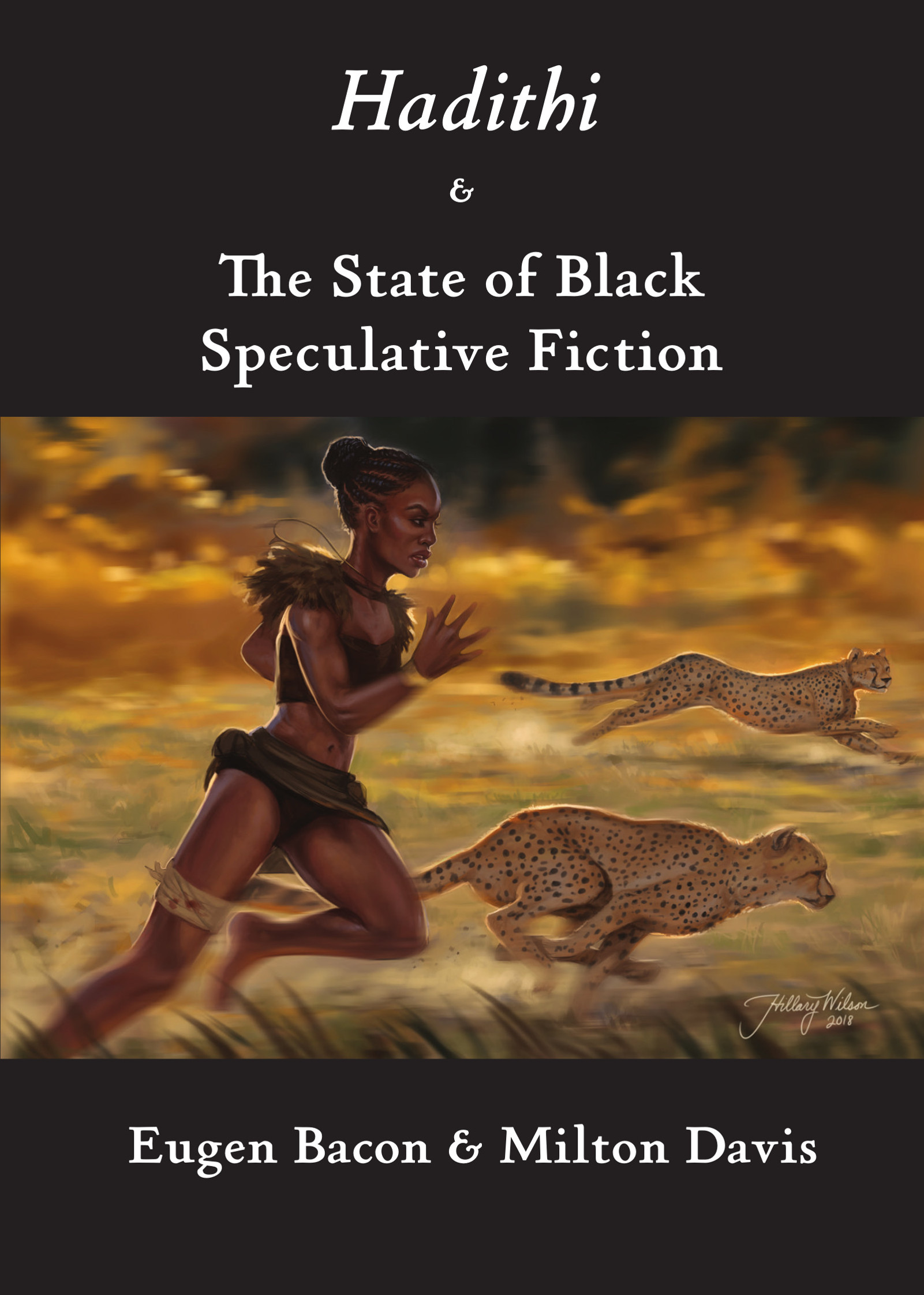 Hadithi, Eugen Bacon & Milton Davis
Published by Luna Press Publishing, £12.99
Hadithi features seven short stories of ancestry, soul, continuity, discontinuity as well as steampunk, cyberfunk and a dieselfunk superhero story set in the ‘20s, together with a scholarly dialogue on the global state of black speculative fiction. Hadithi offers a compelling afrofuturistic diversity from two curious, fearless writers unafraid to cross the borders of reality, representation and imagination.
If you’re . . . LOOKING TOWARDS CHRISTMAS
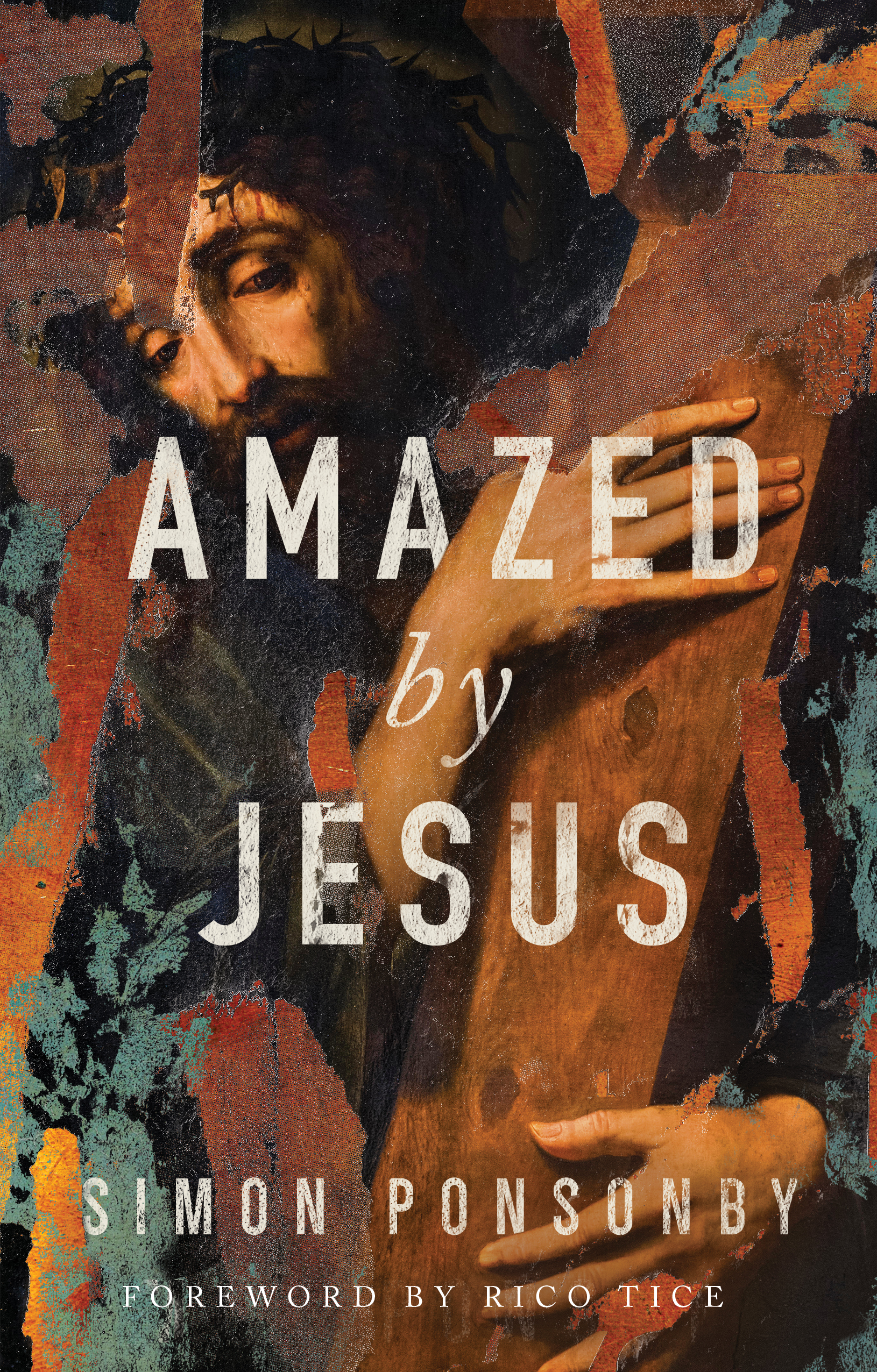 Amazed by Jesus, Simon Ponsoby
Published by Muddy Pearl, £14.99
Following the life of Jesus from the crib to the cross, to the resurrection and the promise that he will come again, Simon Ponsonby explores what this person and this life means for us today. Emphasising both the humanity and divinity of Jesus, Ponsonby showcases what is so amazing about Jesus, helping readers to rediscover their awe and wonder again.
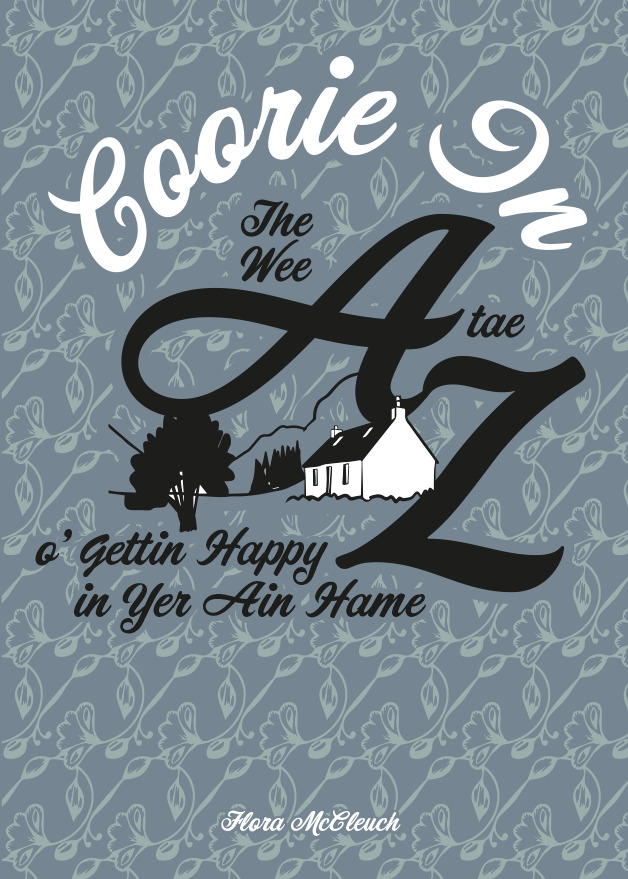 Coorie In, Hera McCleuch
Published by The Wee Book Company, £5.99
The perfect stocking filler for those who like cosiness and couthy, Scots humour.
Park yersel doon in yer favr’ite spot an leaf through thae wee A tae Z Scots poems
a’ aboot the muckle great joys o’ bidin a’ hame. Wharratreat!
Want to keep on top of all the best new releases in Scottish writing and publishing? Subscribe to the BooksfromScotland newsletter!
Our excellent crime writing community have been busy, and August sees a gang of great releases that will boss themselves onto your bookshelves and, hopefully, the bestseller lists!
Cover Your Tracks by Claire Askew
Published by Hodder & Stoughton
Claire Askew brings us the third instalment in her awardwinning DI Helen Birch series. We pick up with Helen preoccupied by her brother’s troubles. But then a case comes her way that she can’t shake. Robertson Bennet returns to Edinburgh after a 25-year absence in search of his parents and his inheritance. But both have disappeared.
No one can ever really know the secrets kept between husband and wife. But as Birch slowly begins to unravel the truth, terrible crimes start to rise to the surface.
Beautifully written and ingeniously plotted, Cover Your Tracks confirms Claire Askew as a major new talent in crime fiction.
The Innocent Dead by Lin Anderson
Published by Macmillan
We cannot get enough of Lin Anderson’s Rhona MacLeod series, and the latest installment will have readers on the edge of their seats, as usual. Rhona MacLeod who must solve the case of a young girl who went missing forty-five years ago.Mary McIntyre’s disappearance tore the local community apart, inflicting wounds that still prove raw for those who knew her.So when the present-day discovery of a child’s remains are found in a peat bog south of Glasgow, it seems the decades-old mystery may finally be solved. Not only that but memories long-buried by the young girl’s best friend are returning, memories that begin to reveal her role in her friend’s disappearance and perhaps even the identity of the killer . . .
Sight Unseen by Sandra Ireland
Published by Polygon
1648. Alie Gowdie marries Richard Webster during a turbulent time in Scotland’s history. Charles I is about to lose his head, and little does Alie know that she too will meet a grisly end within the year.
2019. Sarah Sutherland is struggling to cope with the demands of her day job, caring for her elderly father and keeping tabs on her backpacking daughter. She wanted to be an archaeologist, but now in her forties, she is divorced, alone, and there seems to be no respite, no glimmer of excitement on the horizon. However, she does have a special affinity with the Kilgour Witch, Alie Gowdie, who lived in Sarah’s cottage until her execution in 1648, and Sarah likes nothing better than to retreat into a world of sorcery, spells and religious fanaticism.
Sandra Ireland continues to blend thriller with history and mythology to great effect, and we’re excited to see where this new series takes us!
Still Life by Val McDermid
Published by Little, Brown
Hands up if you’re ready for another Karen Pirie mystery? Us too! And, as ever with Val McDermid, she doesn’t disappoint.
When lobster fishermen pull a body out of the sea, local police quickly discover the murdered man was the prime suspect in a mysterious disappearance ten years before. Cold case detective Karen Pirie’s name is on the file as the last person to review the case. As she starts to unpick the threads of the past, Karen finds herself at the heart of a tangled web of dark and troubling secrets . . .
The Less Dead by Denise Mina
Published by Harvill Secker
A new book from Denise Mina is always a treat, and she often leads us to unexpected places. Her new book follows Margo as she goes in search of her birth mother for the first time. She learns that her mother, Susan, was a sex worker murdered soon after Margo’s adoption and that her killer has never been found. Margo then discovers her aunt, Nikki, who has received threatening and haunting letters from the murderer, for decades. She is determined to find him, but she can’t do it alone…
The Less Dead is a brilliant, thought-provoking and heart-wrenching new thriller about identity and the value of a life.
Don’t forget this bonus suggestion . . .
The Dance of the Serpents by Oscar de Muriel
Published by Orion
Oscar de Muriel may be from Mexico, but he has been writing his Victorian Edinburgh crime mysteries starring his detectives Frey and McGray for years. The Dance of the Serpents is the sixth book in the series and provides all the gothic thrills his fans have grown to love.
It’s December 1889, and Edinburgh police’s secret subdivision ‘The Commission for the Elucidation of Unsolved Cases Presumably Related to the Odd and Ghostly’ is about to have its worst day. When the exiled English Inspector Ian Frey, and his Scottish boss ‘Nine-Nails’ McGray are summoned to a meeting in the middle of the night with the Prime Minister, they are warned that Queen Victoria – the most powerful person in the world – wants them both dead.
To be pardoned they must embark on a mission so dangerous that they might be saving Her Majesty the job of executing them. The case they must solve ties together the dark history of the Pendle witches, with the tragic case of McGray own sister, to a conspiracy within the highest office in the land…
Ali Smith’s Seasonal Quartet of books concludes with Summer. David Robinson tells us of his great admiration for the novel and its exploration of art, empathy and connection.
Summer
By Ali Smith
Published by Hamish Hamilton
Let’s start with the cover. As with Autumn, Winter and Spring, the one for Ali Smith’s Summer shows a David Hockney painting of a country lane. Each time, it’s the same lane, only now with the trees not golden brown, bare or beginning to bud but in full leaf, the hedgerows blooming with wild flowers and the heat hanging dreamily in the air.
In this particular non-summer, Hockney’s cover reminds us of the lazy, hazy, carefree days we’re missing. And as Smith concludes her seasonal quartet, in which each book has been written almost in real time but using story to explore our times, that kind of summer – the season we’re always looking ahead to, the one we yearly yearn for and feel we deserve, when nature will finally treat us well – seems to exist only in memory, imagination, history or art.
So here’s Grace, an actress playing Hermione in a touring production of The Winter’s Tale, remembering walking down a lane that could easily be the one Hockney painted. It’s 1989, and everything about that afternoon in high-summer Suffolk is perfect. Well, almost everything, because she’d just had a minor bust-up with the rest of the cast in rehearsal. They’d been talking about the play and why Leontes suddenly goes made with jealousy in it. Grace had said it was just one of those things:
‘A blight comes down on him, on his country, from nowhere. It’s irrational, It has no source. It just happens. Like things do. They suddenly change, and it’s to teach us that everything is fragile and that what happiness we think we’ve got and imagine will be forever ours can be taken away from us in the blink of an eye.’
Aha, you think, Brexit. Of course. And if you want to play that game of tying art down to politics with Smith’s quarter, you certainly can. Historians looking back on this decade will no doubt quote the opening of Autumn (‘It was the worst of times, it was the worst of times’) and its extended riff about how quickly divided the country had become after the 2016 referendum. They’ll probably also quote the opening of Summer (‘Everybody said: so? As in so what? As in shoulder shrug or what do you expect me to do about it?’) to illustrate the spread of apathy and the sheer weariness about today’s present.
Because back in Grace’s wintry present, in which she is a menopausal mum bringing up precocious teenagers Sacha and Robert in Brighton, Brexit is everywhere. She may have voted Leave, but her country is becoming graceless, intolerant, uncertain and tense because of it. Not only has her own family become divided but her former husband’s business has been ruined because of it and his girlfriend has literally become dumbstruck by it: she had been writing a book about political language, only to find it has become so debased that she can no longer even speak. To Grace’s son Robert, though, the sheer chutzpah of Johnson’s lies, racist tropes (letterboxes, watermelons etc) and callousness about the poor, his whole buffoonish schtick, is a source of impish delight. If you disagree, he tells his dad, you’re just a doomster and a gloomster, talking down Britain. In fairness, he’s only 13.
But even though Smith’s characters are mostly scathing about ‘the infantile Brexit obsession’ and positively vitriolic about Johnson himself, even though the clear-sighted activist Iris returns from Winter still fired up with revolutionary zeal against the ‘mighty Etonians’ who blundered unprepared into a pandemic, Summer is more than a diatribe on the state we’re in. It is also a dialogue – first with the other books in the quartet, then with history and art. Considering how Smith has had to not only weave the books together but do so against the tightest of deadlines (she only started writing in January) and the sudden interruption of Coronavirus, this is a spectacular achievement. As ever, Smith’s sends metaphors and puns spinning like a fairground waltzer, and we are reminded of just why Sebastian Barry hails her as ‘Scotland’s Nobel laureate-in-waiting’. Why Summer is not even on the Man Booker longlist is beyond me.
Perhaps I’m biased. I’ve known Smith for nearly all of her career as a published writer, and right from the start – from the ghost swooping into the hard ground in Hotel World – I have known that she can do things with fiction that few others can. Take this seasonal quartet. Who else would even have dared to attempt such a tight-deadlined tightrope walk? Gordon Burn’s 2008 ‘non-fiction novel’ Born Yesterday had a similarly time-limited focus on the immediate past, but was essentially a work of higher journalism rather than of the imagination. What Smith does is altogether different. Rather than string together a collage of recognisable political events, she wants to both stay close to, and slip the bonds of the factual present. Yes, it will be a story of our times, but it will draw on, and take hope from other times, and above all other fictions, too.
Take Daniel Gluck, the wonderful bookish centenarian composer we first met in Autumn. Maybe Smith always intended to bring him back for her coda, and certainly if she were mirroring the realities of 2020 she could have made even more of the lack of PPE in his care home or the vicissitudes of shielding. But no, she wants to bring him back for another purpose. So she slides us into his mind and we go right back to the summer of 1940, when, because his German father never secured British naturalisation, he is interned as an enemy alien. Locked down. His beloved sister, meanwhile, is busy working as a people smuggler, helping strangers flee from France and the Nazis to neutral Switzerland.
The conditions in Britain’s immigration detention centres have been targets for Smith’s fiction before. Here they are centre stage, every bit as important a symbol of the closing of the British mind as Brexit itself (which Charlotte, one of the returning characters from Winter, dismisses as ‘a fly on a corpse’). Justice for refugees, climate change – these are the causes for which Grace’s teenage daughter Sacha is campaigning, which require hearts and minds to be reopened.
To Smith, this is what art is for. Look, she says, as she follows Daniel Gluck into the internment camp on the Isle of Man in 1940: look at the work of those artists, at Kurt Schwitters and Fred Uhlman, at the work they and so many other interned artists made in their strange street-camp in Douglas. Look at how comparatively well, even in a climate of fear and populist ‘othering’, they were treated, how more open-hearted Britain was then than now. Look too at those other refugees and immigrants just before or just after that war, at Einstein, for example, or Lorenza Mazzetti, the Italian artist who is as much a guiding spirit of this book as Pauline Boty, Barbara Hepworth and Tacita Dean were of the preceding three.
Before I read Summer, I knew nothing about either Einstein’s time living in a Norfolk hut as a refugee from the Nazi Germany or about Mazzetti’s work as a film director, novelist, painter and puppeteer. Hers is a fascinating story. An artist who came to Britain from Italy as a ‘non-desirable alien’, she successfully demanded admission to the Slade, made a brilliant debut film (Together) featuring the young Eduardo Paolozzi, and founded the Free Cinema movement with Lindsay Anderson, Tony Richardson and Karel Reisz before returning to Italy a few years later.
Mazzetti and Einstein are linked by blood and tragedy – she was living in Italy with her aunt, who was married to Einstein’s cousin and when his family was massacred by the Nazis in the summer of 1944. She died this January, aged 92, and while I do not know whether Smith had already planned to include her in her book, her novel does acknowledge its debt to Andrew Robinson’s Einstein on the Run, which was only published last September. Even when dealing with the past, there’s a freshness to Smith’s work.
But let’s get back to Grace. When, in the novel’s present (a gloomy February), she revisits that Suffolk country lane in search of the bucolic bliss remembered from 1989, she finds instead that an internment camp run by private security firm SA4A has been built there. ‘It’s for people who don’t belong in this country’, a passerby tells her before throwing a plastic bag of dogshit on its barbed wire fence.
But Grace can still remember that hot Suffolk summer’s day over 30 years ago, when she was still an actress playing Hermione in The Winter’s Tale and was thinking about her role its strangely happy ending and whether or not this was plausible. She met a man and started explaining the play to him.
‘The Winter’s Tale,’ she said, ‘is all about summer, really. It’s like it says, don’t worry, another world is possible. When you’re stuck in the world at its worst, that’s important.’
Summer by Ali Smith is published by Hamish Hamilton, priced £16.99.
You can catch Sarah Wood’s film with Ali Smith at this year’s online Edinburgh International Book Festival. Book your free spot here.
Doug Johnstone is one of Scotland’s most prolific writers, amassing a backlist of thrillers that play with the genre while taking you on a storytelling rollercoaster! His latest novel, The Big Chill, is the second in a trilogy based around a family of funeral directors and private investigators and is every bit as entertaining as his previous novels. BooksfromScotland chatted to Doug about his favourite books.
The Big Chill
By Doug Johnstone
Published by Orenda Books
The book as . . . memory. What is your first memory of books and reading?
I was madly into the Asterix books as a kid, I loved the anarchic humour and nonsensical violence in them. I’m sure I learned a lot of history and geography from them too, although much of that was nonsense of course. Asterix and Obelix were the perfect double act, really, brains, brawn, and the best of friends.
The book as . . . your work. Tell us about your latest book The Big Chill. What can we expect from the Skelf women this time round?
This is the second part of a trilogy about the Skelf women, three generations who run a funeral directors and a private investigators. They’re reeling from events in the first book, and trying to make sense of their place in the world, while still caring for the deceased and bereaved, and solve cases that come their way. It’s dark, existential stuff, but funny too, hopefully. It starts with a car crashing into an open grave, and features a one-eyed dog called Einstein and a cat called Schrodinger. Obviously.
The book as . . . inspiration. What is your favourite book that has informed how you see yourself?
It might seem like a weird choice but I’m going for The Wasp Factory by Ian Banks. OK, it’s a mad, macabre horror story, but it was written about people living not far from me, and I understood their lives and how they spoke and interacted with each other. It was a revelation to me that you could write a story about people like us, from nondescript Scottish east coast towns set in the present day. Before that I presumed literature had to be about posh, dead people.
The book as . . . a relationship. What is your favourite book that bonded you to someone else?
I didn’t get on well with my English teacher at school (see the above comment about literature and posh, dead people). My dad had been an English teacher, and he could see I was interested in fiction, but as a teenage boy I wasn’t exposed to anything I could relate to. This was years before YA existed, sadly. Anyway, he handed me a copy of Raymond Carver’s collected stories, Where I’m Calling From, and it changed my life. I was totally blown away. That book makes me think of my dad and how he nudged me towards the right path all those years ago.
The book as . . . object. What is your favourite beautiful book?
I’m going to cheat and have two. The first is Tales from the Loop by Simon Stalenhag. It’s a graphic novel, I guess, and kind of retro-futuristic science fiction, about strange things happening in the vicinity of an underground loop near a small Swedish town in the 1980s. It’s just gorgeous, the juxtaposition of everyday life and weird robots and entities is beguiling.
I also want to give a shout out to Adrian Tomine’s Killing and Dying. It’s a collection of graphic short stories, and just a beautiful combination of understated drawing skill and storytelling. Each tale is beautiful and heartbreaking in equal measure.
The book as . . . entertainment. What is your favourite rattling good read?
One of my favourite writers on the planet is Sara Gran. She’s best known for her crime novels, but she also wrote a horror novella called Come Closer which is possibly my favourite book of all time. It’s about a woman who is either possessed by a demon or having a psychotic breakdown, it’s not clear which, and it cracks along at an unbelievable pace, as well as being genuinely disturbing. It’s so cleanly written, so simple and precise but full of impact too.
The book as . . . a destination. What is your favourite book set in a place unknown to you?
Judith Schalanksy produced a book a few years ago called Atlas of Remote Islands. It’s subtitled ‘Fifty Islands I have not visited and never will’ and it’s an absolutely gorgeous creation, with precise and beautiful illustrations of fifty very remote islands, alongside strange wee narratives concerning each one. It’s just the most lovely thing to look at, and really makes me yearn for places I’ll never visit.
The book as. . .education. What is your favourite book that made you look at the world differently?
Again, I’m going to cheat and pick two quite recent reads, but they’re kind of related. The first is The Overstory by Richard Powers, a novel set amongst the lives of trees across America. It is a massive, extraordinary work, that really made me consider trees in an entirely different light, as well as ecology and the concept of time. Related to that, in my mind at least, is Sue Burke’s Semiosis, which is a first contact science fiction novel, about a crew who land on a faraway planet, only to discover sentient and intelligent plant life controlling their environment. Both books are mind boggling and made me rethink what I know about the nature of intelligence and life itself.
The book as . . . the future. What are you looking forward to reading next?
I’m reading loads of science fiction at the moment, and have a big pile more waiting to be read. Of them, I think the one I’m most excited about is This is How You Lose the Time War by Amal El-Mohtar and Max Gladstone. It’s won a bunch of awards recently, and is about two rival time-travelling agents whose gradual communications change them. I’m loving the big ideas of science fiction right now and although this is a short book, it will hopefully pack a punch.
The Big Chill by Doug Johnstone is published by Orenda Books, priced £8.99.
Small Hours is an intimate, unflinching biography of one of the great musical mavericks, and a man of great complexity and volatility. If you’ve yet to make your acquaintance with John Martyn’s music, then BooksfromScotland has a treat for you. We asked biographer Graeme Thomson to recommend his favourite tracks, and we share them with you now.
Small Hours: The Long Night of John Martyn
By Graeme Thomson
Published by Omnibus Press
Go Easy (Bless The Weather, 1971): A shrugged mea-not-quite-culpa, ‘Go Easy’ is Martyn’s first great song of liberation. It is the lucky charm of the self-defined wastrel, a drowsy acknowledgement of the non-conforming life he has chosen, ‘raving’ through the night, ‘sleeping away’ the day, always with a little something on hand to numb the pain.
May You Never (Solid Air, 1973): ‘You could put it into a hymn book,’ Richard Thompson told me of Martyn’s best known song, which comprises of a series of very secular prayers. That the song’s litany of pitfalls – wandering women; frayed tempers; bar-room rumbles; sleepless nights on the tiles – were all directly pertinent to Martyn’s chaotic lifestyle suggests that he was, at least partly, singing to himself. The version recorded at Transatlantic Sessions in 1995 underlines what a beautiful and versatile song it is.
Solid Air (Solid Air, 1973): The title track of Martyn’s classic album was written for his friend Nick Drake. Triangulating between murmuring empathy, frustration and foreboding, Martyn divines not only Drake’s quietly devastating emptiness, but the maddening impossibility of reaching him. In the decades since Drake’s suicide in November 1974, the song has become a kind of requiem. At the time, it was something more complicated, a necessary release of feelings that could not be expressed face to face. The final cut is a work of almost casual brilliance: fragile, unanchored, barely in motion.
Small Hours (One World, 1977): A pre-dawn symphony scored in reverb. Recorded in the wee hours of a summer morning in 1977, the microphones scattered around Chris Blackwell’s Berkshire farmstead, ‘Small Hours’ is a genuinely ambient recording. The flight of passing geese flying low over the lake, the rattle of the passing mail train, the gentle lapping of the water, the rush of early morning air all contribute to the pastoral aural tapestry. It offers a glimpse of Martyn’s restless soul finding a moment of peace.
Under My Wing (On The Cobbles, 2004): Later-period Martyn is erratic, but ‘Under My Wing’ is moving, soulful proof that he remained forever capable of divining the heart of the matter. Sounding reflective and appropriately weathered, Martyn throws a protective arm around a vulnerable loved one who keeps their most intimate feelings hidden away. The backing vocals are by Paul Weller, the wonderful flute from Steve Eisen.
Small Hours: The Long Night of John Martyn by Graeme Thomson is published by Omnibus Press, priced £20.00.
In Cauld Blasts and Clishmaclavers, Robin Crawford has gathered a collection of Scots words; old and new, classical and colloquial, rural and urban – it’s a joyful and witty linguistic gallimaufrey and a perfect bedside read. In this video, he tells us more about his latest book.
Cauld Blasts and Clishmaclavers: A Treasury of 1,000 Scottish Words
By Robin Crawford
Published by Elliot & Thompson
Cauld Blasts and Clishmaclavers: A Treasury of 1,000 Scottish Words by Robin Crawford is published by Elliot & Thompson, priced £9.99.
The uncanny: ‘the familiar become strange’ according to Freud, and there is no doubt that Edinburgh in August in 2020 without its festivals feels unsettling. The Uncanny Bodies anthology plays with the uncanny in a variety of ways with a variety of authors, and here we share poems from Jane McKie who looks at the city slightly askance.
Uncanny Bodies
Edited by Pippa Goldschmidt, Gill Haddow and Fadhila Mazanderani
Published by Luna Press Publishing
Where the Edinburgh All-night Bakery Used to Be
Straight from the pub,
sticky and jubilant,
we devoured them.
Ovens thawed the icerimed
pavement, which
chimed
the high note of
everything
glazed. And we,
close to hysteria like guests
left afterhours
at a wedding, toasted
each other’s skin
with snow, dusted lips
with sugar, slipping
our way home
with breath building
in our own shapes, that is,
in the shapes of ghosts.
East Coast Gothic
Imagine you come across a single grave
in a formal garden, the light
almost gone, tree shadows so thick
they coalesce like people milling
in corners. The stone, a simple
slab, precariously perched,
tips towards you, insisting
that if you bend close to its lichened skin,
you’ll find your own name.
Imagine you put aside
the pulse of fear at your throat
and lean in, mirroring the stone’s tilt –
not a single name to be found,
just the usual pocking and blotches
of a rough, weathered face.
Imagine it isn’t relief you feel.
Baby
In the discount basket: feet shaped like fins, a candle-wax colour.
I haul her up like a line-caught fish, this plastic doll, her eyelids
spoked with black brush from which tears will inevitably spill.
She will be called Baby Maia like the last Baby Maia. Toys, like
pets, are loved so obstinately.
Her right eye-click is delicious, the iris violet, glassy, and impossibly
huge when it falls open. The left lid is half-shut and will not budge,
even when I get my nail under.
Still, she’ll do. She has enough in common with the other Maias:
tenacity and sweetness beyond her years; the ability to pee.
And when she cries her voice box emits a sound like wind over
bottles – faulty perhaps, but as I finally lever her reluctant lid,
I have to mourn the also-rans, lost on the beach, mauled by the
dog, or simply put away.
Uncanny Bodies edited by Pippa Goldschmidt, Gill Haddow and Fadhila Mazanderani is published by Luna Press Publishing, priced £16.99.
There have been a number of hotly-anticipated novels from Scottish authors this year, and Shuggie Bain definitely fits that bill. We caught up with author, Douglas Stuart, to ask him all about his debut novel and its enthusiastic reception.
Shuggie Bain
By Douglas Stuart
Published by Picador
Congratulations on Shuggie Bain’s publication ! This novel has been a long time coming; could you tell us about how the novel came together?
I began writing Shuggie Bain about twelve years ago, and worked on it for about ten years. When you grow up poor, it’s difficult to imagine yourself pursuing a literary life. I went to high school in Pollok and academia and writing were not seen as something that ‘boys like me did.’ I always felt like I’d furloughed my writing dreams, so in my thirties I sat down to write Shuggie for the pure pleasure in writing it. I love Scotland – I’m so proud to be from Glasgow – so I loved spending time with these characters. I even grew quite protective of my relationship with them.
And another mighty congratulations are in order too – Shuggie Bain has been announced as a contender on the Booker Prize longlist. You must be delighted at the reception your book is getting. Is your publishing experience surpassing all expectations?
It’s truly wonderful. I’m an outsider in the publishing world, so I wrote what became Shuggie Bain with absolutely no expectations, it was enough just to write. It was too intimidating to even imagine it published, I might have psyched myself out. So I just kept my head down and wrote the book I’d been carrying around in my heart for so long. It is amazing to me that it has been able to connect with readers in the way it has.
The book was published first in the US earlier on the year to great acclaim. Did that make you nervous about its UK publication? Do you feel better prepared for your home crowd?
A book never changes, it’s the reader and their perspectives that shift. What’s been both heartening and disheartening is realizing how common the themes of Shuggie Bain are in readers’ lives. I had thought of it as a very Scottish book, a very specific Glaswegian story, but women and families are struggling with poverty, patriarchy and addiction all around the world, and it’s been so humbling to see readers take Agnes Bain and her plight into their hearts. I’ve been waiting for Shuggie to come home to Scotland for such a long time. It’s always nerve-wracking publishing something and Scottish folk will always tell you exactly what they think!
The novel shares elements of your own life story. How did you approach the balance of negotiating your memories and creating a fictional world?
Shuggie Bain is a work of fiction although I do write from the experience of being the queer son of a single mother who lost her own battle with addiction. I never had to worry about balancing my own memories, because the book is quite panoramic and quickly dwarfs me and my life. Within the first few pages the characters started to take on lives and voices of their own, and all I really had to do was get out of their way and listen to what they were telling me. The book is more than simply a portrait of the Bain family, it’s a larger, interweaving story of lots of different Glaswegian voices, all navigating one of the toughest times in the city’s history.
Novels looking back at 1980s Scotland are having a bit of a moment, we’re thinking of This is Memorial Device by David Keenan, Scabby Queen by Kirstin Innes and Andrew O’ Hagan’s forthcoming Mayflies. What is it, do you think, about the time and the place that is capturing writers’ imaginations just now?
The 1980’s was a time when honest people’s lives were turned upside-down by an ideology they neither supported nor had the power to resist. Sadly, we still live in a world of growing inequality. But it’s very Scottish to face difficult things square-on. The hardest-done-to Glaswegians are the most compassionate and giving people I have ever met; the kind of humility that even resists anyone thinking they had it especially bad, because everyone suffered through a difficult time under Thatcher. The full strength and humanity of our country is most evident in ordinary lives in that period of Scottish history; how could you not be inspired by it?
Looking at the reviews you received in the US, the critics are mentioning James Joyce, DH Lawrence and Irvine Welsh. Were there any particular books or writers that inspired you in writing Shuggie Bain?
Too many to mention. I have always revered Agnes Owens’s Gentlemen of The West for how it juxtaposes industrial grit with a motherly tenderness. I love James Kelman’s How Late it Was, How Late. The courageous, intimate portrait of Joy in Janice Galloway’s The Trick is to Keep Breathing helped me to see the character of Agnes Bain with more clarity. I am inspired by the sweep, the struggle for betterment and impending doom in Thomas Hardy’s Jude The Obscure. The tenacious working-class hero, Billy Casper, from Barry Hines’s A Kestrel for a Knaves never far from my thoughts.
You live in New York, and have done for many years. How do you observe Scotland now? Is it easier to write about it from a distance?
My parents died when I was a boy. After I lost my mother I was fairly untethered, it wasn’t that I left Scotland, but without a parental anchor I was just sort of swept away. The characters in Shuggie Bain couldn’t exist anywhere else; Glasgow is as much in their blood as it is in mine. When you come from a place of such strong character – oppressive, resilient, loving, hilarious, aggressive, compassionate – it shapes who you are for the rest of your life. Childhood in Glasgow was tough, but distance brings clarity, it also brings love and regret too.
I hope your own experience of the current pandemic has not been too stressful, but it has impacted on your ability to come over to promote the novel. What were you looking forward to in coming back to Scotland? Can you see yourself making the trip at any point? We’d love to see you!
I’ll be home as soon as I can. I had my heart set on being on Sauchiehall Street on publication day, and what a homecoming that would have been. I was absolutely gutted when the Edinburgh International Book Festival was first cancelled, but now I’m so thankful to be appearing remotely. It’s amazing how booksellers and festivals have adapted and innovated in such a short period of time.
You’ve already finished your second novel. Are you ready to talk about it yet?
Ha! It’s not quite finished. But I’m working on a book titled LOCH AWE, set in mid-nineties Glasgow. It’s a love story between two young men who are separated by territorial gangs, across sectarian lines. It’s about the pressure we put on working-class boys to ‘man-up’ and all the terrible things and violence that can flow from that. I’m always looking for tenderness in the hardest places.
Shuggie Bain by Douglas Stuart is published by Picador, priced £14.99
You can catch Douglas Stuart talking with Damian Barr at this year’s online Edinburgh International Book Festival. Book your free spot here.
Our summer sporting spectacles – Wimbledon, the Euros, the Olympics – may have been cancelled this year, but we can still enjoy the highs and lows of sporting achievements in a vast array of wonderful sports biographies, one of which has just been published by Sandstone Press: All or Nothing at All: The Life of Billy Bland by Steve Chilton. And it really is a book full of highs and lows; if you’re unaware of Billy Bland, he is a record-breaking fell runner, who made his name in the sport with success in the Lake District and the mountains of Scotland. Here, we share the thoughts from champion mountain runner, Kilian Jorne, in the book’s foreword.
Extract taken from All or Nothing at All: The Life of Billy Bland
By Steve Chilton
Published by Sandstone Press
When I came to England to consider doing the Bob Graham Round (BGR) I was very keen to meet Billy Bland, but also unsure about how a meeting would go. He is a legend and I had been told that he doesn’t particularly like non-fell runners coming to run the fells.
Nervously I knocked on the door. I was somehow pleased when Ann, his wife, said that he wasn’t at home. He was out for a ride on his bike and she wasn’t expecting him to be home for a few hours. ‘He likes biking now,’ Ann explained. I could comprehend that for someone as compulsive and addicted to sport as Billy Bland that it didn’t just mean that he’d take an hour bike ride twice a week, even in his 70s. I came back the day after, and Billy was home this time. We discussed me doing the BGR for a fair while, and early on he asked me, ‘are you going to use poles?’. I said no. ‘All right,’ he said. Real fell runners don’t use poles, apparently. We talked for ages, and he explained to me how he ran the Bob Graham Round nearly 40 years ago. It was in a time nobody has come close to since. He told me how much he likes cycling now that he can’t run, mainly because of ankle problems. We also talked about some of his races and the training that he did in the past. A few days after that I ran the Round myself and Billy was at different locations on the route, with his bike, cheering for me.
Probably the first time I heard about Billy Bland was back in the early 2000s. At a race some fellow fell runners told me about races in the Lakes and Scotland which had records unbroken since the 80s. When I came to look up those races, the names of the winners were often the same; Kenny Stuart, Joss Naylor or Billy Bland. When the trail running scene was starting to develop in the rest of the world the UK scene (more often called fell running) had been around for years. With more than a hundred years of history, these races weren’t something new with a few people running mountains. Fell running was already a sport with a long history, and the competition was fierce. Many of the best times for the fell races date from the period that Billy Bland was at his peak. The fell runners were pushing each other so hard that nobody has been able to beat some of those times since then. Billy Bland was outstanding among those runners. He dominated the classic fell races, even the short ones. But what was most inspirational was the strategy he used when taking on the longer races. He started sprinting and kept the pace up for as far as possible and used exactly the same strategy even up to the 60 or so miles of rounds like the Bob Graham.
Remember that this was a different time. Life was harder. They had no fancy shoes, or gels and training plans. But they just ran harder, with Billy perhaps being the hardest of all. His races and records have been inspiring generations of runners. His fame has spread from Borrowdale and the districts around the Lakes. It has crossed the seas to inspire the sky runners and trail runners in Europe, and even to America to show how to run ultras. But his legacy isn’t in his performances, it is his generosity. He has helped many, many others to achieve their dreams, even down to pacing or advising them in their Bob Graham round attempts or fell race achievements.
In this book, Steve continues to explore the history of fell running in the brilliant style of his previous books, his in-depth analysis leading us to understand Billy Bland, whilst highlighting his achievements. Billy Bland is a legend, and he is a fine man. Steve takes us through Billy’s life, to meet and know the man behind the legend.
All or Nothing at All: The Life of Billy Bland by Steve Chilton is published by Sandstone Press, priced £19.99.
Back in April BooksfromScotland celebrated Edwin Morgan’s centenary with a dedicated issue. But the celebrations continue, and Carcanet Press have just released a brand new selection of his poems, chosen by Hamish Whyte. Here, he tells us how he approached curating the collection, and how his appreciation of Edwin Morgan’s work only grows.
Edwin Morgan: Centenary Selected Poems
Edited by Hamish Whyte
Published by Carcanet Press
‘Why didn’t you write an introduction?’ someone asked me. That, as politicians say without answering, is a good question. My immediate answer was that I wanted the work to speak for itself, without any mediation. Readers who know the poems will need no introduction and readers who don’t will find a wonderful world of words and wonders to navigate and discover. Eddie [I’m more comfortable with ‘Eddie’ than ‘Morgan’, if that may be permitted] himself never liked notes in his books and had to be persuaded, for example, that an index could be a useful aid in Sonnets from Scotland. He did relent slightly in later life. He wore his own learning lightly and always reckoned that readers, if they didn’t know a word or place or reference, could look it up (as he had!). There’s plenty of criticism of Eddie’s work – and reviews – published already to provide background – not least The International Companion to Edwin Morgan (ASLS, 2015).
But what, my interlocutor persisted, guided my choice of poems, what to include and what to leave out? I have long thought that the act of selection (whether for an anthology or a poet’s Selected) is an act of criticism in itself – the reader could work out for themselves the editor’s prejudices and thought processes from what’s there and what’s not. It’s always a mixture of the subjective and objective: the editor’s favourites and what the editor has concluded has stood or will stand the test of time. A bit of favouritism gives a book an extra flavour and will hopefully provoke argument and discussion.
But I’ll try to answer how I went about the selection and articulate what principles (if any) were behind it. I took as template Eddie’s own choice from his work for the New Selected Poems published by Carcanet in 2000 – this in turn was based on the earlier Carcanet Selected Poemsof 1985. I had contributed in a small way to both these volumes by suggesting inclusions to Eddie – some he went with, some he didn’t. In both earlier Selected’s at least half of each volume was devoted to poems from three collections, The Second Life, From Glasgow to Saturn and The New Divan, the last published in 1977. Presumably, these are the poems Eddie wanted his reputation to stand on. Of course, there were many more great poems to come, not least the poems written in the light of his diagnosis of terminal cancer (‘A Gull’ etc.); his Demon sequence and the late confessional Love and a Life (written in his own invented stanza form).
Eddie is on record as saying that if a half dozen or so of his poems were to last, he’d be content. But he didn’t say what these might be! It’s interesting to speculate. ‘Cinquevalli’, certainly, which he admitted was his own favourite. Perhaps: ‘Strawberries’, ‘In Sobieski’s Shield’, ‘The First Men on Mercury’, ‘The Loch Ness Monster’s Song’, ‘A Gull’, ‘Trio’ – to choose off the top of my head. They exemplify Eddie’s best characteristics and qualities: imagination, passion and compassion, verbal virtuosity and ventriloquism, optimistic faith in humankind. Others will choose others. But they are mostly from his two standout collections, TSL and FGTS, from the 60s and 70s. That was the basis for the new selection. Eddie was extraordinarily prolific in the last two decades of his life (after his Collected Poems had come out), so that had to be represented as well – but how much? This is where personal preferences creep in. In the 1990s he became almost obsessed with writing poems of three line rhyming stanzas – I find these increasingly wearisome and occasionally doggerelish. I have included one (here declaring an interest, as it’s dedicated to myself and Henry Heaney, former head of Glasgow University Library, but excused as it’s about the shedding of Eddie’s books and papers to institutions). I think an editor should be allowed some perks of this sort. While on this, I have to say I have included a poem whose subject I had suggested to Eddie, ‘Nineteen Kinds of Barley’ (I had sent the list to him from a holiday on Arran) but which in my defence I consider a good poem. Other personal favourites I have excluded: ‘A Defence’ [on magpies], ‘Pomander’ and ‘Let Glasgow Flourish’. One can’t, as they say, include everything.
A poem that Eddie consistently left out of his Selected’s was ‘Linoleum Chocolate’, from The Second Life. It is a slight poem but I have put it in to illustrate Eddie’s discovery in the 1960s that he could write about anything, even a brief scene seen from a bus. He very usefully dated his poems in that collection and this poem seems to have been the first of his series of deservedly famous Glasgow poems: ‘Glasgow Green’, ‘In the Snack-bar’, ‘King Billy’ and the rest.
I have included nothing from Tales from Limerick Zoo, a pamphlet of slight, mildly amusing animal limericks – written in 1988 at a time of family difficulty for Eddie to keep his mind occupied. He didn’t include them in his 1990 Collected or the 2000 New Selected, and I’ve respected that. The publication is probably a collector’s item now.
I have also taken nothing from Sweeping Out The Dark of 1994, except some poems reprinted there from the 1991 sequence Hold Hands Among the Atoms, which I have reinstated as a separate sequence with the addition of others from that publication – I feel they work better in the context of a series rather than as random poems.
In the 1985 Selected Eddie included a poem rescued from 1956, ‘Night Pillion’ (which prefigured his later Glasgow poems). I have left it as a poem taken from that Selected rather than put it back in its correct chronological position between The Vision of Cathkin Braes and The Second Life simply to illustrate Eddie’s rethink of the poem’s worth.
A lot of experimental work I have excluded – interesting yes, but experimental (and he never stopped experimenting, from the 1950s on) – but it can wait for a new Collected. There is enough in the Centenary Selected I hope to indicate this area of Eddie’s work.
Reasons of space are always given for exclusions and that is the case here. I would have liked to include something (if not everything) from the sequence Planet Wave, Eddie’s short history of the world, but Sonnets from Scotland will have to serve as an exemplar of this kind of sweep of the byways of history (pre- and future) as seen through the eyes of interplanetary explorers. Planet Wave was a collaboration with the jazz musician and composer Tommy Smith. The complete sequence can be found in A Book of Lives (2007). Beasts of Scotland was another joint work – excerpts from which are included in the Centenary Selected.
In conclusion, I hope that the whole range of Eddie’s work, from love poems to science fiction and beyond, is represented in this Centenary Selected. I’ve lived with Eddie’s poems most of my adult life. Familiarity has bred only increased admiration and love for one of the most incredibly various and fascinating bodies of work I know in modern literature. And, to answer the question, why no introduction? Well, this can be it.
Edwin Morgan: Centenary Selected Poems edited by Hamish Whyte is published by Carcanet Press, priced £14.99.
You can catch more Edwin Morgan Centenary Celebrations at this year’s online Edinburgh International Book Festival. Book your free spot here.
Richard Holloway’s books are always thoughtful, fascinating explorations on finding meaning in our lives and in the world around us. In his new book, he turns his attention to literature, myth and storytelling, with an emphasis on the Bible, and encourages us to embrace uncertainty. In this extract, he muses on the artistic impulse.
Extract taken from Stories We Tell Ourselves: Making Meaning in a Meaningless Universe
By Richard Holloway
Published by Canongate
The American philosopher Arthur Danto developed a closely related idea to capture another human compulsion. He described the human animal, in a Latin phrase, as an ‘ens representans’, a being that represents or repeats its experience of life back to itself, picturing it, telling its story, sym-bolising it, re-presenting it. Give children crayons and paper, and they’ll draw their mummy and daddy and the cat on the mat before the fire. Listen to people in the pub after work and they’ll be telling their day over again to their friends. Artists possess this urge for re-presentation to an obsessional degree. Novelists rehearse the complexities of the human condition in a form many of us constantly return to. The best of them don’t tell us about whatever they are describing; they make it present to us. Here’s an example. This is a poet writing about the experience of reading Tolstoy.
If I Could Write Like Tolstoy
you’d see a man
dying in a field with a flagstaff still in his hands.
I’d take you close until you saw the grass
blowing around his head, and his eyes
looking up at the white sky. I’d show you
a pale-faced Tsar on a horse under a tree,
breath from its nostrils, creases in gloved fingers
pulling at the reins, perhaps hoof marks in the mud
as he jumps the ditch at the end of the field.
I’d show you men walking down a road,
one of them shouting to the others to get off it.
You’d hear the ice crack as they slipped down the
bank
to join him, bringing their horses with them. You’d
feel
the blood coming out of the back of someone’s
head
warm for a moment, before it touched the snow.
I’d show you a dead man come back to life.
Then I’d make you wait – for pages and pages –
before you saw him go to his window
and look at how the moon turns half a row
of trees silver, leaves the other half black.
Painters are also compulsive reflectors of what is presented to them in life. Cézanne said the landscape thought itself in him. And some of us can’t stop wondering if the universe might not be thinking itself in us.
But art does more than record and reflect the tumultuous realities that present themselves to our senses, or to wonder at them and impose patterns of meaning upon them. It is also a way of marking our brief moment on earth before we hurtle into the past, like the famous graffiti ‘Kilroy Was Here’ that American GIs etched onto innumerable sites in Europe during Second World War. There’s a Scottish painting by David Allan that captures this poignant aspect of art. Done in 1775, and called The Origin of Painting, it is based on a story by the Roman historian Pliny about a young Corinthian woman who sketched the outline of the shadow of her lover on a wall before he went off to war, so that she would have something to remind her of how he looked when he went away, possibly never to return. That’s the impulse that prompts lovers to carve their entwined names onto the trunk of a tree to prove that once they were here. And it’s the impulse behind the journals kept by writers that enable us to go back into their lives and be moved by how they managed their journey through this fleeting world. They remind us that we are all flitting through a lighted hall towards the great unknown, and some of us try to leave a print or mark of our presence before returning to the dark.
All generations have left behind traces or representations of the world they encountered and the stories they told to make sense of it. Centuries later we examine what they have left behind and try to figure out what they made of their time on earth and what they thought came after. A possible reading of the clues our ancestors left at Qafzeh in Israel 100,000 years ago or at Lake Mungo in Australia 42,000 years ago, is that they saw death as the entrance to another phase of existence, imagined as a version of this one. The red ochre they painted on their dead may be a symbol or representation of that belief. It may be a glimpse of what we call a ‘religious’ belief, ‘religion’ being the slippery term we use to suggest the presence or existence of a world or reality beyond this one, with death as the connecting door between them.
Stories We Tell Ourselves: Making Meaning in a Meaningless Universe by Richard Holloway is published by Canongate, priced £16.99.
You can catch Richard Holloway talking with Ruth Wishart at this year’s online Edinburgh International Book Festival. Book your free spot here.
Scotland’s Makar, Jackie Kay wrote her play The Lamplighter to mark the two hundredth anniversary of the abolition of the slave trade in 2007. This month, Picador have published the script, which reads as a profound, impassioned choral poem, and is essential reading for everyone. Here, we publish an extract: affecting, stunning and hard to forget.
Extract taken from The Lamplighter
By Jackie Kay
Published by Picador
Scene 6: The Story Coming Back
FX:
(Exterior a place of memories: West African village. The sounds of children playing.)
LAMPLIGHTER:
I remember back before –
when I played with my friends in my
own country, and time was long
And trees were tall, I remember how my brother
and I watched out for kidnappers.
And how good my father was shaping the wood and metal, and
visits to the snake spirit, how some healers could really heal.
I remember how the Crocodile River,
ran fast. I remember my brother ran fast.
I remember our home with its cone-shaped roof, how my
brother and I belonged to our entire village. I remember the
days I lived before I came here, the life before.
The life before, the life I lived,
the life when I could breathe,
when I could smell the smells
and taste the tastes.
FX:
(Fade West African village. Cane field. Suggested rather than stated.)
LAMPLIGHTER:
Seems another me
lived that blessed life, another girl-
girl, deep in the interior country
far away from the coast,
a girl who had never ever seen the sea,
a girl who climbed to the top of trees.
I like to think she is up there, still,
mysterious, magical girl,
that she would never ever
hear this story.
MARY:
I wanted to run from that story.
CONSTANCE:
I wanted to pretend it never happened.
BLACK HARRIOT:
I wanted a break.
LAMPLIGHTER:
But no matter how fast I ran from my story,
No matter how many years,
The story just kept coming in and coming back
Like the sea to the shore
Like the sea always comes back to the shore.
BLACK HARRIOT:
Nobody told my story before.
You better listen good, girl.
Or I’m going to tell it twice!
MARY:
I wanted to be still and quiet.
Never to tell it.
When I lived it
sun up to sun set.
BLACK HARRIOT:
I was brought up on the Guinea Coast
CONSTANCE:
Imagine how much gold they took
To name a Coast after it.
MARY:
Imagine how much ivory
CONSTANCE:
To call a Coast Ivory Coast.
BLACK HARRIOT:
Imagine how many slaves
MARY:
To name a Coast Slave Coast?
CONSTANCE:
On the front of the 22-carat gold Guinea
There is an elephant and a castle,
Beneath the effigy of a right-facing King.
MACBEAN:
‘Elephant and Castle’ – very popular name for British pubs.
BLACK HARRIOT:
I was brought up on the Guinea Coast
When I was a young girl.
I was taken to St Kitts and sold
To Big Fat Planter
When I was a young girl.
I had two children
Their father was Big Fat Planter
When I was a young girl.
The Lamplighter by Jackie Kay is published by Picador, priced £9.99.
You can catch Jackie Kay’s Makar2Makar event with Joy Harjo and Suzanne Bonnar at this year’s online Edinburgh International Book Festival. Book your free spot here.
Nature writing in Scotland is in rude health, and one of our premiere nature writers, Kathleen Jamie, has edited a collection of essays on Scotland’s landscape and wildlife showcasing the variety of nature writing today. We’re thrilled to share Jess Smith’s piece, ‘The Ruling Class’, in this month’s issue.
‘The Ruling Class’ by Jess Smith
Taken from Antlers of Water: Writing on the Nature and Environment of Scotland
Edited by Kathleen Jamie
Published by Canongate
The Ruling Class
Scotland’s windswept heather glens and snow-capped mountains, where balladeers sang of lonely lovers and broken clansmen limped home to low-roofed crofts after a long journey, is also the kingdom of the mighty red deer.
The red deer exist amid these magnificent heights, indigenous like the proud Celtic warriors who once ran barefoot across stone and peat to swim in the ice-cold waters of scattered lochans.
In the lower region of the forest floor, ambushed by bog and green marshes, it is easy to imagine the haunt of the mythical cross-legged Broonie of childish nightmares. Caledonian pine cradling osprey nests of stick and twig grow side by side with the ancient oaks believed to have been planted when the Romans left Scotia’s shores.
Rowan trees sprout from stone crags, defying the natural process of ground-held roots. Yet they grow healthily to scatter red berries across a sea of moorland and open countryside to feed flocks of visiting fieldfare.
Where jagged cairn locks horns with thunderclouds and eagles soar, there is no other place on earth more fitting a terrain for the herds of Highland Scotland.
One may wander among their territory for weeks and see neither hide nor hair of them. However this all changes at the rut, when the hinds are in season and a king is chosen. He must challenge and be challenged. Numbers can range from a few dozen to thousands but only one can dominate. At such a crucial time it would be a mistake to judge these usually quiet and shy animals as mild and meek – make no mistake, there is an intelligent savagery about the battle for control. It is precise, with no room for error. Mother Nature in her wisdom manages this powerful conflict: she has given the warriors their weapons, which grow like iron spikes from their rigid skulls.
High upon the tops an early warning of winter had sprinkled a dusting of November snow. The rut had begun! Across mountainous glens, braesides and thick forests and by deep lochan banks, the mating call can be heard for miles. The monarchs were on full alert. Their royal position was under threat. Challengers for the throne lined up to take control.
Twixt two formidable mountains the herd thudded flat the heather and dying bracken. Loose stones broke away from crags of jagged rock, rolling like thunder from almost vertical braes.
Who knows where the young stag appeared from, but he desired this harem, craved the territory and he was there to fight for it, a right afforded by Nature herself.
He had prepared well in advance by urinating across the bracken, leaving his smell on tree trunks and any place he could spread a trail for the harem to follow. Eager to womb another generation of their species, the hinds followed, as many as he’d ever seen, ready and willing to give their adoration to the future monarch of the glen. Each nosed his aroma, thick on the breeze.
His body stiffened as the rhythm of his loins grew ever more intense. The oncoming fury with the master would determine his strength and a wisdom offered to Nature’s chosen few. Others have failed: heavier, more powerful stags. What made him think that he might succeed?
His youthful lungs swallowed the sweet air; each breath sent testosterone racing through his body like mercury boiling to its limit.
The ‘play’ was imminent. He was never more ready to act it out.
Antlers thrashed the ground to lift and tear heather from its peaty roots, mixed with clumps of sphagnum moss. He roared from the pit of his stomach. From a distance he knew that he looked and sounded the part of a muscle-bound warrior, a mighty foe. Perhaps though, to the main player’s eye, one who had not yet mastered the art of deception. Was he just giving an appearance of a larger than normal beast or was he, in truth, a serious challenger? Would the mighty monarch see him as a worthy opponent or perhaps nothing more than a fly in a spider’s web, easily caught and disposed of?
The youngster had made his decision. To run away would be futile: it was rut time; the master of the herd would chase and trample him to death. He had to carry his battle plan forward. He roared from the pit of his stomach, so loud that it echoed along the river and across the glen.
The sound pierced the ears of the God-like ruler who stood erect on a jagged pinnacle of grey and white quartz stone. Who was this young buck that would take on the father of the herd without awareness of his formidable might? It was unlike a stranger to approach; yet not one of his seed surely?
From his viewpoint the old stag could see how his youthful opponent held himself. Unlike his own sixteen-pointers, the young stag had only twelve-pointed antlers but that didn’t mean weakness: it was how he used them that mattered.
Silently the master of the Highlands approached, carrying his heavy antler-bound head like a jewelled crown. He’d sharpened his crowning glory into needlepoints for this battle to remain chieftain of his clan. There was too much at stake. One one wrong move and his reign would be over.
From the corner of his eye the young stag watched the mighty beast step down from his vantage point of quartz, circle a patch of stony ground and snort the air.
Thumping heartbeats, loud as thunder inside his head, awakened every hair of his hide to stand stiff along his spine.
For one tiny moment fear crawled inside his testosterone-
filled arteries to momentarily cool his ardour. Here stood a mountain of a stag. Rays of intermittent sunshine glistened through those sharpened antlers like a headful of Highland dirks. But it was too late. The duel was imminent.
Avoid those pointers, he warned himself, but only the learned know how. He had little experience, had never fought before. A young ‘nose to the wind buck’ without knowledge would come out bleeding, that’s for sure!
He had wandered among several herds before settling on this crown. Watched others take on those red giants, picking up on their movements, sidestepping the torso stabs, and learned that heavy breathing and snorting nostrils told a tale of weakness – if there was the slightest sound of broken rhythm in both the snort and the breath, he might falter and fall!
That day neither master nor student failed to show any resistance to the oncoming crash of antlers. They faced each other full on. Heads were raised high on strong stiff necks as each roared from way down in his throat. Their thick manes of blackish brown bristled and shimmered in the dawn sunrise. The main bout was imminent!
For weeks lesser deer had tackled each other. Young stags had fought while the chief watched from his vantage point upon the pinnacle of rock. Instinctively he knew who would cause him problems but there had been none to worry him until this strong-backed stranger arrived. This youngster who had moved along his borders had been eyeing him up for days. He’d watched him sniffing the harem. There would be a fight but would the young stag have enough courage to see it through to the end? His strong muscled legs, stiff back and penetrating black eyes seemed already to be walking in the monarch’s footsteps and he held his head high, a sure sign of the pride which both had in abundance.
For a minute they stood at a safe distance and stared eye to flashing eye; then the battle began. For over an hour they fought, enraged with raw male dominance, locked together with nothing but brute strength. No man or beast could have intervened in such a fight. Every thud of head, turn of body was driven by raw power of muscle and bone as they rammed against any tree trunk that got in their way. Even the jagged rock did not hinder that almighty struggle for the crown. It should have been the challenger’s crown; he was younger, stronger, powerful. The chieftain’s plaid was ripped and torn; he should have fallen but for one single factor!
Wisdom gave the old master an advantage. Not the sharp points to his antlers, but the fact that he knew the terrain, the secure rocks and where to sidestep. What a force he used against the youngster to ram his left side, lifting him into the air so high that he lost all balance!
Over and over he tumbled off the precarious cliff edge, like a thistle-head being blown on the wind, like driftwood toppling from a raging waterfall.
His fight was over; the king would rule for another year.
Remarkably the young buck found his footing, he leapt on several narrow ledges and survived. But he was cut, broken and in pain. He limped onto the secluded forest floor. The battle was well fought; he’d lost to a wiser foe. He wandered far, took security behind a granite roofless ruin amid dead bracken and sapling pine to lick his open wounds.
He would join that clan but only when his opponent allowed it. And if a poacher’s gun or gamekeeper’s fancy didn’t cut short his life-force, he’d face his lord and master once again in the coming year, as a wiser, stronger buck. He had not challenged the monarch without learning wisdom from he of the mighty antlers, his cabar feidh.
Stags too injured and old will become loners and roam at will. Perhaps some will remain with the herd but only at a distance. Those aged and too far gone will give up the ghost in some secluded bog where Mother Nature directs her buzzards, red kite and raven to feast upon their flesh. And when the bog spews up their bones, the sun will bleach them bonny.
Young stags and those veterans of a similar battle will stay within the confines of a ‘male-only club’ and toe the line.
Winter’s frosted drum will bang for the chieftain to guide his pregnant harem to lower ground away from the bitter chill of north winds.
Life within the clan will centre around feeding and survival until spring sends them upwards to live in relative peace on the higher slopes.
Unlike man, their only predator, red deer do not harbour grudges. They do not pick quarrels or remain within the herd with aggressive tendencies.
They simply know and live by the rules.
When the rut returns, Mother Nature’s easel will be in place with purple and crimson flashes of paint to splash her canvas.
No mortal will eye her portrait: that honour she has given over to the red deer of Scotland’s mountains and glens.
It is their story.
Antlers of Water: Writing on the Nature and Environment of Scotland edited by Kathleen Jamie is published by Canongate, priced £20.00.
You can catch Kathleen Jamie talking with contributors Chitra Ramaswamy and Amanda Thompson at this year’s online Edinburgh International Book Festival. Book your free spot here.
Cassius X is more than a biography; it tells the remarkable story of global icon Muhammad Ali converting to Islam and preparing for his infamous title fight against former convict Sonny Liston, set against the most dramatic social landscape – racism and segregation, the rise of civil rights, the mafia’s controlling interests in boxing, the origins of soul music and the historic wars at the heart of the Nation of Islam, which eventually led to the assassination of Malcolm X.
The book is a prequel to Stuart Cosgrove’s award-winning trilogy of books on the history of soul music – Detroit 67, Memphis 68 and Harlem 69 – and uses intensive research and sweeping storytelling to shine a new light on a legend in the days before he became an icon. Here, he shares a playlist to accompany the book.
Cassius X: A Legend in the Making
By Stuart Cosgrove
Published by Polygon
Boxing and Soul: A Playlist
‘Night Train’ by James Brown and the Famous Flames (King, 1961)
Sonny Liston’s signature tune. A blistering R&B reworking of Jimmy Forrest’s St Louis jump-jazz classic.
‘You Beat Me To The Punch’ by Mary Wells (Motown, 1962)
Smokey Robinson uses the metaphors of boxing to enrich this early Motown love song.
‘First Round Knockout’ by Joe Frazier (Motown, 1975)
Disco king Van McCoy oversees the northern soul rarity by heavyweight champion Smokin’ Joe Frazier.
‘Love TKO’ by Teddy Pendergrass (Philadelphia International, 1980)
A master vocalist sings this great Philly love song written by Cecil Womack. The song uses the metaphors of boxing to convey lost love. Surely, the only time that the technical knockout (TKO) has made it into music.
‘Doin’ The Ali Shuffle’ Alvin Cash (Mar-V-lus 1967)
Chicago funk maestro Alvin Cash pays homage to Muhammad Ali and his trademark canvas dance – the Ali shuffle.
‘Knock Out’ by Margie Joseph (HCRC, 1982)
The great Mississippi soul singer who was often compared to Aretha Franklin survived the shift into disco and club music and this was one of her best-selling records.
‘Soul Power’ by James Brown (King, 1971)
The Godfather powers through this funk anthem, the title track of the now famous concert that supported Muhammad Ali v. George Foreman’s ‘Rumble in the Jungle’.
‘Night Train’ by Georgie Fame and the Blue Flames (Columbia, 1964)
The organ-led Mod version of Sonny Liston’s signature tune from Fame’s album Rhythm And Blues At The Flamingo.
The Spinners ‘I’ll Be Around’ (Atlantic 1972)
Not boxing-themed, but a standout track from the soundtrack to When We Were Kings, the 1999 Oscar-winning documentary about Ali and Foreman’s ‘Rumble in the Jungle’.
‘Knock Him Down Whiskey’ by Sugar Ray Robinson (King, 1953)
The legendary boxer leads a jazz and R&B tribute to whisky. Sugar Ray is supported by Earl ‘Fatha’ Hynes and his Orchestra.
Cassius X: A Legend in the Making by Stuart Cosgrove is published by Polygon, priced £17.99.
You can catch Stuart Cosgrove talking Val McDermid at this year’s online Edinburgh International Book Festival. Book your free spot here.
Not quite a novel, not quite an essay, Scotland’s Charco Press new publication by Luis Sagasti, A Musical Offering, is a series of fragments, or prose patterns, that celebrate and muse on the wonder of music, silence and storytelling. It’s a most beguiling read, and here, we share an extract for you to enjoy.
Extracts from A Musical Offering
By Luis Sagasti
Published by Charco Press
No one knows why an eighteenth-century Count, with no problems other than those that come with his position – palace intrigues, a damsel’s jealousy, the tedium of protocol – is unable to make peace with his conscience and get to sleep at night, as is God’s will and his own fervent desire. Like all of us, Count Keyserling believes that lying awake in the dark when everyone else has left for the land of Nod is a form of punishment. A punishment that equalises: insomnia makes no distinctions when it comes to expiating sins. As the nobility have always done, Count Keyserling attacks the symptom rather than the cause: he commissions the cantor of St. Thomas of Leipzig, one Johann Sebastian Bach, to create a composition that will lull him to sleep at last. In recompense he offers a silver goblet overflowing with gold louis. There was no need for such generosity; after all, it was the Count himself who had secured the composer his post in the Court of Saxony. Bach more than rises to the occasion, composing an aria to which he adds thirty separate variations. The compositions are linked not by the melody but by the bass line, the harmonic foundation.
The person charged with delivering these musical sleeping pills is an extraordinary harpsichordist who not only is capable of playing anything that is put in front of him but can also read a score upside down, like a rock star playing a guitar behind his back. His name is Johann Gottlieb Goldberg. He is young, which is to say impetuous and pretentious. Nevertheless, he practises the most difficult passages in the evenings, to avoid surprises. And he tries to find the right tempo that will help the nobleman drift off.
In honour of its first performer, and thanks to the alacrity with which he undertook his charge, posterity would christen this series of compositions the Goldberg Variations.
*
Despite his surname, the Count is Russian, and an ambassador to the Court of Saxony. This makes for a reassuring diplomatic immunity, soirées (or rather, the palace lives in a permanent state of soirée), wild boar and candied treats in the evenings – and insomnia. Keyserling has a valet, who is more like a confidant. His name is Vasya and he only speaks Russian. Through the open door of the bedchamber, the music drifts in along with the draft – and sleep too, it is hoped. Vasya’s task is to shut the door once he hears the Count snoring. Spokoynoy nochi, he says just after ten. Good night. The valet leaves the bedchamber, taking with him the candelabrum, which he carries to the adjacent room where Goldberg is waiting. He places it on a table and nods to indicate that the recital should begin. Keyserling opens his eyes, observes the half-darkness of the room where the music comes from, and closes them again. The bedcovers are pulled up to his chin and he wears a nightcap. Vasya, standing to one side, follows Goldberg’s hands; Goldberg, the score.
The next day, the Count makes an observation, almost an order. The lapse between each variation should be shorter: when this gap of silence occurs, it is filled with expectation, making it impossible for him to fall asleep. On that first night, however, Vasya hears the Count snoring before the seventh variation begins. He closes the door to the room; Goldberg, the lid of the harpsichord. Where the corridor forks, they bid each other good night in Russian and in German. The valet descends the staircase. Goldberg heads for the other wing of the house in search of wine and conversation.
*
There is a more or less widely held view that music and sleep share certain convolutions. In truth, they inhabit the present moment in very different ways. Music promises the pleasure of the future: anticipating a melody that flutters a few steps ahead is the dessert we savour even as we raise another steaming forkful to our lips. The present of sleep is pure mother’s milk; there is nothing beyond it.
Should we see Goldberg as a reflection of Scheherazade? Each night, she staves off death with an unfinished story. This is no mean feat: to leave the Caliph with his mouth watering yet his stomach sated at the same time. Goldberg, on the other side of the looking glass, tells the same stories time and again, delivering the Count his little death every night.
A Musical Offering by Luis Sagasti is published by Charco Press, priced £8.99.
ALSO ON BOOKS FROM SCOTLAND
-


Saltwater: A Midsummer Ghost Story by Elaine Thomson
‘The very thought of those grey faces made my skin grow cold.’
-
‘An Odious Campaign’ by Rob McInroy – Why a 1936 By-Election Still Resonates
‘This enraged the locals and he came close to being run out of town on several occasions.’
-

‘‘That’s right, Bobby,’ he growled. ‘I haven’t seen you in – well, since you decided to kill me.’ ‘
-

David Robinson Reviews: Solitary Agents by David Goodman
‘This is very much an up-to-the-minute story of spycraft, positively revelling in all the things tha …
-

The Savage Landscape by Cal Flyn
‘It is their resistance to the intrusions of the outside world − culturally, economically, environme …
-

The Shortest History of Scotland: A Q & A with Murray Pittock
‘We need to be better aware of that to understand the challenges and achievements of the past, and t …
FEATURED AUTHOR:
Hannah Lavery

Hannah Lavery is a Scottish poet, playwright and performer. The Drift, her autobiographical spoken word show, was part of the National Theatre of Scotland’s 2019 season and Black History Month 2019. Her play, The Lament for Sheku Bayoh, was commissione …
FEATURED PUBLISHER:
Serafina Press

Based in the Borders seaside town of Eyemouth, Serafina Press aims to produce art-driven children’s picture books. The books have a strong sense of their Scottish or North Northumberland location, but are not limited in appeal to the region – they sell …