


Renowned naturalist Gavin Maxwell may be better known for his time spent on the west coast of Scotland, but he is a son of Galloway, and learned his love of nature there. His most famous book, A Ring of Bright Water, is considered one of the pioneering texts in nature writing, and we are delighted to share an extract. Here, he shares the fledgling daily routine with his otter, Mij, who has travelled with him home, via London, from the Middle East.
Extract taken from A Ring of Bright Water
By Gavin Maxwell
Published by Little Toller Books
We arrived at Camusfeàrna in early June, soon after the beginning of a long spell of Mediterranean weather. My diary tells me that summerbegins on 22nd June, and under the heading for 24th June there is a somewhat furtive aside to the effect that it is Midsummer’s Day, as though to ward off the logical deduction that summer lasts only for four days in every year. But that summer at Camusfeàrna seemed to go on and on through timeless hours of sunshine and stillness and the dapple of changing cloud shadow upon the shoulders of the hills.
When I think of early summer at Camusfeàrna a single enduring image comes forward through the multitude that jostle in kaleidoscopic patterns before my mind’s eye – that of wild roses against a clear blue sea, so that when I remember that summer alone with my curious namesake who had travelled so far, those roses have become for me the symbol of a whole complex of peace. They are not the pale, anaemic flowers of the south, but a deep, intense pink that is almost a red; it is the only flower of that colour, and it is the only flower that one sees habitually against the direct background of the ocean, free from the green stain of summer. The yellow flag irises flowering in dense ranks about the burn and the foreshore, the wild orchids bright among the heather and mountain grasses, all these lack the essential contrast, for the eye may move from them to the sea beyond them only through the intermediary, as it were, of the varying greens among which they grow.
It is in June and October that the colours at Camusfeàrna run riot, but in June one must face seaward to escape the effect of wearing green-tinted spectacles. There at low tide the rich ochres, madders and oranges of the orderly strata of seaweed species are set against glaring, vibrant whites of barnacle-covered rock and shell sand, with always beyond them the elusive, changing blues and purples of the moving water, and somewhere in the foreground the wild roses of the north.
Into this bright, watery landscape Mij moved and took possession with a delight that communicated itself as clearly as any articulate speech could have done; his alien but essentially appropriate entity occupied and dominated every corner of it, so that he became for me the central figure among the host of wild creatures with which I was surrounded. The waterfall, the burn, the white beaches and the islands; his form became the familiar foreground to them all – or perhaps foreground is not the right word, for at Camusfeàrna he seemed so absolute a part ofhis surroundings that I wondered how they could ever have seemed to me complete before his arrival.
At the beginning, while I was still imbued with the caution and forethought that had so far gone to his tending, Mij’s daily life followed something of a routine; this became, as the weeks went on, relaxed into a total freedom at the centre point of which Camusfeàrna house remained Mij’s holt, the den to which he returned at night, and in the daytime when he was tired. But this emancipation, like most natural changes, took place so gradually and unobtrusively that it was difficult for me to say at what point the routine had stopped.
Mij slept in my bed (by now, as I have said, he had abandoned the teddy-bear attitude and lay on his back under the bedclothes with his whiskers tickling my ankles and his body at the crook of my knees) and would wake with bizarre punctuality at exactly twenty past eight in the morning. I have sought any possible explanation for this, and some ‘feed-back’ situation in which it was actually I who made the first unconscious movement, giving him his cue, cannot be altogether discounted; but whatever the reason, his waking time, then and until the end of his life, summer or winter, remained precisely twenty past eight. Having woken, he would come up to the pillow and nuzzle my face and neck with small attenuated squeaks of pleasure and affection. If I did not rouse myself very soon he would set about getting me out of bed. This he did with the business-like, slightly impatient efficiency of a nurse dealing with a difficult child. He played the game by certain defined and self-imposed rules; he would not, for example, use his teeth even to pinch, and inside these limitations it was hard to imagine how a human brain could, in the same body, have exceeded his ingenuity. He began by going under the bedclothes and moving rapidly up and down the bed with a high-hunching, caterpillar-like motion that gradually untucked the bedclothes from beneath the sides of the mattress; this achieved he would redouble his efforts at the foot of the bed, where the sheets and blankets had a firmer hold. When everything had been loosened up to his satisfaction he would flow off the bed on to the floor – except when running on dry land the only appropriate word for an otter’s movement is flowing; they pour themselves, as it were, in the direction of their objective – take the bedclothes between his teeth, and, with a series of violent tugs, begin to yank them down beside him. Eventually, for I do not wear pyjamas, I would be left quite naked on the undersheet, clutching the pillows rebelliously. But they, too, had to go; and it was here that he demonstrated the extraordinary strength concealed in his small body. He would work his way under them and execute a series of mighty hunches of his arched back, each of them lifting my head and whole shoulders clear of the bed, and at some point in the procedure he invariably contrived to dislodge the pillows while I was still in midair, much as a certain type of practical joker will remove a chair upon which someone is in the act of sitting down. Left thus comfortless and bereft both of covering and of dignity, there was little option but to dress, while Mij looked on with an all-that-shouldn’t-really-have-been-necessary-you-know sort of expression. Otters usually get their own way in the end; they are not dogs, and they co-exist with humans rather than being owned by them.
A Ring of Bright Water by Gavin Maxwell is published by Little Toller Books, priced £14.00
Scotland is lucky to have brilliant publishers based all around the country. In the South-West, we have Curly Tale Books who publish gorgeously-illustrated books for children. We asked publisher, Shalla Gray, to tell us more about Curly Tale’s publishing journey.

Curly Tale Books is an independent publisher based in Galloway, South-West Scotland. Our aim is to produce beautiful books for children rooted firmly in the countryside of this beautiful part of the world. Co-founded in 2013 by author and illustrator Shalla Gray and author Jayne Baldwin (who has since left the business to pursue her dream of running a children’s book shop in Wigtown, Scotland’s Book Town), Curly Tale Books has published 13 books thus far, with a 14th just gone to print. More about that later…
Curly Tale Books is proud to have been awarded the Galloway & Southern Ayrshire Biosphere Chartermark, which signifies our commitment to follow sustainable business practices to help protect and conserve the resources and environment of our amazing region. After all, without our fabulous rural landscapes there would be no stories to tell! Our ethos is to support our local economy and the environment as much as possible, for example all our books are now printed on 100% recycled paper, and we get all our books printed in the UK.
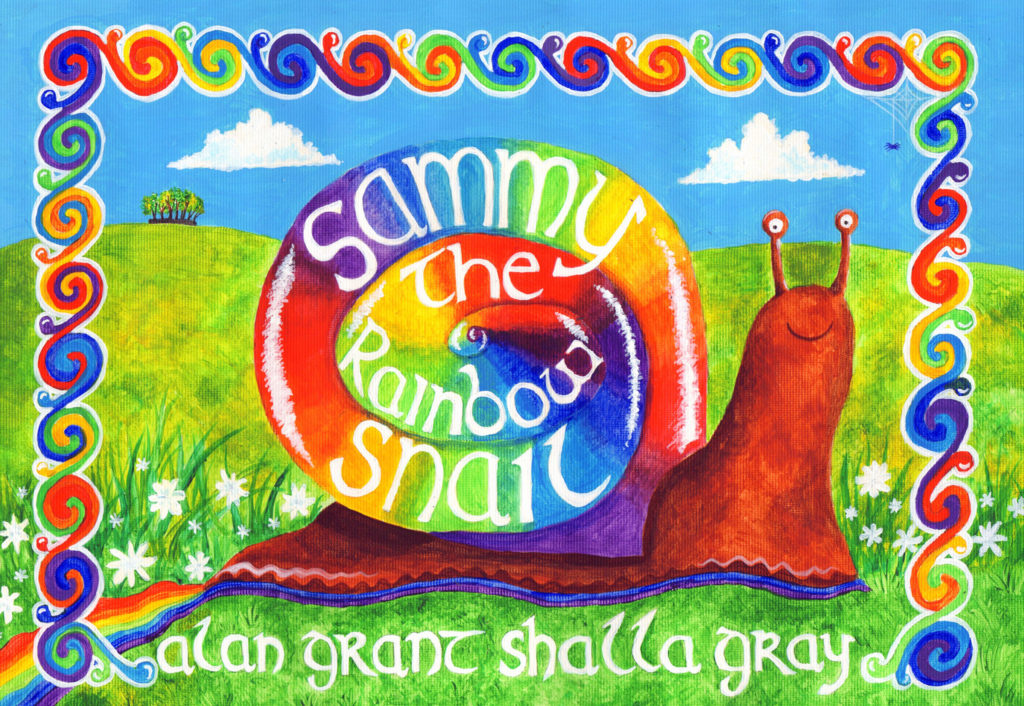
Our first published book was The Quite Big Rock by comics legend Alan Grant. As well as writing Batman, Judge Dredd and many other superhero titles, he is also Shalla’s Dad, and many years ago, before he got into comics, he wrote stories to tell her at bedtime. We have two of these stories on our list, the other being the psychedelic Sammy the Rainbow Snail.
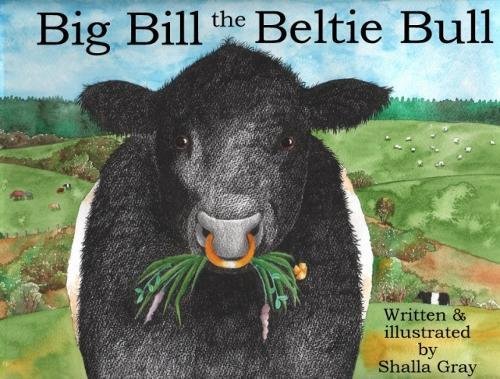
Our bestselling book is Big Bill the Beltie Bull, written and illustrated by Shalla. Belties are a cattle breed originating in Galloway with a distinctive white belt around their tummies. Big Bill goes (against his will) to the local show and surprises himself by winning first prize! We have received so many photos of children dressing up as Big Bill for World Book Day, he really captures their imagination! Jayne wrote two sequels to this top-seller, Big Bill’s Beltie Bairns and Big Bill and the Larking Lambs, which continue to sell really well.
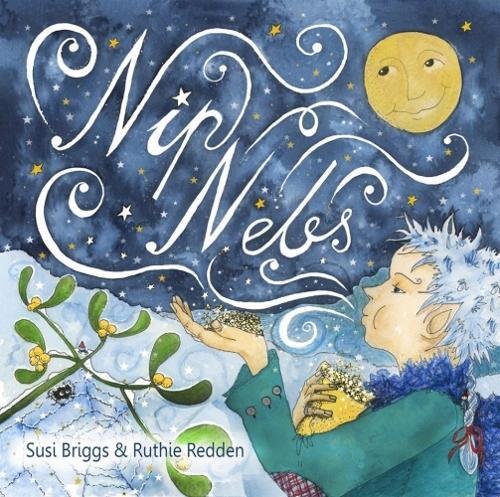
A chance meeting at an art exhibition led to Curly Tale Books publishing Nip Nebs – Jack Frost in Scots by Susi Briggs and Ruthie Redden. Shortlisted for the Scots Bairns Book of the Year in 2019, Nip Nebs is one of the few original titles written in Lowland Scots for children. Author Susi is extremely passionate about the Scots language, and in 2019 we were delighted to be awarded a Scottish Book Trust Grant for the publication of a sequel to Nip Nebs, entitled The Last Berry.
Alasdair Hutton, the voice of the Edinburgh Tattoo and a great admirer of Sir Walter Scott was our next signing, having penned a children’s story featuring Scott’s Dandie Dinmont Terriers, now a rare breed. Who would have thought that there were so many Dandie Dinmont fans! The book raced off the shelves and we are currently in talks about a sequel.
All of these books are set firmly in Scotland – the landscapes and characters are Scottish, and we have carried this theme on with our next book, Strange Visitor. This is a retelling of a traditional Scots tale by Renita Boyle, illustrated in a dark, graphic novel format by Mike Abel, and is so unusual that it almost defies description!
All of the authors, and many of the illustrators on our list do fantastic events for children. Susi Briggs for example has workshops based around Nip Nebs which also educate the participants about the Scots language in a very engaging way. Renita Boyle was a storyteller before she became an author, and she has an amazing knack with children – she can keep a whole school enthralled with her singing and stories! Shalla loves doing events at schools and nurseries, who often do farming-related topics which fit in nicely with her stories, and she has a large variety of activities and games to go along with each book.
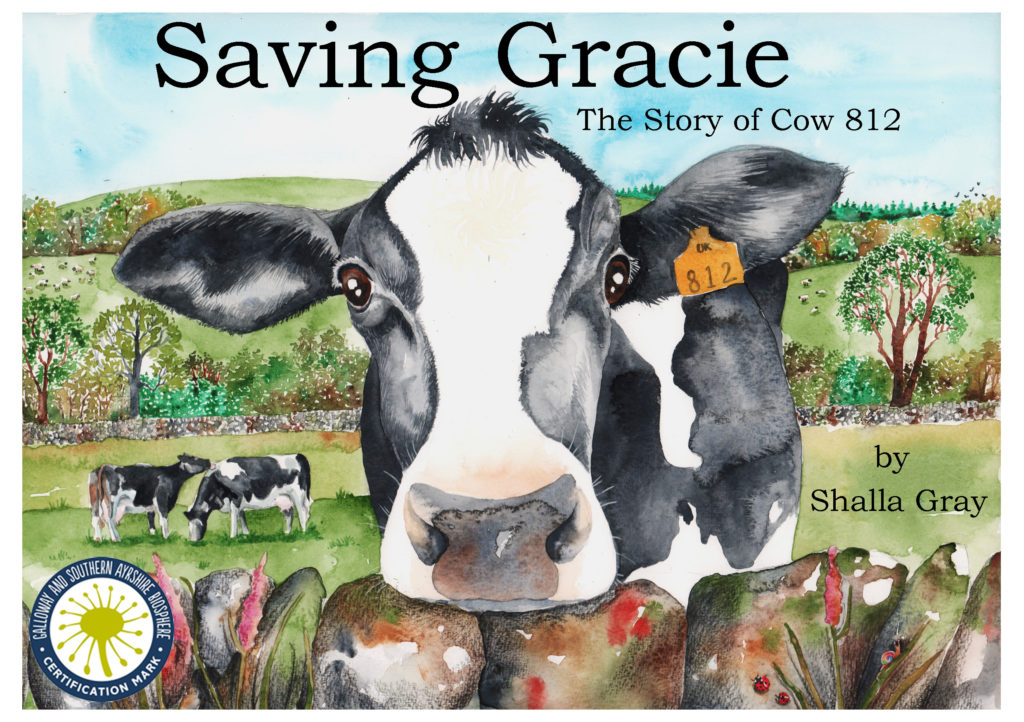
So, what next on the Curly Tale Books journey? Well, we are really excited to announce our next book Saving Gracie: the Story of Cow 812. Written, illustrated and printed in record time during lockdown, it is the result of a collaboration with Youtube sensation The Hoof GP, a local hoof care specialist whose little boys love our books. He has a cow called Gracie in his care who has attracted hundreds of thousands of followers, and he approached Shalla to ask if she would be interested in telling Gracie’s story. She was immediately inspired, and the resulting book is due out later this month…
To find out more about Curly Tale Books, visit their website.
Stephen Rutt moved to the Solway Firth in 2018, and wrote about the geese there in his book Wintering: A Season with Geese. Before he moved to the South-West of Scotland, he travelled the country charting sea birds and wrote of the experience in his Saltire-winning book, The Seafarers: A Journey Among Birds. To celebrate the release of the paperback of The Seafarers, we share an extract here for you to enjoy.
Extract taken from The Seafarers: A Journey Among Birds
By Stephen Rutt
Published by Elliot & Thompson
Birds were my awakening to the world outside. Birding teaches you to be aware of subtle distinctions that signify differences. Whether it was the leg colour or a few millimetres’ difference in wing length that enabled me to tell two common warblers apart, or the presence of a wing-bar that revealed it to be extremely rare. Whether I was standing in an overgrazed field, a set-aside field or a meadow rich in life that an owl would soon fly over through the thick light of dusk. Whether the wind in October was coming from the north and my day out would be cold and boring, or whether it was coming from the east and it would be cold and rich in potential. It made me pay attention, not just to these things, but to how and when they change. Whether my first swallow of the year was in March or May – and why. Birding forces you to pay attention to the world as it happens around you and gives you a way of decoding it.
Before I became a birder, I was briefly a fisherman. While sitting behind a rod, fruitlessly waiting, I never thought about global warming, the rise in sea levels, or how the algae in the bay of the lake might be caused by the run-off of unpronounceable agrochemicals with startling side effects. Fishing taught me futility – that things will probably not go your way. Birding taught me to look at and think about the outside world, to engage with the landscape and all it holds.
There is a gentle art to birding. By which I mean there is no correct way to do it. You can go outside for days or just glance out of a window, notice something, and carry on, your day having become slightly wilder, slightly more interesting than it might otherwise have been. It requires no basic equipment other than your own senses and a desire to notice and to know. Birding makes no demands of you other than these. It is gentle because you can’t force it. It is more productive not to, better to slow down to the speed of the landscape and blend with it. It is an art because there is no set route, no magic key to finding or knowing a bird. To recognise one requires a myriad of moment-specific considerations. And much of it can be done by intuition – the application of experience – rather than rules. You never stop learning. It can open you up to things either extraordinarily beautiful or extraordinarily depressing.
Being a teenager enabled me to be obsessed without shame. I absorbed the Collins field guide to the birds of Europe. Then Sibley’s field guide to American birds. Then the monographs to specific families of birds, then specific species. I absorbed site guides, built a mental map of the world’s birds, read blogs, dissected forums. I found a network of others from across Europe and we spent evenings indoors, online, talking about mornings outdoors. We were captivated by the Scottish islands. I had never been but, from the photos I had seen and the books I had read, I constructed my own mythic version of them: quiet, solitary utopias, places where one could not ignore nature, and if one tried then nature would come and find you. Come and rattle at the windowpanes, or land in your garden, or squat on your car bonnet, until you were forced to pay attention again. A place for the inveterately shy.
*
To understand the appeal of a seabird, it’s necessary to explore what a seabird is, and what it isn’t. Most birds migrate, most will cross a sea. They are not seabirds, not any more than a seabird becomes a landbird when it sets up residence on a cliff to breed every summer.
A scientist’s definition might focus on how they have feathers covering their auditory canal, to prevent water entering their ears when they dive for food, or to prevent flying with muffled hearing, or – more likely – to minimise the effects of pressure. Another scientist’s definition might focus on the Procellariiformes: the order that contains the petrel, shearwater and albatross families. They have a tubenose: a prominent bulging nostril above the bill, an adaptation specific to these families, allowing them to smell food on a sea breeze and expel the salt from their exposure to saltwater. But this would be partial definition. It would not include the auks, gannets, gulls, skuas, terns and eiders – all of which are predominantly found, or should be found, on the edge. Some might focus on their power of smell, unusually highly developed in some seabirds, while most other birds cannot smell particularly well. The problem is that all definitions of a seabird are partial. Most would exclude the eider. They might live on the coast, but they feed at sea. It is the sea that defines them and their capacity for coping with it makes them difficult, makes them wild, makes them captivating. The ‘should be found’ is important here – though some birds always end up lost, things are changing on this front. Some are moving inland.
Seabirds live predominantly out to sea – feed at sea, sleep at sea, and experience a habitat that is simultaneously as vast as the ocean and as small as the gap between two waves. Seabirds are mysterious. Away from islands, they are usually seen from land only when summer storms push across the Atlantic and sweep them towards the ocean’s edges. Seabirds love islands, as I love islands: the further out of the way they are, the less disturbance there is, the more perfect they are. All use them to breed – an act of convenience – though the vast majority occupy tiny cliff ledges, several hundred metres above the sea. It’s technically land, but I wouldn’t want to stand there.
Seabirds are transient, fleeting, remote things – yet they are also moving into towns and cities. When they are written about, they reveal a good deal about the author. As with all animals, they are good subjects on which to project human desire. Seabirds are some of our most loved and hated species. They inspire religious devotion or revolutionary zeal. Hermitic living or the hectic crowd. They are symbols of revolution, pirates and victims. They are bounteous and declining – and, like almost everything symbolic of the remote and wild, they are deeply touched by human activity: pollution, over-fishing, the warming of the seas.
Stephen Rutt has been commissioned to write a short book, The Saltmarsh Library by the Wigtown Festival as part of Scottish Natural Heritage’s Year of Coasts and Waters. It will be published in the Spring of 2021 and forms the focal point of Wigtown’s ongoing activity outwith the festival. You can find out more on the Wigtown website.
The Seafarers: A Journey Among Birds by Stephen Rutt is published by Elliot & Thompson, priced £9.99
Patrick Laurie’s memoir on a year in the life of his Galloway farm invites David Robinson to think about the changing nature of our countryside.
Native: Life in a Vanishing Landscape
By Patrick Laurie
Published by Birlinn Ltd
Patrick Laurie is always falling in love. The first time, the object of his affection is ‘blotchy, soft and perfectly gorgeous’. The second time, it’s her shape that attracts him – ‘a broad, tubby barrel with a wrinkle of fat around her neck’. Years later, he has a brief encounter that puts them both in the shade. ‘I smiled at the thickness which seemed to be unfolding in her legs and over her back. Deep veils of hair wobbled across her breast …’
We are, I should add, talking about ‘Riggit’ Galloways, and if you don’t know what they are, you almost certainly have never been smitten in a crowded auction mart by the urge to possess a local cow with a white stripe (‘riggit’) down its spine. Laurie, however, has, and in Native: Life in a Vanishing Landscape, he outlines why the breed has such a strong appeal to him.
Apart from their sheer bovine beauty, one reason is that ‘Riggits’, too, are natives. Go back to, say, 1800 and Riggit Galloways would already have been a century on the land Laurie farms near Dalbeattie, where his farmhouse is a century older still. Such continuity is precisely what’s vanishing from the landscape: older, smaller, cattle breeds are gradually being replaced by bigger, faster-fattening modern ones. In the process, not only did we lose better-tasting meat but a whole heap of biodiversity too.
In an interview accompanying its launch*, Laurie says he sometimes finds it difficult to explain what his book is about, and you can see why. There’s no immediately obvious focus. You might think it’s going to be about Galloway itself, but there’s precious little Gallovidian history in it, nor is it any kind of guide to what to see when you go there for a post-lockdown tour. There’s not too much about Laurie himself either or indeed anything about the upland farm conservation projects he has worked on that are mentioned on the inside back flap. Instead, Native starts out as lyrical trot through the farming calendar of the kind that you might well have read before. Stick with it, though, and it shakes loose from the format and becomes altogether more engaging.
At first, Laurie thought about calling it ‘the curlew book’. He had already written one about the black grouse, and curlews are far more important to him: they were the sound of his childhood, the music of his hills, and he has become obsessed with their survival. For curlews too are natives, even though ‘at the rate they’re going now they’ll be gone in a decade.’
But this isn’t a curlew book no more than it is about fancying gorgeous Riggit Galloway calves. Both feature heavily, both are becoming marginalised, both show the kind of countryside we are losing, and both can be used as a kind of shorthand for how it could be transformed. It’s this natural nexus that lies at the heart of the book and no, I don’t know how you’d work that into a punchier title either.
Curlews still come to Galloway, Laurie points out, but increasingly they’re just flying past on their way to lay their eggs in Finland or Russia. They’re hardly nesting here anymore, or at least not successfully: of the 111 attempts he’s watched in the last eight years, only 12 pairs survived long enough to produce chicks and only one chick lived long enough to fly.
For this, he blames three key F-factors: foxes, forests, and foot and mouth. Vast numbers of Galloways were slaughtered in the BSE crisis of the Nineties and faster-growing modern breeds were chosen to make up the numbers. Unlike Galloways, though, the new breeds won’t eat moorland grass or generally clear the way for the kind of habitat curlews seek out. Instead hybridised ryegrass continues its spread: a superfood with high nitrogen content, but one which could spell an end to the kind of plant and insect diversity curlews need.
This, in essence, is what Laurie is trying to reverse. It might sound like a fanciful ambition, and there are times, like when he opts to make hay rather than silage, when local farmers probably wonder what he’s playing at. Why does he harvest (and thresh) his field of oats by hand? Why does he forego an extra cutting of the grass that could provide him with two or three times more feed? The answer – an earlier cutting would devastate wildlife – would be lost on the students he meets at a local agriculture college. His fellow pupils, he says, ‘had never heard of curlews’.
The life he has chosen is a hard one, and he doesn’t shy away from making it harder still, constantly learning new skills such as how to mend his ancient David Brown tractor, sow a field of oats or slaughter a pig. But some of those hardships pay off: his bacon makes the shop-bought stuff ‘taste like wet salty paper by comparison’; the wild flowers return to the meadows; his herd of Riggit Galloways – he makes their meat sound so appetising that I’m determined to seek it out – slowly builds and he sells his first one. The old ways might be tiring and leave your hands calloused and scarred, but maybe they are the best after all.
The steady growth of his herd is a sad contrast to the childlessness he and his wife endure despite treatments for infertility. In the book’s penultimate chapter, Laurie describes the emotional toll this has taken on him. Sometimes, he says, working with his Galloways has fuelled his stoicism – they don’t question, the hills don’t question, so why should he? – yet at other times he feels ambushed by feelings of despair. He just doesn’t know, he says at the end of the book, whether he ever will have a child.
Well, I do. And he has. A little boy. And it’s a tribute to how much I enjoyed Native that I can’t tell you how glad I was to find that out.
* If you want to catch up with Patrick’s launch event, you can view it here.
If you would like to read an extract from Native: Life in a Vanishing Landscape, you can do so here.
Native: Life in a Vanishing Landscape by Patrick Laurie is published by Birlinn, price £14.99
Jessica Fox swapped her fast-paced life in Los Angeles for a quieter life as a bookseller in Wigtown. She has written a memoir based around her life-changing decision, and BooksfromScotland caught up with her to find out what can happen when you follow a dream.
Three Things You Should Know About Rockets
By Jessica Fox
Published by Short Books
Firstly, how are you doing? How have you been adapting to our current circumstances?
Oh goodness, begin with the hard question first! How are you doing? I mean, is anyone doing ok right now? Instead of making films currently, i’m making online videos. Instead of having a wedding, we got our deposits back and may travel around the US when we can. Instead of seeing my family (god I miss them), we’re collaborating on a podcast. My friend shared a wonderful saying about this strange, scary, full of change Covid time: “we’re all in the same storm, just different boats.” Overall, i’m infinitely hopeful about human innovation and science to rise to this challenge…and I hope our collective capacity for solidarity and compassion makes the journey in each of our boats less of an individual struggle.
You grew up in Boston, then moved to Los Angeles for work, both iconic, busy cities. How did you end up in a fairly remote, small Scottish town?
While working in Los Angeles, I had a vision that kept on appearing: a girl, working behind a long wooden counter in a bookshop somewhere in Scotland. She snuggled into her thick wool jumper as it rained outside, and I could even see the shop had a small golden bell hanging above the door. I thought that this was a screenplay I was destined to write, but the more I explored the vision I soon realised that the young girl was not a character but me. I kept on seeing myself behind that counter in the bookshop. So late one night I typed in “used bookshop” + “Scotland” into google, and Wigtown, Scotland’s National Book Town appeared. There were so many bookshops to choose from so I went for the largest, “The Bookshop”, determined that they might let me do a live/work holiday. After a couple of emails with the owner of The Bookshop, I was on a plane, traveling half way across the world to follow my vision.
It’s amazing that your subconscious led you to Wigtown before you knew it existed. Why do you think the image of a small-town bookshop beside the sea worm its way into your head?
Perhaps the heat of Los Angeles made me crave a place just the opposite: cold, full of ancient buildings, away from traffic and screens, and full of books. Perhaps, as an impressionable filmmaker, I had watched too many romantic comedies. Or perhaps, visions come to you for a deep mythic reason and if you’re brave enough to listen, they will connect you to people, a place and a journey that’s gives you meaning and a sense of being truly alive.
What was your first impression of Wigtown and the bookshop? Did it live up to your dream?
Yes. The Bookshop was exactly like it had been in my dream. At least the front room was – but everything else, the house above, Shaun, our friends, Wigtown, the community – were beyond my expectations. The best thing about dreaming is that it’s just the white rabbit leading you down the rabbit hole. Everything else is the journey – everything you didn’t anticipate – that’s the true gift.
Was it easy to adapt to the cultural differences?
Ha, no. I love Scotland and all things Scottish, but I wouldn’t pretend that I’ve completely adapted…even 14 years on. Wigtown has been incredibly generous towards and accepting of my Americanness.
In LA, you worked for NASA, while trying to build your film portfolio, so your pace of life obviously changed with your move to Wigtown. What did the journey teach you about your relationship with ambition?
Perhaps you have to let go of something to decide whether it’s a vital part of who you are. For me, ambition means believing in your own talents and finding or creating opportunities to express them. The adventure actually bright me closer to my inner ambition. It is an essential part of what makes me feel alive.
When did you know you would write a book about your experiences?
It took a lot of coaxing by a wonderful editor then at Short Books, Vanessa Beaumont. I only realised I could write a book when she encouraged me to, and gave me insightful and supportive feedback.
And you’re still here! What has kept you in Scotland?
My parents would like to know that too! After I got divorced there was a moment where I moved back to Los Angeles. But something in me kept on being called to Wigtown and Scotland. So I returned, co-created The Open Book and still felt connected and at home here. What keeps me in Scotland now is my partner Ash and my work.
If you wanted to encourage someone to visit the South West, how would you recommend the area?
To get there is a bit like finding Neverland, second star to the right and straight on till morning. It is not on the way to anywhere but that’s what makes it such a special place to be. The sense of community is so strong, and so kind. There is so much to explore from ancient history to the arts to nature. Galloway is like mini-Scotland rolled into one: farmland, hills, sea, ancient forests, ruins and ancient sites, towns, lowlands, snow capped highlands – all on your doorstep – and breathtakingly gorgeous.
What are your favourite Scottish books?
James Hogg’s Private Memoirs and Confessions of a Justified Sinner, Stevenson’s Treasure Island, anything by Nan Shepard and Shaun Bythell’s Diary of a Bookseller because it captures a very special time in Wigtown.
You still have a great interest in space. What are your thoughts on the current expedition to the International Space Station?
Recent NASA missions are some of the most admirable and successful examples of international team work and partnership. I wish more human endeavors were done as collaboratively across oceans and boarders. This current expedition is exciting because both the private sector and public sector have their own strengths and in tandem in terms of R&D, efficiency, research, they tend to compliment each other well. The future of space exploration will take both public and private partnership. It’s great to see that it works.
What’s next for you?
Lots of possibilities. Currently, I directed a film headed to festivals, my next book is almost done and i’m co-developing a couple of tv shows. So, rather than the sky, imaginations the limit.
Three Things You Should Know About Rockets by Jessica Fox is published by Short Books, priced £8.99.
The wonderful David Macphail has set his latest Thorfinn adventure, Thorfinn the Nicest Viking and the Putrid Potion, in the Great Kingdom of Galloway. If you’ve yet to aquaint yourself with the world’s nicest viking, then we have David reading from a previous Thorfinn adventure for you to enjoy.
Thorfinn the Nicest Viking and the Putrid Potion
By David Macphail
Published by Floris Books
And if you’d like to create your own putrid potion, head over to the Floris website to find our how.
Thorfinn the Nicest Viking and the Putrid Potion by David Macphail is published by Floris Books, priced £5.99
Did you know that the inspiration behind J M Barrie’s classic, Peter Pan, was inspired in a beautiful garden in Dumfries? And that Dumfries have opened the amazing Moat Brae House and Discovery Gardens to pay tribute to this place of literary history? Here we share the story of how the house, which fell into disrepair in the 20th century, has now been restored to become as inspirational to children now as it was to J M Barrie in his childhood.
Patron of the Moat Brae House, Joanna Lumley, talks to us on Moat Brae’s inspiration on J M Barrie writing Peter Pan:
While Moat Brae house was being renovated, they set out their plans for the finished building:
Moat Brae House opened to the public in Spring 2019, and is a beautiful, inspiring place to feed childrens’ imagination. When lockdown is over, we highly recommend you take a trip to Dumfries to discover the wonder of the gardens yourselves.
For more information on Moat Brae House, visit their website.
Scotland’s most famous poet belongs to the South-West, born and raised in Ayrshire, and seeing his last days in Dumfries, so we couldn’t shine a spotlight on the area without paying tribute to Robert Burns. Another writer from Ayrshire, Andrew O’ Hagan, has edited a brilliant, personal selection of his poetry, a perfect taster of the great poet’s works.
A Night Out With Burns
Edited by Andrew O’ Hagan
Published by Canongate
In the best work of the world’s most representative poet, every word can sound like an effusion of pure spirit. And who could mistake Burns’s genius when they encounter his beautiful lyric ‘Green Grow the Rashes’? He once introduced it by saying the song was written in ‘the genuine language of my heart’. A hymn to spontaneous affection over worldly desires, there is nothing else like it. I once knew a retired Ayrshire sailor, Mr Savage. I remember him singing this song one morning as he made his way along the seafront in the town of Saltcoats. The Firth of Clyde appeared to calm itself at the sound of the old man’s voice, as he sang this lilting memorial to a great and simple sentiment.
Green Grow the Rashes
chorus
Green grow the rashes, O;
Green grow the rashes, O;
The sweetest hours that e’er I spend,
Are spent amang the lasses, O.
There’s nought but care on ev’ry han’,
In ev’ry hour that passes, O:
What signifies the life o’ man,
An’ ’twere na for the lasses, O.
Green grow, &c.
The warly race may riches chase,
An’ riches still may fly them, O;
An’ tho’ at last they catch them fast,
Their hearts can ne’er enjoy them, O.
Green grow, &c.
But gie me a canny hour at e’en,
My arms about my Dearie, O;
An’ warly cares, an’ warly men,
May a’ gae tapsalteerie, O!
Green grow, &c.
For you sae douse, ye sneer at this,
Ye’re nought but senseless asses, O:
The wisest Man the warl’ saw,
He dearly lov’d the lasses, O.
Green grow, &c.
Auld Nature swears, the lovely Dears
Her noblest work she classes, O:
Her prentice han’ she try’d on man,
An’ then she made the lasses, O.
Green grow, &c.
One can practically see the yellow light at the window of the dance-hall and feel the pulse of romantic hope, a new and lively element in the blood. And here she is, Mary Morison – as ‘the dance gaed through the lighted ha’’ – and we are caught immediately in the drama of her specialness. There is a grave in Mauchline churchyard to ‘the poet’s bonnie Mary Morison, who died on 29 June 1791, aged 20’. Mary is a
ghost among the drinking glasses, yet forever alive in the flow of these images.
Mary Morison
O Mary, at thy window be,
It is the wish’d, the trysted hour;
Those smiles and glances let me see,
That make the miser’s treasure poor:
How blythely wad I bide the stoure,
A weary slave frae sun to sun;
Could I the rich reward secure,
The lovely Mary Morison!
Yestreen when to the trembling string
The dance gaed through the lighted ha’,
To thee my fancy took its wing,
I sat, but neither heard, nor saw:
Though this was fair, and that was braw,
And yon the toast of a’ the town,
I sigh’d, and said amang them a’,
‘Ye are na Mary Morison.’
O Mary, canst thou wreck his peace,
Wha for thy sake wad gladly die!
Or canst thou break that heart of his,
Whase only faute is loving thee!
If love for love thou wilt na gie,
At least be pity to me shown;
A thought ungentle canna be
The thought o’ Mary Morison.
I wrote part of my first novel, Our Fathers, in the west of Ireland, alone in a house by the sea in County Cork. After dark, a regular beam of light from the Fastnet lighthouse would fall over the bed and I woke there one night with a weathered thought. It was to do with the Irish who had left for Scotland years before. I went back to my desk and wrote some lines about the main character’s father, Tam. He ‘once wrote a letter to a cousin in Ireland, saying that he only stuck to the farm because of Robert Burns. “My habits are bad in the field,” he wrote, “but never mind, there’s something to see in the battle for stuff over here, with the thought of the poet’s hand there beside you.”‘ Tam then goes
to the Ayrshire madhouse at Glengall and sings ‘The Belles of Mauchline’ to his sick wife, and he kisses her.
The Belles of Mauchline
In Mauchline there dwells six proper young Belles,
The pride of the place and its neighbourhood a’,
Their carriage and dress a stranger would guess,
In Lon’on or Paris they’d gotten it a’:
Miss Miller is fine, Miss Murkland’s divine,
Miss Smith she has wit and Miss Betty is braw;
There’s beauty and fortune to get wi’ Miss Morton,
But Armour’s the jewel for me o’ them a’.—
A Night Out With Burns edited by Andrew O’ Hagan is published by Canongate, priced £9.99
Wigtown is Scotland’s Book Town, and is full of special bookshops. Shaun Bythell’s bookshop is now internationally famous thanks to his popular books The Diary of a Bookseller and Confessions of a Bookseller. Here he shares with us his life in lockdown.
Confessions of a Bookseller
By Shaun Bythell
Published by Profile Books
I never thought that I’d write these words (and I say this with what I can only describe as a nostalgic grimace), but I miss my customers. Not only do I miss them, I really miss them. Apart from the obvious fact that without them I have no income, I’ve finally realised that (and this time the grimace has become a wince – I can barely look at the screen as I type these words), I miss the social interaction of life in a bookshop. From the kind to the rude; from the friendly to the hostile, they provide me with material to write about, and a huge variety of conversations, most of which I would rather not have, but which I’m starting to crave. I’m fortunate to be locked down with my wife and our one year old daughter, so as silver linings go, I couldn’t have wished for more – although without the excuse of work, I’ve changed considerably more nappies than I normally would have done. Having a beautiful garden, and the most extraordinary spell of weather has also added a coat of sugar to the pill. I’ve built a sandpit, and we now have a paddling pool (mostly full of leaves) and I have ticked an embarrassingly small number of jobs both in the garden and the house off my ever growing list. But I miss the shop. I even miss Gillian the Ginger Menace, who works three days a week here, and spends most of her time and energy berating me for a litany of supposed inadequacies.
With the extraordinary weather, we should have been having barbecues with our neighbours and friends, going to the beach, and hillwalking, but even the absence of those opportunities has opened up others: every day we walk around Wigtown we try to find a new route. Incredibly, for such a small place, I’ve discovered things I didn’t know about. Restrictions on movement has meant that we’ve moved a lot more within our restricted area and learned to appreciate what we have. Other constraints have also revealed surprising unintended consequences. Having to queue outside the Co-op has often resulted in conversations with people with whom you would normally have a nodding acquaintance, but little more than than. When you’re standing near them on your socially distant strip of gaffa tape on the pavement, you find the time to learn more about them. A few weeks ago I started chatting to someone who I only know well enough that they inhabit that grey area between being an acquaintance and a friend, and discovered that he’d bought tickets for the Davis Cup (obviously couldn’t go) and that he’d been co-opted onto the board of the Wigtown Book Festival committee. He’s someone I’ve always liked, and I hope that I’m stuck in the queue beside him again soon.
Of course, there’s a dark humour to be found in these times too. Shortly afterwards, again in the queue for the Co-op, I was behind a Northern Irish woman called Chris. Sadly her husband is suffering from memory loss. There’s no humour in that of course, but she told me that one of her friends had seen a neighbour, a 75 year old woman who didn’t want to be seen visiting her equally aged neighbour by going through the front door, so instead she’d scaled a 6ft fence to have a lockdown cup of tea with her in the garden.
The customer who I most miss is Sandy, the Tattooed Pagan. He has been a regular visitor to the shop since I took over in 2001, and in that time we’ve become good friends. He lives alone, and has no mobile telephone, no computer, and never answers his landline, so when several people asked how he was (he’s in his 70s) I had no choice but to write to him. I didn’t know his address, but this being Galloway, an envelope with his name and a rough description of him found its way through his letterbox. I write letters to friends (and reply to some from strangers) every week – it is my preferred method of communication, so corresponding with him has not proved to be a challenge – in fact, it has been quite the reverse – almost as much of a pleasure as it is to see him in the shop. We’ve now exchanged three or four letters in each direction, and he recently sent me a poem about life in lockdown. Other correspondence from strangers continues, most of which comments upon how grateful I must be for ‘the internet’ as a means of selling my shop stock online while the shop is shut. But ‘the internet’ is now little more than Amazon when it comes to selling books online, and Bezos is not a devil with whom I’m prepared to sup. Even with a long spoon. I don’t sell online, and have no plans to do so ever again. My hubris may well finish me off financially.
Confessions of a Bookseller by Shaun Bythell is published by Profile Books, priced £16.99
Denzil Meyrick is one of Scotland’s bestselling crime writers, and has just released the 8th novel in his DCI Daley series, set in Kintyre. Before catching up with the latest thriller, we asked Denzil about his favourite books.
Jeremiah’s Bell
By Denzil Meyrick
Published by Polygon
The book as . . . memory. What is your first memory of books and reading?
My granny was the first person I remember reading to me. I can still see picture books called Mary Mouse, Rupert Bear and Barbar the Elephant. When I got to the stage of reading myself in the late sixties/early seventies, I began to read Enid Blyton – like so many others of my vintage.
I was lucky to have access to the wonderful children’s books by Kintyre Author Angus MacVicar. Much of his work was set in Kintyre in the past, present, or future. He also described places that sounded very like where I lived, though they were fictional. I remember thinking what a good idea that was.
From memory, my overwhelming feeling at being able to read was one of the thrill of independence and discovery. I still have that feeling to this day.
The book as . . . your work. Tell us about your latest book Jeremiah’s Bell. Is there something in particular you’re setting out to explore?
Jeremiah’s Bell is a study of family dynamics over a period of many years. Of course, being a DCI Daley novel, the family are dysfunctional in the extreme, and live a rather isolated and unusual life. Add a colourful history, and barbaric behaviour, and the circle is complete.
I suppose I’m saying that grudges and bad feeling can last for many years within an extended family unit. In some cases for generations. Also, patterns of behaviour can be replicated by members of a particular family, even though they may never have met, and are separated by many years.
It’s a tale of greed and revenge, where almost nobody is how they seem at first sight.
The book as . . . object. What is your favourite beautiful book?
I have an old leather-bound Bible with my late mother’s initials stamped on the cover. It’s moving in all sorts of ways.
Some of my most prized books are a pair signed by the late, great Iain Banks, gifted to me by my publisher. He was a fabulous, imaginative and original writer. Sadly gone too soon; but what a body of work he left behind.
The book as . . . inspiration. What is your favourite book that has informed how you see yourself?
It’s so hard to pick one book; there are so, so many I’ve read that have shaped my life, and the way I think of existence and the human condition. Having said that, Farewell to All That by Robert Graves is a moving and unforgettable book. Within its pages both the best and worst of human nature is portrayed.
Like all great books, you can revisit it again and again and always find something new.
The book as . . . a relationship. What is your favourite book that bonded you to someone else?
Treasure Island by Robert Louis Stevenson. My granny, Margaret Pinkney, nee Macmillan read it to me when I was perhaps four years old. I can still see the cover.
She was the Dux of the tiny country school in Kintyre she attended. Her father worked as a shepherd and cowhand. She had to trudge for miles backwards and forwards every day across the hills just to get to school. Now, she would likely have attended university, but in those days from her humble background, that wasn’t possible. Sent to service in Hull as a teenager, she became the chef to the city’s Lord Mayor. With my grandfather and my mum, they returned to Kintyre during the war to avoid the horrors of the blitz. Every time I think of Treasure Island, I think of her.
I very much doubt I’d have become a writer had it not been for her influence.
The book as . . . entertainment. What is your favourite rattling good read?
I’m going to pick two series of books, here.
First, the wonderful Flashman books by George MacDonald Fraser. Here we have the arch-cad from Tom Brown’s Schooldays, grown up and soldering his way through the battles of the Victorian era, but having lost none of his venality. Great writing, that is both funny and informative. The author’s attention to detail as far as the historical elements of the books are concerned is on the button.
Then there’s the Aubrey/Maturin series by Patrick O’Brian. These books are set in the Royal Navy during the Napoleonic wars. O’Brian recreates the wooden world of a man-of-war with stunning clarity and compelling storytelling, in all its complexity. Like the Flashman books, these are easily dismissed as tales of adventure. But they are so much more; beautifully written and inspirational works, brimming with invention and more than a touch of humour.
Brian Scott and Hamish owe a debt of gratitude to them both.
The book as . . . a destination. What is your favourite book set in a place unknown to you?
In the Court of the Red Czar by Simon Sebag Montefiore takes us to Russia during the height of Stalin’s power and cruelty. Here’s a huge nation, where almost nobody – including the dictator’s family – is safe. It’s harrowing stuff, history in the raw, rather than fiction.
I’ve been fascinated by Russia since school. This book brought the horrors of the Gulag and Stalin’s infamous purges to me in all their grim reality. A masterful recreation of a time and place I’ll never see – thankfully.
The book as . . . the future. What are you looking forward to reading next?
I’ve just finished reading Hilary Mantel’s brilliant trilogy based on the world of Thomas Cromwell in the court of Henry VIII. Right now, it’s hard to imagine reading another book – follow that! But I’m looking forward to continuing to work my way through Robert A Caro’s forensic account of the life of LBJ. Another step back in time, but so much to say about the present, and why America is the country it is today.
However, I’m always looking forward to discovering new books and writers. Reading is indeed a habit of a lifetime.
Jeremiah’s Bell by Denzil Meyrick is published by Polygon, priced £8.99
Wigtown Festival’s artistic director, Adrian Turpin, makes a great case for the South-West to be considered as Scotland’s literary heartland.
‘I fixed on Galloway as the best place to go,’ Richard Hannay declared in The 39 Steps. We liked the quote so much at the Wigtown Book Festival that we put it on a bag, and it’s come to mind a lot recently. For the past two years, we’ve been part of an EU-funded project looking at new approaches to literary tourism in rural areas. How can we make Dumfries & Galloway the best place to go for readers – even those not on the run from shadowy criminal conspiracies?
There’s a delicious variety in the Spot-lit project. In eastern Finland, plans are afoot to bring the wonderful (and undoubtedly) weird national epic Kalevala to a wider audience. Our partners at Arts over Borders in Northern Ireland dream of Enniskillen becoming a destination for Oscar Wilde pilgrimage. Meanwhile, along the Wild Atlantic Way, the storytellers and poets of Ireland’s West will be celebrated through new performances.
So what about south-west Scotland? What have we got to offer? More than is sometimes acknowledged. But that’s no surprise: Dumfries & Galloway (D&G) is used to being overlooked.
Let’s start with the classics. Burns’s Birthplace in Alloway often gets the glory, but it was Ellisland Farm outside Dumfries where he wrote “Tam o’ Shanter” and “Auld Lang Syne”, the town’s Globe Inn where he drank and St Michael’s Churchyard where he died. Walter Scott is about as Borders as you can get. But D&G might lay imaginative claim to Old Mortality, Redgauntlet and even The Bride of Lammermoor, which transposes its central story from Baldoon Castle, a stone’s throw from Wigtown itself.
Throw a stone in the south-west and you are likely to hit a place with a literary connection, be it Thomas Carlyle’s Ecclefechan or Hugh MacDiarmid’s Langholm. Four John Buchan novels are set in Galloway, while Peter Pan Moat Brae House – whose gardens fired the imagination of a young JM Barrie – is now home to Scotland’s National Centre for Children’s Literature.
Daundering along the Solway, one might note the Kirkcudbright of Dorothy L Sayers and Gavin Maxwell’s Elrig. And, at the risk of sounding like a particularly fiendish round of Stuart Kelly’s Literary Pub Quiz, did you know that John Ruskin’s family came from Wigtownshire? Or that Edgar Alan Poe wrote “The Raven” in Newton Stewart? I could go on.
A bit of literary trivia is always fun. But there is a serious point here. These literary landscapes offer real possibilities for sustainable tourism in south-west Scotland. It’s been done before: Samuel Crockett arguably invented Galloway as a Victorian tourist destination, through his bestselling but now forgotten novels.
As Scotland’s National Book Town Wigtown also has sold itself on books for more than two decades now – which explains why we took part in Spot-lit and are now working with nine businesses in Dumfries & Galloway as they develop new literary tourism experiences. These range from tours and stays to a musical performance and two new festivals. Since the Covid crisis, the project has taken on new significance as rural communities and tourist businesses begin to contemplate the road to recovery.
As several of these businesses show, literary tourism is not always the same thing as literary heritage. Vibrant festivals, independent bookshops (of which there were at last count 37 across the south of Scotland) and living writers, such as D&G-based Stephen Rutt, Patrick Laurie and Shaun Bythell, are all a vital part of the package.
‘Scotland’s Literary Heartland’ has a nice ring to it, and, though it would be nice to claim that title for D&G, it would be a push. But extend the parameters a little, north into Ayrshire and east into the Borders, and it looks less like hyperbole. From Alloway to Abbotsford, via Auchinleck and Melrose, literary pearls lie tantalising across the south of Scotland. Now is the time to make a necklace of them.
Patrick Laurie has written a beautiful book, Native: Life in a Vanishing Landacape, on his life on his family’s farm in Galloway. Here, he shares with us his thoughts on the place he calls home.
Extract taken from Native: Life in a Vanishing Landscape
By Patrick Laurie
Published by Birlinn Ltd
Galloway is unheard of. This south-western corner of Scotland has been overlooked for so long that we have fallen off the map. People don’t know what to make of us anymore and shrug when we try and explain. When my school rugby team travelled to Perthshire for a match, our opponents thumped us for being English. When we went for a game in England, we were thumped again for being Scottish. That was child’s play, but now I realise that even grown-ups struggle to place us.
There was a time when Galloway was a powerful and independent kingdom. We had our own Gaelic language, and strangers trod carefully around this place. The Romans got a battering when they came here, and the Viking lord Magnus Barefoot had nightmares about us. In the days when longboats stirred the shallow broth of the Irish Sea, we were the centre of a busy world. We took a slice of trade from the Irish and sold it on to the English and the Manxmen who loom over the sea on a clear day. We spurned the mainstream and we only lost our independence when Scotland invaded us in the year 1236. Then came the new Lords of Galloway and the wild times of Archibald the Grim, and he could fill a whole book himself.
The frontier of Galloway was always open for discussion. Some of the old kings ruled everything from Glasgow to the Solway Firth, but Galloway finally settled back on a rough and tumbling core, the broken country which lies between tall mountains and the open sea. This was not an easy place to live in, but we clung to it like moss and we excelled on rocks and salt water both. We threw up standing stones to celebrate our paganism, then laid the groundwork for Christianity in Scotland. History made us famous for noble knights and black-hearted cannibals. You might not know what Galloway stands for, but it’s plain as day to us.
We never became a county in the way that other places did. Galloway fell into two halves: Wigtownshire in the west and the Stewartry of Kirkcudbright in the east. There are some fine legal distinctions between a ‘Shire’ and a ‘Stewartry’, but that hardly matters anymore because both of them were deleted in 1975 when the local government was overhauled. The remnants of Galloway were yoked to Dumfries, and the result is a mess because Dumfries and Galloway are two very different things.
Dumfriesshire folk mistake their glens for dales and fail to keep Carlisle at arm’s length. They’re jealous of our wilderness and beauty, but we forgive them because it’s unfair to gloat. Besides, they have the bones of Robert Burns to console them, and don’t we all know it. Perhaps Dumfriesshire is a decent enough place, but we’ve pulled in different directions for too long to make an easy team. Imagine a county called ‘Perth and Fife’ or ‘Carlisle and Northumberland’. Both would be smaller and more coherent than ‘Dumfries and Galloway’. Now there are trendy councillors who abbreviate this clunky mouthful to ‘D ’n’ G’, as if three small letters were enough to describe the 120 miles of detail and diversity which lie between Langholm and Portpatrick. Tourism operators say we are ‘Scotland’s best-kept secret’, and tourists support that claim by ignoring us.
It’s easy to see why visitors rarely come. They think we’re just an obstacle between England and the Highlands. They can’t imagine that there’s much to see in the far south-west and tell us that ‘Scotland begins at Perth’. Maybe it’s because we don’t wear much tartan, or maybe it’s because we laugh at the memory of Jacobites and Bonnie Prince Charlie. Left to our own devices, we prefer the accordion to the pipes and we’d sooner race a gird than toss a caber. If you really want to see ‘Scotland’, you’ll find it further north.
When Galloway folk speak of home, we don’t talk of heather in bloom or the mist upon sea lochs and mountains. Our place is broad and blue and it smells of rain. Perhaps we can’t match the extravagant pibroch scenery of the north, but we’re anchored to this place by a sure and lasting bond. There are no wobbling lips or tears of pride around these parts; we’ll leave that sort of carry-on to the Highlanders. We’ll nod and make light of it, but we know that life away from Galloway is unthinkable.
My ancestors have been in this place for generations. I imagine them in a string of dour, solid Lowlanders which snakes out of sight into the low clouds. These were farming folk with southern names like Laidlaw and Mundell, Reid and Gilroy, and they worked the soil in quiet, hidden corners without celebrity or fame. Lauries don’t have an ancestral castle to concentrate any feeling of heredity. We’ve worked in a grand sweep between Dunscore and Wigtown and now all of Galloway feels like it might’ve been home at one time or another. I was born to feel that there is only one place in this world, and I can hardly bear to spend a day away from it. Satisfaction alternates between quiet peace and raging gouts of dizzy joy.
Our friends at Garmoran Publishing have just released an anthology of short stories and poems from both established and up-and-coming names in UK and US writing. With works across all genres – comedy, crime, fantasy, history, there’s a story for all tastes. All proceeds from this anthology will be donated to The Ambulance Staff Charity, making it an essential purchase to support our essential workers. Here, we share a story from one of the anthology’s editors, Hayleigh Barclay.
‘Rolling it In’ taken from Stories from Home
Edited by Hayleigh Barclay & Sylvia Hehir
Published by Garmoran Publishing
Rolling it In
Julie flicked through the glossy holiday brochure sitting on her desk. Parisian weekend break. Eat croissants along the Seine, take in a sunset at the Eiffel Tower, gasp in wonder at the Mona Lisa.
‘How’s about it?’ she said, whispering into the phone.
I can’t afford a baguette, let alone a holiday to France,’ replied Jen, who was at home searching through online job ads.
Julie took a bite of her apple and rolled her eyes. ‘I work for one of the largest travel agencies in the industry and yet they won’t give me two free nights in a local basement never mind a major European city!’
‘Nothing comes for free these days,’ said Jen, uploading her CV for the hundredth time.
‘I got a free dinner from Greig the other night,’ Julie replied, with a slightly smug smile.
‘That wasn’t for free, love,’ remarked Jen.
Just as Julie was about to impart her infinite wisdom about how Jen’s snarky opinion was actually anti-feminist, Julie’s boss appeared beside her, making her jump.
‘Do you think you could actually do some work?’ he said leaning against the wall. The coffee stain on his white shirt did not match his tie.
‘So that’s fourteen nights all-inclusive to Mexico. That will be £1600 per person,’ Julie sang into the phone in that rather annoying voice she felt the need to do whenever Willie, the boss, was around.
‘What?’ Jen said, clicking on an ad for a market researcher in the glamourous world of garden hoses.
‘Yes, I believe enchiladas are Mexican.’
‘Willie the dick is there, isn’t he?’
Julie turned around to find her boss picking his nose as though nobody was watching. ‘Oh God, it’s going right up there,’ she said under her breath.
At that moment, a young, blonde woman with humongous lips and bread knives for nails sat in front of her. ‘I wanna holiday!’ she said, flinging her £5000 designer handbag onto the desk.
Willie leered at the woman with his upper lip twitching. Julie pointed to the phone and held up her hand. ‘That’s the confirmation email sent to you, Ms Roberts. Have a good day now.’
Julie hung up the receiver. The blonde sucked her teeth. Willie walked away in the general direction of the bathroom.
‘How can I help you?’ Julie asked.
***
‘I’m not doing it!’ Jen said, moving her wheelchair towards the couch. ‘People already think I’m a freeloader.’
‘Oh, come on,’ Julie replied, handing her sister a cup of coffee. ‘It’ll be just like the good old days. You and me, teaming up. The two wheelies they used to call us.’
‘Amongst other things.’
Julie swiped a few biscuit crumbs off her arm rest and leaned over to show Jen her Instagram timeline. ‘They’re called Internet Celebrities. The blonde airbag that came in today was telling me about it. She gets a ton of free stuff online.’
Jen grunted and turned the volume up on the TV.
‘Besides,’ Julie continued, ‘this is what you’re good at. Plus, I don’t know if you’ve noticed, but, you’re unemployed.’
One sunny afternoon, about a week later, a local cat received a medal for bravery when he saved a baby from a poisonous ball of wool, wee Davie, the pub landlord, was sued for bribing a puggy machine, and Julie and Jen sat in front of their laptops holding a banjo and a set of homemade maracas made from coffee jars and lentils.
‘Do you remember the words?’ Julie asked, staring into the webcam and applying a thick layer of baby pink lip gloss.
‘Uh huh,’ Jen sighed. ‘I can’t believe you actually think this will work!’
Julie gazed into space. ‘This time tomorrow they’ll be in the post; a pair of red suede Huey Kitton stilettos with 5-inch heels, platinum faux buckle, and the trademark green soles.’
Jen strummed the banjo and pressed record on the webcam. ‘Let’s just get this over with.’
Ask someone to think of a song and they’ll probably come up with some pretty decent classics. Pop. Rock n Roll. Jazz. There’s also a good chance they’ll reel off a few stonkers – there’s even more of them to choose from. However, the musical atrocity that was about to make its way to unsuspecting YouTube viewers could rival even the worst of novelty one-hit wonders.
‘Dear Mr Kitton,
We hope you sing along.
Help a girl in need.
We’d like a pair of shoes,
To take away our blues.
Please send them in the post
While we eat jam and toast.
And if you wonder why,
We’re not gonna lie.
It’s a good in.vest.ment.
Cause we can’t ruin heels,
Whilst sitting in our wheels… Chairs.’
Upload.
Julie sat back looking a little bit too satisfied with herself. ‘This is totally the best idea I’ve ever had.’
***
Eighty-Five million hits later. Twenty-three million thumbs up. Fifteen thousand thumbs down. Thirty-eight thousand comments. Some people laughed. Some people cried. A lot of people found the two disabled women brave and inspirational. Two thousand men told Jen she should smile more.
Then, one random Wednesday, they arrived in the post; two pairs of red Huey Kitton stilettoes. Julie thought it was the siren call of her voice that lured them to her door. Jen said she was deluded. To be honest, the PR Department at Huey Kitton was so fed up with the song being stuck in their heads, they sent the shoes in the hope that the damn video would go away.
That didn’t happen.
Suddenly, the good people of social media cried out for the two wheelies to create their own YouTube channel, Instagram, and range of cookery books. Neither of the women cooked. Yet! Of course, Julie (and eventually Jen) obliged. Thus, J-SquaredCominAtcha was unleashed.
It took Willie the dick seven weeks to realise Julie no longer worked for him. As a goodbye, she left a rancid pineapple on her desk, a stack of tampons which had been dipped in ketchup, and a garden gnome wearing bondage gear. To be fair, the pineapple sold more holidays than Julie ever did during her employment. At least that’s what Willie said when a mass of fruit goo exploded in his face. His attitude soon changed when Julie appeared on national radio. Then, he tried to sell the tampons on Ebay.
***
‘You look like you handed a three-year-old a crayon and they ran wild with it over your face!’ Jen said, going through a box of FREE vegan friendly make-up which had been blessed by a secret society of nomadic squirrels.
‘It’s called contouring,’ Julie replied.
‘Can you hand me a lipstick?’
‘Sure. Do you want pink blossom or blossom pink?’
‘What’s the difference?’ Julie said, re-applying her eyeliner for the tenth time.
‘I honestly don’t know.’
Four hours later and the two women looked preened, plucked, and perky. Carefully placed cushions, candles, and gadgets gave the impression that although their exteriors might portray high powered, career driven ice maidens, on the inside, they just wanted fluffy kittens, snuggly jumpers, and world peace. Products. Products. Products. If J-SquaredCominAtcha loved them, then EVERYBODY LOVED THEM! ‘
We got an e-mail today from a company selling mobility aids. They’re wondering if we’ll feature them?’
‘Are they sending us free stuff?’ Julie replied, whilst writing her latest blog entry on the benefits of a moisturiser whose main ingredient was spiders’ webs.
‘Don’t be ridiculous,’ Jen laughed with a mouthful of mass-produced donuts that just happened to need advertising on Instagram.
‘Then NO! When they’re free we can talk.’
‘But other people have to pay for them,’ Jen said, inserting blue hair extensions into her purple hair.
‘Exactly! They shouldn’t have to.’
‘And what’s the difference between that and all this other free stuff?’
Ignoring her sister, Julie picked up a notebook and scribbled the lyrics for their latest marketing hit, ‘These Rollo Jeans Make Sitting Down Feel Good.’
Ninety-five million views. As nobody says, it was pure influential gold. Just like the classics, ‘Manicures Make My Wheels Look Pretty,’ ‘Toe Are Pointless Unless You Wear 24 Carat Toe Rings,’ and ‘I Carry My Pucki Bag on My Lap.’
Agents called. Magazines proposed a ten-page spread and promised not to use the word inspirational. Fashion brands offered the two women their own lines. Somewhere along the way, Jen’s two bedroom flat became so overloaded with “stuff” that she had to move into a penthouse overlooking the Clyde. It may, or may not have been given to her as part of a marketing ploy trying to attract more A-listers to Glasgow.
‘Are things getting out of hand?’ Jen said, testing scents for their new perfume range. Turns out Jasmine doesn’t mix with Eau de Saffron.
‘Not at all!’ Julie replied. Her phone vibrated. ‘That absolute skank,’ she hissed, checking her notification.
‘Twitter war?’
‘She started it!’
Jen took a swig of her pine tree smoothie. ‘That’s your fifth one this month.’
‘I did not use a filter!’
‘You probably did.’
‘This is just petty jealousy!’ Julie said as her face turned scarlet.
‘It’s not.’
‘It’s ableism.’
‘It’s really not.’
‘Look, I’m telling you-‘ Julie said, but was interrupted by her phone ringing. After many high-pitched giggles, half-hearted compliments, and promises of meeting up for cocktails, she hung up.
‘What was that?’ Jen asked.
‘We’ve been offered a cookery show.’
‘But neither of us can even boil an egg.’
Julie bit her bottom lip and smiled. ‘Well, I suggest we learn pretty damn quickly how to make Coq au Vin.’
Jen looked at her sister with a mixture of befuzzlement and boredom.
‘They want us to do a special in France,’ Julie replied, rolling her eyes. As the realisation of eating croissants down the Seine hit Jen, she smiled and immediately started searching for her passport.
‘See?’ Julie cried out whilst downloading a recipe app, ‘I told you we’d get to Paris.’
Hayleigh Barclay Hayleigh completed a Doctorate of Fine Arts in Creative Writing at the University of Glasgow in 2019. She currently writes short stories for online magazine Disability Horizons. Her debut novel Girl of the Ashes is out in October 2020. Loves all things Gothic and magical. She knows a lot about Victorian vampires. Twitter: @hayleighbarclay
Stories from Home: An Anthology of Stories & Poems, edited by Hayleigh Barclay & Sylvia Hehir is published by Garmoran Publishing, priced £6.99
Island-based publisher Cranachan has launched a free, illustrated anthology of poems and stories for children aged 8-12. Stay at Home! Poems and Prose for Children in Lockdown is a collection of 40 lockdown-themed contributions by writers based in Scotland. BooksfromScotland is delighted to host the collection here.
Wonderfully illustrated by Darren Gate, there is something in the anthology for everyone, from the serious to the hilarious, with short stories, flash fiction, poems, letters and diaries (including some in Scots) all giving their take on lockdown life topics such as kitchen haircuts,
birthdays, home-schooling, daily exercise, pets, nature, neighbours–and even toilet roll alternatives!
Contributors: Raisah Ahmed, Annemarie Allan, Dean Atta, Nayanika Basu, Pamela Butchart, Philip Caveney, Maisie Chan, Suleman Chebe, Alastair Chisholm, Justin Davies, Lari Don, Elizabeth Ezra, Matthew Fitt, Kerry L Fleming, Merryn Glover, Laura Guthrie, Joan Haig, Yasmin Hanif, Robert J Harris, Callum Heitler, Barbara Henderson, Diana Hendry, Emily Illet, Lindsay Littleson, Joseph Lamb, Elizabeth Laird, Joan Lennon, Caroline Logan, Janis Mackay, Alan McClure, Miranda Moore, Raman Mundair, Alex Nye, Rachel Plummer, Ross Sayers, Linda Strachan, Chae Strathie, and Victoria Williamson.
Now, click on the cover image, and enjoy!
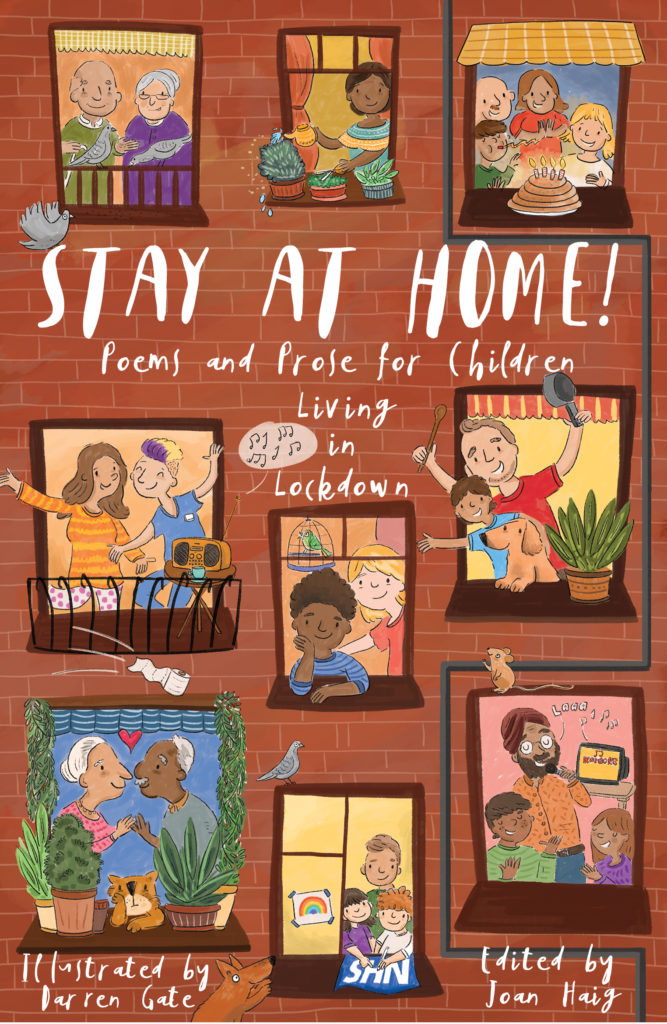
For more information on Cranachan Books, visit their website.
Good food is a treat and a comfort at any time, and during lockdown sharing tips on eating well has been a highlight across social media. Scotland’s publishers are always on hand to give us books that highlight the joy of cooking and eating, so we thought it the right time to give a you taster menu of some current cookbooks.
Canongate have a beautiful collection of books about food on on their list and one of BooksfromScotland’s recent favourites is the wonderful Be My Guest: Reflections on Food, Community and the Meaning of Generosity by Priya Basil. It’s a brilliant gift to anyone who loves to entertain. She writes:
In English ‘to cook something up’ means to prepare food, but also to invent stories or schemes, to concoct something out of fantasy. When I first started writing I also baked a lot, mostly on days when the writing wasn’t going well. It soothed me, alongside the slow and intangible creation of a novel, to cook up something that was quickly ready and edible. A cake can bring simple, instant self-gratification and appreciation from others, whereas writing – for all its rewards – is always accompanied by self-doubt. Moreover, the reactions of others, even when positive, are rarely enough for me. I’m perpetually hungry for some extra validation, which nobody in the world can give. Only in the act of writing is that hunger satisfied, for I become, briefly, bigger than myself, capable of hosting the entire universe and yet treating every single person in it as if they were my only guest. This feat feeds and sates my ravenous self, my need to be and to have everything.
Stories enact a form of mutual hospitality. What is story if not an enticement to stay? You’re invited in, but right away you must reciprocate and host the story back, through concentration: whether you read or hear a narrative – from a book or a person – you need to listen to really understand. Granting complete attention is like giving a silent ovation. Story and listener open, unfold into and harbour each other.
A recipe is a story that can’t be plagiarised. Compare cookbooks by cuisine and you’ll find recipes that are almost identical, distinguished by minor variations of ingredient quantity or slight deviations in procedure. Debts are gladly acknowledged, sometimes in the name – ‘Julia’s Apple Tart’ – or in a sub-line – ‘Adapted from Yotam Ottolenghi’. Recipes represent one of the easiest, most generous forms of exchange between people and cultures, especially nowadays, with online food blogs abounding and all kinds of once-exotic ingredients available at your local supermarket. Recipes are the original open source, offering building blocks that may be adjusted across time, place and seasons to create infinite dishes. You only need to successfully make a recipe once to feel it is your own. Make it three more times and suddenly it’s tradition.
No wonder different societies claim the same food as their definitive, national dish. Hummus in the Middle East may well be the most contested case in point. Fed up of the endless, inconclusive debates about the true origins of this popular chickpea dip, a group of Lebanese hummus-aficionados decided to settle the matter once and for all by setting the record for making the largest tub of hummus ever in the hope that the feat would irrevocably associate hummus with Lebanon above all. The idea of consolidating their ur-hummus credentials by producing such an excess is fitting in the context of the famously profuse Arab hospitality, summed up in the half-joking warning to guests: you’ll need to fast for two days before and two days after eating in an Arab household. A year after the Lebanese set their hummus record, the title was taken by a group in Israel who filled a satellite dish with four tonnes of the dip. Months later the Lebanese managed to top that and reclaim the Guinness World Record title. The dispute continues, a mild incarnation of the greater, more intractable regional conflict. I should probably refrain from dipping my finger into such loaded contests about the humble chickpea, but I adore hummus, and my favourite version is one made by a Palestinian friend – without a trace of garlic. And, of course, she is certain hummus was invented in her village.
*
Our friends at Black & White have been really spoiling us lately with their gorgeous lifestyle books. One of those books, guaranteed to make your mouth water is Ailidh Forlan’s Street Food Scotland: A Journey of Stories and Recipes to Inspire. In the book, she travels round Scotland giving us the best recommendations for food stalls across the country. Here, she tells us about the delightful Melt, providing the best comfort food to the residents of Aberdeen.
Melt will celebrate its fourth birthday on the first of March 2020. It’s a hugely accomplished business now boasting two premises, the Melt Mobile and a street food stall. It bends the rules of my book – does Mechelle’s unconventional timeline of bricks and mortar before an outdoor stall disqualify her from the classification of street food? Perhaps. But are her grilled cheeses of such a high calibre that it would be a crime to walk past without joining the queue for them? Oh, most definitely.
The toasties are thick heavenly doorstops containing your week’s recommended calorie intake in each half. They’re filthy things, loaded with stringy mozzarella and robust cheddar to create the most Instagrammable cheese pull – if you’re of that ilk. The pulled pork, haggis, ham and smoked bacon come from Aberdeenshire Larder in Ellon. It’s all sandwiched between bread from the Breadmaker in Aberdeen, who are, ‘A not-for-profit bakers that employ special needs staff and put profits back into the local community.’
In one shop, Melt gets through a whopping 150 loaves a week, creating toasties like the oh-so-popular Bruiser that has hangover cure written all over it. It’s a marriage of macaroni cheese with a three-cheese blend, haggis and smoked bacon and, as a top secret off-menu perk, if you ask for a ‘Bruiser Bru’, Mel will gift you a pity can of Irn Bru to restore you back to full health. You didn’t hear that from me. Scottish rapeseed oil does a marvellous job of crisping up the outsides of the toasties and Mel chooses to cook with big flat top grills and castiron steak weights to give the customers a bit of a show.
The shop itself transports visitors back to their childhood. ‘The Breville toastie maker came to the UK in 1973, so the design brief was your nan’s living room if it had been designed by Wayne Hemingway,’ Mechelle says. And ‘Mrs Melt’ looks the part. Mechelle’s style has strolled out of the 1950s with her headscarf, pristine eyebrows, winged eyeliner and ‘MELT LIFE’ tattooed on her knuckles, which she paid for in toasties to the artist – now that’s seriously cool.
One February Monday, a newspaper reported that a passer-by kicked one of Melt’s bakers in reaction to them being closed. Heaven forbid anything should get in the way of a hungry woman and her toastie. But the community hasn’t always been so . . . welcoming. Let’s rewind.
‘When we opened the shop, we had dreadful press. It was faddy, it was fickle, it was bread and cheese: “How dare they charge £5 for what we can do at home?”’ Melt was up against it. ‘Aberdonians are so fussy and simple with their taste. You work with it or you fight it. I learned very quickly that if you dare to charge Aberdonians £5 for what they deem to be bread and cheese, it better be the size of a house.’
She ran the shop for a year before venturing into street food, and it soon became pivotal. There were only burger vans in industrial estates, fuelling lunch-break workies when she started up, but it gave her business the road it deserved. ‘Up here the palate’s a little limited. I could go to an event in Glasgow or Edinburgh and use San Francisco-style sourdough bread, that comes out chewy and sticky. In Aberdeen, unless it’s a farmhouse loaf, you’d struggle. They don’t appreciate specialist cheeses either. I tried to do trendy drinks and got met with resistance from people who just want Irn Bru!’
At times Mechelle’s creativity was limited by her audience, but by trading at hundreds of events across Scotland, she could experiment with her produce and then reel customers back in for more. ‘People now come to me because they’ve seen my stall at pop-ups and festivals. There’s no better advertising than getting out there and doing it.’
Aberdonians might have simpler tastes, according to Mechelle. But once she’s converted them, they’re loyal. ‘Almost four years on and my customers are incredibly protective of me; we’ve established a cheese cult!’ There are no regrets here.
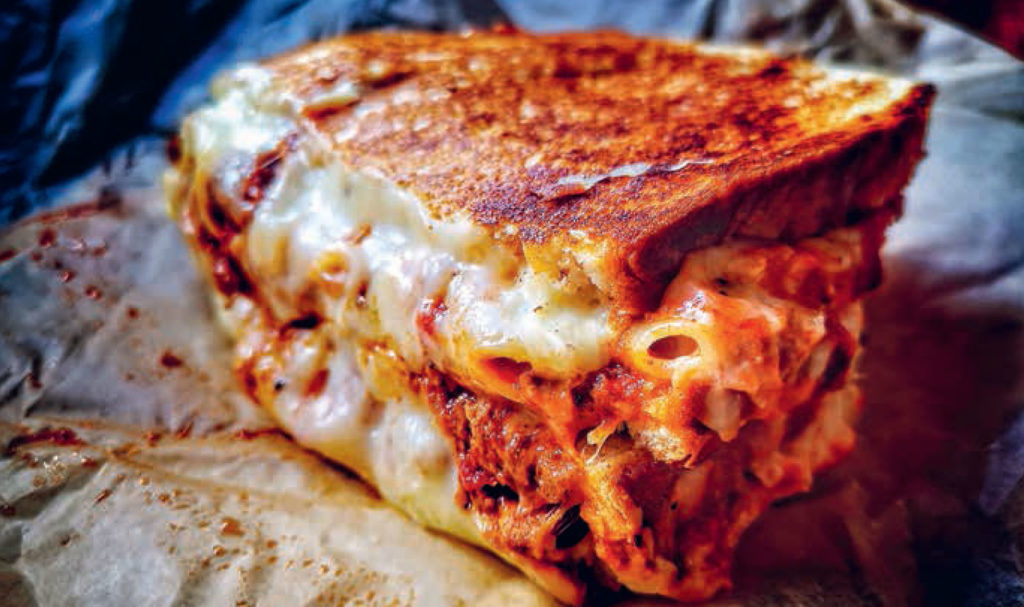
THE BRUISER
A very Scottish toastie comprised of macaroni cheese, haggis and smoked bacon
INGREDIENTS
2 slices of sourdough bread
50g béchamel sauce
100g mozzarella, grated
50g strong Scottish cheddar
Rapeseed oil
50g Marshalls macaroni, cooked
2 rashers of grilled smoked streaky bacon
100g haggis, cooked
METHOD 1. Lay your bread out and generously spread your béchamel sauce onto both slices of bread. 2. Shower one slice of bread with both types of cheese and sandwich together. 3. Oil a hot pan, a skillet is ideal, and place the sandwich into it at a high heat. 4. If you have a heavy pan press this on top. 5. Lift the underside after a few minutes to check it’s browning, adjust heat accordingly. 6. Once browned flip over and cook the other side. When you’re happy it has browned and the cheese has melted put the macaroni and meat inside and continue to heat through for several minutes. 7. Take off the heat and enjoy
*
Birlinn have a wide variety of cookbooks across their backlist, but BooksfromScotland particularly loves the Food Bible series, a selection of pocket guides that celebrate particular ingredients in Scotland’s larder. And, very presciently, two new bibles have just been released, The Scottish Baking Bible, by Liz Ashworth, and the The Scottish Wild Food Bible by Claire Macdonald. Here, we share a recipe from each.
Illustration by Bob Dewar
SCOTTISH STRAWBERRY SPONGE
A light-as-a-feather sponge to complement fresh Scottish strawberries baked for a birthday surprise.The tasting comment?‘Sooooooooooooooooo good!’
Makes a cake 20cm (8in) diameter
Sponge
3 eggs
85g (3oz) caster sugar
115g (4oz) self-raising flour
30g (1oz) melted butter
Filling
150ml (¼ pint) double cream
A little caster sugar to taste
Vanilla essence
115g (4oz) strawberries, hulled and sliced
Heat the oven to 180°C (160°C fan), 350°F, Gas 4. Oil and line two sandwich tins. Whisk the eggs and sugar until thick and holding the trail of the whisk. If you can, do this over a pan of simmering water because this gently cooks the egg as you whisk. (I find with very fresh eggs this is not necessary.)When the egg is increased in volume, light in colour and holding the trail of the whisk, sift the flour over the mix then fold in very carefully until all the flour is combined,making sure none is stuck to the base of the bowl or the inside of the spoon. Pour the melted butter down the side of the bowl and fold in gently. Divide the mixture between the two tins and bake in the oven for 20 minutes until risen, golden and springy to touch. Cool a little in the tins and then complete cooling on a wire tray. To make the filling, whip the cream until thick and flavour with a few drops of vanilla essence and a little sugar. Spread the cream on one of the sponges, top with sliced strawberries, then place the second layer of sponge on top. Dust the top of the cake with caster sugar and decorate with a fresh strawberry and a rosette of whipped cream.
Baker’s note You can use any Scottish soft fruit, such as raspberries or blueberries
NETTLE TIMBALES
Serves 6
INGREDIENTS
2 large handfuls of nettles
300ml (½ pint) single cream
3 large eggs and 1 large egg yolk
1 teaspoon salt
12–15 grinds of black pepper
a grating of nutmeg
Steam the nettles for 2–3 minutes until wilted. Cool, then squeeze out any excess liquid. Whizz in a food processor until smooth, then add the seasonings. Whisk together the eggs and yolk, adding the single cream. Mix the seasoned nettle puree thoroughly into the egg and cream mixture. Butter six ramekins. Divide the nettle mixture evenly between the ramekins. Put them into a roasting tin and pour boiling water into the roasting tin, to come halfway up the sides of the ramekins. Cook in a moderate oven at 180°C (350°F, Gas 4) for 20–25 minutes, or until the timbales feel firm. Take the roasting tin out of the oven and leave to stand for 15 minutes. Then run a knife around the inside of each ramekin, and shake them out onto warmed plates. Serve either as a starter or as an accompaniment to a main course.
*
Kitchen Press’s remit is to give its readers the most interesting and most beautiful cookbooks, and if you have already bought yourself one of their titles, you’ll know what a treat they are. Here on BooksfromScotland, we have a pre-publication exclusive from their much-anticipated and award-winning book from the fantastic Seafood Shack. If you can’t make the journey to Ullapool to find out just how delicious Kirstie Scobie and Fenella Renwick’s food is, then this book will be the next best thing. It will be released in November 2020.
SMOKED HADDOCK, PEA AND CHORIZO MACARONI CHEESE
If you feel like jazzing up your mac and cheese, try this. The smoked haddock and chorizo gives it a yummy smoky flavour and the peas freshen it up. A great way to get your kids to eat more fish! Smoked trout also works really well as an alternative to smoked haddock.
Ingredients
Serves 6
100g salted butter
1 onion, finely chopped
1 clove garlic, finely chopped
½ red chilli, finely chopped
1 vegetable stock cube
3 heaped tbsp plain flour
600ml full fat milk
300g Cheddar cheese, grated
1 tbsp chopped curly parsley
juice of 1/2 a lemon
400g macaroni
100g chorizo, chopped into chunks
3 fillets smoked haddock, chopped into chunks
150g fresh or frozen peas
1 tbsp chopped fresh chives
black pepper
Put a large saucepan on a medium heat and add the butter, onion, garlic and chilli, then let it all sweat off for a good eight to ten minutes until everything is nice and soft and very sweet. Make sure you keep stirring so nothing burns. Crumble in the stock cube and add a good grind of black pepper, and fry off for another minute before adding the flour. Fry for a minute or two to make a roux, then slowly add the milk, whisking all the time as you don’t want it to be lumpy. Cook on a low heat until the sauce has thickened, then take it off the heat and add the grated cheese. Stir until the the cheese has melted into the sauce, and add your parsley and lemon juice.
Boil the macaroni for about seven minutes in salted water – it will keep cooking after you drain it so you want it to be al dente. Cooking times can be different for different brands so look at the packet and take off two minutes from the suggested cooking time to make sure it doesn’t overcook. Once cooked, drain your pasta in a colander.
Heat a small frying pan and add the chopped chorizo – you don’t need to add any oil as the chorizo will release plenty as it heats up. You want to get it nice and crispy so fry it off for a few minutes on a high heat, stirring and reducing the heat if it starts to burn. Keep a few pieces of chorizo aside to garnish your dish at the end. Add the smoked haddock and the peas to the remaining chorizo in the frying pan and cook until the haddock starts to flake. Stir the contents of the pan into the cheese sauce and mix in the pasta. You might need give everything another quick blast of heat. Garnish with the reserved chorizo pieces and a sprinkle of chopped chives and serve.
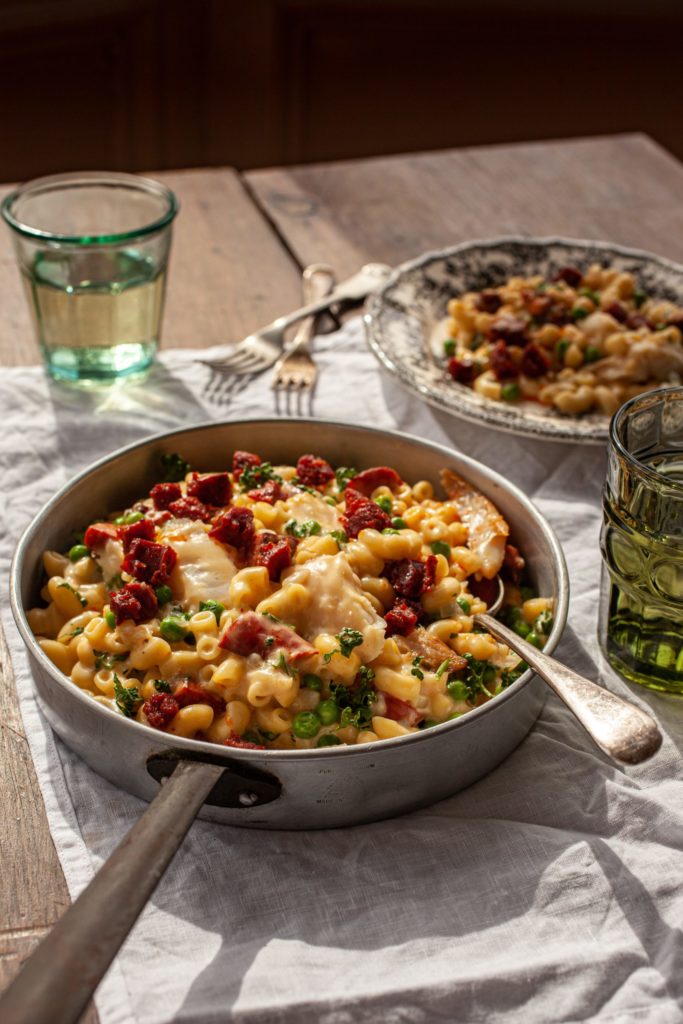
Photograph by Clair Irwin
Be My Guest: Reflections on Food, Community and the Meaning of Generosity by Priya Basil is published bu Canongate, priced £12.99
Street Food Scotland: A Journey of Stories and Recipes to Inspire by Ailidh Forlan is published by Black and White Publishing, priced £20.00
The Scottish Baking Bible by Liz Ashworth is published by Birlinn Ltd, priced £4.99
The Scottish Wild Food Bible by Claire Macdonald is published by Birlinn Ltd, priced £4.99
The Seafood Shack: Food and Tales from Ullapool by Kirstie Scobie and Fenella Renwick will be published by Kitchen Press in November 2020, priced £20.00
We may not be able to go wandering too far from home just now, but we can still be armchair travellers, especially with books as evocative as Patrick Baker’s The Unremembered Places: Exploring Scotland’s Wild Histories. In this extract, he invites us to travel round Scotland’s western isles.
Extract taken from The Unremembered Places: Exploring Scotland’s Wild Histories
By Patrick Baker
Published by Birlinn Ltd
Of all of Scotland’s wild places, its wild islands enthral me the most. Perhaps it’s some relic from childhood. The consequence of reading so many children’s books that imbued islands with a sense of mystery and adventure. They were the realms of exploit and exploration, wondrous territories described in a tantalising prose of danger and discovery. Places such as Robert Louis Stevenson’s Treasure Island, that could claim ‘latitude and longitude, soundings, names of hills and bays and inlets, and every particular that would be needed to bring a ship to safe anchorage’. To a child’s mind they also represented powerful notions of independence and freedom, distanced both physically and imaginatively from the timeframes and rules of the adult world. Most famously, in Arthur Ransome’s Swallows and Amazons, Wild Cat Island becomes a private dominion for the children of the novel: their own unexplored island kingdom, to be mapped, named and ruled over by them, as if they are the first to ever land on its shores.
There is, then, something childlike in my fascination with wild islands, but there is also something inherently beguiling about their separateness. Their geographical detachment from the mainland and the difficulty to reach them provokes the same stubborn inquisitiveness in me as remote mountain peaks do. They are also, as I have come discover over the years, places that have been repeatedly weighted with human importance, invested with strategic or spiritual significance through multiple generations.
I have visited dozens of Scotland’s wild islands, but there are countless more I have never set foot on. Many are cast out at sea, but it is the inland varieties that really capture my imagination: wooded islets, freshwater archipelagos or tide-marked outcrops sheltered in sea lochs. None are lived upon (for to be truly wild, an island must be uninhabited) and unlike other wilderness areas, few attract much human traffic. In their containment and isolation they have become vessels of past events, water-locked archives for some of Scotland’s wildest histories.
I had in mind to extend my exploration of wild islands further. For some time, I had heard of a cluster of islands at the north of Scotland’s longest loch, Loch Awe, which were both mysterious and primordially wild. Forest islands, swathed in ancient pines, from whose uppermost branches raptors could be seen lifting off in flight. I planned to make the journey by canoe, sleeping out on the islands’ treefringed shores and paddling between their narrow channels. Later, I would also make a crossing to Eilean Fhianain, a small island in the vast waters of Loch Shiel that had once been home to the Irish missionary, Saint Finnan, and where a ruined chapel and burial ground describe the religious schism that once bitterly divided Scotland.
*
In the middle of the canoe, brightly coloured dry bags had been stuffed beneath the thwart, wedged tightly together so they’d remain in place even if we capsized. Under the bow seat I’d crammed a rucksack full of camping equipment and enough supplies to last us a few days. At the stern was a steal fire pan and a bucket full of firewood, to be used for cooking and for warmth.
I’d been joined by my best mate, Steve, grabbing the chance for a wilderness trip before the birth of his second child. It was good to have him along. Not just for the rare chance to catch up, but also, as an experienced sailor, I knew Steve’s guidance would be useful in some of the exposed stretches of water we were to cover.
We paddled slowly north, the evening light closing in. It was June, and the lochside was dense with foliage. Birch, oak and alder spilled from the banks, their leaves overhanging and touching the water. Where the trees gave way, we saw farmland. There were small white cottages, sheep being herded and the distant sound of quad bikes. After an hour we moved into more open water to ready for the crossing to the northern side of the loch. From shore to shore the distance was just under a kilometre.
It’s an edgy place, being so far out from land. A canoe is a highly susceptible craft, vulnerable to even the slightest changes in weather conditions. Winds can arrive faster than the time it takes to renege on your course, and gusts that would hardly register your attention on land can quickly kick up swells capable of upending a boat. Open-water crossings therefore require caution and commitment.
Almost halfway out, from nowhere, we were hit by a sudden squall. The canoe spun around, the bow flicked clockwise like a weathervane. I powered hard on the leeward side to bring the boat back on course, but I was unable to counter the wind and felt the canoe being forced in the wrong direction. For a few moments I experienced a quiet, concentrated panic, wondering if we’d be pushed into the middle of the loch, then caught up in larger, cresting waves. But the squall died just as quickly as it arrived, the water flattening and the boat responding once more. It was, though – as we were to later find out – a demonstration of the energy the loch could instantly summon.
We reached calmer waters on the northern shore, its surface turning to glassy green. Near a wooded peninsula, a small, scrubby island came into view. It had a swampish look, hardly sitting above the level of the loch and colonised by water-loving trees; willow and alder threw out thin branches, breaking the island’s outline so that it was hard to tell where its shoreline began. It was a crannog, one of dozens of prehistoric settlements built into the body of the loch thousands of years ago. Remarkably little is known about these artificial island refuges, but most are believed to have been homesteads: family dwellings kept safe from animals and intruders by their distance from the land.
We scanned the treeline beyond the crannog for a place to make camp. It had begun to drizzle, and tiny droplets puckered the loch’s surface, turning its texture from mirror to sandpaper. We found a spot, spaced between the canopies of two aged oaks. I rigged a tarp between them to provide some shelter from the rain, and we cooked dinner underneath. We were on the edge of a temperate woodland that stretched deeply inland behind us. The atmosphere was heavy and filled with the onion scent of wild garlic. Mosses grew everywhere, upholstering boulders and tree trunks in lustrous greens and yellows, while tresses of ghost-white lichens hung from every branch.
*
At first light the next day we explored the shoreline on foot. Small boulders covered in black algae lay in between tufts of grass, making it difficult to walk any distance without slipping. Where the grass grew longer, flowers had taken hold: pink campion, forget-me-not, bluebell, and meadow buttercup. Up ahead, Steve signalled from a break in the forestry. There was a ruin, fifty metres from the water’s edge, hidden among the trees.
Only the walls remained, spanning the height of two floors. I stepped across the threshold; inside, but still outdoors. A huge sycamore had grown from the centre of the building, its canopy reaching through the roof’s empty space, dappling sunlight on the walls. The building was a drystone construction – the tallest I’d ever come across and almost a foot deep in parts. The stones were a myriad of shapes and sizes, but so perfectly tessellated that in places they appeared as a single rockface, fissured laterally with cracks. I could sense the builders’ patience and expertise, the contemplation of placement for every piece of the wall, and I struggled to remember seeing anything more beautifully crafted.
Despite its size, the building was slowly disappearing, being swallowed back by the wood. Ivy streamed from the tops of the walls, sending down vines like rappelling ropes. In both rooms, fireweed grew in tall clusters, reaching for patches of sunlight, while spleenwort ferns emerged in splayed starfish forms from the ruin’s stonework course. Outside, birch and alder saplings were establishing themselves. In between them, stands of foxgloves had sprouted, their bugle-shaped flowers turning from white to pink.
Back on the water, we pushed further up the loch, and after a couple of kilometres the islands appeared on the horizon: a small flotilla, fully rigged with dark-leaved sails. We paddled past more crannogs on the way and stopped at the largest, a circle of boulders about twelve feet in circumference. It was a desert island, a granite mound barely above the water and devoid of vegetation. A place to be marooned or abandoned on.
We headed to the furthest island in the archipelago first: a shoreless landmass of tall trees mirroring down into the loch and joined to the mainland by a causeway of wooden groynes. Being the nearest to land, it had signs of being frequently visited. A small stone pier tilted out from beneath the branches, and in the island’s centre an area of flat ground held the remains of a wild camp: charred logs and a circle of smoke-blackened rocks. As we pulled away from the island, a large bird heaved itself into flight, its wings breaking in long, mechanical beats. It appeared black at first, darkened against the brightness of the sky. Then colour. Chocolate-brown wings and the flash of white underside, dark primary feathers and a distinctive highway-man’s mask of feathers banding its face.
The Unremembered Places: Exploring Scotland’s Wild Histories by Patrick Baker is published by Birlinn Ltd, priced £14.99
Jim Crumley’s seasonal quartet is such a treat for nature lovers. His close observation of Scotland’s landscape and wildlife, and his talent for putting those observations into beautiful prose has put Jim firmly in BooksfromScotland’s list of national treasures. We’re delighted to share this extract from his latest book, The Nature of Summer.
Extract taken from The Nature of Summer
By Jim Crumley
Published by Saraband Books
Simmer’s a pleasant time
Flowers of every colour
Water rins o’er the heugh
And I long for my true lover
Robert Burns
Consider the mountain sorrel by your left boot. If you failed to spot it don’t worry, you wouldn’t be the first. At 4,000 feet on the Cairngorms plateau, there is bigger and more handsome stuff to look at. But summer is the Goddess of Small Things. So now that I have drawn your attention to it, why not give the mountain sorrel the time of day? I know, I know, it looks like nothing at all; it’s basically a high-altitude dock leaf. What’s this one…four inches tall? Yet up here, things have a habit of not quite looking like what they really are. That sparse cluster of kidney-shaped leaves at ground level is what botanists call a basal rosette, which is arguably too grandiose for what actually meets your eye. And those things at the other end of a skinny stem that morphs from red at the bottom to green halfway up, those are what pass for flowers, and it is true that they are on the nondescript side of insignificant. But let me show you something. Look closer, look deeper, look inside the flower. See the whole plant. The way to see what’s there is to get down on your knees. Peel the petals apart. Do you see it? This is the fruit of the mountain sorrel, not a berry but a nut. I told you we were dealing with small things. It’s about an eighth of an inch long. Three millimetres, if you don’t do fractions. Turn your binoculars upside down, put the eyepiece almost against the nut and look in the wrong end, for now you have a microscope in your hand. And now that you can see it larger than life, what do you think that is, that green canopy to which the nut clings? Can you see how beautifully formed it is, like an open book; and can you see that it is exquisitely edged in red, the way the finest book pages are edged in gold? It’s a wing. So when plateau winds blow (and the wind has a considerable repertoire up here, from the easiest of breezes like this July morning to an all-Britain all-time record of 176 miles per hour in January 1993), the nut flies until it eventually touches down and – in time, in time – it pushes a root into the tough plateau soil and a new mountain sorrel plant begins to come to terms with high living.
Now consider its neighbour. Notice that unlike the mountain sorrel’s erect stem and spike of flowers and winged nuts, its neighbour is a horizontal, ground-level straggle of shining leaves. Such is the nature of summer in the high Cairngorms that ten days ago this strange growth showed not so much as a leaf bud. Plants of all kinds bloom late and wither early here. The growing season, such as it is, is fast and brief. These leaves are fully open. And if you care to lift up one or two, you may find a yellowish non-leaf growing among them, and if you have the capacity to set aside the evidence of your eyes and think outside the box, it may occur to you that it looks like a tiny catkin – because that is what it is. What you are looking at is a tree, an inch-high tree with its “branches” underground, a dwarf willow. And this is its Scottish homeland, the highest, pared-to-the-bone upthrusts of the Cairngorms, and what passes for summer up here is a short, sharp shock of a season (in the forty-something years I have known these mountains, I have acquired a complete snow calendar: that is, I have been snowed on in every month of the year, so including June, July and August). So short and so sharp that the leaves of some specimens have turned yellow in July, while others just a few hundred yards away are still in bud or have yet to bud at all.
****
When I chose the title for this chapter, and having written it on a notebook page with a fountain pen (my preferred way of writing), I thought I would begin with a list. This was it:
Goldcrest eggs and nests and chicks, wild strawberries, wild raspberries, blueberries, brambles, cloudberries, cloudberry flowers, small blue butterflies, small coppers, small tortoiseshells, small whites, small pearl-bordered fritillaries, small skippers, dingy skippers, chequered skippers, orangetips, northern-brown argus, Rannoch brindled beauty moth, sea pink, sea spurry, sea holly, newborn lizards, scales on the petals of fragrant orchids, small white orchids, seventeen species of speedwell, wild mountain thyme, mountain avens, mountain sorrel (and nuts), alpine lady’s-mantle, dwarf cornel, eyebright, bedstraw, house martins, sand martins, sandpipers, wrens, merlins, little-ringed plovers, little auk, little tern, azure damselflies, all damselflies and dragonflies apart from those ones that look and sound like Sopwith Camels, spotted flycatchers, headdress of redpolls and reed buntings…
Then I ran out of ink, and I thought better of the idea and that perhaps you might just like to make your own list, now that I’ve shown you how to get the hang of it.
The Nature of Summer by Jim Crumley is published by Saraband Books, priced £12.99
If you’re looking for a writer whose skill in taking readers to a different time and place with characters that linger long in the mind, then David Robinson discovers that Lesley Glaister might just be the person you’re looking for, and that her new novel, Blasted Things, deserves to be added onto everyone’s bookshelves.
Blasted Things
By Lesley Glaister
Published by Sandstone Press
Daphne du Maurier, Kate Atkinson, Ruth Rendell, Gillian Flynn, Patricia Highsmith: read Lesley Glaister’s reviews and she’s been compared to all of them. The underlying thought is invariably the same – Glaister’s novels are every bit as good at chiselling out hidden secrets from expertly drawn characters, the psychological tension is equally taut, the writing just as dextrous. So how come she isn’t as well-known as they are?
Her sixteenth novel, Blasted Things, published this month by Sandstone Press, does nothing to make that question go away. There aren’t many novelists who can turn both their characters and plot inside out and still make both believable, but this novel, set in the immediate aftermath of the First World War, manages to do just that.
Unlike all of her other ones, it is rooted entirely in the past. The Walter Scott Prize for historical fiction defines it as being anything set more than sixty years in the past. As Blasted Things is set a full century ago, I suggest to Glaister that she has just gone and written her first historical novel. At the other end of the phone, I can hear her demurring, and I know why. Because although the book’s historical setting is well drawn (it opens in a First World War field hospital, before switching back to England in the first years of peace) and the period setting and social attitudes accurately conveyed, that’s not really its point.
‘Maybe that’s the problem with my work,’ she says. ‘It doesn’t really fit into any genre. Is it historical? Is it a romance? Is it a psychological thriller?’ Her own preferred form of words is ‘literary fiction with a nod to the dark side’. Which is fine, although I’d precede it with ‘character-driven’, because the two main protagonists of Blasted Things are so well drawn that they will hang around for a long while in the reader’s mind.
Clementine, a middle-class English girl, has returned from working as a nurse in a field hospital, where love briefly blossomed amid the horrors of war, to an unhappy marriage with a stolid Suffolk GP. There is, at least, stability to her life, although not in her mind, as nothing and no-one can match the intensity of her love for her wartime sweetheart. To Vincent, a lower-middle class war hero back in Blighty minus half of his face, peace brings the very opposite of stability. Instead, he has to hustle for survival: no-one wants someone so horribly disfigured on their sales team. Yet Dolly, the war-widowed landlady who had taken him on as an odd job man, looks a very promising prospect indeed. So while there’s no stability in his life, there may yet, he hopes, be love.
Vincent, Glaister explains, was a thread back to her 2014 novel Little Egypt, in which a similar character had returned shellshocked from the First World War. ‘I thought I’d like to pick up on that, not because I’m interested in war but I am in its ramifications. My father was a Japanese PoW and I’ve already explored this a little bit already, how bottled up tensions can affect a family even down the generations.
‘In 2014, there was so much about the war, and I began writing Clem’s story, starting it quite a long way back. But as the story moved into the First World War, it became too obvious that she was going to get engaged and he was going to be killed, and it was all becoming predictable.’
At this stage, when she was already losing interest in the original direction of the novel, her daughter-in-law in Fort William fell ill and there were other, more important, priorities. Only when she realised that it was the aftermath of the war that really interested her, and when the character of Vincent sparked to life, his blatant external injuries mirroring Clem’s hidden ones, did the book spring back into life. (Her daughter-in-law, incidentally, recovered too: these days, she’s an online yoga teacher, and Glaister had just had an hour in her class before we talked.)
Clem and Vince are the opposite of cardboard cutouts; they are edgy, awkward, brittle, disappointed, maybe even hard to like. Neither are ordinary, neither are mainstream, and of course neither are contemporary. When Glaister’s London publisher was rootling around for an explanation of why her novels didn’t sell as well as they deserved to, that was the answer he came up with: maybe if her characters were more ‘normal’, mainstream and zeitgeisty, more like people she knew …
Maybe if they were online yoga teachers? I suggest.
‘Or influencers, perhaps. Maybe a blogger or an influencer with a dark secret in her past working her magic on the internet.’ She laughs. Not bitterly, but at the absurdity of the idea.
‘Because what I love about writing is imagining life in another skin altogether, with another set of values. Trying on another psyche for size is completely absorbing, and in some ways the more different a character is from me, the more fulfilling writing about them is. When I’ve written characters like the sort I was asked to do, it’s always been hard to bring them to life.’
In that respect, her 2014 novel Little Egypt – largely set among Egyptologists in the 1920s – was an act of defiance, breaking away from the pressure to write something marketable as a psychological thriller to write exactly the kind of novel she wanted to instead. Blasted Things follows a similarly liberating trajectory.
For the reader, the pay-off is the depth of characterisation. In Clem, Glaister has latched onto the way in which VAD nurses came back from the Front to a world bored by talk of war and manic edge to the wish for normal life to resume, where friends want to cut off their tresses in favour of a flapper’s bob,. With Vince, she shows what lies behind the tin mask held with the same psychological acuity albeit on the other side of the class chasm. I can’t say much about the relationship between the two of them without giving away the plot, which soon twists away in an altogether more unnerving direction than you (or certainly I) could possibly imagine.
‘Actually,’ she says, ‘I find plotting quite difficult as I believe actions have to be deeply motivated. My writing is all about a very painstaking building up of a sense of character and then putting them in difficult situations. And while it’s easy to concentrate on the two protagonists, I always like to find a whole world in a novel, so the smaller figures have to be fleshed out too, so that you can, as it were, see the two central characters’ faces not just from the front but from around the sides and the back.’
Her plan now, she says, is to start writing a second novel set just after the Second World War that will have as its main characters the babies born, or about to be born, in Blasted Things. There may even, she says be a third novel set around the time of the Vietnam war. You might not find yourself reading about internet influencers and other modish matters in any of them, but if you want war, peace, dark secrets and edgy characters you can believe in, Lesley Glaister is in it for the long haul.
Blasted Things, by Lesley Glaister, is published by Sandstone Press, price £14.99.
Young love is never easy, and Sylvia Hehir captures its ups-and-downs perfectly in her new novel, Deleted. BooksfromScotland caught up with her to find out more.
Deleted
By Sylvia Hehir
Published by Garmoran Books
Firstly, how are you doing? How are you coping with lockdown?
As I usually work from home, the routine of my day is not that different, especially as we live in such an amazing place and I can walk out of my door to beautiful areas. However, I hate not seeing family or having friends visit. Then there’s the big horrible scary bit forever lurking to swamp you. So, not a big fan really.
Are you managing to read? What books have been getting you through?
I was so looking forward to The Mirror and the Light and I have started it but I was finding it difficult to totally escape in to that world, and I don’t want to spoil the experience, so I’ve set it aside for the moment. I’ve got a lot to read for Garmoran and that helps as it is working towards positive outcomes. I’m also currently searching for my Roobarb and Custard Annual to help cheer me up.
You are just about to release your second YA novel, Deleted, at the end of the month. What draws you to writing YA books?
It is a time of life that stays with you, isn’t it. Everything turned up to maximum. All those things experienced for the first time. Plus, I’ve been a teacher in secondary schools for over thirty years so I have spent a lot of time with teenagers. I loved reading the Georgia Nicolson stories (as an adult!) and I dream of writing like Louise Rennison.
What were your favourite books when you were a teenager?
You have to remember I am very old. I only had comics to read at home and any books I did read were generally from school. My own choices that followed on from those include Laurie Lee’s adventures in Spain, Lady Chatterley, and The Picture of Dorian Gray. Make of those what you will. Being in an amateur dramatic club I was also fond of reading play scripts, especially Irish writers such as J.M. Synge.
Can you tell us a little bit of what to expect from Deleted?
Deleted is unapologetically a teen romance, delivered with a light-hearted tone. The hint of mystery in the story provides our main character, Dee, with a few uncomfortable moments as she tries to work out what is happening with her new mobile. There are fights and misunderstandings and new relationships (and a happy ending). Themes of prejudice and belonging come through too.
Both your novels have their young protagonists in fairly remote settings. How do you think the teenage experience differs in rural settings?
I do think growing up with just a handful of classmates in a rural setting is a very different growing up experience to that of youngsters in an urban environment: Social events, opportunities for friendships, everyone in a small community knowing your business. However, taking steps towards adulthood can still be scary and difficult, whatever our surroundings.
Not only are you writing, but you’re embarking on a publishing career too. Can you tell us about Garmaron Publishing?
Starting Garmoran Publishing with a few other local writers is an amazing project and we’re very excited for our titles. Indie publishers have the flexibility to approach and take part in the industry on different terms. It is very difficult for unknown authors to be ‘seen’ by agents and big publishing houses. Here at Garmoran, we are committed to giving our authors the support they need to make real the possibility of bringing their work to readers.
Has anything you’ve learned in starting publishing influenced your writing?
I will avoid writing tongue twisting phrases and sentences if I’m going to narrate the audio!
What’s next for you?
Delivered, the sequel to Deleted, is due out in November 2020. I’m very lucky to have Hilary James provide another fab cover image and I’m looking forward to sharing Dee’s best friend, Frankie’s story. After that, I’ve got a climate change novel in progress (remember when that was our big concern!) And I’m desperate to complete a graphic novel I’ve got planned.
Garmoran is also currently producing Stories from Home, an ebook short story collection, with proceeds going to a Covid-19 relief fund. So, lots to do!
Deleted by Sylvia Hehir is published by Garmoran Books, priced £8.99
BooksfromScotland may be biased as it’s our home city, but Edinburgh really is a beautiful place. We love a meander round its streets, but, at the moment, we can’t venture out too much. Brilliantly, Shawna Law has put together an excellent book, Pockets of Pretty: An Instagrammer’s Edinburgh, that means we can enjoy the city’s gorgeous nooks and crannies from the comfort of the couch. Here, we share some of her beautiful pictures of Leith, and in particular, its collection of murals.
Extract taken from Pockets of Pretty: An Instagrammer’s Edinburgh
By Shawna Law
Published by Black and White Publishing
It’s only right that one of Edinburgh’s main artistic hubs is home to the largest collection of street art and murals in Edinburgh. It’s by no means as extensive as Glasgow’s or Aberdeen’s street art scene, but still Leith has murals dating back to the 1980s with an influx of newly painted walls from 2013, thanks to LeithLate’s mural project. As well as LeithLate’s mural map, I’ve come across a few unofficial murals dotted around the neighbourhood.
MURALS TO KEEP AN EYE OUT FOR
Wronger Rites by Kirsty Whiten (2015)
Dalmeny Street
Untitled Mural by Elph (2016)
115 Leith Walk
The Leith Aquatic
by Blameless Collective (2013)
Halmyre Street
Leith Dockers Club by Tom Ewing (2013)
17 Academy Street
Untitled Mural by Artists’ Collective (1984)
Tolbooth Wynd
Eduardo Paolozzi
by Russell Dempster (2014)
77 Henderson Street
Leith History
by Tim Chalk & Paul Grime (1985)
Next to Leith Library on Ferry Road
København by Chris Rutterford (2018)
Custom Lane
A survivor of the Gretna rail disaster
by Guido Van Helten (2013)
Out of the Blue

Pockets of Pretty: An Instagrammer’s Edinburgh by Shawna Law is published by Black and White Publishing, priced £20.00
ALSO ON BOOKS FROM SCOTLAND
-


Saltwater: A Midsummer Ghost Story by Elaine Thomson
‘The very thought of those grey faces made my skin grow cold.’
-

‘An Odious Campaign’ by Rob McInroy – Why a 1936 By-Election Still Resonates
‘This enraged the locals and he came close to being run out of town on several occasions.’
-

‘‘That’s right, Bobby,’ he growled. ‘I haven’t seen you in – well, since you decided to kill me.’ ‘
-

David Robinson Reviews: Solitary Agents by David Goodman
‘This is very much an up-to-the-minute story of spycraft, positively revelling in all the things tha …
-

The Savage Landscape by Cal Flyn
‘It is their resistance to the intrusions of the outside world − culturally, economically, environme …
-

The Shortest History of Scotland: A Q & A with Murray Pittock
‘We need to be better aware of that to understand the challenges and achievements of the past, and t …
FEATURED AUTHOR:
R.M. Murray

R. M. Murray is founding director and Head of Visual Art & Literature at An Lanntair arts centre in Stornoway, on the Isle of Lewis. He studied in Aberdeen and then at the Glasgow School of Art, where he was in a punk band with Peter Capaldi and Cr …
FEATURED PUBLISHER:
Luath Press

Luath Press takes its name from Robert Burns, whose little collie Luath (Gael., swift or nimble) tripped up Jean Armour at a wedding and gave him the chance to speak to the woman who was to be his wife and the abiding love of his life. Burns called one …