


David Robinson takes a look at two books published on one of Scotland’s best loved writers.
The Letters of Muriel Spark
Edited by Dan Gunn
Published by Virago
Electric Spark: The Enigma of Muriel Spark
By Frances Wilson
Published by Bloomsbury Circus
It’s January 1955 and Muriel Spark is writing to her erstwhile lover and literary collaborator Derek Stanford (‘Dearest Boy’) from a Kent cottage let out to artists in difficulties. She has been there since July the previous year, following her mental breakdown and conversion to Catholicism when she had seriously considered becoming a nun.
‘My immediate neighbour next door, Mrs Bell,’ she writes, ‘is reputed to be a spiritualist. She is small and fat and surprised. She stands in the middle of the road outside our cottages with her plump parsnip legs astraddle and as you come out of the door her eyes say “Goodness me!” Then, in a fluting trill, she tells you about herself, though you have heard it before.’ Spark then launches into a comic monologue in Mrs Bell’s voice that could have come straight out of one of Alan Bennett’s Talking Heads, in the course of which she mentions that Mr Bell had written a novel called Murder on the High Seas and, seeing that Mrs Stark [sic] is an authoress, could she possibly take a look at it?
At this point in The Letters of Muriel Spark Vol 1 1944-63, excellently edited by Dan Gunn, the irony is that while Mr Bell is a novelist, Mrs Stark – sorry, Spark – still isn’t. It will be another few months before she sends the first five chapters of her first novel to Alan Maclean, a young editor at Macmillan who has expressed interest in her work. In the course of the year we will track its progress from The Loving of Mrs Hogg, to Characters in a Novel, Types and Shadows and Shadow Play – all oddly unSparklike, anodyne titles – before she finally hits on The Comforters.
Gunn’s book comes just two months after Frances Wilson’s biography Electric Spark and covers some of the same ground. ‘The Muriel Spark who interests me,’ writes Wilson, ‘isn’t the grande dame of her last 40 years but the young divorcee whose arrival in postwar London sent feathers flying and who started all the hares.’ True enough: here’s a young girl from Bruntsfield, born minus silver spoon in mouth to a Scottish-Jewish father and English mother, a double outsider in a city far more stratified and less tolerant than now (think back to the 1935 Protestant Action riots in nearby Morningside); a woman who beats 6,700 other writers to win a short story competition in the Observer with a prize worth the equivalent of £10,000 today with her first stab at fiction when she was so broke she had to borrow the paper to write it on; a barely-known poet who becomes chief administrator of the Poetry Society and takes on its old guard (including such bigwigs as Marie Stopes and Field Marshal Wavell) as editor of its magazine Poetry Review by backing modernists such as TS Eliot. How on earth did all of that happen?
Her letters can’t tell us the whole story. There aren’t any before 1944, so Gunn is unable to shed new light on Spark’s childhood, adolescence, the collapse of her marriage in Africa to the mentally unbalanced Oswald Spark and her wartime work for Sefton Delmer’s anti-Nazi propaganda outfit at Woburn Abbey. But the letters have one great advantage over Wilson’s apophenic biography. As we read them, we piece the story together ourselves rather than second hand.
Take, for example, her correspondence with Alan Maclean. In 1955, when she sends him those first five chapters The Comforters, she is still comparatively hesitant about her fiction. For the previous seven years, she has devoted her time to poetry, book reviewing, and collaborating with her lover Derek Stanford on a variety of non-fiction projects (books about Emily Brontë and Wordsworth and collections of letters by Cardinal Newman and Mary Shelley).
But now she is inventing her own worlds, and she isn’t sure whether she has gone too far with the auditory hallucinations her central character hears in The Comforters and she wants her editor’s advice – something which within a few years will become almost impossible to imagine. To another friend, she writes about having ‘an idea going around in my head for a new novel called Memento Mori. Everyone in it is over 70. I have written the opening pages but don’t at all know where it is going to lead…. My main problem is, whether I should make clear to the reader what I am doing or simply let the irrationality be an accepted thing…’
Yet all the time her self-assurance is growing. Edith Sitwell tells her how to deal with people in the book business by looking witheringly at them ‘as if through a pair of lorgnettes’. When a friend, Christine Brooke-Rose, has the temerity to suggest she has made a grammatical mistake, Spark tells her ‘If I write it, it’s grammatical’. ‘I made up my mind at the age of nine not to care less about criticisms of style’, she tells another of her editors. ‘Naturally I’m not going to climb down at my age.’
Although she has had the support of fellow Catholic writers Evelyn Waugh and Graham Greene (the latter even sending cheques and wine on condition that she didn’t pray for him), Spark was repeatedly let down by the men closest to her. Derek Stanford – the original of the specious ‘pisseur de copie’ in A Far Cry from Kensington – may not even have been the worst of them. Even though he did betray Spark by selling her love letters and telling her parents about her breakdown, Stanford did at least respect her decision to stop having sex with him after she was baptised into the Church of England in 1952. In 1958, she had to fight off drunken BBC producer Rayner Heppenstall. ‘I had to literally struggle for my honour,’ she wrote to Stanford. ‘A real hard struggle and me terrified all the time Mrs L [her Camberwell landlady] would hear. I was bloody angry – particularly as he said some aggressive things and refused to leave.’ Spark’s 2009 biographer Martin Stannard calls this an attempted seduction. Wilson is more forthright: ‘I say he tried to rape her.’
I started by mentioning how Alan Maclean gave Spark her first break as a novelist, but that was back in 1955 and since then five years have passed. Five years, five books: The Comforters (1957), Robinson (1958), Memento Mori (1958), The Ballad of Peckham Rye (1960), and The Bachelors (1960). Any – tiny – lack of confidence has long since disappeared, along with any sense of obligation: this is a woman who knows her own worth, who is dictating what her publisher’s print run should be and is sure of her goals. As she writes to Maclean:
‘Your policy is cramping and stifling my vital development as a writer. I am tired of living in an attic. I do not intend to write attic literature all my life. I have glorious things to be written, unlimited creative potentials, a brimming talent to be expressed.’
Of course, she was right. The next novel was The Prime of Miss Jean Brodie, the first novel by a British writer to be serialised its entirety (though marginally trimmed) in the New Yorker and ‘a definite turning point in my career’.
Dan Gunn’s selection of letters is wide-ranging: there are letters here of friendship, of love, of literary insight and family worries and most of them are written with the kind of wit and clarity you would expect. But I’ll end with one she wrote to her Alan Maclean’s boss at Macmillan, Rache (short for Horatio, apparently) Lovat Dickson. I’ve never read anything like it in my life.
It’s 15 November, 1961. The Prime of Miss Jean Brodie was serialised in the New Yorker and published in London in October. Spark should, by rights, have been on a high: Lovat Dickson had already assured her that she was Macmillan’s highest paid author but cautioned her to keep quiet about it. Instead, she writes a letter which takes up a full ten pages of Gunn’s book. She is demanding the withdrawal of an option clause in her contract – a legal detail of the kind that wouldn’t normally hold my attention for a microsecond.
Yet this letter, in its controlled anger and eloquence (not to mention length) is completely magnificent. And when you have read, in the preceding 500-plus pages, about Spark’s Grub Street years, of the way she was betrayed both professionally and personally; when you read her telling her friend, the novelist Shirley Hazzard, that her gay American literary agent Ivan von Auw is ‘the only man I’ve ever had to do with who hasn’t tried to push me around’; when you have followed two decades of her life in her own words, you can’t help cheering her on. As she tells Lovat Dickson:
‘I know of no other writer on your list but myself who has had the opportunity to build an intelligent career in the world, or to get married, and who has consciously and deliberately set these safeties aside and endured poverty, and taken the risk of failure, in order to write well. It is not a spare-time hobby I am engaged in, but something for which I have had to sacrifice pleasures, and continually have to give up pleasures to do, and no matter how successful I become I shall always have to make these sacrifices. It is not the type of work that comes from a compromised life.’
The Letters of Muriel Spark Volume 1 1944-1963 edited by Dan Gunn is published by Virago, priced £27.95. Electric Spark: The Enigma of Muriel Spark by Frances Wilson is published by Bloomsbury Circus, priced £25.00.
Damian Barr’s new novel The Two Roberts is a much anticipated release here at BooksfromScotland. Ahead of its release we asked him about his favourite books.
The Two Roberts
By Damian Barr
Published by Canongate
The book as . . . memory. What is your first memory of books and reading?
My mum taking me to John Menzies in Motherwell every Weds to get a new Mr Men book. Often I would pretend to be the Mr in question and she’d indulge me in being a square or ticklish or anything really. My Mum died last month and that was one of the last memories she shared with me.
The book as . . . your work. Tell us about your latest novel The Two Roberts. What did you want to explore in writing it?
It’s a novel based on two real people: Robert (Bobby) MacBryde and Robert Colquhoun. They were working class boys from Ayrshire who met on their first day at Glasgow School of Art in 1933. They were wildly talented and just wild, nicknamed MacBraque and McPicasso. They became rich and famous then poor and infamous and now largely forgotten. They have become footnotes in the stories of their pals Bacon and Freud and Smart when they were the story! So I wanted to correct this and to imagine what it was like to be gay and Scottish and working class and trying to make your name as an artist in London before, during and just after the war. So much has changed and so little…It is, first and foremost, a love story. I want that for us.
The book as . . . inspiration. What is your favourite book that has informed how you see yourself?
The Colour Purple gave me the courage to write in the language I grew up hearing and to think of myself and my own story as having meaning and value.
The book as . . . an object. What is your favourite beautiful book?
I have a signed edition of The Colour Purple and it makes me happy to think Alice Walker held it in her hands.
The book as . . . a relationship. What is your favourite book that bonded you to someone else?
Easy. The memoirs of the late great Diana Athill made me think I had to meet her and then we became friends, a marriage of country house and council house. I miss her still. I encourage everyone to read her memoirs on publishing—Stet, they’re a scandal!
The book as . . . rebellion. What is your favourite book that felt like it revealed a secret truth to you?
A Boy’s Own Story by Edmund White, who we miss already. Here was a teenage boy who felt like me about other teenage boys. WILD!
The book as . . . a destination. What is your favourite book set in a place unknown to you?
Last Letters from Hav by Jan Morris. It is six months of travels in a country facing some sort of war or invasion. There are spies and a casino and it is all very glamorous but dark, if memory serves (and when does it). The only thing is, Hav is not a real country. Read this book and it wlil exist to you.
The book as . . . the future. What are you looking forward to reading next?
Big Scottish Book Club is returning to BBC Scotland for a seventh series – the longest running arts show on the networks. Guests this series include John Niven, Rachel Kushner and Tash Aw—so all of them, really. What a treat!
The Two Roberts by Damian Barr is published by Canongate, priced £18.99.
Philip Paris has been gathering lots of fans with his historical fiction novels, with his last, The Last Witch of Scotland, being named as Waterstones Scottish Book of the Year. His latest novel is set in the mid-16th century and looks at the convenanting movement through the love story of Samuel and Violet. In this extract, Samuel gives his love bad news.
A Fire in their Hearts
By Philip Paris
Published by Black & White
Samuel
6 November 1666, near Coylton, Ayrshire
Hamish and I glance at each other nervously across the table. We’ve been planning this in secret for weeks but now we’re about to announce it to our families my mouth is almost too dry to speak. Everyone has finished their meal so it’s now or never. I stand up, in my haste knocking over my chair, which clatters loudly on the stone floor. It certainly gets everyone’s attention.
‘Samuel?’ says Father.
‘Hamish and I intend to help the Covenanter cause, to stop the king forcing Presbyterians to worship in ways that go against the Scriptures.’ I had expected comments, but everyone remains silent. Violet’s silence is almost thunderous. She doesn’t know any of this. ‘So we’ve decided to leave in a few days’ time and let God guide our feet to a destination where we can make a difference.’
‘Hamish,’ says his father. ‘Are you set on this course of action?’
Hamish stands, visibly bridling at the implication, which in truth is often made, that he always follows my decisions.
‘Yes, Father. Sam and I are equally determined.’
Everyone turns to my father – everyone except Violet, who continues to stare at me. I pluck up the courage to give her a quick smile. The gesture is not returned.
‘If Samuel and Hamish feel that they will be doing the work of God by making this journey, then it is not for us to hold these boys back,’ he says.
With that simple statement, we are free to leave. But I’m quaking inside at having to face the girl I love.
* * *
‘You could have discussed this with me!’
Our meeting is not going well. Violet and I have left everyone and come to the barn, where she’s pacing around with increasing agitation.
‘It wouldn’t have been proper to do that before speaking to my parents.’
‘Just what do you think you and my brother can do?’
‘I don’t know! I just know that I can’t stay here and do nothing except . . . listen to stories of violence against innocent people who can’t protect themselves.’
‘And you’ll fight?’
‘If I have to.’
‘What about Hamish? He’s doing this because you are, Samuel. You know that. It’s not in his nature to fight.’
I don’t reply because what she says is true. Violet’s twin would be happier tending to animals and working the land.
‘Please stop pacing around. Hamish has the right to make his own decision. Violet, stop!’
She faces me, panting hard with emotion.
‘I’m sorry I didn’t tell you, but I have to do this, Violet. I have to stand up to the tyranny of the king, the injustice of bishops telling us how to pray, the violence of the Royalist army killing people where they work in the field without any sort of trial. Even a witch could expect a court case.’
She’s crying now. I take her in my arms.
‘What sort of man would I be if I didn’t do something?
What sort of minister could I hope to become in the future? I’m not even sure I want to be a minister in the church that we’ll end up with if we don’t make a stand to prevent these changes.’
‘If you or Hamish are hurt . . .’
‘I promise I’ll watch out for him. And I want you to look at me with pride . . . on our wedding day.’
She pulls back. ‘Our wedding day!’
‘Of course, didn’t I say? Once Hamish and I have returned, we’ll get married. We’re not going to be away for ever.’
‘Samuel, that’s about the most unromantic proposal a girl could get!’
‘But you’ll say yes?’
She doesn’t. Instead, she buries her head in my chest and bursts into tears.
* * *
13 November 1666, Kirkcudbrightshire
Parting from our families had been a great deal more upsetting than Hamish and I had imagined. We weren’t allowed to leave until we had as much food as we could sensibly carry, spare warm clothing plus some coins in our pockets. The most astonishing gift for me was from my father, who handed into my keeping the Colvil family dirk, made long ago by a skilled ancestor.
With nothing to guide our feet except the belief that God will take us in the right direction, we’ve headed south-east.
Finding shelter has so far been easy with so many sympathetic to our journey and our spirits are high as we approach the outskirts of a village.
‘What’s this place?’ says Hamish, as if I am somehow to know.
I ask the first person we meet, an elderly man carrying an armful of whins and twigs, no doubt for the fire from which smoke drifts reluctantly through the thatched roof of his tiny dwelling.
‘It’s the clachan of Dalry,’ he replies, stopping to study us with an amused expression that instinctively makes me like him.
‘Do you need a hand around your cottage?’ I ask.
‘Ha, I suppose you two want food.’
‘We’ll help for the pleasure of helping, though we wouldn’t want to insult you by refusing your kind offer.’
‘I haven’t offered.’
‘My mother says I’m too optimistic for my own good!’
This sets him off cackling, which turns into a coughing fit.
We have to wait for him to recover.
‘Well, ginger head, you can bring in the rest of those logs, and you,’ he says to Hamish, ‘chop up that wood over there.’
‘Don’t let him eat everything,’ says Hamish, happily going off to complete his given task.
The cottage is similar to what can be found throughout Scotland, with one room to eat, sleep and live in. The small fire in the centre gives out little heat. There’s a flimsy wooden partition that separates this area from a place where animals would live throughout the winter. I can tell straight away by the smell that there has been no livestock for a long while. Despite his age, the occupier is sharp-eyed.
‘I’ve known too many seasons to keep animals, so it’s easier to obtain milk or whatever I need from others who have some to spare. We look out for each other around here.’
‘We don’t want to take any food that you need yourself, sir.’
‘I don’t often get called that. You’re heading east?’
‘Yes, with no particular destination other than where God guides us.’
He goes quiet for a while and when he speaks again there is no humour in his voice. ‘You carry a Bible?’
‘No.’
‘Good. You don’t want to be caught around here with one. The king’s—’
His sentence is interrupted by shouting. When we go to investigate we’re faced with four soldiers and a corporal. Two of the soldiers step forward, roughly taking hold of the old man and tying his hands behind his back with rope they have ready for the task. Hamish and I are so stunned at this sudden aggression that we’ve no idea what to do.
‘Keep out of this, lads,’ the old man instructs us. ‘Don’t get into trouble because of me.’
In silence, we follow the group as it heads further into the centre of the village. People join us and there’s soon a noisy crowd clamouring for the old man’s release. As we near the alehouse, four men emerge on to the street. Although they appear extremely unkempt, as if they’ve been sleeping rough for a considerable time, the way they stand so erect and look about them with an air of confidence conveys a sense of privilege that immediately sets them apart from the ordinary villagers.
‘Why have you bound this man?’ asks one, stepping into the path of the corporal.
The two soldiers holding their victim continue to head towards the nearby blacksmith’s forge. Hamish and I go with them, though we can clearly hear the angry exchange behind us.
‘Don’t you dare challenge my authority here,’ replies the corporal. ‘That filthy traitor has been fined for not attending the kirk and he’s refusing to pay. He’s about to find out that you can’t defy the king.’
A Fire in their Hearts by Philip Paris is published by Black & White, priced £16.99.
These Mortal Bodies is poet Elspeth Wilson’s debut novel. We caught up with her to ask her about her publishing journey.
These Mortal Bodies
By Elspeth Wilson
Published by Simon & Schuster
Congratulations Elspeth on the publication of your debut novel, These Mortal Bodies. Can you tell our readers a little bit on what to expect when cracking open its pages?
Thank you so much and absolutely! These Mortal Bodies follows Ivy Graveson as she heads North of the border to attend an all-girls college at a prestigious ancient university. Once there, she quickly becomes drawn into an elite world of secret societies, privilege and riches. But as the parallels between the university’s twisted past and its presence become more striking, Ivy will have to decide how far she’ll go to belong and what exactly she’s willing to do for sisterhood. Think The Secret History meets The Crucible with a dash of Mean Girls. It’s really a novel with friendship in all its complexity at its heart with a whole lot of yearning and girls behaving badly thrown in for good measure.
As a debutant, what has your publishing experience been like for you so far?
It’s been a real learning curve. I’ve been so grateful to have the support of my wonderful agent and my team at Simon and Schuster who have been very reassuring, reliable, transparent and honest. I also have to give a massive shout out to the debut writers group that I’m part of! I’ve made so many friends through it and we like to joke that we act as a kind of unofficial union. It’s a fantastic place to turn for advice, consolation and cheerleading. I think community is always really important in the writing world as it can be a confusing, isolating industry with a lot of rejection – some of my favourite parts of the debut experience have been connecting with other writers. Lastly, I’m seeing this as just as the start of my writing career which helps put things in perspective and makes me excited for what might happen next.
Dark academia is having a bit of a moment in the literary landscape just now (as are witches and witchcraft!) What drew you to the genre? What did you want to explore in your writing?
I really wanted to explore the headiness of being at university and the formative years where we are spat out of our home environments with so many possibilities – and pitfalls – ahead of us. I’m interested in girlhood, femininity and gender relations and wanted to write in that area in a complex, nuanced way. Something I love about dark academia is a genre is that the characters are so flawed, and yet (nearly) all of them have redeeming qualities too. My novel definitely sits more on the campus novel side of the genre but there’s a lot of gothic qualities to it too. I love writing about soaring spires, ancient campuses, rich people behaving badly and outsider perspectives – all things which are very much central to the genre.
Do you have favourite stories on intense friendships that influenced your novel?
I actually read both these books after I wrote the novel but I really like The Interestings by Meg Wolitzer and The Rachel Incident by Caroline O’Donoghue for their explorations of intense friendships. The book that really influenced my writing was The Secret History by Donna Tartt which is an absolute classic of the dark academia genre and has one of the most beautifully written, complicated friendship groups going. As a teenager, I also absolutely loved Brideshead Revisited and the yearning underpinning that definitely influenced These Mortal Bodies.
These Mortal Bodies is not your first book; you’re also a poet. Could you give us an insight in your approach to poetry and prose and how they interact with each other in your writing practice?
I find this question quite hard to answer because their interaction is more something that I do than that I think about. Writing poetry certainly changes my editing style for my prose – I read out loud a lot when I’m editing and think about how each word is earning its space on the page. I tend to focus more of my time on my prose work and then see delight and freedom in the brevity of poetry. I also often handwrite my poems as opposed to typing them which feels like a nice change. That said, I’ve been working this year on a YA novel in verse so I am interested in exploring longer form poetry!
The next few months will see you promoting the novel. Do you like the non-writing aspects of a writer’s life? Do you enjoy events? What advice about the non-writing part of a writing career would you give to budding writers?
I do really enjoy doing events! I love meeting readers and connecting with people and I think events are a great way of doing that, for me at least. I also enjoy chairing and I think being on different sides of literary events gives different skills and insights. There are other non-writing aspects which are more challenging and/or mundane such as lots of admin things! I have to be very protective of my writing time as I work on my second novel – I carve out specific time for that and try to use the times where I have the most energy to write rather than prioritising the non-writing aspects of writing like replying to emails. I tend to come to those when I’m more tired! That would be my main piece of career advice to budding writers – do what you need to protect your writing time and creativity. And in terms of promotion try to focus on what you enjoy – for your own sanity and also because it will show if you’re not enjoying it.
We hope you’ve had time to read this year too. What have been your favourite books you’ve read this year so far?
There’s so many! For anyone who wants a book to keep them awake at night (in the best way possible), I’d recommend Cuckoo by Callie Kazumi, This Immaculate Body by Emma van Straaten or Baby Teeth by Celia Silvani. On the lighter side of things, I loved The Kiss Quotient by Helen Hoang which has an amazing autistic MC and I also enjoyed the drama and paciness of The Favourites by Layne Fargo. I’m looking forward to reading an ARC of The Salt Bind by Rebecca Ferrier next, and on the non-fiction side Love in Exile by Shon Faye.
These Mortal Bodies by Elspeth Wilson is published by Simon & Schuster, priced £16.99.
Drystone is a memoir of love and chaos, resilience and finding yourself and your space. In this extract we see author Kristie’s first appreciations of the solidity and connection in stone.
Drystone: A Life Rebuilt
By Kristie De Garis
Published by Polygon
Caithness had no cinema, barely any public transport, and no shopping centre – just a Woolworths with a CD section and a pic ’n’ mix that Mum assured us was extortionate. The internet was a faraway fantasy, and Mum wouldn’t let us have a TV, often expressing her concern that shows like Home and Away or Neighbours would rot our brains. But I suspected it was because we couldn’t afford a TV licence. And for a lot of my childhood, I didn’t have firm friends. Even for the nicer kids, it made sense to distance themselves from a person who attracted regular hassle.So I spent a lot of time with my brother, playing outdoors.
The moorlands that surrounded our home required skill to navigate. My brother and I learned this the hard way, often traipsing home wet to the knee, one sock stained bronze by peaty water when we had foolishly taken the solid look of mossy ground at its word. In the summer we discovered tiny life hidden in the grass, the drama of a slow worm sighting, the smell of sphagnum. In winter our playtime was scored by the music of ice in farm-road potholes stretching and creaking beneath our feet. Braving a white-out in pyjamas, our hats, scarves and coats thrown hastily on top. Returning home to the smell of burning peat, our bodies raw with cold.
Our play was dictated by the seasons. In winter, quickly fading light set a strict curfew, but in summer we could take our sweet time. Around solstice the light lingered right above the horizon all the way through to dawn, and with such a gentle transition between day and night, an appropriate home time was much harder to determine. It took just a few bike rides through moorland in light that showed you too much (but not enough) to convince us of the benefits of better timekeeping.
Summer was a whole season of carefree miscalculations. No jumper or jacket for the cycle home, shorts and T-shirt feeling brutally inadequate as the sea air, pulling in the evening mist, covered our arms and legs in waves of goosebumps. In the morning, an eight-mile cycle had seemed easy, so we had given no thought to saving energy over the course of the day for our return trip. One eye on the shifting shadows of the land, we would pedal hard and fast, until we closed the gate between the moor and the track to the farm cottages. From there, we would push our bikes so we could lean on the handlebars for support, arriving at our front door, exhausted and close to tears.
As soon as we were inside, our mum would empty our stuffed pockets. The animal bones were immediately confiscated, the flowers we picked for her were unbent, fluffed and put in a vase, and our collections of stones were piled onto windowsills all over the house. Any parent knows that a walk with kids means hauling five kilos of stones back to base. Children know what we pretend to forget: stones are treasures. Even as adults, we will privately pocket a pretty pebble on a beach, and don’t we all secretly hope to turn one over and discover the imprint of million-year-old life? Within their small, solid forms, stones encapsulate the very essence of memories.
Frank, another of my mum’s boyfriends, looked hastily sketched. No solid edges, each part of him an impression of the real thing. His long, pony-tailed hair and pointed beard reminded me of a Buffalo Bill I had once seen in a performance of Annie Get Your Gun at the Playhouse in Edinburgh. As if in homage, Frank wore a suede jacket and tall leather boots.
He took us on a walk in the field next to his house, asking us if we knew what had made this track or left that dropping. We did not, and we looked on horrified as he picked up a small pellet of shit from the ground and tasted it. Not popping the whole thing in his mouth but just kind of licking it. ‘Aye, that’ll be a deer,’ he said before walking on ahead.
But I loved the floors in his house.
Standing lonely somewhere outside Halkirk, Frank’s house was a tiny, loaf-like structure that sat so low in the moorland it looked like it might be sinking. Huddled within the metre-thick, solid stone walls were a few deep-set windows that were visible only at night, when interior light illuminated their positions in the dark. I don’t remember doors; instead, heavy, faded curtains hung on sagging rails. Wires snaked the walls, secured occasionally with white tape curling and blackened at its edges.
Laid in huge squares, flagstone floors ran throughout the building. Ripples, the influence of water frozen in time, disrupted their surface, making them look like a nighttime riverbed. Ice-cold in winter, the slabs warmed as the ground did, and in summer you could walk on it without socks, feeling every lithic detail beneath your feet. The stone was always warmest around the hearth where peat, cut in blocks from the land, fuelled a fire, the sole source of heat in Frank’s home. A permanent draught from the front door excited ash in the grate and sent dancing particles through the air to settle all over the house.
Frank, although not particularly houseproud, seemed to think the flagstone warranted special treatment. First, he’d sweep, paying particular attention to the indentations between the stones. Then, fetching a bottle of milk from the fridge, he’d fill a small bowl with the cold liquid and carefully set it down beside him. Soaking the corner of an old red rag, he’d gently wave this cloth across the floor – and the flags, at first dusty and dull, would reappear from beneath the cloth, an oil slick of dark, shining stone.
Like Caithness itself, Caithness flagstone is very flat and very tough. An obstinate, sedimentary rock that splits along its bedding plane to create sheets, it reflects colour the way the sea does. Reacting to the moods of the sky with intense clarity, or murkiness, over the course of a few hours it will shift from uncorrupted black to leaden grey to warm-toned, to blue.
I saw natural deposits of flagstone in coastal areas or in long-abandoned inland quarries. On the moorland itself, I would find it in the form of an existing structure – or a structure that once existed. Scattered across Caithness is thousands of years’ worth of drystone: brochs, cairns, blackhouses, stells, fanks and, the very bones of the land, endless miles of drystone walls.
Drystone is a traditional craft. Building with stone without mortar, you can create something as simple as a wall or as tricky as a chapel. Drystone is about using what you have to do what you need. What Caithness has is flagstone.
Rising like a spine from the ground, drystone is often the only visible feature in the recumbent Caithnessian landscapes. A constant roadside companion, tightly packed stone walls line ditches amid the white froth of meadowsweet and the always surprising burgundy and apricot of water avens. Running the length of fields, flagstone fences – those single, square sheets of flagstone placed edge to edge – stand like domino-ed gravestones. A memorial to the land and all that has been lost to time.
From an early age, my hands knew the weight of stone. Firmly pulling a weathered grey sheet from a line of copes was like unsheathing a heavy blade. Misjudging the integrity of a wall, it would shed into a slithering clatter. On a sunny day the smell was of dry moss-musk, but when I lifted a well-settled stone to reveal a damp nook, it would be stirring with quiet life and metallic earthiness.
One afternoon at school, we stood in line to peer at a slide containing the inner epidermis of an onion bulb that had been slotted into a microscope and placed at the front of the class. I waited, bored, to take a look at what would most certainly be a bunch of boring onion shapes. When my turn finally came, I pressed my eye against the warmed black rubber of the eyepiece and saw, unmistakably, the interlocking shapes of a drystone wall.
I began to pull stones from the ground like root vegetables, brushing off the dirt and stacking them in an attempt to replicate that neat cellular structure. As I built these simple altars, I’d collect fronds and flowers from the banks of the burn and place them on the stones. A wee pagan, arranging pink mops of ragged robin among green fern fingers, I hoped the universe would be pleased with my small offerings.
Drystone: A Life Rebuilt by Kristie De Garis is published by Polygon, priced £14.99.
The Dangerous Women Project was an initiative of the Institute for Advanced Studies in the Humanities (IASH) at the University of Edinburgh. Editors Ben Fletcher-Watson and Jo Shaw have explored this archive to put together this fantastic book that tells the stories of brave, bold and brilliant women across time and around the world who have dared to make changes that helped us all. BooksfromScotland chose five Scottish women from the book to highlight here. You will find their fuller stories and much, much more in this great collection.
Women Who Dared: From the Infamous to the Forgotten
Edited by Ben Fletcher-Watson & Jo Shaw
Published by Edinburgh University Press
DISSIDENTS AND DISRUPTORS
Chrystal Macmillan: Challenging Authority, Championing Equality
Why is she a Dangerous Women?
Throughout her life she challenged the established order, campaigning for women’s rights to full citizenship under the law at home and abroad.
She said in a speech in while campaigning for the vote:
‘Men have made a more comfortable world for boys and men than for girls and women; and the women now want the power to make the world more comfortable for the girls and women without doing any harm to the boys and men. It is not good for men that they should be in the position of tyrants.’
Other campaigns included relief for refugees during the First World War, the International Congress of Women’s call for heads of state to focus on mediation over warfare, and change in both national and international law for women who had married outwith their home nationalities.
WRITERS AND WORDSMITHS
Marjorie Fleming: Dangerous Diarising of Nineteenth-Century Girls
Why is she a Dangerous Women?
It’s probably more accurate to describe Marjorie Fleming as a dangerous girl. In a time when young girls were not encouraged to explore education in particular subjects too deeply, to eschew curiosity, and to communicate and conduct themselves in prescribed ways, Marjorie began writing a diary at six-years-old where she shows a restless mind and one that didn’t self-censor. Though her Victorian editors edited out parts of her diaries when they were published, readers can now enjoy the fullness and joy of her writing.
MONARCHS AND MYSTICS
St Margaret of Scotland: A Dangerous Saint
Why is she a Dangerous Women?
Margaret, the first Queen of Scots, is more commonly known for her piety and as a dutiful wife to Malcolm III, and yet behind this obedience to Scripture lay her real power and threat to the newly-established Anglo-Norman royal line of William the Conquerer, where she and her children had a strong claim. Her influence in changing Scotland’s religious orthodoxy to follow Rome also established Scotland’s place within Europe.
TRAVELLERS AND TRAILBLAZERS
Lady Florence Dixie: Honeyballers and the Dangerous Women of Scottish Women’s Football
Why is she a Dangerous Women?
As a child, Florence joined her brothers in physical activity such as swimming, riding and hunting, riding her horse astride just like them. After marriage, she and her husband joined them in an expedition to Patagonia, which she wrote about in her book Across Patagonia. She also wrote of her time in South Africa covering the Boer War in In the Land of Misfortune. She also supported the campaign for women’s suffrage and wrote the feminist fantasy novel Gloriana, or the Revolution of 1900 where women win the right to vote and take an active role in politics.
But she is featured in Women Who Dared due to her pioneering work in football. In 1894 she began to put together a women’s football team. She was joined in her endeavours by Mary Hutson, who named herself Nettie Honeyball, and Helen Matthews. After Florence’s death, women were banned from playing football, but her influence remains with the pioneers who fought for the women’s game after her.
POLITICIANS AND PEACEMAKERS
Mary Barbour: Beware!
Why is she a Dangerous Women?
Mary Barbour became active in her community when she moved to Govan, joining the Kinning Park Co-operative Guild, the Socialist Sunday School, the Independent Labour Party and the Glasgow Women’s Housing Association. She was instrumental in the leadership and organisation of the Rent Strikes during the First World War, the tenants named ‘Mrs Barbour’s Army’, and in the demonstrations against the prosecutions. She also campaigned on food shortages and the anti-war movement. After the war, she was elected to the Glasgow council and fought for better council houses, free school milk and children’s playgrounds. When she became a Bailie for the City of Glasgow, she supported the establishment of its first birth control clinic, despite opposition from her Socialist MP colleagues.
Women Who Dared: From the Infamous to the Forgotten edited by Ben Fletcher-Watson & Jo Shaw is published by Edinburgh University Press, priced £12.99.
The Man on the Endless Stair is a literary thriller with puzzles upon puzzles as a young, fledgling writer, Euan, tries to solve the murder of his mentor, the celebrated novelist Malcolm Furnivall. Here is an extract that gives a flavour of the nightmareish quality of Malcolm’s secluded house.
The Man on the Endless Stair
By Chris Barkley
Published by Polygon
As the door swung shut behind Malcolm, I stared down at my arm, to the sign of the omphalos. It was black and swollen. I didn’t feel any different. I believed magical thinking to be the domain of the child and the old man – a desire for significance in an unfeeling world, a way to control the overwhelming tide of being. This was the reason I supposed Malcolm had built this estate. It was a spell, wrought of plaster and stone, to hold him long after his death; it was furnished with scenes from his books, curiosities, strange paintings and puzzles. You could walk through the mansion with a Gravitation book in your hand and see references to every chapter. During my visits, Malcolm had proved to be a man obsessed with making his mark. And now, he’d made it on me.
Trying to distract myself from the pain, I moved away from the desk to the record collection, flicking through till I came across one of Anwen’s first performances: Mendelssohn’s Violin Concerto in E minor. She’d performed it at Carnegie Hall with the London Symphony Orchestra. I took out the vinyl, set it on the record player and waited, closing my eyes as the first notes of Anwen’s violin sang over the low thrum of the orchestra. Her violin was a cold mist encircling the orchestra’s dark and looming island. I let the record play as I moved through the study. On the walls were more images which, when looked at briefly, seemed unremarkable, but when examined, revealed a discordance. There were tessellations in which simple shapes interlocked and wove until they created a greater creature, nebulous and strange. There were images of endless waterfalls, and prisons of perspective which trapped those inside in an impossible maze.
As Anwen’s singing mist whipped into a flurry, and the dark island of the orchestra rose, I found myself drawn to one image. It was of two faces, turned to each other. They were unravelling together, and under their skin was not muscle and bone, but rather a swirling system of planets and stars.
Again, unwanted memories rose in me. I recalled my sister’s voice, gentle but strong. And then I felt her, resting her head on my shoulder. I recalled what Malcolm had said about me lacking something.
Bringing my hand to my shoulder, the feeling went, and so I turned my attention back to the room, walking over to the glass cabinet of little figures. I looked inside and was struck by their beauty; some of ivory, some of wood, intricate and polished to perfection. There was a sleeping cat, and, in its ears, I could see each of the individual hairs. Beside it was a stag, with antlers that branched like forked lightning. There was a man, bending over a well, staring down into the depths as if he had lost something and forgotten what it was. As I turned my gaze to another figure, I wondered who in Malcolm’s family collected the little sculptures. Malcolm had never told me.
Anwen’s playing conjured a sense of motion, as if every particle in the air were livid and sparking. I saw, in the jade eyes of a sculpted mouse, a fire which flickered over the patinaed hides of the other figures. Then, those eyes seemed to turn to the window. I followed their gaze.
There, watching me from outside, was a girl.
I stepped back, tripping on the carpet, steadying myself on the adjacent wall.
She blinked, making no move to run away. The long grass was up to her waist and the gentle misting rain had caused her dark hair to cling to her forehead in lank strands. Her face was heart-shaped, familiar . . .
‘No,’ I said. ‘You’re gone.’
The girl wore a white gown, torn and muddy at the sleeves and hem. She looked serene. The wind mussed the grass about her, but seemed to leave her be, as if she, herself, were an element to be feared.
Moving over to the window and placing my hand against the glass, I watched her and waited, the same way you might wait for a beautiful dream to fade. She seemed to look through me, but when I waved for her to come inside, she met my eye. And there was recognition, I could sense it. But it couldn’t be my Julia . . . She would be older now.
The girl in the white gown shook her head. I saw her clenching and unclenching her fists. Her eyes flicked behind me, to the cabinet of sculptures. She seemed to be more interested in them than me.
‘Do you want one?’ I said, pointing to the sculptures. I went to the cabinet and ran my finger along the shelves, stopped when I saw her eyes light up. She gazed at where my finger was poised: a pair of otters, forming a circle with their sinuous bodies. ‘This one?’ I said.
She looked back at me. Fear marked her face.
A sound. I turned in its direction; it had come from the other side of the house. Time seemed to slow as dread sank through me. It was a shot. A single one, followed by silence.
I looked back through the window to where the girl had been standing, but she was gone. In her place, only the afternoon gloom and long grass, stippled with white wildflowers. Had they been there before?
I left the study with the record player still turning, rushed out into the hallway, across a wide foyer, weaving between staircases. I still found it difficult to orient myself in the house Malcolm had designed; like his books, it was near impossible to hold its entirety in your mind; rather, you had to let it pull you where it willed.
As I ran, I felt my blood coursing to the wound on my arm, pounding at the symbol, as if trying to beat it from my skin. I was the first person who came to the tall oak door of the sitting room, where Malcolm had gone to get the ice.
Facing the door, I froze. My gaze ran across the woodgrain as my thoughts drifted to the last time I’d heard gunshots. They had been all around, setting the wind alight. But now, this single shot had its own kind of horror. The silence about it had put the terrible sound in sharp relief. It held a meaning. A gunshot in silence is a scar on the face of a child.
I reached out with my good arm and held it inches from the doorknob. What would I find on the other side? I stepped back from the door, began to breathe deep and ragged breaths. No one else was coming. Had the wind and rain obscured the sound? Or perhaps I’d misheard, panicked over nothing?
‘Malcolm?’ I said.
Silence.
Wind against a distant window made me flinch. I resumed my breathing, called out for Malcolm again.
This time, when he didn’t reply, I gripped the doorknob, turned and pushed.
The door jolted in its frame.
‘Malcolm!’
Someone had locked the door. I pushed again but it didn’t move.
‘Malcolm, open the door, for God’s sake.’
Stepping away, I cast about for help of any kind, but found only the vaulted ceiling, dark plum carpets, stained-glass windows. The house swallowed my voice, regurgitated it throughout its many rooms.
The Man on the Endless Stair by Chris Barkley is published by Polygon, priced £14.99.
Catherine Simpson’s new book is another memoir, this time on her relationship with her daughter. BooksfromScotland got in touch with her to discuss five works on motherhood that have influenced her.
Hold Fast: Motherwood, My Autistic Daughter and Me
By Catherine Simpson
Published by Saraband
I have chosen examples of memoir, fiction and poetry that explore themes of parenthood (or lack of it) from the point of view of both the parent and the child.
All My Wild Mothers: A Memoir of Motherhood, Loss and an Apothecary Garden
By Victoria Bennett
This is a stunning meditationon the joy of nurturing a child with special needs, while creating a garden from scratch. It is a love letter to mothering and nature which bursts with wisdom, humility and hope. The writing is lyrical and beautiful and being in Victoria’s company feels like a haven in a cynical world.
Slug and Other Things I’ve been Told to Hate
By Hollie McNish
A mix of poetry and prose that includes a section on parenthood which is raw, honest, warm and gets right to the heart of a motherhood I recognise. Her take on parenthood is full of humour and humility and is beautifully summed up in the first poem in the parenthood section:
bartering with a seven-year-old
‘i shared my body with you
for months before birth
the least you can do
is offer me one of your crisps’
Letter to Louis
By Alison White
A gripping account of mothering her son, Louis, who suffered severe brain damage at birth. I could feel my heart racing as I read this book and I recognised so much: the endless knocking-head-against-a-brick -wall with medics and schools, the exhaustion, the despair, the fear for the future, the guilt when you enjoy a minute’s peace, the importance of small acts of kindness from strangers and the fierce unconditional love you feel for your child.
Oranges are Not the Only Fruit and Why be Happy When You Could be Normal?
By Jeanette Winterson
These are the novel inspired by Jeanette’s upbringing and the memoir covering the same ground – all revolving around the relationship with her adoptive mother, who actually asked her: ‘Why be happy when you could be normal.’ The depiction of Mrs Winterson and her iron-clad evangelising, and the effect this had on Jeanette’s childhood is terrifying and summed up in the opening sentence of the memoir: ‘When my mother was angry with me, which was often, she said, ‘The Devil led us to the wrong crib.’
A Conversation About Happiness: The Story of a Lost Childhood
By Mikey Cuddihy
Mikey was orphaned aged nine in New York and was sent to an experimental boarding school in Suffolk and abandoned there – a place with inadequate adult supervision (to say the least) where pupils made the rules and lessons were optional. This is a fascinating memoir of growing up without parents and in an environment where children rule the roost. It is a bittersweet story of survival and an eventual flourishing.
Hold Fast: Motherwood, My Autistic Daughter and Me by Catherine Simpson is published by Saraband, priced £12.99.
Who Will Be Remembered Here is a fantastic collection of writings from authors in Scotland on the places in Scotland which define their queer history. Below is the piece from writer and academic, Ashley Douglas.
Who Will Be Remembered Here: Queer Spaces in Scotland
Edited by Lewis Hetherington & CJ Mahony
Published by Historic Environment Scotland
My Sapphic City
By Ashley Douglas
At the time of our wedding, we had never even heard of Marie Maitland – the historical lesbian poet whose significance to not just Scottish, but global, queer history can scarcely be overstated, and whose biography, nearly a decade on, I find myself writing.
Marie lived from c1546 to 1596. A contemporary of Mary, Queen of Scots and John Knox, she was born into the influential Maitland of Lethington family – her brothers, in particular, dominated Scottish politics during this era.(1) In 1561, in the twist of fate that changed everything, Marie’s father, the judge and poet Sir Richard Maitland of Lethington, went entirely blind. The youngest daughter, and the only one still unmarried and at home, thus it was that a teenage Marie first became her father’s literary and legal secretary – a role in which she would serve for the next 25 years. In a life path very different to that of her three sisters, who had all been promptly married off, Marie remained abnormally unwed for most of her adult life. This gave her the relative freedom to pursue her own learning and writing – and to fall in love with another woman, which we know about because she immortalised that love in poetry, recorded surreptitiously, but still dangerously, still bravely, in a manuscript ostensibly of her father’s poetry.
The Scottish Reformation of 1560 heralded an era in which Scotland was suffocated by a particularly extreme, virulently misogynist brand of Calvinism, where women were deemed inferior to men in every way, and where ‘sodomy’ (whether between two men or two women) was one of the worst transgressions imaginable.(2) And yet it was in that unthinkably hostile climate of immediately post-Reformation Scotland that Marie declared to her female love, with unmissable eroticism, ‘Ye wield me holie [wholly] at your will and raviss [ravish] my affectioun’– and that, later in the same poem, she stated her unequivocal desire to marry the woman that she loved. Marie invoked Ruth’s pledge of ever-lasting devotion to Naomi in the Old Testament and wrote that, if only she and her lover could ‘with joyfull hairt’ be married, they would not be the two ‘unhappie wemen’ that they were. Of course, in the 1500s, there could be no realistic hope or prospect of them ever actually being able to marry. But in their hearts, Marie stated, ‘nocht but deid [nothing but death]’ could ever divorce them: their love, she vowed, would prove that ‘thair is mair constancie in our sex, than ever amang men has been’.
This poem appears in a manuscript that Marie completed in 1586, along with a series of other technically anonymous, but female-authored, poems, slipped in among the many pages of authoritative male-authored verse. Marie’s name is emblazoned on the manuscript’s title page, twice. Various poems within its pages confirm her authorship, and her reputation as a poet. In one poem, Marie is even named as a poetic heir to Sappho of Lesbos – the ancient Greek poet who wrote explicit poetry about her love for women, and gave us the very words ‘sapphic’ and ‘lesbian’. Indeed, Marie is one of the earliest known authors of explicitly lesbian poetry in Europe since Sappho herself, making her a key figure in the history of women who love women.
1 Marie’s father, Sir Richard, was a judge, privy counsellor and Keeper of the Great Seal under Mary, Queen of Scots; her brother William was Secretary to Mary, Queen of Scots (Secretary Lethington); her brother John was later Chancellor to her son, King James VI (Chancellor Maitland).
2 In 1570, for example, two men were convicted of ‘sodomy’ and executed in Edinburgh. In 1625, in Glasgow, two women were found guilty of ‘sodomy’, publicly condemned, and sentenced to separate from each other on pain of excommunication. Numerous other individuals in this period, male and female, were tried for sodomy and witchcraft; the two charges were viewed as inextricable and were often conflated.
Who Will Be Remembered Here: Queer Spaces in Scotland is published by Historic Environment Scotland, priced £16.99.
Mandy Haggith has turned her writing pen to a gorgeous appreciation of Elm trees and their place in our culture and natural history. BooksfromScotland wanted to know more about this particular natural love affair.
The Lost Elms – A Love Letter to Our Vanished Trees – and the Fight to Save Them
By Mandy Haggith
Published by Wildfire Books
Hello Mandy, congratulations on the publication of your latest book, The Lost Elms. What can you tell our readers about it?
Well, the subtitle, ‘A love letter to our vanished trees – and the fight to save them’ sums it up. It’s a book born out of my life-long passion for trees, which began in the woods close to where I grew up in Northumberland. The book threads together the personal meaning elms have had in my life together with their wider, cultural connections around the planet, while telling the story of how the Dutch elm disease pandemic has affected them. It’s a mix of memoir, arts and science.
You’re a great lover and activist for the natural world. What drew you to explore Elm trees in particular? And why do you think they’ve had such a large space in cultural history?
When I was a young child all the elm trees in the woods I played in died of Dutch elm disease, which made a big impression on me. The disease has been spreading north slowly, as the climate warms enough for the beetles that spread it to shift north. Now I live in Assynt, in the northwest Highlands, where we still have healthy elms, but maybe not for much longer, so I feel like my life journey has run parallel to this threat to the elms. The book came about because in 2022, the oldest elm in Europe, at the gateway to the Beauly Priory, succumbed to the disease and I was asked to write an elegy for it. That poem caught the interest of Wildfire Books, who had seen that elms have a huge significance culturally. Elms have many practical uses and they are also valued in many cultures as symbols of mourning but also of marriage, of loss but also of comfort. In this time of environmental grief, elms offer us hope.
Are you hopeful that we can bring back what has been lost in our natural world?
Yes, although this book tells a story of loss of hundreds of millions of trees across the world, it is also a tale of hope. There are elms that are resistant to the disease and scientists are working hard to propagate those resilient trees, plus elms have suffered catastrophic declines in the past and bounced back. They can teach us a lot about resilience.
You’ve written fiction and poetry too. Can you tell us about working across genres in your writing practice?
Poetry is at the heart of my creative practice, but sometimes I want to write something that won’t fit into the confines of a poem. A key difference between poetry and prose for me is how much research is involved – poetry generally emerges spontaneously from my lived experience, while both fiction and non-fiction come from disciplined daily practice embedded in lots of research. I love research and writing information-rich non-fiction essays and articles, and if I get stuck into a topic and the obsession builds sufficiently, depending on how speculative I am being, it can become either a novel or a non-fiction book. I find that it’s best to let the subject matter be in charge of the genre.
Not only have you had a varied writing career, but your non-writing career has been characterised by change and pivoting. You previously worked in Artificial Intelligence. What are your thoughts on where AI is heading today?
I did my PhD in AI back when it was a new-fangled thing in the 1990s. I used to joke that my research question was ‘Can AI help save the planet?’ and I quit the field in the early noughties when I realised the answer was ‘No’! I was really worried then about the ethics of AI and, in particular, who owned and controlled the technology, and I think my concerns have largely been vindicated. Governments have failed to get a grip on regulating this industry effectively, there is little effort to rein-in the corporations responsible for AI and the results include outrageous copyright thefts for training large language models and a runaway train of potential misuse. I’m no luddite, and I believe we could harness the power of computation for socially benign purposes, but I don’t think we’re achieving a good balance between the risks and benefits of this technology.
You love travelling and sailing too. How do you fit in these activities around your writing and teaching?
I used to travel a lot when I worked as a forest activist but for the past decade I’ve become seriously addicted to sailing. Since I got a job teaching I get long summer holidays, which is a boon!
What advice would you give to young people and city dwellers in appreciating nature if they’ve not had the opportunity before?
Breathe in – wherever you are, you’re absorbing the out-breaths of plants. Breathe out – you’re sharing your breath with the rest of the natural world. Stand under a tree and exchange breath with it. We are part of nature and the rest of nature is all around us. It is within us and we are within it, it doesn’t judge us and it’s free!
The Lost Elms – A Love Letter to Our Vanished Trees – and the Fight to Save Them by Mandy Haggith published by Wildfire Books, priced £22.
Blitzers is pacy, thrilling adventure story perfect for young readers who also love gaming. Here author Alistair Chisholm gives a reading.
Blitzers
By Alistair Chisholm
Published by Barrington Stoke
Blitzers by Alistair Chisholm is published by Barrington Stoke, priced £7.99.
Cat Wumman, is Stevenson’s second short story collection – nine different stories of contemporary Scottish life, inspired by folk tales, poetry and Scots ballads. We hope you enjoy revelling in the wonderful Scots language in this extract.
Cat Wumman: Tales o’ Nine Lives
By Gerda Stevenson
Published by Luath Press
Warlds Apairt
Efter a Japanese tale,
The Auld Wumman an her Dumplin
‘DENNER TIME!’
The door bursts appen. Dinnae ken whit day it is, but I’m no in bed. I’m back in ma wheelchair. Mibbe the doctor’s been, or mibbe no.
In comes the trolley. ‘STEW WI DUMPLINS THE DAY!’
I yaised tae mak guid dumplins, wi suet frae the butcher’s up the street. Tasty in a stew. But no in yon care hame. Like champin on sponge, thae dumplins. I gie a face like a soor ploom tae lat them ken whit I think o their trash.
‘NAE NEED TO GIE ME YER GIRNIN GIZZ,’ bawls the astronaut. ‘WE’RE DAEIN OOR BEST FOR YE!’
‘Weel,’ says I, ‘Ye could stert wi findin ma hearin aids. Then there’d be nae need tae yowt at me.’
I’m feelin hungert, somehoo – mibbe aa the stramash wi ma eejit dochter. I tak a laith wee nibble at a dumplin. Bingo! It tastes no bad! Must be a new cook in this hellhole o a locus! I’m that hungert, ma fingers are fumbling wi the fork, an the dumplins cowp ontae the flair. The astronaut’s left the door appen, an the dumplins roll oot the room! Dinnae ken whit cam ower me, but I grup the wheels o ma chair, an I’m like yin o thae wheelchair tennis pleyers ye see on the telly, hurtlin masel frae the room, an on doon the corridor, chasin efter the dumplins like ma life dependit on it!
I’m spinnin at tap speed noo, past a cleaner wi her mop – she looks at me, her een like plunkers ower her mask, fair dumfoonert! I’m juist aboot tae hit the double doors when a muckle sinkhole appens in the flair – an the dumplins, me an ma wheelchair gae fleein throu it, doon, doon intae a kinna unnerwarld. Bi some guid luck, I laund the richt wey up, aa in yin piece! I wheel masel alang a stane passage, the ceilin no faur frae ma heid, a single dumplin rollin aheid o me. There’s a thin sliver o licht at the tither end. I follae it intae a chaumer whaur fowk are sittin roon a fire. The smell o roastit meat maks ma mooth watter. Yin o them picks up a dumplin that’s cam tae a staunstill afore me, an gies it a sniff. They’re aa gowpin at me an ma wheelchair, like I’m an alien frae ooter space. I can see their pint – aathing in their hoose is made o stane – stane sidebuird, stane beds an seats (I’m shair I’ve seen this place on the telly afore), animal skins an furs; nae wid tae be seen, nae china plates nor mugs, nae cutlery – they’re eatin the meat wi their fingers.
A wumman, her hair in lang braids, haunds me a bit. It’s wairm an tender when I bite intae it, wi a crispy cracklin on the ootside, the maist deleecious piece o meat I’ve iver tastit. The fat’s dreepin doon ma chin. I fumble for a hanky in ma dressin goon pooch, but a wee lassie gets up, an dichts me clean wi a bit o wuiven cloot. I’m mair auld nor ony o them, but they’re treatin me like I’m ryalty, or some god that’s drapped in frae heiven! Cannae unnerstaund a wurd they’re sayin – some furrin leid they spik – but it’s plain as parritch they mean weel. A man’s cutting ma dumplin in hauf wi a sherp, flat stane, an haein a guid look at it. I nod, an pit ma fingers tae ma mooth tae say: ‘It’s sauf tae eat – it’ll no kill ye!’ He gies me a bit tae try first. I pit it in ma mooth, an cast him a smile. Syne he cuts it up intae mair wee pieces, an shares it oot amang his fowk. Aabody nods – they like the taste o it.
There’s a smaa windae in the stane waa, nae gless pane – it’s appen tae the air. I can see a beach throu it, an saund dunes, gress blawin in the wund. I wheel masel ower the stane flair an pit ma face tae the caller air – the smell o the saut sea maks me greet. I’ve bin locked up ower lang in yon care hame, wi naethin but the stale reek o bed pans an bleach.
They’re aa watchin ma ivry move. A young wumman wi a bairn at her breist gies me a saft look, like she kens hoo I’m feelin. The bairn nods aff. She gets up an haunds the wee dossock tae me, wairm in ma airms, its hert beat agin mine. Ma dochter niver wantit bairns, an ma son’s the same. Truith tae tell, ye couldnae cry us a faimily. But these fowk I’ve fell intae, comin an gangin atween a hantle o hooses, they’re like yin muckle faimily.
I get tae ken them, ilk ane o them. We dinnae spik the same leid, but we pick up a wurd or twa frae yin anither, an mak sense maistly wi signs, yaisin oor haunds. They seem tae ken whit I need – nae bawlin at me, nae shoving me aboot wi rubber gloves. They help me tae the lavvy when I need it – a chaumer, whaur they haud me ower a stane pit wi a drain ablow, the sea rinnin throu it tae wash awa the waste. They’re aye makkin douce wee sighs an souchs while they tak tent o me – I think it’s their wey o showin me they care. Syne they wash me wi watter they hae wairmed on the fire, dichtin doon ma maist private pairts wi saft, weet oo, awmaist like it’s a haly ritual.
An they hae learned hoo tae push ma wheelchair, an tak me tae the shore. I like tae watch them gaitherin shellfish. The bairns rin aboot, pickin up cowries, clams an razor shells, bringin them tae me, drappin them on ma knee in a heap. I bade bi the sea when I wis a bairn, an it’s like bein back hame. A wumman gies me threid wi a fine bane needle, an I mak necklaces an bangles for the bairns, sittin there in the gowstie blaw o the saut sea wund. Ma arthritis disnae seem tae bather me – I can dae fine wark wi ma auld bowlt fingers.
Whiles I wunner if I’m here, or if it’s juist a dwam… I huvnae got ma hearin aids, sae hoo come I can hear the seabirds cryin, the deer bellaein, an aa the soonds o the faimilies bletherin, lauchin, an singin? It’s aa sae clear! An the smell o life fair kittles up ma saul frae the meenit I wauken – breid bakkin on a stane slab ower the fire, herb drauchts bubblin awa – nane o yon disinfectant skooshed aboot aawhaur, killin yer senses.
Mind you, I miss the tree ootside ma windae. I miss its wrunkelt bark – like me, aa the lines o lang life scored intae oor skin. There’s nae trees here. Nane ava. They burn dried seaweed on the fire, heather tae, an ony bits o drift wid they gaither frae the shore. I dinnae think they’ve iver seen a tree. I tak a stick o brunt heather frae the fire. Syne, at nicht, lyin in ma bed on saft strae an sheepskin, shaidaes pleyin wi the deein embers frae the middle o the chaumer, I draw ma tree on the stane waa. Its brainches are raxin oot tae me, an I’m raxin back wi ma airms.
Cat Wumman: Tales o’ Nine Lives by Gerda Stevenson is published by Luath Press, priced £8.99.
The Needfire tells the story of Norah Mackenzie, fleeing from a past in Glasgow she wants to forget straight into a marriage of convenience to a Highland aristocrat. In this extract her regrets appear soon after the marriage ceremony.
The Needfire
By M. K. Hardy
Published by Solaris
The kirk was nowhere and then suddenly right before them, the mist parting to admit them into its waiting open doors. They had only walked back down the driveway and partway along a side path, though with the thick mist and the light fading fast it felt as though they had left the house far behind nonetheless. The building was broad and squat and harled just like the house, and it occurred to Norah that they had probably been built at the same time. It was built for practicality rather than beauty, a far cry from the delicate spire and stained glass of St John’s back home. Still, the unadorned windows glowed from the light within, and at the sight of it some warmth returned to Norah’s belly. She had chosen this. As strange as it was, this was her will.
They stepped from the falling blanket of night into the church, lit with candles and sturdy lamps along its nave. The interior was dressed sandstone, muting the glow of the flames and capturing what little warmth they radiated. Standing at the altar was a man so like the housekeeper that had greeted her that she had to glance between them just to believe her eyes. He had the same dark eyes set in a face of sharp angles and planes, the same broad shoulders and straight-backed bearing. And he looked at her in the same peculiar way, as if suspicious of her sudden arrival despite the fact that it was he himself who had asked her here—he who had arranged for them to meet like this, in a church, first setting eyes on one another minutes before exchanging eternal vows.
The minister was a slight and unassuming sort of character with steely hair and a narrow, pinched face, fully a head shorter than her fiancé. He was drowning in his vestments, which were a spartan affair and clearly made for a much larger frame. He was the first to break the silence by clearing his throat. The sound echoed around the chamber, impossibly loud.
‘Gunn.’ Norah fancied the minister did not like the taste of that word in his mouth and her mind began to spin stories as to why. ‘And you must be Miss Mackenzie. It’s good to meet you at last.’ He did not speak like Gunn or the man with the cart. His speech was clipped and monotone, though still a little unfamiliar to Norah’s ear. An east coast lowlander.
‘Good evening, Reverend. I must thank you for coming all the way out here to perform the service—I hope to be able to visit your church one day soon, and meet the families who attend.’ She couldn’t shake the feeling that she was being hidden away; why else have the service here instead of in the village? Was he ashamed of her?
‘Indeed,’ replied the minister with a smile, though it was close-lipped and didn’t reach his pale eyes. ‘I was sorry to hear that his lordship’s health would prevent him from attending, as indeed it has these past few years.’ The tone was significant, and Norah turned to scrutinise the man by her side all the closer, but then Gunn spoke up.
‘Ah, there you are, Jamie.’ Nobody else had noticed the light-haired man letting himself in. He was wearing a flatcap now, and a threadbare jacket instead of his earlier coat. ‘Miss Mackenzie, I believe you met earlier: Jamie MacCulloch is our groundskeeper.’ The man tipped his head in greeting again, but didn’t move from his post by the door. Gunn turned her gaze back to the minister and lifted her dark eyebrows. ‘Are we ready, then?’
‘Please.’ It was the first word her fiancé had spoken, and it nearly made her jump out of her skin. His voice was deep and yet thin, scratchy, as though he used it little. ‘Begin.’
What followed was a perfunctory ceremony made all the stranger by the dead silence around them.
There were few bodies in the church to muffle the sound, and so the minister’s voice reached every corner where it hung, expectant and ringing with judgement. Norah fixed her gaze on his face, suddenly unable to look at the man beside her as their fates were woven together by fiat of God and His representative here on earth.
What had she expected? That she might set eyes on her fiancé and find the pit in her stomach miraculously vanished? That he might be a guiding light in these damp and dreary environs? She had never thought as much consciously, but it seemed she must have hoped it, for as the minister pressed onward and she mechanically followed his instructions to turn and face her groom, she was gripped with a sudden and all-consuming terror. She had made a dreadful mistake.
It was not sentimentality that made her quail; she had never dreamed of her wedding as some little girls did, so a perfunctory ceremony in her travelling clothes was as favourable as a cathedral filled with well-wishers—perhaps more so, given the expectations that would place upon her. No, her dread stemmed from a far more mundane source: the dawning realisation that she was surrounded by strangers, for despite the dozens of letters they had exchanged, Lord Alexander Barland regarded her with nothing but mild chagrin as they recited their vows. No one had challenged the banns because she knew no one here, was nothing here. She was completely and wholly alone.
The staff were their witnesses (Norah chided herself inwardly for her mild surprise that McCulloch signed his name and not an ‘X’). The minister presided over the whole affair with that same pinched-face expression, clearly under sufferance, though whether due to the obviously unromantic technicalities of this union or being dragged away from his manse on a Saturday evening was hard to say. Comfort, when it came, was from an unexpected source: as Norah looked up from signing her own name, her eyes met those of the housekeeper, standing in front of the pews, still in her coat. Gunn favoured her with a grim, tight-lipped smile, and for just a flicker of a second, Norah perceived something real behind her unmoving gaze. Not sympathy, exactly, but not its sanctimonious cousin pity either. She glanced from Gunn to her new husband, two straight-backed peas in a pod, and her heart sank again. There was no such secret warmth in his eyes.
It was properly dark when they emerged from the church into frigid air. The clouds were too heavy for stars and even the waxing full moon was a hazy smudge. The land sloped steeply off to the north and Norah knew the sea was spread out forever beyond, but it was gone now, nothing but the path before them visible in the fog.
‘Stay close.’ It was Gunn and not the baron who’d fallen into step at her elbow, and she was perversely relieved. She had to keep from moving closer still, her body hewing to Gunn’s out of cold and not a little apprehension.
‘Is this normal? That the fog should be so low and dense?’
‘Sometimes.’ A pause. ‘Often, in the mornings and at night. In the summer it usually burns off during the day.’
‘I’m beginning to think arriving in the summer would have been a far wiser choice,’ Norah said with a rueful shake of her head. ‘The dark is…’
‘You don’t have the dark in Glasgow?’ The tone was even, flat, and yet Norah thought she could hear the tease in it.
She ducked her head, holding back a smile of gratitude at this small gesture. ‘Not like this. At ho—in Glasgow the dark is always softened by the streetlights, the lamps shining out of people’s windows. It never feels truly dark, even in the dead of winter.’
‘Well, it will never feel truly dark by the middle of summer here, so you have that to look forward to.’
Norah hadn’t thought about this; hadn’t thought about many things to do with her new life, it seemed. She considered it now, the fact that they found themselves so far north that in winter, the sun barely deigned to come near at all, its absence casting the world into perpetual dimness. How did the plants and animals grow in these conditions? How did the people?
At length, Gunn cleared her throat. ‘You did not bring a lady’s maid,’ she said. ‘Are you accustomed… will you be requiring my services?’
‘Oh.’ She hadn’t seen any other servants in the house, it was true, but then, she’d barely spent ten minutes inside before being whisked off to the church. She’d assumed—hoped—that there’d be a lady’s maid already in position, since her mother had steadfastly refused to let her away with the one they had ‘shared’ for the past year or so. In truth her mother had kept the poor girl so busy that Norah had taken to seeing to her own needs rather than require the girl to work twice as much for paltry pay. She’d gotten proficient enough at most tasks that she wouldn’t feel the lack of a maid now, even if it was unexpected. ‘I’ll manage just fine, thank you. I’m sure you have enough to be getting on with, anyhow.’
‘There’s plenty to do, right enough. Careful—’ The last utterance was accompanied by a firm hand on Norah’s elbow as her footing betrayed her on the steep root-laced path. For a moment everything seemed to tilt, and vaguely Norah pondered that if the light could forsake them this far north, why not gravity as well? But then her boot settled more firmly on the ground and Gunn pulled back her hand, and the world righted itself once more. The housekeeper’s next breath came out with a whoosh.
‘There’s a steep drop to your right,’ she said. ‘Mind yourself.’
Somehow Norah knew better than to look down. Sometimes one didn’t have to see the fall to know it was real. They arrived back at the house a few minutes later, the stillness broken only by Gunn’s key scraping in the lock. Norah heard a crunch of gravel behind her and had to fight the urge to spin round, her nerves taut as an overtuned fiddle. A moment later her husband moved past her through the doorway, a dark figure swallowed by the dark house. A hand on her arm again.
‘I’ll show you to your rooms. You can rest before dinner.’
The Needfire by M. K. Hardy is published by Solaris, priced £18.99.
The Foreshore is set on a remote Scottish island in the 19th century; Flora has just buried her son and a new reverend is sent over to look after the souls of all the islanders. The unlikely pair team up to solve a murder and to make sure superstition does not lead to more bloodshed. In this extract, they meet for the first time.
The Foreshore
By Samantha York
Published by Salt Publishing
It was not the first child she had lost, but it was the first that she had buried. Looking upon the lifeless form of her youngest child being lowered into his grave, cradled tenderly in the arms of his father and two surviving brothers, Flora wished that she could summon a genuine tear. Instead, she trembled in the bitter cold, disguising her shivers as sobs as her neighbours mourned on her behalf. Inside she was crippled with a dull pain, but since the day her son’s storm-damaged, mutilated body had been brought back to her, she had not been able to cry. She had lain awake for the past five nights, her boy’s corpse lying just beyond the partition separating her living space from the byre and waited desperately for the grief to hit her. Yet now she stood, watching as other mothers wailed and tore at their flesh for her child, while she remained silent.
With an aching awareness, Flora listened to the soft thud of Donnchadh’s body hit the earth and felt a sudden twinge of longing as her boy’s form was obscured from view. It had been barely seventeen years since she had first held him against her breast.
As she scanned the crowd she observed Mary, the wife of her second son, Fergus, nursing her infant granddaughter beneath her shawl. Flora stared longingly at the child. She thought of her lost daughter, and how there had been no opportunity to grieve then, no grave to weep over, no memorial cairn to sit and remember her by. No mourners had gathered to lay her little girl to rest, but that was the last time Flora had allowed herself to shed tears so freely, and even as her son’s body was vanishing beneath her feet, it was still the memory of her daughter’s soul which plagued Flora’s thoughts.
Despite the relentless battering of the elements, Donnchadh’s grave was soon filled, and Flora allowed herself to shuffle forward to the front of the congregation. The earth lay clumped in freshly dug sods which stood out from the springy turf surrounding the grave. Just yards away stood the burial cairn of Flora’s parents and siblings, now so old that thick moss and lichen had crawled between the pebbles, binding them together.
John placed an arm around his wife’s shoulder and pulled four round stones from beneath his belted plaid, giving one each to Flora, Fergus and his eldest son, Michael. Flora felt the stone sit snugly in her palm, warming to her touch, before she planted it firmly in the ground at the head of the grave. In procession, each member of the family deposited their stone on the growing cairn, while the remainder of the congregation scrabbled around in the turf for their own. Michael’s wife, Ann, hesitated before she placed her own tribute on the cairn, hastily moving back when the deed was done to distance herself from the gravesite. Flora looked to Ann but could not catch her eye. She noticed that some of her other kinsfolk seemed unsettled as they crowded the cemetery; some hovered by the edges as if afraid of getting too close. Flora understood the unease all too well: a death such as this forecast ill luck was on its way, swept in on a high tide. Flora did not fear this, for to her Donnchadh’s death was already a penance bestowed upon her by the sea, but if anyone else suspected this, they wisely chose to keep their fears unspoken.
“This is idolatry.”
Summoned by a stranger’s voice, Flora rose stiffly and looked across her son’s grave. She beheld the owner of those words hovering at the edge of the crowd: a tall, slender man whose thin lips were set firmly on a beardless face which betrayed no warmth of feeling.
Flora observed that he could not have been a great deal older than her eldest, and that the windswept hair escaping from the confines of a thin ribbon binding it at the nape of his neck was the same burnished brown as her own sons’.
Flora quickly surmised from the unfamiliar words and outlandish dialect that the strange man must be Reverend Buchan’s successor. The elderly cleric had left the island with the first buds of spring, taking nothing with him but a terrible fever and leaving nothing but an incomplete structure which he claimed was a place to house God. Unlike her neighbours, Flora had paid little heed to the man’s lectures and preaching.
Perhaps it could be attributed to his relative youth and sickly pallor, but Flora felt a sudden wave of sympathy for the new Reverend, who stood out sharply from the islanders in his closely fitted black clothes and odd, three-cornered hat.
“This is idolatry,” the stranger repeated, his face flushing red.
Most of the mourners ignored him, but Flora could see that John and her sons were eying the clergyman anxiously. Desperate to break the dreadful silence, she took a bold step forward.
“I am very grateful to you for coming, sir.” Flora looked up to meet his eyes.
The young man narrowed his eyes and opened his mouth, but unprepared, took several moments to respond.
“I am sorry for your loss, madam.” He paused and straightened himself. “But I’m afraid I cannot allow this kind of superstitious, pagan ritual to continue while I am tasked with caring for the spiritual wellbeing of this island’s inhabitants.”
“I don’t quite understand your words, Father . . .” Flora could recognise that the man was offering some form of condolence, but there was a coldness to his voice, as well as a trace of unease which she found both unsettling and pitiable.
In this moment, Flora felt a sturdy arm wrap around her waist and a firm hand rest once more against her shoulder as her husband came to stand beside her.
“As you can see, Father, my wife has just buried a child,” John growled. “We’d be thankful if you could leave her to mourn. She’s in no fit state to make introductions today.”
As John spoke these words, Flora set her jaw and gently bit the inside of her lip.
“I meant no offence to your wife, sir. I was just explaining that . . .” The Reverend caught himself mid-sentence, before resuming in a quieter tone. “I only meant to say that it is important that you and your wife honour your son in a way which is respectful to God.”
“Who said anything about disrespect?” John’s voice set as hard as granite.
The Reverend’s head twitched to one side. “I did not mean . . .”
“Are you alright, Ma?”
Another voice joined the fray. Michael and Fergus positioned themselves on either side of Flora and fixed their gaze upon the Reverend. Flora took Fergus’ hand in hers and gazed up at Michael, who now towered above both her and his father.
“I’m fine, boys.” Flora patted Fergus’s hand. “Get yourselves back home. Those bairns of yours will want feeding.”
Michael shifted, but after taking one last icy glance at the Reverend, departed with his own growing family.
“Are you sure you’ll be alright, Ma?” Fergus hovered at her side. Flora gave a shaky smile and nodded, gesturing for him to join his wife and babe. With a final squeeze of his mother’s hand, Fergus left to follow Michael. Flora turned back to the Reverend, who licked his lips slightly before once again speaking.
“The fact is, madam, that your son is in God’s hands now, and hopefully, he’ll be welcomed warmly into the house of the Lord. But no amount of scratching at the dirt will help him into Christ’s embrace.” The Reverend’s voice rose as he drew his body upright to reveal an imposing height which dwarfed Flora’s brethren. “Those stones are empty gestures; they merely serve to venerate death. We cannot permit false idols.”
Silence hung ominously at the end of the Reverend’s words.
Flora felt the air thicken as the remaining mourners all turned to observe them.
“My wife can mourn our son how she sees fit.” The lines on John’s face deepened.
“Aye. And we don’t need guidance from the likes of you!”
Donald Gillies, the Mackinnons’ closest neighbour, stormed his way across the tiny graveyard, positioning himself close to Flora.
“The last one of you lot was a good enough man but did little in the end to actually help us. We don’t want any more of your kind here. Why can’t that fancy laird or bishop of yours send strong, working bodies that can pull their weight around here?”
The Reverend tried to stammer a reply, but was cut off by Donald’s wife, Margaret.
“Aye! Or why doesn’t he send us more sheep or grain? It’s feeding, not praying that we need.”
There was a grumble of assent from the congregation, and several other voices shouted across their own grievances.
“As you can see, priest,” spat Donald, “you’re not wanted here.” A rising tide of fury could be heard gathering over the graveyard. Flora could see in his eyes that the Reverend was growing increasingly anxious, but his doggedness to his cause refused to be cowed.
“I have been sent to this island for your benefit, not my own.” The stranger trembled as he spoke. “Yet thus far, I have received no welcome, not one hint of gratitude from any of you.”
“Here’s your gratitude, priest!”
A stone bounced off the Reverend’s chest, leaving a clod of mud on his fine woollen coat. Despite the cleric’s ghostly pallor, his cheeks once more reddened with rage as he opened his mouth to speak. But another stone soon followed, whistling over the Reverend’s shoulder, narrowly missing the side of his face, and knocking the hat from his head. Despite the strong arms of her husband and Donald holding her back, Flora could contain herself no longer.
“Stop it! For shame!” Flora shouted. “My son is lying in his grave, and you all behave like a pack of squabbling gulls.”
The Foreshore by Samantha York is published by Salt Publishing, priced £10.99.
In John Niven’s latest novel, The Fathers, first-time dad, Dan, meets Jada, father-of-six. They both represent very different sides of the city of Glasgow, and, in meeting each other, these two sides collide in a devastating way.
The Fathers
By John Niven
Published by Canongate
They were going the same way, Dan realised. It was freezing. ‘Look, uh, I’m really sorry,’ he said. ‘I’ve forgotten your name.’
‘Jada.’
‘Jada, aye. Look, uh, do you want a lift? I’m going that way.’
A moment. Jada considering. ‘Ye sure?’
Dark, wintry Govan slid silently by. It was trying to snow again, tiny flecks blowing through the orange balls cast by the streetlamps, the interior of the car softly lit by the computer screen set in the dash.
Jada looked around, appraising. ‘Tesla, eh?’
‘Yeah, I know,’ Dan said, shaking his head. He’d been touched by the way Jada had watched him start the car, fascinated by the keyless procedure, the car unlocking simply by responding to Dan’s phone as they approached it, then the tapping of the four-digit code into the touchscreen. ‘I keep thinking we should sell it. At this point it’s like driving a MAGA cap on wheels, right?’
Jada looked at him as if he’d said ‘Bumbellybuttonfeet’.
‘But,’ Dan went on, ‘it just drives so well.’
‘Aye. They’re hard to fucking’ – Jada just stopped himself saying ‘steal’ – ‘beat. Hard to fucking beat.’
A whumf as they entered the Clyde Tunnel, the light bright, flooding the car. Dan noticed the frayed cuffs of Jada’s grey jogging bottoms, the thin hoodie he was wearing. Had to be minus 3 out. ‘So, Jada, you got any tips for me?’
‘Tips? The horses, like?’
‘No, no – fatherhood. It’s not your first rodeo, you said, eh?’
‘Right. Tips, wi’ the weans?’ Jada thought, What the fuck? ‘Er, well, Ah’m maybe no the best person to ask, like, Dan. I’m kinda old school, know what Ah mean? Like, hands-aff type? Jist let them fucking get oan wi’ it. Wipe their ain arses as soon as they’re old enough?’
‘Right, right,’ Dan said. ‘Wipe their own arses.’ He repeated this as though it was a maxim handed down from Dr Benjamin Spock himself.
Silence. After a moment Jada coughed and broke it. ‘So where do you live yourself, Dan?’
‘Hyndland.’
‘Oh aye. I’ve a couple o’ mates up there. Whereabouts?’
‘Park Crescent?’
‘Aye? Nice. Very nice. Obviously daeing well for yersel, living up there and driving a motor like this. Whit kinda business ye in, Dan, if ye don’t mind me asking, like?’
Here we go, Dan thought. Very often, when this came up in casual conversation, with the cab driver, the barman, he would lie. Go generic. ‘Computers,’ he’d say. Or ‘management’. For whatever reason – tiredness, an urge to impress – he decided to be straight with Jada. ‘Well, you know McCallister? The detective show?’
‘Aye. Course.’
‘I write it.’ He’d never say, ‘I created it.’ Too pompous.
Jada’s eyes going sideways to look at him. Then, ‘Away tae fuck.’ Jada said this simply and without malice.
‘I do. Swear to God,’ Dan laughed.
‘Is that right?’ Jada looked at him with fresh interest.
‘Yep. Twenty bloody years now.’
A silence as Jada absorbed this news. ‘So dae ye write, like, the stories? Aw whit they’re gaunnae dae and that?’
‘Yeah. And the dialogue.’ Another ‘bumbellybuttonfeet’ look from Jada. ‘You know, the words they say.’
‘Aye?’ Jada said. ‘Somebody writes aw that?’
‘Yeah.’
‘Ah always thought they actors just made it up as they went along.’
‘Ah, no, not usually.’ Though who could forget Gregor’s passion for improvisation in the early days?
‘And ye get good money for that, aye?’
‘Yeah, it’s not bad.’
‘Go oan yersel, pal.’
A sonic pop, the ambient noise changing as they emerged from the tunnel and out into Whiteinch. They passed Victoria Park on their left, and Jada fleetingly remembered taking Big Sonia McPherson from behind in some bushes in there in his late teens. There was also the time over by the pond when him and Panda had taken on five of the Scotstoun Young Team and leathered the fucking lot of them. Jada’s personal topography of Glasgow was overlaid with a grid referencing many, many fucks and fights. ‘And what line of work are you in yourself, Jada?’ Dan was asking now, the name still feeling ludicrous in his mouth.
‘Ach, a bit o’ this, bit o’ that,’ Jada said. ‘Here, whit’s yer man like?’
‘Sorry?’
‘Yer man that’s McCallister?’
‘Gregor?’ Fuck. Still had to call him back. Do it after he dropped Jada. ‘Oh, nice guy.’ Dan’s standard answer.
‘Aye? Ah heard he was a total fud, like.’
‘Really?’ Dan’s interest perked up at this. It was always pleasing to come across stray stories of Gregor behaving badly.
‘Aye. My pal Hughie, right, his brother’s pal’s oan the taxis and he said he hud him in his motor wan time, in fae the airport, and he said he was aw pure up himself.’
‘Is that right?’
‘Aye. Fucked him oan the tip an aw.’
‘Mmm-hmm. I’ll have to pull him up on that.’
‘Are youse pals, like?’
‘More colleagues.’
‘Oh aye. So he is a total fud, then?’
Dan laughed. They were coming along Dumbarton Road now, heading east. ‘Just up here’s fine, cheers, wee man. Appreciate it.’ Dan pulled over, up on the pavement in front of a row of shops. ‘Who ye aw meeting in Tennent’s, then?’
‘Oh, just some pals. Boys I went to uni with.’ Dan extended his hand. ‘Well, good luck with the wee one. When are you getting him home?’
‘Ach, doctor says it’ll be a few days yet. Nicola’s still bad wi’ the high blood pressure an aw that. Jist couldnae get aff the fags. She cut doon, so she did. But it’s hard, eh.’
‘Uh, yeah.’ Jesus.
‘When’s your boy getting oot?’
Made it sound like prison. ‘Tomorrow morning.’
‘Right, well, see ye roon then, Dan.’
‘Yeah. Sure. Take care, Jada.’
The heavy clunk of the door.
Dan drove off, casting a glance in the rear-view mirror, seeing the tall, slim figure hurrying across the road, dodging cars, towards the light of some dismal pub. And Dan Chambers thought all the usual things someone of his education, income and class would think.
Six kids from six women.
Smoking while she’s pregnant.
Jesus – what chance did that poor kid have in life?
But he also thought it must be liberating to some degree.
The pleasures of the unexamined life and all that. Dan had read somewhere that the lower classes – as a good socialist he hesitated to even think in these terms – and the upper classes had all the fun. All the fucking and fighting without a care in the world and never a worry about money because there was a surfeit of it in one case and none of it at all in the other. Father a bunch of illegitimate kids? Fuck it, someone will sort it out, either the state or the centuries-deep pockets of your family. Yes, it must be nice, freeing, to not be poleaxed by all the usual middle-class handicaps and foibles.
Jada, in his turn, lit a Piccadilly in front of the Flaps, the tiny crystals of snow stinging as they landed on his face and forehead, and drew heavily on the rough fag as he watched Dan’s tail-lights disappear towards Byres Road and made his own judgements and calculations . . .
Park Crescent
LD70 KVH
3376
He dialled Tony. ‘Tony? Wee job fur ye the night.’ Jada listened, letting Tony say his piece, his ‘fuck sake’s and his ‘it’s freezing’s and whatever. Then he retorted: ‘Listen, ya wee ginger prick. Ah don’t gie a fuck if it’s fucking snowing. Get yer arse oot o’ that bed and do as yer telt. There’s fifty bar in it fur ye. Another hunner if ye get it done . . . Aye, thought that’d get ye moving. Meet me in the Flaps. Soon as.’
Jada hung up and pushed through the doors into the warmth of the pub.
The Fathers by John Niven is published by Canongate, priced £18.99.
Whether you’re packing your suitcase with a polka dot bikini, a pair of sturdy boots, or pack of playing cards, you must also remember to pack a book or two (or five!). Here are some suggestions across a whole lotta genres, that are just out, or coming out over the summer months. Enjoy!
Where better to start than at the seaside!
 Meet Me at the Seaside Cottages
By Jenny Colgan
Romance
When 30-year-old Essie Carter moves back in with her mum in the seaside town of Carso, she’s leaving behind both personal and professional disappointments. Her mum, Janey, has a lot to be grateful for, but her confidence is shaken after the end of her marriage.
Scotland’s queen of feel-good romance is back with a mother-daughter tale of thwarted dreams, second chances, good friends & neighbours, rescue dogs, pub quizzes and house renovations.
We carry on with the feel-good stories with a novel described as ‘Normal People with pensioners.’!
 Best Friends
By Andrew Meehan
Romance
June is a cleaner; Ray is a janitor. Both have had their ups and downs (mostly downs) when it comes to relationships. However, a tentative friendship starts and grows between them and brings them the joy they have always missed.
Andrew Meehan’s novel has been gathering plaudits from critics and fellow writers and is becoming a bit of a word-of-mouth hit with readers!
If you love the classic enemies-to-lovers romance trope, then we recommend . . .
 Cover Story
By Mhairi McFarlane
Romance
Bel and Connor are new starts in the tiny Manchester office of a national newspaper. Headline? They both have a lot to prove and they can’t stand each other. But when they’re thrown together as a loving couple in Bel’s latest undercover operation, sparks fly.
Mhairi McFarlane is back with another sharp, witty rom-com, and her fans include Marian Keyes, Holly Bourne and Jojo Moyes.
And when you can’t decide on a genre for your holiday reading, there’s always a short story collection that includes them all!
 And Other Stories
By David Quantick
Short stories
Short ones and odd ones, long ones and scary ones, (and there’s even a Christmas one), all the stories in David Quantick’s collection are entertaining and memorable, a perfect way to punctuate watching the waves in the sunshine!
Lazy holidays are also a great time to catch up with your heroes . . .
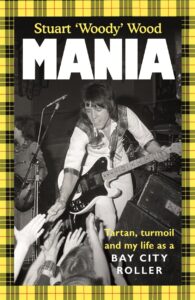 Mania: Tartan, Turmoil and My Life as a Bay City Roller
By Stuart ‘Woody’ Wood
Autobiography
Between 1971 and 1977, Edinburgh’s Bay City Rollers achieved ten top-ten hit singles, four top-ten albums, two number-one singles and two number-one albums. Yet, despite their success, the boys in the band soon realised that fame was not all it cracked up to be.
Here is the true story of the sensational highs and horrific lows in the life of one band that defined an era.
Continuing with autobiography, it’s time for a much-anticipated look behind-the-scenes of Scottish politics and the highest level.
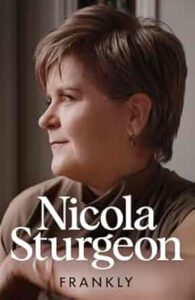 Frankly
By Nicola Sturgeon
Autobiography
Whether an independence supporter or not, it cannot be denied that Nicola Sturgeon—the first female and longest-serving First Minister— is one of Scotland’s most influential and successful leaders.
Here she tells her life story with much candour, wit and insight, covering her career’s defining moments including the independence referendum of 2014, Brexit, and the Covid pandemic.
It’s not only those with public personas with important stories to tell . . .
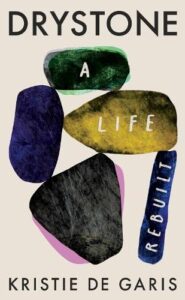 Drystone: A Life Rebuilt
By Kristie De Garis
Memoir
When Kristie De Garis moved to rural Perthshire, she thought she was leaving a life of chaos behind. What she found in the peaceful countryside—and in the craft of drystone walling— was the time and space to confront everything in her past she was trying to escape: racism, trauma, undiagnosed ADHD, addiction, and the realities of motherhood.
Honest, funny, direct and moving, this is a memoir of resilience and finding the life that suits you.
We carry on with a memoir on the wonder and importance of nature . . .
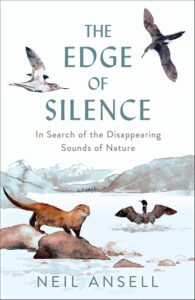 The Edge of Silence: In Search of the Disappearing Sounds of Nature
By Neil Ansell
Memoir
Acclaimed nature writer Neil Ansell has suffered from progressive hearing loss his whole life. As his world became ever more silent, he encountered an unexpected sound – the call of a great northern diver – and set off on a journey to discover more sounds from creatures he had never heard before. Many of the animals in this moving memoir are close to extinction, and Neil writes brilliantly on a future we must all fight to keep hearing.
Now we turn to the past and a collection of enthralling historical fiction . . .
 Shiaba No More
By Willie Orr
Historical Fiction
Willie Orr continues his masterful exploration of love, resilience, and the fight for justice in the Scottish Highlands through the MacGillvray family. In this novel, we follow Mary MacGillvray as she ventures over the water to Jamaica to work for the wealthy Buchanan family. There she becomes involved in a slave rebellion, and on her return to the Highlands is drawn into the struggles of the crofters against their exploitative landlords.
We stay in the Highlands for our next novel . . .
 Whispers in the Glen
By Sue Lawrence
Historical Fiction
In Sue Lawrence’s latest novel, is a tale of sisterhood, heartbreak and resilience of the Scottish women on the home front during World War Two.
Sisters Nell and Effie live together in the North-East of Scotland, and though they love each other, there is a distance between them, and unspoken secrets, and when a soldier knocks on their door with a photo from the past, their secrets just might spill out into the open.
Next, we head to Scotland’s capital city . . .
 25 Library Terrace
By Natalie Fergie
Historical Fiction
The stories the walls of an old tenement can tell are explored in this intriguing and charming novel that follows generations of women living at one address. We start before World War One with Ursula, a budding Suffragette, and move through the decades until the 2020 pandemic. Each character embodies something of the times they lived in but they also deal with issues – love, loss, family – that are familiar to anyone at any time.
We stay in Edinburgh, but explore it’s darker side with the final instalment of the bestselling Raven & Fisher mysteries . . .
 The Death of Shame
By Ambrose Parry
Historical Crime Fiction
In 1854, respectable faces hide private sins. When a young lady fails to turn up to her new job at a prestigious household, Sarah Fisher discovers the plight of poor girls ensnared to the city’s brothels. Then a prominent, successful Edinburgh citizen is found dead at the Scott Monument. Are both these occurrences related?
Ambrose Parry finish the adventures of Sarah Fisher and Will Raven in thrilling style, capturing Victorian Edinburgh and its shady corners with wit and and pace.
We head West for another Victorian death by misadventure . . .
 Love and Other Poisons
By Lesley McDowell
Historical Crime Fiction
Based on a true story of scandalous love, death by poisoning, and an infamous ‘not proven’ verdict, young socialite Madeleine Smith’s life in Glasgow is turned upside down and she must flee the city she grew up in. In the early 20th century, a film scout believes he has found her in America and is desperate for her to tell her tale.
This is seductive, sensational storytelling, full of period detail, twists, turns and thrills.
We stay with crime, we stay in Glasgow, we venture into the here and now. . .
 The Search for Othella Savage
By Foday Mannah
Crime Fiction
Scotland’s Sierra Leonean community finds itself in a state of shock when a young woman from their church is found in a boot of a car, then another young woman goes missing.
Hawa Barrie is unsatisfied with the police investigation and decides to search for clues herself, worried for her friend’s life.
This is a novel that keeps the suspense high, the pace fast, and explores corruption both political and religious, as well as the power of friendship.
Here’s another crime debut that will keep you on the edge of your seat. . .
 Five by Five
By Claire Wilson
Crime Fiction
Kennedy Allardyce works in one of Scotland’s toughest prisons, monitoring the staff as well as the criminals. She has one guard in her sights, suspected of corruption, but is also distracted by a new, young recruit, the beautiful Molly. But she cannot afford to lose focus on such a dangerous enemy. . .
Taut, tense, brutal, and written by an former prison officer, this is crime fiction that will take your breath away and make your heart beat faster.
We now turn to a more established name, and a master of his craft . . .
 The Good Father
By Liam McIllvanney
Crime Fiction
Gordon and Sarah Rutherford have a good life – good jobs, good friends, good neighbours and a son they love. Then their son goes missing. As the days pass, their hope transforms into suspicion of everyone they know and secrets begin to emerge.
A clever, emotionally-resonant psychological thriller that will stay with you long after the last page has turned, this is crime writing at its very best.
Next, we continue with pacy mysteries, but with a side order of aliens. . .
 The Transcendent Tide
By Doug Johnstone
Science Fiction
This ambitious novel is the final part of Doug Johnstone’s entertaining Enceladons Trilogy, and Sandy, his peaceful octopus-like alien is behaving strangely while he hides from the US military in Greenland with his human friend, Heather. And there are other strange occurrences when sea creatures start to attack boats in the open seas. A showdown is coming, the future of life on earth is at stake; who will survive?
Staying with the fantastical, here is a fine folklore-inspired slice of gothic . . .
 The Bone Diver
By Angie Spoto
Historical Gothic Fantasy
The only daughter in a family of Scottish seal-hunters, Kier Sealgair is becoming a burden. She cannot kill, and the family are facing hard times now that her father is ill. Her neighbours, the rich and influential Erskines, give her an offer that seems to good to be true. Should she trust them? Are there secrets to uncover.
The Bone Diver is period gothic tale inspired by the myth of the selkies that is moody, magical and mysterious!
We stay with the Selkie in another gothic roomed romance . . .
 On a Northern Shore
By Janis McKay
Gothic Romance
On Hogmanay, lobster fisherman Rob pours a lonely dram into the North Sea, an old family tradition. Then he meets the mysterious Mairi, sent to his village on a quest for revenge. He is beguiled and confused by this newcomer. Is she a safe bet for his heart?
This is a haunting, haunted love story steeped in Celtic mythology destined to enthrall every reader.
Next, we look to a fantasy superstar at the top of their game . . .
 Bury Our Bones in the Midnight Soil
By V. E. Schwab
Horror Fantasy
Three women across three centuries and three countries. Maria, Charlotte, Alice. Medieval Spain, Victorian London and modern-day Boston. Stories of love, hunger and rage; of dreaming, desperation and defiance; of escape, desire and revenge.
In her latest novel, the bestselling V. E Schwab gives us an epic vampiric fantasy that will mesmerise with its lush, poetic language and thrill like all the best pageturners.
We leave fiction now to focus on a collection of smaller delights . . .
 Goonie
By Michael Mullen
Poetry
Whether exploring queerness through fierce lyrical poetry or celebrating Mullen’s beloved Scotland through vernacular vignettes, Goonie‘s main preoccupation is with how we form community around us and how community, in turn, forms us.
You’ll be taken round a campfire, a living room ceilidh, a hairdresser’s chair with joy, humour, exuberant language and raw emotion in this brilliant debut collection.
Howzabout some recommendations for our Young Adults?
 Wish You Were Her
By Elle McNicoll
YA Romance
Enemies-to-lovers? Tick! Small-town romance? Tick! Mistaken identity? Tick! Yes, there may be much-loved tropes here, and shades of classic rom-coms Notting Hill and You’ve Got Mail but when they’re done with the care, warmth and fun —and with a feel-good factor turned up to 11—then you get a novel that is irresistible.
But if your teenager is looking for something a little less cosy . . .
 No One Keeps a Secret
By Denise Brown
YA Crime
Teenagers Haigh, Cherry and Sunrise track down a missing dog in an abandoned theme park close to their sleepy village, and in finding a chihuahua, discover something else that isn’t quite a cute—a dead body. Now embroiled in a murder case, their town becomes less cosy and full of hidden secrets. . .
And for even younger readers . . .
 Shadow Thieves
By Peter Burns
Middle Grade Adventure Thriller
In an alternate London, orphan and pick-pocket Tom Morgan escapes a destiny at the brutal workhouse. But his friends aren’t so lucky. Then he is recruited into an international elite boarding school for spy thieves, The Shadow League. He soon finds himself at the centre of a incredible world of danger and intrigue full of thrilling heists, sensational cons and ancient secrets. Can Tom keep up? And can he save his friends?
A proper rip-roaring, edge-of-your-seat adventure story full of fun, action and atmosphere. A new children’s hero is born!
And if your child prefers adventure away from dry land . . .
 Uncle Pete and the Undersea Adventure
By David C. Flanagan
Middle Grade Adventure
Uncle Pete’s plane has been shot down into the sea and his usual squirrel crew members are on a well-earned holiday. That means he’ll have to adventure into the sea without them, which is trickier than he thinks! And when a curious and clever octopus discovers the plane himself, he might be unwilling to give it back to its original owner!
This is a charming tale of talented animals working together with a big dollop of laughter and silliness.
But we know that not everyone loves the sunshine weather, and many of you are looking forward instead to cosy autumnal evenings. So we’ll leave you with this final recommendation . . .
 Fireworks
By Bonnie Woods
Romance
Pack up your summer clothes and order that pumpkin-spiced latte for this spicy romance set in the Scottish Highlands as the weather turns. Eiley is a broken-hearted bookseller and Warren is a flirty fireman and newcomer to town. Eiley finds him annoying and self-important, yet so very handsome. And then they have to team up together to save her bookshop. Sparks are going to fly!
Happy Holiday Reading Everyone!
David Robinson thoroughly enjoys Alistair Moffat’s personal history of Scotland after the Second World War, a time of massive social change.
To See Ourselves: A Personal History of Scotland Since 1950
By Alistair Moffat
Published by Birlinn
FOR years now, I have been singing the praises of David Kynaston’s gloriously detailed social histories of post-war Britain. So far there have been five books in his series, though they only go up to 1965. If he is to stick to his original plan of chronicling how Britain changed between 1945 and 1979, he’s got his work cut out. He is 73 now, and I desperately hope he has no thoughts of retiring.
What I love about Kynaston’s books is the way in which they pick up on the minutiae of everyday life – the things which slipped by the consciousness of those of us whose childhood began in the years he covers, making sense of news stories whose headlines we might have heard, uncomprehendingly, on the radio before heading out of doors (of course) to play, reminding us of the tiniest changes on the fringes of our lives: the order of flavours in which crisps appeared on the shelves, when striped toothpaste first went on sale, or why cutting bone meal from pet food meant an end to white dog poo on the pavements. Not perhaps what Proust was banging on about, but a retrospective extension of one’s life all the same.
Alistair Moffat’s latest book, To See Ourselves, doesn’t aim to be a Kynaston clone – even though the latter’s histories dominate his Further Reading list. Indeed, the book’s subheading – ‘A Personal History of Scotland since 1950’ – suggests that that if it owes a debt to any other writer, it is to Fintan O’Toole’s 2022 bestseller We Don’t Know Ourselves; A Personal History of Ireland, which also opens in the 1950s and dances with similar panache on the line between memoir and history all the way up to the present.
If this hybrid form is to be a new trend on bookshop shelves, I’d rather welcome it. For even the biggest Kynaston fan has to admit that his very comprehensiveness comes at the cost of occasional longueurs (unless, for example, you are absolutely fascinated by, say, trends in Welsh nonconformism in the 1950s). The very fact that Moffat’s history of modern Scotland is threaded through with his own experience keeps the reader engaged throughout.
It helps, I think, that he has already written a childhood memoir (Homing, 2003), scratching that primal itch every writer must surely feel about recapturing life’s first surprises and trying to explain what growing up felt like. In To See Ourselves, though, communal history is at least as important as his own recollections – like a photograph album in which the background matters just as much as the faces grinning at the camera.
Take, for example, Moffat’s love of rugby. Growing up in 1950s Kelso, it helped that he was good enough to be a replacement prop for the First XV in 1968 while still a 17-year-old. The glow of nostalgia still lingers, for this was a time when heroes were still local, when ‘one in eight Borderers watched, played or otherwise enabled rugby’ and Borders matches could still attract crowds of 10,000. Moffat tells a lovely story from 1958, when Kelso forward Ian Hastie scored his one and only try for Scotland in a 11-9 victory over France at Murrayfield. The next day, as Hastie made his way past the Moffats’ prefab home on his way to his job at Kelso station, he was berated by Moffat’s beloved grandmother Bina, who had watched the match on TV and criticised him for not running under the posts to make the conversion kick easier. ‘Sorry,’ Moffat heard the big prop forward say. ‘Sorry about that, Mistress Moffat.’
Just look at everything contained within that anecdote. Mistress Moffat, because of respect, manners, and that now horribly overworked word ‘community’. Kelso station, because it still existed, and the report on Hastie’s Murrayfield heroics in that Saturday’s Edinburgh Evening News Pink could presumably make the 45-mile journey to the Kelso newsstands even quicker by rail than road (though, in a triumph of logistics, they were always sale there by 6.30pm). Prefab houses, because in 1944 the government planned on building 300,000 of them for returning servicemen, including apparently one type designed specifically to use up the stockpile of scrap aluminium salvaged from the wrecks of bombers and fighter planes. TV, because before it ‘the only non-Scots, even non-Borderers, I knew anything about were cowboys, Indians and Nazis’, and because it was going to change everything.
As director of programmes at Scottish Television, Moffat would subsequently immerse himself in the world of television and come to see how the professionalism and money it brought into sport would ultimately doom localism, transforming the game in Scotland into one which more people wanted to watch than play. ‘Money produces results,’ he notes glumly, ‘and those results are, therefore, more or less predictable.’
The pithiness of that assessment finds plenty of echoes elsewhere in the book, and Moffat’s analysis of the massive social changes in modern Scotland (decline of religion, depopulation of the countryside, the transformation of shopping and the very slowly swinging Sixties) is always astute. And as countryman, townie, festival director, entrepreneur, historian, TV boss and writer of more than 40 highly regarded books, he has a wider frame of reference than most, as well as a good journalist’s nose for what matters.
Yet there’s no bombast here: Moffat knows exactly how lucky he has been, how much he profited from that great boomer blessing – the Anderson report of 1960, which opened up the possibility of a university education to thousands of working-class Scots by recommending the provision of tuition fees and grants for living expenses while they studied for their first degree. Along with the Robbins report creating more universities, it was implemented in time for Moffat to start his studies at St Andrews in 1968. As he points out, though, the good times didn’t last: ‘It was the beginning of a brief window in history, one that remained open for less than 20 years, a time when there was no bar to educational advancement for young people with ability.’
To See Ourselves taught me much that I didn’t know (for example, that the 1973 Clayson Report transforming Scottish licensing hours originally recommended that children should be allowed in pubs); things I should have known (that before the Thatcher reforms proportionately twice as many Scots than English lived in council housing); things I’d forgotten (that once shops wouldn’t dare sell skimmed milk); and things I just don’t remember at all (how the blue carbon paper in the grocer’s had ‘a strange smell all of its own, like something medical’).
That last snippet of memory is a reminder of just how far removed this book is from any dry anatomising of Scotland. Moffat’s first memory, looking out from his council house at Inchmead Drive, Kelso, underlines the point: ‘In my mind’s bright eye, I see the daily journey of the cows to the dairy as they plod on into the past, their colour fading, their bellows echoing, vanishing like autumn leaves into the darkness and memories of an older Scotland that has all but disappeared.’ Amid all the facts, there’s a poetry in remembrance too.
This confluence of styles – analytical yet elegiac, objective yet personal – makes To See Ourselves a hard book to categorise but an easy book to love. And while I’d like to see more Scottish history-memoir hybrids, I think I’d be hard pushed to find a more engaging one.
To See Ourselves: A Personal History of Scotland Since 1950 by Alistair Moffat is published by Birlinn, priced £18.99
Kevin Guyan’s Rainbow Trap is an enlightening exploration of how social categorisation systems work, particularly within the LGBT community, and how they help and hinder genuine inclusion efforts. This extract shows the author’s own contemplation of societal change as he celebrates his wedding day.
Rainbow Trap: Queer Lives, Classifications and the Dangers of Inclusion
By Kevin Guyan
Published by Bloomsbury
I hadn’t given much thought to the intersection of classifications and LGBTQ lives until my wedding day. In fact, I had never imagined the possibility of getting married. I grew up in the Scottish city of Aberdeen and coming out as gay in the late 2000s felt like putting myself in a box outside the system that sorted everyone else I knew. Gone were the expected milestones of wife, children and house in the suburbs. Nobody knew (myself included) what life-defining moments were now on my horizon. I went to university, my on-ramp for a queer life, and quickly realized that existing outside the main sorting system meant the parties were more fun, the relationships more intense and the outfits far more wild. So it was a peculiar afternoon to find myself in the back seat of a London Black Cab squeezed between my mum, dad and soon-to-be husband just seven months after same-sex marriage was legalized in England and Wales. As we pulled up to the side of the road, I slipped cash under the plastic guard and asked Andrés, ‘Are you ready?’ He focused his dark eyes on me and replied, ‘Let’s go.’ I swung open the door and excitedly stepped out into the leafy square. We felt hopeful that social attitudes towards men marrying men and women marrying women were moving in a more positive direction. Andrés and I were being invited into a system that had, until recently, kept people like us on the outside. On arrival, we were ushered into a wood-panelled back room to meet the Registrar for our ceremony. We could hear the excited chatter of friends and family as they took their seats in the room next door. Younger me had never rehearsed this moment but I felt ready and excited for the future that lay ahead. Yet, looking through the documents in front of us, something seemed wrong. The olive-green form that would become our marriage certificate asked us to write our names, ages and whether we were previously married – questions we had expected to answer. But, at the far edge of the document, were two boxes for the ‘Rank or profession’ of our fathers. Men marrying men writing about the employment history of men. It instantly became clear some archaic requirements of the system remained stubbornly in place.
In sharing vows and exchanging rings, we were about to embark on something that changed who we were as gay men – to ourselves, each other and the wider world. Although our ceremony meant something to us, I was unsure what our actions said about the political and social possibilities of queer lives. In 2012, the cultural historian Lisa Duggan described marriage equality as ‘the singularly representative issue for the mainstream LGBT rights movement, often standing in for all the political aspirations of queer people’. In the late 1990s – when same-sex marriage remained an unlikely possibility among campaign groups in the UK and the United States – gay cultural critic Leo Bersani lambasted the pursuit of marriage and referenced Foucault’s hope that homosexual love could bring about ‘new alliances’ and offer a blueprint for a new ‘way of life’. For Duggan, Bersani and Foucault, rather than expanding our horizons, marriage impoverished our ability to imagine LGBTQ lives that depart too radically from the straight, status quo. With our friends and family waiting patiently for us to take our spots at the top of the aisle, what possibilities (or new ‘way of life’) had Andrés and I abandoned to gain access to a system that, just a few months prior, did not want us?
***
Andrés and I now live in Edinburgh, Scotland and – over the past decade – I have worked as a researcher investigating how UK organizations, businesses and workplaces respond to inequities associated with gender, sex and sexuality. You are likely familiar with DEI interventions such as unconscious bias training, staff networks, pronoun badges, celebration months, allyship schemes and rainbow lanyards. While it felt as if more people than ever were talking about DEI, I grew sceptical as to whether the volume of conversation was having a positive impact on LGBTQ communities suffering the most as a result of badly designed systems. Time and time again I encountered good-intentioned individuals who refused to consider how bigger questions of history, politics and power limited what inclusive interventions could actually achieve. Eyes rolled when I questioned whether ‘debate’ will resolve opposition between trans communities and anti-trans campaign groups or if we really need yet another staff survey to capture more data about the negative experiences of queer employees. My most heated arguments did not involve fascists on the far right or those burning the progress flag at a Pride parade. They were white, middle-class liberals – people like me. Yet, liberal faith in DEI fixes was not matched by evidence of the world around us: the UK has plummeted in international LGBTQ rankings, the number of reported hate crimes against queer communities has rocketed and the Council of Europe singled out the UK (alongside Hungary, Poland, Turkey and Russia) for specific condemnation in its report on attacks to LGBT rights.65 I also sensed an insidious thread running through calls for more of the same, an unsaid discomfort with the direction of change and suggestion that the situation for queer people was ‘good enough’. What I saw among those working in the DEI industry was a dawning realization that access to same-sex marriage, basic legal protections and improved visibility was the start rather than the end for this queer political project. Queer people wanted more. And well-meaning straight people stood in the way.
I had another niggle I could not shake off – an irritation that has niggled a long history of queer thinkers and doers – people’s quickness to celebrate the idea of ‘being included’. While promoting my first book Queer Data I was surprised by the level of enthusiasm among LGBTQ people to share information about their sexual orientation and gender identity with the state even though exercises like the census had run for over 200 years in the UK and, until recently, failed to count people who were not straight and cisgender. Inclusion has become a rallying cry for many LGBTQ equalities organizations, which discounts the risks of being brought into settings that historically ignored or actively excluded us. For example, disability justice writer Mia Mingus has argued that when inclusion exclusively relates to logistics – for example, adding ramps for wheelchair users – then the underpinning ableist culture, which previously did not recognize an inaccessible space as a problem, remains undisrupted. Queer/trans disability studies scholar J. Logan Smilges also calls attention to how a too concerted ‘focus on individuals’ access needs distracts from the messier, meaner, and more systemic ways that ableism operates in our world’ and asks, ‘Does the energy we spend demanding access secure the kind of liberation we want it to?’
The individuals selected for inclusion tend not to deviate from dominant gender, sex and sexuality norms or cause too much trouble – they offer the most tolerable form of diversity. Furthermore, the inclusive interventions that brought them into the system are presented back to minoritized communities as ‘evidence’ that structural or systemic inequities are being addressed. Inclusion invites more people in but rarely considers the negative experiences of those already on the ‘inside’, nor does it acknowledge the box breakers who fail to satisfy the entry requirements or refuse the invitation. When we set our sights on gaining access to long-established systems, slipping standards and a race to the bottom mean we ultimately set a low bar for progress.
Political objectives feel as if they are changing. Increasingly intersectional and inspired by individuals born around the millennium, many queer activists are ambivalent about the objective of ‘being included’ in long-established systems. In this book’s investigation of six systems, I disrupt easy thinking about the ‘promise of inclusion’ and irritate this fissure so that it reveals what ‘being included’ also excludes. This objective goes against the grain, particularly among practitioners working in the DEI industry. Stating that inclusion invites benefits and harms, and these outcomes are not equally distributed across or within minoritized communities does not undo the good deeds of diversity workers and LGBTQ activists. Rather, it sharpens our critical faculties and creates opportunities to expose how some inclusive interventions – and their reliance on classifications – require us to take a medicine that prolongs, rather than shortens, our suffering.
Rainbow Trap: Queer Lives, Classifications and the Dangers of Inclusion by Kevin Guyan is published by Bloomsbury, priced £20
Gillian Sherriffs has written and compiled a unique account of her experience with breast cancer, one that is sure to resonate with many readers. Here, we extract the book’s prologue, which we hope will lead you to seek out this beautifully-produced and honest book.
Elephant
By Gillian Sherriffs
Published by Into Books
Elephant is a book that found me. I’m glad that you have now found it.
It’s a book about connections and I’m grateful to be connected to you.
I have to confess this is not the book I expected you to be reading. Nor is it the book I expected to be writing. Nor, indeed, is it the book my publisher, the brilliant Stephen Cameron of Into Creative, expected to be publishing.
The book I was writing is called The Accidental Immortals. It’s about three women who, in the Scotland of the 1600s, become accidentally immortal.
That was a book about immortality.
The book that found me is about mortality.
My own mortality.
Elephant is the story of a writer diagnosed with breast cancer.
I’ve been writing about illness for the last 18 years. At first, I didn’t have an option. I’d just been diagnosed with multiple sclerosis and was on bedrest, having lost the feeling from my toes to my chest. I was on my own for long periods and I was bored. I was also finding it difficult to sleep due to the nerve pain that accompanied the numbness.
I would wake in the wee small hours with words rattling around my head. During long days of bed rest, I would try to make sense of them. As I did, the words seemed to arrange themselves into long thin poems, which was a surprise, because I’m no poet.
These long thin poems told the story of those initial weeks and all the strangeness that accompanied the sudden onset of serious illness.
After months – and twelve poem-shaped slivers of memory – words stopped waking me up. By this time, though, I was hooked. I’d discovered that when I was fighting with word after word and line after line, I was not aware of the invisible shards of glass sticking into my skin. When I stopped writing, the neuropathic pain would return.
As I ventured back out into the world, the feeling having returned to my body, I made an unwelcome discovery. People were no longer at ease around me.
I seemed to make them uncomfortable.
I didn’t even need to speak to do so. My mere presence was all that was required.
My initial reaction was to feel shame, which I couldn’t understand.
I’d done nothing wrong, so it didn’t make sense to feel this way.
But I did.
My next reaction was to write.
I wrote stories in which I would give a character a neurological illness to see what would happen to them and the people around them; a sort of working out. It was also my way of trying to connect. To normalise illness. To cry out into the void that it can happen to any of us.
At any time.
It’s therefore not surprising that fourteen years later when I found a lump and was told there was ‘something’ in my right breast that shouldn’t be there, my response, once again, was to write.
I wrote my way through diagnosis, treatment and the aftermath of treatment. Sometimes longer pieces trying to make sense of the situation, but most often just short bursts of words. Reaching out to friends, family, clinicians, and to anyone who might notice me waving as I bobbed along on the sea of social media.
If emails, text messages and tweets are the letters of today, then I might be so grand as to call Elephant an epistolary for our times, but that sounds really pretentious.
As I wrote the emails, text messages and tweets that appear in Elephant, I didn’t expect they would one day form the book you now hold in your hands, but no matter how hard I tried to apply my mind to fiction, the story that is Elephant refused to leave me alone. It demanded my attention until I finally succumbed.
It’s the craft of the writer to curate and that is the work I found myself doing. I uncovered over 150, 000 words I’d written from July 2021 until September 2023, and I had to decide where, within them, the story lay.
Then there was the problem of what to call this unusual creation of mine. I struggled with words and phrases. At some point I realised that this book is what I keep doing. It’s an attempt to normalise illness. To make friends with the elephant in the room.
It reminded me of something.
Years ago, I bumped into a friend of a friend in the street.
She smiled and asked, ‘How are you?’
I was struggling with nerve pain and, unusually for me, I deviated from the standard reply.
I didn’t say, ‘Good. How are you?’
Instead, I said something along the lines of, ‘Not brilliant, actually.’
She broke eye contact, muttered about somewhere she needed to be, and was gone.
I went home and, in a matter of minutes, wrote the untitled poem that begins this book.
A book that is not just about illness and my desire to bring the experience of it out into the light but, just as importantly, one that is about friendship and kindness.
On the 24th of May 2022, I wrote the following words:
In the last 250 days I’ve had eight cycles of pre-surgical chemo, two surgeries, fifteen sessions of radiotherapy and am now in cycle three (of fourteen) of TDM1 treatment.
I lost my hair, my eyebrows, my eyelashes, my sense of safety, my sense of dignity (did I mention the campylobacter infection that accompanied the sepsis…?), but not my terrible sense of humour.
I couldn’t have managed it without each and every person who wrote me an email, sent me a text, posted me a letter, hand-drew me a card, knitted me a hat, gave me a scarf, bought me thick woolly socks, sent me flowers, went for a walk with me, made me banana bread, supplied me with Pan Drops, sent pyjamas across the Atlantic, carefully chose a book for me, dropped off a care package at the door, said a prayer for me, or took a moment to wish me well.
Getting to day 250 takes a village.
I’m very grateful for mine.
They say it takes a village to raise a child. I believe it takes a village to get someone through serious illness.
Some members of my village appear in Elephant. Others do not.
This book tells the story of 800 days by carving a path through the more than 150,000 words I wrote during that period. The names that do appear represent all those that don’t.
The people who are mentioned in Elephant are real. They are family members, friends, neighbours, colleagues and clinicians. However, some names have been pseudonymised.
Elephant by Gillian Sherriffs is published by Into Books, priced £30.
Claire Michell and Zoe Venditozzi’s campaign for official recognition of the miscarriage of justice in the country’s historical witch trials has been far-reaching and hugely influential. They have now taken their investigations, knowledge and craft in bringing together their book, How to Kill a Witch, which was released earlier this month. BooksfromScotland caught up with Zoe Venditozzi to discuss the book and campaign.
How to Kill a Witch: A Guide for the Patriarchy
By Claire Mitchell & Zoe Venditozzi
Published by Monoray
Hello Zoe. Congratulations of the publication of How to Kill a Witch – it feels a long time coming! We’ve been aware of your work since you started your podcast, The Witches of Scotland. Did you always want to put your explorations into print?
I’ve got a background as a fiction writer and Claire does a lot of factual legal writing, so it always felt like there would be a written element to what we were doing. However it was only when our now editor approached us and set deadlines that we took it seriously, knuckled down and got writing!
For our readers who don’t know, can you tell us how you started working together?
Claire initially came up with the idea and aims of the Witches of Scotland campaign when she was struck by how lacking in representation Scotland’s women are. This gelled with some research Claire was doing on an aspect of legal history when she read the testimony of a woman accused of being a witch who asked of her jailers if it was ‘possible to be a witch and not know it?’ This was presumably a desperate attempt to clear herself of her charges. When we met some weeks later, we bonded over our love of true crime podcasts and passion for justice and a movement was born.
It’s interesting to read early in your introduction that you were writing your book as a joke guide for the Patriarchy! What made you pivot to the book we have now?
We always planned to write the history of the witch trials with the often arch tone that remains but, as often happens as you write a book, something happens on the page that leads you in a different direction. As I wrote the fiction pieces and pen portraits, Claire ‘translated’ demonology and The Newes From Scotland into more modern language, the book began to take on its real shape. Naturally, we kept the great title!
How to Kill a Witch opens with a poem from Len Pennie, has brilliant fictional vignettes, and cheeky footnotes throughout; it has its historical narrative, portraits, but it also makes serious points about the status of women in society. Why did you approach the book with a patchwork of styles with the content?
One of the campaign and podcast’s compelling aspects, is that we go where the story and our interests take us. The evolution of the book was very similar in that we played to our strengths and fascinations and followed the narrative where it led us.
It blows our mind that the Witchcraft Act of 1735 was only repealed in 1951, and yet the witch trial period seems mainly contained to the 16th to 18th centuries. What do you think were the special circumstances that generated this moment in history?
In Scotland, the act was repealed in 1736 after being signed into law in 1563. Long story short, the five big peaks of accusations in Scotland were down to a horrific combination of great social change; an obsessed traumatised king, the prevailing belief system; ready access to law courts and a zealous, perturbed populace. When things get tough, humans look for scapegoats to make sense of difficulty and to have someone to blame. This didn’t end with the Scottish witch trials.
The story of Helen Duncan, the last woman tried under the Witchcraft Act in the UK is fascinating. What are your thoughts on this last hurrah for these persecutions?
Helen Duncan is a sad case where she was used as an example of how not to behave in times of war. She was thought to be encouraging loose talk and her case was a show trial that made an example of her. Fascinating but very unfortunate.
How to Kill a Witch also outlines where accusations of witchcraft still exist. How do we begin to tackle the superstitious and conspiratorial thinking that perpetuates this oppression?
Critical thinking! It’s key to this issue that we think beyond belief systems and take rational approaches to social issues and human fears.
As well as the book, there have been campaigns for statues, an official government recognition of the injustices of the witch trials, and honorary doctorates. Did you ever envision such results in your campaigning?
Not in a million years would we have imagined the huge, international interest in the campaign. The issue has struck a chord with thousands of people and we’re delighted to have ignited this cultural conversation to recognise not only this historic miscarriage of justice, but also contemporary inequalities for the vulnerable generally, and women in particular.
What next for the campaign? What are your hopes in the reception of the book?
Our aim is to keep educating, keep engaging and to keep being quarrelsome dames intent on smashing the patriarchy.
How to Kill a Witch: A Guide for the Patriarchy by Claire Mitchell & Zoe Venditozzi is published by Monoray, priced £20.
ALSO ON BOOKS FROM SCOTLAND
-


Saltwater: A Midsummer Ghost Story by Elaine Thomson
‘The very thought of those grey faces made my skin grow cold.’
-
‘An Odious Campaign’ by Rob McInroy – Why a 1936 By-Election Still Resonates
‘This enraged the locals and he came close to being run out of town on several occasions.’
-

‘‘That’s right, Bobby,’ he growled. ‘I haven’t seen you in – well, since you decided to kill me.’ ‘
-

David Robinson Reviews: Solitary Agents by David Goodman
‘This is very much an up-to-the-minute story of spycraft, positively revelling in all the things tha …
-

The Savage Landscape by Cal Flyn
‘It is their resistance to the intrusions of the outside world − culturally, economically, environme …
-

The Shortest History of Scotland: A Q & A with Murray Pittock
‘We need to be better aware of that to understand the challenges and achievements of the past, and t …
FEATURED AUTHOR:
Anna Groundwater
Anna Groundwater is currently the Principal Curator for Renaissance and Early Modern History at the National Museum of Scotland. She previously lectured in early modern Scottish and British History at the University of Edinburgh. She’s the author of wo …
FEATURED PUBLISHER:
Glasgow Museums

We have a long history of publishing – Kelvingrove Art Gallery and Museum opened in 1901, and people have been writing about and publishing on the city’s collections ever since. The focus of Glasgow Museums Publishing programme is naturally the one mil …