


Lesley Harrison’s latest collection, Kitchen Music, turns north to the sea for inspiration. BooksfromScotland are delighted to share some of those poems with you.
Kitchen Music
By Lesley Harrison
Published by Carcanet
Weather Reports You
Vatnasafn / Library of Water, by Roni Horn, with interviews by Oddný Eir
Ævarsdóttir. Stykkishómlur, Iceland
i.
My favourite weather is a north-easterly blizzard. This feeling is
comfortable. I enjoy being in a breeze, or a drizzle out at sea.
The weather is the sea.
ii.
A north-easterly is usually our best weather. It is bright and
clear. The air is deep blue and fresh, like the good weather that
follows a good catch, or a good wedding. Every moment is a
new thing.
iii.
In summer, I get fed up with light. I feel full, over-satiated, like
being in a closed room. The sky is empty. You have to move
around. You have to be with other people.
iv.
The weather is part of my body. I shift my position in my chair
according to the weather. I feel fine in calm, foggy weather.
Then I can smell the sun. Talking about the weather is talking
about oneself
v.
There is no weather in dreams. In dreams we move like fish in
water, without resistance. When we wake up, we are sluggish.
vi.
It is a wonderful time of year when the darkness is coming. It is
when the sea starts moving. In August, when it gets dark at night,
it is as if I am growing up further back in time. You feel that
summer was a long time ago.
vii.
When it snows, the sky drops down to the village. This frightens
me a little. After a storm, or a death at sea, the wind might drop
and immediately it seems as if nothing had happened. Then
grief is uncomfortable.
viii.
After a very cold Spring followed by a few good days, you fill up
with a kind of joy. The world feels settled and empty.
ix.
The currents affect your dreams, as does the tide, and the moon.
x.
Weather is reflection and measure. Stories about the weather
create false memories, conditioned by time, by a certain blindness.
Our weather is always in the present. It is word-of-mouth.
Kitchen Music
New York, 2017
collage = REALITY
—Joseph Cornell
i.
the morning after
with its “back to life” feeling.
manhattan breakfast:
a restaurant of
silver grey driftwood –
a feeling of water.
ii.
outside the coffee shop
a young bird alighted –
treethrushsong
iii.
a gulf of rain,
and the city sinks an inch.
at Penn Station, the lush tyres of yellow taxis –
umbrellas of Cherbourg
in the subway crush.
iv.
chance encounters:
old back yards,
reflections of the sun through curtains
from the sidewalk, gleaming
the city market,
“Hey Jude” among
bees and melons
a steel bridge, the Hudson
blank between the walls.
a corner bar.
a girl in a window.
v.
Thursday at the arboretum:
cool green
the café kitchen window open
and sounds tunnel in
– song sparrows,
butterflies that churr
vi.
downtown evening:
the sky towers of Manhattan
dark green against a stark aqua sky
then home, the sea
a new north blue.
the chill early March breezes
a wild piano music.
nostalgia wiped clear
vii.
this morning
among the tidewrack:
azimuth, whale bone
shoes and twine, a tedium of
cartons, floats
varia, et cetera.
a day owl, almost blue.
viii.
couch dream evening
entre chien et loup,
a high angelic sunset
“the earth with yellow pears
and wild with roses”
ix.
ephemera:
what minute (infinitesimal)
living can be
Iceland Poppy
Victoria Street, Kirkwall
it is snowing.
in the silence
of this bright space
a tight bud
creaking
prehistoric
as delicate as birch
dark white,
rooting.
Kitchen Music by Lesley Harrison is published by Carcanet, priced £12.99.
Tik Tok sensation and author Alex Howard has turned his attention from The Library Cat to The Ghost Cat in his latest novel. Over the course of a century in his nine lives in one Edinburgh tenement the ghost cat oversees two world wars, a coronation and one giant step for mankind. In the extract below, we are introduced to Grimalkin at the end of his first life.
The Ghost Cat
By Alex Howard
Published by Black and White Publishing
Back then, during the reign of Queen Victoria, Eilidh had found Grimalkin as a stray kitten on nearby Thirlestane Lane. Mewling for milk and nearing death in the corner of a stable, a mist, or ‘haar’ as it is known locally, had swept across Edinburgh, causing Grimalkin’s mother to abandon the site with the rest of her kittens. As he shivered in the urine-soaked straw, the haar sank its teeth into his minuscule bones, hour by hour. Another thirty minutes and the little cat would have been no more. The master of 7/7 Marchmont Crescent, Mr Calvert, a cartographer by profession, who was forever dressed in brown stockings and accompanied by a forbidding oak cane, had reluctantly agreed to keep the cat. In the early days of kittenhood, Grimalkin would often chase his tail on one of Mr Calvert’s great maps that had been unfurled onto the study floor. Lost in the ecstasy of papery rustles, he would suddenly detect Mr Calvert’s narrow head (bald apart from a few white wisps of hair on the side) looming over him. A moment of stillness would ensue, as Mr Calvert slowly placed his quizzing glasses over his eyes before releasing a sudden ‘humph!’, which would send Grimalkin charging off down the hall.
But Eilidh’s face told a different story: big rosy cheeks flushed vivid red like a clutch of Scottish loganberries on her otherwise perfectly white skin. Her eyes permanently sparkled, as if she was always on the point of telling a joke, and their turquoise irises were so deep and kind one could tell, just by looking at them, that their bearer could be trusted with your secrets. She wore her black hair rolled up in a handsome pompadour, but despite her best eff orts, it would often explode out of its frilly headdress in little corkscrew curls, making her look comic, and yet somehow charming. She was one of those people that always looked youthful, and to Grimalkin she looked no different to the day in 1887 when she cupped him in her warm hand from the icy sodden straw of the nearby stable.
As Grimalkin padded over to the fire grate, which was just starting to lick with flame, he caught sight of his own reflection in Eilidh’s brass firebox. A hunched tabby cat stared back at him, crooked of tail and jagged of whisker. His eyes, once lizard-green and flashing with alertness were now, at fifteen years old, cloudy and drawn ever so slightly down at the corners, so that his pupils looked unnaturally large. To the unassuming passer-by, this might have given them a melancholy air, but, to the more perceptive among cats and humans, it in fact spoke of a profound and restless wisdom. His fur, at one time the envy of the neighbourhood for its dazzling mix of browns, marmalades and creams, was now flecked with white and constantly matted with bits of grit that he could never completely lick off . His forelegs were stout, with big paws, the likes of which would not seem out of place on one of his wildcat cousins excepting his neatly rounded toes; and his ginger hind leg, once his proudest attribute when prowling the communal gardens, had now turned a deep fox-red and was bent in a half-curve that he couldn’t straighten out. There was a majesty about him, as there is with all handsome cats grown old, and a robustness to his form that suggested a prodigious Victorian diet of lark pie, pork suet and dripping. He was a thinking cat and, as such, enjoyed a life of quiet intellectual contemplation.
But on this morning in September 1902, his whole frame, from the ends of his ear peaks right down to his tail, was lashing with pain. His leg joints throbbed, taking his mind plain off any thoughts of stalking for mice; and even now, as Eilidh placed his morning bowl of fish-ends down on the pantry tiles with a familiar clatter, Grimalkin’s ear did not twitch. Instead, he sat staring into the grate deeper and deeper, as the orange flames licked in between the knuckles of coal, his senses dulling and his mind becoming ever more silent. No, this will not do! he thought, in a sudden rallying of mental strength. A dreary soul doth guddle nay mice. I must still wash myself. A good ablute always puts me to rights.
You see, even at fifteen, Grimalkin believed, as did many Victorian cats, that a clean pelt led to a pure soul. Rising, he padded closer to the fi re, coming to rest on a little rug beside Mr Calvert’s gramophone, which stretched up its huge brass trumpet like an oversized daffodil. But no sooner had he dampened his paw with his tongue and hooked it up towards his left ear than his muscles seized, and his tummy cramped with a pain so strong that it almost made him cry out loud.
No, I cannot. I simply cannot.
It is an alarming day when a cat can no longer wash himself. It signals the last of dignity and the end of choice. Feeling quite alone, Grimalkin squatted on the rug and decided to watch the skirl and twist of the flames again. As they flexed and grew, he thought back across his life. Being born in 1887, he had seen a lot . . . The opening of the Great Forth Rail Bridge, the first motion picture camera, the proliferation of works of literature by Robert Louis Stevenson and Mr Dickens . . . The continual irrevocable rise of the steam train. I have had much fortune . . . he thought as various memories panned up in his mind. I have been well-kept, well-fed and well-groomed. Why if a cat has nine lives, reserved for misadventure and poor luck, I dare say I am still on my first . . .
*
In the silence, Grimalkin’s eyes closed. And under the strengthening morning light coming in through the part-opened shutters, the crackle of the fire and the warming smell of coaldust, his head fell silent, and the worries and travails that inflict all cats during their short time on this earth receded as if carried downwards on a tumbling vortex of sand. The ache of his back eased; the arduous pull and heave of his lungs subsided, and as the rising flames beat their warmth upon his fur, the twist of his thoughts fell silent for the last time ever in this life.
The Ghost Cat by Alex Howard is published by Black and White Publishing, priced £12.99.
Christopher Rush has used the life and work of William Shakespeare in his previous works both fiction and non-fiction and returns to this subject matter in his latest novel, Letters of Elsinore, which delves deeper into the relationship between Ophelia and Hamlet. We hope you enjoy the extract below.
Letters from Elsinore
By Christopher Rush
Published by Sparsile Books
Ophelia’s Muddy Melodious Death
There was a woodland stream on the landward side of Elsinore, just beyond old King Hamlet’s orchard. It flowed very quietly among the trees, still waters, not deep. But deep enough. That’s where she was found, half-floating but drowned, close to a willow-tree, the whitish undersides of its leaves mirrored in the glassy stillness of the water. There was a sad symbolism there, the willow being considered an emblem of regret and wretchedness, particularly pertaining to the sorrows of forsaken love, and from that sad tree those who have lost their loves sometimes make mourning garlands, which they wear, or hang up like mournful trophies.
She’d gathered garlands of flowers for herself before coming there: crow-flowers, daisies, and even nettles, noxious generators of pain and poison, to the delicate, slender and tender-handed, as she was. And those long phallic purples–orchids with the roots resembling testicles, which lent them a coarser name on the rough tongues of peasants. In their vulgar parlance they were known as pricks, crimson cocks, knobs with balls, and so on, whereas our chaste maids and unplumbed virgins, untouched by country grossness, chose not to go there, referring to them instead as dead men’s fingers–macabre but modest, sexuality succumbing to death. That’s where Ophelia chose to end it all, if choose she did. Could it have been a cry for help? Or did a branch giveway? Or maybe she tumbled, hung with her trophies, her armfuls of wild-flowers, and fell in the weeping water. But it was her failure to struggle against her fate which later led to the verdict of ‘doubtful’, determining her death.
A shepherd’s boy, it seems, was the only eyewitness, so they said, too terrified to intervene, or afterwards to say too much about the lewd lyrics she sang concerning cock-robins and cock-a-doodle-doos, and how she stroked the long purples and moaned of country matters and sweet nothings–the details had to be coaxed out of him –before the waters gathered round to cover her and put her to her bed. She was now the property of the gravedigger.
‘It’s to be a Christian burial, so let’s get her plot dug straightaway, and let’s dig it straight, not one of them skew-whiff pits.’
‘Hang on, not so fast there! If she drowned herself in her own defence -’
‘She did. It’s been decided on. But now you’re the one’s got it wrong. How in God’s name could she kill herself in self-defence? You mean self-offence. She committed an offence.’
‘What offence was that?
‘Heaven help us, se offendendo–don’t you know any Latin? After all them funerals? It was an offence against her own body. And the body’s a temple. And that’s a crime, don’t you know that neither?’
‘I know this much, if she hadn’t been a nob, she’d have been slung into the ground outside these here walls–unconstituted ground.’
‘Unconsecrated. You’ve got no more brains than that spade.’
It was never a love affair, it was a conspiracy of sorts, a well-woven lie. He was never going to rescue me, to sweep me up with him onto his white charger and carry me off and out of Denmark and change my life. And so my life stayed as it was, and what it was, a needlework of mediocrities that he wasn’t going to unpick. It was a stich-up of shortcomings: the motherless child, the dutiful daughter, the innocent little sister, the wrong choice, the forbidden choice, the decoy, the bribe, the bait, the cow loosed to the bull, the whore in the convent, the nun in the brothel. Let’s face it, I was a mistake, the courtly love that was all court and no love, the prince’s intellectual indiscretion, to be corrected, cancelled, regretted –oh yes, greatly regretted, all too late. But all the same he whored me in his mind, he took me without penetration, and in the end he was unkind, he was cold, he was a bloodless butcher. And he killed my heart, he killed my soul. He was Elsinore’sexecutioner. He was just like his uncle. He was a murderer. And he had enough anger for all of Elsinore.
Anything else? Left undone perchance? Oh yes. Last stage of all: get buried –easiest of exits, not my problem, not my job, to be laid in earth, the only bed I was ever laid in, cold clay, and put me back, back on my back, where you could have had me, any night you cared, had you cared enough. Too late now, death’s my lover now, the Grim Rapist, and worms will welcome the woman, and try that long-preserved virginity. See, here they come now, quietly up the thighs, to the portals of the hymen, and there you have me –ravished at last. I’m undone. And nothing’s left to do –unless to do it all again, eternally, and haunt them from my grave?
Too late for that, my friends. They’re in their graves already, all of them, even you, Horatio, even you. And you, with a headful of ghosts, were the only one among them that least deserved a haunting. But I’ll say it again –I could have loved you. Love was all I wanted. And love denied where it was so desperately needed, it was a kind of haunting too, and more than mere pathos. I think you said it once –it was tragedy. The rest were just deaths. Death’s all right. Nothing better. Nothing tragic about death, not if you deserve it, or if you want it, if it’s what you live for, if life’s lost its meaning for you and the urge to exist has gone. But who am I in the end? The nonentity of Elsinore –what does she know? Not much. I never pretended to know much. I wasn’t given the chance. I do know one thing, though, and I know it now for sure, surer than before. That gravedigger –he got it right in his own muddy way. At least he wasn’t far from the truth when he said it: she killed herself in self-defence.
Letters from Elsinore by Christopher Rush is published by Sparsile Books, priced £20.99.
As the seasons turn and the sun starts to shine, let Kellan Macinnes, author of The Wild Swimmer of Kintail, inspire your next summer adventure in the Highlands.
The Wild Swimmer of Kintail
By Kellan MacInnes
Published by Rymour Books
Can you tell us a little bit about The Wild Swimmer of Kintail?
The Wild Swimmer of Kintail tells the story of how following the end of a twenty year relationship, flat broke and with a house full of Airbnb guests driving me crazy, I set out to follow in the footsteps of the little known poet, mountaineer, travel writer and pioneer of wild swimming Brenda G Macrow.
Macrow quit London for the Scottish Highlands in the summer of 1946 and spent six months in Kintail, a remote and mountainous area in the north-west Highlands of Scotland. While she was there, Macrow took on the challenge of wild swimming the 28 hill lochs (all located above a thousand feet) that lie within the boundaries of the Parish of Kintail. Seventy years later, accompanied only by a cantankerous and flatulent Labradoodle and hoping to find my ‘single self’ again on the way, I too set off in search of the hill lochs of Kintail.
The book is multi-faceted and there are many different layers to the story: as I tackle the challenge of wild swimming – or at least wild paddling – the hill lochs of Kintail, I recall scenes from the disintegration of my civil partnership. Some of the memories are funny, some poignant, some shocking. Meanwhile a parallel narrative about the summer Macrow spent in Scotland in 1946 is told in flashbacks from Kintail Scrapbook, the book Macrow wrote about her time in the north-west Highlands.
Last but by no means least, The Wild Swimmer of Kintail also contains practical information (routes, grid references and directions) for those wishing to take on the challenge of wild swimming the 28 high-altitude hill lochs of Kintail.
Far more than a mere travelogue, much more than simply nature writing, The Wild Swimmer of Kintail tells the story of the end of a gay relationship as well as being a deeply perceptive account of what it is like being a writer. Laugh-out-loud in some places, painfully honest in others, The Wild Swimmer of Kintail is a life-affirming tale about the healing power of wild swimming.
The Wild Swimmer of Kintail was a long time in the writing. Can you tell us a little about the process, the sources and the people you consulted?
I first began work on The Wild Swimmer of Kintail not long after my first book, Caleb’s List, Climbing the Scottish Mountains Visible from Arthur’s Seat, came out. I had just been awarded a grant by Creative Scotland to research and write another book and fulfil my ambition to become a writer. I was inspired to write The Wild Swimmer of Kintail when I was browsing in a second-hand bookshop in Edinburgh and came across a volume called Kintail Scrapbook by a writer I’d never heard of. The book had been published in 1948 and the writer’s name was Brenda G Macrow.
I was captivated by Macrow’s tale of escaping war torn London, taking the night train north and spending the summer of 1946 living in a cottage in Kintail with only her Skye terrier Jeannie for company. I loved Macrow’s descriptions of her wanderings through the Highlands just after the end of the Second World War. Throughout The Wild Swimmer of Kintail there are flashbacks to the summer of 1946 told in quotes from Macrow’s own writing.
For this I am indebted to Brenda Macrow’s daughter Lesley Hampshire for giving Rymour Books permission to use the extracts from her mother’s book in The Wild Swimmer of Kintail. I knew from my research that Macrow had a daughter but I had to do a bit of detective work to track her down. Using Google I found an obituary for Brenda G Macrow who had died in 2011 at the age of 94 at the Abbas Combe nursing home in Chichester.
I phoned the nursing home and explained I was researching a book. They gave me Lesley’s address and I wrote to her explaining all about my project. Lesley was a great help with the book, sending me photos, diaries and a scrapbook of newspaper clippings about her mum’s writing. A few weeks ago I was really pleased to get an email from Lesley which read: ‘I am now 75 pages into your brilliantly written book, I feel like I am walking both back in time with my mum, also with you now!’
Your writing demonstrates a deep love of the Scottish mountains. Can you tell us a bit more about how that came about and about how you got into wild swimming?
I was born and brought up in Edinburgh and spent many childhood holidays in Argyllshire and it was here that I was first introduced to hillwalking. Aged about seven I climbed 308m high Beinn Lora that rises above Ardmucknish Bay. I don’t remember much about it, but I do remember the bracken towered way over my head.
Moving forward a few years to the mid-1970s: back home in Edinburgh my primary school class was taken to meet the famous mountaineer Chris Bonington at the Lothian Outdoor Education Centre in MacDonald Road. I remember the bearded man sitting behind a school-type table, but what formed a lasting impression on my ten-year-old mind were the brown blotches on the skin of his hands, the scars of frostbite sustained climbing the south-west face of Everest.
I was lucky to be a pupil at James Gillespie’s High in the early 1980s during the golden age of outdoor education. I went rock climbing and canoeing and spent two weeks climbing in the Austrian Alps with a group of fellow Edinburgh school pupils, (opportunities that are sadly only open to state school pupils with comfortably off parents today). Back home in Scotland with a school friend I climbed the Five Sisters of Kintail, Buchaille Etive Mor and Ben Nevis.
Re wild swimming, I’d always been up for a wee dip in the burn on a hot summer’s day on the way back down the mountain. But it wasn’t until I read Kintail Scrapbook by Brenda G Macrow, in which she describes visiting and swimming in the hill lochs of Kintail and decided to repeat this challenge for myself, that I realised it could be fun to jump in the water on cold days too.
Which books about Scotland and the great outdoors influenced you?
Many and various is the short answer: At the Loch of the Green Corrie by Andrew Greig, Hamish’s Mountain Walk by Hamish Brown, The First Fifty, Munro Bagging Without a Beard by Muriel Gray, The Key Above the Door by Maurice Walsh, Kidnapped by R L Stevenson, The Wild Places by Robert MacFarlane, Waterlog by Roger Deakin, The Outrun by Amy Liptrot, Under the Skin by Michel Faber and so many, many more.
The Wild Swimmer of Kintail is an unusual book in many ways, how easy was it to find a publisher for it?
Following the advice of a Literature Officer at Creative Scotland, I submitted The Wild Swimmer of Kintail to every literary agent in London whose website expressed an interest in narrative non-fiction and nature writing. A handful got back to me with feedback about my book. Typically, their emails began with positive comments. Something like: ‘The introduction had my hair standing on end’ but ended with: ‘it just didn’t quite add up to something that I thought would win over the publishers.’ The process took months and months (at least it helped pass the time during lockdown) but I really wouldn’t recommend it to other aspiring Scottish writers. I’m not sure they’re very keen on books about Scotland down there to be honest.
I then submitted the book directly to Scottish publishers, which is what I should have done in the first place. But they seemed to struggle with the unusual format of the book. I had a sense of deja vu as, just like with my first book, the bestselling Caleb’s List, publishers rejected the manuscript saying things like: ‘It’s not about Brenda Macrow, or yourself or swimming, but a mixture of all three.’
But the mixture was the whole point, I thought to myself! That’s why I wrote it that way and that’s what made Caleb’s List a success! Luckily for me two independent Scottish publishers did express an interest in The Wild Swimmer of Kintail and Ian Spring at Rymour Books was brave enough to take the book on.
If you could choose one thing you hope readers take from The Wild Swimmer of Kintail, what would it be?
I’d really like it if some outdoorsy folk took on the challenge of wild swimming the hill lochs of Kintail. There are 28 of them and they’re all situated at a height of one thousand feet or more in a beautiful, remote area of Scotland. My dream is that one day ticking off the hill lochs on Macrow’s list will become as popular as doing the Munros is today!
One last question, can you sum up The Wild Swimmer of Kintail in ten words?
A life-affirming tale about the healing power of wild swimming.
The Wild Swimmer of Kintail by Kellan MacInnes is published by Rymour Books, price £15.75
Redeeming Our Cracks is a book about seeing beauty in brokenness and strength in vulnerability. Author Neil Paynter gathers together prayers, poems and reflections to explore issues of mental health and wellness that offer solace and connection. We hope you enjoy the extract below.
Redeeming Our Cracks
By Neil Paynter
Published by Wild Goose Publications
You come,
walking among
the brittle fragments
of our broken lives,
gathering up every sharp shard,
to fashion
a new and beautiful
mosaic.
Sandra Sears, from Redeeming Our Cracks
My purple monster
‘Sometimes I wrestle with my monsters; sometimes we just snuggle.’
Anon
Monsters are only monstrous when they are hiding under the bed. Trust me, I know, I have one. My monster is a purple monster. It is sneaky. It is a small, coiled creature, nestled deep down in my subconscious. It is often hidden, but certain noises and tastes and overwhelming situations tickle my monster, irritating it until it erupts, until meltdown. My monster expands to fill all of the unoccupied space in my brain, its fur standing on end. It is a frightened cat, ready to pounce; a bird startled out of its nest; a dog growling and barking and snapping at an unexpected intrusion.
Let me explain. I don’t really have a purple monster living in my head. But I am autistic1, and I live with CPTSD2, generalised anxiety3 and situational depression.4 Autism is a neurotype – a way of thinking and being. It is a diagnosis, but not necessarily a problem. Similarly, a counsellor recently helped me to understand my mental health labels not as disorders, but as rational responses to really painful and complicated situations. God made me autistic, and God celebrates my neurodiversity. The problem, for me, is that many people do not see mental health – or neurodiversity – that way.
That purple monster that I mentioned could be described as ‘meltdowns’. For me, meltdowns are a part of autism. They will not be cured; I will not grow out of them. Autism can include differences in executive functioning, sensory experience, psychological processing and social interaction. For me, this includes finding it very tricky to organise my time; having no visual memory or sense of direction; needing to/being able to do multiple things at once; being able to make connections between seemingly unrelated facts (useful when you are doing a PhD!); hearing repetitive noises as louder than they actually are; relying on lip-reading and visual languages; being unable to stomach certain tastes and textures; having extreme empathy; and experiencing variable levels of social anxiety.
All of these things are part of who I am, and I don’t dislike these parts of me at all. Many of these parts of me are gifts, or at least include a silver lining! But when society is structured around people who think and experience and live in a neurotypical way, those of us who are neurodiverse struggle. This world can be incredibly overwhelming. And, for me, that leads to the purple monster, to meltdowns, to a complete inability to cope, for a little while. Let me tell you about a few situations where my purple monster came out to play.
When I was nine, I called my teacher ‘Mrs Thingamabob’. She was furious. I was sent out. I wasn’t upset about being sent out. I was upset that I had upset her! She had written her name on the blackboard a few days earlier, so I was meant to remember it. I didn’t. To me, this was the end of the world. If only Mrs Thingamabob had known that I have no visual memory, and that I cared deeply about how she felt, the purple monster would not have made me cry.
When I was twelve, my teacher told my mum that I never paid attention. Why? Because I refused to look at the board when he was teaching. Duh – I was listening! If I looked at the board, I got super confused, and had no idea what he was talking about. If I just closed my eyes and concentrated, though, my brain lit up with facts and connections that were light years beyond primary-seven grammar. If only Mr B had known that I loved learning and was perhaps focusing more than anyone else in that room, the purple monster would not have had a tantrum at my mum.
When I was eighteen, at music college, I had an argument with one of my teachers. She told me that I had to memorise the pieces that I was going to perform. I tried to explain that I couldn’t. She said that that was nonsense, that everyone can memorise. I can’t. If only I had known, back then, that I was autistic, and that reasonable adjustments were possible, the purple monster would not have made me storm out of my lesson.
When I was twenty-four, the educational psychologist who diagnosed my neurodiversity said that I should apply for Personal Independence Payment (PIP). I did. In the face-to-face interview, I performed ‘well’, talking with confidence and flair about my studies, my work and my hobbies. I also told the assessor that I couldn’t drive without my wife in the car and that I needed adjustments around the house for my sensory and cognitive difficulties, amongst other things. Did I get PIP? Of course I didn’t. If only the U.K. benefits system understood autism. If only the assessor knew that people with autism who were raised as female – which I was, though I now identify as transmasculine – mask our symptoms (we learn to hide our differences in order to fit into a patriarchal, normative world), the purple monster would be a little more manageable today.
The point is, I hide my purple monster because I have learnt to. I have been taught, throughout my life, that this world cannot cope with my differences, that I need to mask my monster if I want to succeed. Many people who are neurodiverse and/or experience mental health difficulties hide the ways in which we struggle to fit into, or to cope with, the inflexible ways of the places where we study, work and live. I will always be autistic, and experience the effects of CPTSD, anxiety and depression. But perhaps if I could hold hands with my purple monster as I went about my day, life would be very different. Perhaps if Mrs Thingamabob had taken the time to get to know me before assuming my ignorance, I wouldn’t have had to worry so much about upsetting her. Perhaps if Mr B had been taught to attend to different learning styles, I would have been a better student. Perhaps if the classical music world actually talked about the vast amount of gifted musicians who are neurodiverse, the oppressive norms that it perpetuates could be dismantled. Perhaps if the systems that are supposed to support people with autism allowed me to afford assistive technology and reasonable adjustments, everyday stuff would be just that little bit easier and my wife might not have to be my carer, on top of working more than full time. Perhaps if autism were just that little bit more visible in this world, I could snuggle with my monster, instead of wrestling it.
As a minister, I often hear Christians say that they include everyone because ‘We are all human’. They have a point. We are all human. But we are also all different. Perhaps if those differences were brought into the light, more people would feel genuinely included, actually welcome, fully represented, really alive. When Jesus healed lepers, he sent them to the temple to present themselves, to be seen. It’s time for neurodiverse people to be presented to society, to be seen, to be accepted, to be included, to be loved, just as we are. We don’t need to be healed. We need society to reconcile itself to our presence. Are you ready to be part of that change?
Redeeming Our Cracks by Neil Paynter published by Wild Goose Publications, priced £10.99.
Stewed Rhubarb have kicked their year off in style with three beautiful pamphlets of poetry. We hope you enjoy these sample poems from each collection.
Touching Air
By Gill Shaw
Published by Stewed Rhubarb
Play My Game
By Alec Finlay
Published by Stewed Rhubarb
Another Word For Home is Blackbird
By Catherine Wilson Garry
Published by Stewed Rhubarb
Touching Air by Gill Shaw
UISGE BEAGTHA (OAK-AGED)
You drink whisky. So, I want to learn
about whisky. Do you know the middle part
of the second distillation is called the heart?
Do you know the heart is the sweetest part?
Ethanol-filled, highly desirable, perfect
for whisky? If I were a gambling girl, I’d bet
this is the only love poem in the world
where the poet offers up the sweetest part
of the second distillation.
But I’m no gambler. Except
when I’m betting
on a sure thing.
And you are my sure thing.
Jigger me malted.
Jigger me nosed.
Jigger me rare.
Bring me the sweetness
of your second distillation.
Show me the acorn
of your ethanol
love.
PAUSING REALITY
Bring me your heels stinging,
nicked by marram swords.
Bring me the shingle that clings
between your toes.
Bring me the sand that dulls
the Go-Wild-erness on your toenails.
Bring me your salted shins.
Bring me your thighs
and the rise of their goosebumps.
Bring me your bathing suit, damp.
Bring me the sun,
curled in the waves
of your hair.
Bring me the heat
in the skin of your neck.
Bring me the gasp
that escaped from your lips.
Bring me the pearl
of your teeth.
Bring me the upturned
corners of your mouth.
Bring me shine of your coconut
shoulders and let my fingertips
stick.
Play My Game by Alec Finlay
questions & answers
‘What is forgetting?
An unripe apple stabbed by a spear
What is drunkenness?
A white page among coloured ones’
– Paul Celan
what’s a garden?
culture & labour producing
an annual surplus of colour
what’s a river?
a flower with its roots in the hills
what’s a beach?
an abacus which counts in lines
powered by the moon
what’s the sea?
if the sea knew what it was
it wouldn’t keep coming back
what is illness?
strangeness felt inside us
what’s a pigeon?
not what, but …
who, whoo
what’s nectar?
a different colour & scent
where you enter
what’s an apple?
a dark star within the earth
what’s the moon?
a coin in the high-rise slot machine
what’s a friend?
bare love
what’s love?
day is, day’s us, day was
what’s sex?
fishes in space–fishes
in space–fishesinspace
what’s a lake?
a glass rinsed by cloud
what’s the sky?
jug of blue
what’s tea?
an old pond to fish in
Inspired by Celan’s Romanian poems composed in the manner of
Surrealist questions, translated by Julian Semilian and San Agalidi.
Agnes Martin
Agnes lays on her bed
waiting to be dead
Agnes is bored
so death is delayed
Monsieur Le Songe
Milou will sleep now
his bicycle rested
at the end of the bed
while the cherries
ripen in his head
Another Word For Home is Blackbird by Catherine Wilson Garry
Dulcet
On hearing you read aloud, a fortunate
snark in the audience stated you were stuck
with a mouthful of marbles. As if your tongue was bumping
against the received way to speak. The hand-me-downs
from your mother’s West coast lullabies
were diagnosed as impediment.
I wanted to kiss the stones from your mouth,
swallow their dark vowels, until their deep coolness
pooled in my stomach, grounded me
to the wet earth and salt. Instead, I held
your silence. Held the weight of it.
Slice of Life
When I was a kid, my mother cut my hair outside
scattered it for birds’ nests
in the hope something could make
a better home out of my split ends.
I feel most at home in other people’s.
I like the days that quickly become nights
where we leave conversations feeling
sea-changed, trying to spot the birds
in the park at night. We all exist in
different portions. To some, I might just be cups
left in the sink, a dropped pen, the uncomfortable
warmth on a loo seat. Yet. On the last train home,
my head against a rainy window, I dream
geologists find me. Uncover more than one
wet pavement footprint. Some people only
ever see Van Gogh on a postcard but it
still sits pride of place on a well-worn mantelpiece.
Birdwatching, Part II
When it is too much
I take myself birdwatching.
This practice is not about collection;
or identification; or, even, knowledge.
It is about movement. It is about the
thrum beneath a tiny chest. It is about
the dead beetles in the dirt. The dried
up patches of dirt. It is about the
humble species like blackbirds and
house sparrows and wrens and
(when it is too much) perhaps even seagulls.
It is about the way our lives are so small
so painfully small. It is their ignorance held
like a handful of walnuts. I borrow it for now.
Touching Air by Gill Shaw, Play My Game, by Alec Finlay and Another Word For Home is Blackbird by Catherine Wilson Garry, are published by Stewed Rhubarb, priced £6.00. (Play My Game is £10.00.)
David Robinson finds Alan Warner’s novella a brilliant addition to the Darklands series.
Nothing Left to Fear From Hell
By Alan Warner
Published by Polygon
If you have read any of Alan Warner’s novels, you’ll already know that he doesn’t do predictable, whether in plot, style or character. Take Uncle, the one-eyed hoarder of pilchards and builder of domestic papier-mâché tunnels in The Man Who Walks. Who else would invent such a man – or, come to that, his crazed journey, pursued by his drifter nephew, to Culloden?
So what would you, dear reader, expect from a Warner novel which, chronologically at least, starts at the site of Scotland’s last battle? One which features not less a personage than Charles Edward Stuart, and whose title Nothing Left to Fear From Hell is emblazoned over a picture of a crowned skull on a blood-red cover?
Well, I’ll tell you what I thought I was in for. I didn’t think it would be anything as straightforward as the old, old story about the prince on the run from the redcoats, helped into his disguise as an Irish maid by Flora MacDonald and rowed over the sea to Skye. Not with that author, title and cover. Instead, Nothing Left to Fear from Hell would surely be about the not-so-bonnie prince of Roderick Graham’s 2014 biography, the boozy (six bottles of wine a day before he even moved onto the brandy) bloated, mistress-beating boor he became in later years. The Hell – the word dwarfs all others on the embossed title – would be the inescapable hell of regret: all those lives the Young Pretender wasted, all that loyalty and promise he betrayed, all those hopes twisted into tragedy. Nothing left to fear from hell because Charles Edward Stuart, the crowned skull on that goth-gladdening cover, is already in it.
And yet when Warner’s book opens, we are not in exile but still in Scotland. Twelve men on board a boat land on a Hebridean island shrouded in mist and midges. A tall pale man climbs out and promptly retches. He lowers his trousers. Diarrhoea too. If this is indeed the Bonnie Prince, it’s a version yet to appear on any shortbread tin.
But that’s the point. We already have an image of Bonnie Prince Charlie in our heads. We know the story too. How can Warner, in the latest book in Polygon’s excellent Darkland Tales series of stories from Scotland’s past, subvert that image without losing the Jacobite plot?
The trick, at first, is to gently mask expectations, to withhold chronological or geographical coordinates or explanations of relationships within the prince’s accompanying coterie, carefully smuggling them all past what EP Thompson called ‘the enormous condescension of posterity’ – the assumption that everything was always bound to work out the way it did and that people who ended up on the losing side of history really ought to have known better.
The story unfolding before us hardly belongs to the Ladybird school of history. In the land the fleeing Jacobites move across, the new British state is flexing its muscles. Haystacks have been pulled down and burnt, farms and blockhouses sacked, animals bayoneted. The Jacobites themselves are guided by older impulses of loyalty that make little sense to us secular moderns. ‘It’s God’s work about us here and we know it,’ Clanranald tells the Stuart Che Guevara.
And what of the Bonnie Prince himself? This is where Warner’s novella excels. Because if there’s one thing we know from history it is that Bonnie Prince Charlie must have had at least some charisma: he wouldn’t have gathered followers otherwise. And portraying charisma in cold print is, to say the least, tricky. How do you do it – particularly when, as here, on the prince’s five-month chase around the Highlands and Islands – there are no cheering crowds to make the point? What was it about him that made Highlanders refuse to clype even for a £30,000 reward (£8.5 million today)?
Warner’s Bonnie Prince Charlie is no saint. He doesn’t worry in the slightest about his moral responsibility for all those burnt-out farms and destitute Highlanders. He is impatient, suffers badly from ‘the terror Mitches’ and insomnia, and is quite capable of giving ridiculous orders, as when he shoots at a passing whale and asks his servant to dive into the sea and bring it back to the shore. (This actually happened.) He is arrogant, even to the point of walking alongside and chatting to the factor Alexander Kingsburgh on Skye while dressed as an Irish maid, when anyone encountering them would have considered this the very height of social impudence and therefore a complete giveaway. (Kingsburgh’s joke – ‘Sire, surely you are the worst pretender I have ever seen’ – also makes its way into Warner’s novel.)
But look again at that one scene – as far as I can tell, true to the historical record for 28 June 1746. It is absolutely irresistible, fusing daredevilry, humour and panache like a cross between Robin Hood and Some Like It Hot. No wonder Warner stuck with it.
Already, and so subtly that you hardly notice it, Warner has been quietly making Jacobites of his readers. Neil MacEachain – who spent most of May and June with the prince – is quoted pointing out how Bonnie Prince Charlie ‘whether meeting any person of high or low station … held a necessity to impose a high and always striking impression of his easy humour’. Not a snob, in other words. We have already glimpsed this in Bonnie Prince Charlie’s mildly sexist banter about the fair maids of Mull with the sailors rowing him to Lewis, when he also jokes about plans to disguise him as Captain O’Sullivan’s son.
The hardest thing about historical fiction is getting the dialogue right: too right and it is hard to follow, too modern and it becomes risible. Switching or nudging prepositions (‘he was with me at our army’, ‘both men were in the dram’ etc) is as effective in speech as Warner customary verbal freshness is in description (‘smoke rioted out of the blockhouse,’ ‘the shot jingled up the water’ etc). This may be Warner’s first attempt at historical fiction, but the language rings true.
So too does this portrait of Bonnie Prince Charlie. Charles Edward Stuart is down but not out. He’ll come back soon with the French, he tells anyone who will listen, and when that happens, victory will be all the sweeter for this brief taste of defeat. How much better to have that moment captured, when even a darkened future still had a sense of possibility, than the book I thought Warner was going to write – about the cursed, hellish days of the prince’s long, drunken exile in Paris, when the future had none?
Nothing Left to Fear from Hell by Alan Warner is published by Polygon, priced £10.
The Grief Nurse is a fantasy gothic thriller, and debut novel, by Angie Spoto. BooksfromScotland caught up with her to find out more about the book.
The Grief Nurse
By Angie Spoto
Published by Sandstone Press
Can you tell us about The Grief Nurse?
The Grief Nurse is set in a world where the wealthy elite don’t have to feel grief. Grief nurses, people who can sense and take grief, are indentured to only the wealthiest, most influential families. The story follows Lynx, who is a grief nurse for the Aster family. The story begins when the eldest Aster son dies and the Asters host a death party on their isolated island estate. Shortly after guests flock to the island and the party begins, the first mysterious death occurs, and the bodies quickly start to pile up. Lynx becomes entangled in solving the mystery of what is causing the deaths. The story is an exploration of Lynx’s own stigma against grief and grieving and follows her as she comes to understand the true power of grief.
What inspired you to write The Grief Nurse?
Victorian women were required to wear black for years after the deaths of their husbands. I heard once (though I can’t remember where!) that some wealthy women would hire women to wear black for them, effectively paying someone to mourn in their stead. I thought – what if we took that one step further? What if you could hire someone to take your grief entirely?
Your writing style is so lyrical – can you tell us about your methods?
I think my style must come from the stories and authors that have inspired me. You wouldn’t necessarily know it when reading The Grief Nurse, but I’m very much inspired by women surrealists, authors like Leonora Carrington and painters like Dorothea Tanning. These women were doing something very special with Surrealism – you look at their work and can see how influenced they were by fairy tales and the Gothic. Carrington’s style, for example, is filled with absolutely stunning (and grotesque!) imagery. I think my style must have been influenced by her and others!
The setting of a story can add so much texture (and both the house and the island really do!). Why did you choose this setting?
I love the Gothic so it’s no surprise that I love big, old houses. I knew right away when I started writing The Grief Nurse that I wanted it to be set in an estate home, but I wanted it to be very different than traditional Edwardian manor houses or even conventional spooky Gothic mansions. Because I chose to associate the colour white with grief in the world of The Grief Nurse, I wanted to create a house that was trying its very best to be the opposite – so a house filled with colour inside and out. I didn’t completely settle on a vision until I visited the Isle of Bute and the Mount Stewart estate. Mount Stewart is really unlike any estate home I’ve ever seen; it has this gorgeous great hall on the ceiling of which are painted constellations. The house is filled with unusual details like coloured skylights and bright colours. I knew as soon as I saw it that I wanted Mount Sorcha, the estate home in The Grief Nurse, to feel like Mount Stewart. Mount Stewart is on the Isle of Bute, which is a small western Scottish island. It was at that point that I decided to place Mount Sorcha on an island too – it helps that it really increases the sense of claustrophobia and isolation!
What was the most challenging part of writing this book?
The grief! Aside from the fact that the book made me face up and really closely examine my own grief, actually writing about grief in a kind of ‘magical’ way was difficult. Grief is complicated! No two people experience grief in the same way, and how we experience grief changes throughout our lives. Grief can feel one way one day and completely different the next. I think I could have gone a very simplistic route and said, ‘grief is a rose’ and ‘grief is a fire’ but once you start to really examine grief, you realise that an authentic depiction of grief is never going to be simple. That’s why I settled on depicting characters experiencing grief in different ways and exploring their varied relationships with grief.
While The Grief Nurse is fantasy, it reads like a book that required research. What was the most interesting or strange thing you found out while researching that didn’t make it into the book?
I actually read a couple books on Scottish deer stalking. I was determined to have a deer stalking scene in the book – this just felt so indicative of the wealthy, aristocratic family I created, and it was a great excuse to show off the Scottish-inspired landscape. Also, The Decline and Fall of the British Aristocracy was a useful read – for obvious reasons!
The Grief Nurse by Angie Spoto is published by Sandstone Press, priced £16.99.
Little Door Books were delighted when historical fiction bestseller Conn Iggulden agreed to write a children’s picture book for them that looks at tackling climate change. Here is a small sampler of their collaboration.
Scotty Plants a Seed
By Conn Iggulden
Published by Little Door Books
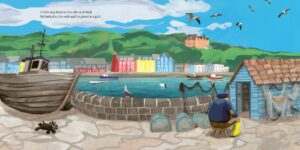
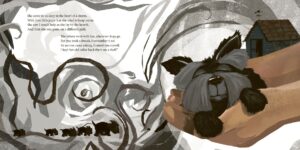

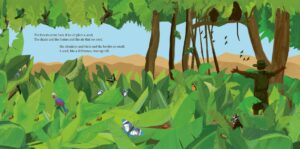
Scotty Plants a Seed by Conn Iggulden is published by Little Door Books, priced £7.99.
We spoke to another debut novelist this month, Kate Foster, about her historical crime novel, The Maiden.
The Maiden
By Kate Foster
Published by Mantle
Congratulations on the publication of your debut novel, The Maiden. Tell us what it’s like to see your first book in print.
It’s been an unbelievable experience! I signed my publishing contract in summer 2021, so it’s been a long journey but seeing the book come together has been thrilling, and hearing the audiobook has been incredible too. The actors have really brought the characters to life.
Tell us about the Bloody Scotland Pitch Perfect showcase. How did it feel to take part, and can you share what happened after your win. How has your first publication journey been for you?
I pitched to the Bloody Scotland panel in September 2020 so the festival was being run online that year, because of lockdown. Pitch Perfect is a competition where new writers get the chance to run their idea past industry professionals and get feedback. I was nervous but I had already been doing a lot of zoom interviews through my work as a journalist so I felt OK about it. Normally the pitch event happens live on stage which I would have been excited about but is probably more nerve-wracking! I was also doing a Curtis Brown Novel writing course so my manuscript was in decent shape but it wasn’t finished. After I won, I got interest from agents and publishers and I signed with Viola Hayden at Curtis Brown Books because she had some suggestions for the manuscript that matched my vision. My road to the publication of The Maiden has been straightforward and pretty much the dream. I have been very lucky. But I have a lot of unfinished projects and rejections from previous work!
The Maiden is based on real life events. What was it about the life of Lady Christian that you thought would make it a great thriller?
Christian Nimmo (she wasn’t a Lady in real life) was embroiled in an intriguing and probably very toxic relationship with her aunt’s husband and murdered him during an argument. I didn’t just find her life interesting; I found her notoriety fascinating. After her death, she became a local ghost and is said to haunt the spot of the murder in Corstorphine, Edinburgh, the village where I grew up. She was portrayed in court reports as a whore, an adulteress and a murderess and I wanted to strip that away and create a fictionalised version of a real woman but with a murder mystery element that questioned the assumed facts of the case.
Did you always know you wanted to write historical fiction? What is it about the 17th century that particularly fascinates you?
I found I really clicked with the story of Christian Nimmo because we come from the same part of Edinburgh but I was also reading some great historical fiction at the time, such as Burial Rites by Hannah Kent and The Confessions of Frannie Langton by Sara Collins. These books shine the spotlight on women and I think that really resonated with me and what I wanted to do. The 17th century was not a great time to be alive for women or men and historical fiction gives us a chance to highlight unheard voices.
How do you think the patriarchal society you explore in this book resonates today?
Not really, thanks goodness, but we still have a long way to go!
Which authors and books have influenced your writing so far?
The books I already mentioned, plus authors like Margaret Atwood, Lisa O’Donnell, Megan Campisi, Janice Hallett and Sarah Waters. I could go on!
What are you reading just now? What are you looking forward to reading this year?
I have a huge TBR pile and I am doing structural edits on book 2, which means I have to cut back on my reading in order to get work done. But Hear No Evil by Sarah Smith and Ritual of Fire by D.V. Bishop, which is out in June, are at the top of it.
The Maiden by Kate Foster is published by Mantle, priced £14.99.
Angus Peter Campbell’s latest novel is a wonderful tale of recollection, of time passing, family and community. We hope you enjoy this extract.
Electricity
By Angus Peter Campbell
Published by Luath Press
It was as if everything was still to be learnt, rather than already known. It took me ages, for example, to realise that birds fly by the wind as much as by their wings.
Strange to think now that electricity and aeroplanes were regarded then by some people as great dangers. Of course they were – we could all see that, in a way – but then again so was everything. You might fall into the well. A bull could gore you as you crossed a field. If you went up the hill the water-horse might get you. Lachlan MacIntosh had been drowned swimming in the sea because he refused to listen to anyone who told him it was dangerous. People fell into ditches all the time, stumbling their way home from the pub in the dark. They went there for company, to find someone to talk to. It was strange to want to be in company, and even stranger to want to be alone, so no one ever won.
Sometimes the more beautiful a thing was, the more dangerous it was. Martha in the next village was drowned trying to pluck one of the lovely purple water-lilies from Loch Challainn. She was so stupid, because we’d all been warned so often not to crawl out through the rushes to try and get them. They were so tempting though, floating ever so gracefully in the water. There were white and yellow ones as well as purple ones. We plucked the ones along the water’s edge and then took the sticky bits off and put the blossoms in our hair or sometimes in a vase in the house, even though Dad said that was unlucky. Maybe things should be left where they are anyway. We were brought up believing we should always leave things as we found them. Maybe the owners haven’t gone far – just popped out for a walk over the river a hundred years ago and will be back before evening.
Truth was that danger lay everywhere, and the arrival of electricity and the development of the local airstrip seemed to me no more dangerous than cycling downhill or when the first horse and cart or car arrived, or when the first steam boat sailed between the islands, billowing smoke out and up into the heavens. And besides, it was exciting: who didn’t want light at the flick of a switch, and who didn’t want to fly high in the skies like a beautiful bird? We could do everything instantly. When we wanted. Not when someone else decided. Be immediately on the other side of the globe, faster than on any imaginary magic carpet or any wick of straw that these daft old people at the time talked about. Who knew anything about an energy crisis as the pot bubbled on the peat stove? You can’t fathom the future by what you don’t know. You only fear it if you haven’t bothered to cut enough peats to last you through the whole winter.
***
We were conscious of a discontent, especially among some of the older folk, who feared that the imminent arrival of electricity would change everything and that the little they had would be taken from them. Things would be different, and not as they had been anymore. Already, things were getting faster and bigger and stronger and better. Old Murdo proved it by telling everyone that while a cart only had two wheels the new cars had four, so they could obviously go twice as fast. Though Mùgan reminded him that he’d seen kangaroos in Australia which, though they only had two legs, could still run faster than any four-legged sheep or cows he’d seen ambling lazily around our fields.
Who cared at the time? For life was all change, and Dolina and Morag and Katie and Duncan and Fearchar and I liked fast things.
Even as they stood still, in those long, endless days. We all dreamt of going fastest downhill without any brakes. Angela Smith held the record, though we all knew she’d cheated by taking off her outdoor clothing and shoes and doing it in just her vest and pants so that she’d be really light. There was no rule against that, but it wasn’t really fair because no one else was daft enough to go next to naked in public. Every day brought something new – Peggy making a new doll out of a wooden clothes-peg or Dolina who always picked the nicest flowers on the way to school and stuck them in a different way in her hair every day. Some days in a bunch, some days one above each ear, some days in a sort of hoop round her head. And then it was the best time of year again – time to pick the daisies and make chains. Dolina was always the best at it, splitting the stalks with her teeth and then weaving them into each other until they were just the perfect size to hang round our necks as decorations, though sometimes we all ganged up together and made one long chain that went on and on forever. Once, we made one that stretched from the school gate all the way across the playground, right over the wall and on over on the other side to the pond, and though the boys wanted to break it, none of them dared, for they knew that was bad luck and whoever broke it would die.
And we realised that seasons came and went and always looked forward to the lambs being born and then quickly forgot them in early spring time as they grew bigger when it was time in school again to play rounders, and we saw the hay and corn grow all summer long, and watched the older boys and girls grow big and tall and strong, and wondered as they suddenly sailed away to make their fortune. Milk became cream and cream became butter and corn became bread and peat became fire and flames and boys and girls became men and women.
Sometimes we got a shilling for keeping the birds off the corn. But as soon as we left, there they were again, gleaning away to their heart’s content.
Electricity by Angus Peter Campbell is published by Luath Press, priced £9.99.
BooksfromScotland gets excited by every Inking publication from 404 Ink. the latest in the series looks at the resonances between hair, culture and community. Here is a short extract.
Hair/Power: Essays on Control and Freedom
By Kajal Odedra
Published by 404 Ink
Salons/Community
One of my favourite childhood memories is spending summers at my cousin’s house in Leicester after we’d moved to Derbyshire. We’d be dropped off by Dad for a few days then picked up what felt like months later. I can still remember being sat at my grandma’s (or Ba, as we called her), feet every morning as she combed my hair and braided it into plaits. I remember vividly in those moments with my Ba, feeling so loved. She spoke Gujarati, which I understood but I was fast losing my grip on the language as I spent more time in our new, predominantly white village. Little was said between us but the comb’s teeth on my scalp, through my hair was soothing, meditative.
During my childhood, Newhall had a population of less than 700, nearly all white. My community back in Leicester, that we visited regularly, was still our real home. There, we looked alike, we ate the same food, spoke the same way, used the same coconut oil to treat our hair. It was especially exciting to go back when there was a wedding. We would turn up a day or two in advance, the kids piling into my cousin’s bedroom, the women spending the days in the run up grooming themselves. I would hang around and watch the older girls painting their nails, picking out the flowers and clips they would pin in their hair, the smell of perfume and Mehndi and bleach swimming in the air for days. I longed for the day I would be allowed to join them, bleaching moustaches and soaking hair in oil. These were all things the girls at my school would never understand, my secret other world.
Hair and what we did with it, became a glue for our community in a way that nothing else really could. The closeness, the nakedness, the vulnerability in allowing ourselves to be groomed by each other. To this day, I feel a sisterhood with girlfriends when we’re getting ready to go out. Squeezed into the same bathroom to share a mirror. Combing our hair, curling our lashes, tweezing our chins. There is an intimacy in that room that is so pure it’s unidentifiable to the untrained eye, but feels as deep as though we are real sisters.
One of the many enlightening things that bell hooks said about community was that ‘beloved community is formed not by the eradication of difference but by its affirmation, by each of us claiming the identities and cultural legacies that shape who we are and how we live in the world.’ It’s understood most intensely by people I know of Black, Asian or Latino communities, those outside of white culture. There is an unspoken understanding that hair and the things we do with it are special and brings us closer. A sacred practice.
Campaigner Seyi Falodun-Liburd told me about growing up in North London. Her aunt taught her how to braid on her dolls and in turn Seyi taught her friends at school how to braid their own hair. The practice helped Seyi connect to her Blackness and with other girls in her school, managing a type of hair that wasn’t visible in the girls magazines when she was growing up.
‘As a child, hair was my first site of play and creativity. And it was also a guaranteed moment of intimacy between me and the women and other girls in my life. Whether it was my mum braiding my hair and asking me about my day, or lunchtime in secondary school when I’d braid my best friend’s hair while we all talked about boys and music – I remember the bonds created between us in those moments that were at the root of our community and culture.’
Throughout her childhood Seyi, like me, didn’t see herself in the culture. So while the other white girls could turn to the magazine shelves for advice as they navigated their adolescence, Seyi and her friends had to learn themselves and through community, tips and tricks being passed down through generations of Black women. They built up trust and sisterhood through lessons they couldn’t teach at the convent school she attended run by white nuns, or in the way white kids might learn how to do their hair by reading Just Seventeen. At fourteen years old, Seyi provided the girls at her school with a lunchtime service, plaiting their hair in return for a few quid. If the nuns ever came across them they’d put a stop to it, creating a tighter bond between the girls as they were othered by the adults in their school. Those early experiences were where Seyi first experienced the intimacy and connection that came from hair. Years later, she found that she had started to lose that connection when she straightened her hair.
‘When I started unlearning the harmful rhetoric around Black hair being unruly or difficult to manage, and understanding their beginnings in white supremacy I started feeling much more freedom in playing with my hair again. I didn’t realise that I had stopped, my focus had become something I could easily maintain while looking “professional” as I entered the world of work. Now bantu knots, canerows and flat twists are my go-tos, “professionalism” (read: white supremacy) takes a backseat to joyful expression and comfort.’
Hair doesn’t just bind communities, it’s a way to express and communicate powerful, complex emotions. Shaving one’s head is a sign in some Ethiopian cultures that the person is mourning someone they loved – an appropriately dramatic gesture for the more jarring experiences of the human condition. It is done in a ritual meant to help with the healing process of grief, to know that even though the person is physically gone, death has started a new form of communication between the living and dead. The shaved head is a language.
In South Africa there is a similar ritual, ‘for the Xhosa, Zulu, Ndebele and Tswana cultures, the occurrence of death is something that affects the whole community not the individual or individuals concerned. It is not only one person who is bereaved but the whole community.’ An individual’s hair doesn’t represent only them, but their entire community, something done to one’s own body can be healing for those they love.
Similarly, the 2022 movement of women in Iran campaigning against Islamic laws are attempting to hurt the regime they are under through communal action. Hair can be such a bond in a community that a person acting out on their own, in order to say something, can spark a feeling, and reaction, in the community that they are bound to.
Hair/Power: Essays on Control and Freedom by Kajal Odedra is published by 404 Ink, priced £7.50.
Meredith, Alone by Claire Alexander received many plaudits when it came out in hardback last year, with comparisons to Eleanor Oliphant is Completely Fine. As the paperback comes out this month, BooksfromScotland asked Claire to tell us about her favourite books.
Meredith, Alone
By Claire Alexander
Published by Penguin
The book as . . . memory. What is your first memory of books and reading?
I’ve been reading for as long as I can remember. As a kid I devoured books—it’s without a doubt the best trait I inherited from my mum’s side of the family. By the time I went to secondary school I learned that not all books are written by middle-upper class white people, and a whole new world of literature opened up to me (hello, Toni Morrison and Alice Walker!). But before then, it was pretty much Enid Blyton, Rumer Godden, Frances Hodgson Burnett and Elinor Brent-Dyer on rotation (at least there was never any doubt in my mind that women could write books).
I’m not sure why I was so drawn to books set in boarding schools (St. Clare’s, Malory Towers, The Chalet School). Perhaps because the concept seemed so exotic and exciting to the wee girl in a small Ayrshire seaside town, going to school down the road. No midnight feasts, madcap schemes or thrilling rescues. Certainly no ‘Mam’zelle Abominable’.
I remember reading in bed with a night light after Mum switched the big light out. She knew what I was doing, but she loved that I loved books too much to tell me to go to sleep.
The book as . . . your work. Tell us about your novel Meredith, Alone. What did you want to explore in writing this book?
As always, I didn’t have much of a plan when I started writing the novel. (How I envy authors with spreadsheets and Post-it note wall planners.) What I did know is that I wanted to ask questions about connection, friendship, different types of love. I really started brainstorming when the start date of my online writing course was fast-approaching. That’s when the character of Meredith came to me. At that early stage, she was simply a woman who hadn’t left her home for a very long time—and this was pre-pandemic (October 2019), so the concept was an unusual one. I didn’t know how she’d ended up in this situation or how she was going to get out of it, but I was keen to find out. That’s a good starting place for me when I’m writing. I need to be obsessed with my characters, to let them take over my imagination until the thoughts translate into words on the page. I ended up writing a novel about overcoming trauma in order to live a full life. But also: What is a full life? It’s not the same thing for everyone.
The book as . . . inspiration. What is your favourite book that has informed how you see yourself?
During my angst-ridden teens, when I’d long moved away from boarding school shenanigans, I was drawn to books with, well, angst-ridden characters. Holden Caulfield in J.D. Salinger’s The Catcher in the Rye, Esther Greenwood in Sylvia Plath’s The Bell Jar, Jo March in Louisa May Alcott’s Little Women. I didn’t really know why I felt so connected to them—that became clearer later on when I accepted anxiety and depression as a part of me.
It’s hard to pick a favourite—and it’s none of the above. It’s not fiction, either. The first time I read The Man Who Mistook His Wife for a Hat by Oliver Sacks, I was blown away. Sacks, a neurologist who works with people with especially unusual brain issues, writes without judgement, without dry clinical prose. The stories are told with empathy, love and respect, and the message I take from the collection is that we really don’t understand ourselves (or each other) at all. That was a huge comfort to me as someone who wrestled with the ways I just felt different to everyone else.
The book as . . . an object. What is your favourite beautiful book?
The Diary of Frida Kahlo: An Intimate Self-Portrait by Sarah M. Lowe and Carlos Fuentes is a gorgeous illustrated journal documenting the last ten years of Kahlo’s life. There are dozens of stunning watercolour illustrations alongside the artist’s incredibly entrancing script in brightly coloured inks. From front to back cover, it’s a work of art in its own right.
That one ticks the adult box. But generally when I think of beautiful books, I think of kids’ picture books. I love reading Where the Wild Things Are (Maurice Sendak), Gorilla (Anthony Browne) and My Granny Went to Market (Stella Blackstone and Christopher Corr) to my four-year-old daughter because the illustrations are just so bewitching.
The book as . . . a relationship. What is your favourite book that bonded you to someone else?
I could answer the majority of these questions with Anne of Green Gables by L.M. Montgomery, which would make this an essay about Anne of Green Gables. But there can be no other response to this one. When I first read the series, I was already firmly bonded to my best friend. We met at age three, so I don’t even know what life is like without her in it. Throughout primary school, I realised I wasn’t the only weird kid in the class who liked to read and write for fun. She did, too. And how we adored ‘Anne with an e’. We’d read the books and watch the TV adaptation over and over, quoting lines to each other. Anne gave us a label for our friendship that we embraced wholeheartedly then and now: We were kindred spirits.
The book as . . . rebellion. What is your favourite book that felt like it revealed a secret truth to you?
I read Prozac Nation by Elizabeth Wurtzel in the late nineties when I was studying English Literature. It was the best and worst time to read this particular book. I was massively depressed, adrift, and overwhelmingly lonely. I didn’t know anyone who’d ever felt this way. And then I read Prozac Nation and felt more connected to this young woman who went to Harvard than anyone I’d spoken to, drank with or slept with in my four years at Glasgow Uni. Wurtzel’s account of her own mental health issues made me feel uncomfortable as hell. But also more ‘normal’ than ever.
The book as . . . a destination. What is your favourite book set in a place unknown to you?
Discovering Haruki Murakami’s work in my twenties was such a gift. I’ve still never visited Japan but his books brought his homeland to life for me: Kobe, Hyogo in Hear the Wind Sing… Hakone, Kanagawa in South of the Border, West of the Sun… Tokyo in Norwegian Wood. When I have more freedom to travel, I will spend an entire day strolling along the promenade from Yotsuya to Komagome, observing campus life at Tokyo’s universities.
The book as . . . the future. What are you looking forward to reading next?
I never read books written by other people when I’m working on my own. It’s just asking for trouble—imposter syndrome rears its ugly head and tears quickly follow. So I have a towering pile of TBRs on my bedside table. I can’t wait to dive in when my final draft of book 2 is submitted. Not on the pile due to its magnitude, but definitely near the top of the list, is a recent biography of Sylvia Plath; Red Comet: The Short Life and Blazing Art of Sylvia Plath by Heather Clark is a treat I can’t wait to dive into. On that note, I have my eye on Three-Martini Afternoons at the Ritz: The Rebellion of Sylvia Plath & Anne Sexton by Gail Crowther, but I’ve promised myself I won’t buy any more books until that bedside table tower has diminished a little.
Meredith, Alone by Claire Alexander is published by Penguin, priced £8.99.
Saraband are starting a beautiful series of essays on nature, with the first release by Linda Cracknell: Writing Landscape. Here is an extract from the essay, Lunar Cycling. We can’t wait to see the rest of the series!
Writing Landscape
By Linda Cracknell
Published by Saraband
Lunar Cycling
My desk: a scatter of books, maps, letters, pebbles, and amongst them a relic which recalls me to another place, another daily pattern, another way of counting time. Mundane, yet treasured, this pedal from a child’s bicycle is made of moulded creamy-white plastic and trimmed with two intact strips of reflector. I’ll never know how it separated from its crank and chain and frame and wheels, or where it came from or whose foot once pressed it.
What’s left of the spindle is rusty and encrusted with Acorn Barnacles. They also cluster on its surfaces, on one side sparse and tiny as punctuation marks; on the other, swarming in a small colony and anchored into crevices between the treads. I know now that they once swam in a throng of delicate cyprid larvae, until they dropped from the sea’s surface with a finite time to find a trustworthy home. Head down, appendages or leg-like ‘cirri’ up, they landed on the pedal and cemented themselves to it, growing six shell-plates around vulnerable head, gills and legs, whilst at the top four flat plates made a diamond-shaped ‘door’ to open and close with the tides.
This transformation, one of several including six stages beforehand as nauplii larvae, is as audacious as the butterfly’s emergence from a cocoon, although in the opposite direction – from free-moving to sessile. For the remainder of their lives, which can be up to eight years, these crustaceans would remain fixed to a human tool of travel and revolutions; passenger-barnacles who cycled through the tides.
***
I found the pedal in the summer of 2017 during a month’s stay at the Cove Park Artists’ Residency on the Rosneath peninsula. Low-lying, with a higher spine of snarly moor and plantation forest, the peninsula dangles south into the Clyde with Loch Long to its west, bringing the wild to snag against the lawns of Victorian mansions at Cove. The waters of Gare Loch to the east bump up to caravans at Castle Point where holiday-makers from Glasgow swell the population each summer. Attached to Arrochar and its craggy ‘Alps’ only by a narrow isthmus, it was easy on this leg of land to imagine myself cut off. Once there, I designated as my fourth, northern, shore the road running coast to coast from Coulport, and committed myself to ‘island’ life.
I knew I’d need daily exercise, an escape from my desk, and that a new landscape would compel me to explore, so I decided to walk the entire coastline, tackling each section at the lowest point of the tide. Being there for twenty-eight days I’d witness a complete lunar cycle: two neap tides, when the difference between high and low water is smallest, and two spring tides around the full and new moon, when it is greatest.
With a tidal cycle taking roughly twelve and a half hours, I left my desk at a different time each day, gradually progressing from morning to evening. My days were regulated, but in a way, irregular; my low-tide walks an unbreakable daily appointment offering a cosmic discipline and a stroll with a sense of purpose. ‘Ardpeaton for the 9.52’, I recorded in my notebook on day eleven, as if I was catching a bus. The next day, I caught the 10.41.
Using my bicycle (pedals still attached), I circled the twelve-mile loop of road to a different coastal point each day, finding rocky shores, occasional mudflats, little bays of sand and shingle, leggy jetties. In this way, I learnt the place through its shoreline, with its pillboxes, fishermen, mussel beds.
Where deciduous woodland met the coast around Rosneath Bay, the canopy had been salt-pruned by spring tides so that during the ebb, foliage hung to a sharp horizontal line well above the shore. High tides had also quarried soil away leaving tree roots cage-like, proud of the bank, reminiscent of mangroves. Occasionally I passed CCTV cameras, signs for Neighbourhood Watch, and experienced a shiver of surveillance. Walking around Rosneath Point one evening beside uneasy, clattery woodlands I passed a fire which had been left raging and unsupervised on a boulder whilst curlews and oystercatchers called and seals howled from Perch Rock.
Although the range between high and low-tide is moderate here, a significant space opened up when the sea withdrew. My explorations developed a pattern. I first crossed the wet ‘intertidal zone’ to reach the water’s edge, sometimes over rock slippery with bladder-wrack. Watching for waterborne birds or vessels, I’d feel the wind direction, notice how a change in weather often accompanied the pendulum swing of the tide. Then I’d step along the wet space, teeming with visible and invisible lives following their interwoven biologies. Tidal pools captured a marine microcosm of fixed creatures or slow-movers, encrustations, vivid colours, the dance of light and water, things that waft: a lavish chest spilling treasure that had nothing to do with me.
I also observed the strandline where the spring tides leave their gifts. It’s not uncommon for gunshot cartridges from Newfoundland to be washed up on Scotland’s west coast as well as ‘drift seeds’ from tropical waters, in folk custom marvellous enough to hang as a charm around a neck and be called ‘puzzle-fruit’, or to find soil and grow into something exotic.
On each walk I took photos, made sound recordings, scribbled about sensory observations.
Writing Landscape by Linda Cracknell is published by Saraband, priced £8.99.
Kim Hawes is a pioneer, blazing a trail in the very masculine world of music tour management. Her memoir, Lipstick and Leather, is released this month, and she has kindly put together this playing list of music that has meant a lot to her over her career.
Lipstick and Leather: On the Road with the World’s Most Notorious Rock Stars
By Kim Hawes
Published by Sandstone Press
Oliver’s Army by Elvis Costello & The Attractions
From their Armed Forces album, the tour I blagged my way onto and where it all started for me back in 1979!
Lost in Music by Sister Sledge
The lyrics of this one really captured how I felt on my first few jobs: ‘I quit my nine to five, we’re lost in music.’ This song helped me feel connected to other people who felt the same way I did about life.
(We are) The Roadcrew by Motörhead
Says so much about life on the road for all of us. And I couldn’t possibly make a playlist like this without including something from the guys I worked with for so long and learned so much!
p: Machinery by Propaganda
This one’s maybe a bit more obscure, but we always played it when leaving a Motörhead gig in Germany. ‘Motor power, force, motion, drive!’ It just captures that sense of being part of a massive show and consequently a massive convoy on the roads.
Tiny Dancer by Elton John
This one reminds me of being on the road in America. It was on heavy rotation on the radio years after its release – still is on some channels! The scene in Almost Famous is pretty in line with what would happen on the tour buses.
Tubthumping by Chumbawamba
Because it was everywhere and for such a long time, it’s become the band’s signature song. Still relevant today as everyone gets knocked down from time to time and might need encouragement to get back up.
Nirvana’s Come As You Are by The King
I’ve always loved this song but Jim’s version, singing it as Elvis, just adds an extra dimension of melancholy and meaning.
Lipstick and Leather: On the Road with the World’s Most Notorious Rock Stars by Kim Hawes is published by Sandstone Press, priced £19.99.
The Museum Mystery Squad has a brand new case to solve when a a blackmail letter and a gravity defying thief find their way to the Space Zone exhibit. Join Edinburgh author Mike Nicholson for an exclusive sneak peek at the latest addition to this cracking series of illustrated chapter books for younger readers.
Museum of Mystery Squad and the Case from Outer Space
By Mike Nicholson
Published by Floris Books
About the Book:
Someone’s sent the museum a blackmail letter threatening to steal a prized exhibit from the brand-new Space Zone. Can the Squad make one giant leap in their investigation, and stop the gravity-defying thief before an out-of-this-world artefact 3,2,1… takes off?
In the Case from Outer Space, the Squad investigate puzzling planets, amazing astronauts and marvellous moon rocks to try to solve their latest mystery.
About the Series:
Some people think that museums are boring places full of glass cases, dust and stuff no one cares about: wrong! In a hidden headquarters below the exhibits there’s a gang ready to handle dangerous, spooky or just plain weird problems: the Museum Mystery Squad.
Techie-genius Nabster, mile-a-minute Kennedy and sharp-eyed Laurie (along with Colin the hamster!) tackle the surprising conundrums happening at the museum. From prehistoric creatures that move and secret Egyptian codes to missing treasure and strange messages from the past, there’s no brain-twisting, totally improbable puzzle the Squad can’t solve.
Young readers aged 6 to 9 will love the riddles, red herrings and big reveals jam-packed into this fun-filled series of mystery stories by Mike Nicholson. The enjoyable extras like wacky facts and activities, as well as zany illustrations by Mike Phillips, will keep amateur detectives entertained for hours.
Museum of Mystery Squad and the Case from Outer Space by Mike Nicholson is published by Floris Books, priced £6.99.
Delores Mackenzie is a troubled, but gifted child, and her gift means she has to take on the biggest adventure of her life. Below is an extract from this magical tale.
The Dark and Dangerous Gifts of Delores Mackenzie
By Yvonne Banham
Published by Firefly Press
Delores always left her escape from the island until the last possible minute. She loved the race along the causeway, competing against the rapidly rising tide, daring the waves to push her off her feet as she dashed through the first slithers of incoming seawater.
This particular afternoon was sharp and blustery, with March winds sending storm clouds scudding along the Firth. Even by her usual standards Delores had left it late, huddled against the wall of the old lookout as she fi nished one more chapter. She stuffed the book in her pack as fat, cold drops of rain burst on the back of her neck. As she turned towards the causeway that linked Cramond Island to the mainland, she saw a dark smudge at the edge of her vision.
‘Can’t be,’ she whispered.
The prickling on her arms told her different. A suggestion of a shadow, an echo of a person long dead, a Bòcan.
‘What are you doing here?’ she shouted. ‘You never come out here!’
The Bòcan darted to the side, almost impossible to track in the storm-soaked light.
Delores swung her pack over her shoulders, pulled up her hood and ran down the steep bank onto the shale. The water was already lapping the causeway. She walked quickly, shoulders hunched, hands thrust deep in her pockets. Faster. Then running. There was a disturbance in the space behind her. Her hood was yanked back, and the neck of her coat was pulled tight around her throat. Something grabbed at her hair, dragging her back but she kept her balance – just.
Delores tried to scream but what little voice she had left was drowned by the cries of the sea birds that hovered on the updraft. Her hood slackened and a dark figure, more solid now, slid behind one of the stone pylons that lined the causeway. A man once, she thought, from its shape, its movements. She waited, watching for the Bòcan to show itself again.
Nothing.
Delores turned again towards the shore, towards home. If she ran hard, she’d make it in a couple of minutes, but her feet were skittering along the stones that were slick with new seawater and the remnants of dead weed. She felt periwinkles crunching under her boots and the corvids that had been feeding on them rose in front of her, making nothing of the violent wind.
Delores sensed something reaching out for her as she raced towards the foreshore. Just a few more metres. She slipped as she hit the turn in the path and slammed down onto her right hip. There was no time to register the pain. Something tugged on her backpack and dragged her a few inches across the rough surface towards the water, scuffing her jeans and the skin beneath. The shock froze her for a moment.
‘What are you doing?’ she screamed into the wind.
‘Let me go!’
Delores flung her weight forward and scrambled back to her feet. The sky had darkened to an inky midnight-blue and the row of white cottages ahead became vivid against it. She took a deep breath and powered up the slipway, her feet sliding back on the sand that was blowing across its hard surface, her legs shaking with effort. She reached the foreshore and raced towards home, the sound of her own boots barely disguising the footsteps gaining on her with every metre. She prayed that her sister would be home, that the door wouldn’t be locked. The handle twisted and she fell in through the door. She reached back to catch it and slammed it shut behind her.
Delores slid down onto the cold stone floor.
‘Could do with some help here!’ she shouted.
Delilah rushed through from the kitchen and threw herself down next to Delores, adding her weight to the door as something pounded and rattled from the other side of the wood.
‘Bòcan?’ grunted Delilah, as the door banged the air out of her lungs.
Delores nodded. ‘Chased me from the island.’ The door thudded into their backs again.
‘Thought you said they never go out there?’ said Delilah, ‘“All that salt”, you said. Wow, Delores, this one’s strong!’ A single violent bang on the door, then silence for a few moments.
Delores put her hand on the back of her neck. When she pulled it away, there was blood on her fingers. ‘It grabbed me,’ she whispered.
‘Grabbed? Where?’ Delilah leaned in to check for damage.
Delores swerved away from her sister and wiped her hand on the underside of her jeans. ‘Probably just wanting to play. Like when I was little.’
‘Play?’ The door thudded into their backs again.
‘This one feels pretty substantial,’ said Delilah. ‘Not like your old imaginary friends.’
‘They were never imaginary… You had them too; I know you did.’ Delores pressed her back into the door, already feeling the bruises in the knobbly bones of her spine.
‘I did,’ said Delilah, ‘but I left mine behind when I grew up, and they never tried to hurt me. This is a bit different from your dolls’ tea parties. You must be sending out some powerful signals to attract this strength of manifestation.’ She took a breath. ‘You know it’s time, don’t you? For you to go to the Uncles?’
Delores felt her stomach fold in on itself. The threat of the Uncles had been looming dark on the horizon for some time, ever since their parents disappeared. Delilah had dropped hints here and there, the odd mention, but she’d known better than to broach the subject full on. Delores knew what was coming. ‘No way I’m going to those creeps,’ she said. ‘Forget it.’
The Dark and Dangerous Gifts of Delores Mackenzie by Yvonne Banham is published by Firefly Press, priced £7.99.
Lindsay Littleson is knocking it out of the park at the moment with her adventure stories for children, and her latest book, Euro Spies, continues that trend. She writes here of why she wanted to write a story that celebrates Europe.
Euro Spies
By Lindsay Littleson
Published by Cranachan Books
My latest children’s novel, Euro Spies, comes out on April 20th and publication day is both an exciting and scary prospect, as this book is a bit of a departure for me. Euro Spies is a spy caper, packed with clues to solve and puzzles to crack. The story’s set in Paris, Bern, Rome, Venice, Vienna, Brussels and Amsterdam, and the first draft was written when we were all stuck at home during the second lockdown. Tired of gardening and struggling to focus on reading, I starting leafing through some old holiday photo albums. Memories of enjoying glorious sunshine, fabulous sights and delicious food in various European locations flooded back, making me feel simultaneously happy and sad. Although I completely appreciated the importance of staying safely at home, I missed travelling hugely and wondered if there was a way to fill the gap.
When I heard from a friend that some European tour guides had begun doing virtual guided walks around various cities and landmarks, I decided to give those a try.
After I’d been on several virtual tours to some gorgeous European cities , I flicked through the notebook I’d filled with fascinating facts about famous landmarks, and wondered if I could make use of them in a story for children.
An idea began to emerge for a spy novel set in several European cities. A spy has vanished, leaving behind a trail of cryptic clues on various landmarks. His colleague, Emmeline Watson, tricks three children into accompanying her to Europe. She is using the kids as cover for her dangerous mission, but the children soon get involved in attempting to solve the fiendish clues hidden by the missing spy.
Once I had a rough plot-sketch, I started to plan the route around Europe my characters would take on their quest. I wanted the route to be practical, time-and-distance-wise, and ended up borrowing the frankly exhausting itinerary that a young backpacker had blogged about online. But I REALLY didn’t want my characters spending hours waiting for buses or having to stand in enormous border control and security queues at airports, so I came up with an alternative means of travel: the Euro Metro, which leaves Glasgow from a halt hidden under St Enoch’s Subway station and whisks my characters around Europe.
Although the inspiration for the clue-solving aspect of Euro Spies came from novels like Dan Brown’s The Da Vinci Code, I was keen for the emphasis in Euro Spies to be on characters and their relationships. Hopefully, the three children come across as relatable, rounded characters. Samia is friendly and chatty, but suffers from fear of failure and has to learn to relax and accept that mistakes are not the end of the world. Frankie is smart and cheeky, but he’s also a young carer and is enjoying the break from his challenging home-life. Ava sees herself as a loner, and pretends she doesn’t want or need friends, until she meets Samia and Frankie!
For my spy story to be truly satisfying, puzzles weren’t enough. I needed readers to care about what’s happened to Ava when she disappears in Rome
When the waiter pointed down the alley, back the way they’d came, the boy turned to Samia and Miss Watson, his forehead creased with worry. “Apparently she left, just after we did.”
Miss Watson’s hand flew to her mouth. “What on earth was she thinking?”
Anger and fear churned in Samia’s stomach.
What were YOU thinking?? You were meant to be looking after us. You left Ava all by herself!!
And I wanted readers to worry about Samia and Ava when they meet a scary stranger in Venice.
But when Samia whirled round, she saw Ava, face pale and strained, walking along the balcony towards her. A few steps behind, floated an eerie cloaked figure in a glittery carnival mask. For a moment, Samia thought she was seeing a ghost, and blinked desperately, hoping the apparition would dissolve into mist.
But the spooky creature didn’t vanish, just kept moving slowly, its red velvet cloak swishing on the tiles, piercing eyes staring through the eye-slits in the mask.
When I sent the first draft to my publisher, Anne Glennie of Cranachan Books, she was full of enthusiasm, and suggested that I should write A Spy’s Guide to Europe to accompany the novel. A Spy’s Guide is a free to download booklet containing lots of IDL activities exploring European countries and their art, languages, food and landmarks. I’ve made a full set of Reflective Reading Task Maps for Euro Spies too, if classes wish to study the novel in more depth.
My big hope for this book is that Euro Spies will inspire young readers to discover more about all the wonderful things Europe has to offer. Post-Brexit, it’s more crucial than ever that young people in Scotland are encouraged to learn other languages and to make connections with our neighbours in Europe, despite all the travel and work barriers that have been erected.
Euro Spies was a joy to write and I’m hopeful that it will be an exciting and inspiring read.
Euro Spies by Lindsay Littleson is published by Cranachan Books, priced £7.99.
David Cameron’s latest novel, Femke, is both an immersive psychological study and literary mystery. Here he writes for BooksfromScotland on the the journey of writing this compelling novel.
Femke
By David Cameron
Published by Taproot Press
When my late friend, the writer Robert Nye, told me he had a hunch I should write a novel about a Dutch poet diagnosed as a sexually deviant psychopath, I might have taken it the wrong way. But I didn’t. I liked the poems of Gerrit Achterberg (1905–1962), and had even attempted – heavily reliant on a Dutch-English dictionary – to translate a couple of them. I did object, however.
‘Robert, I know next to nothing about Achterberg, except that he shot dead his landlady and wounded her daughter and then was committed to a psychiatric institution.’
‘The less you know, the better,’ he mischievously replied, only half-joking. Nye had written a number of successful novels, mostly focused on a character from history such as Sir Walter Raleigh or Joan of Arc’s murderous sidekick, Gilles de Rais, or those about whom history hasn’t all that much to say, such as ‘Mrs Shakespeare’, or characters from literature, such as Falstaff and Faust.
Unlike Nye, I had only one book under my belt at this point – an odd mix of autobiography and fiction called Rousseau Moon, published in 2000 just before I set off for The Netherlands. When I left Scotland, my book was in the window of Waterstone’s and I had just completed a book tour of the Highlands. I thought my destiny as a full-time writer was assured.
But it was another 14 years until my next book appeared. And this was a different work to the one begun in late 2001, partly egged on by Nye. In the end, I went with my own gut instinct and avoided writing directly about the killer poet, Achterberg, but I did create a character, Michiel de Koning, who was a disaffected disciple of Achterberg’s. De Koning didn’t come into the story until after I’d made the move from Amsterdam to rural Ireland. By then I had ditched the novel, which was called Femke from the off, believing that my distance from the book’s location would make it too hard to continue writing. But I was wrong. The insistent voice of the book’s female narrator wouldn’t go away: I had to let her have her full say.
‘Femke’ is a Fresian name that means ‘girl’ – or, in some accounts, ‘peace’, which would be an ironic name for so troubled a character. The odd origin of her story was this… In late 2001, near the entrance of Amsterdam’s Oosterpark and just across the road from the building where I taught English, I glimpsed the face of a young woman walking past with her dog. It was a face that, under the hood of her parka, seemed either darkly alluring or ravaged by life. At that moment I wanted to see the world through her eyes. Shortly afterwards, her imagined voice, speaking about her dog, came into my head: ‘Bibi has what I need.’
Femke is taken up – or chewed up and spat out – as a Muse by an English filmmaker in the first part of the novel, before she becomes acquainted in the second part with the elderly and now rather neglected Dutch poet, De Koning. Theirs is a complex relationship, seemingly of the father-daughter sort but with an edge that suggests she might be the Muse to reignite his poetic career. Perhaps sensing and fearing this, Femke assumes the role of detective and tries to hunt down De Koning’s ‘last – and only – great love’, the enigmatic Madeleine celebrated by De Koning in his sonnet sequence, ‘M’.
Where is Gerrit Achterberg in all this? Achterberg was always obsessed with the search for the lost loved one, and Femke in the novel literally carries out the search for De Koning’s lost love. Achterberg, who was described by the poet-critic Martin Seymour-Smith as the most gifted of the Dutch modernist poets, is a touchstone of poetic seriousness, a reminder of the poetic giants of the past. He took that seriousness to a murderous extreme, which shouldn’t be glamourised – and isn’t, in Femke. His once-disciple, De Koning, couldn’t in the end stomach the extremism of the master-poet. Achterberg’s most famous work is a sequence of fourteen sonnets on the subject of the death of the beloved, given the ominous-sounding title, ‘The Ballad of the Gasfitter’. De Koning’s most famous, and last, work is the twelve-sonnet sequence ‘M’, which charts the story of his tragic love affair through its passionate beginnings, the turmoil of exile, and its ending in madness.
Even writing this, I have to remind myself that Achterberg was a historical figure and De Koning a fictitious one. Never having been a fan of poetry in fiction, I followed Pasternak’s example from Dr Zhivago and placed De Koning’s poems at the end of the novel, for any readers who might be interested. In his highly entertaining poetry readings, Norman MacCaig used to make sly fun of an audience member who had asked him if he ever cried when writing a poem. This would seem to be a risible notion. Yet I did cry writing a poem, and it was one of these De Koning sonnets. Convinced I was playing a clever game, I was caught off guard. Only then did I realise how much of myself I had poured into this character and his Achterberg-inspired poetry – how much of myself I had poured into this book.
Begun in 2001, put aside for a number of years, picked up again and completed, then revised and now due to be published by Edinburgh’s Taproot Press, Femke charts the journey of a young woman who thinks her dog has what she needs, only to realise that she has needs which only other people can fulfil. A modern woman in an ancient role, she isn’t fool enough to be Muse to an exploitative man for long, but nor is she fool enough to disbelieve in romantic love. She is unlikely to have consented to play the part of Achterberg’s, or De Koning’s, lost beloved, but she is (I hope) a character worthy of their words – and mine.
Femke by David Cameron, is published by Taproot Press, priced £14.99.
Janet McGiffin has written an epic historical tetralogy for young adult readers with all four books coming out in a single year. She tells us about her journey to publication and answers the question, why did Scotland Street Press decide to bring out my four books of the Irini of Athens series in one year?
Betrothal and Betrayal (Book 1)
By Janet McGiffin
Published by Scotland Street Press
Poison is a Woman’s Weapon (Book 2)
By Janet McGiffin
Published by Scotland Street Press
Because people binge read. I binge read. Books are so readily available—I order them overnight or download them onto my electronic devices. Especially people who read books on their phones or on electronic devices binge read. I see them on the subway in New York glued to their phones or tablets or actual books. I have no patience for waiting a year for a sequel to come out; I want it now! Then I read the next and the next until there aren’t any more and anyway by that time, I need a rest.
But mostly, these four are coming out in one year because they are one book. It got long because there was so much to say about this amazing, gorgeous Byzantine empress and her world. I sent it off to Scotland Street Press as two books and Jean, Head of Publishing, said, it’s four books. But to me, it was still one book, divided into four parts. The very end of Book 4 (The Price of Eyes) circles back around to the beginning of Book 1 (Betrothal and Betrayal), just like the end of each book circles back to the beginning of that book. It’s Irini’s life. We all live lives that, looking back, we can see how they are divided into separate books, but it’s still one life.
I realized that for me to be true to my vision, that I was writing one story of Irini of Athens, all four parts had to be edited by the same editor and the covers and chapter illustrations had to be done by the same artist. Why? Because in many series that I have read, the later books feel different from the first ones—there’s a different editor or publisher with different ideas for the series so the characters don’t feel the same, or the plots go limp or fizzle out as the author runs out of ideas. I didn’t want that to happen. I wanted the final episode of this fascinating woman’s life to be even stronger than the previous episodes—a hard-told story of how she faces the consequences of her choices with her same determination and courage. I wanted all four parts to refer back to her previous decisions and previous consequences. Happily, Jean went along with this mad obsession and so did Paddy, my so-intuitive editor, and Harry the amazingly talented artist. Jean, with her enthusiasm and impressive ability, set a production schedule, and Harry produced four book covers in about same time as one, as well as wonderful chapter illustrations that would fit all four parts.
But really, how did this book get so long? Because, as I did the research at the Bodleian libraries in Oxford and later at the New York Reference library on Fifth Avenue, I was reading with the eyes of a crime novelist. I’ve always loved crime novels and years ago, I wrote a series of three for Fawcett paperback and then I went on to other work. But I always look for the real reason behind why my friends and colleagues do the odd things that they do, so I looked at the very sparce information about Irini of Athens and thought, why did she make those particular choices? She is accused of murdering her son. I decided that she didn’t do it. But let’s look at the sudden deaths four years apart of her reasonably healthy father-in-law and her husband, putting her on the throne as Regent for her nine-year-old son, the new emperor. Seriously? And then there were the two patriarchs who died a few years apart, letting her install her favourite power-broker as head of the church. Well, good on her, I say! Well done! She did exactly what emperors before and after her did, but they used swords and she used poison. At least, that’s what I say happened. And in these four parts, I spell out why she did it, and how. Ah, the joys of being a fiction writer and not limited to hard facts!
Of course, the real reason that the book got so long was because so much was going on during that century. Irini betrothed her son to the daughter of Charlemagne, broke that off and betrothed herself to the great man himself! What courage. And then she broke it off for obvious reasons which any woman would know, but I spell that out too. She fought Caliph Harun al-Rashid over the long border between their two empires—he who was called a military genius at the age of ten. And then there was Pope Adrian who wanted the Byzantine territory in Calabria and Sicily and had the temerity to instigate a change in dating, from year one being Creation to our present dating. She spotted that as a ploy to control time itself. But what she is most known for is that she brought icons back into churches and homes after they had been banned for sixty-odd years.
My biggest hurdle, and what made the book long, was that I had to populate Irini’s world. Any Scots child who hears ‘King James’ could tell you who else was at his courts. But I knew nothing of who Irini lived among in the Great Palace of Constantinople. Happily, I came upon an online reference cited in many footnotes, the ‘Prosopography of the Byzantine Empire’. It was compiled at King’s College London, and it lists every bit of information about people of that period. I spent one year reading every single listing and figuring out who might have lived when Irini did, and if she could have known them. I found lots of people, and two were very important in her life.
And then there were my three dear colleagues in Greece, whom I have known for over twenty years, who took on scholarly research in Greek that was beyond me, and found swear words, blessings, medicines – and food – of the Byzantines. Over the two years of COVID we skyped every two weeks and they filled my pages with details. After COVID was over, we met again in Athens and ate all the Byzantine food that they had tracked down in the fabulous restaurants of Athens – where Irini was born and where Byzantium is very much alive and well.
Betrothal and Betrayal and Poison is a Woman’s Weapon by Janet McGiffin are published by Scotland Street Press, priced £9.99.
Seizing Power and The Price of Eyes will be released in October 2023.
ALSO ON BOOKS FROM SCOTLAND
-


Saltwater: A Midsummer Ghost Story by Elaine Thomson
‘The very thought of those grey faces made my skin grow cold.’
-

‘An Odious Campaign’ by Rob McInroy – Why a 1936 By-Election Still Resonates
‘This enraged the locals and he came close to being run out of town on several occasions.’
-

‘‘That’s right, Bobby,’ he growled. ‘I haven’t seen you in – well, since you decided to kill me.’ ‘
-

David Robinson Reviews: Solitary Agents by David Goodman
‘This is very much an up-to-the-minute story of spycraft, positively revelling in all the things tha …
-

The Savage Landscape by Cal Flyn
‘It is their resistance to the intrusions of the outside world − culturally, economically, environme …
-

The Shortest History of Scotland: A Q & A with Murray Pittock
‘We need to be better aware of that to understand the challenges and achievements of the past, and t …
FEATURED AUTHOR:
Joanna Geyer-Kordesch

Joanna Geyer-Kordesch has a distinguished academic career bridging the disciplines of history of medicine and cultural history as embodied in our landscapes. After Directing The Wellcome Unit for the History of Medicine at Glasgow University from 1990 …
FEATURED PUBLISHER:
Luath Press

Luath Press takes its name from Robert Burns, whose little collie Luath (Gael., swift or nimble) tripped up Jean Armour at a wedding and gave him the chance to speak to the woman who was to be his wife and the abiding love of his life. Burns called one …